
The Overwhelm Recovery ProtocolWellness & Routines · ~5 min
About this template · Updated November 2026
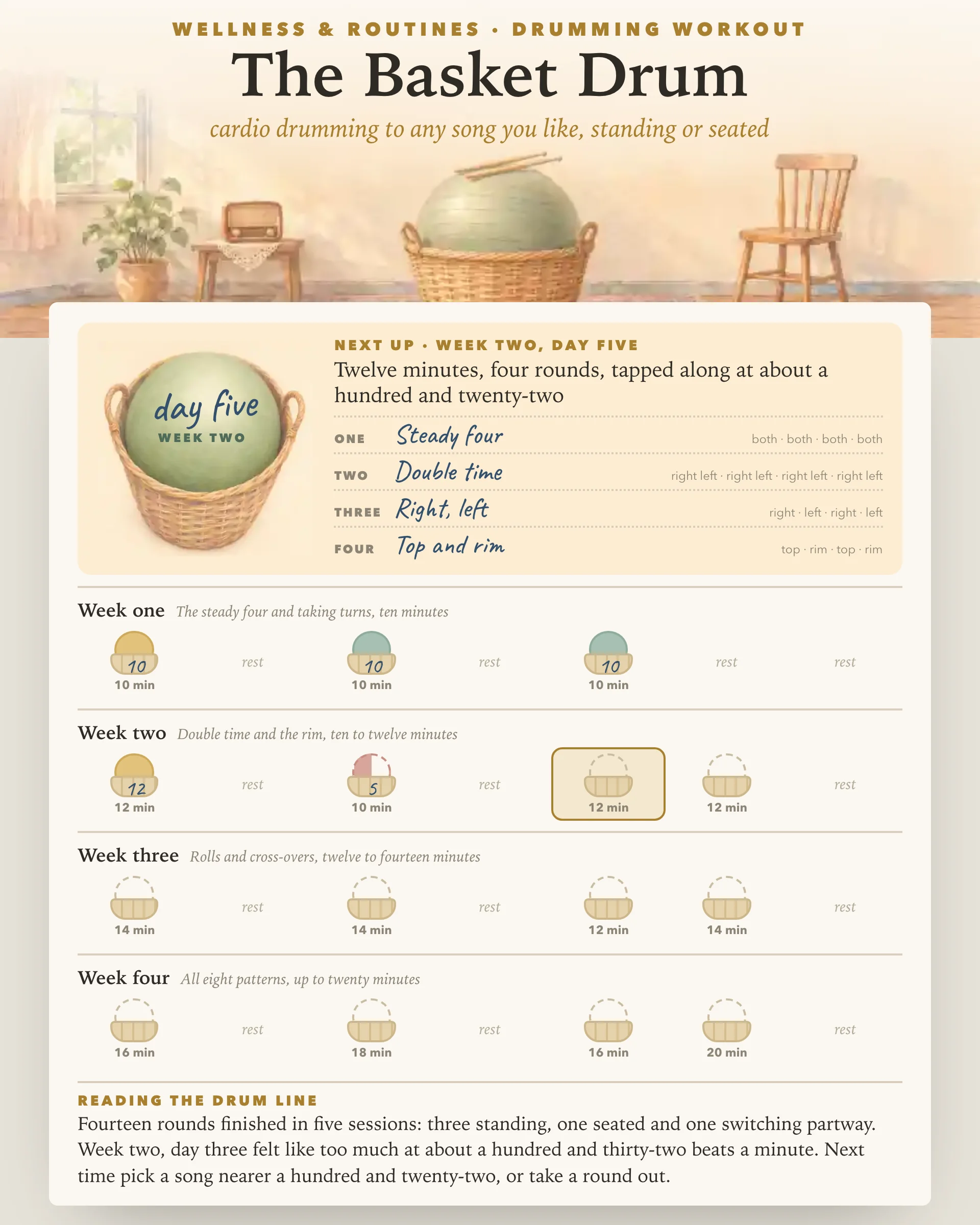
Cardio drumming is what it sounds like: you beat a drum hard enough, and for long enough, that your breathing picks up. The drum is a large exercise ball, the sticks are drumsticks or two wooden spoons, and the music is whatever you enjoy. Marches, reaches and twists join the drumming, so your legs and trunk work along with your arms.
Set the ball in a laundry basket or hamper so it sits snug and cannot roll, and you have a drum at about the right height for standing or sitting. This page turns that setup into a four-week plan you can follow to any song.
Two minutes of soft hits warm you up. Then come the rounds: ninety seconds of one drumming pattern, then thirty seconds of easy marching with the sticks resting on the ball. A minute of slow hits on every other beat and a minute of stretching close it out. A session lasts four minutes plus two for every round, so ten minutes holds three rounds and twenty holds eight.
There are eight patterns, each counted in fours:
Every pattern has a seated cue too: near the front of a sturdy chair, your heels or knees do the work that stepping would.
Start with the tempo: play your song and tap the beat button on every beat, the thump you would clap to, and the count on the drum follows it. A tapped tempo above about a hundred and fifty beats a minute is refused, since sticks struggle to keep that up for ninety seconds; tap every other beat and it halves.
Each plan day arrives with rounds chosen from that week's patterns. Add one, up to eight, or take one out with two taps; the page never puts a pattern twice in a row, since back-to-back rolls load the same forearm muscles without a break. A line underneath estimates the hits the session holds.
Press start and the painted drum shows a count from one to four and the spot where each stick lands, while the strip below spells out the pattern. The clock works from the real time since you pressed start, minus pauses, so a phone that locks mid-round still knows where you are.
Only what you did counts: a finished session logs its full length, an early end logs the whole minutes played, and a round counts once its drumming and its easy half minute have both run out. Skipped parts never count.
Afterward you say how it felt: easy, steady work, or too much. The drum line colors that day to match, and the reading turns your answer into a tempo for the next song: about ten beats a minute slower after too much, about eight quicker after two easy sessions in a row.
Drumming as exercise has a thin evidence base. A Stellenbosch study measured heart rate and blood lactate during forty-minute djembe sessions and placed the effort in the low-to-moderate exercise range, with blood pressure lower afterward in its middle-aged drummers. That was hand drumming without marching, measured over single sessions.
Closer to this page, adults around seventy who took a ten-week drumming workout class were compared with a stretching group from an earlier study, and the drummers moved a foot from accelerator to brake faster in a simulated braking task. It was a nonrandomized pilot: a promising sign, not proof. People with Parkinson's who drummed in a cardio class for twelve weeks described better fitness, mood and social connection in focus groups, which tells you how it felt to them, not what it measurably changed.
None of this shows that drumming does something walking or dancing cannot. It does suggest that drumming is real aerobic activity that people tend to enjoy. The CDC suggests older adults aim for at least 150 minutes of moderate activity a week, along with strength and balance work. This plan reaches about seventy minutes in its fourth week: a useful share, not all of it.
Reach for it on days you want cardio that feels more like playing than training, or when your knees would rather not walk far. If standing rounds are hard, run the whole plan seated. For seated cardio with different moves, try The Chair Cardio Mixtape; The Effort Swatch Card gives you a scale for rating how hard a session felt. For cardio to music without the drum, The Living Room Dance Floor teaches one step a song in counts of eight.
See a doctor first if you have a heart or blood pressure condition, an old shoulder or wrist injury, or dizzy spells. Keep the ball wedged so it cannot roll, sit on a chair without wheels, and stop if anything hurts.
Cardio drumming is a workout where you beat a large exercise ball with drumsticks in time to music, adding marches, reaches and twists so your whole body moves, not only your arms. The ball sits in a bucket, a stand or a laundry basket so it stays put while you play.
An exercise ball, a laundry basket or hamper that holds it snug, and two drumsticks. Wooden spoons or short lengths of dowel work as sticks too. Add a sturdy chair if you would like to drum seated, and any music with a beat you can clap to.
Yes. Every round on this page has a seated version: you sit near the front of a sturdy chair with the drum in front of you, and your heels tap or your knees march while your arms play. Seated rounds ask less of your legs and balance and still get your arms and breathing working.
It can be a moderate one. In a study of forty-minute djembe sessions, heart rate and blood lactate put drumming in the low-to-moderate exercise range, and marching or big arm moves raise the effort further. It mostly trains your heart, shoulders and coordination, so pair it with some strength work.
Any song with a steady beat you can clap to. Songs near a hundred beats a minute suit warm-ups and first sessions, while songs nearer a hundred and thirty make double time and rolls feel lively. Tap along on the page to read the tempo of the song you picked.
By the team behind Fabulous, the science-based self-care app used by over 30 million people.


