
The Overwhelm Recovery ProtocolWellness & Routines · ~5 min
About this template · Updated November 2026
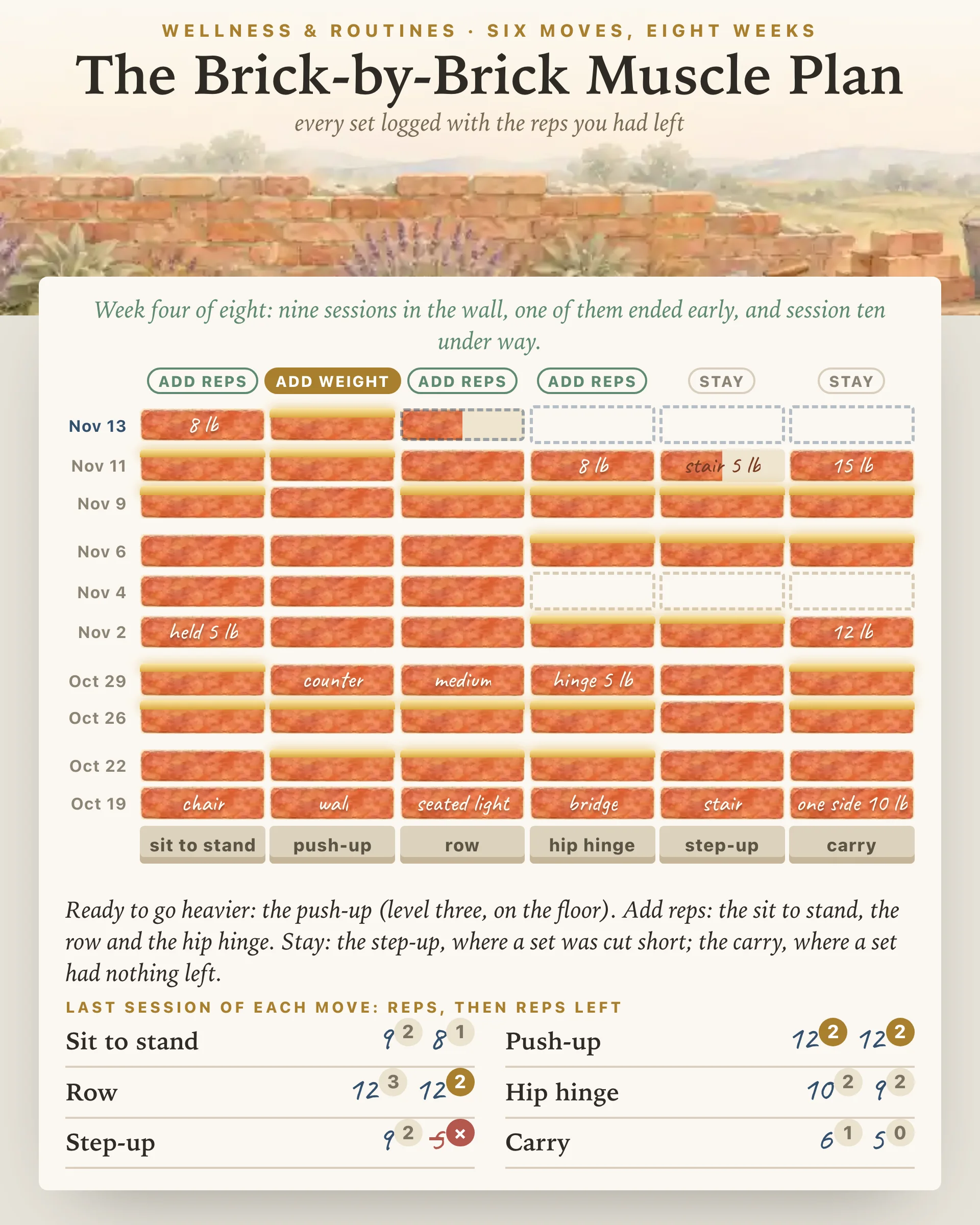
You can build muscle over 50, and after 60 too. What stalls most home routines is knowing when to make a move harder. This page is an eight-week plan of six big moves at three levels each, and after every set you log two numbers: the reps you did and how many more you could have done with good form. One rule reads them and tells you, move by move, whether the next session should stay, add reps or add weight.
See a doctor or physical therapist before your first session if you have a heart or blood pressure condition, have fallen or had dizzy spells, have a joint replacement or recent surgery, or have pain that keeps coming back. Stop any move that hurts. Breathe out as you lift instead of holding your breath, keep a sturdy chair, the counter or the stair rail within reach for every standing move, and call 911 for chest pain, pressure or sudden breathlessness.
The clearest numbers on muscle come from a meta-analysis of 49 studies with 1,328 adults aged 50 to 83, with groups of men, of women and of both. Every program was supervised, ran two or three days a week and lasted about twenty weeks on average. People gained about 1.1 kilograms of lean mass, more on higher-volume programs and less the older they were. Most were healthy and the studies varied widely, so the average is no forecast for you, and training alone at home may well give less.
The question this page asks after each set has a small evidence base of its own. In a study of guessing reps in reserve, thirteen adults aged 60 to 80, seven women and six men who already lifted, called out when they had four and then two reps left, then kept going until they could not. Over six sessions run by the researchers, their guesses grew closer by up to about two reps, no slower than a younger group's. It was small, used two machines, and measured judgment rather than muscle, so expect rough guesses for the first couple of weeks.
On when to add load, the American College of Sports Medicine's position stand on progression puts newcomers at eight to twelve reps, two or three days a week, adding 2 to 10 percent once they can beat their target by a rep or two. Waiting for two sessions in a row, and reading the reps you had left, is this page's own cautious take on that advice, not something the stand spells out.
Each move has a range: eight to twelve reps, or four to eight lengths for the carry. Go heavier only after two sessions in a row where every set reached the top of the range with two or fewer reps left, at the same level and weight. In a row means the move's two latest sessions, in order, and a set you cut short or a session you ended early breaks the run. Below the top, add a rep when you had some to spare. After a set with nothing left, or one under the range, stay put.
Tap your reps and the reps you had left, then log the set. A ninety-second rest clock starts on its own and keeps real time even on a locked phone. Each move you finish lays a brick in a low brick wall, one course per session. A gold cap marks a move where every set reached the top with two or fewer left, so two gold caps stacked in one column are the rule made visible. The plan runs two days a week for two weeks, then three, and counts sessions rather than dates.
An expert group on protein in older people suggests at least 1.0 to 1.2 grams of protein per kilogram of body weight a day for people over 65, and 1.2 or more for those who exercise. It names one exception: severe kidney disease without dialysis, where protein may need limiting. If you have any kidney disease, get your doctor's okay before eating more. The group found too little evidence to recommend timing or supplements, so ordinary food is the place to start.
The Twelve-Week Honeycomb is a longer dumbbell plan with two set workouts and a swap for every move, and the two-card plan for women in their fifties builds its workouts from whatever dumbbells, bands or chair you own. Both step you up once your reps reach the top. This page differs in what it asks: the reps you had left after every set, logged and read by one rule. If level one still feels like too much, The Whole-House Strength Routine starts more gently.
Yes. A review pooling 49 supervised studies of adults aged 50 to 83 found that resistance training added lean body mass in groups of men and of women, about 1.1 kilograms on average over programs lasting around twenty weeks. Gains were smaller the older people were, so plan on slow, steady progress.
Much as you would at fifty, with a little more patience. Lift something that feels hard by the last few reps, two or three days a week, and add load only when your reps show you are ready. Older people in that review gained less on average, yet they did gain.
An expert group on protein and aging suggests at least 1.0 to 1.2 grams per kilogram of body weight each day for people over 65, and 1.2 or more for those who exercise. Severe kidney disease is the exception, so anyone with kidney disease should ask their doctor before eating more protein.
It is how many more reps you could still have done with good form at the moment you stopped. This plan asks for it after every set, because ending with about two left is hard enough to count. In one small study, adults aged 60 to 80 got better at judging it within six weeks.
For most people it is, when the load starts light and rises in small steps. See a doctor or physical therapist first if you have a heart or blood pressure condition, have had a fall, dizziness, a joint replacement or recent surgery, or have pain that keeps returning. Stop any move that hurts.
By the team behind Fabulous, the science-based self-care app used by over 30 million people.


