
The Overwhelm Recovery ProtocolWellness & Routines · ~5 min
About this template · Updated November 2026
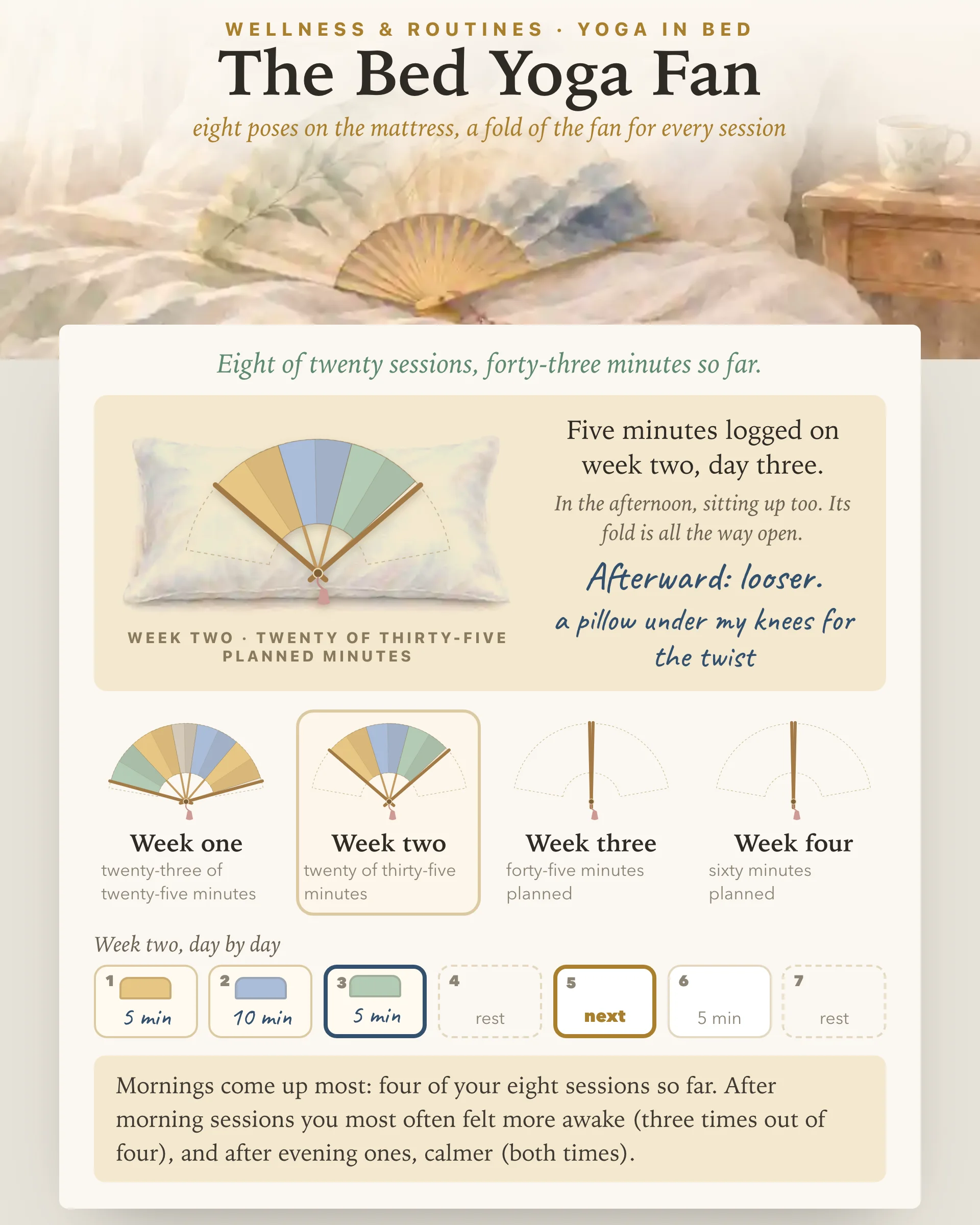
The hardest part of most yoga routines is the part before the yoga: finding the mat, clearing a patch of floor, getting down there. Bed yoga skips all of it. You start where you already are, on the softest surface in the house, with a pillow within reach.
That is also why bed yoga gets called lazy yoga, and fairly so: gravity and the mattress do much of the work while you breathe. Lazy is not a flaw here. A practice you will actually do on a tired Tuesday beats an ambitious one you keep meaning to start.
Everything on this page happens on the bed, in three positions.
Each pose has a gentler version, such as hugging one knee at a time. Use it on any day it suits you, not only when something aches.
Two questions build each session. The first is how far up you will come: lying down only, sitting up too, or hands and knees too. Lying down only is the laziest setting, five poses on your back. The second is how long: five, ten or fifteen minutes. The page then splits that time across every hold in fifteen-second pieces, so the flow ends right when you said it would. Leave a pose out if it does not suit your body, and the others stretch to fill the gap.
Press the button and a hold timer calls each pose and side. It reads the real clock, so a phone that locks halfway through still knows where you are. You can pause, skip a side or end early; only whole minutes you actually moved go in the log, so stopping at four and a half minutes records four.
The record is a paper fan. Each week of the four-week plan has its own fan, with one fold for each planned day. A session opens its fold as far as your minutes reach that day's plan, and a single tap afterward colors it: looser, calmer, more awake, about the same, or something hurt. The page also notes the time of day. After a few sessions, the reading at the bottom tells you when your practice tends to happen and what it tends to leave you feeling, such as more awake after mornings and calmer after evenings.
The plan runs five days a week, from five minutes lying down in week one to ten or fifteen minutes in all three positions by week four.
Studies of yoga use mats, chairs and classes, not mattresses, so nothing here has been tested in bed. The wider evidence still gives a fair sense of proportion.
For older adults without a specific health condition, a 2019 review of randomized trials found yoga improved balance, lower-body flexibility and leg strength compared with doing nothing, along with mood and sleep quality. For chronic low back pain, the Cochrane review of yoga is more modest: compared with no exercise, yoga brought small improvements in pain and back function that may not feel large in daily life, results were about the same as other back exercise, and a few more people reported a flare of back pain.
The most useful finding for a five-minute practice comes from the World Health Organization's physical activity guidelines, which repeat that some activity is better than none and advise spending less time sitting or lying still. A short flow on the mattress will not replace a brisk walk, but it is a real start.
A mattress gives way, which is kind to knees and spines and awkward for anything that needs a firm base. Keep bridges low and let the pillow hold you. On hands and knees, spread your fingers wide or come onto your forearms if your wrists sink. Never try standing balance work in bed.
Get up slowly. After several minutes lying down, especially with your legs up, roll to your side and sit on the edge of the bed for a few breaths before you stand. If you have had a hip replacement, ask your surgeon before knees to chest, happy baby or the twist, since they bend and turn the hip deeply. With osteoporosis, back trouble or a pregnancy, a doctor or physical therapist can tell you which poses to keep.
Any time the bed is the nearest place to move: before you get up, in a slow afternoon, or after a long day. If you would rather sit in a sturdy chair, The Chair by the Window times seated poses in the same unhurried way. And when bed yoga starts to feel easy, The 30-Day Yoga Challenge is a good next step down to the mat. If evenings are your time, The Bedtime Yoga Moon slows the same kind of practice down for sleep, with a breath count and a note on how you slept.
Bed yoga is a handful of gentle yoga poses done on your mattress instead of a mat: lying on your back, sitting up, or on your hands and knees. It suits mornings when you are not ready to stand, slow afternoons, and days when getting down to the floor is too much.
Yes, as long as the poses suit a soft surface. Knees to chest, a reclined twist and a seated forward fold all feel good on a mattress. Standing balance poses do not belong there, because the bed gives way under your feet.
Lazy yoga is the low-effort end of the practice: poses where gravity and a pillow do most of the work while you breathe. The lying-down-only setting on this page is lazy yoga in its plainest form, and short sessions like these still add up over a month.
It may help a little. A Cochrane review found yoga gave small improvements in back pain and function compared with no exercise, about the same as other back exercises, and a few people had a flare. Stop any pose that hurts and ask a doctor about pain that lasts.
Five minutes is a real session. This plan starts at five minutes a day in week one and works up to ten or fifteen by week four, with two rest days every week.
By the team behind Fabulous, the science-based self-care app used by over 30 million people.


