
Leaves on a StreamEmotional Fitness · ~3 min
About this template · Updated September 2026
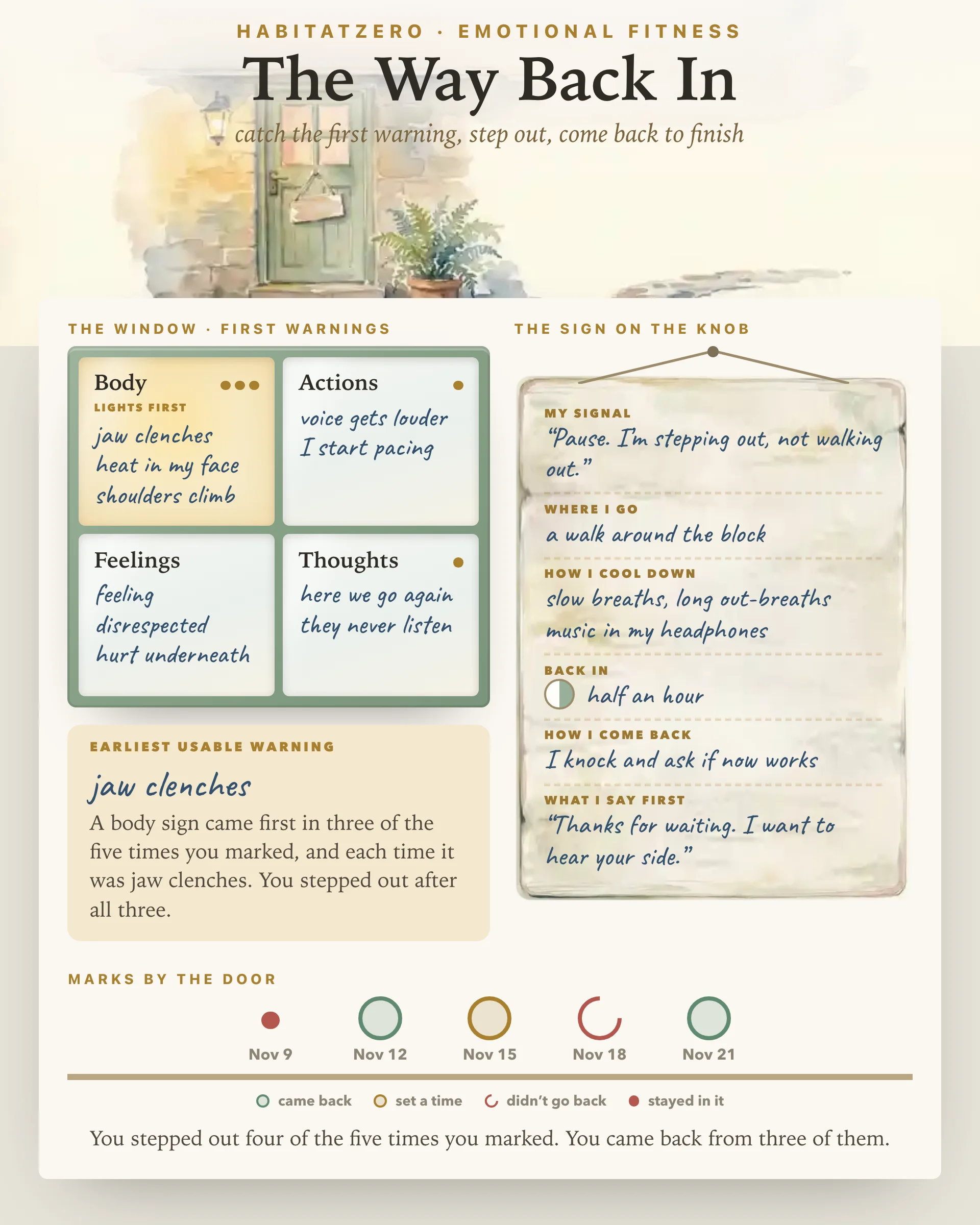
This page follows the anger control plan in SAMHSA's cognitive-behavioral anger management manual, written by Patrick Reilly and Michael Shopshire for a 12-week group program. It also mirrors the anger control plan in the VA's online Anger and Irritability Management Skills course, which sorts warning signs the same way. The worksheet here is an independent one built on their ideas; neither SAMHSA nor the VA made it, checked it or vouches for it.
Anger rarely arrives at full volume. The manual describes an episode in three phases, a buildup, an explosion and an aftermath, and tracks the climb on an anger meter from 1, calm, to 10, the point where you lose control and pay for it later. Everything that helps happens below 10. The catch is that clear thinking gets harder as the meter climbs, so the moment to decide what you will do at a seven is a quiet Tuesday when you are at a two. That is all an anger management plan is: choices made early and written down where you will see them.
The manual sorts the warning signs of anger, which it calls cues, into four groups, and each group gets a pane of glass here.
Put the signs you really notice into each pane, four at most, so the window reads at a glance in a hot moment. The sign that matters most is the one that shows up first, because it leaves you the most room to act. A warning that only appears at nine is one you rarely get to use.
The manual calls the time-out the basic strategy that belongs in everyone's plan, and it describes a formal version. Everyone involved agrees on the rules ahead of time, anyone can call it, the person who calls it may leave, and that person comes back either to finish the discussion or to set it for later. The return is what makes it a time-out. Without one, the person you left is waiting with no idea when, or whether, the talk will pick up again.
So the sign on the knob asks for six things: your signal, where you go, how you cool down, when you'll be back, how you come back and your first words. The small print rules out driving, drinking and replaying the fight while you are out. The manual reports that people who express anger aggressively simply get better at being angry, and rehearsing your best comeback on the walk keeps the fight going in your head.
Tap a suggestion or write your own into each pane, then fill the sign one line at a time. After a hard moment, mark it the same day: what set it off, how high it got on the meter, which sign came first, whether you stepped out and whether you came back. A mark made during a time-out stays open until you record how it ended.
Two readings grow from the marks. The window lights the pane that most often warns you first and names your earliest usable warning, along with how often you acted on it. The frame by the door draws a ring for every time-out, closed when you came back and broken when you didn't, and counts how many ended in a return.
Structured anger treatment has a respectable record. A 2018 review of meta-analyses found that treatments for anger, most of them cognitive behavioral, have consistently shown at least moderate effects in both clinical and non-clinical groups, while results for reducing aggression are less consistent. Those findings describe whole programs. This page borrows two tools from one of them and has not been tested on its own. Filling it in is practice, not treatment.
Build the plan on a calm day, then walk the people you live with through the sign so the signal means the same thing to everyone. For the minutes you are out, Steady the Flame paces a slower breath. If the feelings pane keeps filling with hurt, The Anger Iceberg goes further into what sits underneath. Couples can agree on time-out rules together with Our Fair Fighting Rules.
If anger keeps costing you relationships, work or sleep, a licensed therapist or an anger management group can take this plan further with you. If it has turned into hitting, threats or someone at home being afraid of you, a time-out alone won't fix it. The National Domestic Violence Hotline takes calls from people on either side of that, including people worried about their own behavior: call 1-800-799-7233 or text START to 88788. When someone is in danger at this moment, call 911 first.
Three things: the warning signs that tell you anger is building, a time-out agreed ahead of time, and a clear way back to the conversation. SAMHSA's manual calls this an anger control plan and sorts the warning signs into body, behavior, feelings and thoughts. This page adds a log that shows which sign tends to reach you first.
They fall into four groups. Body signs include a tight jaw, a hot face or a pounding heart. Behavior signs include a rising voice, pacing or clenched fists. The feelings under the anger, such as fear or feeling disrespected, count too, and so do thoughts like “here we go again.” The earliest one is the most useful, because it leaves the most time to act.
Agree on the rules before you need them: the signal you will give, where you will go and when you will be back. Say the return time as you leave, spend the time cooling down rather than rehearsing the argument, and come back when you said you would, either to finish the talk or to set a time for it.
No. The four kinds of warning signs and the formal time-out come from the SAMHSA manual by Patrick Reilly and Michael Shopshire, credited in the article below, but this interactive plan was made independently. SAMHSA did not create, review or endorse it, and the free manual remains the place to read the full 12-week program.
You can study the filled-in example and read how the plan works right here. To fill your own window, hang your own sign and keep marks between hard moments, open it in HabitatZero, which is free, and print a copy for the fridge whenever you like.
By the team behind Fabulous, the science-based self-care app used by over 30 million people.


