Vibrator Myths vs. the Science of Arousal
395. Numb, Addicted, or Replaced? Vibrator Myths Busted
The brief
Urologist Kelly Casperson debunks vibrator myths: they don't cause nerve damage or addiction, and data show real pelvic health benefits (42:45). She explains that the clitoris and penis share the same embryonic origin (09:46), that most women don't orgasm from penetration alone (10:18), and that arousal often comes before desire, not after (14:00).
Seventy percent. That is how many men, by Dr. Kelly Casperson's count, can correctly point to the clitoris on a diagram (09:17). Given that nine in ten men are heterosexual, this is not a trivia question. It is a map most people never got handed before being sent out to navigate someone else's body, or their own.
Casperson is a board-certified urologist and the host of the podcast You Are Not Broken. In a recent webinar, part lecture, part live show-and-tell with a bag of vibrators on the desk, she set out to replace that missing map. Her method is not titillation. It is anatomy, and it starts with a blunt equivalence she returns to twice: the clitoris and the penis are, developmentally, the same organ. 'The clitoris is the penis. The penis is the clitoris. It is the same structure rearranged in different body parts,' she says, tracing both back to the same embryonic tissue (09:46). Later she puts it more memorably still:
"The penis is a clitoris that fell out of your body." — Dr. Kelly Casperson [22:13]It is a funny line, and also a precise one. The clitoris, like the penis, is built almost entirely of erectile tissue that depends on blood flow to function. Without blood flow, there is no arousal, no lubrication, and, for many women, considerable pain.
The Anatomy Everyone Skipped
This is the organizing idea of the whole talk: sex is a circulatory event before it is anything else. 'In order to have sex, you need to have blood flow, your heart and your brain need to work, but also genitals need blood flow,' Casperson says, framing arousal the way a vascular surgeon would (01:12). In men, the failure of that system has a name, erectile dysfunction, and a known meaning: it can be an early warning sign of cardiovascular disease (31:04). In women, the equivalent failure mostly goes unnamed and unstudied. Casperson cites a 2023 paper by fellow urologist Dr. Maria Uloko in the Journal of Sexual Medicine, which found that the clitoris is studied zero times for every ten times the penis is studied (28:35), even though the two organs share a vascular and neurological wiring diagram almost identically.
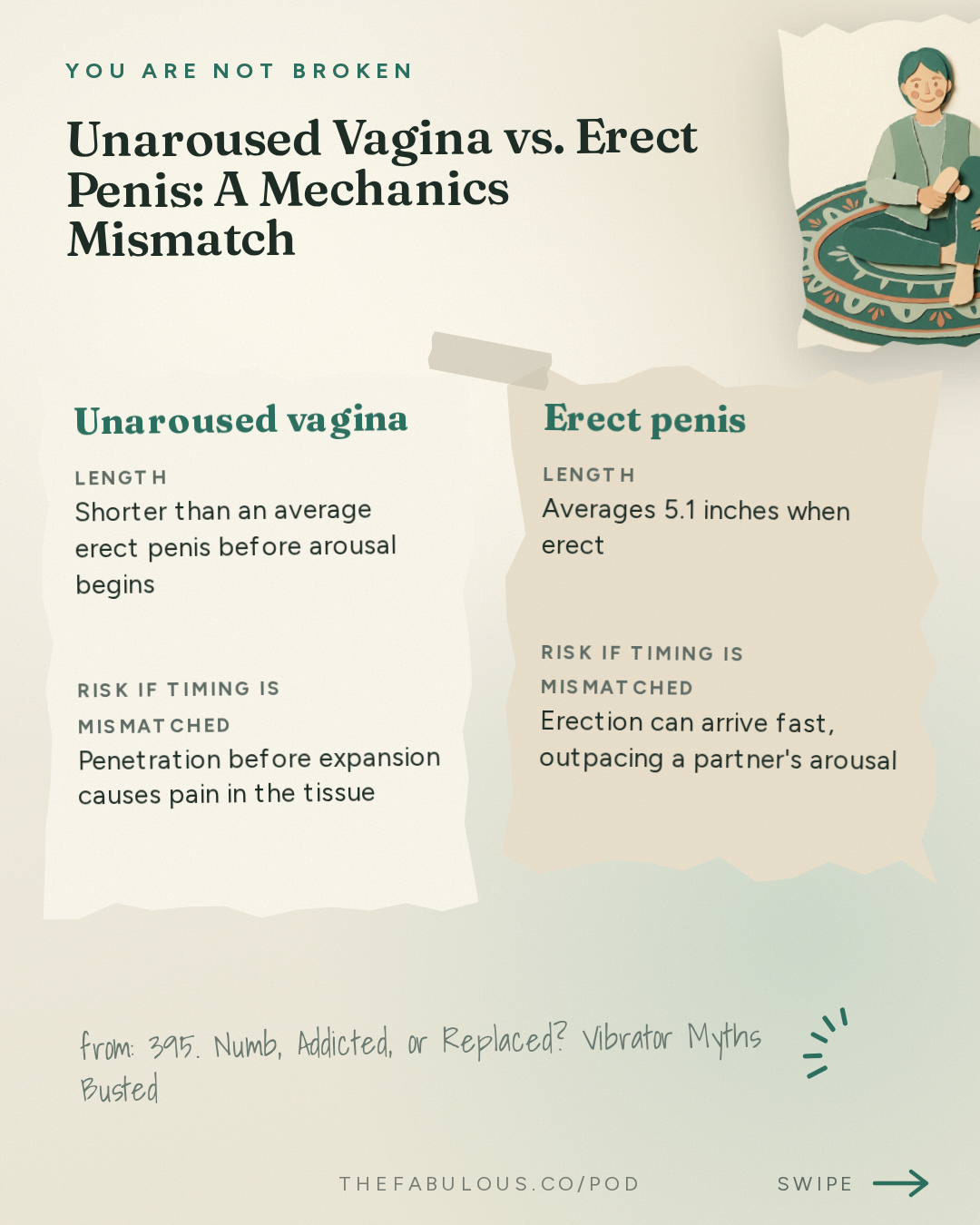
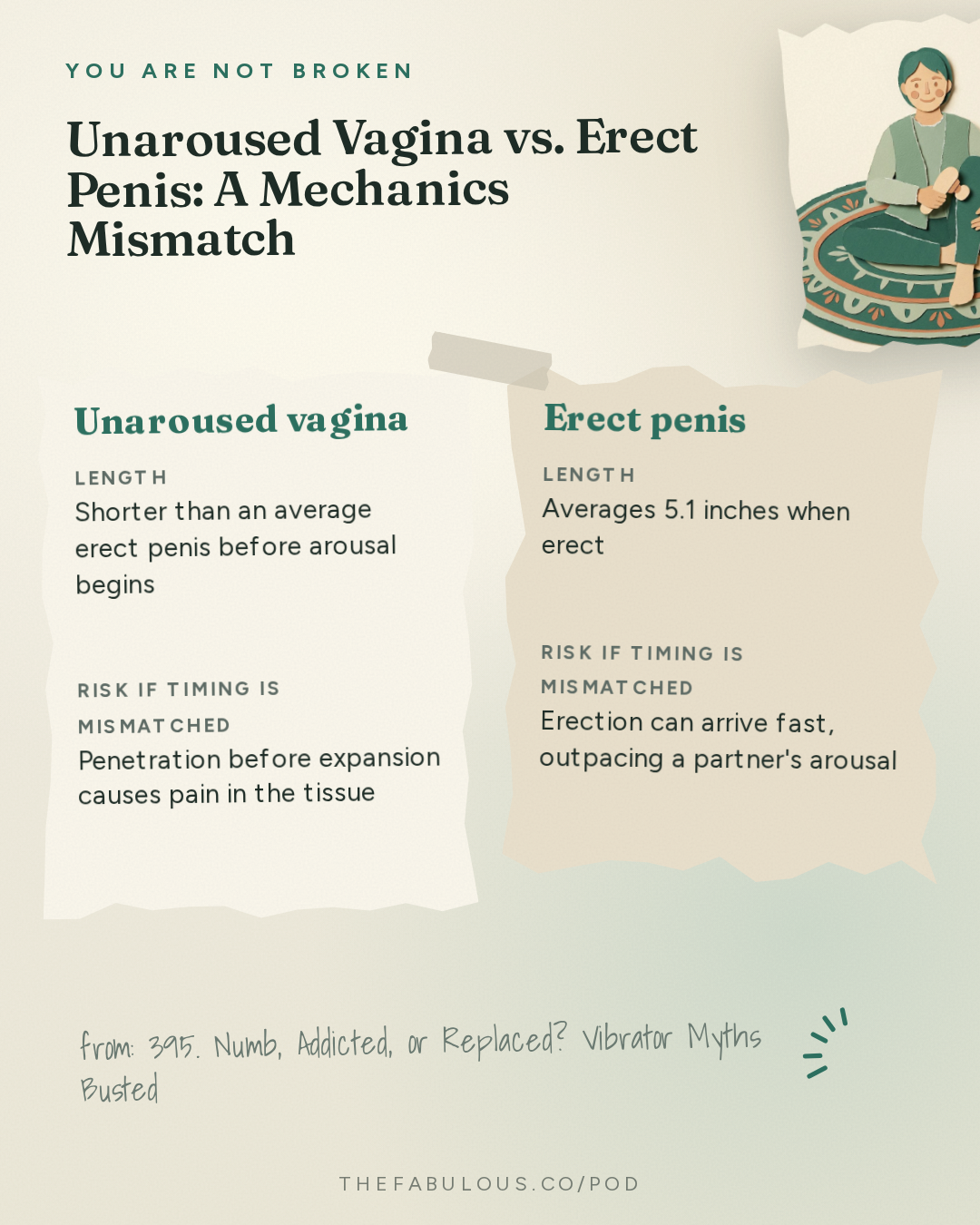
That neglect has consequences that show up in exam rooms. The most common one, Casperson says, is women in their twenties experiencing pain during sex because of simple mechanics: an unaroused vagina is shorter than the average erect penis (24:02). Average erect length runs about 5.1 inches; an aroused vagina, once blood flow has done its work, expands to somewhere between four and seven inches (24:31). Skip the arousal step, and the numbers do not line up.
"Do not put erect things in unprepared pelvises. Do not. It hurts." — Dr. Kelly Casperson [24:52]This is not about technique or desire, she stresses. It is tissue mechanics, the kind of thing that used to be called foreplay before the word fell out of fashion, and the kind of thing nobody teaches in a tenth-grade health class built around disease and pregnancy prevention.
The same logic reorders how desire itself is supposed to work. The textbook version, drawn from Masters and Johnson's research in the 1950s, runs in a straight line: desire, then arousal, then orgasm (13:34). That model fits a fairly common male experience and a much less common female one. Sexologist Rosemary Basson published an alternative twenty-five years ago (20:59): for many women, desire shows up after arousal has already started, triggered by context and touch rather than preceding it (14:00). Women who wait around for spontaneous desire before agreeing to sex, by this model, may be waiting for a signal that was never going to arrive first. It is not dysfunction. It is a different order of operations.
Orgasm itself, Casperson argues, is rarely a single-input event. She borrows a line from orgasm researcher Barry Komisaruk:
"The more roads going to Rome, the better your chance of orgasm." — Dr. Kelly Casperson, citing Barry Komisaruk [26:37]The pelvis carries several distinct nerve pathways, including the pelvic and pudendal nerves, and the cervix connects to the vagus nerve as well (26:37). Stimulating more of them at once, she says, tends to produce stronger, more reliable orgasms than relying on one pathway alone, which is part of why she designed her own vibrator, The Explorer, to work the external vulva rather than require penetration (05:12).
What the Data Actually Show
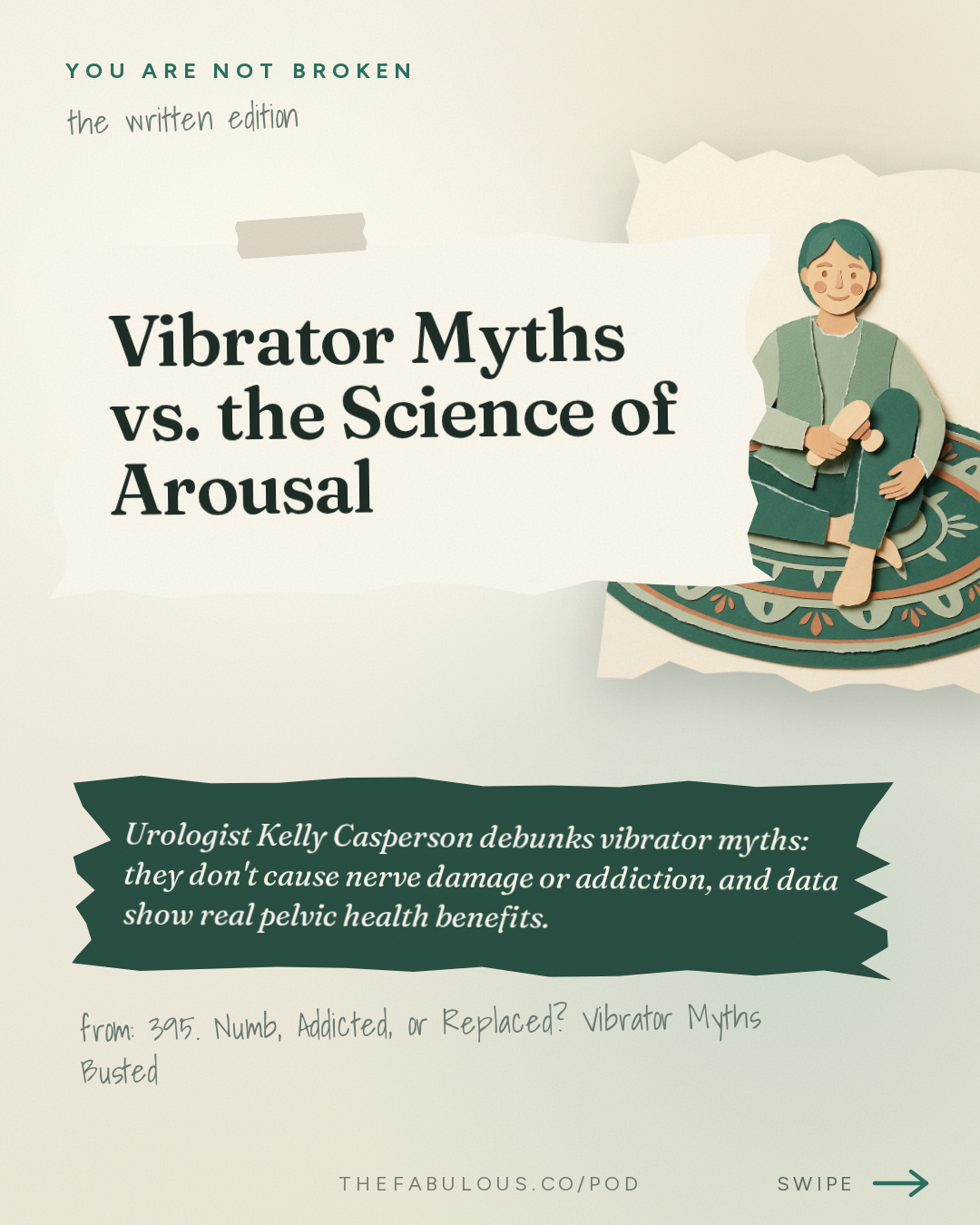
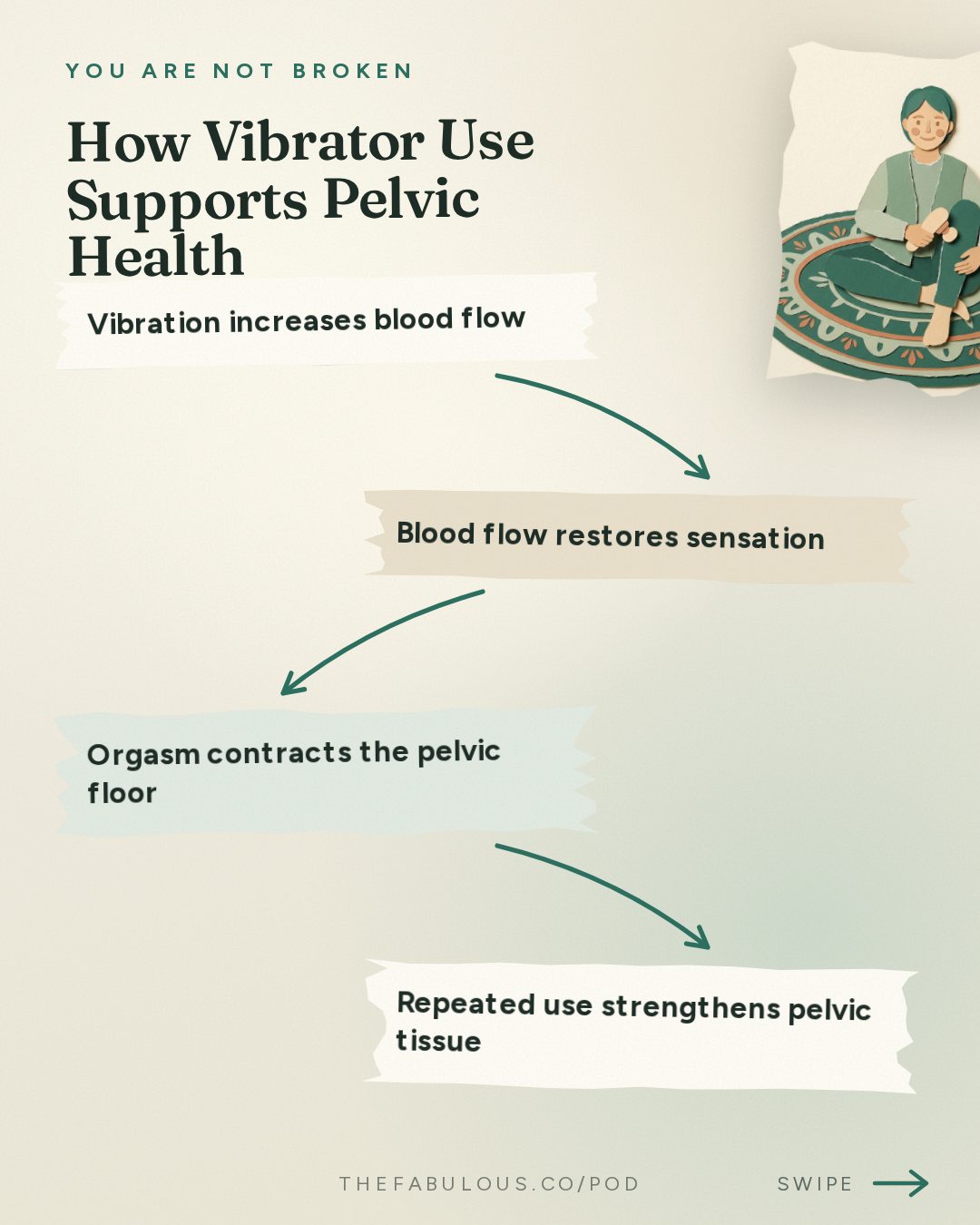
The second half of the talk turns from anatomy to evidence, and the numbers are more generous to vibrators than their cultural reputation suggests. A 2025 study in the Journal of Sexual Medicine linked sexual device use to higher orgasm intensity, arousal, and satisfaction (33:01). A qualitative study in the American Journal of Obstetrics and Gynecology found women reporting improvements in confidence, mood, sleep, and also urinary incontinence, pelvic pain, and muscle strength after vibrator use (33:33). In a separate study on vulvar vibration therapy for chronic pain, 73 percent of participants said sex was less painful after starting treatment, and 88 percent said they would recommend it to others (35:51). None of this is secret or fringe; it is published, peer-reviewed, and largely unread by the people it is meant to help, including many physicians.
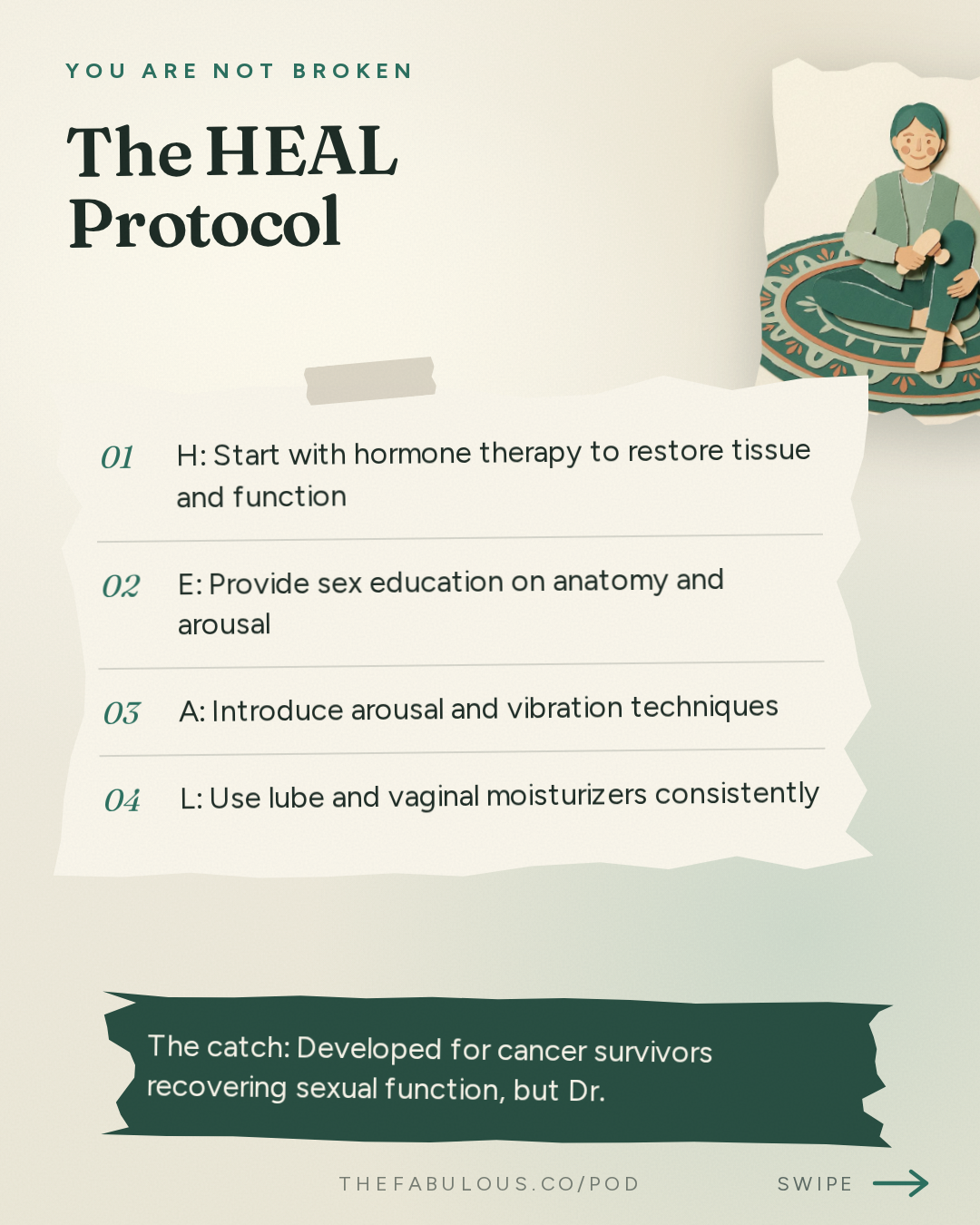
Out of that research, Casperson and co-author Dr. Corinne Mann built what they call the HEAL protocol, aimed first at cancer survivors whose sexual tissue and confidence take a hit that oncology rarely addresses, though Casperson argues it applies more broadly (36:19). H is for hormones, E for sex education, A for arousal and vibration, L for lube and moisturizers. It is a sequence, not a single fix, which is itself an argument against the common, lazy prescription she criticizes: telling a patient in a ten-minute visit to 'just masturbate' without knowing whether they have ever used a vibrator, or whether low desire is really a hormone problem, a pain problem, or a bad-sex problem (35:22).
Testosterone gets its own detour, and a pointed one. Casperson pushes back on the idea that testosterone in women only affects libido, citing research showing it improves arousal, orgasm, lubrication, inflammation, and pain across the board (29:27), with two studies linking systemic testosterone to improvements in stress incontinence as well (30:11). It is a reminder that the categories doctors use to sort sexual complaints, desire here, pain there, often do not match the underlying biology, which is simply blood flow and hormones doing or not doing their job everywhere at once.
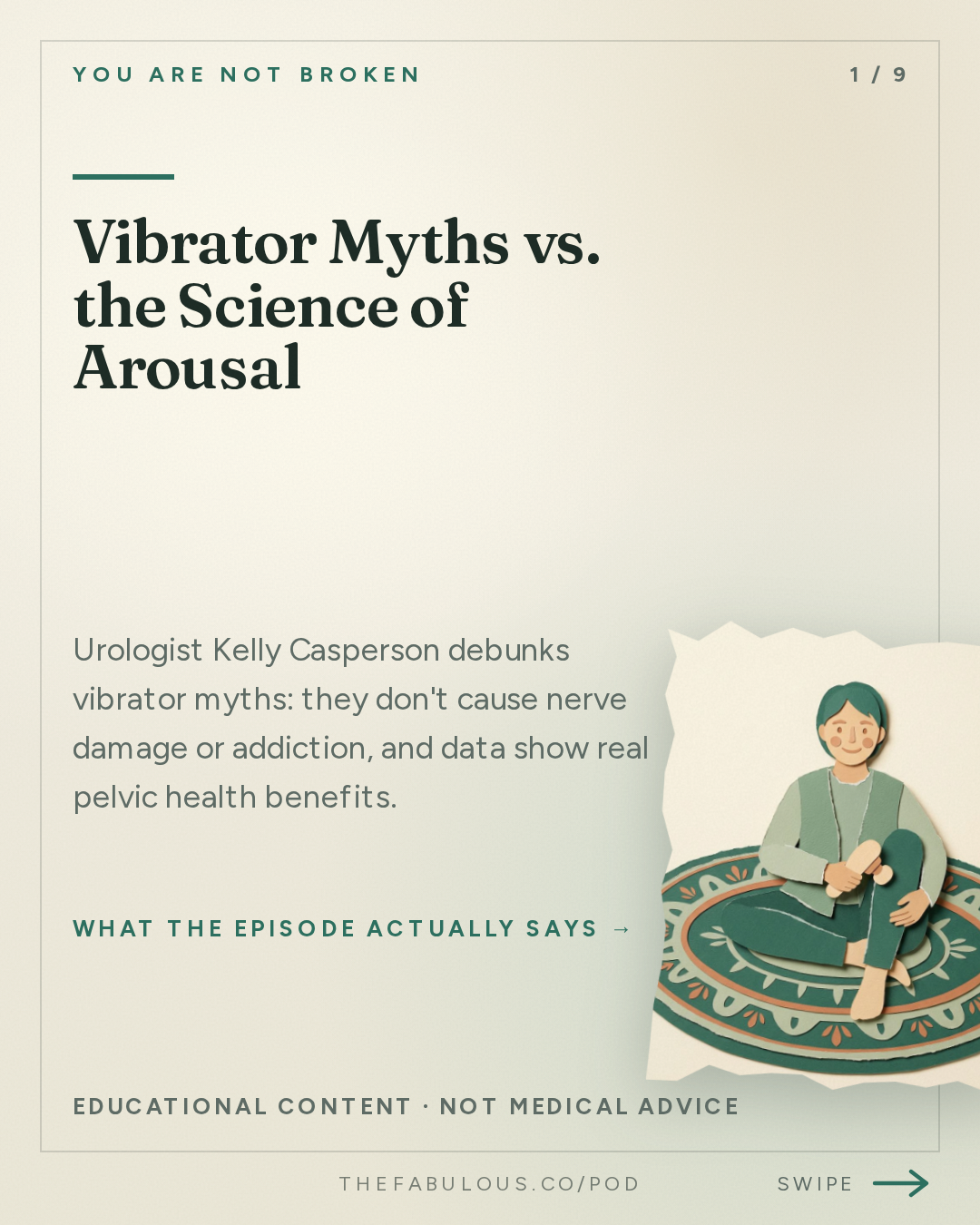
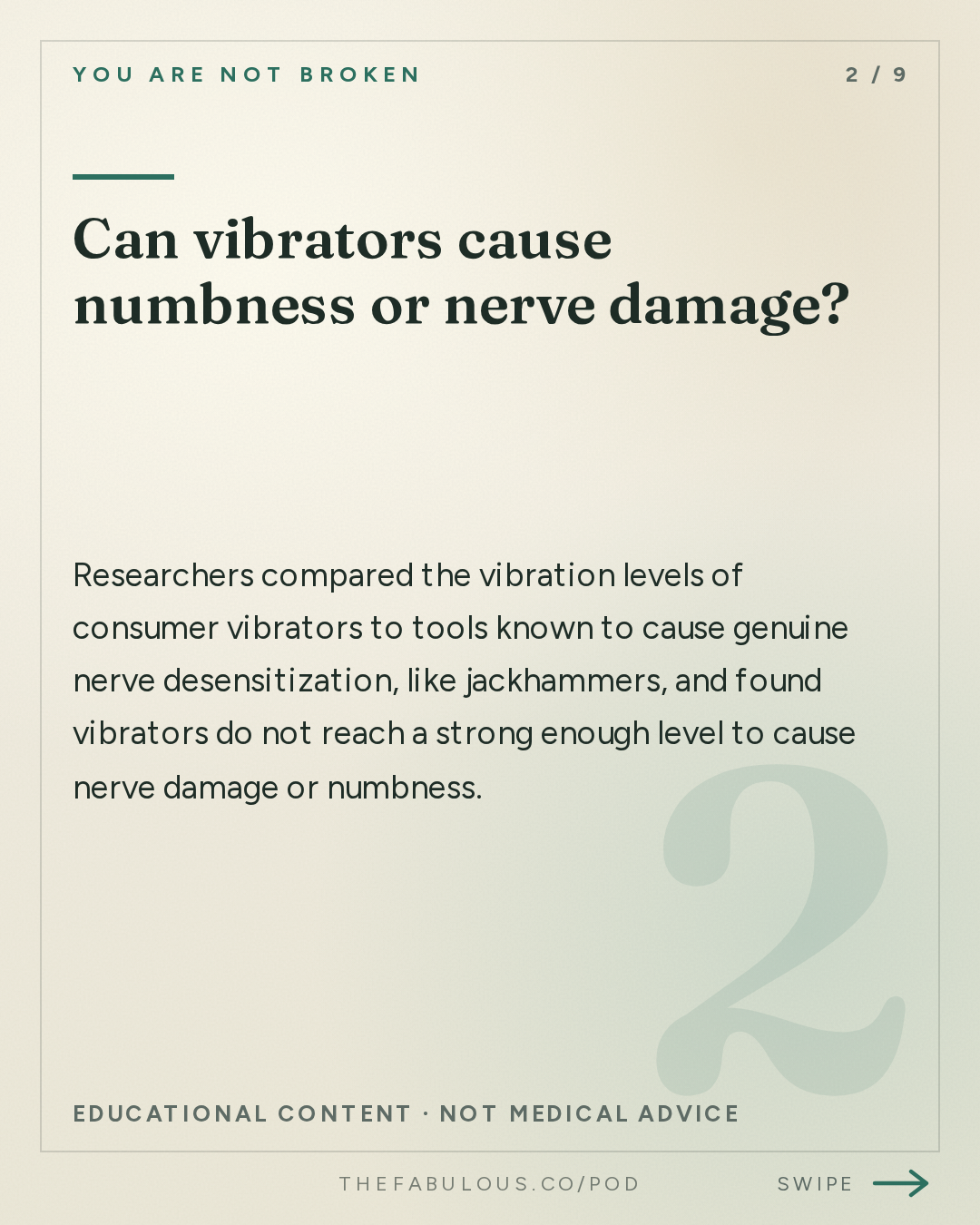
Finally, the myths. Can a vibrator cause nerve damage or numbness? Researchers have compared vibrator intensity to tools known to cause genuine nerve desensitization, like jackhammers, and found consumer vibrators do not come close to that threshold (42:45). Can someone get addicted to one? Casperson's answer is a shrug: using a tool that makes a pleasurable experience easier is not addiction, any more than driving to the grocery store instead of walking is an addiction to cars (63:56). And squirting, often confused with orgasm, is a separate physiological event entirely; the two can happen together or apart (54:16), a distinction she notes even some long-married couples have never sorted out.
What holds the whole hour together is not product advice, though there is plenty of that, but a kind of correction. Women have had this information before. Shere Hite published findings on clitoral orgasm decades ago and was, Casperson notes, effectively driven out of the country for it (17:33). The data keeps getting discovered, forgotten, and rediscovered, not because the science is unsettled but because the subject makes people uncomfortable enough to look away. Casperson's closing list is short enough to remember without the slides: pain is not normal, pleasure is allowed, desire is not fixed, and it is never too late to find out what the body was actually built to do (44:03).
Ask this episode anything
Pod's AI answers from the episode itself, with the minute mark so you can hear it yourself.
Or start with one of these
Ask this episode
Pod's AI listens to the whole episode to answer, and points you to the minute it comes from.
The rest of this answer, and any question after it
Answers come from the episode itself, never from a summary of it.
ContinueKey takeaways
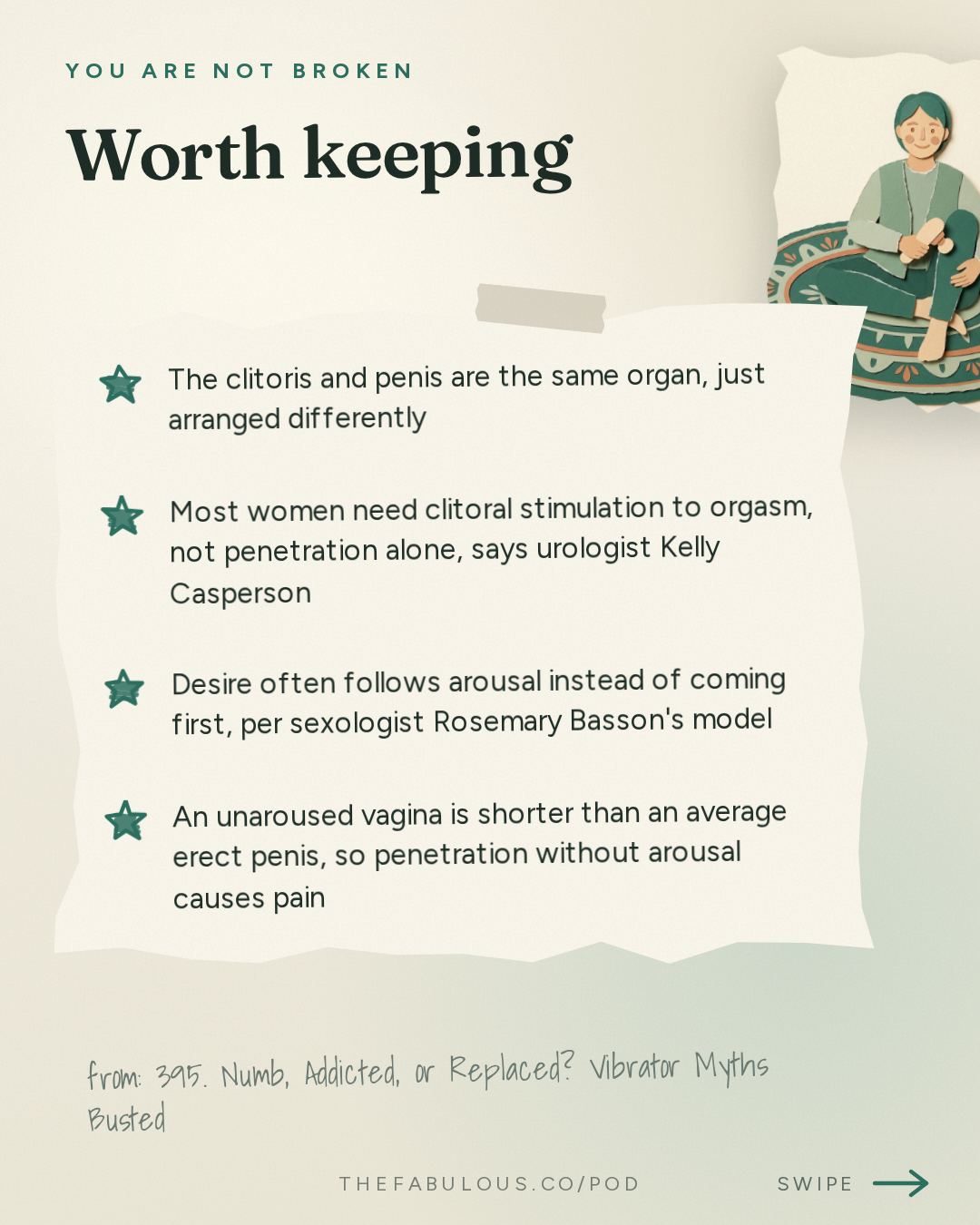
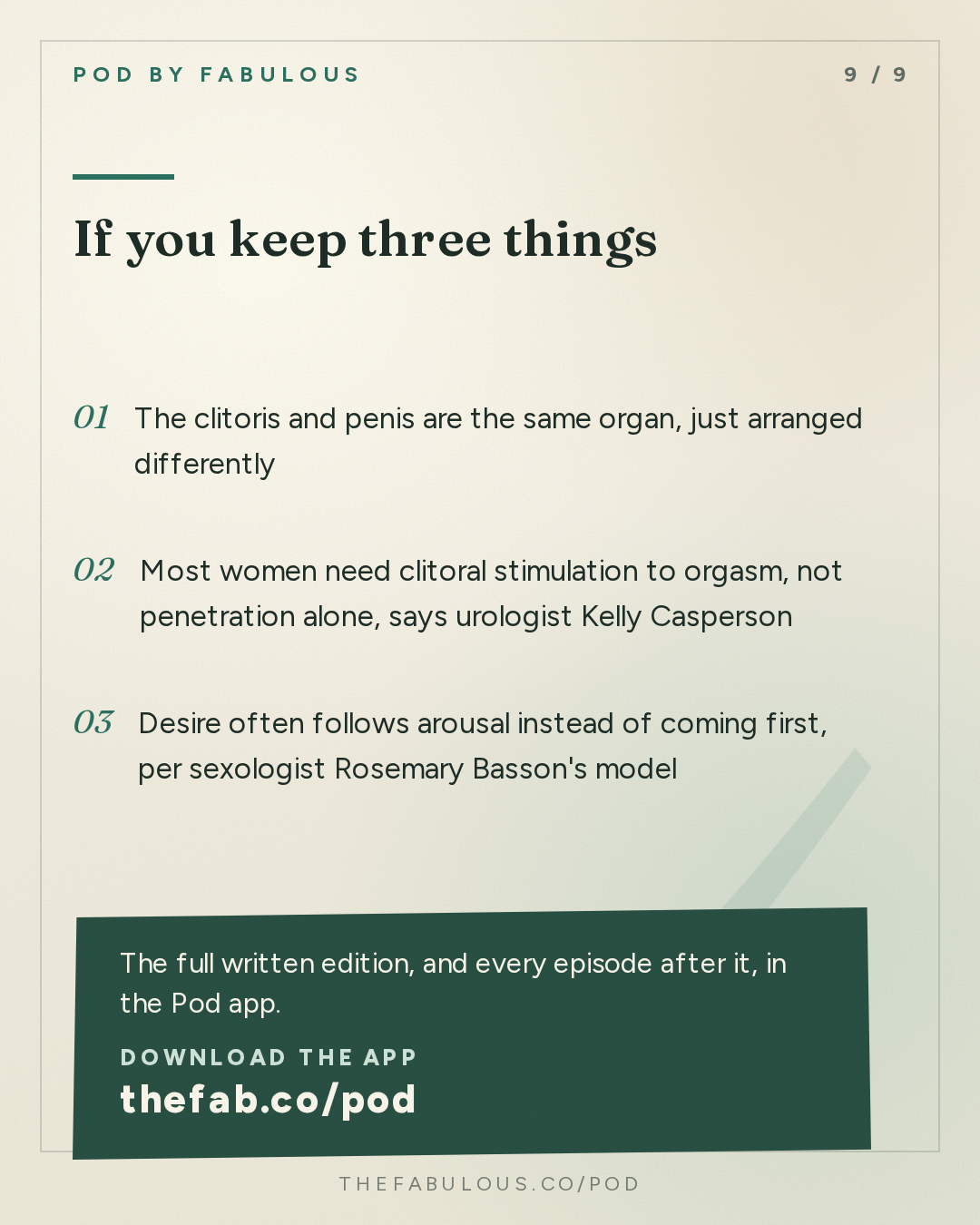
- The clitoris and penis are the same organ, just arranged differently
- Most women need clitoral stimulation to orgasm, not penetration alone, says urologist Kelly Casperson
- Desire often follows arousal instead of coming first, per sexologist Rosemary Basson's model
- An unaroused vagina is shorter than an average erect penis, so penetration without arousal causes pain
- Vibrators do not cause nerve damage, addiction, or numbness at consumer-level vibration strength
The episode in cards
By the numbers
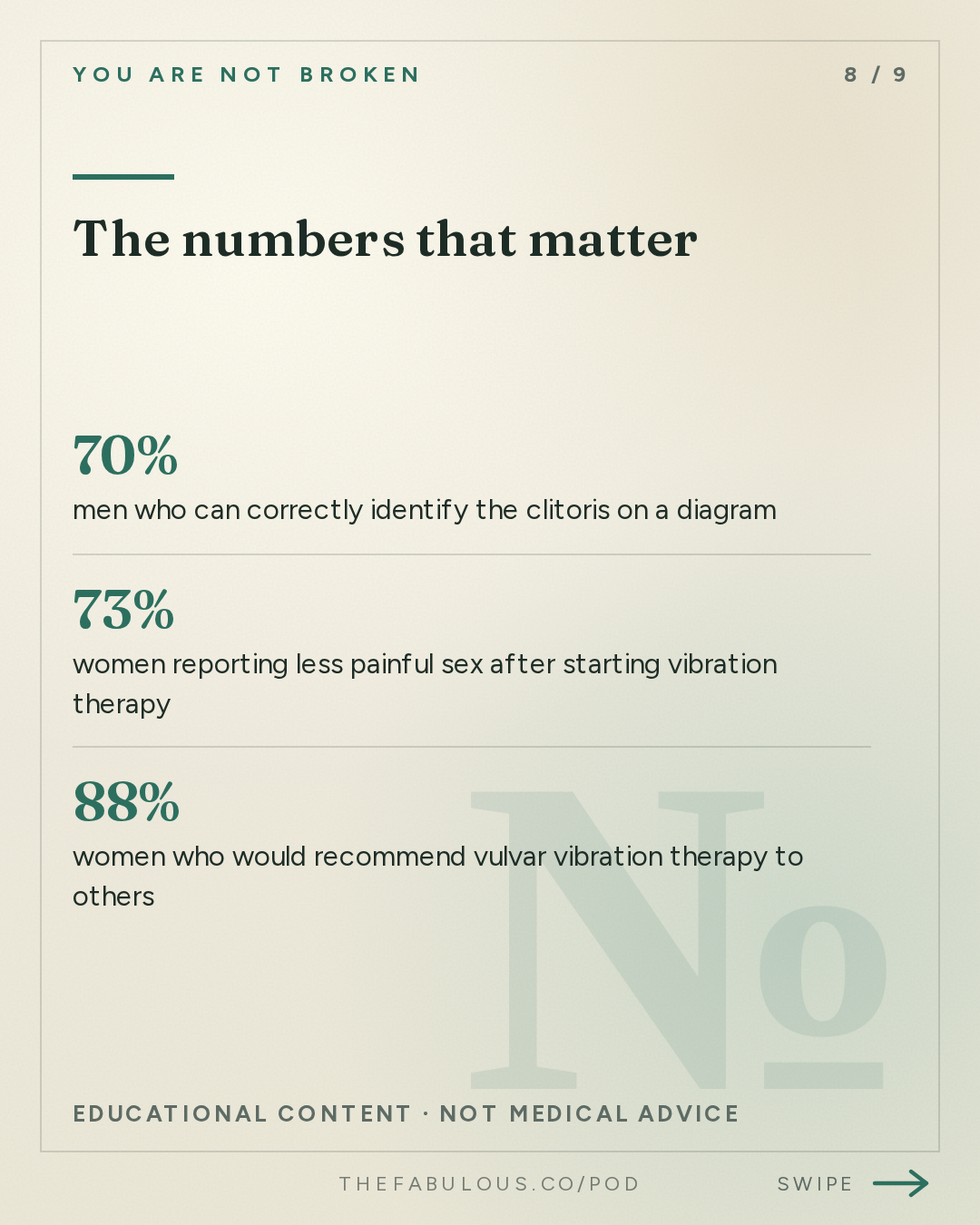
- 70% percent men who can correctly identify the clitoris on a diagram
- 73% percent women reporting less painful sex after starting vibration therapy
- 88% percent women who would recommend vulvar vibration therapy to others
In their words
“The penis is a clitoris that fell out of your body.”
“The more roads going to Rome, the better your chance of orgasm.”
“Do not put erect things in unprepared pelvises. Do not. It hurts.”
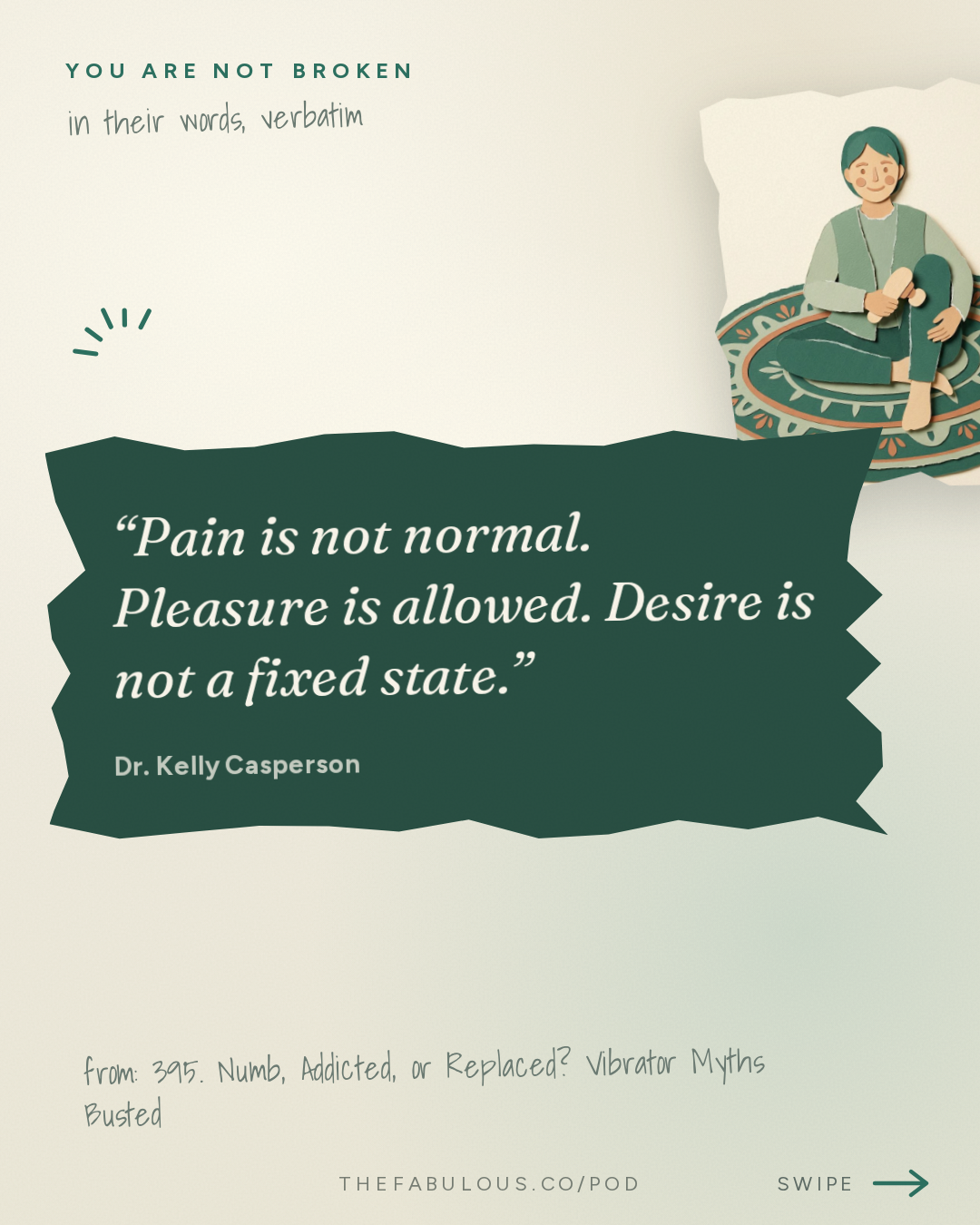
“Pain is not normal. Pleasure is allowed. Desire is not a fixed state.”
Protocols
-
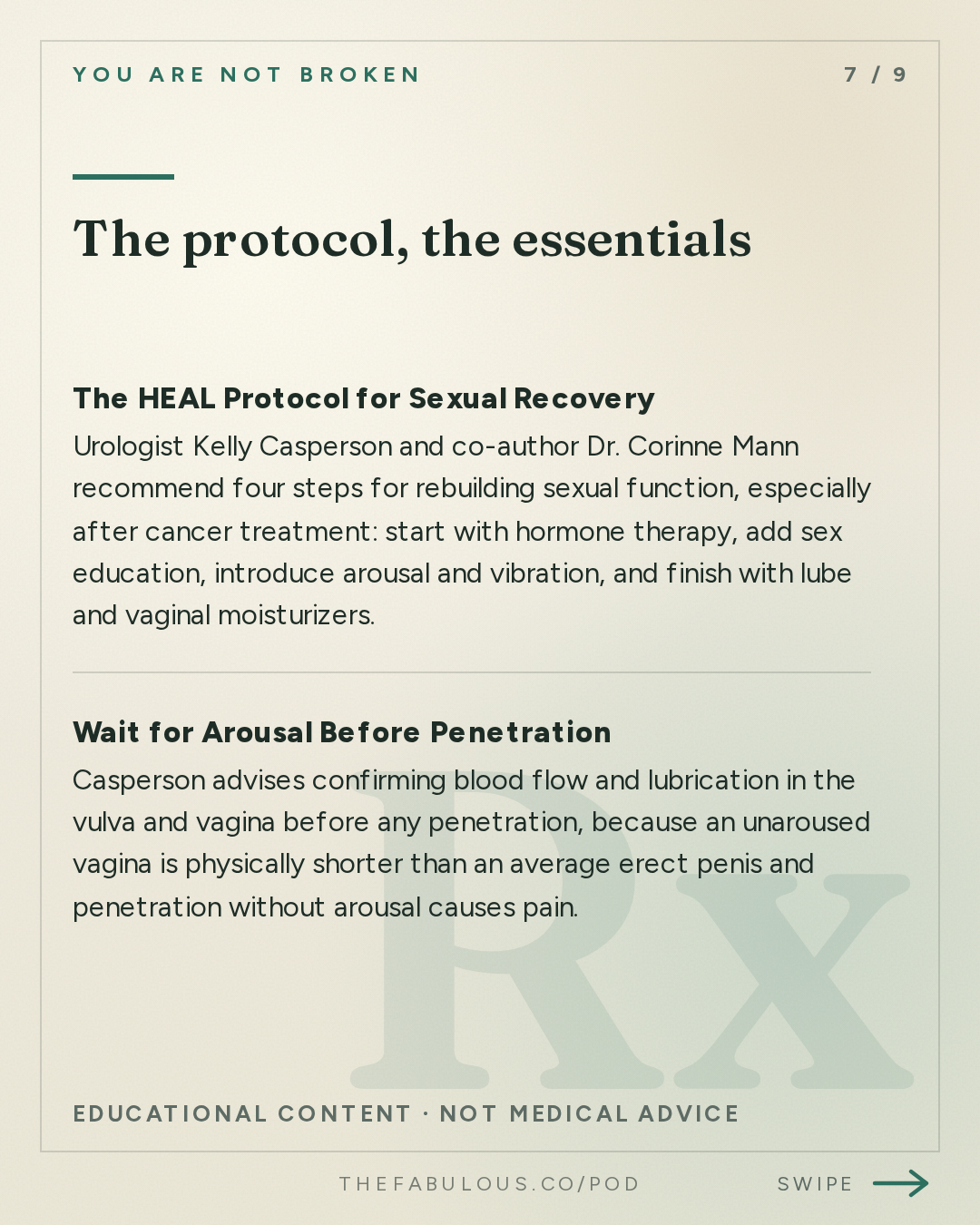
The HEAL Protocol for Sexual Recovery
Urologist Kelly Casperson and co-author Dr. Corinne Mann recommend four steps for rebuilding sexual function, especially after cancer treatment: start with hormone therapy, add sex education, introduce arousal and vibration, and finish with lube and vaginal moisturizers.
Applied as needed during sexual health recovery
-
Wait for Arousal Before Penetration
Casperson advises confirming blood flow and lubrication in the vulva and vagina before any penetration, because an unaroused vagina is physically shorter than an average erect penis and penetration without arousal causes pain.
Every sexual encounter
-
How to Choose a Vibrator
Casperson recommends spending between 80 and 200 dollars on a vibrator, because models under 80 dollars tend to use hard plastic and weaker motors, while pricing above 200 dollars mostly reflects marketing rather than better silicone or motor quality.
One-time purchase decision
Questions this episode answers
Can vibrators cause numbness or nerve damage?
Researchers compared the vibration levels of consumer vibrators to tools known to cause genuine nerve desensitization, like jackhammers, and found vibrators do not reach a strong enough level to cause nerve damage or numbness (42:45).
Can you get addicted to a vibrator?
Urologist Kelly Casperson says no: relying on a tool that makes pleasure easier to access is habituation, not addiction, similar to driving to the store instead of walking rather than a dependency (63:56).
Why does sex hurt for some women?
An unaroused vagina is physically shorter than an average erect penis, so penetration before enough blood flow and arousal has occurred can cause pain that has nothing to do with disease or aging (24:02, 24:31).
Does testosterone help female sexual function beyond libido?
Published research cited in the episode shows testosterone improves arousal, orgasm intensity, lubrication, and pain, not just desire (29:27), and two studies link systemic testosterone to improved stress incontinence as well (30:11).
What is the G-spot, medically speaking?
Clinically it is called the periclitoral urethral complex, a sensitive area beneath the urethra made of clitoral nerve tissue rather than a separate organ (19:00).
Do vibrators help with pelvic floor or urinary problems?
A qualitative study in the American Journal of Obstetrics and Gynecology found women reported improved urinary incontinence, pelvic pain, and muscle strength after vibrator use (33:33), and a separate study found 73% reported less painful sex after vibration therapy (35:51).
The full read, in cards
Go deeper
- Clinical Implications of the Historical, Medical, and Social Neglect of the Clitoris — Dr. Maria Uloko's 2023 Journal of Sexual Medicine paper found the clitoris is studied far less than the penis
- Journal of Sexual Medicine, 2025 study on sexual devices — linked vibrator use to higher orgasm intensity, arousal, and sexual satisfaction
- Intimacy and Empowerment in Urogynecology: A Qualitative Exploration of Vibrator Use — American Journal of Obstetrics and Gynecology study tied vibrator use to improved incontinence and pelvic pain
- Patient perceptions of vulvar vibration therapy for refractory vulvar pain — found 73% reported less painful sex and 88% would recommend the therapy
- The Hite Report — Shere Hite's research argued most women orgasm through clitoral stimulation, not penetration
Mentioned
Dr. Kelly Casperson · Elixir Play · The Explorer · Rosemary Basson · Shere Hite · The Hite Report · Barry Komisaruk · We-Vibe Melt · Uberlube · Magic Wand · Dr. Maria Uloko · Dr. Corinne Mann
More from this show and category
Chronic Testicular Pain: Causes and Treatment
Urologist Dr. Susan McDonald explains why chronic testicular pain is common but routinely dismissed, and how a careful surgery can cure it. She also describes being diagnosed with stage 4 de novo breast cancer while working as a surgeon, and how her hospital employer tied her health insurance to full-time status during treatment.
Building Muscle in Midlife: Hormones Explained
Heavy resistance training, not cardio, rebuilds muscle lost in perimenopause, say physicians Kelly Casperson and Rebeccah Hertel. They cite data showing testosterone cuts hip fracture risk in women by about 50%, estrogen patches can help bone density well past age 60, and widely used lab ranges and 1990s-era studies understate hormone therapy's safety.
Menopause Advocacy and Policy Reform Guide
Lawyer Jennifer Weiss-Wolf compares menopause advocacy to a choose-your-own-adventure book: everyone brings different skills. She traces today's momentum back to 1992's 'Year of the Woman' and the 2002 Women's Health Initiative backlash, and warns that US law still has no explicit protection against menopause discrimination at work (36:59), so she tells people to write to legislators and file FDA comments instead of venting online (17:49).
Vaginal Estrogen for UTI Prevention
Urologist Dr. Kelly Casperson explains that genitourinary syndrome of menopause (GSM) affects 50% to 90% of postmenopausal women. Vaginal estrogen cuts recurrent urinary tract infections by half, lowers hospitalization and death risk, and is safe for most breast cancer survivors, yet only 9% of women diagnosed with GSM get a prescription.
