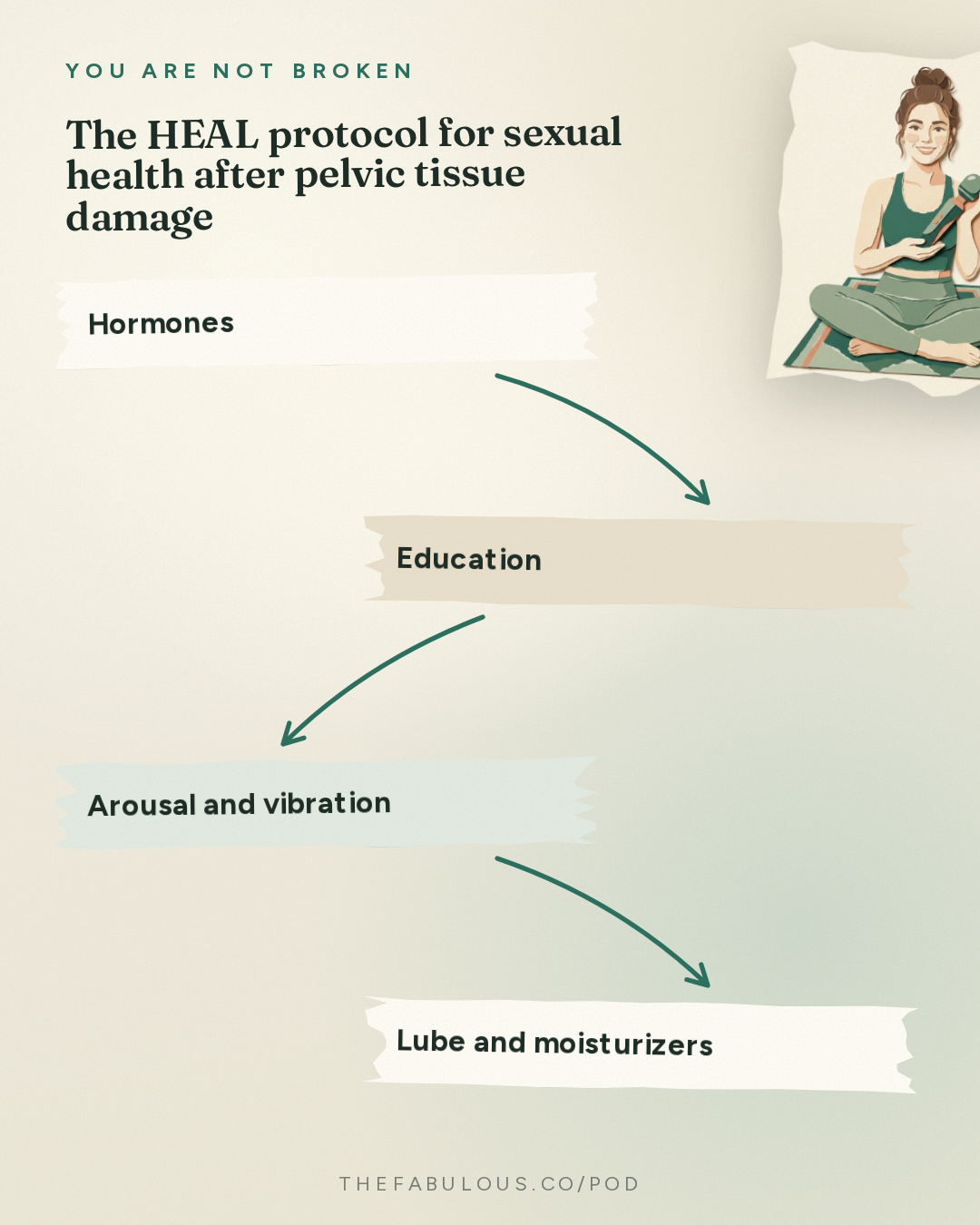
Vibrator Benefits for Menopause and Pelvic Health
395. Numb, Addicted, or Replaced? Vibrator Myths Busted
The brief
Dr. Kelly Casperson, a board-certified urologist, explains that the clitoris and penis form from the same embryonic tissue, that most women need clitoral stimulation to orgasm, and that clinical studies show vibration therapy eases pelvic pain and incontinence, with no evidence it causes numbness or addiction (43:47, 37:59).
Seventy percent. That is the share of men, in surveys Dr. Kelly Casperson cites, who can correctly point to the clitoris on a diagram of the vulva (09:17). Ninety percent of men, as a general population statistic, are heterosexual. The gap between who is having sex with whom and who understands the anatomy involved is, in Casperson's telling, the quiet scandal at the center of modern sex education. Her podcast, You Are Not Broken, exists largely to close it, and this episode, a recorded webinar on vibrators, spends most of its hour not on gadgets but on the biology that makes them useful.
The foundational fact is embryological. The clitoris and the penis develop from the same fetal tissue and simply get folded into different final shapes (09:17). Casperson puts it plainly in the session:
The clitoris is the penis. The penis is the clitoris. It is the same structure rearranged in different body parts. [09:17]
Later she repeats a line she picked up from a colleague at a conference run by the International Society for the Study of Women's Sexual Health: the penis is a clitoris that fell outside the body (22:10). Internally, the clitoris has two legs, or crura, that run along the pelvic floor under the labia, the same tissue that forms the shaft of a penis externally. This is not a metaphor. It is why Casperson built her own vibrator, a palm-sized device called the Explorer, to stimulate the external vulva and those internal legs rather than to penetrate (12:20). The majority of women, she notes, do not reach orgasm through vaginal penetration alone (10:11), a finding she traces back to Shere Hite's 1980s Hite Report, which documented the same thing decades before vibrators were mainstream and before Hite, hounded by backlash, left the country.
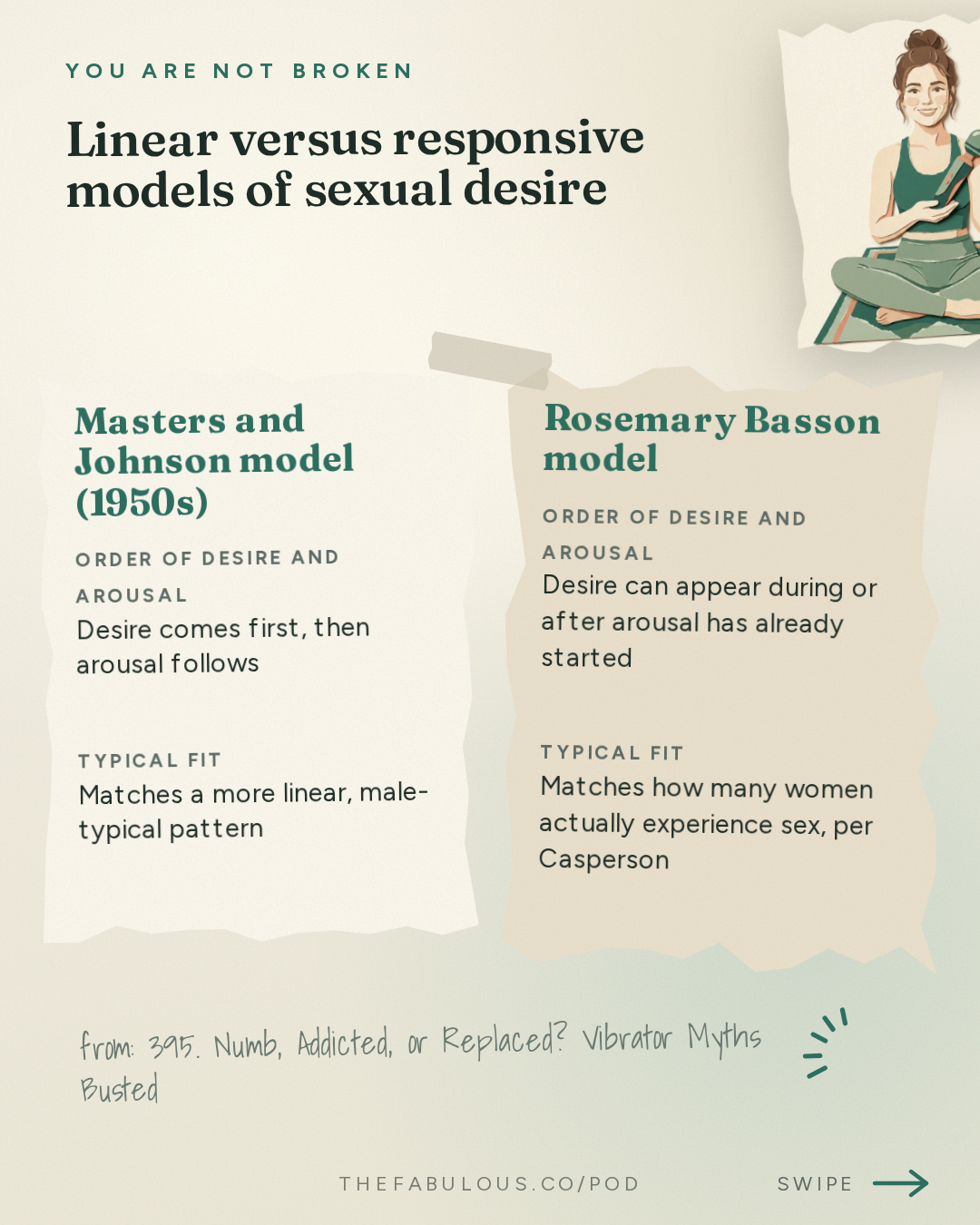
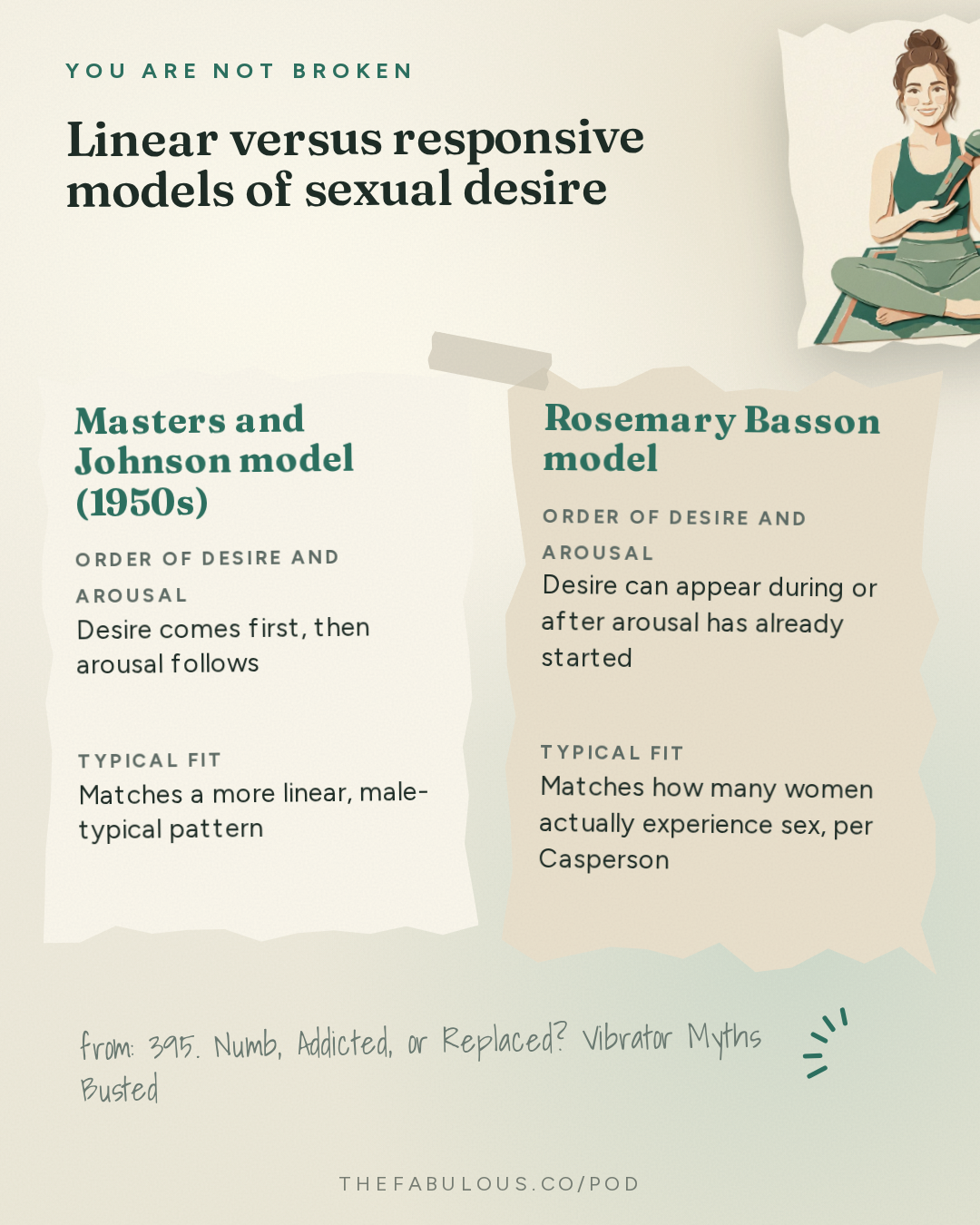
Casperson also walks through why the old script of sexual response fails so many women. The model most people absorb, built on Masters and Johnson's 1950s research, runs in a straight line: desire, then arousal, then orgasm (13:22). But sex researcher Rosemary Basson proposed a different sequence 25 years ago, one where desire often shows up during arousal, or after it, rather than before (13:49). A woman waiting to feel spontaneous desire before agreeing to sex may be waiting for a cue her body was never designed to send first. Surround yourself with sexual context, Casperson argues, and desire tends to follow blood flow, not precede it.
That emphasis on blood flow is the throughline of the whole talk. Casperson is a urologist, and urologists, she says, are blood flow doctors. An unaroused vagina is shorter than an average erect penis: four to seven inches aroused versus 5.1 inches for the penis (25:05). Insert one into the other before arousal has had time to lengthen and lubricate the vaginal canal, and the result is pain, not pleasure (24:36). She sees this pattern often in young patients: sex starts the moment a partner is erect, with no attention paid to whether she is. Her advice is blunt:
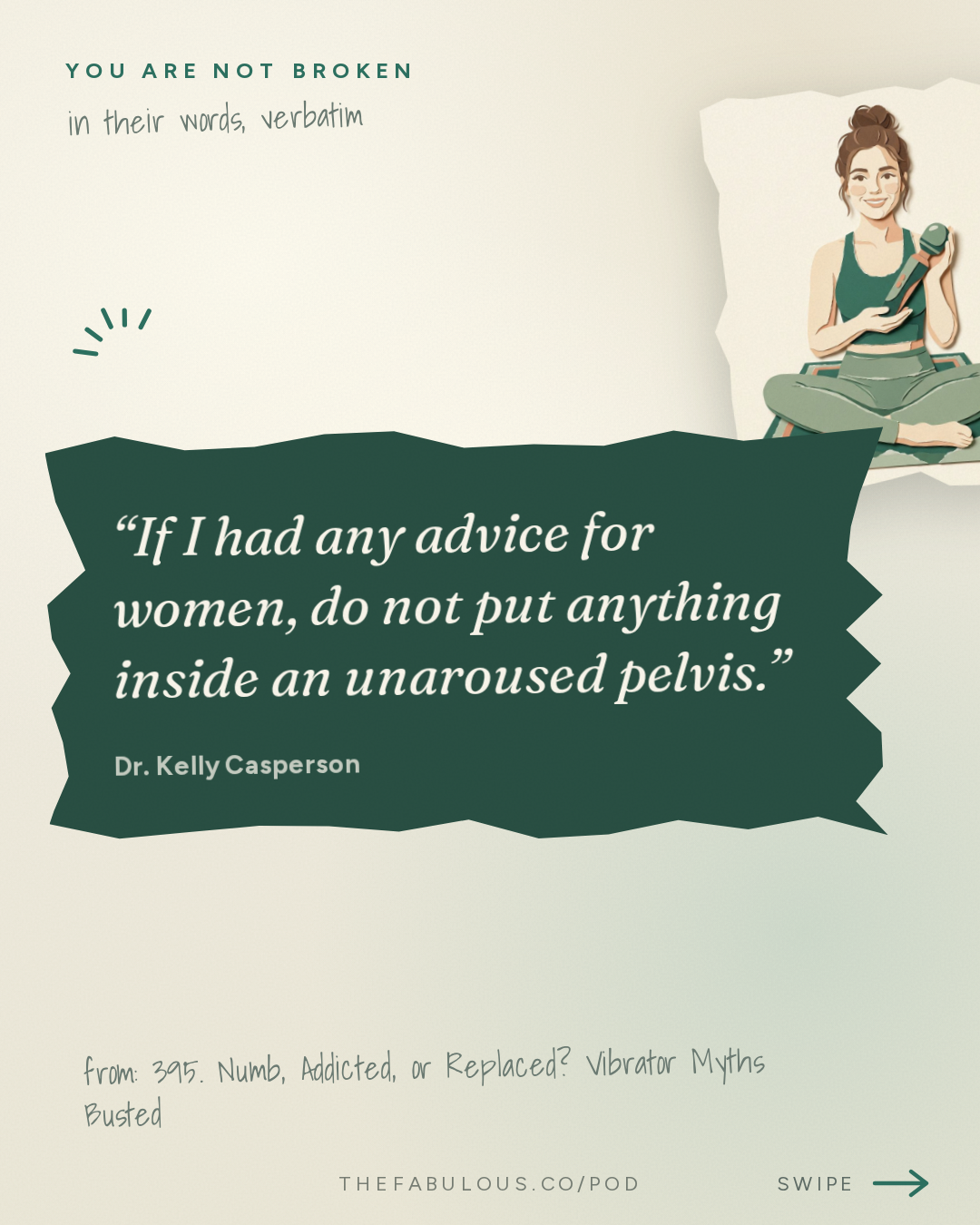
If I had any advice for women, do not put anything inside an unaroused pelvis. [59:34]
Why one touch is rarely enough
Orgasm, in this framework, is not a single-switch event. Casperson cites orgasm researcher Barry Komisaruk's observation that the pelvis is served by at least three distinct nerves, the pelvic nerve, the pudendal nerve, and branches of the vagus nerve that reach as high as the cervix (27:11). Stimulate more of those pathways at once, through touch, vibration, breast contact, or breathing, and the odds and intensity of orgasm both go up. Komisaruk's own phrase for this, which Casperson repeats as a kind of refrain:
The more roads going to Rome, the better your chance of orgasm. [27:11]
A single nerve pathway, say a penis moving inside a vagina with no other stimulation, is one road. It can work, but it is statistically the harder way to get to Rome.
The reason so few people know any of this, Casperson argues, is a decades-long research imbalance. She cites a 2023 paper by fellow urologist Maria Yelco in the Journal of Sexual Medicine arguing that for every ten studies on the penis, there are zero on the clitoris (29:09). Clinicians are left extrapolating: if smoking and heart disease damage penile blood flow, they probably damage clitoral blood flow the same way, because it is, again, the same tissue. The same logic extends to testosterone, which Casperson says has documented benefits across arousal, orgasm, lubrication, and pain, not just the low-libido indication it usually gets reduced to (30:04).
What the vibrator studies actually show
Vibration therapy itself now has a small but real evidence base. Casperson points to a 2025 Journal of Sexual Medicine study linking sexual device use to higher orgasm intensity and satisfaction, and a 2026 American Journal of Obstetrics and Gynecology qualitative study on urogynecology patients reporting improved confidence, sleep, libido, and self-reported urinary incontinence after vibration use (34:19). A separate study on vulvar vibration therapy for chronic vulvar pain found 73 percent of participants reported less painful sex after starting treatment, and 88 percent said they would recommend it to others (37:59). None of the figures hit 100 percent, Casperson is careful to note. But the direction is consistent: vibration increases blood flow, and blood flow improves tissue quality, muscle strength, and pain thresholds, the same mechanism that makes Viagra work for men (34:44).
I don't think there's evidence saying putting a hard penis in your vagina does a damn thing. But vibration is blood flow. [34:44]
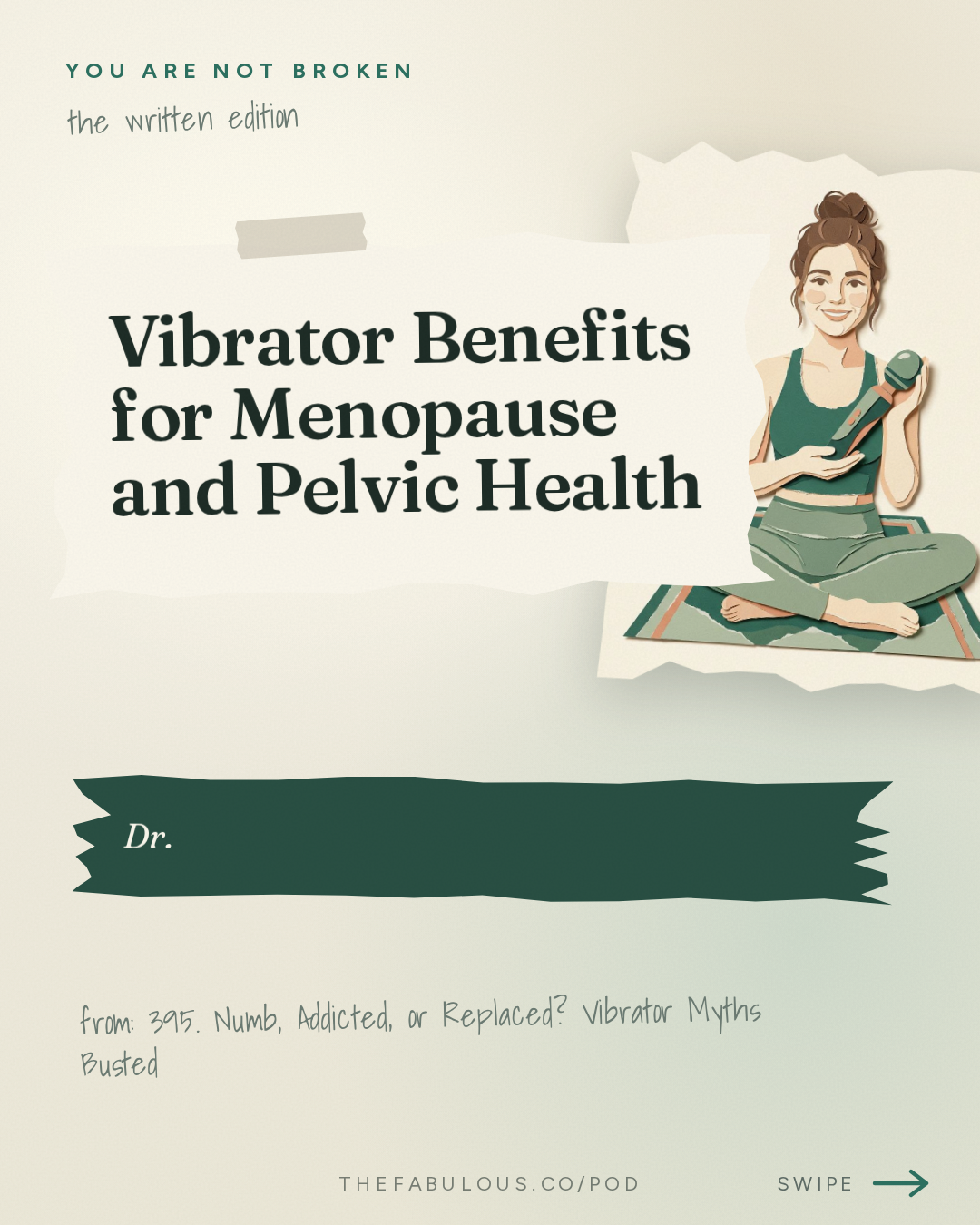
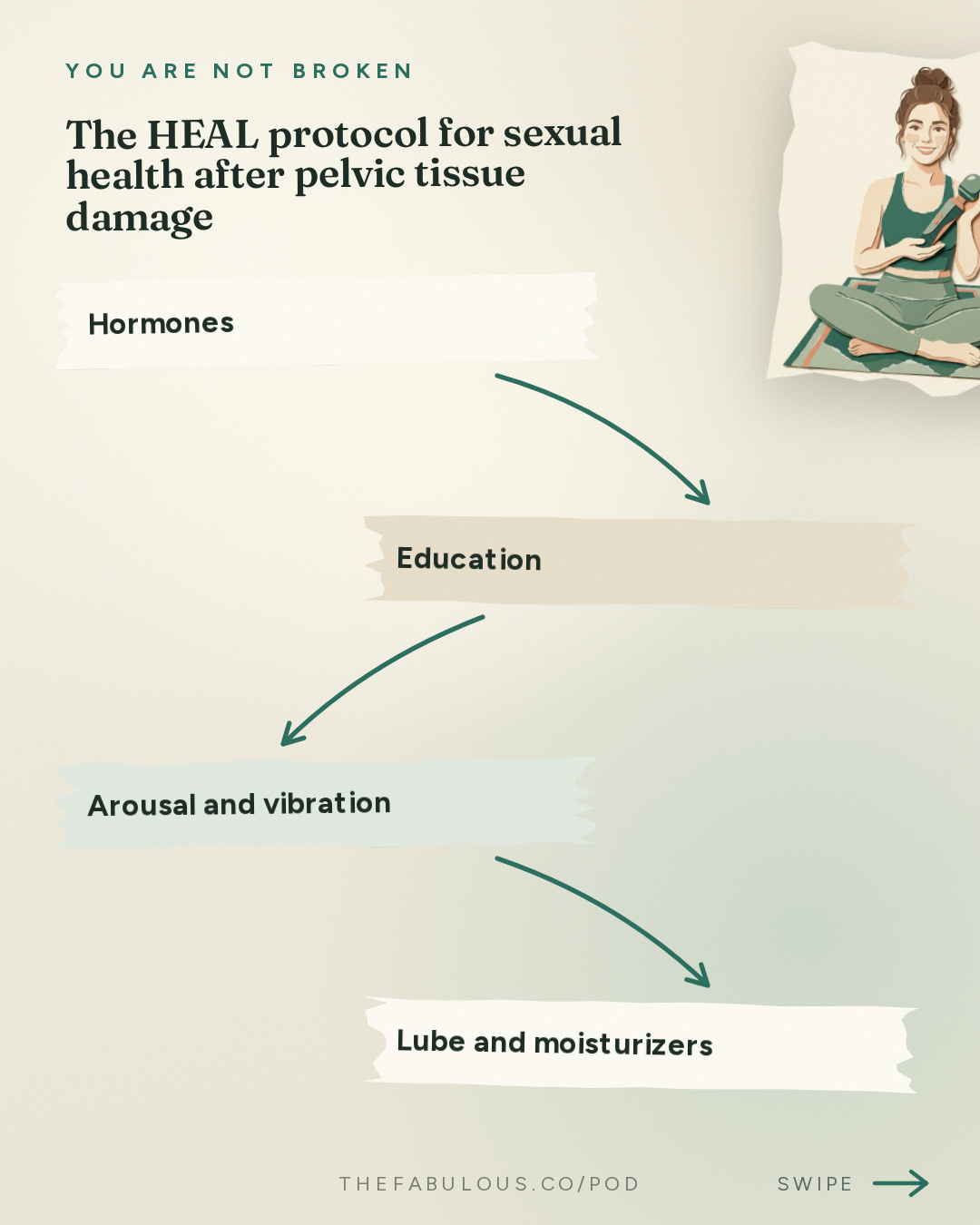
With her collaborator Dr. Corinne Mann, Casperson is formalizing this into something she calls the HEAL protocol, aimed first at cancer survivors whose treatment often damages pelvic tissue without anyone warning them in advance (38:21). HEAL stands for hormones, education, arousal and vibration, and lube, a four-part sequence meant to replace the single unhelpful line doctors sometimes offer in a ten-minute visit: just masturbate.
The second half of the episode is devoted to myth-busting, and the claims are specific enough to check. Can vibrators cause numbness through nerve damage? Casperson says the level of vibration consumer devices produce is far below what is needed to desensitize nerve tissue, unlike occupational exposures such as jackhammer use (44:03). Can someone get addicted to a vibrator? She compares it to driving instead of carrying groceries home on foot: using an easier tool for a pleasurable outcome is not addiction, it is convenience (66:53). Does a vibrator replace a partner? She argues the premise misunderstands the object: a vibrator's only function is to vibrate tissue, not to replace relational intimacy (43:47).
Practical details round out the hour. A legitimate vibrator, in her estimate, costs between 80 and 200 dollars, with higher-priced motors buying better silicone and quieter motors, and anything past 200 dollars mostly buying marketing (42:03). Squirting, she clarifies, is a separate phenomenon from orgasm, involving fluid likely from a mix of lubrication and urine from the bladder, and can happen with or without climax (56:00). Orgasm itself is measurable: a pelvic floor muscle contraction repeating roughly every 0.8 seconds (59:06), which is also why she tells patients with mild prolapse that vibrator use and orgasm can be part of pelvic floor strengthening rather than something to avoid (58:27). Silicone, the material used in most quality devices, is biologically inert, and true allergic reactions to it are rare (60:56).
What ties all of this together is not really the vibrators. It is the argument that pleasure has a measurable physiology, one that was documented, forgotten, and is now being re-documented, as Casperson puts it, describing how each generation seems to rediscover facts about the clitoris that an earlier generation had already proven. The devices in her bag are incidental. The real subject is blood flow, nerve pathways, and the cost of several decades spent not studying them.
Ask this episode anything
Pod's AI answers from the episode itself, with the minute mark so you can hear it yourself.
Or start with one of these
Ask this episode
Pod's AI listens to the whole episode to answer, and points you to the minute it comes from.
The rest of this answer, and any question after it
Answers come from the episode itself, never from a summary of it.
ContinueKey takeaways
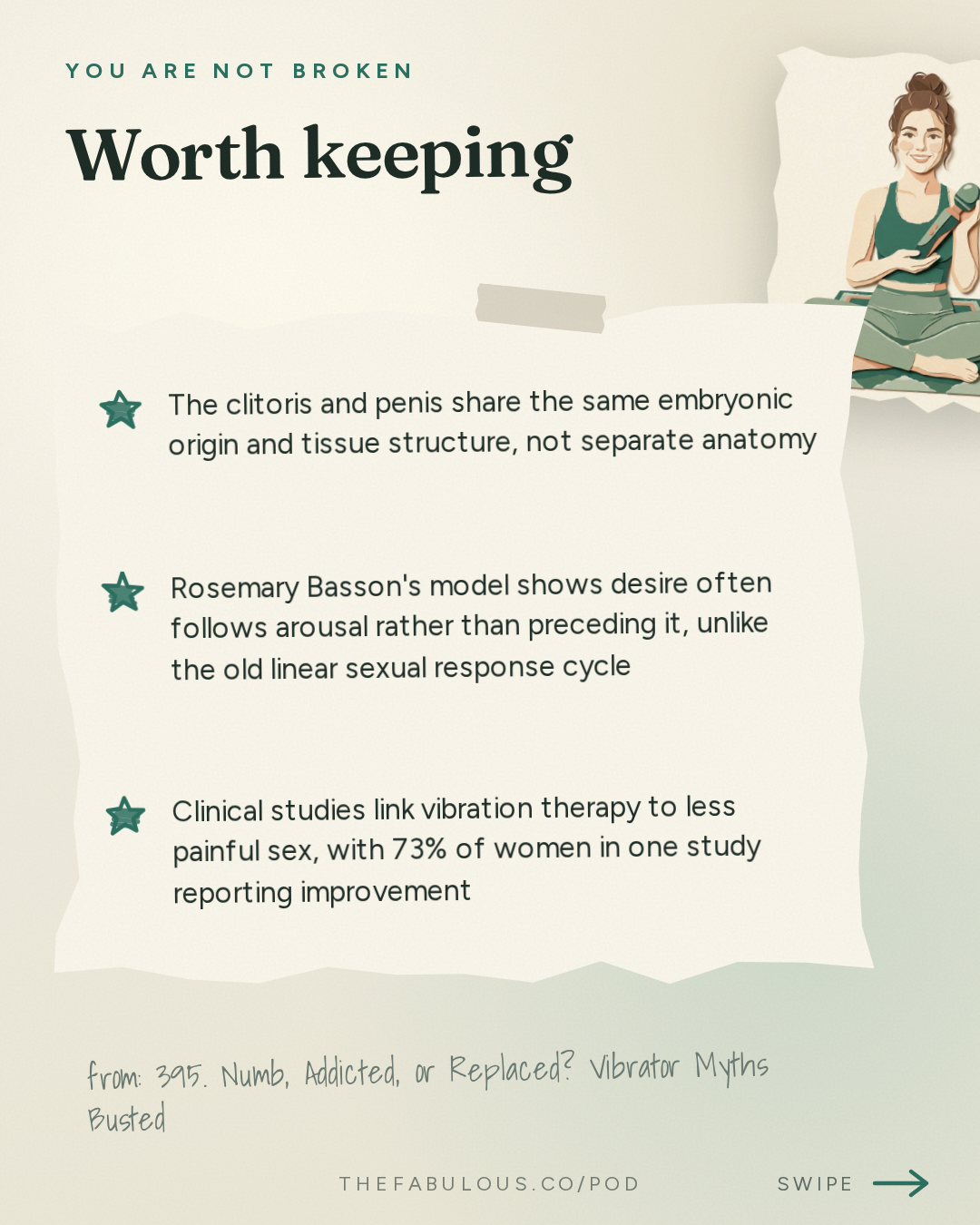
- The clitoris and penis share the same embryonic origin and tissue structure, not separate anatomy
- Rosemary Basson's model shows desire often follows arousal rather than preceding it, unlike the old linear sexual response cycle
- Clinical studies link vibration therapy to less painful sex, with 73% of women in one study reporting improvement
- Consumer vibrators do not deliver enough vibration to cause nerve damage or numbness, per device-level research cited by Dr. Kelly Casperson
- A quality vibrator typically costs 80 to 200 dollars, with higher prices mostly reflecting marketing rather than function
The episode in cards
In their words
“The clitoris is the penis. The penis is the clitoris. It is the same structure rearranged in different body parts”
“The more roads going to Rome, the better your chance of orgasm.”
“I don't think there's evidence saying put a, putting a hard penis in your vagina does a damn thing. But vibration is blood flow”
“If I had any advice for women, do not put anything inside an unaroused pelvis.”
Protocols
-
The HEAL protocol for sexual health after pelvic tissue damage
Dr. Kelly Casperson and Dr. Corinne Mann developed HEAL as a four-part sequence: H is hormone evaluation and replacement, E is sex education about anatomy and arousal, A is arousal and vibration therapy to restore blood flow, and L is lube and vaginal moisturizers to reduce friction and pain. The protocol was built primarily for cancer survivors whose treatment often damages pelvic tissue without warning, but Casperson says the same sequence applies broadly to anyone with pain or low arousal.
introduced as a clinical framework, not a fixed daily schedule
-
Avoid penetration before arousal
Dr. Kelly Casperson advises against inserting an erect penis or other object into an unaroused pelvis, because the unaroused vagina is shorter than an average erect penis and lacks the lubrication and length that blood flow provides, and this mismatch causes pain. She recommends ensuring blood flow and lubrication are established first, through foreplay, lube, or vibration, before any penetration.
every instance of penetrative sex
Questions this episode answers
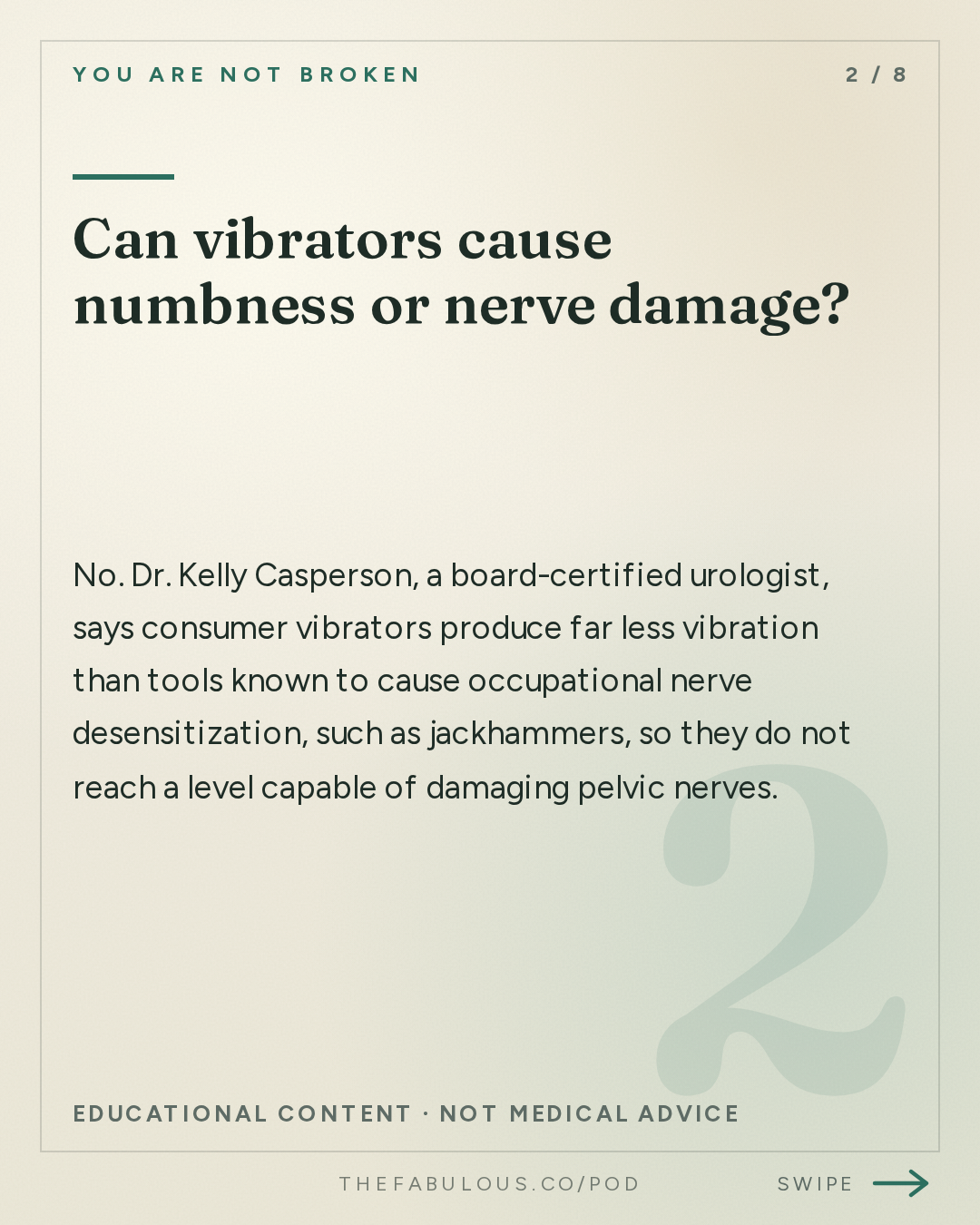
Can vibrators cause numbness or nerve damage?
No. Dr. Kelly Casperson, a board-certified urologist, says consumer vibrators produce far less vibration than tools known to cause occupational nerve desensitization, such as jackhammers, so they do not reach a level capable of damaging pelvic nerves (44:03).
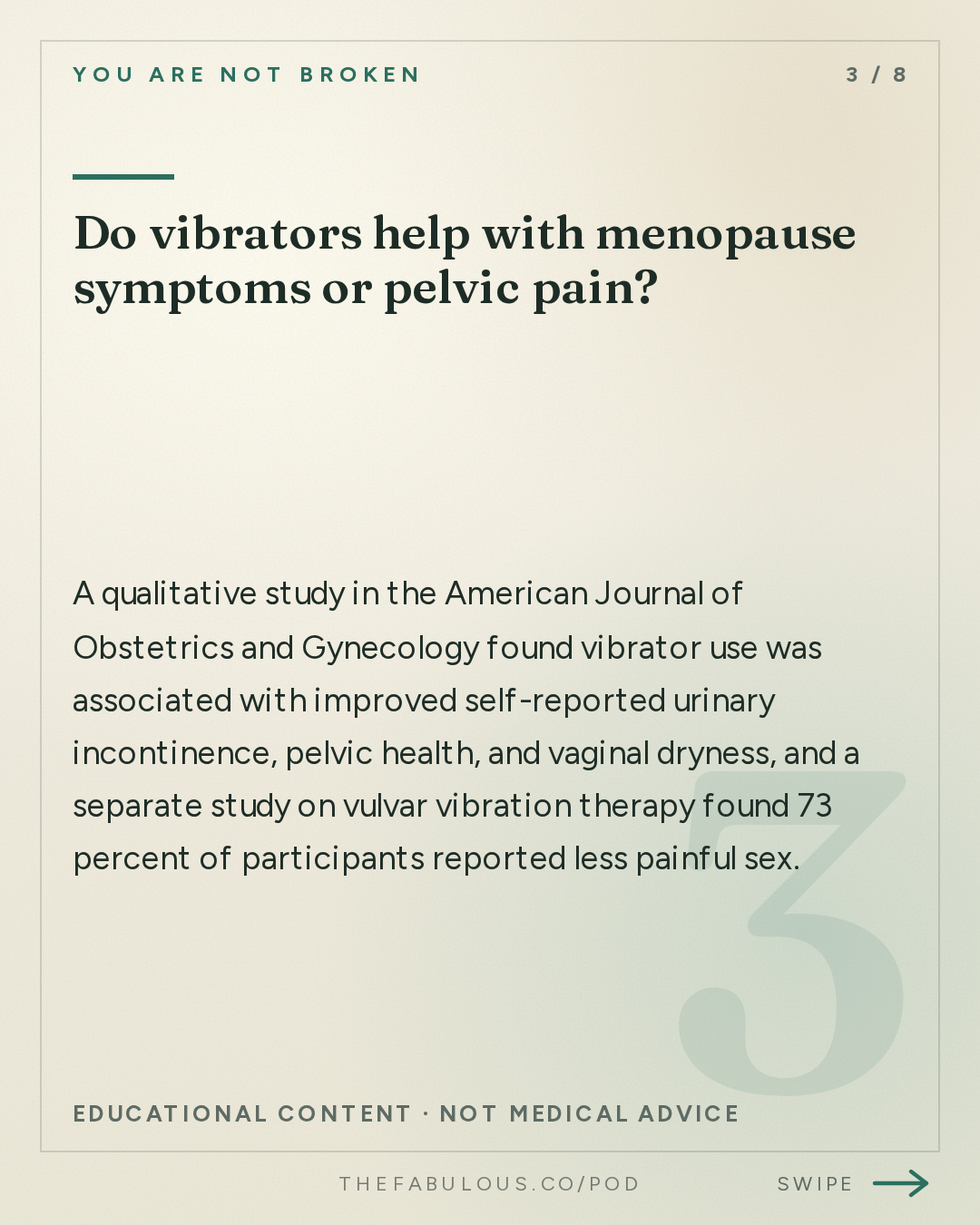
Do vibrators help with menopause symptoms or pelvic pain?
A qualitative study in the American Journal of Obstetrics and Gynecology found vibrator use was associated with improved self-reported urinary incontinence, pelvic health, and vaginal dryness, and a separate study on vulvar vibration therapy found 73 percent of participants reported less painful sex (34:19, 37:59).
Why do most women not orgasm from vaginal penetration alone?
The clitoris, not the vagina, is the primary organ of orgasm because it shares the same nerve-dense erectile tissue as the penis, while the vagina can stimulate it indirectly but is not the same structure, a distinction Dr. Kelly Casperson says most people were never taught (09:17, 10:11).
What is the Rosemary Basson model of desire?
Sex researcher Rosemary Basson proposed that desire often follows arousal rather than preceding it, unlike the older linear Masters and Johnson model from the 1950s, meaning many women need sexual context or stimulation first before desire appears (13:22, 13:49).
How much should a quality vibrator cost?
Dr. Kelly Casperson recommends spending between 80 and 200 dollars, noting that devices under 80 dollars tend to use lower-quality motors and hard plastic, while devices over 200 dollars mostly add marketing cost rather than better function (42:03).
Is squirting the same as orgasm?
No. Casperson explains that squirting is a separate physiological event from orgasm, involving fluid likely from a combination of lubrication and the bladder, and it can occur with or without climax (56:00).
The full read, in cards
Go deeper
- Clinical Implications of the Historical, Medical, and Social Neglect of the Clitoris — 2023 Journal of Sexual Medicine paper by Dr. Maria Uloko documenting that the clitoris has been studied far less than the penis
- The Hite Report — Shere Hite's research, published in the 1980s, found most women orgasm through clitoral rather than vaginal stimulation
- Study on sexual device use and orgasm intensity — 2025 Journal of Sexual Medicine paper linking vibrator use to higher orgasm intensity, arousal, and satisfaction
- Intimacy and Empowerment in Urogynecology: A Qualitative Exploration of Vibrator Use — Study in the American Journal of Obstetrics and Gynecology linking vibrator use to improved self-reported incontinence and pelvic health
- Patient perceptions of vulvar vibration therapy for refractory vulvar pain — Found 73% of participants reported less painful sex and 88% would recommend vibration therapy
Mentioned
Dr. Kelly Casperson · Masters and Johnson · Rosemary Basson · Shere Hite · The Hite Report · Dr. Maria Uloko · Barry Komisaruk · Dr. Corinne Mann · Elixir Play · The Explorer · We-Vibe Melt · Magic Wand · Journal of Sexual Medicine · ISSWSH
More from this show and category
Marty Klein on Sexual Intelligence and ED
Sex therapist Dr. Marty Klein says erectile dysfunction is usually about expectation, not biology, and genital function barely predicts sexual satisfaction. He also warns that AI relationships remove the friction, messiness, and empathy that make human connection and personal growth possible.
Vibrator Myths vs. the Science of Arousal
Urologist Kelly Casperson debunks vibrator myths: they don't cause nerve damage or addiction, and data show real pelvic health benefits (42:45). She explains that the clitoris and penis share the same embryonic origin (09:46), that most women don't orgasm from penetration alone (10:18), and that arousal often comes before desire, not after (14:00).
Chronic Testicular Pain: Causes and Treatment
Urologist Dr. Susan McDonald explains why chronic testicular pain is common but routinely dismissed, and how a careful surgery can cure it. She also describes being diagnosed with stage 4 de novo breast cancer while working as a surgeon, and how her hospital employer tied her health insurance to full-time status during treatment.
Building Muscle in Midlife: Hormones Explained
Heavy resistance training, not cardio, rebuilds muscle lost in perimenopause, say physicians Kelly Casperson and Rebeccah Hertel. They cite data showing testosterone cuts hip fracture risk in women by about 50%, estrogen patches can help bone density well past age 60, and widely used lab ranges and 1990s-era studies understate hormone therapy's safety.
