
Peter Attia's Guide to Reading Your Lab Results
#415 ‒ AMA #91: Understanding lab testing: what blood work can and cannot tell you about your health and disease risk
▶ Listen to the full episode More from The Peter Attia Drive
The brief
Peter Attia argues that standard blood work answers only a quarter to a third of the question people actually bring to it: am I healthy? He reframes health as lifespan times healthspan and shows why a single lab number, without context or repetition, can mislead rather than clarify (05:29, 07:31).
Picture a dashboard with no warning lights on. Most drivers take that as proof the car is fine. Peter Attia says patients do something similar with blood work: if nothing on the printout is flagged in red, they assume, in his words, 'all systems are go' (04:40). It is an understandable leap. Reference ranges look authoritative. Numbers feel objective. And for most adults, a lab draw is the only routine contact they have with the medical system, so it absorbs all the weight of a much bigger question. That question, Attia says, is rarely spoken aloud, but it sits underneath nearly every panel a patient hands him: am I healthy?
The trouble, he argues in this Ask Me Anything episode, is that bloodwork was never built to answer that question completely, and treating it as a report card oversells what it can do. Reference ranges mark statistical boundaries, not guarantees of wellness. A value inside the range is not proof that an organ system is thriving, just that it has not crossed a threshold that labs happen to flag. Attia says this gap has only widened as direct-to-consumer testing companies have multiplied the number of markers on offer. More markers can look like more insight, but volume is not the same as meaning. A large direct-to-consumer panel testing lots of labs does not give more clarity if none of those numbers can be placed in context (05:02).
So Attia puts a number on the gap. At the end of a first lab review with a new patient, he says he now tells them something close to this:
We will know roughly a third of what we care to know about you, maybe, maybe, maybe a bit less, maybe twenty-five percent. [05:29] — Peter Attia
That twenty-five to thirty percent is real and worth having. But three-quarters of the picture, by his own accounting, comes from somewhere else entirely. Figuring out where requires stepping back from the lab printout and asking a more basic question: what does healthy even mean?
What Health Actually Means
Attia's answer depends on who is asking. A patient who has just finished chemotherapy defines health narrowly. The relevant question for that person is whether they are NED, meaning no evidence of disease: has the cancer been cleared, have blood counts recovered from a treatment that can devastate the hematopoietic system, the network of bone marrow and blood-forming tissue that chemotherapy often damages (06:50). For that patient, a handful of numbers might answer nearly everything that matters in the moment.
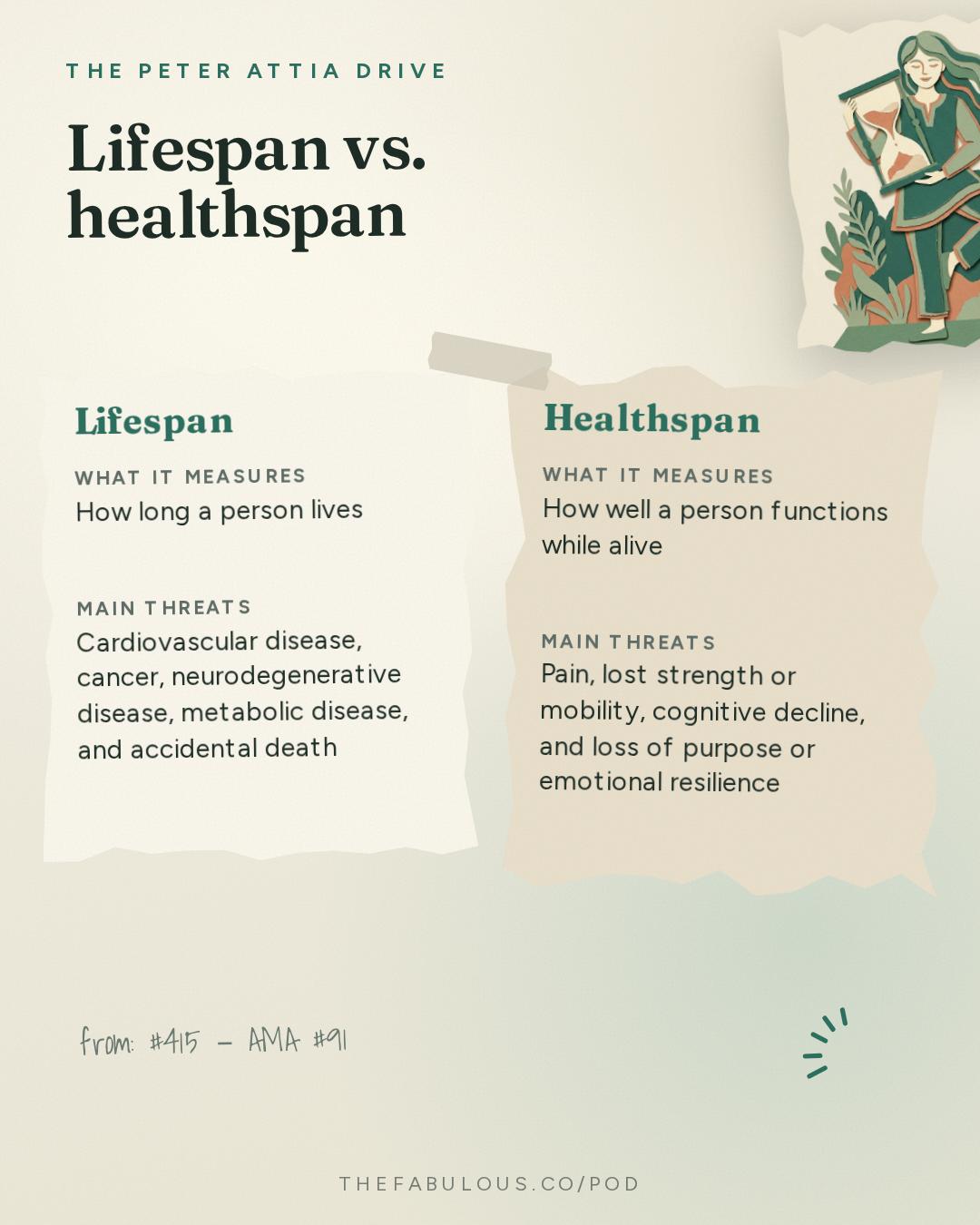
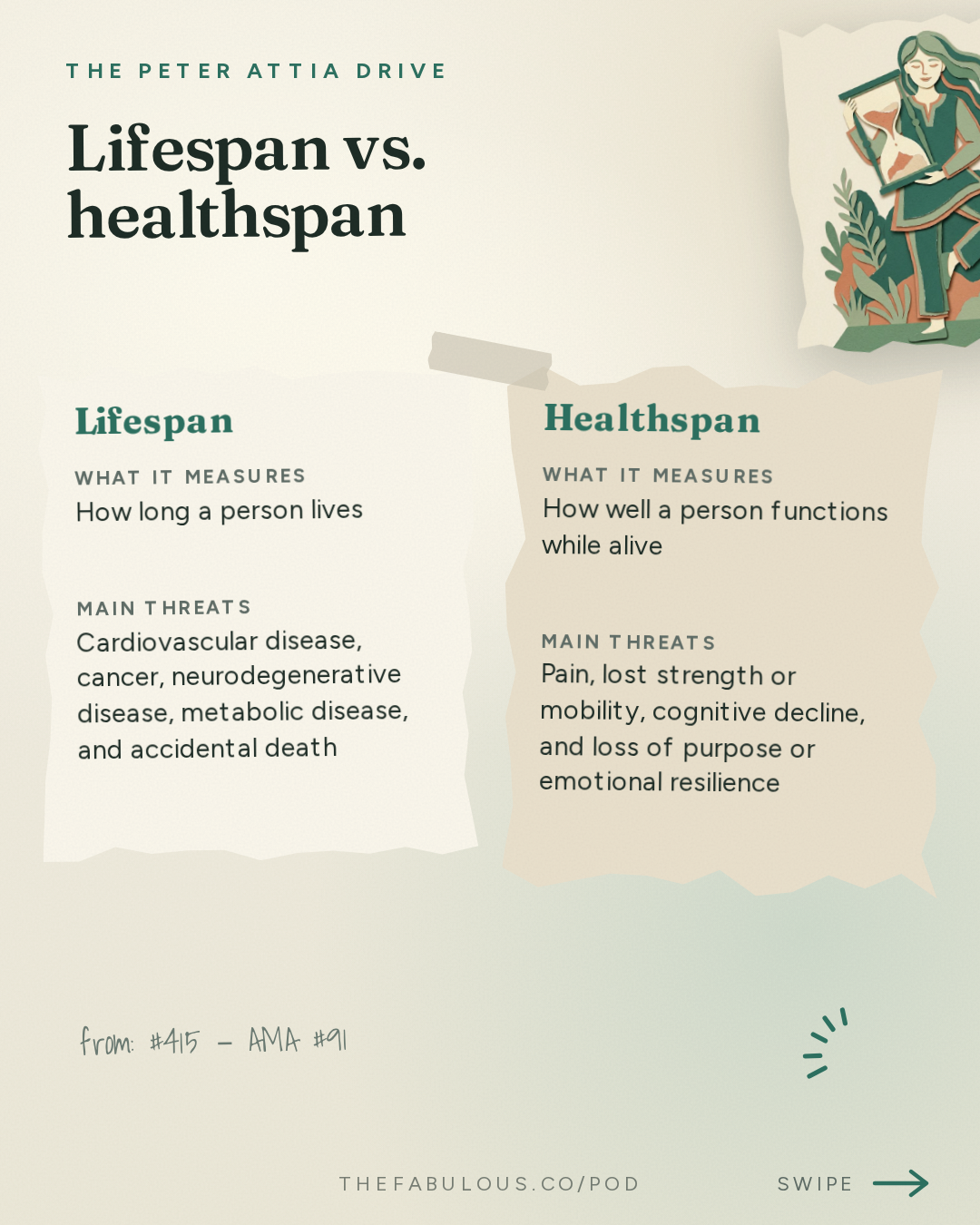
But most of the people Attia sees are not managing an acute illness. They are trying to live long and live well, and for that population he proposes a cleaner definition: longevity is the product of lifespan and healthspan. Lifespan is how long someone lives. Healthspan is the quality of that life while it lasts. Neither one alone is sufficient.
Living a long time in poor health, that's, that's not optimal. And having a short life in high health is also not optimal. So we, we want both of those things. [07:55] — Peter Attia
On the lifespan side, Attia says the threats are a short and fairly stable list: cardiovascular disease, cancer, neurodegenerative and dementing diseases, metabolic disease, and accidental death. He adds that organ-specific conditions, chronic obstructive pulmonary disease in longtime smokers, kidney disease, liver disease unrelated to metabolic dysfunction, matter too, but the five big categories cover most of the risk (08:18).
Healthspan, in his framework, has three components, and this is where the real blind spot in lab testing shows up. Physical health means freedom from pain, strength, endurance, and mobility, essentially the ability to do whatever someone wants to do with their body, with the bar set differently for different people's goals (09:03). Cognitive health covers processing speed, short-term and long-term memory, and executive function, the brain's capacity to plan, focus, and follow through. Emotional health includes a sense of purpose, happiness, the strength of relationships, and what Attia calls distress tolerance, the capacity to absorb hardship without being derailed by it (09:26). None of that shows up in a vial of blood. A test can flag inflammation or cholesterol, but it cannot measure whether someone can still hike a mountain, hold a thought, or recover from a bad week. That is the other seventy-five percent, and it has to be assessed by entirely different means, through physical function testing, cognitive assessment, and honest conversation about mood and purpose.
The Trouble with One Number
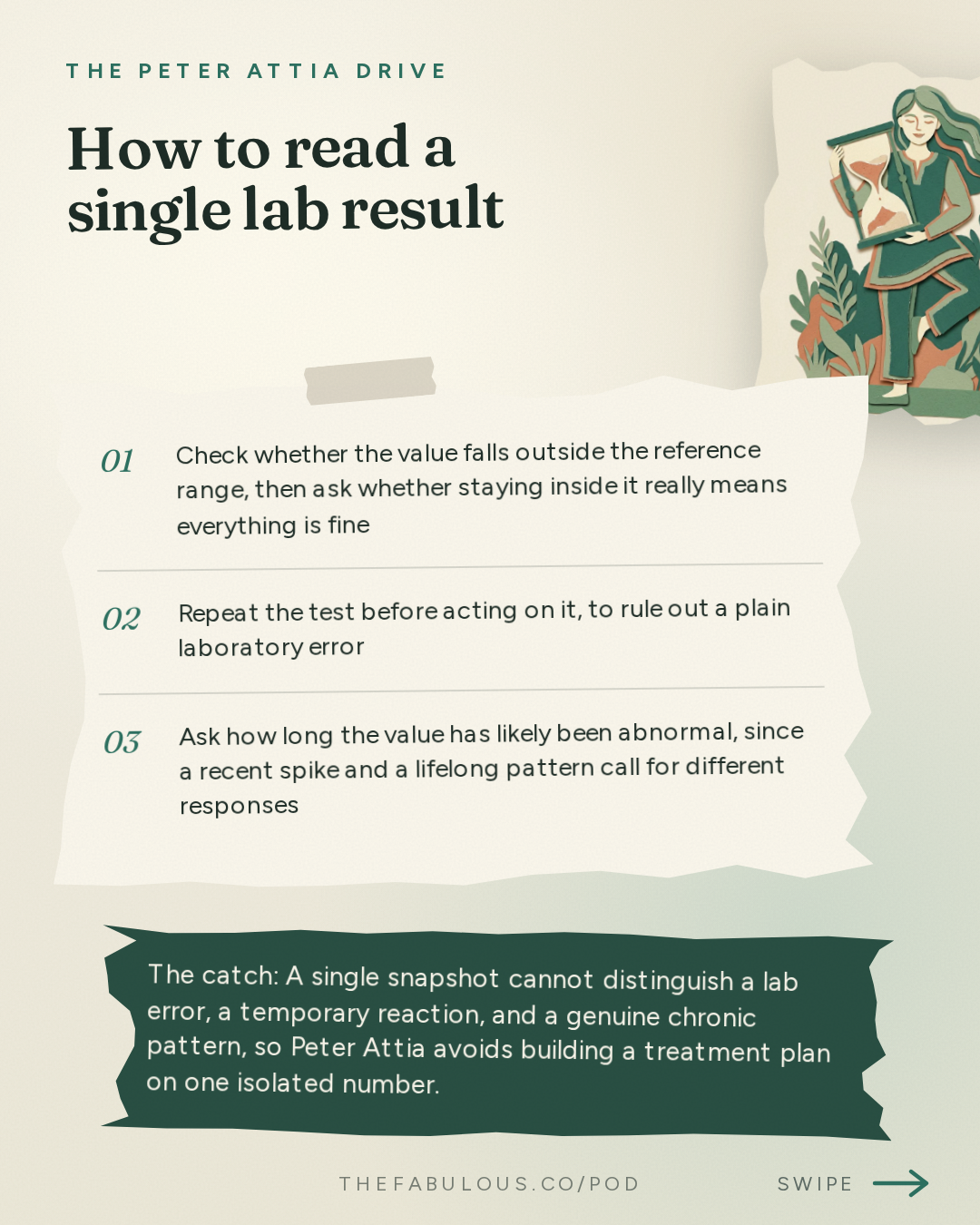
Even within the slice that labs do cover, Attia says a single snapshot is a weak foundation for a decision. The first problem is reliability. Without longitudinal data, meaning a history of results over time, there is no way to rule out a plain laboratory error. The second problem, which persists even after an abnormal result is confirmed by a repeat test, is duration: how long has this actually been true?
He illustrates this with high-sensitivity C-reactive protein, a blood marker of inflammation. A reading of three is, in his words, quite elevated (11:49). But a single number cannot say why. Maybe the person is sick that week. Maybe they were vaccinated recently and the marker is still settling, or maybe that elevated three has been their baseline for the better part of a year while their true resting level is closer to half a point. Without the history, a clinician cannot tell whether this is chronic inflammation that demands a treatment plan or a temporary blip that will resolve on its own. Attia says the same logic applies to LDL cholesterol, the lipoprotein that carries cholesterol through the blood and, at high levels, drives plaque buildup in arteries. A value of 160 mg/dL puts someone above the 80th percentile, clearly high by population standards (12:31). But whether that number reflects three months of a saturated-fat-heavy diet or a lifelong genetic pattern changes the entire clinical approach. One suggests a dietary conversation. The other suggests a search for an inherited lipid disorder.
Not every marker needs this kind of repeated scrutiny, though. Attia notes that certain genetic or near-genetic markers, such as Lp(a), a cholesterol particle largely set by genetics, and ApoE, a gene variant linked to cardiovascular and neurodegenerative risk, typically only need to be measured once, assuming the initial test was run correctly (13:01). These are fixed traits, not moving targets, so they do not require the same longitudinal tracking that something like CRP or LDL does.
The through-line across all of this is a kind of discipline about what a single data point can and cannot support. A lab result is a flashlight beam, not a floodlight. It illuminates a narrow patch clearly, but it says nothing about everything outside that beam, and even within the beam, a second look from a different night sometimes changes what is visible. Attia's practical suggestion, implicit throughout the conversation, is to ask three questions of any result: does the pattern repeat, has the context around it been considered, and does it actually speak to one of the things, cardiovascular disease, cancer, cognitive decline, physical capacity, emotional resilience, that determines whether a life is both long and good. Most individual numbers answer a sliver of that. Knowing which sliver, and trusting it accordingly, is the actual skill, more than any single test result ever could be.
Ask this episode anything
Pod's AI answers from the episode itself, with the minute mark so you can hear it yourself.
Or start with one of these
Ask this episode
Pod's AI listens to the whole episode to answer, and points you to the minute it comes from.
The rest of this answer, and any question after it
Answers come from the episode itself, never from a summary of it.
ContinueKey takeaways
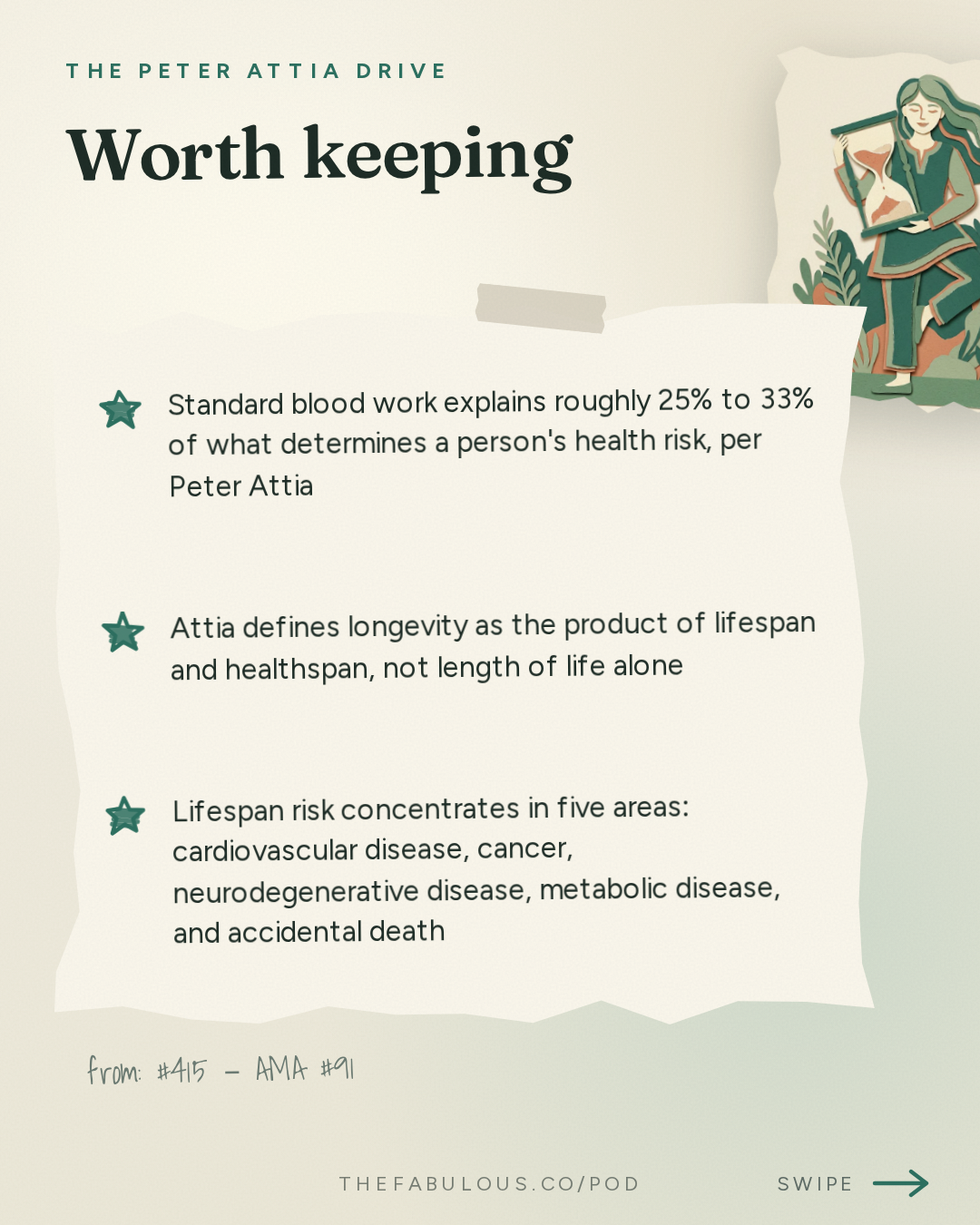
- Standard blood work explains roughly 25% to 33% of what determines a person's health risk, per Peter Attia
- Attia defines longevity as the product of lifespan and healthspan, not length of life alone
- Lifespan risk concentrates in five areas: cardiovascular disease, cancer, neurodegenerative disease, metabolic disease, and accidental death
- Healthspan covers physical, cognitive, and emotional function, none of which a blood draw measures directly
- A single lab snapshot cannot rule out lab error or reveal how long a value has been abnormal, so repeat testing matters
The episode in cards

In their words
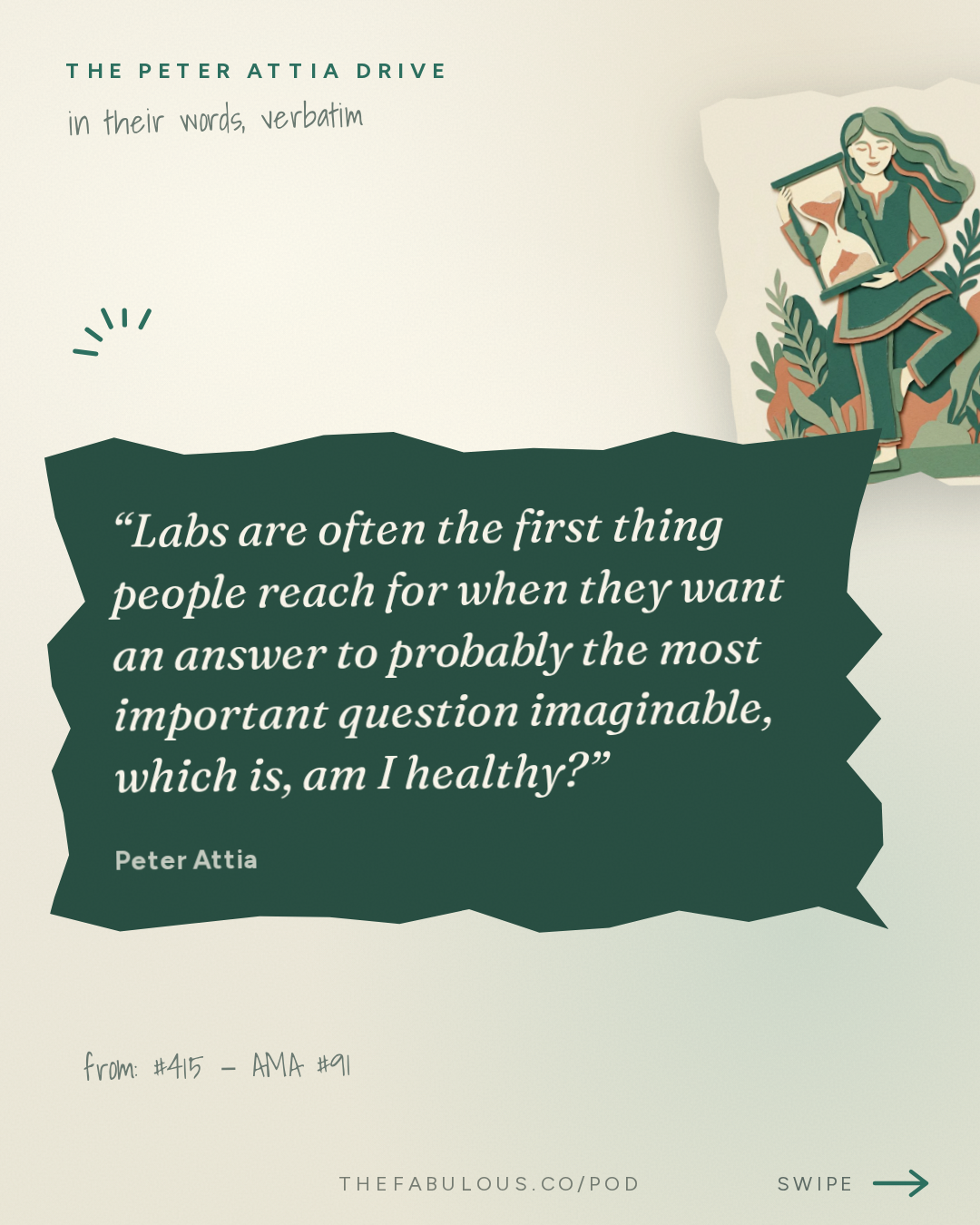
“Labs are often the first thing people reach for when they want an answer to probably the most important question imaginable, which is, am I healthy?”
“If you don't fall outside of a reference range, and therefore nothing is getting flagged, I think people sort of assume, 'Hey, all systems are go.'”
“We will know roughly a third of what we care to know about you, maybe, maybe, maybe a bit less, maybe twenty-five percent.”
“Living a long time in poor health, that's, that's not optimal. And having a short life in high health is also not optimal. So we, we want both of those things.”
Protocols
-
How Attia evaluates a single abnormal lab value
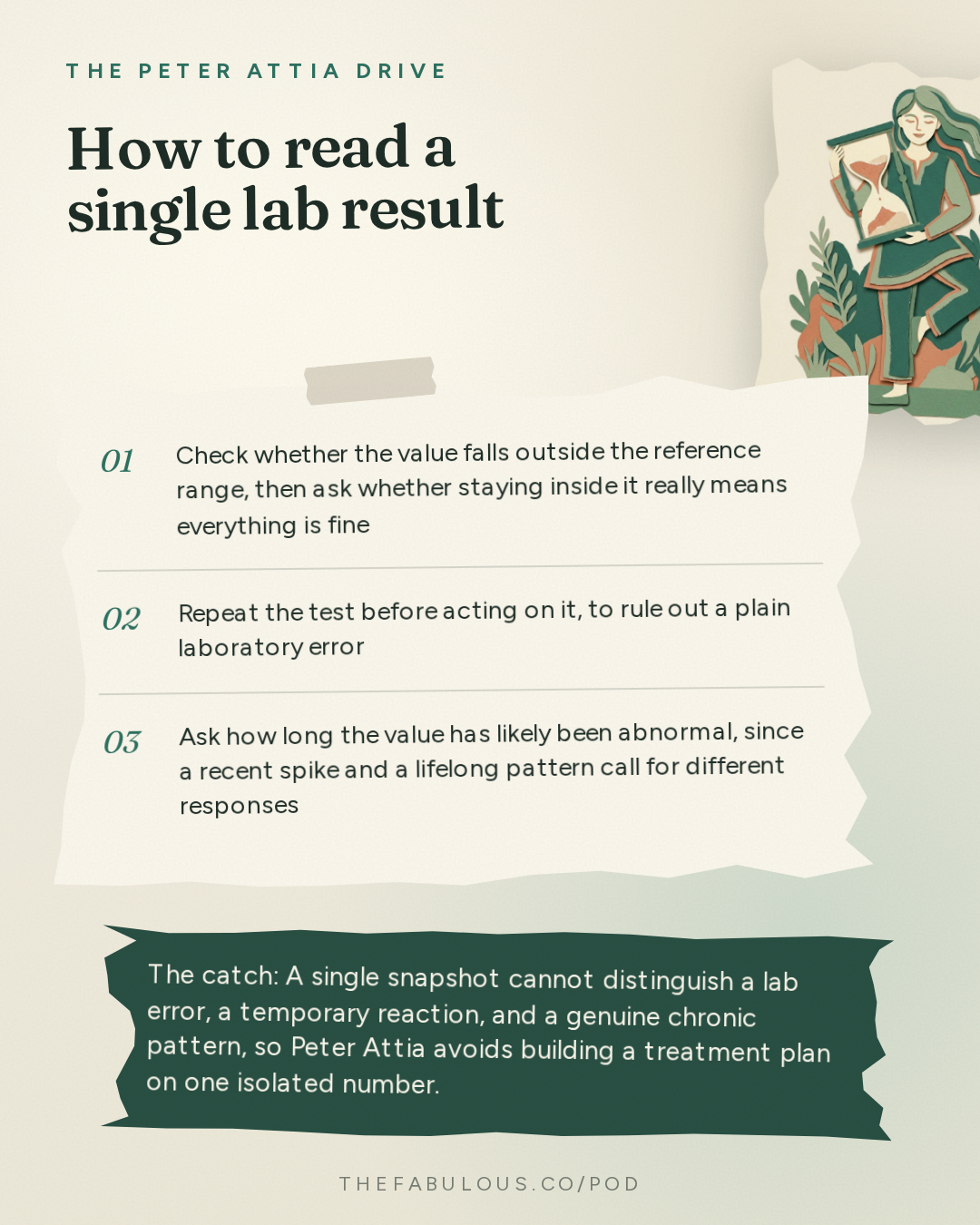
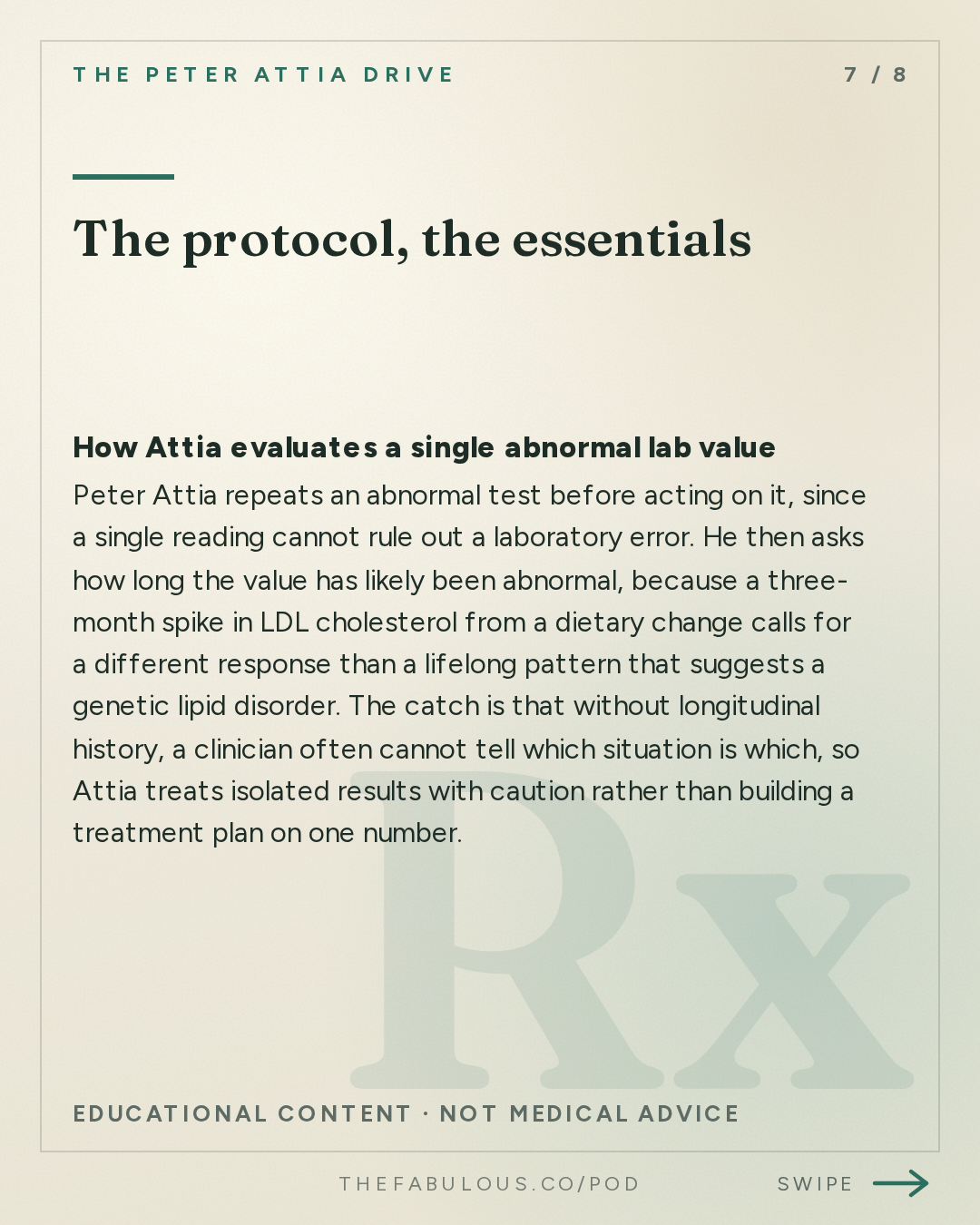
Peter Attia repeats an abnormal test before acting on it, since a single reading cannot rule out a laboratory error. He then asks how long the value has likely been abnormal, because a three-month spike in LDL cholesterol from a dietary change calls for a different response than a lifelong pattern that suggests a genetic lipid disorder. The catch is that without longitudinal history, a clinician often cannot tell which situation is which, so Attia treats isolated results with caution rather than building a treatment plan on one number.
Every new or abnormal result, repeated before clinical action
-
When Attia skips repeat testing
Peter Attia tests genetic or near-fixed markers such as Lp(a), a cholesterol particle set largely by genetics, and ApoE, a gene variant tied to cardiovascular and neurodegenerative risk, only once, provided the initial test was run correctly.
One-time test, not repeated
Questions this episode answers
How much can blood tests actually tell you about your health?
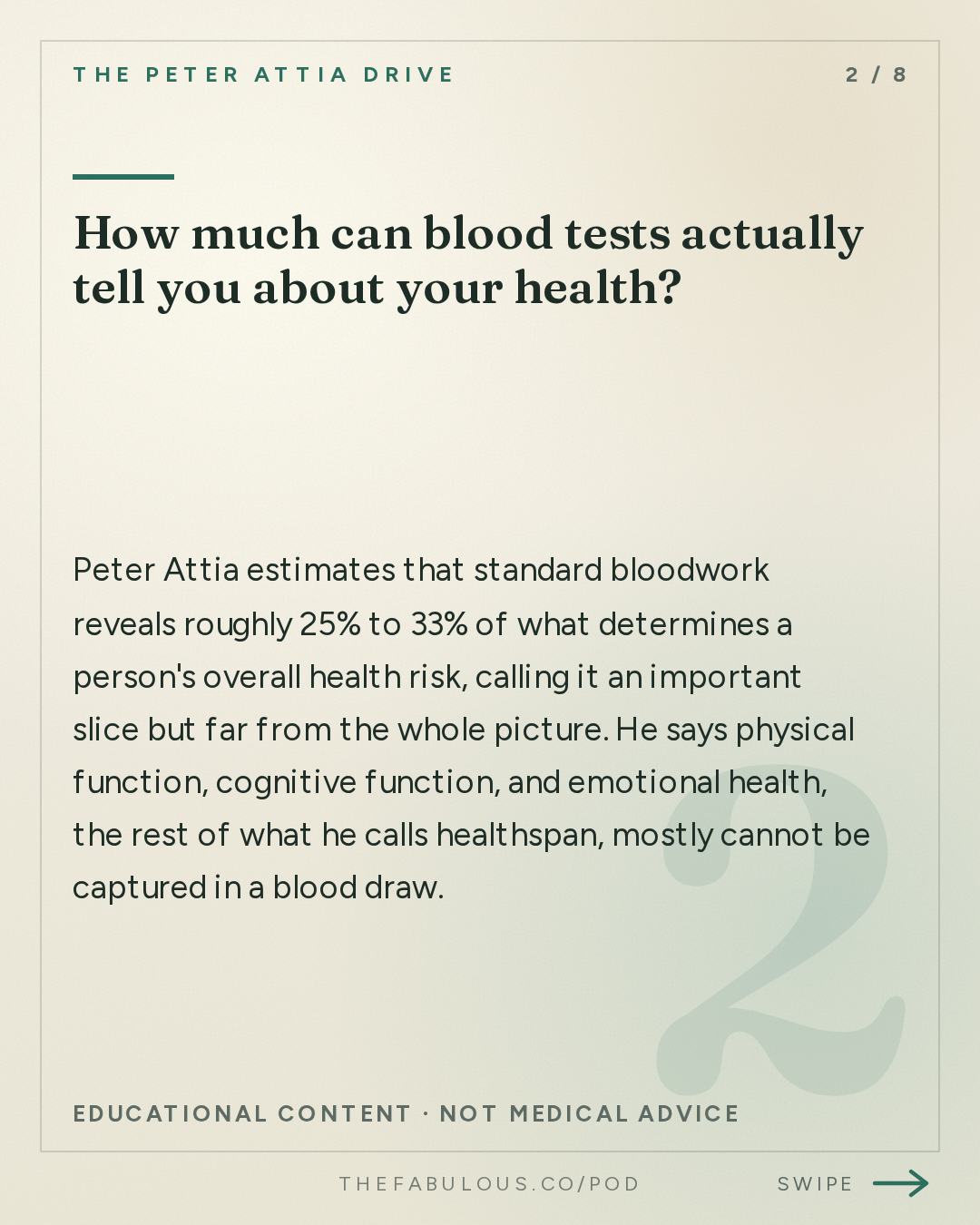
Peter Attia estimates that standard bloodwork reveals roughly 25% to 33% of what determines a person's overall health risk, calling it an important slice but far from the whole picture (05:29). He says physical function, cognitive function, and emotional health, the rest of what he calls healthspan, mostly cannot be captured in a blood draw.
What is the difference between lifespan and healthspan?
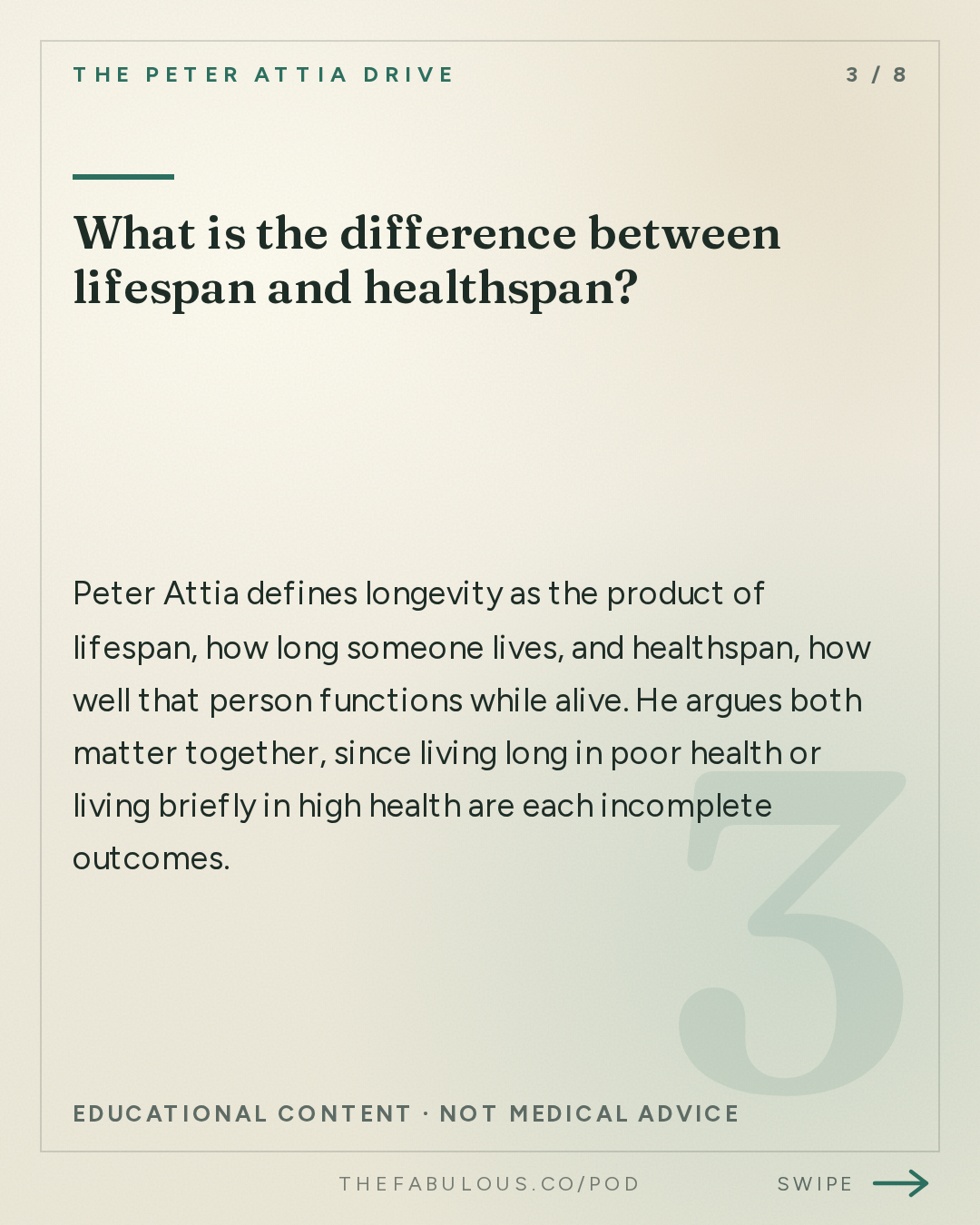
Peter Attia defines longevity as the product of lifespan, how long someone lives, and healthspan, how well that person functions while alive (07:31). He argues both matter together, since living long in poor health or living briefly in high health are each incomplete outcomes (07:55).
Why doesn't a normal lab result guarantee good health?
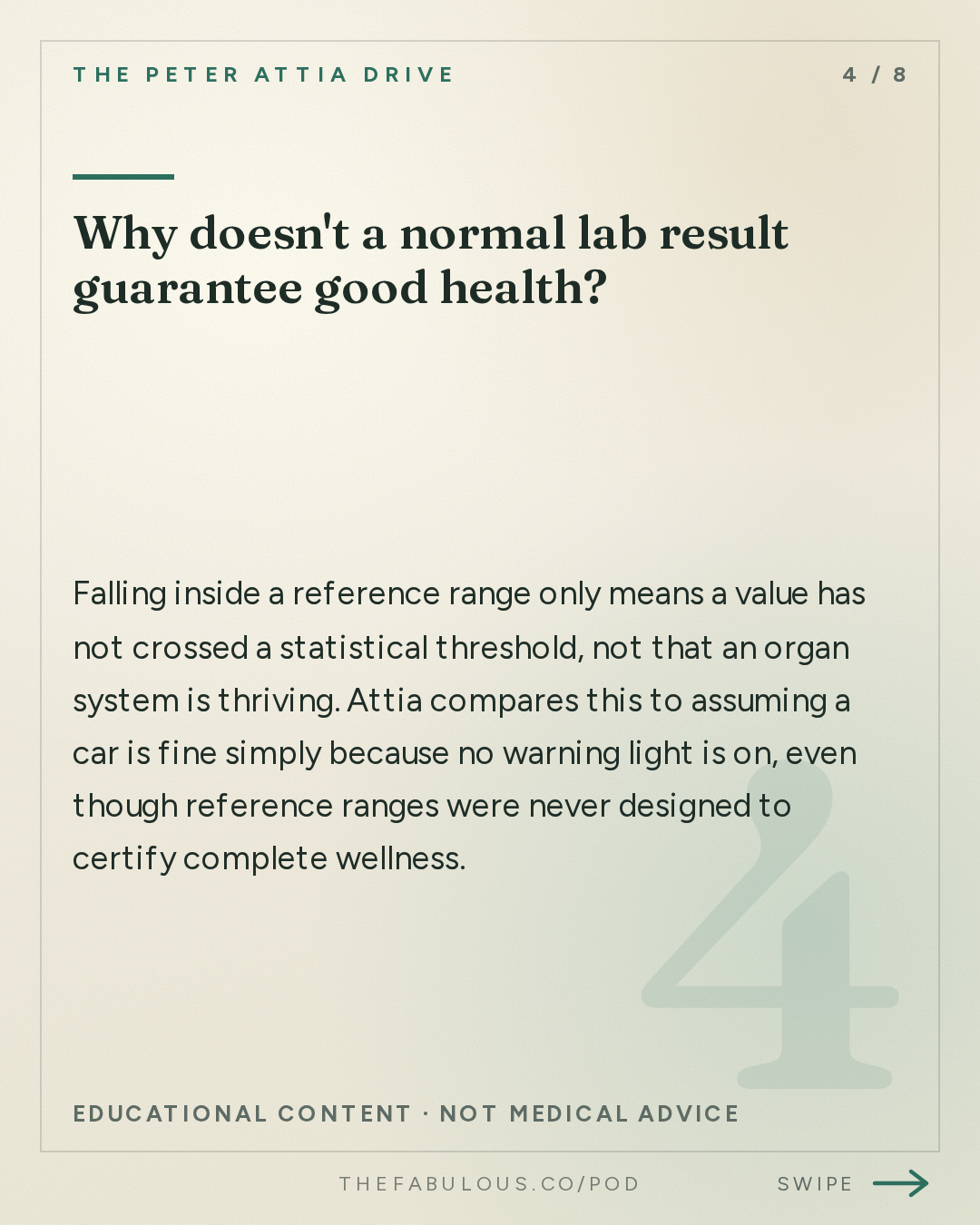
Falling inside a reference range only means a value has not crossed a statistical threshold, not that an organ system is thriving. Attia compares this to assuming a car is fine simply because no warning light is on, even though reference ranges were never designed to certify complete wellness (04:40).
What LDL cholesterol level is considered high?
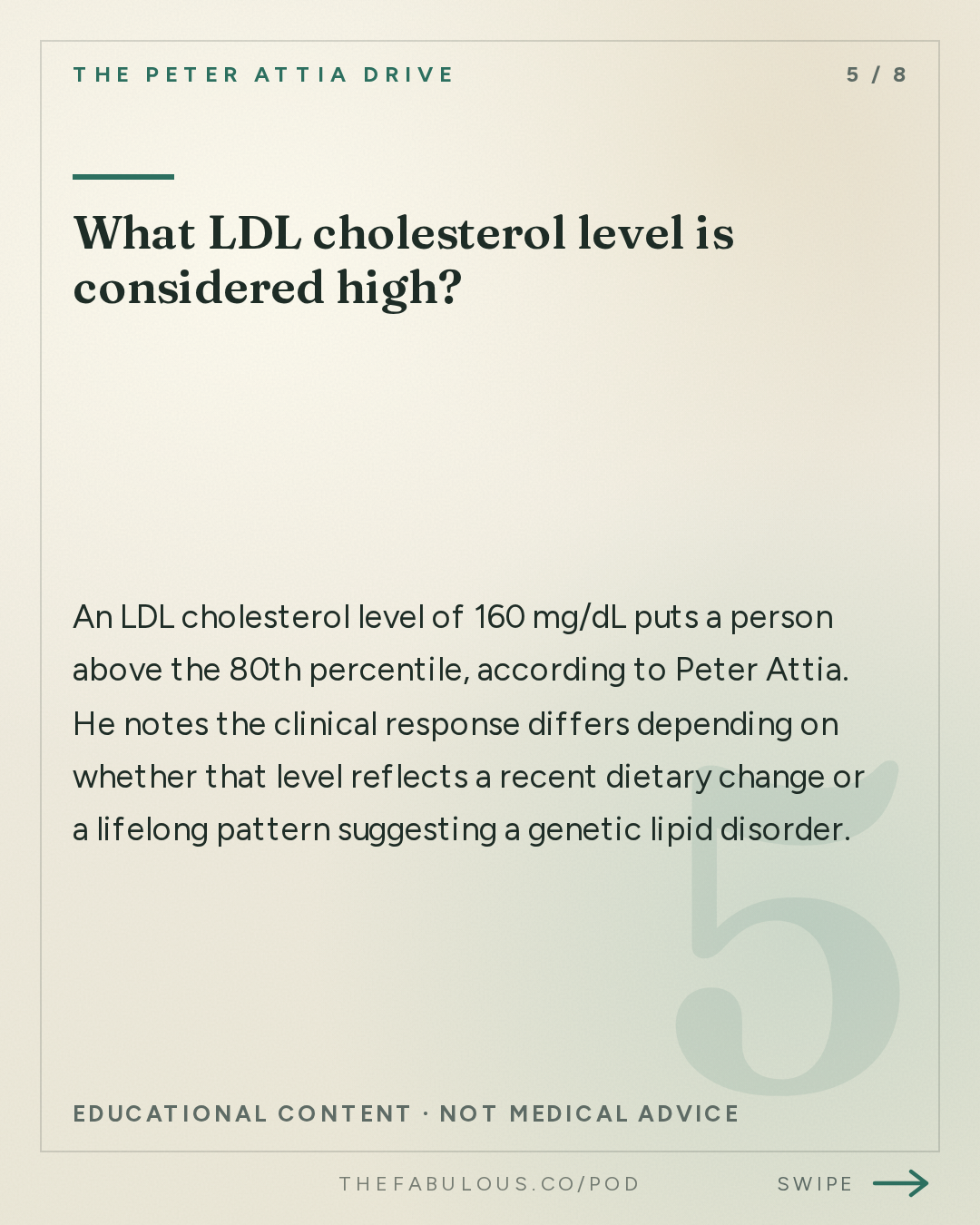
An LDL cholesterol level of 160 mg/dL puts a person above the 80th percentile, according to Peter Attia (12:31). He notes the clinical response differs depending on whether that level reflects a recent dietary change or a lifelong pattern suggesting a genetic lipid disorder.
Why does Peter Attia say one lab test isn't enough to make a decision?
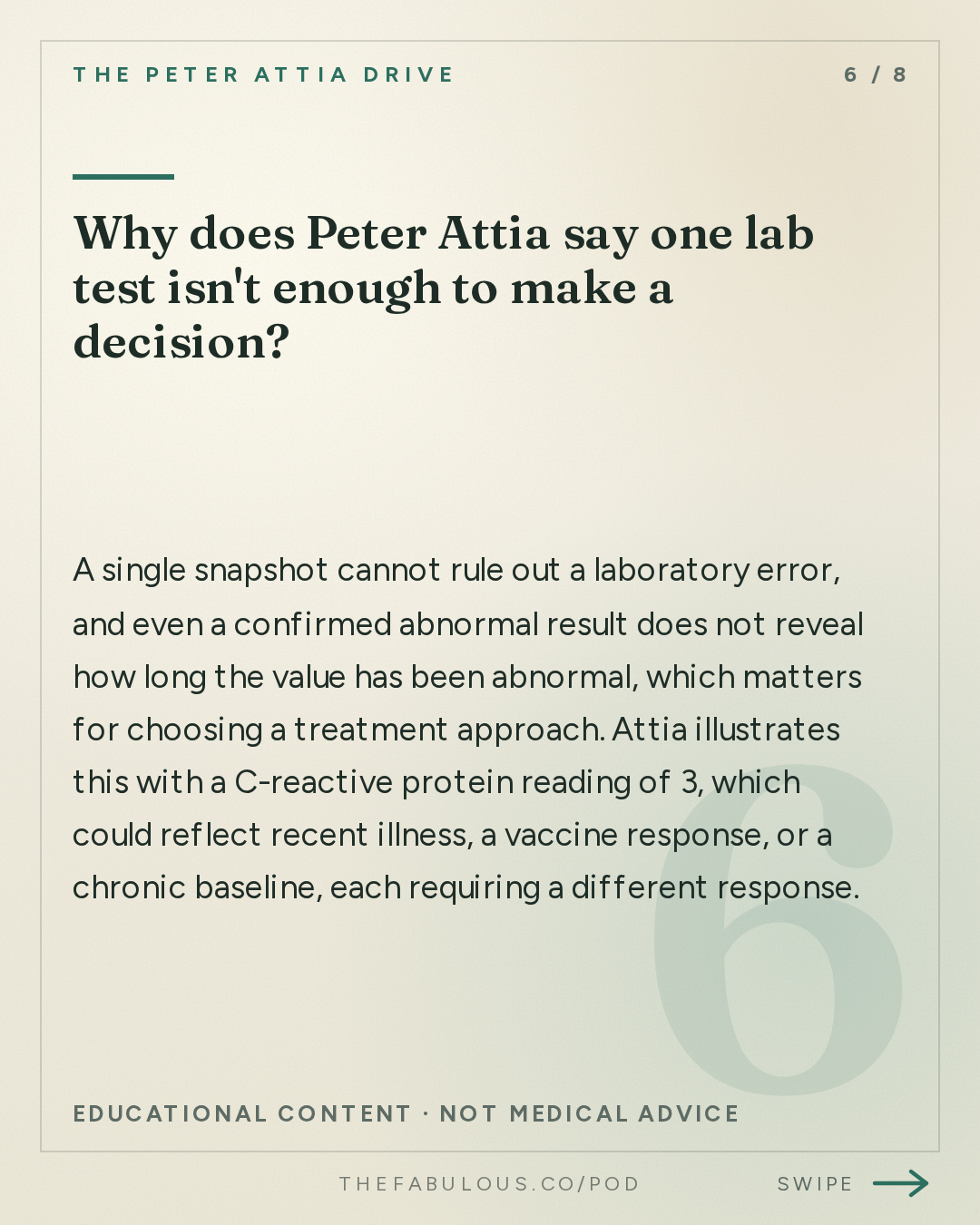
A single snapshot cannot rule out a laboratory error, and even a confirmed abnormal result does not reveal how long the value has been abnormal, which matters for choosing a treatment approach (10:49). Attia illustrates this with a C-reactive protein reading of 3, which could reflect recent illness, a vaccine response, or a chronic baseline, each requiring a different response (11:49).
How often should genetic markers like Lp(a) be retested?
Peter Attia says markers such as Lp(a), a cholesterol particle set largely by genetics, and the ApoE gene variant typically only need to be tested once, assuming the first test was run correctly, since they do not fluctuate like inflammation or lipid markers (13:01).
The full read, in cards
Mentioned
Peter Attia · Nick · C-reactive protein · ApoB · LDL cholesterol · Lp(a) · ApoE · The Drive
More from this show and category
Resistance Training Over 40: Jeff Cavaliere's Rules
Physical therapist Jeff Cavaliere says lifters over 40 should train fewer sets but push each one closer to failure to protect joints. He calls low-effort, high-fatigue sets 'junk volume,' and gives fixes like a 30-degree incline press, overhead tricep stretches, and a 4-second calf-raise pause.
Lisa Feldman Barrett's Predictive Brain Theory
Neuroscientist Lisa Feldman Barrett says the brain predicts, not reacts, building emotion from memory and the body's needs. She shows there are no objective biomarkers for specific emotions, and that averages in group studies mask the real variation between individuals. Her framework reframes stress as a metabolic prediction and suggests practiced skills, like awe, can build control over emotional response.
Siddhartha Mukherjee on Cancer's New Science
Oncologist Siddhartha Mukherjee tells Peter Attia that cancer's old "bad luck" story is being replaced by a more precise one: inflammation acts as the trigger that wakes dormant, mutation-carrying "sleeper cells" into tumors, which reframes prevention, treatment, and how we think about aging itself.
Why Peter Attia Changed His Mind on Keto
Peter Attia now says keto works by curbing energy intake, not lowering insulin, while he still requires 1.4 g/kg of protein (09:42, 11:44). He also walks back his extended fasting protocol, once seven to ten days quarterly, after weighing autophagy evidence against the practical cost (12:36, 15:09).
