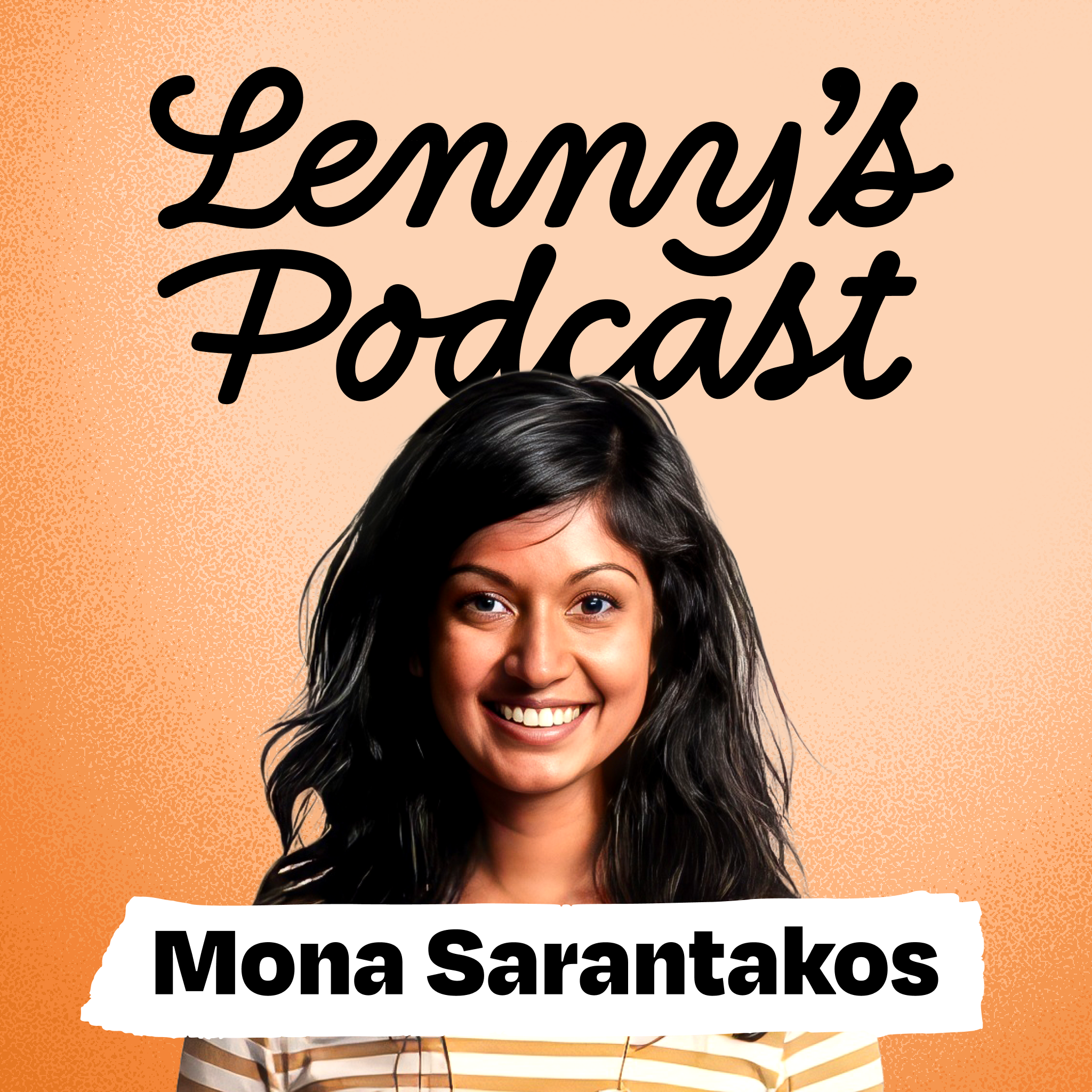
Inside Meta's Muse: Building an AI Agent
Meta’s Muse: How we launched the most successful consumer product this year | Mona Sarantakos
The brief
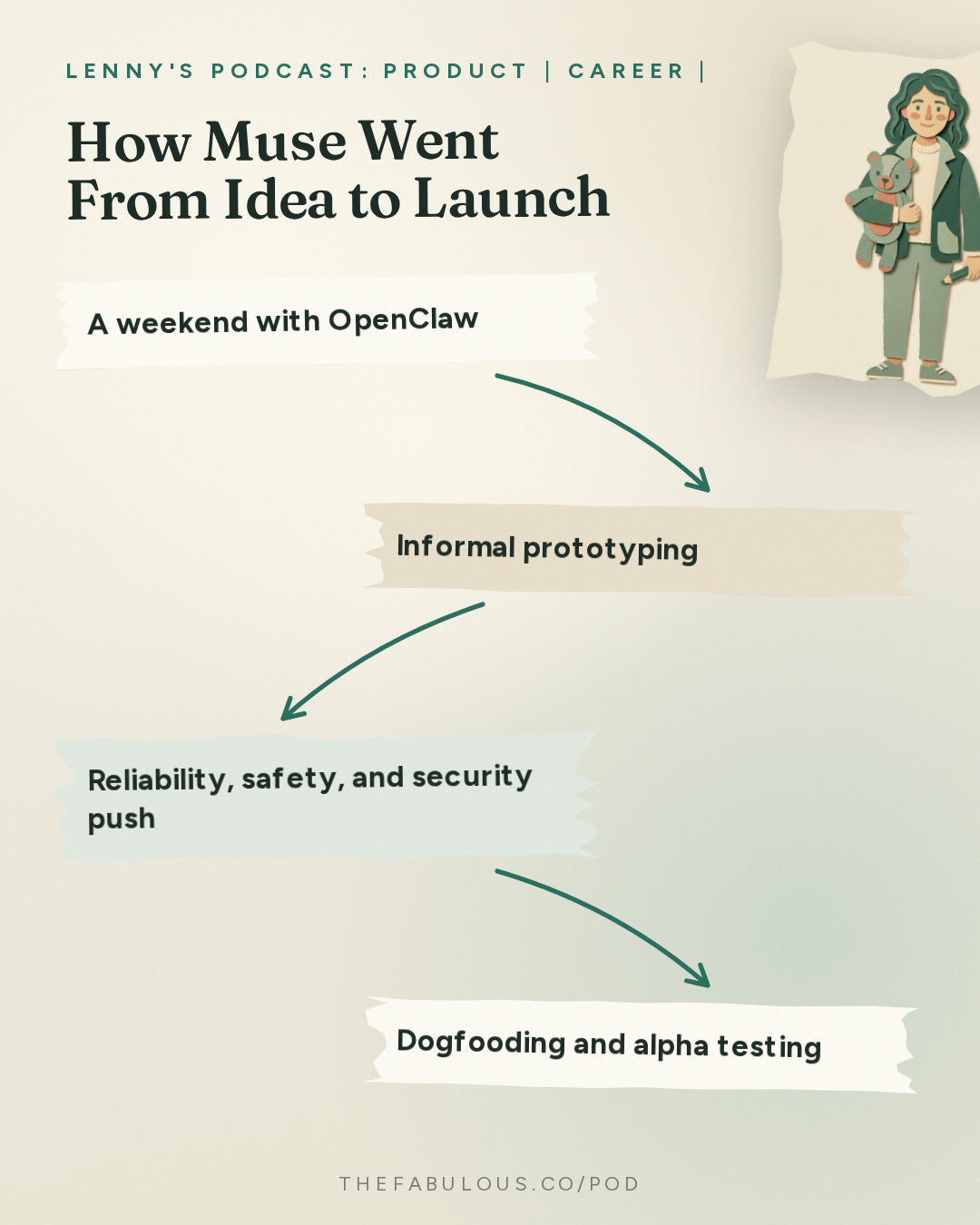
Mona Sarantakos, Meta's VP of product for Muse, says the AI agent took seven months to launch because the team prioritized trust and safety over speed. The team kept a stuffed-animal avatar named Jolly over objections, handwrote every system prompt, and built more than 100 evals before shipping.
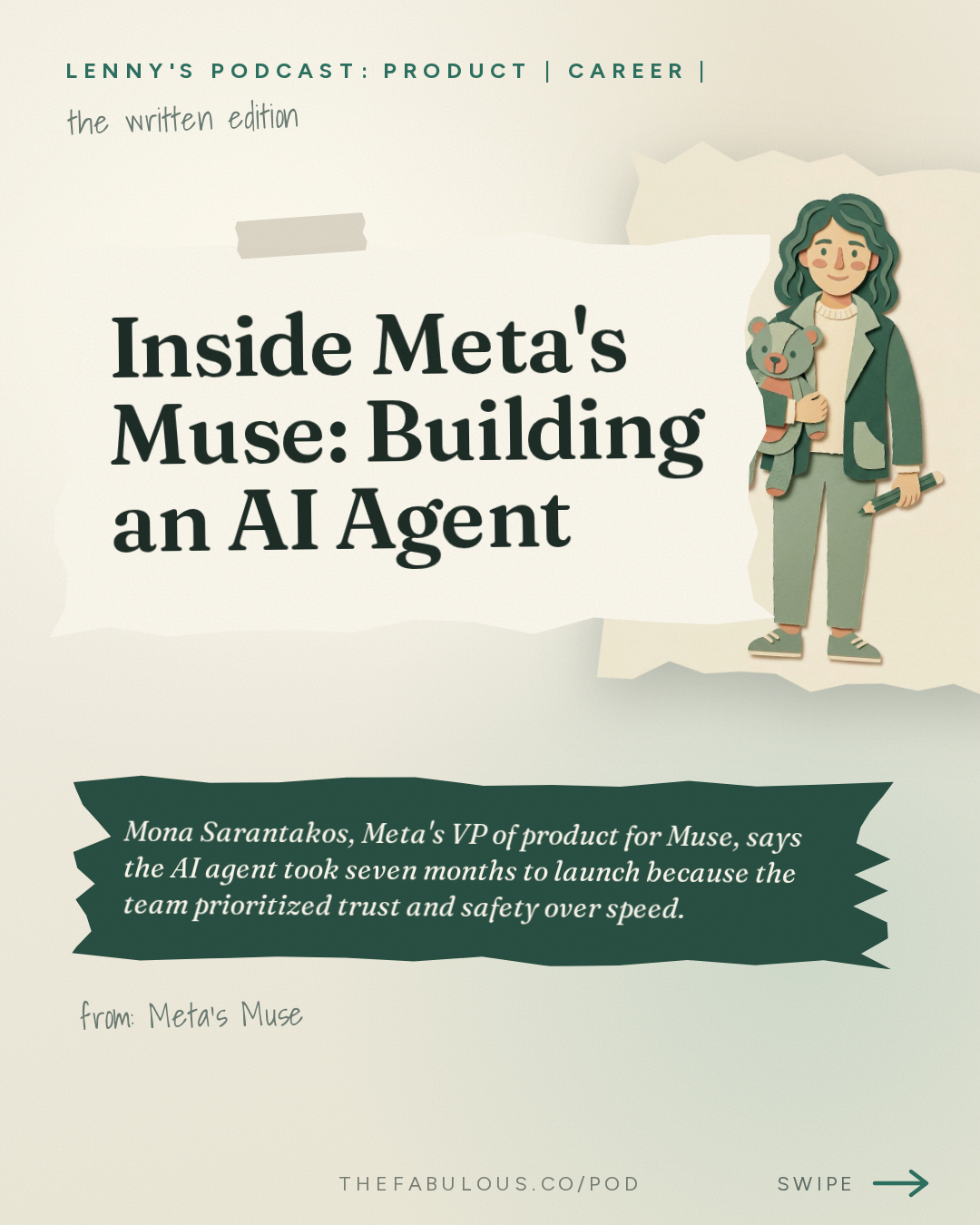
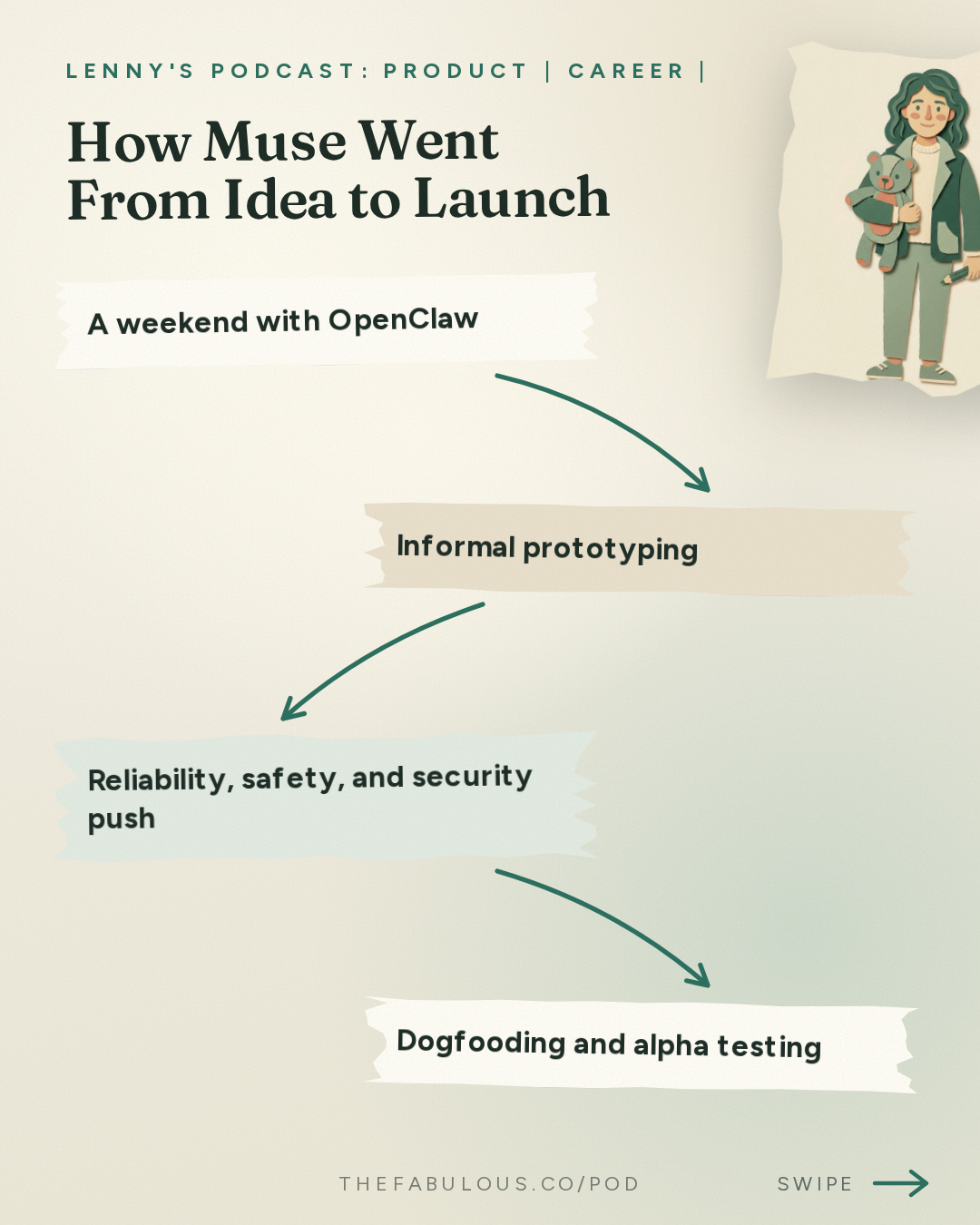
On a Saturday in early February, Meta product manager Mona Sarantakos's children left for a ski race, her husband went with them, and she sat down with a Raspberry Pi to talk to an open source AI agent called OpenClaw. By Sunday she had given it access to her email, her calendar, and her home automation. Her husband came home and asked what she was doing. "That is crazy," he said. "That is so not safe." She kept going anyway (04:10).
The payoff came Monday morning. Sarantakos says she is bad at tracking school newsletters and Spirit Week schedules. That morning her agent had already pulled the week's highlights into one note, built from a prompt of only a few words (05:06). "It felt pretty magical," she says, "with such little direction from me" (05:32). That weekend became the seed of Muse, the personal AI agent that Meta's Superintelligence Labs, the company's AI research division, shipped seven months later (09:48), and which Meta CEO Mark Zuckerberg has hinted is the fastest growing AI consumer product of all time (01:32).
Sarantakos, now VP of product for Muse, tells the story to Lenny's Podcast as a case study in restraint. The team had working prototypes well before launch. What took time was trust. "Trust is a must," she says of the internal mantra that governed the build.
"If we launch too early, and we have a bunch of issues, people will not trust this agent. If you don't trust the agent, you're never gonna use it." (Mona Sarantakos, [12:33])
So the team spent most of its seven months on reliability, safety, and security rather than new features, widening its testing every time a capability, like giving the agent a browser, opened a new security risk (11:49). It leaned on alpha testers and internal dogfooders through the summer, and ran what it calls agent swarms, fleets of AI agents that scan production conversations, to generate the kind of multi-turn usage data that did not exist anywhere else because nobody had built a long-running personal agent before (39:55).
That same caution almost killed the thing that makes Muse recognizable: a small, soft avatar named Jolly. Lead designer Alex Cornell built it as a placeholder in the first prototype and named it after his daughter's nickname, Jollybug (24:14). For months, people inside Meta assumed marketing would swap it for something more corporate. "Every few months somebody would be like, 'There's no way you're gonna launch this product with a stuffed animal at the top,'" Sarantakos says (00:52). The team kept arguing it should stay, and about a week before launch, Zuckerberg sided with them (26:58).
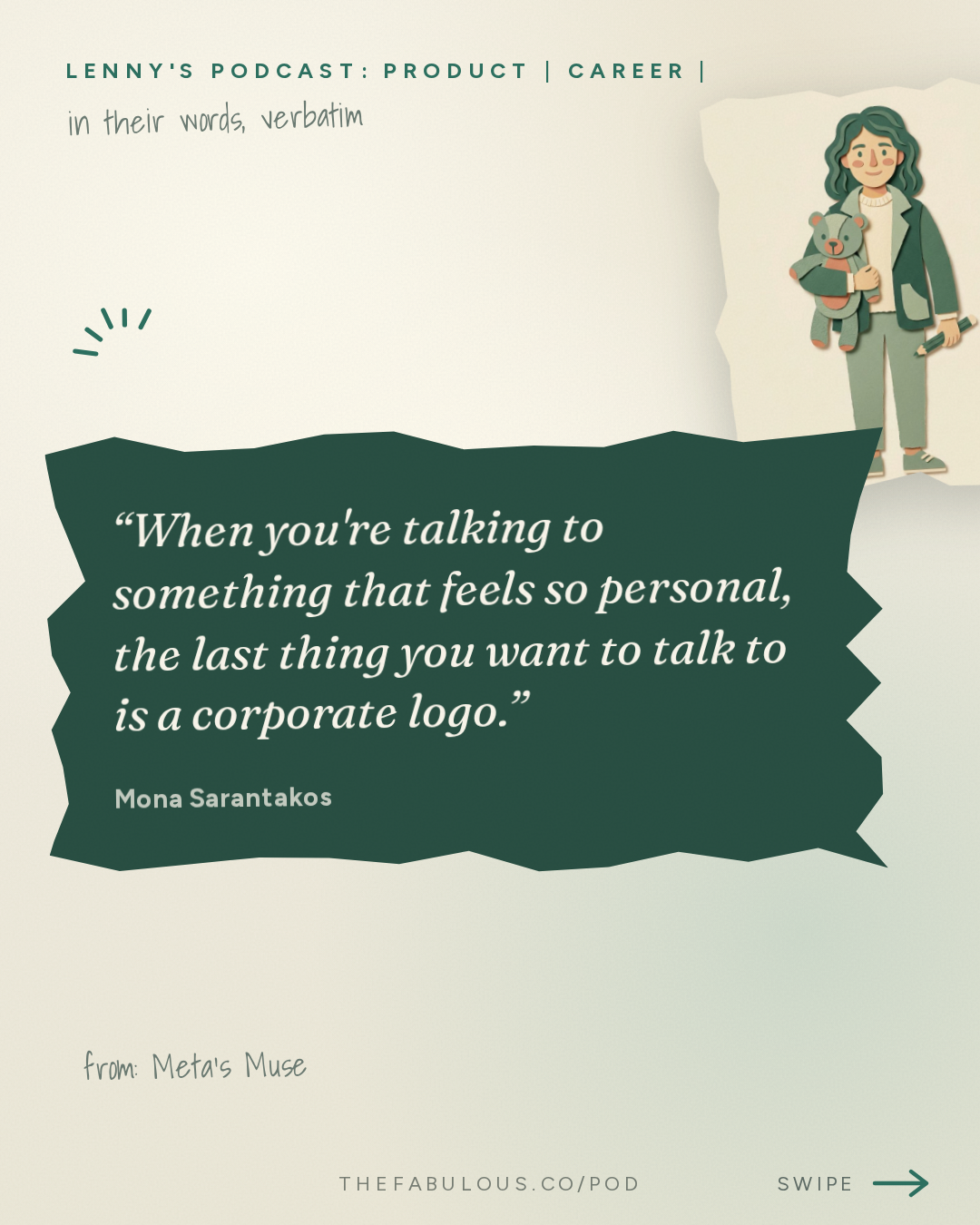
"When you're talking to something that feels so personal, the last thing you want to talk to is a corporate logo. That breaks the spell completely." (Mona Sarantakos, [26:33])
The decision reflects a principle Zuckerberg pushed early: Muse exists to help people reach their goals, not just complete tasks (21:04). Once the team internalized that, they built a "Goals" tab and started designing for what they call dreaming and studying, the idea that a 24 hour agent can think about a user's priorities even when nobody is actively chatting with it (21:43). It also explains why the product uses ordinary chat bubbles instead of a document-style canvas, so talking to Muse feels like texting a person rather than opening a dashboard (52:05).
Some predictions turned out wrong. Sarantakos expected personal productivity, health, and personal finance to be the breakout use cases, with home automation close behind. Instead shopping became one of the largest categories, a genuine surprise that forced the team to build new evaluations specifically for it (32:12). One engineer on the team, Christine Awad, became the resident stress test. "I need to take your credit card away," Sarantakos jokes, describing mornings spent reading Awad's shopping bug reports (33:52).
Handwriting in an Automated World
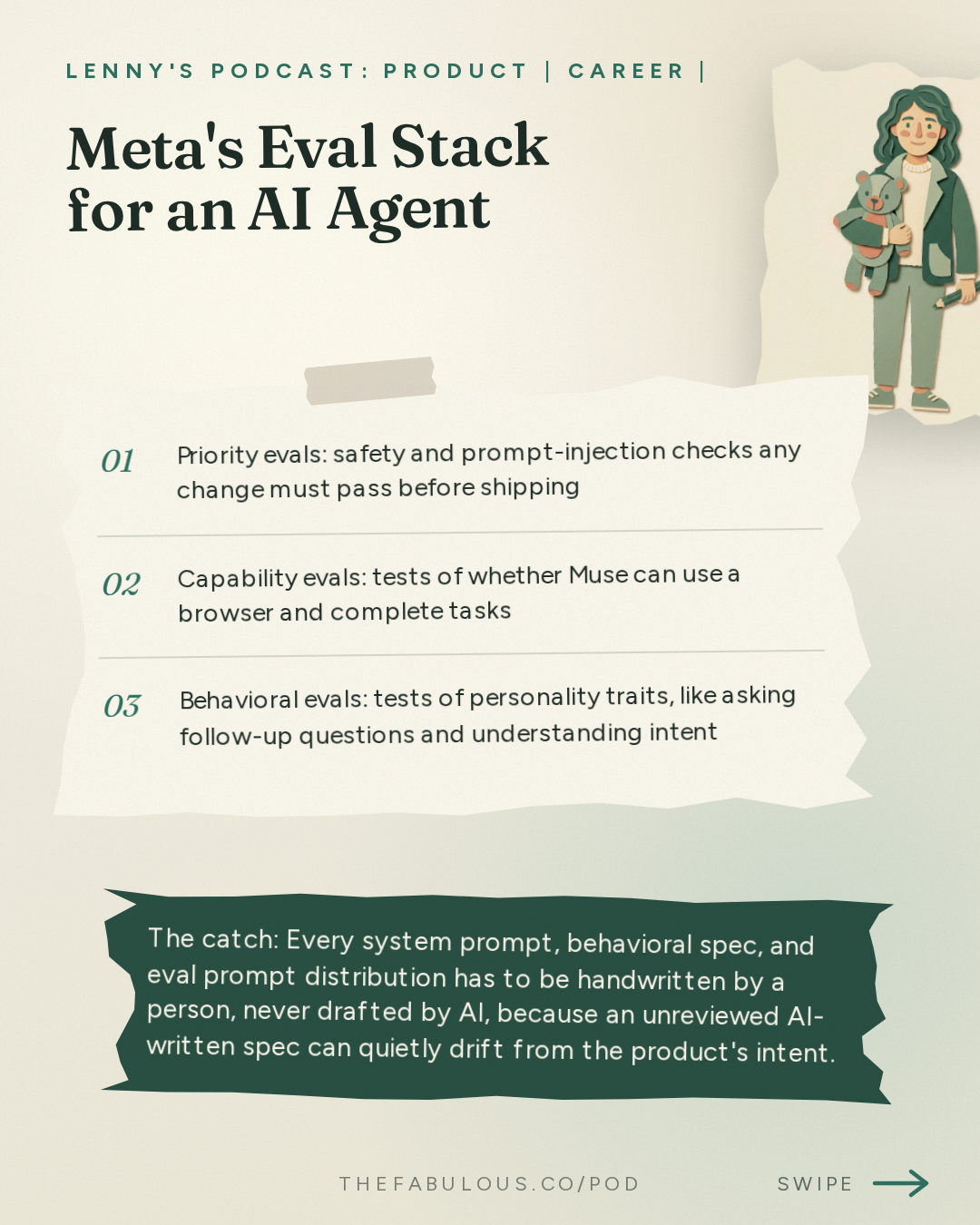
The most counterintuitive rule to come out of the build is that a company built on AI insists a human write the AI's own instructions. Muse runs on more than 100 individual evaluations, or evals, organized into tiers: priority evals for safety and prompt injection, capability evals for task completion, behavioral evals for personality, and use case evals for scenarios like shopping (43:05).
"The system prompt has to be handwritten. You cannot use an AI to write a system prompt, any part of it." (Mona Sarantakos, [45:10])
The same rule covers the behavioral spec and the prompt distributions used to test the product. The logic is simple: if the instructions that shape an agent's judgment are themselves machine generated and unreviewed, nobody can be sure they still match what the product is supposed to do.
Sarantakos has been a product manager for 20 years, and she argues the job itself has shifted under her. Engineers can now prototype an idea in days instead of months, which means arguments that once happened over slide decks now happen over a working build on someone's phone, Zuckerberg included (17:45). That speed changes what a PM is actually for.
"Product taste now is the most important thing. Having, like, that kind of, like, high taste, high bar, like, product instinct." (Mona Sarantakos, [65:37])
Execution still matters, she says, but engineers with strong product sense can execute well on their own. What a PM adds now is judgment: the willingness to say a feature an engineer loves will not land with ordinary users, and the empathy to know why. The agent swarms exist partly for that reason. They do not just return metrics; they return stories, and stories build empathy for a user's actual frustration (41:34).
Small Teams, Bigger Questions
Muse was built by a startup sized crew inside one of the largest companies in the world. The first version of the team was about 10 people (75:12); the core group never grew past 100, with only four product managers covering the entire build (76:04). Keeping it small, Sarantakos says, is what let decisions stay close to the people who understood the product best, though it also meant little sleep and no slack when something broke.
What comes next worries her more than it excites her, in a useful way. Muse now manages real responsibilities for real people: a single mother's medical appointments, a parent's kid-sports schedule, a household's shopping (79:13). Sarantakos wants the next version of Muse to need less supervision, moving past what she calls "babysitting" an agent toward one that can intuit what a user wants and act on its own (82:19). She also expects the product to leave the phone screen entirely, migrating into glasses and other ambient hardware, "in your glasses, on your charm devices" (81:22).
It is a strange arc for someone who grew up changing television channels by walking up to the set and turning a dial. Sarantakos is 44, and she says plainly that she doubts she will work on anything this personal again, not because what comes after is smaller, but because this product was built, in the beginning, purely for the small team that made it, before anyone else was watching. That it now sits in millions of pockets is, by her own account, still closer to vertigo than victory, and she seems to prefer it that way.
Ask this episode anything
Pod's AI answers from the episode itself, with the minute mark so you can hear it yourself.
Or start with one of these
Ask this episode
Pod's AI listens to the whole episode to answer, and points you to the minute it comes from.
The rest of this answer, and any question after it
Answers come from the episode itself, never from a summary of it.
ContinueKey takeaways
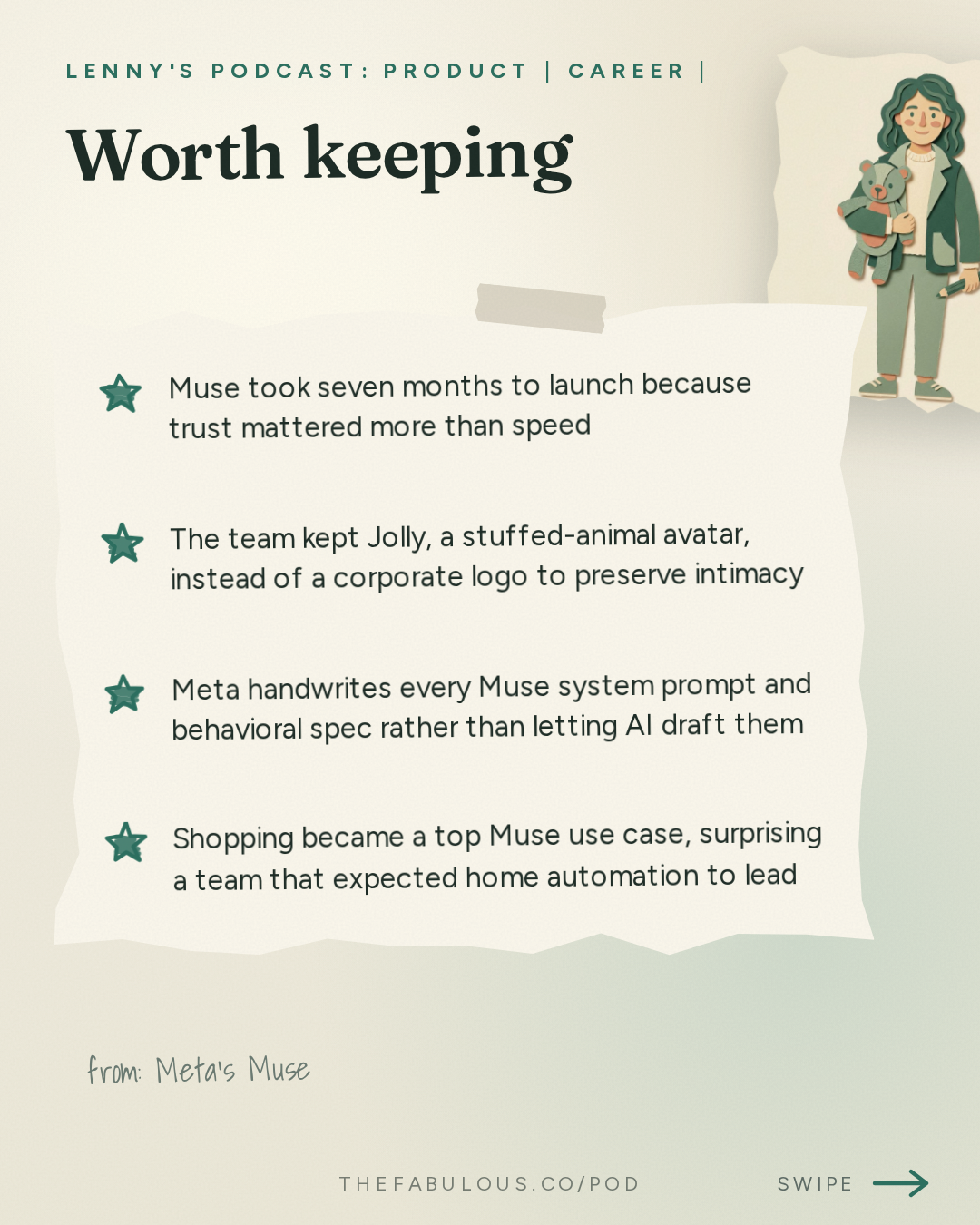
- Muse took seven months to launch because trust mattered more than speed
- The team kept Jolly, a stuffed-animal avatar, instead of a corporate logo to preserve intimacy
- Meta handwrites every Muse system prompt and behavioral spec rather than letting AI draft them
- Shopping became a top Muse use case, surprising a team that expected home automation to lead
- Meta's Muse VP Mona Sarantakos now looks for product taste over execution speed when hiring AI PMs
The episode in cards
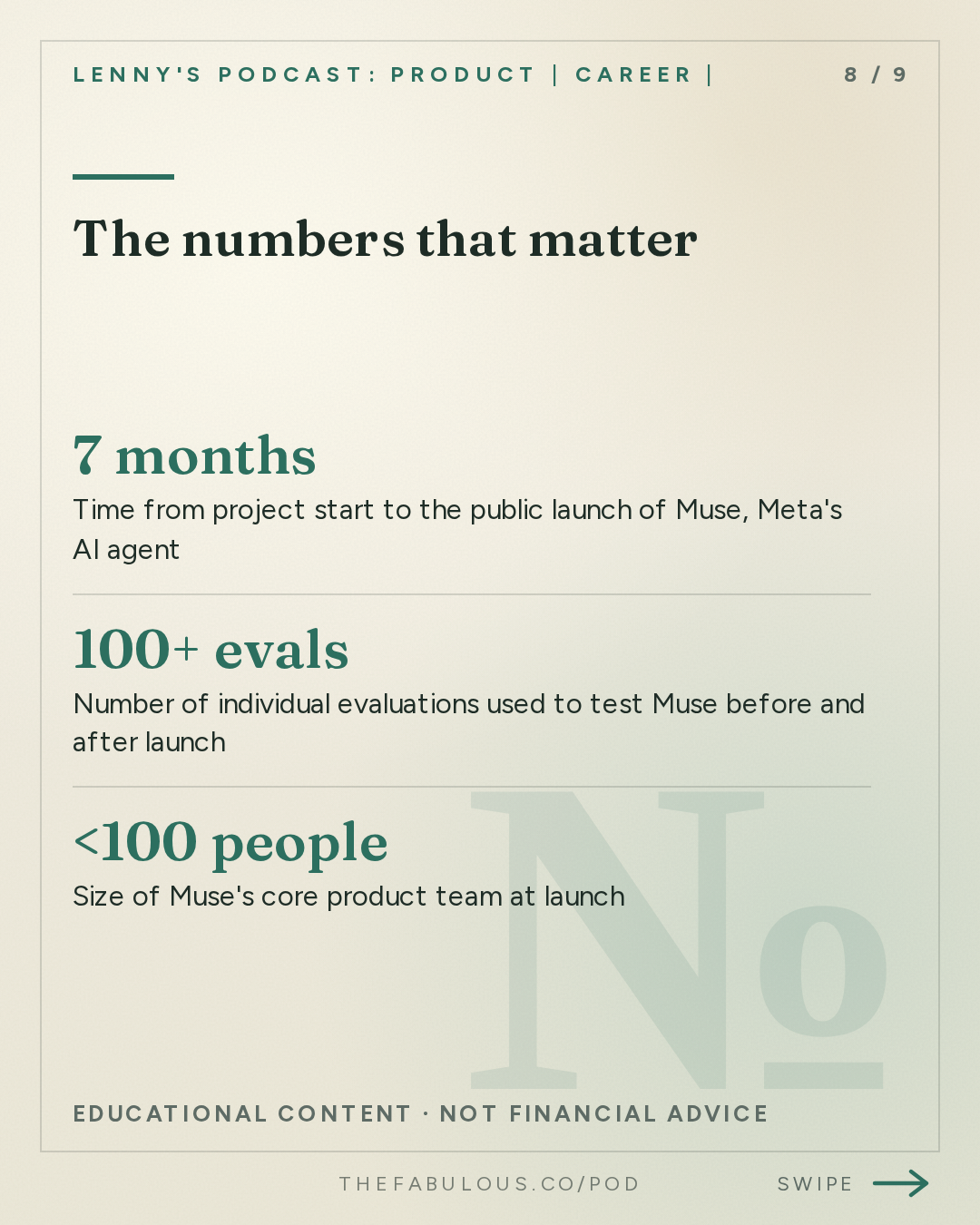
By the numbers
- 7 months Time from project start to the public launch of Muse, Meta's AI agent
- 100+ evals Number of individual evaluations used to test Muse before and after launch
- <100 people Size of Muse's core product team at launch
In their words
“Trust is a must. If we launch too early, and we have a bunch of issues, people will not trust this agent.”
“When you're talking to something that feels so personal, the last thing you want to talk to is a corporate logo.”
“Product taste now is the most important thing. Having, like, that kind of, like, high taste, high bar, like, product instinct.”
Protocols
-
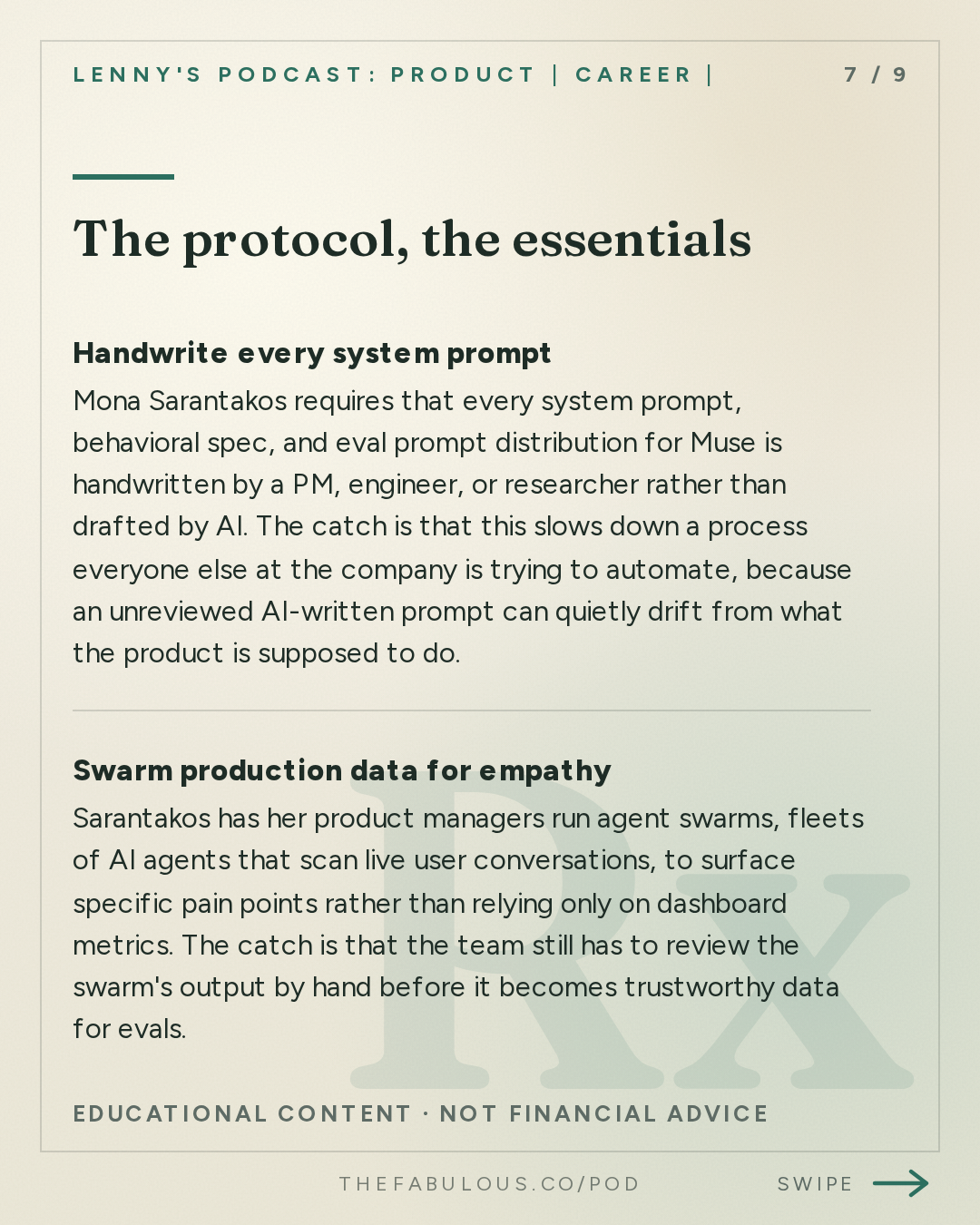
Handwrite every system prompt
Mona Sarantakos requires that every system prompt, behavioral spec, and eval prompt distribution for Muse is handwritten by a PM, engineer, or researcher rather than drafted by AI. The catch is that this slows down a process everyone else at the company is trying to automate, because an unreviewed AI-written prompt can quietly drift from what the product is supposed to do.
Applied to every model update and new feature
-
Swarm production data for empathy
Sarantakos has her product managers run agent swarms, fleets of AI agents that scan live user conversations, to surface specific pain points rather than relying only on dashboard metrics. The catch is that the team still has to review the swarm's output by hand before it becomes trustworthy data for evals.
Run continuously and whenever a new model or feature ships
-
Keep the core team small
Sarantakos kept Muse's core team under 100 people, with only four product managers covering the entire build, so decisions stayed close to the people who understood the product. The catch is that the small team ran with little sleep and no buffer when something broke.
Maintained from a 10-person start through launch
Questions this episode answers
What is Meta's Muse AI agent?
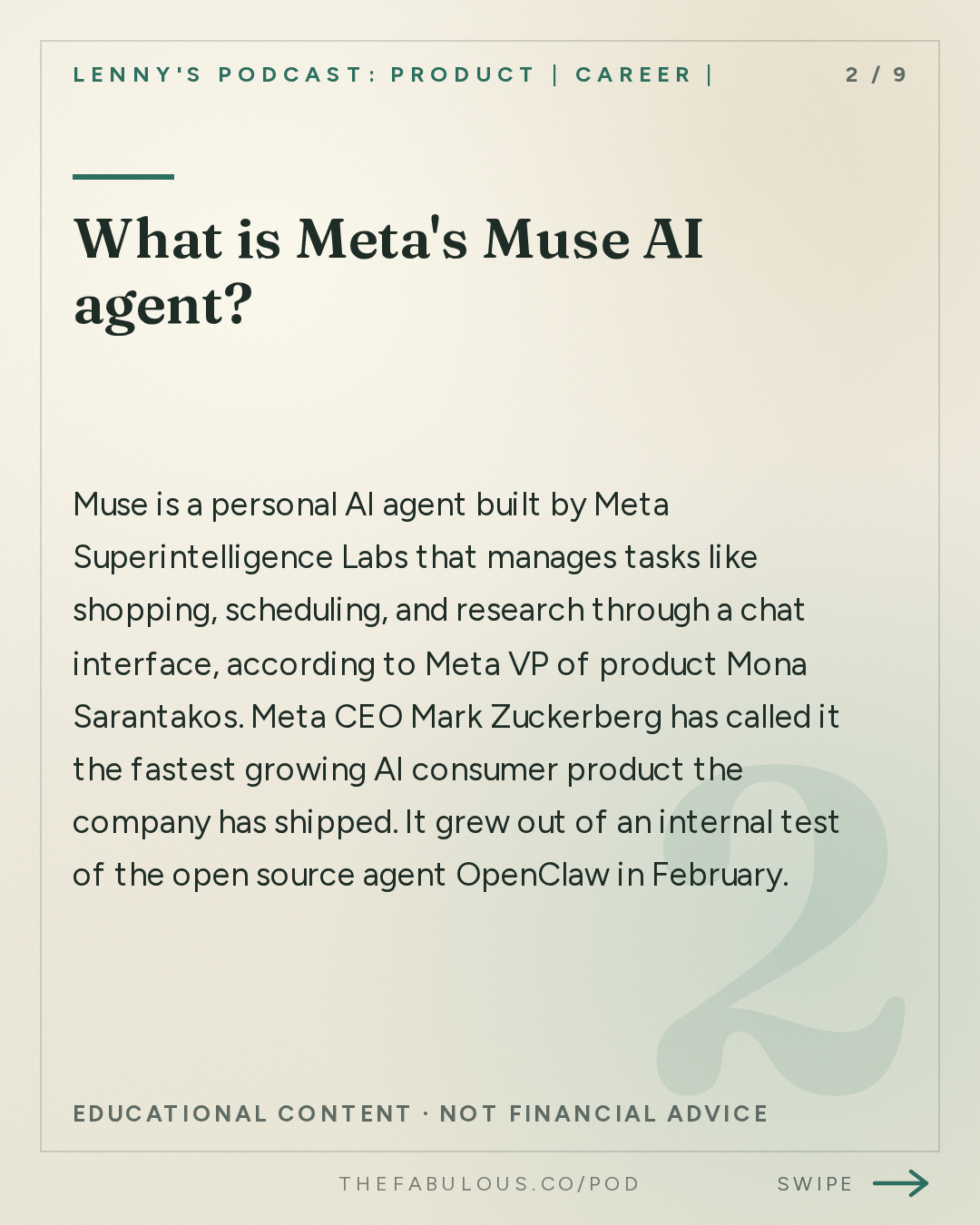
Muse is a personal AI agent built by Meta Superintelligence Labs that manages tasks like shopping, scheduling, and research through a chat interface, according to Meta VP of product Mona Sarantakos. Meta CEO Mark Zuckerberg has called it the fastest growing AI consumer product the company has shipped (01:32). It grew out of an internal test of the open source agent OpenClaw in February (03:30).
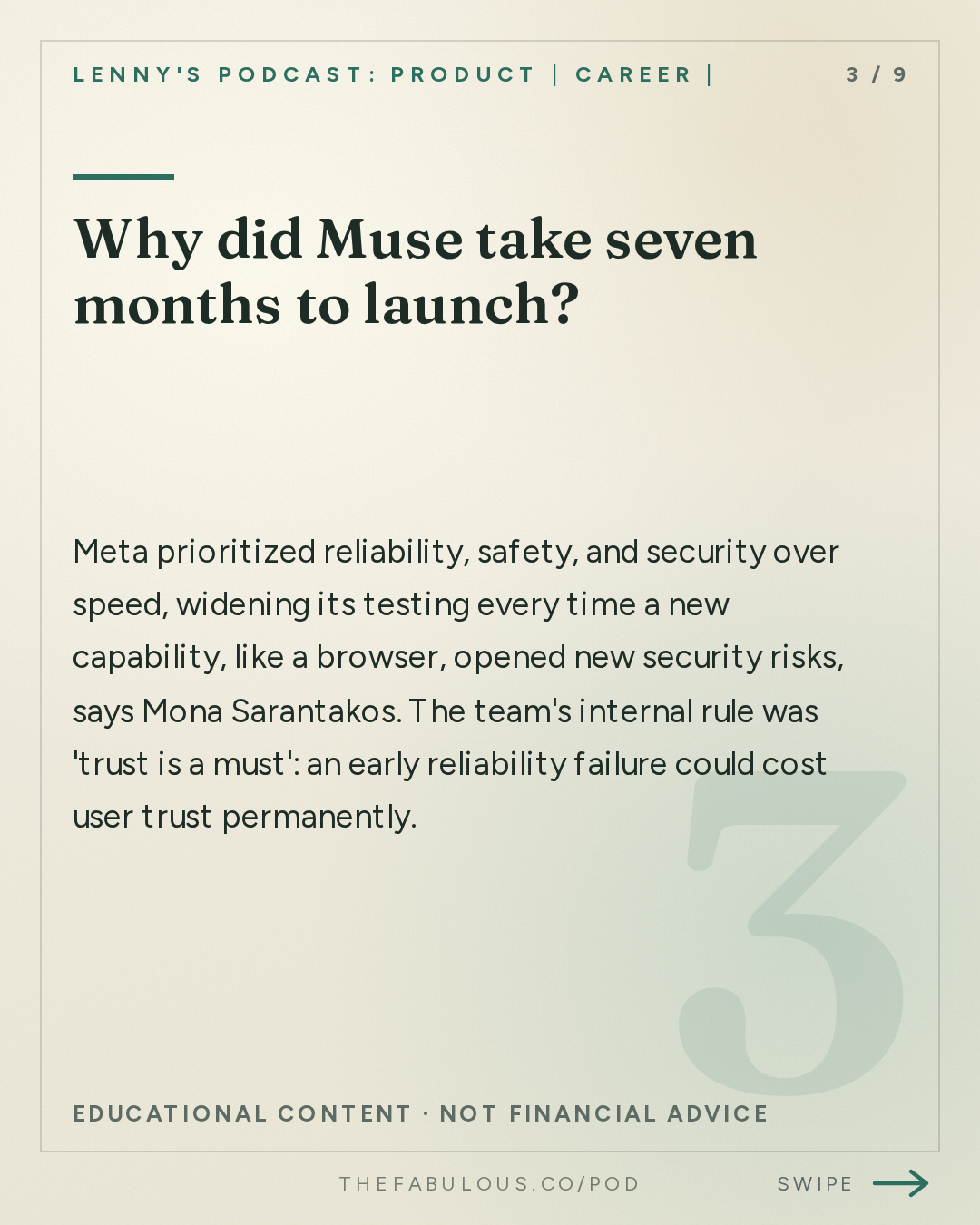
Why did Muse take seven months to launch?
Meta prioritized reliability, safety, and security over speed, widening its testing every time a new capability, like a browser, opened new security risks, says Mona Sarantakos (11:49). The team's internal rule was 'trust is a must': an early reliability failure could cost user trust permanently (12:33).
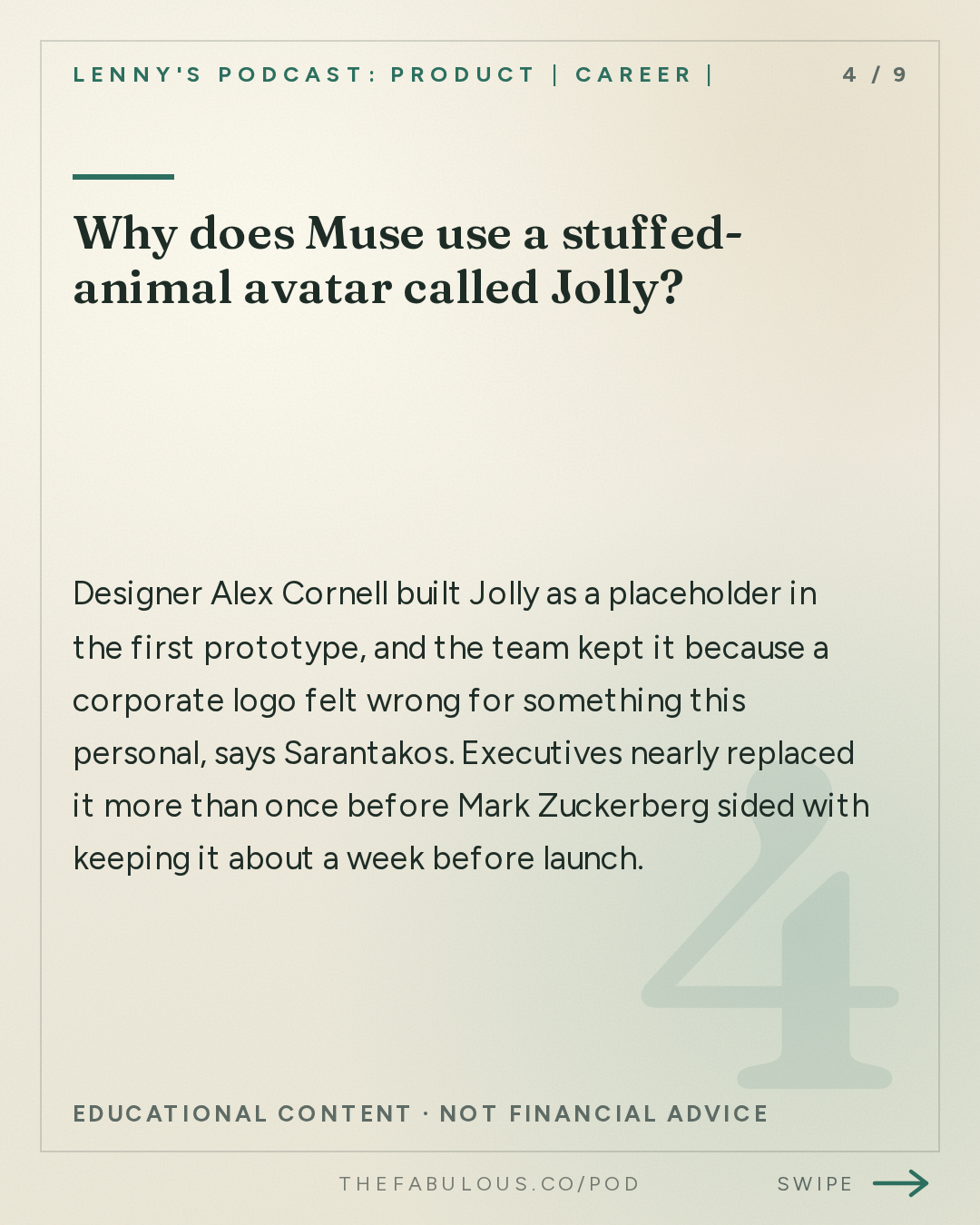
Why does Muse use a stuffed-animal avatar called Jolly?
Designer Alex Cornell built Jolly as a placeholder in the first prototype, and the team kept it because a corporate logo felt wrong for something this personal, says Sarantakos (26:33). Executives nearly replaced it more than once before Mark Zuckerberg sided with keeping it about a week before launch (26:58).
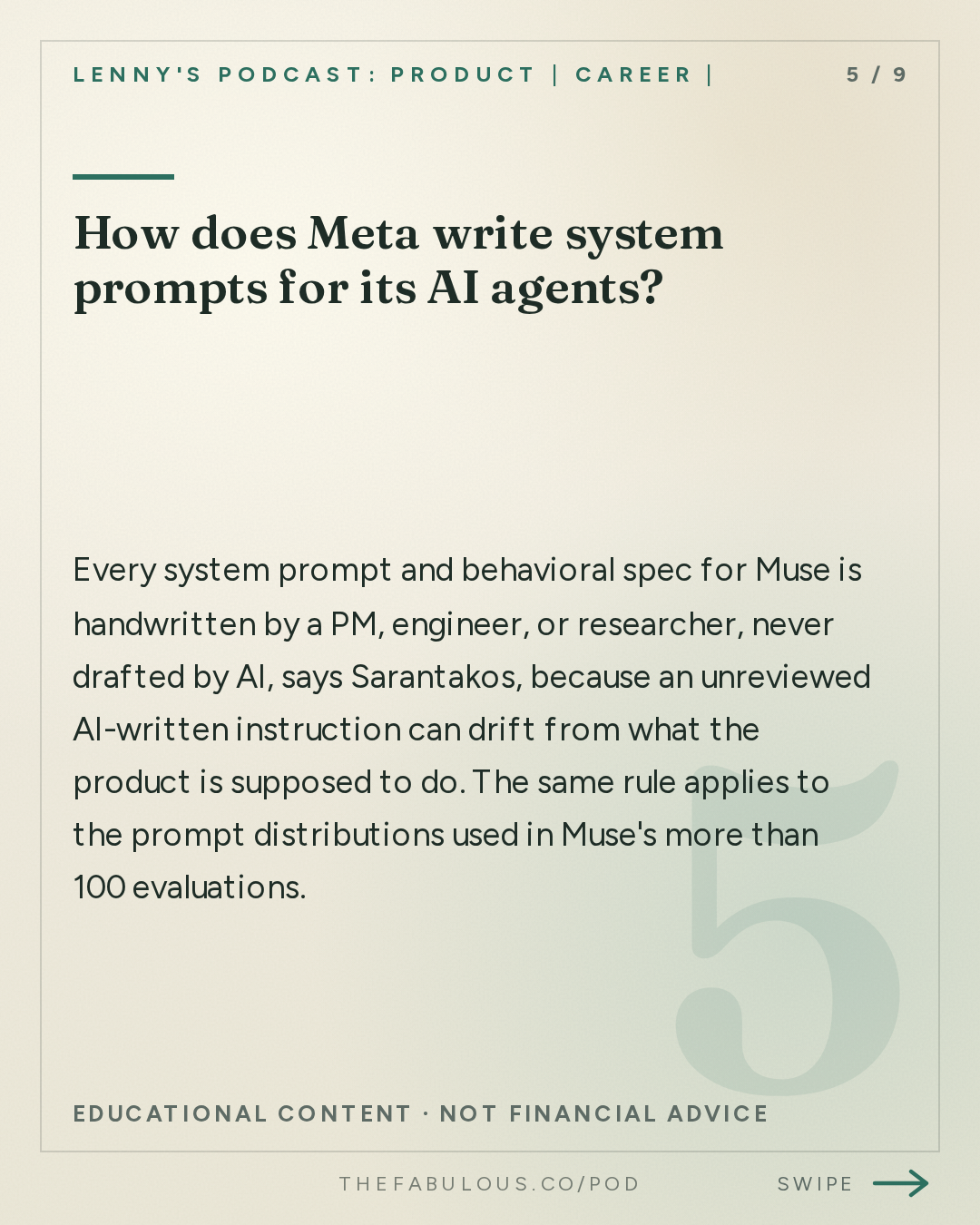
How does Meta write system prompts for its AI agents?
Every system prompt and behavioral spec for Muse is handwritten by a PM, engineer, or researcher, never drafted by AI, says Sarantakos, because an unreviewed AI-written instruction can drift from what the product is supposed to do (45:10). The same rule applies to the prompt distributions used in Muse's more than 100 evaluations (43:05).
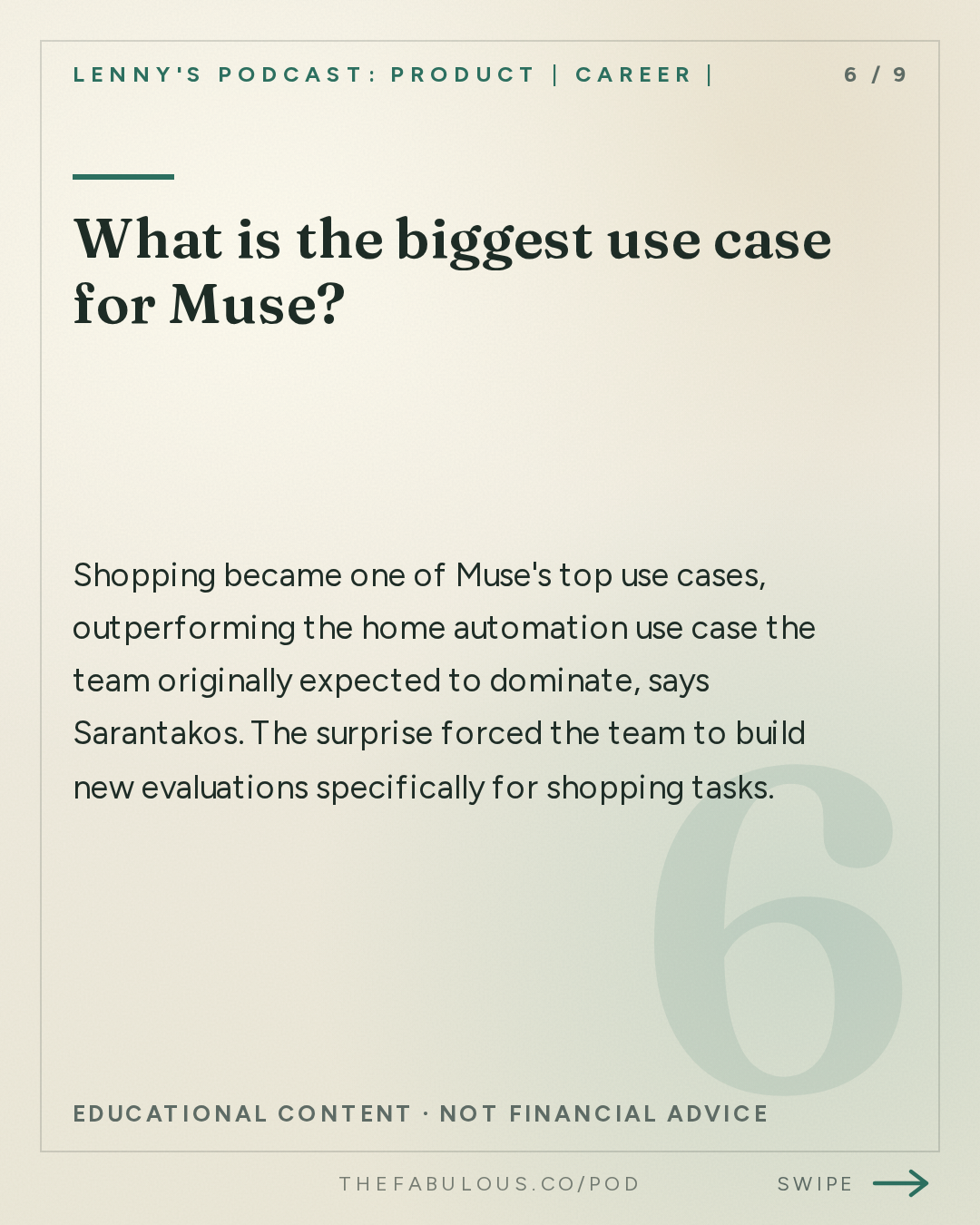
What is the biggest use case for Muse?
Shopping became one of Muse's top use cases, outperforming the home automation use case the team originally expected to dominate, says Sarantakos (32:12). The surprise forced the team to build new evaluations specifically for shopping tasks (32:42).
How has AI changed the product manager role?
Fast AI prototyping lets product managers react to a working build within a day instead of debating abstract documents for months, says Mona Sarantakos (65:10). She says product taste, the instinct for what will actually delight users, has replaced pure execution speed as the top skill she looks for in AI product managers (65:37).
The full read, in cards
Mentioned
Mona Sarantakos · Muse · Meta Superintelligence Labs · Nat Friedman · OpenCloud · Mark Zuckerberg · Alex Wang · Alex Cornell · Jolly · Workplace · Christine Awad
More from this show and category

Tulsee Doshi on Why AI PMs Matter Again
Google Gemini head of product Tulsee Doshi says a PM's job now is judging taste as AI makes building nearly free. She shares her 60/20/20 rule for building features ahead of a model's limits, explains how structured evals differ from gut-level vibes testing, and argues a model's personality is itself user experience.

Hector Serrano's Whisperflow Growth Playbook
Hector Serrano joined Whisperflow at 19 and built a creator-pay model: a cut of ad spend, not a flat fee. The approach helped fuel the company's 30X revenue growth and $2B valuation (01:45). Serrano argues young, hungry hires beat polished resumes, and creative work should stay human, not AI-made (65:44).

Rob Snyder's Pull Framework for Product-Market Fit
Startup advisor Rob Snyder says product-market fit shows up when one specific person inside a company has an urgent, unavoidable project that no current option solves (04:36). His PULL framework (Project, Unavoidable, List of options, Limitations) replaces guesswork with a testable hypothesis, verified by cold outreach and five real sales calls (07:33, 45:13).

How AI Models Actually Think
Anthropic researcher Emmanuel Ameisen explains that language models are grown through training, not programmed line by line, so even their creators cannot read their internal logic directly. Interpretability research shows models form internal plans, share universal concepts across languages, and sometimes fixate on wrong answers when training data rewards them incorrectly (01:45, 15:31, 37:14).
