
Ramtin Naimi: Inside the 2024 AI Venture Boom
Ramtin Naimi on the State of Venture Investing - [Invest Like the Best, EP.499]
The brief
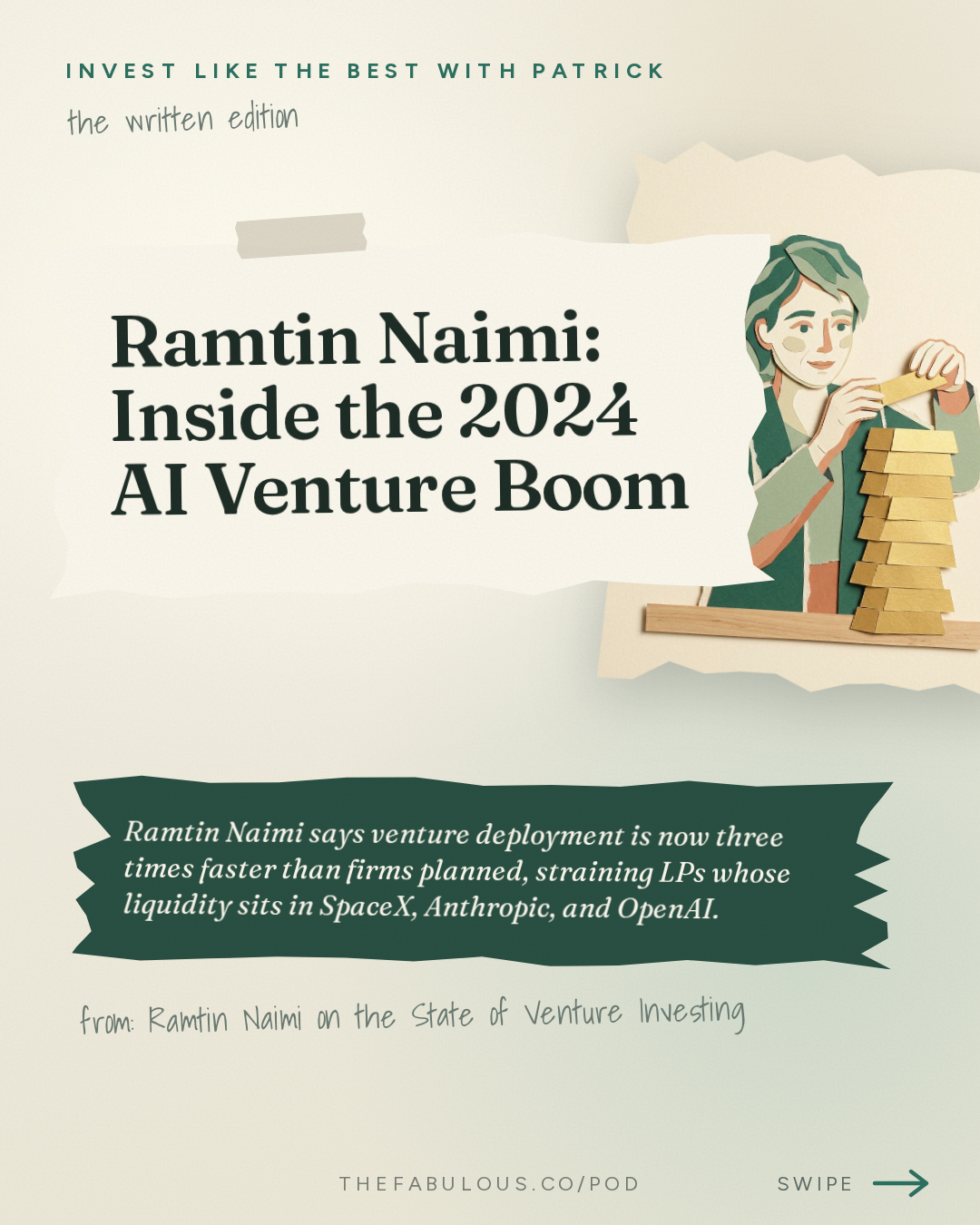
Ramtin Naimi says venture deployment is now three times faster than firms planned, straining LPs whose liquidity sits in SpaceX, Anthropic, and OpenAI. The Abstract Ventures co-founder describes a market pricing seed deals for trillion-dollar outcomes, AI margins improving fast, and losing bidders paying three to five times the primary price just to get into hot rounds.
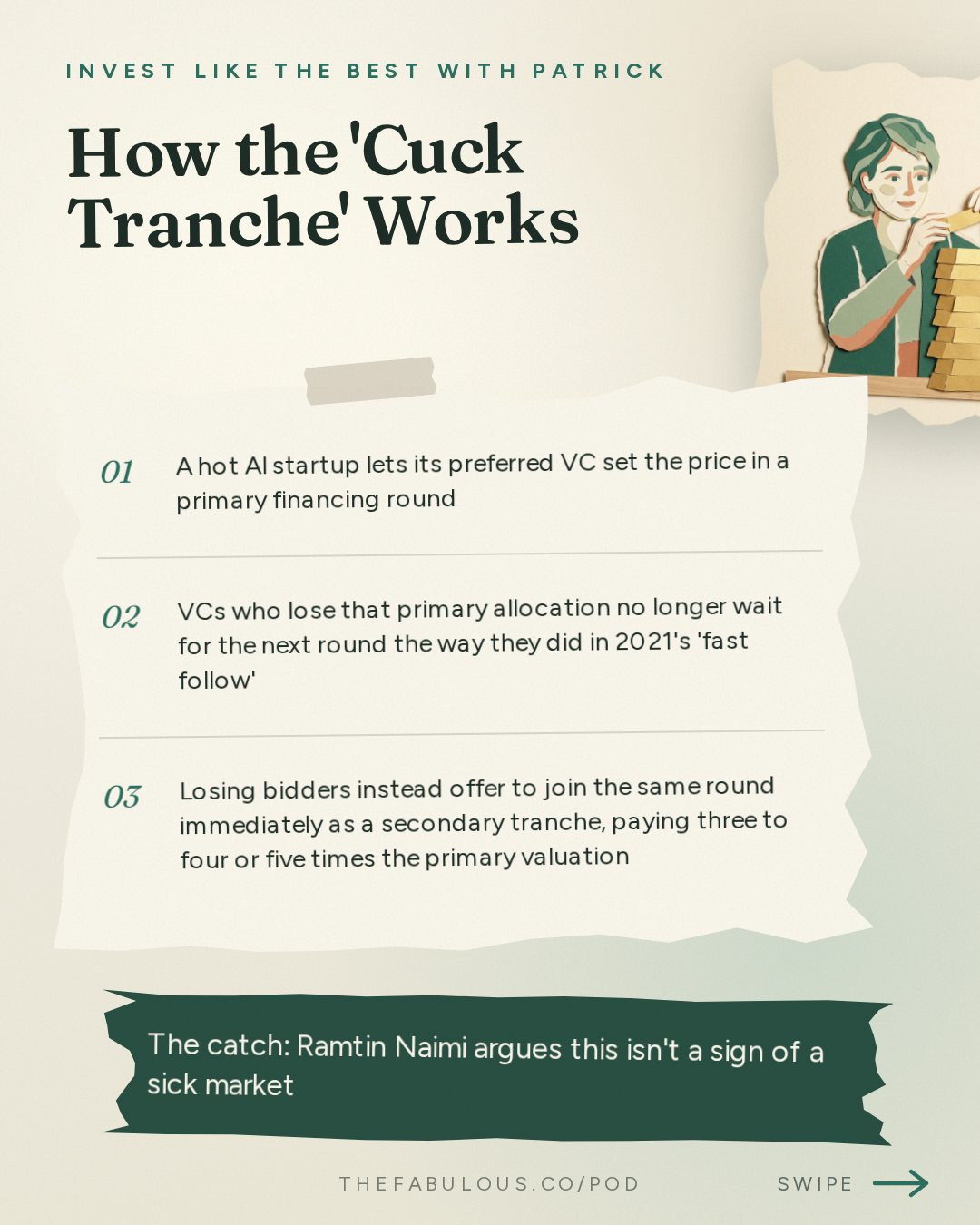
In the bars and Slack channels of San Francisco's venture crowd, there is a joke that isn't really a joke. An investor who loses the chance to lead a hot funding round no longer waits politely for the next one. He pays his way back in immediately, at three to five times the price the winning investor just locked in. The slang for this, coined by the people who keep paying it, is the "cuck tranche" (02:46). It is a crude name for a real mechanism, and it tells you most of what you need to know about where venture capital stands right now.
Ramtin Naimi, co-founder of the venture firm Abstract Ventures, is the guest supplying the view from the deal floor. Host Patrick O'Shaughnessy asked him to skip the usual origin story and zoom in on the present moment, and Naimi obliged with an unusually granular account of how fast, strange, and lucrative Silicon Valley has become. Rounds close in days. Follow-ons happen before the ink on the last round dries. And the firms that lose a deal they wanted no longer wait for the next financing to buy in. They pay up immediately, in parallel with the primary round, at three to four or five times the price (03:01).
"What do we need to pay to get into this financing today? And it's usually not two X. It's usually like three to four to five X happening in tandem with the primary." — Ramtin Naimi [03:01]
Naimi doesn't read this as a symptom of mania. He argues these companies are so capital-hungry that splitting a round into tranches is a necessity, not a red flag (03:20). What has changed is the psychology around it. Getting a markup used to feel like a win. Now, he says, "getting markups is the bare minimum requirement to be keeping up to the point where markups don't even feel like good anymore" (03:57). A founder who isn't marked up every few weeks starts to feel like he's falling behind, even when nothing about his business has changed.
The speed shows up most clearly in how venture firms raise their own money. A fund normally plans an eighteen-to-twenty-four-month window to deploy its initial checks before coming back to investors for more (10:32). Naimi says the largest platform funds are now burning through that money roughly three times faster than modeled (11:14). He gives two anonymized examples: one fund raised two and a half billion dollars in July and told him it would be back in market by January, and another was handed three billion dollars nine months before the taping and is already back asking for five billion (13:49). The gap between the ownership stakes funds want and the prices they actually have to pay to get them is the hidden driver. Everyone underestimated the check sizes required to buy the same slice of the same companies.
That mismatch cascades down to limited partners, the endowments and foundations that fund venture firms in the first place. Naimi says LPs expected far more liquidity by now and are discovering an uncomfortable truth: much of their exposure to venture capital is really exposure to three or four companies, SpaceX, Anthropic, OpenAI, and Databricks among them (12:53). If your fund wasn't in those names, there is no liquidity coming. That leaves every other fund facing a choice described starkly in one of the episode's sharper passages.
"LPs are kind of looking at these guys and realizing that there's two things that are happening. They either maintain their ownership in these companies, but they end up with way fewer shots on goal." — Ramtin Naimi [11:50]
Either a fund protects its ownership stake and ends up placing fewer bets overall, or it keeps the same number of bets and accepts a smaller stake in each one. Pick the first path and you need to be a very good stock picker. Pick the second and you are betting on sheer volume. There is no comfortable middle.
The Revenue Isn't What It Looks Like
Naimi's second warning concerns the quality of the growth everyone is chasing. Companies posting ten, fifteen, twenty times year-over-year growth are real, he says, but almost none of them have clean, ninety-percent-margin, pure subscription revenue (04:49). Data-labeling companies are growing at wild rates while holding margins of just fifteen to twenty percent, because collecting the data itself is expensive (05:59). Companies built on top of foundation models often hand most of their margin straight to the model provider. And yet the trend line is improving fast: Anthropic's gross margins hit eighty-five percent in the first half of the year (06:18), and Naimi says portfolio companies are moving from negative fifteen percent margins to positive thirty-five percent while also multiplying revenue several times over.
This is also why vertical software companies selling into specific industries, like law firms, are commanding roughly a hundred-times revenue multiple while public SaaS companies trade at around thirteen times (06:41). The bet isn't that these are software companies at all. It's that they are quietly becoming labor-replacement businesses, and the market that matters isn't what law firms spend on software, it's what they spend on paralegals (07:14).
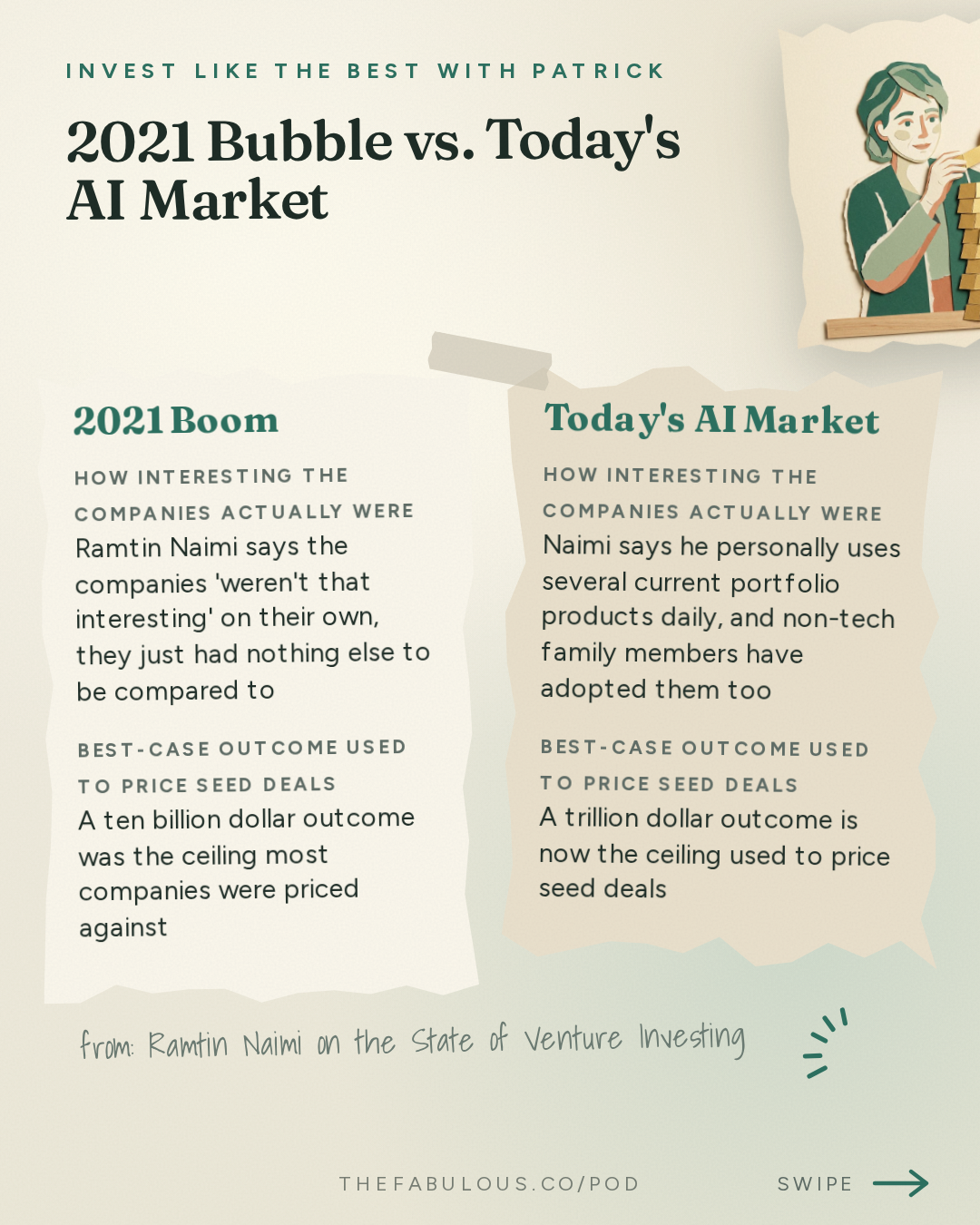
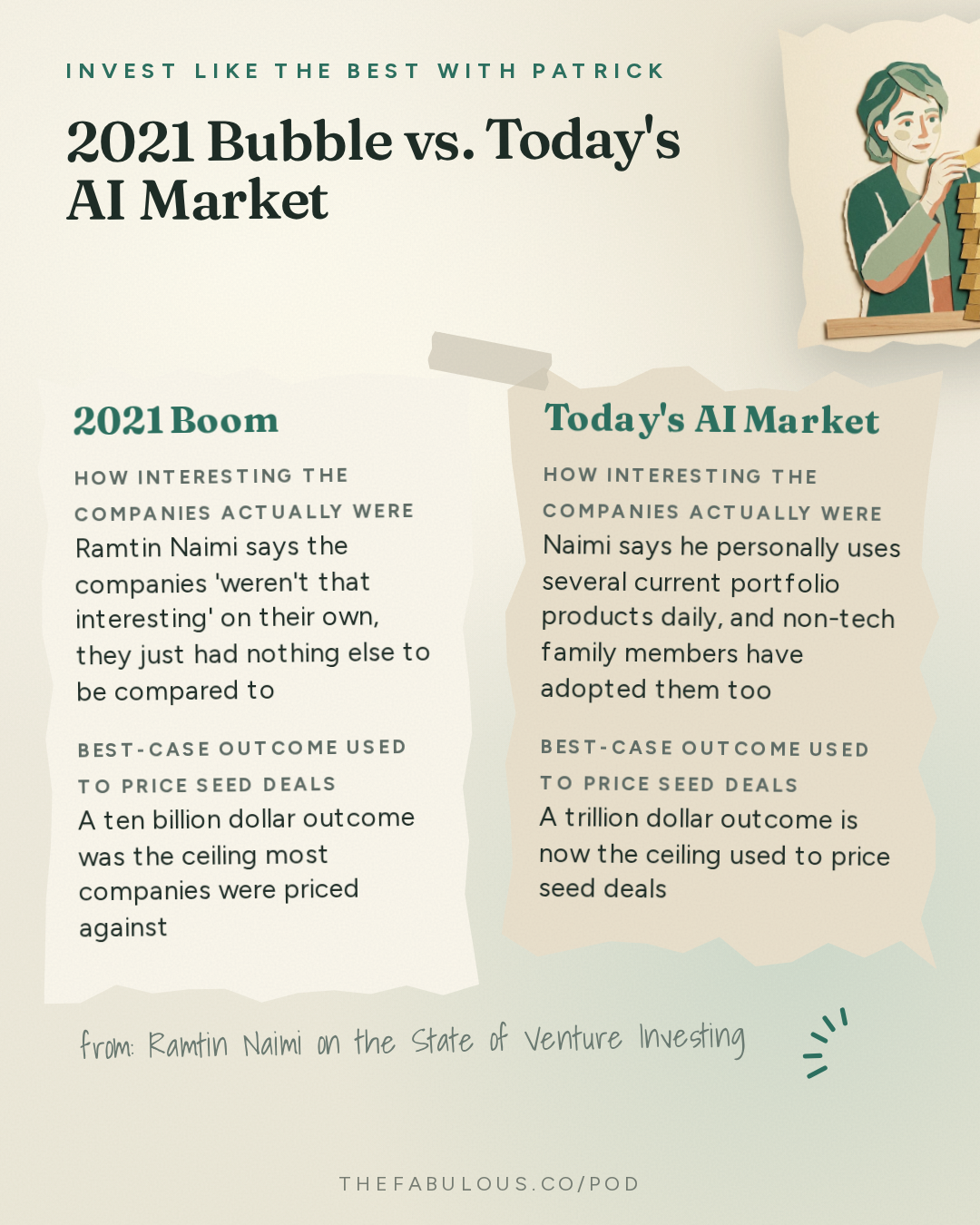
Naimi's comparison to 2021 is the most useful lens in the whole conversation. Back then, he says, "the companies weren't that interesting when you looked at them" (07:33); investors were just comparing them to nothing else. Today he personally uses several portfolio products daily, and he's watched family members who never adopted any tech product start relying on AI tools as part of their routine (09:32). What is similar to 2021 is the behavior: term sheets offered and pulled within days, and in the last six to eight weeks before this recording, more renegotiated deals than at any point since 2021 (09:10).
Pricing a Trillion-Dollar Imagination
Underneath all of it sits a shifting idea of what a company can become. Naimi says that when he started investing in 2016, a ten-billion-dollar outcome was the ceiling most seed deals were priced against (24:06). By 2021, with Stripe, Databricks, Airbnb, and DoorDash nearing hundred-billion-dollar valuations, that ceiling moved to a hundred billion. Now, with SpaceX, Anthropic, and OpenAI each approaching or exceeding a trillion dollars, every seed deal gets priced as if a trillion-dollar outcome is the best case (24:54). Naimi doesn't think there will be forty trillion-dollar companies. He thinks there will be two or three more. But the imagination required to write a check has permanently expanded.
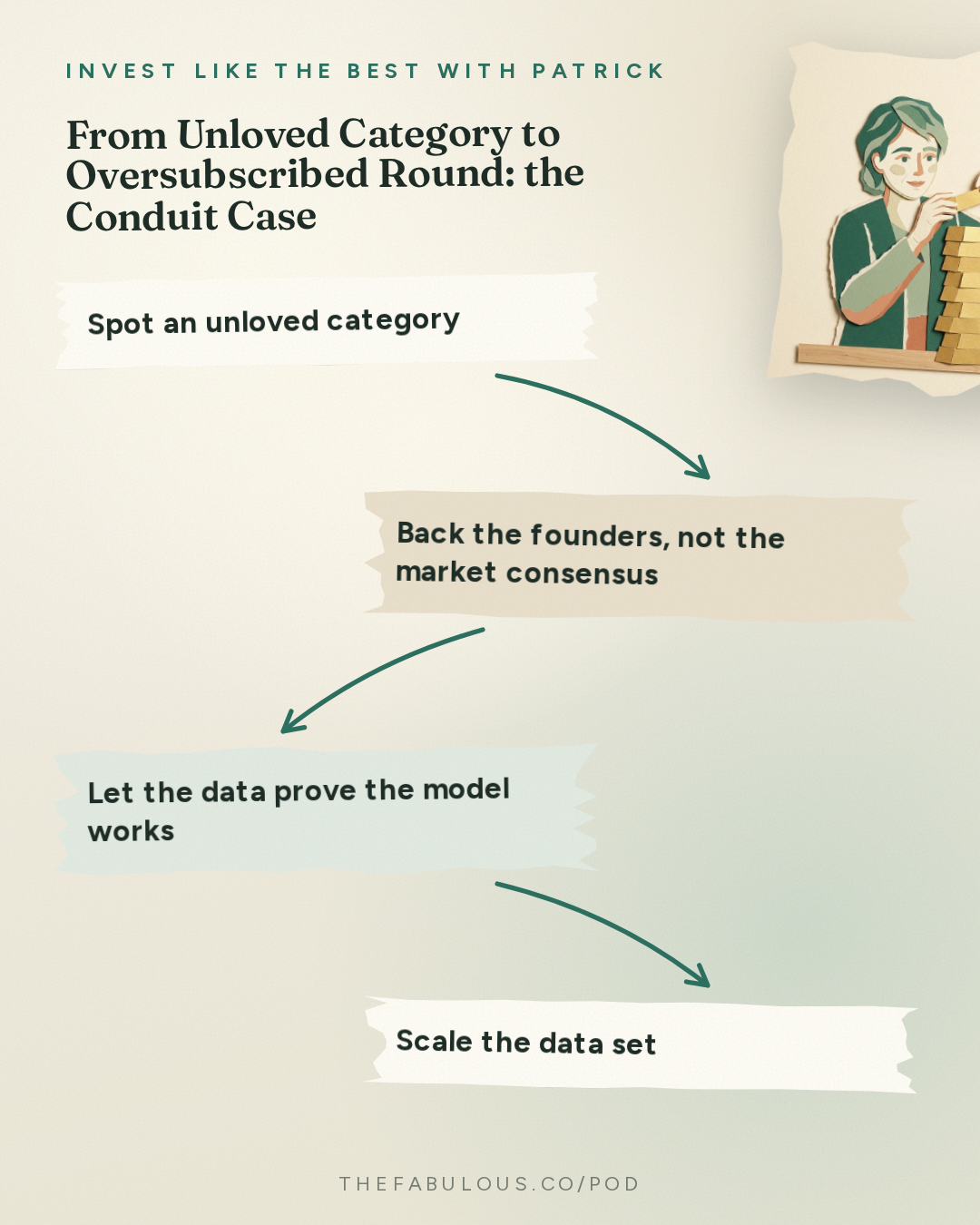
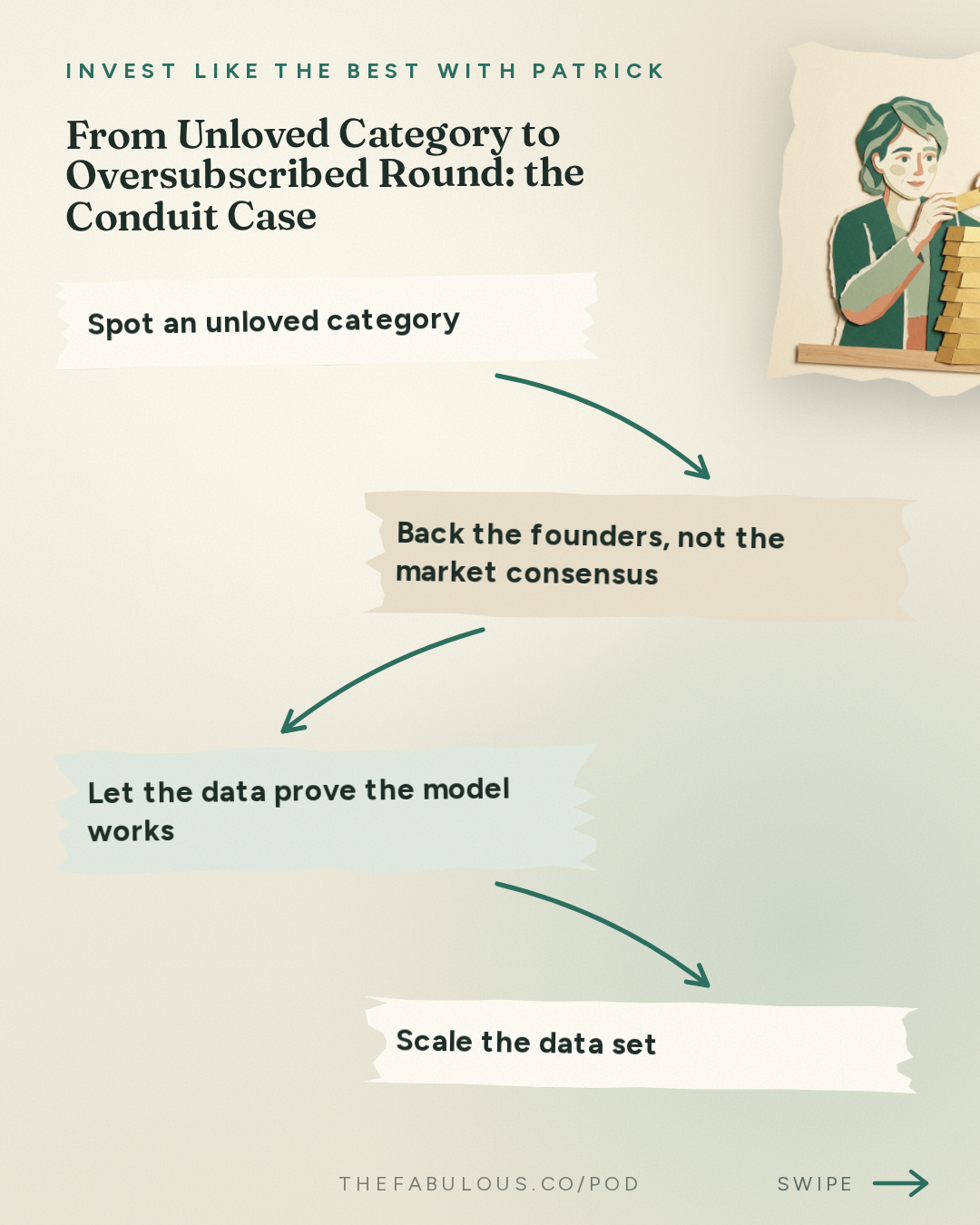
His framework for surviving that expanded imagination is a distinction between reactive and proactive investing. Reactive investors chase the deal everyone already wants and, if they pick correctly, can be top-quartile managers. Proactive investors back brilliant founders in categories nobody cares about yet, and that, he argues, is what separates the top five percent (26:36). His example is Conduit, a brain-computer-interface startup Abstract seeded about nine months before this recording, when almost no one in Silicon Valley cared about BCI (26:53). Conduit's wearable device reached eighty percent accuracy predicting what someone was about to type, built on a small initial set of human training data that later grew to thirty thousand hours (27:34). Within eight to ten weeks, BCI became a hot category and Conduit's next round drew thirteen competing term sheets (27:55). Chip startup Etched tells a similar story: nearly every investor who met founder Gavin Uberti thought he was brilliant, but almost no one believed a startup could out-compete incumbents in AI chip fabrication, until Sequoia Capital priced the company at ten billion dollars and the market suddenly agreed (28:55).
Compute itself has become the real currency behind every number in this conversation. Naimi notes that some VC firms now finance AI startups with compute allocations rather than cash, since founders know the money will be spent on chips regardless (17:07). The scale of the underlying spend came into sharp relief the same week Anthropic filed its S-1: the company had raised a hundred and forty billion dollars, burned ten billion of it, and still had a hundred and thirty-two billion dollars on its balance sheet at eighty-five percent gross margins (15:50). That is the backdrop against which Naimi rates the opportunity set a ten out of ten relative to his nearly ten years in venture, and the overall frothiness a six and a half to seven out of ten, lower than 2021's ten, because unlike 2021, he says, there is real adoption behind the hype (43:30). Whether that distinction holds is, as always in venture, a bet nobody can place with certainty until the companies now worth a hundred billion either become worth a trillion or don't.
Ask this episode anything
Pod's AI answers from the episode itself, with the minute mark so you can hear it yourself.
Or start with one of these
Ask this episode
Pod's AI listens to the whole episode to answer, and points you to the minute it comes from.
The rest of this answer, and any question after it
Answers come from the episode itself, never from a summary of it.
ContinueKey takeaways
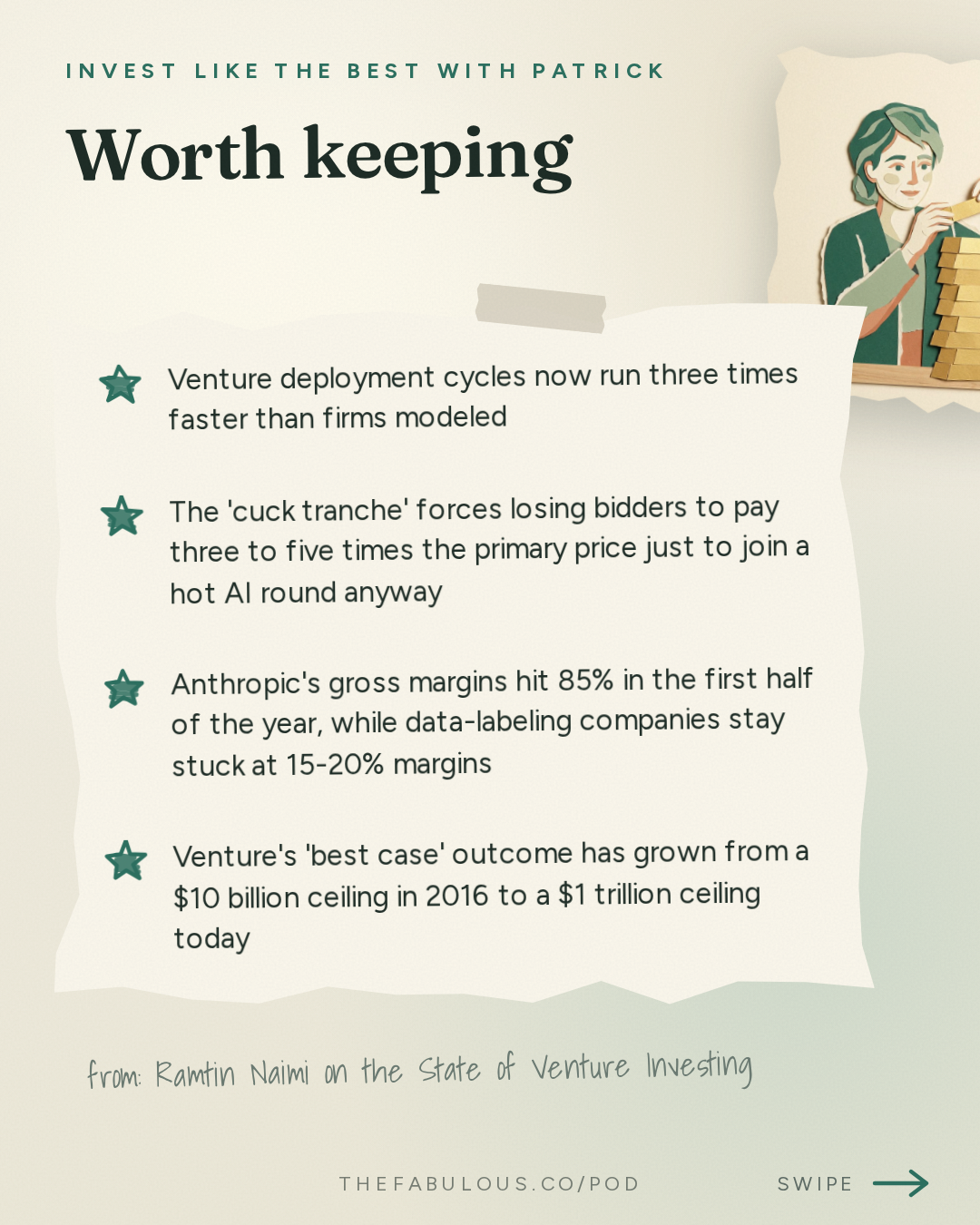
- Venture deployment cycles now run three times faster than firms modeled
- The 'cuck tranche' forces losing bidders to pay three to five times the primary price just to join a hot AI round anyway
- Anthropic's gross margins hit 85% in the first half of the year, while data-labeling companies stay stuck at 15-20% margins
- Venture's 'best case' outcome has grown from a $10 billion ceiling in 2016 to a $1 trillion ceiling today
- LP liquidity is concentrated in a handful of names, SpaceX, Anthropic, and OpenAI, leaving other venture funds cash-poor
The episode in cards
In their words
“What do we need to pay to get into this financing today?" And it's usually not two X. It's usually like three to four to five X happening in tandem with the primary”
“In this market, getting markups is the bare minimum requirement to be keeping up to the point where markups don't even feel like good anymore.”
“LPs are kind of looking at these guys and realizing that there's two things that are happening. They either maintain their ownership in these companies, but they end up with way fewer shots on goal.”
“I can't really think of many times in history where, like, an easy strategy turned out to also be a good strategy long term.”
Protocols
-
Take compute instead of cash to guarantee allocation
Ramtin Naimi says some venture firms now finance AI startups with compute allocations rather than cash, because founders know the firm plans to spend that money on compute anyway, so taking compute directly locks in supply immediately.
used case by case in compute-constrained deals
-
Back proactive bets in non-obvious markets
Ramtin Naimi says investors who proactively seek out brilliant founders working in categories nobody cares about yet can become top five percent managers, while investors who only react to already-obvious opportunities top out as top-quartile managers.
an ongoing investment philosophy, not a one-time action
-
Size the next fund to actual deployment capacity
Ramtin Naimi says Abstract Ventures checks six months before each fundraise whether it can deploy more capital into companies of equal or greater quality than its last fund, and only then raises a fund size that matches that deployment capacity rather than fixating on a target fund size in advance.
evaluated roughly six months before every fundraise
Questions this episode answers
What is the 'cuck tranche' in venture capital?
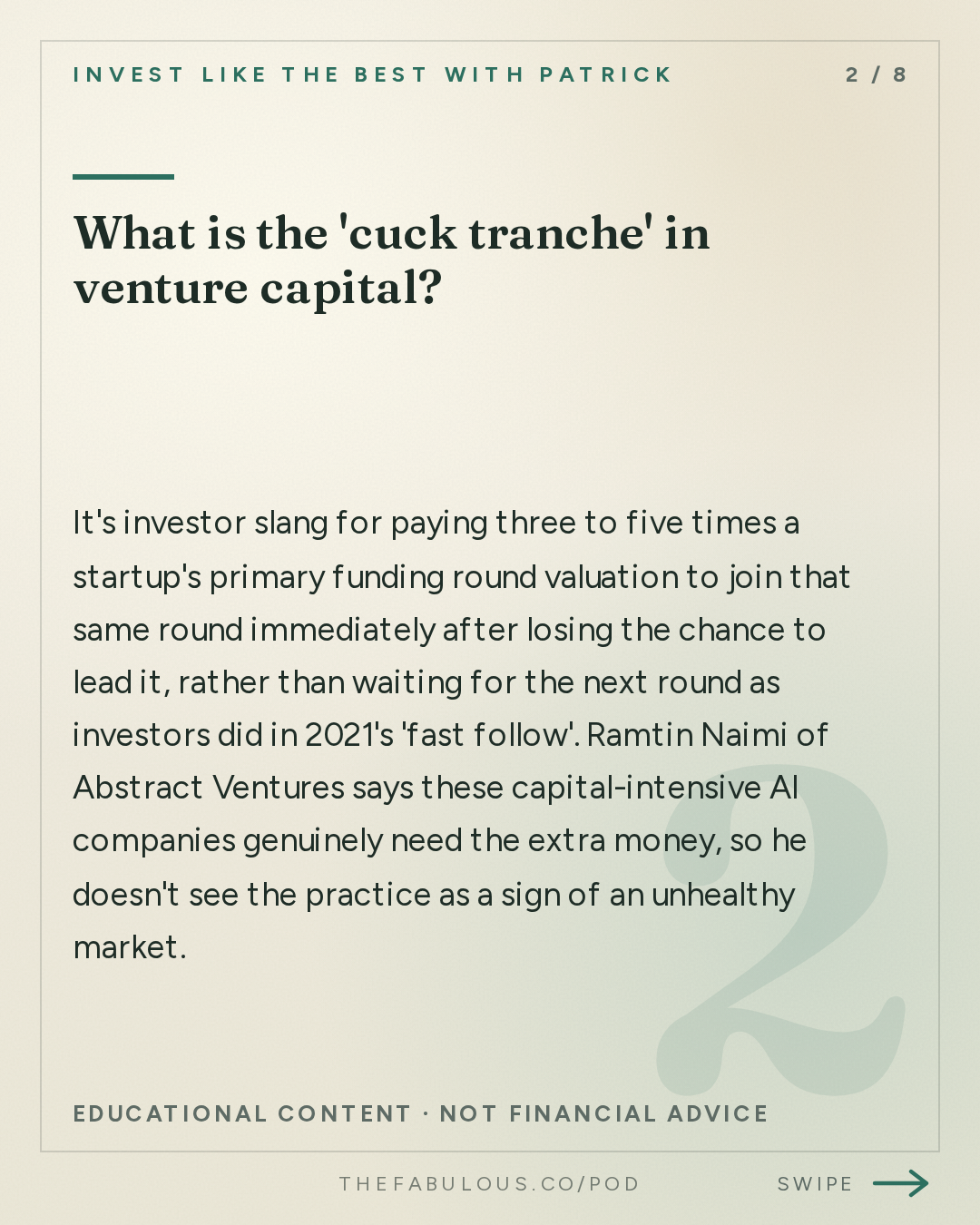
It's investor slang for paying three to five times a startup's primary funding round valuation to join that same round immediately after losing the chance to lead it, rather than waiting for the next round as investors did in 2021's 'fast follow' (02:46). Ramtin Naimi of Abstract Ventures says these capital-intensive AI companies genuinely need the extra money, so he doesn't see the practice as a sign of an unhealthy market (03:20).
Why are venture funds raising new rounds faster than planned?
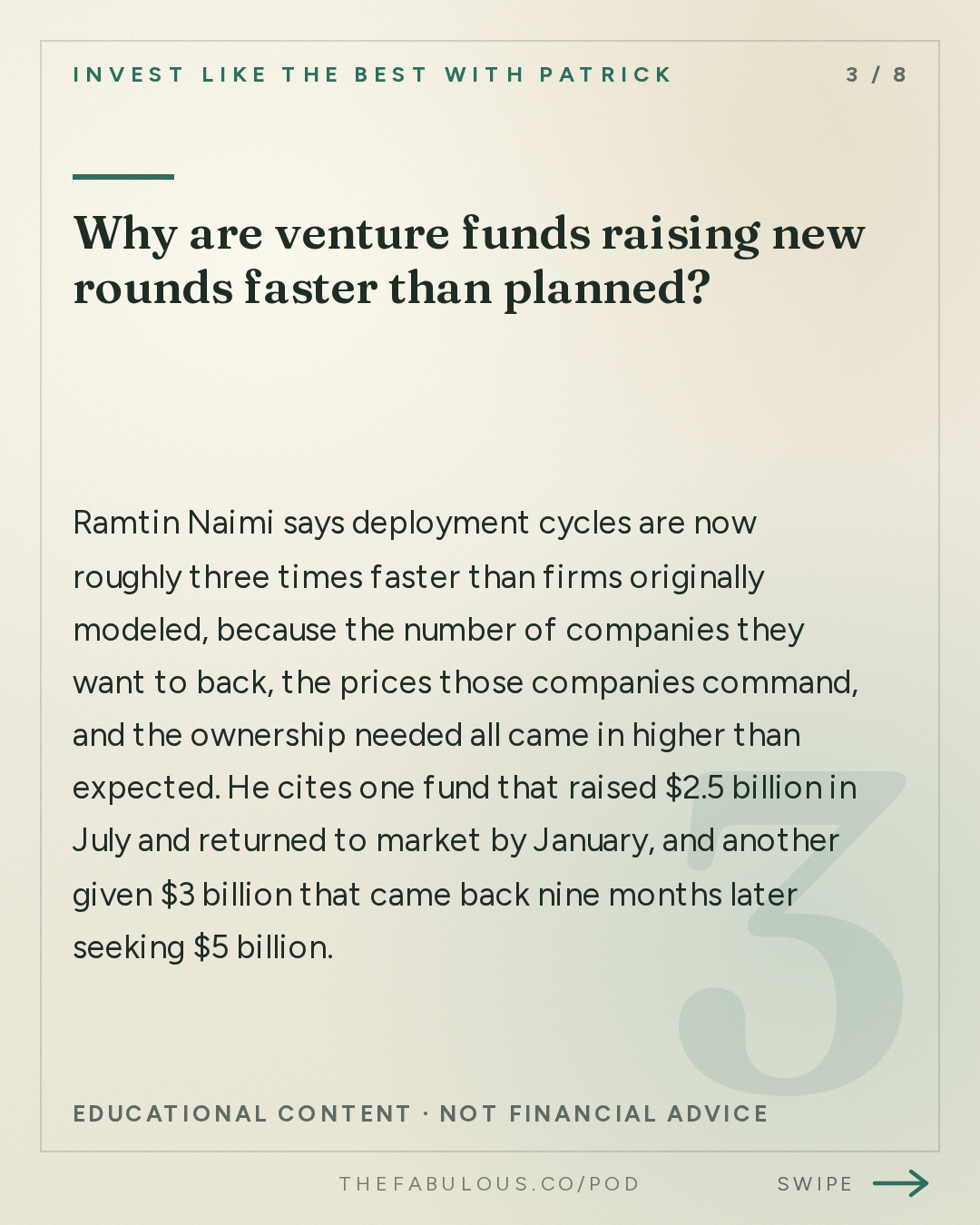
Ramtin Naimi says deployment cycles are now roughly three times faster than firms originally modeled, because the number of companies they want to back, the prices those companies command, and the ownership needed all came in higher than expected (11:14). He cites one fund that raised $2.5 billion in July and returned to market by January, and another given $3 billion that came back nine months later seeking $5 billion (13:49).
What are Anthropic's gross margins?
Anthropic's gross margins were 85 percent in the first half of the year, according to its S-1 filing discussed on the episode (06:18). The same filing showed the company had raised $140 billion, burned $10 billion of it, and still held $132 billion in cash (15:50).
Why are seed-stage startups being priced for trillion-dollar outcomes?
Ramtin Naimi says the 'best case' ceiling investors use to price deals has shifted over his career: $10 billion when he started in 2016, $100 billion around 2021 as Stripe, Databricks, Airbnb, and DoorDash approached that scale, and now $1 trillion since SpaceX, Anthropic, and OpenAI are each nearing or past it (24:54). He expects only two or three more trillion-dollar companies, not dozens, even though every pitch now assumes the possibility.
How accurate is Conduit's brain-computer-interface technology?
Conduit's wearable device reached 80 percent accuracy predicting what a person was about to type before they typed it, based on an initial small set of human training data that later grew to 30,000 hours (27:34). Abstract Ventures seeded the company when BCI wasn't yet a popular Silicon Valley category; within weeks it became one, and Conduit's next round drew 13 term sheets (27:55).
The full read, in cards
Go deeper
- Anthropic S-1 filing — showed $140 billion raised, $10 billion burned, $132 billion cash remaining, and 85 percent gross margins
Mentioned
Ramtin Naimi · Abstract Ventures · Anthropic · OpenAI · SpaceX · Databricks · Conduit · Etched · Gavin Uberti · Applied Compute · Physical Intelligence
More from this show and category

Martin Casado on AI's Capital Economics
Andreessen Horowitz general partner Martin Casado says AI's biggest shift is that capital, not engineering, now solves digital problems. Frontier models last three to six months before being overtaken (24:58), the top model captures 80% of spending (23:19), and Casado insists private markets already price risk accurately (44:55).

Cliff Sosin: Intelligence as a Commodity
Cliff Sosin argues intelligence is a ratio, not an unbounded scalar, so cheap AI can't solve problems that need physical experiments. The investor behind an 80% Carvana position says to put money in what AI can't replace: data, attention, physical proximity, and scale (08:14, 42:34).

Christina Cacioppo on Vanta's AI Strategy
Vanta founder Christina Cacioppo prefers an 80% growth, 80% margin business over a 160% growth, 30% margin one, despite a tenfold valuation gap. She also details how Vanta is eating the cost of AI tokens rather than marking them up, since a 4X markup on Claude would put the product in a losing price comparison with the model itself.

David Vélez on Nubank's AI Strategy and Banking's Future
Nubank founder David Vélez argues global banking is still in the Blockbuster era, with incumbents holding 90% of a $10 trillion industry (02:38), while Nubank's own AI foundation model and a flattened org structure let it serve 140 million customers at 3% of a traditional bank's cost (05:32).
