
David Vélez on Nubank's AI Strategy and Banking's Future
David Vélez - Building Nubank and the Future of Global Banking - [Invest Like the Best, EP.495]
The brief
Nubank founder David Vélez argues global banking is still in the Blockbuster era, with incumbents holding 90% of a $10 trillion industry (02:38), while Nubank's own AI foundation model and a flattened org structure let it serve 140 million customers at 3% of a traditional bank's cost (05:32).
Imagine a store where nine out of ten customers still drive across town to rent a physical video, years after a mail-order service proved people would rather have it delivered. That is David Vélez's picture of global banking today. Vélez, founder and CEO of the Brazilian digital bank Nubank, tells Patrick O'Shaughnessy that despite a wave of fintech startups over the past decade, incumbent banks still process about ninety percent of the ten trillion dollar global consumer financial services industry (02:38). "It's still almost as if ninety percent of the world was going to Blockbuster to get VHS and DVDs, and Netflix-like services still had something like ten percent of that industry," he says (03:03). The analogy sounds like a founder's humble brag. It is actually the spine of the whole conversation: a argument that the transition from physical to digital finance, the kind of shift that already remade media, retail, and transportation, has barely started in banking.
Nubank is Vélez's evidence. Since the two last spoke five years ago, the company has grown from thirty-five million customers to one hundred forty million (01:39), and in Brazil it now reaches roughly sixty-five percent of the adult population (03:31). More telling than scale is behavior: sixty percent of Nubank's customers use it as their primary bank account, not a secondary wallet (03:49). The company has not just added users. It has replaced the incumbent.
The cost structure nobody sees
The mechanism behind that replacement is unglamorous: real estate. Nubank serves its customers with ten thousand employees, while competitors need roughly one hundred thousand employees and six thousand branches to serve a smaller base of one hundred million (05:32). The result, Vélez says, is that Nubank's cost to serve a single customer runs at about three percent of a traditional bank's cost (05:32). That gap is the entire business model: it buys enough margin to drop fees, pay better interest, and still turn a profit.
Vélez organizes the opportunity that follows into three buckets: access, cost, and intelligence (06:45). On access, he points out that three billion people worldwide still have no credit product at all (06:26), a gap he attributes to the slow digitization of financial data rather than a lack of demand. On cost, he offers a number designed to unsettle: U.S. banks hold about fifteen trillion dollars in retail deposits but pay an average yield of only forty basis points, even with interest rates near five percent (08:19). Do the arithmetic and that gap is worth roughly six hundred billion dollars a year, money that in a digital banking system would stay in depositors' accounts instead of funding branch networks.
"This is a massive wealth tax, the fact that banks don't pay any yield. If you're high income, you do. The lower your income, the less you get paid." — David Vélez [08:43]
The third bucket, intelligence, is where Vélez gets most provocative. Financial literacy campaigns, he argues, have failed for a mundane reason: people do not show up to the class. His proposed fix is not more education but an AI system that manages the decisions people would otherwise need expertise for, the way a private banker already does for wealthy clients (09:52). "You're not gonna solve this problem of intelligence through education. You're gonna solve it through AI," he says (10:07). Nubank already runs a version of this for fifty million Brazilian customers, flagging when a bill at another bank is about to trigger a steep penalty rate and offering cheaper credit in its place (12:06).
Why data, not speed, is the real moat
Asked how he would attack his own company if he were a new founder with nothing to lose, Vélez gives a candid answer: speed. An unregulated AI-native startup could move faster than Nubank, which now holds banking licenses across several countries and has to clear regulatory review for new products (13:55). But he argues that advantage runs out quickly in banking, because licenses take years to obtain and no AI model can shortcut that. The deeper moat, he says, is data: Nubank holds twenty to thirty thousand data points per customer across thirteen years for one hundred forty million customers (15:02), the raw material for its own proprietary foundation model, a large AI system trained specifically on Nubank's own financial data rather than general internet text. Nubank built this model after acquiring a Palo Alto startup called Hyperplane, whose technology had struggled to sell into slow-moving incumbent banks (18:14). Vélez says Nubank was likely the first financial services company to build its own foundation model for credit decisions and has since extended it to fraud detection in Mexico and Colombia (18:34).
That data advantage is also why Vélez pushes back on a simple reading of his own Blockbuster analogy. Blockbuster had enormous amounts of customer data too, he notes, but no system or culture built to use it, which is why Netflix could out-build it with far less history (19:50). Scale alone does not create an edge. Scale paired with a culture that treats every decision as a modeling problem does.
Flattening the company to see the truth
The most concrete operational claim in the conversation concerns Nubank's own management structure. As the company scaled from one million customers to one hundred forty million, it organically added layers of management to handle the growing pains, eventually reaching ten hierarchical levels (48:17). Vélez says AI tools, paired with a deliberate choice, let the company cut that down to five layers, while he personally went from one direct report to twenty (47:31). The logic draws on an idea he calls the dictator's dilemma: the more layers a message travels through, the more distorted it becomes by the time it reaches the person at the top (49:02).
"Simply by removing a lot of those layers, you are much closer to the ground truth, and you reduce a lot of those layers by having information systems that have access to everything." — David Vélez [49:02]
Mapping that shift took work: Nubank identified one hundred twenty internal workflows, from coding to compliance to product design, and rebuilt each one natively with AI tools, building evaluation infrastructure to measure the change at every step (46:10). Vélez frames this less as an AI story than as a forcing function: companies always have latent opportunities to redesign how they work, and the current technology shift simply makes the case for doing it now undeniable.
The conversation closes on a distinction Vélez clearly thinks matters more than any metric: the difference between a founder and a chief executive. A founder, in his telling, is impatient, wants to move fast, and resists the slow work of coaching a team. A CEO has to build systems and be patient (59:49). Most people assume the CEO version is the better manager, he says, but the company's long-run advantage comes from staying closer to founder mode, especially during a technology shift like the current one in AI, when the instincts that built the company from nothing become more valuable than institutional polish (60:27). It is a fitting place to end a conversation that began with a store nobody visits anymore. The argument throughout is not that incumbents are incompetent. It is that an industry built around physical branches, inherited trust, and static yield never had to ask what a bank looks like once branches, trust, and yield can all be rebuilt from data instead of real estate.
Ask this episode anything
Pod's AI answers from the episode itself, with the minute mark so you can hear it yourself.
Or start with one of these
Ask this episode
Pod's AI listens to the whole episode to answer, and points you to the minute it comes from.
The rest of this answer, and any question after it
Answers come from the episode itself, never from a summary of it.
ContinueKey takeaways
- Incumbent banks still control 90% of the $10 trillion global consumer financial services industry, per David Vélez
- Nubank's cost to serve a customer is about 3% of a traditional bank's cost, using 10,000 employees for 140 million customers
- US banks pay 40 basis points average yield on $15 trillion in deposits, a gap Vélez calls a $600 billion wealth tax
- Nubank built its own AI foundation model from a 2024 acquisition of Palo Alto startup Hyperplane for credit decisions
- Nubank cut its management layers from 10 to 5 while David Vélez increased his direct reports from 1 to 20
![How Nubank reinvented its organization with AI — Invest Like the Best with Patrick O'Shaughnessy: David Vélez - Building Nubank and the Future of Global Banking - [Invest Like the Best, EP.495]](https://pod-api.thefabulous.co/public-api/cards/512478c7bcb82f24637eec28a553a1230339c47c/1791879737130/static-01-process.png)
The episode in cards
![David Vélez on Nubank's AI Strategy and Banking's Future — Invest Like the Best with Patrick O'Shaughnessy: David Vélez - Building Nubank and the Future of Global Banking - [Invest Like the Best, EP.495]](https://pod-api.thefabulous.co/public-api/cards/512478c7bcb82f24637eec28a553a1230339c47c/1791879737130/carousel-01-cover.png)
![How Nubank reinvented its organization with AI — Invest Like the Best with Patrick O'Shaughnessy: David Vélez - Building Nubank and the Future of Global Banking - [Invest Like the Best, EP.495]](https://pod-api.thefabulous.co/public-api/cards/512478c7bcb82f24637eec28a553a1230339c47c/1791879737130/carousel-02-process.png)
![Nubank by the numbers — Invest Like the Best with Patrick O'Shaughnessy: David Vélez - Building Nubank and the Future of Global Banking - [Invest Like the Best, EP.495]](https://pod-api.thefabulous.co/public-api/cards/512478c7bcb82f24637eec28a553a1230339c47c/1791879737130/carousel-03-stat-grid.png)
![You're not gonna solve this problem of intelligence through education. You're gonna solve it through AI. — Invest Like the Best with Patrick O'Shaughnessy: David Vélez - Building Nubank and the Future of Global Banking - [Invest Like the Best, EP.495]](https://pod-api.thefabulous.co/public-api/cards/512478c7bcb82f24637eec28a553a1230339c47c/1791879737130/carousel-04-quote.png)
![Worth keeping — Invest Like the Best with Patrick O'Shaughnessy: David Vélez - Building Nubank and the Future of Global Banking - [Invest Like the Best, EP.495]](https://pod-api.thefabulous.co/public-api/cards/512478c7bcb82f24637eec28a553a1230339c47c/1791879737130/carousel-05-takeaways.png)
![Outro — Invest Like the Best with Patrick O'Shaughnessy: David Vélez - Building Nubank and the Future of Global Banking - [Invest Like the Best, EP.495]](https://pod-api.thefabulous.co/public-api/cards/512478c7bcb82f24637eec28a553a1230339c47c/1791879737130/carousel-06-outro.png)
![Nubank by the numbers — Invest Like the Best with Patrick O'Shaughnessy: David Vélez - Building Nubank and the Future of Global Banking - [Invest Like the Best, EP.495]](https://pod-api.thefabulous.co/public-api/cards/512478c7bcb82f24637eec28a553a1230339c47c/1791879737130/static-02-stat-grid.png)
By the numbers
- $10 trillion dollars size of the global consumer financial services industry
- $600 billion dollars annual value of low yield on US retail deposits that Vélez calls a wealth tax
In their words
“It's still almost as if ninety percent of the world was going to Blockbuster to get VHS and DVDs- Mm. -and Netflix-like services still had something like ten percent of that industry”
“This is a massive wealth tax, the fact that banks don't pay any yield. If you're high income, you do. The lower your income, the less you get paid.”
“You're not gonna solve this problem of intelligence through education. You're gonna solve it through AI.”
“Simply by removing a lot of those layers, you are much closer to the ground truth, and you reduce a lot of those layers by having information systems that have access to everything.”
“Founders don't tend to be good managers. Founders don't have a lot of patience or willingness to do one-on-ones and sit down and provide coaching to a team. They just wanna run”
Protocols
-
Flatten the organization to reach ground truth
David Vélez cut Nubank's management hierarchy from 10 layers to 5 and increased his own direct reports from 1 to 20, using AI-driven information systems to replace the visibility that middle layers used to provide. The catch is that this only works once the company has built a 'company brain' system that proactively surfaces real-time data on products, metrics, and problems, otherwise flattening just means less oversight.
ongoing structural policy
-
Map every workflow and rebuild it natively with AI
Nubank identified 120 internal workflows, covering coding, product design, compliance, and regulatory capital management, and rebuilt each one using AI tools rather than bolting AI onto old processes. The team built separate evaluation infrastructure for each workflow because Vélez found progress uneven: some workflows were far more AI-ready than others.
company-wide initiative, ongoing
Questions this episode answers
What is David Vélez's cost advantage claim for Nubank versus traditional banks?
David Vélez says Nubank serves 140 million customers with 10,000 employees, while competitors need about 100,000 employees and 6,000 branches for 100 million customers (05:13). He puts Nubank's resulting cost to serve a customer at roughly 3% of a traditional incumbent bank's cost (05:32).
What is the 'wealth tax' David Vélez describes in US banking?
Vélez calculates that US banks hold about $15 trillion in retail deposits but pay an average yield of only 40 basis points, even with interest rates near 5% (08:19). He estimates that gap is worth about $600 billion a year, money that funds physical branch networks instead of staying with depositors, and calls this a wealth tax that falls hardest on lower-income customers (08:43).
How did Nubank build its own AI foundation model?
Nubank acquired a Palo Alto startup called Hyperplane that had been building foundation models, large AI systems trained on proprietary data, for financial services but struggled to sell to slow-moving incumbent banks (18:14). Nubank integrated the team and used its own data, 20,000 to 30,000 data points per customer across 13 years for 140 million customers, to build a model for credit and fraud decisions (15:02).
Why did Nubank cut its management layers from 10 to 5?
As Nubank scaled from 1 million to 140 million customers, it organically added management layers to handle growth problems, eventually reaching 10 levels (48:17). David Vélez says AI-driven information systems let the company flatten to 5 layers and let him personally go from 1 direct report to 20, arguing that fewer layers mean less distortion between leadership and what he calls 'ground truth' inside the company (47:31, 49:02).
How does David Vélez distinguish a founder from a CEO?
In Vélez's framing, a founder is impatient and wants to move fast, resisting the slower work of one-on-one coaching, while a CEO needs patience and systems thinking to scale an organization (59:49). He argues founder-led companies outperform over decades because, when forced to choose, they lean on founder instincts rather than conventional CEO management, especially during major technology shifts like AI (60:27).
The full read, in cards
![David Vélez on Nubank's AI Strategy and Banking's Future — Invest Like the Best with Patrick O'Shaughnessy: David Vélez - Building Nubank and the Future of Global Banking - [Invest Like the Best, EP.495]](https://pod-api.thefabulous.co/public-api/cards/512478c7bcb82f24637eec28a553a1230339c47c/1791879737130/heavy-01-cover.png)
![What is David Vélez's cost advantage claim for Nubank versus traditional banks? — Invest Like the Best with Patrick O'Shaughnessy: David Vélez - Building Nubank and the Future of Global Banking - [Invest Like the Best, EP.495]](https://pod-api.thefabulous.co/public-api/cards/512478c7bcb82f24637eec28a553a1230339c47c/1791879737130/heavy-02-takeaways.png)
![What is the 'wealth tax' David Vélez describes in US banking? — Invest Like the Best with Patrick O'Shaughnessy: David Vélez - Building Nubank and the Future of Global Banking - [Invest Like the Best, EP.495]](https://pod-api.thefabulous.co/public-api/cards/512478c7bcb82f24637eec28a553a1230339c47c/1791879737130/heavy-03-takeaways.png)
![How did Nubank build its own AI foundation model? — Invest Like the Best with Patrick O'Shaughnessy: David Vélez - Building Nubank and the Future of Global Banking - [Invest Like the Best, EP.495]](https://pod-api.thefabulous.co/public-api/cards/512478c7bcb82f24637eec28a553a1230339c47c/1791879737130/heavy-04-takeaways.png)
![Why did Nubank cut its management layers from 10 to 5? — Invest Like the Best with Patrick O'Shaughnessy: David Vélez - Building Nubank and the Future of Global Banking - [Invest Like the Best, EP.495]](https://pod-api.thefabulous.co/public-api/cards/512478c7bcb82f24637eec28a553a1230339c47c/1791879737130/heavy-05-takeaways.png)
![How does David Vélez distinguish a founder from a CEO? — Invest Like the Best with Patrick O'Shaughnessy: David Vélez - Building Nubank and the Future of Global Banking - [Invest Like the Best, EP.495]](https://pod-api.thefabulous.co/public-api/cards/512478c7bcb82f24637eec28a553a1230339c47c/1791879737130/heavy-06-takeaways.png)
![The protocol, the essentials — Invest Like the Best with Patrick O'Shaughnessy: David Vélez - Building Nubank and the Future of Global Banking - [Invest Like the Best, EP.495]](https://pod-api.thefabulous.co/public-api/cards/512478c7bcb82f24637eec28a553a1230339c47c/1791879737130/heavy-07-protocol.png)
![If you keep two things — Invest Like the Best with Patrick O'Shaughnessy: David Vélez - Building Nubank and the Future of Global Banking - [Invest Like the Best, EP.495]](https://pod-api.thefabulous.co/public-api/cards/512478c7bcb82f24637eec28a553a1230339c47c/1791879737130/heavy-08-outro.png)
Go deeper
- Nubank foundation model research publications — Nubank says it published its own research after building a proprietary foundation model for credit decisions
Mentioned
David Vélez · Nubank · Hyperplane · Mickey Malka · Disney · Amazon · Clojure · Pix · UPI · Plaid · Toby Lutke
More from this show and category

Andrew Huberman on Sleep, AI, and Neurotech
Stanford neuroscientist Andrew Huberman lays out a three-step method for falling asleep fast, predicts that Meta, OpenAI, and Anthropic will become biotech companies racing to read and write the nervous system, and describes a memory experiment that undercuts how neuroscience thought memory worked. He also discusses the scientist who CRISPR-edited twin babies and reportedly now works in Austin, Texas.
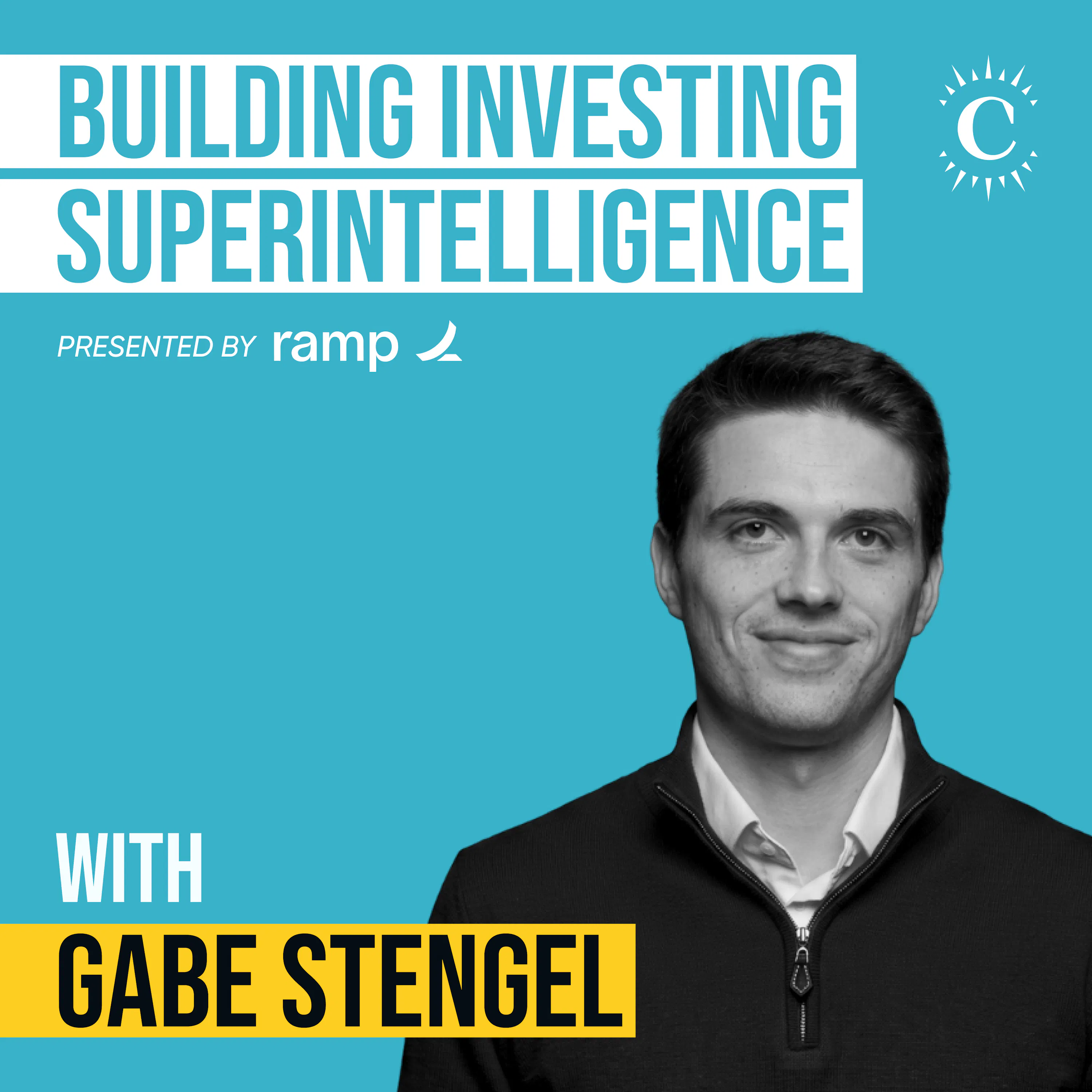
Gabe Stengel on Rogo and AI in Finance
Gabe Stengel, CEO of AI finance platform Rogo, says AI will force top investors to rebuild their firms within five years. He argues vertical AI wins by building the compliance and workflow plumbing banks need, not just smarter models, and predicts pricing will shift from per-seat fees toward per-outcome charges for deals and reports.

Michael Moritz: Imprinting, VC, and Leadership
Michael Moritz says imprints formed before age fourteen shape a person's drive for life. The former Sequoia Capital leader traces this idea to his refugee family's escape from Nazi Germany, then applies it to founders, Manchester United manager Alex Ferguson's leadership, and the vanishing information edge that once defined early venture capital.

Walter Russell Mead on How America Keeps Winning
Historian Walter Russell Mead argues American state power is thriving even as the postwar world order it built is collapsing. He traces a 300-year maritime playbook from the Dutch Republic through Britain to the US, then applies it to Trump, drones in Ukraine, India's rise, and AI-driven deterrence.
