
Tope Awotona's Advice for Bootstrapped Founders
Advice Line with Tope Awotona of Calendly
The brief
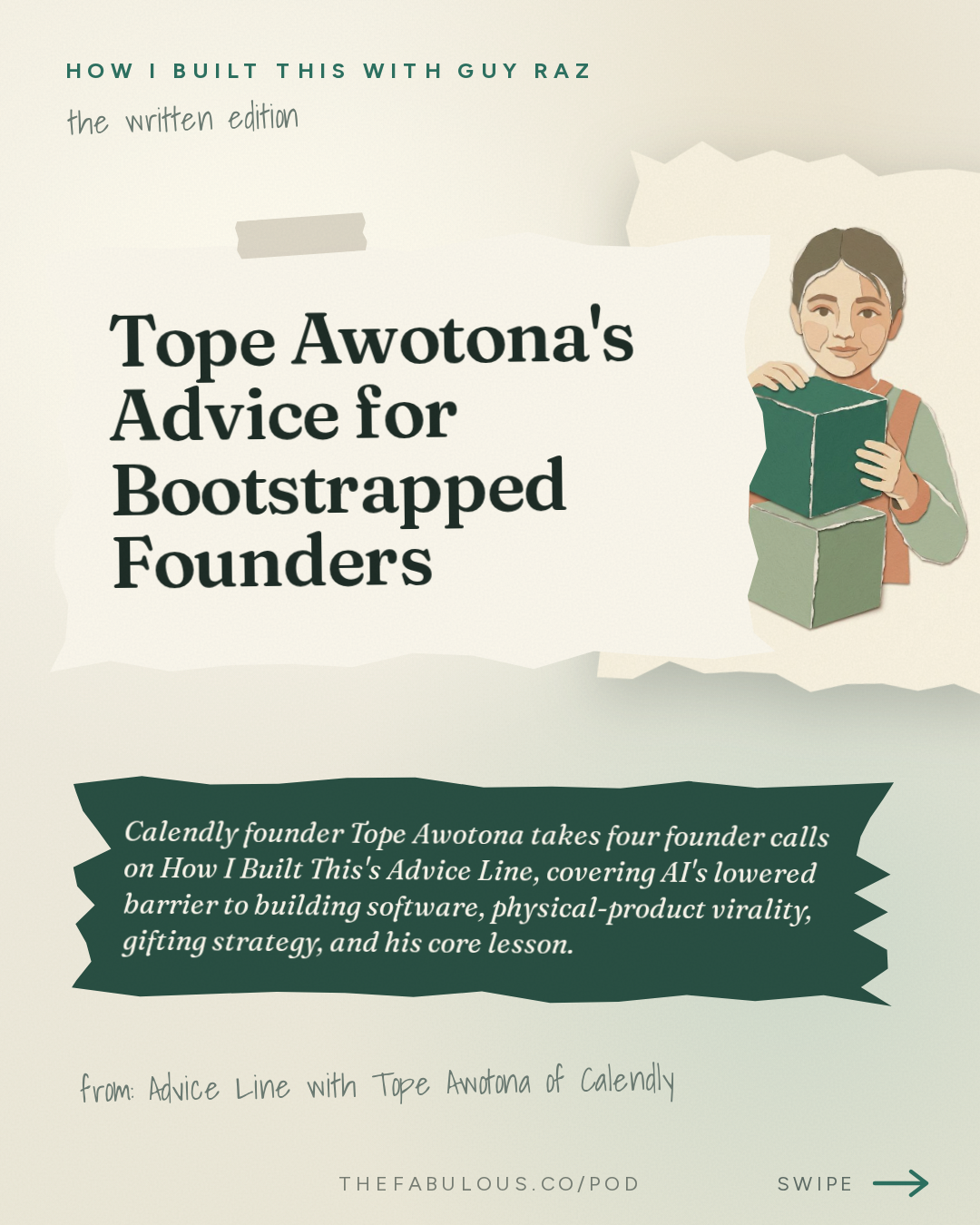
Calendly founder Tope Awotona takes four founder calls on How I Built This's Advice Line, covering AI's lowered barrier to building software, physical-product virality, gifting strategy, and his core lesson: build a business around a customer, not a product.
Tope Awotona built Calendly into a service with more than twenty million users worldwide (01:13), largely without the kind of venture capital that usually fuels a unicorn. So it is worth noticing what he says about the business now, more than a decade later: it has not gotten easier. "The longer you're in business, it actually gets harder," he tells host Guy Raz, because a startup begins as the challenger with everything to gain, and ends up the incumbent with everything to defend (06:37). His response was not to coast. Last month Calendly repositioned itself from a scheduling tool into a meeting assistant platform, built around an AI feature named Callie that can read an email thread and respond with his availability like a human assistant would (03:27). He also added a new title for himself: chief product officer, on top of CEO, because in his telling, 2026 is too competitive a year for a founder to step back from the product (06:59).
That tension, between what got a business started and what keeps it alive, runs through the whole episode. Awotona spends the hour fielding calls from four founders at very different stages, and his advice keeps circling back to the same idea: figure out what is actually broken, not what you assume is broken, and fix that first.
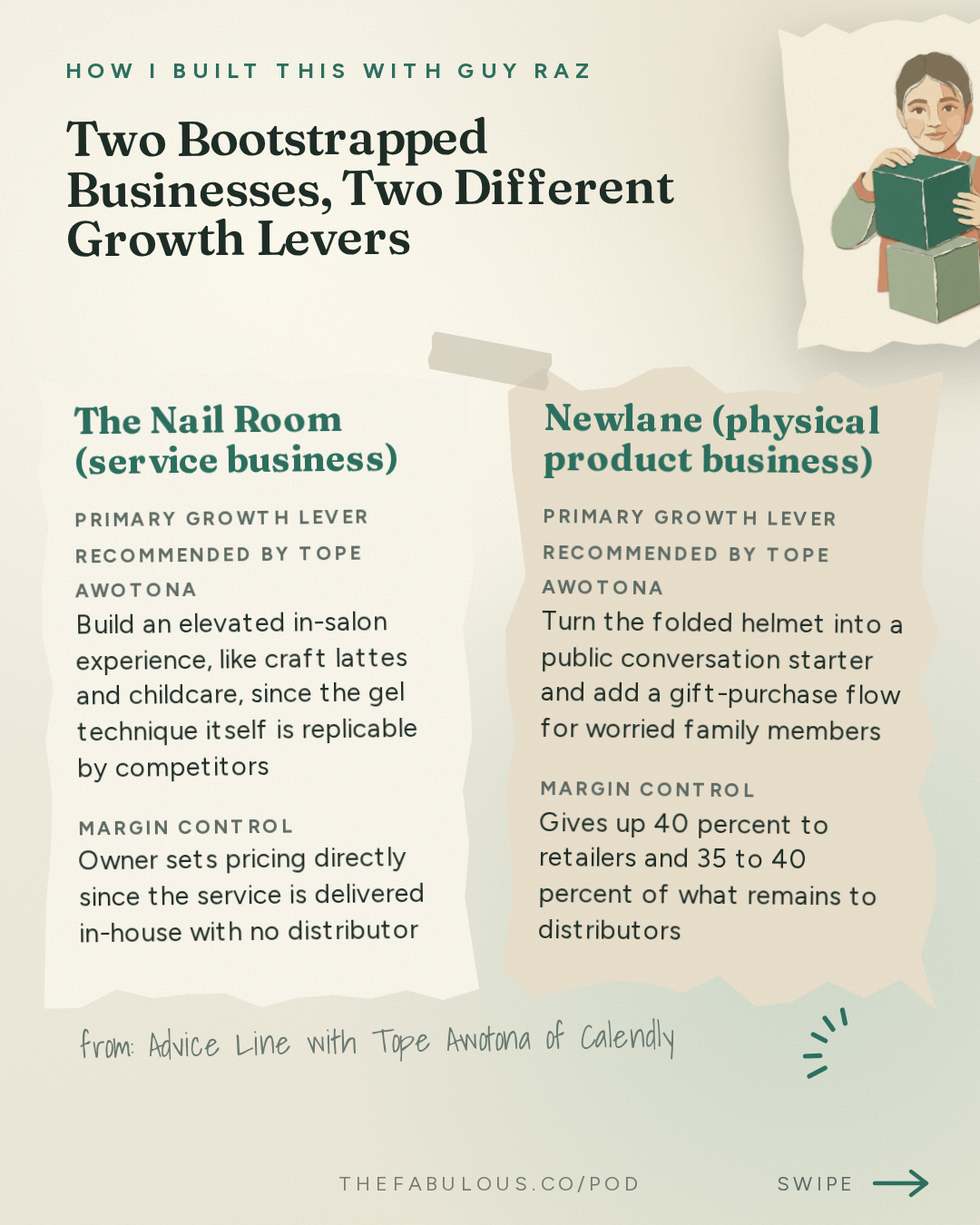
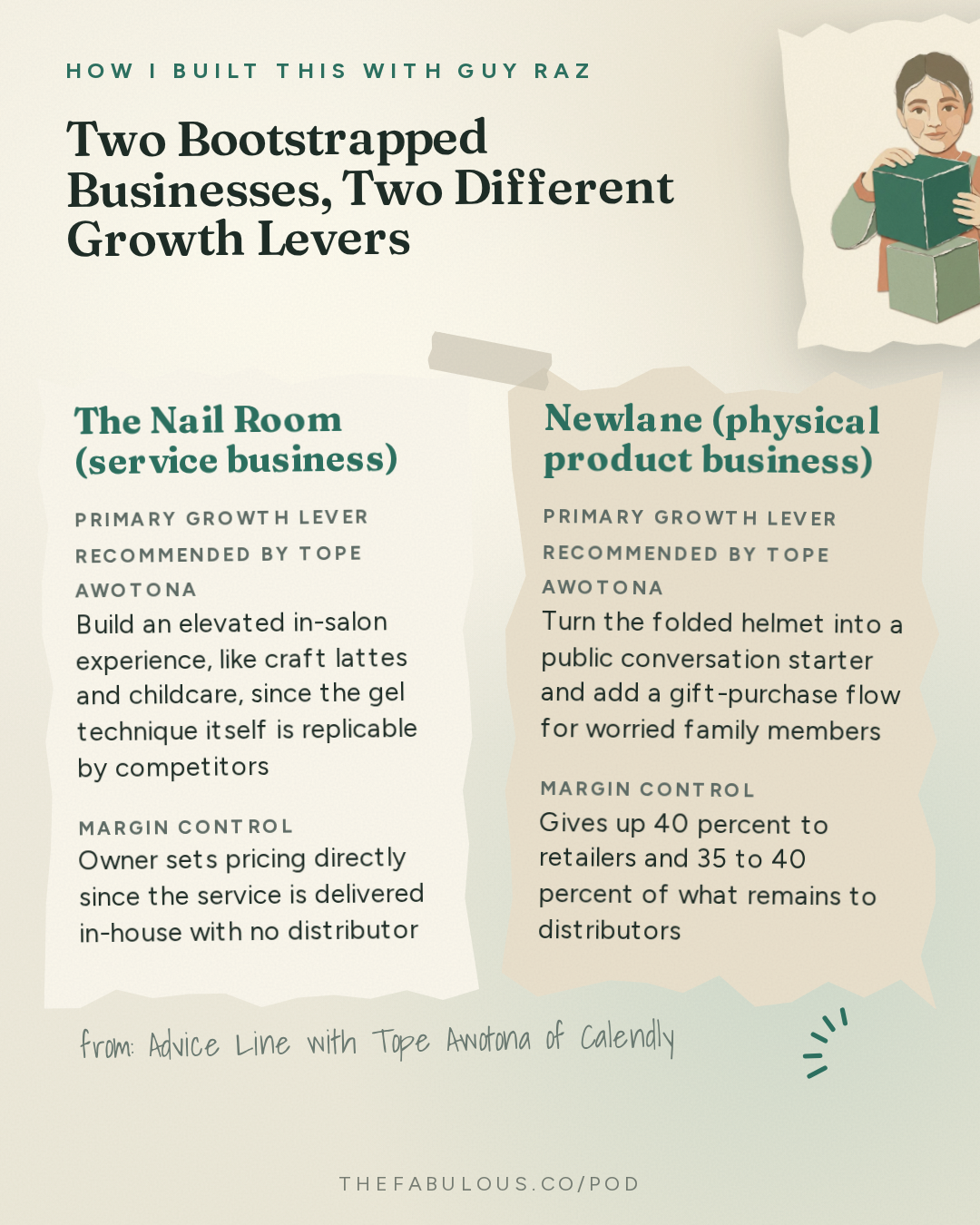
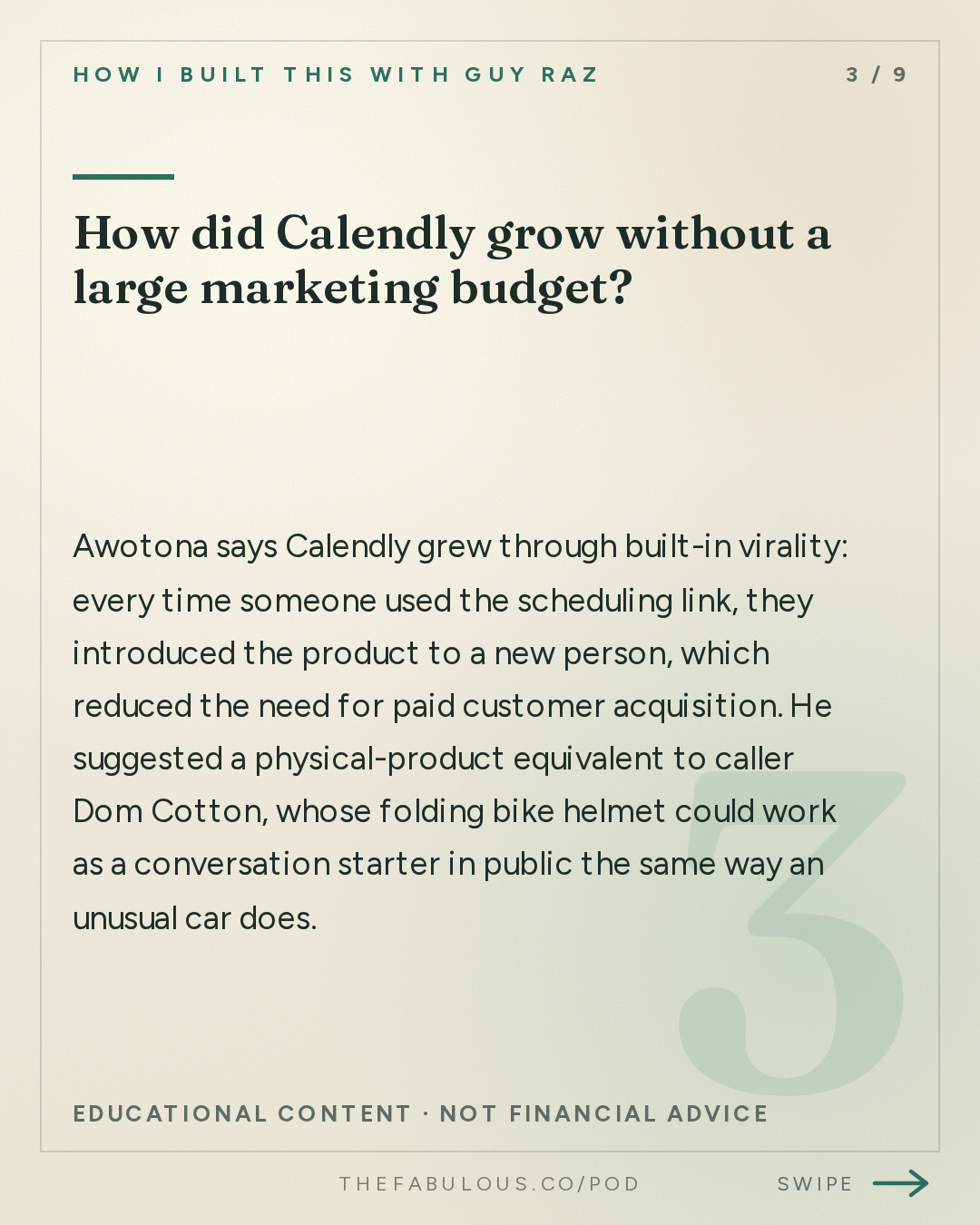
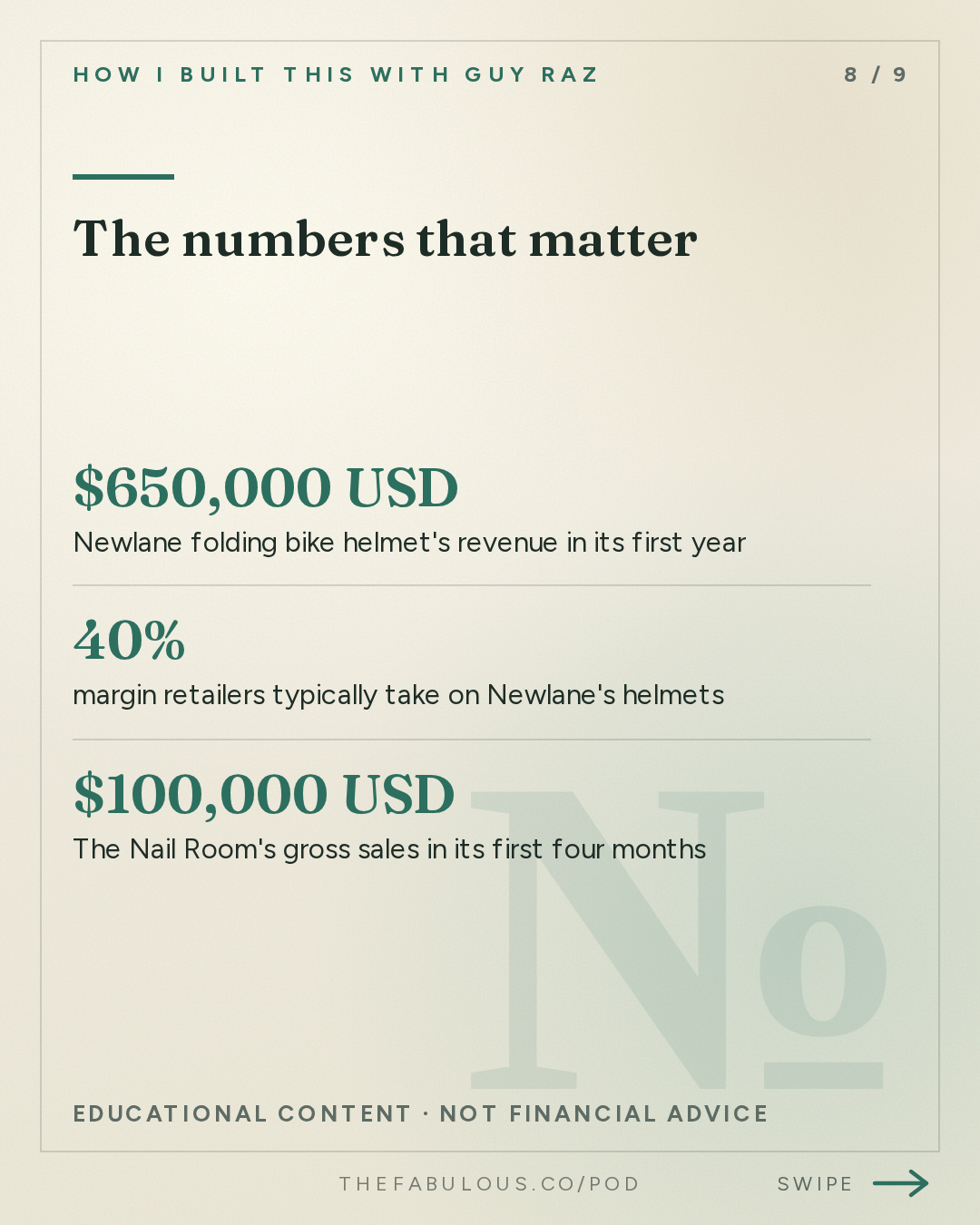
The first caller, Dom Cotton, co-founded Newlane, a UK-made folding bike helmet that clips at the back and folds over like a Frisbee (08:03). The company did $650,000 in revenue in its first year and is approaching $1 million in its second (09:23), but margins are tight: retailers take 40 percent, and distributors take another 35 to 40 percent of what is left (11:48). Awotona's advice was not about cutting costs. He pointed out that Calendly grew without a marketing budget because the product itself created virality: every time someone used it, they introduced someone else to it. He asked Cotton whether a folded helmet could do the same thing in public.
"I can't drive that car without people asking me about it...Is there an opportunity to think about when I use this product, when it's folded, it creates this conversation." — Tope Awotona [16:14]
Cotton had already stumbled onto a version of this: 20 percent of Newlane's sales last gifting season came from people buying helmets for someone else, usually a spouse or parent worried about a cyclist's safety (15:34). Awotona's suggestion was to build that behavior into the product itself, a gift flow aimed at the person doing the worrying rather than the person riding the bike.
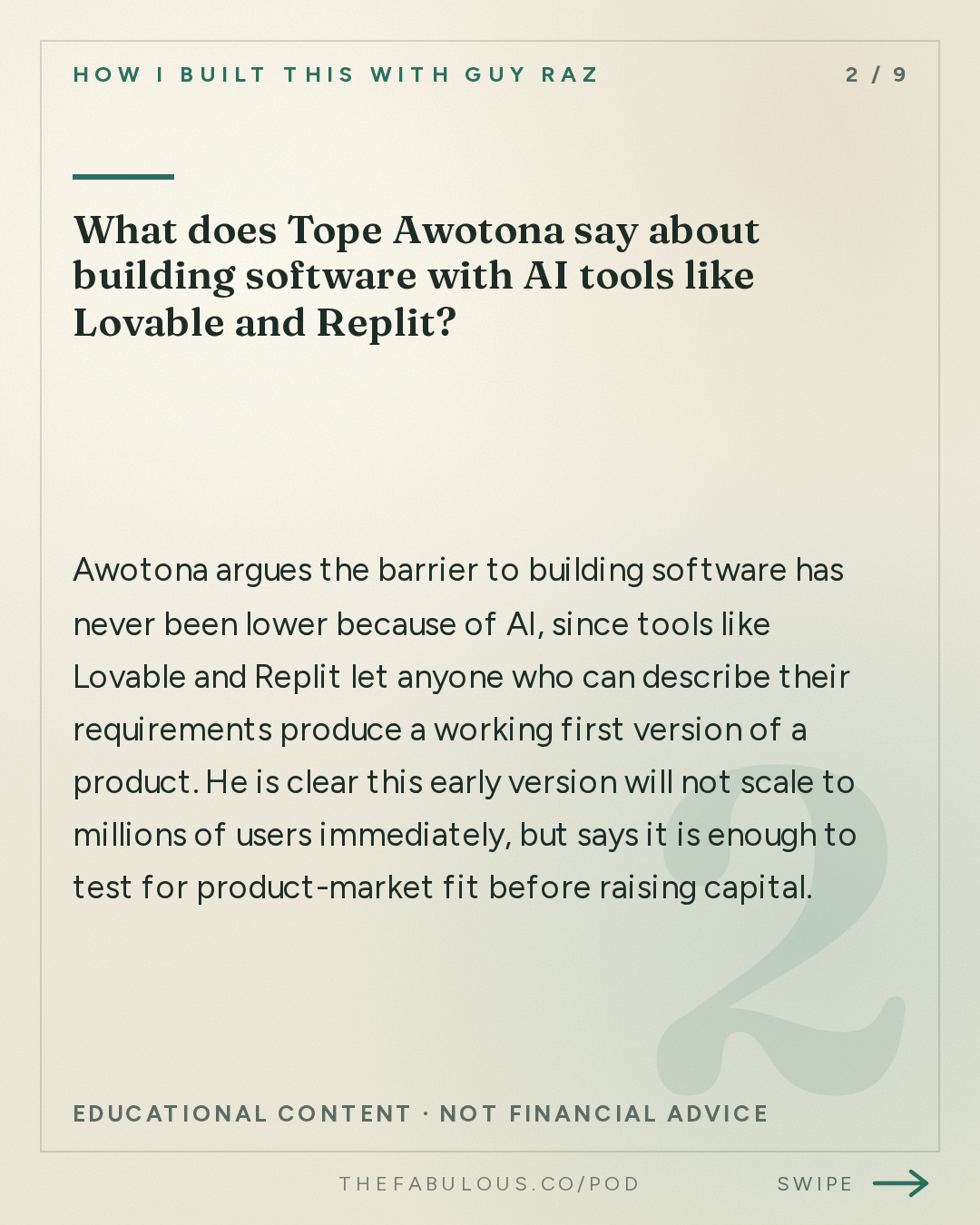
Before any of this, Awotona made a broader claim that is worth sitting with if a listener has no money and a half-built idea. "The barrier to building software and building technology has never been lower because of AI," he said, pointing to tools like Lovable and Replit that let anyone who can describe a problem produce a working first version of a product (05:15). He is careful to put a ceiling on the claim. A tool like this will not scale to millions of users on day one. But it can get a founder to product-market fit, and once that exists, he argues, capital tends to follow.
Keeping the Business Alive While You Are Not There
The second call came from Ivana Tay, founder of Playfield, a Vancouver company making dog-walking bags with a retractable water-bottle pocket that has gone viral on social media. The business did just over $200,000 in sales in its first full year. Tay is a solo founder, eight months pregnant, and calling to ask what systems she needs before she gives birth a month from now, during the start of her busiest quarter.
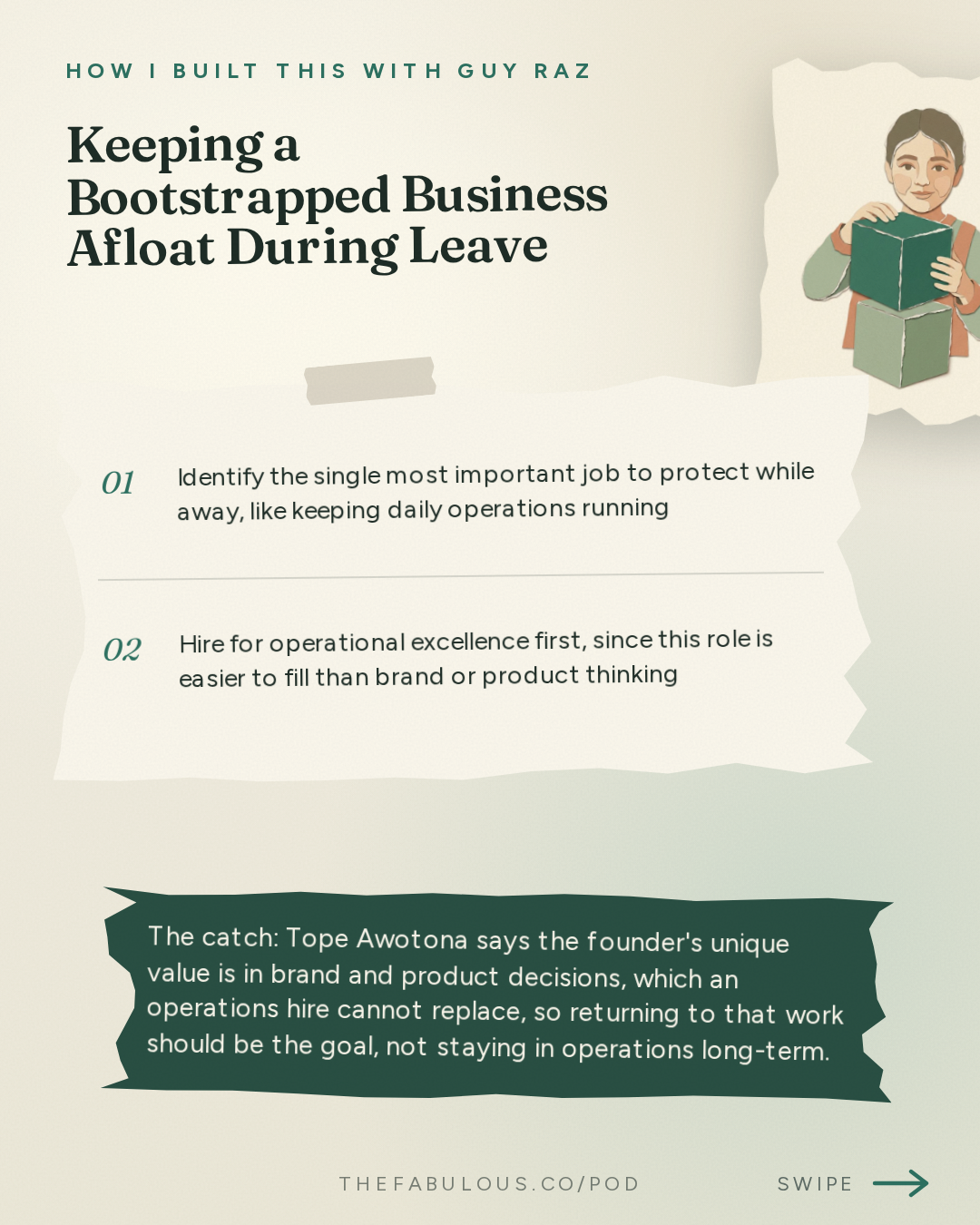
Awotona's first move was to narrow the question. He asked her to pick, if she had to choose only one priority while she was out: keeping the lights on, or nailing a major retail launch already in motion. She chose keeping the lights on. That answer, he said, pointed to the hire she needed: not a marketing person, but someone for operational excellence, someone to keep the day-to-day trains running (28:54). He drew a direct comparison to his own history at Calendly, where his second hire was a marketing person, until the product's own virality made customer service, not demand, the real bottleneck.
"It's much easier to find somebody who can make the operations run smooth than it is to find somebody who can think about brand, who can think about product." — Tope Awotona [30:59]
Raz offered Tay a second data point: Bog Bags, a beach-bag company founded by Kim Bacarella, lost tens of thousands of dollars to a manufacturing disaster, shut down entirely for two years, and came back to build a brand now doing roughly $250 million a year in sales (24:10). The point was not that every pause ends in a quarter-billion-dollar business. It was that a business put on hold does not disappear, and a founder facing a genuine life event does not have to choose between the business and the moment.
The Business That Cannot Be Copied
The most useful reframe of the hour came during the third call, from Dani Sarchell, who opened a boutique nail salon called The Nail Room in Greer, South Carolina, four months before the call and has already crossed $100,000 in gross sales (34:49). Her technique, a gel method that avoids the chemical damage of soaking off artificial tips, is good. It is also, Awotona pointed out, replicable. Other salons use the same product. What cannot be copied is how a client feels sitting in the chair.
Raz told her to think less about the manicure and more about the experience around it: a latte that changes with the season, a place for a kid to be watched, the kind of small luxury that made Alli Webb's Drybar a national blow-dry chain rather than just a good haircut. Sarchell, it turned out, already offers craft lattes, and clients tell her they look forward to the drink all day. On expansion, his advice was sequential rather than ambitious: get a bigger location and maximize revenue per store before opening a second one, then stay local, city by city, before going regional (42:25).
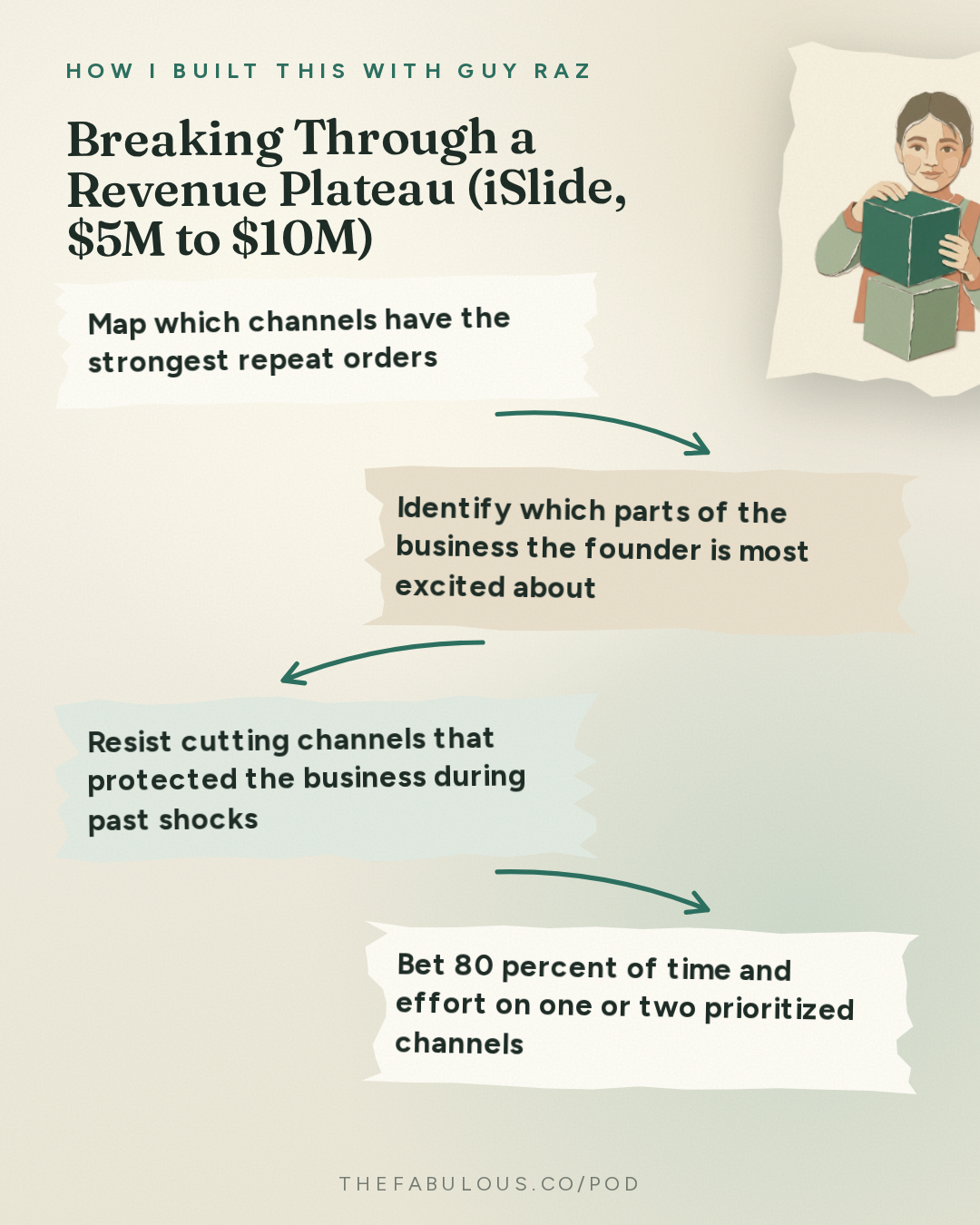
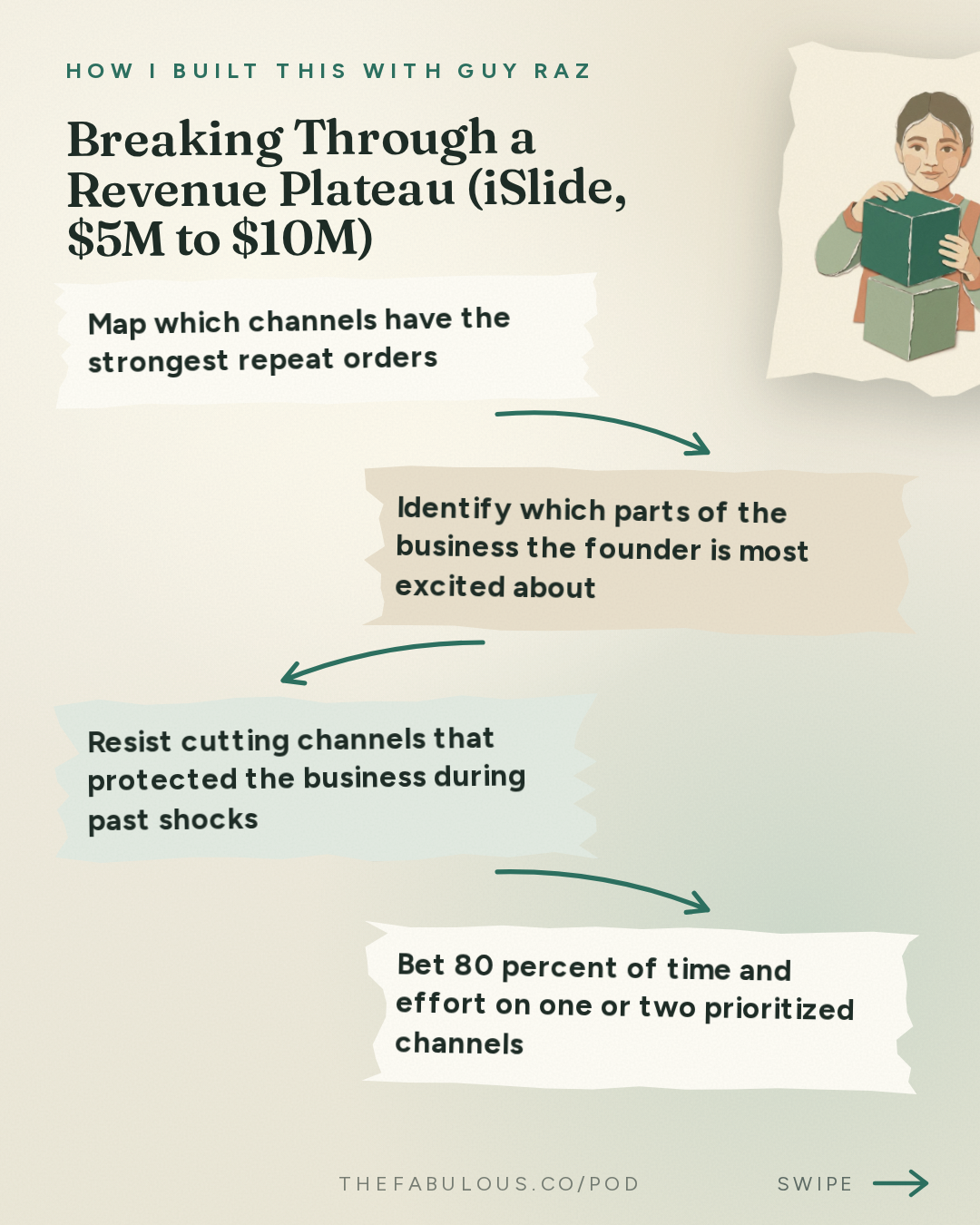
The final caller, Justin Kittredge, runs iSlide, a thirteen-year-old customized footwear company doing about $5.5 million a year across four channels: direct-to-consumer e-commerce, wholesale, bulk team orders, and drop-shipping through retailers like Fanatics (46:37). He wants to reach $10 million but is reluctant to cut any channel, since the mix of channels is what kept the business alive through COVID, when e-commerce spiked and wholesale collapsed, then reversed the following year. Awotona's answer drew on what he called the Apple model: the fewest products generating the most revenue (48:14). He quoted investor Naval Ravikant to make the point about focus.
"A happy man has a million wishes, but a dying man has one wish." — Tope Awotona, quoting Naval Ravikant [50:43]
He was not telling Kittredge to abandon diversification. He was suggesting a founder can keep four channels and still bet 80 percent of time and effort on the one or two that show the strongest repeat orders, rather than splitting attention evenly across all of them.
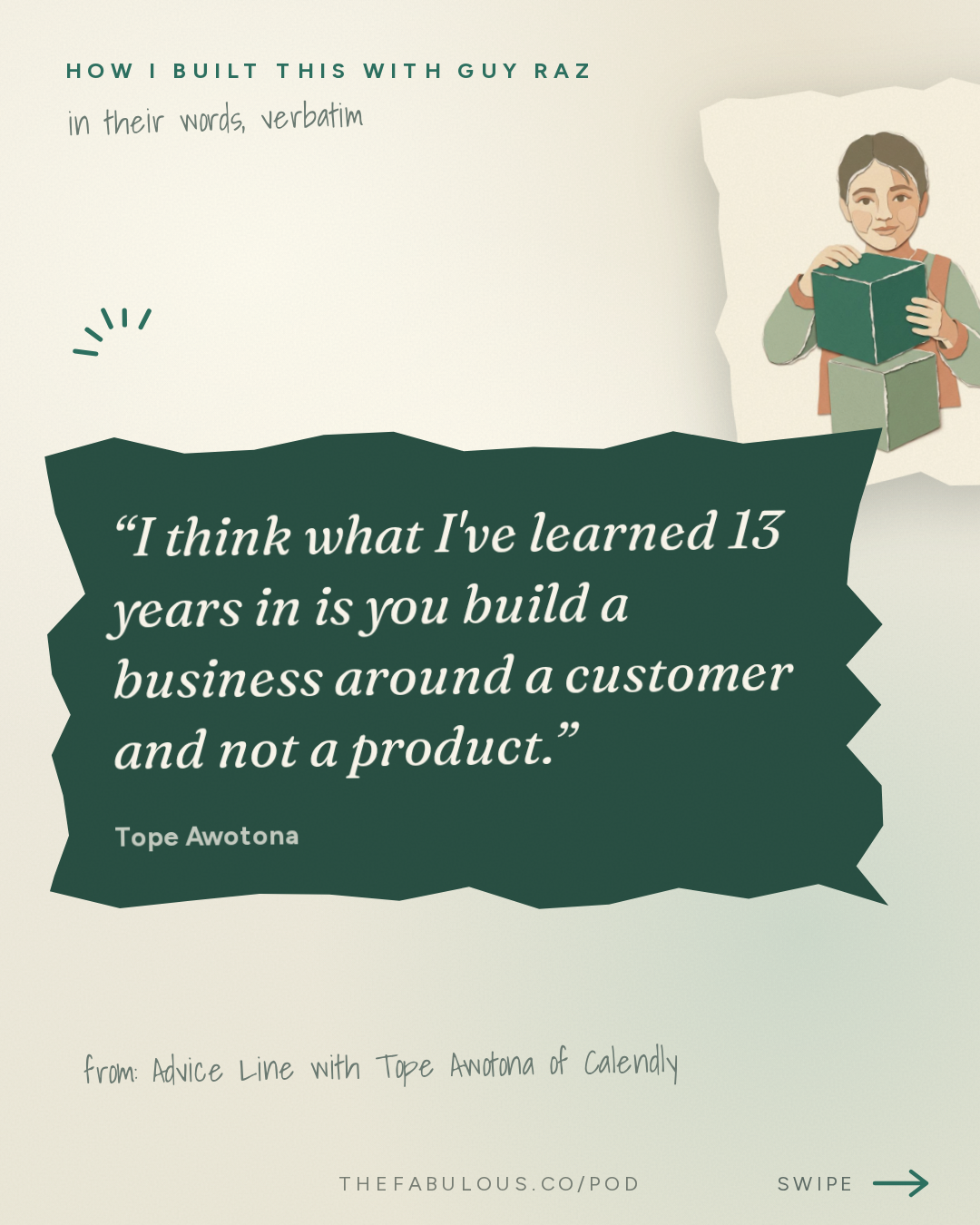
By the end of the hour, Raz asked Awotona what he would tell the version of himself who was still financing Calendly on a maxed-out 401(k) and a loan from LendingClub. His answer tied the whole episode together: "I think what I've learned 13 years in is you build a business around a customer and not a product" (53:31). First-time founders tend to fall in love with what they are making. The founders who last, in his account, fall in love with who they are making it for, because a customer, once well served, is easier to expand around than a product chasing a new type of buyer every year.
Ask this episode anything
Pod's AI answers from the episode itself, with the minute mark so you can hear it yourself.
Or start with one of these
Ask this episode
Pod's AI listens to the whole episode to answer, and points you to the minute it comes from.
The rest of this answer, and any question after it
Answers come from the episode itself, never from a summary of it.
ContinueKey takeaways
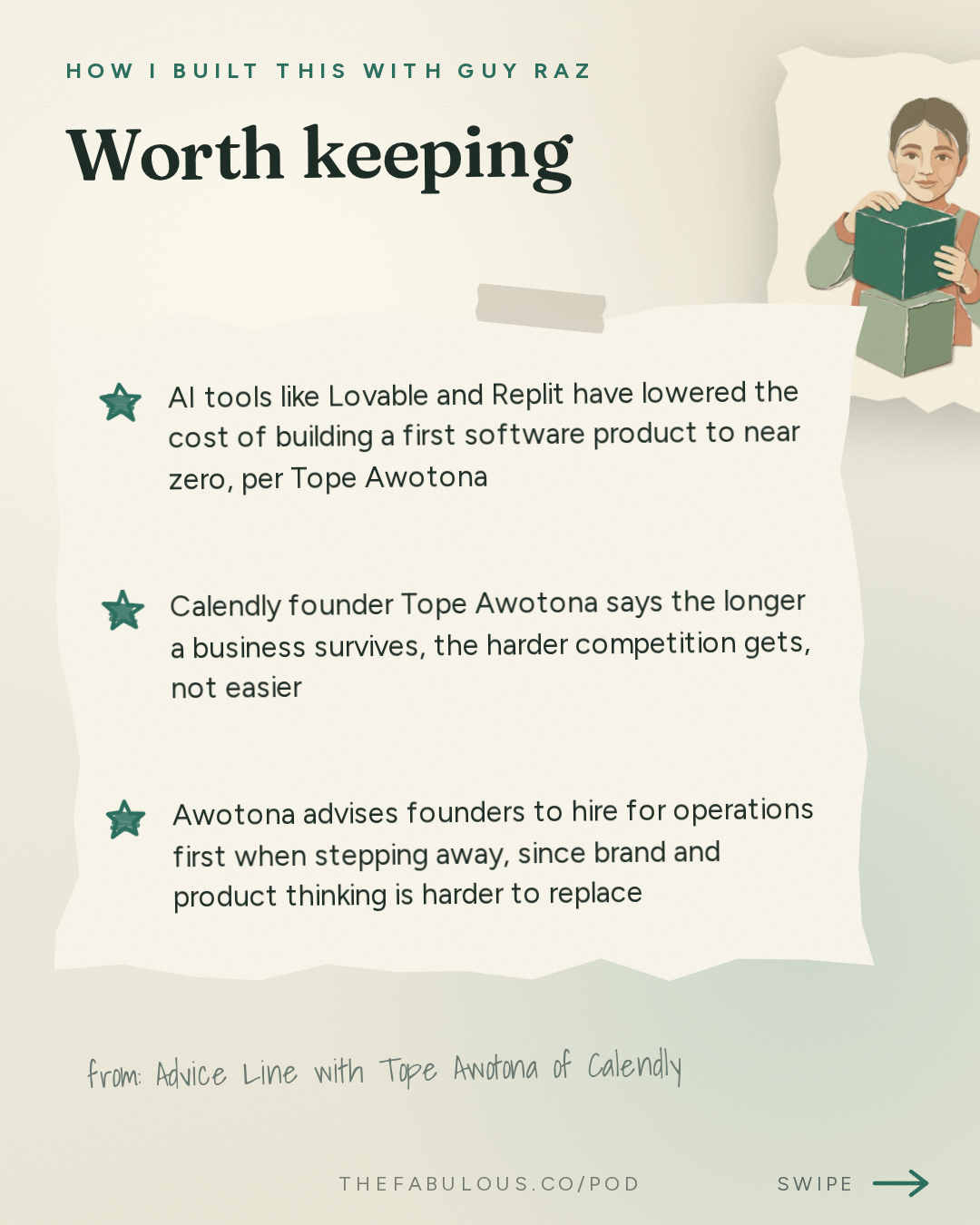
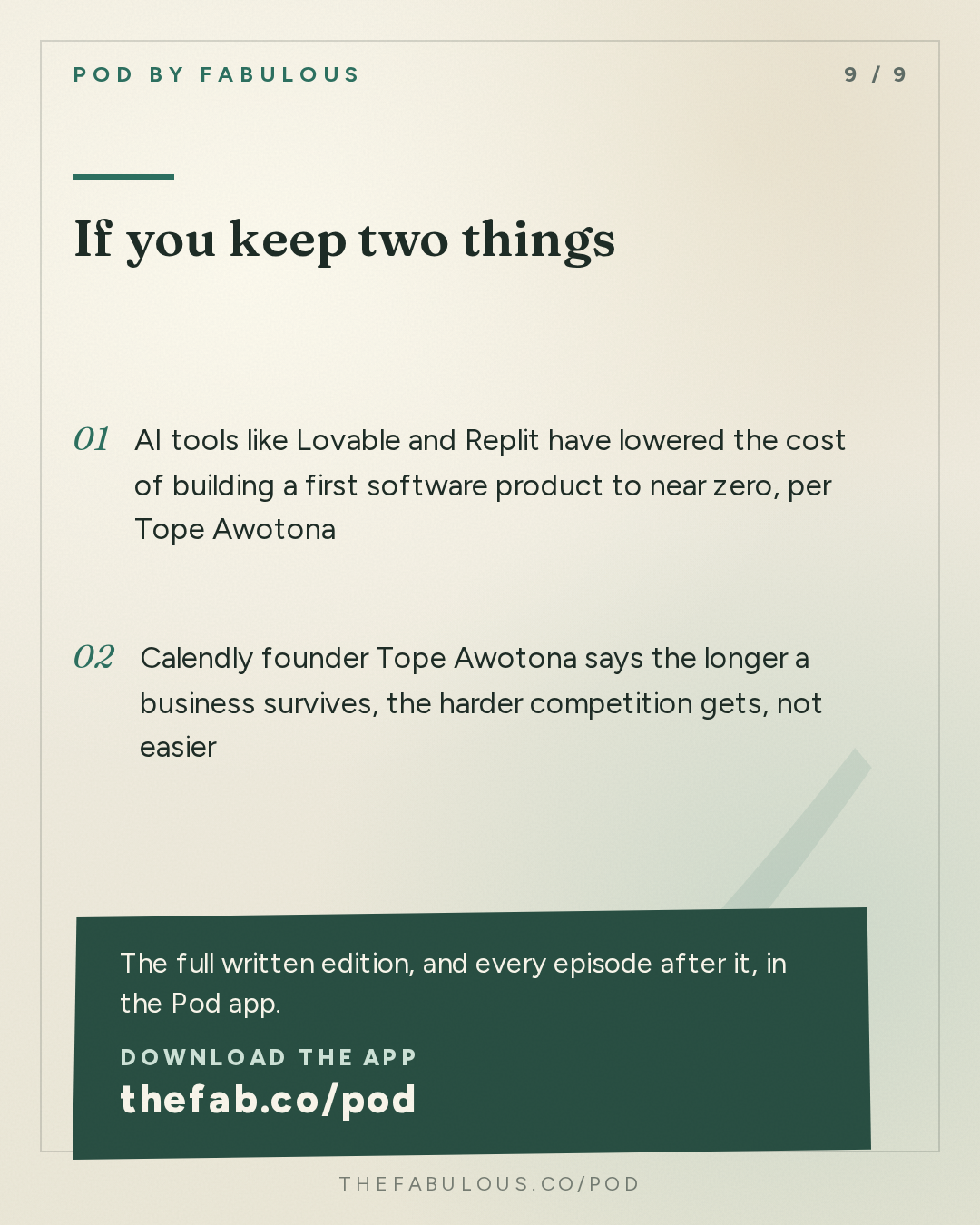
- AI tools like Lovable and Replit have lowered the cost of building a first software product to near zero, per Tope Awotona
- Calendly founder Tope Awotona says the longer a business survives, the harder competition gets, not easier
- Awotona advises founders to hire for operations first when stepping away, since brand and product thinking is harder to replace
- A service business like a nail salon should sell the feeling of the experience, not just a replicable technique, Awotona says
- Awotona recommends maximizing revenue at one location for a full year before opening a second store
The episode in cards
By the numbers
- $650,000 USD Newlane folding bike helmet's revenue in its first year
- 40% percent margin retailers typically take on Newlane's helmets
- $100,000 USD The Nail Room's gross sales in its first four months
In their words
“I would actually argue that the, the barrier to building software and building technology has never been lower because of AI.”
“I can't drive that car without people asking me about it. Ooh. And you have this very, very interesting product, right? Is there an opportunity to think about when I use this product, when it's folded, it creates this conversation”
“It's much easier to find somebody who can make the operations run smooth than it is- Right ... to find somebody who can think about brand, who can think about product-”
“I think what I've learned 13 years in is you build a business around a customer and not a product.”
Protocols
-
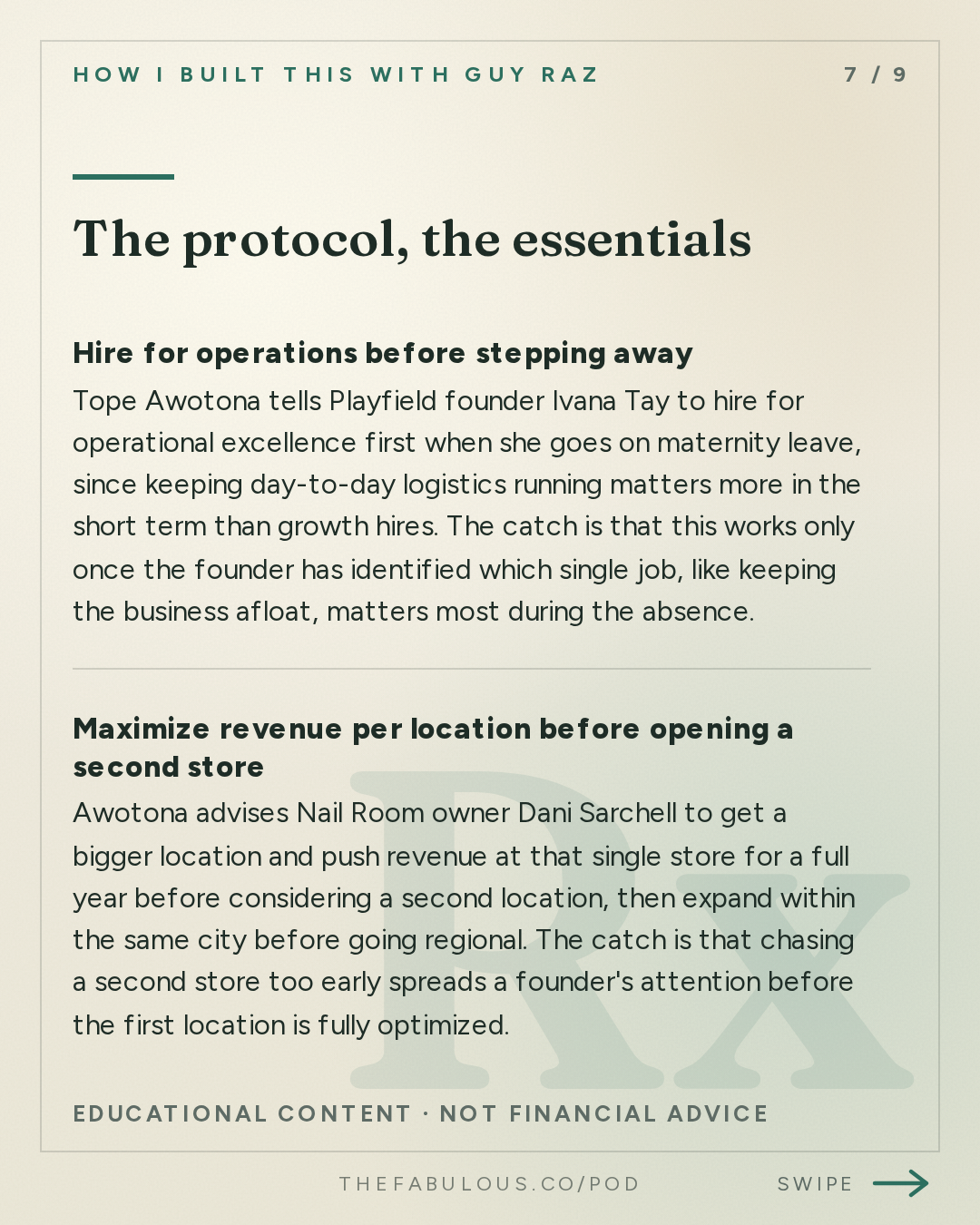
Hire for operations before stepping away
Tope Awotona tells Playfield founder Ivana Tay to hire for operational excellence first when she goes on maternity leave, since keeping day-to-day logistics running matters more in the short term than growth hires. The catch is that this works only once the founder has identified which single job, like keeping the business afloat, matters most during the absence.
Before a planned absence
-
Maximize revenue per location before opening a second store
Awotona advises Nail Room owner Dani Sarchell to get a bigger location and push revenue at that single store for a full year before considering a second location, then expand within the same city before going regional. The catch is that chasing a second store too early spreads a founder's attention before the first location is fully optimized.
One year per location before expanding
-
Bet most of your effort on one or two channels
Awotona tells iSlide founder Justin Kittredge to identify the one or two sales channels with the strongest repeat orders and put about 80 percent of time and effort there, rather than splitting focus evenly across all four channels. The catch is that this requires keeping the other channels alive at a lower priority rather than cutting them entirely, since channel diversity helped iSlide survive COVID-era swings.
Ongoing, revisited at growth plateaus
-
Add a gifting flow aimed at the worried family member
Awotona suggests Newlane co-founder Dom Cotton build a gift-purchase flow on the website targeted at spouses or parents who want a cyclist to wear a helmet, since those family members are already driving a meaningful share of sales. The catch is that this requires marketing to the buyer's safety concern, not just to the rider's convenience.
Ongoing, especially during gifting season
Questions this episode answers
What does Tope Awotona say about building software with AI tools like Lovable and Replit?
Awotona argues the barrier to building software has never been lower because of AI, since tools like Lovable and Replit let anyone who can describe their requirements produce a working first version of a product (05:15). He is clear this early version will not scale to millions of users immediately, but says it is enough to test for product-market fit before raising capital.
How did Calendly grow without a large marketing budget?
Awotona says Calendly grew through built-in virality: every time someone used the scheduling link, they introduced the product to a new person, which reduced the need for paid customer acquisition (15:55). He suggested a physical-product equivalent to caller Dom Cotton, whose folding bike helmet could work as a conversation starter in public the same way an unusual car does.
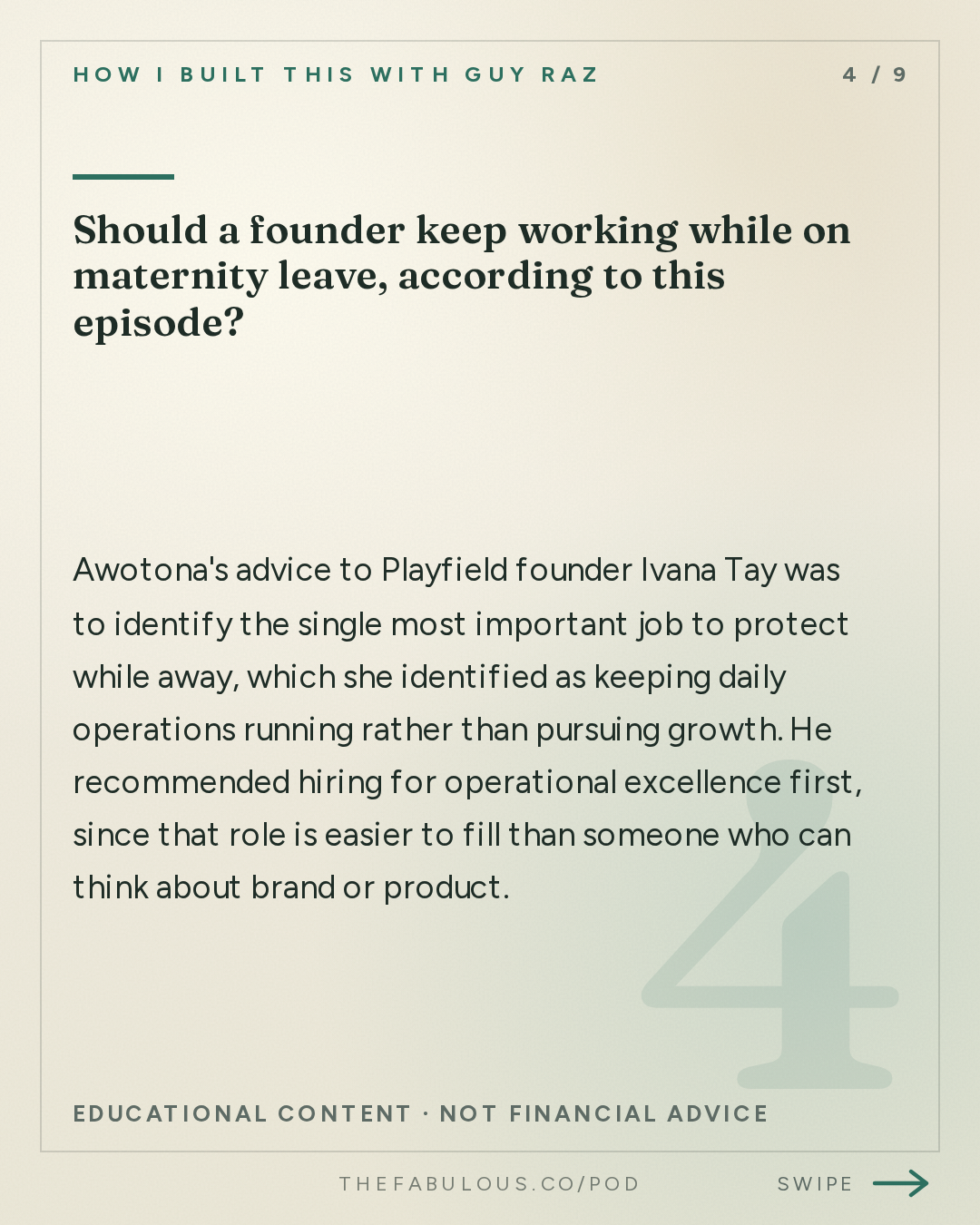
Should a founder keep working while on maternity leave, according to this episode?
Awotona's advice to Playfield founder Ivana Tay was to identify the single most important job to protect while away, which she identified as keeping daily operations running rather than pursuing growth (28:54). He recommended hiring for operational excellence first, since that role is easier to fill than someone who can think about brand or product.
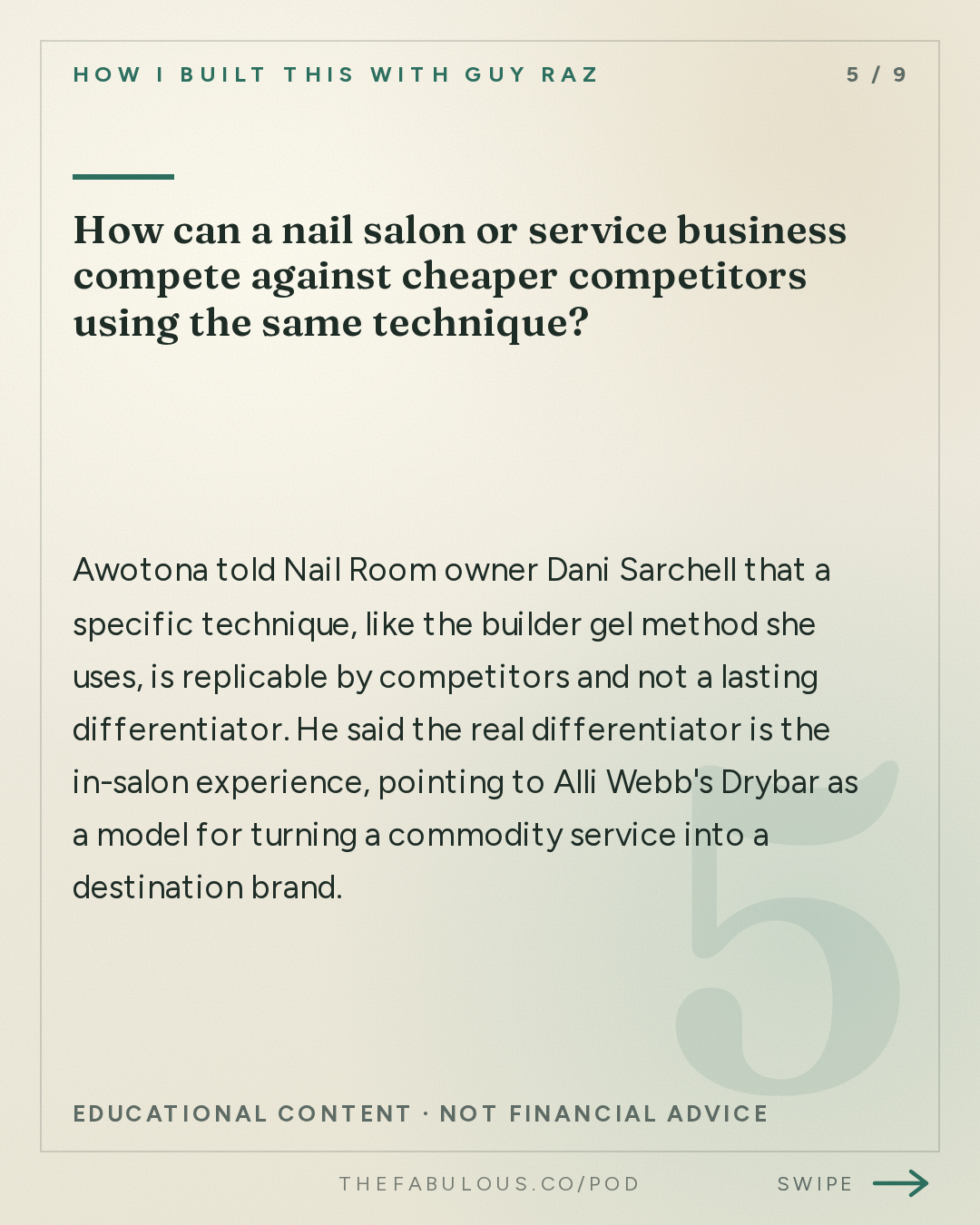
How can a nail salon or service business compete against cheaper competitors using the same technique?
Awotona told Nail Room owner Dani Sarchell that a specific technique, like the builder gel method she uses, is replicable by competitors and not a lasting differentiator (40:05). He said the real differentiator is the in-salon experience, pointing to Alli Webb's Drybar as a model for turning a commodity service into a destination brand.
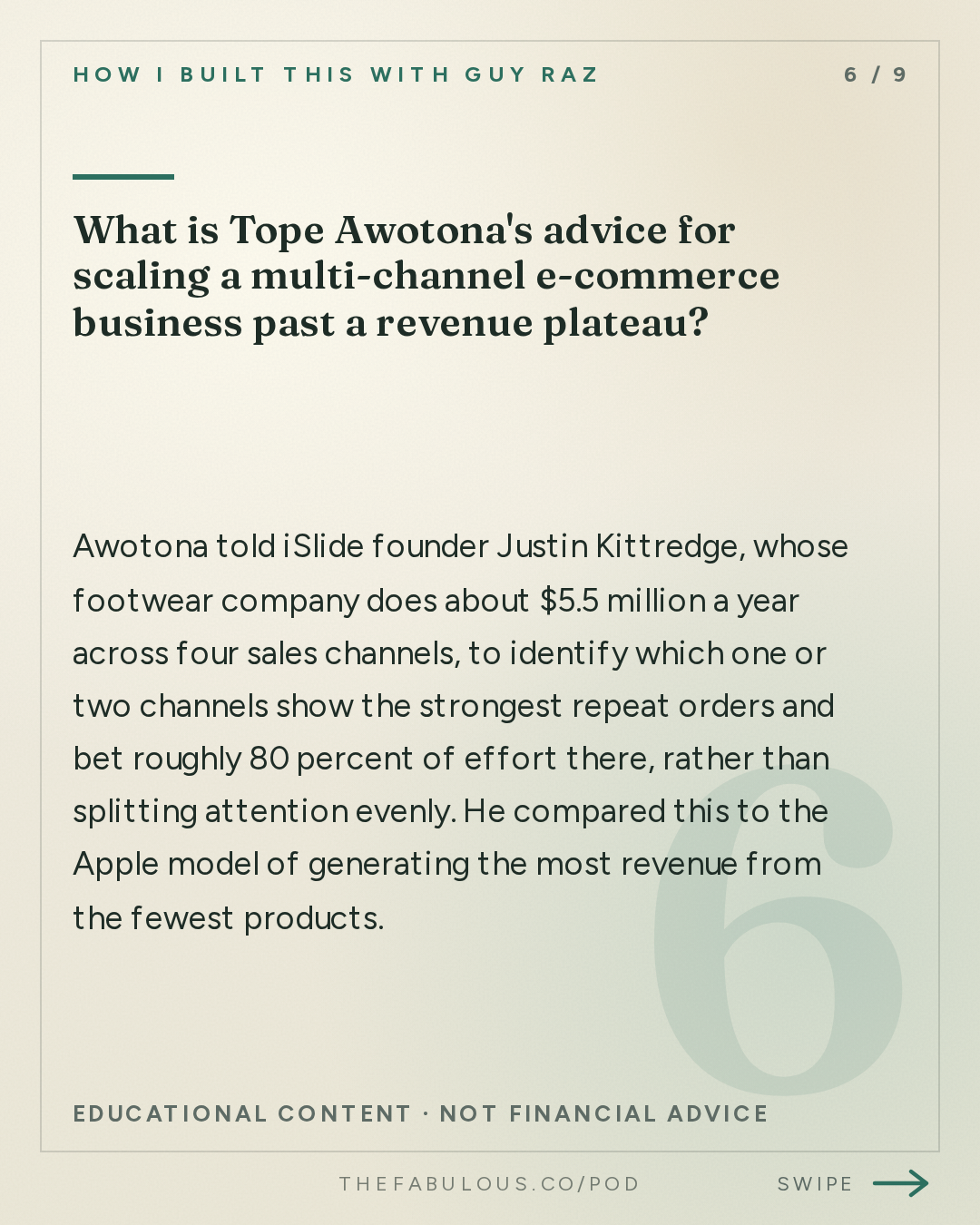
What is Tope Awotona's advice for scaling a multi-channel e-commerce business past a revenue plateau?
Awotona told iSlide founder Justin Kittredge, whose footwear company does about $5.5 million a year across four sales channels (46:37), to identify which one or two channels show the strongest repeat orders and bet roughly 80 percent of effort there, rather than splitting attention evenly (51:11). He compared this to the Apple model of generating the most revenue from the fewest products (48:14).
The full read, in cards
Go deeper
- Bog Bags (How I Built This episode) — Founder Kim Bacarella paused the beach-bag brand for two years after a manufacturing loss before rebuilding it into roughly $250 million in annual sales
- Tope Awotona's original How I Built This episode — Covers Calendly's founding story, including the $200,000 prototype cost funded by Awotona's 401(k), savings, and a LendingClub loan
Mentioned
Tope Awotona · Guy Raz · Calendly · Callie · Lovable · Replit · Dom Cotton · Newlane · Ivana Tay · Playfield · Kim Bacarella · Bog Bags · Dani Sarchell · The Nail Room · Alli Webb · Drybar · Justin Kittredge · iSlide · Naval Ravikant · Fanatics
More from this show and category
FIGS Founders: How Scrubs Became a $2.5B Brand
Heather Hasson and Trina Spear turned boxy hospital scrubs into FIGS, a direct-to-consumer brand now worth $2.5 billion (04:13). They skipped distributors, kept 85% of healthcare workers as direct customers (23:53), survived 300 to 400 investor rejections (43:19), and beat an $800 million lawsuit (55:17) before going public in 2021.

Tara Bosch's Advice: D2C to Retail Growth
Tara Bosch, who sold a majority stake in her low-sugar candy brand SmartSweets for a reported $360 million (00:49), spends this advice-line episode teaching four early founders how to move from online sales to grocery shelves, price sugar and price value in three seconds, and read customer emotion through phone calls rather than DMs.

How Sweet Loren's Cookie Dough Was Built
Loren Castle grew Sweet Loren's cookie dough into a 30,000-plus-store brand by scaling slowly for a decade. Then she rebuilt the entire line around an allergen-free recipe that became the company's top-selling product within six months of its 2017 launch, after customer emails revealed how many shoppers had dietary restrictions.
Sweet Loren's Cookie Dough Success Story
Loren Castle turned a cookie stand at Brooklyn's Smorgasburg market into Sweet Loren's, a cookie dough brand now in more than 30,000 stores. After surviving Hodgkin's lymphoma at 22, she built the business slowly, then rebuilt it entirely around allergen-free recipes once customer demand made clear that was the real opportunity, reaching profitability in 2018.
