Reading JournalStudy & Learning · ~4 min
About this template · Updated August 2026
Every semester begins with the same optical illusion: twelve weeks looks like forever from week one. Then the reading piles up, week six eats a plan or two, and finals arrive to collect on promises September made. A semester goal worksheet is the antidote written down early — one goal sized to the term, checkpoints on dates the course already owns, and one hour a week that nothing gets to take.
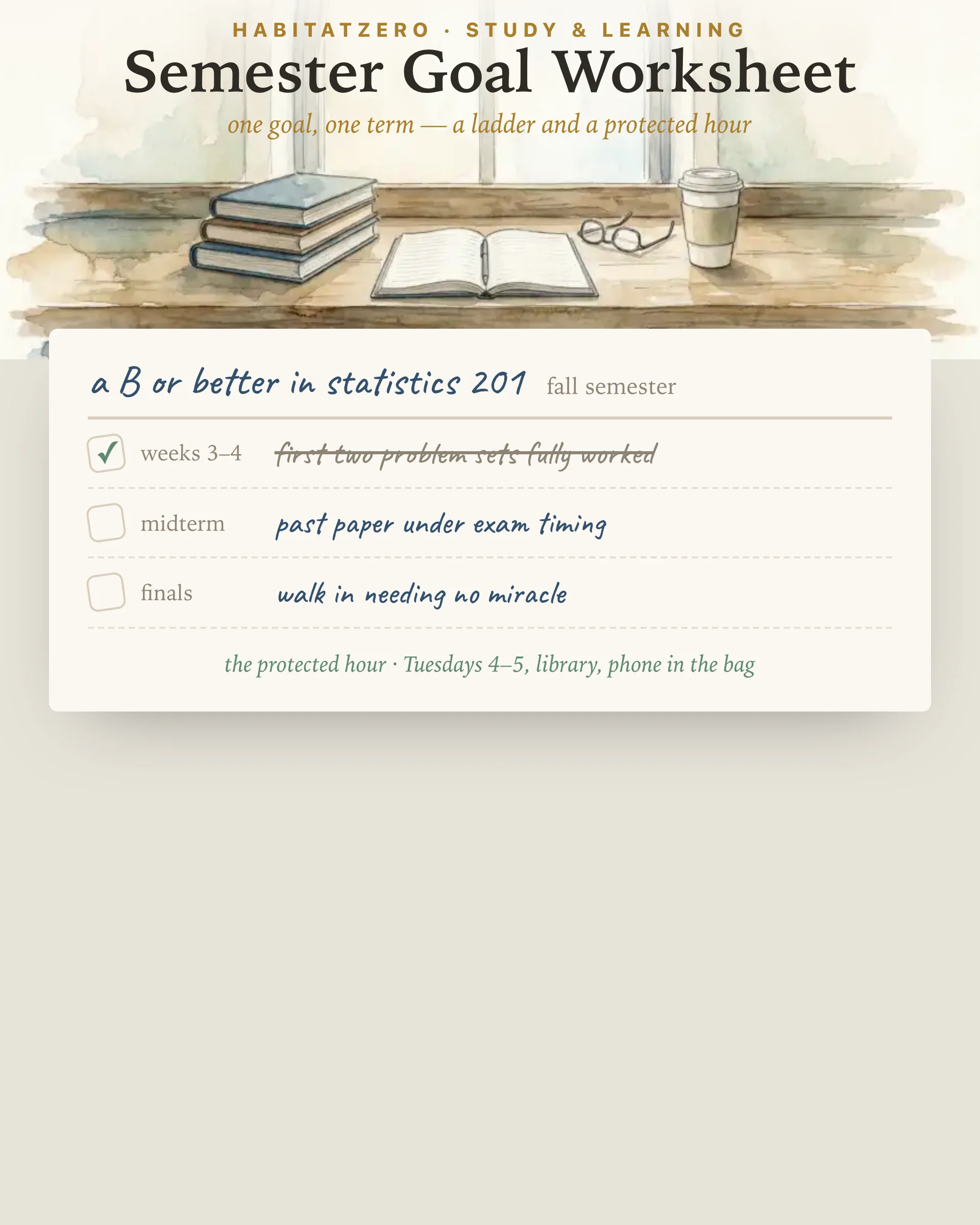
The worksheet starts by naming the container — fall semester, twelve weeks — and the course or area the goal serves, because a term is a fixed-size vessel and most academic disappointment is a packing error. One goal per worksheet, phrased so the term can actually hold it: a B or better, built on weekly problem sets — not a finals miracle.
The insistence on written, specific, course-anchored goals isn't decoration. In Morisano and colleagues' randomized study, academically struggling university students who completed an intensive written goal-setting program went on to earn significantly better GPAs than controls within a semester — one of the cleaner demonstrations that the writing-it-down-properly part carries real weight. And in Richardson's meta-analysis of psychological correlates of university GPA, the habits this worksheet operationalizes — effort regulation, self-efficacy built on concrete plans — sit among the stronger predictors of how the transcript actually turns out.
Three rungs, on dates the syllabus already gives you:
Weeks 3–4 — the early proof. First two problem sets fully worked, no solutions peeked. This is the rung that earns its keep: drift caught in week four costs an evening to fix; the same drift discovered at midterm costs a reading week.
Midterm — the halfway mark. A past paper under exam timing, marked honestly.
Finals — what done looks like. Walk in needing no miracle.
Each rung is written as a done-statement you can't argue with, and stamped when the term delivers it. The strike-through is the semester's most satisfying piece of stationery.
Two last lines do the surviving. The protected weekly hour — Tuesdays 4–5, library, phone in the bag — is where the goal actually lives; a goal with no recurring hour is a hope with a course code. And the sideways line decides in week one what happens when a week collapses, because one will: the Tuesday hour survives even if nothing else does. Deciding that early is the difference between a bad week and a lost month.
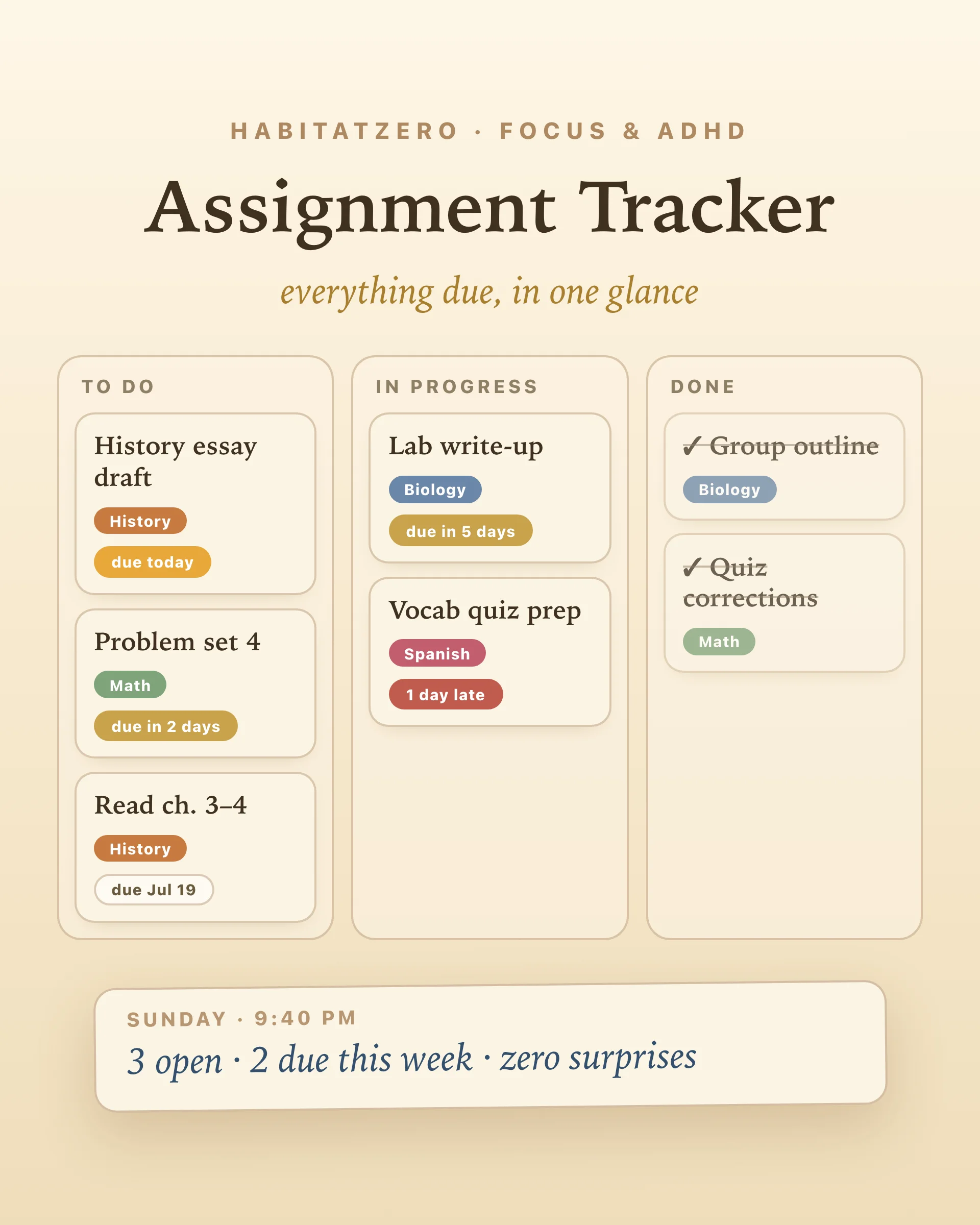
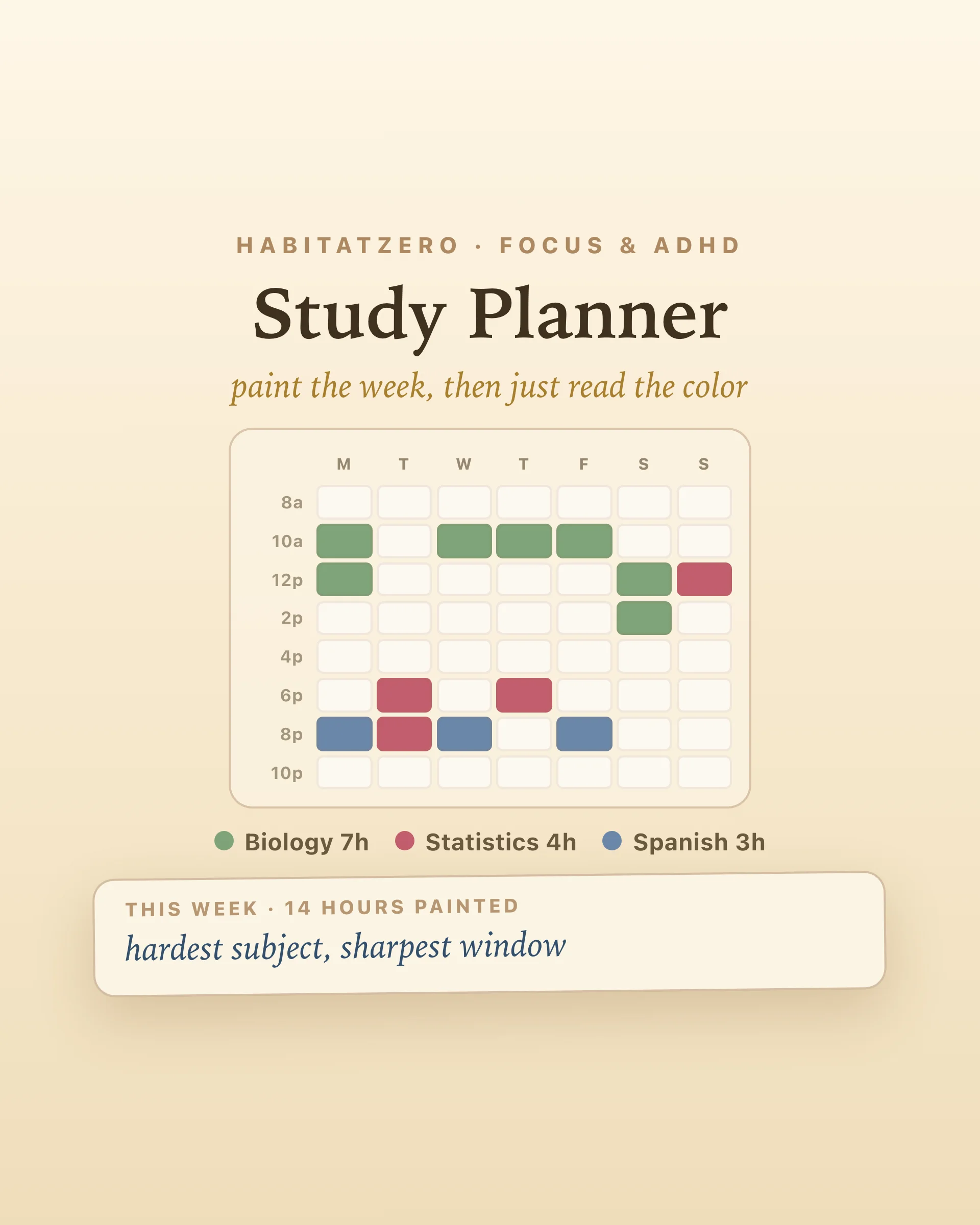
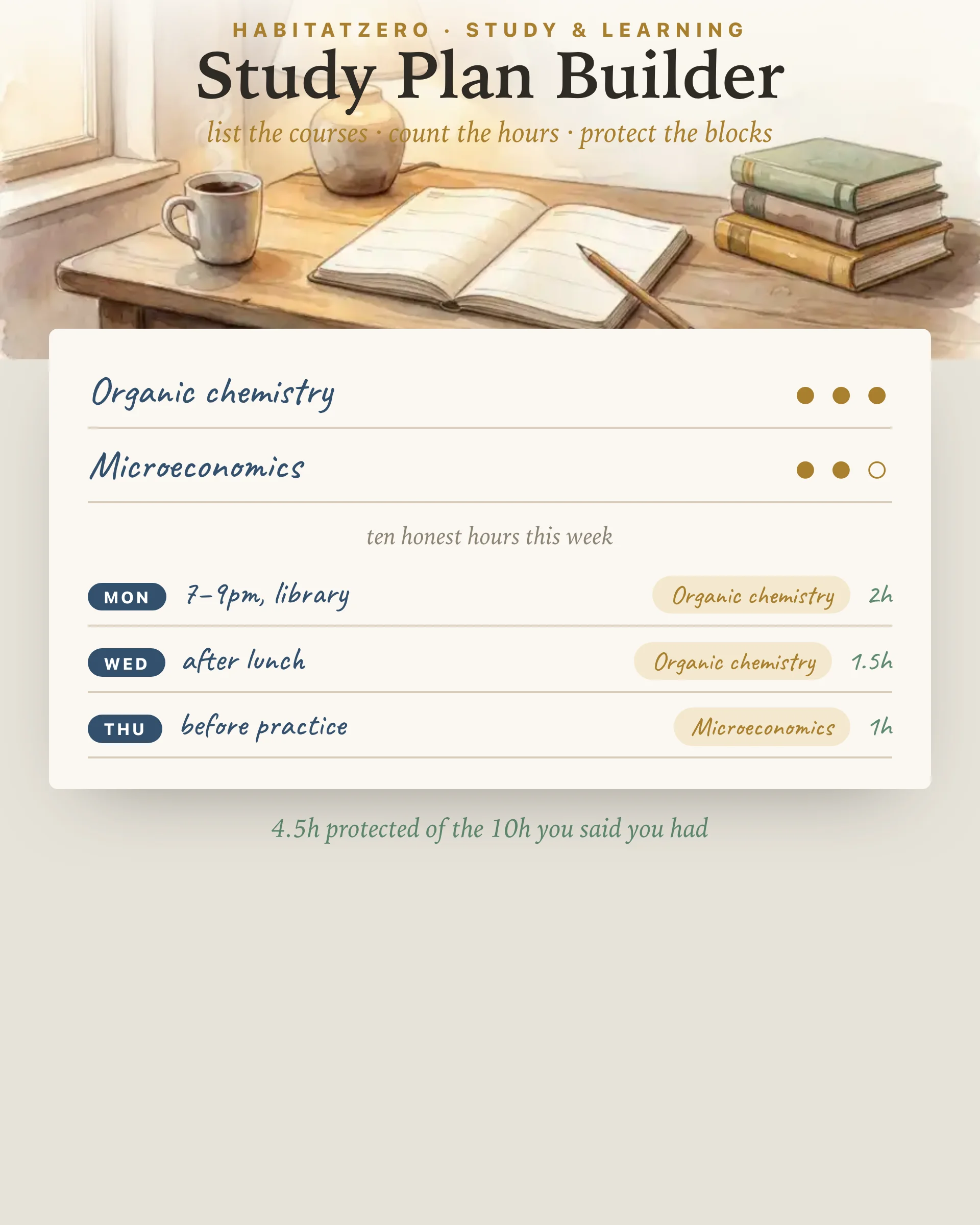
This worksheet decides what the term is for; the scheduling tools make it real. The Study Planner gives the protected hour an actual slot among the week's other claims, the Revision Timetable takes over when exams start walking backwards into the calendar, and the Semester Deadline Tracker keeps every course's due dates from ambushing the one you're focused on. For goals that live outside a classroom, the general Goal Planning Worksheet runs the same ceremony without the syllabus.
One term. Three rungs. One hour nothing gets to take.
Four things this page insists on: a goal sized to one term, checkpoints tied to dates the course already has, a recurring protected hour, and a pre-decided answer for the week the plan collapses. Research on university students suggests the structure matters - a goal-setting intervention built on written, specific, sub-goaled plans measurably improved struggling students' academic performance.
Because the semester is the container, and it is smaller than September thinks. A single course-anchored goal with a protected hour beats five aspirations sharing a highlighter. If several courses matter, fill the worksheet once per course and be honest about which one gets the best hour.
A date the syllabus already owns and a done-statement you cannot argue with: first two problem sets fully worked by week four, a past paper under exam timing by midterm. The early checkpoint is the important one - it catches drift in week four, when fixing it costs an evening instead of a break.
A study planner arranges the hours of the week; this worksheet decides what one course's term is for. They connect at the protected hour: name it here, then give it a real slot in the study planner or revision timetable.
The evidence for students specifically is encouraging: in a randomized study, students who completed a structured written goal-setting program went on to earn meaningfully better grades than controls, and the broader literature on university achievement puts goal-related habits like effort regulation among the stronger psychological correlates of GPA. The worksheet borrows exactly those ingredients - written, specific, sub-goaled, scheduled.
No - this page is written for university, college, and adult learners managing their own terms: semester language, syllabus checkpoints, self-owned hours. Younger students' goal-setting belongs with their teachers' materials.
By the team behind Fabulous, the science-based self-care app used by over 30 million people.