Wind-Down Routine BuilderSleep & Evenings · ~4 min
About this template · Updated September 2026
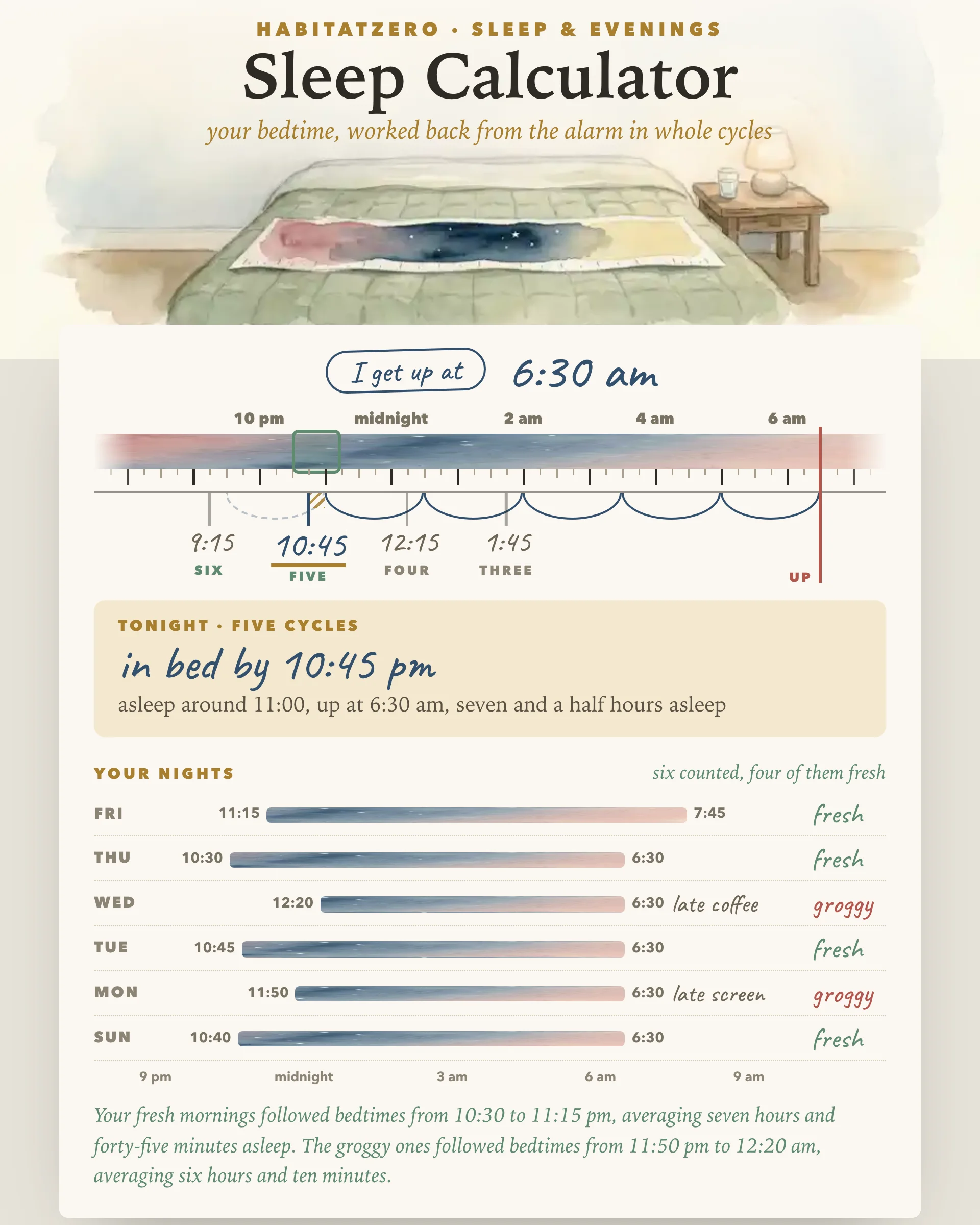
Most nights, one end is already decided. The alarm is set for 6:30, or you are climbing into bed right now and wondering when to set it. A sleep calculator works out the other end for you. This one does it on a rule painted like the night sky: you slide the fixed time into place, and marks appear at the bedtimes, or the wake-up times, that come out to whole sleep cycles.
Across a night you pass through a handful of cycles, each one sinking from light sleep into deeper sleep and rising again toward lighter sleep and dreaming. The calculator adds two numbers together: about fifteen minutes to fall asleep, and about ninety minutes for each cycle.
For a 6:30 am alarm, six cycles means lights out at 9:15 pm, five means 10:45 pm, and four means 12:15 am. Worked forward from an 11:00 pm bedtime instead, you would set the alarm for 5:15 am after four cycles, 6:45 am after five, or 8:15 am after six. The idea behind it is that waking near the end of a cycle, when sleep is lighter, should feel easier than being hauled out of deep sleep halfway through one.
Ninety minutes is an average, not a metronome. When researchers pooled lab recordings from 205 healthy adults, the classic cycles averaged about ninety minutes, give or take roughly twenty-five, and their length rose and fell over the course of the night. Most people in that study had four to six cycles. Your first cycle and your fourth may not match, and last Tuesday may not match tonight.
The grogginess story is also messier than most calculators admit. A review of sleep inertia, the fog you feel just after waking, found the link with waking from deep sleep long-standing but mixed. Two other influences showed up more clearly: how much sleep you had already lost, and the time of day you wake. So a short night can leave you foggy even when the alarm lands on a tidy cycle boundary.
That is why every time on this page is a starting point, and why the log underneath tests the idea against your own mornings.
Cycles set the minute; the total hours matter more. The American Academy of Sleep Medicine and the Sleep Research Society agree that adults should sleep seven or more hours a night on a regular basis. The CDC's table of sleep by age lists these ranges:
Children need more: nine to twelve hours between ages 6 and 12, and longer again, naps included, when they are younger. The age buttons on the rule use the teen and adult bands, and cycle counts that reach the band turn green. For a child, go by the hours rather than the cycle marks, because the rule is built around teen and adult nights.
Start with whichever time is fixed. Tap I get up at or I go to bed at, then set the time with the buttons, a quick time, or by dragging the sky. Marks appear for six, five, four and three cycles. Tap one and the plan spells out when you should be asleep and how many hours that gives you. If you know you take half an hour to drop off, or your mornings hint that your cycles run short, change the drift-off time or the cycle length.
Then count real nights. Each morning, set last night's bedtime and wake-up time, add a short note if something was different, and say whether you woke groggy or fresh. The same row works as a plain hours-of-sleep calculator for any two times. Once three nights are in, the page starts reading them back: which bedtimes left you fresh, how long you slept on those nights compared with the groggy ones, and whether your fresh mornings really did land near the end of a cycle. Your fresh bedtimes also appear as a green box on the rule, so tonight's choice sits right next to your own evidence. The log holds two weeks.
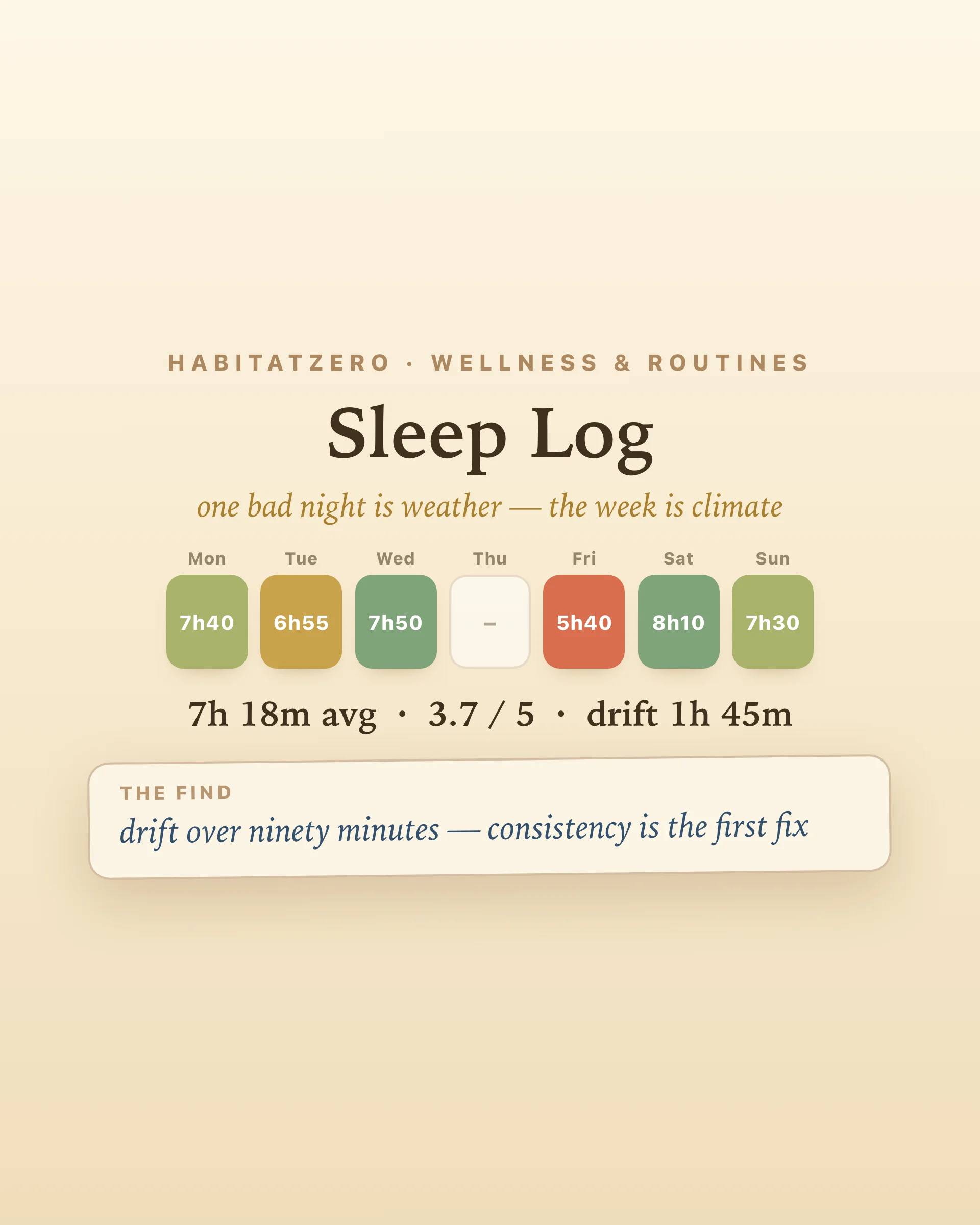
For a fuller record with sleep quality and bedtime drift, keep the Sleep Log alongside this page. If you are in bed on time but still awake well past the fifteen minutes because your mind will not settle, the Bedtime Brain Dump is made for that moment. And when a short night is already behind you, The Nap Timer helps you keep an afternoon nap brief.
A calculator can move your bedtime, but it cannot treat a sleep problem, and the CDC's own advice is to talk to a healthcare provider if you have problems sleeping. Book that visit if poor sleep goes on for weeks, if someone hears you snore loudly or gasp for breath in your sleep, or if you ever get drowsy enough to nod off while driving.
It counts in whole sleep cycles. This one allows about fifteen minutes to fall asleep and roughly ninety minutes per cycle, so a 6:30 am alarm gives lights out at 9:15 pm for six cycles or 10:45 pm for five. Change either number if your own nights run differently.
The CDC table lists seven or more hours a night for adults 18 to 60, seven to nine hours from 61 to 64, and seven to eight from 65 on. Teens 13 to 17 need eight to ten hours, and children aged 6 to 12 need nine to twelve.
Count from lights out to the alarm, then take off the minutes it took you to drop off. In bed from 11:20 pm to 6:50 am is seven and a half hours; less fifteen minutes to fall asleep, that leaves seven and a quarter hours of sleep. The count row on this page does that sum for any two times.
No. In a 2025 analysis of lab nights from 205 healthy adults, cycles averaged about ninety minutes, give or take roughly twenty-five minutes, and their length shifted over the course of the night. Treat each suggested time as a first guess and let your counted mornings correct it.
The example on this page is open to read without signing in. To slide your own times and keep a two-week log of how you wake, open the sleep calculator in HabitatZero, which is free.
By the team behind Fabulous, the science-based self-care app used by over 30 million people.