Wind-Down Routine BuilderSleep & Evenings · ~4 min
About this template · Updated July 2026
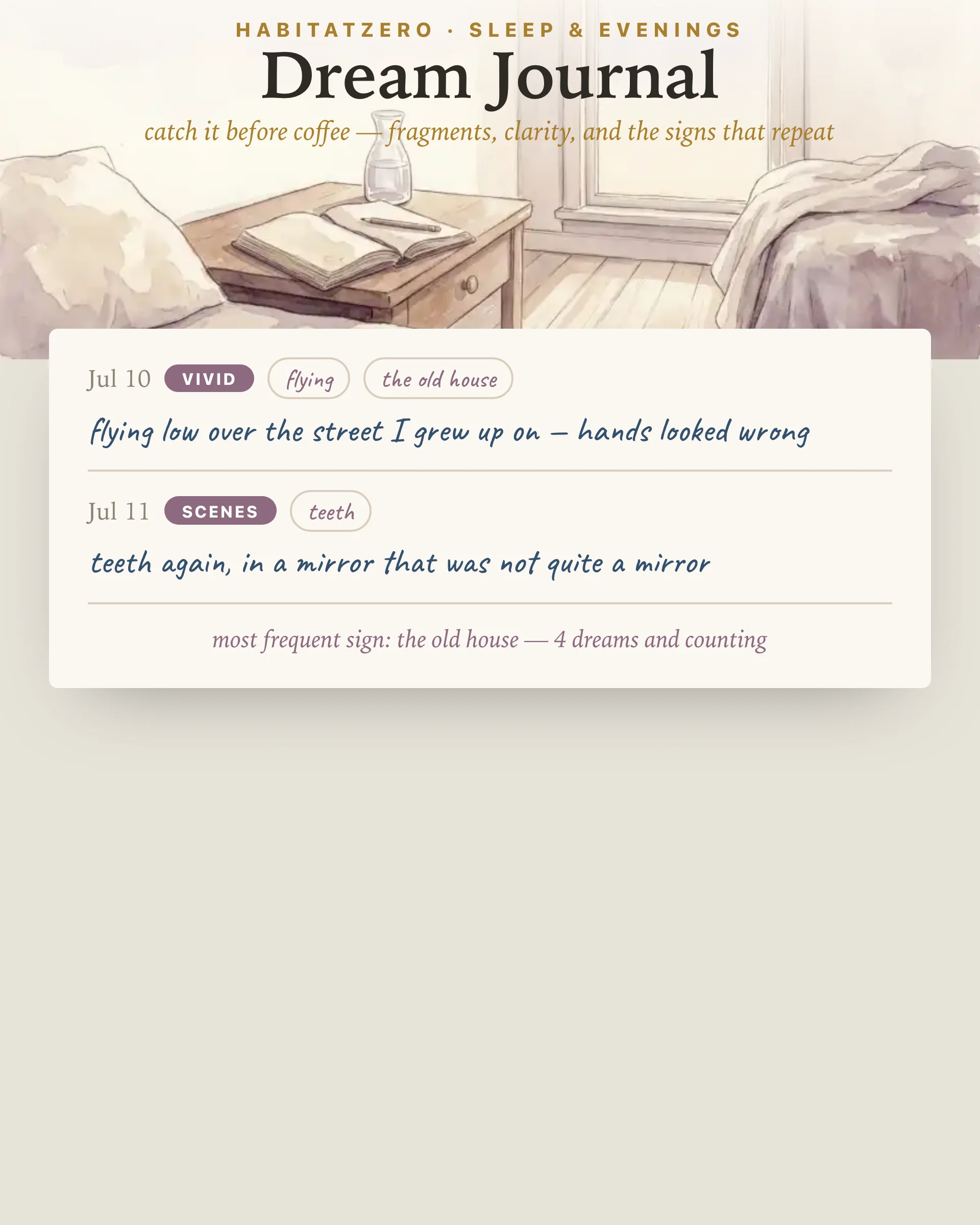
Every dream journal begins with the same physics problem: the dream is evaporating while you reach for the pen. Recall is at its richest in the first minute of waking and mostly gone by the time the kettle boils — so this journal is built for that minute. Fragments over prose, one tap for clarity, and a running tally of the signs your dreams keep repeating.
Strip the mystique off lucid dreaming and what remains is a trainable noticing skill — and the research, read honestly, points at two foundations this page is built around.
Recall comes first. A lucid dream you can't remember may as well not have happened, and most induction techniques quietly assume you're already remembering dreams. When Stumbrys and colleagues reviewed the induction evidence, their headline finding was sobering — no technique reliably works for everyone — but the better-supported methods all lean on attention to dreams as groundwork. Attention is what a journal automates: you remember more of what you've made a habit of writing down, and the clarity chips (gone → like I was there) let you watch your recall trend without doing anything extra.
Dream signs are the trigger. The best-studied induction approaches — reality testing and the MILD technique examined in Aspy's large induction study and earlier work with Delfabbro and Proeve — both need a cue: a moment where you think to ask am I dreaming? Generic cues are weak; personal ones are better, because your dreams have habits. The old house. Teeth. Flying that starts from a staircase. This journal lets you name up to eight signs and tallies every morning they appear — and once the old house has shown up four times, seeing anything old-house-shaped while awake becomes your standing invitation to reality-check. That's the whole loop: journal feeds signs, signs feed checks, checks migrate into dreams.
The entry is deliberately smaller than the dream: a lined page for fragments (grammar optional, single words welcome), one clarity tap, and your sign chips to tag. Even a gone morning gets kept — a baseline is data, and streaks of attention are what move it. The book holds thirty nights and then asks you to let an old one go, which keeps it a working journal rather than an archive you're afraid of.
Two honest boundaries, kept on purpose. This page practices the benign end of lucidity work — journaling and daytime reality checks — not the protocols that fragment sleep on schedule. And if sleep itself is the problem, protect it first; a worksheet is the wrong tool for that job.
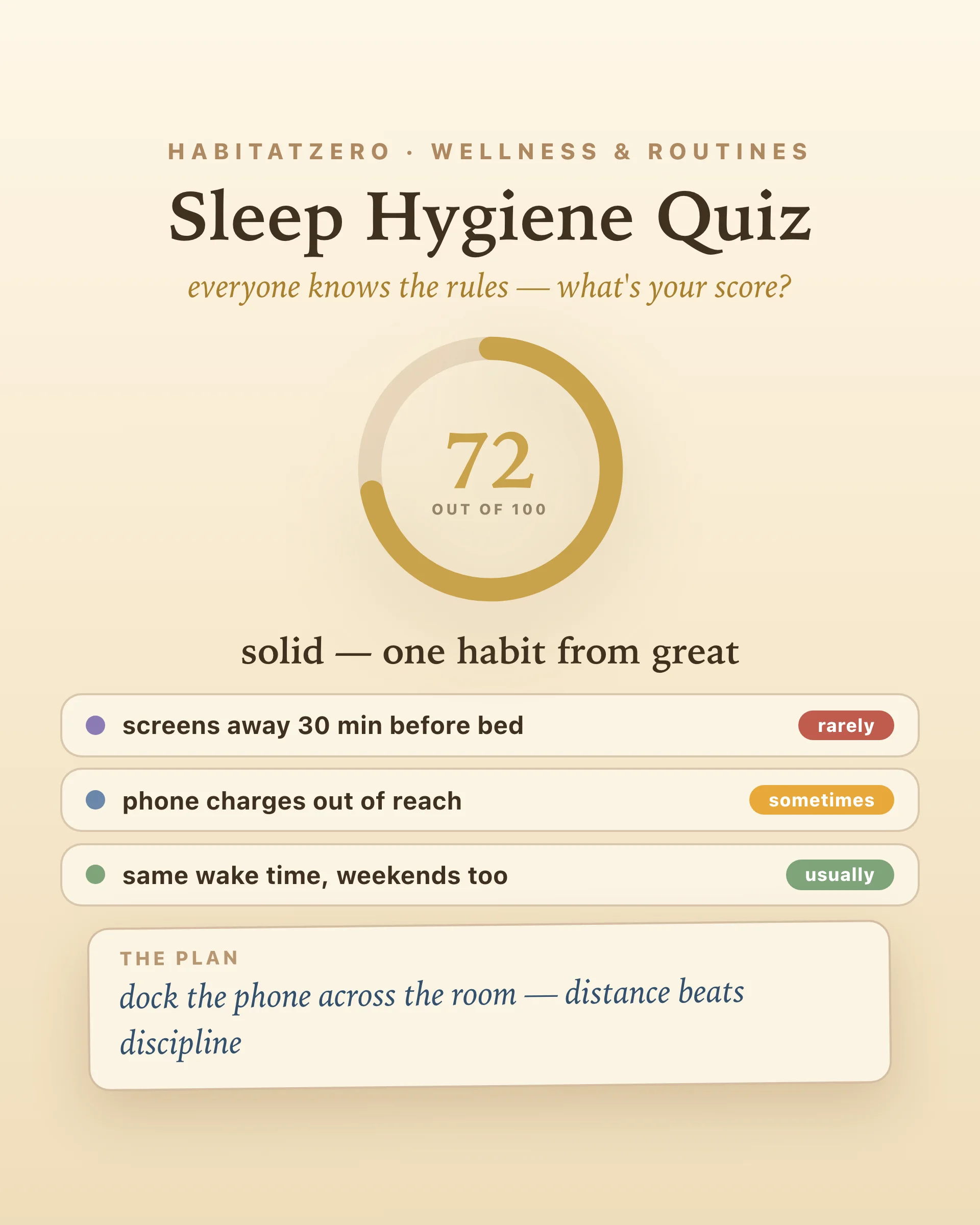
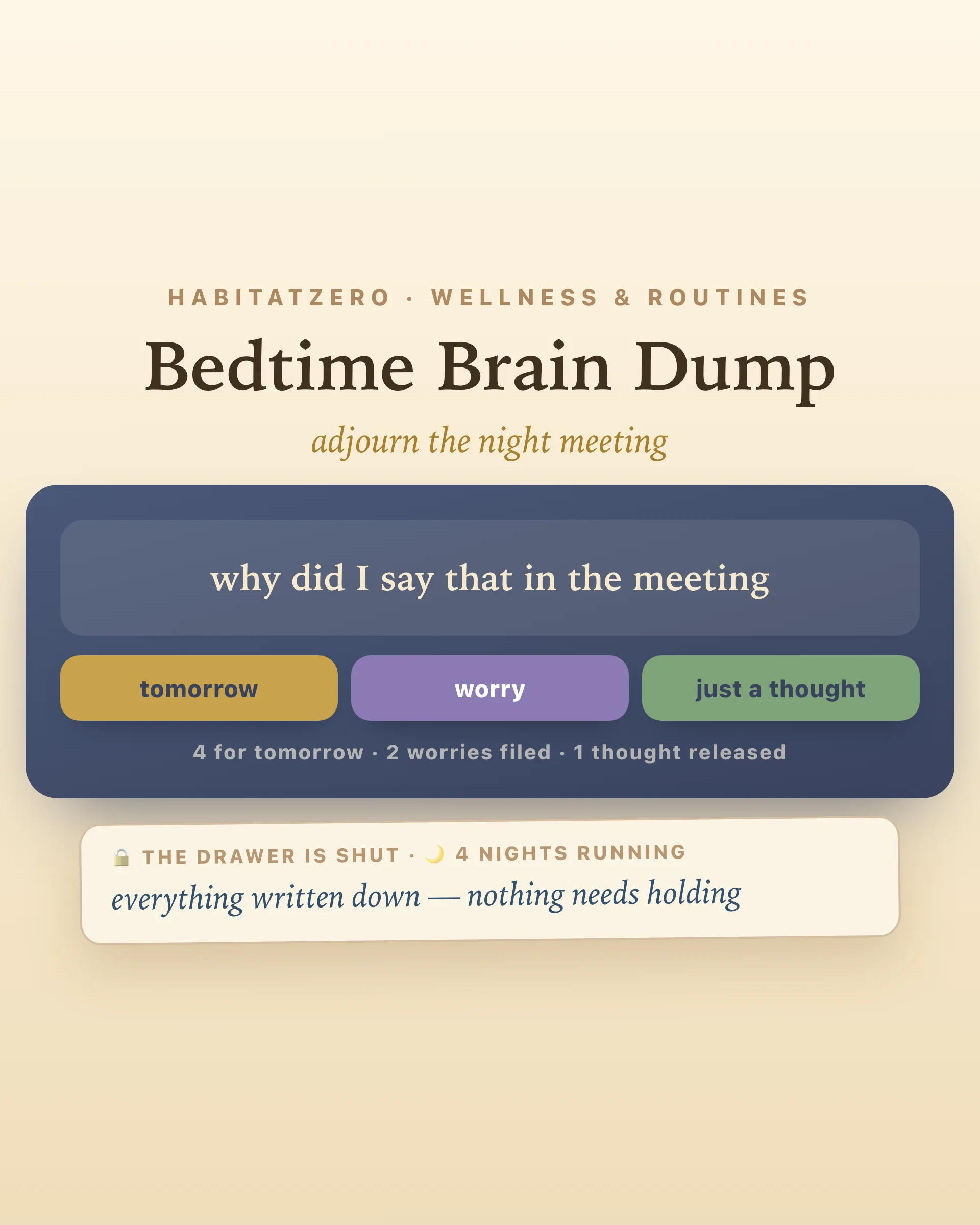
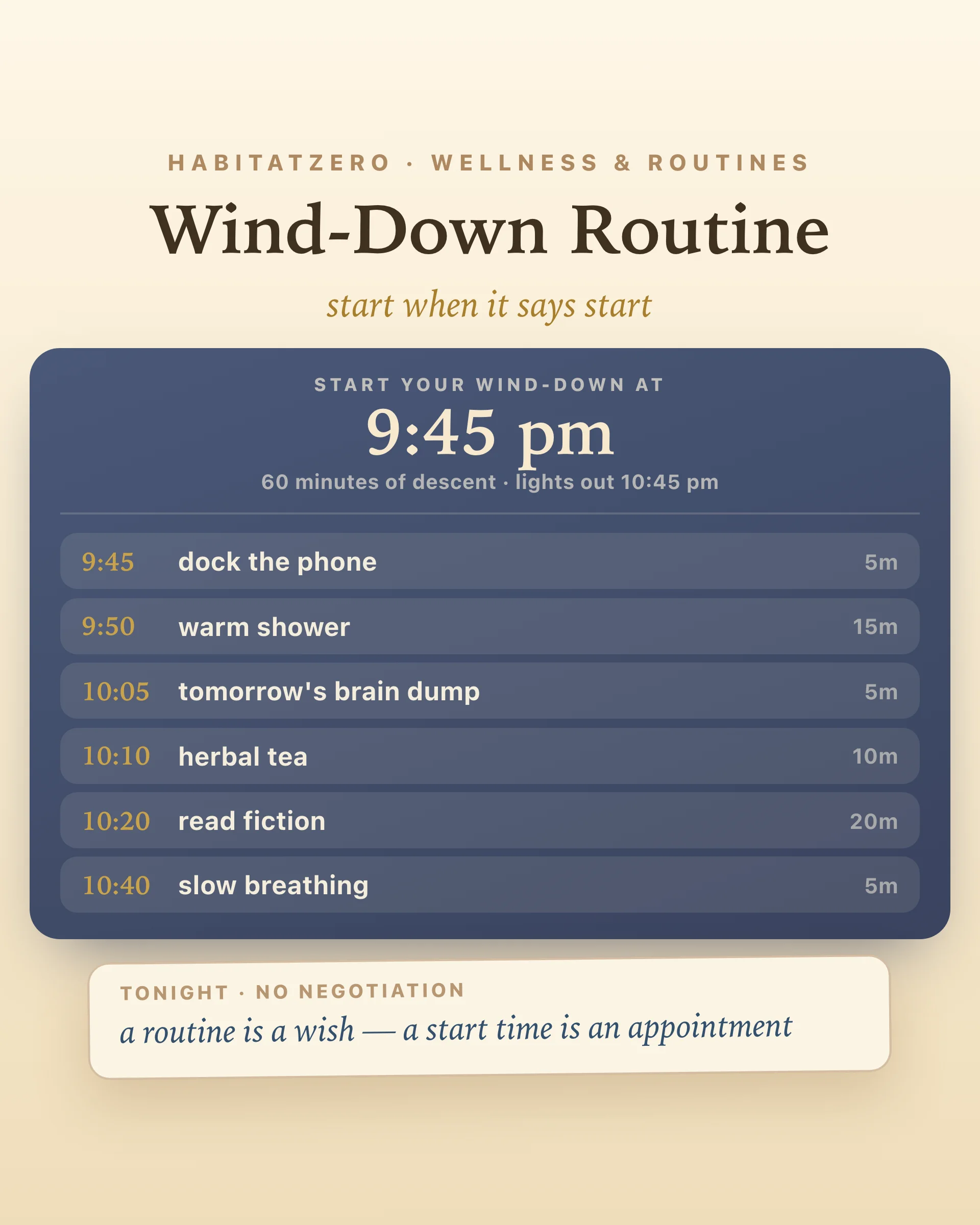
The journal works best with a bedtime that cooperates: the Wind-Down Routine Builder gives the evening a shape, the Sleep Hygiene Quiz finds the leaks that cost you the deep-morning sleep dreams live in, and on nights when the head is too loud to sleep at all, the Bedtime Brain Dump empties it first.
One minute a morning. Eight signs, tallied. The asking follows you in.
Two ways. First, journaling trains recall - a lucid dream you cannot remember may as well not have happened, and most induction methods assume decent recall as the base. Second, the journal surfaces your dream signs: personal recurring oddities that, once you know them, become triggers for the habit of asking whether you are dreaming.
Anything your dreams keep doing: certain places, impossible physics, familiar anomalies like malfunctioning phones or extra rooms in a childhood house. This journal lets you name up to eight and tallies how often each appears, so the list stays your actual signs rather than a generic one.
Partially, and this page stays honest about it. Reviews of induction studies find that no technique works reliably for everyone, with reality testing and the MILD method among the better-supported - and both lean on exactly what this journal builds: recall and known dream signs. Treat lucidity as a practice with modest, real odds rather than a purchasable switch.
Keep the entry anyway and rate it gone. A string of gone mornings is a baseline, not a failure - recall tends to respond to the act of showing up for it, and the clarity chips let you watch that trend without any extra effort.
Immediately on waking, before the phone and before moving much - recall decays within minutes. Keeping the journal one tap away and writing in fragments beats composing polished entries ten minutes later.
For most people, keeping a dream journal and doing daytime reality checks is a benign self-experiment. This page avoids the more aggressive protocols that fragment sleep on purpose; if your sleep is already troubled, protecting it comes first, and persistent sleep problems belong with a professional rather than a worksheet.
By the team behind Fabulous, the science-based self-care app used by over 30 million people.