Reading JournalStudy & Learning · ~4 min
About this template · Updated July 2026
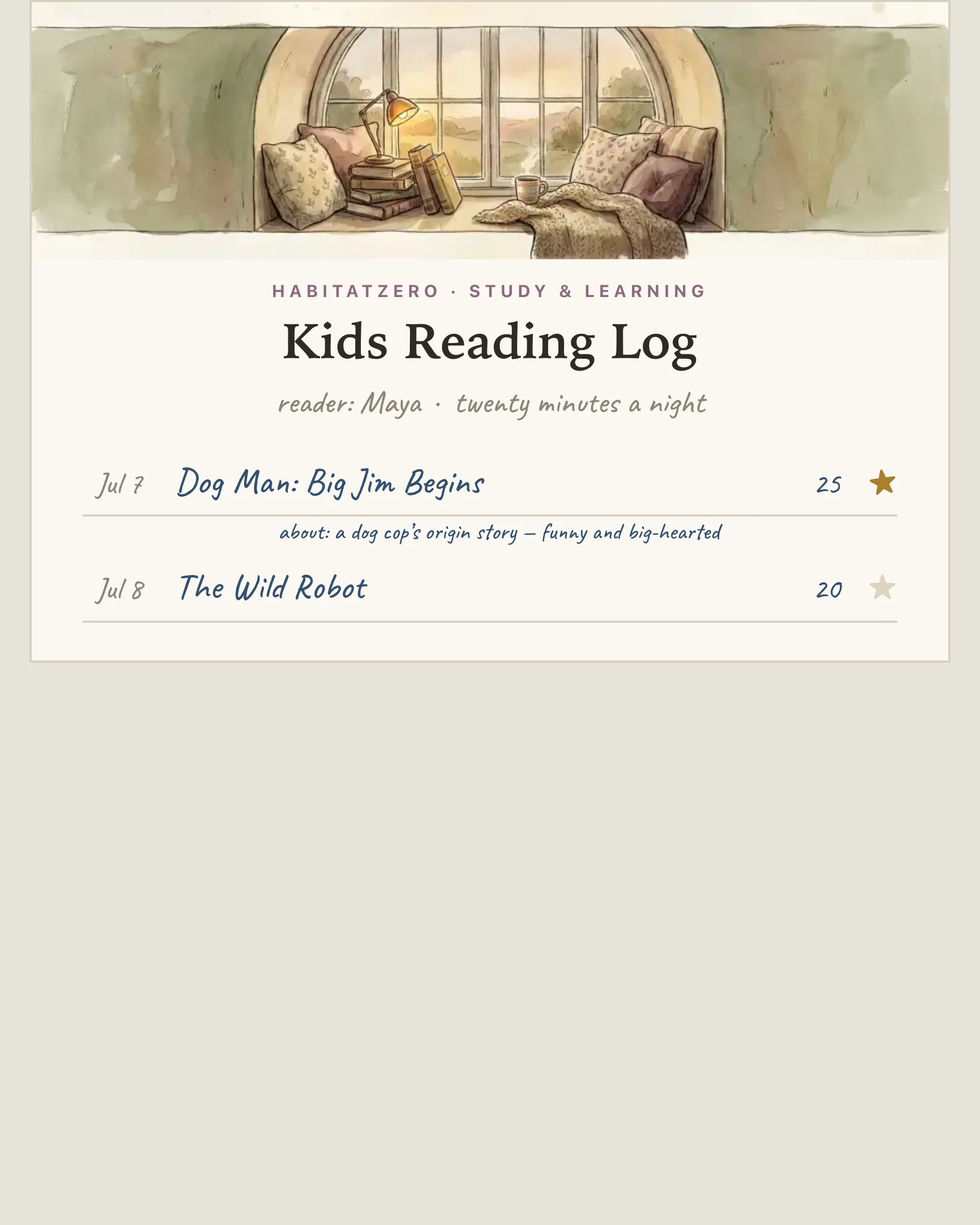
Every reading habit that lasted a lifetime started as rows on a page — date, book, minutes, and somebody who cared enough to ask about the star. The paper reading log survives every educational fashion for one reason: it makes reading visible, to the reader most of all. This page prints that log — with the reader's own name on it, because you type it in before you print.
The mechanics are almost embarrassingly simple, and the evidence behind them isn't. Recording a behavior is one of the most reliable ways to increase it — the log is self-monitoring with a pencil — and what it's increasing compounds like interest: decades of research show print exposure feeds vocabulary, comprehension, and general knowledge in a spiral that starts wherever the reader currently is. Twenty minutes a night looks small on a row. Across a school year it's a hundred hours of print, and the log is the only place that number becomes visible.
The name matters more than it looks, too. A log that says Maya's Reading Log belongs to Maya; a photocopied worksheet belongs to school. Ownership is most of the difference between a log that fills up and one that dies in the backpack by October.
Each row asks only what a kid can answer without help: the date, the book, the minutes, and a star to fill in when the book earned it. The star column is quietly the best part — it turns the log into a record of taste, not just compliance, and a filled-star row is the best book recommendation another kid will ever get. Parents and teachers get the week at a glance; the reader gets the satisfying business of filling boxes.
Type entries in the browser first — useful for the goal line and the name — or print it blank and let the pencil do everything. Undated on purpose: any term, any summer challenge, any bedtime-chapter era. Print one per week or one per child; the printer doesn't judge.
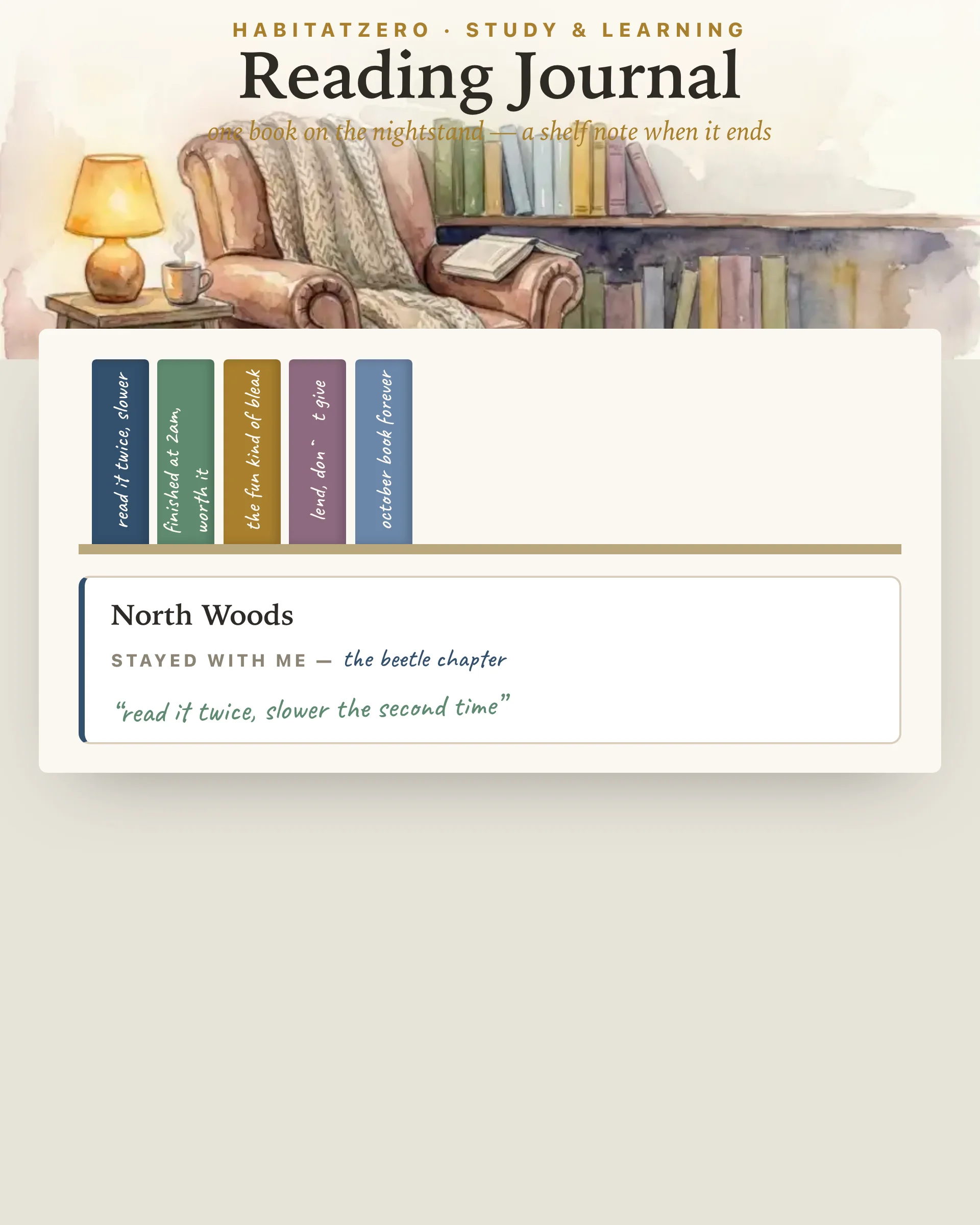
Rows of dates and minutes are the training wheels. When the reader starts having opinions — abandoning books on purpose, arguing about ratings — they're ready for the grown-up version: the reading log shelf tracks books as reading, finished, or wisely abandoned, with stars and one honest line each. The rest of the fridge gallery is nearby: the printable chore chart for the household's other rows, and the printable habit tracker for the grown-ups' own twenty-minutes-a-night promises.
Print it, clip it to the fridge or the homework folder, and ask about the stars at dinner. That last part is the actual system.
Yes — free, in your browser, no signup. Type the name and any entries, print as many copies as the household or classroom needs; the free page keeps nothing after you leave, so the paper log is the record. In the Fabulous app the same log saves and syncs across devices.
Yes — the reader's name, the goal line, and any rows you type all print in place, which no fixed PDF can do. Or print it fully blank and keep the pencil ritual; teachers tend to want one of each.
The school-log classics: the date, the book's title, the minutes read, and a star to fill in when the book was a good one. Four things a young reader can fill in without help, and enough for a parent or teacher to see the week at a glance.
That is its natural season. Set the goal line to the challenge — ten books, twenty minutes a day — print a fresh page per week or per child, and the filled rows become the proof. The page is undated, so it works for any school year, term, or summer.
Yes — tap print and choose Save as PDF in the dialog. One letter or A4 portrait page, light rules, fully legible in black and white.
Yes — every row carries a small “about:” line under the book's title, sized for one kid-scale sentence: what the story was about, or just the best part. One line is deliberate. It shows the book actually landed without turning bedtime reading into a book report, and flipping back through a full page of one-liners is half the fun of keeping the log.
By the team behind Fabulous, the science-based self-care app used by over 30 million people.