Reading JournalStudy & Learning · ~4 min
About this template · Updated July 2026
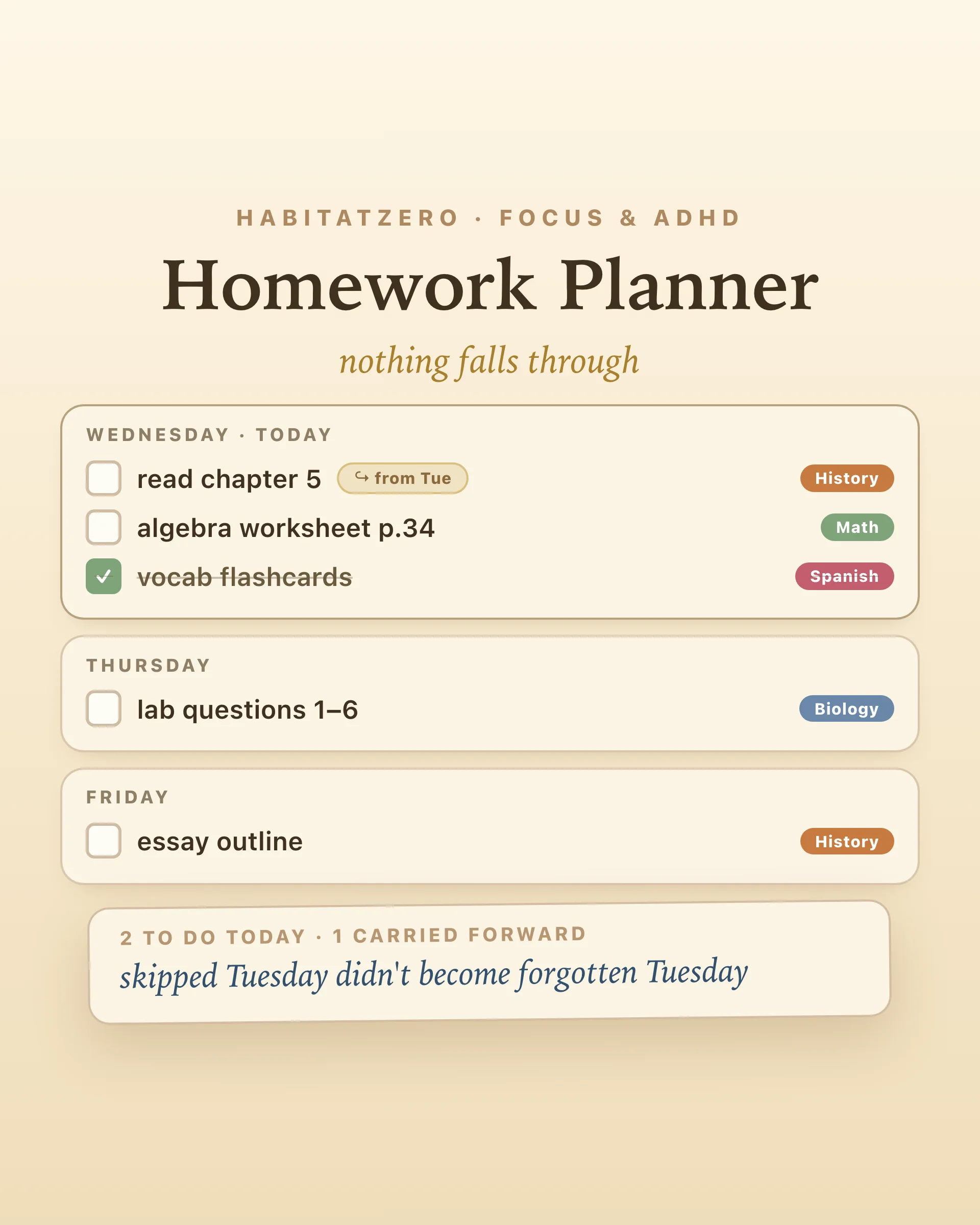
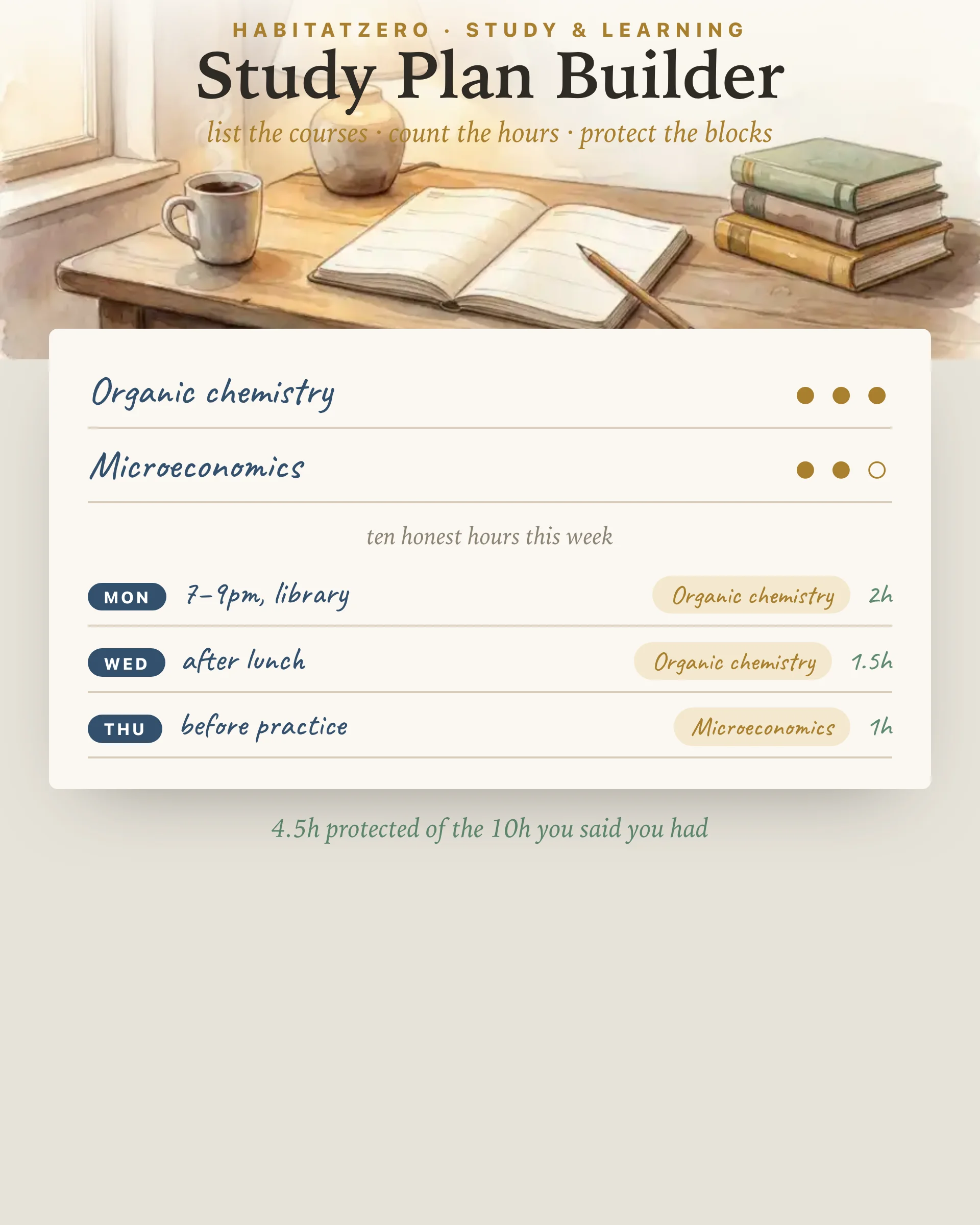
The homework that sinks a week is almost never the hard assignment. It's the small one from Tuesday — the worksheet, the ten vocabulary words — that quietly slid off the day it was skipped and resurfaced Thursday at 9:14pm as a cold jolt of oh no. Forgetting it wasn't a memory failure. It was a container failure: the task lived on Tuesday's list, and nobody reads Tuesday's list on Thursday.
This planner fixes the container. Every task belongs to a day; every unfinished task carries itself forward to today, wearing a small tag that says where it came from. Nothing needs remembering, because nothing is allowed to stay behind.
Load the week. The moment homework is assigned, give it a day — task, subject, done in five seconds. Assigning the day is the real planning decision: "when will I do this" beats "will I remember this" every time.
Work today's list. Each weekday holds its own short list, today highlighted. Check things off; feel the small click. And anything you didn't finish yesterday? Already sitting at the top of today, tagged ↪ from Tue. The tag isn't a guilt mark — carried work is normal. Invisible work is the emergency.
Roll into Monday clean. When a new week starts, finished tasks clear out and unfinished ones carry across, so the planner never becomes an archaeology site. Download the week as an image if you want it printed on the desk.
There's a classic finding that unfinished tasks nag at the mind — psychologists have known for a century that the brain keeps open loops warm. The useful modern twist: research on plan-making found that simply deciding when and where a task will happen releases that background nagging, even before the task is done. Your brain doesn't need the homework finished to relax; it needs the homework scheduled. That's the whole psychological trade this planner offers: five seconds of assigning a day buys back the mental channel that was humming "don't forget, don't forget" underneath your evening.
And on volume: the large reviews of homework research converge on the rough "ten minutes per grade level" rhythm, with benefits flattening past that. If your nightly lists keep running long, the answer usually isn't a later bedtime — it's moving tasks to emptier days, which is exactly the decision this planner puts in front of you while the week is still young.
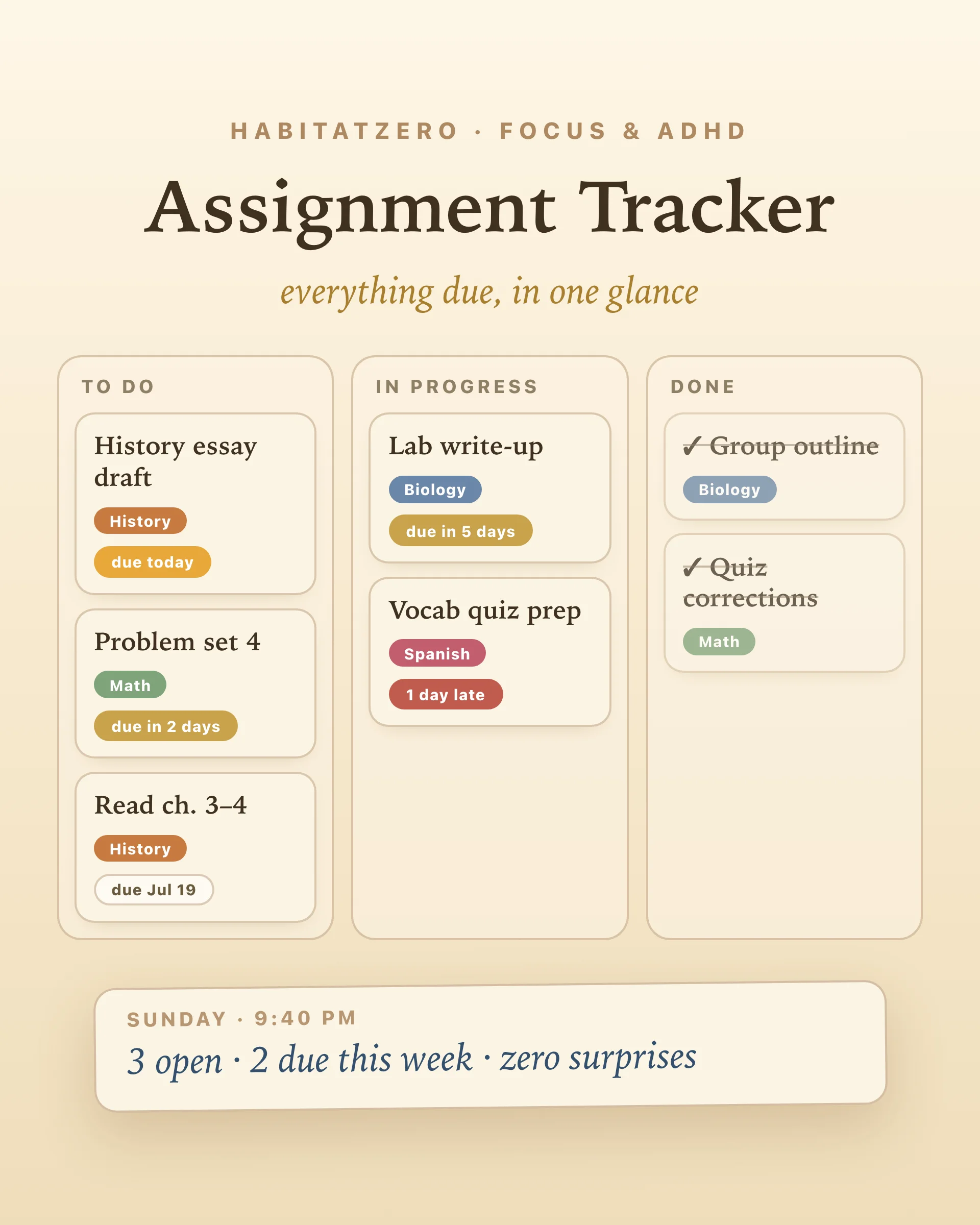
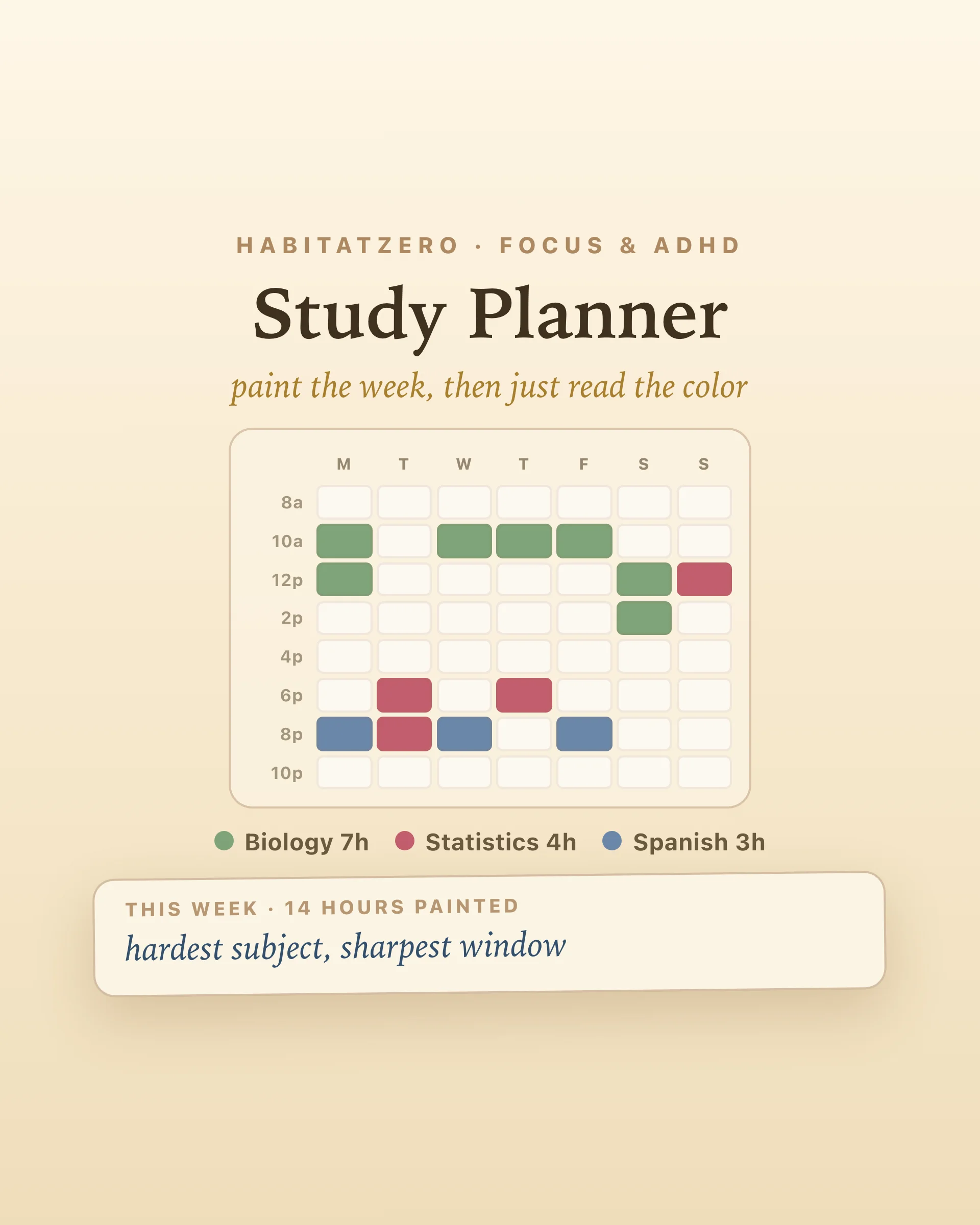
This page answers what am I doing today. Its sibling, the Assignment Tracker, answers what's due when — deadline badges, columns, the semester view. Light weeks need only this one; heavy weeks want both: deadlines watched on the tracker, days executed here. And when today's list needs actual focused hours around it, paint them into the Study Planner.
If it's already late and the carried tasks have stacked into a pile that makes starting impossible, don't push through the paralysis — run the pile through Deal With Your Brain first and come back with the one task it hands you.
Five seconds when it's assigned. One short list a day. Nothing falls through — that's the entire promise.
Assign every task to a day the moment it's given, and keep each day's list short — two to four items. The planning decision is 'when will I do this', not 'will I remember this'. This planner handles the remembering: each day shows only its own list, and anything unfinished moves itself to today.
It carries forward automatically. Unfinished tasks from earlier in the week appear at the top of today's list with a small tag showing which day they came from — so a skipped Tuesday doesn't become a forgotten Tuesday. The tag is gentle by design: carried work is normal, invisible work is the problem.
The planner answers 'what am I doing today'; the tracker answers 'what's due when'. This page is the daily one — short lists per weekday with carry-forward. For deadline-first tracking across a semester, with due-date badges and to-do, in-progress and done columns, use the assignment tracker instead; heavy weeks benefit from both.
A common research-backed guideline is roughly ten minutes per grade level per night — about an hour in 6th grade, up to two hours in high school. Past that point, reviews of homework studies find diminishing returns. If the nightly list keeps blowing past the guideline, the fix is usually planning-level: spread tasks across more days rather than pushing later into the night.
Yes — you can download your week as an image and print it. The interactive version keeps two advantages: the carry-forward runs itself, and in the Fabulous app your planner syncs, so the list you wrote in class is on your desk at home.
By the team behind Fabulous, the science-based self-care app used by over 30 million people.