
Dr. Rachel Rubin on Perimenopause Relief
Finally, Menopause Relief: How Did We Not Know This? with Dr. Rachel Rubin
▶ Listen to the full episode More from We Can Do Hard Things
The brief
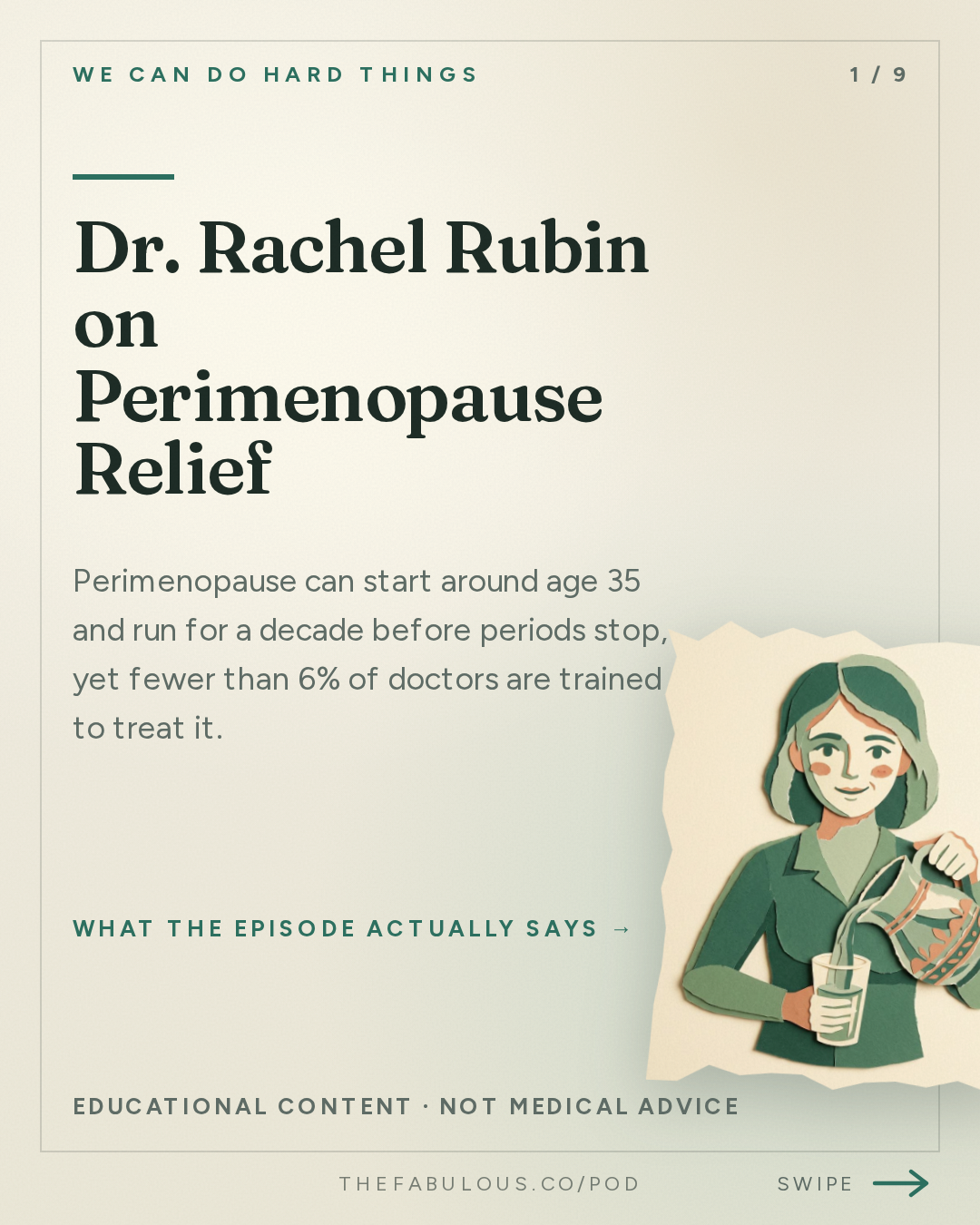
Perimenopause can start around age 35 and run for a decade before periods stop, yet fewer than 6% of doctors are trained to treat it. Urologist Dr. Rachel Rubin explains why standard hormone tests mislead, debunks the 2002 Women's Health Initiative scare, and lays out a four-part hormone therapy toolbox, including cheap vaginal estrogen that cuts UTI hospitalizations by over half.
A pharmacist at a Southern California CVS once held a prescription for testosterone, looked at the woman standing at his window, and told her, "Testosterone is for men." She pushed back. He mumbled something and filled it anyway. The moment, described on this episode (51:45), is small, but it points at something larger. Somewhere in that pharmacist's training, someone taught him that women make testosterone too. He knew the biology. He still tried to withhold the prescription.
That contradiction, between what medicine knows and what it actually does for women, runs through this whole conversation with Dr. Rachel Rubin, a board-certified urologist and sexual medicine specialist who practices in Washington, D.C. and Los Angeles and teaches at Georgetown (01:09). Rubin did not train to treat menopause. She trained to treat penises. But her curiosity about hormones has turned her into one of the clearest voices explaining why so many women spend years feeling, as she puts it, not like themselves.
"NFLM, which is not feeling like myself. NFLM, that should be a diagnosis in and of itself." — Dr. Rachel Rubin [07:19]
Rubin's starting point is an analogy most parents will recognize. A nine-year-old's body changes no matter how much yoga or clean eating is involved (04:55). Perimenopause, she argues, works the same way: a slow, hormonally driven process nobody opts out of. The average age of menopause, defined as one full year without a period, is 45 to 55, with the midpoint around 51 or 52 (09:28). But perimenopause, the stretch of fluctuating hormones that precedes it, can last 10 years (10:11). Subtract 10 from 45 and the math lands in the mid-30s, which is also when testosterone, a hormone few women are told they even have, starts to drop (10:35).
Because hormone receptors sit throughout the body, not just in the ovaries, the symptom list is long and strange: migraines, brain fog, itchy ears, a burning mouth, new allergies, heart palpitations (the cluster that sent Oprah to five doctors before one finally gave her estrogen), frozen shoulder, and plantar fasciitis (09:28, 12:41, 13:20). Rubin calls the joint problems musculoskeletal syndrome of menopause, a diagnosis first described by an orthopedic surgeon colleague who pointed out that only 6% of orthopedic surgeons are women, which may be why a pattern affecting half the population went unstudied for so long (13:20).
The Hormonal Weather Report
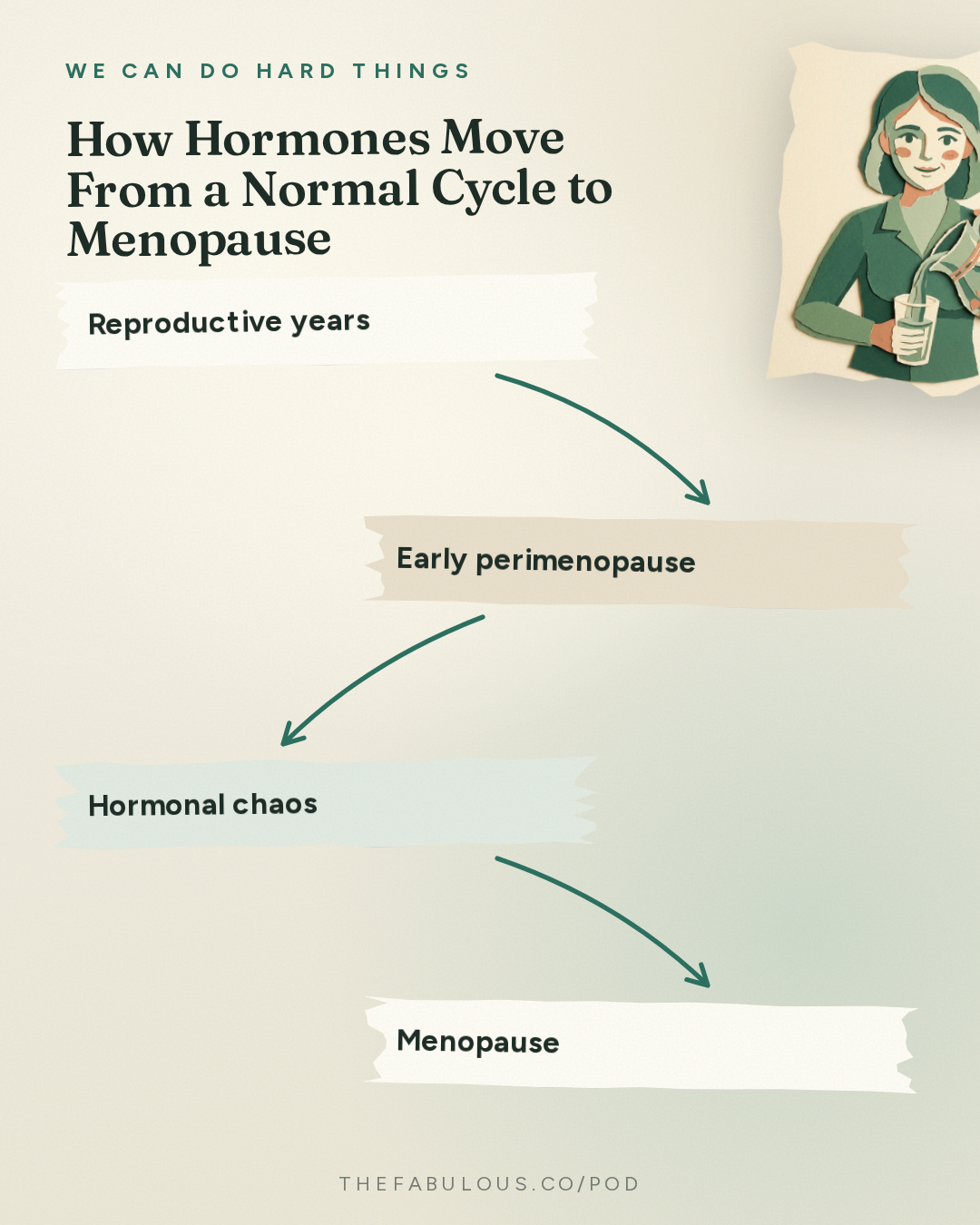
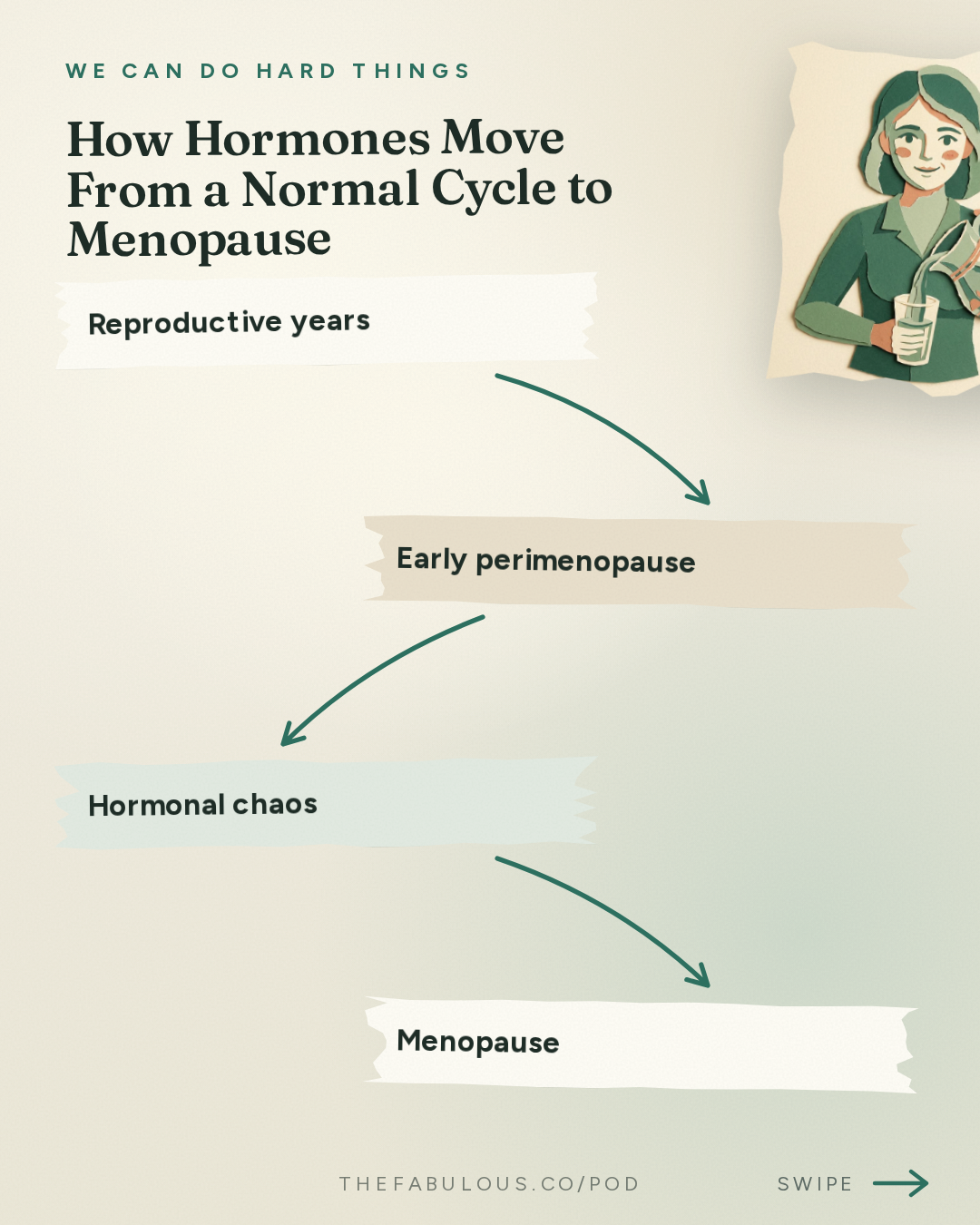
Understanding why one blood test rarely settles anything requires understanding what hormones actually do. In a typical cycle, estrogen and progesterone rise and fall in a predictable pattern, low during the period and climbing toward ovulation (17:23). During pregnancy, estrogen can reach roughly 10,000 picograms per milliliter, far above the normal range of 50 to 150 (19:34). After childbirth, and again at menopause, it falls to zero (19:51). Perimenopause is the chaotic bridge between those states. Instead of a smooth decline, estrogen can swing from zero to 900 and back to 50 within weeks, which is why symptoms seem to arrive out of nowhere (20:26).
That volatility explains why standard hormone testing so often comes back "normal" even when someone feels terrible. A single blood draw catches a single moment in a swing. Rubin checks estrogen specifically on day one, two, or three of the cycle to find a person's hormonal floor, then sometimes again near ovulation to find the ceiling (36:50). Even then, she notes, next month could look completely different (37:13). Her advice to anyone told their labs are fine is to ask exactly what was measured and when, because treating one normal test as the end of the conversation is, in her words, practicing medicine from another century.
"This is leeches and bloodletting era of women's health." — Dr. Rachel Rubin [37:37]
The gap is structural as much as personal. Fewer than 6% of primary care doctors, family practitioners, and gynecologists receive any training on menopause (43:19). There are roughly 20,000 gynecologists in the United States for 85 million women, and most of their time goes to deliveries and surgeries, not hormone management (31:13). Rubin's fix is blunt: stop expecting one doctor to cover everything. Men see cardiologists, urologists, and primary care doctors separately. Women, she argues, need the same kind of team, a pit crew, built around their hormonal health (45:49).
Undoing a Twenty-Year Mistake
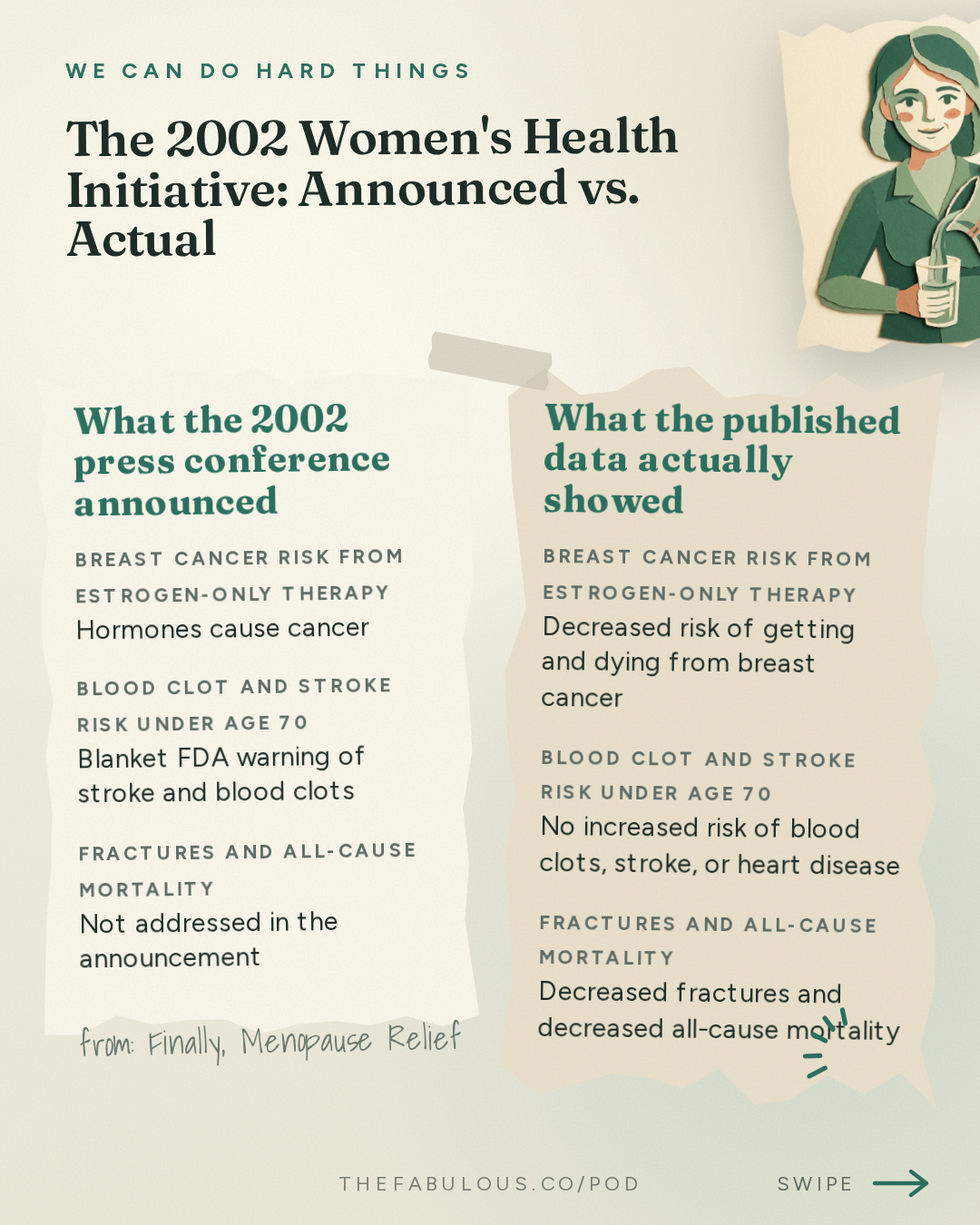
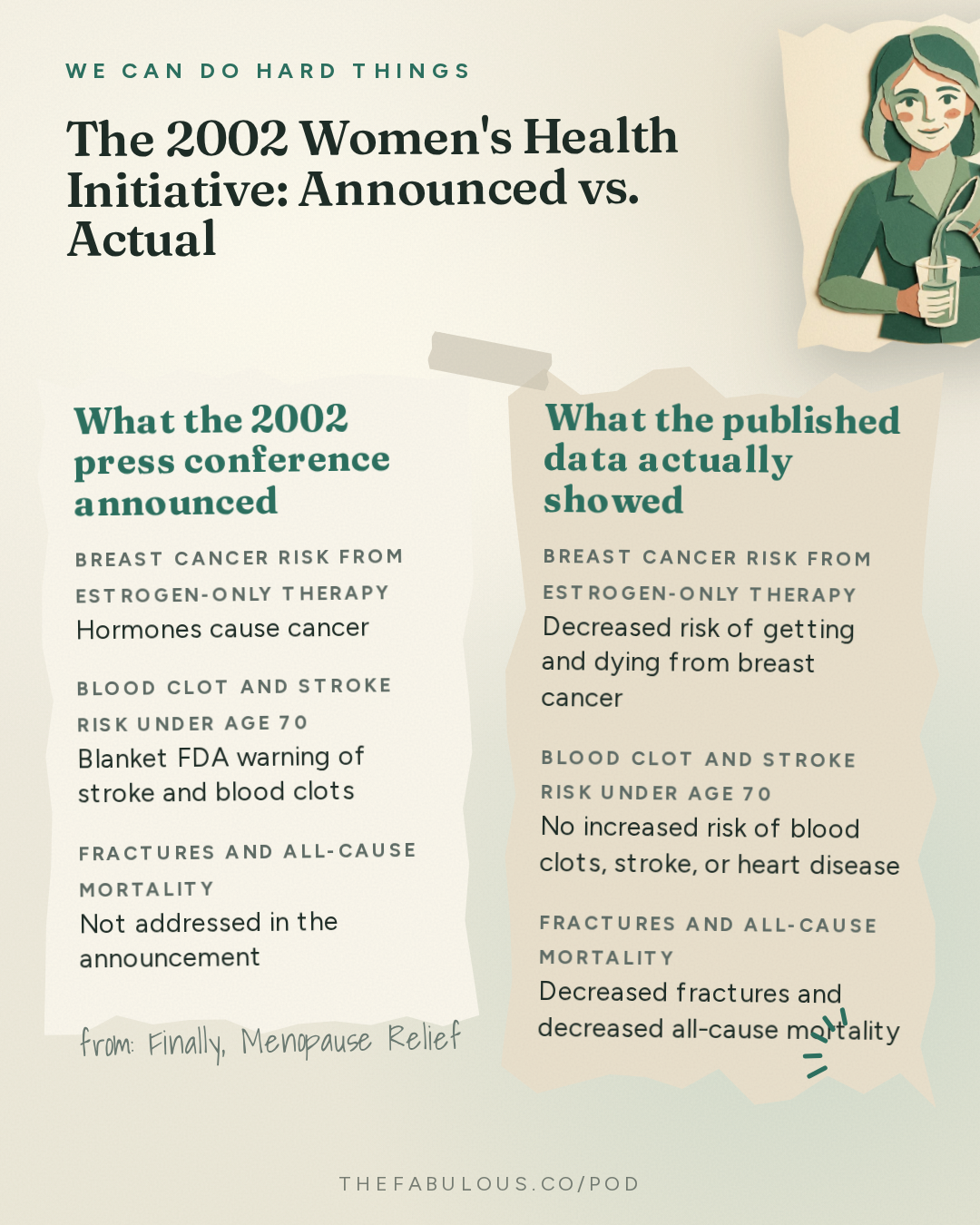
Much of the wariness around hormone therapy traces back to a single press conference in 2002. The Women's Health Initiative, a federally funded trial, had given a birth-control-style hormone pill to women aged 50 to 79 and tracked their health for years. Before the paper was published, the study's lead epidemiologist, who had never prescribed hormone therapy himself, got an alert about a worrying data signal and went on live television to announce that hormones caused cancer and heart disease (74:52). The story ran on the front page of The New York Times and the cover of Time. Doctors, who had not seen the actual paper, believed the headline.
What the published data showed, once anyone actually read it, was different: decreased fractures, decreased diabetes, decreased all-cause mortality, and, for women taking estrogen alone, a decreased risk of getting and dying from breast cancer (75:56). A later re-analysis by that same epidemiologist found no increased risk of blood clots, stroke, or heart disease in women under 70 (76:19). The original announcement, that hormones were dangerous and caused cancer and heart disease, did not hold up (76:43). The FDA had already attached a blanket warning, including a reference to probable dementia, to every hormone product on the market. That label stood for roughly two decades until regulators removed it this past November, after Rubin and colleagues testified that it never matched the evidence (77:57).
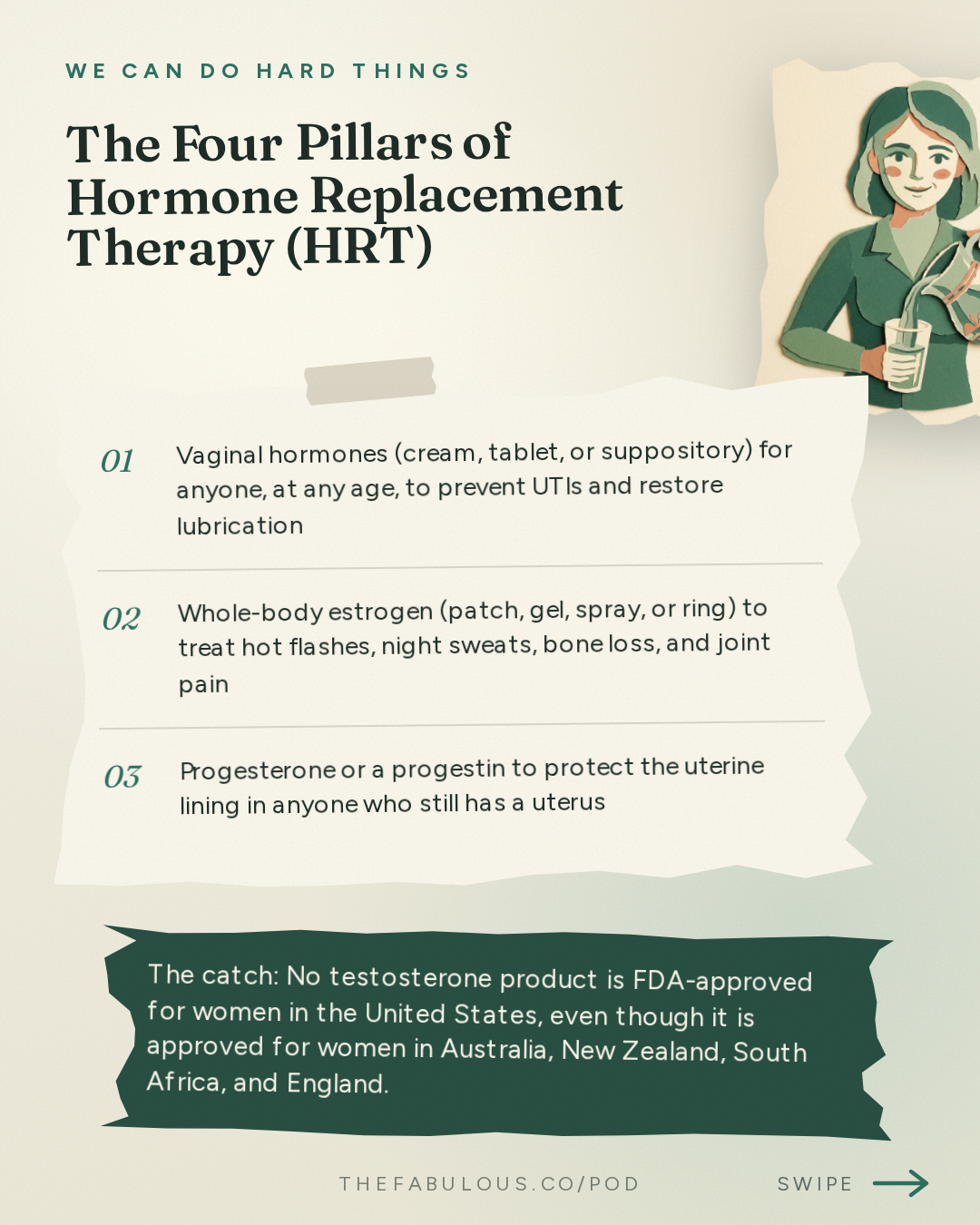
With that fear mostly undone, Rubin describes hormone replacement therapy, or HRT, as a toolbox with four parts (58:41). Vaginal hormones, a low-dose cream, tablet, or suppository used locally, are for nearly everyone, she says, regardless of age or cancer history, because they restore the vaginal and urinary microbiome and prevent infection (61:17). A study of 2 million people aged 20 to 100 found that prescribing vaginal estrogen or DHEA after a urinary tract infection cut hospitalizations, sepsis admissions, and deaths by more than half (64:02). The cream itself costs about $14 a tube (65:08). The other three tools, whole-body estrogen for hot flashes, bone density, and joint pain, progesterone or a progestin to protect the uterine lining, and testosterone for libido and energy, are matched to the individual rather than handed out in one dose for everyone (68:04, 70:38, 72:06). Testosterone remains the outlier: no product is FDA-approved for women in the United States, even though the hormone has been documented in women since the 1940s and is approved for them in Australia, New Zealand, South Africa, and England (72:50).
Rubin's argument keeps circling back to the pharmacist and the prescription pad. The system that trained him also trained the doctors who dismiss hormonal symptoms as stress, and the gynecologists who were never taught to examine a clitoris, let alone treat perimenopause (48:56). None of that, she insists, is really anyone's fault at the individual level. It is a training failure dressed up as medical caution. Her answer is not a new drug. It is informed persistence: track the symptoms, ask for the right test at the right time, and treat a doctor's no as the start of a conversation rather than the end of one.
Ask this episode anything
Pod's AI answers from the episode itself, with the minute mark so you can hear it yourself.
Or start with one of these
Ask this episode
Pod's AI listens to the whole episode to answer, and points you to the minute it comes from.
The rest of this answer, and any question after it
Answers come from the episode itself, never from a summary of it.
ContinueKey takeaways
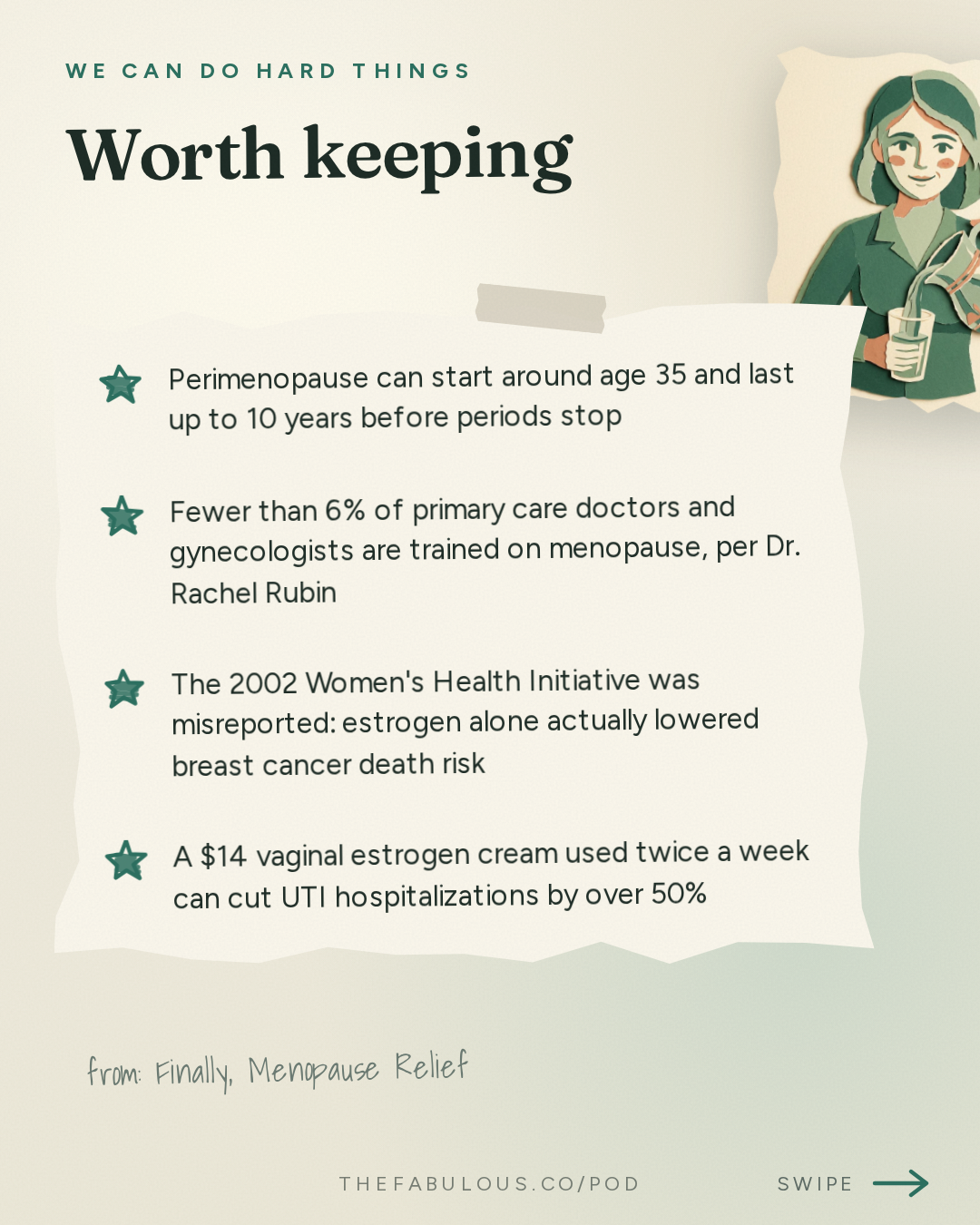
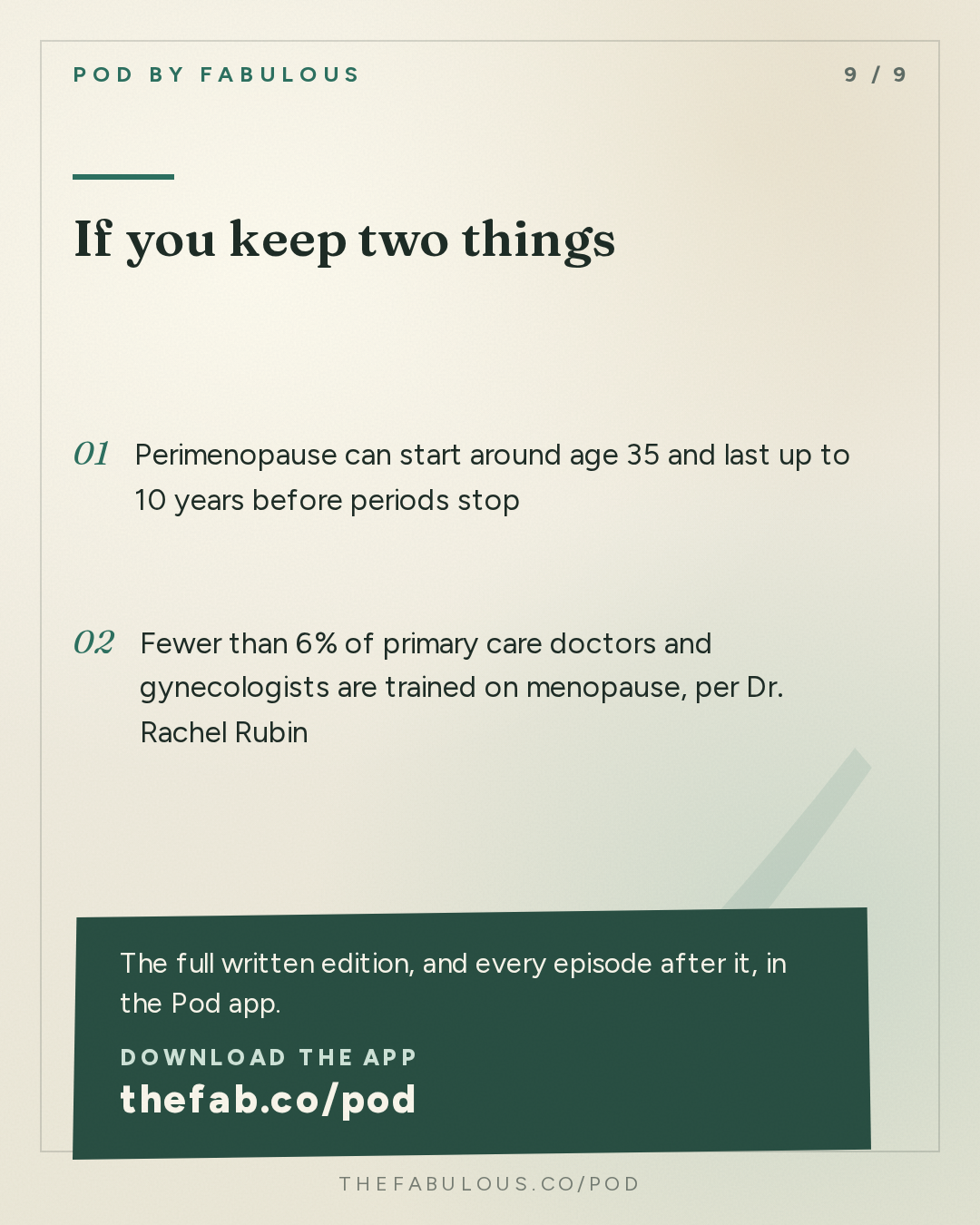
- Perimenopause can start around age 35 and last up to 10 years before periods stop
- Fewer than 6% of primary care doctors and gynecologists are trained on menopause, per Dr. Rachel Rubin
- The 2002 Women's Health Initiative was misreported: estrogen alone actually lowered breast cancer death risk
- A $14 vaginal estrogen cream used twice a week can cut UTI hospitalizations by over 50%
- Single hormone blood tests often mislead because estrogen and progesterone fluctuate daily in perimenopause
The episode in cards


By the numbers
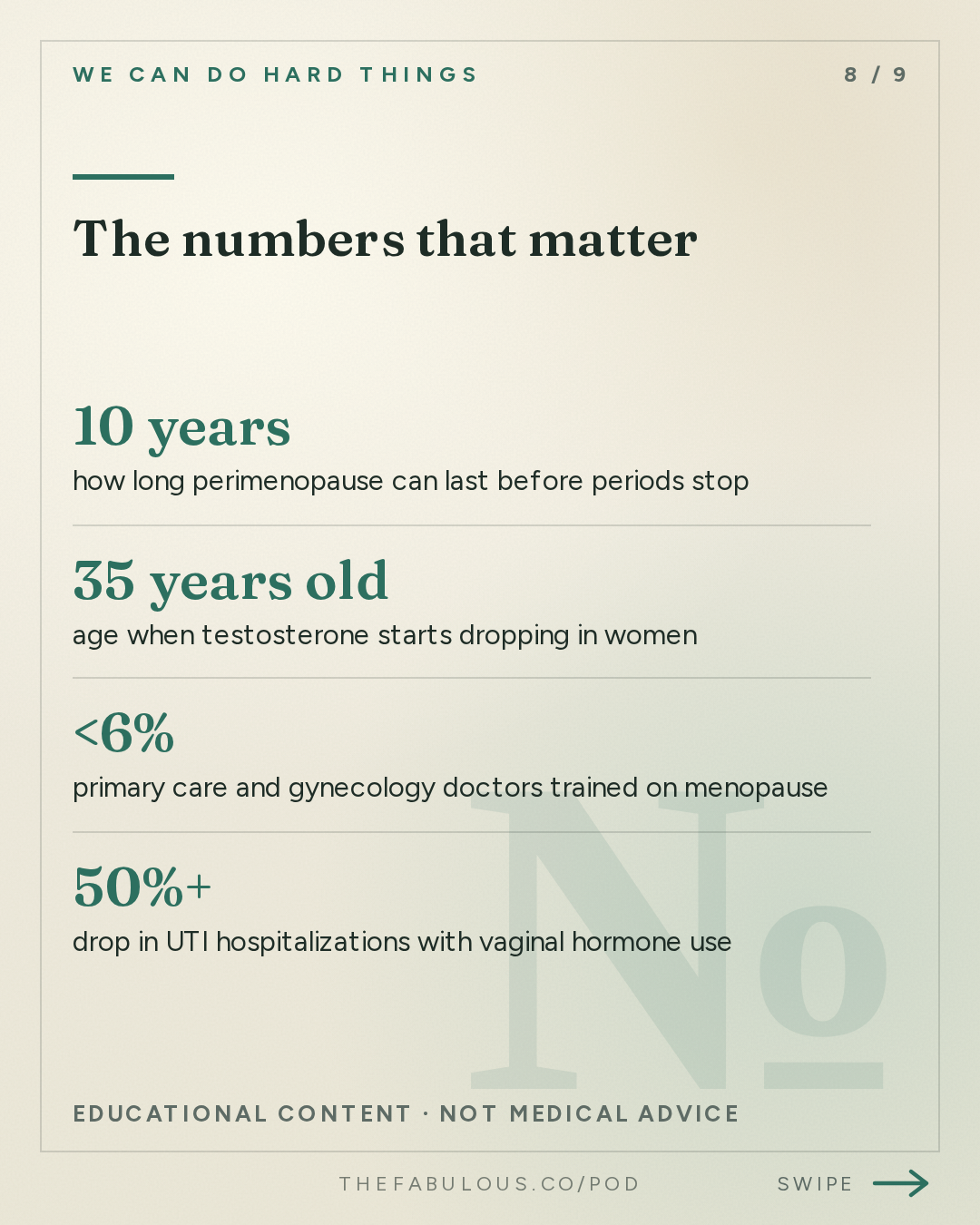
- 10 years how long perimenopause can last before periods stop
- 35 years old age when testosterone starts dropping in women
- <6% percent primary care and gynecology doctors trained on menopause
- 50%+ percent drop in UTI hospitalizations with vaginal hormone use
- $14 dollars cost of a tube of estradiol vaginal cream
In their words
“NFLM, which is not feeling like myself. NFLM, that should be a diagnosis in and of itself.”
“This is leeches and bloodletting era of women's health.”
“We are a culture that thinks that women are good for procreation, and that's it.”
Protocols
-
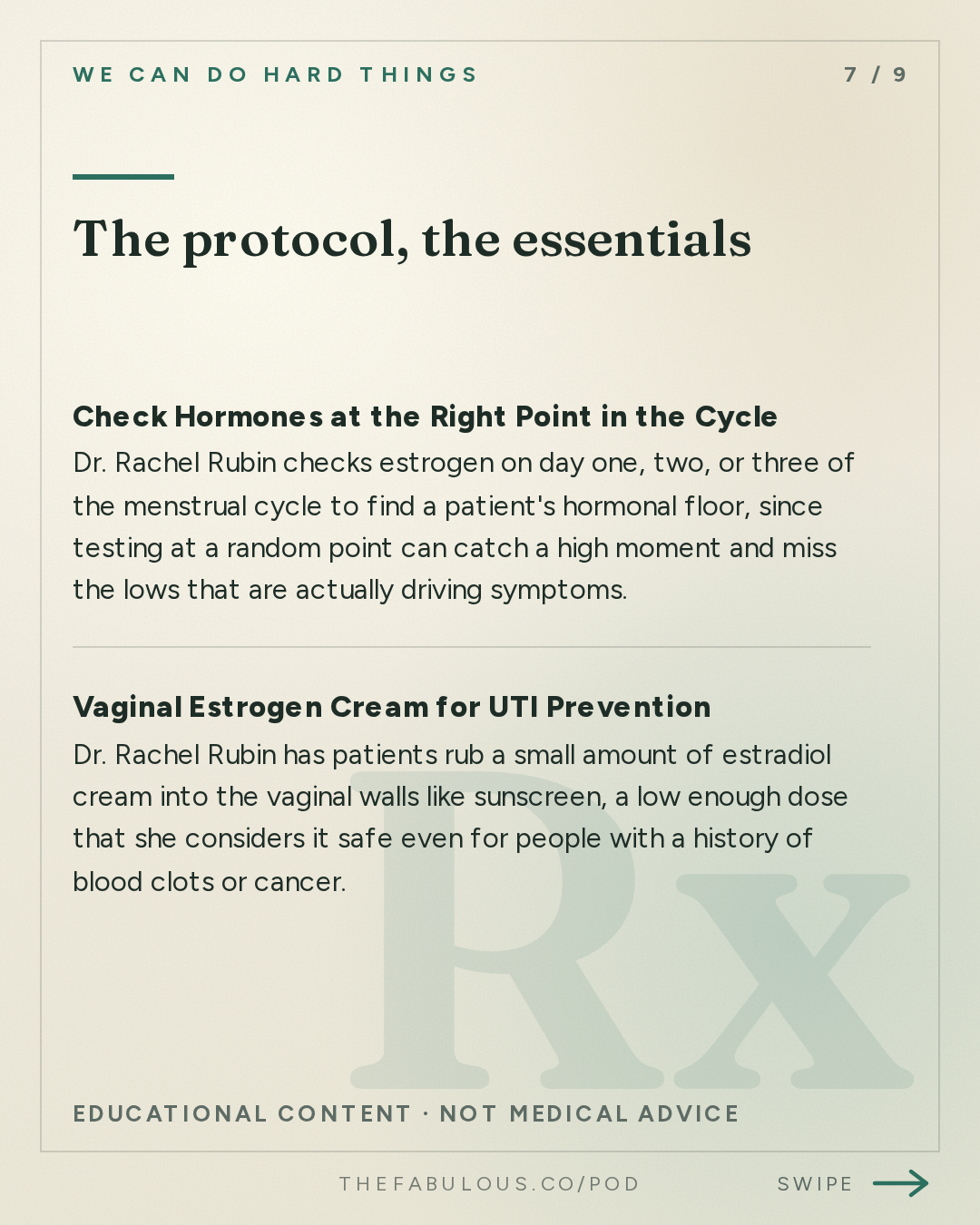
Check Hormones at the Right Point in the Cycle
Dr. Rachel Rubin checks estrogen on day one, two, or three of the menstrual cycle to find a patient's hormonal floor, since testing at a random point can catch a high moment and miss the lows that are actually driving symptoms.
once per cycle, timed to the first days of bleeding
-
Vaginal Estrogen Cream for UTI Prevention
Dr. Rachel Rubin has patients rub a small amount of estradiol cream into the vaginal walls like sunscreen, a low enough dose that she considers it safe even for people with a history of blood clots or cancer.
twice a week
-
DHEA Suppository for Dryness and Arousal
Dr. Rachel Rubin offers a DHEA and palm oil vaginal suppository as a moisturizing option that also supports arousal and lubrication.
nightly
-
Protect the Uterus on Systemic Estrogen
Dr. Rachel Rubin pairs whole-body estrogen with oral micronized progesterone or a hormonal IUD for anyone who still has a uterus, because unopposed estrogen can thicken the uterine lining and raise cancer risk over time, while people without a uterus can skip this step or keep progesterone for its sleep benefits.
daily pill at bedtime, or a continuous low-dose IUD
Questions this episode answers
What are the early signs of perimenopause besides hot flashes?
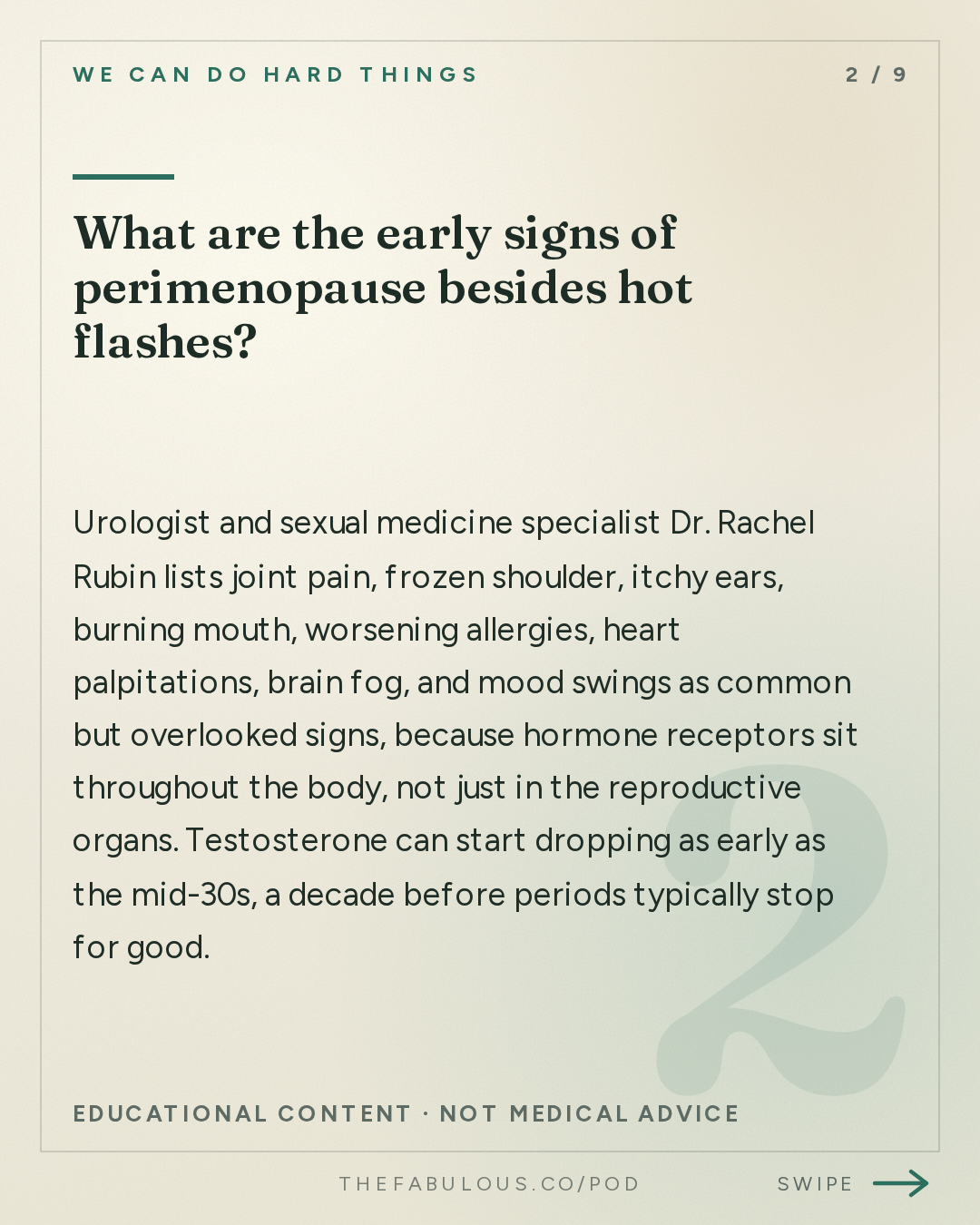
Urologist and sexual medicine specialist Dr. Rachel Rubin lists joint pain, frozen shoulder, itchy ears, burning mouth, worsening allergies, heart palpitations, brain fog, and mood swings as common but overlooked signs, because hormone receptors sit throughout the body, not just in the reproductive organs (09:28). Testosterone can start dropping as early as the mid-30s, a decade before periods typically stop for good (10:35).
Why do hormone blood tests come back normal during perimenopause?
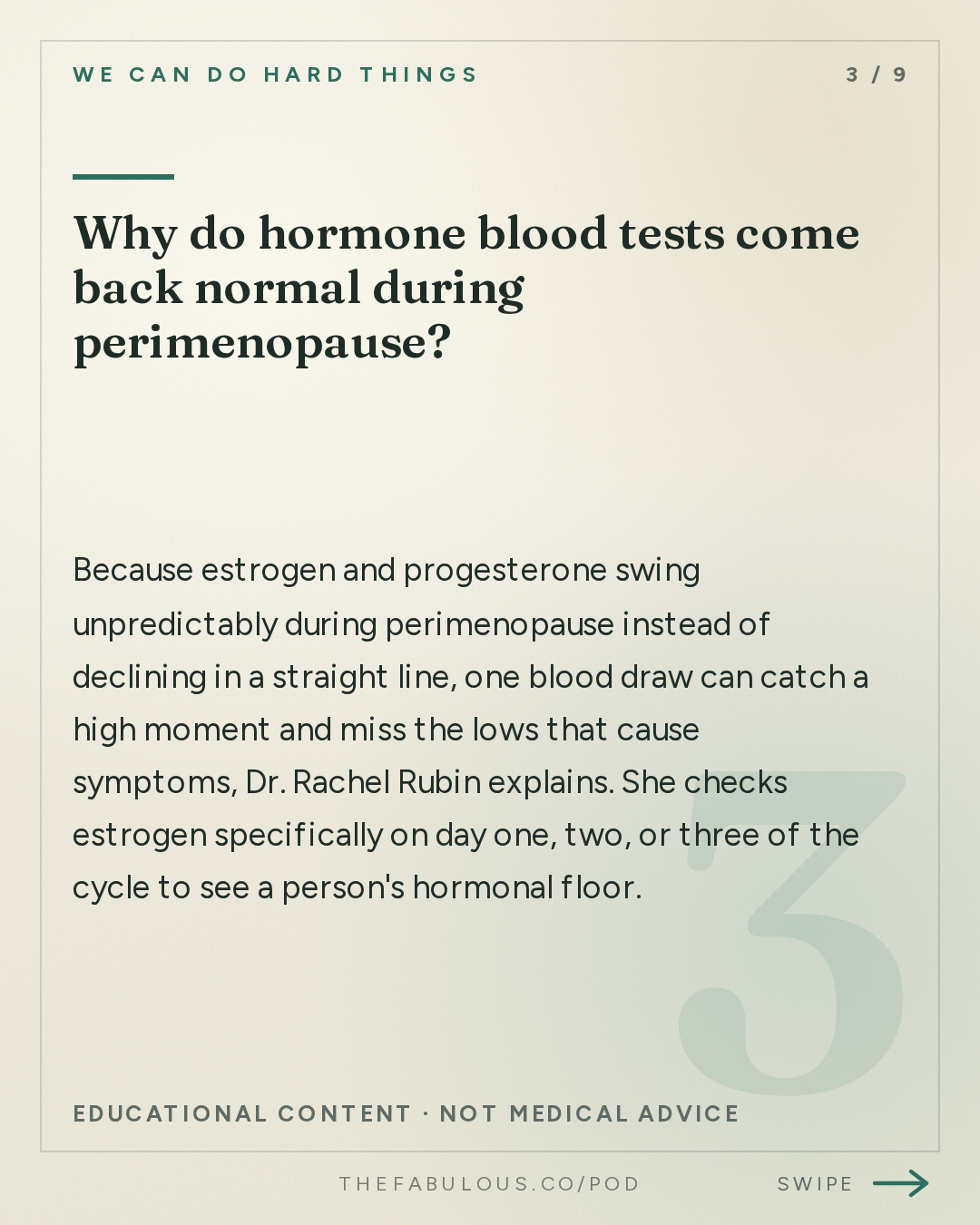
Because estrogen and progesterone swing unpredictably during perimenopause instead of declining in a straight line, one blood draw can catch a high moment and miss the lows that cause symptoms, Dr. Rachel Rubin explains (37:13). She checks estrogen specifically on day one, two, or three of the cycle to see a person's hormonal floor (36:50).
Is hormone replacement therapy safe after the 2002 Women's Health Initiative study?
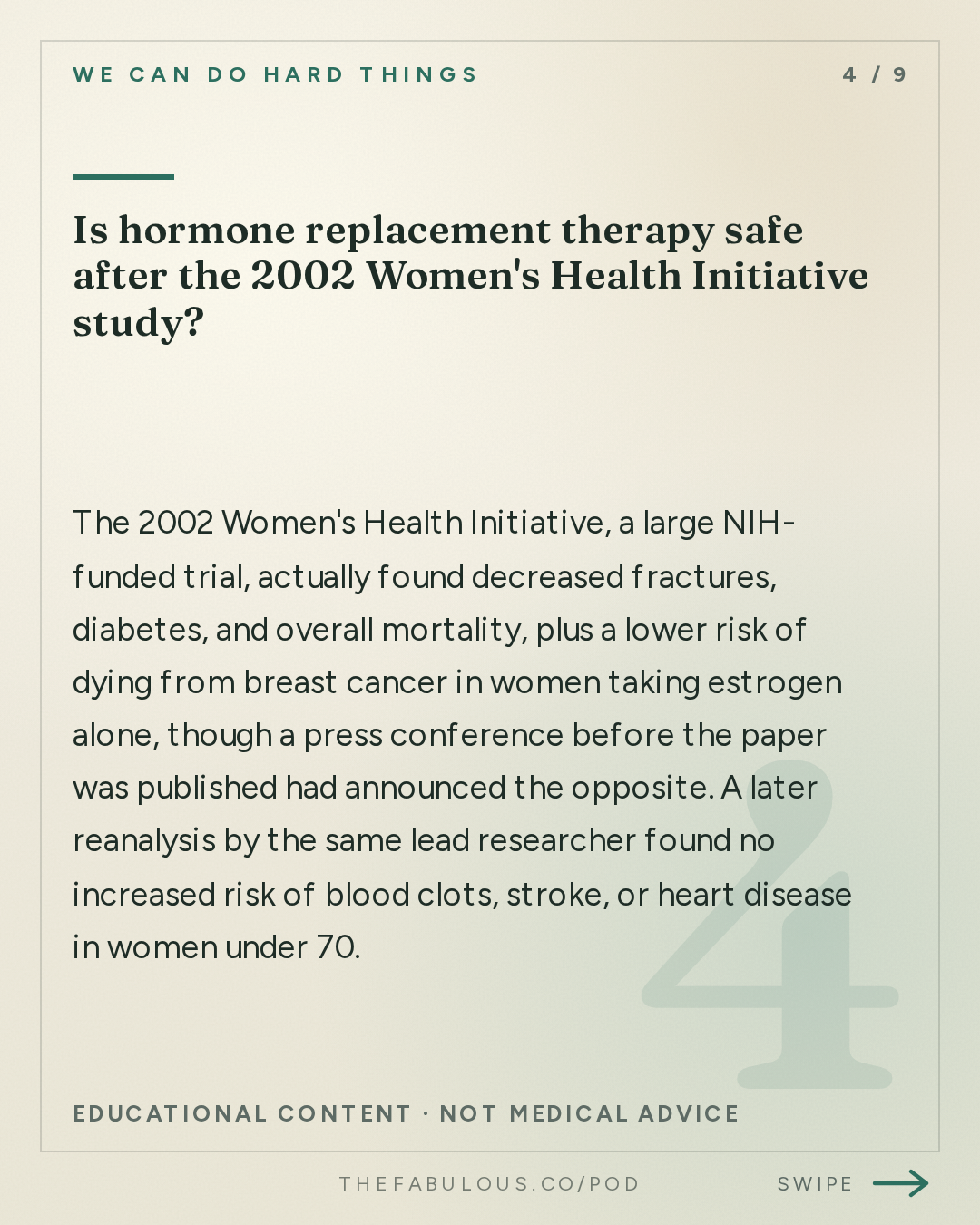
The 2002 Women's Health Initiative, a large NIH-funded trial, actually found decreased fractures, diabetes, and overall mortality, plus a lower risk of dying from breast cancer in women taking estrogen alone, though a press conference before the paper was published had announced the opposite (75:56). A later reanalysis by the same lead researcher found no increased risk of blood clots, stroke, or heart disease in women under 70 (76:19).
Does vaginal estrogen prevent urinary tract infections?
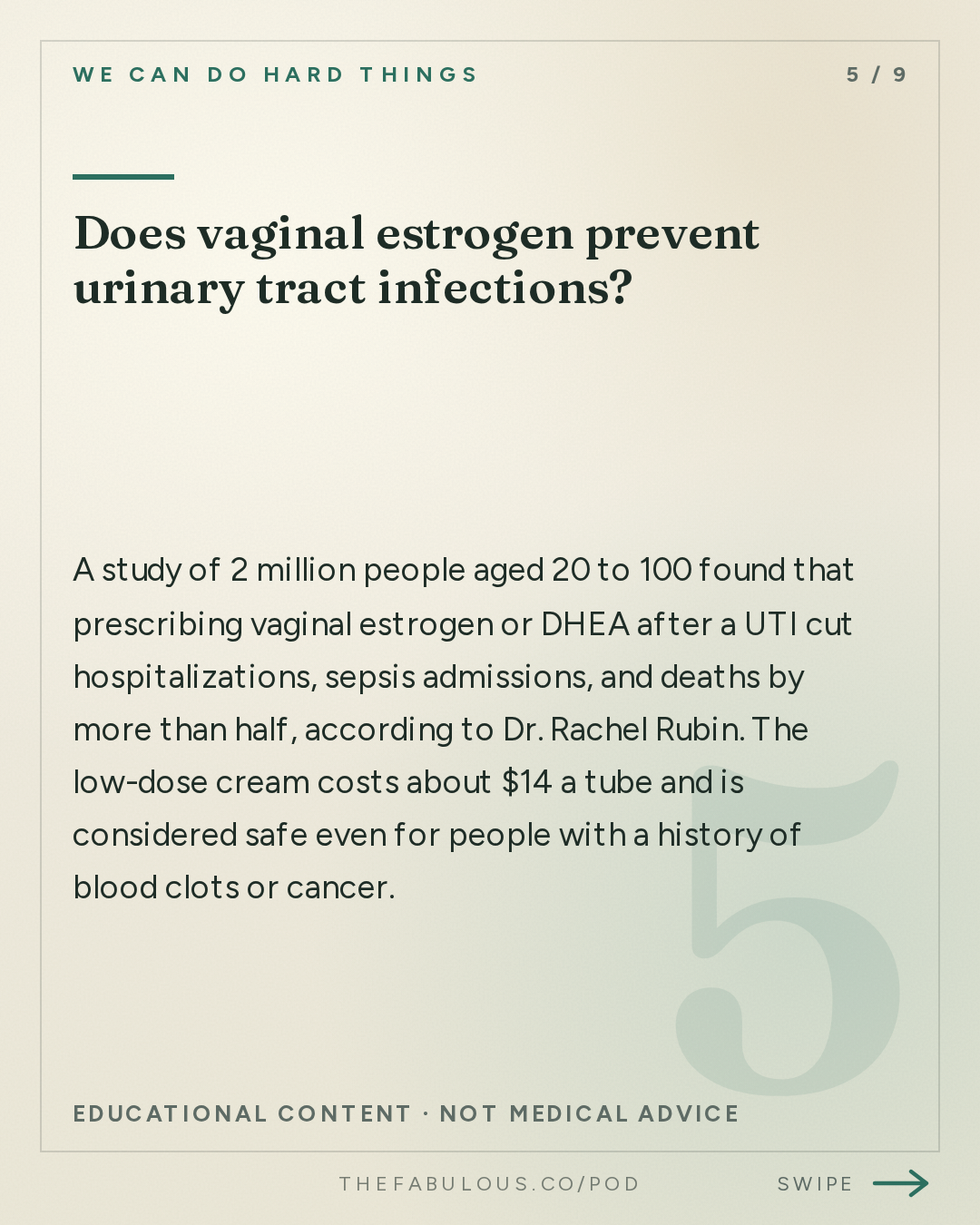
A study of 2 million people aged 20 to 100 found that prescribing vaginal estrogen or DHEA after a UTI cut hospitalizations, sepsis admissions, and deaths by more than half, according to Dr. Rachel Rubin (64:02). The low-dose cream costs about $14 a tube and is considered safe even for people with a history of blood clots or cancer (61:17).
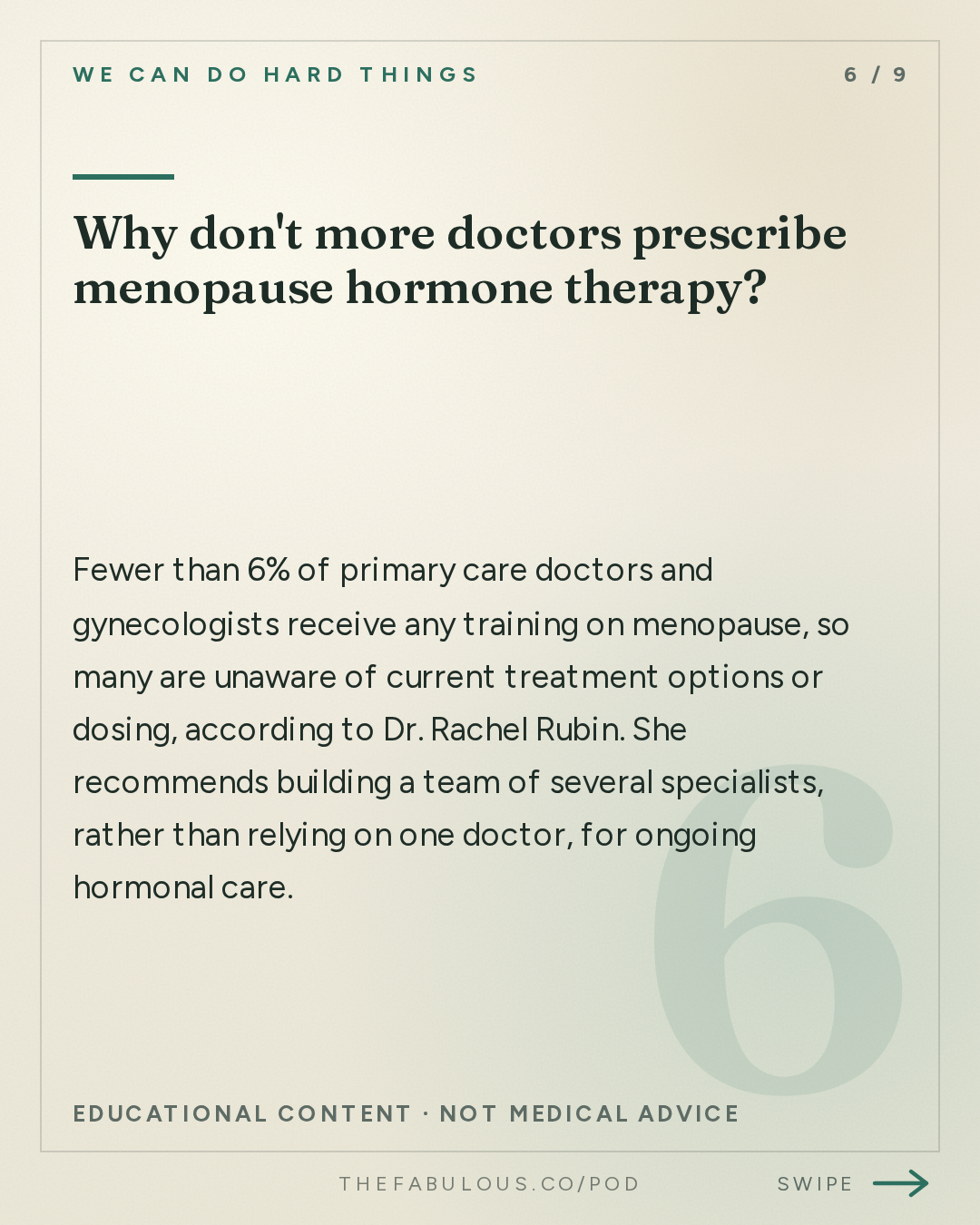
Why don't more doctors prescribe menopause hormone therapy?
Fewer than 6% of primary care doctors and gynecologists receive any training on menopause, so many are unaware of current treatment options or dosing, according to Dr. Rachel Rubin (43:19). She recommends building a team of several specialists, rather than relying on one doctor, for ongoing hormonal care (45:49).
The full read, in cards
Go deeper
- Women's Health Initiative (WHI) — A 2002 NIH-funded trial on hormone therapy in women aged 50-79 that was announced as proof hormones cause cancer, though the published data showed decreased fractures, diabetes, and breast cancer mortality for estrogen-only users.
- 2-million-person UTI hospitalization study — Found that prescribing vaginal estrogen or DHEA after a urinary tract infection cut hospitalizations, sepsis admissions, and deaths by more than half across ages 20 to 100.
Mentioned
Dr. Rachel Rubin · Midi Health · Georgetown · Oprah · Melinda Gates · Women's Health Initiative · FDA · RFK · Pelvicon · Suffs
More from this show and category

Carson Tueller on Ableism and the Social Model
Carson Tueller, paralyzed at 23 after a trampoline accident, argues that most of disability's suffering comes from ableism, not the body itself. He reframes his injury as a "rebirth," separates the social model of disability from the medical model, and explains why inspiration porn and scripted sex both keep people from their true, undamaged self.

Breast Density and Mammogram Blind Spots Explained
Breast surgeon Lucy de la Cruz explains how dense breast tissue hides cancer from mammograms and what surgical choices patients are rarely offered. Georgetown University Hospital's de la Cruz covers density categories, lumpectomy versus mastectomy recurrence odds, direct-to-implant reconstruction, and nerve grafts that restore nipple sensation within one to two years.

Why Date Nights Don't Work for Long-Term Couples
Date nights often fail because couples already know each other too well; novelty, not dinner reservations, revives connection. A study of 53 couples found exciting activities beat pleasant ones for marital satisfaction (10:16). The hosts suggest parallel play over face-to-face talk (24:26) and a date bowl to end decision fatigue (47:07).

Jordan Neely, Daniel Penny, and a Divided America
A six-minute subway encounter between Jordan Neely, a homeless man in mental crisis, and Daniel Penny, a former Marine, became a national Rorschach test. Journalist Anand Giridharadas argues both sides share the same wound: a feeling of being abandoned by every system meant to help them.
