
Jordan Neely, Daniel Penny, and a Divided America
One NYC Subway Killing: An American Rorschach Test with Anand Giridharadas
▶ Listen to the full episode More from We Can Do Hard Things
The brief
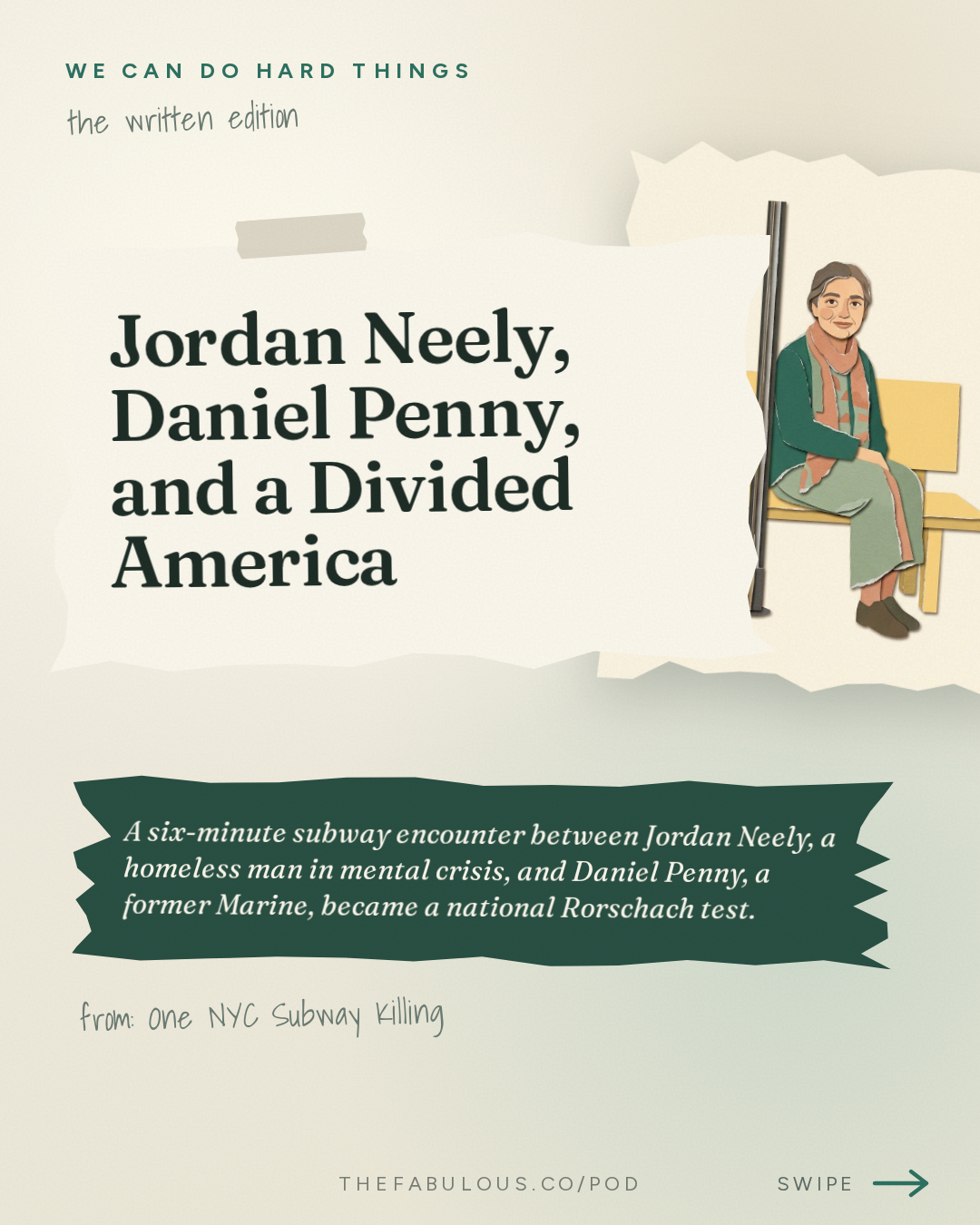
A six-minute subway encounter between Jordan Neely, a homeless man in mental crisis, and Daniel Penny, a former Marine, became a national Rorschach test. Journalist Anand Giridharadas argues both sides share the same wound: a feeling of being abandoned by every system meant to help them.
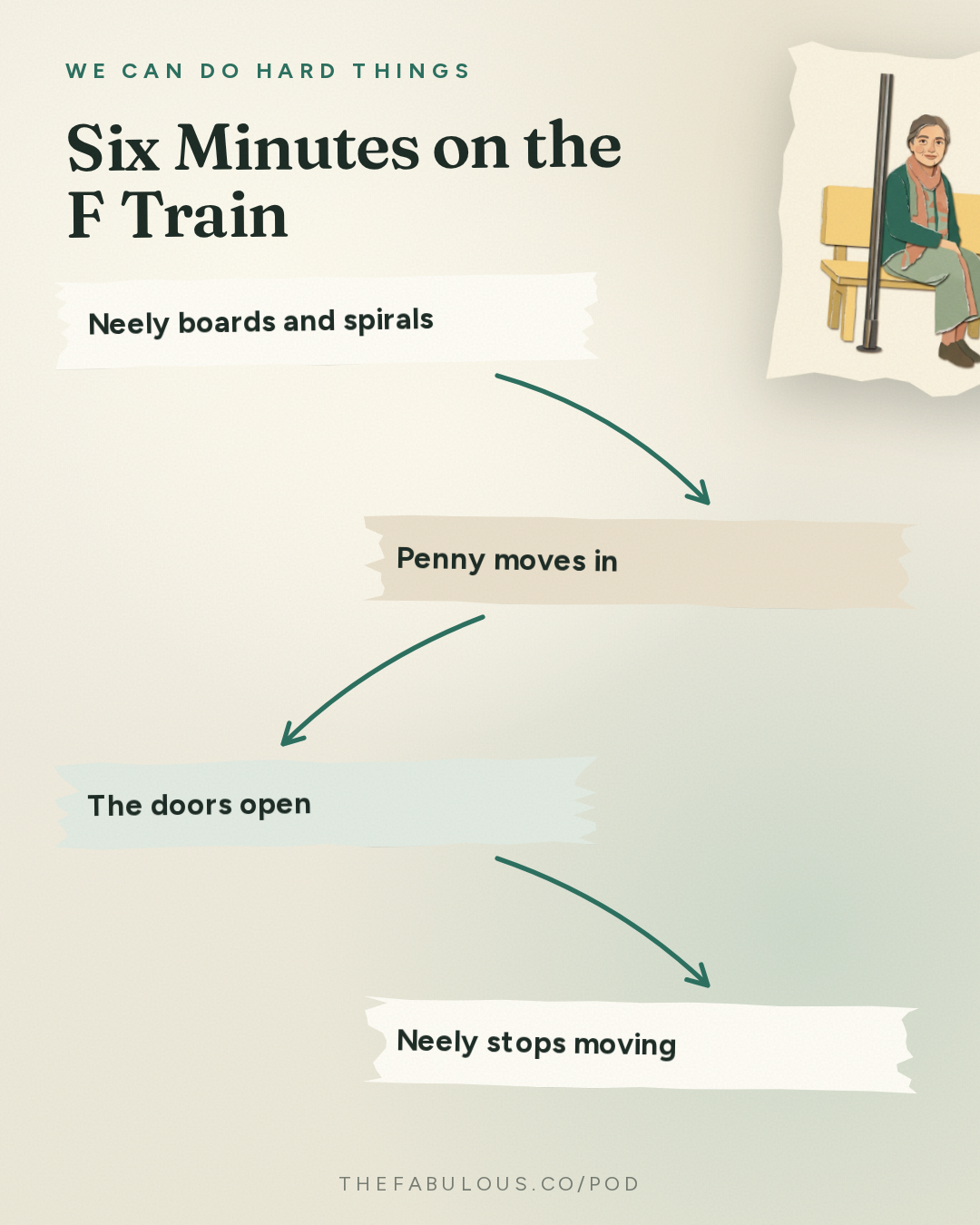
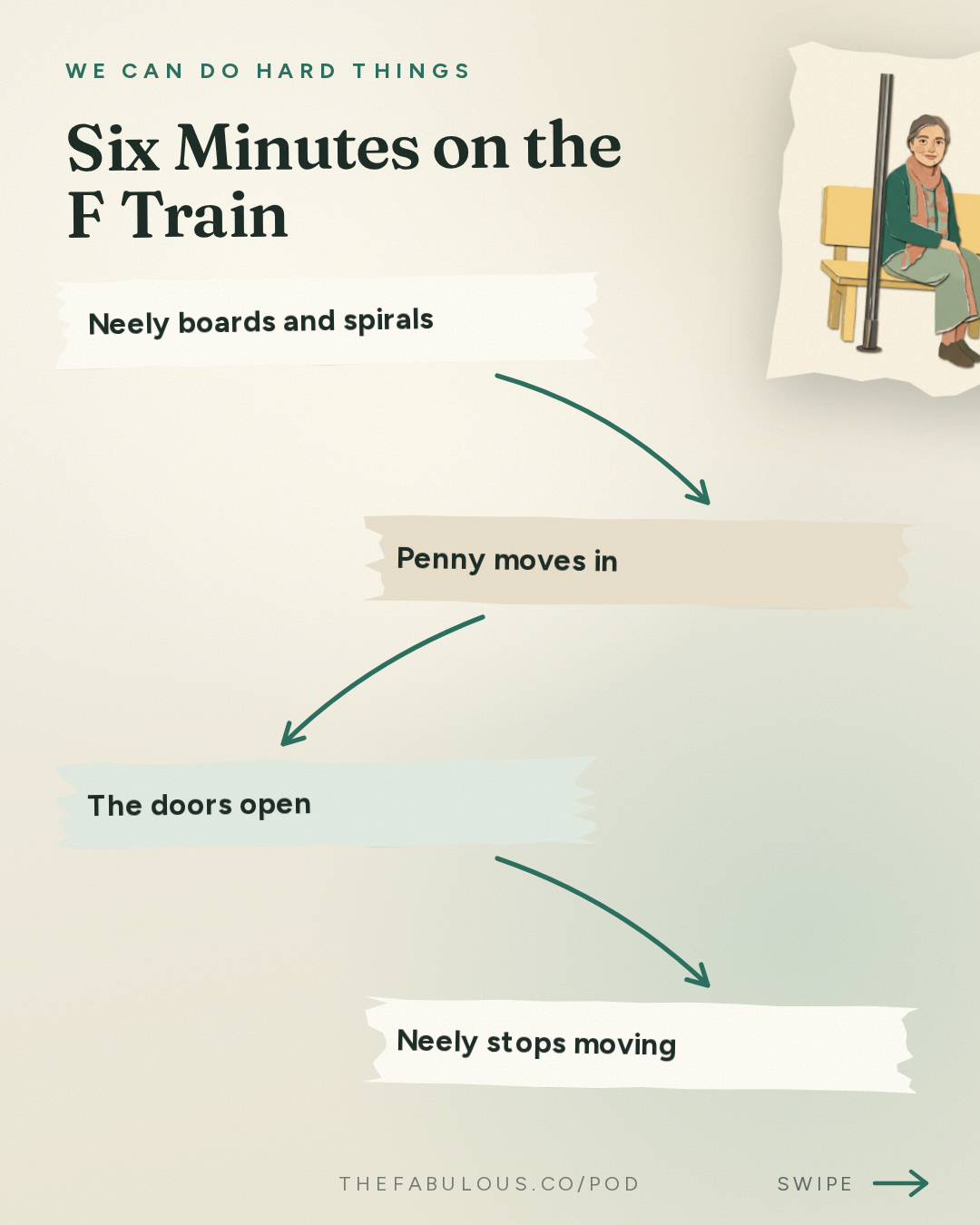
A subway car is a small country. Twenty strangers, sometimes a hundred, share a space for a few minutes and then scatter into the city. On May 1, 2023, on an uptown F train pulling out of 2nd Avenue in Manhattan, that small country held a mother with a stroller, two teenagers, a 24-year-old former Marine named Daniel Penny on his way to the gym, and Jordan Neely, a 30-year-old man who had once made a living impersonating Michael Jackson on subway platforms (00:38). Neely got on yelling that he was hungry, thirsty, and ready to die or go back to prison. He threw his jacket on the floor. He carried no weapon and never touched anyone, though his lunges came within six inches of other riders (01:11). Within thirty seconds Penny had him on the floor in a chokehold (01:38). When the train reached the next station and its doors opened, most passengers ran. Penny stayed. He kept holding on.
Journalist Anand Giridharadas spent a year and a half reconstructing those six minutes for his book, Man in the Mirror, and the reconstruction is the spine of this conversation. The facts themselves are almost unbearably plain: a bystander's video shows Neely's movements slowing until, three minutes and ten seconds in, he stops moving with purpose at all. Penny holds him for another 51 seconds after that (03:01). The medical examiner later rules Neely's death a homicide caused by compression of the neck, the same cause of death recorded decades earlier for Neely's own mother, who was murdered by a partner when Neely was a young teenager (36:59). None of this was known, or needed, for the country to reach a verdict. Before any trial, before any autopsy report reached the public, the six minutes had already been sorted into a hero and a villain.
The Anatomy of a Rorschach Test
The host, Amanda, describes what happened next with a phrase worth sitting with:
"Six minutes, which were instantly fomented, stripped of humanity, and manipulated into one-dimensional comic strip characters of morality and certainty for political advantage." — Amanda [03:28]
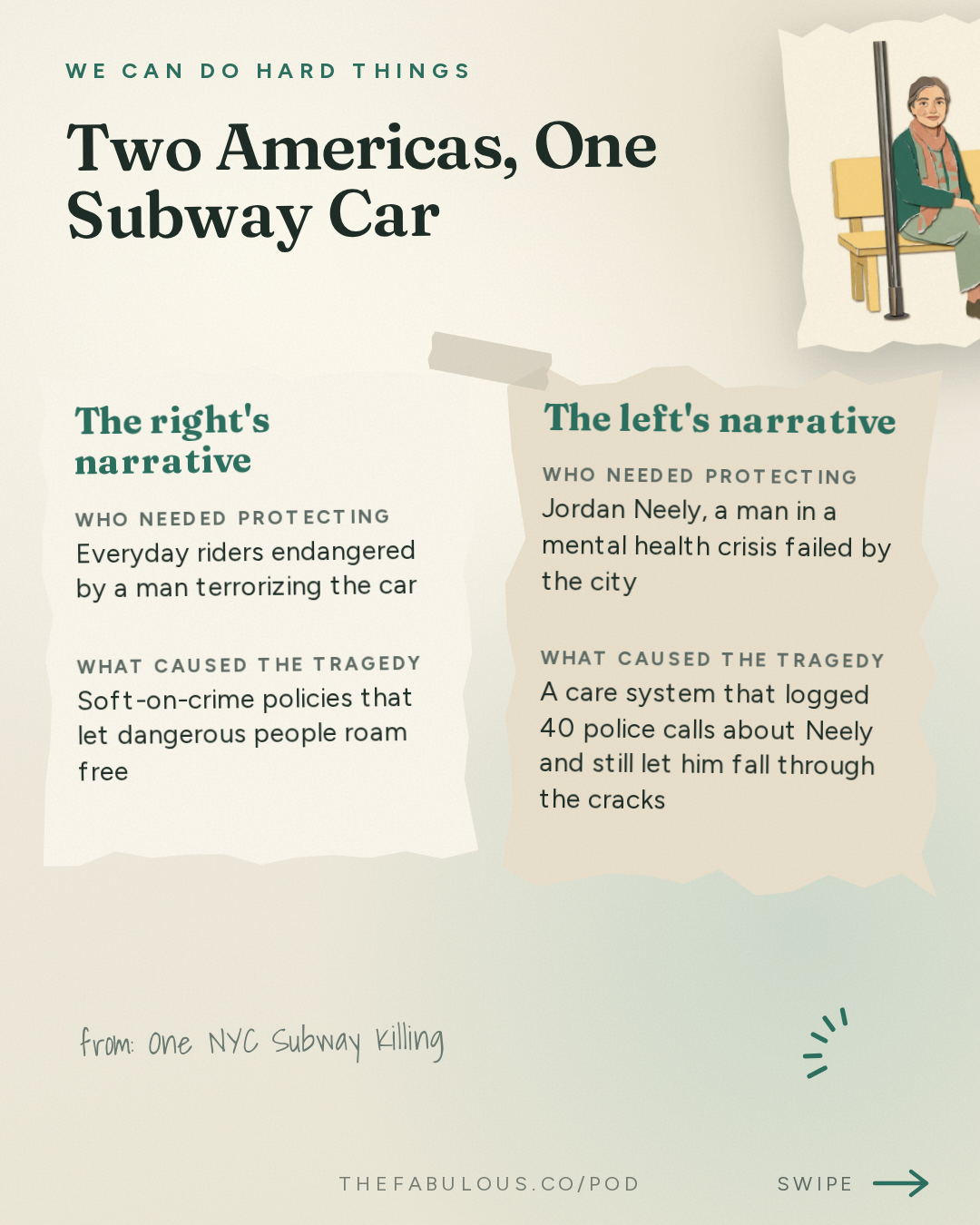
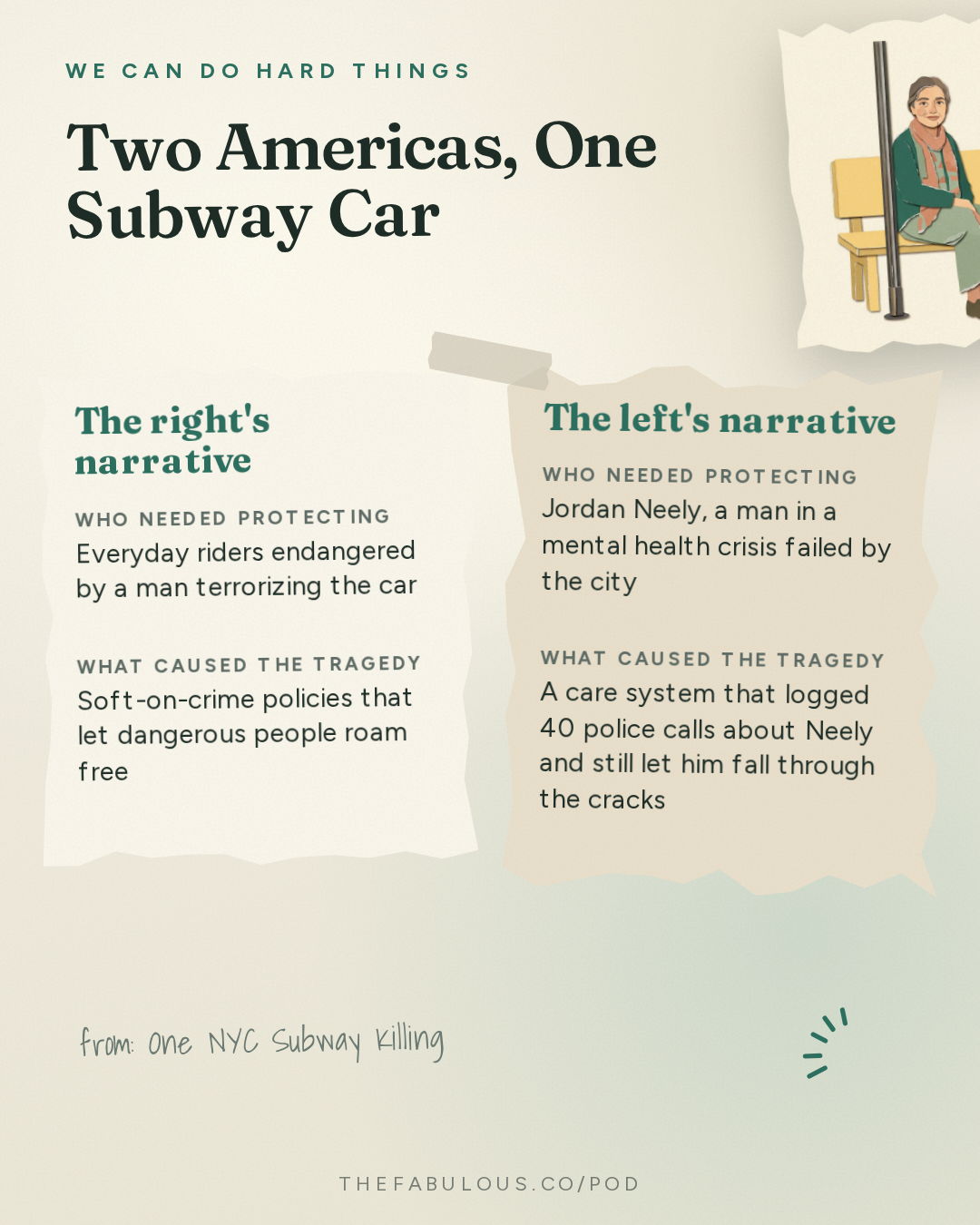
On one side, Penny was a Good Samaritan punished for doing what a broken system would not: Florida governor Ron DeSantis tweeted his support, and Penny's legal defense fund collected $3.4 million from small donors (05:21). On the other, Neely was a chronic victim of institutional neglect, a man the city itself had flagged, on a list of the 50 homeless people most urgently needing help, and had still failed, with 40 separate police calls about him before his death (05:53). Both stories are true. That is the uncomfortable center of Giridharadas's book: this was never really a story about one man attacking another. It was a story about what happens when a country's systems of care and safety both collapse at once, and a subway car becomes the place where the collapse gets settled with a chokehold.
Giridharadas traces his own return to this kind of dual-vision reporting to a friend, Sam, a New York Times editor who spent years telling him, sometimes at real cost to their friendship, that he had drifted from a writer who could inhabit anyone's point of view into one who mostly scored points for a side. Giridharadas describes the shift plainly: a habit of asking only "do I agree with this or not" rather than "what does this teach me" (13:45). The book is his attempt to reverse that habit in public, applied to the hardest case he could find. He is careful to say this is not an argument for false balance. It is an argument for understanding people well enough to actually persuade or oppose them, instead of just performing certainty at them.
The deeper claim, and the reason the case became a national mirror rather than a local tragedy, is that both camps are animated by the same underlying feeling. Giridharadas calls it abandonment: the sense that no one is coming, that the system is rigged, that you are on your own. He puts it this way:
"You can't keep a democracy if you can't understand the other people you share a democracy with." — Anand Giridharadas [08:26]
People who cheered Penny and people who mourned Neely are, in his telling, responding to the same absence of a safety net, from opposite ends of it. One side fears the disorder that shows up when care systems fail. The other side is the disorder, or close kin to it, left behind by the same failure. "The promise of America is here you are free. The reality of America is here you are on your own," as Giridharadas writes of Neely's life, a boy whose mother was murdered when he was barely a teenager, who was later diagnosed with schizophrenia, and who cycled for years through a homeless and psychiatric care system built, in his description, more for maintaining a problem than solving it (40:14).
What the Trial Actually Argued
The most useful part of the conversation is also the most surprising: the criminal case against Penny was not built on the idea that he meant to kill anyone. Manhattan prosecutor Daphne Duran, who had not lost a homicide case in 20 years before this trial (53:41), argued that Penny began with a plausible, even understandable, impulse to protect people on a crowded train. Her case turned entirely on what happened after the doors opened at Broadway Lafayette, when most riders had already left and Penny kept Neely in the hold for more than five minutes longer (55:38), well past what Marine Corps training allows for a chokehold, which is a matter of seconds given the risk of death (56:07).
Duran's theory was that the length of the hold could only be explained by how Penny saw the person underneath him. In a police interrogation video, Penny repeatedly called Neely "just a crackhead," a term he had no basis for since he knew nothing of Neely's history (60:24). What struck Giridharadas most was the reaction of the two detectives in the room, who had been bonding with Penny as a fellow Marine early in the interview but visibly withdrew as his language turned dehumanizing (60:42). One detail from the case involves a psychiatric feature relevant well beyond it: anosognosia, a symptom of illnesses like schizophrenia in which a person cannot recognize that they are sick, which is part of why the choice between forcing someone into care and respecting their autonomy has no clean answer (48:00).
Giridharadas extends the argument past this one case in a way that gives the episode its wider claim. Around the same time as Penny's acquittal, UnitedHealthcare CEO Brian Thompson was shot in Midtown Manhattan, and Luigi Mangione was arrested as a suspect and instantly treated as a folk hero by parts of the left, in a mirror image of how parts of the right had treated Penny (72:04). Days later, activist Hawk Newsome, speaking after Neely's family held a press conference, argued that Black communities needed their own vigilantes since the system could not be trusted to protect them (73:45). Giridharadas heard the same sentence in three different mouths that supposedly shared nothing: the system is rigged, no one is coming, we are on our own. He calls these echoes rhymes, and argues that the country's failure to hear them, across lines it insists are absolute, is what keeps producing more Pennys and more Mangiones.
The closing argument of the conversation is less a policy proposal than a discipline. Giridharadas puts it plainly:
"But democracy's not a self-driving car." — Anand Giridharadas [68:56]
His point is that citizenship is a job, not a jersey. Sorting people into good and evil, us and them, is easier than doing the slower work of understanding why a scared 24-year-old and a hungry, sick 30-year-old ended up on the floor of the same subway car. But that slower work, he argues, is the actual maintenance required to keep a democracy from handing its thinking over to whoever promises to do it for everyone else.
Ask this episode anything
Pod's AI answers from the episode itself, with the minute mark so you can hear it yourself.
Or start with one of these
Ask this episode
Pod's AI listens to the whole episode to answer, and points you to the minute it comes from.
The rest of this answer, and any question after it
Answers come from the episode itself, never from a summary of it.
ContinueKey takeaways
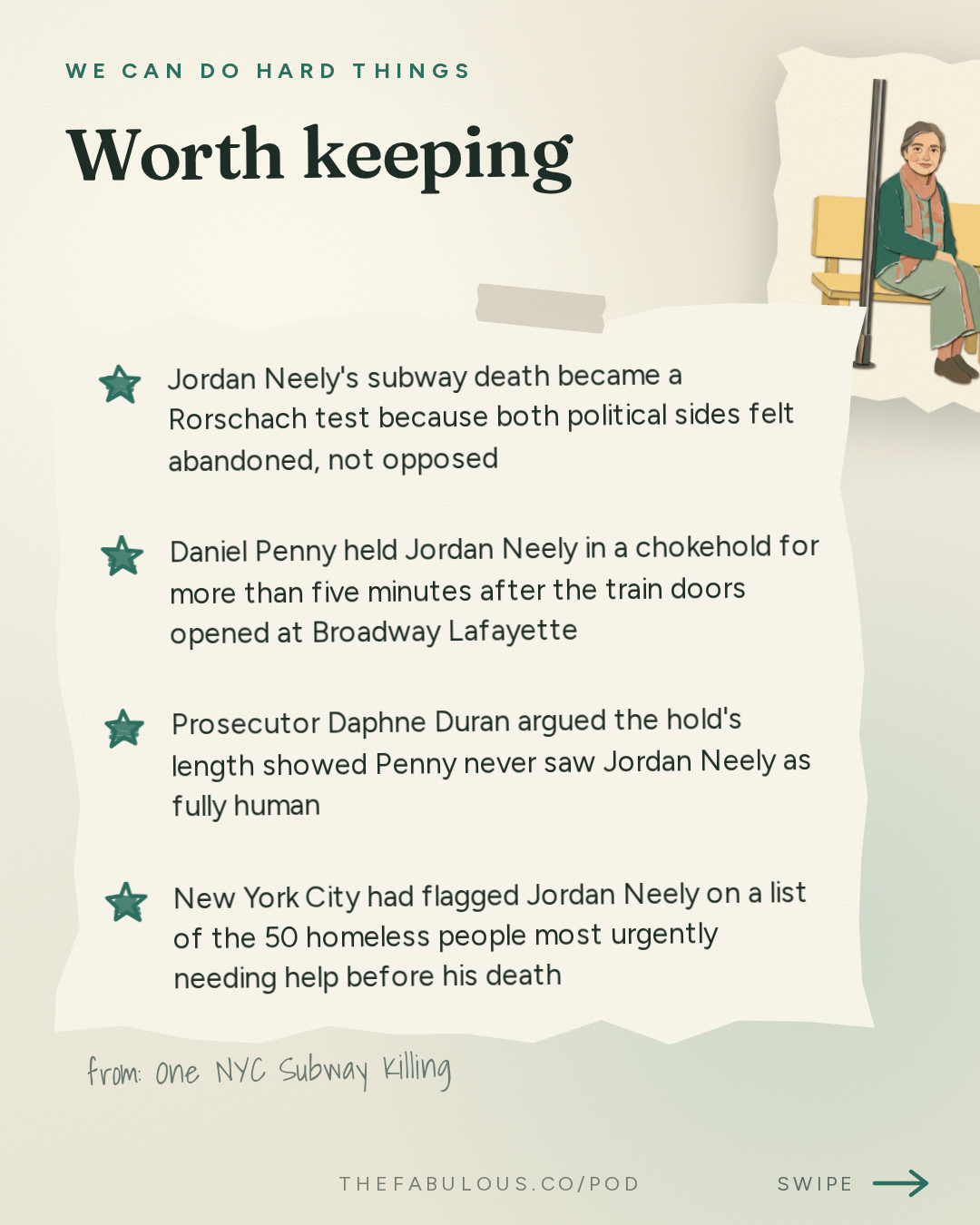
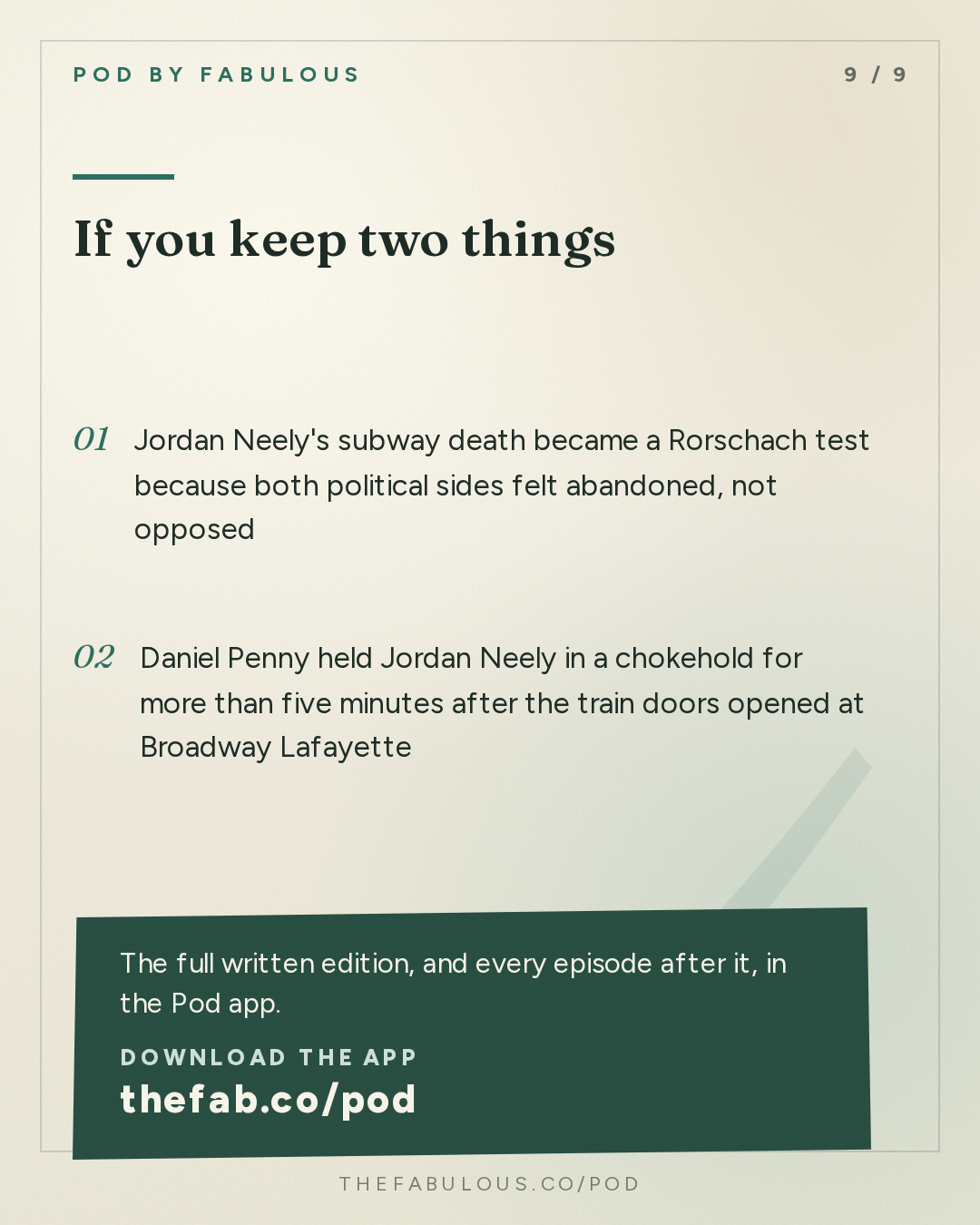
- Jordan Neely's subway death became a Rorschach test because both political sides felt abandoned, not opposed
- Daniel Penny held Jordan Neely in a chokehold for more than five minutes after the train doors opened at Broadway Lafayette (55:38)
- Prosecutor Daphne Duran argued the hold's length showed Penny never saw Jordan Neely as fully human (56:33)
- New York City had flagged Jordan Neely on a list of the 50 homeless people most urgently needing help before his death (06:18)
- Anosognosia, or not knowing one is ill, is a feature of schizophrenia that complicates forced treatment debates (48:00)
The episode in cards


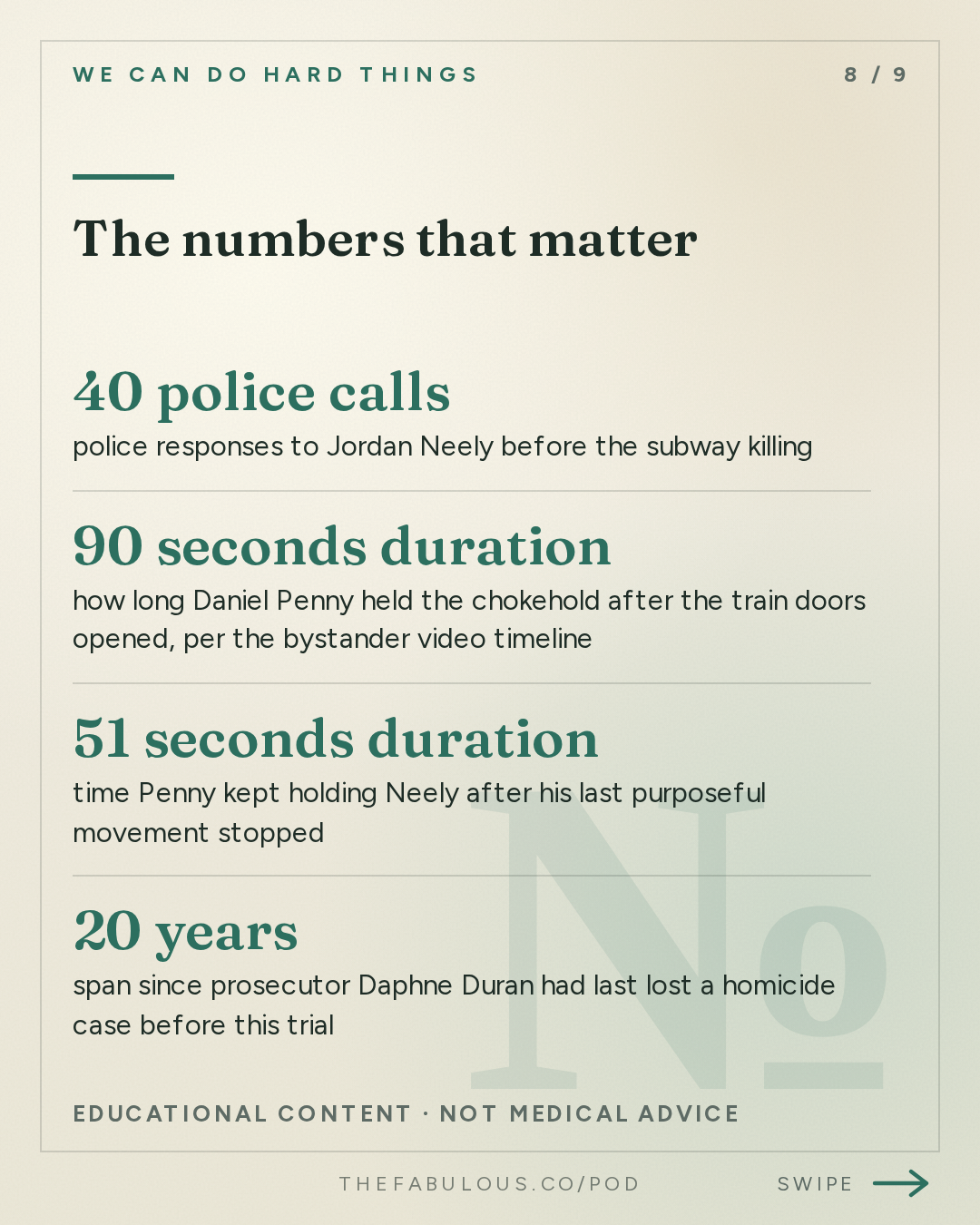
By the numbers
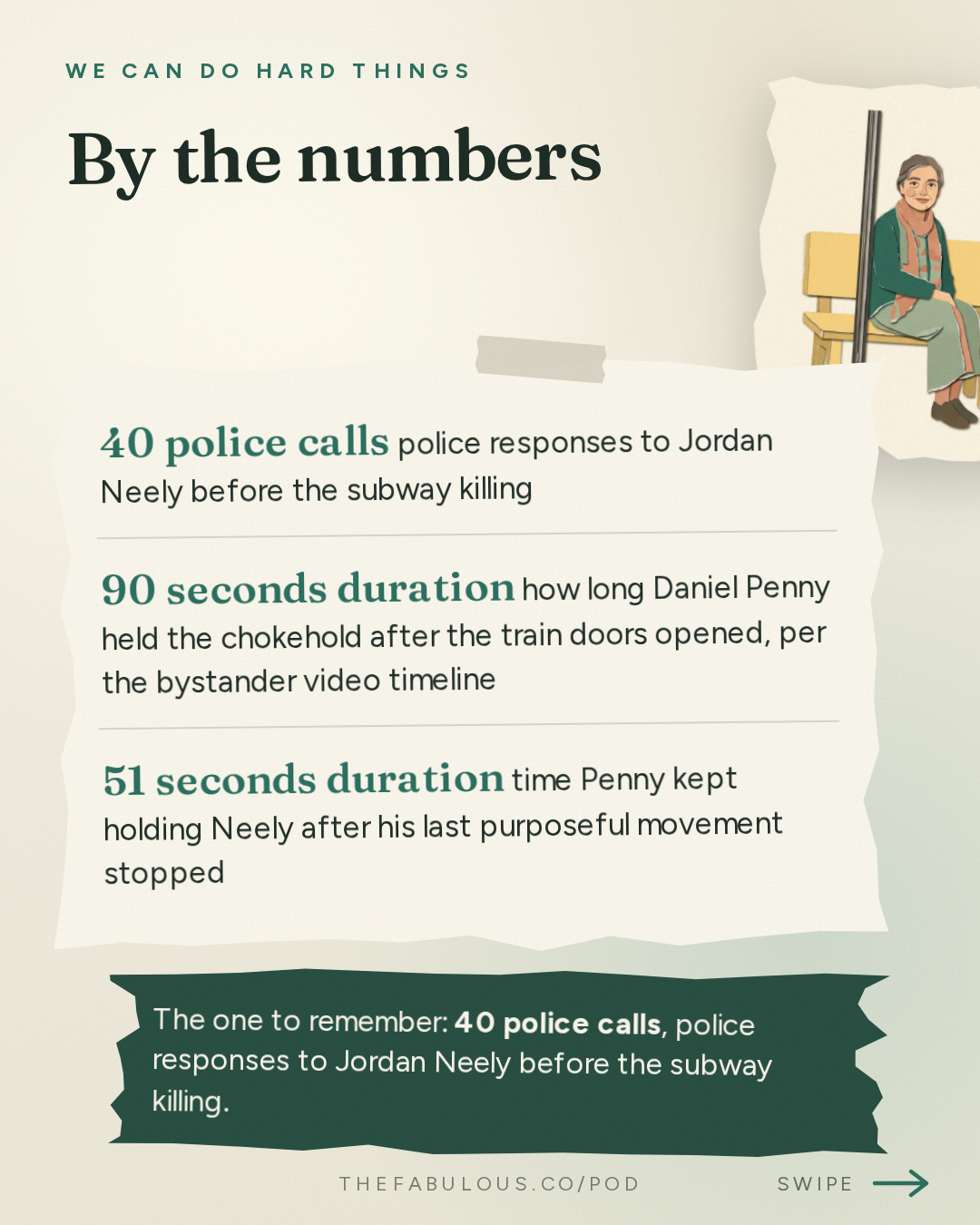
- 40 police calls police responses to Jordan Neely before the subway killing
- 90 seconds duration how long Daniel Penny held the chokehold after the train doors opened, per the bystander video timeline
- 51 seconds duration time Penny kept holding Neely after his last purposeful movement stopped
- 20 years years span since prosecutor Daphne Duran had last lost a homicide case before this trial
In their words
“Six minutes, which were instantly fomented, stripped of humanity, and manipulated into one-dimensional comic strip characters of morality and certainty for political advantage.”
“You can't keep a democracy if you can't understand the other people you share a democracy with.”
“"The promise of America is here you are free. The reality of America is here you are on your own."”
“But democracy's not a self-driving car.”
Protocols
-
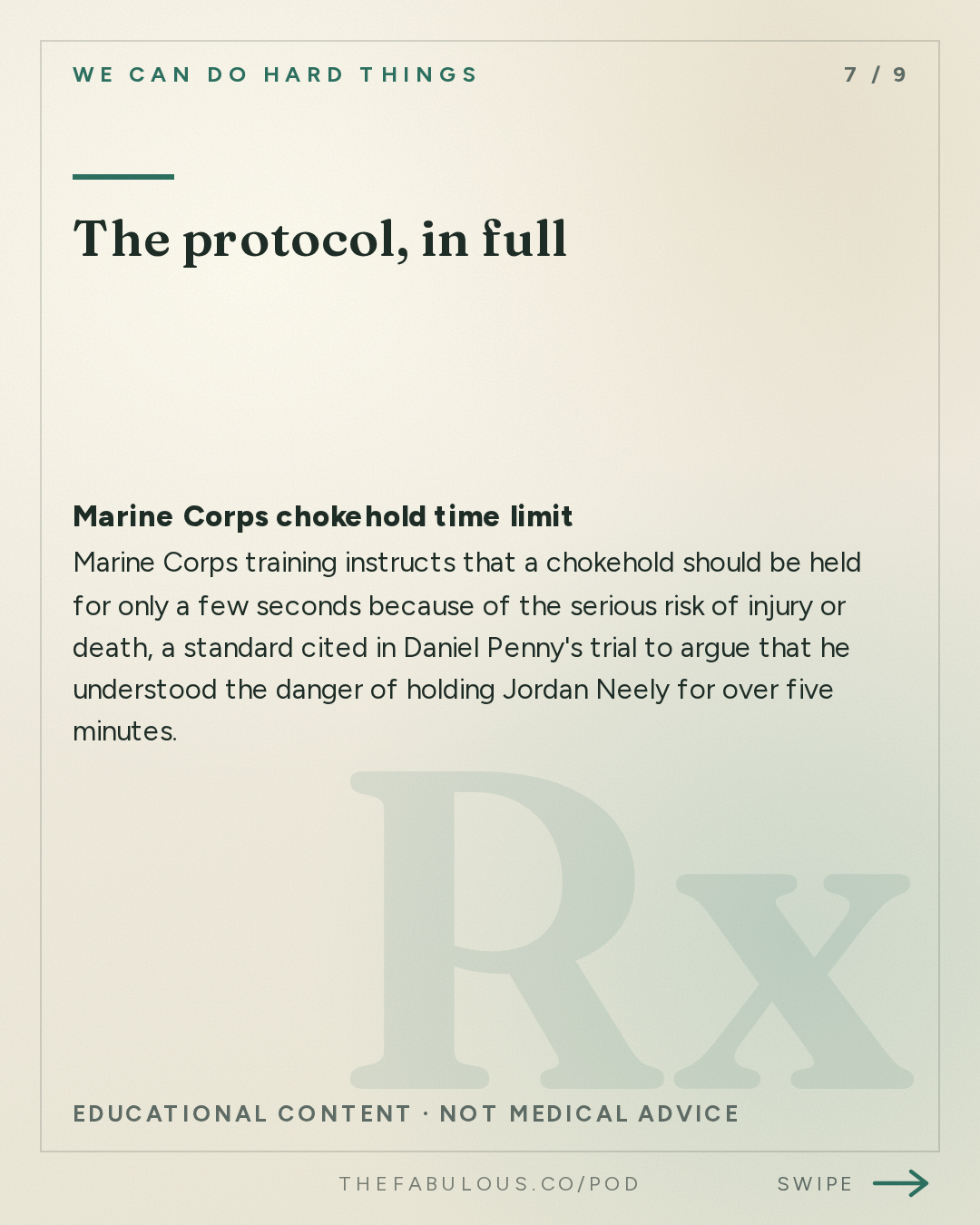
Marine Corps chokehold time limit
Marine Corps training instructs that a chokehold should be held for only a few seconds because of the serious risk of injury or death, a standard cited in Daniel Penny's trial to argue that he understood the danger of holding Jordan Neely for over five minutes.
seconds, not minutes
Questions this episode answers
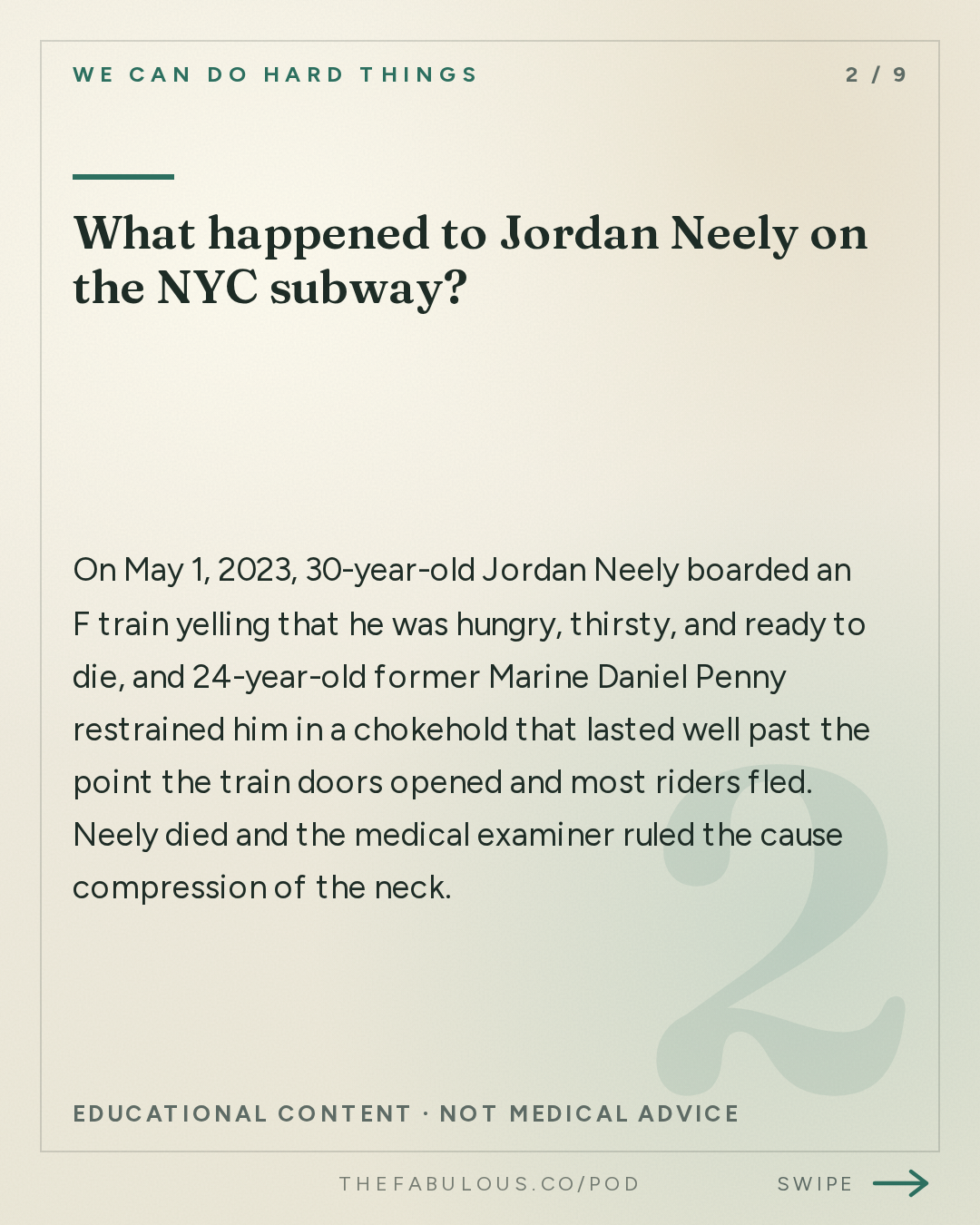
What happened to Jordan Neely on the NYC subway?
On May 1, 2023, 30-year-old Jordan Neely boarded an F train yelling that he was hungry, thirsty, and ready to die, and 24-year-old former Marine Daniel Penny restrained him in a chokehold that lasted well past the point the train doors opened and most riders fled (01:38). Neely died and the medical examiner ruled the cause compression of the neck (03:28).
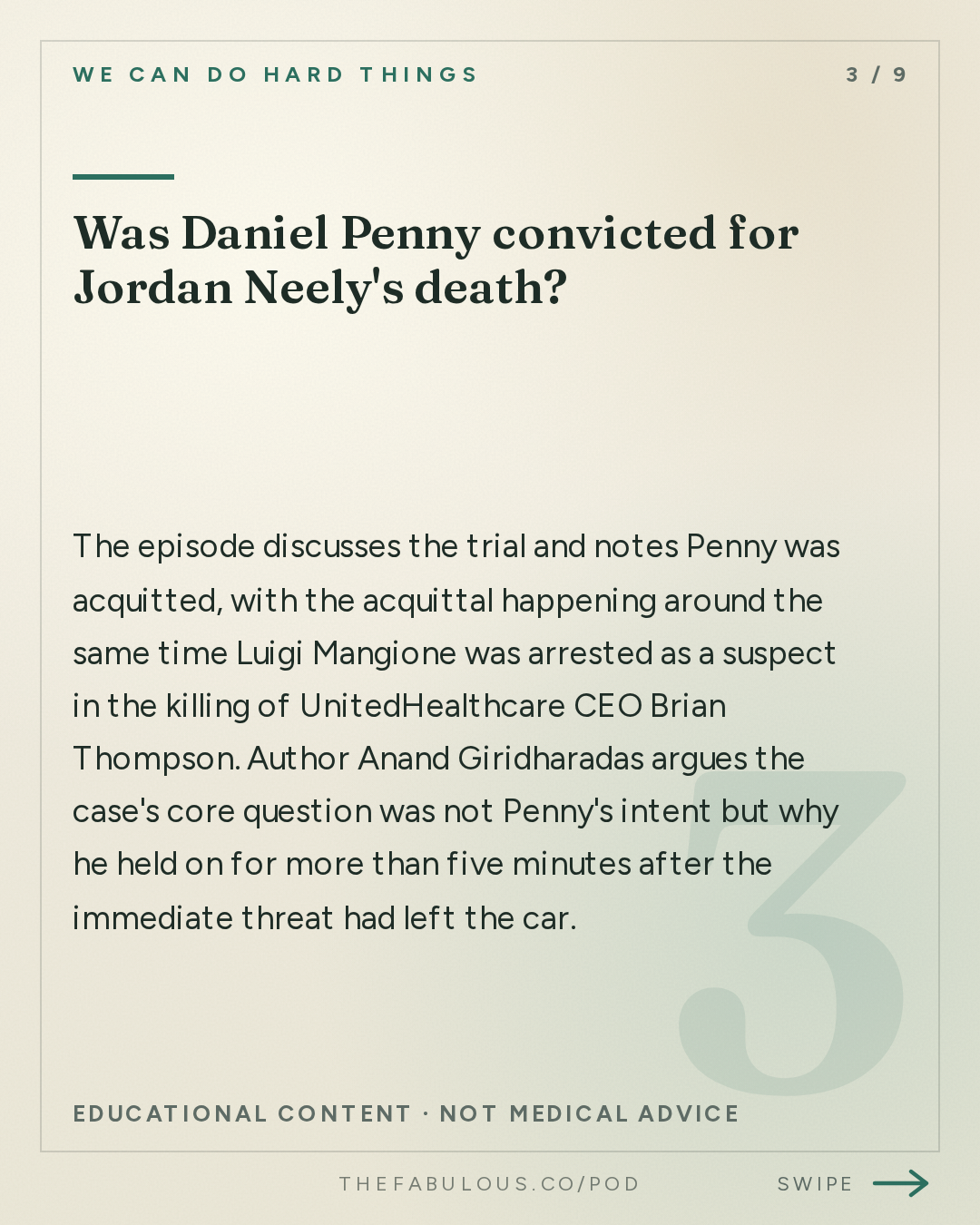
Was Daniel Penny convicted for Jordan Neely's death?
The episode discusses the trial and notes Penny was acquitted, with the acquittal happening around the same time Luigi Mangione was arrested as a suspect in the killing of UnitedHealthcare CEO Brian Thompson (71:39). Author Anand Giridharadas argues the case's core question was not Penny's intent but why he held on for more than five minutes after the immediate threat had left the car (55:38).
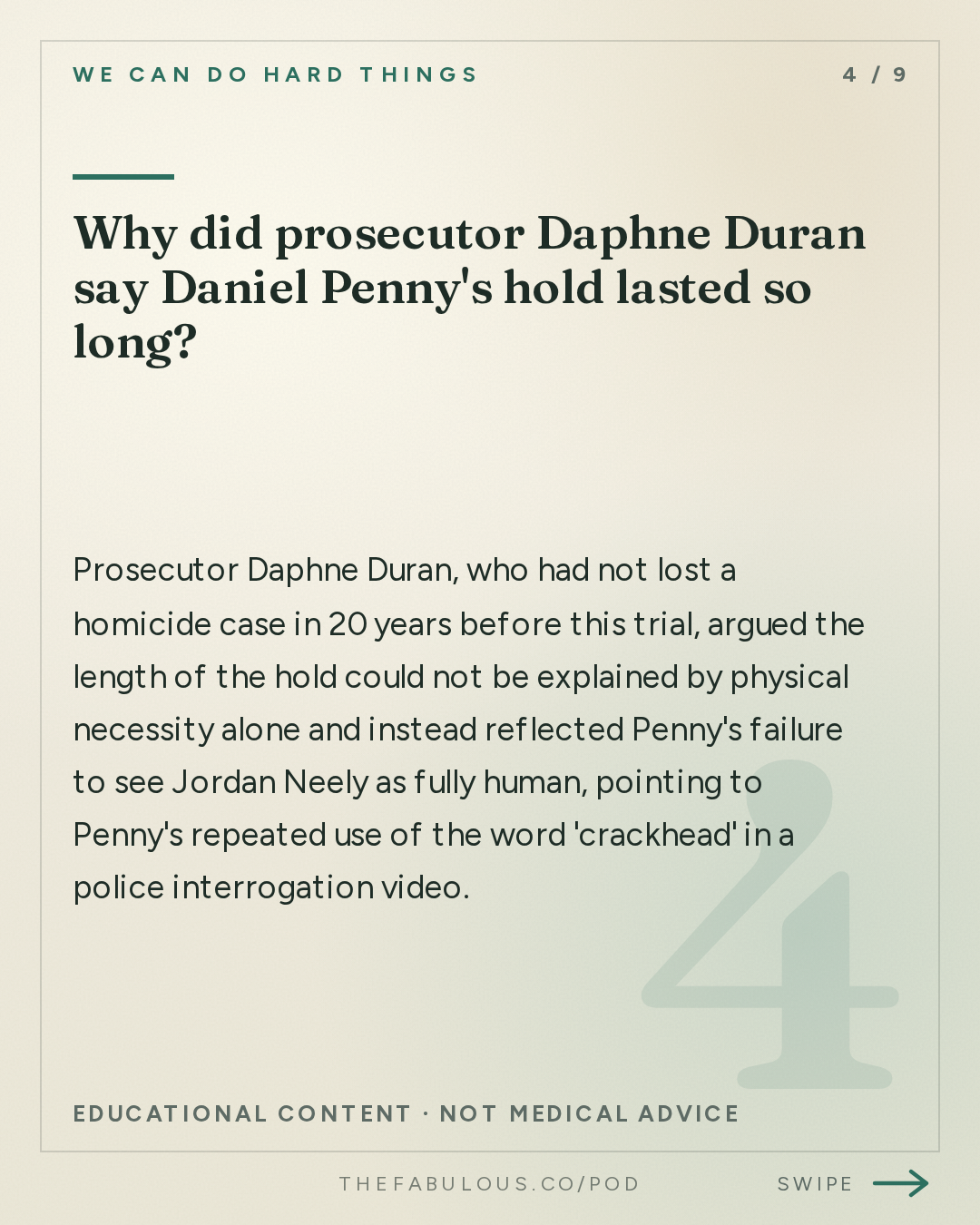
Why did prosecutor Daphne Duran say Daniel Penny's hold lasted so long?
Prosecutor Daphne Duran, who had not lost a homicide case in 20 years before this trial (53:41), argued the length of the hold could not be explained by physical necessity alone and instead reflected Penny's failure to see Jordan Neely as fully human, pointing to Penny's repeated use of the word 'crackhead' in a police interrogation video (60:24).
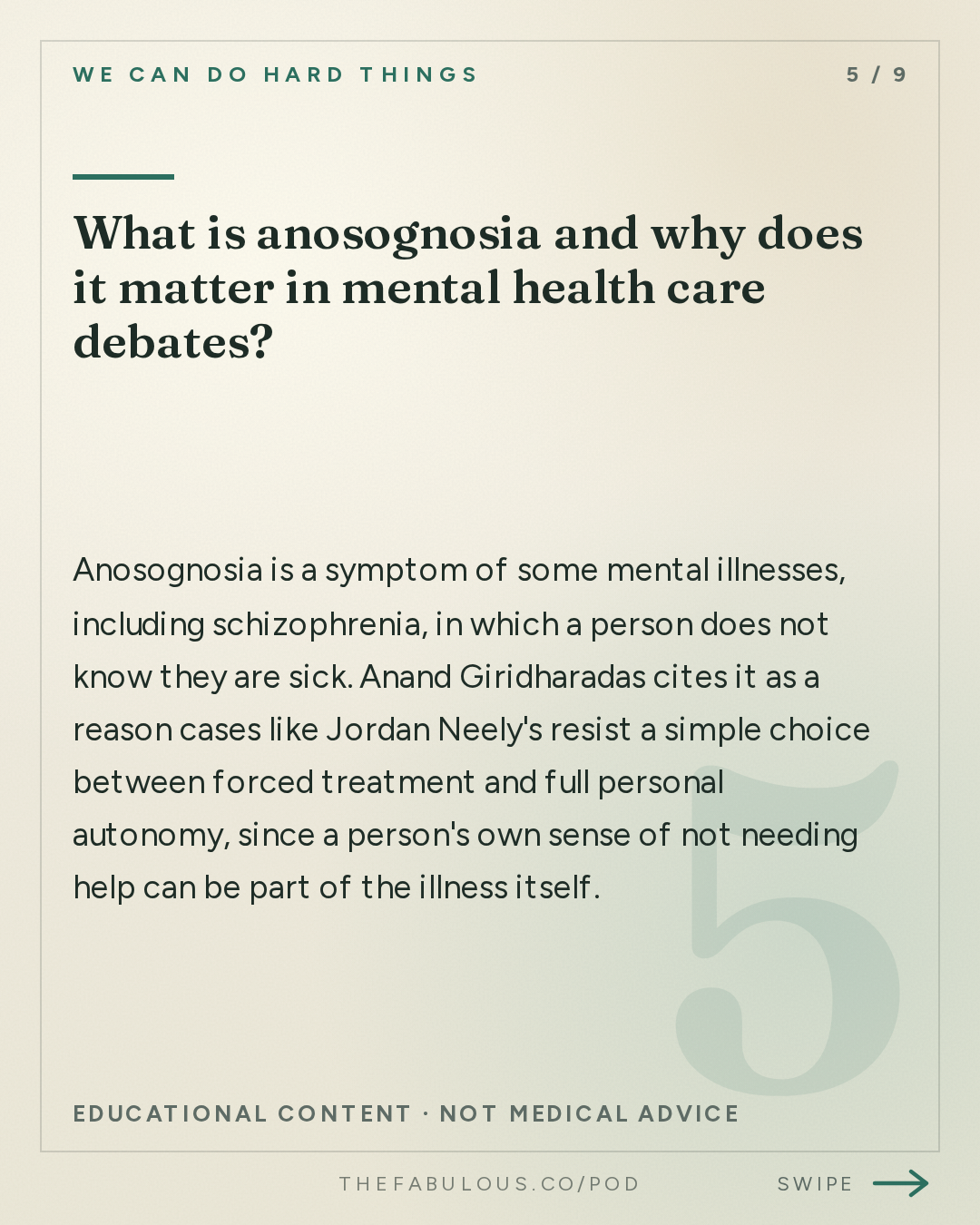
What is anosognosia and why does it matter in mental health care debates?
Anosognosia is a symptom of some mental illnesses, including schizophrenia, in which a person does not know they are sick. Anand Giridharadas cites it as a reason cases like Jordan Neely's resist a simple choice between forced treatment and full personal autonomy, since a person's own sense of not needing help can be part of the illness itself (48:00).
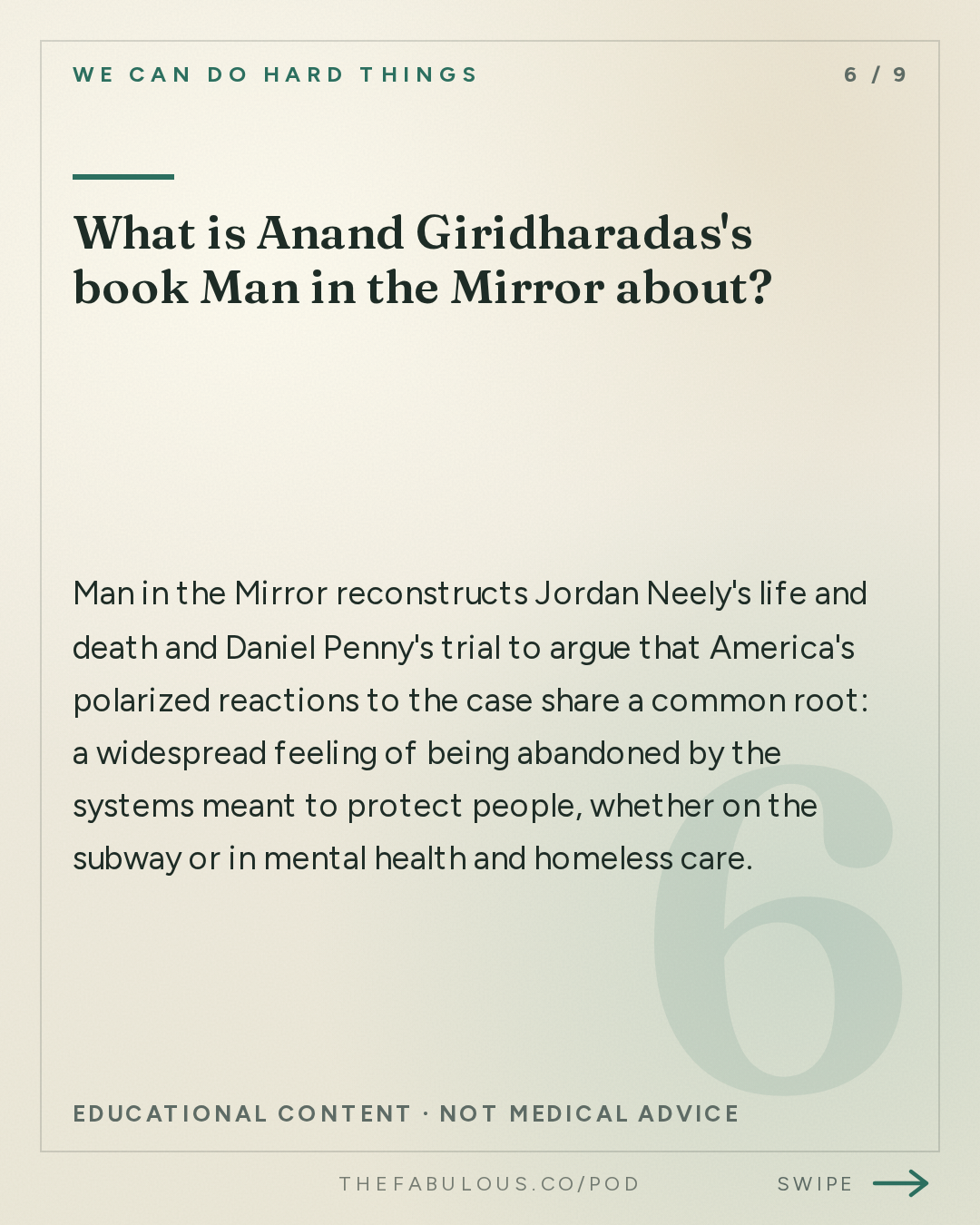
What is Anand Giridharadas's book Man in the Mirror about?
Man in the Mirror reconstructs Jordan Neely's life and death and Daniel Penny's trial to argue that America's polarized reactions to the case share a common root: a widespread feeling of being abandoned by the systems meant to protect people, whether on the subway or in mental health and homeless care (09:30).
The full read, in cards
Go deeper
- Man in the Mirror — Anand Giridharadas's account of Jordan Neely's life, Daniel Penny's trial, and the country's polarized reaction
Mentioned
Anand Giridharadas · Jordan Neely · Daniel Penny · Daphne Duran · Priya Parker · Ron DeSantis · Luigi Mangione · Brian Thompson · Hawk Newsome · Sean Sutherland · Moses Harper · Brian Stettin · The New York Times
More from this show and category

Cher's Life Advice on Love, Money, and Leaving
Cher tells the hosts of We Can Do Hard Things how she survived a controlling marriage to Sonny Bono and chose to leave instead of ending her life. She describes losing all ownership of Cher Enterprises, advice from Lucille Ball, and the bumper car philosophy that carried her through decades of setbacks.

Stacey Abrams' 10 Steps to Authoritarianism, Explained
Stacey Abrams argues the United States is now a "competitive authoritarian" country: elections still happen, but power is hoarded and unaccountable (07:58). She lays out ten warning steps toward autocracy and ten matching steps back to freedom, then applies both to the midterms six weeks out, urging two hours a week of targeted local action (62:33).

How to Build Agency: Martin Seligman's Method
Martin Seligman argues that agency, the belief that our actions can change outcomes, is a skill built through specific exercises, not an inherited trait. He describes three tools, disputing catastrophic thoughts, graded task assignment, and writing about a best possible self, backed by decades of research on optimism and helplessness.

How to Make Real-Life Friends Like Sitcom Characters
Liz Moody argues that sitcom-level friendship is not about chemistry but about three conditions: proximity, living life together instead of just catching up, and shared in-jokes, all of which anyone can rebuild starting this fall (04:41, 07:44, 09:25).
