
2026 Midterms: Results, Firsts, and What's Next
Wow, This Feels Good: The Blue Wave & What's Next
▶ Listen to the full episode More from We Can Do Hard Things
The brief
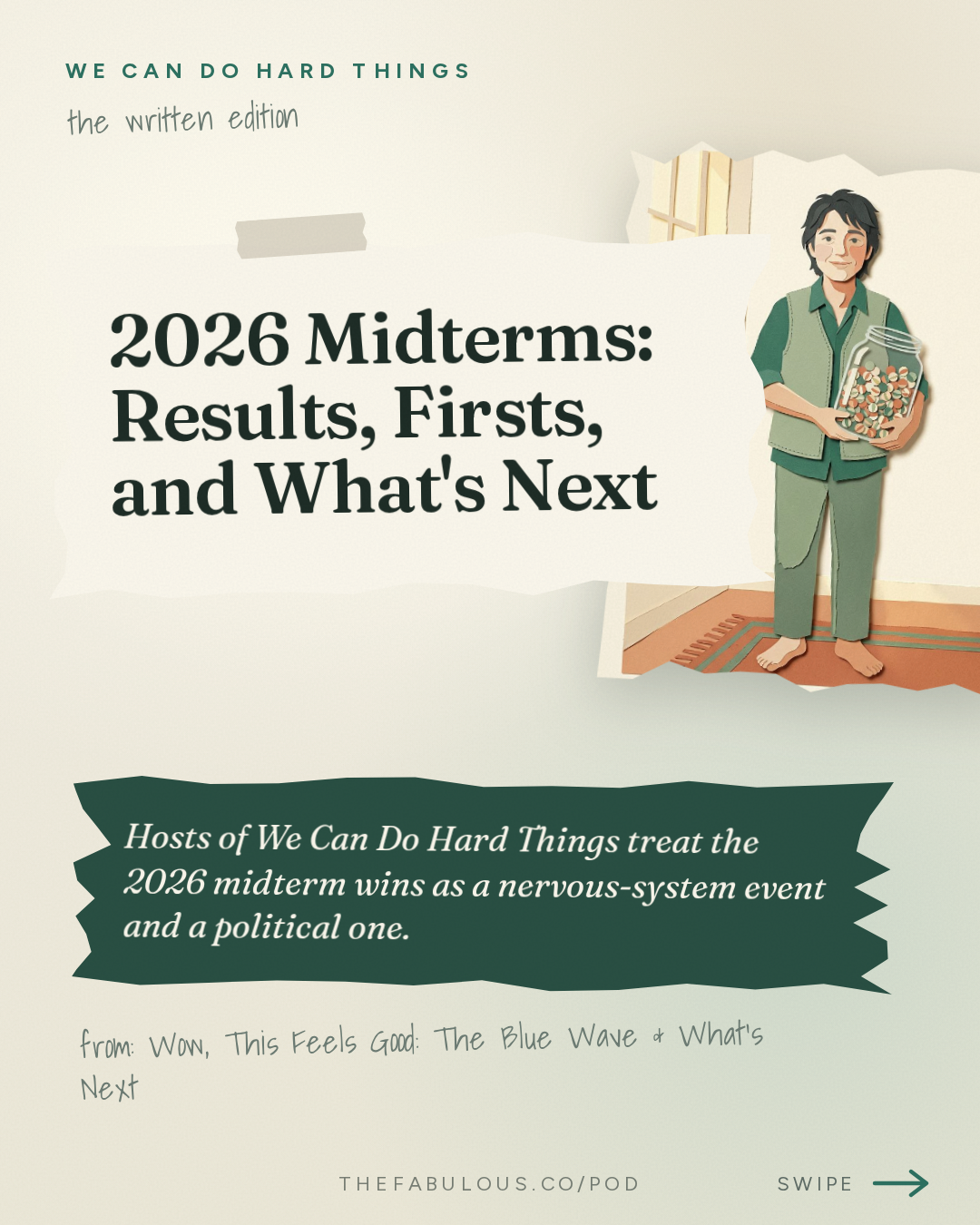
Hosts of We Can Do Hard Things treat the 2026 midterm wins as a nervous-system event and a political one. Democrats took 54 Senate seats and 247 House seats; the episode covers historic firsts, a critique of establishment-picked candidates, and the National Popular Vote Interstate Compact, now at 222 of 270 electoral votes needed.
A body in danger cannot grieve. It can only brace. That is the plain, physical claim at the center of this episode of We Can Do Hard Things, recorded two days after the 2026 midterms, and it turns out to be the key to almost everything the hosts say next. "A body that has to be stuck in fight or flight cannot relax enough to feel grief," one host explains, describing why so many listeners were feeling joy and sudden, unexplained sadness at the same time (16:11). The sadness, she says, was always there. It just had nowhere to go until the threat let up.
The hosts open by admitting they scrapped their planned episode. Instead they wanted to sit with what had just happened: Democrats had posted sweeping wins across the country, and their kids had already named the mood online "hope scrolling" (00:07). One host describes watching returns come in while feeling outside her own body, cycling between elation and a wariness she calls "the paralysis of hope" (01:48), the fear of letting herself feel good about something that might still be taken away.
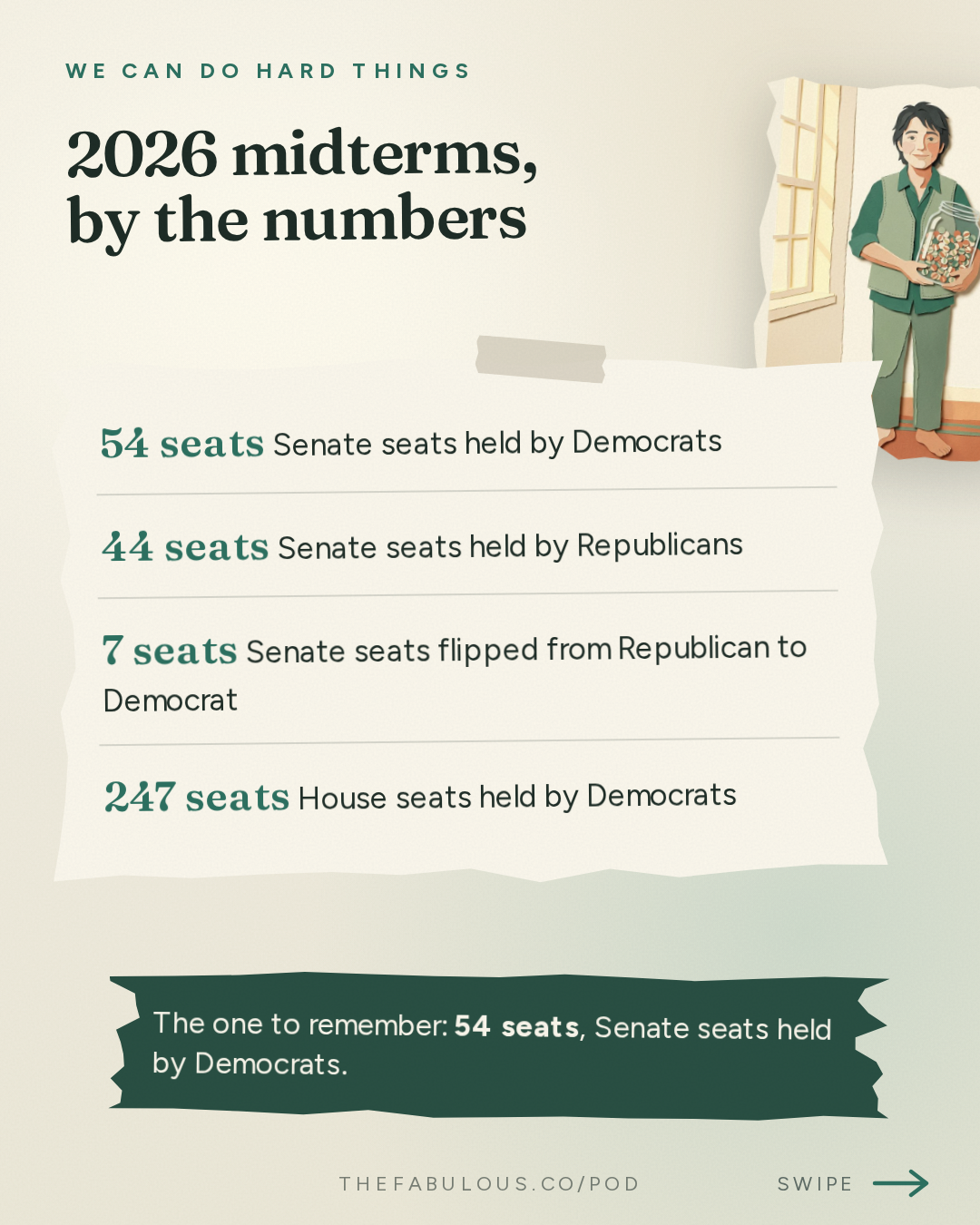
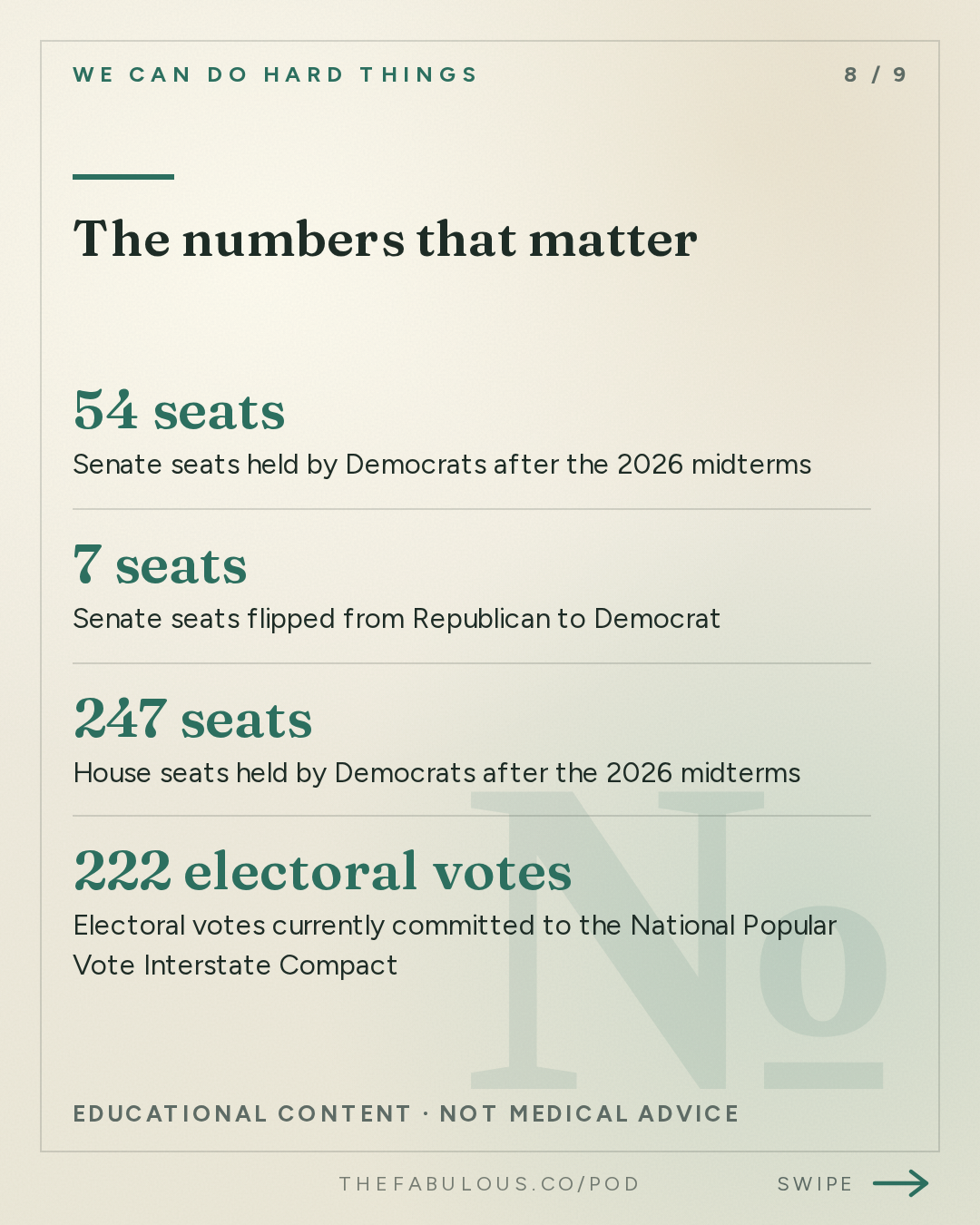
Once the numbers settle, they are striking. Democrats hold 54 Senate seats to the Republicans' 44, a swing of 7 seats that flipped from red to blue, including a Trump-backed candidate's defeat in South Carolina (23:41, 24:22). In the House, Democrats have taken 247 seats to 153 for Republicans, a gain of 31 seats, with projections climbing higher as late ballots are counted (25:25). The hosts walk through a run of historic firsts: Georgia's Keisha Lance Bottoms, the great-great-granddaughter of a man once listed as property valued at $1,400 in an 1860 record, becomes the first Black woman elected governor in any U.S. state (26:34). New Mexico's Deb Haaland, a citizen of the Laguna Pueblo, becomes the first Native American woman elected governor in U.S. history (26:55). Texas elects its first Latina governor, Gina Hinojosa, a former school board member from the border town of Brownsville (27:23). Alabama elects its first openly transgender official, Allison Montgomery, who beat a Republican incumbent with 53 percent of the vote (28:45). And Michigan's Abdul El-Sayed will become the first Muslim elected to the U.S. Senate, after predicting back in May that he would win by seven points. He won by exactly seven (35:28).
"It is as if an abuser has been arrested." — Glennon Doyle [15:35]
That line is not throwaway. The hosts spend real time on the idea that years of political threat register in the body the way abuse does, and that relief, when it finally comes, can feel disorienting before it feels good. One host recalls finally exhaling on election night and realizing, for the first time, how long she had been holding her breath (05:36). It is a useful reminder that political analysis and nervous-system science are not actually separate conversations. They are the same conversation, told from two directions.
The Petri Dish Problem
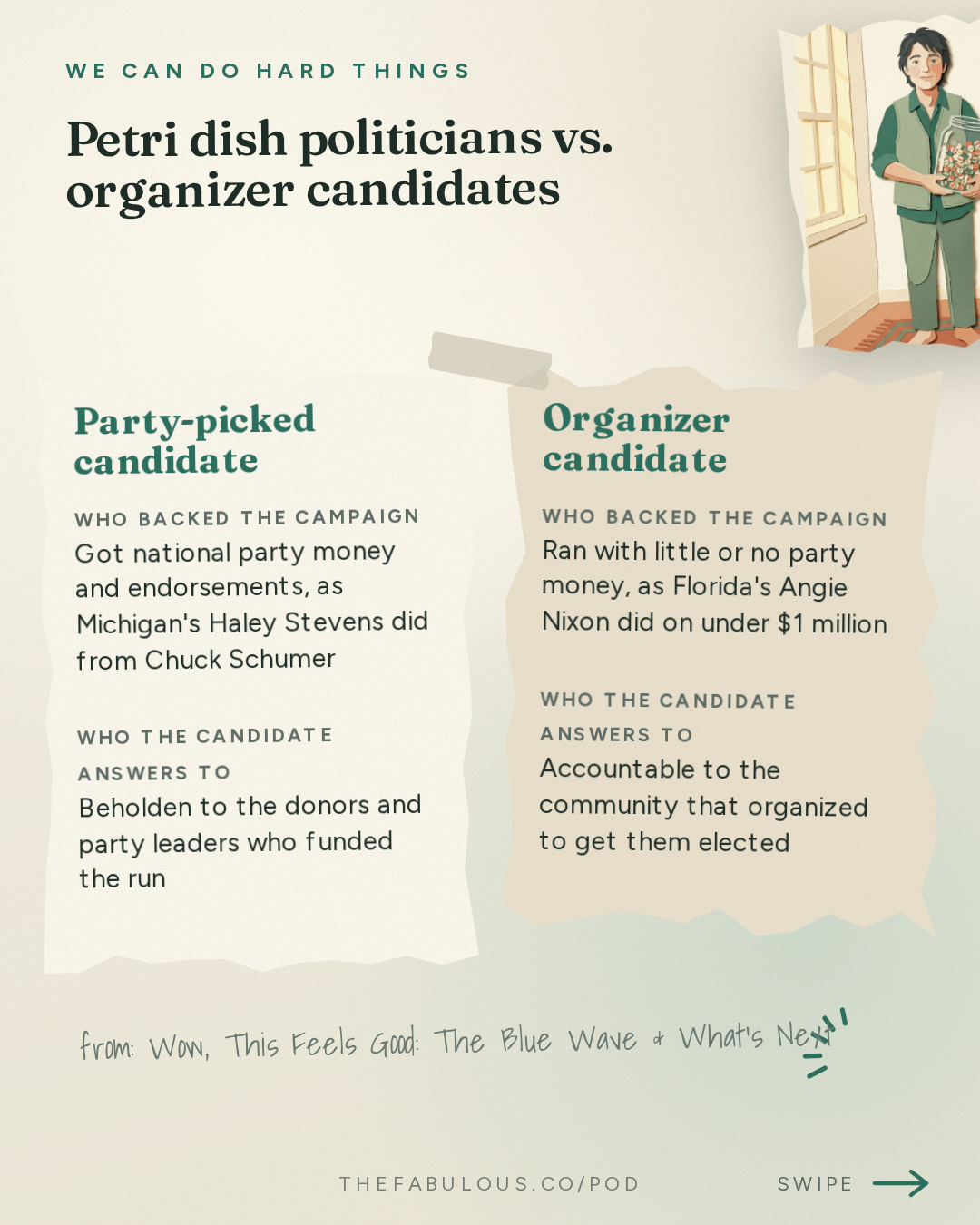
The hosts are not interested only in celebrating. They spend a long stretch of the episode on a harder question: who inside the Democratic Party tried to stop some of these wins from happening. Senate Minority Leader Chuck Schumer backed Haley Stevens over Abdul El-Sayed in the Michigan primary; Stevens lost, then endorsed El-Sayed's Republican opponent on the Sunday before the general election (36:01). In Florida, the party's Senate committee gave money to Alexander Vindman to run against organizer Angie Nixon in the primary, then offered Nixon nothing in the general. She lost by three points anyway, running with less than $1 million against an opponent with $16 million, and her campaign is credited with breaking the Florida legislature's Republican supermajority by flipping four gerrymandered seats Democrats were not supposed to win (33:14, 38:29). Mississippi's Senate race was excluded entirely from a $40 million party organizing fund because it was deemed unwinnable; as of the recording, Democrat Scott Collum led by 1,138 votes (39:43).
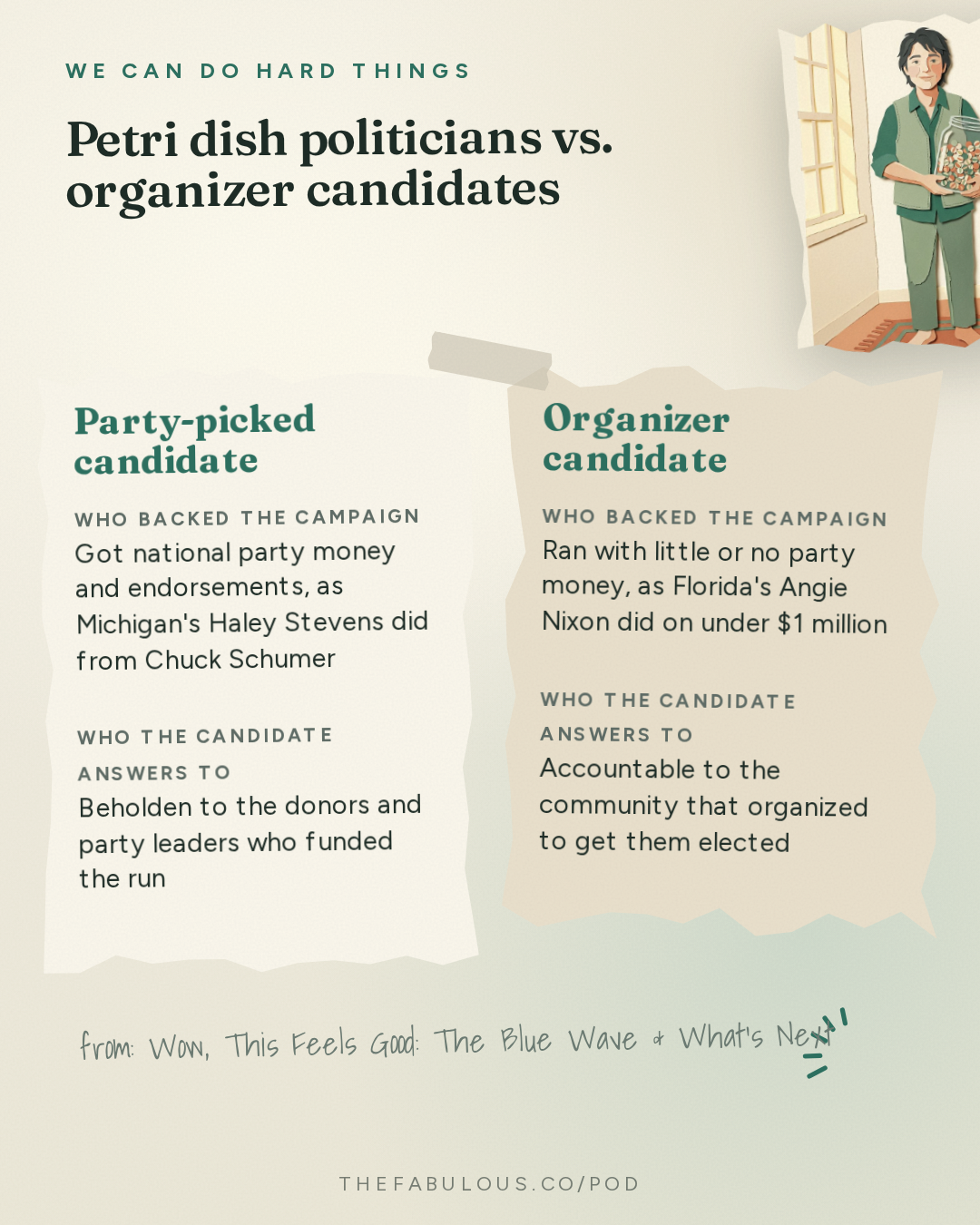
One host names the pattern a "petri dish politician," a candidate manufactured and funded by party leadership rather than grown out of a community (54:56). The logic, she argues, is not mysterious: whoever anoints you is who you answer to. A leader who owes his seat to donors will protect donors. A leader who owes her seat to the people who knocked doors for her will answer to them instead. That is the distinction she draws between establishment picks and organizers like Nixon and Tennessee's Justin Pearson, who forced a controversial data center out of his district before ever running for office (55:50).
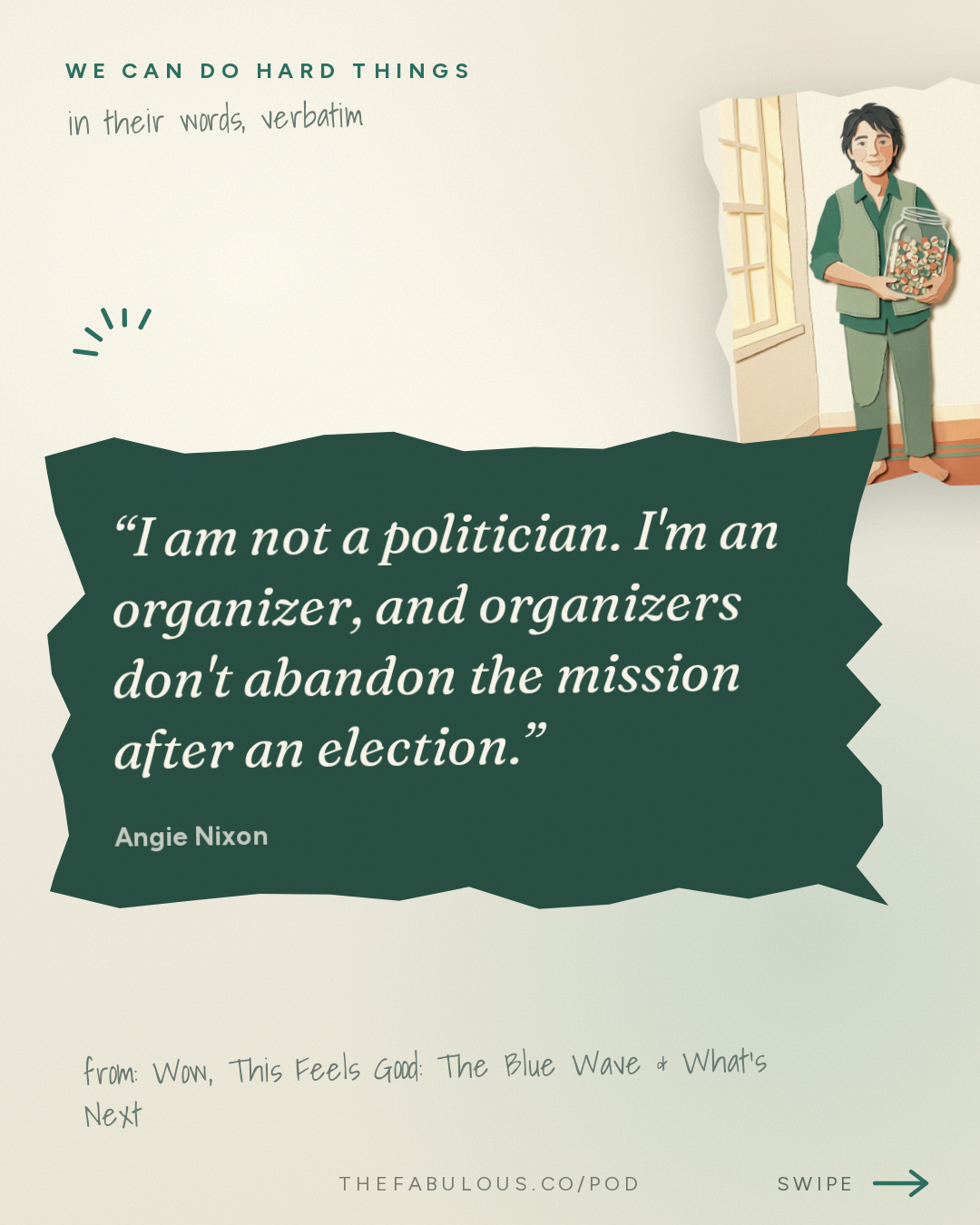
"I'm not a politician. I'm an organizer, and organizers don't abandon the mission after an election." — Angie Nixon [53:01]
That line, delivered in Nixon's concession speech, becomes something close to the episode's thesis. Wins, the hosts argue, do not start the night they are declared. They start years earlier, in the unglamorous work of a loss that lays groundwork. Stacey Abrams, the Georgia organizer who never won the governor's mansion herself, gets credited with building the infrastructure that helped elect Keisha Lance Bottoms this cycle (48:35). The hosts frame her as proof that a loss can be a seed, not a dead end.
A Compact That Could End the Electoral College
The most concrete piece of the episode is a plain explanation of the National Popular Vote Interstate Compact, a mechanism one host says listeners are going to be hearing a lot more about. The Electoral College, she explains, did not arrive in the Constitution because the founders considered it the fairest way to pick a president. It came out of an 1787 compromise with slaveholding states, which wanted enslaved people counted toward congressional and electoral representation while denying them any vote, the origin of the Three-Fifths Compromise (58:53). That math still shapes how many electoral votes a state gets today.
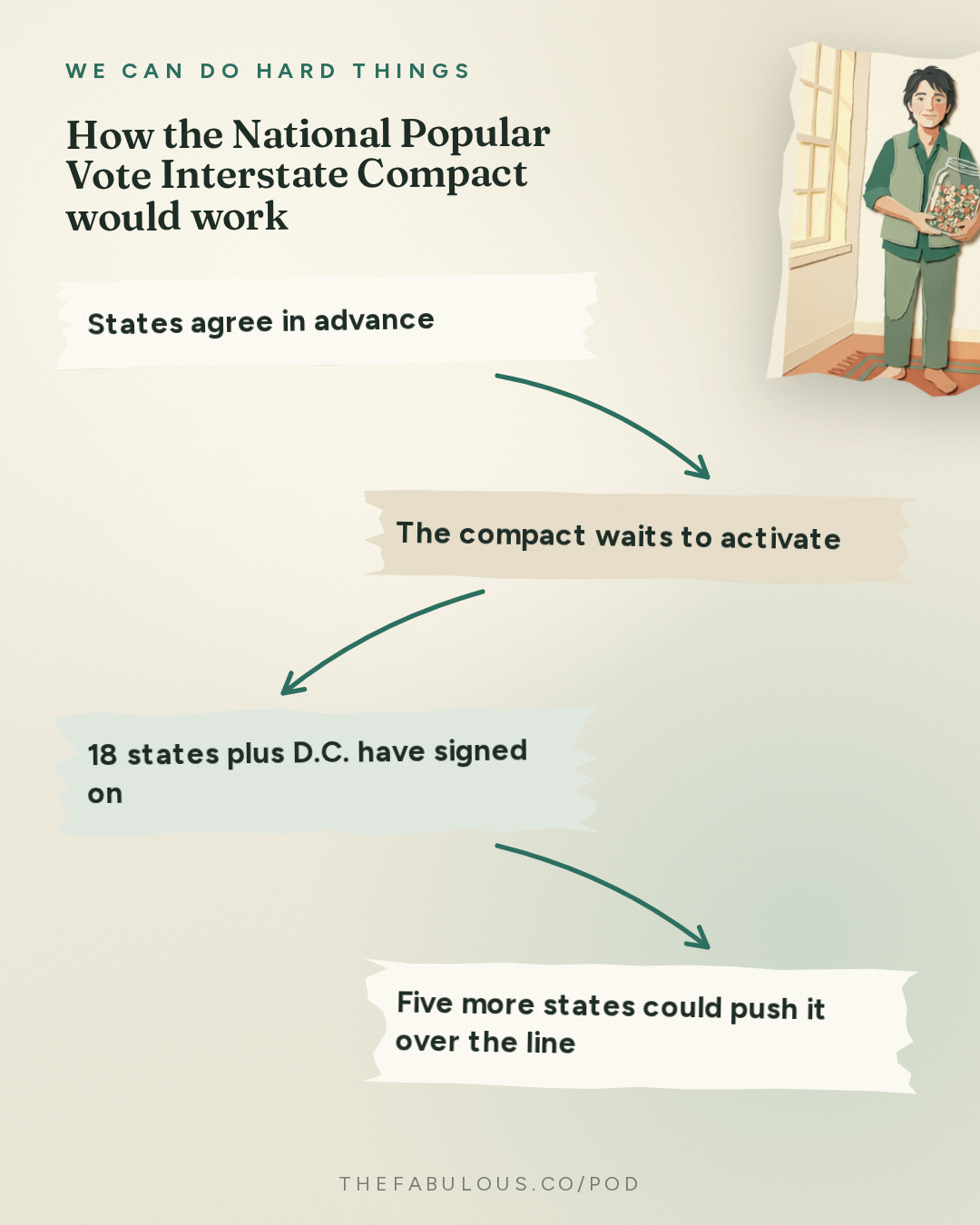
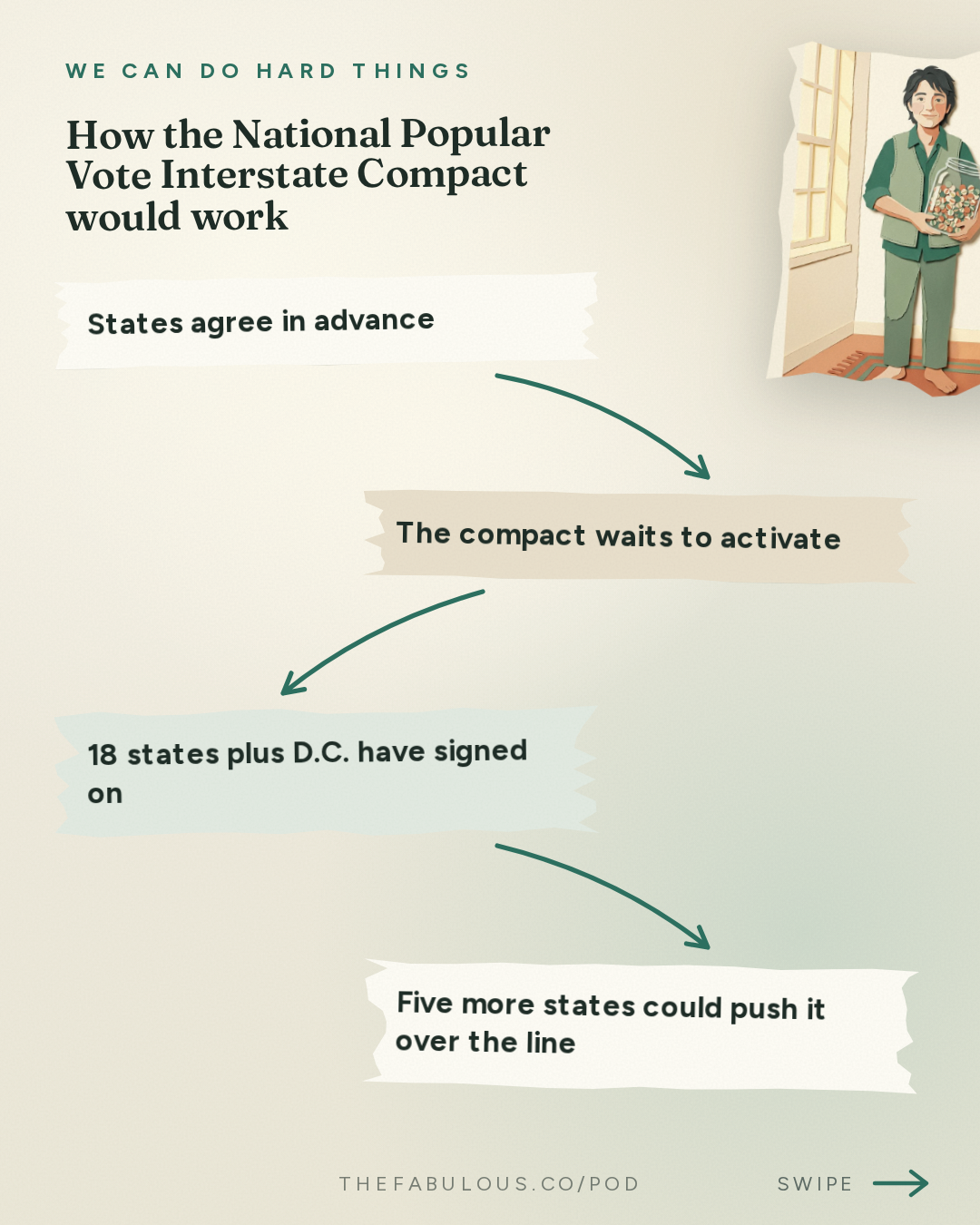
The compact does not abolish the Electoral College, and it does not require a constitutional amendment. Instead, states that join agree in advance to give all of their electoral votes to whichever candidate wins the national popular vote, once enough states have signed on to guarantee the outcome (60:36). It has already happened twice in recent memory that a candidate lost the popular vote and still won the presidency: George W. Bush in 2000 and Donald Trump in 2016 (57:27). With Virginia's 2026 addition under Governor-elect Abigail Spanberger, the compact now covers 18 states plus Washington, D.C., totaling 222 of the 270 electoral votes needed to take effect (61:06, 61:30). Five more states, Pennsylvania, Michigan, Arizona, Wisconsin, and Nevada, now have full Democratic control of their governorship and legislature after this cycle but have not yet joined. If just four of those five sign on, the compact would clear 270 votes and the national popular vote, not the Electoral College map, would decide the presidency (61:58).
The hosts do not pretend this is close to finished. "I mean, right now I think things will happen that we decide need to happen," one host says, before the other adds the practical version: call the representatives (62:32). It is a modest, specific ask inside an episode that otherwise runs on feeling, and it lands because of that contrast. The compact will not pass itself.
By the end, the episode returns to where it started, in the body. The hosts talk about reaching out to thank an organizer, dropping off a meal, acknowledging the unpaid work that got the country here, because, as one of them puts it, nobody stumbled into this result (67:27). The Supreme Court resignation some expected, timed to let Trump name a younger replacement, does not appear to be coming before the new Congress is seated, one more crisis the hosts count as narrowly avoided rather than solved (65:32). The nervous system can rest a little. The organizing, they keep insisting, cannot.
Ask this episode anything
Pod's AI answers from the episode itself, with the minute mark so you can hear it yourself.
Or start with one of these
Ask this episode
Pod's AI listens to the whole episode to answer, and points you to the minute it comes from.
The rest of this answer, and any question after it
Answers come from the episode itself, never from a summary of it.
ContinueKey takeaways
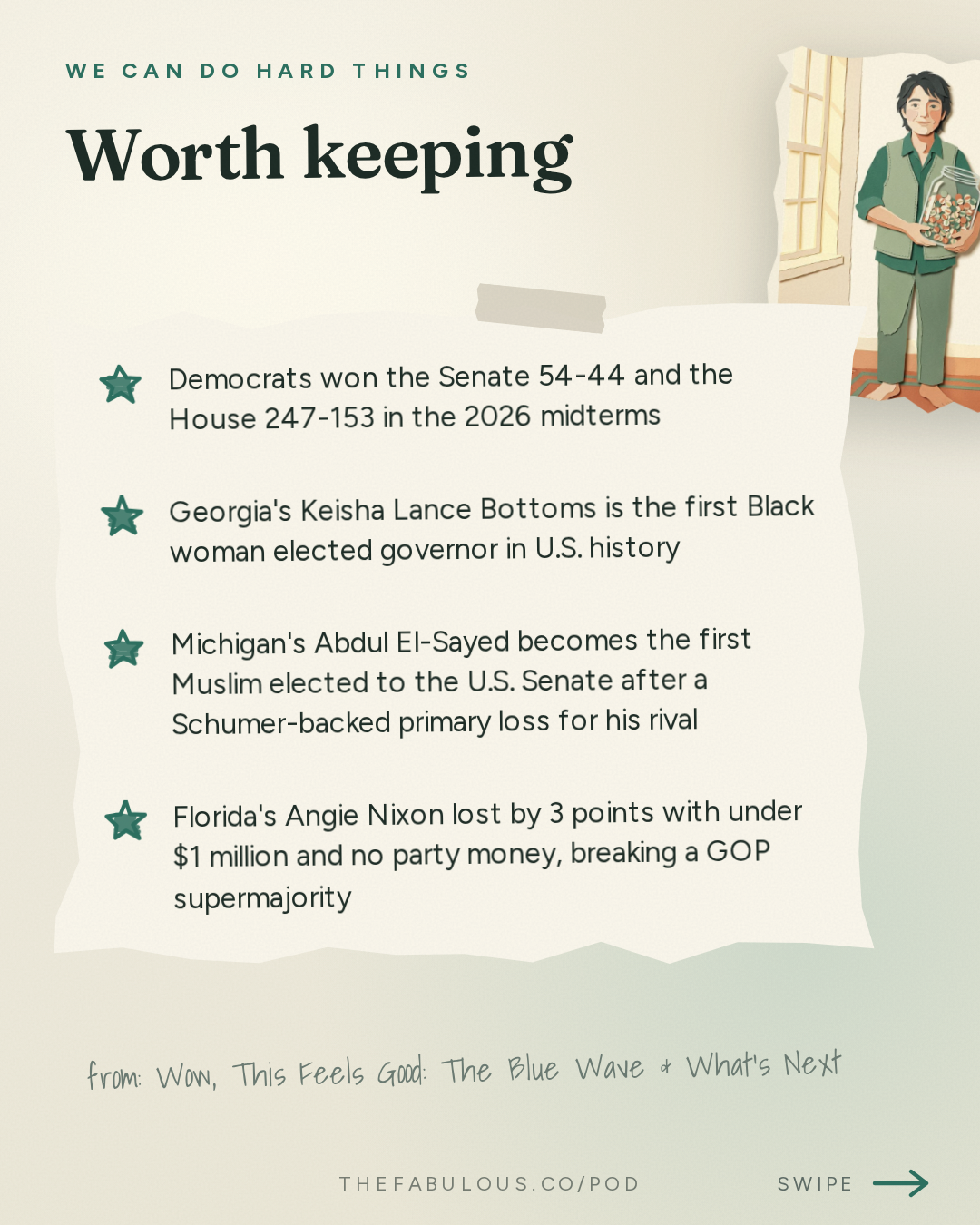
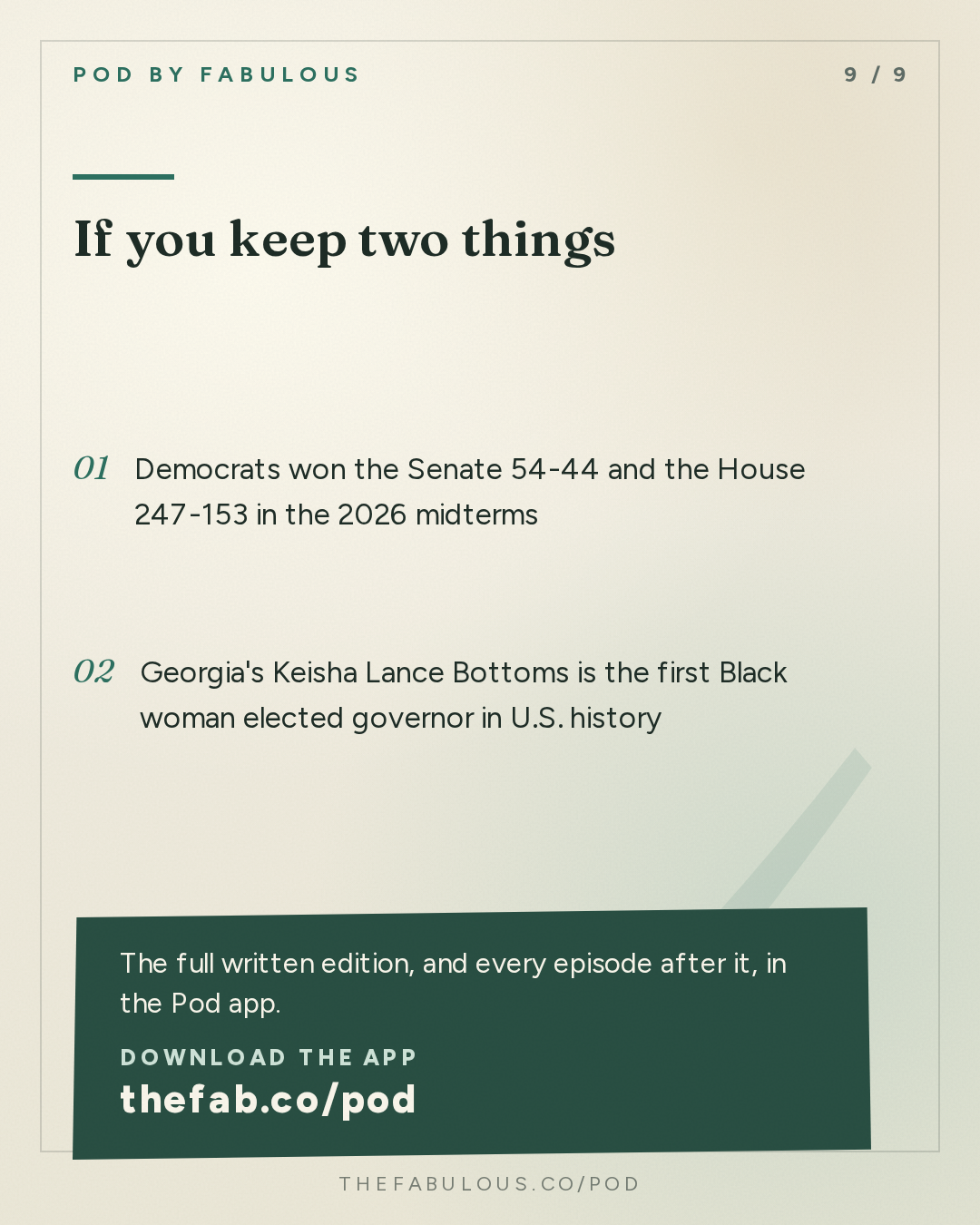
- Democrats won the Senate 54-44 and the House 247-153 in the 2026 midterms
- Georgia's Keisha Lance Bottoms is the first Black woman elected governor in U.S. history
- Michigan's Abdul El-Sayed becomes the first Muslim elected to the U.S. Senate after a Schumer-backed primary loss for his rival
- Florida's Angie Nixon lost by 3 points with under $1 million and no party money, breaking a GOP supermajority
- The National Popular Vote Interstate Compact holds 222 of the 270 electoral votes needed to bypass the Electoral College
The episode in cards
By the numbers
- 54 seats Senate seats held by Democrats after the 2026 midterms
- 7 seats Senate seats flipped from Republican to Democrat
- 247 seats House seats held by Democrats after the 2026 midterms
- 222 electoral votes Electoral votes currently committed to the National Popular Vote Interstate Compact
- 270 electoral votes Electoral votes needed for the compact to take effect and decide the presidency
In their words
“I learned at one point that the best way to create an enemy for life, the best way to get yourself taken out eventually is in victory, humiliate the other person.”
“There's an old man pulling knobs, okay? And that's who he is, and he is not to be feared anymore.”
“We come not from the left and not from the right. We come from the bottom.”
“I am not a politician. I'm an organizer, and organizers don't abandon the mission after an election.”
Protocols
-
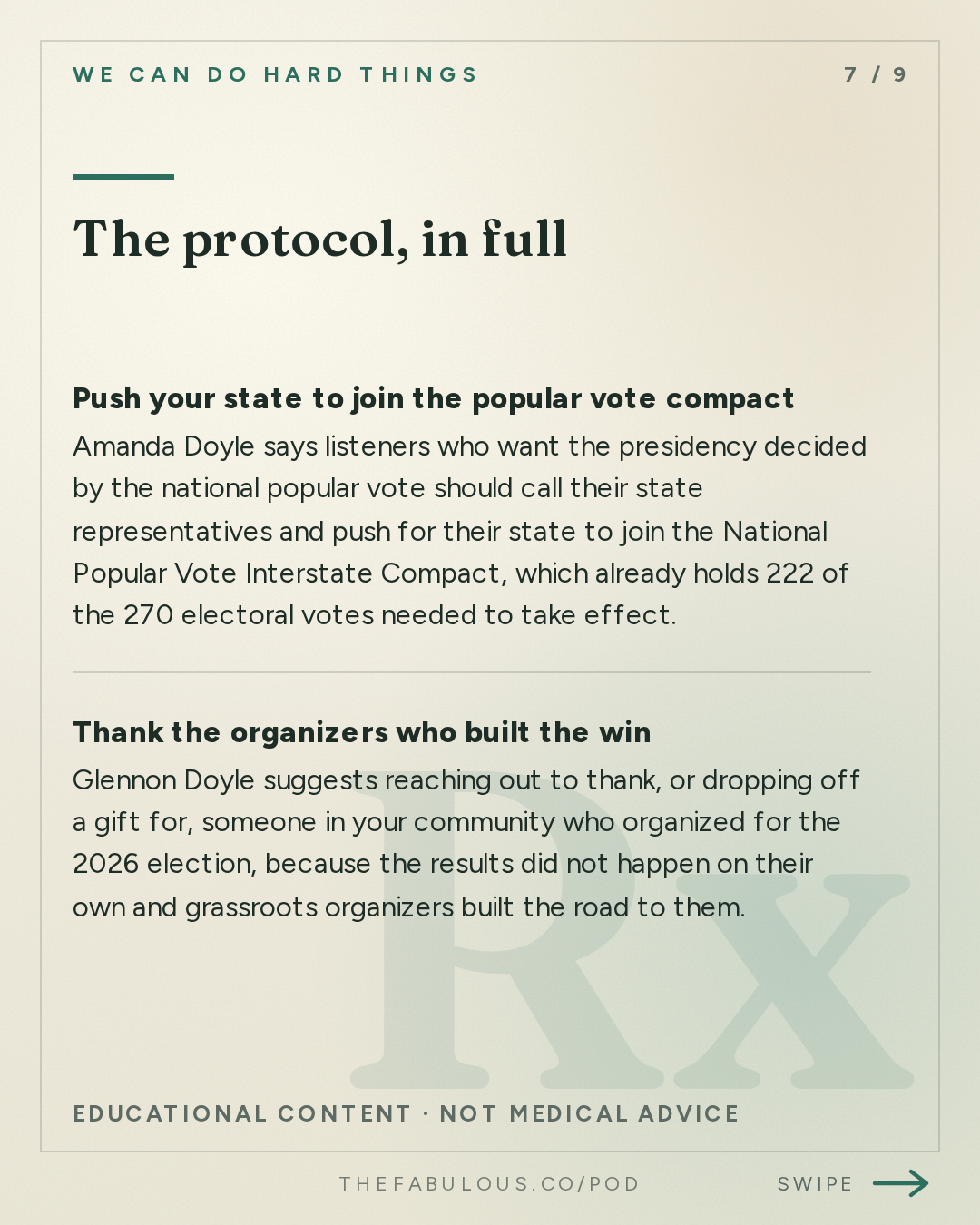
Push your state to join the popular vote compact
Amanda Doyle says listeners who want the presidency decided by the national popular vote should call their state representatives and push for their state to join the National Popular Vote Interstate Compact, which already holds 222 of the 270 electoral votes needed to take effect.
ongoing, as state legislative sessions take up the issue
-
Thank the organizers who built the win
Glennon Doyle suggests reaching out to thank, or dropping off a gift for, someone in your community who organized for the 2026 election, because the results did not happen on their own and grassroots organizers built the road to them.
once, in the days after an election
Questions this episode answers
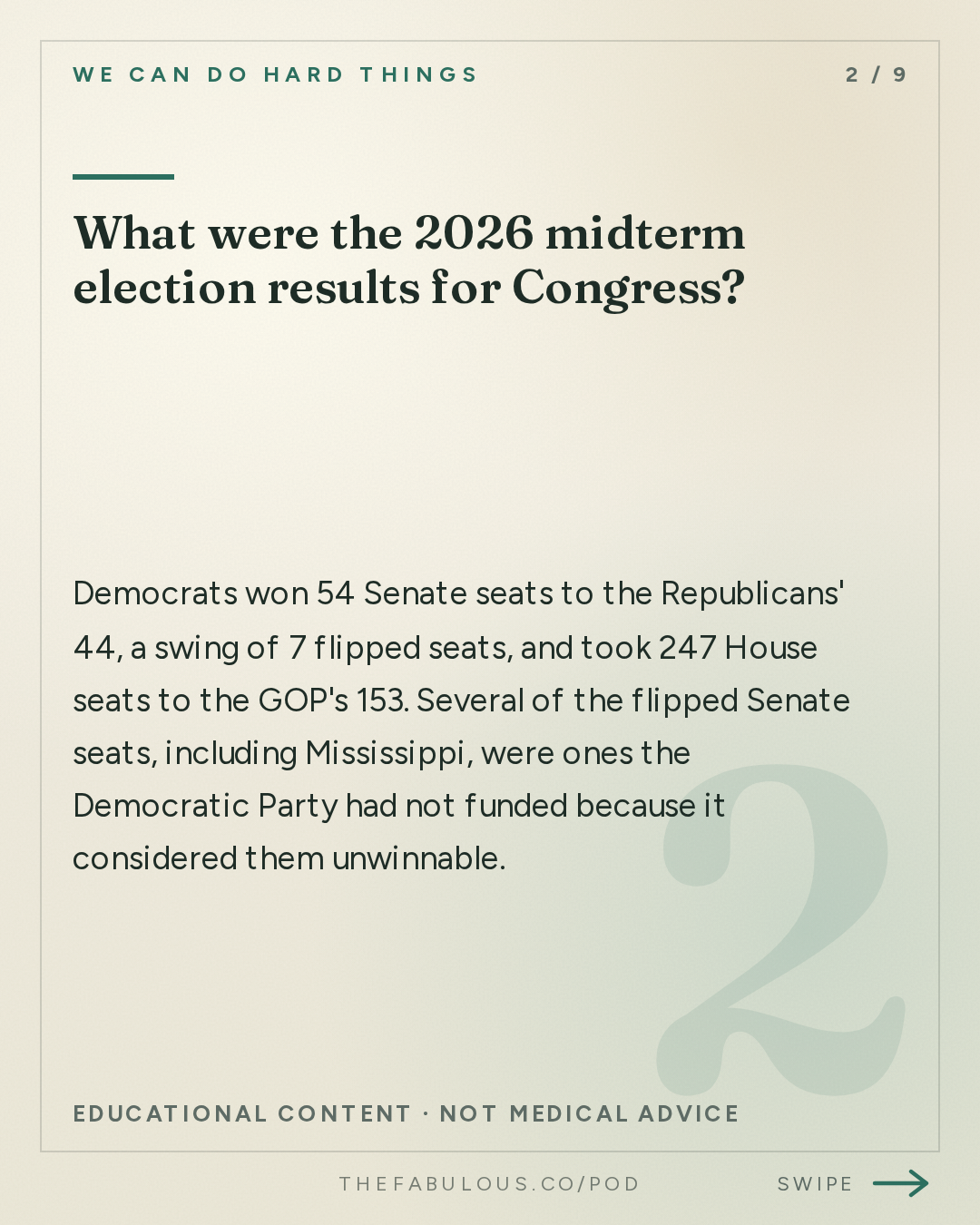
What were the 2026 midterm election results for Congress?
Democrats won 54 Senate seats to the Republicans' 44, a swing of 7 flipped seats, and took 247 House seats to the GOP's 153 (23:41, 25:25). Several of the flipped Senate seats, including Mississippi, were ones the Democratic Party had not funded because it considered them unwinnable.
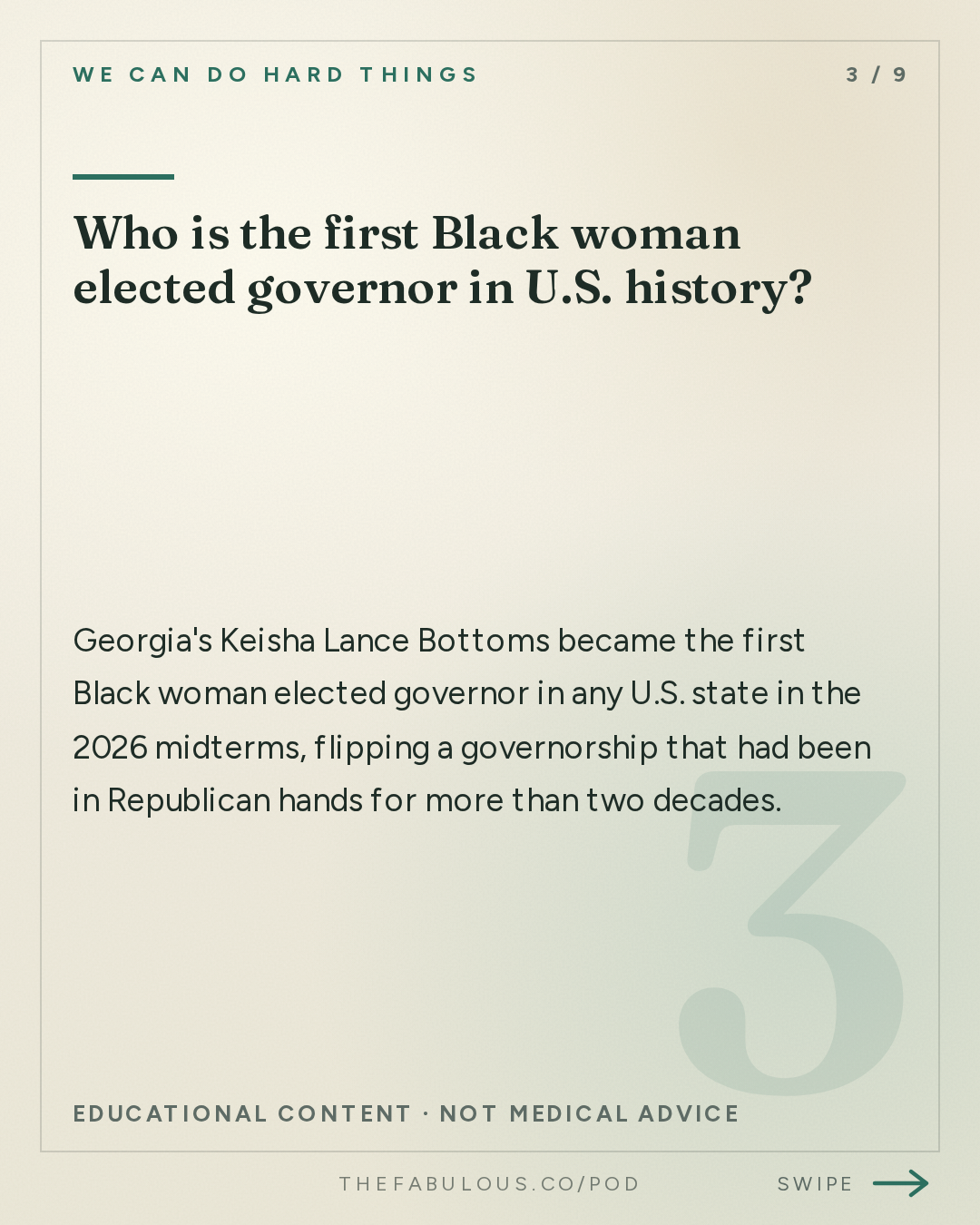
Who is the first Black woman elected governor in U.S. history?
Georgia's Keisha Lance Bottoms became the first Black woman elected governor in any U.S. state in the 2026 midterms, flipping a governorship that had been in Republican hands for more than two decades (26:34).
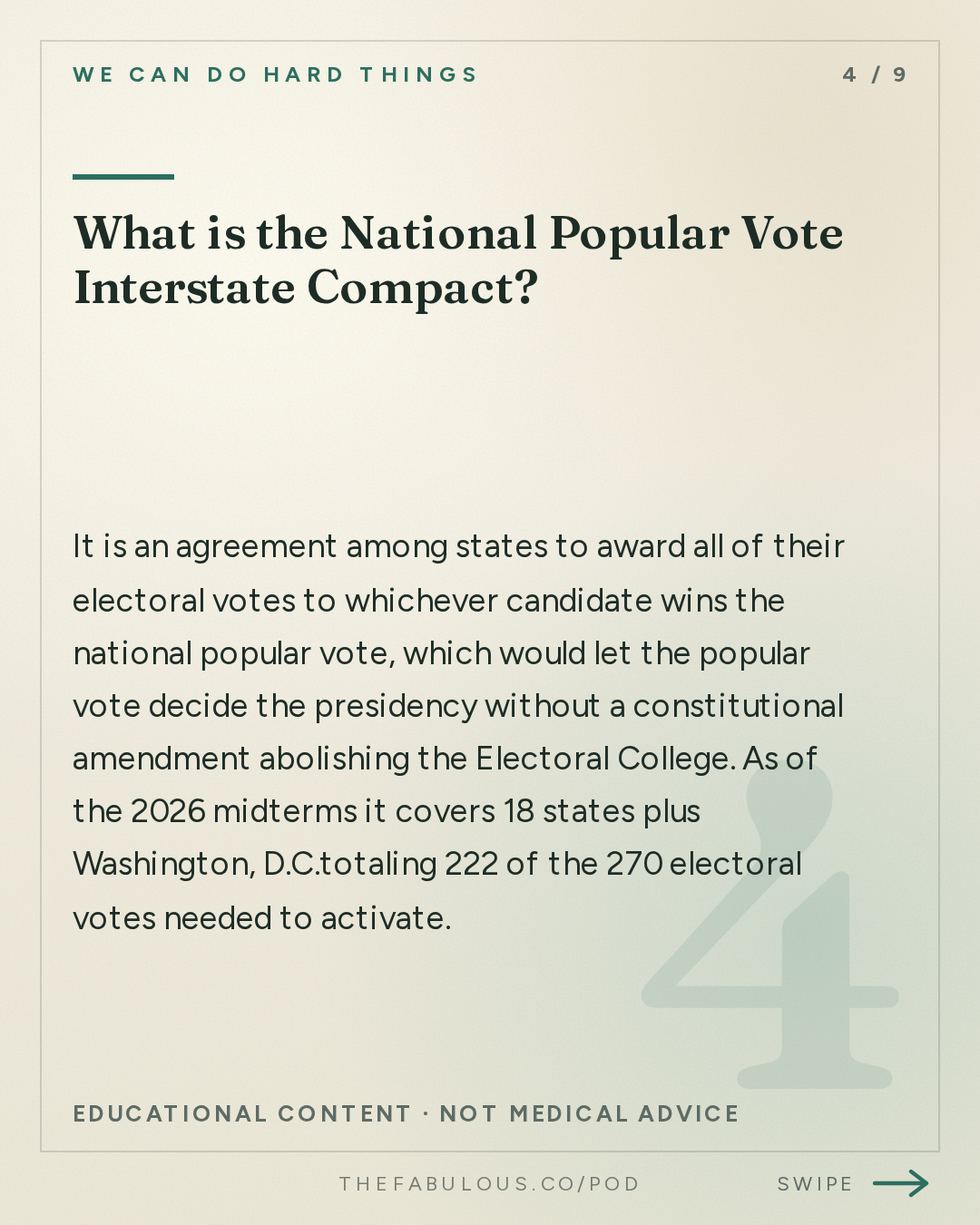
What is the National Popular Vote Interstate Compact?
It is an agreement among states to award all of their electoral votes to whichever candidate wins the national popular vote, which would let the popular vote decide the presidency without a constitutional amendment abolishing the Electoral College. As of the 2026 midterms it covers 18 states plus Washington, D.C.totaling 222 of the 270 electoral votes needed to activate (60:36, 61:30).
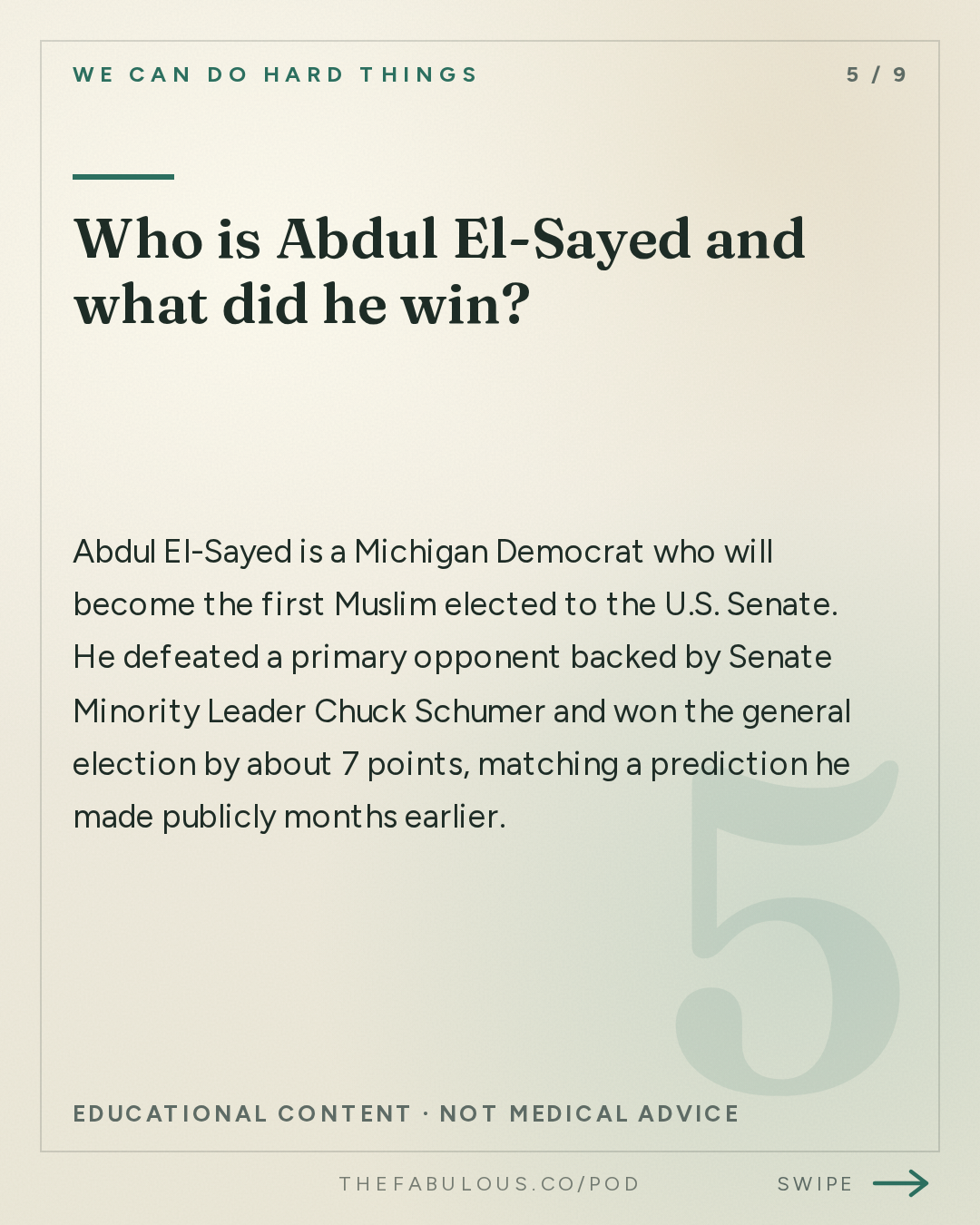
Who is Abdul El-Sayed and what did he win?
Abdul El-Sayed is a Michigan Democrat who will become the first Muslim elected to the U.S. Senate. He defeated a primary opponent backed by Senate Minority Leader Chuck Schumer and won the general election by about 7 points, matching a prediction he made publicly months earlier (35:28).
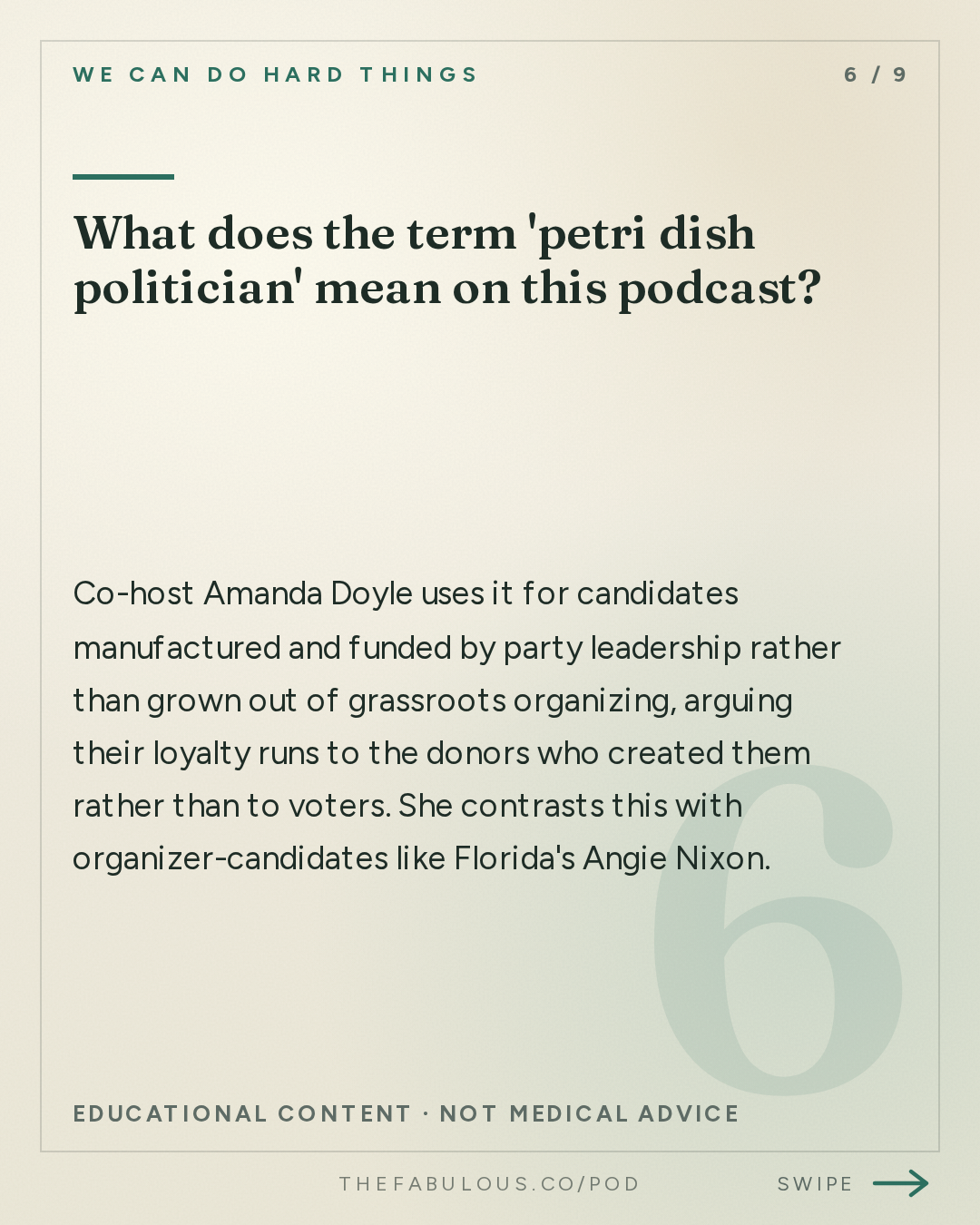
What does the term 'petri dish politician' mean on this podcast?
Co-host Amanda Doyle uses it for candidates manufactured and funded by party leadership rather than grown out of grassroots organizing, arguing their loyalty runs to the donors who created them rather than to voters. She contrasts this with organizer-candidates like Florida's Angie Nixon (54:56).
The full read, in cards
Mentioned
Keisha Lance Bottoms · Deb Haaland · Abdul El-Sayed · Stacey Abrams · Chuck Schumer · Hakeem Jeffries · Angie Nixon · Justin Pearson · National Popular Vote Interstate Compact · Adrienne Maree Brown · Gina Hinojosa
More from this show and category

Dr. Orna Guralnik on Couples Therapy
Psychoanalyst Orna Guralnik says relationship fights are really negotiations over otherness, not actual disputes about chores. She explains how splitting pushes blame onto a partner, how old family debts called intergenerational errands get replayed in marriage, and offers one exercise: treat a partner's most annoying trait as the source of personal growth.

What Is a Father Wound? Terri Cole Explains
A father wound is a psychological injury from a father who was absent, abusive, addicted, or emotionally unavailable. Psychotherapist Terri Cole calls it a worthiness wound, the belief that love must be earned through achievement or perfection. Her study of 650 women found it fuels hyperindependence and perfectionism until perimenopause forces a stop (07:58, 21:36).

Chanel Miller on Trauma, Art, and Healing
Chanel Miller, author of the memoir Know My Name, describes healing from her 2015 sexual assault at Stanford University as a daily practice of staying present rather than fixing everything. She uses art to prove life keeps moving, pictures depression as vision narrowed through a toilet paper tube, and treats small acts like drinking water as real medicine.

Title IX Report vs Complaint: The Real Difference
At most universities, filing a Title IX "report" about a sexual assault triggers nothing, only a formal "complaint" starts an investigation, and sociologist Nicole Bedera's year embedded inside one university's Title IX office found just 18% of reports ever became complaints (35:51). Her research shows the system is structurally built to protect the institution, not the survivor.
