
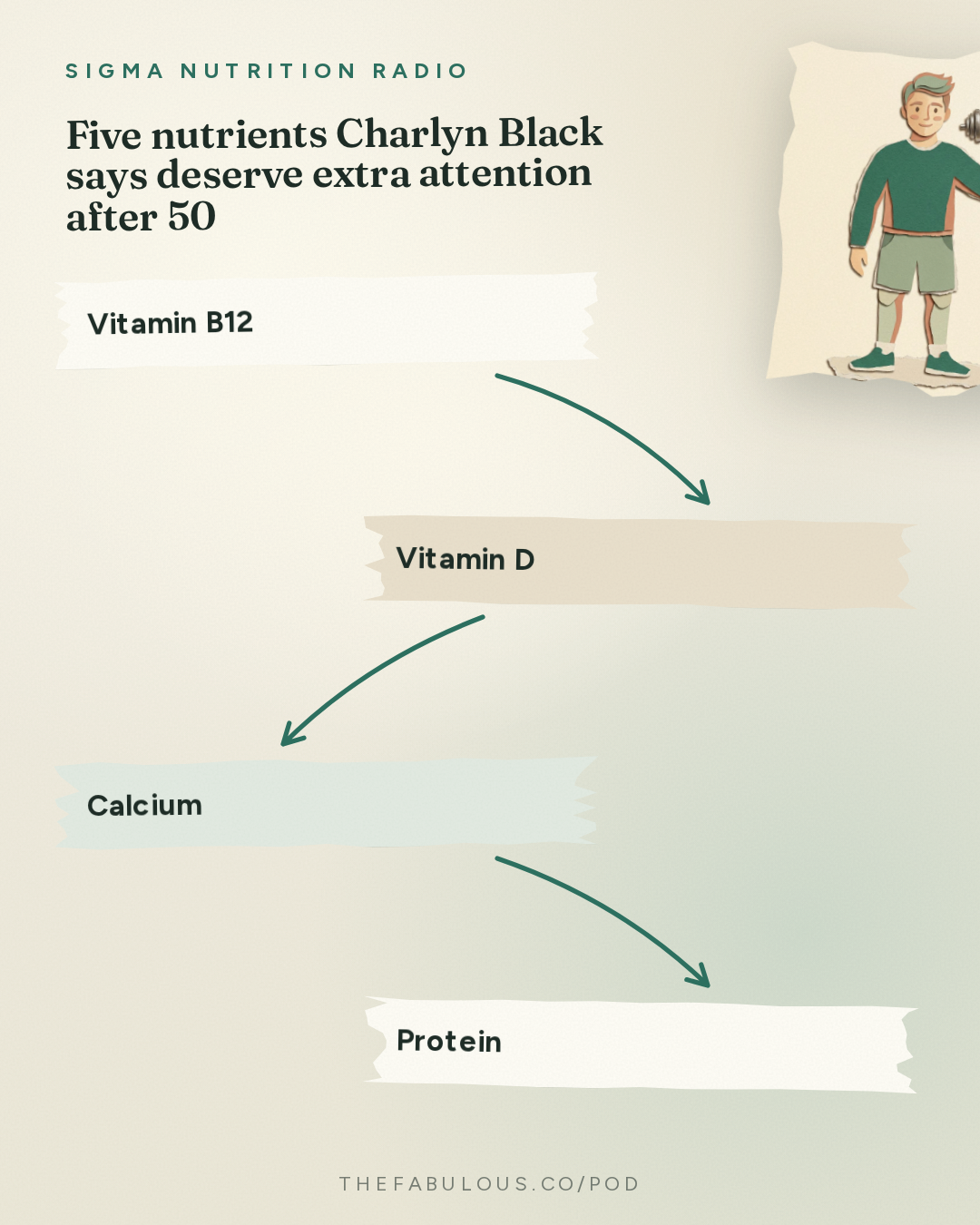
Diet for Healthy Aging: Protein, B12, and Bone Health
#626: Practical Diet Considerations for Healthy Aging - Prof. Charlyn Black
The brief
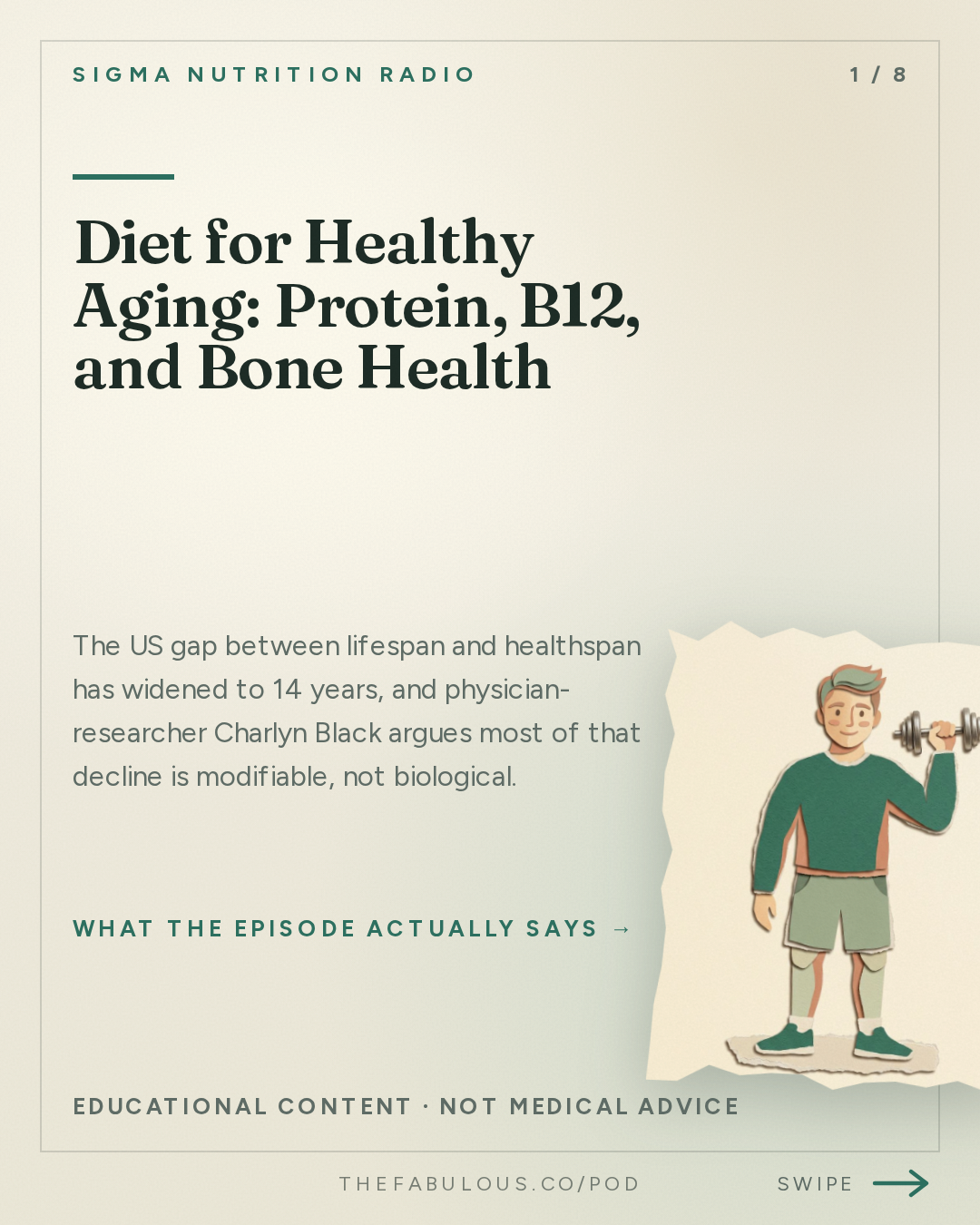
The US gap between lifespan and healthspan has widened to 14 years, and physician-researcher Charlyn Black argues most of that decline is modifiable, not biological. She covers why aging muscle resists protein, why B12 and calcium absorption falter after 50, and why atherosclerosis often starts by age 20 (08:38, 15:14, 24:47).
Here is an uncomfortable fact: silent plaque buildup in the arteries, the kind that causes heart attacks decades later, is already present in roughly one in thirteen adults between eighteen and twenty-nine years old. By a person's sixties, that figure climbs to nine in ten (15:14). The disease most people associate with old age has usually been quietly under construction since early adulthood. That single statistic, drawn from a large imaging study of Danish and Spanish adults called the REACT study, reframes the entire conversation about what aging actually is.
Charlyn Black is well placed to make that reframe. She is a physician and longtime health services researcher who spent her career at the University of British Columbia after training in public health and health policy at Johns Hopkins University. For decades she studied population health data, the kind that reveals how chronic disease actually moves through a society. More recently, after retiring in June, she turned that same analytical eye toward nutrition and aging, co-authoring a book called Plant-Powered Seniors. Her central argument, made early in the conversation, is that people routinely confuse two very different processes.
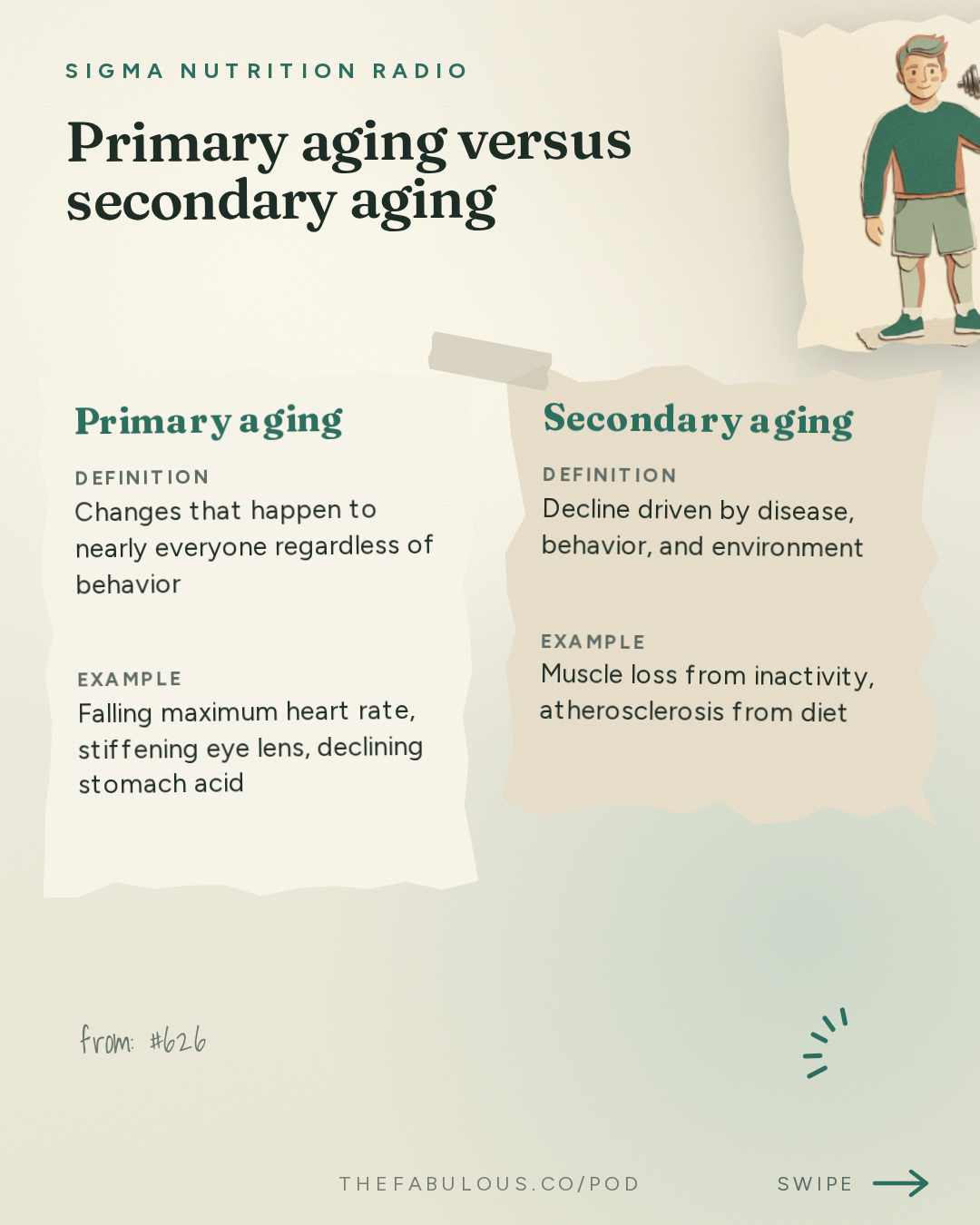
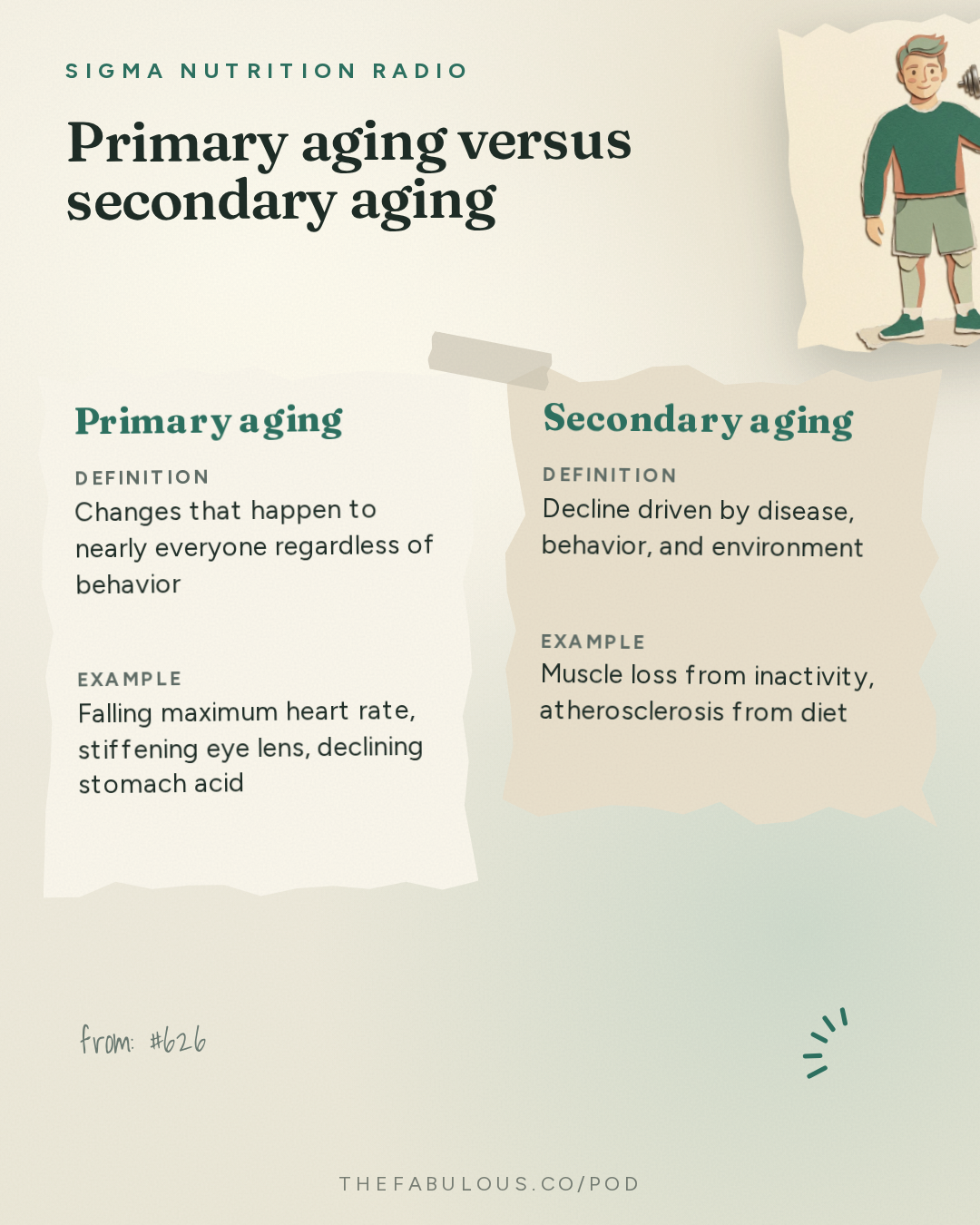
Black calls them primary and secondary aging. Primary aging is the stuff that happens to everyone no matter how well they live: the lens of the eye stiffens, maximum heart rate falls, stomach acid production declines. These changes are close to universal and not very preventable, though they can be managed, with reading glasses or hearing aids. Secondary aging is different. It is decline driven by disease, behavior, and environment, and it is where most of the actual damage happens. As Black puts it, the two forces do not carry equal weight.
"Aging sets the direction, but behavior and our environments sort of, kind of determine the slope of decline." — Charlyn Black [13:20]
That distinction matters because of a widening statistic Black cites early on. Healthspan is the number of years a person lives in good health, free of disability and functional impairment. Lifespan is simply how long a person lives. Americans' lifespans have grown over time, but healthspans have not kept pace, and the gap between the two has stretched to fourteen years (08:38). Most people in the United States now spend over a decade of their lives managing chronic disease or functional decline before they die. The question Black is really asking is not how to live longer. It is how to shrink that fourteen-year gap.
Muscle loss supplies one of the clearer examples of how much of what looks like inevitable aging is actually disuse. People do lose muscle fibers, particularly fast-twitch fibers, starting in their thirties. But Black points to a JAMA study showing that frail nursing home residents around age ninety made large strength gains after just eight weeks of resistance training (11:52). Ninety is not too late to rebuild muscle. That finding does a lot of work in the conversation, because it undercuts the fatalism that often attaches to aging bodies.
Dementia gets the same treatment. A Lancet Commission report, an expert panel review of dementia risk evidence, estimated that about 45 percent of dementia cases are linked to modifiable risk factors such as hypertension, hearing loss, and physical inactivity (12:45). That is not a cure, and it is not a guarantee. But it means nearly half of dementia risk sits in the category of things a person, or a health system, can actually act on.
Eating for fewer calories but the same nutrients
Where the conversation gets genuinely practical is in what Black calls the energy-nutrient mismatch. As people move into their sixties, energy requirements fall: they move less, carry less muscle mass, and burn fewer calories. But the requirement for most micronutrients does not fall, and for some, it actually rises. The result is a tightening squeeze.
"An older adult has to meet the same or higher nutrient targets from fewer calories, which leaves a lot less room for nutrient poor foods." — Charlyn Black [22:02]
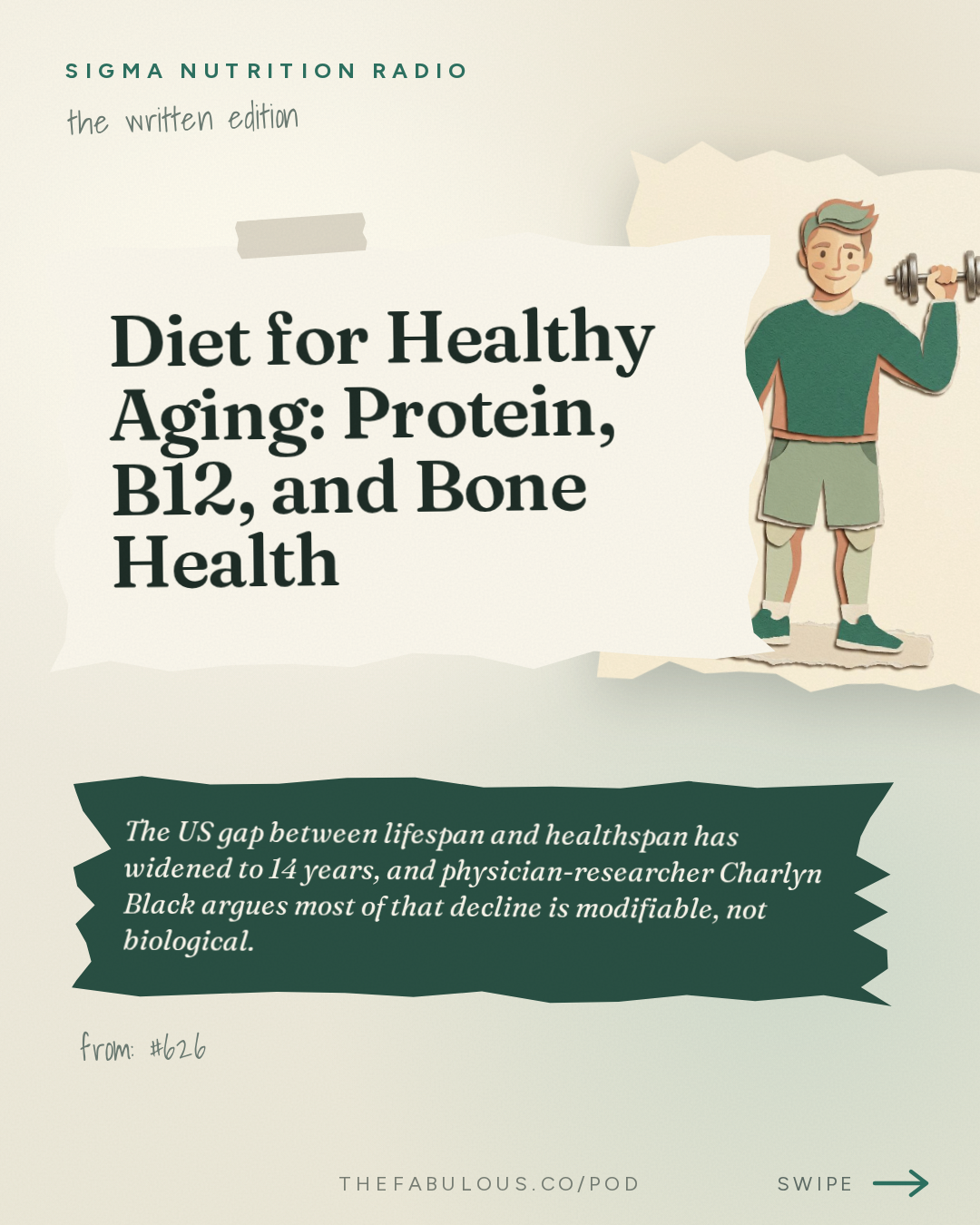
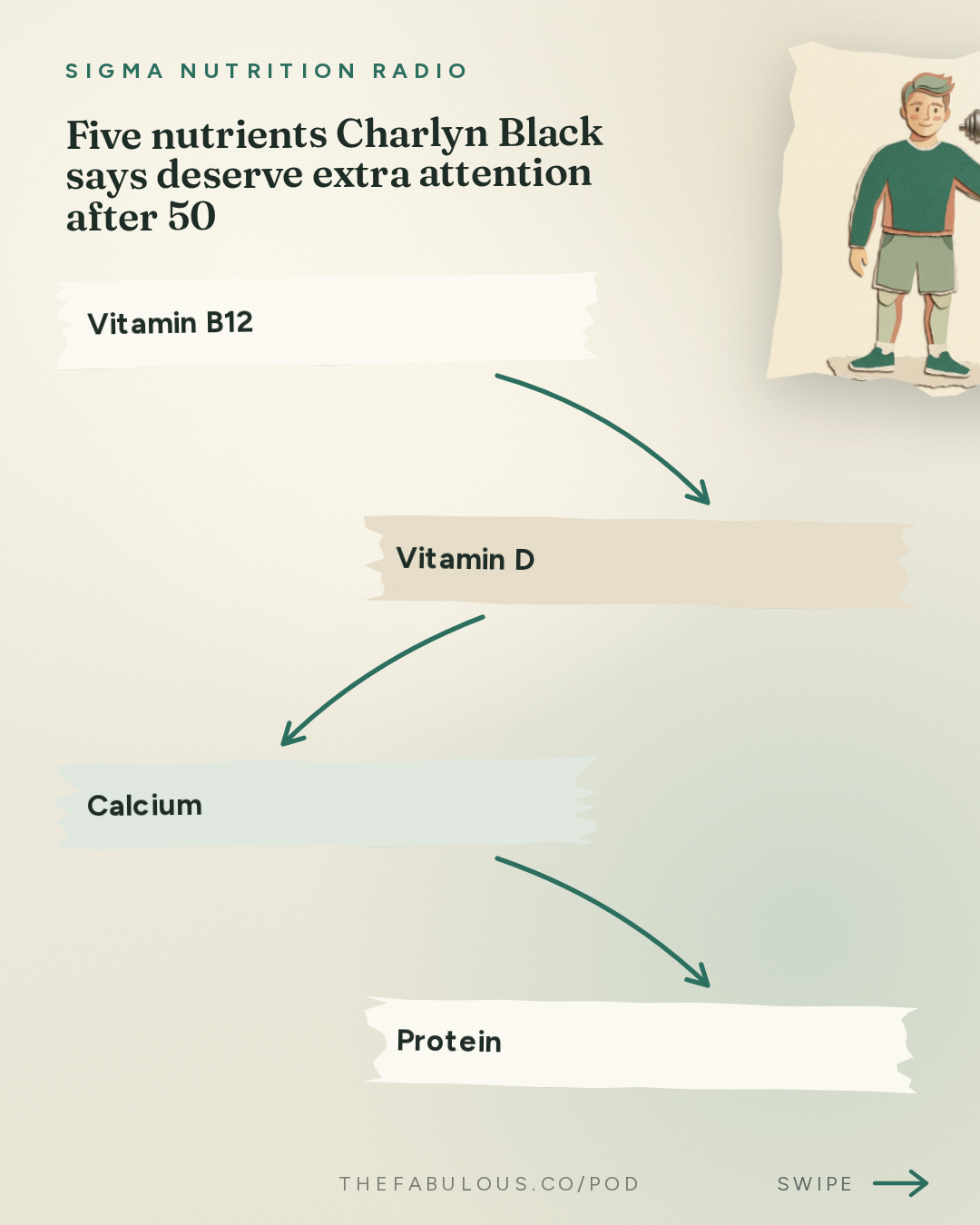
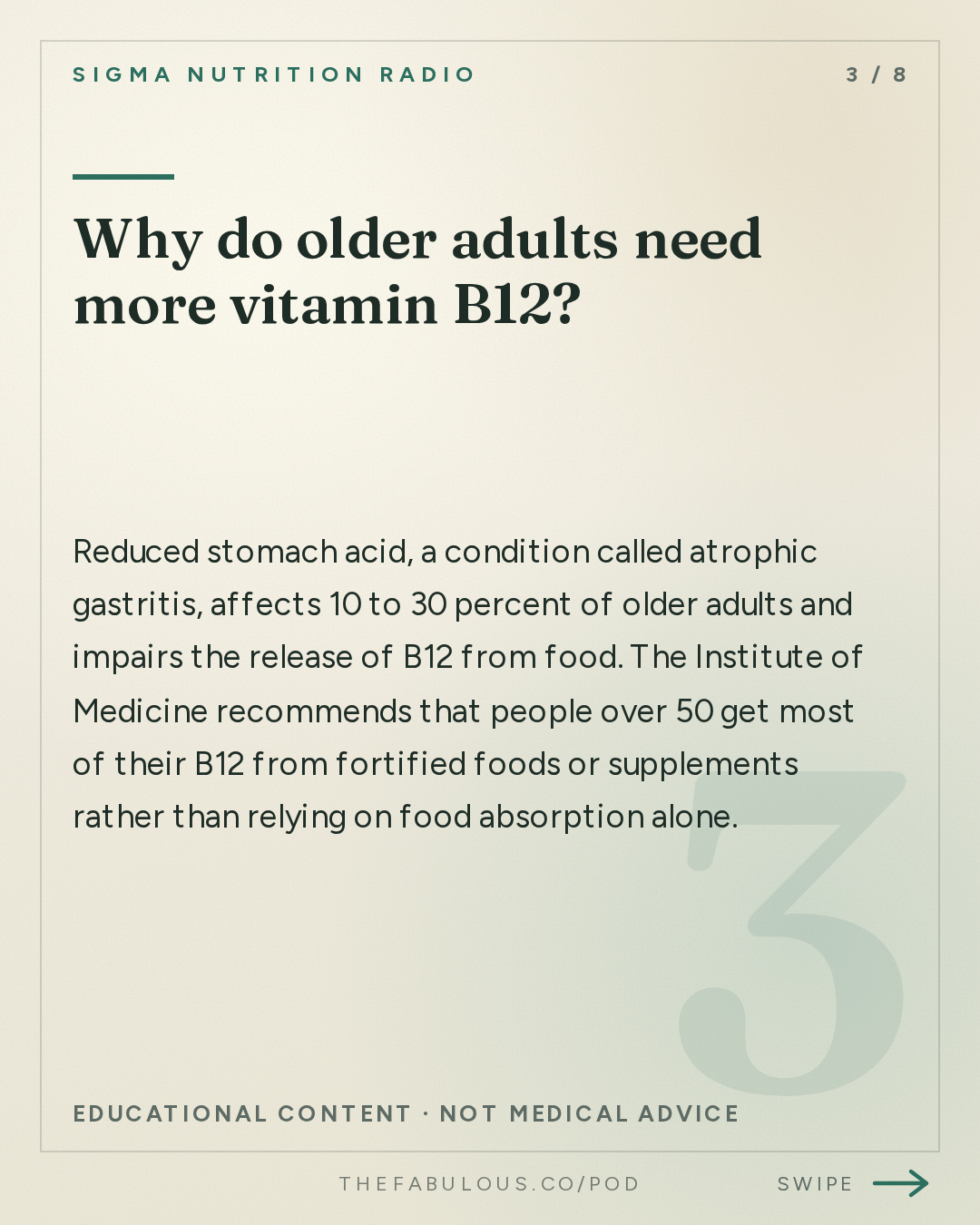
Black walks through five nutrients she considers worth specific attention. Vitamin B12 absorption suffers because reduced stomach acid, a condition called atrophic gastritis, affects between 10 and 30 percent of older adults and impairs B12's release from food (23:05). This is why the Institute of Medicine recommends that people over fifty get most of their B12 from fortified foods or supplements rather than relying on food sources alone, a recommendation that applies to meat-eaters as much as to vegetarians.
Vitamin D production in skin declines with age, and people spend less time outdoors regardless of age, which compounds the shortfall. Calcium absorption efficiency also drops, pushing recommended intake up to about 1200 milligrams a day, though Black notes most people get closer to 600 milligrams from food alone, and that supplemental calcium works best spread across the day rather than taken in one large dose (24:21). Protein is the fourth nutrient, and the one getting the most attention in strength and longevity circles generally. Aging muscle becomes less responsive to the same protein intake, a phenomenon called anabolic resistance.
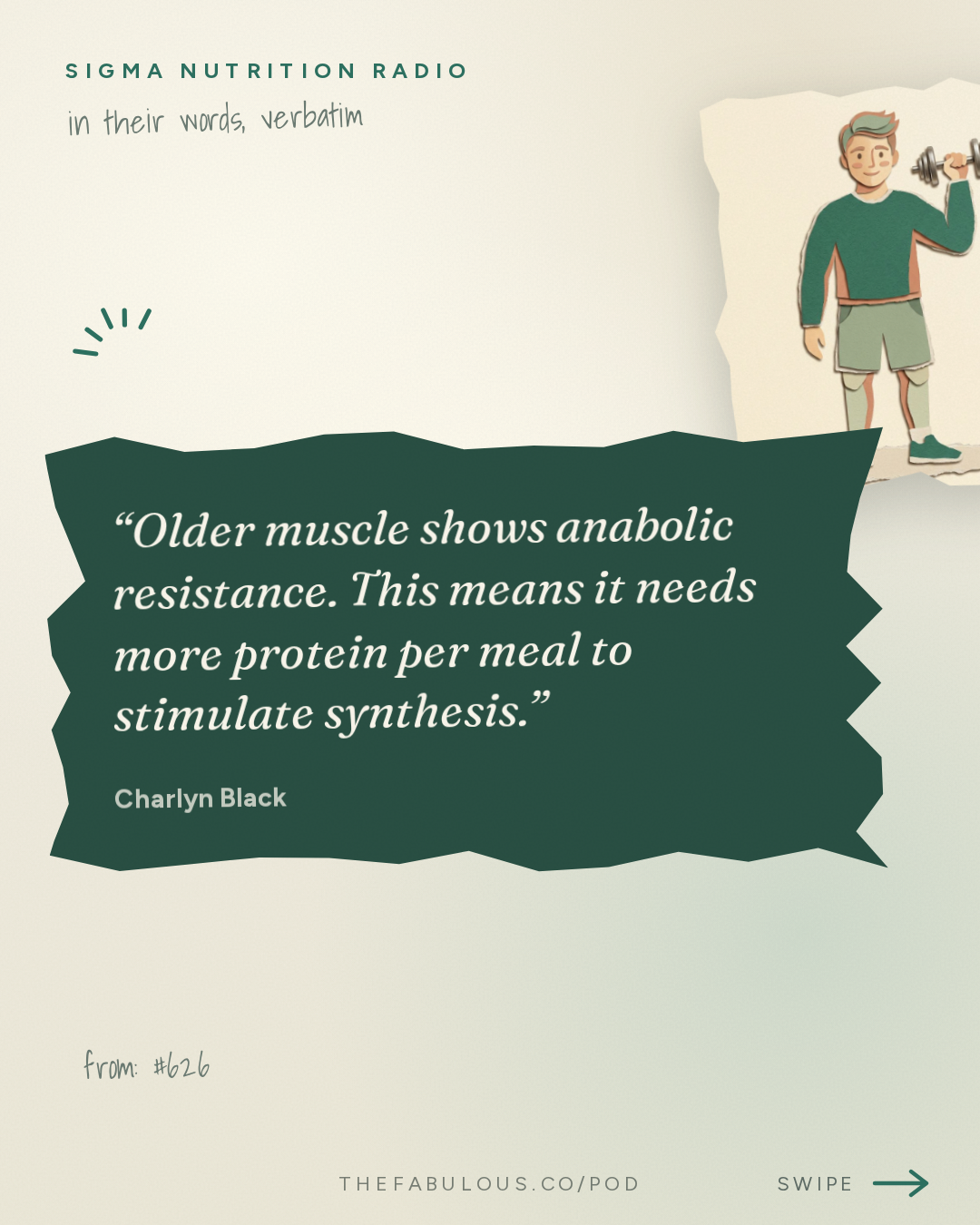
"Older muscle shows anabolic resistance. This means it needs more protein per meal to stimulate synthesis." — Charlyn Black [24:47]
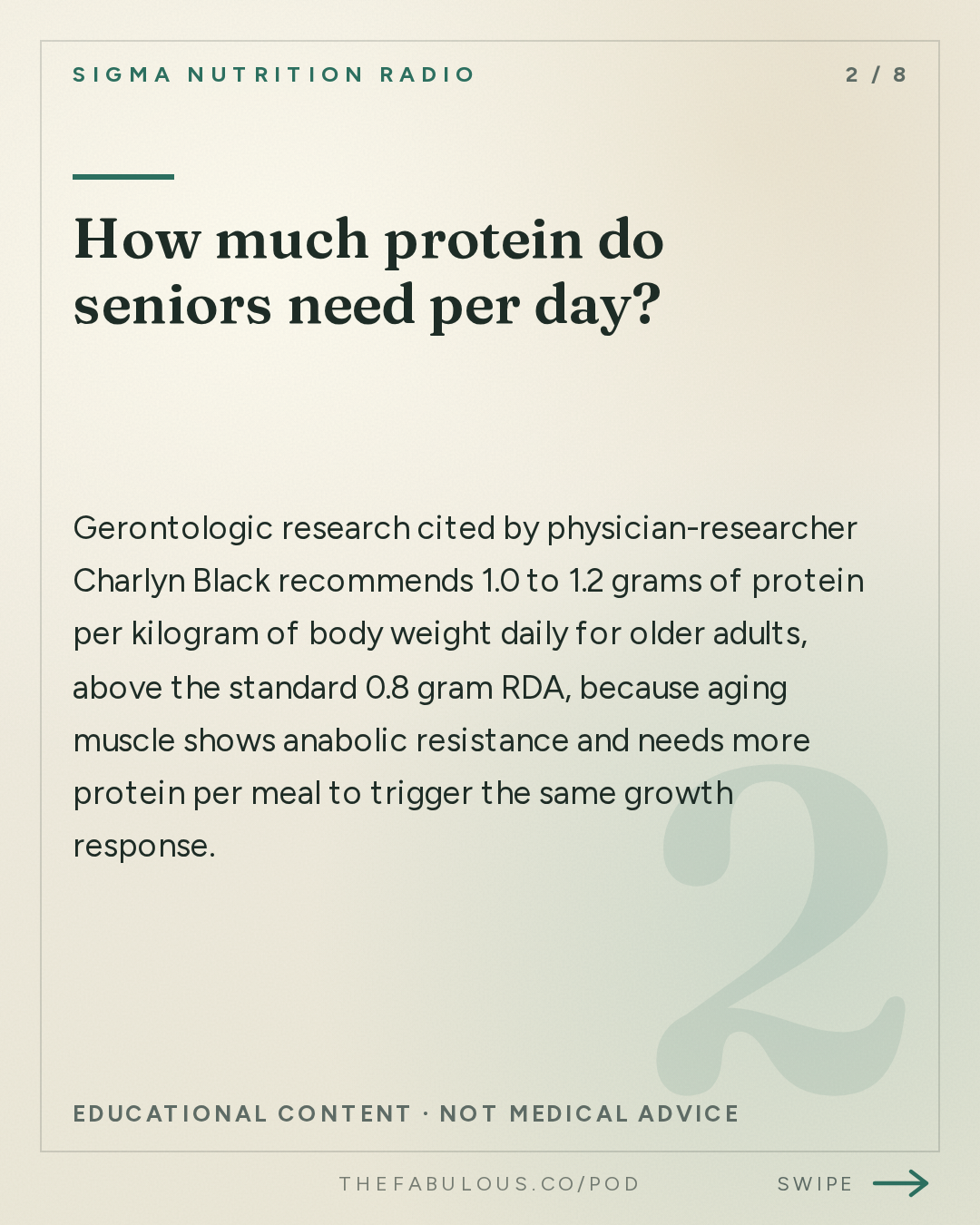
The practical upshot is a recommended intake of 1.0 to 1.2 grams of protein per kilogram of body weight a day for older adults, well above the standard 0.8 gram RDA that was set largely to prevent deficiency rather than to optimize muscle maintenance (24:47). The fifth nutrient, omega-3 fatty acids, is an emerging concern, particularly for cognitive and cardiovascular health, and Black suggests it is worth testing levels directly rather than guessing.
Why neither diet nor exercise works alone
Bone health pulls several of these threads together. Black notes that people who follow vegetarian or vegan diets may show lower bone density and somewhat higher fracture risk, a pattern she attributes partly to lower body weight and partly to nutrient shortfalls rather than to plant foods themselves (29:49). She is careful to add a caveat that cuts against conventional supplement wisdom: three large trials found that giving vitamin D to adults who already have adequate levels does not reduce fracture risk, and that excess vitamin D can actually cause harm (28:32). More is not automatically better.
But the nutrient story only goes so far without movement. Weight-bearing and resistance exercise stimulate bone maintenance in a way that diet cannot replace, and Black is blunt about the limits of nutrition alone.
"We can eat all the protein we want, but not put on muscle if we sit on the couch." — Charlyn Black [30:12]
That line captures the whole episode's logic in miniature. Nutrition sets the ceiling on what the body can build, but activity is what actually builds it. Diet and movement are not competing strategies. They are dependent on each other.
Black closes with a point that pulls back from individual behavior entirely. Education and willpower only go so far when the surrounding food environment works against them. She describes the food landscape most people navigate daily as one where fast food lines the streets and supermarkets have become, in her words, largely purveyors of ultra-processed foods (31:08). Her closing interest, now that she has retired from academic administration, is in policy: building environments that make the healthy choice the easier one, rather than asking individuals to swim against a current built by food marketing and convenience economics. The fourteen-year gap between lifespan and healthspan, in other words, is not only a personal project. It is also a design problem.
Ask this episode anything
Pod's AI answers from the episode itself, with the minute mark so you can hear it yourself.
Or start with one of these
Ask this episode
Pod's AI listens to the whole episode to answer, and points you to the minute it comes from.
The rest of this answer, and any question after it
Answers come from the episode itself, never from a summary of it.
ContinueKey takeaways
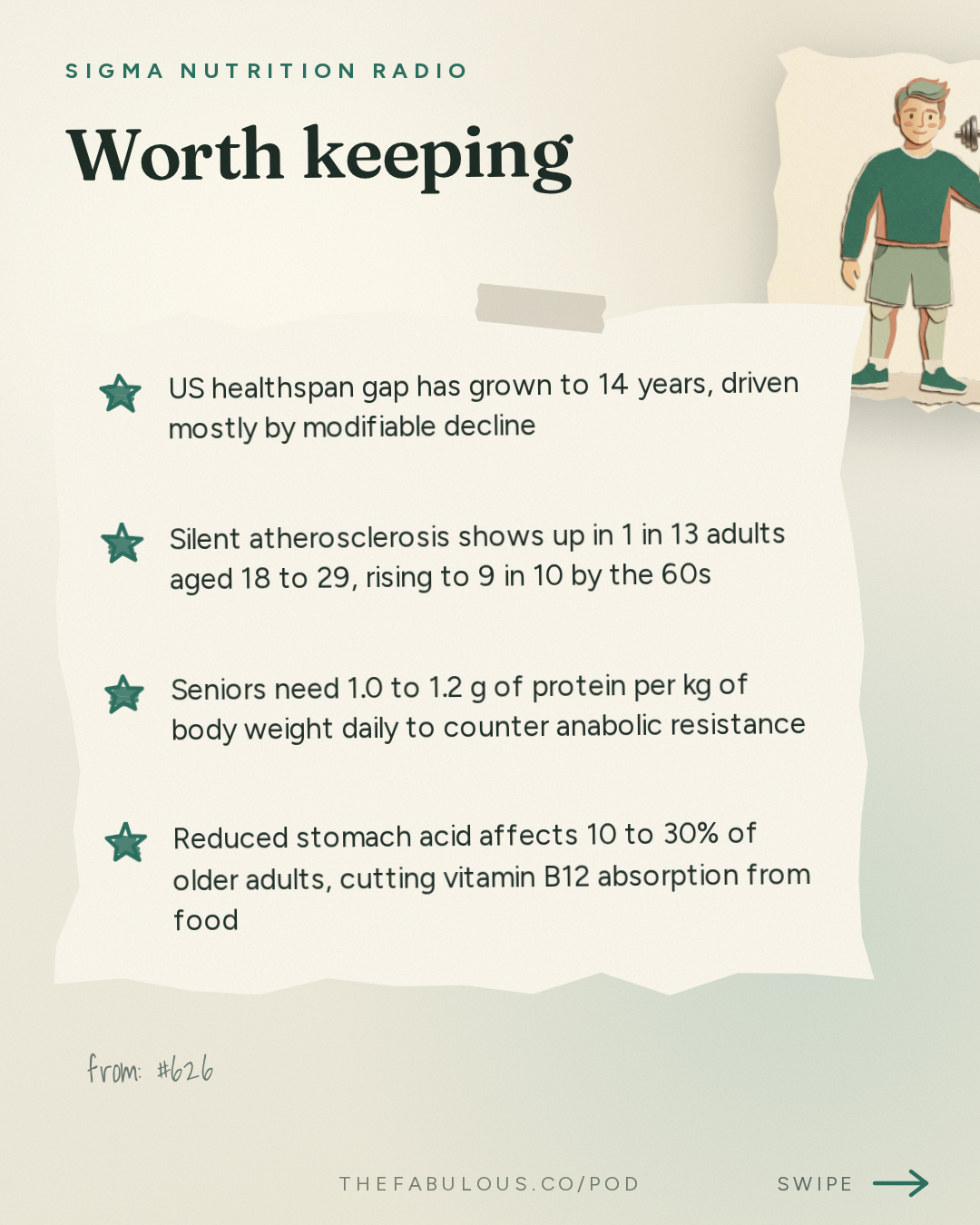
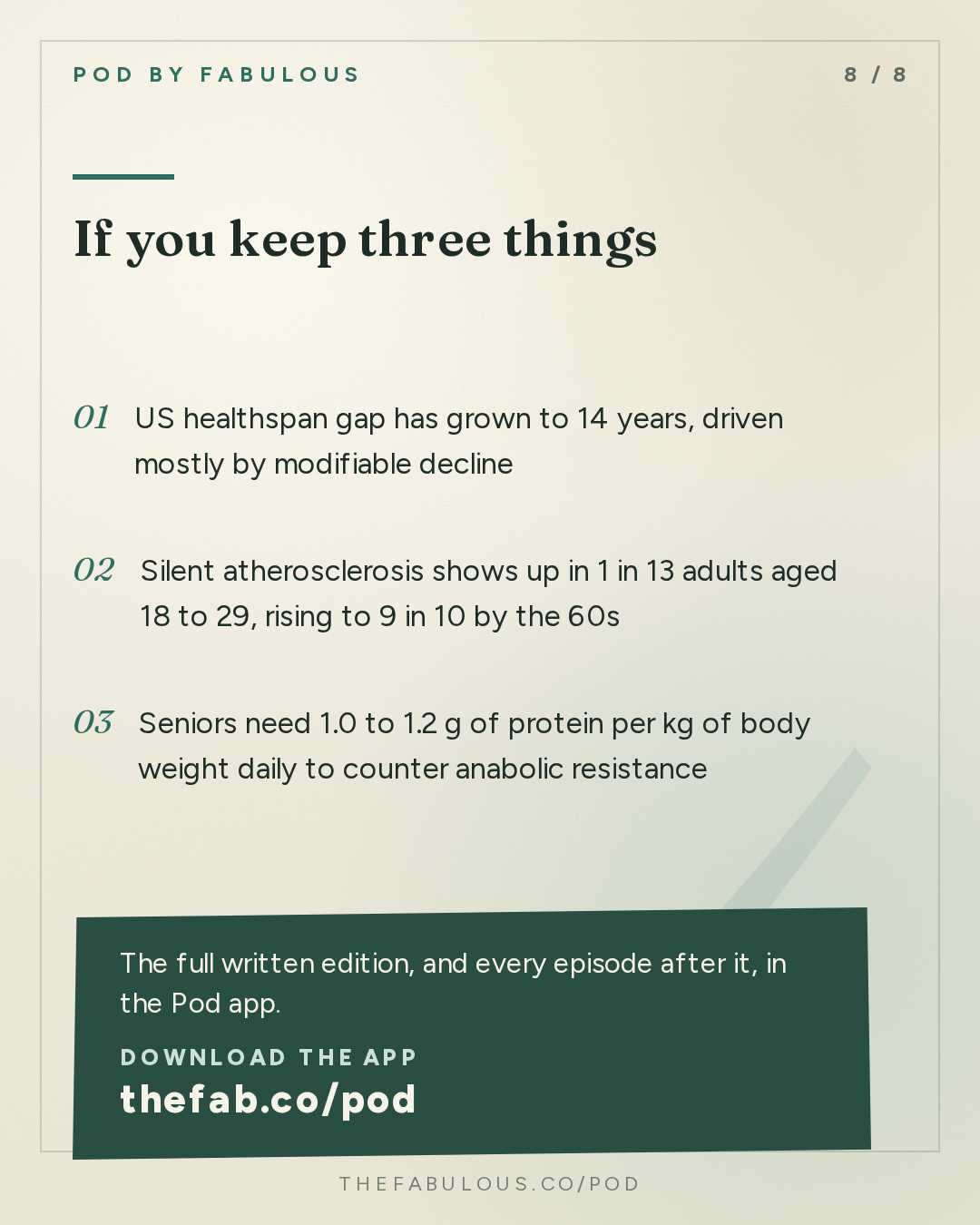
- US healthspan gap has grown to 14 years, driven mostly by modifiable decline
- Silent atherosclerosis shows up in 1 in 13 adults aged 18 to 29, rising to 9 in 10 by the 60s
- Seniors need 1.0 to 1.2 g of protein per kg of body weight daily to counter anabolic resistance
- Reduced stomach acid affects 10 to 30% of older adults, cutting vitamin B12 absorption from food
- Vitamin D supplements do not cut fracture risk in replete adults and can turn harmful at high doses
The episode in cards
By the numbers
- 14 years gap between lifespan and healthspan in the United States
- 45% percent dementia cases linked to modifiable risk factors per a Lancet Commission report
In their words
“Aging sets the direction, but behavior and our environments sort of, kind of determine the slope of decline.”
“An older adult has to meet the same or higher nutrient targets from fewer calories, which leaves a lot less room for nutrient poor foods.”
“Older muscle shows anabolic resistance. This means it needs more protein per meal to stimulate synthesis.”
“We can eat all the protein we want, but not put on muscle if we sit on the couch.”
Protocols
-
Shift B12 intake to fortified sources after 50
Charlyn Black advises that adults over 50 get most of their vitamin B12 from fortified foods or supplements because reduced stomach acid impairs B12 release from food in 10 to 30 percent of older adults, a problem that affects omnivores as well as vegetarians.
Daily
-
Raise protein intake to counter anabolic resistance
Black recommends that older adults eat 1.0 to 1.2 grams of protein per kilogram of body weight each day, above the standard 0.8 gram RDA, because aging muscle needs more protein per meal to trigger the same growth response.
Daily, spread across meals
-
Spread calcium intake across the day
Black suggests older adults aim for about 1200 milligrams of calcium daily and split that amount into smaller doses throughout the day, because the body absorbs calcium poorly when it arrives in one large dose.
Daily, split into doses
-
Build plates around plant servings
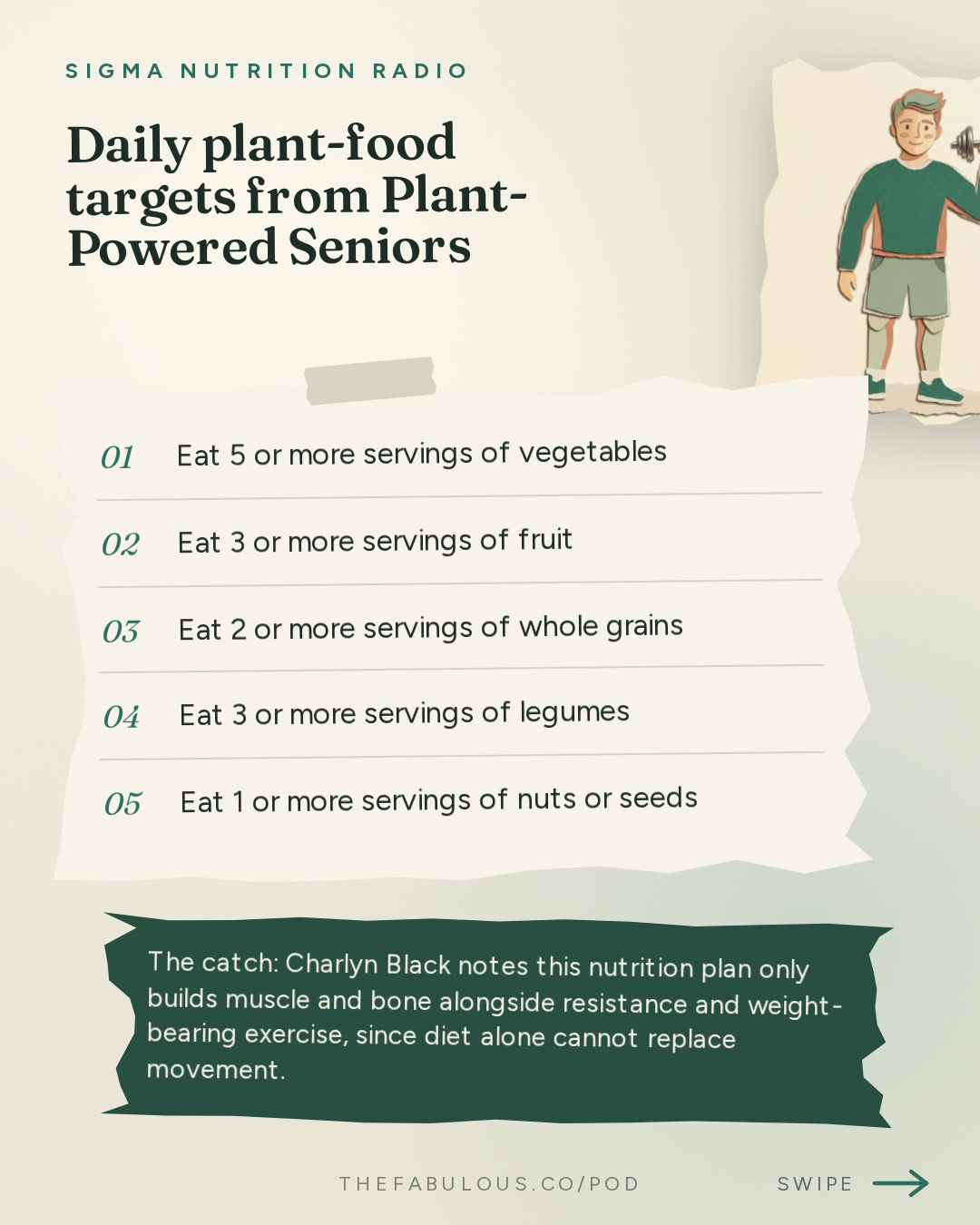
Black's co-authored book Plant-Powered Seniors recommends five or more servings of vegetables, three or more of fruit, two or more of whole grains, three or more of legumes, and at least one serving of nuts or seeds every day.
Daily
Questions this episode answers
How much protein do seniors need per day?
Gerontologic research cited by physician-researcher Charlyn Black recommends 1.0 to 1.2 grams of protein per kilogram of body weight daily for older adults, above the standard 0.8 gram RDA, because aging muscle shows anabolic resistance and needs more protein per meal to trigger the same growth response (24:47).
Why do older adults need more vitamin B12?
Reduced stomach acid, a condition called atrophic gastritis, affects 10 to 30 percent of older adults and impairs the release of B12 from food. The Institute of Medicine recommends that people over 50 get most of their B12 from fortified foods or supplements rather than relying on food absorption alone (23:05).
Does vitamin D supplementation prevent fractures?
Three large trials found that supplementing vitamin D in adults who are already replete does not reduce fracture risk, and that high levels can cause harm, according to Charlyn Black. Testing levels before supplementing is the more reliable approach (28:32).
At what age does atherosclerosis start developing?
The REACT study, which imaged arteries in 17,000 adults without known cardiovascular disease, found silent atherosclerosis already present in about 1 in 13 people aged 18 to 29, rising to roughly 9 in 10 by the sixties (15:14).
Is muscle loss with age reversible?
A JAMA study cited in the episode found that frail nursing home residents around age 90 made large strength gains after just 8 weeks of resistance training, suggesting much of age-related muscle loss stems from disuse rather than irreversible biology (11:52).
The full read, in cards
Go deeper
- REACT study — imaged coronary, carotid, and leg arteries of 17,000 adults and found silent atherosclerosis in 1 in 13 people aged 18 to 29, published in the New England Journal of Medicine
- Lancet Commission report on dementia — estimated that about 45 percent of dementia cases are linked to modifiable risk factors
- JAMA nursing home resistance training study — found frail residents around age 90 made large strength gains after 8 weeks of resistance training
- Plant-Powered Seniors — Charlyn Black's co-authored book outlining daily plant-food serving targets and supplement guidance for older adults
Mentioned
Charlyn Black · University of British Columbia · Johns Hopkins University · REACT study · Lancet Commission · Plant-Powered Seniors · Institute of Medicine
More from this show and category
Micronutrients for Anxiety and Depression
Nutrition and mental health trials only prove a supplement works if contact time, baseline severity, and outcome measures are controlled for. The 2023 NOMAD-RCT tested this by giving matched minimal contact to both groups and measuring medication-free adults with the PHQ-9 and GAD-7, isolating whether a micronutrient formula alone affects anxiety and depression.
Harry Sokol on Gut Microbiome and Health
Gastroenterologist Harry Sokol says science still can't define a healthy gut microbiome. Fecal transplants cure 80-90% of recurrent C. difficile infections but only 30-35% of ulcerative colitis cases, the Mediterranean diet remains the best-evidenced prevention strategy, and current consumer microbiome tests lack reproducibility and clinical use.
Plant-Based Diets for Athletes and Sustainability
Elite sports nutritionist Pieter Res says athletes can shift toward plant protein for sustainability without losing performance or muscle growth. Research from the Van Loon lab shows 30 grams of combined plant protein per meal matches whey's muscle protein synthesis ceiling (17:31), and cutting beef remains the single biggest lever for reducing diet's environmental impact (08:49).
How to Interpret Testosterone Test Results
A single testosterone number rarely settles the question of whether treatment will help. Physician Austin Baraki says free testosterone, symptom type, and the underlying cause of a low reading (often obesity, poor sleep, or alcohol) matter more than one blood draw, and a 4 to 6 month trial beats a lifelong commitment.
