
Micronutrients for Anxiety and Depression
Can Micronutrient Supplements Help With Anxiety, Depression & Emotional Regulation? (SNP55)
The brief
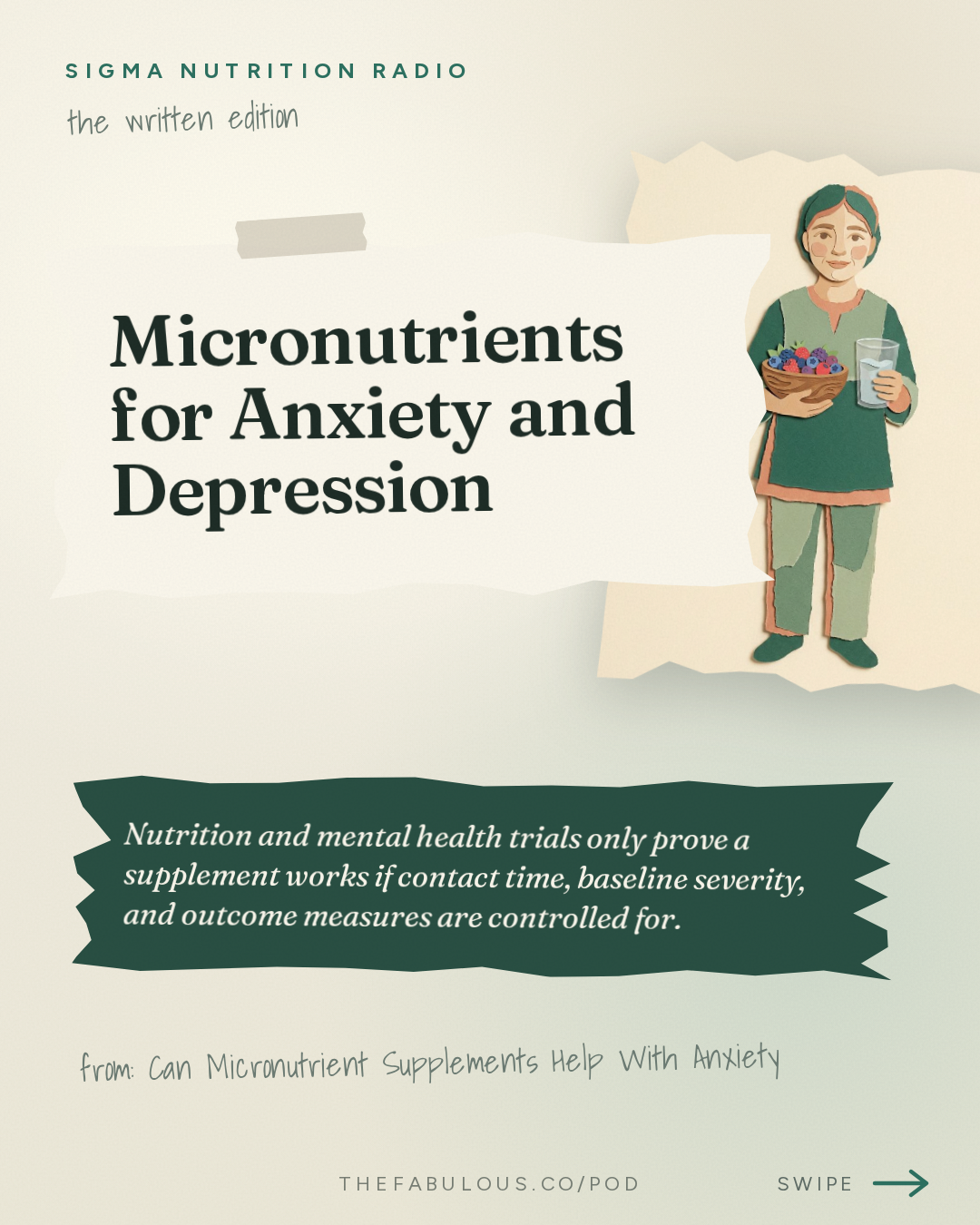
Nutrition and mental health trials only prove a supplement works if contact time, baseline severity, and outcome measures are controlled for. The 2023 NOMAD-RCT tested this by giving matched minimal contact to both groups and measuring medication-free adults with the PHQ-9 and GAD-7, isolating whether a micronutrient formula alone affects anxiety and depression.
In one of the better-designed trials covered in this episode of Sigma Nutrition Radio, the gap between the group taking a high-dose multivitamin and the group taking nothing extra came down to very little: a capsule, since the weekly text reminding people to fill in an online form was identical across both groups. Everything else was identical, the baseline interview, the end-of-trial interview, and oversight from the same clinical psychologist for both groups (13:23). That sameness is not an accident. It is the entire point of the trial, and it is the reason host Danny Lennon and nutrition researcher Alan Flanagan hold it up as a rare example of a nutrition study built to answer the question it actually asks.
The episode starts from a listener question. A Sigma Nutrition Premium subscriber named Rachel asked about the work of Professor Julia Rucklidge, whose lab studies high-dose micronutrient supplements, meaning broad-spectrum combinations of vitamins and minerals, for conditions like anxiety, depression, and irritability (00:15). Rucklidge had appeared on the podcast roughly a decade earlier, and her group has since published a string of new trials (03:45). Lennon and Flanagan pick three: the NOMAD-RCT, in medication-free adults with anxiety and depression; NutriMum, in pregnant women with depressive symptoms; and BEAM, in adolescents with irritability and emotional dysregulation (11:30). Before getting to results, they spend the first half of the conversation on something less glamorous and more important: how anyone would know if any of these trials worked.
The measurement problem
Flanagan's starting complaint is that the field of nutrition and mental health is crowded with headlines and thin on evidence, a pattern he and Lennon had already traced through the widely cited SMILES trial, an earlier diet-and-depression study referenced here as a cautionary example (02:58). Part of the problem is definitional. Depression or anxiety sound like fixed targets, but researchers measure them with a long list of different instruments, each with its own strengths and blind spots.
"This is an area with a dizzying array of different instruments that have been developed to nominally capture what we are interested in." (Alan Flanagan, 05:41)
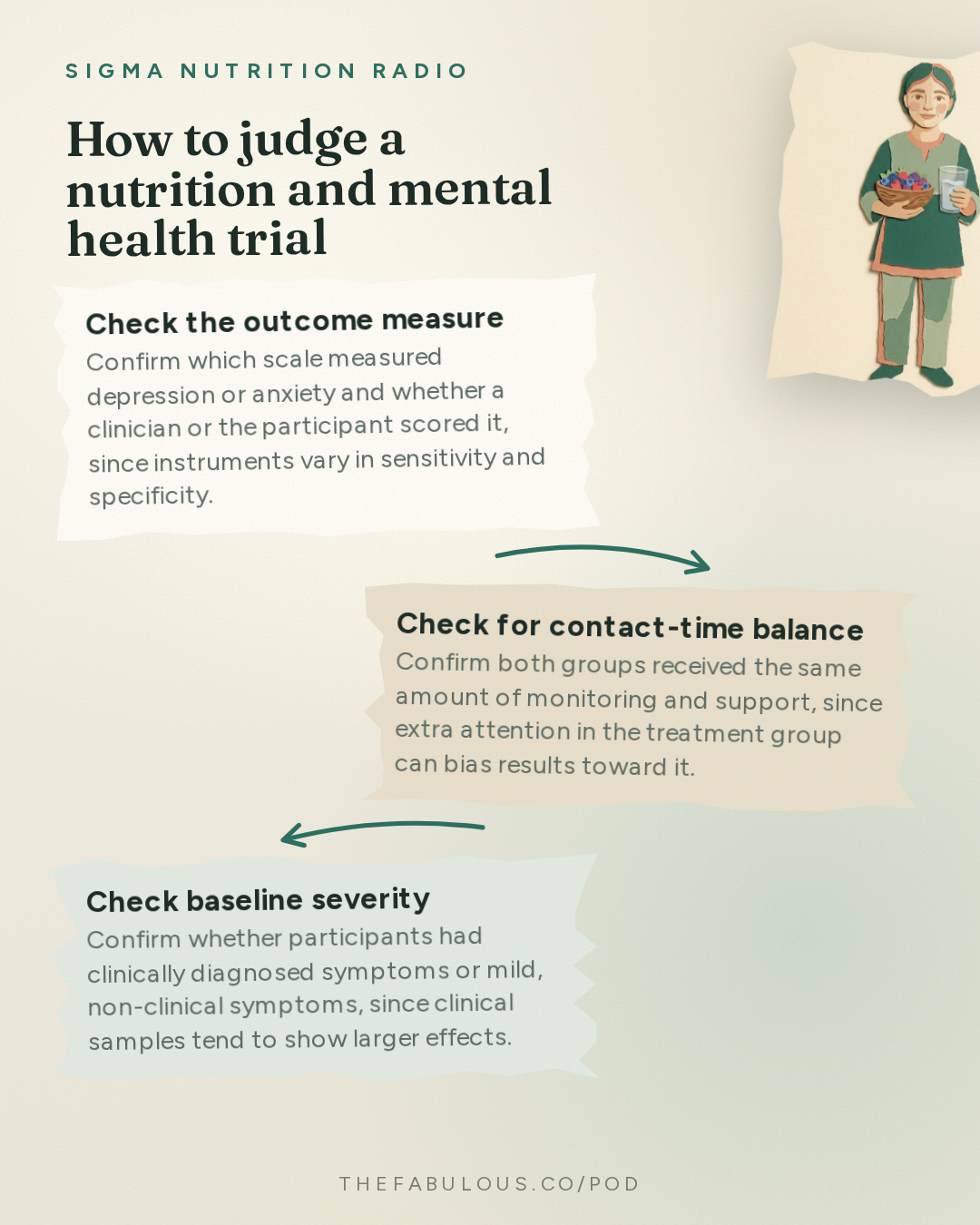
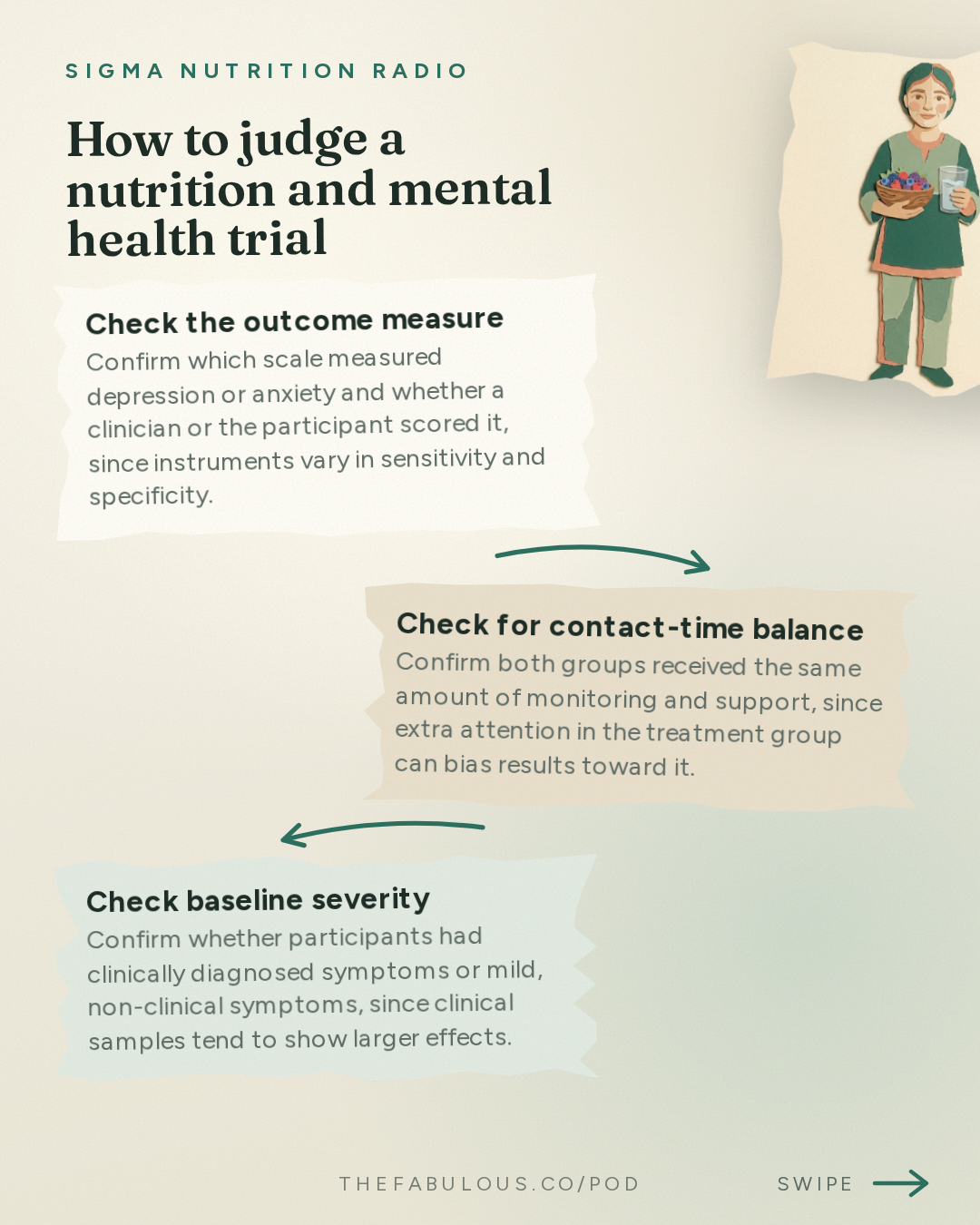
Flanagan walks through why this matters. Scales differ in sensitivity, meaning how well they catch true cases, and specificity, meaning how well they rule out false ones. They also differ in how closely they track formal diagnostic criteria and in whether a clinician scores them or the patient scores themselves (06:54). A trial that looks positive on one scale can look flat on another, not because the treatment changed but because the ruler changed.
The second problem is structural, and it goes back to why randomized trials exist in the first place: to isolate an independent effect of one intervention, stripped of everything else that might be happening around it (07:24). Pharmacological trials are comparatively simple. Behavioral and nutritional trials are not. Flanagan points out that in many of these studies, the group getting the active intervention also gets more attention, more monitoring, sometimes informal counseling, while the control group is left with vague usual care.
"Imbalance between an intervention group and a control group... introduces enormous bias towards the intervention group." (Alan Flanagan, 08:04)
That imbalance means a positive result can reflect extra human contact rather than anything in a supplement or a diet plan. It is a bias built into the design, not something that shows up later as a footnote in the discussion section.
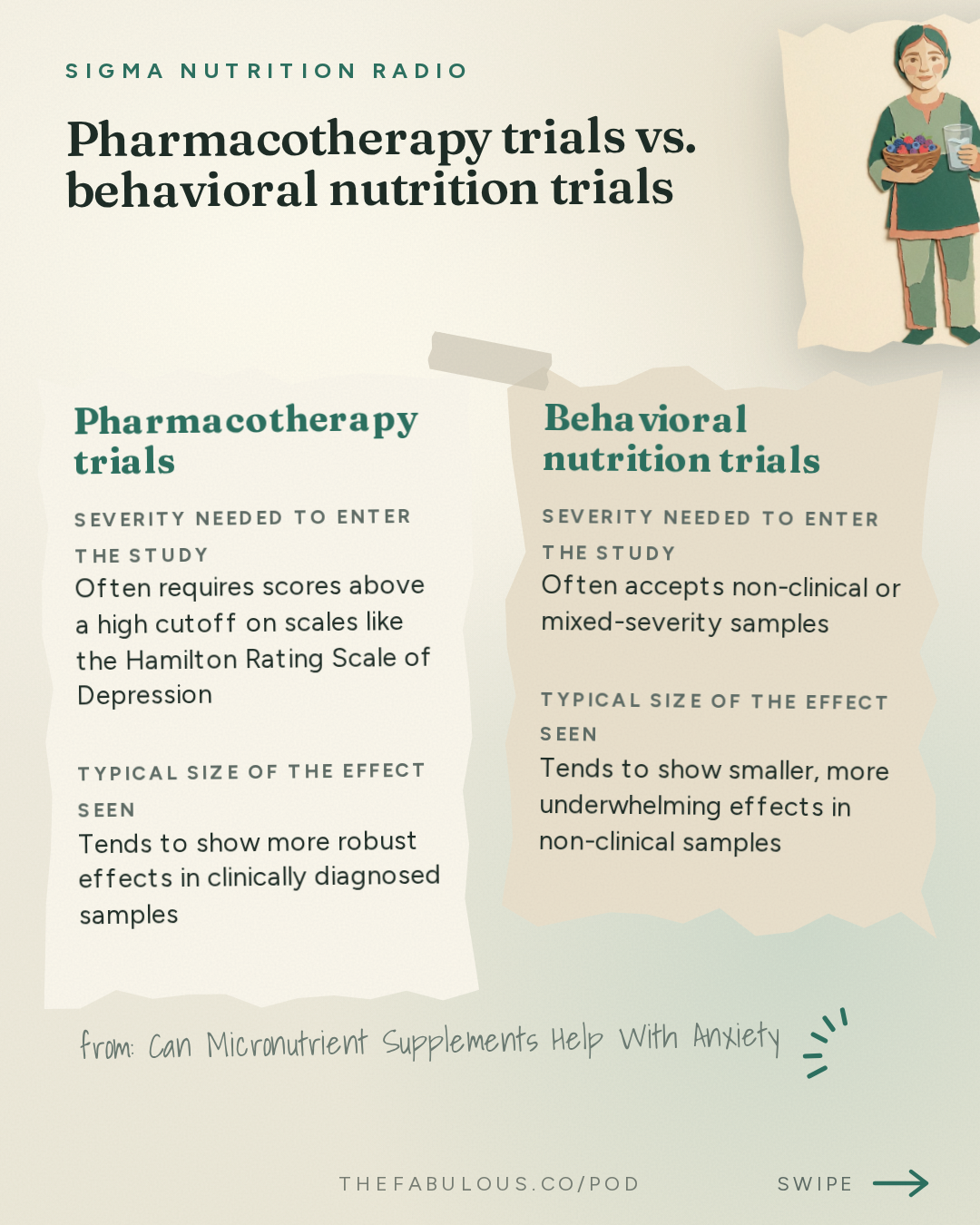
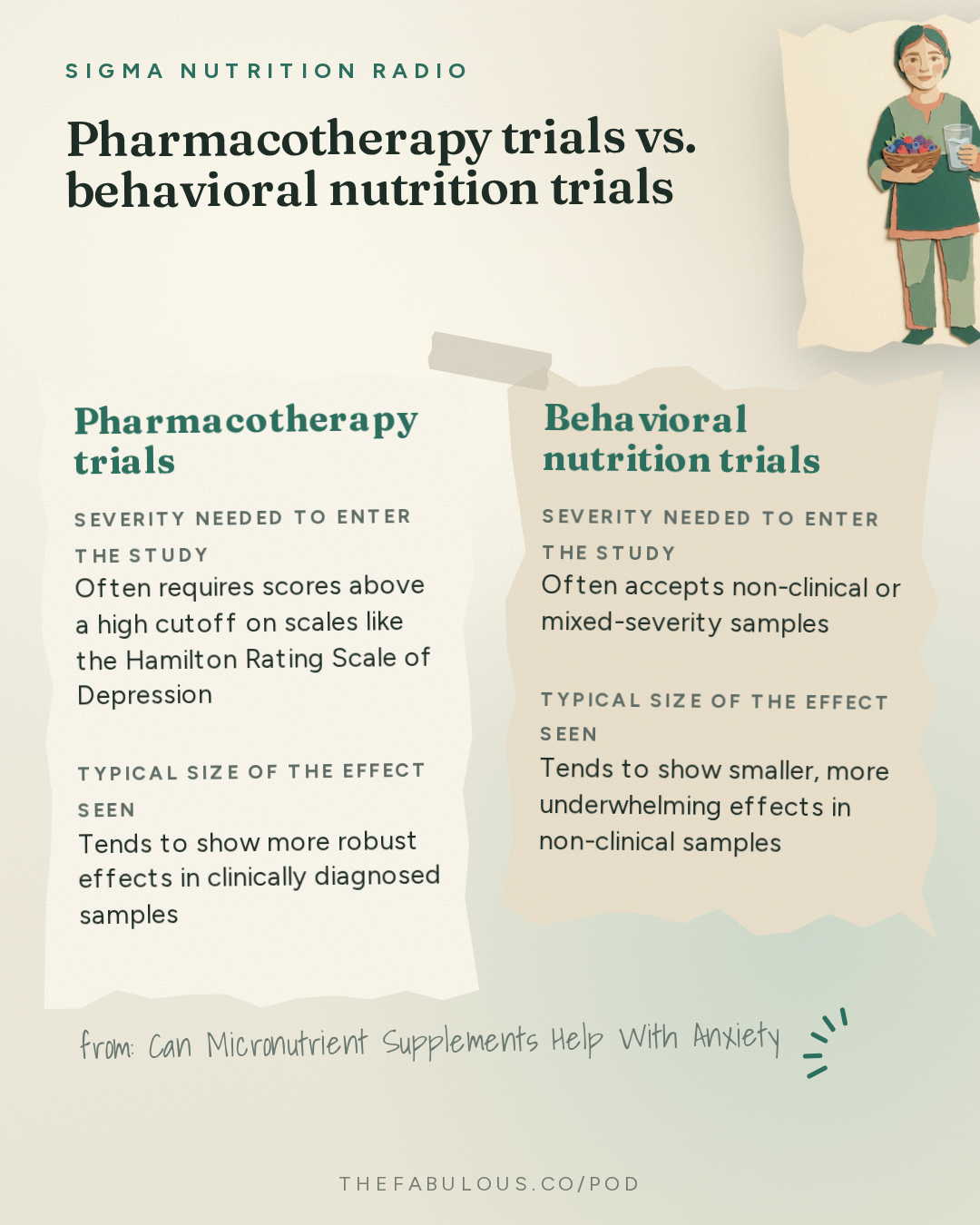
The third issue is who gets enrolled in the first place. Flanagan notes that drug trials for depression often require scores above a fairly high cutoff on instruments like the Hamilton Rating Scale of Depression before someone qualifies, which means the sample is clinically severe (08:54). Behavioral and nutrition trials frequently set a lower bar, enrolling people with mild or non-clinical symptoms, or a mix of severities in the same study. That choice has consequences: interventions tend to show larger, more convincing effects in people who are more severely affected, and smaller, murkier effects in milder or mixed samples (09:29). So two trials can test the same supplement and reach different conclusions for a reason that has nothing to do with the supplement itself: who walked in the door.
What the NOMAD trial got right
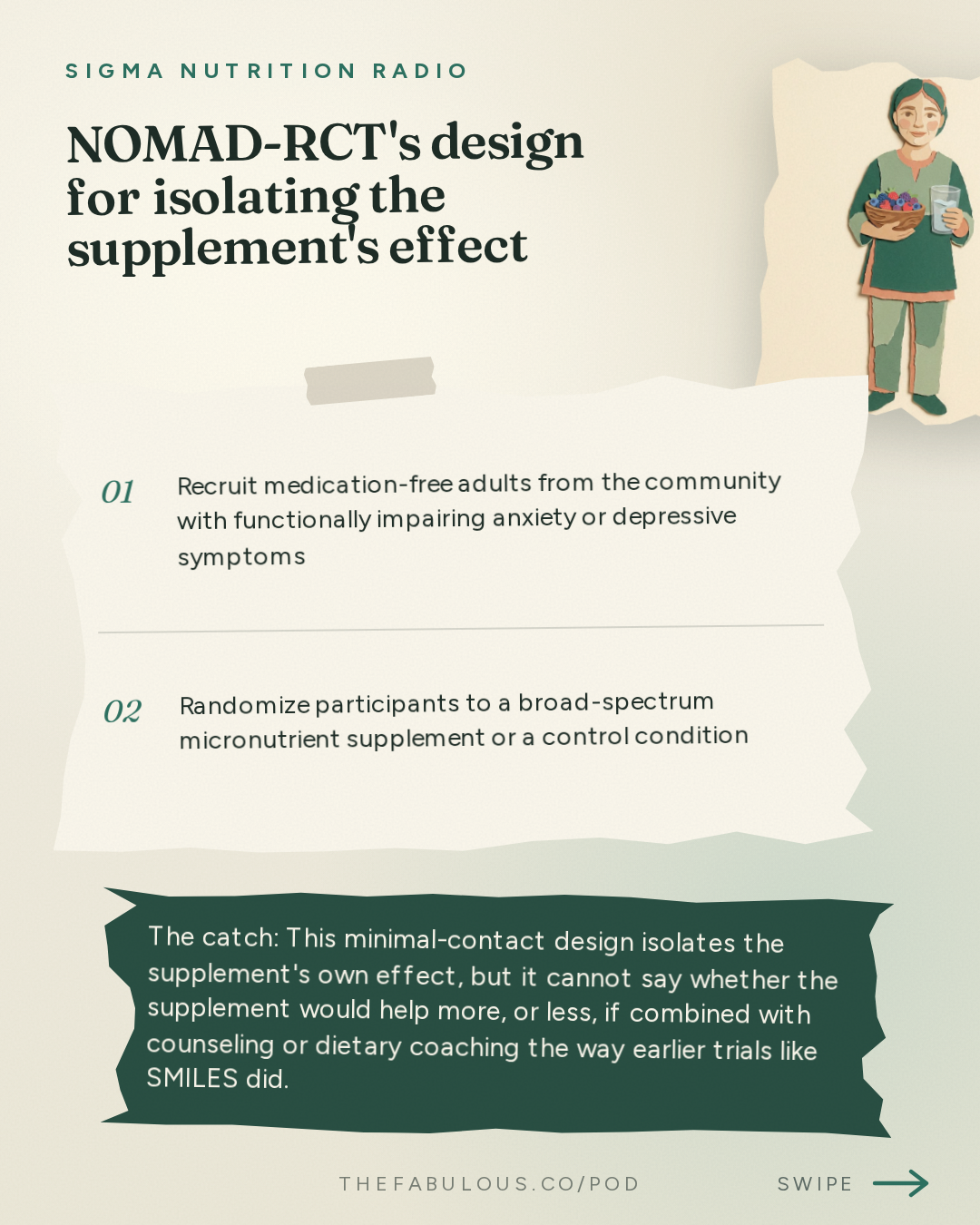
This is the checklist Lennon and Flanagan apply to the NOMAD-RCT, published in 2023, which tested a broad-spectrum micronutrient formula against what the researchers call functionally impairing anxiety and depressive symptoms in adults (12:00, 12:23). The sample was deliberately community-based rather than clinically severe: medication-free adults recruited outside a psychiatric setting (12:35, 12:52). On its own, that would predict the smaller-effect pattern Flanagan already flagged. But the design compensates for the other major source of bias. Both the supplement group and the control group were monitored by the same clinical psychologist, and contact was kept to a bare minimum on purpose: a baseline assessment, an end-of-trial interview, and weekly text reminders to complete online questionnaires (13:23, 13:45). Neither group received counseling or formal therapy. The contact that did happen was administrative, not therapeutic, and it was identical across both arms.
Flanagan calls this a genuine strength, because it means the trial was built to ask one specific question: does the micronutrient formula itself do anything, separate from the extra support, counseling, or dietary coaching that complicates so many other nutrition-and-mental-health studies (14:05)? That is a narrower and more honest question than the one headlines usually imply, and it is the reason the trial's design, not yet its results, earns the attention it gets in this episode.
The outcomes themselves were measured with two tools: the PHQ-9 and the GAD-7 (14:35). The PHQ-9, or Patient Health Questionnaire Nine, is a nine-item, self-reported scale used both to screen for depression and to track its severity over time (14:50). Flanagan singles it out as one of the stronger instruments available because it has high sensitivity and specificity for detecting major depressive disorder, meaning it tends to correctly flag people who have the condition and correctly clear people who do not (15:06).
This preview portion of the episode stops short of walking through the NOMAD trial's actual results, saving that for the full premium episode. What it delivers instead is a working method for reading any trial in this space: ask what instrument measured the outcome and who administered it, ask whether the control group was matched for contact and attention, and ask how severe the enrolled sample was to begin with. Apply those three questions to the SMILES trial, and its halo starts to look thinner. Apply them to NOMAD, and the design holds up noticeably better, even before anyone looks at a single number in the results table.
That is a useful discipline for anyone who reads a diet-and-mood headline and wants to know whether to believe it. The claim that a food or a supplement changes how people feel is easy to make and hard to test well. The way to tell the difference is not to argue about nutrients in the abstract, but to ask the duller, more specific questions this episode keeps returning to: what was measured, who was compared to whom, and how much contact did each group actually get. A capsule and a weekly text message, it turns out, can be the most rigorous thing in the room.
Ask this episode anything
Pod's AI answers from the episode itself, with the minute mark so you can hear it yourself.
Or start with one of these
Ask this episode
Pod's AI listens to the whole episode to answer, and points you to the minute it comes from.
The rest of this answer, and any question after it
Answers come from the episode itself, never from a summary of it.
ContinueKey takeaways
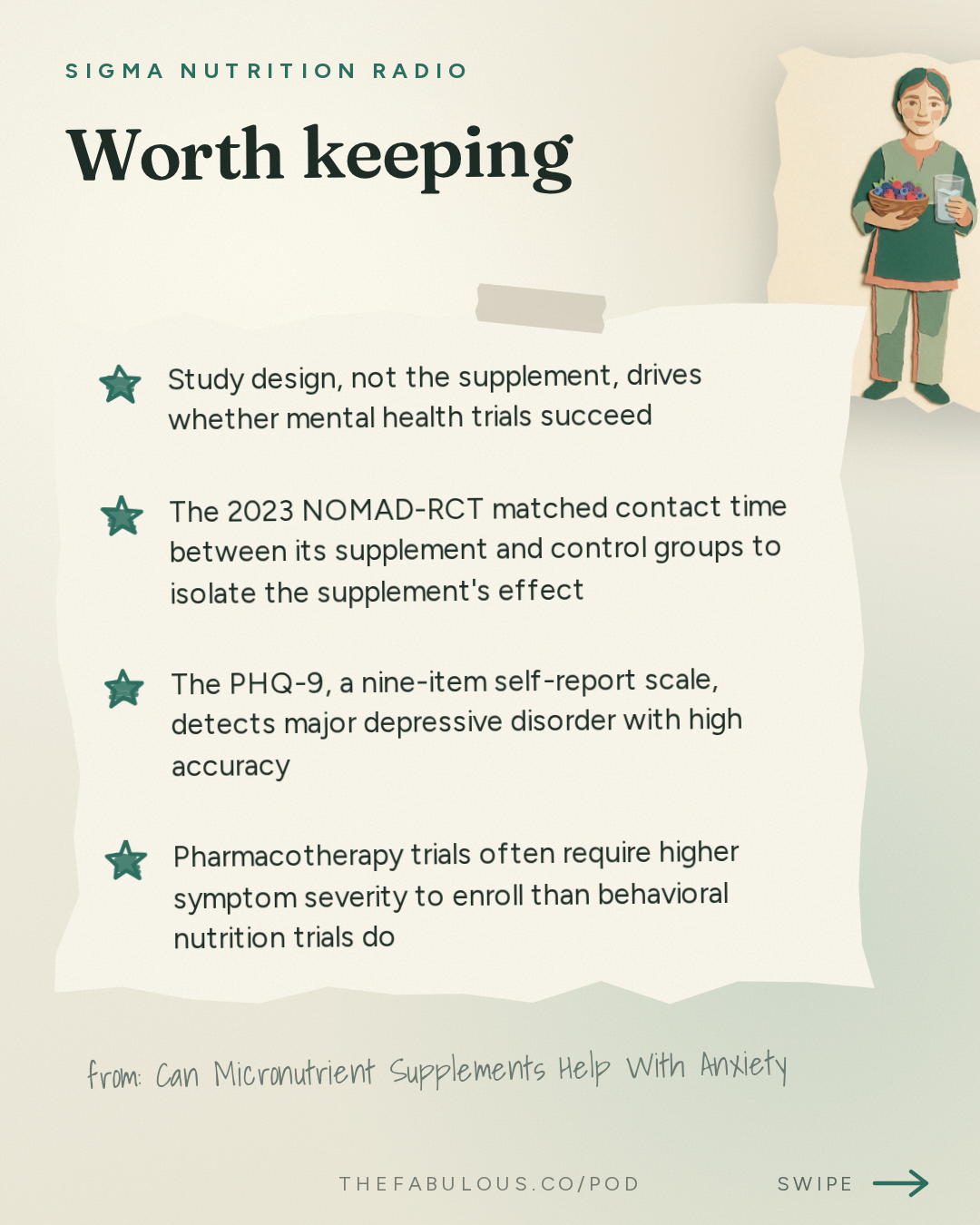
- Study design, not the supplement, drives whether mental health trials succeed
- The 2023 NOMAD-RCT matched contact time between its supplement and control groups to isolate the supplement's effect
- The PHQ-9, a nine-item self-report scale, detects major depressive disorder with high accuracy
- Pharmacotherapy trials often require higher symptom severity to enroll than behavioral nutrition trials do
- Mental health research uses many different rating scales, which can vary in accuracy and skew results
The episode in cards
By the numbers
- 2023 year publication year of the NOMAD-RCT micronutrient trial
- 9 items number of questions in the PHQ-9 depression screening tool
In their words
“There are a lot of strong claims and narratives online, but very scarce evidence of there being much to that.”
“This is an area with a dizzying array of different instruments that have been developed to nominally capture what we are interested in.”
“The PHQ-9 is the Patient Health Questionnaire Nine, which is a very widely used nine item self-reporting scale to screen and diagnose and measure severity of depression.”
Protocols
-
NOMAD-RCT's matched minimal-contact design
Researchers running the NOMAD-RCT gave both the micronutrient group and the control group the exact same contact: a baseline assessment, an end-of-trial interview, and weekly reminder texts to complete online questionnaires. Neither group received counseling or formal therapy, because the design's purpose was to isolate whether the supplement itself changed anxiety and depression scores, separate from any extra support.
weekly reminder texts, plus baseline and end-of-trial contact
Questions this episode answers
Do micronutrient supplements help with anxiety and depression?
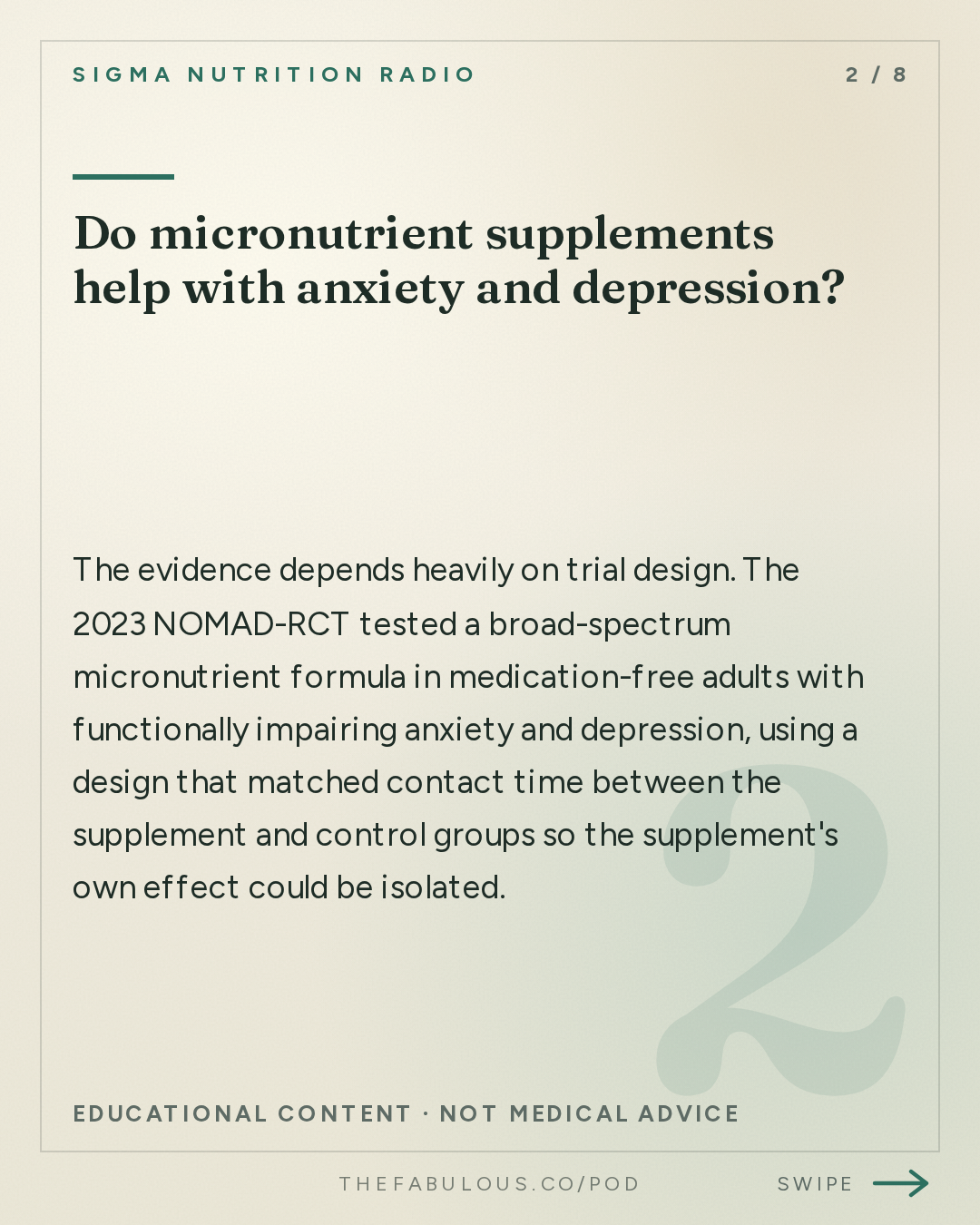
The evidence depends heavily on trial design. The 2023 NOMAD-RCT tested a broad-spectrum micronutrient formula in medication-free adults with functionally impairing anxiety and depression, using a design that matched contact time between the supplement and control groups so the supplement's own effect could be isolated (12:00, 13:23).
What is the PHQ-9?
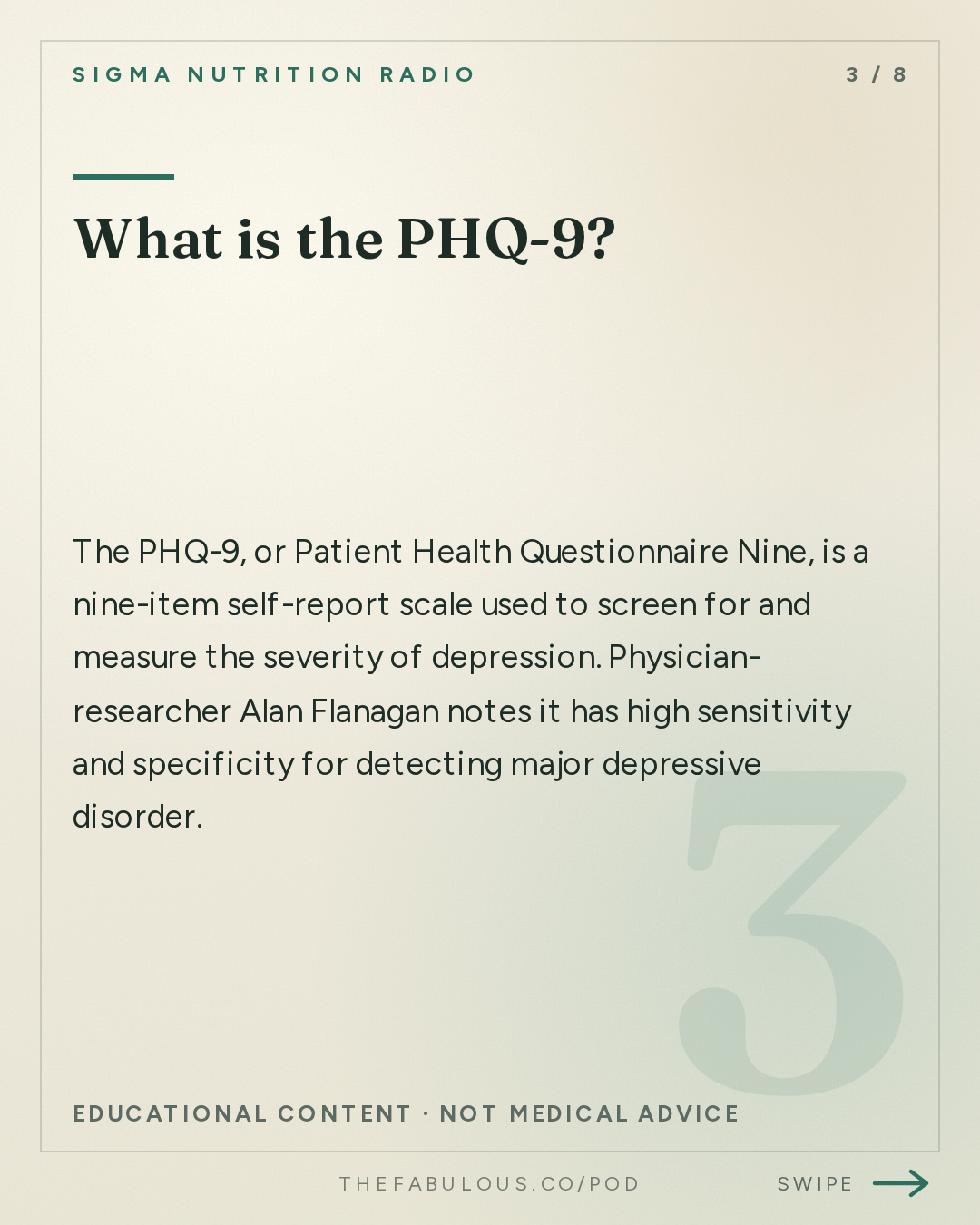
The PHQ-9, or Patient Health Questionnaire Nine, is a nine-item self-report scale used to screen for and measure the severity of depression. Physician-researcher Alan Flanagan notes it has high sensitivity and specificity for detecting major depressive disorder (14:50, 15:06).
Why is the SMILES trial criticized?
The SMILES trial, an earlier diet-and-depression study, is used in this episode as an example of how behavioral nutrition trials can struggle to isolate an intervention's independent effect when the treatment group gets more contact or support than the control group (02:58, 08:04).
What is the difference between the PHQ-9 and the GAD-7?
The PHQ-9 measures depression severity with nine self-reported items, while the GAD-7 measures anxiety severity, and the NOMAD-RCT used both as its primary outcomes to capture two distinct symptom clusters in the same sample (14:35).
Why do nutrition trials for mental health get criticized for bias?
Alan Flanagan explains that when a treatment group receives more monitoring, counseling, or practitioner contact than the control group, that imbalance alone can produce an apparent benefit that has nothing to do with the nutrient or diet being tested (08:04).
The full read, in cards
Go deeper
- SMILES trial — an earlier diet-and-depression trial used here as an example of contact-time and sampling bias in nutrition research
- NOMAD-RCT — a 2023 trial testing a broad-spectrum micronutrient formula against anxiety and depressive symptoms in medication-free adults using matched minimal contact
Mentioned
Julia Rucklidge · Alan Flanagan · Danny Lennon · SMILES trial · NOMAD-RCT · NutriMum · BEAM · PHQ-9 · GAD-7 · Hamilton Rating Scale of Depression · Sigma Nutrition
More from this show and category
Harry Sokol on Gut Microbiome and Health
Gastroenterologist Harry Sokol says science still can't define a healthy gut microbiome. Fecal transplants cure 80-90% of recurrent C. difficile infections but only 30-35% of ulcerative colitis cases, the Mediterranean diet remains the best-evidenced prevention strategy, and current consumer microbiome tests lack reproducibility and clinical use.
Plant-Based Diets for Athletes and Sustainability
Elite sports nutritionist Pieter Res says athletes can shift toward plant protein for sustainability without losing performance or muscle growth. Research from the Van Loon lab shows 30 grams of combined plant protein per meal matches whey's muscle protein synthesis ceiling (17:31), and cutting beef remains the single biggest lever for reducing diet's environmental impact (08:49).
How to Interpret Testosterone Test Results
A single testosterone number rarely settles the question of whether treatment will help. Physician Austin Baraki says free testosterone, symptom type, and the underlying cause of a low reading (often obesity, poor sleep, or alcohol) matter more than one blood draw, and a 4 to 6 month trial beats a lifelong commitment.
Body Composition Testing: DEXA vs BIA Accuracy
No device on the market actually measures body fat; every scale, scan, or pod only estimates it from indirect signals, and a method proven accurate for a group can still mislead an individual user. Texas Tech professor Grant Tinsley explains why standardizing tests, tracking one device over time, and treating small percentage swings as noise matter more than any single number (12:49, 38:24).
