
Harry Sokol on Gut Microbiome and Health
#625: Does Changing the Microbiome Actually Improve Health? – Prof. Harry Sokol
The brief
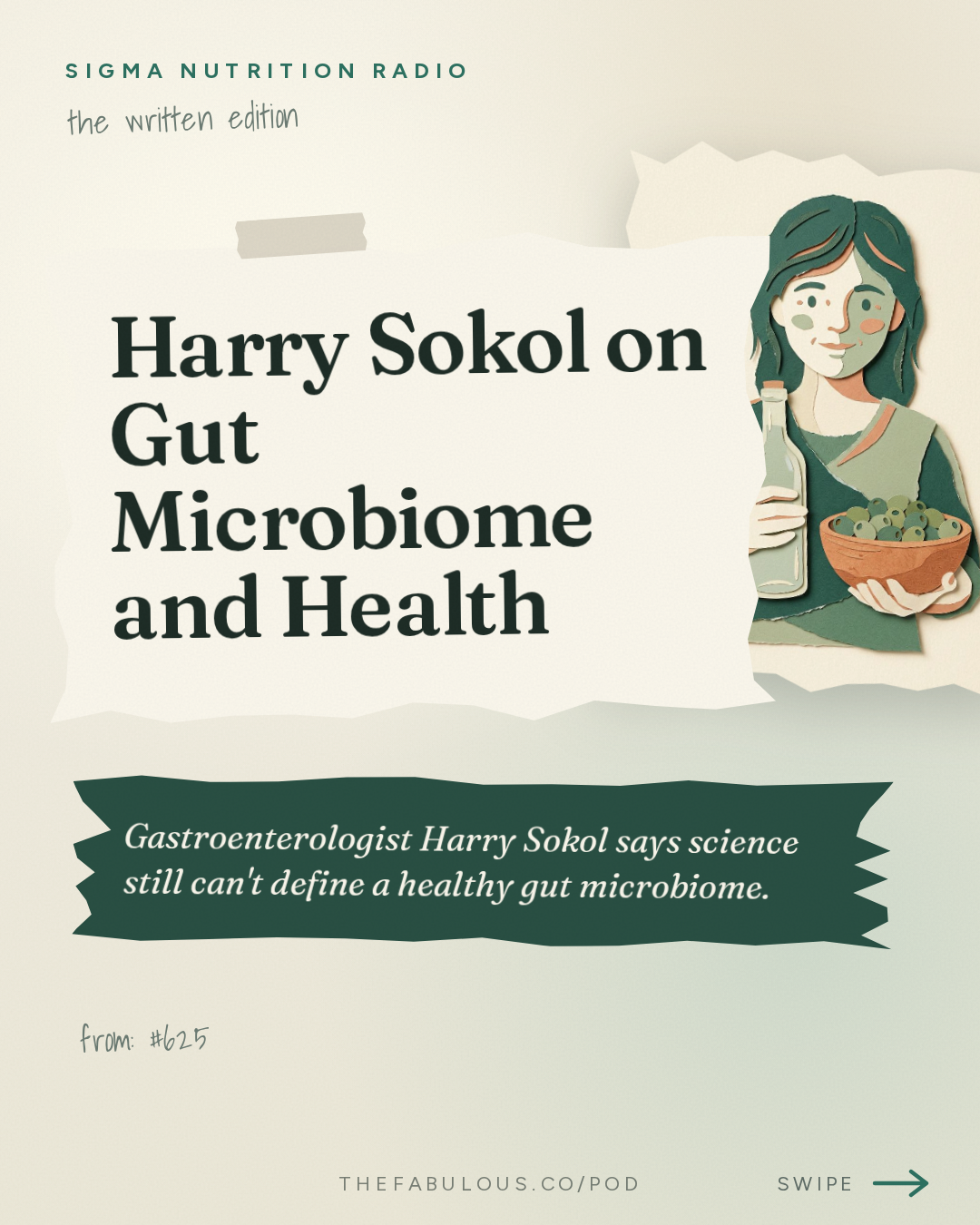
Gastroenterologist Harry Sokol says science still can't define a healthy gut microbiome. Fecal transplants cure 80-90% of recurrent C. difficile infections but only 30-35% of ulcerative colitis cases, the Mediterranean diet remains the best-evidenced prevention strategy, and current consumer microbiome tests lack reproducibility and clinical use.
A curious thing happens when a scientific field gets popular before it gets settled: the public starts acting on answers the scientists themselves do not have yet. The gut microbiome, the trillions of bacteria living in the human intestine, is a case study. There are tests, supplements, and diet plans built around the idea of a "healthy microbiome." And yet Professor Harry Sokol, a gastroenterologist at Saint Antoine Hospital and Sorbonne University in Paris who runs one of France's main fecal transplant centers, says plainly that no one can define what that actually means (05:31). The field, he explains, is only twenty to twenty-five years deep into serious study, and many of the basic functions of gut bacteria are still unknown. Without knowing what the bacteria normally do, there is no way to say what "normal" looks like.
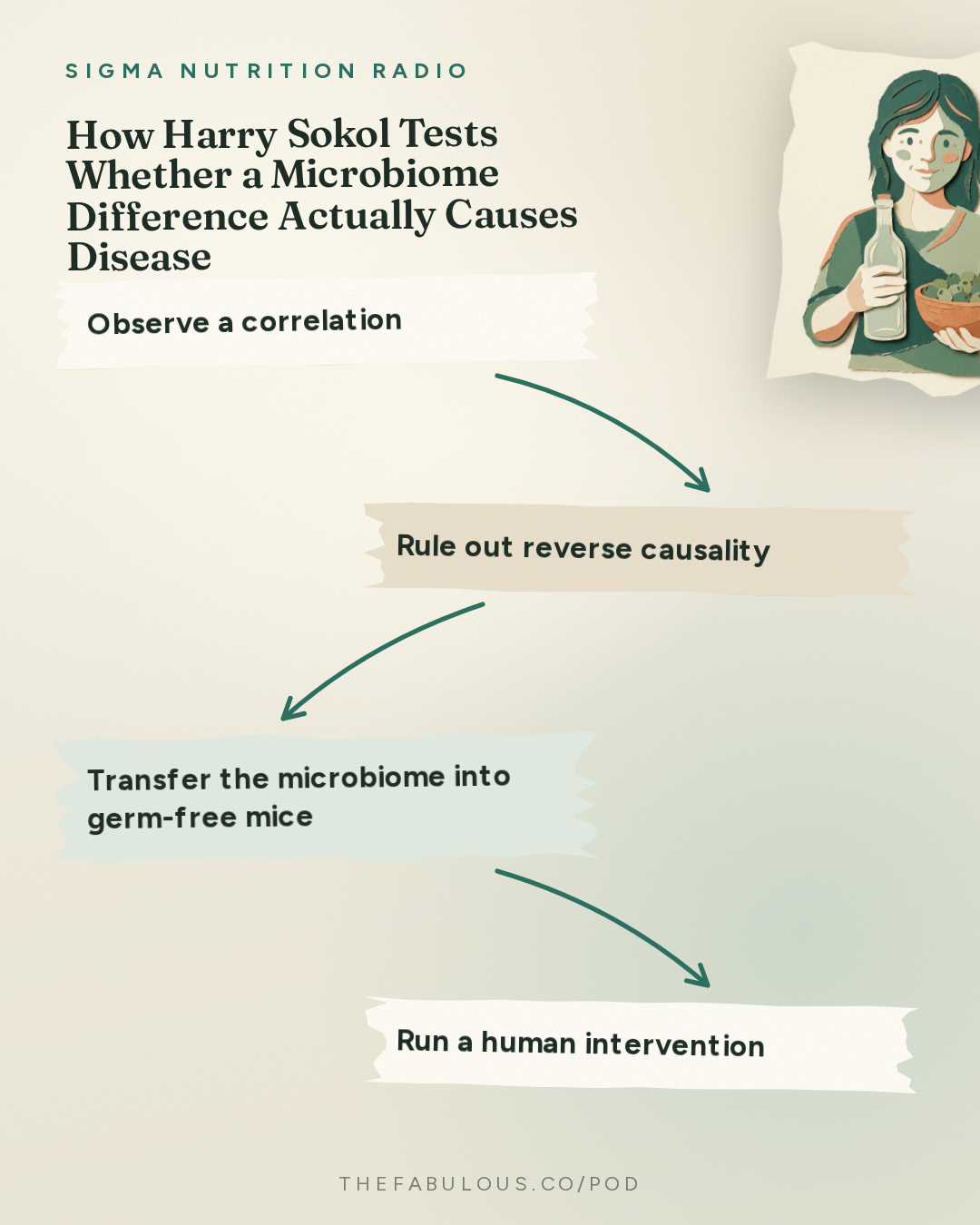
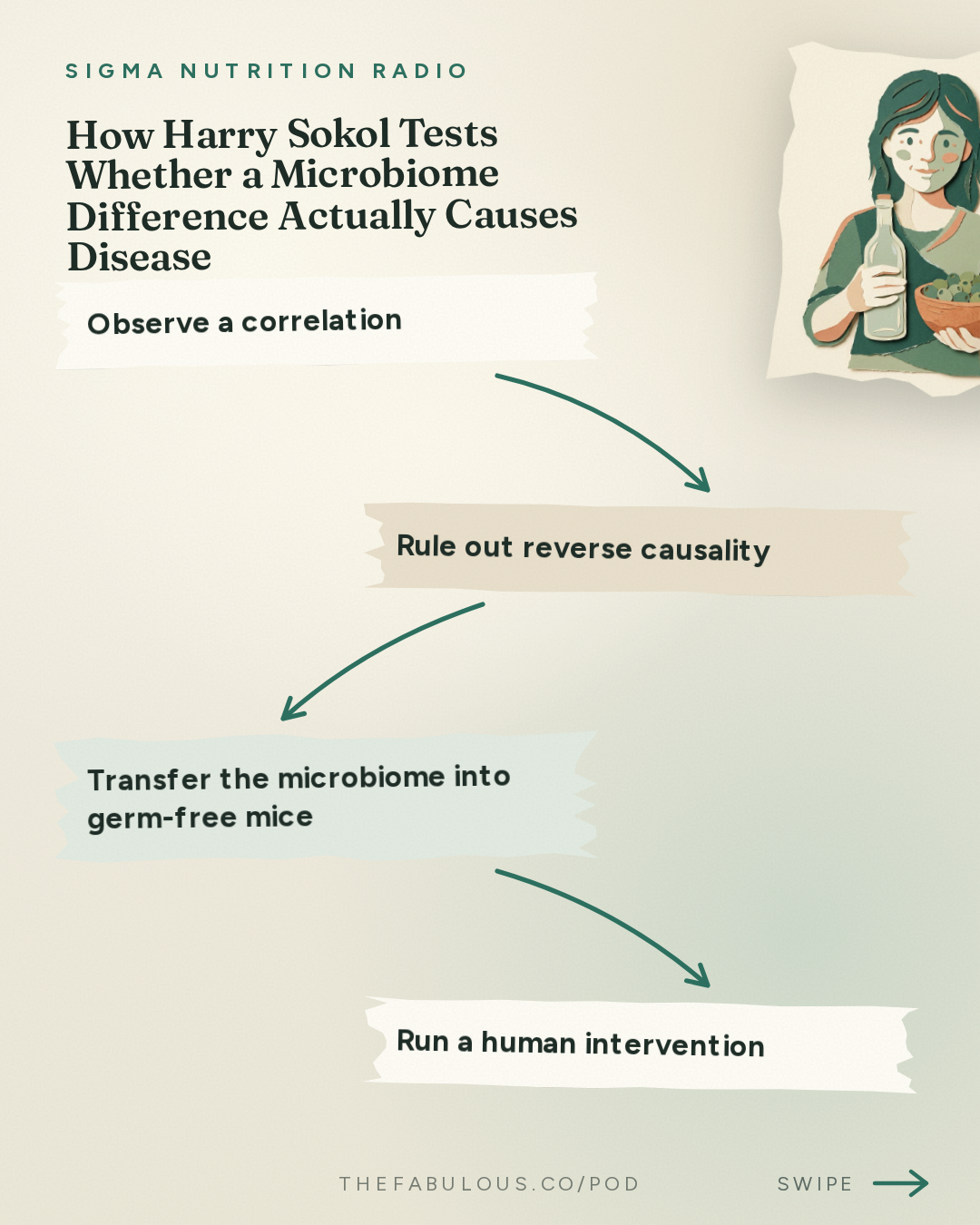
That gap matters because it shapes how easily a finding gets oversold. Sokol's broader point is that most of the popular claims about the microbiome rest on correlation, not causation, and correlation is a trap. He offers a simple example: catch a stomach virus, and a microbiome sample taken during the illness will look disturbed. That disturbance is not a cause of the disease, it is a result of it, a pattern researchers call reverse causality (08:34). To tell the difference between a bystander and a driver, Sokol's own research follows a specific sequence: take the microbiome from sick patients and transplant it into germ-free mice, animals raised with no microorganisms of their own, and see whether the disease follows the bacteria (09:25). Even that is not proof, since mice are not humans. The real test is intervention: change a person's microbiome, through a fecal transplant or an antibiotic, and see if the disease itself changes.
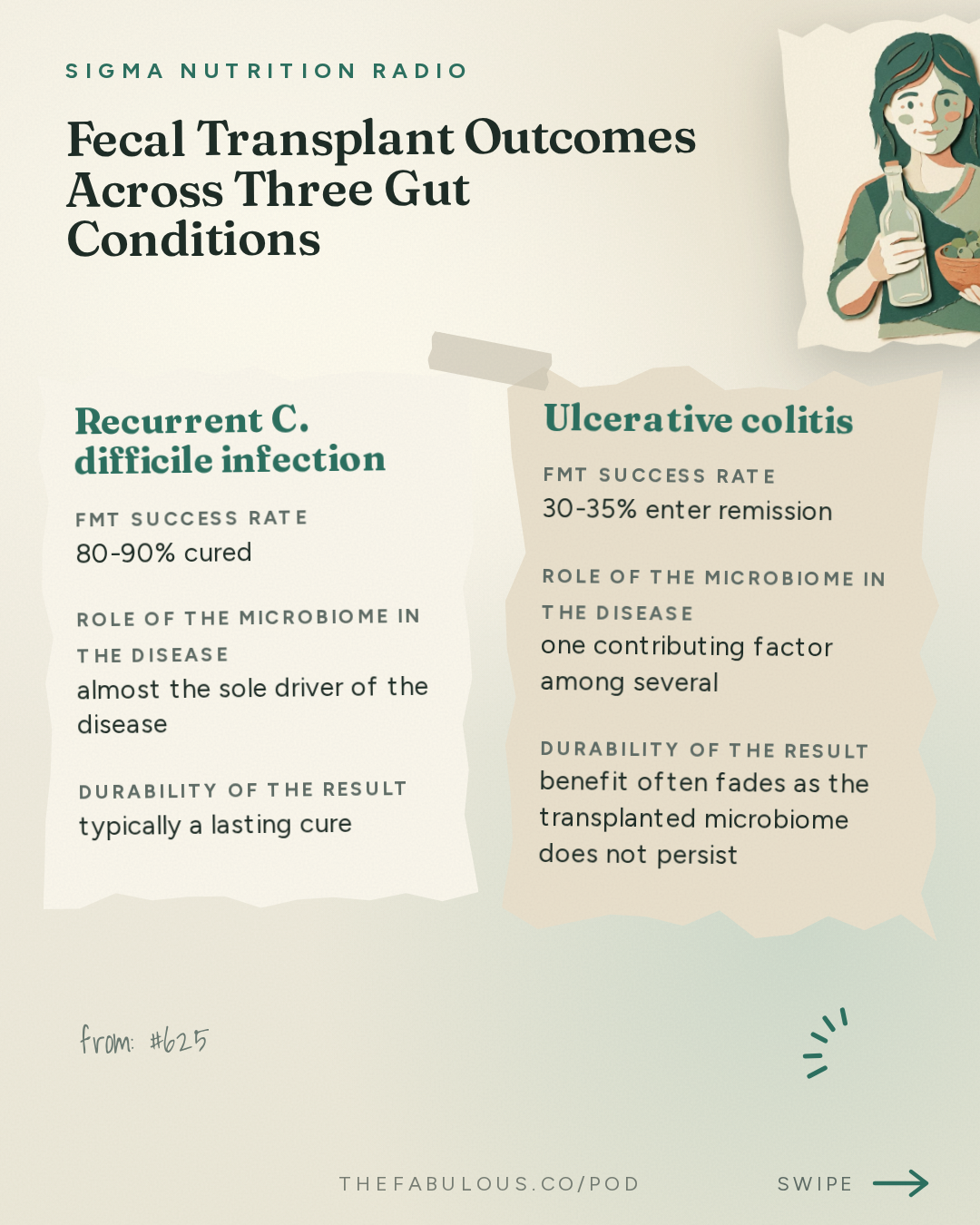
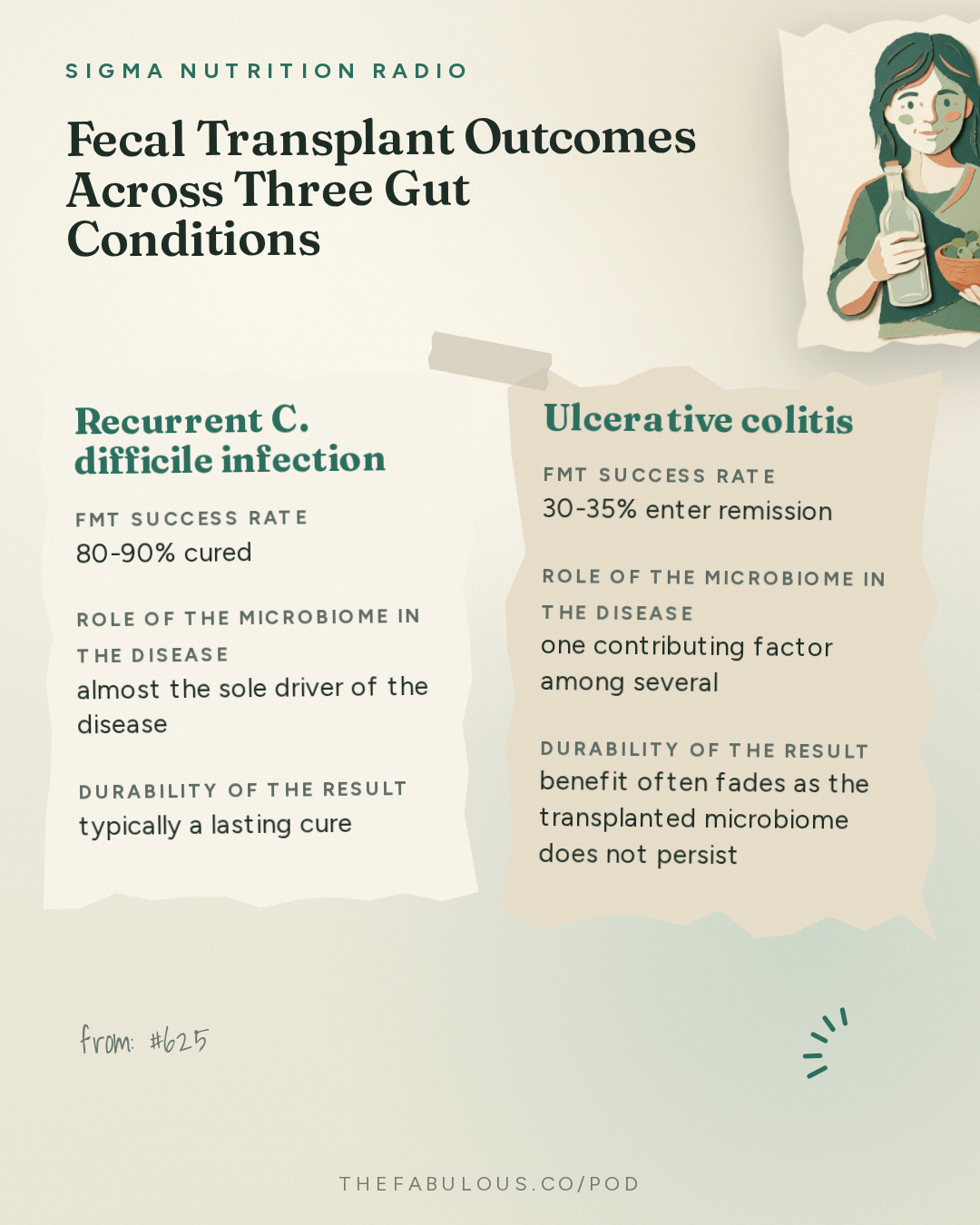
Fecal microbiota transplantation, known as FMT, is the clearest case of doing this well, and it also shows how unevenly it works across diseases. For recurrent Clostridioides difficile infection, a bacterial overgrowth that typically follows a course of antibiotics, FMT succeeds in 80 to 90 percent of cases (13:41). Sokol does several hundred of these transplants a year at his center.
"Fecal microbiota transplantation is, I have to say, almost magical in this disease." — Harry Sokol [12:42]
Contrast that with ulcerative colitis, a form of inflammatory bowel disease. FMT there induces remission in only 30 to 35 percent of patients, and the effect usually fades over time, probably because the transplanted microbiome does not stay put (14:05). For irritable bowel syndrome, a common condition involving abdominal pain and irregular bowel habits with no visible lesions on standard tests, the published FMT trials have been largely negative, and Sokol says there is currently no good rationale for using the procedure there at all (15:23). The pattern across these three conditions tells its own story: the more the microbiome is the actual engine of a disease, the better a microbiome-based treatment works, and the more other factors are involved, the less a single intervention can do.
What Diet Can and Cannot Do
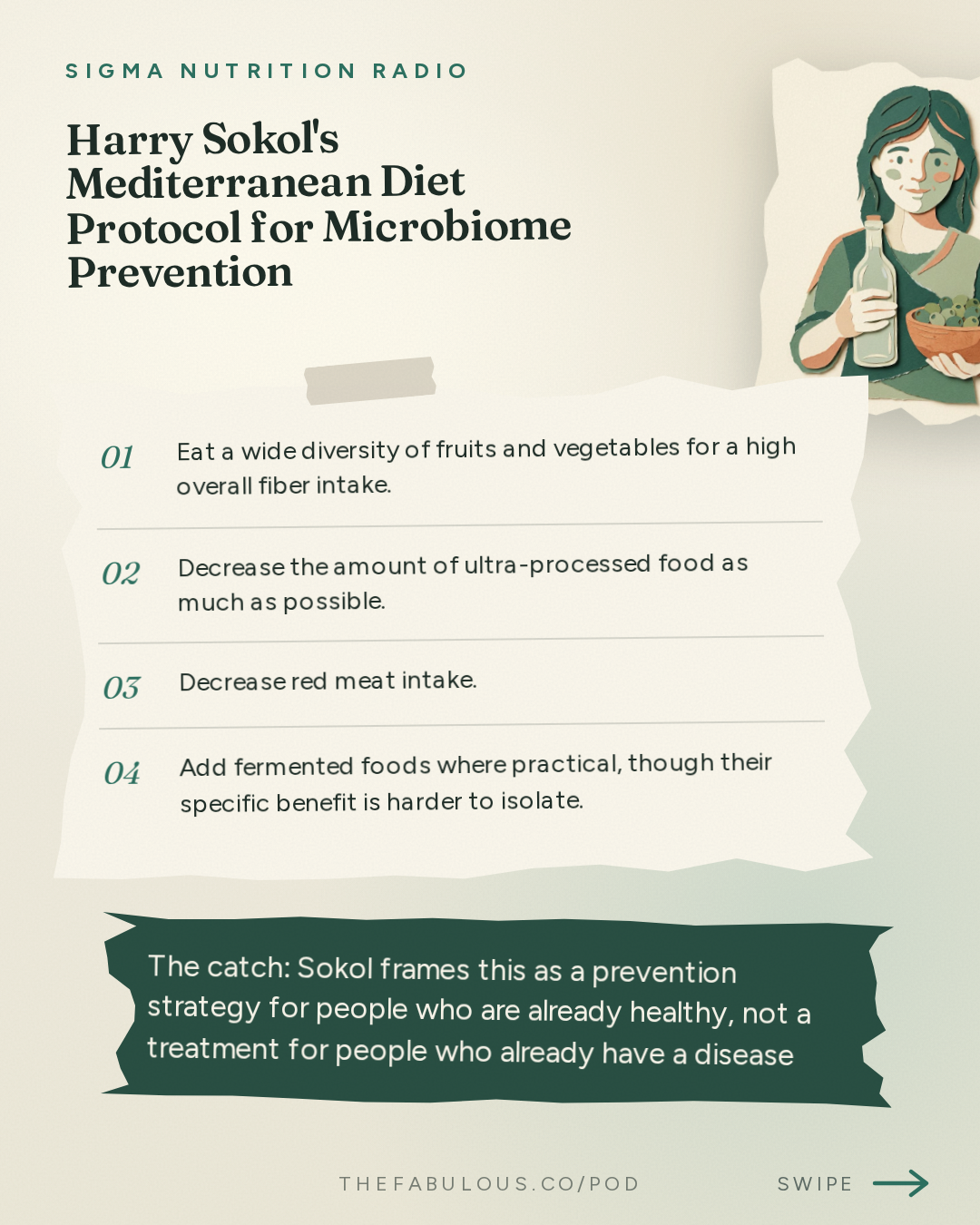
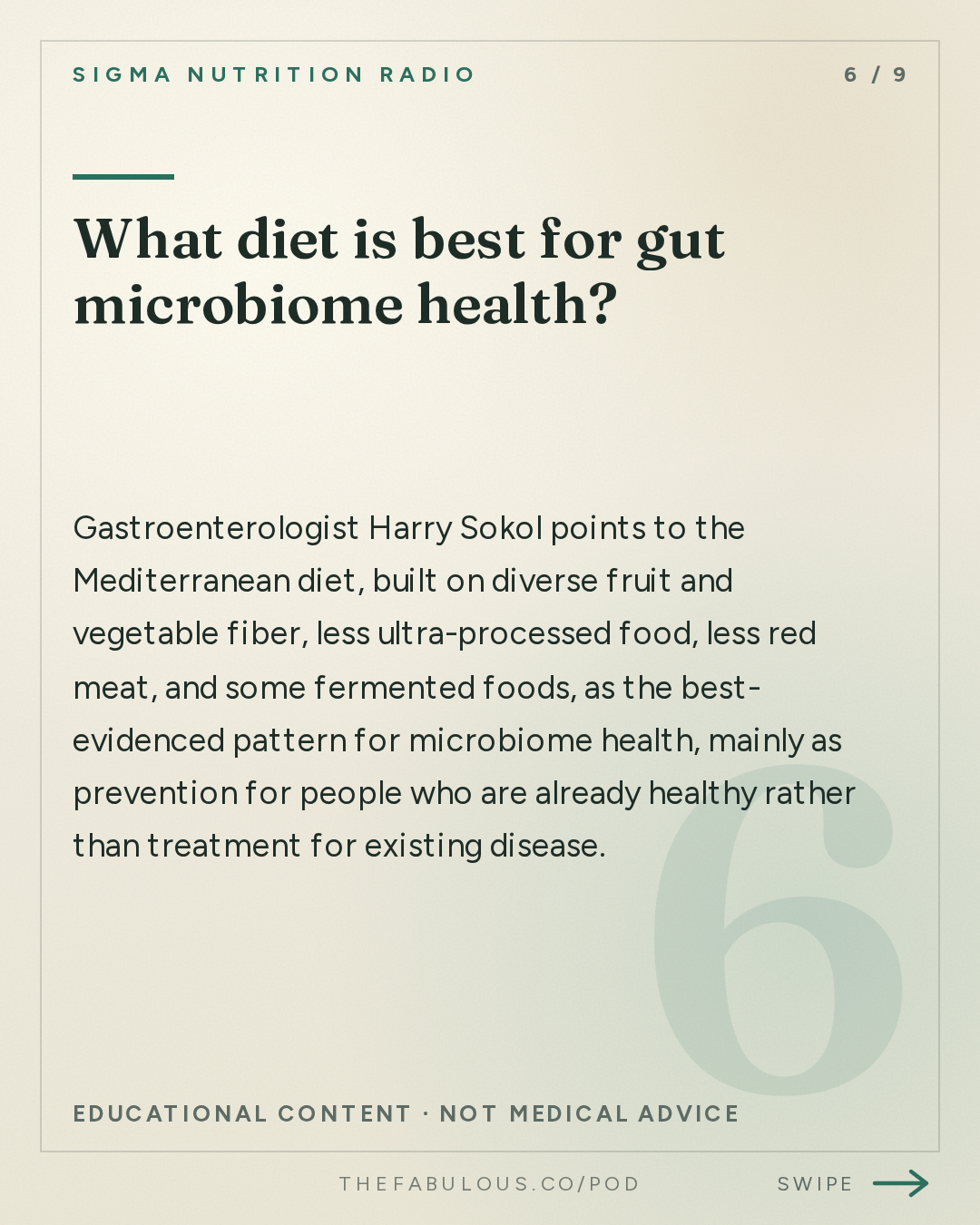
Diet is the lever people reach for most often, and Sokol is careful about what it can realistically deliver. He points to the Mediterranean diet, built around diverse fruits and vegetables for fiber, less ultra-processed food, less red meat, and some fermented foods, as the best-evidenced dietary pattern for microbiome health (18:30). But he frames its value narrowly: it is mainly a tool for prevention in people who are already healthy, not a treatment for people who already have a disease (18:03). That framing comes from a deeper complaint he has about how the field measures success.
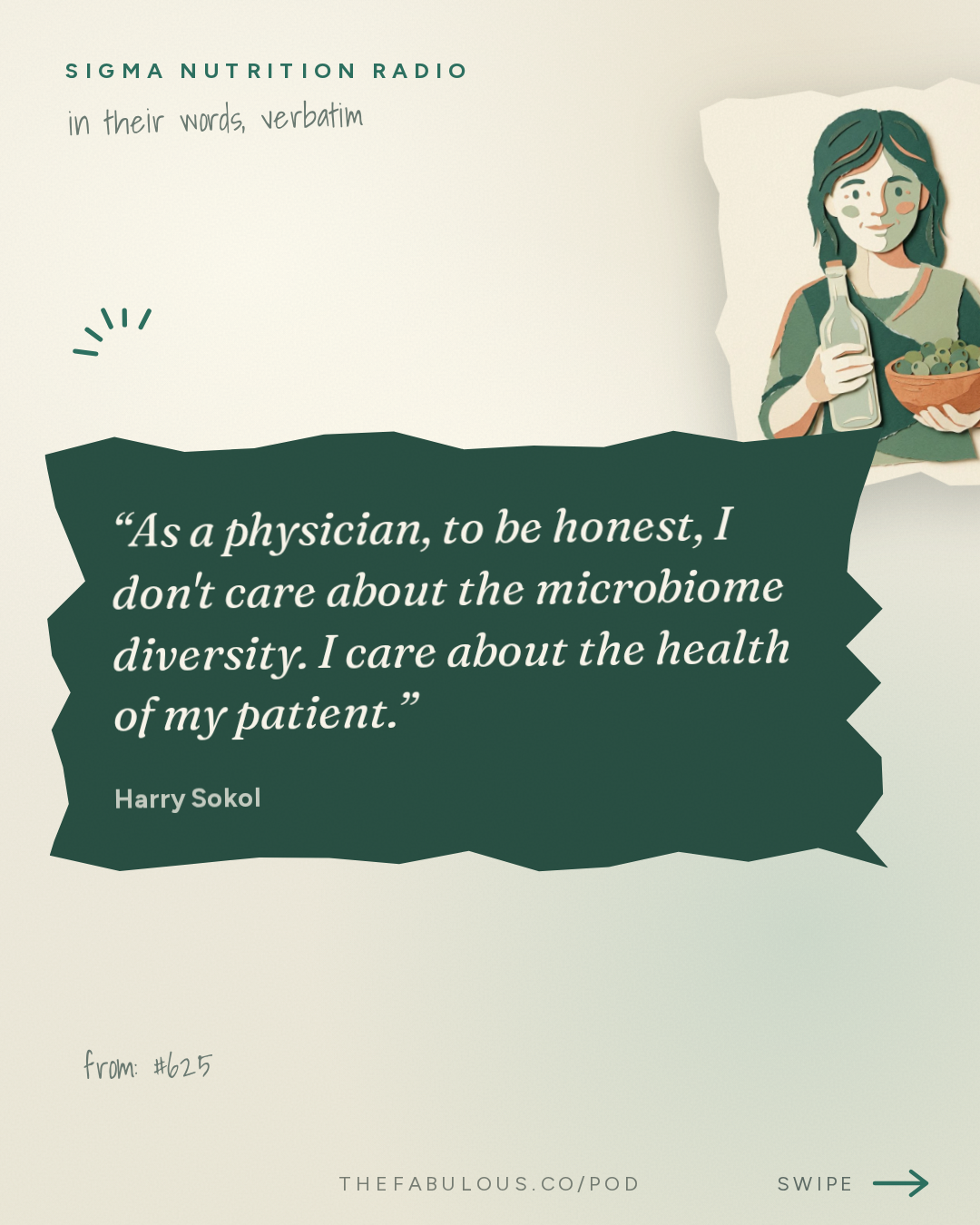
"As a physician, to be honest, I don't care about the microbiome diversity. I care about the health of my patient." — Harry Sokol [17:11]
There is one narrower case where diet is starting to look like real medicine rather than general wellness advice. A study from Kevin Whelan's research group in London tested removing emulsifiers, common additives in ultra-processed foods, from the diets of patients with Crohn's disease, a form of inflammatory bowel disease. The unpublished data so far show a lower inflammatory signal in patients who cut emulsifiers (22:14). It will not replace drug treatment, Sokol says, but it is a plausible add-on for a specific, already-diagnosed population, which is a different claim than telling a healthy person to avoid emulsifiers for general wellness.
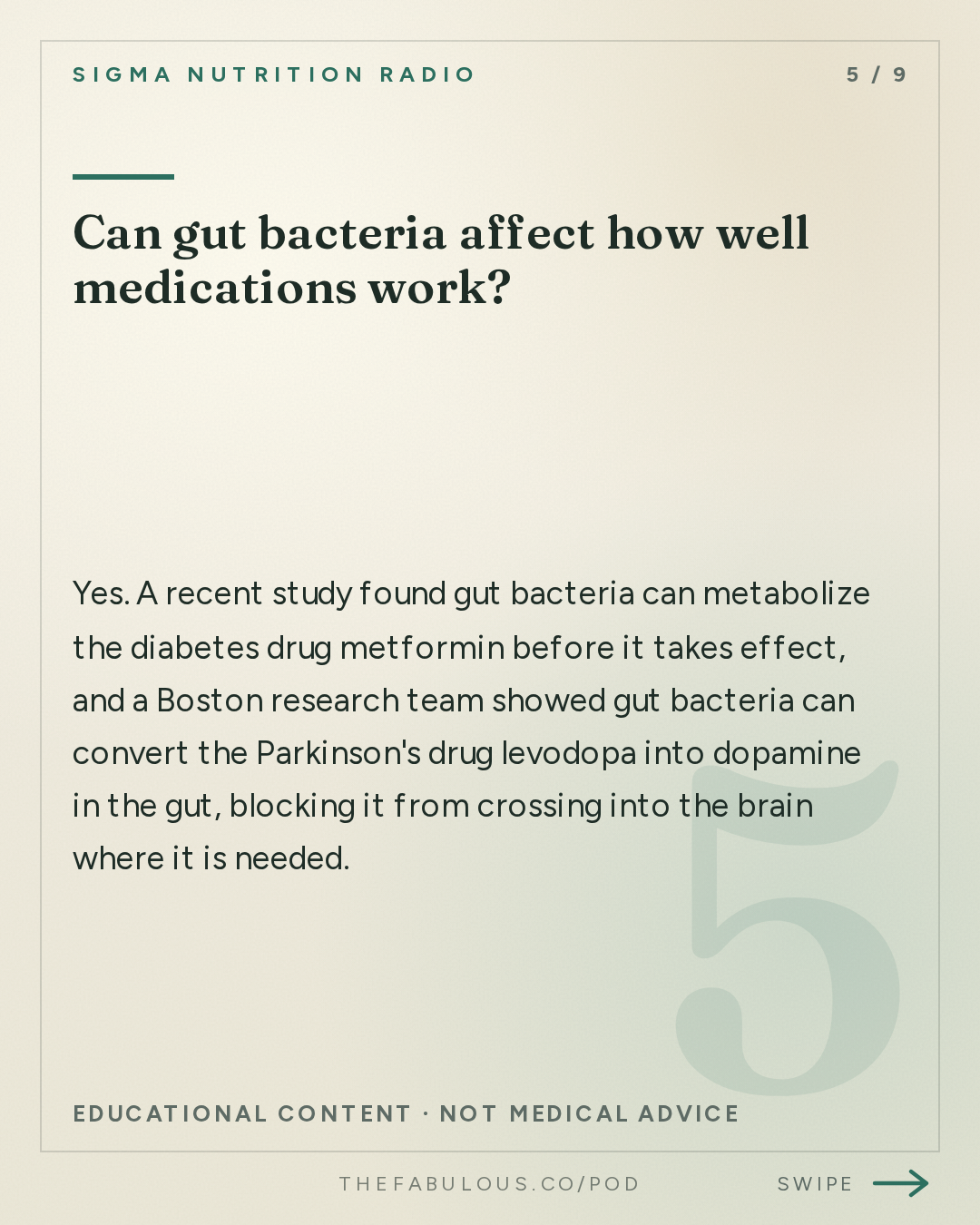
The diet conversation connects to something even less familiar: gut bacteria quietly altering how medications work. Sokol describes three documented mechanisms. Certain bacteria can metabolize metformin, the most widely prescribed drug for type 2 diabetes, effectively breaking it down before it can act, which may explain why some patients do not respond to the drug (24:58). In Parkinson's disease, the standard treatment, levodopa, is designed to cross into the brain and convert into dopamine there. A Boston research team found that some patients carry gut bacteria that convert levodopa into dopamine too early, in the gut, where it cannot cross the blood-brain barrier, and some resulting byproducts may even be toxic (26:19). And in a chemotherapy used for pancreatic cancer, the liver deactivates the drug and sends the inactive form into the gut through bile, where certain bacteria can reactivate it.
"The bacteria re-toxify the molecule. So the molecule get toxic again, and this is responsible for very strong diarrhea, which is the main side effect of this chemotherapy." — Harry Sokol [27:15]
Sokol is careful to note these findings are compelling but not fully proven as causal in humans. The next step, already underway for metformin, is stratifying patients by how much of the drug-degrading bacteria they carry, and eventually testing whether killing that bacterium, perhaps with a targeted virus called a phage, restores the drug's effect (29:20).
Turning a Bacterium Into a Drug
Sokol's own research has moved from description to product. Years ago, his lab noticed that a bacterium called Faecalibacterium prausnitzii was depleted in patients with Crohn's disease, and that lower levels tracked with a higher risk of flares. This bacterium is unusual: it is present in nearly every healthy person on Earth and typically makes up about 5 percent of a healthy gut microbiome (31:24). After showing the bacterium had protective effects in mouse models of colitis, Sokol co-founded a company, Exelium, to develop it as what is called a live biotherapeutic product, essentially a bacterium manufactured and tested like a pharmaceutical drug. A phase one safety trial in eight Crohn's disease patients showed no safety issues and some signal of benefit, and a randomized phase two trial is now underway (32:48).
The same bacterium turned out to matter somewhere else entirely: cancer immunotherapy. Researcher Laurence Zitvogel's team in France showed that giving antibiotics to mice or patients receiving immune checkpoint inhibitors, a class of cancer drugs that unleash the immune system against tumors rather than poisoning cells directly, sharply reduces how well the drugs work (34:06). Faecalibacterium prausnitzii emerged as one of the bacteria most associated with a good response. Sokol's team is now running four clinical trials testing the bacterium alongside checkpoint inhibitors, in gastric, liver, and lung cancer in France, and kidney cancer in the United States (35:09).
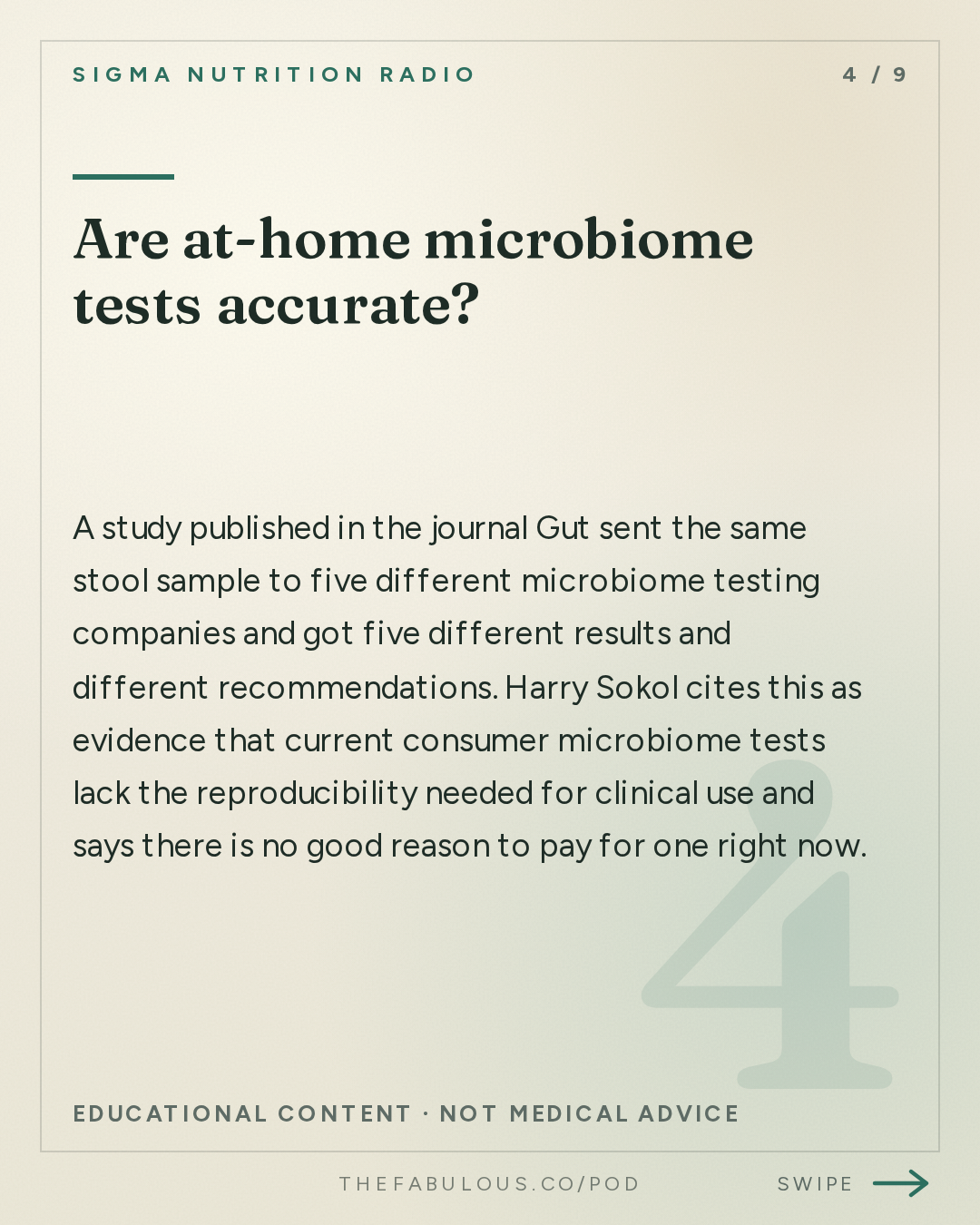
What ties these projects together is Sokol's insistence that microbiome products be held to the same standard as any other drug, tested through phases one, two, and three, with clinical outcomes like survival or remission as the endpoint, not microbiome diversity scores. That standard is exactly what is missing from most of the probiotic industry, and exactly what is missing from consumer microbiome testing. Sokol points to a study published in the journal Gut in which the same stool sample was sent to five different microbiome testing companies and came back with five different results and different recommendations (40:19). Combine that with the unresolved question of what a "normal" microbiome even is, and the conclusion is blunt.
"I mean, there is no good reason to recommend doing this test for now." — Harry Sokol [42:38]
Asked for a single piece of daily advice outside the realm of diet and supplements, Sokol did not reach for another microbiome intervention. He said to find something that brings genuine pleasure, in his case listening to music, because happier people tend to be healthier people (43:55). It is a fitting close to a conversation built around resisting shortcuts: the body's bacteria are not a dial to be optimized by a test result, and neither, it turns out, is a life.
Ask this episode anything
Pod's AI answers from the episode itself, with the minute mark so you can hear it yourself.
Or start with one of these
Ask this episode
Pod's AI listens to the whole episode to answer, and points you to the minute it comes from.
The rest of this answer, and any question after it
Answers come from the episode itself, never from a summary of it.
ContinueKey takeaways
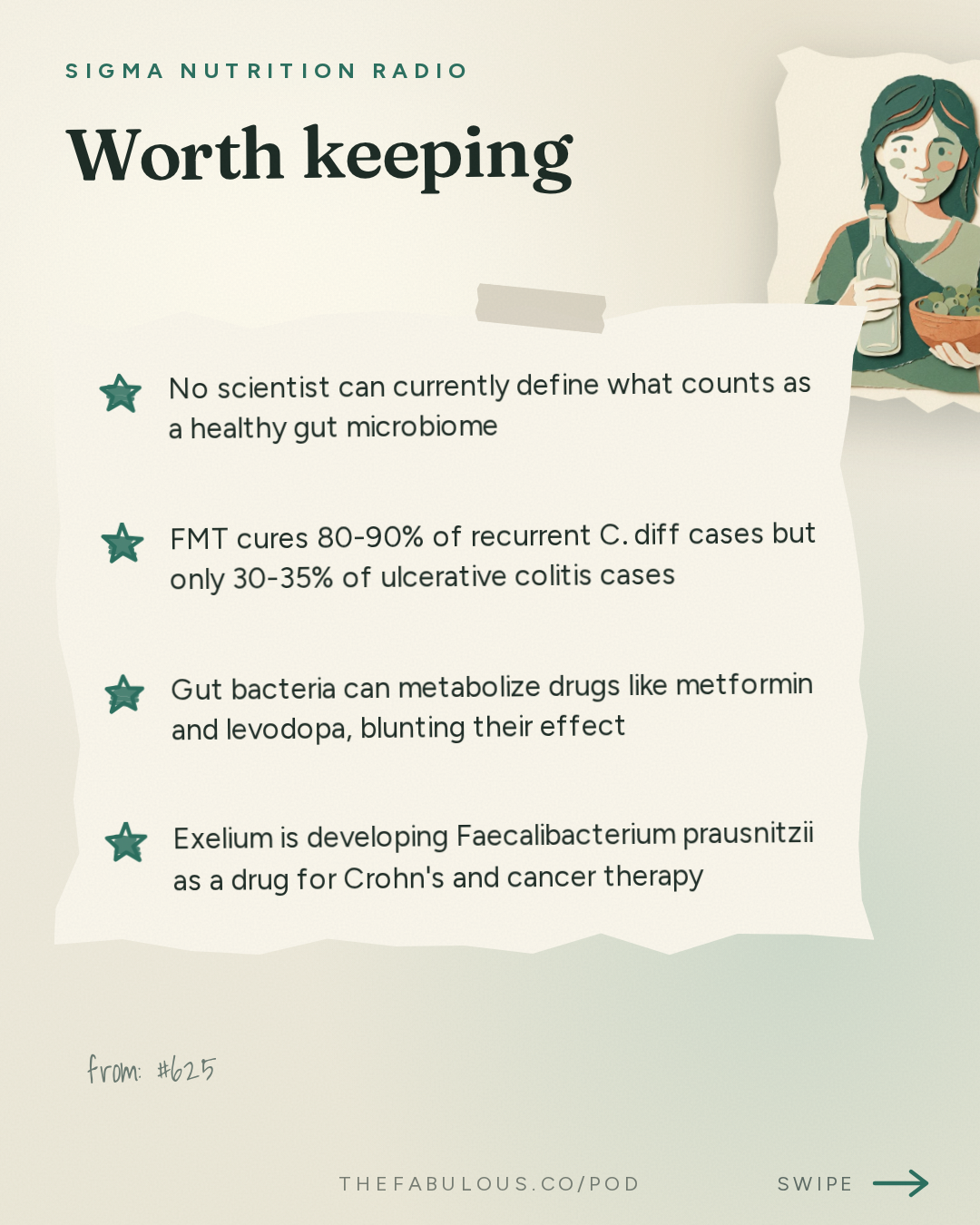
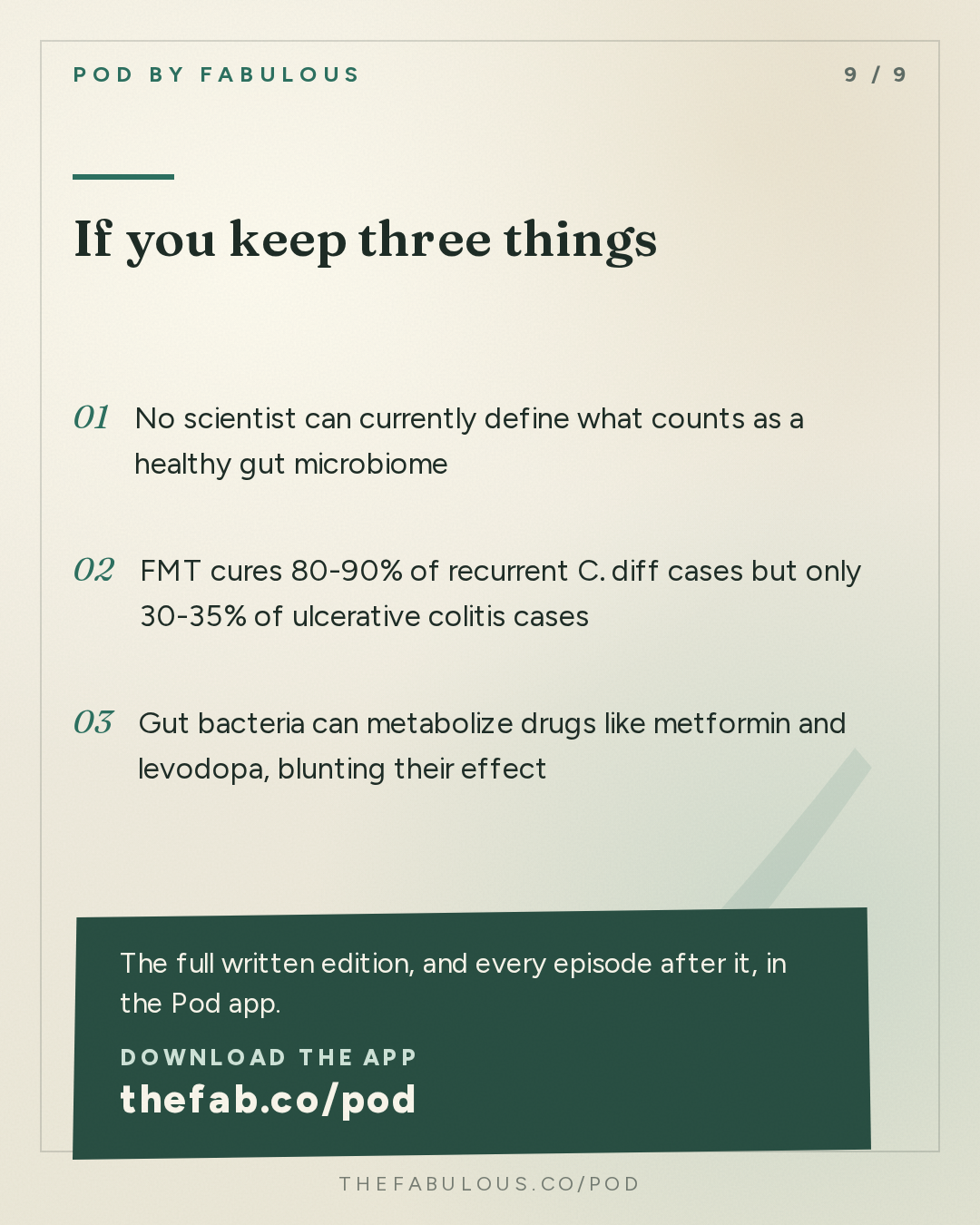
- No scientist can currently define what counts as a healthy gut microbiome
- FMT cures 80-90% of recurrent C. diff cases but only 30-35% of ulcerative colitis cases
- Gut bacteria can metabolize drugs like metformin and levodopa, blunting their effect
- Exelium is developing Faecalibacterium prausnitzii as a drug for Crohn's and cancer therapy
- Five microbiome testing companies gave five different results for the same stool sample
The episode in cards
By the numbers
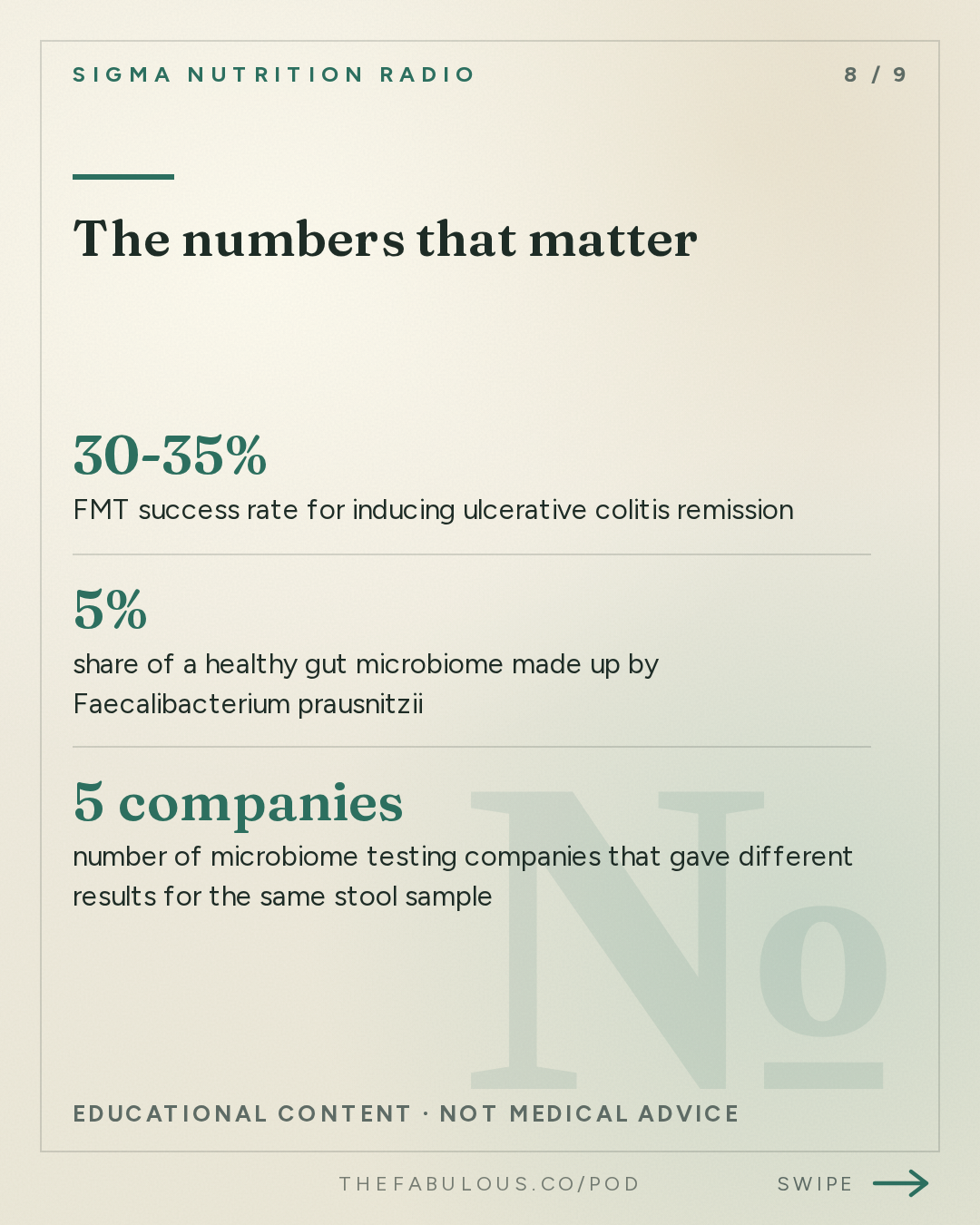
- 30-35% percent FMT success rate for inducing ulcerative colitis remission
- 5% percent share of a healthy gut microbiome made up by Faecalibacterium prausnitzii
- 5 companies number of microbiome testing companies that gave different results for the same stool sample
In their words
“The field is moving from what we call a, a taxonomic description of the microbiome, again, what are the bacteria here, to a functional definition, so what”
“As a physician, to be honest, I don't care about the microbiome diversity. I care about the health of my patient.”
“Fecal microbiota transplantation is, I have to say, almost magical in this disease.”
“I mean, there is no good reason to recommend doing this test for now.”
“Happy people are actually healthier, and this is what is life for. We need to be happy.”
Protocols
-
Mediterranean-style eating for microbiome prevention
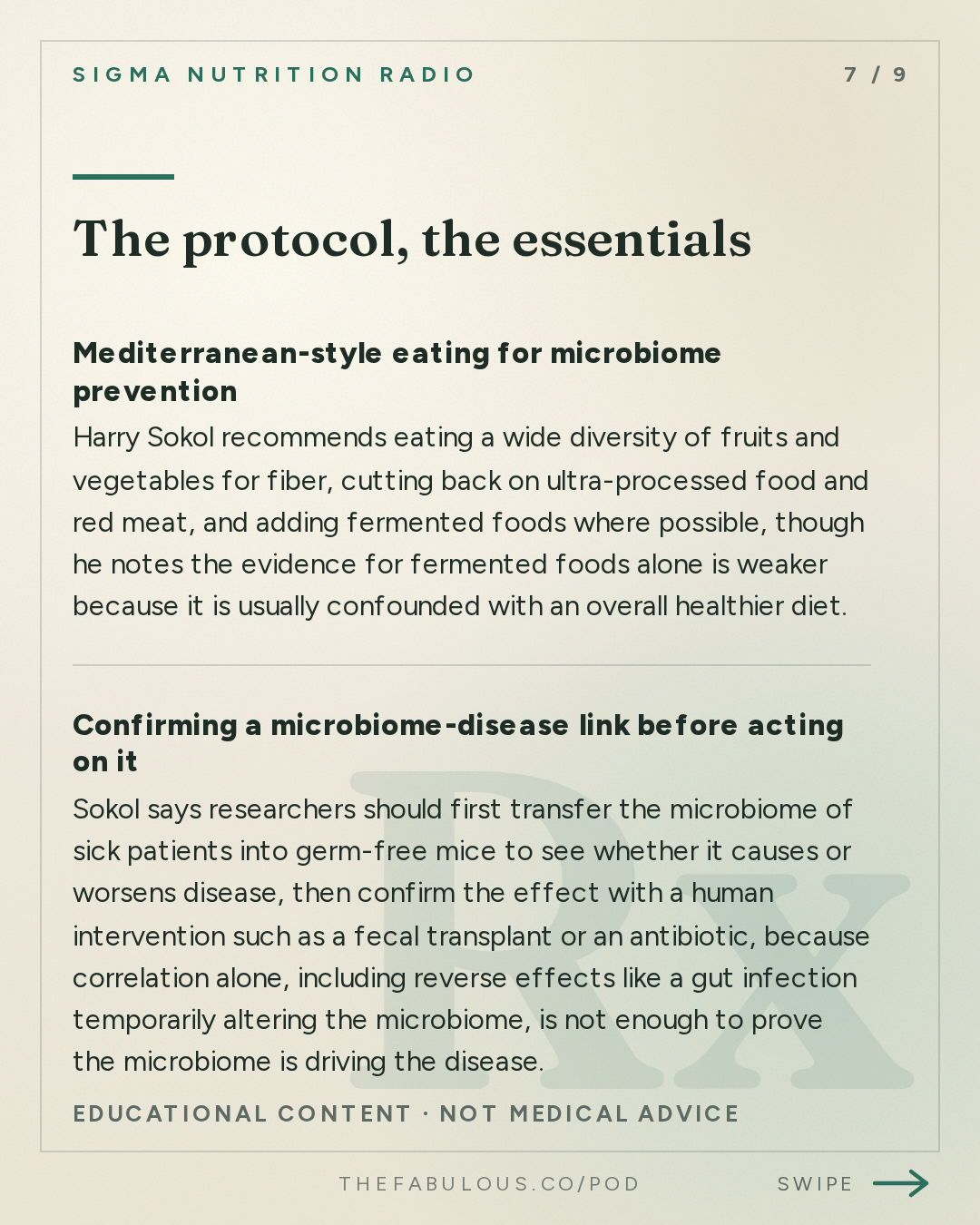
Harry Sokol recommends eating a wide diversity of fruits and vegetables for fiber, cutting back on ultra-processed food and red meat, and adding fermented foods where possible, though he notes the evidence for fermented foods alone is weaker because it is usually confounded with an overall healthier diet.
Daily dietary pattern
-
Confirming a microbiome-disease link before acting on it
Sokol says researchers should first transfer the microbiome of sick patients into germ-free mice to see whether it causes or worsens disease, then confirm the effect with a human intervention such as a fecal transplant or an antibiotic, because correlation alone, including reverse effects like a gut infection temporarily altering the microbiome, is not enough to prove the microbiome is driving the disease.
Per research study
-
Deciding whether to pay for a microbiome test
Sokol advises against using current direct-to-consumer microbiome tests because identical stool samples sent to five different companies produced five different results and different recommendations, and he states there is no good reason to recommend this type of test for now.
One-time purchase decision
Questions this episode answers
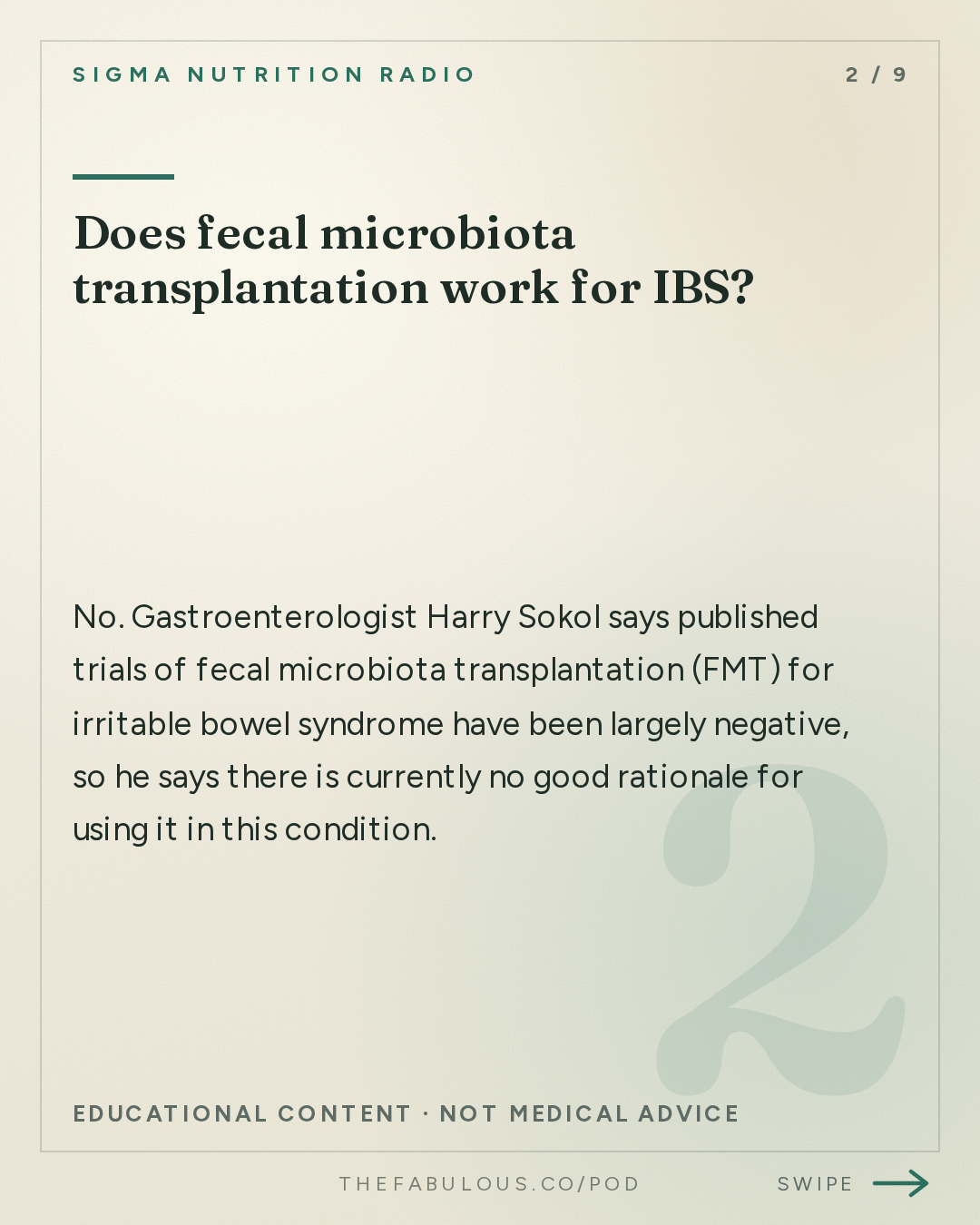
Does fecal microbiota transplantation work for IBS?
No. Gastroenterologist Harry Sokol says published trials of fecal microbiota transplantation (FMT) for irritable bowel syndrome have been largely negative, so he says there is currently no good rationale for using it in this condition (15:23).
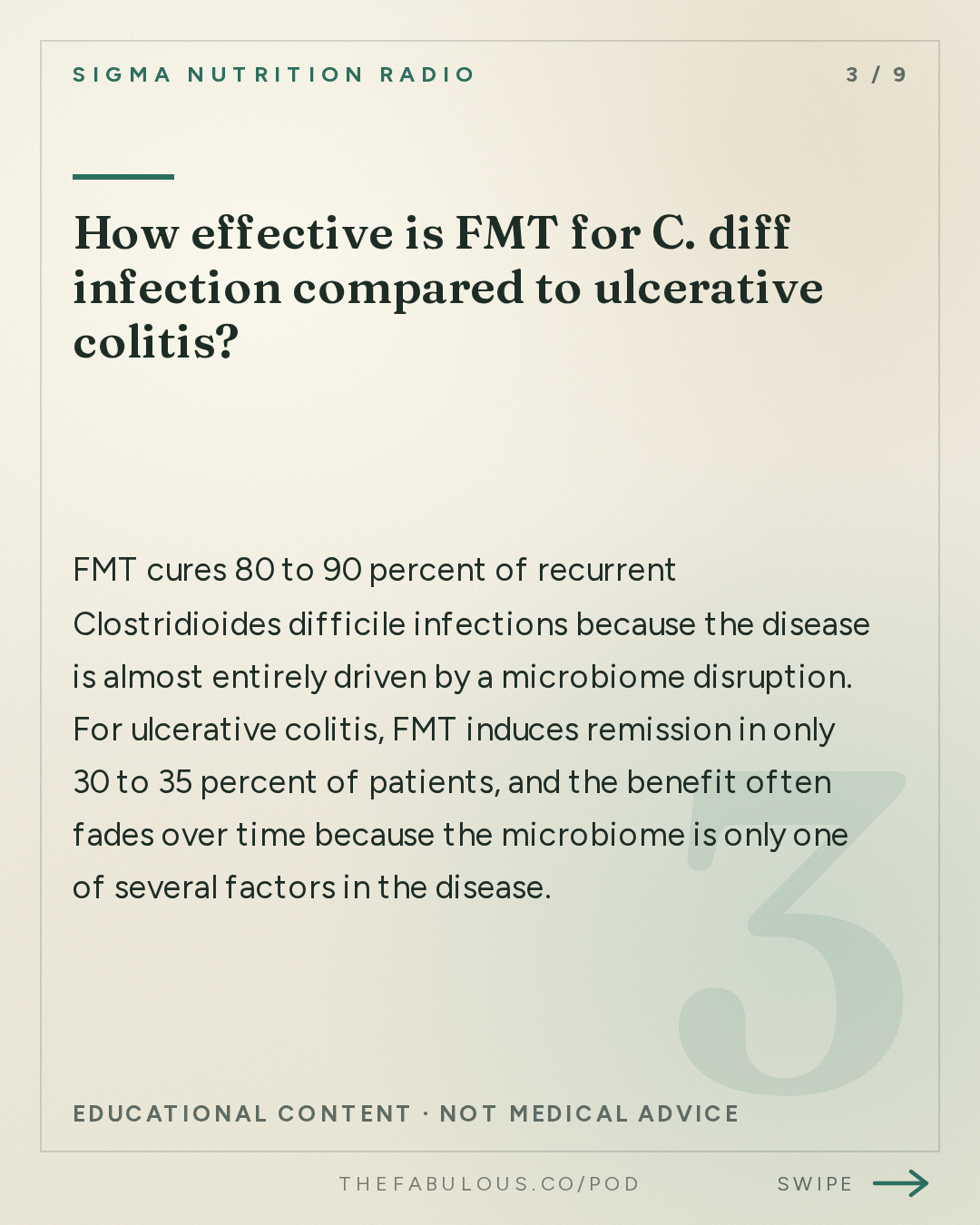
How effective is FMT for C. diff infection compared to ulcerative colitis?
FMT cures 80 to 90 percent of recurrent Clostridioides difficile infections because the disease is almost entirely driven by a microbiome disruption (13:41). For ulcerative colitis, FMT induces remission in only 30 to 35 percent of patients, and the benefit often fades over time because the microbiome is only one of several factors in the disease (14:05).
Are at-home microbiome tests accurate?
A study published in the journal Gut sent the same stool sample to five different microbiome testing companies and got five different results and different recommendations (39:55). Harry Sokol cites this as evidence that current consumer microbiome tests lack the reproducibility needed for clinical use and says there is no good reason to pay for one right now (42:38).
Can gut bacteria affect how well medications work?
Yes. A recent study found gut bacteria can metabolize the diabetes drug metformin before it takes effect (24:58), and a Boston research team showed gut bacteria can convert the Parkinson's drug levodopa into dopamine in the gut, blocking it from crossing into the brain where it is needed (26:19).
What diet is best for gut microbiome health?
Gastroenterologist Harry Sokol points to the Mediterranean diet, built on diverse fruit and vegetable fiber, less ultra-processed food, less red meat, and some fermented foods, as the best-evidenced pattern for microbiome health, mainly as prevention for people who are already healthy rather than treatment for existing disease (18:30).
The full read, in cards
Go deeper
- Metformin gut bacteria metabolism study — found gut bacteria can metabolize metformin, potentially reducing its efficacy in type 2 diabetes
- Boston team study on levodopa and gut bacteria — found some gut bacteria convert levodopa into dopamine before it reaches the brain, blocking its effect in Parkinson's disease
- Gut journal study on microbiome testing companies — sent the same stool sample to five microbiome testing companies and got five different results and recommendations
- International consensus statement on microbiome testing — Sokol co-authored a consensus review of the clinical utility of microbiome testing
Mentioned
Harry Sokol · Saint Antoine Hospital · Sorbonne University · Exelium · Faecalibacterium prausnitzii · Metformin · Levodopa · Kevin Whelan · Laurence Zitvogel · Mediterranean diet
More from this show and category
Plant-Based Diets for Athletes and Sustainability
Elite sports nutritionist Pieter Res says athletes can shift toward plant protein for sustainability without losing performance or muscle growth. Research from the Van Loon lab shows 30 grams of combined plant protein per meal matches whey's muscle protein synthesis ceiling (17:31), and cutting beef remains the single biggest lever for reducing diet's environmental impact (08:49).
How to Interpret Testosterone Test Results
A single testosterone number rarely settles the question of whether treatment will help. Physician Austin Baraki says free testosterone, symptom type, and the underlying cause of a low reading (often obesity, poor sleep, or alcohol) matter more than one blood draw, and a 4 to 6 month trial beats a lifelong commitment.
Body Composition Testing: DEXA vs BIA Accuracy
No device on the market actually measures body fat; every scale, scan, or pod only estimates it from indirect signals, and a method proven accurate for a group can still mislead an individual user. Texas Tech professor Grant Tinsley explains why standardizing tests, tracking one device over time, and treating small percentage swings as noise matter more than any single number (12:49, 38:24).
Liking vs Wanting in Food Reward Psychology
Food reward splits into two separate systems: liking, the pleasure a food delivers, and wanting, the pull to eat it, which often runs on autopilot. Nutrition composition alone explains only 20% of why a food is liked (21:59); adding sensory perception explains another 40-60% (22:35), while ultra-processed classification barely moves the needle.
