
Plant-Based Diets for Athletes and Sustainability
#624: Can Athletes Eat for Performance and the Planet? – Peter Res
The brief
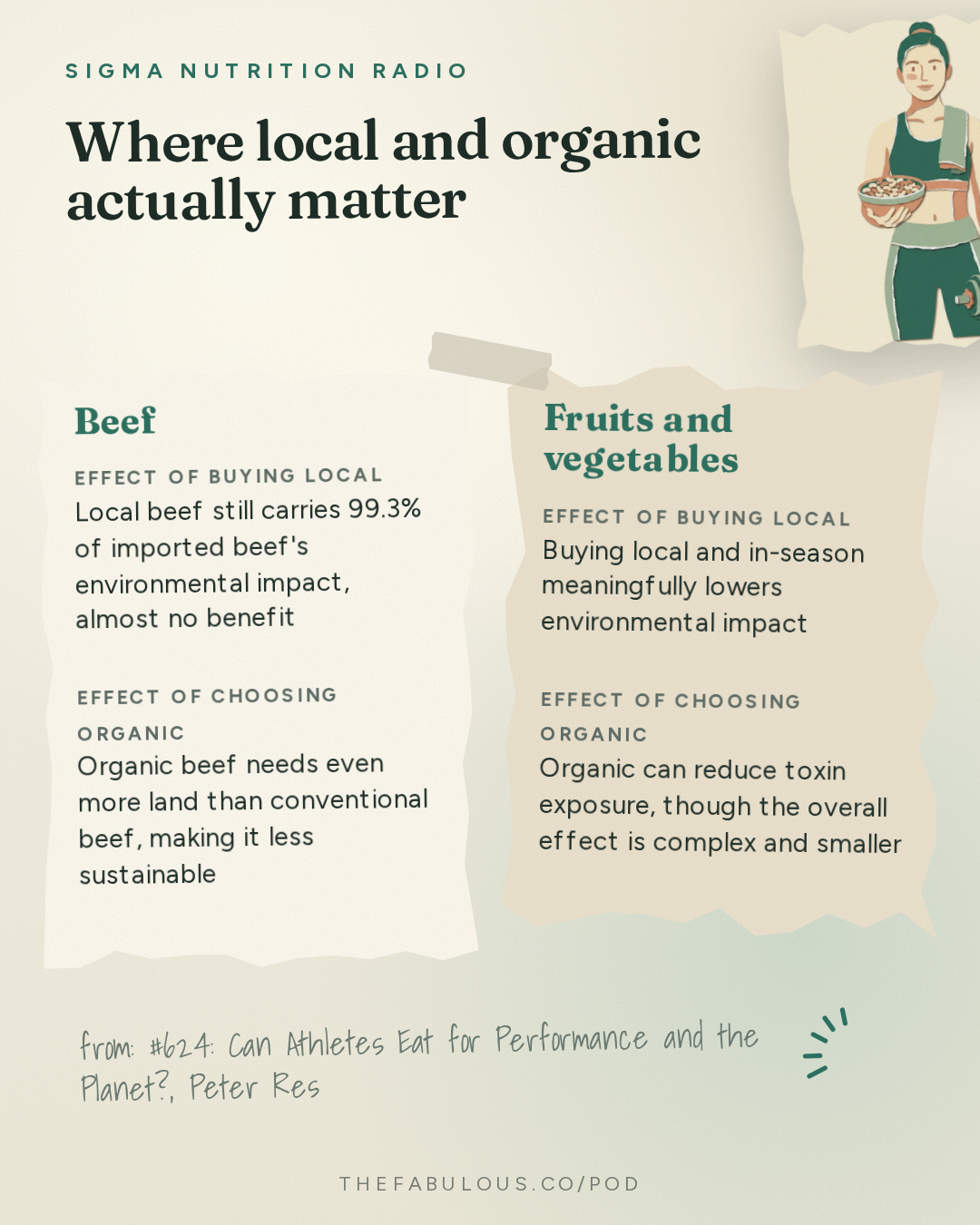
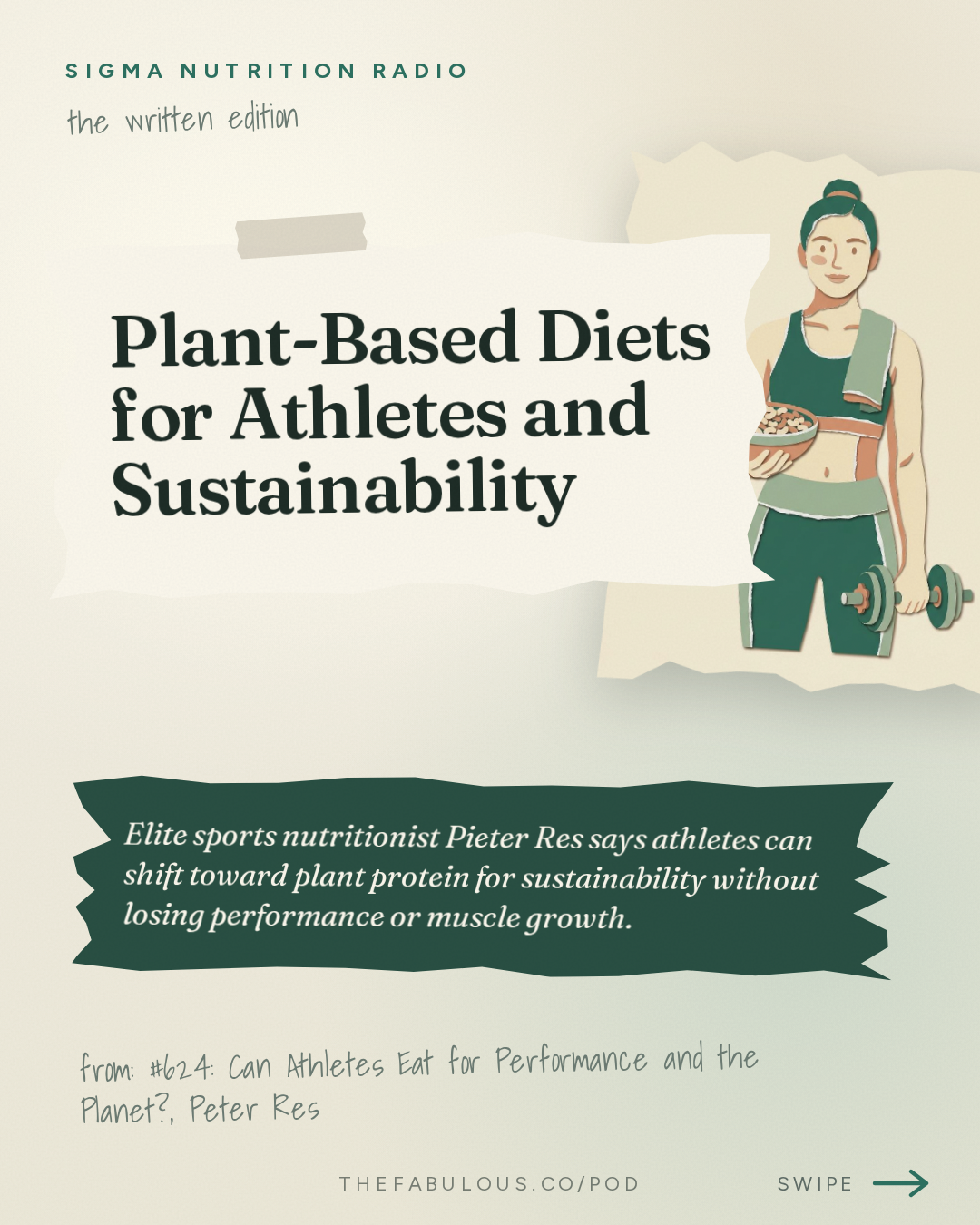
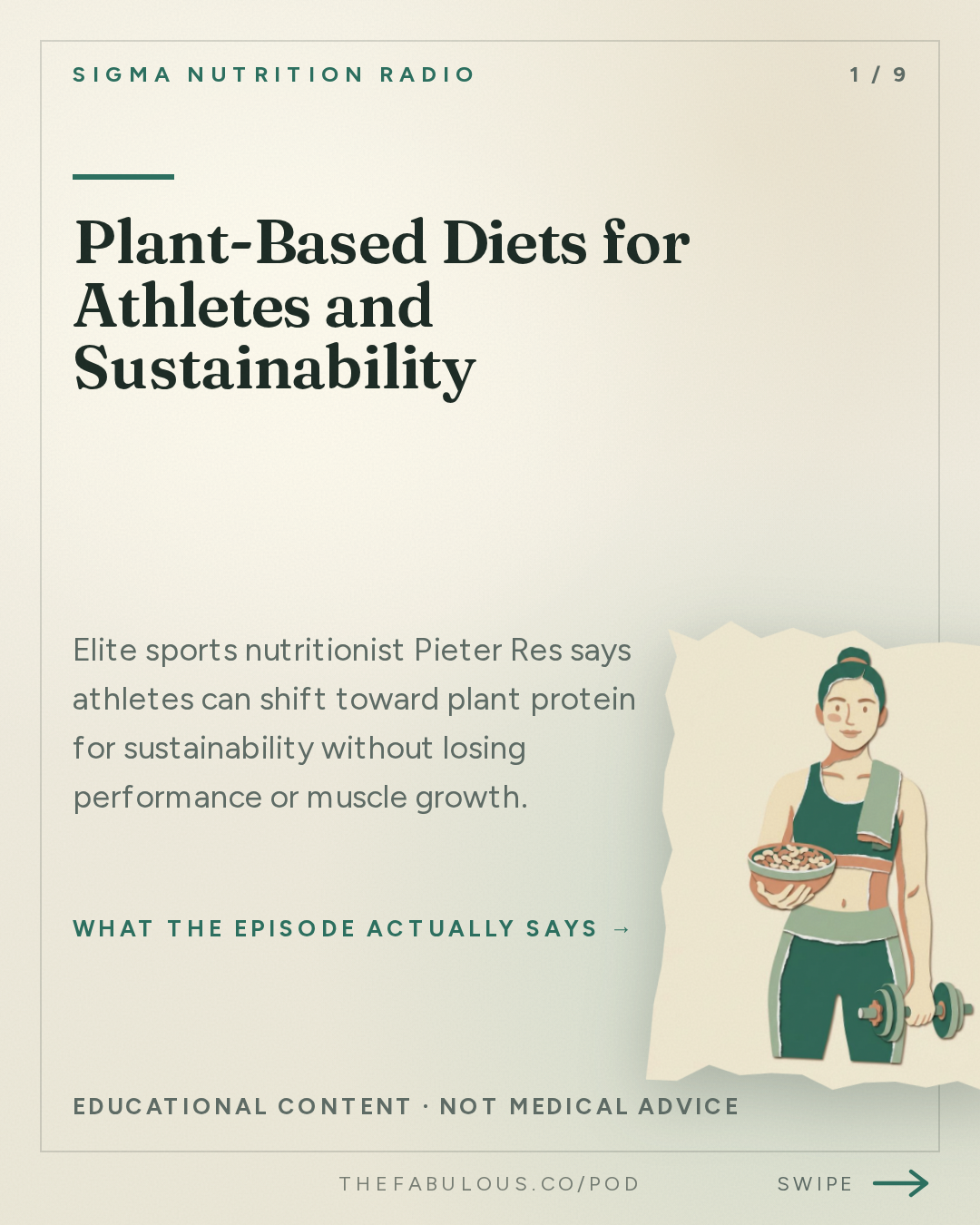
Elite sports nutritionist Pieter Res says athletes can shift toward plant protein for sustainability without losing performance or muscle growth. Research from the Van Loon lab shows 30 grams of combined plant protein per meal matches whey's muscle protein synthesis ceiling (17:31), and cutting beef remains the single biggest lever for reducing diet's environmental impact (08:49).
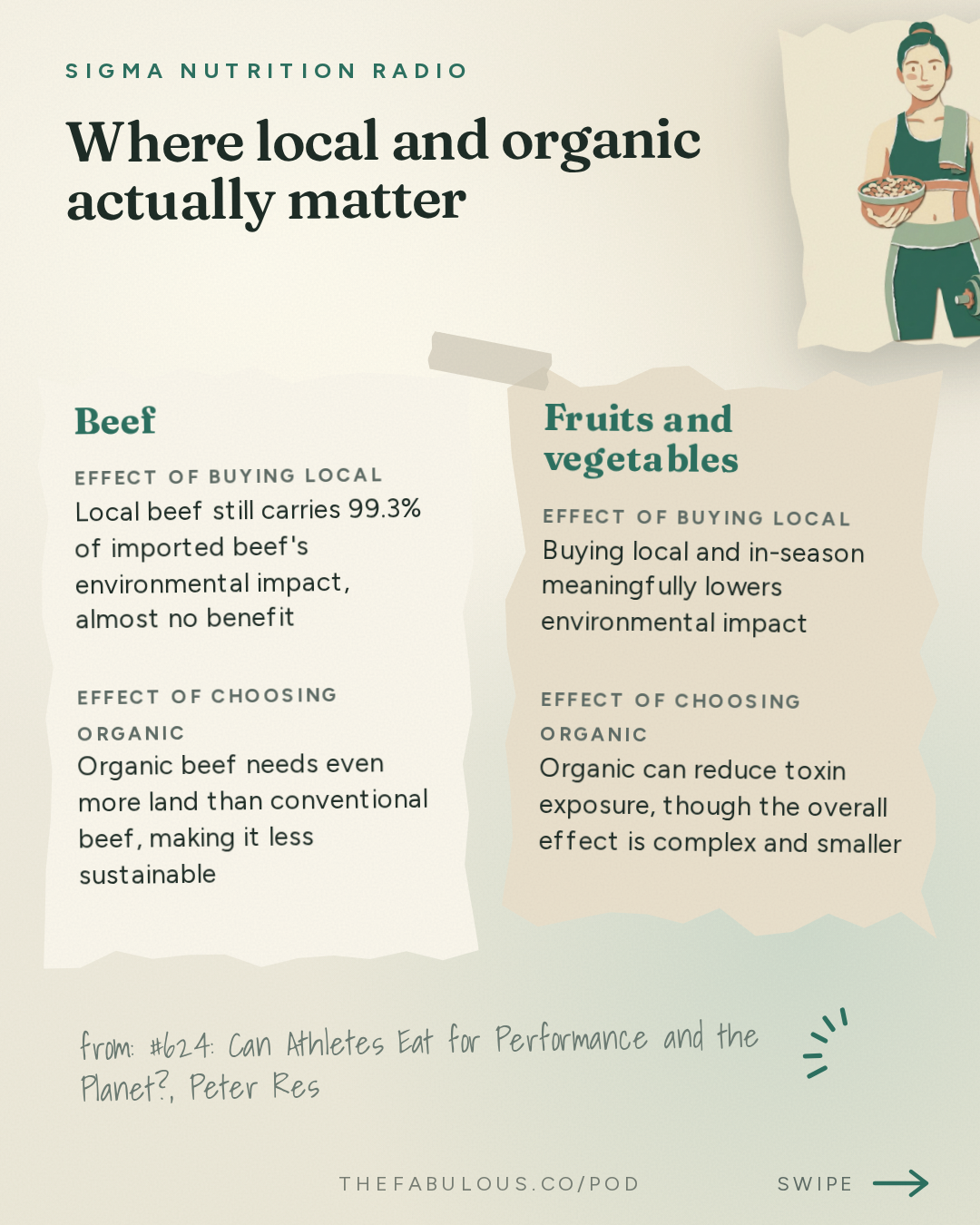
Buying local is supposed to be the easy good deed of grocery shopping. For beef, it barely moves anything. Dutch performance nutritionist Pieter Res ran the calculation himself: swap an imported steak, shipped by boat from Argentina, for one raised down the road, and the local cut still carries 99.3 percent of the original's environmental impact (10:13). The reason is unglamorous. Beef's footprint comes mostly from the land a cow needs over its life and the methane it produces, not from the fuel burned getting it to a plate.
Res has spent a long career feeding athletes rather than lecturing them about carbon. He has worked in professional cycling and football, including six seasons at the Dutch club Ajax Amsterdam, and with the Dutch Olympic team across sports such as speed skating (04:46). More recently he has tried to answer a narrower, harder question: can an athlete who needs huge amounts of energy and recovery eat in a way that is lighter on the planet without giving up performance? His answer, worked out across this conversation with host Danny Lennon, is yes, with details that matter more in practice than in theory.
Res frames sustainability using a concept from the Potsdam Institute called planetary boundaries, nine limits (things like freshwater use and land use) beyond which the planet's systems start to destabilize (06:03). Inside that framework, one food dominates. "The number one would be reduce the amount of beef that we eat," Res says. "It's just way bigger impact than anything else that you could do" (08:49). Everything else people worry about, buying local, choosing organic, avoiding plastic packaging, is a rounding error by comparison. Organic beef is actually worse than conventional beef on this measure, because organic farming is less land-efficient and beef is already a land-hungry way to feed people.
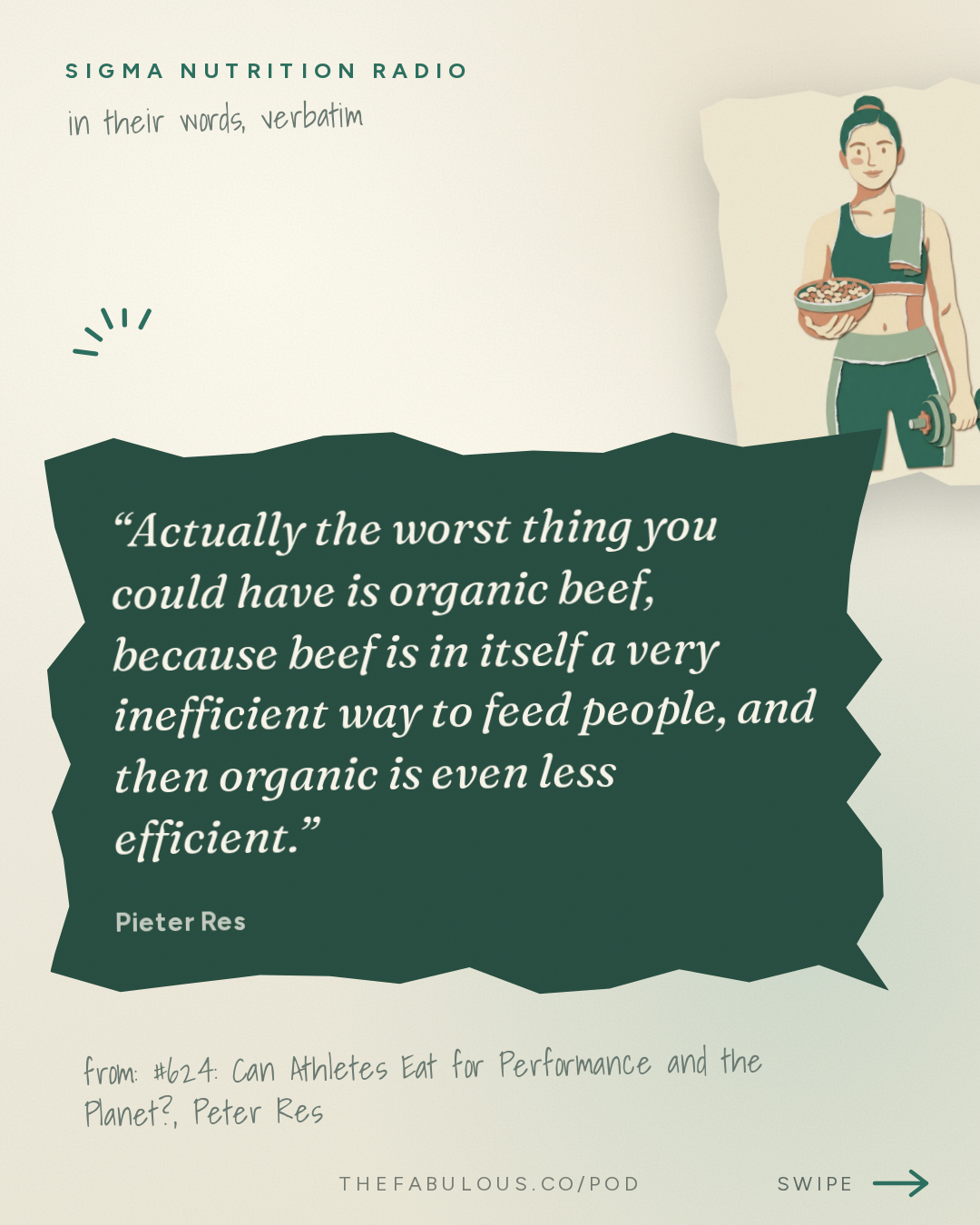
"Actually the worst thing you could have is organic beef, because beef is in itself a very inefficient way to feed people, and then organic is even less efficient." (Pieter Res, [10:36])
Plastic gets a similarly undeserved reputation. Res points to research showing that when a thin wrapper keeps food like cucumbers from spoiling, the greenhouse gas emissions avoided from reduced food waste can run about five times higher than the emissions from the plastic itself (11:29). None of this is an argument for packaging everything in plastic. It is an argument for paying attention to what is actually large (beef, mainly) rather than what is visible (a wrapper in a gym bag).
The Protein Problem, Reconsidered
The fear Res hears most from athletes, by a wide margin, is protein. The assumption, he says, is baked into how food is usually discussed: animal foods "have" protein, plant foods don't, really. The error is partly a labeling problem. Nutrition tables list protein per 100 grams of food, but the body runs on calories, not grams of food. When Res compares plant and animal foods on a per-calorie basis, the protein percentages turn out to be comparable (14:53). The more honest caveat is that a fully plant-based diet is less energy dense and higher in fiber, so hitting total calorie needs takes more food volume. But when an athlete meets that energy target, Res says, protein intake tends to fall into place on its own (15:54).
The second fear is about quality: that plant protein is somehow inferior once you clear the quantity hurdle. This idea traces partly to a widely cited 2010 study by researcher Jason Tang, which compared 20 grams of whey, casein, and soy protein and found soy produced a smaller rise in muscle protein synthesis, the process by which the body uses amino acids to build new muscle tissue (17:05). Subsequent research, including a series of studies from exercise physiologist Luc van Loon's lab in Maastricht, found that the gap closes once you give enough protein and combine plant sources.
"When you give enough protein, so around 30 grams or so for one meal, and you combine sources of plant-based proteins, then the ceiling of muscle protein synthesis is the same." (Pieter Res, [17:31])
Plant proteins don't lack amino acids, Res explains; the mix is just different from one source to the next, so one plant protein can be a little short on an amino acid that another is rich in. Combine sources and give the body roughly 30 grams in a sitting, or about 1.6 grams per kilogram of body weight across the day, and the difference from whey disappears (18:07).
What the Shift Actually Looks Like
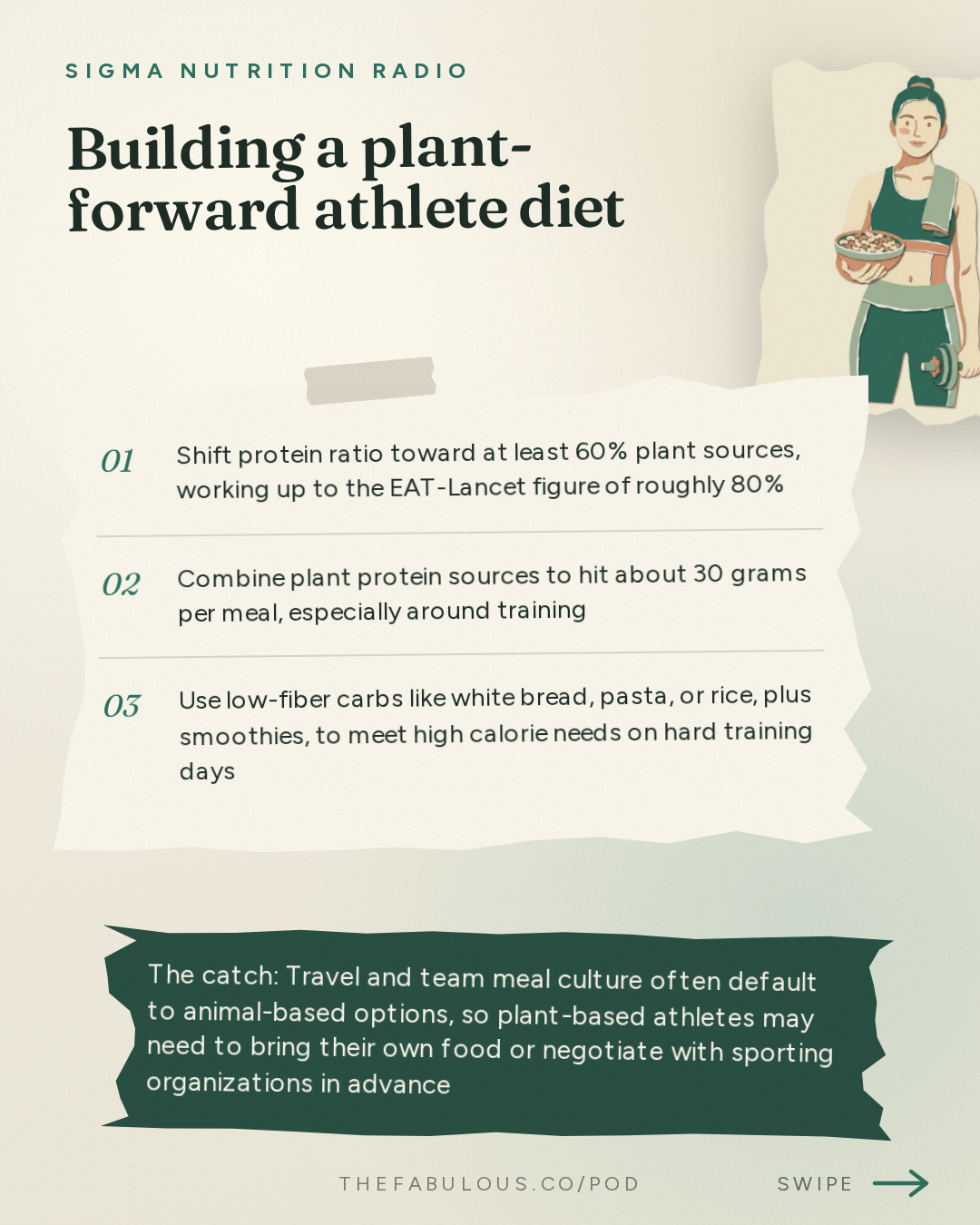
The dietary-pattern question has rough numbers attached to it too. The Dutch Health Council has suggested at least 60 percent of protein coming from plants; the EAT-Lancet planetary health diet, a widely cited 2019 report on eating within environmental limits, works out to roughly 80 percent (13:04). Res treats 60/40, plant to animal, as a realistic floor for athletes rather than a ceiling, and notes that the current average among athletes he sees runs closer to 25 to 40 percent plant protein, meaning most have a long way to go even to reach the minimum (26:03).
Getting there raises a genuine logistics problem: plant-forward eating is bulkier and less calorie-dense, which is a real obstacle for an athlete who might need 5,000 kilocalories a day (21:26). Res's fixes are unglamorous. Smoothies pack calories without volume. On hard training days, he recommends low-fiber carbohydrates, white bread, white pasta, white rice, precisely the foods that usually get coded as unhealthy, because in that narrow context they're the easiest way to get enough fuel in (20:41).
Micronutrients get more nuance than alarm. Iron absorption from plants is less efficient in a single meal, but Res says the body adapts over time, absorbing more of it when stores run low, and population research doesn't show higher rates of deficiency in vegetarians or vegans (22:40). B12 is the one true non-negotiable: Res says anyone eating fully plant-based should supplement it (23:05). Omega-3s can come from algae instead of fish, sidestepping the fish question entirely. "There's no nutrient," he says, "that there's no solution for in another way" (23:55). One addition applies regardless of diet: Res recommends creatine supplementation for plant-based and omnivorous athletes alike, since dietary intake from meat and fish is suboptimal for performance purposes even for people who eat it (32:08).
None of this erases friction. Travel is the recurring practical barrier Res names: team meals, sponsor-driven menus, and international competition settings default to animal-centric plates, and sporting bodies themselves often set that default (18:34). His advice to nutritionists and organizations is less a policy than a habit: ask the athlete what they want and need, because the athletes making this shift tend to have already done the homework (29:47). On the question of how far an individual athlete needs to go, Res resists a universal number, preferring small, durable steps over the all-or-nothing switches he's watched athletes abandon after a month (13:29).
What ties the practical advice to the larger argument is Res's belief that athletes carry outsized social weight. He points to a UK project where athletes post plant-based recipes a few times a month, not to convert anyone, but to normalize the idea that elite performers can eat this way and thrive (27:10). It's a quieter theory of change than a dietary mandate: show, don't argue. Asked, at the end of the conversation, for one daily habit that improves life generally, Res didn't mention food at all. He said to talk to people outside your own bubble, because connection, he thinks, is both a personal good and a social one (33:34). For a conversation built on spreadsheets of emissions and amino acid ratios, it's a fittingly human place to land: the hardest part of changing a diet was never really the protein.
Ask this episode anything
Pod's AI answers from the episode itself, with the minute mark so you can hear it yourself.
Or start with one of these
Ask this episode
Pod's AI listens to the whole episode to answer, and points you to the minute it comes from.
The rest of this answer, and any question after it
Answers come from the episode itself, never from a summary of it.
ContinueKey takeaways
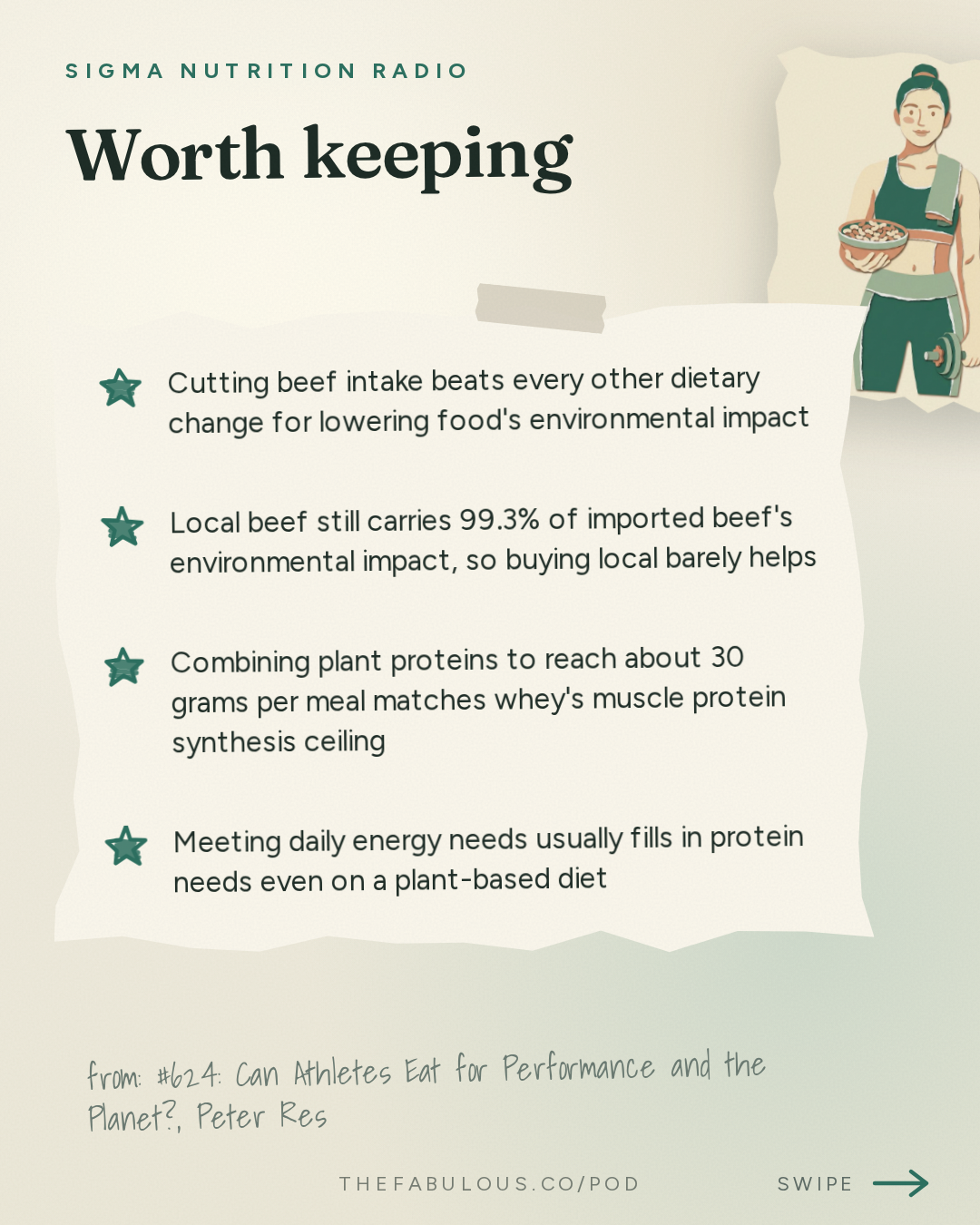
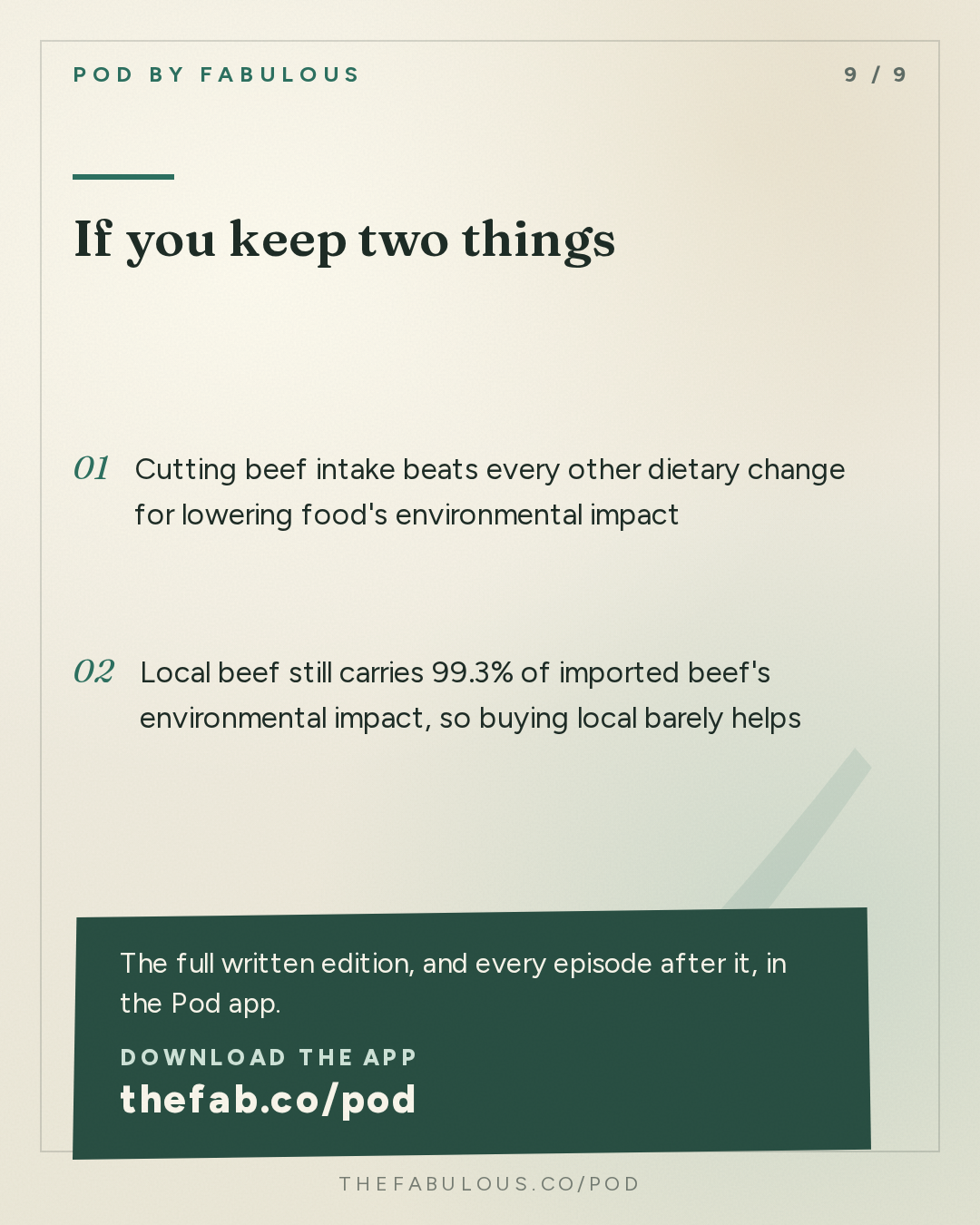
- Cutting beef intake beats every other dietary change for lowering food's environmental impact
- Local beef still carries 99.3% of imported beef's environmental impact, so buying local barely helps (10:13)
- Combining plant proteins to reach about 30 grams per meal matches whey's muscle protein synthesis ceiling (17:31)
- Meeting daily energy needs usually fills in protein needs even on a plant-based diet (15:54)
- B12 supplementation is required on a fully plant-based diet, and algae omega-3 can replace fish (23:05)
The episode in cards
By the numbers
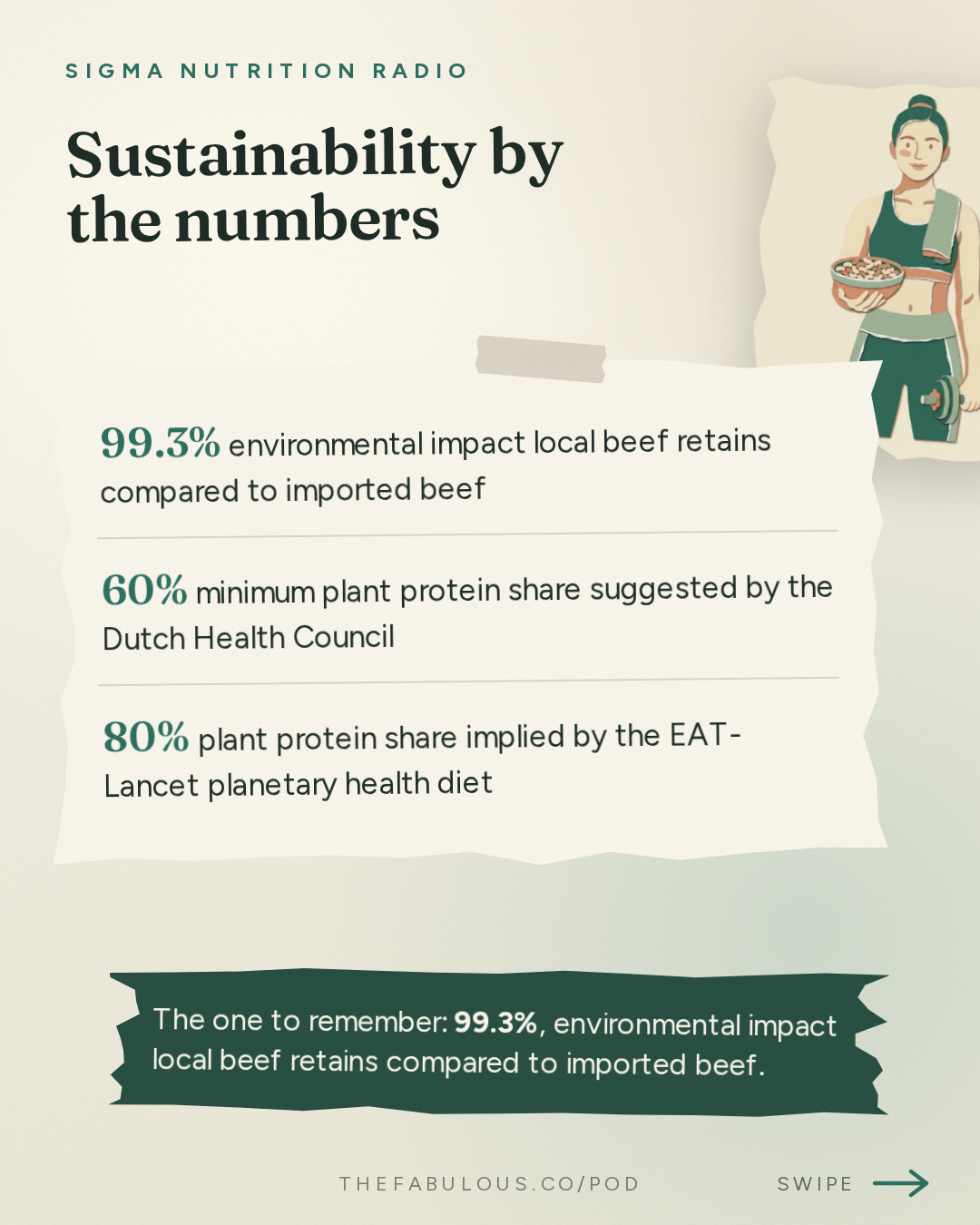
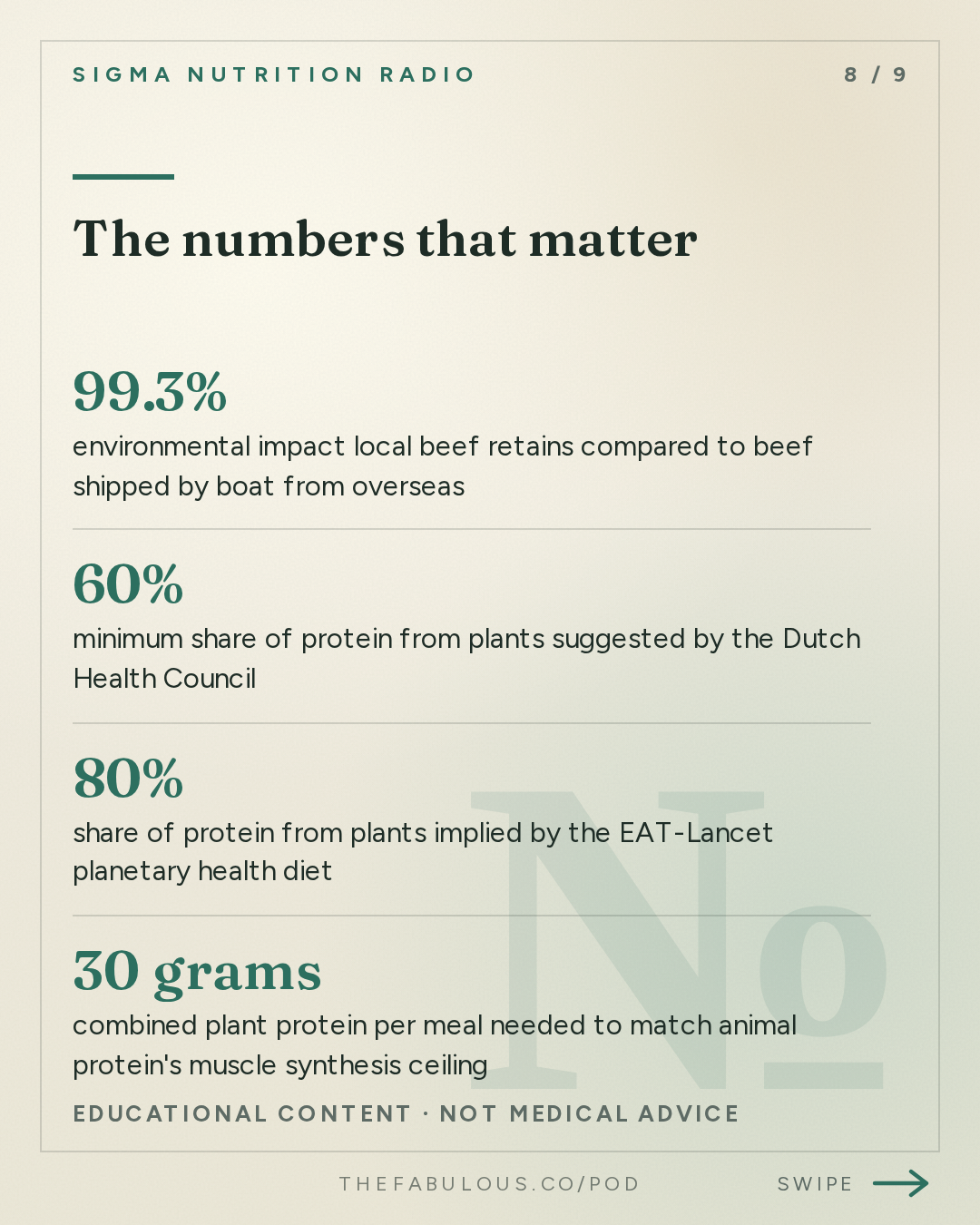
- 99.3% percent environmental impact local beef retains compared to beef shipped by boat from overseas
- 60% percent minimum share of protein from plants suggested by the Dutch Health Council
- 80% percent share of protein from plants implied by the EAT-Lancet planetary health diet
- 30 grams combined plant protein per meal needed to match animal protein's muscle synthesis ceiling
- 1.6 g/kg daily protein target per kilogram of body weight with no difference between plant and whey sources
In their words
“The local beef still has 99.3% of the, of the environmental impact. So that just is only a”
“Actually the worst thing you could have is organic beef, because beef is in itself a very inefficient way to feed people, and then organic is even less efficient.”
“When you give enough protein, so around 30 grams or so for one meal, and you combine sources of plant-based proteins, and then the ceiling of muscle protein synthesis is the same”
“No nutrient that there's no solution for in another way. Are”
Protocols
-
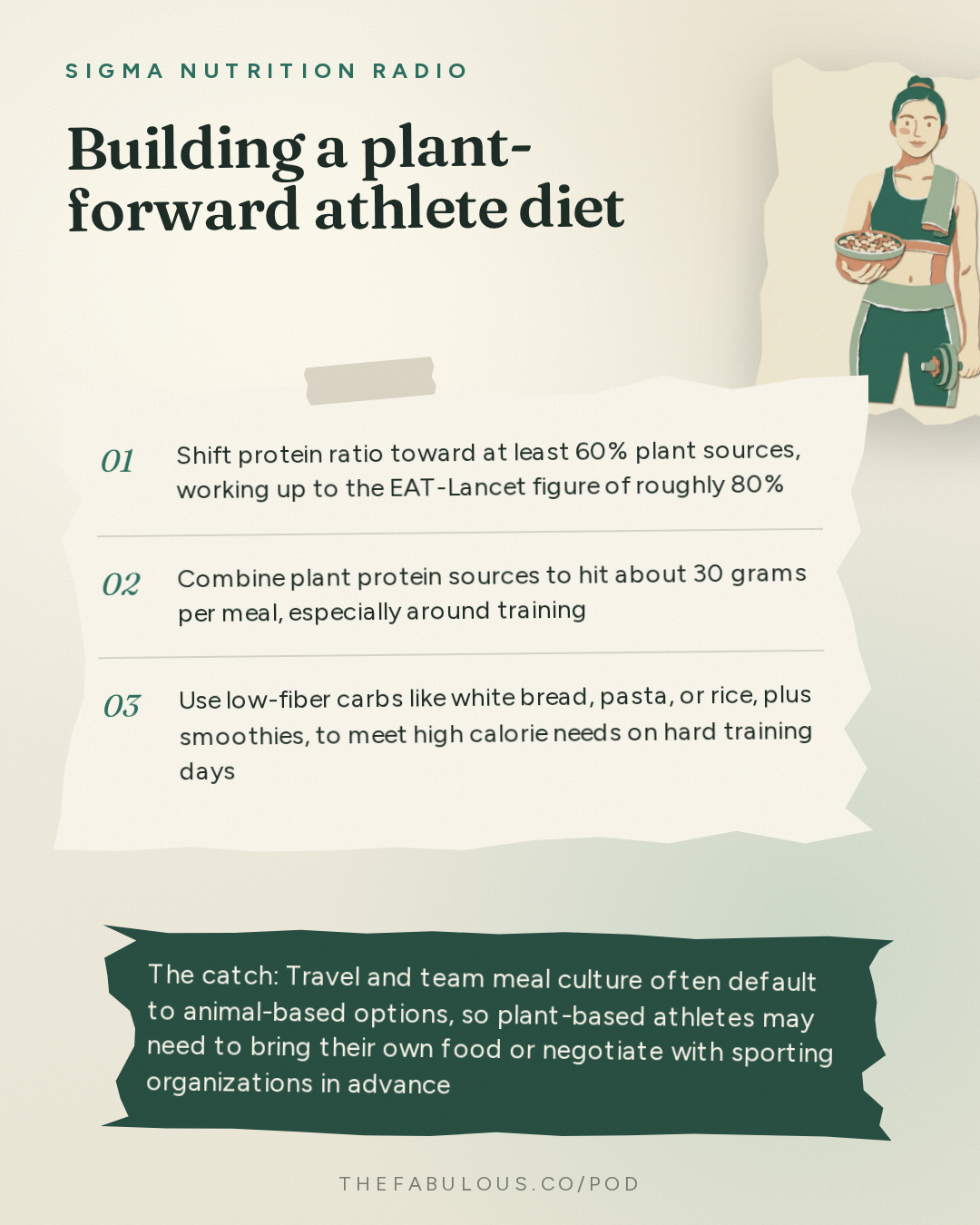
Shift the protein ratio, not the whole diet overnight
Pieter Res recommends athletes aim for at least 60% of daily protein from plant sources, working toward the EAT-Lancet figure of roughly 80% over time, since current average intake among athletes sits around 25 to 40% plant protein.
Daily dietary pattern, built up gradually
-
Hit 30 grams of combined plant protein per meal
Res advises combining multiple plant protein sources within a meal to reach about 30 grams, since this matches the muscle protein synthesis ceiling seen with animal protein despite differences in individual amino acid profiles.
Per meal, especially around training
-
Use low-fiber carbs and smoothies to hit calorie targets
Res suggests relying on energy-dense, low-fiber foods such as white bread, white pasta, white rice, and smoothies on hard training days, since a fully plant-based diet is less calorie-dense and can make it harder to reach totals like 5,000 kilocalories without excess bulk.
On high-volume or hard training days
-
Supplement B12 and consider algae omega-3
Res recommends that fully plant-based athletes take a B12 supplement and consider an algae-based omega-3 supplement in place of fish, while monitoring iron status, since the body adapts to absorb plant iron more efficiently when stores run low.
Daily for B12 and omega-3, with periodic iron monitoring
-
Supplement creatine regardless of diet type
Res advises both plant-based and omnivorous athletes to supplement creatine for optimal performance, since the amount obtained from meat and fish alone is suboptimal even for athletes who eat animal foods.
Daily
Questions this episode answers
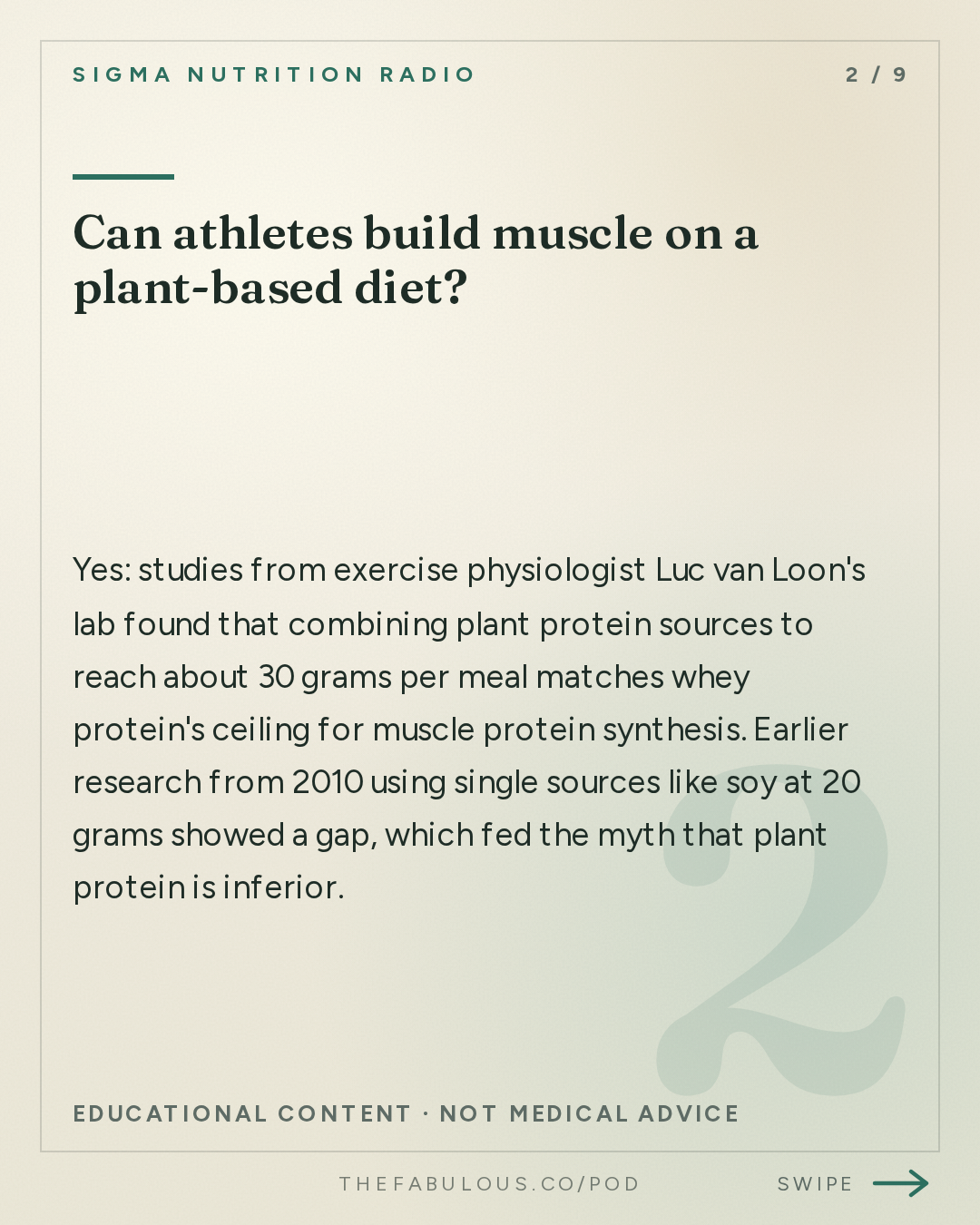
Can athletes build muscle on a plant-based diet?
Yes: studies from exercise physiologist Luc van Loon's lab found that combining plant protein sources to reach about 30 grams per meal matches whey protein's ceiling for muscle protein synthesis (17:31). Earlier research from 2010 using single sources like soy at 20 grams showed a gap, which fed the myth that plant protein is inferior (17:05).
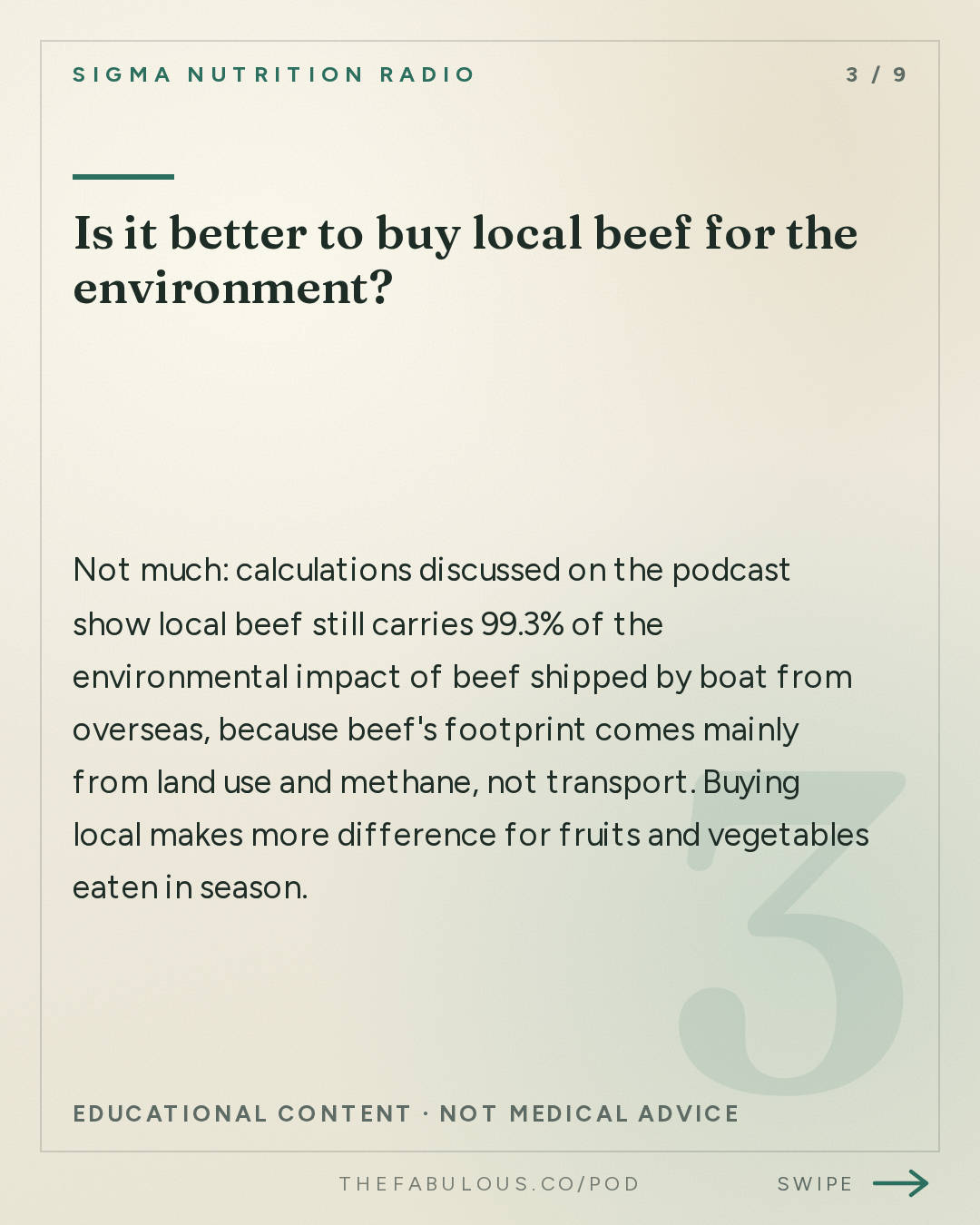
Is it better to buy local beef for the environment?
Not much: calculations discussed on the podcast show local beef still carries 99.3% of the environmental impact of beef shipped by boat from overseas, because beef's footprint comes mainly from land use and methane, not transport (10:13). Buying local makes more difference for fruits and vegetables eaten in season (09:49).
Do plant-based athletes need to worry about iron and B12?
B12 needs supplementing on a fully plant-based diet because it isn't reliably available from plant foods, according to performance nutritionist Pieter Res (23:05). Iron is less of a concern than assumed: the body adapts to absorb plant iron more efficiently when stores run low, and research doesn't show higher deficiency rates in vegetarians or vegans (22:40).
How much protein should come from plants for a sustainable diet?
The Dutch Health Council suggests at least 60% of protein from plant sources, while the EAT-Lancet planetary health diet works out to roughly 80% (13:04). Res treats a 60/40 plant-to-animal split as a realistic minimum for athletes, noting current average intake sits around 25 to 40% plant protein (26:03).
What is the single most effective dietary change for the environment?
Cutting beef and other ruminant meat has a far larger impact than any other single dietary change, according to Res, because of the land use and methane tied to cattle production (08:49). By comparison, switching to organic or buying local makes little difference for beef specifically (10:36).
The full read, in cards
Go deeper
- Jason Tang muscle protein synthesis study (2010) — compared 20 grams of whey, casein, and soy protein and found soy produced a smaller rise in muscle protein synthesis
- EAT-Lancet planetary health diet report — proposes a dietary pattern that works out to roughly 80% of protein from plant sources
- Luc van Loon lab plant protein studies — found that combining plant protein sources to reach about 30 grams per meal matches animal protein's muscle protein synthesis ceiling
Mentioned
Pieter Res · Danny Lennon · Ajax Amsterdam · EAT-Lancet · Hannah Ritchie · Luc van Loon · Rutger Bregman · Frank Holman · The Fork Ranger · Dutch Health Council
More from this show and category
How to Interpret Testosterone Test Results
A single testosterone number rarely settles the question of whether treatment will help. Physician Austin Baraki says free testosterone, symptom type, and the underlying cause of a low reading (often obesity, poor sleep, or alcohol) matter more than one blood draw, and a 4 to 6 month trial beats a lifelong commitment.
Body Composition Testing: DEXA vs BIA Accuracy
No device on the market actually measures body fat; every scale, scan, or pod only estimates it from indirect signals, and a method proven accurate for a group can still mislead an individual user. Texas Tech professor Grant Tinsley explains why standardizing tests, tracking one device over time, and treating small percentage swings as noise matter more than any single number (12:49, 38:24).
Liking vs Wanting in Food Reward Psychology
Food reward splits into two separate systems: liking, the pleasure a food delivers, and wanting, the pull to eat it, which often runs on autopilot. Nutrition composition alone explains only 20% of why a food is liked (21:59); adding sensory perception explains another 40-60% (22:35), while ultra-processed classification barely moves the needle.
BPC-157 Safety and Clinical Evidence Explained
BPC-157 and similar peptide medications have almost no published human safety data, and most are sold as unregulated 'research chemicals.' Dr. Jordan Feigenbaum, founder of Barbell Medicine, explains the evidence gap, sourcing risks between research-grade chemicals and compounding pharmacies, and why pharmaceutical companies abandoned these compounds despite viral anecdotal enthusiasm.
