
Oxytocin Doping for Marriage: The Business Case
3 businesses we think are about to blow up
The brief
Palmer Luckey wants to fight divorce with oxytocin, a bonding hormone already sold unregulated online as powder. The hosts trace how niche communities like Knights of Columbus and Angel Studios turn shared identity into insurance and content revenue, and explain why even a hit movie like Angel Studios' biggest box-office success nets just a 2.5x return.
Ask a very successful person what they would build if they lost everything tomorrow, and most will stall. They will talk about grit, or networks, or doing what they love. Palmer Luckey, the founder of defense company Anduril and co-founder of Oculus, did not stall. Asked that exact question at a conference, he answered instantly: he would try to end divorce using a hormone the body already makes.
"I would try to end the tragedy of divorce with oxytocin doping for marriage counseling." — Palmer Luckey [02:31]
The hosts of My First Million open their episode marveling less at the idea itself than at how fast it arrived, fully formed, pitch and all (03:57). That instinct, treat a huge, miserable, obviously unsolved problem (divorce affects roughly 50 percent of marriages, 04:47) as an engineering puzzle, turns out to be the thread connecting three stories in this episode: a hormone, a 140-year-old insurance trick, and the real math behind a hit movie.
Start with the hormone. Oxytocin occurs naturally in the body and spikes during childbirth, breastfeeding, sex, and even steady eye contact with a dog or a partner (06:07). It is currently unregulated as a chemical, meaning anyone can order a kilogram of it in powder form from a supplier like Sigma-Aldrich with no prescription (03:28). Companies are beginning to package it as a nasal spray, the only practical way to take it since it cannot be swallowed as a pill (10:11). The hosts had followed online communities, largely autistic people and those with PTSD, who have been self-administering it for years and journaling the results (05:47).
The science behind it is older and stranger than the Instagram trend suggests. Researchers have long studied prairie voles, one of the few mammals that mate for life, and found their oxytocin levels unusually high (10:50). Small human trials, with the caveat that they are small and not yet replicated at scale, found that people given oxytocin while bonded to a partner kept about 15 centimeters more distance from an attractive stranger than people given a placebo (11:55). The mechanism is not what pop culture suggests. It is not a love potion.
"It's not a love potion. What it does is it highlights or amplifies what you feel." — a host of My First Million [13:58]
That distinction matters. In the trials described, oxytocin did not create affection out of nothing. It sharpened whatever feeling was already there, warmth toward someone safe, or distance from someone the person had been abused by (14:17). The hosts compare this to the arc of GLP-1 weight-loss drugs and psychedelics: ideas that sounded fringe until, in one case, a psychedelics company was acquired by Eli Lilly for 2.8 billion dollars (18:14). Fringe does not mean fake. It sometimes just means early.
The Community Discount
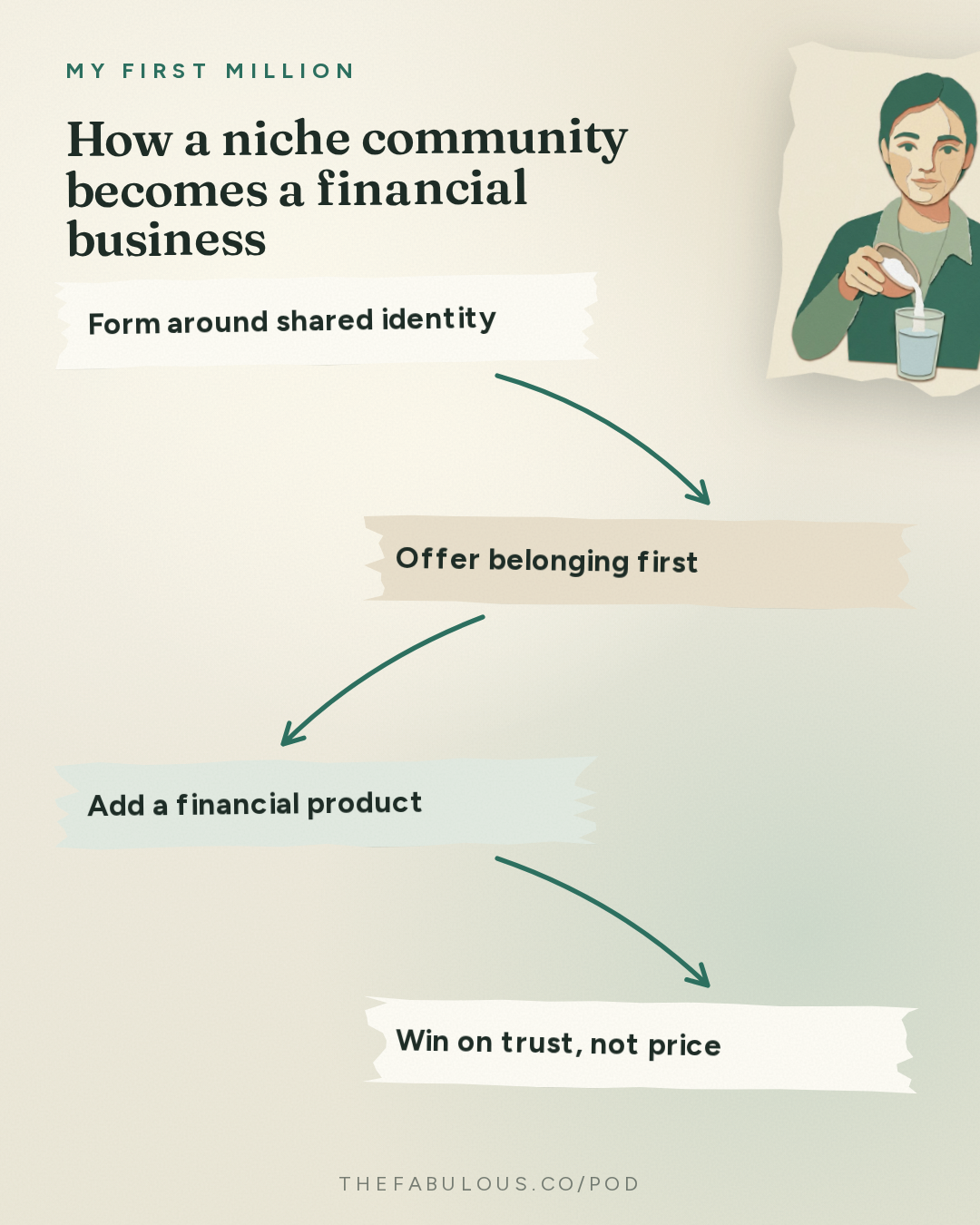
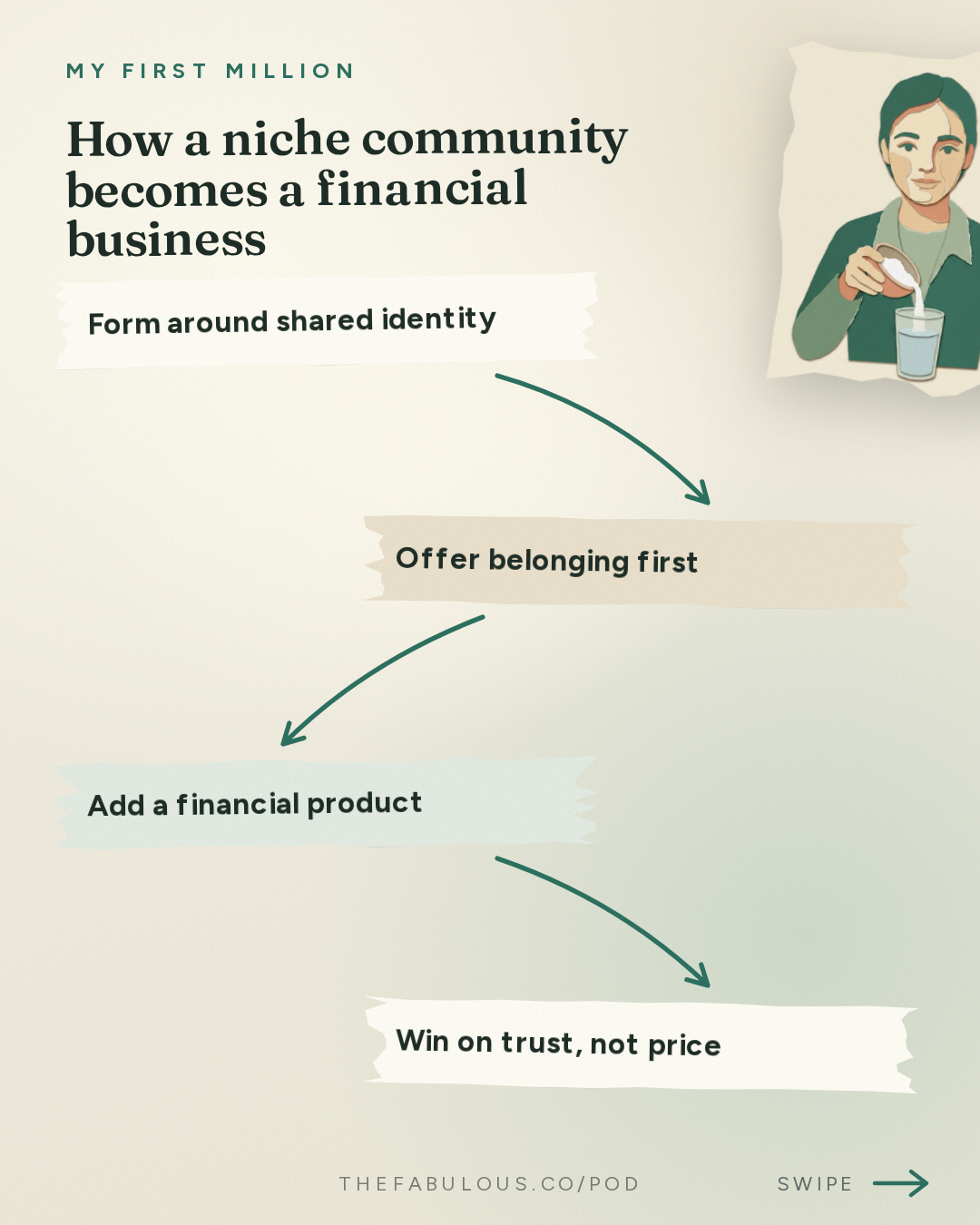
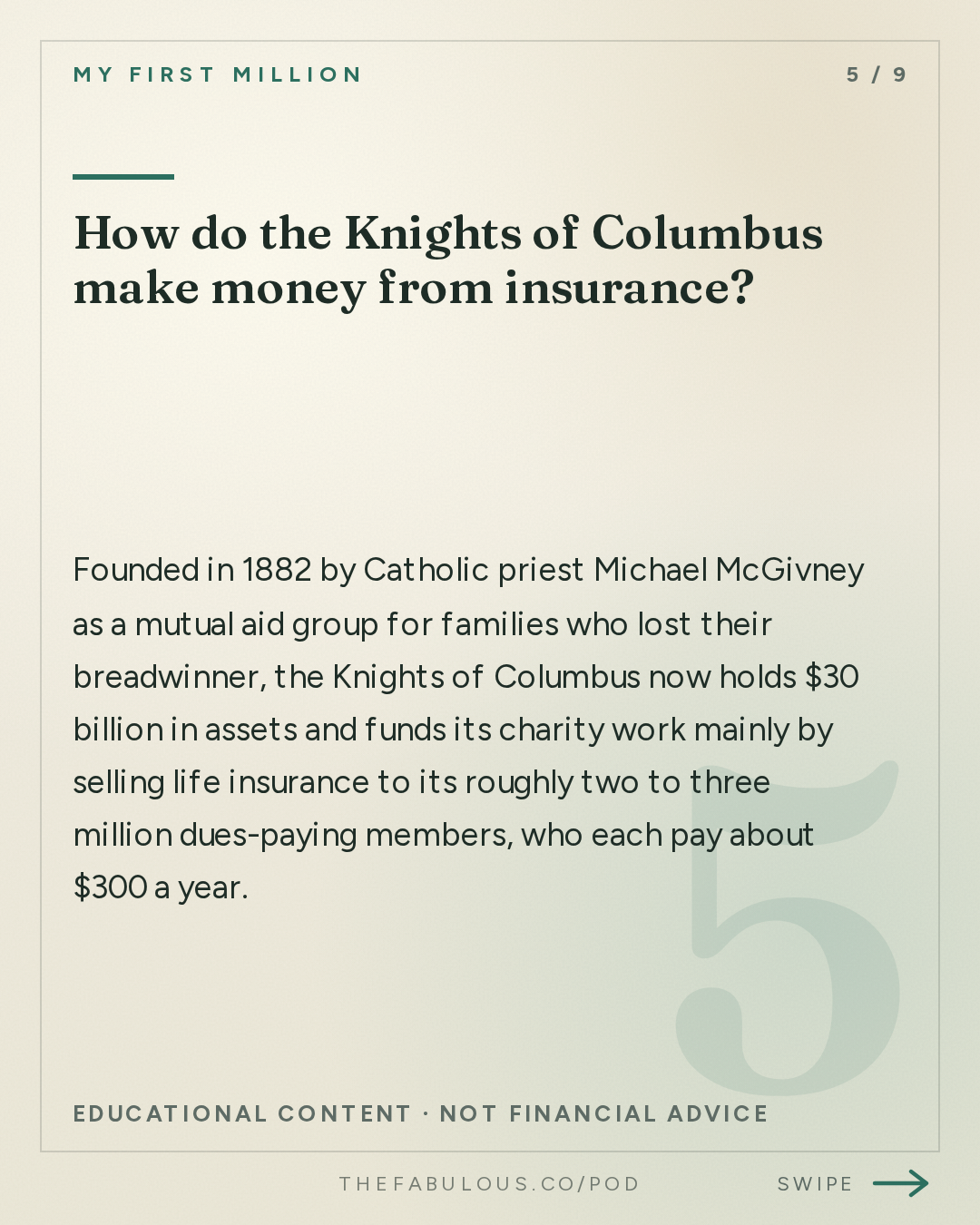
The second idea has nothing to do with chemistry and everything to do with belonging. In 1882, a Catholic priest in New Haven named Michael McGivney watched a parishioner die and leave his family with no income. McGivney organized roughly 200 men to pool money for families like that one (21:00). The group he started, the Knights of Columbus, is now a fraternal organization with something like two to three million members and 30 billion dollars in assets (21:58). Members pay about 300 dollars a year in dues, show up to plan charity drives, and the organization's real engine is selling them life insurance (22:23).
The pattern repeats elsewhere. Good Sam sells RV owners insurance and campground discounts built around a shared identity (23:28). The USCCA sells gun owners legal insurance alongside concealed-carry training, and does about 400 million dollars a year in revenue doing it (24:16). None of these organizations win by being the cheapest option. They win because the buyer already trusts the seller.
"The real banana is you figure out how to sell a commodity financial service, but people will have some preferential attachment to you because you are the community." — a host of My First Million [24:52]
What makes this interesting now, the hosts argue, is timing. Loneliness is widely discussed as a modern problem, and young men between 30 and 40 are, notably, the fastest-growing segment inside the Knights of Columbus, an organization that was mostly aging and shrinking for decades (23:07). A group that offers belonging first and a financial product second has a long runway, and Angel Studios is the same trick wearing a different costume.
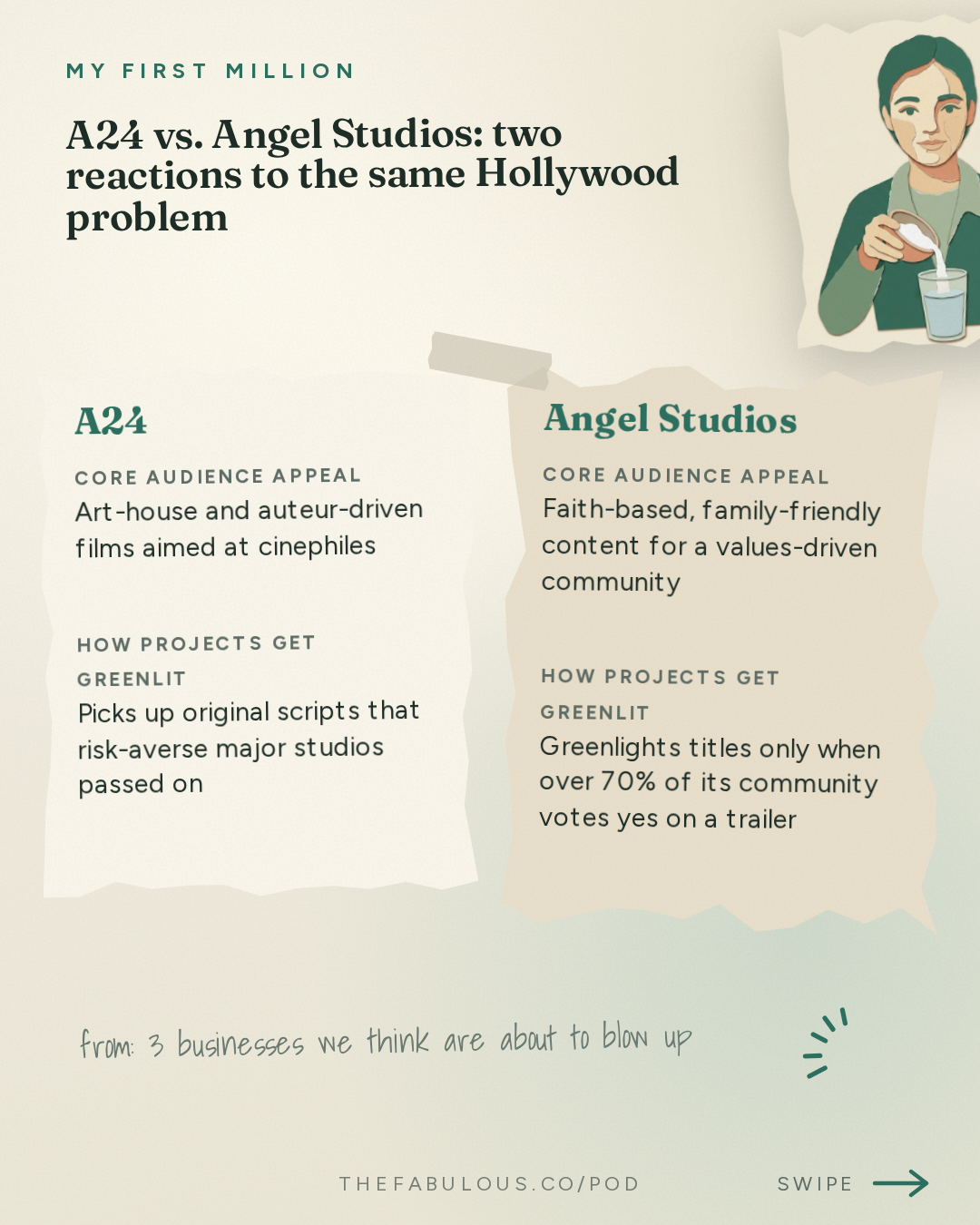
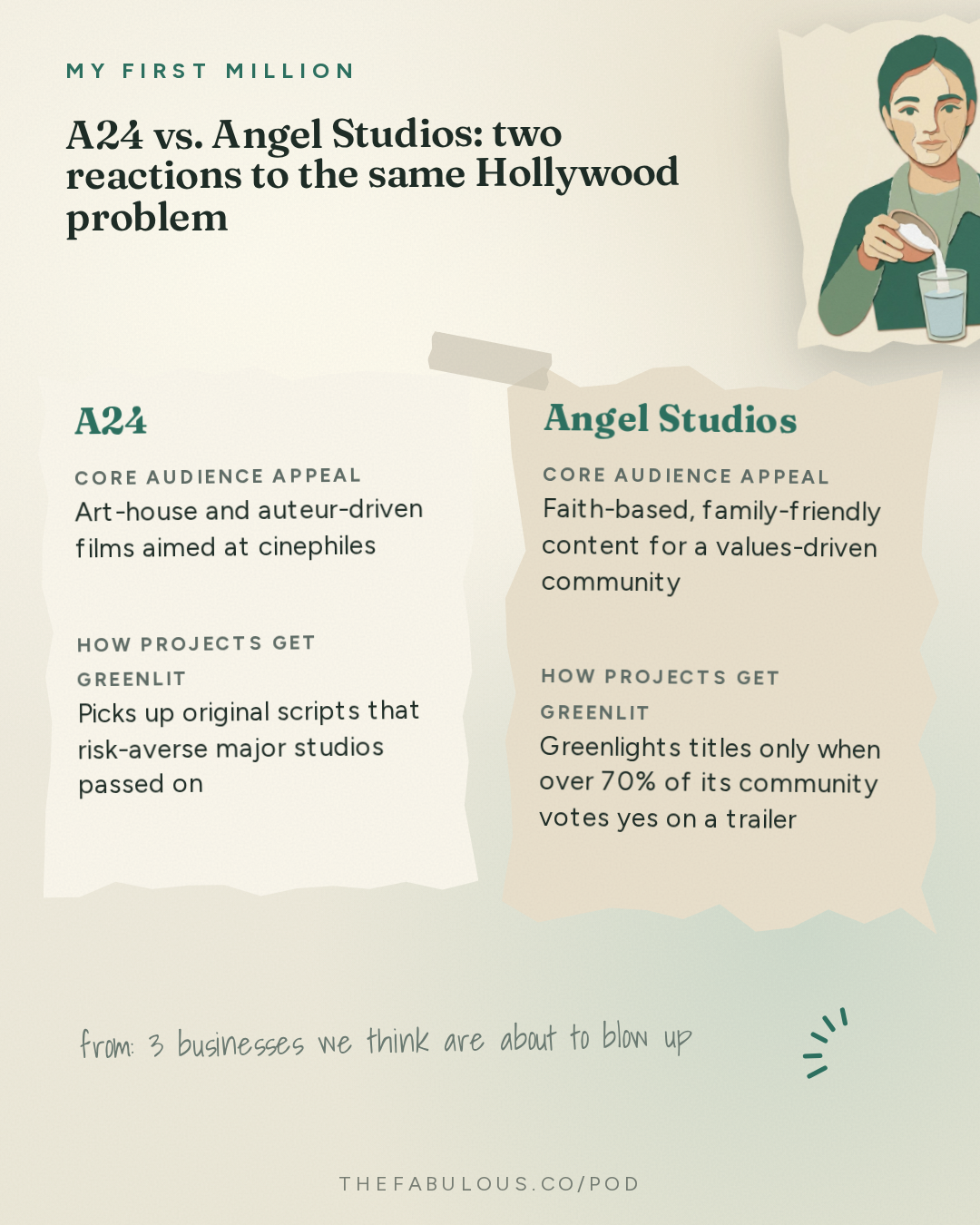
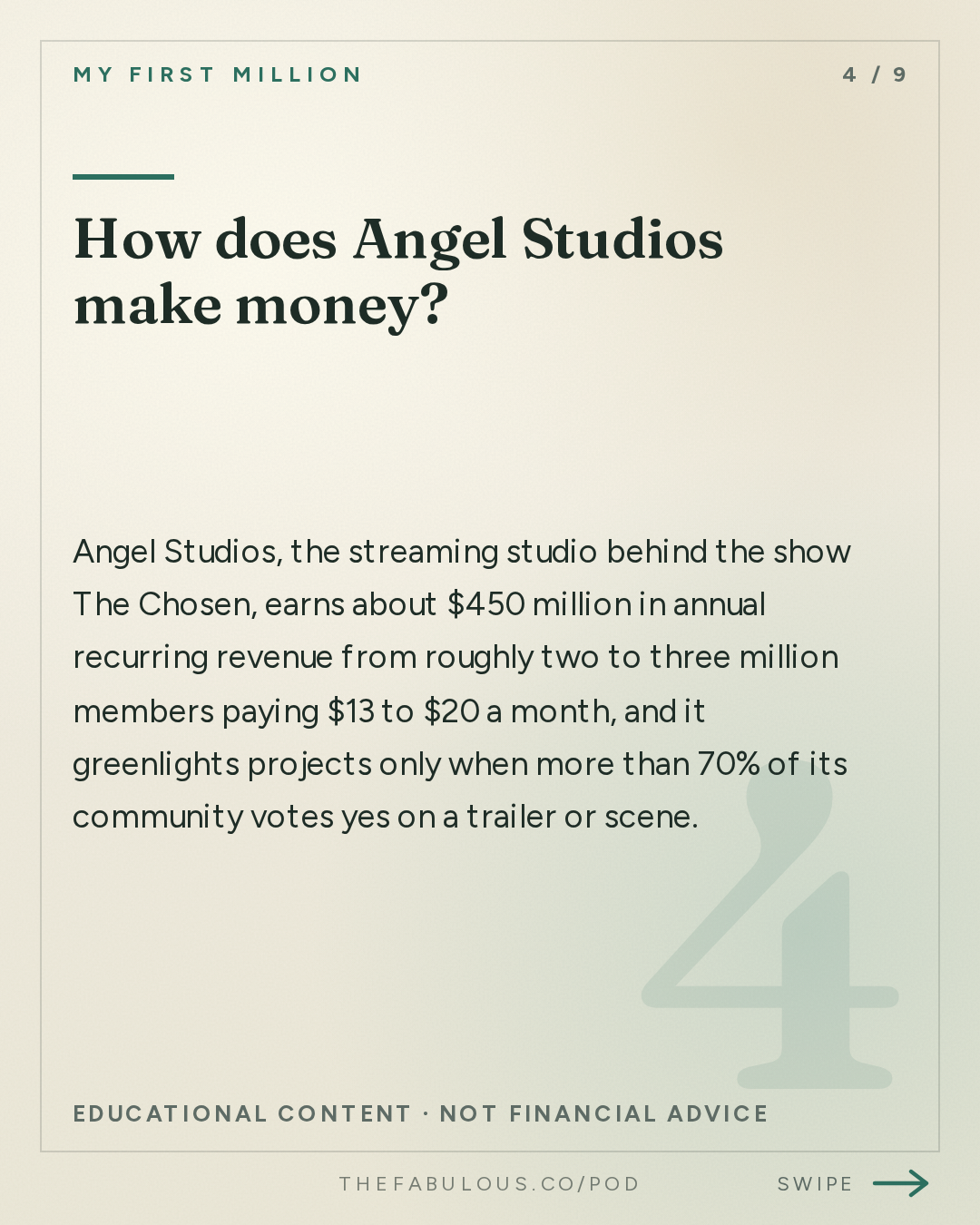
Angel Studios is a streaming studio built around a community of roughly two to three million members who want content with no cursing, no drinking, and clear heroes (28:32). Its flagship show, a drama about Jesus called The Chosen, has reportedly been watched by 200 million people (28:32). The studio now does about 450 million dollars a year in annual recurring revenue, built on subscriptions of 13 to 20 dollars a month (30:44). Its founder came from viral marketing, the kind behind Poo-Pourri and Squatty Potty, and the project began as a crude filter that stripped objectionable scenes out of existing movies, a tool that got him sued before Angel Studios pivoted to making its own films (31:21). The company only greenlights a project if more than 70 percent of its members vote yes after watching a trailer or scene (33:01).
The Economics of a Hit
That community-first model is also, in a roundabout way, a response to what happened at the other end of the film industry. One of the hosts offers a framework for spotting opportunities generally: find the reaction to the action.
"A great way to think of a business idea is to find the reaction to the action." — a host of My First Million [35:00]
Facebook made photos permanent and public, and Snapchat answered with photos that vanished. Abundant fast food and the rise of GLP-1 drugs are another pairing of action and reaction (35:46). In film, the action was Hollywood studios retreating into "four-quadrant" movies, safe bets designed to appeal to men and women, young and old, at once, which in practice meant sequels and superhero franchises (36:31). The reaction was studios like A24 picking up original, lower-budget scripts that the majors had no appetite for, then marketing them with stunts no legacy studio would try (39:49).
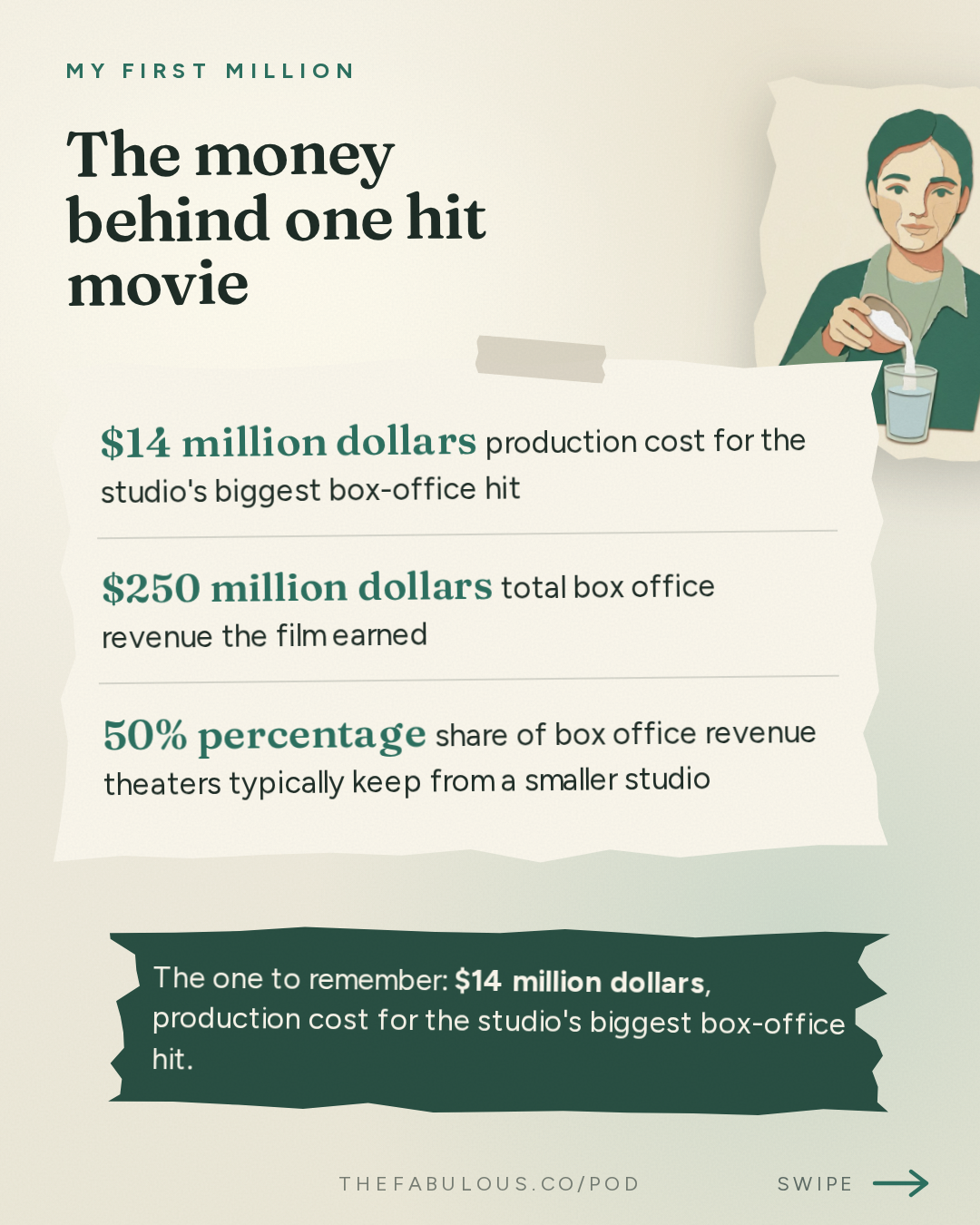
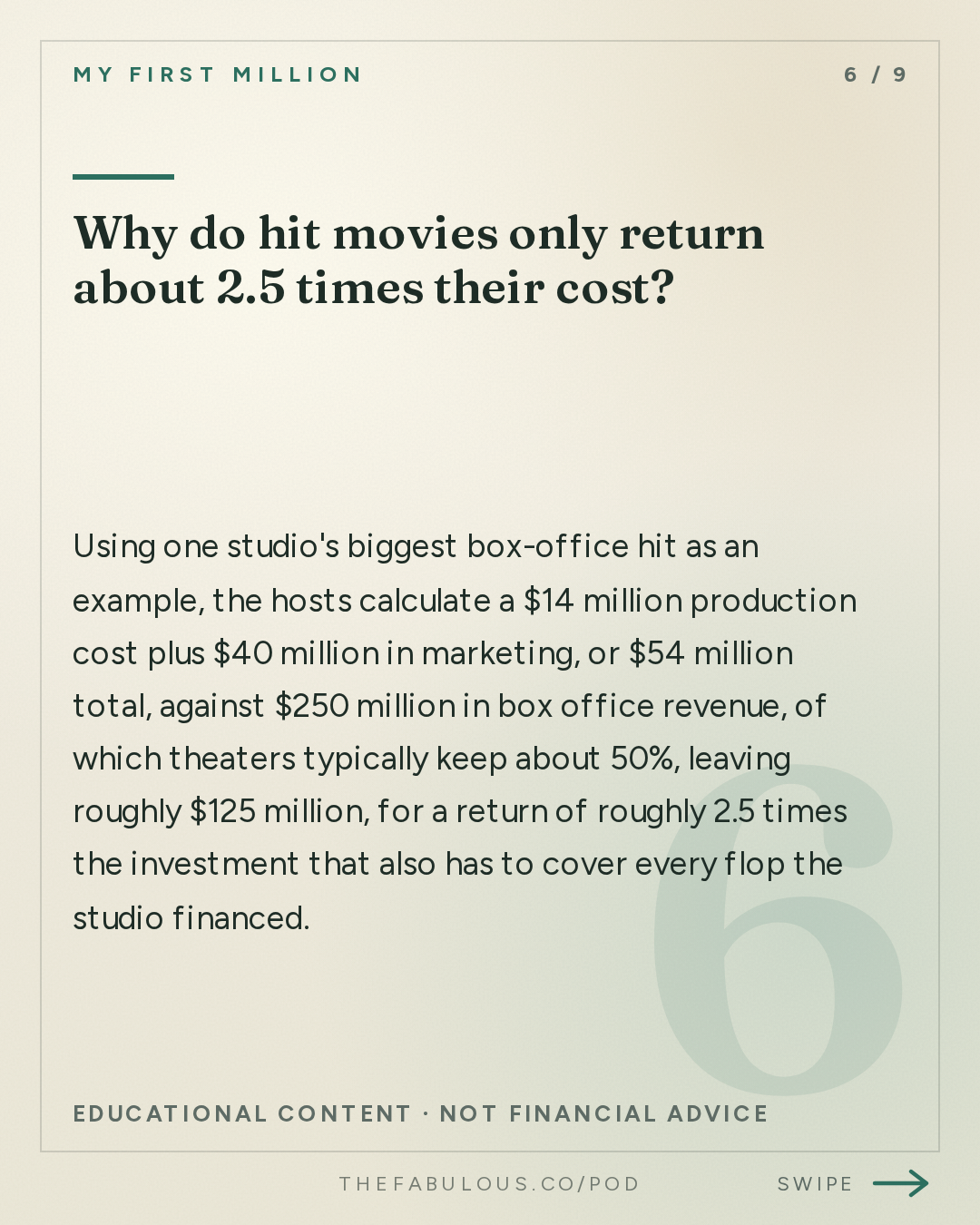
What is strange is how thin the margins stay even when the bet pays off. One host recounts a conversation about a studio's biggest box-office hit: it cost 14 million dollars to make and 40 million dollars to market, for an all-in cost of 54 million dollars (40:21). The film brought in 250 million dollars at the box office. That sounds like a clean win until the theater's cut comes out, typically about 50 percent of box office revenue for a smaller studio (43:45), leaving roughly 125 million dollars against that 54 million dollar spend. Call it a return of about two and a half times, and remember that number has to cover every flop the studio also financed that year (44:11).
The same math shows up in publishing. Author Mark Manson's self-help book reportedly sold 20 million copies and, according to its publisher's annual report, outsold Hillary Clinton's book that year while making the imprint profitable almost single-handedly (44:32). Books, like movies and video games, are hits-driven businesses: one or two titles carry the whole portfolio, and the winners print money because the marginal cost of a copy, or a ticket, is tiny once the thing exists.
What links a billionaire's hormone pitch, a 19th-century mutual aid society, and a studio's box office spreadsheet is not biohacking or faith or film at all. It is the same question asked three different ways: what does a group of people already feel, need, or trust, and what is the simplest financial or creative product that can be built on top of it. Luckey's answer was a molecule. The Knights of Columbus answered with a policy. A24 and Angel Studios answered with a story. The packaging changes. The instinct to find the gap and build directly into it does not.
Ask this episode anything
Pod's AI answers from the episode itself, with the minute mark so you can hear it yourself.
Or start with one of these
Ask this episode
Pod's AI listens to the whole episode to answer, and points you to the minute it comes from.
The rest of this answer, and any question after it
Answers come from the episode itself, never from a summary of it.
ContinueKey takeaways
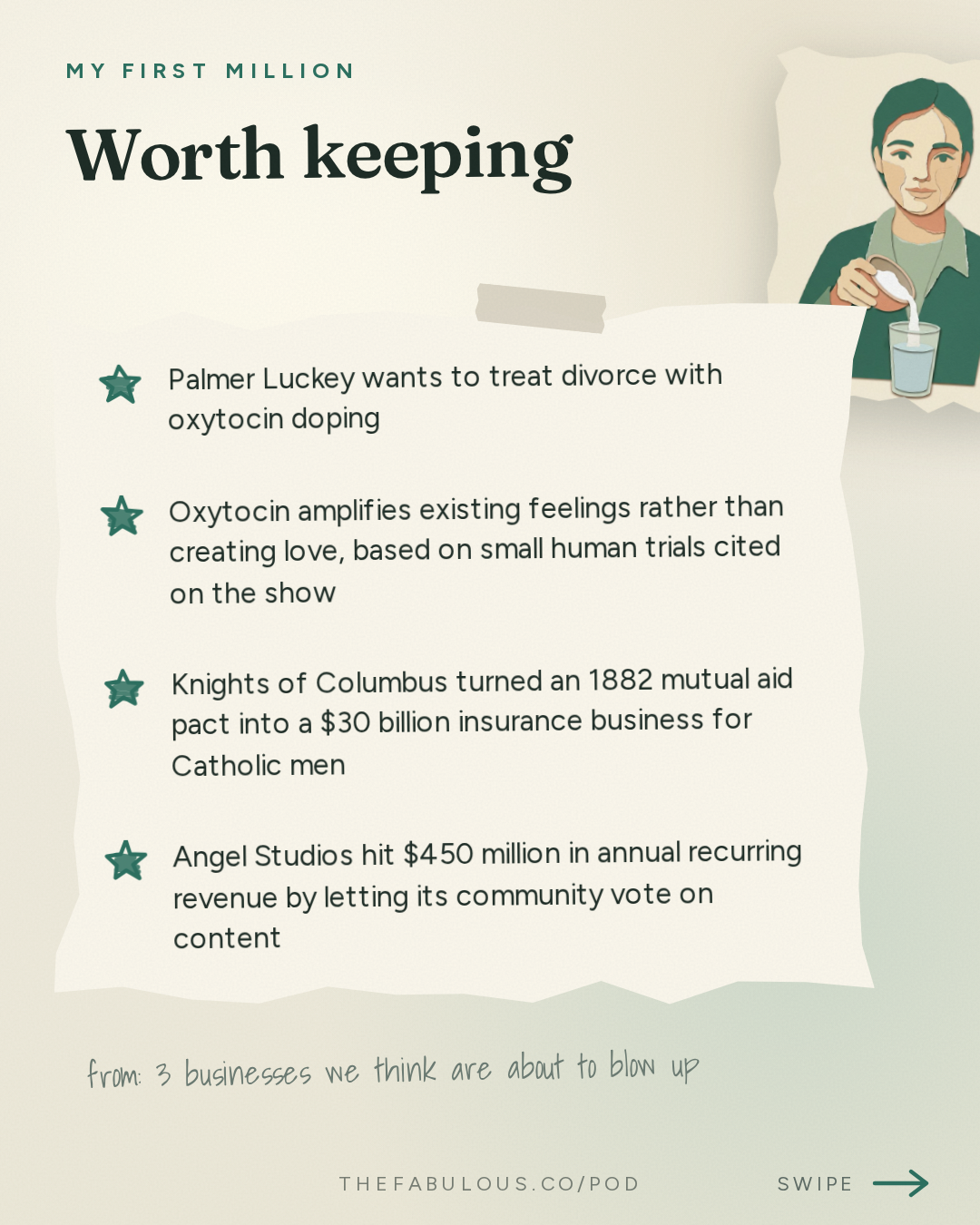
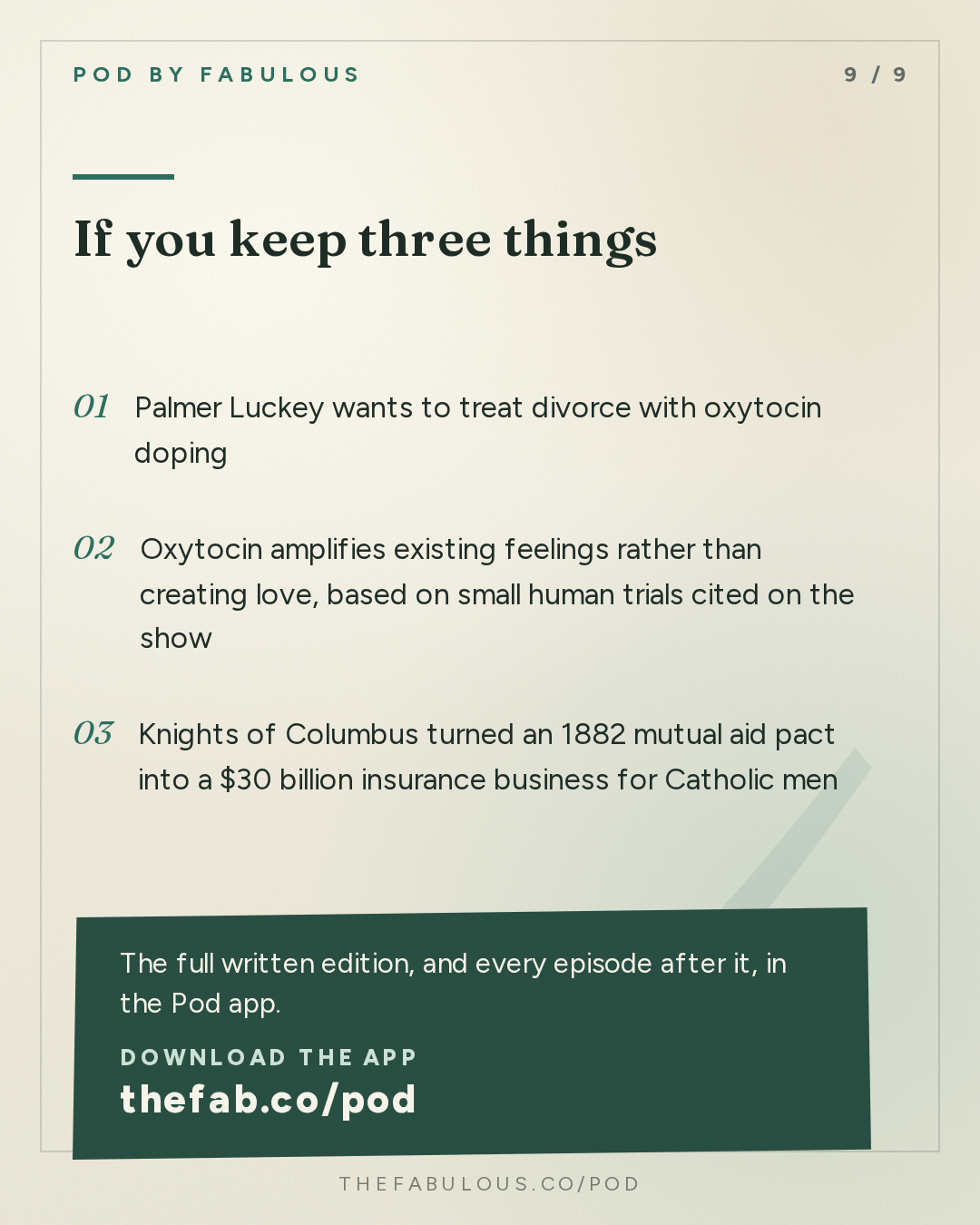
- Palmer Luckey wants to treat divorce with oxytocin doping
- Oxytocin amplifies existing feelings rather than creating love, based on small human trials cited on the show
- Knights of Columbus turned an 1882 mutual aid pact into a $30 billion insurance business for Catholic men
- Angel Studios hit $450 million in annual recurring revenue by letting its community vote on content
- A hit movie can still net only about 2.5x after marketing costs and the theater's 50% cut
The episode in cards
By the numbers
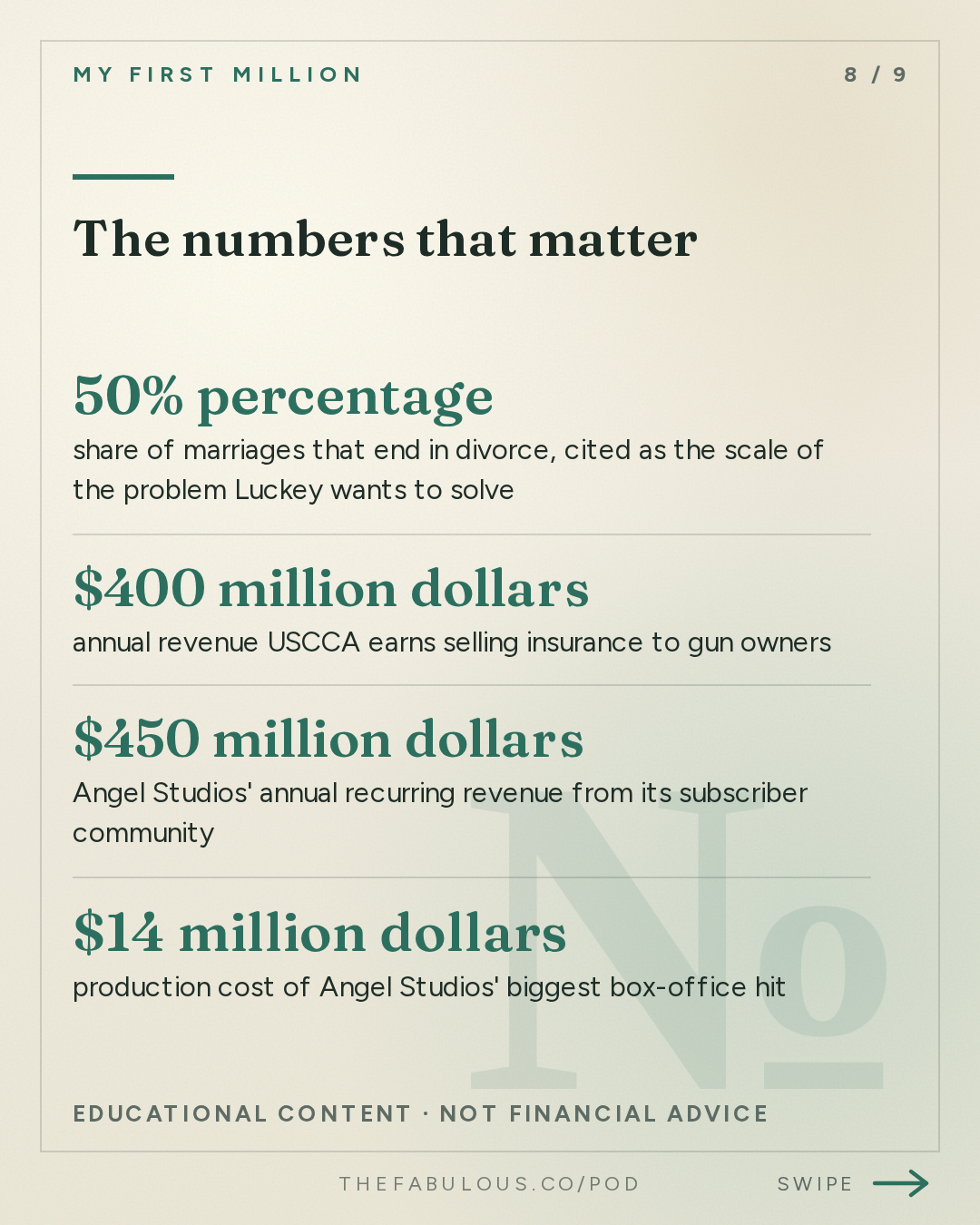
- 50% percentage share of marriages that end in divorce, cited as the scale of the problem Luckey wants to solve
- $400 million dollars annual revenue USCCA earns selling insurance to gun owners
- $450 million dollars Angel Studios' annual recurring revenue from its subscriber community
- $14 million dollars production cost of Angel Studios' biggest box-office hit
- $250 million dollars total box office revenue that same film earned
In their words
“I would try to end the tragedy of divorce with oxytocin doping for marriage counseling.”
“The real banana is you figure out how to sell a finan- a commodity financial service, but people will have some preferential attachment to you because you are the”
“A great way to think of a business p- uh, idea is to find the reaction to the”
Protocols
-
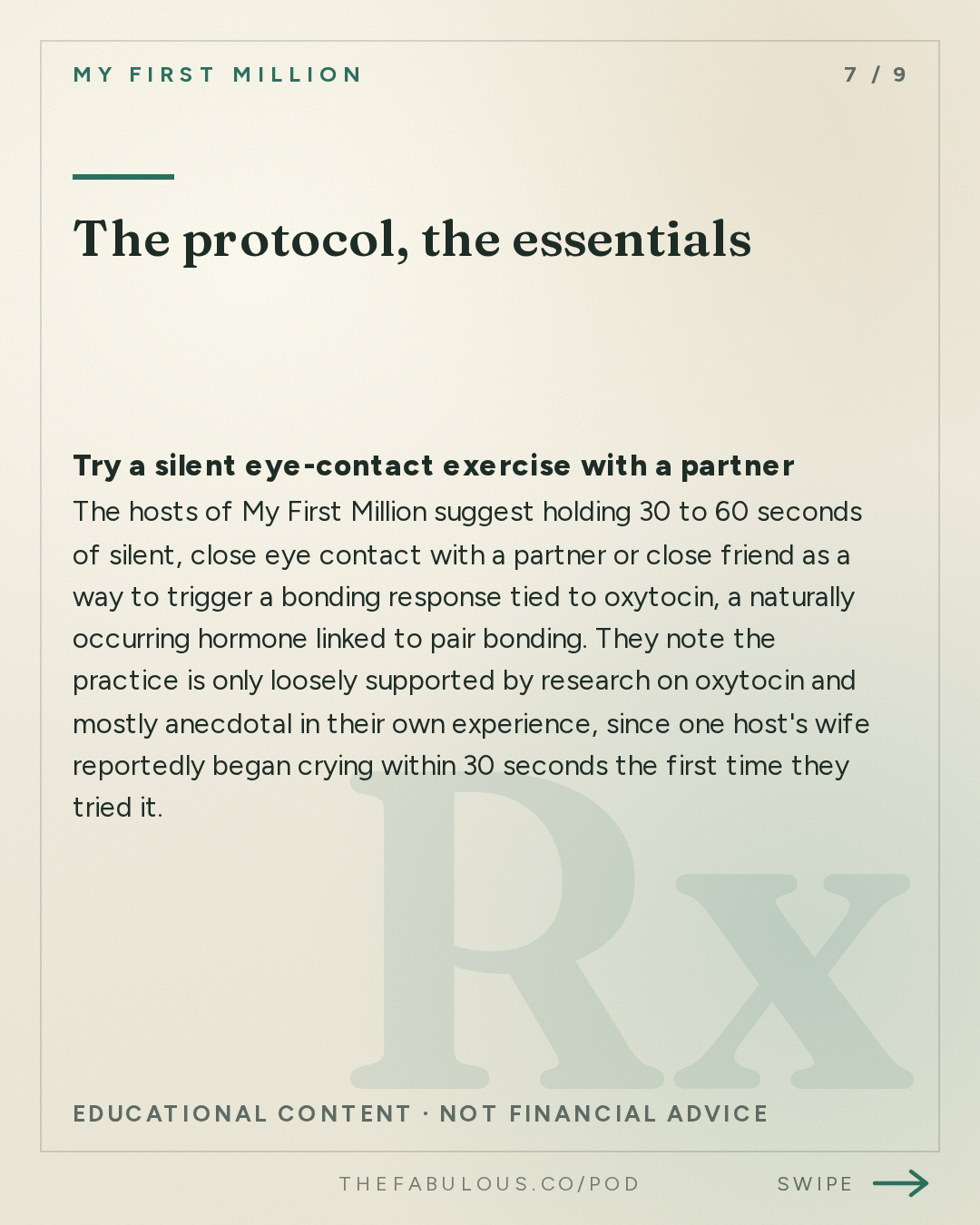
Try a silent eye-contact exercise with a partner
The hosts of My First Million suggest holding 30 to 60 seconds of silent, close eye contact with a partner or close friend as a way to trigger a bonding response tied to oxytocin, a naturally occurring hormone linked to pair bonding. They note the practice is only loosely supported by research on oxytocin and mostly anecdotal in their own experience, since one host's wife reportedly began crying within 30 seconds the first time they tried it.
as a one-off or nightly practice
-
Angel Studios greenlights content by community vote
Angel Studios, a streaming studio with two to three million members, shows a trailer or scene from a prospective project to its community and only proceeds if more than 70 percent of members vote yes. The catch is that this only works because the studio spent years building a values-aligned audience large enough to make the vote meaningful.
per project
Questions this episode answers
What did Palmer Luckey say about using oxytocin for divorce?
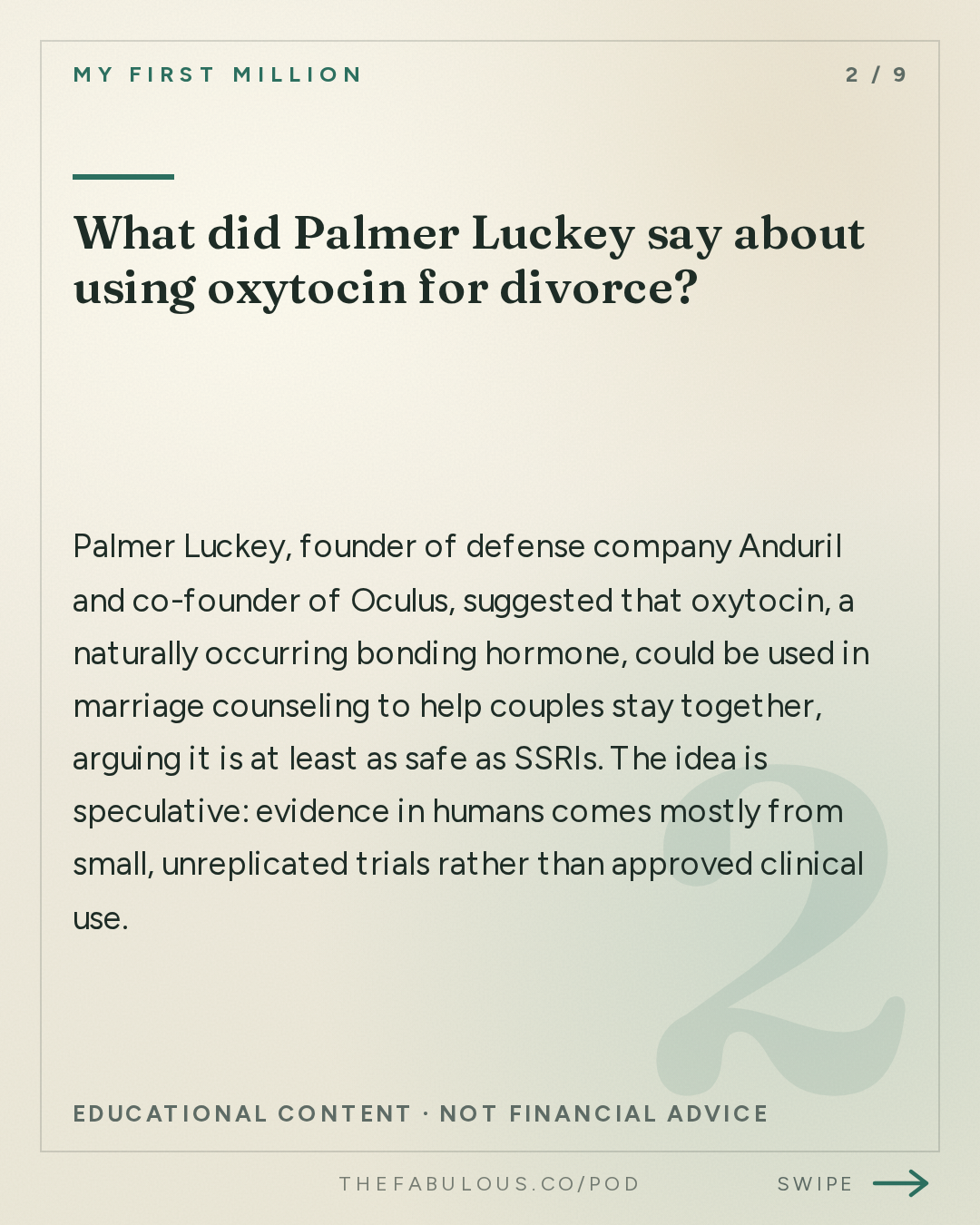
Palmer Luckey, founder of defense company Anduril and co-founder of Oculus, suggested that oxytocin, a naturally occurring bonding hormone, could be used in marriage counseling to help couples stay together, arguing it is at least as safe as SSRIs (02:31). The idea is speculative: evidence in humans comes mostly from small, unreplicated trials rather than approved clinical use (10:50).
Is oxytocin legal to buy without a prescription?
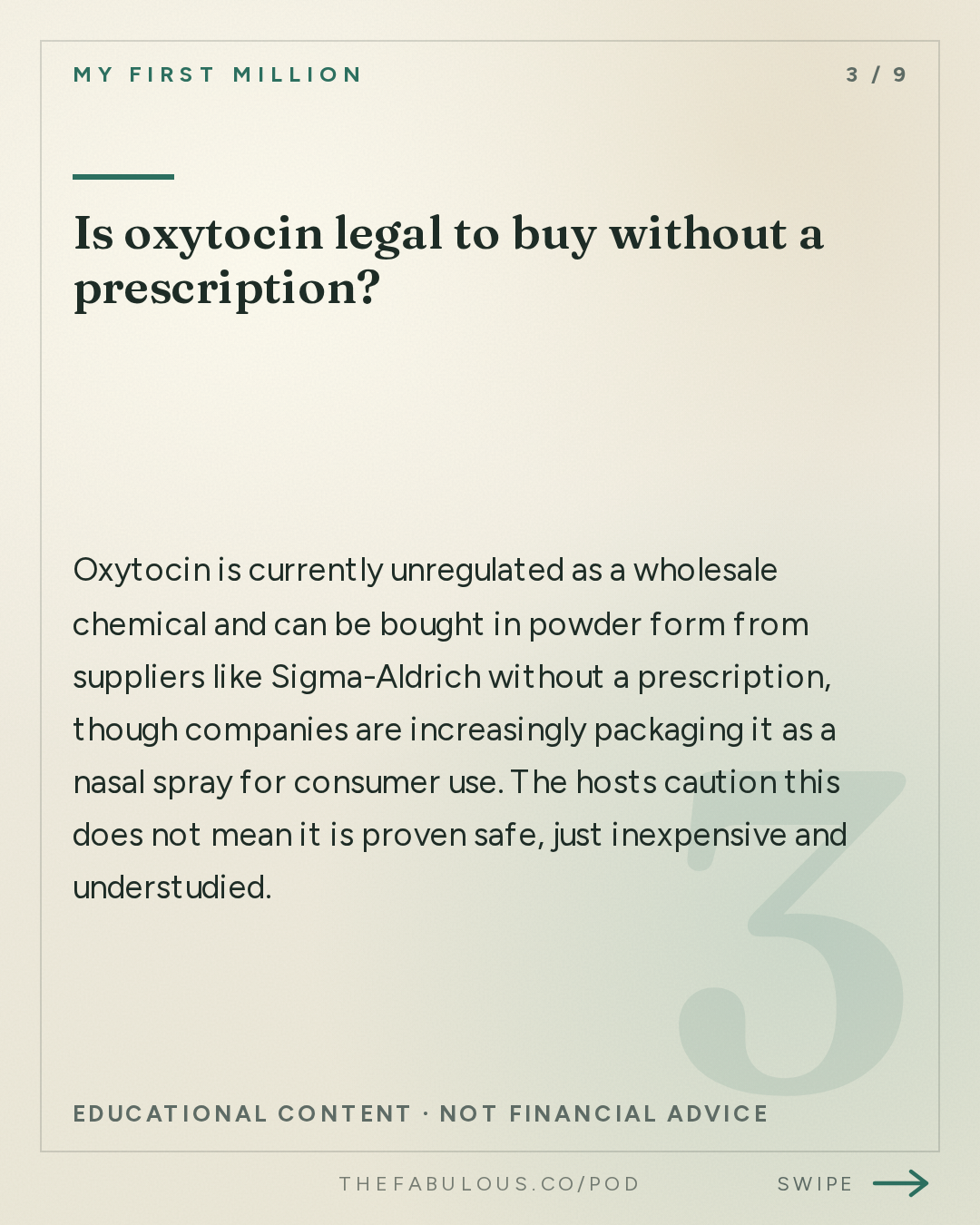
Oxytocin is currently unregulated as a wholesale chemical and can be bought in powder form from suppliers like Sigma-Aldrich without a prescription, though companies are increasingly packaging it as a nasal spray for consumer use (03:28). The hosts caution this does not mean it is proven safe, just inexpensive and understudied (10:28).
How does Angel Studios make money?
Angel Studios, the streaming studio behind the show The Chosen, earns about $450 million in annual recurring revenue from roughly two to three million members paying $13 to $20 a month, and it greenlights projects only when more than 70% of its community votes yes on a trailer or scene (30:44).
How do the Knights of Columbus make money from insurance?
Founded in 1882 by Catholic priest Michael McGivney as a mutual aid group for families who lost their breadwinner, the Knights of Columbus now holds $30 billion in assets and funds its charity work mainly by selling life insurance to its roughly two to three million dues-paying members, who each pay about $300 a year (21:58).
Why do hit movies only return about 2.5 times their cost?
Using one studio's biggest box-office hit as an example, the hosts calculate a $14 million production cost plus $40 million in marketing, or $54 million total, against $250 million in box office revenue, of which theaters typically keep about 50%, leaving roughly $125 million, for a return of roughly 2.5 times the investment that also has to cover every flop the studio financed (43:45).
What is the 'reaction to the action' business theory?
The theory, described by one host, holds that a dominant trend creates its own opposite market opportunity: Facebook's permanent public photos created demand for Snapchat's disappearing ones, and Hollywood's turn toward safe sequels created room for studios like A24 to pick up original scripts that major studios had ignored (35:00).
The full read, in cards
Go deeper
- Prairie vole monogamy studies and related small human oxytocin trials — found high oxytocin correlates with lifelong pair bonding in voles, and small human trials found oxytocin increased social distance from attractive strangers among bonded partners
- The Subtle Art of Not Giving a F*ck by Mark Manson — sold roughly 20 million copies and reportedly outsold Hillary Clinton's book in its publisher's annual report that year
Mentioned
Palmer Luckey · Anduril · Sigma-Aldrich · Angel Studios · A24 · Knights of Columbus · Michael McGivney · Eli Lilly · Mark Manson · USCCA · Good Sam · AARP · The Chosen
More from this show and category
MIT Scientist on Simulation Theory and Elon Musk
MIT-trained computer scientist and video game entrepreneur Rizwan Virk argues the physical world may be a rendered simulation, echoing Elon Musk's 2016 claim that the odds of living in base reality are one in billions. He ties Nick Bostrom's simulation argument to quantum physics, ancient religious texts, and a real 2025 incident where OpenAI's own test agents hacked Hugging Face.
How Whatnot Became a $20 Billion Company
Whatnot is a livestream shopping app now valued at $20 billion, built by founder Grant Lafontaine after a failed Craigslist clone idea. He pivoted to Funko Pop collectibles, became the platform's first seller to solve the marketplace chicken-and-egg problem, and scaled sales from $2.3 million in 2020 to $1 billion by 2022.
Shaan Puri's Content Creator Playbook
Shaan Puri argues that who follows a creator matters more than how many people do, the way Ferrari outvalues GM despite selling 200 times fewer cars. His playbook: find your niche obsession, sell a feeling instead of information, and use MrBeast's rule of 100 to improve one thing per video before judging results.
David Rubenstein: From $5M to Carlyle's $500B
David Rubenstein turned $5 million into Carlyle Group's $500 billion, decades after his first career ended at 31 in Jimmy Carter's White House. He describes a rule that most founders start businesses before 37, the Amazon stake he passed on, and why the fear of failure never fades even after four decades of success.
