
How Oh My Mahjong Hit $40 Million in Sales
She’s making $40M selling a game to rich moms
The brief
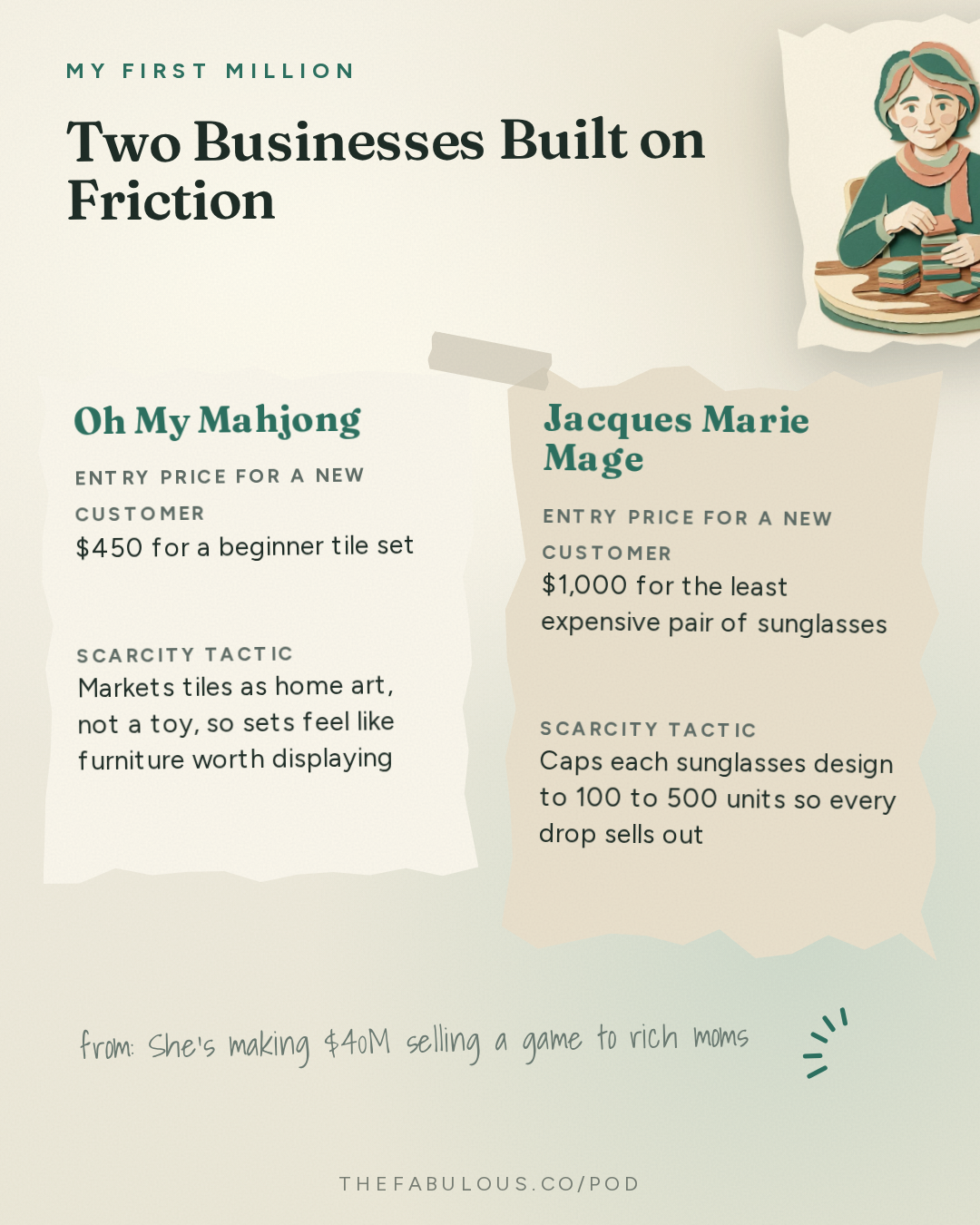
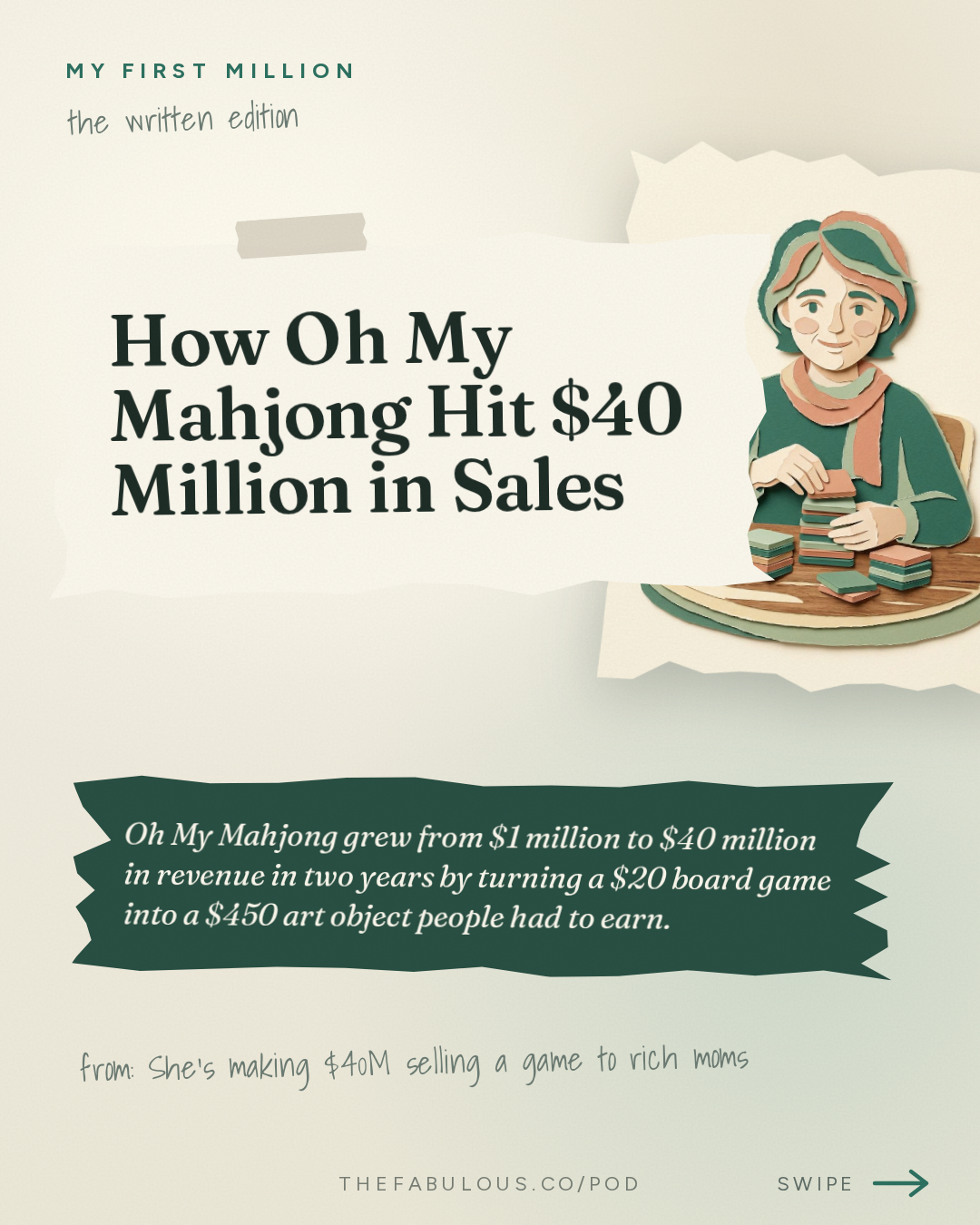
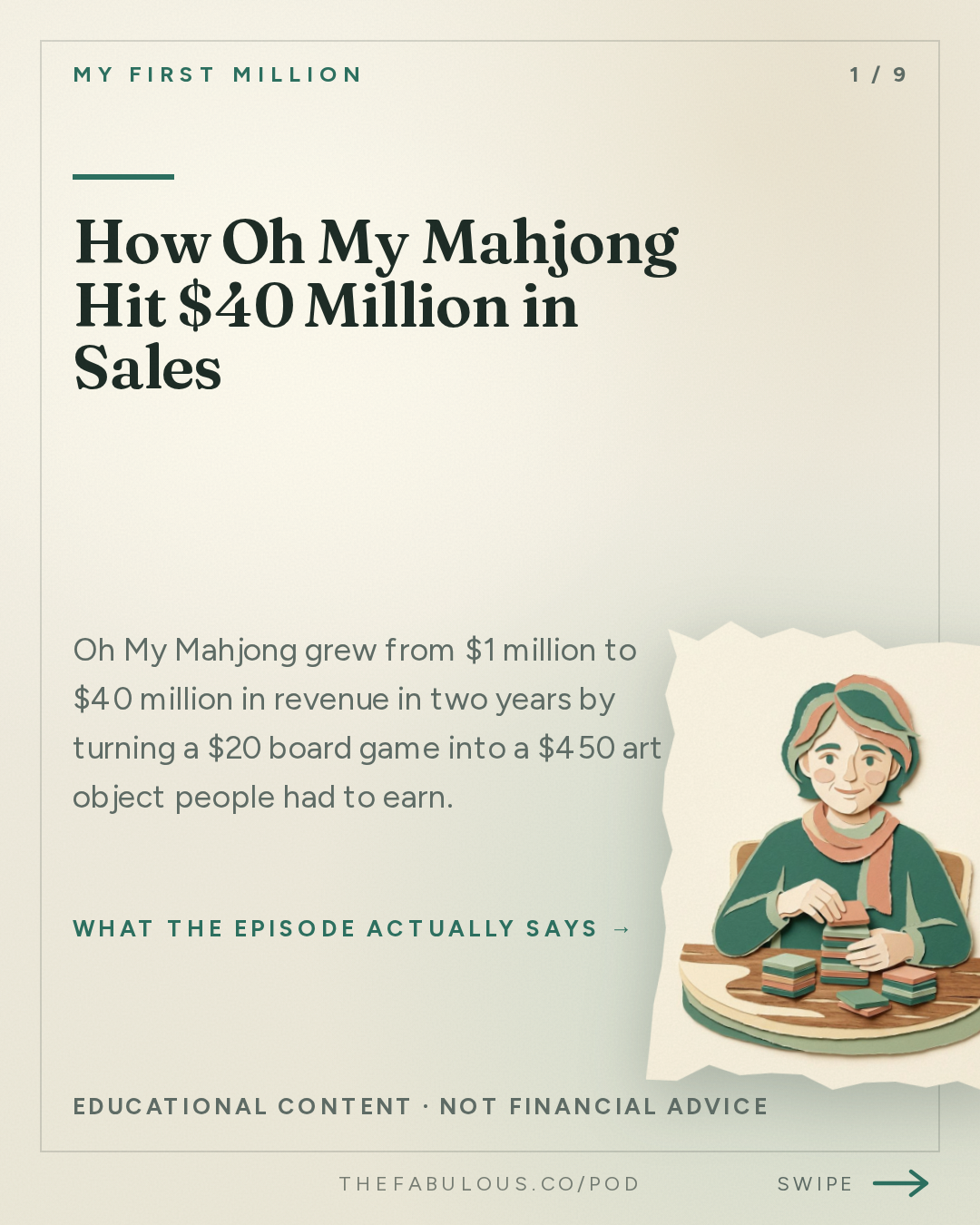
Oh My Mahjong grew from $1 million to $40 million in revenue in two years by turning a $20 board game into a $450 art object people had to earn. The episode traces that same severity of initiation effect through $3,000 designer sunglasses, Andrew Huberman's $24 million deal with Hims, and a growing backlash against screens and ease.
A mahjong set should cost about as much as a board game, which is to say almost nothing. That was the assumption going into a boutique near Oakland, where a shopkeeper offered an "entry-level" set for $450. The buyer, a co-host of this episode, walked out $850 poorer, having been upsold on tiles that click like tiny porcelain teeth. He wasn't being fleeced so much as initiated. The tiles, it turns out, are not really the product. The difficulty is.
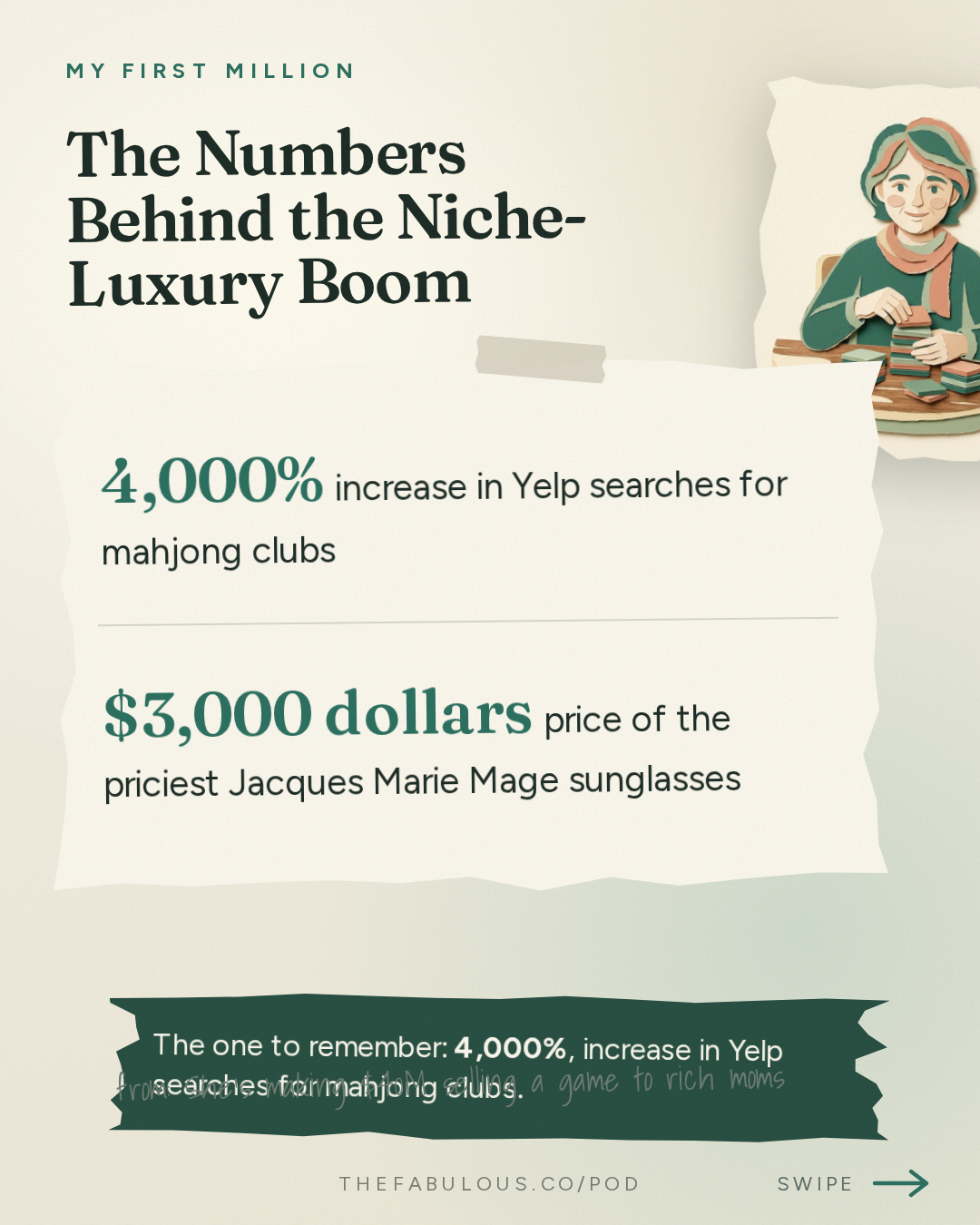
That difficulty has built a real company. Oh My Mahjong is roughly two and a half years old. It made $1 million in its first year, $40 million in its second (01:43), and is on pace for $60 million in its third. Yelp searches for mahjong clubs and coaches are up 4,000 percent (01:18), and Google search volume keeps climbing every year since the pandemic. None of this is about the game itself, which has existed for roughly a century in America and far longer in China. It is about a very old psychological trick dressed up as a lifestyle brand.
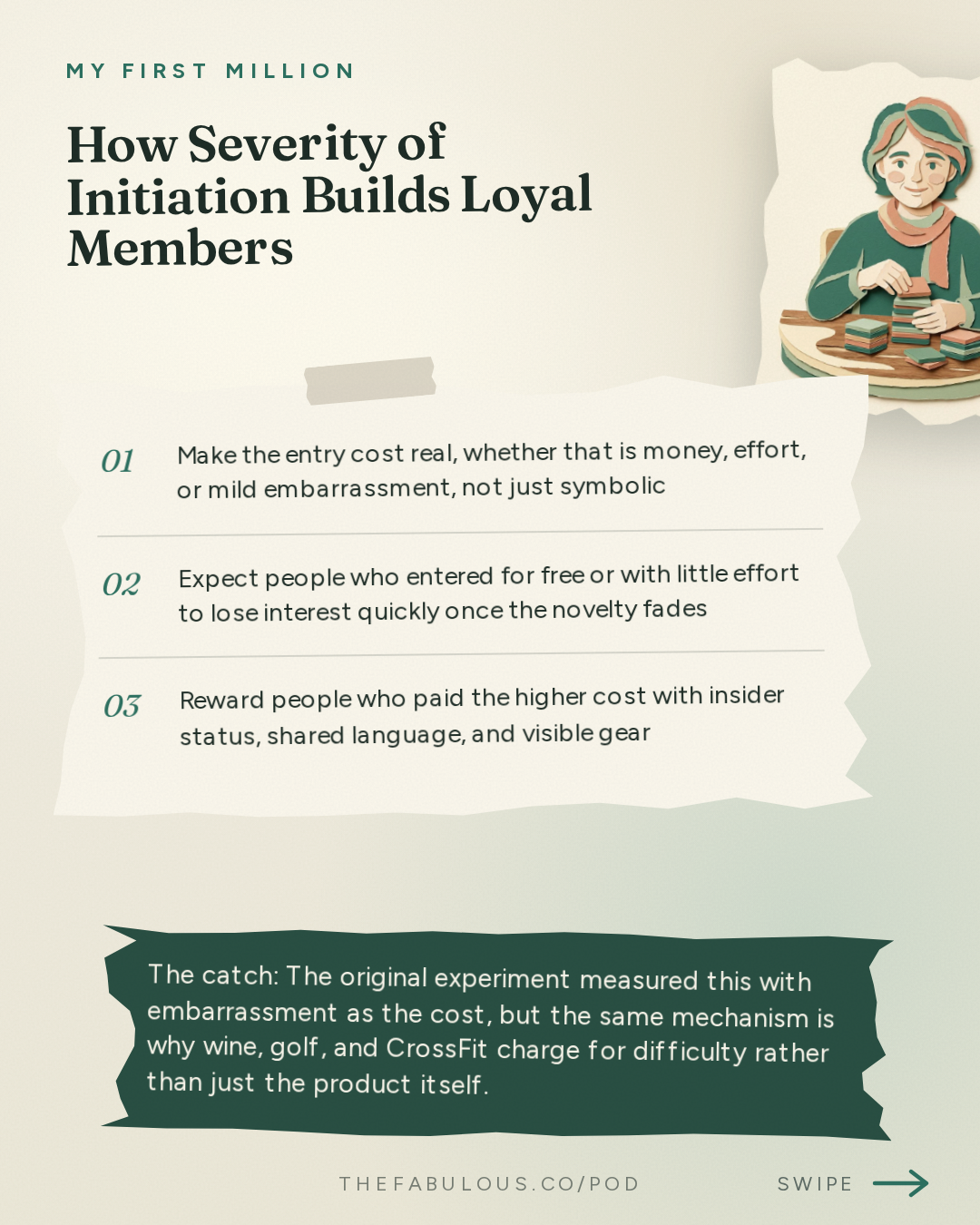
The trick has a name: severity of initiation. A classic psychology experiment, described on the show, split women into three groups seeking entry to a club. One group did nothing to get in. A second read a mildly embarrassing passage aloud. A third had to read something genuinely humiliating in front of men. Everyone then sat through a lecture designed to be boring. The people who paid nothing to join found it boring and never came back. The people who suffered the most to get in convinced themselves the lecture was fascinating, because, as one host put it,
"The harder it is to get into a club, the more everybody's gonna value being in the club." — a My First Million co-host [09:16]
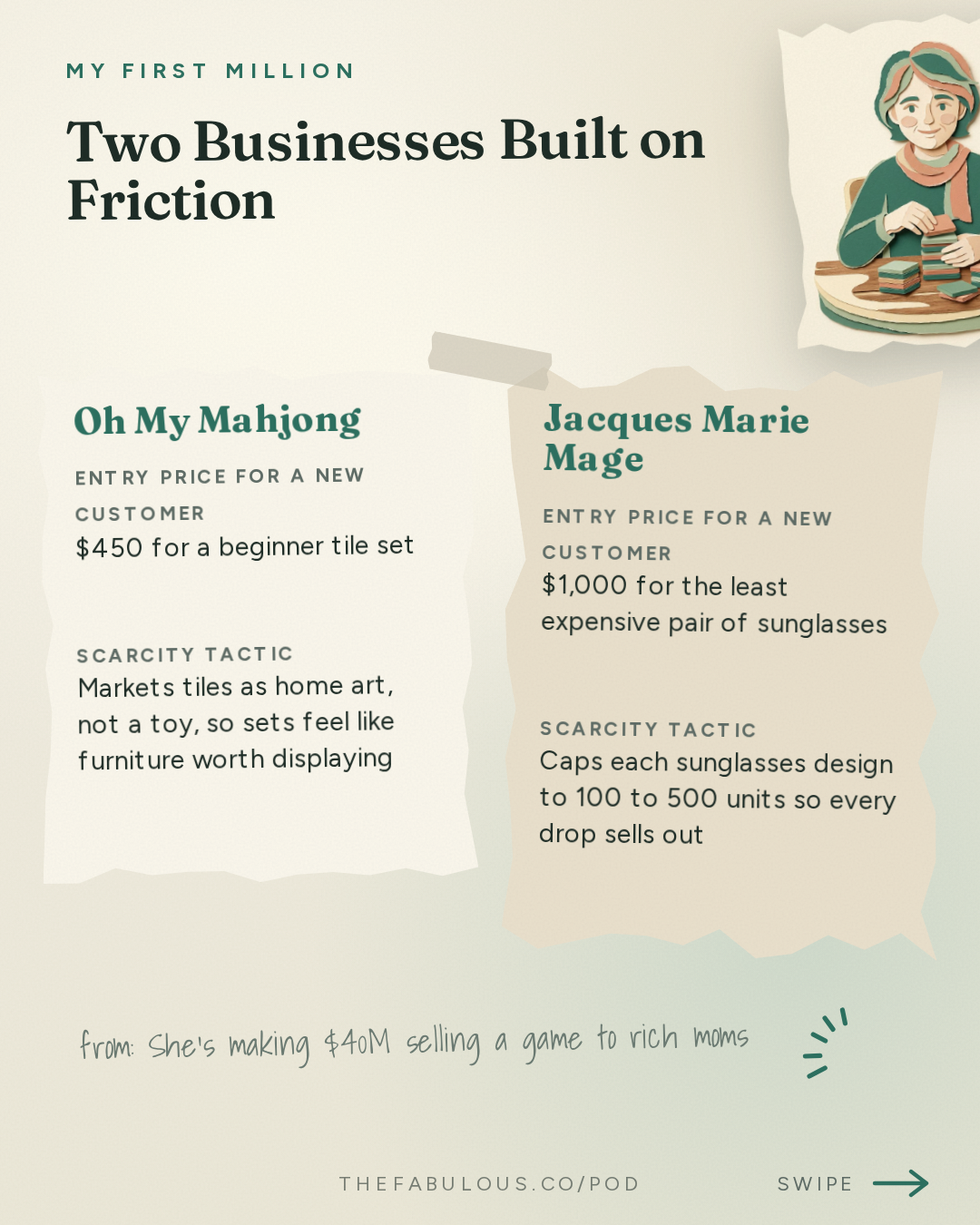
Mahjong supplies its own initiation. The game has a steep learning curve, so new players need lessons, much the way Lululemon once gave away free yoga classes instead of simply selling leggings. Once someone has sat through lessons, bought the $14 annual rulebook, and learned the social choreography, the tiles themselves stop being a game and start being furniture: objects to display, not stash in a closet. That reframing, from toy to art, is the same move Method made with dish soap, and it is why a beginner's set can run $450 while a limited collaboration between the mahjong brand and the apparel label LoveShackFancy sold out in five minutes and now resells for $5,000 (16:17).
The same arithmetic shows up in eyewear. Jacques Marie Mage, a sunglasses brand started in 2015 by a former snowboard-goggle designer, charges between $1,000 and $3,000 a pair (16:54). The founder's old bosses at mainstream brands told him customers wanted $50 sunglasses. He bet the opposite: thicker acetate, a better story, and deliberate scarcity, selling only 100 to 500 units of each design (18:28). The company now reportedly clears more than $40 million a year. As one host summarized the general principle,
Effort Becomes the Product
The logic extends well past luxury goods. A Harvard class called Humanities 101 capped itself at 90 seats, required an admissions essay, banned AI assistance, and still drew hundreds of applicants (24:01). A newer institution, Ralston College in Savannah, Georgia, teaches Greek philosophy to a tiny cohort funded by a $25 million gift and has been nicknamed, by the Wall Street Journal, "the Navy SEALs of Western values" (25:43). A tech worker who goes by David has spent the last six months publicizing a plan to go an entire year without looking at a screen, tracking his sleep and cognition in public at yearunplugged.com (20:14). None of these people are selling tiles. They are selling the same scarce thing: effort, in a world that has spent two decades engineering it away.
The extreme version of this trade is almost funny. In China, so-called fat loss camps charge about $400 a month (29:19) to confine overweight clients, feed them three low-calorie meals a day, run them through four workouts, and weigh them morning and night, with signs outside warning that smuggled food delivery will get a visitor locked up too (28:56). A YouTuber who visited dropped five pounds in 48 hours. It is effort sold as a service, the same way a $2,500 pair of sunglasses sells craftsmanship, except the inconvenience is the entire point rather than a byproduct.
Money follows the same current when the scarce resource is attention instead of effort. Neuroscientist and podcaster Andrew Huberman's compensation deal with the telehealth company Hims totals about $24 million over three years (36:10): a quarter million a year for a board seat, several million as an advisor, five million in guaranteed ad placements, and roughly a million more for short-form clips. Hims spends more than $900 million a year on advertising (38:36), so the deal is a rounding error for the company and, by one host's math, probably underpriced for Huberman, given that
"GLPs do more revenue than all the AI companies combined right now." — a My First Million co-host [39:10]
The same math applies lower down the podcast food chain. Joe Rogan's current licensing arrangement is reportedly worth about $100 million a year (40:53), and hosts in the business and finance category can plausibly clear eight figures annually once sponsorships, clips, and owned products are combined (41:53). One host frames it as a formula: fame multiplied by the skill of monetizing it, where sponsorship alone caps the upside and owning equity in a business built on top of an audience does not.
What the Flattening of Screen Time Means
There is a structural reason the anti-effort backlash and the attention economy are colliding right now. Total global screen time has stopped growing after roughly a decade of expansion (51:24), because there are only so many hours in a day and most of them are already spoken for, in bed, in the car, in the bathroom. With the overall pool fixed, platforms like Instagram and YouTube can only grow by eating each other's share, which is why Instagram is now pushing a horizontal, long-form video format in direct competition with YouTube. It is also, less obviously, why humanities classes, unplugged years, and $850 tile sets are having a moment: when a resource becomes abundant and frictionless, in this case screens and convenience, the opposite quality, scarcity and effort, becomes the premium good.
That logic turns out to work on four-year-olds too. One host recounts telling his son, groggy after surgery and surrounded by toys and sympathy, that he had a choice in how people treated him, as a patient to be babied or as himself. The boy chose the latter, turned off the television on his own, and cleaned the living room that night, which tracks with a line from the educator Maria Montessori that the episode revisits: kids are happiest when they are working, not when they are indulged. The same host's mother, a career teacher, found that children develop the richest vocabularies when parents speak to them as adults, using real words and letting the child ask what one means rather than translating everything down. A parenting content creator who goes by Chelsea Explains It All uses a gentler version of the same idea, turning chores into timed bets rather than commands, so a child races to get pajamas on in ten seconds instead of resisting for twenty minutes (67:03).
Put the mahjong tiles, the sunglasses, the Harvard syllabus, and the bedtime bet next to each other, and a single mechanism keeps surfacing: people do not value what is easy to get. They value what costs them something, whether that cost is money, embarrassment, or simply showing up. The businesses in this episode did not invent that fact. They just figured out how to charge for it.
Ask this episode anything
Pod's AI answers from the episode itself, with the minute mark so you can hear it yourself.
Or start with one of these
Ask this episode
Pod's AI listens to the whole episode to answer, and points you to the minute it comes from.
The rest of this answer, and any question after it
Answers come from the episode itself, never from a summary of it.
ContinueKey takeaways
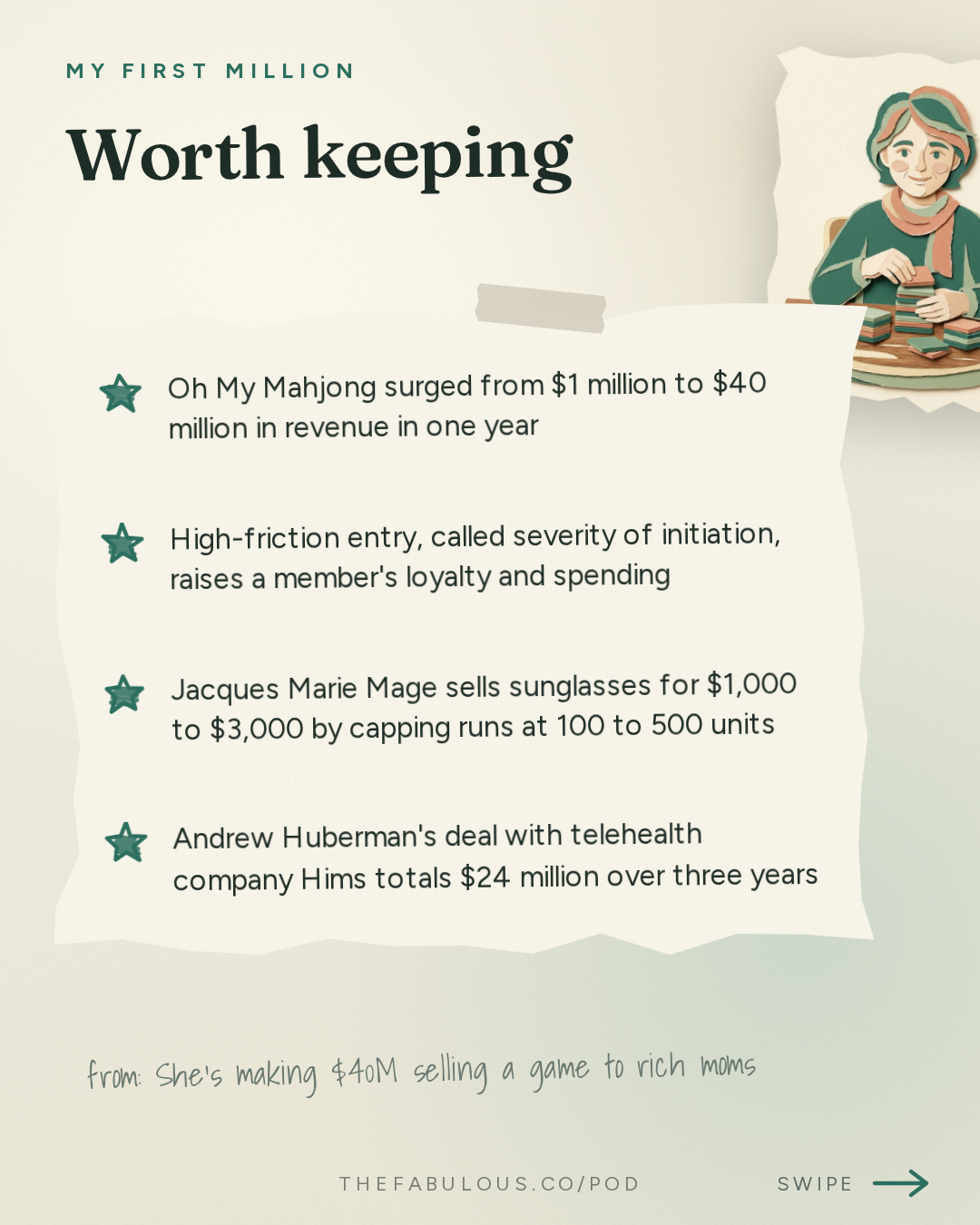
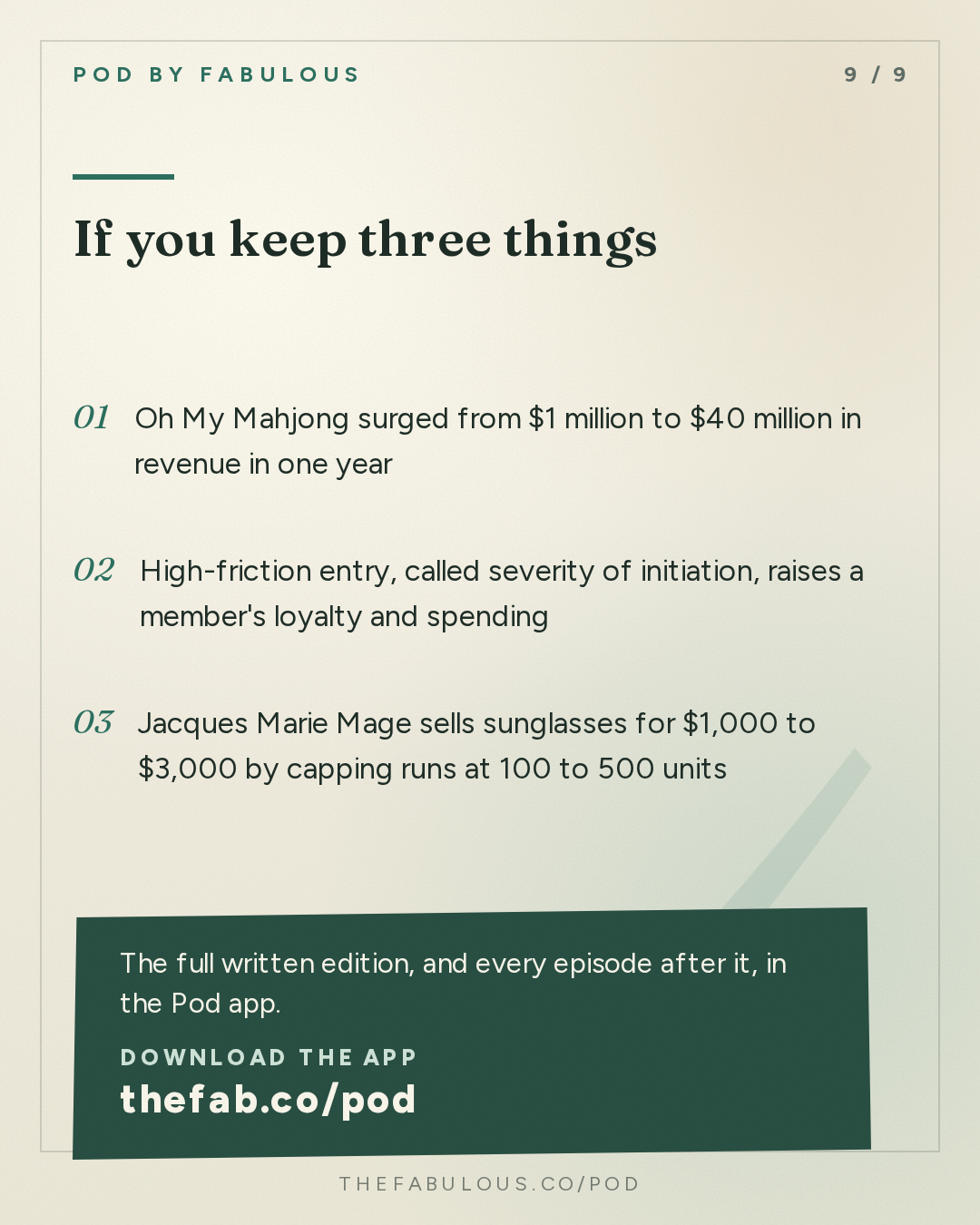
- Oh My Mahjong surged from $1 million to $40 million in revenue in one year
- High-friction entry, called severity of initiation, raises a member's loyalty and spending
- Jacques Marie Mage sells sunglasses for $1,000 to $3,000 by capping runs at 100 to 500 units
- Andrew Huberman's deal with telehealth company Hims totals $24 million over three years
- A new anti-screen, pro-effort movement is driving interest in Harvard's Humanities 101 and digital detoxes
The episode in cards
By the numbers
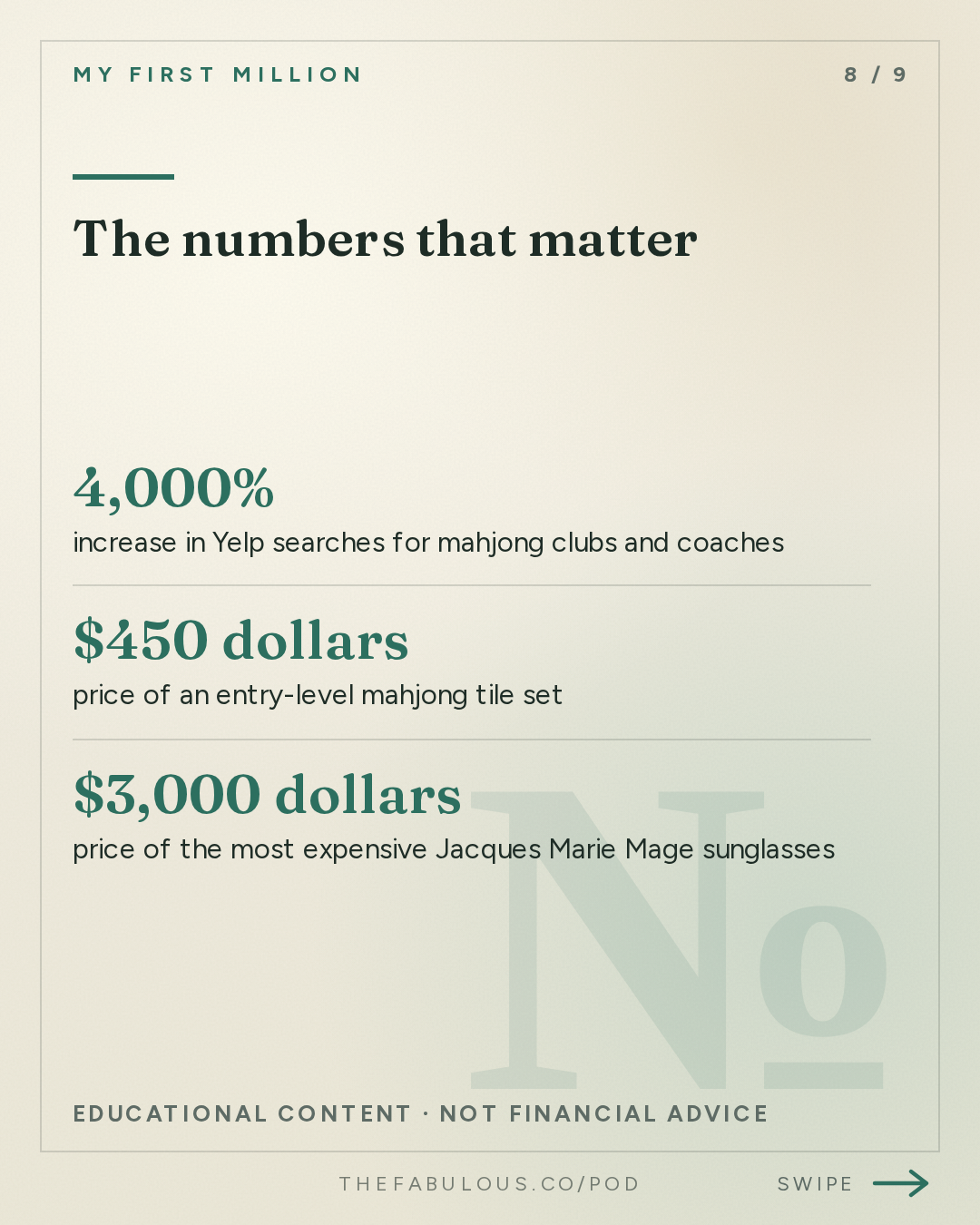
- 4,000% percent increase in Yelp searches for mahjong clubs and coaches
- $450 dollars price of an entry-level mahjong tile set
- $3,000 dollars price of the most expensive Jacques Marie Mage sunglasses
In their words
“The harder it is to get into a club, the more everybody's gonna value being in the club.”
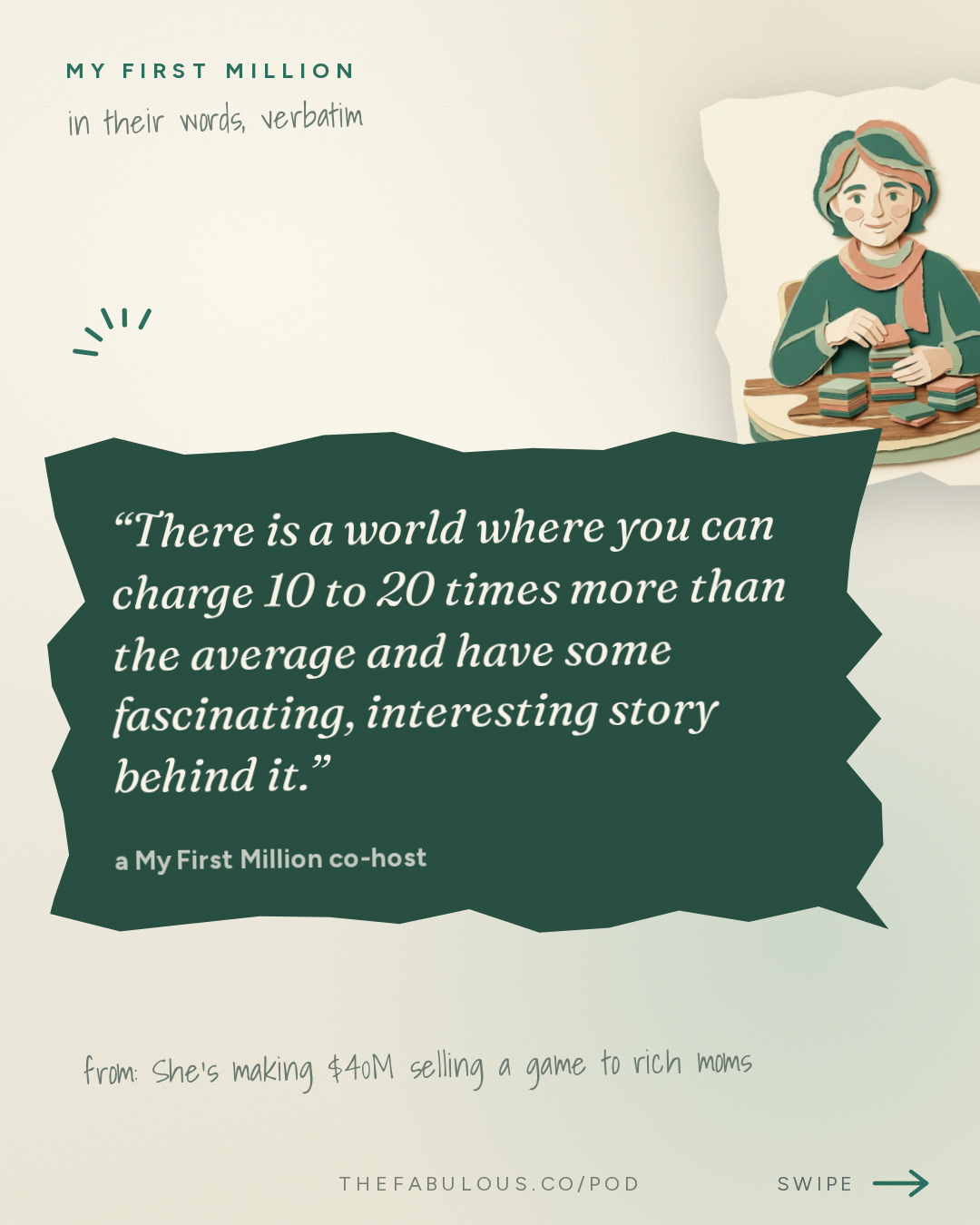
“There is a world where you can charge 10 to 20 times more than the average and have some fascinating, interesting story behind it.”
“GLPs do more revenue than all the AI companies combined right now.”
“It's a multiplier. It's your fame level times your skill level of knowing how to make money”
“Kids are happiest when they're working.”
Protocols
-
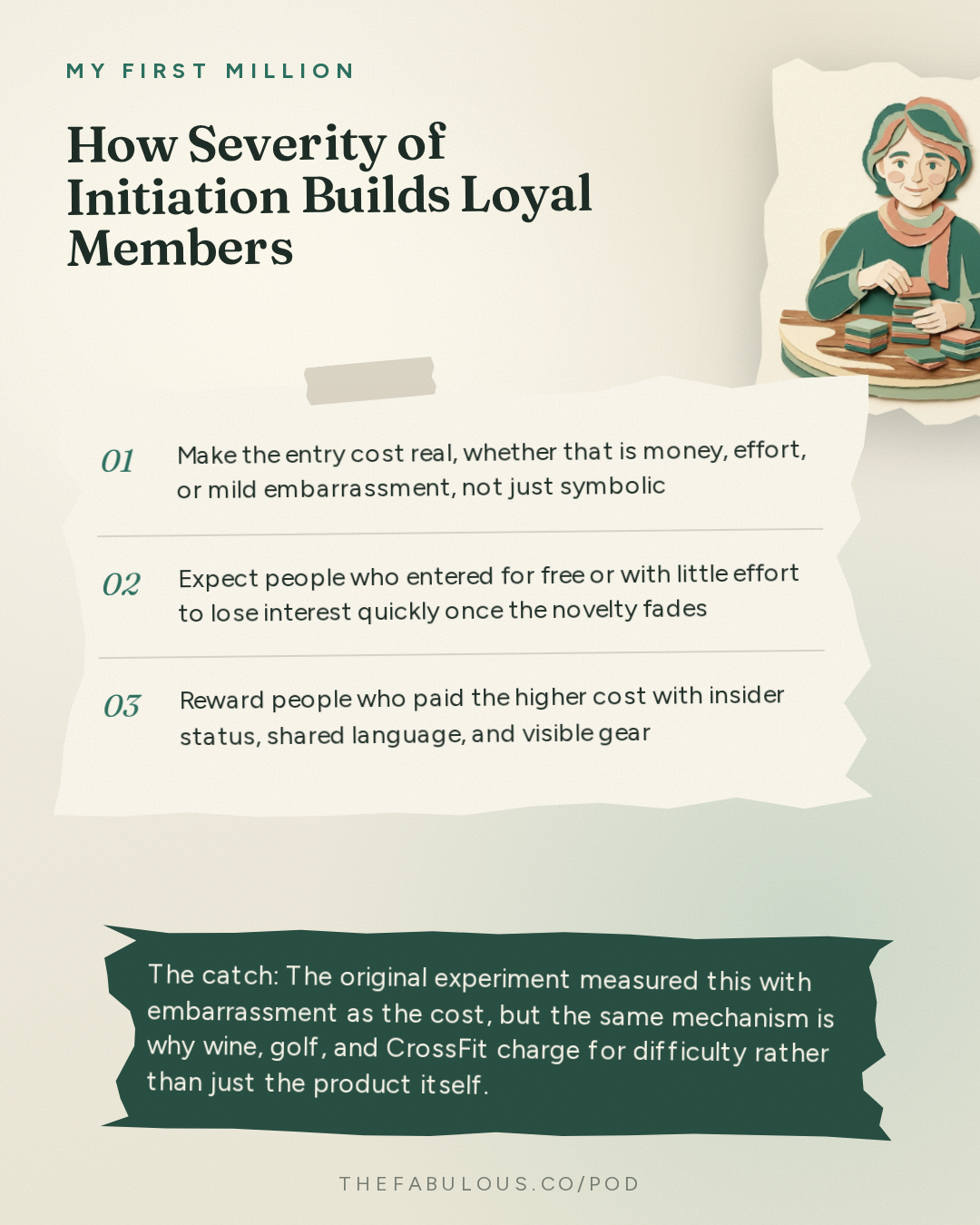
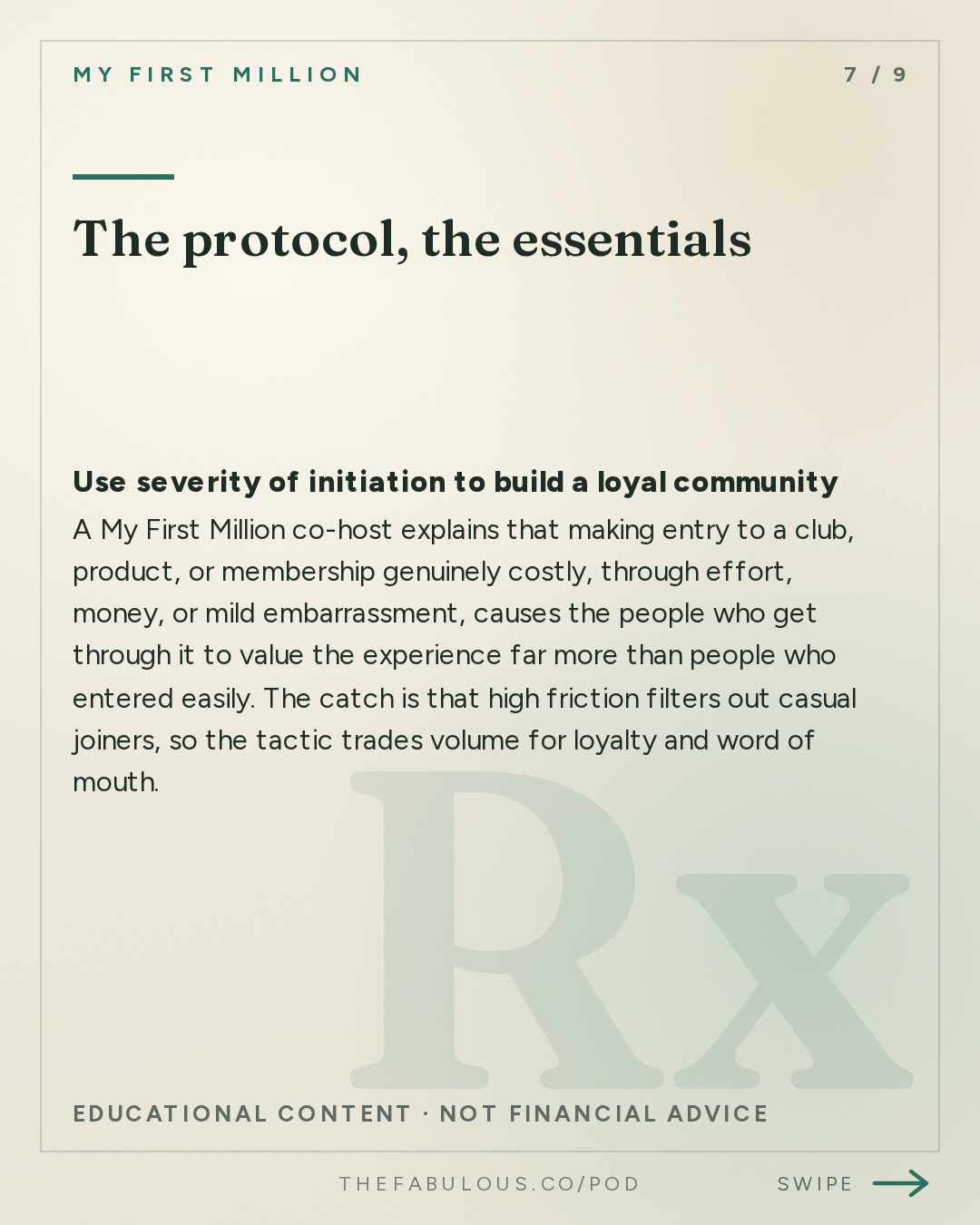
Use severity of initiation to build a loyal community
A My First Million co-host explains that making entry to a club, product, or membership genuinely costly, through effort, money, or mild embarrassment, causes the people who get through it to value the experience far more than people who entered easily. The catch is that high friction filters out casual joiners, so the tactic trades volume for loyalty and word of mouth.
applies at the design stage of any membership, product, or community
-
Speak to children with full adult vocabulary
A co-host's mother, a career teacher, found that children who develop the richest vocabularies are the ones whose parents speak to them using real adult words instead of simplified language. She told parents to say the real word and then let the child ask what it means by saying they do not know, rather than translating the word down automatically. The co-host now does this daily with his own daughter, defining a word like enthused only after she asks.
daily, in ordinary conversation
-
Turn a chore into a timed bet instead of a command
A parenting content creator who goes by Chelsea Explains It All recommends replacing a direct order, like telling a child to get ready for bed, with a bet such as betting they cannot get their pajamas on in ten seconds. A co-host reports that this turns resistance into a game and gets children moving in seconds instead of after a twenty-minute argument.
at bedtime or any resisted routine
Questions this episode answers
How did Oh My Mahjong make $40 million?
The company grew from $1 million in year one to $40 million in year two by selling mahjong tile sets styled as home art, priced as high as $450 for an entry-level set, plus paid lessons that create a high-friction path into the hobby (01:43, 04:17).
What is the severity of initiation effect?
It is a psychological pattern where people who pay a high cost, through effort, money, or embarrassment, to join a group end up valuing that group far more than people who joined easily, as shown in a club-entry experiment discussed on the show (09:16, 09:34).
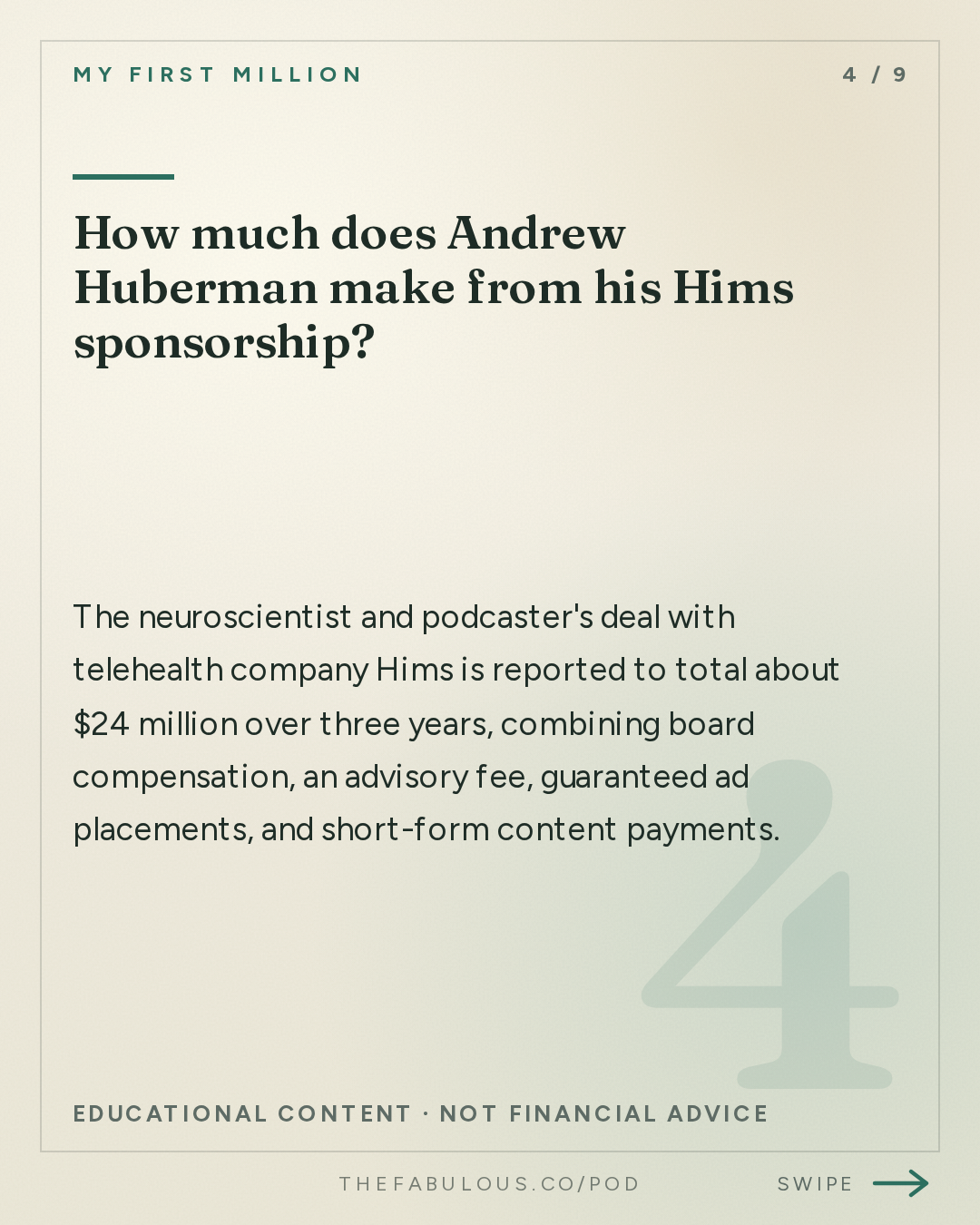
How much does Andrew Huberman make from his Hims sponsorship?
The neuroscientist and podcaster's deal with telehealth company Hims is reported to total about $24 million over three years, combining board compensation, an advisory fee, guaranteed ad placements, and short-form content payments (36:10).
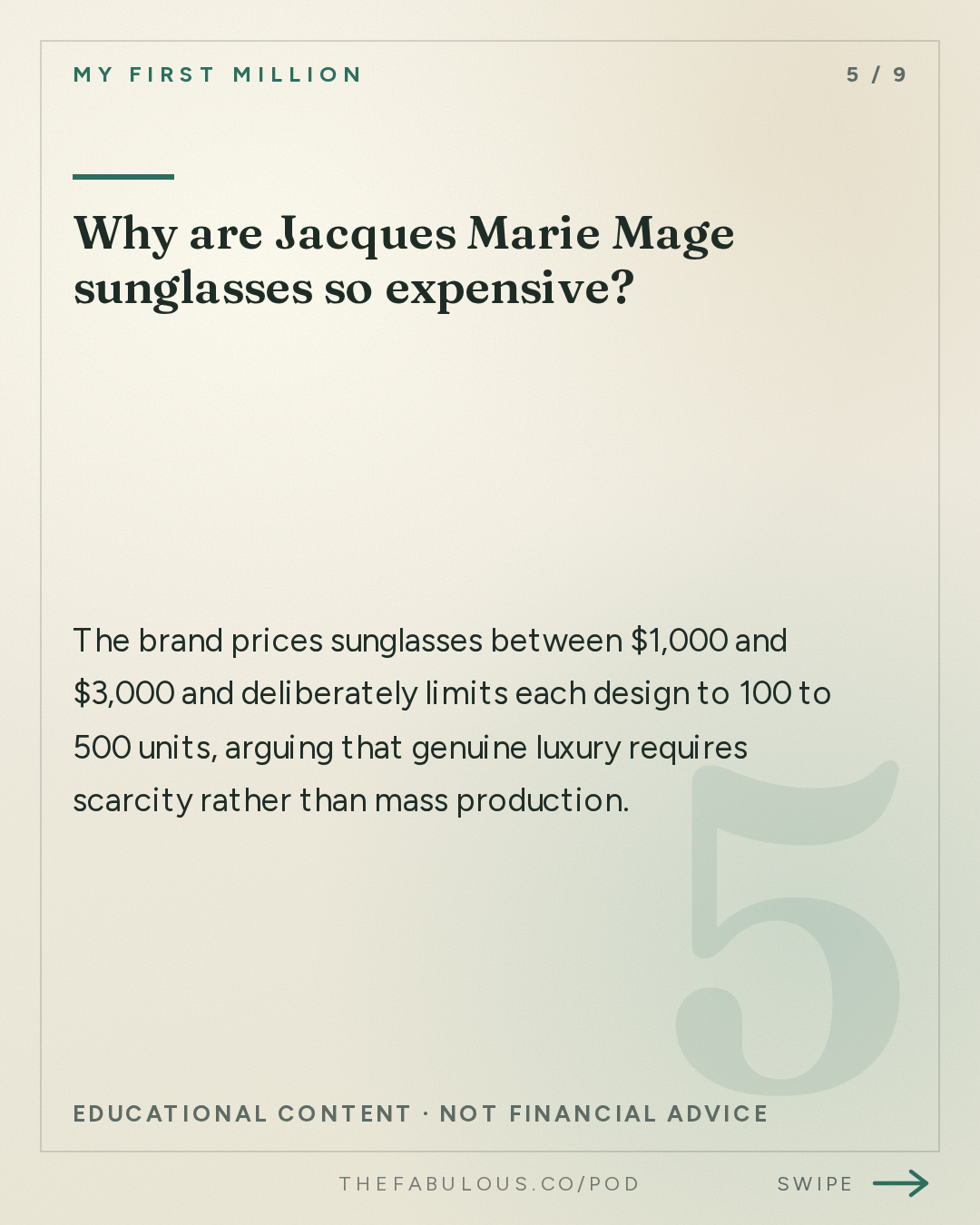
Why are Jacques Marie Mage sunglasses so expensive?
The brand prices sunglasses between $1,000 and $3,000 and deliberately limits each design to 100 to 500 units, arguing that genuine luxury requires scarcity rather than mass production (16:54, 18:28).
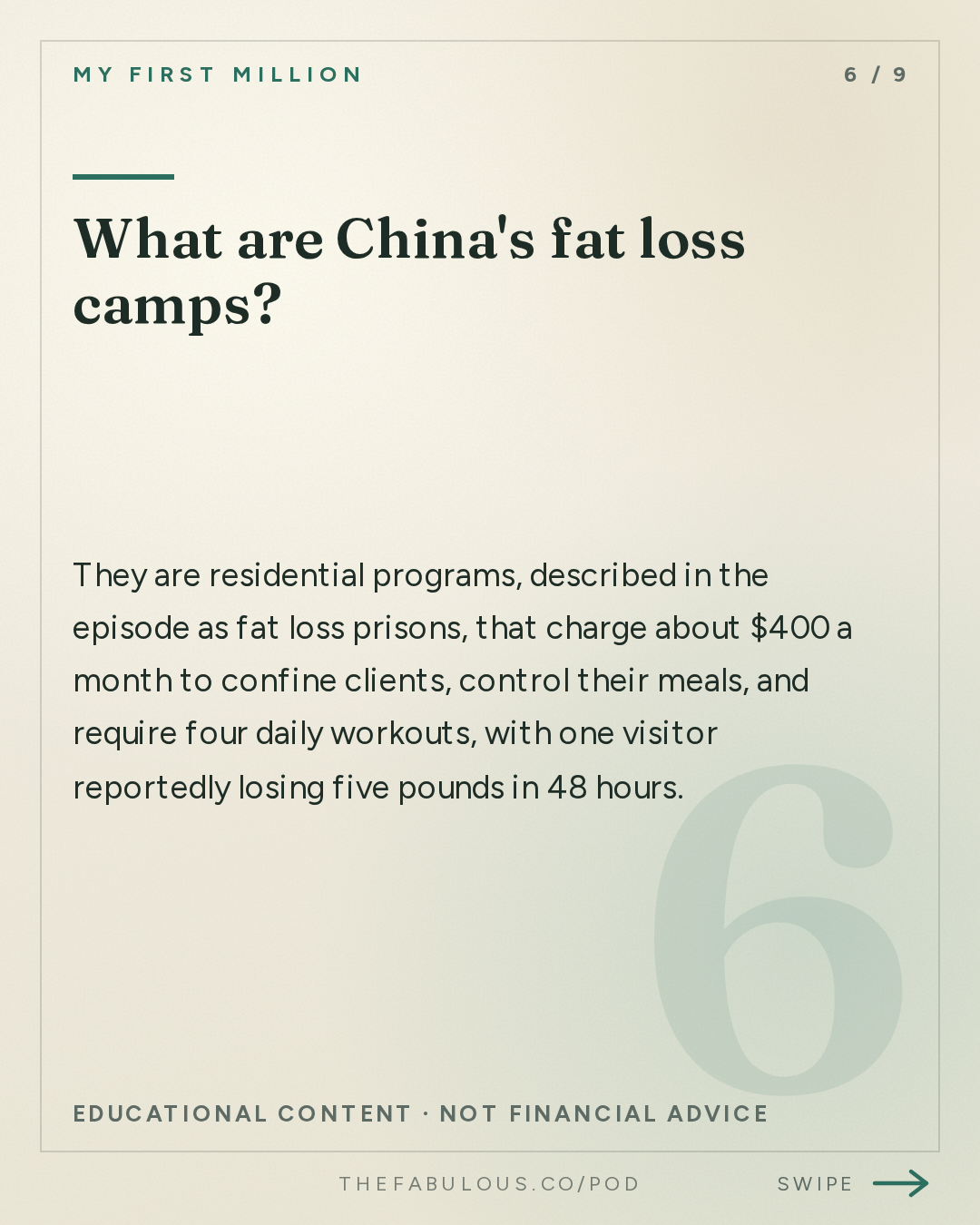
What are China's fat loss camps?
They are residential programs, described in the episode as fat loss prisons, that charge about $400 a month to confine clients, control their meals, and require four daily workouts, with one visitor reportedly losing five pounds in 48 hours (28:56, 29:19).
The full read, in cards
Go deeper
- Severity of initiation psychology study — found that people who endured an embarrassing or costly entry rated a deliberately boring lecture as far more interesting than those who entered for free
- Wall Street Journal article on Harvard's Humanities 101 — reported a new 90-seat humanities class that drew hundreds of applications and banned AI use
- Wall Street Journal article on Ralston College — profiled a small Savannah, Georgia college teaching Greek philosophy, nicknamed the Navy SEALs of Western values
Mentioned
Oh My Mahjong · Jacques Marie Mage · Andrew Huberman · Hims · Cal Newport · Ralston College · LoveShackFancy · Joe Rogan · Cheddar · Stanley · Morgan Housel · Jensen Huang · Nvidia · Chelsea Explains It All · David (yearunplugged.com)
More from this show and category
James Currier's Speed Bar Framework for Startups
James Currier, cofounder of venture firm NFX, argues the single trait that predicts startup success is speed: how fast founders test, decide, and ship. He shows how time constraints, disposable test brands, and founder psychology work together to let underdogs out-move better-funded incumbents (01:34).
Robert Greene on Sublime, Power, and Near-Death
Robert Greene explains how a near-fatal stroke eight years ago led him to write Sublime, a book on reclaiming the awe that phone addiction has eroded. He also covers the Andes crash survivors' impossible climb, near-death brain science, and his law that power needs both presence and absence.
AI in the World of Things: Where to Build Next
Shaan Puri says the next AI wave moves from digital content to the physical world. He points to drug discovery, modified crops, drone warfare, 3D-printed housing, and full self-driving machines as the real opportunities, and urges builders to think like investors who chase the best market instead of perfecting one narrow skill.
AI-Proof Businesses: Community Moats Explained
Technology moats are dissolving as AI makes software easy to copy, but human trust networks still hold. The episode profiles NADA 20 Group, BNI, and Moda Communities, then breaks down the whale economy and the mystery box psychology that keeps mobile games, collectible apps, and even crypto hacks spinning (00:00, 10:47, 21:27).
