
James Currier's Speed Bar Framework for Startups
$1.5B+ Investor: “This is Why Elon Wins”
The brief
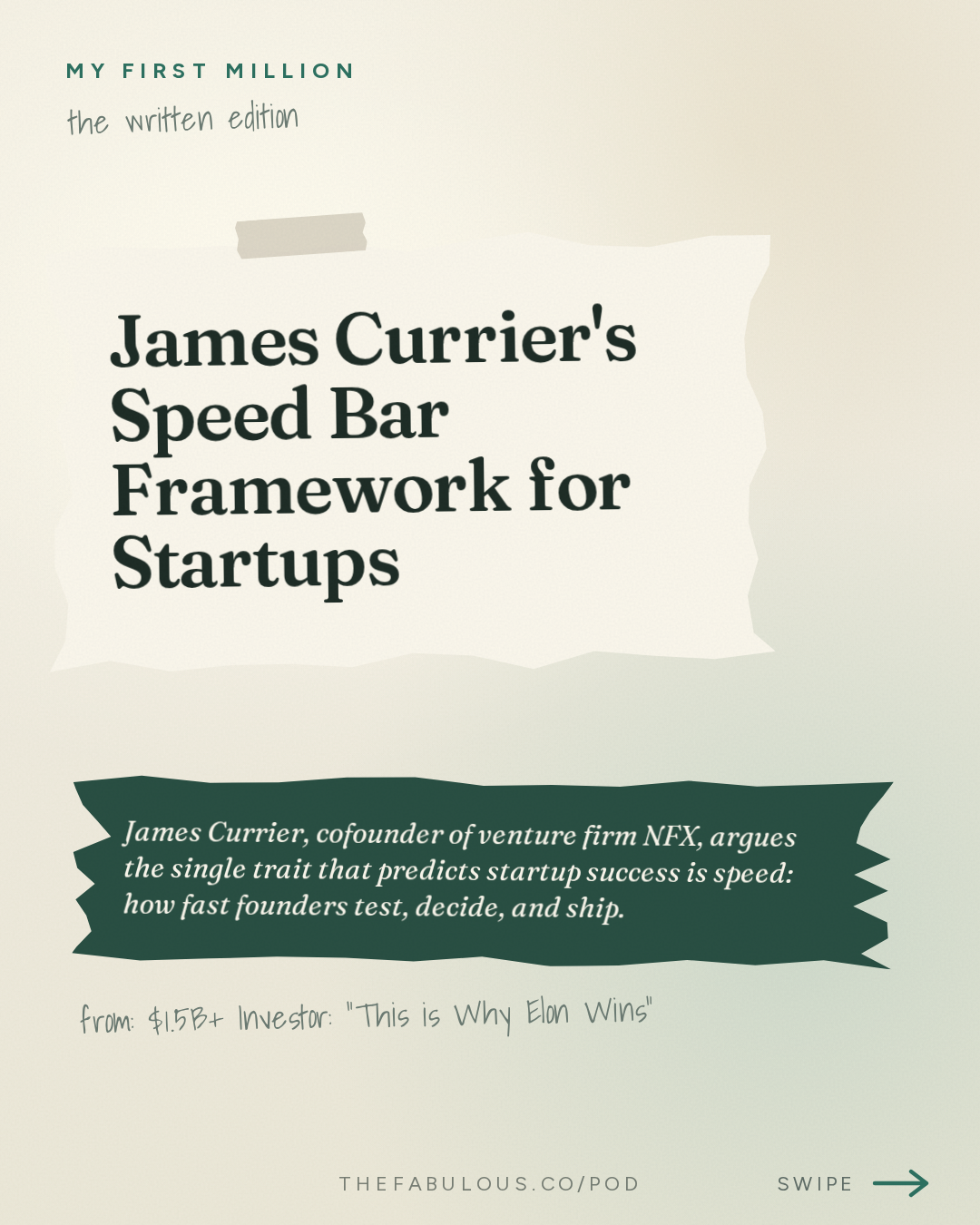
James Currier, cofounder of venture firm NFX, argues the single trait that predicts startup success is speed: how fast founders test, decide, and ship. He shows how time constraints, disposable test brands, and founder psychology work together to let underdogs out-move better-funded incumbents (01:34).
Give a club player an extra rook against a grandmaster and nothing changes. The grandmaster still wins, every time, no matter how many pieces you stack on the board. James Currier, a cofounder of the venture firm NFX who has raised $1.5 billion, opens his conversation on My First Million with that image because it kills a comforting myth: that startups beat incumbents by being smarter or better resourced. They don't. They beat them by moving twice for every one move the incumbent makes (01:34).
"If you can move two times every time I move once, then you will beat me. You can actually beat a grandmaster. That's kind of the startup game." — James Currier (01:34)
Currier was CEO of four venture-backed companies before NFX, and over 25 years of watching startups win and lose, he and his partners distilled 48 attributes they look for in founders into one rollup metric: speed. Not resources, not pedigree, not intelligence. Just how fast things happen around a person (00:45).
The clearest proof case is a Boston entrepreneur named Mike Cassidy, who in the 1990s sold a company for $500 million in exactly 500 days (03:22). Cassidy built prototypes in three weeks that others took a year to finish. He hired a full team in 72 hours, interviewing candidates and handing them signed offers on the spot. He met every relevant venture capitalist in 36 hours and let them know they were competing for the deal (03:54). Currier says Cassidy was fully aware he moved differently, precisely because everyone around him complained about it: cofounders asking why the rush, investors annoyed at the pressure, a spouse questioning a cross-country move. Jarring other people, it turns out, is often a sign you're operating on a faster clock than the room.
Why do most of us set that clock too slow? Currier blames school and big companies. Classrooms move at the pace the bottom 10 to 20 percent of students can follow, so a decade of semesters and quarters quietly teaches a default pace for life, not just math (06:44). Large companies compound the problem: a product change that takes nine months at a big employer needs to happen in nine hours inside a startup. Currier's fix is blunt and almost comic: if you've met the person you're going to marry, why wait a year and a half? Call everyone. Get married this week.
The Constraint Is the Creativity
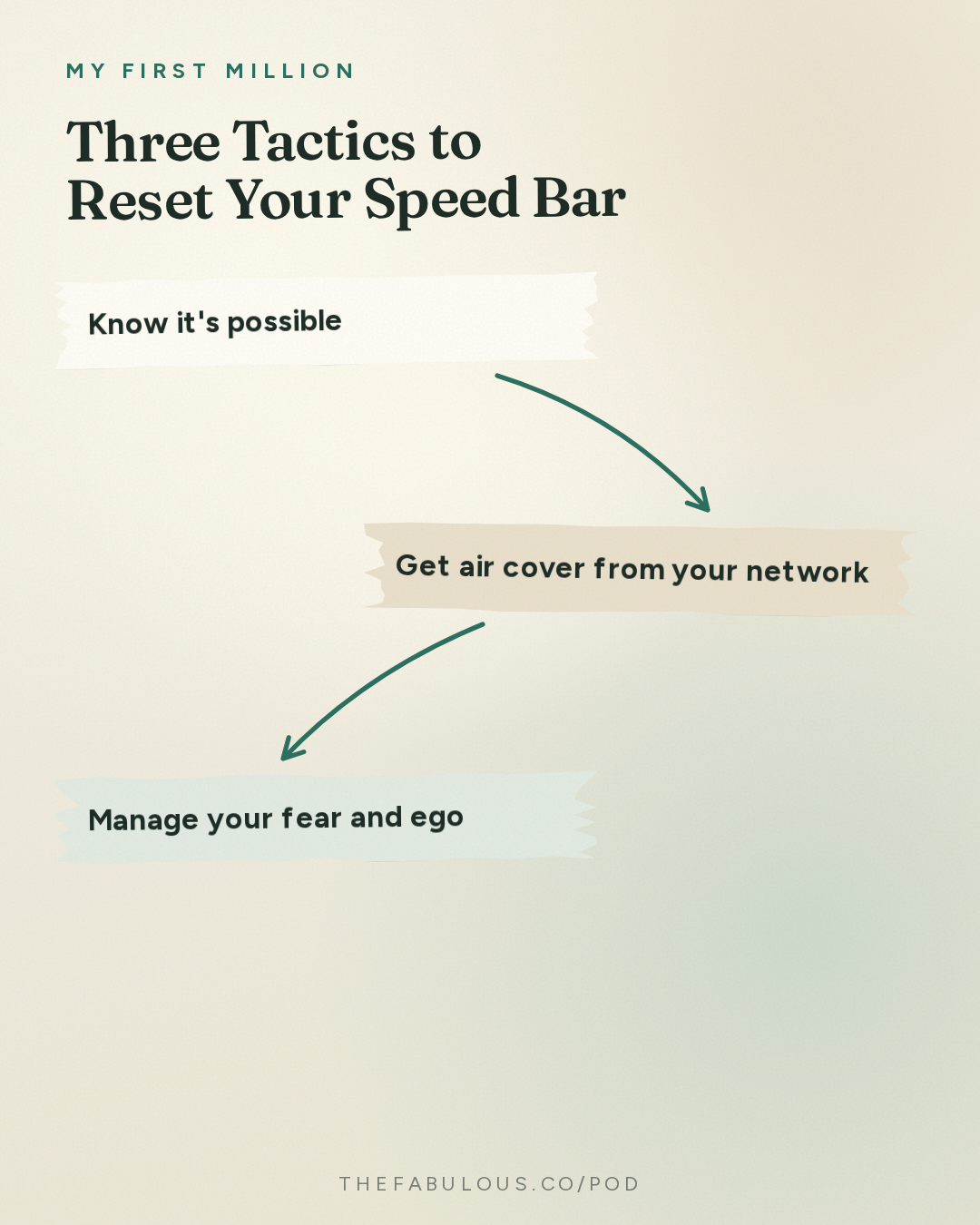
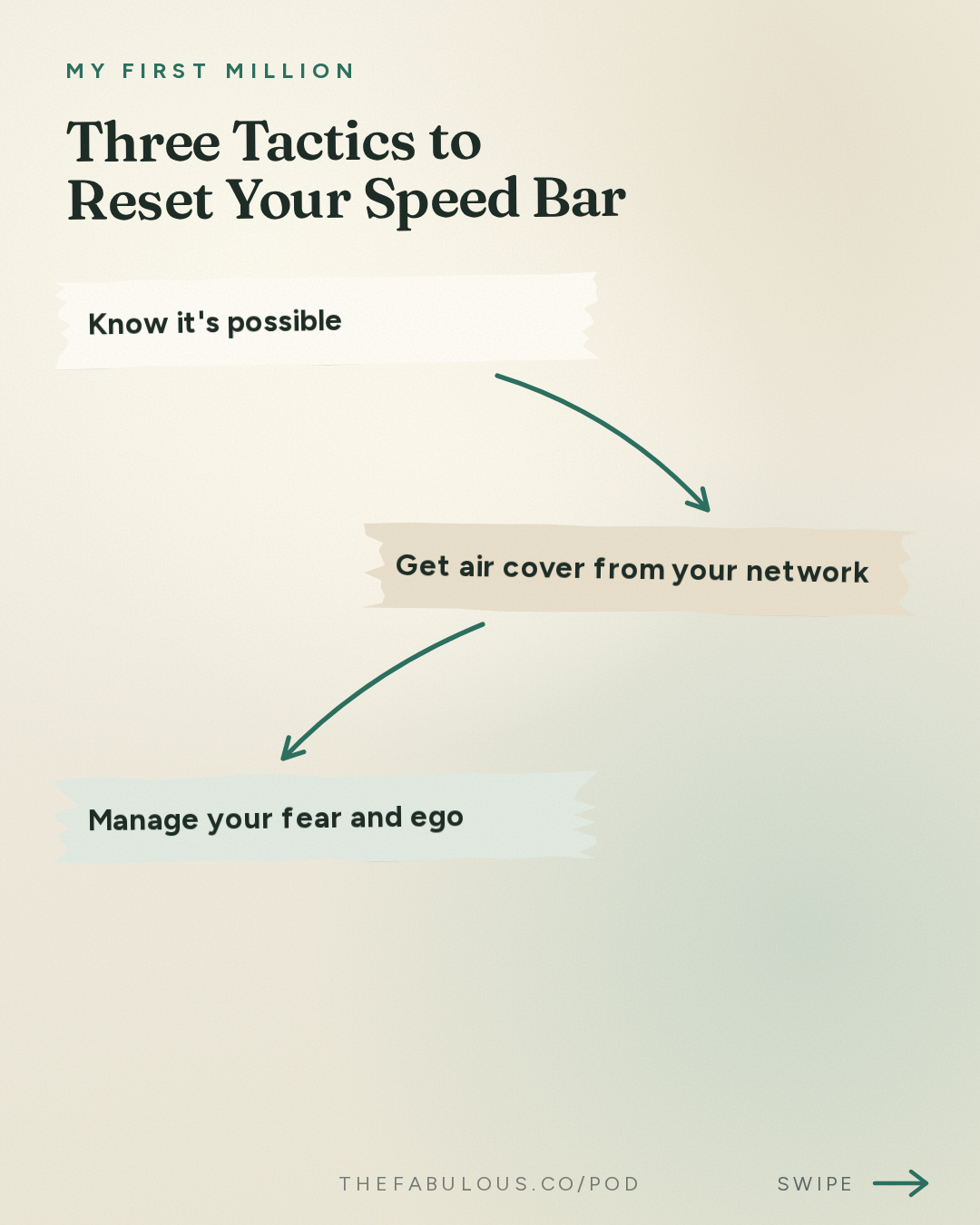
The practical tool Currier teaches is deceptively simple: stop deciding what you want to build, and decide how long you have to build it. "You don't decide to make an output. You decide a time constraint," he says, describing a company called Yevo that had spent 18 months on one product that failed, then built five new products in 90 minutes of whiteboard planning, each with a 30-day ship deadline (08:48, 09:28). One of those, Meerkat, took 60 days instead of 30, but still beat the 8-month cycle that preceded it, and ultimately became Houseparty after a pivot. Entrepreneur James Hong, who built the viral product Hot or Not, ran his company under a self-imposed rule: nothing that takes more than eight days to build gets launched (10:14). The point isn't the number eight. It's that an arbitrary deadline strips away the slack most of us assume we need.
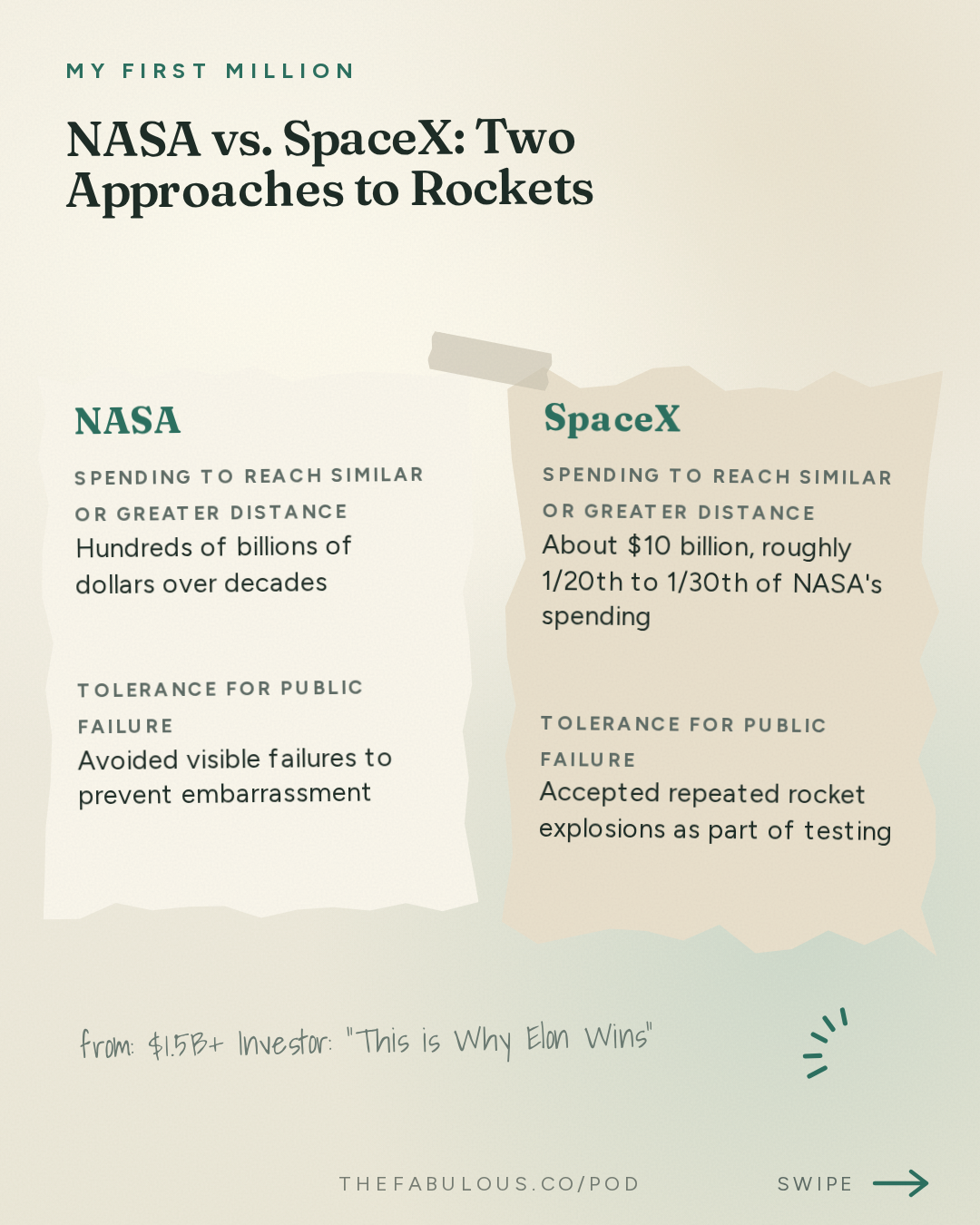
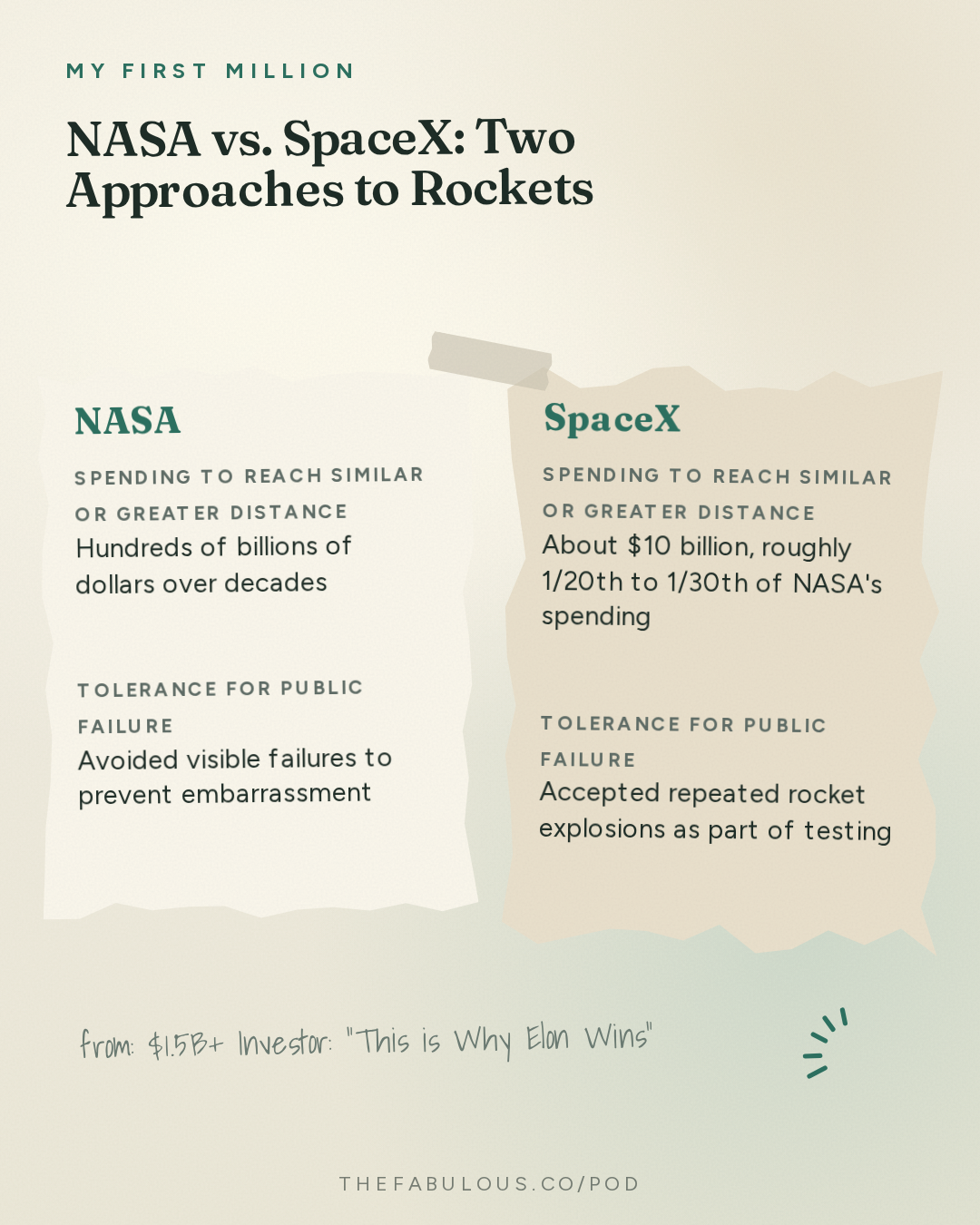
Currier extends the same logic to the rocket industry. Elon Musk raised roughly $10 billion for SpaceX, somewhere between a twentieth and a thirtieth of what NASA spent, and got further, faster (15:58). NASA, Currier argues, feared a public rocket explosion would be embarrassing; Musk didn't care about embarrassment, so he could blow up test rockets without flinching. A retired NASA engineer hired at SpaceX in his sixties described it this way: at NASA, a design change took three meetings, two committees, a review board, and six to eighteen months of documentation; at SpaceX, his supervisor told him, "If it works, build it, and if it doesn't, just change it by Friday" (18:31). Currier's read is that most of what we call "the nature of engineering" is actually the nature of bureaucracy.
This is where Currier's most counterintuitive claim lands: speed produces quality, not the opposite. "Speed is quality," he says, borrowing the line from a rocket-company CEO. "Version one will be low quality, but you don't want version one to be high quality. You just want it to be something you can measure" (14:44). If a fast team ships six rough versions in the time a careful team ships one polished version, the sixth fast version will usually beat the one slow version, because iteration, not initial craftsmanship, is what actually improves a product.
Psychology Is the Real Bottleneck
Currier's second big claim is that founder psychology, not strategy, is the highest-leverage lever available to a startup. "Founder psychology is the greatest point of leverage of the startup by far," he says, describing how boards hire him to coach CEOs on growth and end up spending nearly all their time on the founder's emotional state instead, because once a founder has emotional fluidity, implementing growth tactics becomes comparatively easy (42:01).
Part of that fluidity, Currier argues, comes from letting difficult emotions move through the body instead of fighting them. He cites a rule of thumb that an emotional sensation, anger, shame, fear, typically lasts about 90 seconds if you let it pass instead of resisting it or building a story around it (38:18). He also names a pattern that's uncomfortable but, he insists, empirically real: childhood trauma, especially strained relationships with fathers, shows up disproportionately in the biographies of high-performing founders, alongside traits like being gay, autistic, or simply "disagreeable," meaning comfortable with other people's disapproval (43:01). None of this is destiny, but Currier treats it as a pattern worth naming rather than romanticizing.
He's equally blunt about the industry's mythology. "Entrepreneurship is a gladiator sport," he says. "It is, what I call it now, it's a psychologically violent environment. And you have to be willing to suffer" (34:31). Raising venture capital, in his framing, locks you into that arena until an exit, an acquisition, or a shutdown finally lets you out.
The last layer of Currier's framework is language itself. He argues companies win or lose the battle for customers and capital upstream of the product, in the words used to describe it. NFX failed to raise $150 million as a self-described "accelerator" because limited partners had already decided accelerators were a bad asset class; the moment Currier reframed the pitch using the vocabulary investors already wanted to hear, the same underlying business raised the money in six weeks (49:27, 52:05). He calls these phrases "magic words," the kind of language that triggers an existing budget line or belief rather than trying to invent a new category from scratch.
Zoom out far enough, and Currier's framework becomes a kind of operating philosophy: reality runs on invisible currencies, status, network position, energy, language, and the mental models people inherit without noticing. "Status is this currency that, this invisible currency that the entire world is running on that we hardly ever see and we're not allowed to talk about," he says (83:27). Speed, in the end, is just the most legible version of that deeper claim: the people who win aren't smarter. They've simply stopped waiting for permission to move.
Ask this episode anything
Pod's AI answers from the episode itself, with the minute mark so you can hear it yourself.
Or start with one of these
Ask this episode
Pod's AI listens to the whole episode to answer, and points you to the minute it comes from.
The rest of this answer, and any question after it
Answers come from the episode itself, never from a summary of it.
ContinueKey takeaways
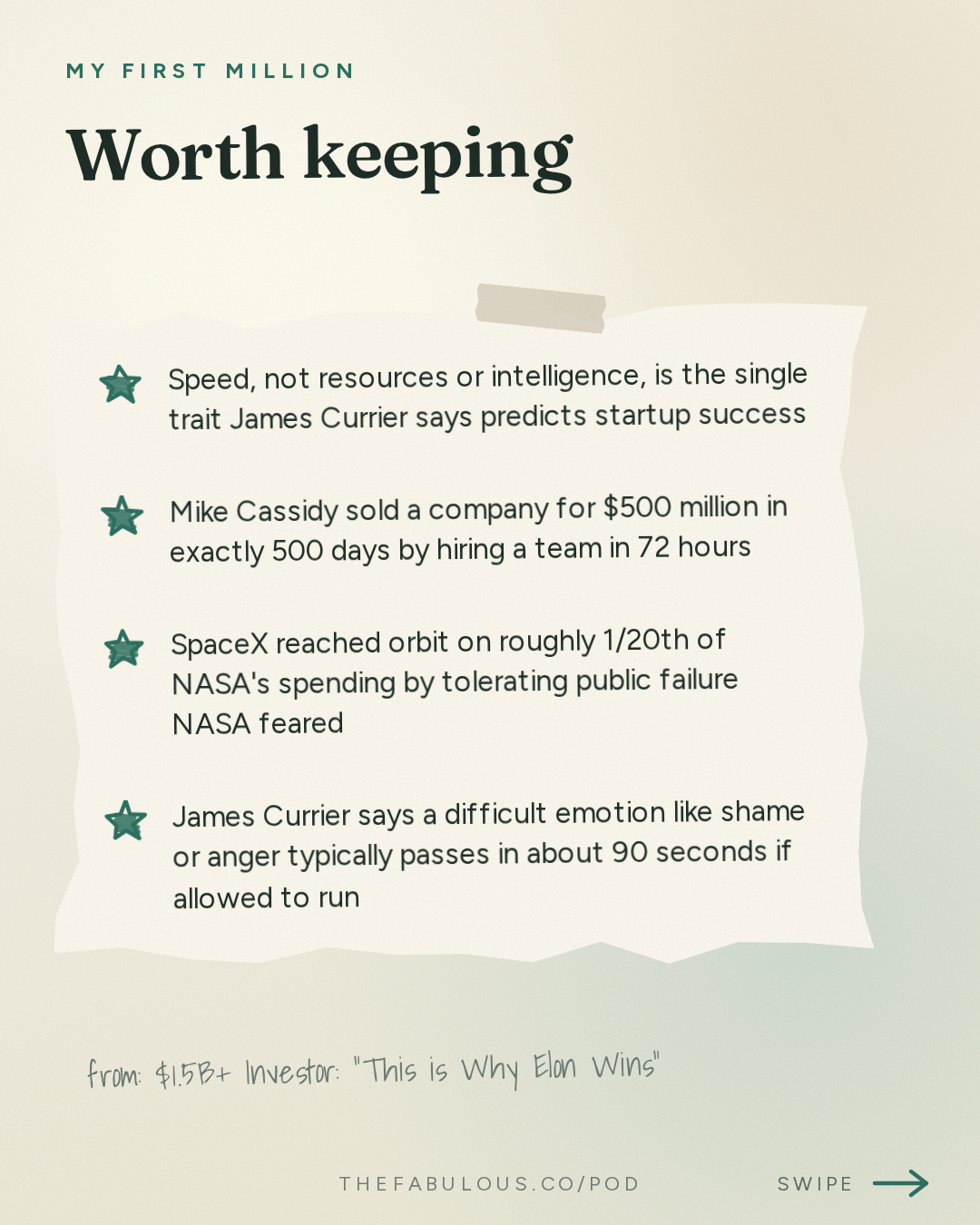
- Speed, not resources or intelligence, is the single trait James Currier says predicts startup success
- Mike Cassidy sold a company for $500 million in exactly 500 days by hiring a team in 72 hours
- SpaceX reached orbit on roughly 1/20th of NASA's spending by tolerating public failure NASA feared
- James Currier says a difficult emotion like shame or anger typically passes in about 90 seconds if allowed to run
- Shipping six fast, rough product versions beats shipping one slow, polished version, per Currier's speed-is-quality claim
The episode in cards
By the numbers
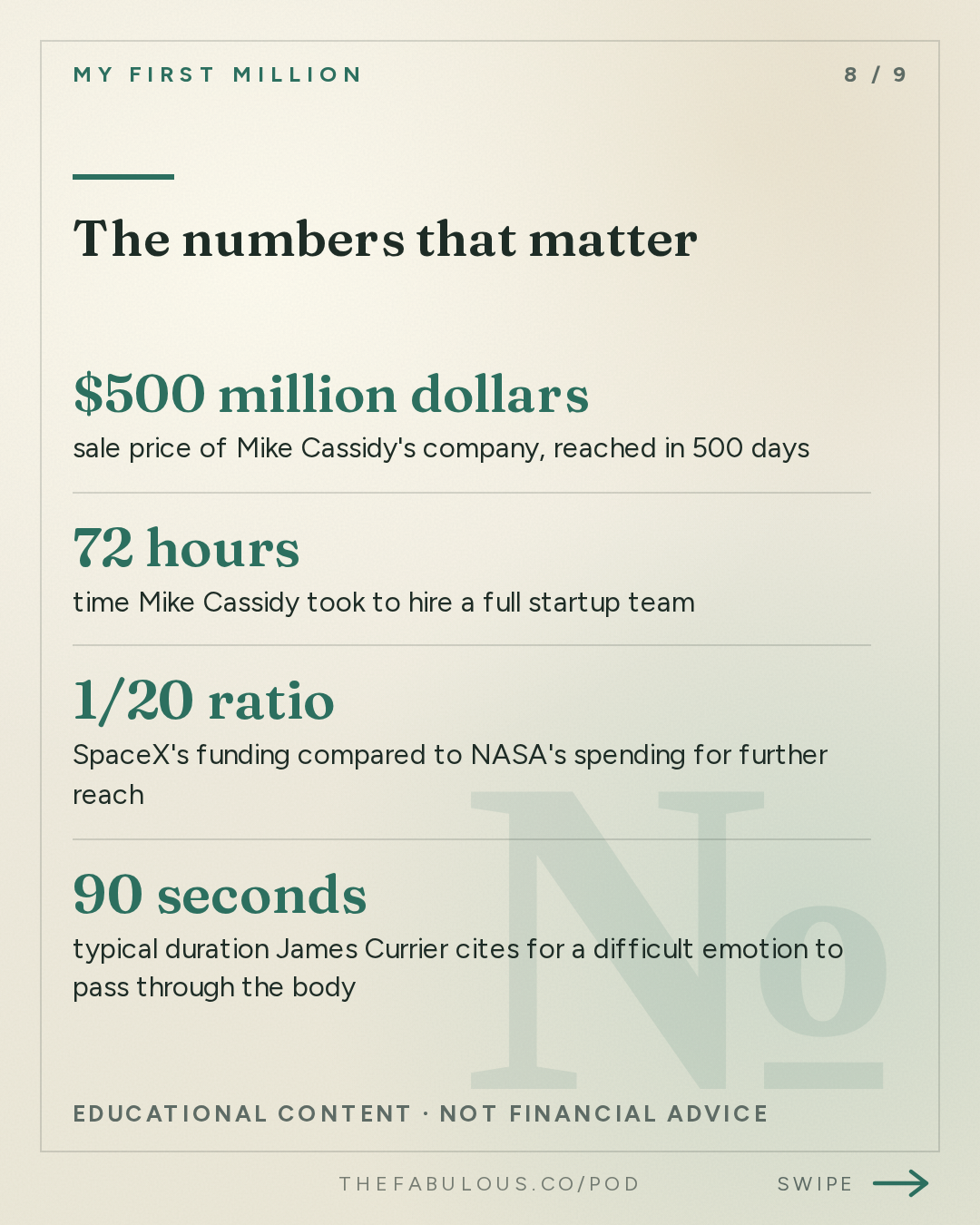
- $500 million dollars sale price of Mike Cassidy's company, reached in 500 days
- 72 hours time Mike Cassidy took to hire a full startup team
- 1/20 ratio SpaceX's funding compared to NASA's spending for further reach
- 90 seconds typical duration James Currier cites for a difficult emotion to pass through the body
- 48% percent share of people who could not tell AI-generated video from real video
In their words
“If you can move two times- ... every time I move once- Right ... then you will beat me. You can actually beat a grandmaster. That's right. And that's kind of”
“Quality. You're right, version one will be low quality, but you don't want version one to be high quality. You just want it to be something you can measure”
“Entrepreneurship is a gladiator sport. It is, what I call it now, it's a psychologically violent environment. And you have to be willing to suffer.”
“Founder psychology is the greatest point of leverage of the startup by far.”
Protocols
-
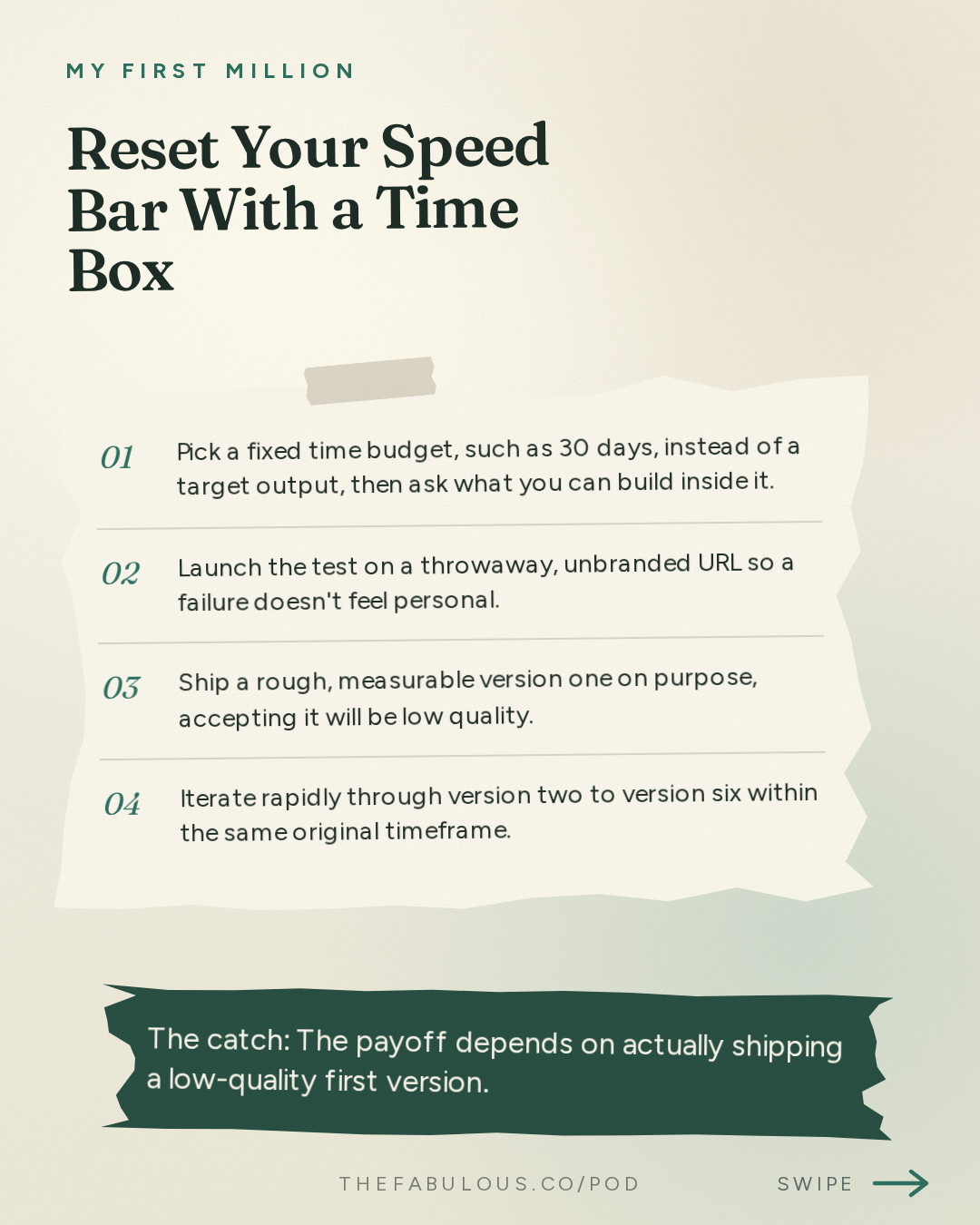
Set a time box instead of a target output
James Currier tells founders to pick a fixed time budget, such as 30 days, and ask what they can build inside that window instead of estimating how long a finished product should take.
At the start of each product cycle
-
Launch tests under a disposable URL
Currier has teams launch early product tests on a throwaway, unbranded domain like skydonkey.com instead of the real company name, so a failed experiment doesn't feel like a personal or brand failure.
For every early-stage test
-
Cap build time to force iteration
Currier points to entrepreneur James Hong's rule for his company, Eight Days, which refused to launch any product that took longer than eight days to build, trading polish for repeated, fast shipping cycles.
Per product launch
-
Give a difficult emotion 90 seconds
James Currier recommends letting a strong negative emotion, such as shame or anger, run for about 90 seconds without trying to fix, suppress, or build a story around it, then deciding whether to keep feeling it.
Whenever a strong emotion arises
Questions this episode answers
What is James Currier's speed bar framework?
James Currier, cofounder of venture firm NFX, says the single metric that predicts startup success is how fast founders make things happen around them. He rolled up 48 attributes NFX looks for in founders into this one measure of speed (00:45).
How did Mike Cassidy sell a company for $500 million in 500 days?
Entrepreneur Mike Cassidy compressed every normal startup timeline: he built prototypes in three weeks instead of a year, hired his full team in 72 hours by handing out signed offers at interviews, and met every relevant VC within 36 hours to create a sense of competition for the deal (03:22, 03:54).
Why does James Currier say speed equals quality in startups?
Currier argues that a team moving fast can ship six rough versions of a product in the time a careful team ships one polished version, and that sixth fast version ends up higher quality because it benefited from five rounds of real-world testing (14:44).
What is the difference between a savage founder and a wantrepreneur, per James Currier?
Currier describes a savage founder as someone ultra-competitive, fast-moving, and comfortable with disagreement who is born driven to pursue a goal. A wantrepreneur, by contrast, enjoys the status and trappings of being a founder, meetings, pitch decks, nice offices, without actually building something the market wants (59:30).
What is the Tony Robbins 90 seconds of suffering idea that James Currier references?
Currier recounts a story in which motivational speaker Tony Robbins describes giving himself a 90-second budget to fully feel a difficult emotion, like anger or shame, before deciding whether to keep feeling it or move on, since most emotional sensations pass within that window if not resisted (38:18).
What are James Currier's five lenses for understanding reality?
Currier names status, networks, energy, language, and mental models as five underlying forces that explain human behavior, from why people pick certain colleges to why nations go to war, arguing that each operates as an invisible currency shaping decisions (84:05).
The full read, in cards
Go deeper
- "Fast" (blog post) — Stripe cofounder Patrick Collison's list of historically fast builds, including a 366-day Disneyland and a 793-day Eiffel Tower
- Mind Children — Hans Moravec's 1991 book arguing silicon-based life will operate on a far faster, lower-power speed bar than carbon-based life
- The Winning Psychology of Fundraising for Startup Founders — NFX article listing 40 open-ended questions founders should ask VCs to extract feedback instead of just a yes or no
Mentioned
James Currier · NFX · Elon Musk · Mike Cassidy · SpaceX · NASA · Patrick Collison · Tony Robbins · Nikita Bier · Mind Children · Hans Moravec · Stoke Space
More from this show and category
Robert Greene on Sublime, Power, and Near-Death
Robert Greene explains how a near-fatal stroke eight years ago led him to write Sublime, a book on reclaiming the awe that phone addiction has eroded. He also covers the Andes crash survivors' impossible climb, near-death brain science, and his law that power needs both presence and absence.
AI in the World of Things: Where to Build Next
Shaan Puri says the next AI wave moves from digital content to the physical world. He points to drug discovery, modified crops, drone warfare, 3D-printed housing, and full self-driving machines as the real opportunities, and urges builders to think like investors who chase the best market instead of perfecting one narrow skill.
AI-Proof Businesses: Community Moats Explained
Technology moats are dissolving as AI makes software easy to copy, but human trust networks still hold. The episode profiles NADA 20 Group, BNI, and Moda Communities, then breaks down the whale economy and the mystery box psychology that keeps mobile games, collectible apps, and even crypto hacks spinning (00:00, 10:47, 21:27).
Bill Perkins: Die With Zero Explained
Hedge fund manager Bill Perkins says net worth has a peak date, not a peak dollar amount, because the body's ability to enjoy money fades with age. The Die With Zero author urges maximizing risk while young, giving inheritances early, and treating fame as a tax that shrinks a life rather than a reward for building one (14:26, 20:51, 47:26).
