
Ina Garten's Advice for Career Reinvention
Reinvent Yourself At Any Age: Ina Garten Shares the Secret to Transforming Your Life
▶ Listen to the full episode More from The Mel Robbins Podcast
The brief
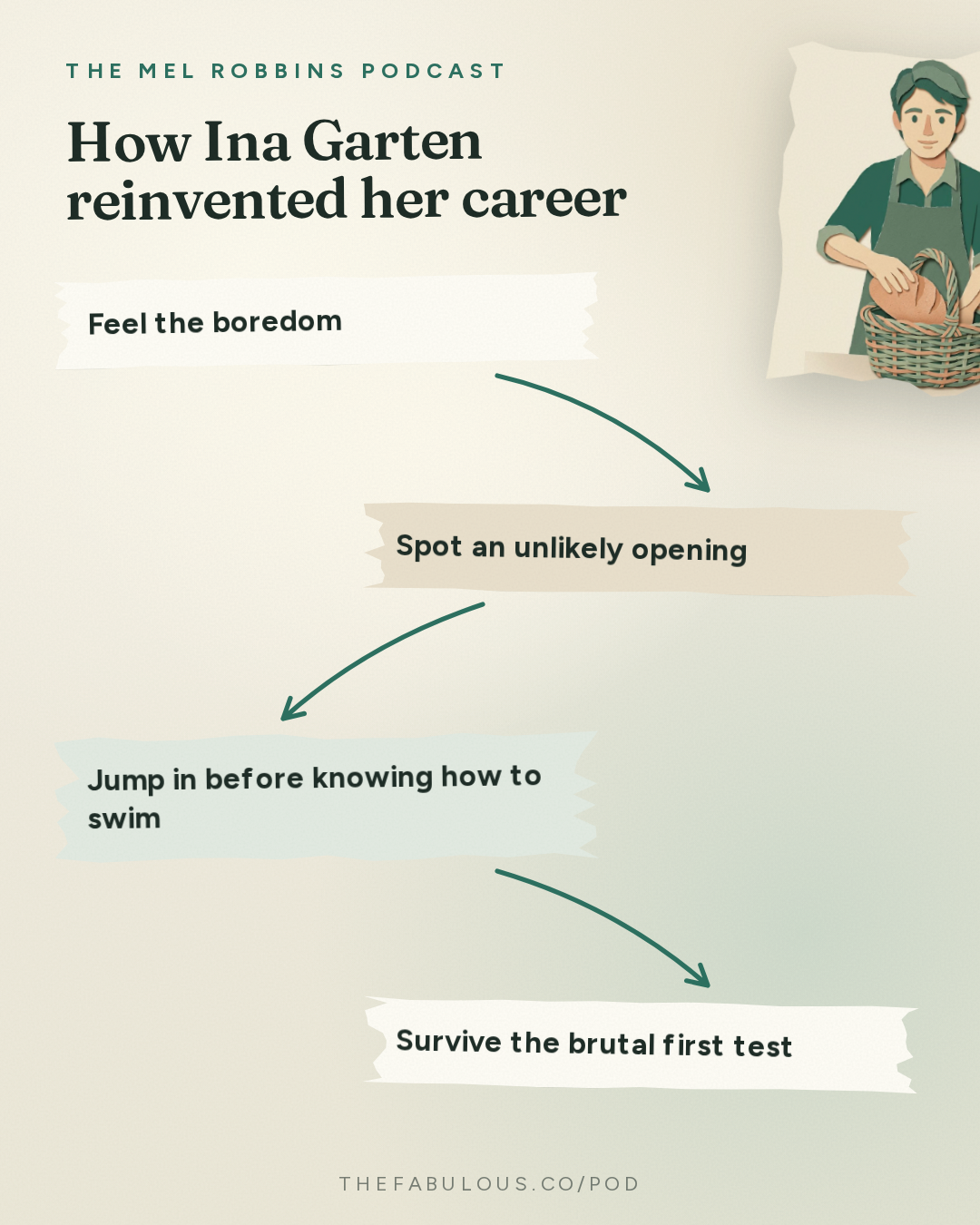
Ina Garten left a federal budget job at 30 to buy a 400-square-foot Hamptons food store that grossed just $87 on its first day, and calls her approach working scared. On Mel Robbins's podcast, the Barefoot Contessa founder explains why jumping in before you feel ready, reframing boring tasks, and running small experiments beat waiting for a perfect plan.
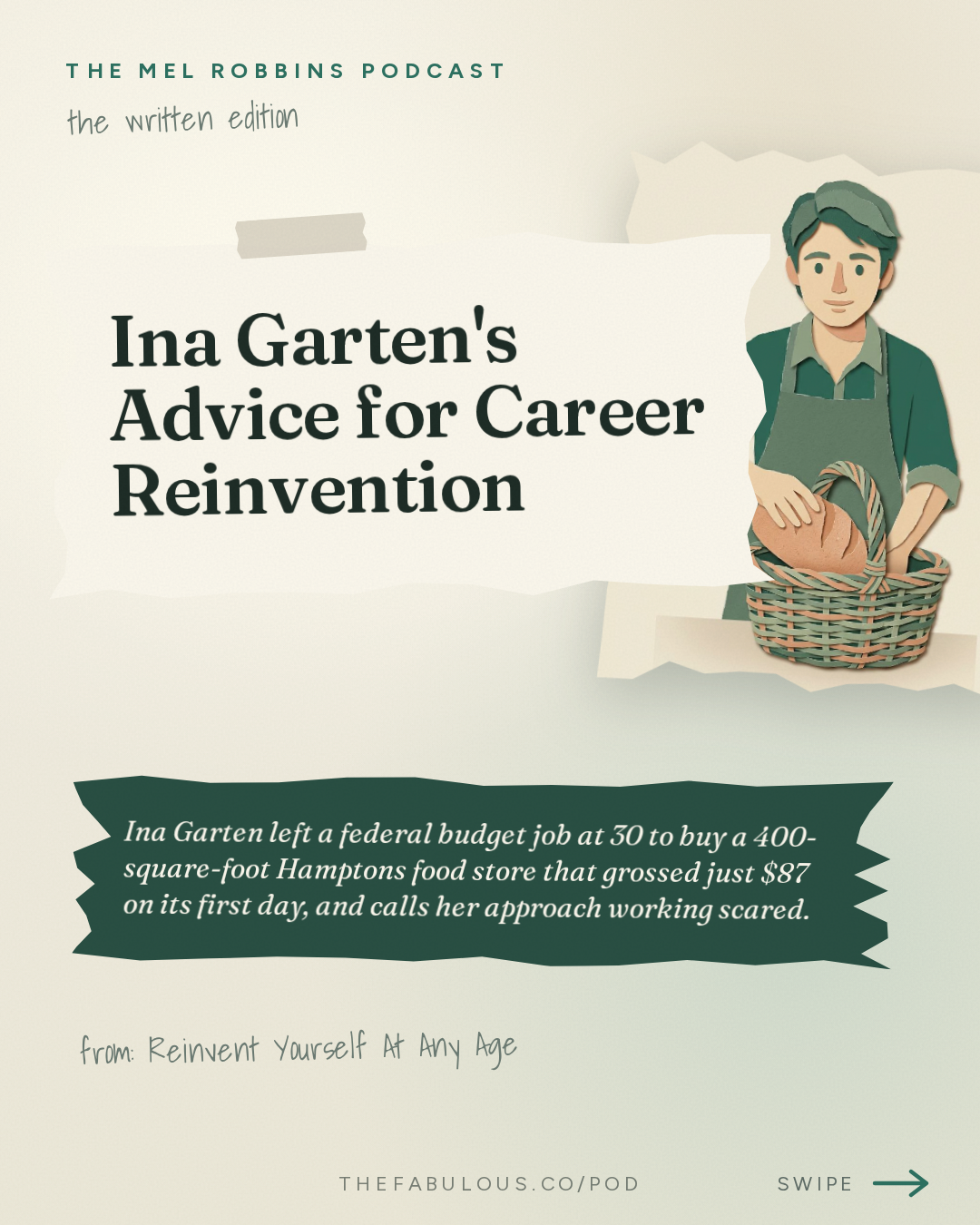
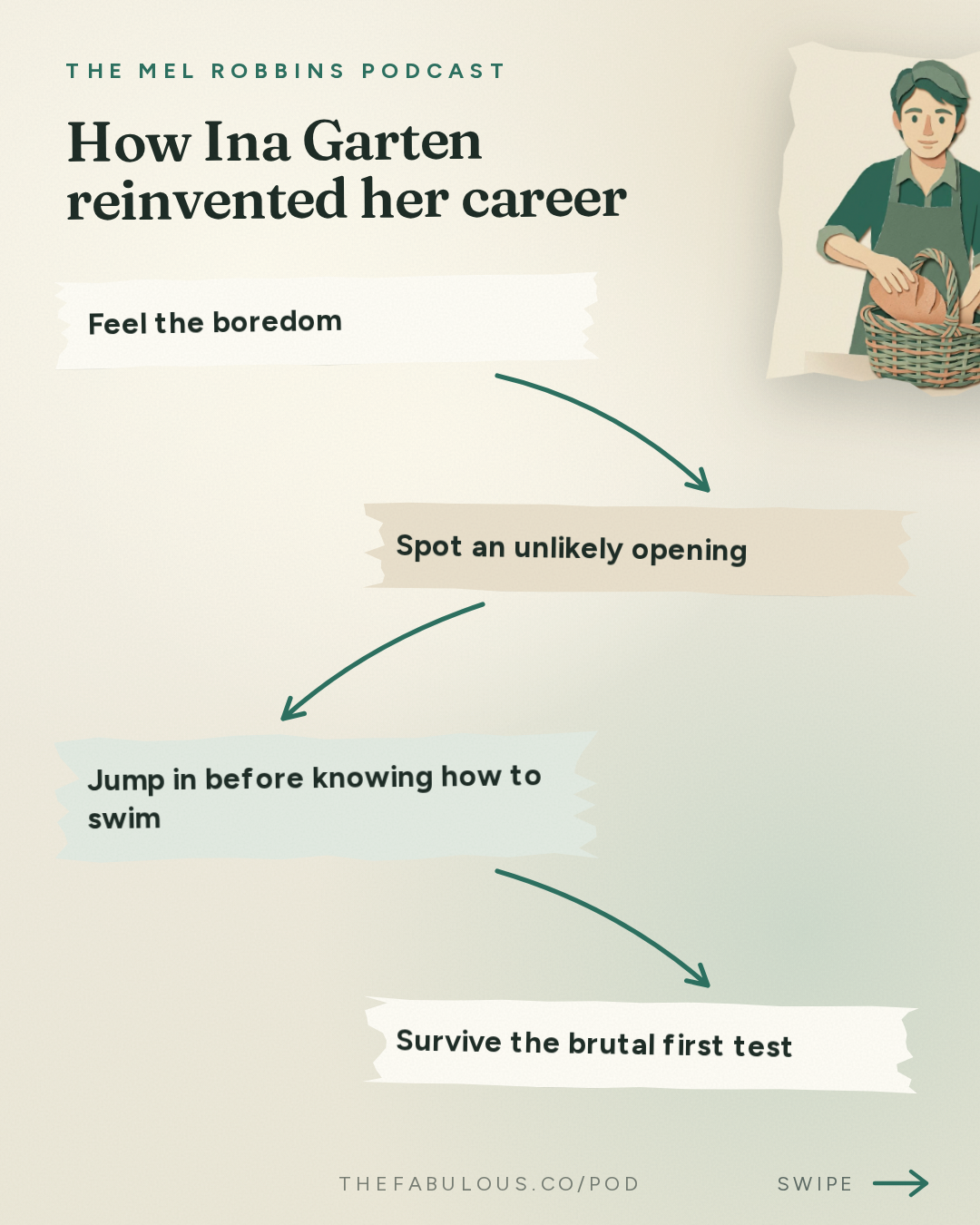
In the 1970s, a thirty-year-old federal budget analyst named Ina Garten was reading the classified pages of The New York Times when she noticed something she had never looked at before: the business-opportunity listings, the same column where people hawked dry cleaners and head shops. Tucked among them was an ad for a four-hundred-square-foot specialty food store in a Hamptons beach town she had never visited (09:54). She had spent four years at the Office of Management and Budget working on nuclear energy policy, pulling all-nighters on budgets that ran into the billions, and feeling, by her own account, that nothing she did actually changed anything (07:38). The ad sounded like fun. That was reason enough.
Garten, now seventy-eight and the author of fourteen cookbooks (04:29), tells this story on The Mel Robbins Podcast with the plainness of someone who has told it many times and still finds it a little unbelievable. She bought the store, called Barefoot Contessa, having never run a business, never managed an employee, and never cashed out a register. Her husband, Jeffrey, drove her up for a look mostly to humor her. "I think he didn't think it was gonna shut me up," she says, "but he thought I was starting the process to try and figure out what was next, never realizing this was next" (10:59).
The gap between those two moments, the boredom in Washington and the sold-out counter in the Hamptons, is the real subject of the conversation, and it is where Garten's advice gets specific enough to be useful. She did not have a five-year plan. She had a feeling, and a willingness to test it.
The Pond, Not the Map
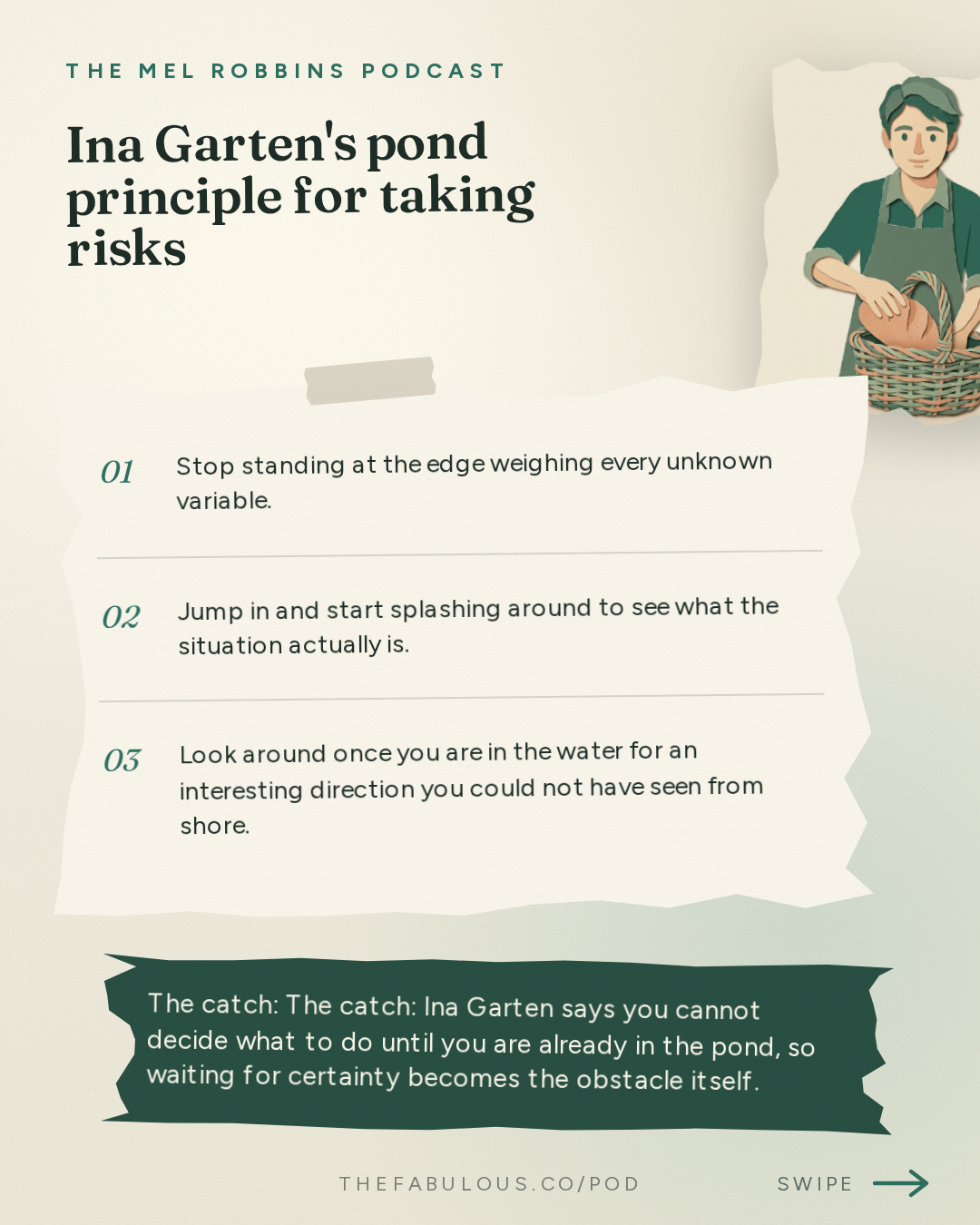
Garten's central image is a pond. Stand at the edge, she says, and you can argue yourself out of anything: there might be fish, the water might be cold, you cannot see the bottom.
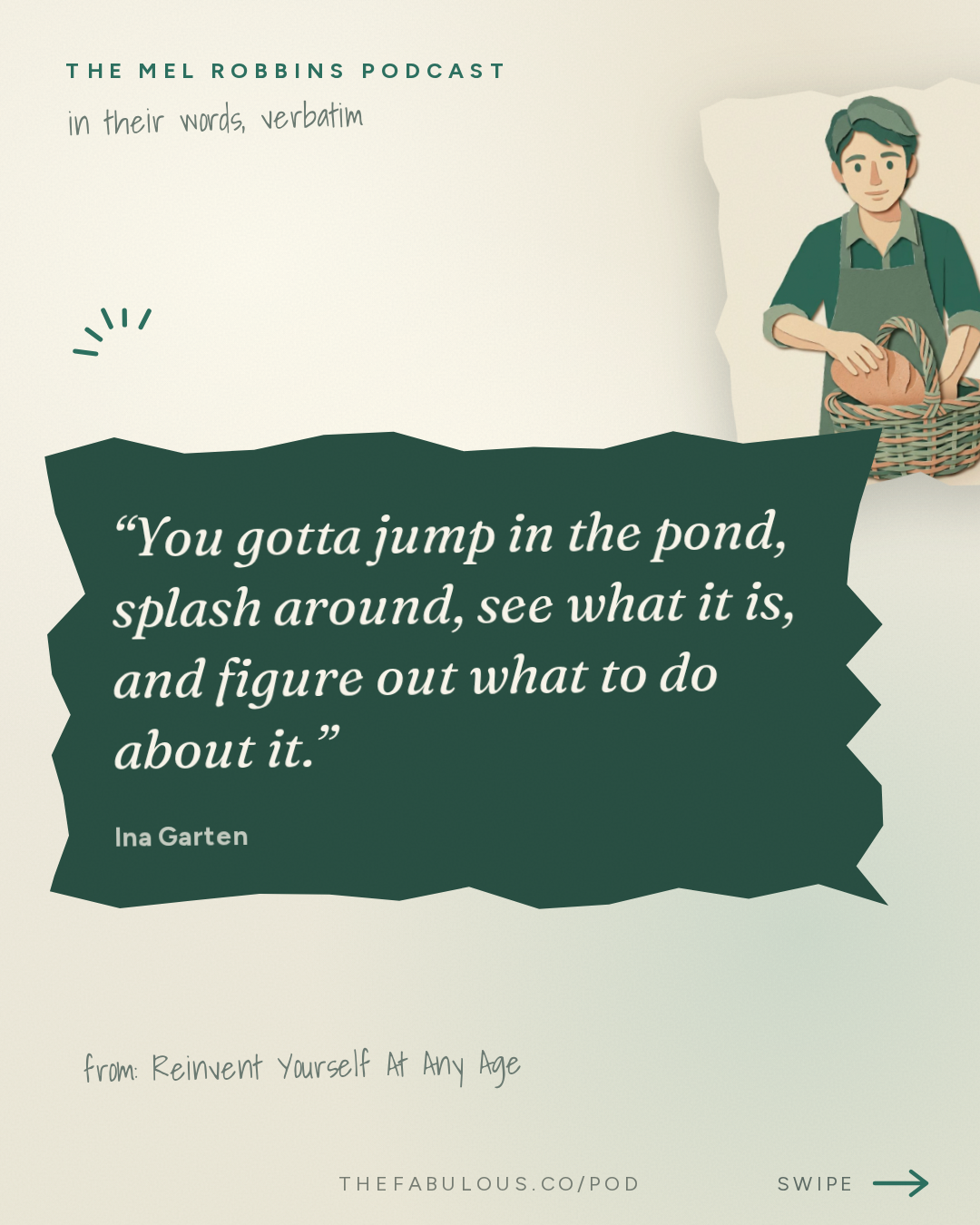
"You gotta jump in the pond, splash around, see what it is, and figure out what to do about it. And maybe while you're in that pond, you can look over there and go, 'Oh, that's actually a really interesting place to go,' that you would never have seen if you weren't in the pond." Ina Garten [20:32]
This is not a call to recklessness. It is closer to a research method. Garten describes her career, including the parts that look like swerves, as a string of experiments. Cooking, she says, is science applied to food: you test a variable, you watch what happens, you adjust (12:46). The store gave her the same feedback loop the government job never did. On her first day, the register held eighty-seven dollars in gross sales, and her husband multiplied that by the length of the summer and told her she was not going to make it (19:23). The next day, on the Friday before Memorial Day, the store sold out completely. The data had changed. So she changed her mind.
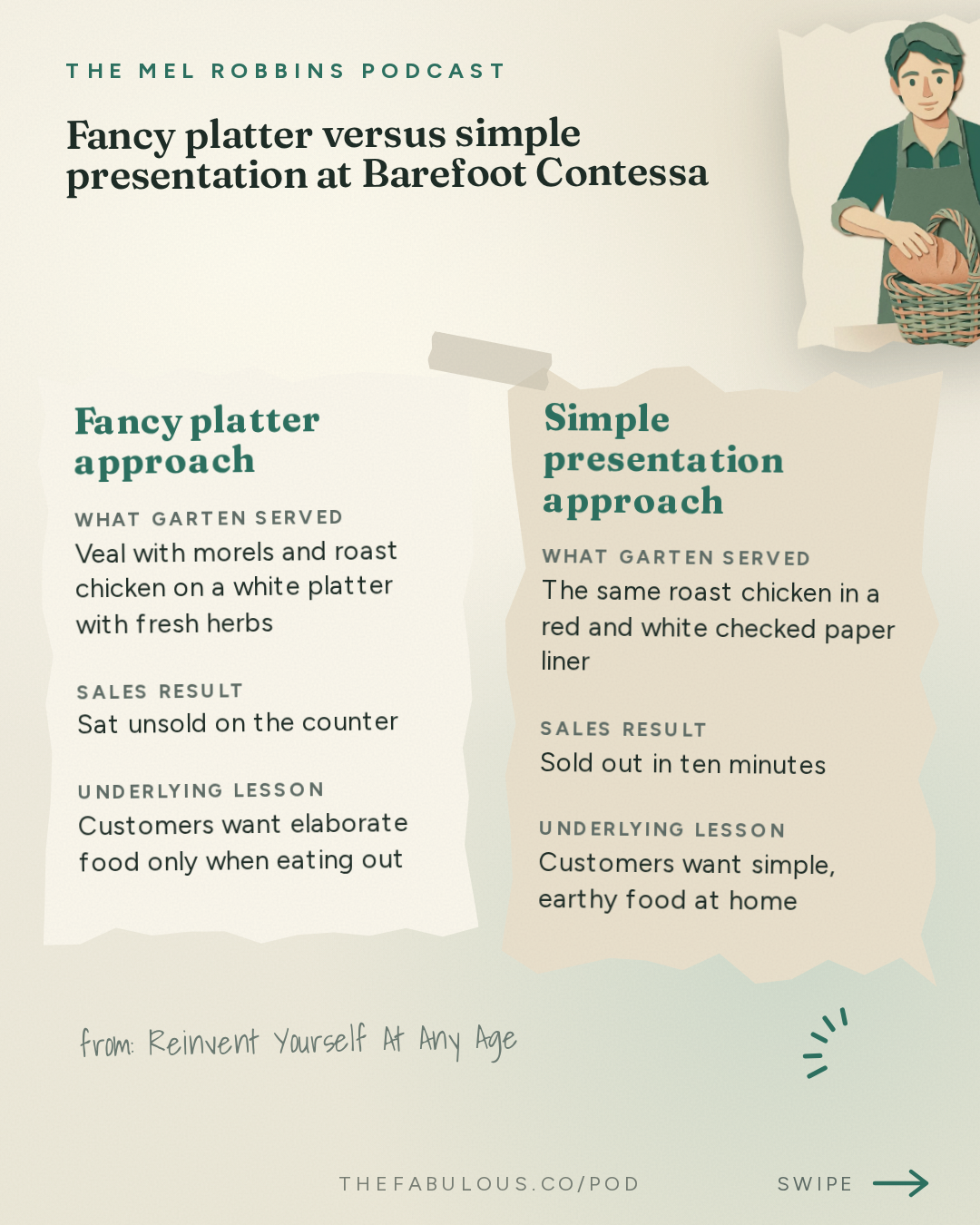
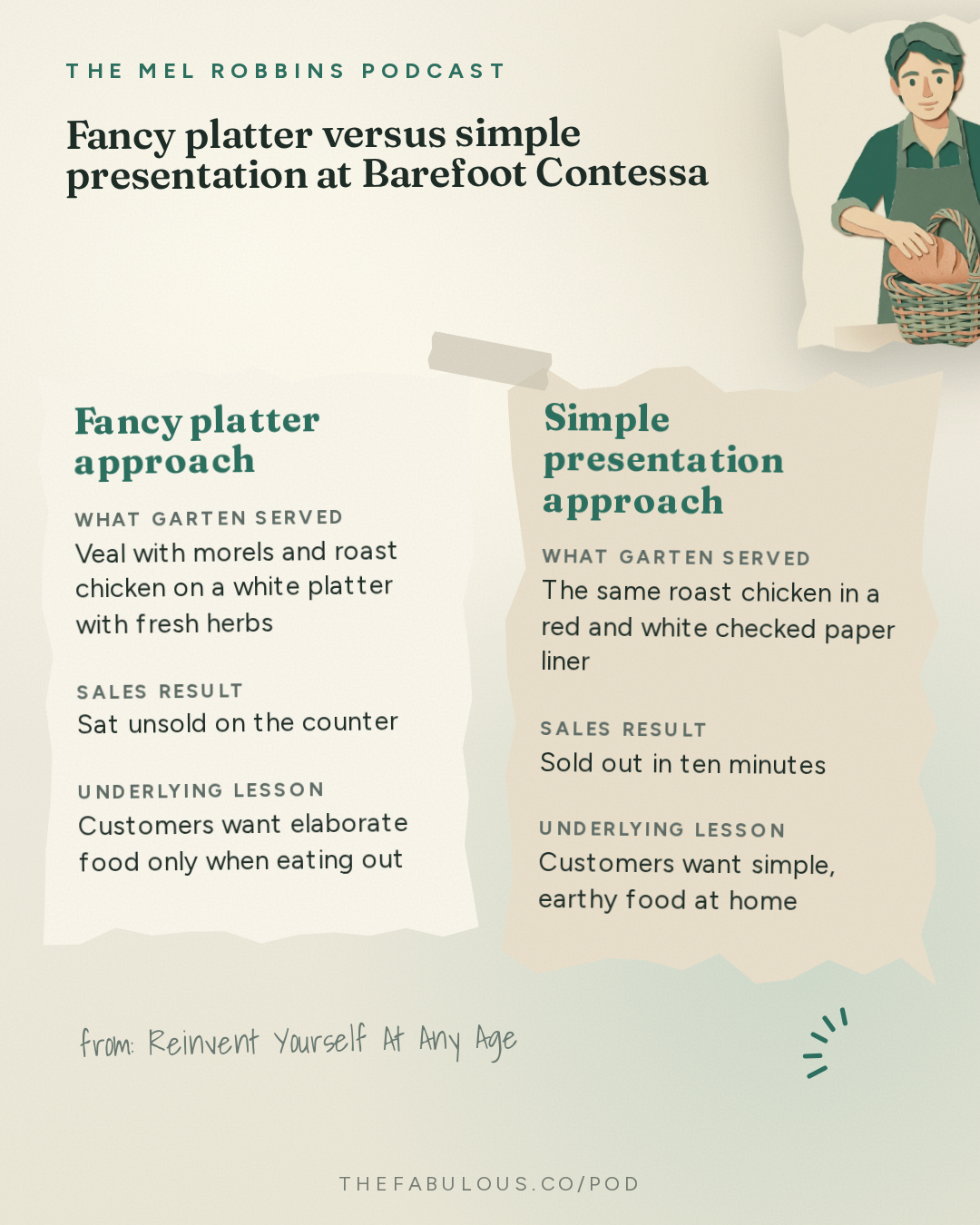
That habit of testing and watching shows up again and again. In her first weeks she filled the store with elaborate food: veal with morels, roast chicken arranged on a white platter with fresh herbs. None of it sold (30:56). She moved the same chicken into a plain checked paper liner, the kind used for fries, and it sold out in ten minutes (31:21). Her conclusion was not that she had misjudged the chicken. It was that people with elegant taste do not necessarily want fancy food at home. They want it when they go out. At home they want something simple and earthy (31:21). Years later, in a different store, she stocked small drawers near the register hoping customers waiting for a cake would buy something extra. Cookies and muffins sat untouched until she tried granola, which sold constantly, because people buying something decadent like chocolate cake wanted to balance it with something that felt healthy (32:48). "It's all a science experiment," she says, "and you never know what the answer's gonna be" (33:10).
The same logic applied to how customers treated her. In the beginning, shoppers barked orders at her like she was staff, not the owner. A former owner of the store told her to wear jewelry so people would know she owned the place. Garten bought the gaudiest gold necklace she could find, put it on, and the questions changed instantly: people started asking if it was her store (30:09). She draws a lesson from this that is bigger than jewelry: people do not always need to be convinced to change, sometimes the conversation changes because you change yourself first.
Reframing the Boring Parts
None of this is a story about constant fun. Garten is specific that the appeal of a life organized around fun is not that every hour of it feels good. It is that the hours that do not feel good can be reframed as being in service of the hours that do. "It doesn't mean everything in my life is fun," she says. "It just means it's either fun on its own, or it's in the furtherance of fun" (22:39). A fight over a video thumbnail is not fun. But understood as being in furtherance of a show people want to watch, it has a point. Garten extends this to how she runs a day: start with purpose, and before the day ends, decide what tomorrow's purpose will be, rather than waking up and wondering what to do (22:15).
This same willingness to sit with discomfort appears in the part of the conversation about her marriage. A decade into being married to Jeffrey, with the store consuming nearly all her time, Garten realized she had never lived on her own and did not know who she was without him. On a beach walk that summer, she told him she needed to find out. She did not know, she says, whether it was for a season or forever (49:27). Jeffrey's response was not to fix it. He told her that if she needed to be on her own, she needed to be on her own, and then, months later, when she was stuck in bed with nothing to do, he told her to get up, get on a train, and go be around friends while he traveled for work (51:03). "It's in times of stress that you find out who the other person really is," Garten says (52:06). They never filed any papers. They talked, worked out what they each actually wanted, and found that the assumptions they had been operating under, about who had to be home for dinner, about who could travel, were not actually true (53:08).
She frames the whole arrangement with a line that doubles as her general theory of other people's opinions: it doesn't have to make sense to anybody else, it only has to make sense to the two people living it (53:08).
"The really scary things I've done have been the making of my life." Ina Garten [05:24]
That line, early in the conversation, is close to a thesis statement. Garten does not argue that fear should be absent from a big decision. She argues that fear is often the signal a decision is worth making. The alternative, in her telling, is drifting, following wherever a career happens to go without ever choosing it on purpose. "When you make a deliberate decision in the furtherance of what you love to do," she says, that's when you have agency with your life (05:51).
Her most concrete piece of business advice follows the same experimental logic as the granola drawer. Before a friend who had co-founded Burton Snowboards decided to open a specialty food store of her own, Garten told her to spend a summer working in the bakery at Barefoot Contessa first (59:04). She did, loved it, and went on to open a successful store in Vermont. Mel Robbins found the opposite to be true for herself: convinced she wanted to run a bakery, she discovered, after six hours of filling sugar dispensers and hauling garbage, that she did not. Either outcome, she suggests, is useful information, and neither one is available from outside the pond.
What makes Garten's version of reinvention persuasive is that it refuses the tidy arc. She did not know, at thirty, that the government job had taught her to negotiate budgets, or that renovating houses on the side had taught her to secure loans, or that none of it was wasted. She only saw the connections decades later, writing her memoir, Be Ready When the Luck Happens (14:10). The title captures the method: not a leap of faith exactly, but a habit of staying ready, so that when an ordinary Tuesday produces an ad in the newspaper, there is enough nerve on hand to answer it.
Ask this episode anything
Pod's AI answers from the episode itself, with the minute mark so you can hear it yourself.
Or start with one of these
Ask this episode
Pod's AI listens to the whole episode to answer, and points you to the minute it comes from.
The rest of this answer, and any question after it
Answers come from the episode itself, never from a summary of it.
ContinueKey takeaways
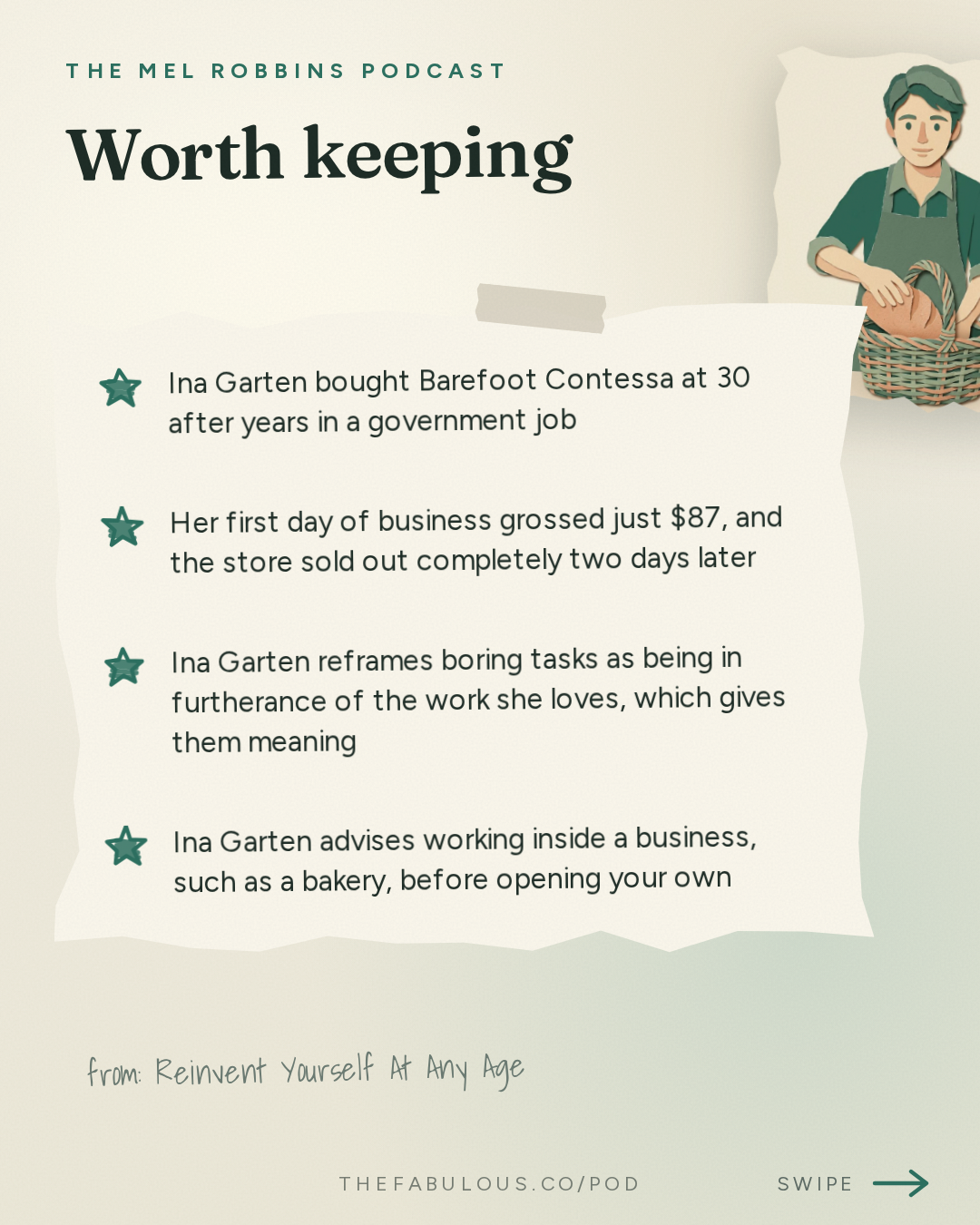
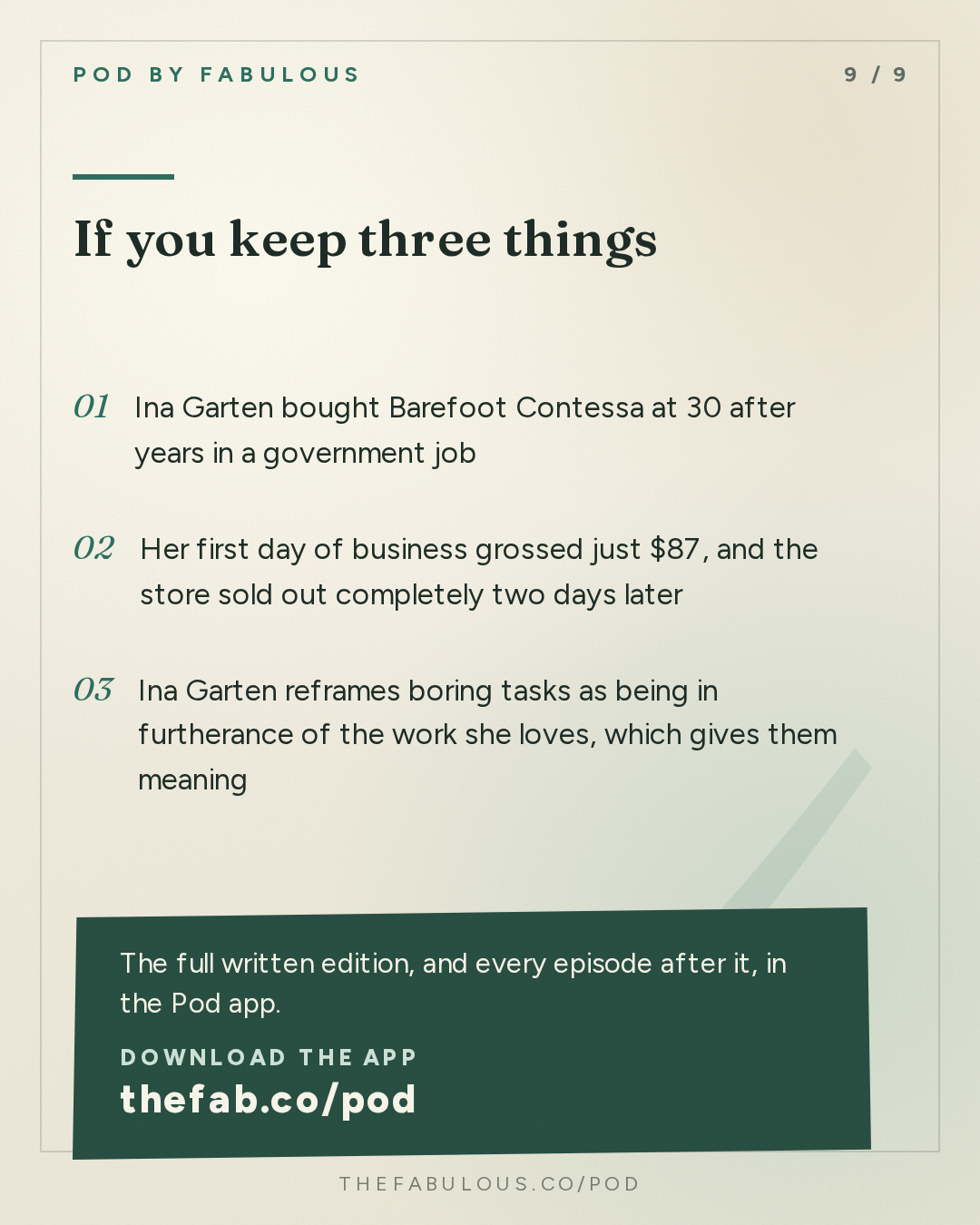
- Ina Garten bought Barefoot Contessa at 30 after years in a government job
- Her first day of business grossed just $87, and the store sold out completely two days later
- Ina Garten reframes boring tasks as being in furtherance of the work she loves, which gives them meaning
- Ina Garten advises working inside a business, such as a bakery, before opening your own
- Ina Garten says real reinvention means jumping in before you feel ready, then adjusting as you go
The episode in cards
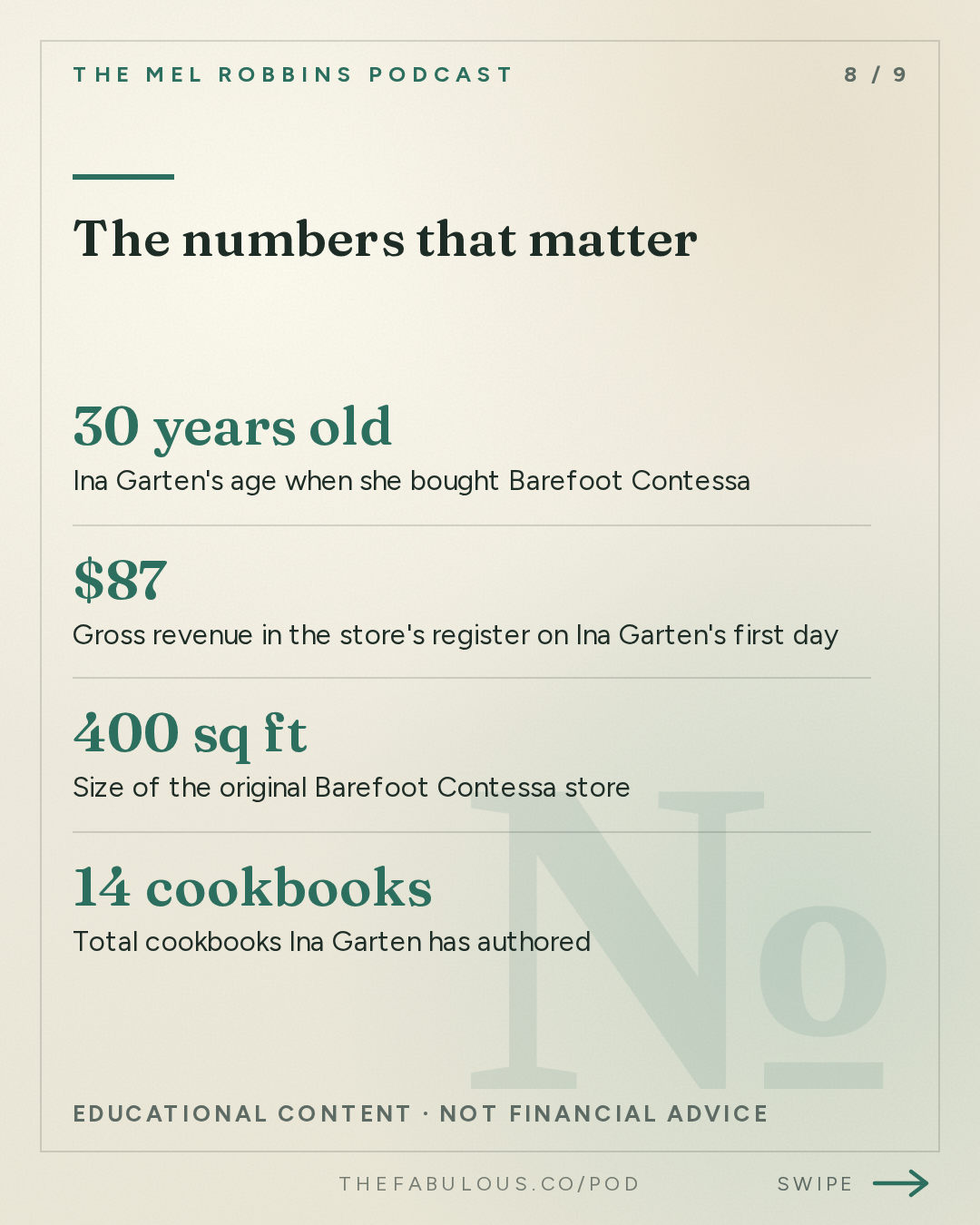
By the numbers
- 30 years old Ina Garten's age when she bought Barefoot Contessa
- $87 Gross revenue in the store's register on Ina Garten's first day
- 400 sq ft Size of the original Barefoot Contessa store
- 14 cookbooks Total cookbooks Ina Garten has authored
In their words
“The really scary things I've done have been the making of my life.”
“You gotta jump in the pond, splash around, see what it is, and figure out what to do about it.”
“Go as far as you can see, and when you get there, you'll be able to see farther.”
“We're all living in cages with the door wide open.”
Protocols
-
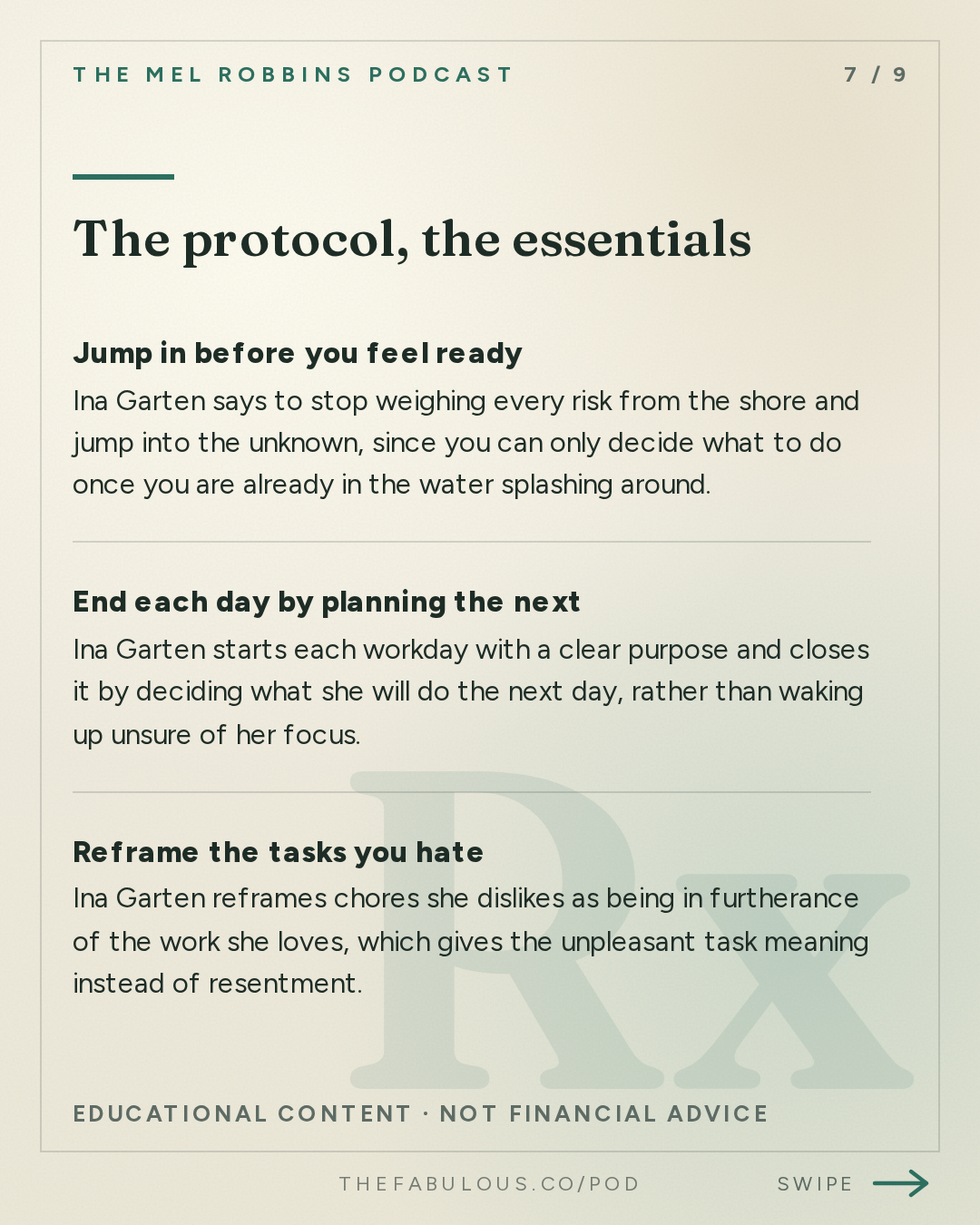
Jump in before you feel ready
Ina Garten says to stop weighing every risk from the shore and jump into the unknown, since you can only decide what to do once you are already in the water splashing around.
Whenever facing a big decision
-
End each day by planning the next
Ina Garten starts each workday with a clear purpose and closes it by deciding what she will do the next day, rather than waking up unsure of her focus.
Daily
-
Reframe the tasks you hate
Ina Garten reframes chores she dislikes as being in furtherance of the work she loves, which gives the unpleasant task meaning instead of resentment.
As needed
-
Start the hard conversation anyway
Ina Garten says to begin a difficult conversation even when the other person's response cannot be predicted or controlled, because the response itself reveals who that person really is.
When a relationship needs to change
-
Work in the business before you own it
Ina Garten advises working inside a business, such as a bakery, before deciding to open one of your own, since a summer job can reveal whether the daily grind actually suits you.
Before starting a business
Questions this episode answers
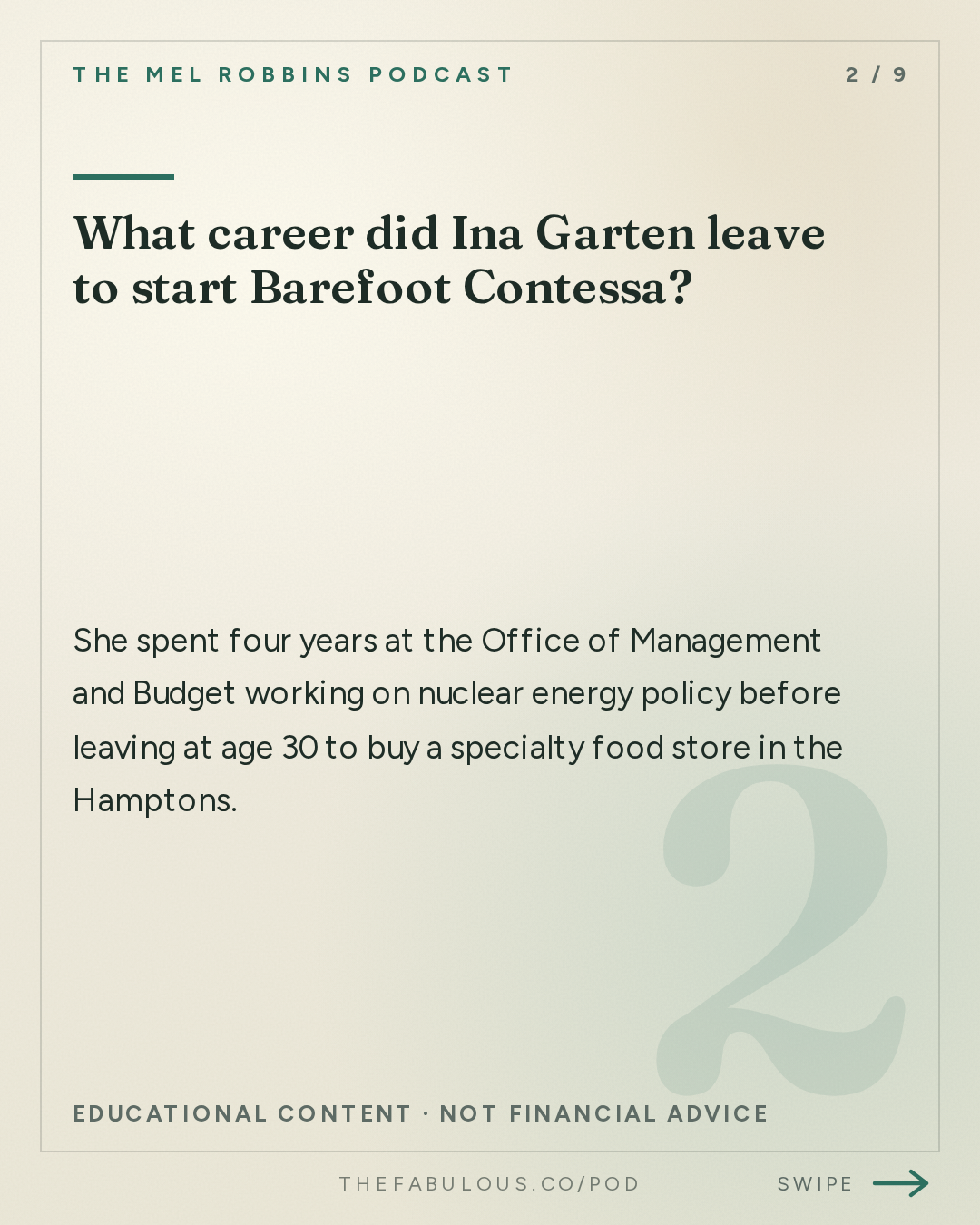
What career did Ina Garten leave to start Barefoot Contessa?
She spent four years at the Office of Management and Budget working on nuclear energy policy before leaving at age 30 to buy a specialty food store in the Hamptons (07:38).
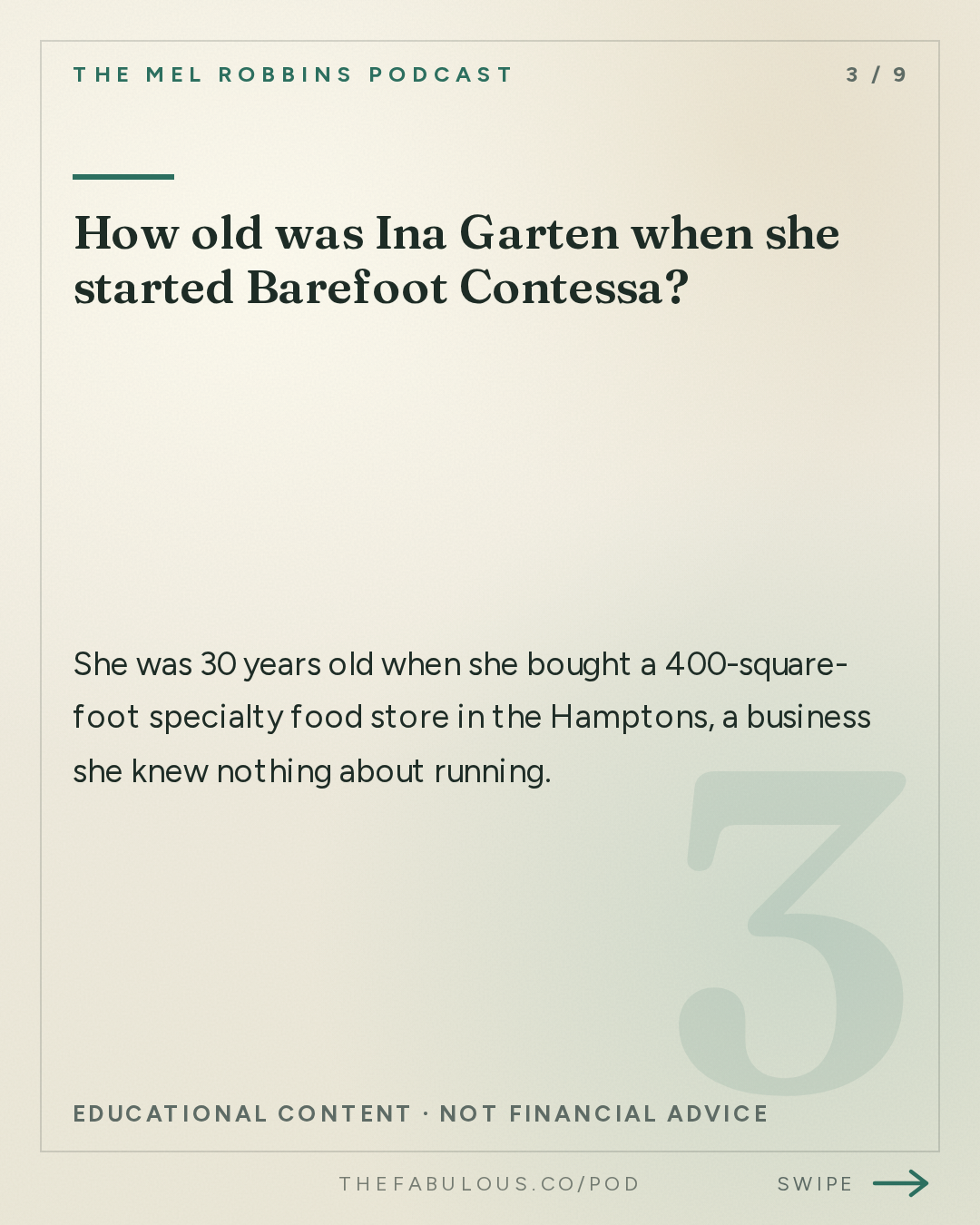
How old was Ina Garten when she started Barefoot Contessa?
She was 30 years old when she bought a 400-square-foot specialty food store in the Hamptons, a business she knew nothing about running (00:32).
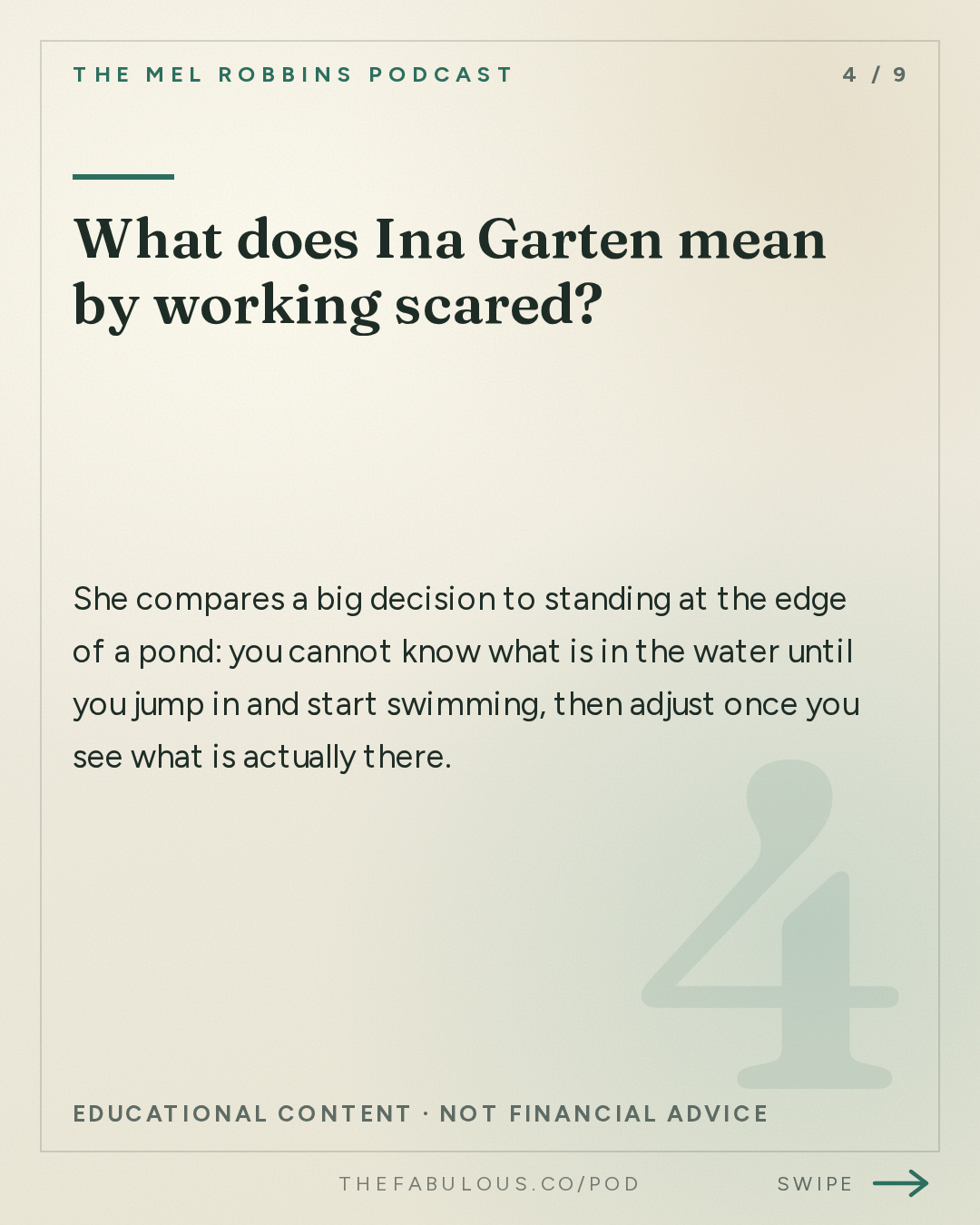
What does Ina Garten mean by working scared?
She compares a big decision to standing at the edge of a pond: you cannot know what is in the water until you jump in and start swimming, then adjust once you see what is actually there (20:11).
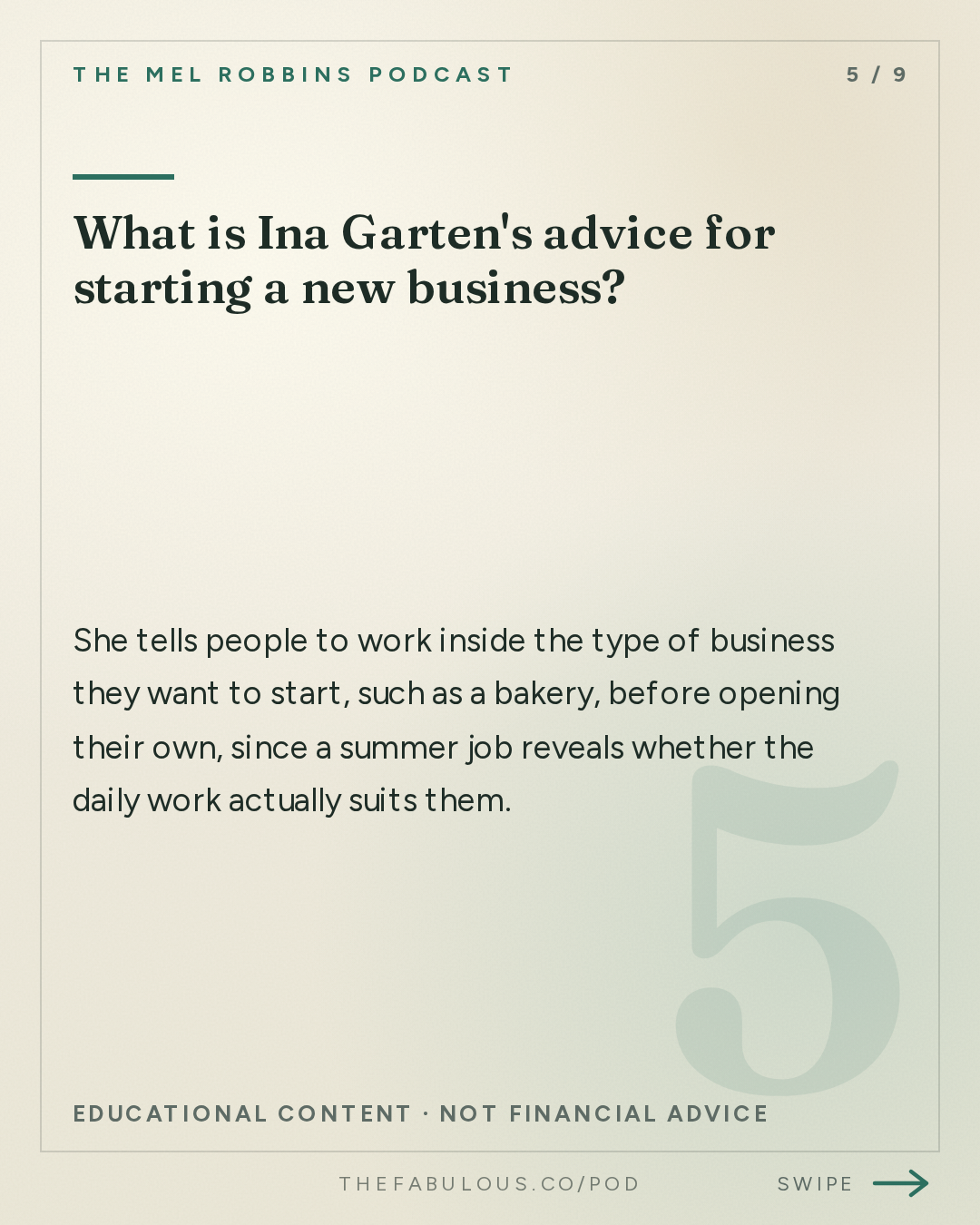
What is Ina Garten's advice for starting a new business?
She tells people to work inside the type of business they want to start, such as a bakery, before opening their own, since a summer job reveals whether the daily work actually suits them (59:04).
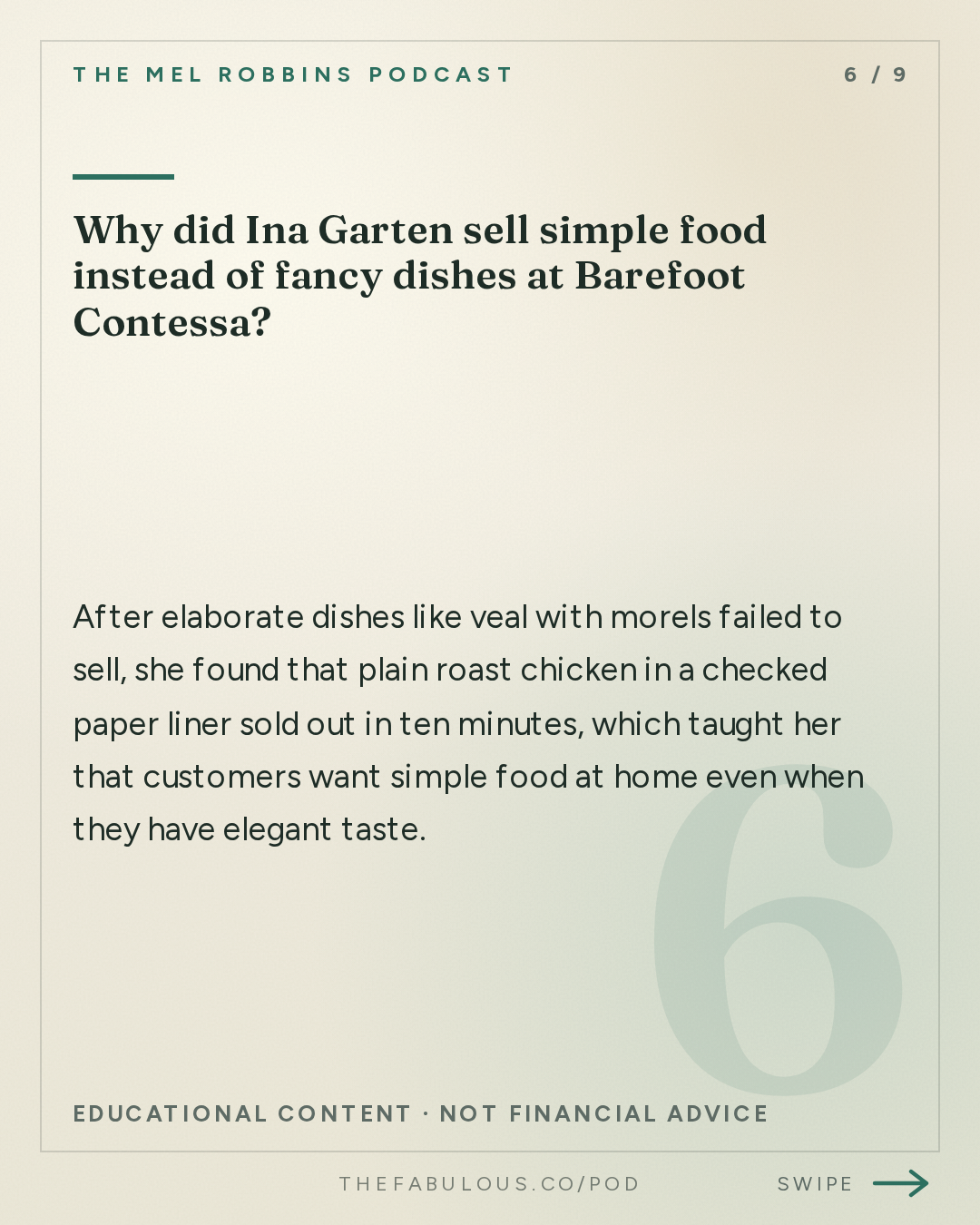
Why did Ina Garten sell simple food instead of fancy dishes at Barefoot Contessa?
After elaborate dishes like veal with morels failed to sell, she found that plain roast chicken in a checked paper liner sold out in ten minutes, which taught her that customers want simple food at home even when they have elegant taste (31:21).
The full read, in cards
Go deeper
- Be Ready When the Luck Happens — Ina Garten's memoir recounting her move from a government budget job to founding Barefoot Contessa
Mentioned
Ina Garten · Barefoot Contessa · Office of Management and Budget · Be Ready When the Luck Happens · Jeffrey Garten · JP Morgan · George Lucas
More from this show and category
Dr. Lara Boyd on How to Rewire Your Brain
Neuroscientist Lara Boyd says experience, not any drug, is the brain's biggest driver of change. Her research shows plasticity peaks when a task is hard enough to succeed only half the time, and that sleep, exercise, and lower cortisol all expand the brain's capacity to rewire at any age.
How to Stop Being Overlooked at Work
Emory University marketing professor Marina Cooley argues that good work alone rarely gets noticed; in an attention economy of thousands of daily messages, people need a sticky personal brand and the habit of saying their achievements out loud. Her research shows what moves pay differs by gender, and simple scripts like asking a boss what success looks like outperform guessing.
Male Hormone Health: A Stanford Doctor's Guide
Stanford urologist Michael Eisenberg says male hormone health is a window into long-term health, not just sex or fertility. He covers testosterone's normal range, the lifestyle habits that raise or lower it, erectile dysfunction treatments, and why global sperm counts keep falling, with evidence that an active sex life and a steady partner both predict a longer life.
Mel Robbins' Best Life Advice for Listeners
Mel Robbins turns a full episode of listener questions into concrete rules: move once, eat more protein and fiber, and wait 30 days after a breakup. She covers passion as energy, the 90-second rule for emotional flooding, and a heart-versus-head framework for career and relationship decisions.
