
How to Stop Being Overlooked at Work
How to Stop Being Overlooked & Start Getting What You Want With Top Business School Professor
▶ Listen to the full episode More from The Mel Robbins Podcast
The brief
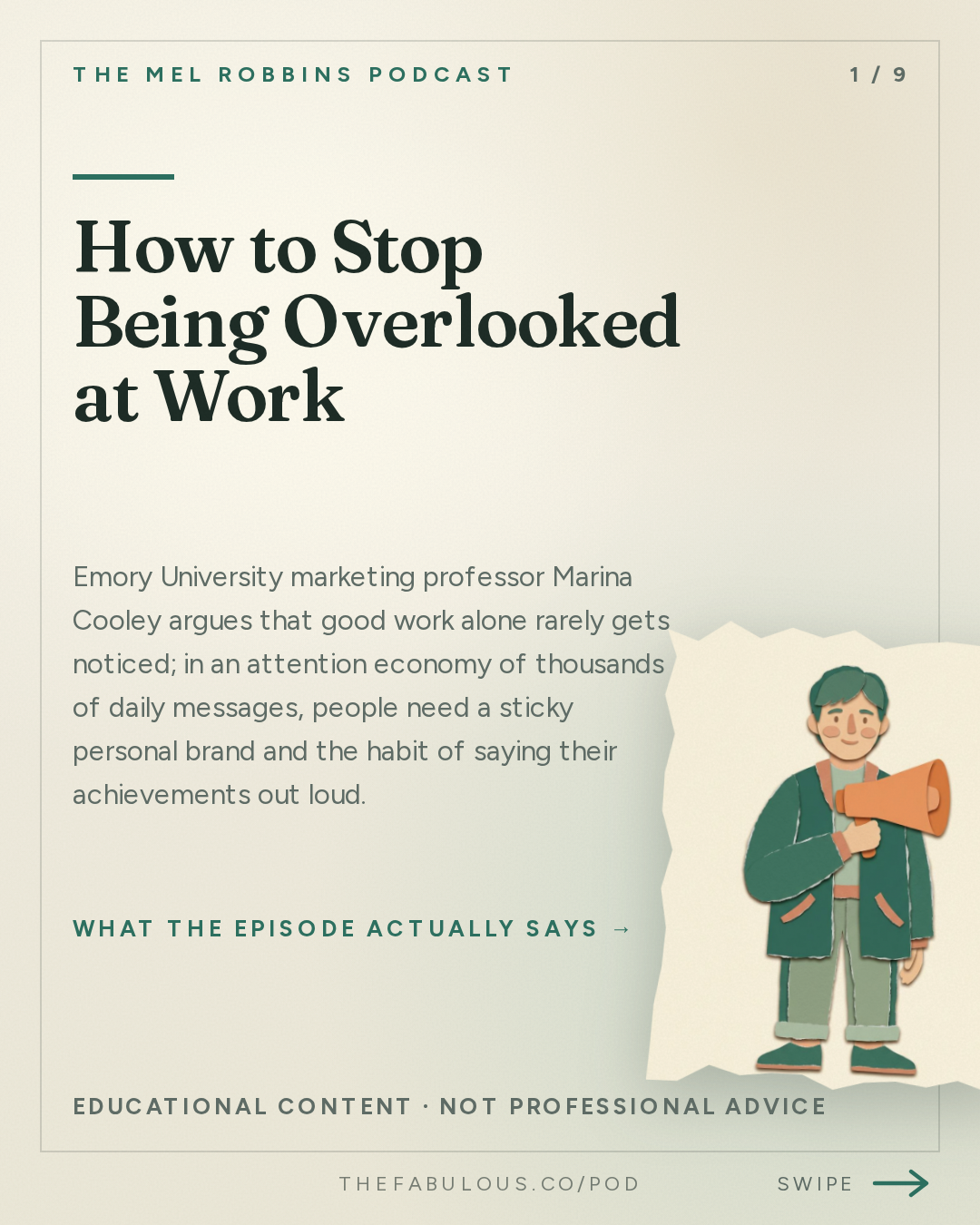
Emory University marketing professor Marina Cooley argues that good work alone rarely gets noticed; in an attention economy of thousands of daily messages, people need a sticky personal brand and the habit of saying their achievements out loud. Her research shows what moves pay differs by gender, and simple scripts like asking a boss what success looks like outperform guessing.
At twenty-eight, Marina Cooley was, by her own count, a failed management consultant and a failed entrepreneur. She had built a peanut butter company, gotten FDA approval for a pumpkin and honey-nut recipe, and watched it fold within eighteen months (06:58). The failure did not end her career. It became her calling card. When Coca-Cola interviewed her for a marketing job, the hiring team already knew her story before she walked in. They called her "the peanut butter girl" and told her, when they made the offer, that they hired her because she had moxie (10:02). The real lesson of that failure, the one she has spent a career since turning into a business school curriculum, was not about peanut butter. It was about noise, and how not to disappear inside it.
Cooley, now a professor at Emory University's Goizueta Business School, teaches a course built around the attention economy, a term for the plain fact that human attention, not information, is the scarce resource of modern life. Her numbers make the case bluntly: roughly 1.3 billion things get posted to Instagram every day, another 34 million to TikTok, and the average person scrolls past somewhere between 6,000 and 10,000 messages (17:01). Of those thousands, Cooley tells her students, they will remember maybe three. That math is the reason she built an assignment called Go Viral, Get an A, in which student groups take turns posting to a shared class account. In 2022, the account hit one million views by day fifteen and ten million impressions by day thirty (20:23). The exercise was never really about social media. It was about proving, in miniature, that an idea can be made to stick, and that most ideas, including most good work, simply are not.
The pain of being ignored
What stops people from putting an idea, a pitch, or a resume out into that noise is not vanity. It is wiring. Cooley traces the hesitation to a basic feature of the brain: being excluded or ignored activates the same regions that register physical pain.
"Social rejection feels awful. It's literally the same part of your brain that tells you you're in physical pain." — Marina Cooley [21:43]
That single fact reframes a familiar complaint. The fear of posting a video nobody watches, or asking for a raise and getting silence instead of a no, is not a personality flaw. It is the brain doing exactly what it evolved to do: steer a person away from a feeling that used to signal real danger. Cooley's point is not that the fear goes away. It is that acting through it anyway does not kill anyone, even though it feels, in the moment, like it might.
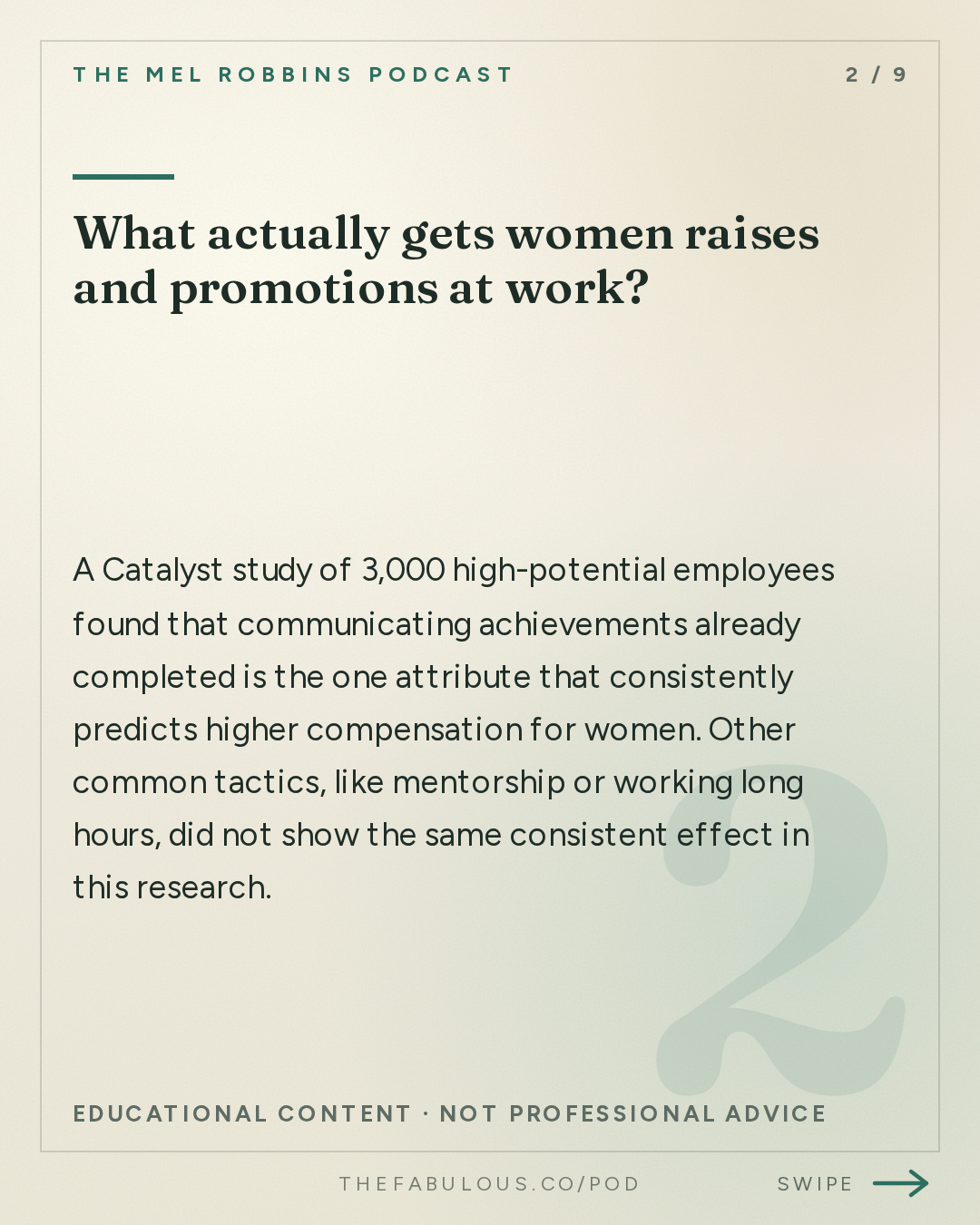
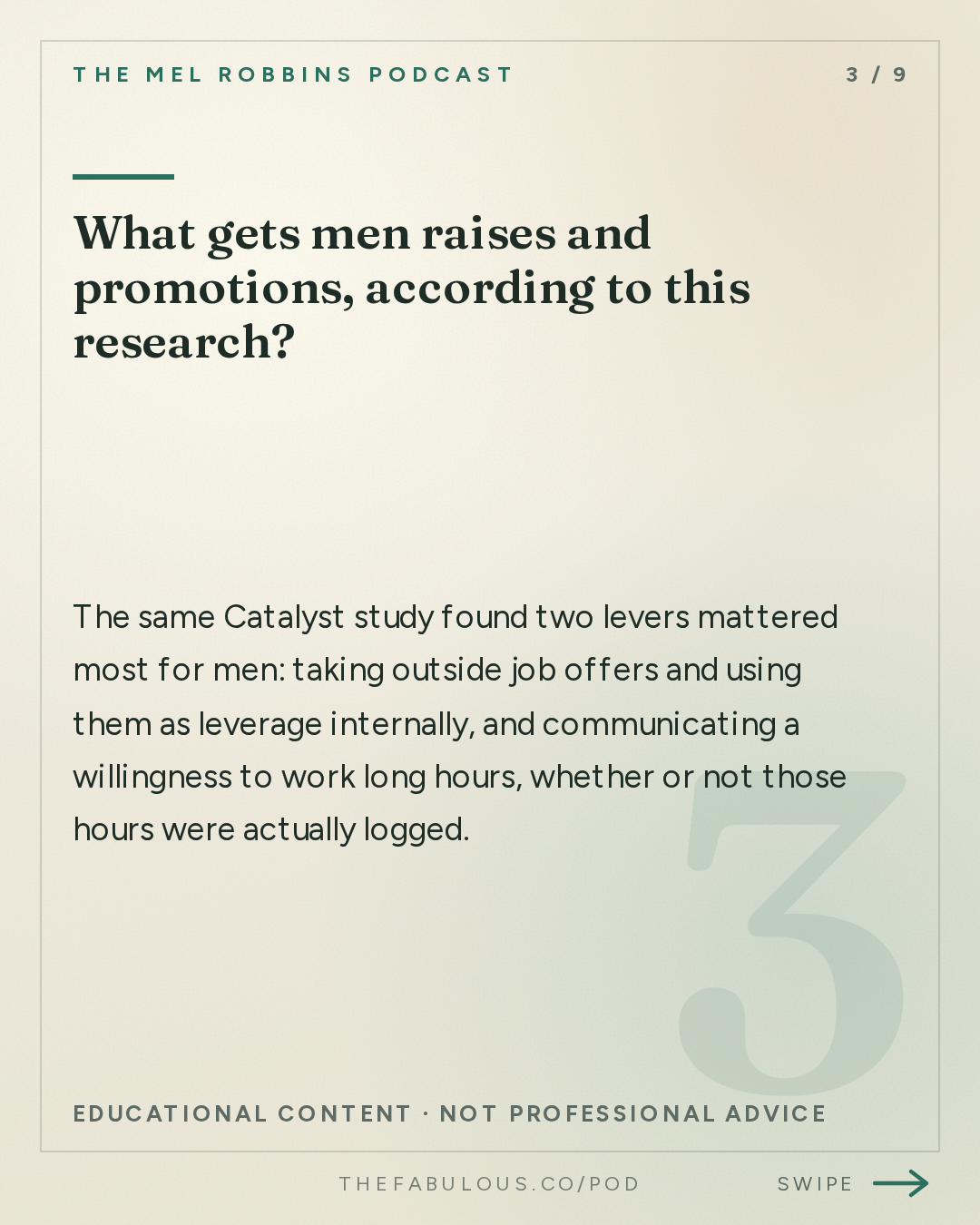
That fear has a professional cost, and Cooley's research gives it a number. A Catalyst study of 3,000 high-potential employees, meaning people with MBAs progressing through traditional corporate careers, tracked nine behaviors tied to pay and promotion: finding a mentor, taking training, pursuing outside offers, working long hours, and communicating achievements among them (33:00). The surprising finding was that the behaviors that actually moved compensation differed sharply by gender. For men, the two levers that worked were taking external job offers and using them as leverage internally, and communicating a willingness to work long hours, whether or not those hours were logged (34:04). For women, only one attribute consistently predicted higher pay: communicating achievements already completed (35:11). Not working harder. Not threatening to leave. Simply saying, out loud and on the record, what had already been done.
Cooley calls this good news, because it means women are not punished for being unable to promise unlimited hours at every life stage. But it exposes a costly assumption.
"We believe that if we do great work that that is enough, and it's not." — Marina Cooley [35:57]
The manager on the other side of that silence is not malicious, Cooley argues. They are simply overwhelmed, managing ten direct reports, their own boss, and the same flood of 6,000 to 10,000 daily messages everyone else is drowning in (36:48). The employee who keeps narrating results, even results that were a team effort, becomes the one the manager remembers. The other nine, hoping to be noticed, mostly are not.
A reputation that travels
The old solution to being overlooked was tenure: stay at one company for twenty or thirty years and let a reputation accumulate on its own. That option is mostly gone. Average job tenure now sits around three to four years, closer to two for people early in their careers (41:22). Cooley's answer is a portable reputation, which is really just a personal brand built the way a company builds one: a short, legible story about what problems someone solves and what to expect from them.
"You need a portable reputation, and that's really where the idea of personal brand comes from." — Marina Cooley [41:47]
This matters because of a statistic Cooley cites almost in passing: 98 percent of the time, someone will look another person up online before meeting them (42:16). That leaves about three seconds, she says, for a LinkedIn profile or a social bio to answer the question of what kind of problems this person solves (43:04). If a stranger cannot answer that in three seconds, the profile has not done its job.
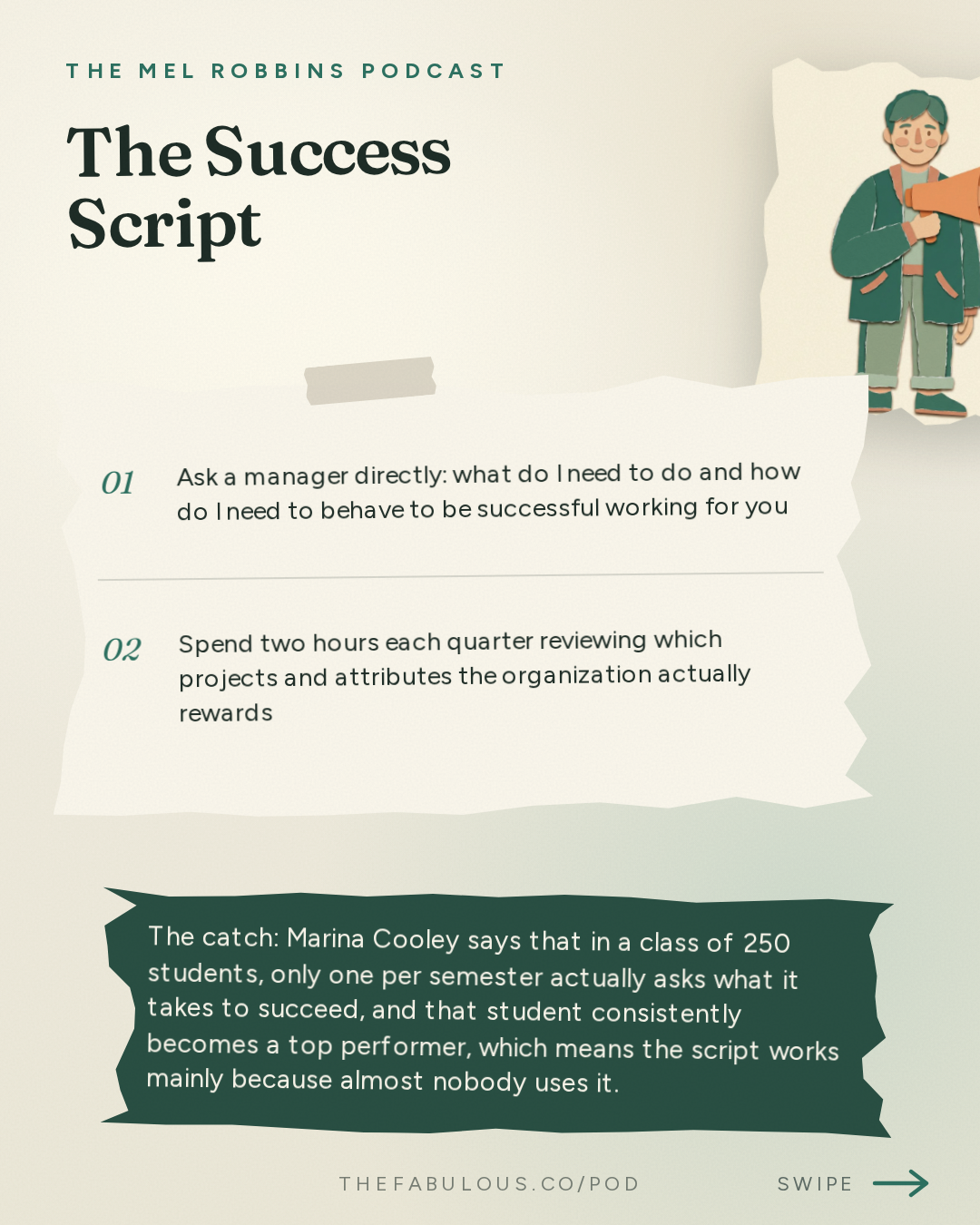
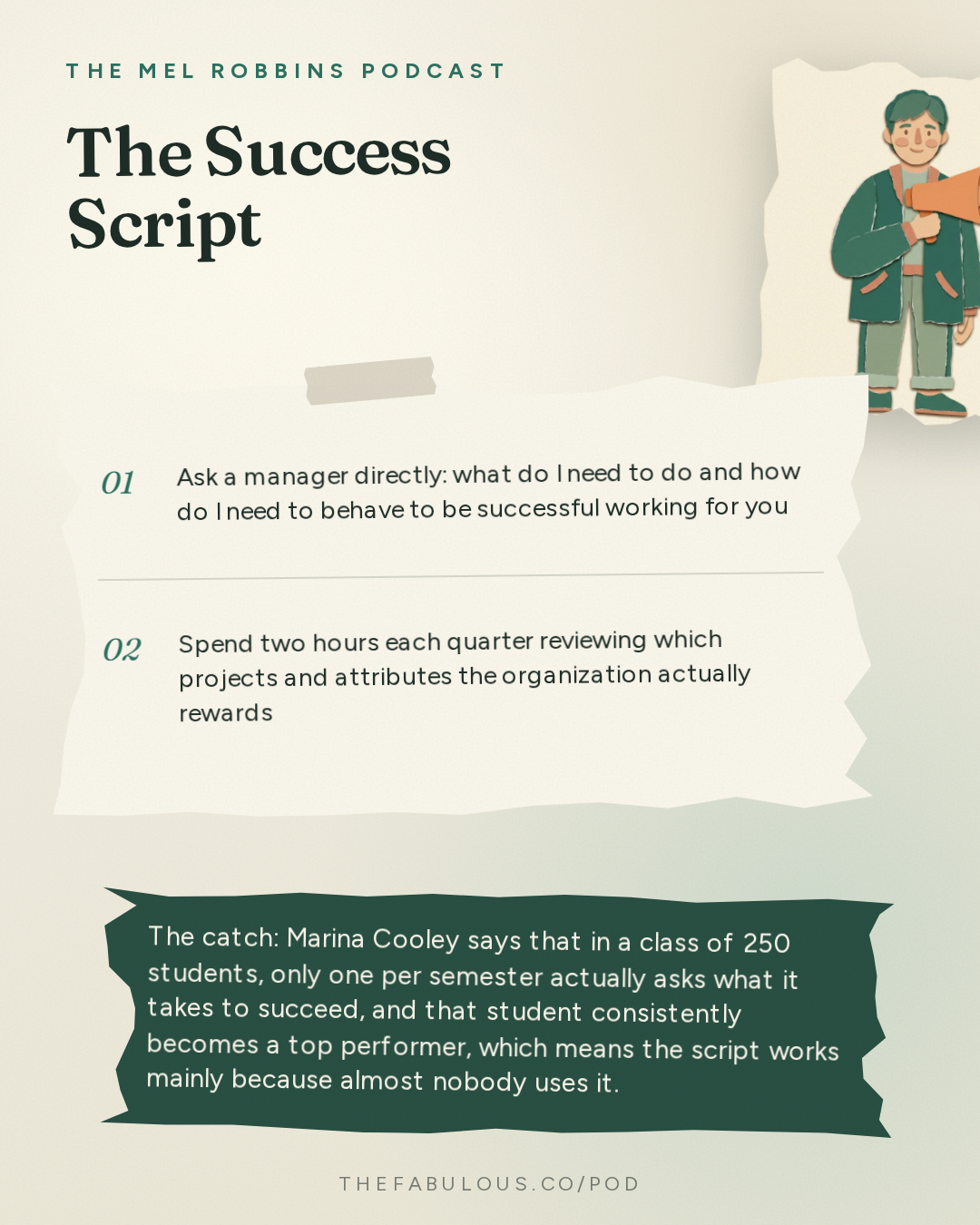
The most useful protocol in the conversation is also the simplest. Cooley describes a recurring scene from her own classroom: once a semester, out of roughly 250 students, exactly one will ask her directly what it takes to earn an A, and what behaviors past top students demonstrated. That student, without fail, becomes one of the top students (44:25). The same question, aimed at a boss instead of a professor, works just as well.
"Tell me exactly what I need to do and how I need to behave in order to be wildly successful." — paraphrased from Marina Cooley [45:03]
Nobody asks this, Cooley says, and then people sit around guessing, and resent a boss for failing to notice work that was never clearly connected to what the boss actually values.
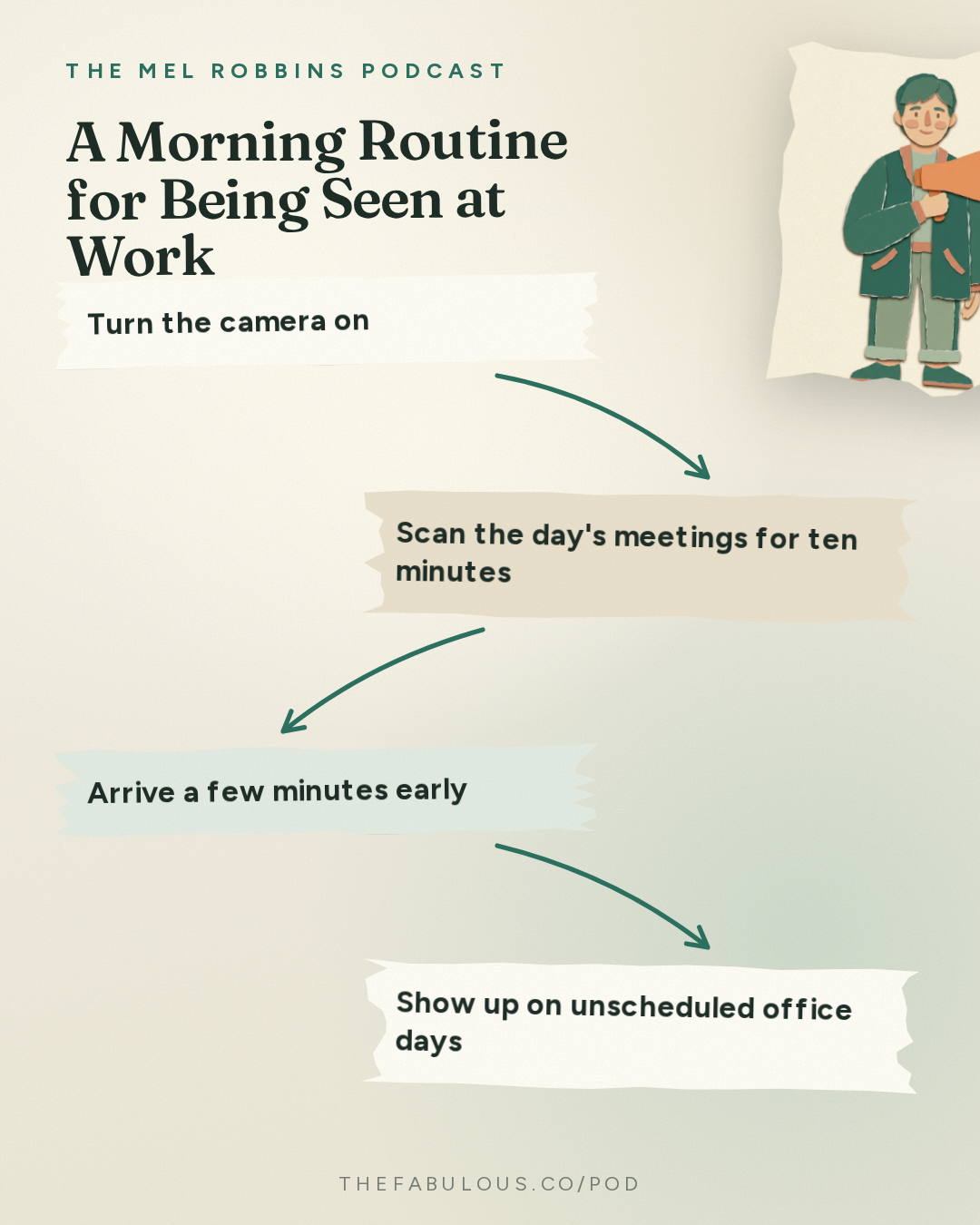
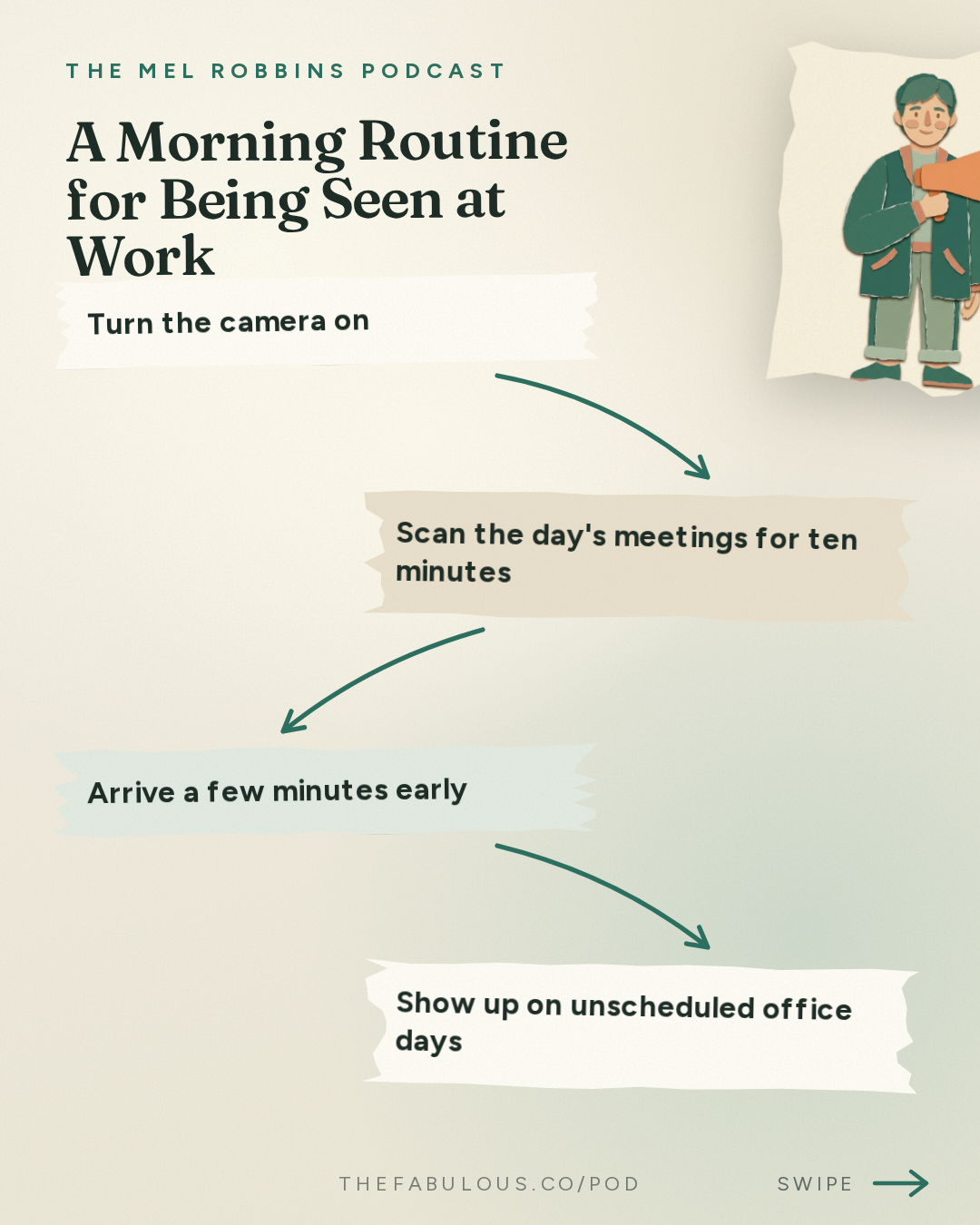
Visibility, in Cooley's telling, is mostly a set of small, repeatable habits rather than a personality trait. Turning a camera on during a virtual meeting is one of them; she estimates that out of 300 people on a large call, perhaps four keep their cameras on (51:10). Arriving a few minutes early to a meeting is another, since senior leaders, who tend to control their own schedules more than junior staff do, often arrive early too, creating a short window for a one-on-one conversation (54:46). A ten-minute morning review of the day's meetings, done to identify who will be in the room and what single relevant point is worth raising, removes the need to manage both the fear of speaking and the content of what to say at the same time (53:04, 59:13). None of this requires charisma. It requires preparation, which Cooley argues functions as a substitute for confidence that has not arrived yet.
The conversation closes on a claim about what remains valuable once artificial intelligence, or AI, absorbs more of the rote parts of work. Cooley's answer is critical reasoning, the capacity to anticipate a problem and work through it before asking for help (62:22). She ties this directly to attention span, arguing that the ability to sit with a problem without reaching for an input is the same muscle that produces real thinking (67:41). Her parting advice, offered almost as an aside, is to take up a hobby, not for relaxation but for practice: trying something new means being visibly bad at it in front of other people, and that rehearsal of looking foolish, she argues, is exactly the skill that makes putting oneself out there at work feel smaller (70:03). The peanut butter company failed. The habit of being willing to try it, and to say so out loud afterward, is what got her hired.
Ask this episode anything
Pod's AI answers from the episode itself, with the minute mark so you can hear it yourself.
Or start with one of these
Ask this episode
Pod's AI listens to the whole episode to answer, and points you to the minute it comes from.
The rest of this answer, and any question after it
Answers come from the episode itself, never from a summary of it.
ContinueKey takeaways
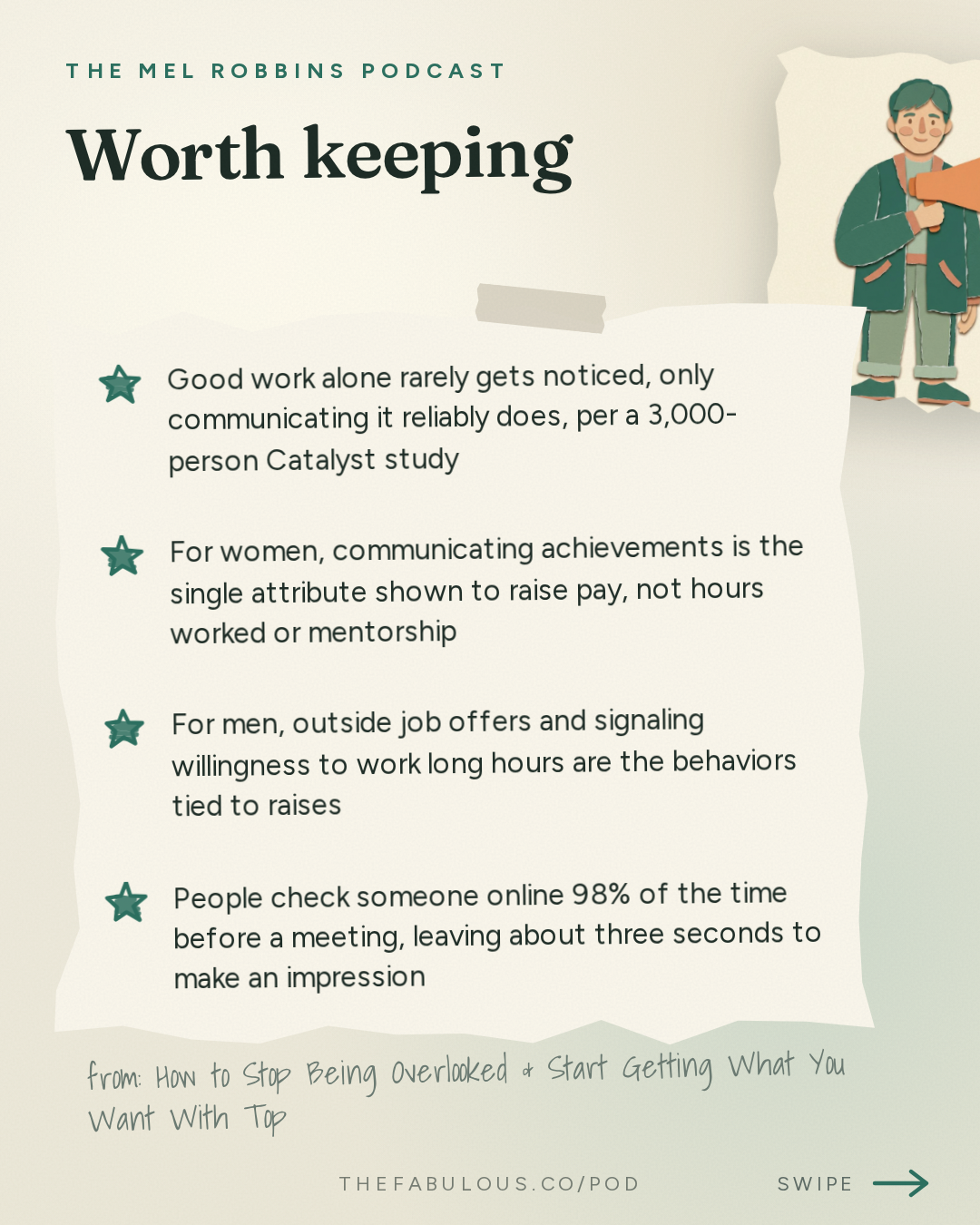
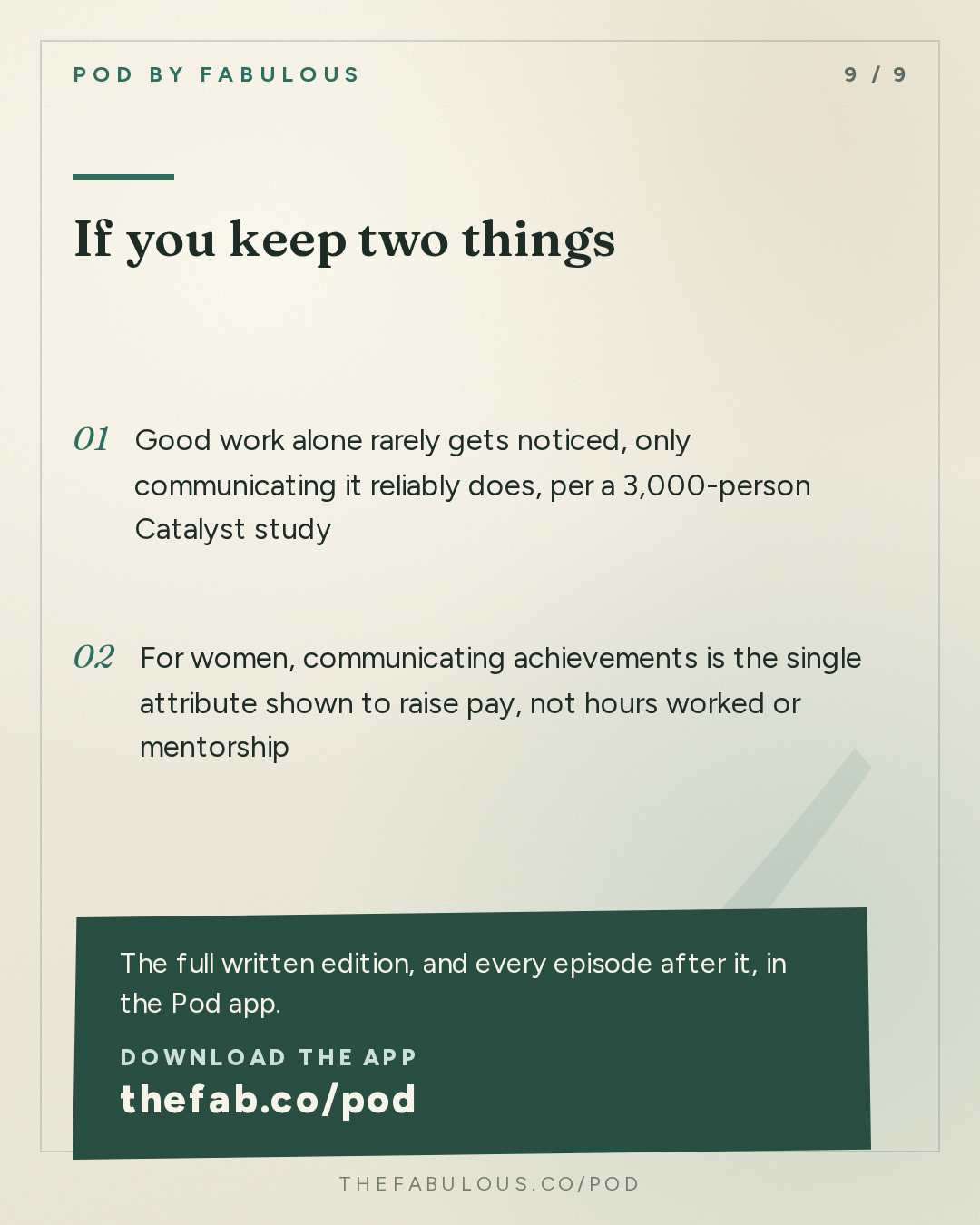
- Good work alone rarely gets noticed, only communicating it reliably does, per a 3,000-person Catalyst study
- For women, communicating achievements is the single attribute shown to raise pay, not hours worked or mentorship
- For men, outside job offers and signaling willingness to work long hours are the behaviors tied to raises
- People check someone online 98% of the time before a meeting, leaving about three seconds to make an impression
- Average job tenure is now three to four years, so Marina Cooley says a portable personal brand matters more than company loyalty
The episode in cards
By the numbers
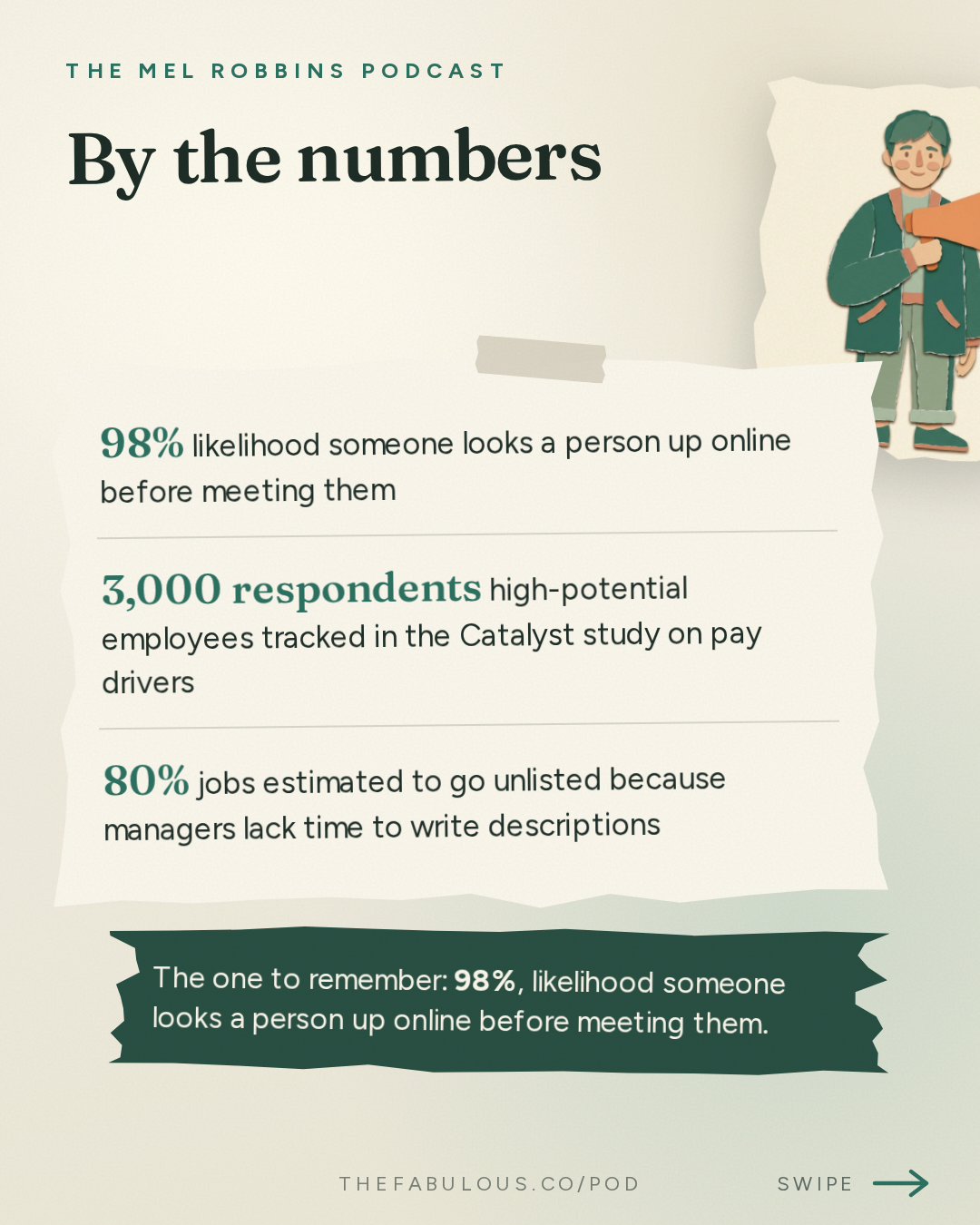
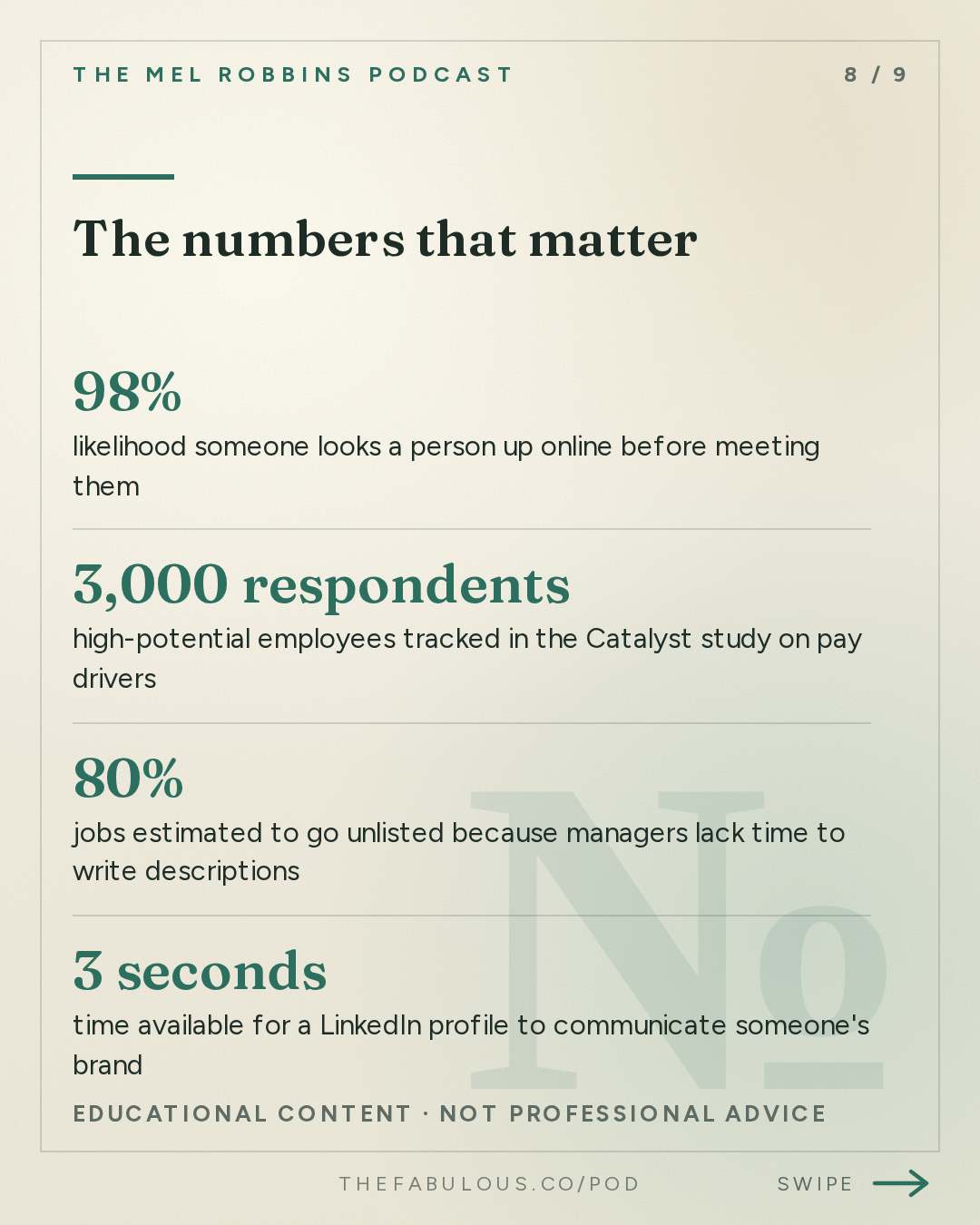
- 98% percent likelihood someone looks a person up online before meeting them
- 3,000 respondents high-potential employees tracked in the Catalyst study on pay drivers
- 80% percent jobs estimated to go unlisted because managers lack time to write descriptions
- 3 seconds time available for a LinkedIn profile to communicate someone's brand
In their words
“Social rejection feels awful. Yes. It's literally the same part of your brain that tells you you're in physical pain”
“We believe that if we do great work that that is enough, and it's not.”
“You need a portable reputation, and that's really where the idea of personal brand comes from.”
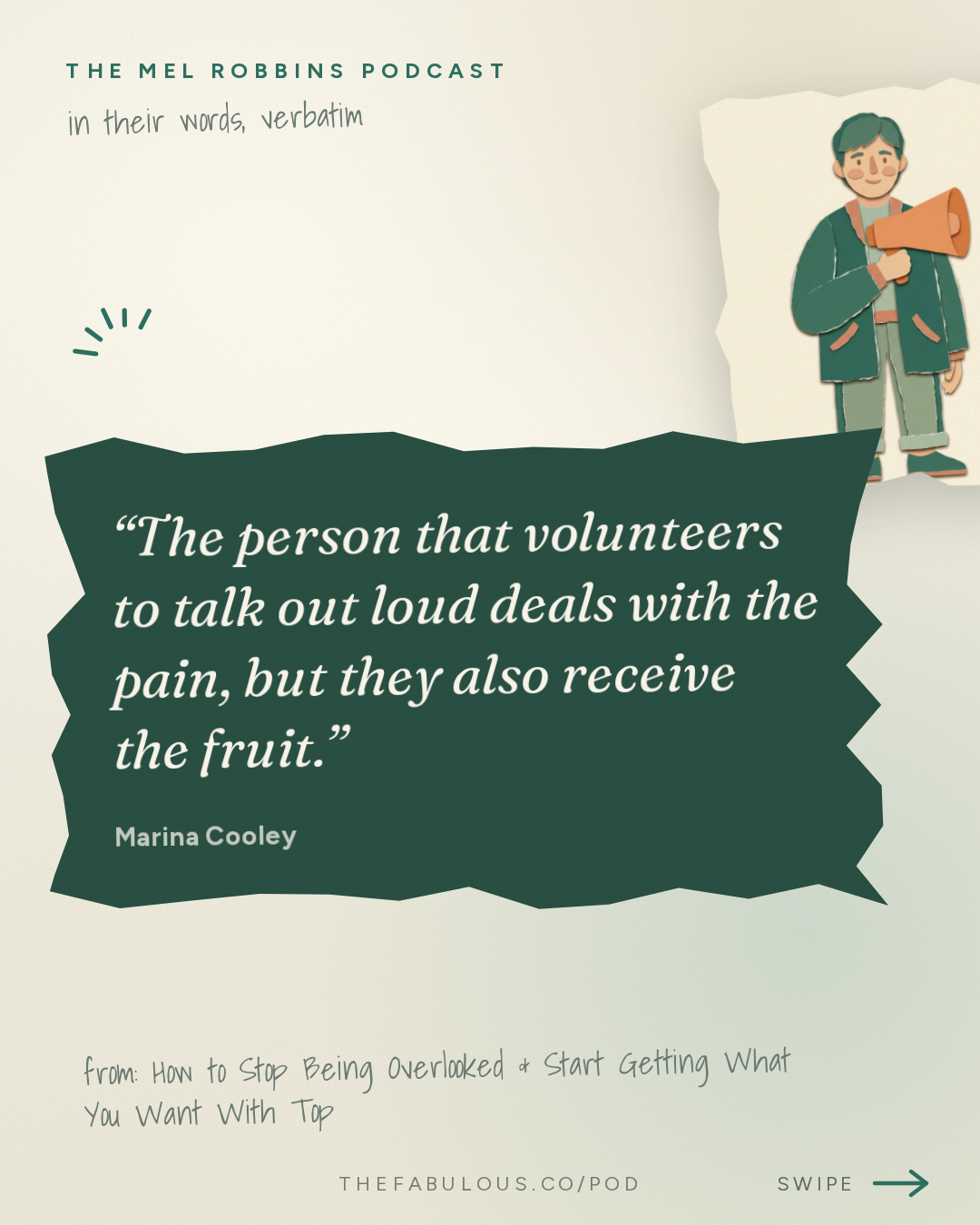
“The person that volunteers to talk out loud deals with the pain, but they also receive the fruit.”
“Practice of looking stupid in front of people will go on to serve you.”
Protocols
-
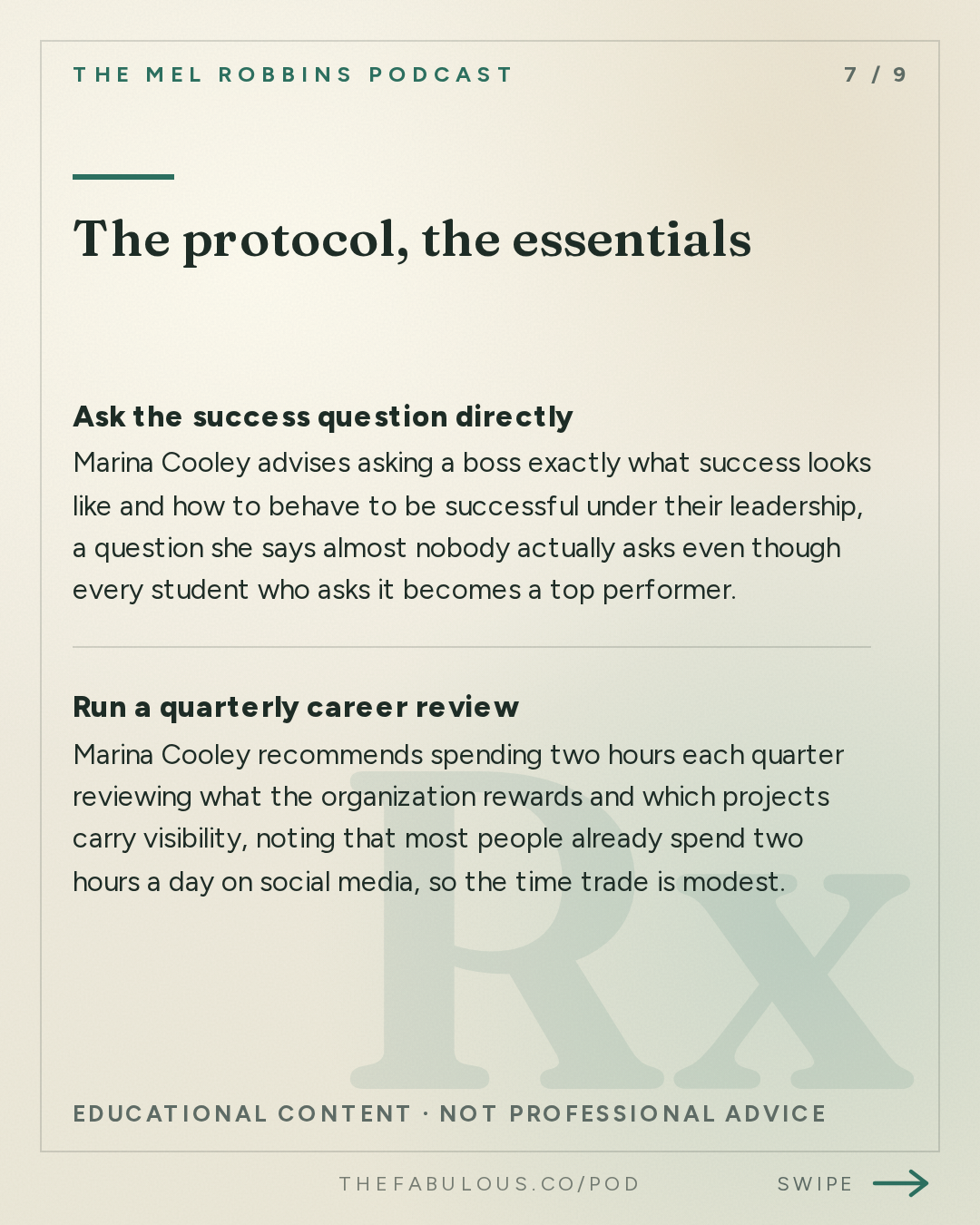
Ask the success question directly
Marina Cooley advises asking a boss exactly what success looks like and how to behave to be successful under their leadership, a question she says almost nobody actually asks even though every student who asks it becomes a top performer.
once, early in a new role
-
Run a quarterly career review
Marina Cooley recommends spending two hours each quarter reviewing what the organization rewards and which projects carry visibility, noting that most people already spend two hours a day on social media, so the time trade is modest.
quarterly
-
Prep ten minutes before the workday starts
Marina Cooley suggests spending ten minutes every morning scanning the day's meeting schedule to identify who will attend and prepare one relevant point to contribute, since preparation removes the need to manage both speaking and fear at the same time.
daily
-
Turn the camera on
Marina Cooley says turning the camera on during virtual meetings is an immediate way to stand out, since she estimates that only about four people out of 300 keep their cameras on during large virtual calls.
every virtual meeting
Questions this episode answers
What actually gets women raises and promotions at work?
A Catalyst study of 3,000 high-potential employees found that communicating achievements already completed is the one attribute that consistently predicts higher compensation for women (35:11). Other common tactics, like mentorship or working long hours, did not show the same consistent effect in this research.
What gets men raises and promotions, according to this research?
The same Catalyst study found two levers mattered most for men: taking outside job offers and using them as leverage internally, and communicating a willingness to work long hours, whether or not those hours were actually logged (34:04).
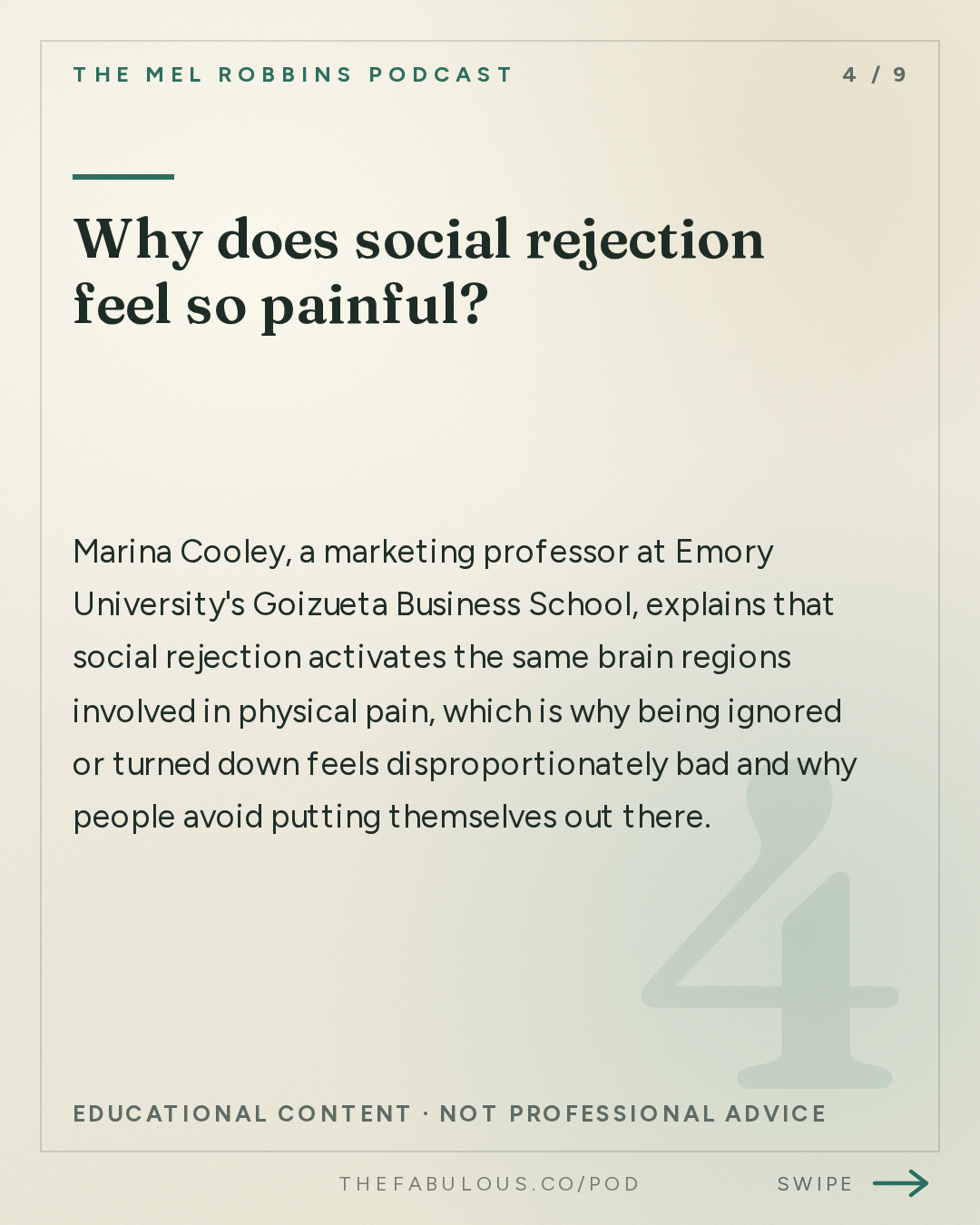
Why does social rejection feel so painful?
Marina Cooley, a marketing professor at Emory University's Goizueta Business School, explains that social rejection activates the same brain regions involved in physical pain, which is why being ignored or turned down feels disproportionately bad and why people avoid putting themselves out there (21:43).
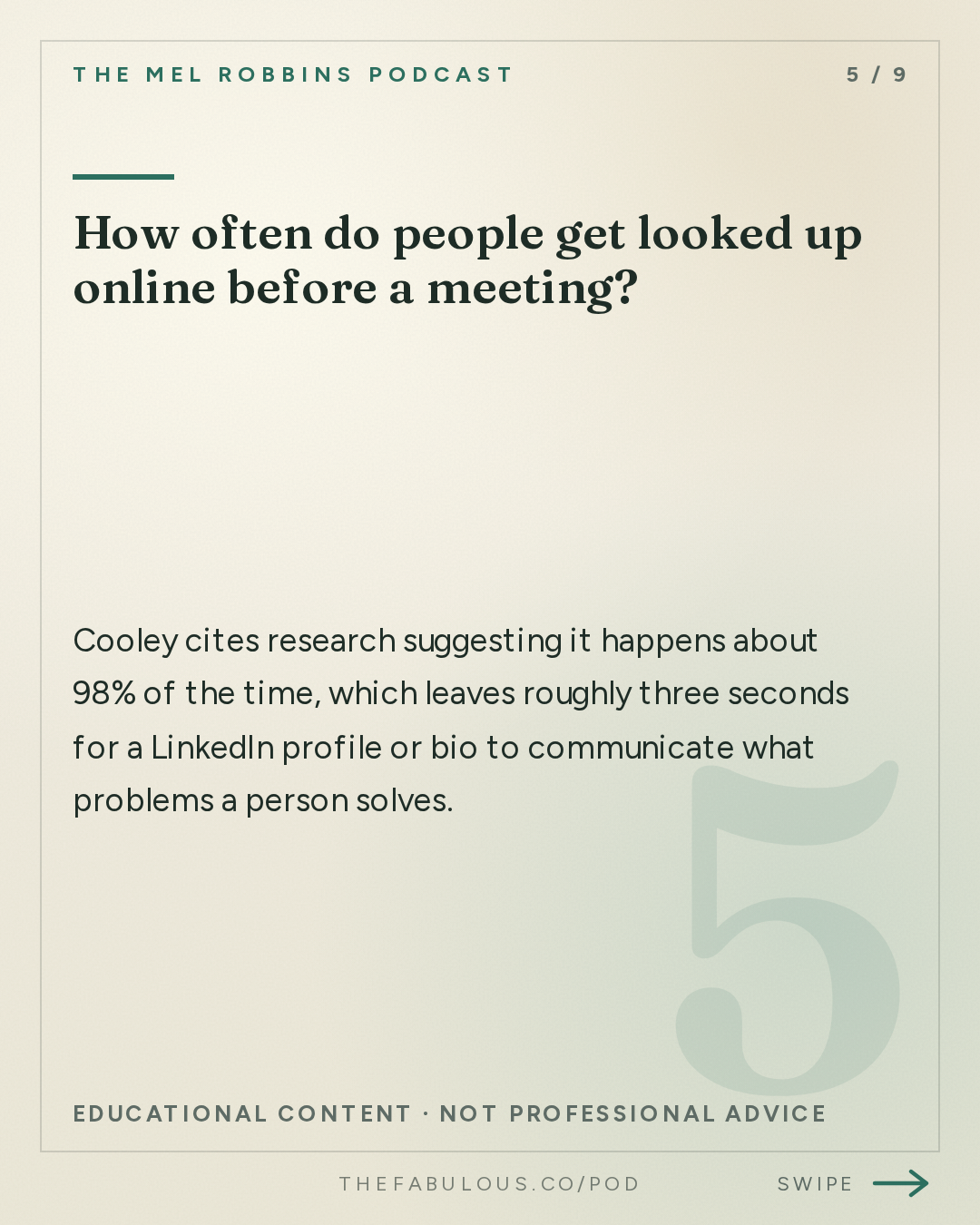
How often do people get looked up online before a meeting?
Cooley cites research suggesting it happens about 98% of the time, which leaves roughly three seconds for a LinkedIn profile or bio to communicate what problems a person solves (42:16, 43:04).
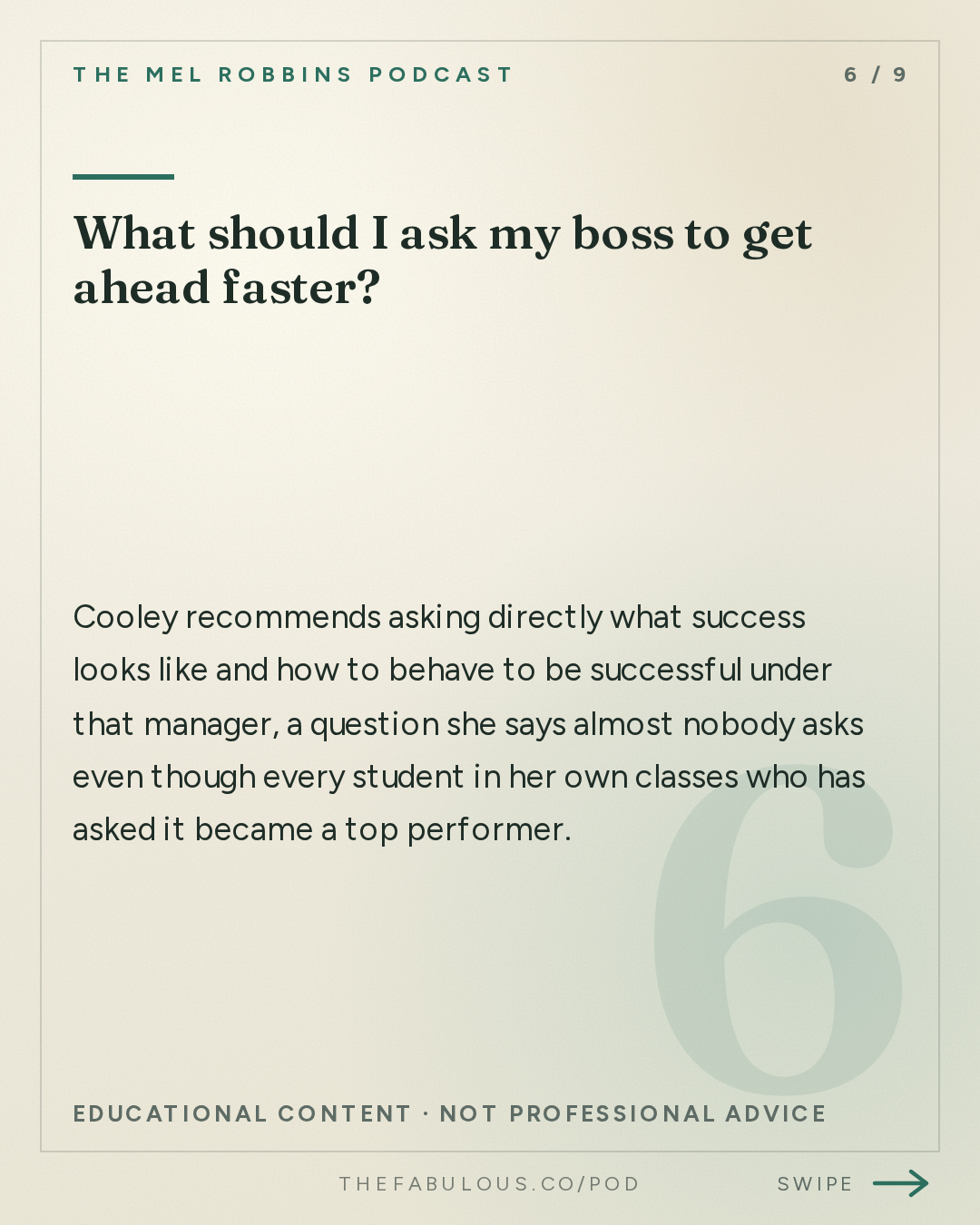
What should I ask my boss to get ahead faster?
Cooley recommends asking directly what success looks like and how to behave to be successful under that manager, a question she says almost nobody asks even though every student in her own classes who has asked it became a top performer (45:03).
What skill will matter most as AI changes jobs?
Cooley argues critical reasoning, the ability to anticipate and solve a problem without immediately asking for help, will be the most valuable and rarest skill, since AI can already handle most tasks that do not require independent thinking (62:22, 66:43).
The full read, in cards
Go deeper
- Catalyst study on high-potential employees and compensation — tracked 3,000 high-potential employees and found gender differences in which behaviors raised pay
Mentioned
Marina Cooley · Emory University · Goizueta Business School · Catalyst · Coca-Cola · LinkedIn
More from this show and category
Male Hormone Health: A Stanford Doctor's Guide
Stanford urologist Michael Eisenberg says male hormone health is a window into long-term health, not just sex or fertility. He covers testosterone's normal range, the lifestyle habits that raise or lower it, erectile dysfunction treatments, and why global sperm counts keep falling, with evidence that an active sex life and a steady partner both predict a longer life.
Mel Robbins' Best Life Advice for Listeners
Mel Robbins turns a full episode of listener questions into concrete rules: move once, eat more protein and fiber, and wait 30 days after a breakup. She covers passion as energy, the 90-second rule for emotional flooding, and a heart-versus-head framework for career and relationship decisions.
John Grisham's Morning Writing Routine Explained
John Grisham credits two unplanned "golden moments" for redirecting his path, first toward law school, then toward writing A Time to Kill and The Firm. He built his career on writing one page a day at 5 a.m. for 30 years, absorbed 28 rejections, and then watched a bootleg manuscript trigger a $600,000 film deal and 52 straight bestsellers.
How to Stop Living Paycheck to Paycheck
Vivian Tu, a former JP Morgan trader known online as your rich BFF, argues that living paycheck to paycheck is a system problem, not a willpower problem. She lays out a pay-yourself-first savings rule, the avalanche method for debt, a formula for calculating financial independence, and why automating money beats relying on discipline.
