
Vinh Giang's Guide to Confident Communication
If You Get Anxious Around Other People, You Need to Hear This
▶ Listen to the full episode More from The Mel Robbins Podcast
The brief
Communication coach Vinh Giang coaches three podcast staffers live to tame shaky voices, stop interrupting, and speak up in groups. His toolkit: star jumps to burn adrenaline, a four-archetype vocal scale from Friend to Coach, and games that force listening before responding.
Scott has photographed sold-out stadium concerts and spent weeks on tour with Mel Robbins' live show, yet put him in front of a dozen strangers and ask him to arrange them for a group photo, and his hands start to shake. He told communication coach Vinh Giang as much, describing a mind that goes jumbled and a body that sweats before he even opens his mouth: "it doesn't matter who it is, like, it just happens to everybody that I talk to" (07:52).
Giang's diagnosis was blunt. Nobody ever taught Scott, or most people, how to do this. "It's a skill we've never been taught," he said, noting that the one day a year a child gets to practice public speaking, at school, is usually the day that child fakes a stomach ache to stay home (04:36). If communication is a skill rather than a fixed trait, it can be drilled, the way a jump shot can be drilled. Over the course of an hour, Giang coached three staff members live, and the result is less a pep talk than a set of mechanisms: what the body is doing when the voice shakes, what a tone of voice actually signals, and why interrupting someone has almost nothing to do with how much a person cares.
The Voice Has a Volume Knob
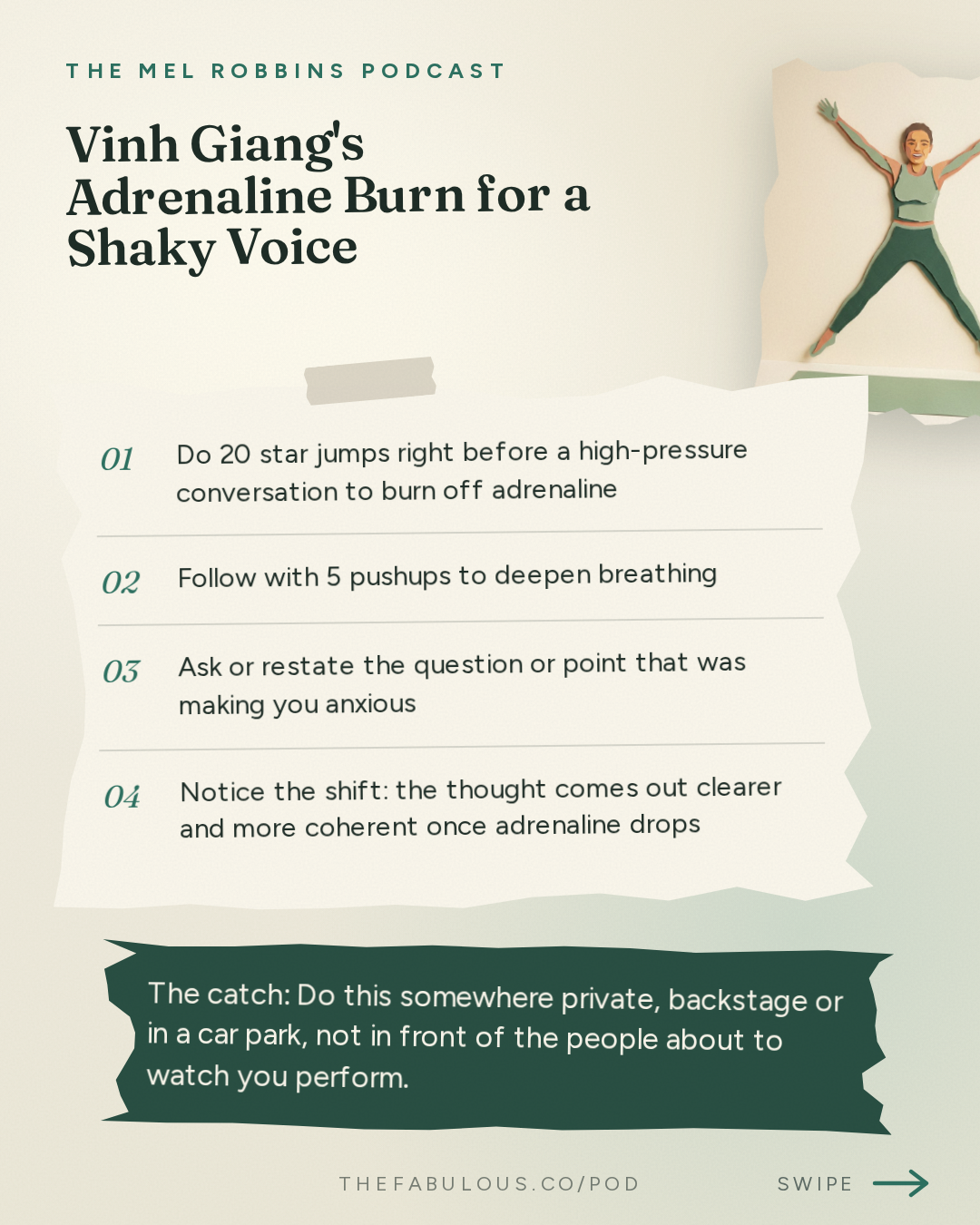
Before Giang touched Scott's vocal technique, he addressed Scott's body. "One of the first things we gotta do is we gotta get rid of the adrenaline," he said, and the two of them dropped into twenty star jumps, followed by five pushups, on the spot (08:04, 08:16, 08:54). The logic is physiological, not motivational. A stressful situation, a senior client watching, a room of unfamiliar faces, triggers an adrenaline surge, and that surge produces the shake and the racing thoughts. Brisk exercise burns off that adrenaline, and it has a second effect: it forces deeper breathing, and deeper breathing clears the mental fog that makes people ramble (09:12, 09:31). The test came immediately. Giang asked Scott to repeat the question he had asked minutes earlier, and this time it came out, in Giang's words, clear, concise, and coherent, where before it had wandered through several thoughts at once (09:54). Nothing about Scott's vocabulary or confidence had changed. His adrenaline had simply been spent elsewhere.
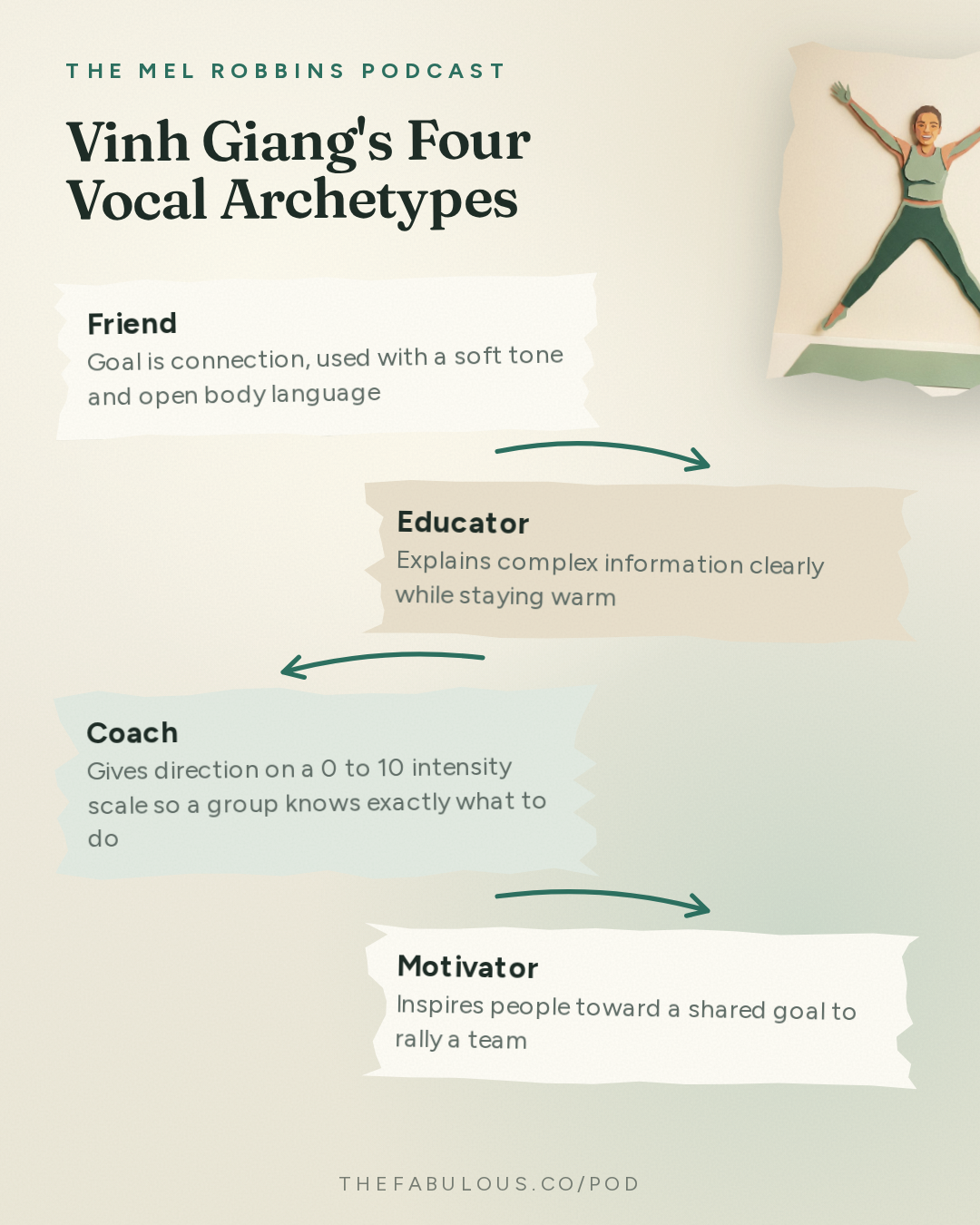
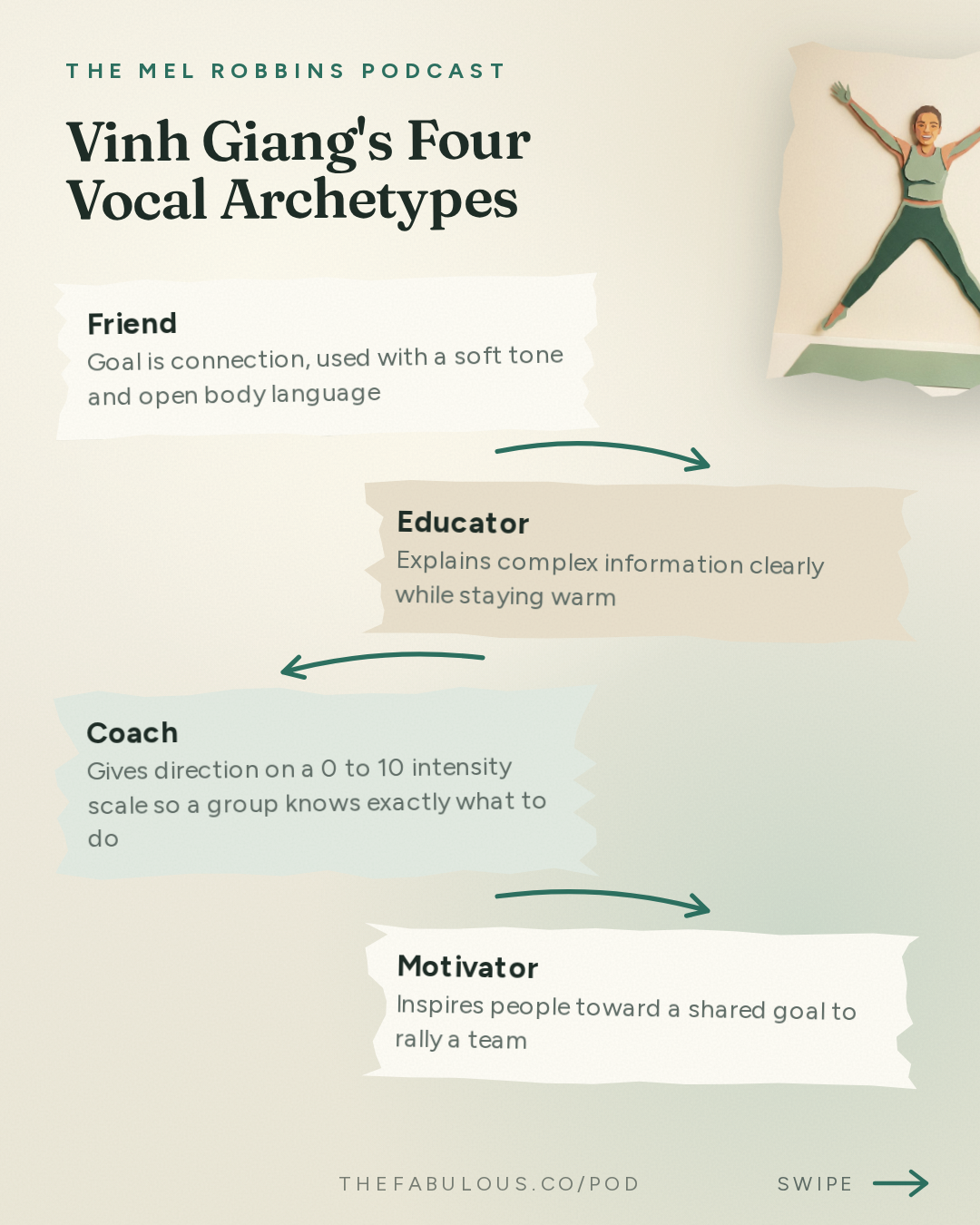
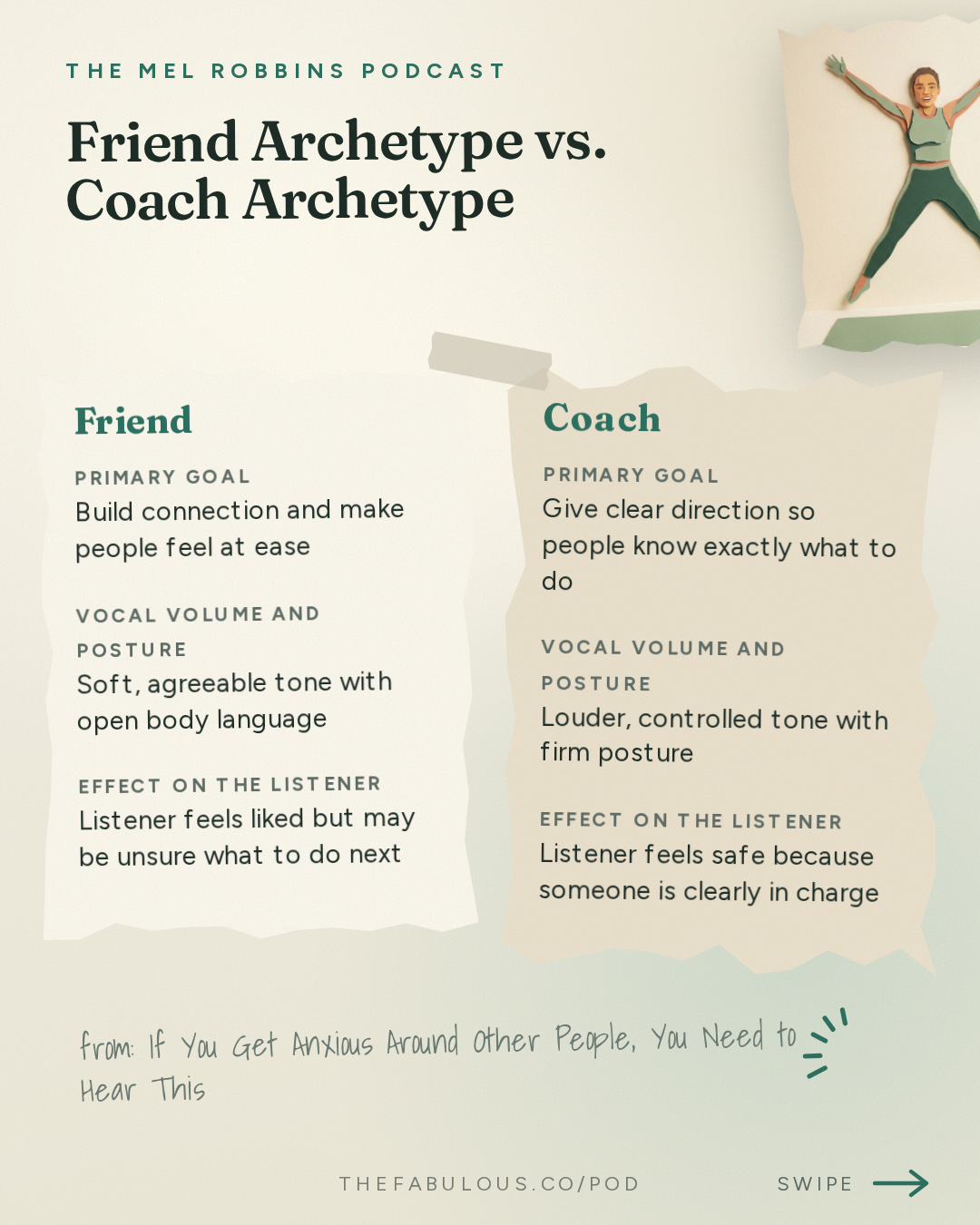
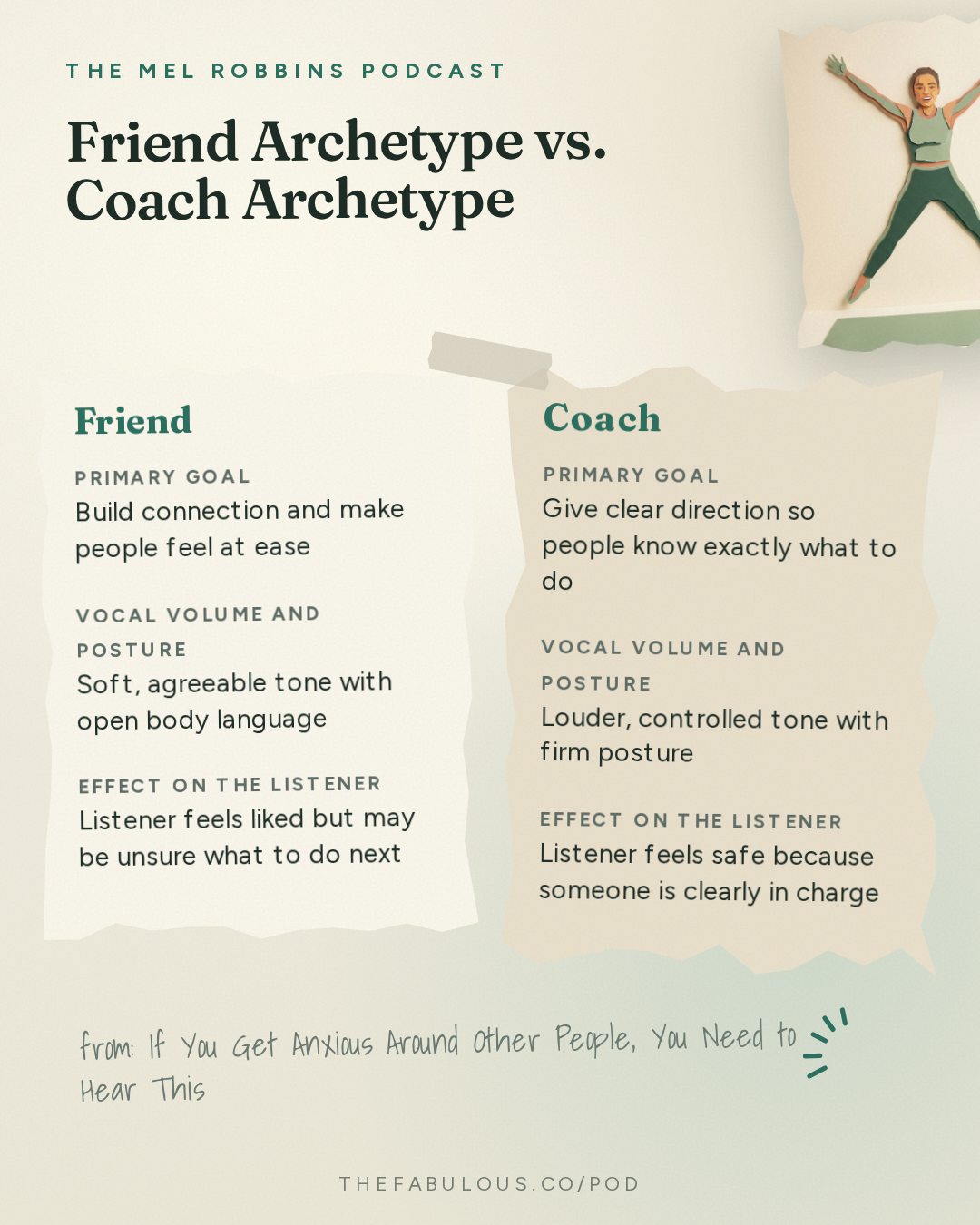
With the shaking handled, Giang turned to tone, using a framework he calls vocal archetypes. He names four: Friend, whose goal is connection, Educator, who explains, Coach, who directs, and Motivator, who inspires (13:05, 17:23). Scott, Giang observed, lives almost entirely in Friend and occasionally Educator, which makes him warm and easy to work with but leaves him with no gear to shift into when a room full of people needs direction instead of reassurance (13:05, 13:28). Giang scores each archetype on a zero-to-ten scale of intensity, so Coach does not have to mean a drill sergeant. A ten out of ten coach barking that a photo will never get taken is a caricature nobody wants to become (14:05). A six or seven, firm and specific, is usually what a room actually needs.
Giang then asked Scott to direct him into a chair for a photo, and the first attempt was too soft to register as direction at all. Only when Scott raised his volume and gave specific instructions did Giang, playing the subject being directed, respond with relief.
"The moment you went loud, you controlled it, I felt safe again." Vinh Giang [16:27]
That line captures the mechanism. People briefly in charge of a room are not looking to be coddled. They are looking for someone to remove the ambiguity of what happens next. Softness, however kind, reads as uncertainty, and uncertainty is what makes people anxious. Giang goes further: staying exclusively in Friend makes it hard for anyone to take a person seriously in a professional role, because every instruction arrives hedged, with no clarity for anyone to follow (16:45, 17:00). Mel Robbins had told Scott earlier, more pointedly, why this matters for someone with real expertise who tends to downplay it:
"It is disrespectful to you to not insert yourself, to not say there's a better way to do this." Mel Robbins [11:49]
Listening Is the Harder Skill
The second half of the hour moved from speaking to listening, and the case study was Janaya, a video editor on the podcast's team who described herself as a professional yapper (22:53). Her habit: cutting people off mid-sentence, often with the people she loves most. Her stated fear was not rudeness. It was that she would forget her own point if she waited (22:53). Giang's response reframes the whole problem.
"Most yappers or interrupters have no idea they're doing it." Vinh Giang [23:48]
The fact that Janaya noticed the pattern in herself, he said, already put her ahead of most people who do this. His fix is almost mechanical: before sharing a thought, ask a follow-up question about whatever the other person just said, and only after that question is answered does a person earn the right to speak about themselves (24:51). He demonstrated it live, asking Janaya about her fears around AI tools in video editing, and the questions pulled an answer out of her that she said she would not have reached on her own, telling him she felt closer to him afterward (25:35, 25:55).
Giang attaches a rough dose to this: hold space for another person for three to five minutes before contributing, because conversations that skip this step tend to stay one layer deep, a volley of matching facts with nobody going further (26:43, 27:03). To make the skill concrete, he introduced a drill called Last Word, Last Letter: a listener may only start composing a response after the speaker finishes a sentence, and the response must begin with a word starting with the last letter of the speaker's final word (27:43). Janaya rated the exercise a seven out of ten for difficulty, a useful data point for anyone who assumes listening is passive (29:46). The payoff, in Giang's telling, is that whatever a person has to say after three layers of real listening is better than the thing they were impatient to blurt out thirty seconds earlier (30:29, 30:46).
The same principle scales up to interviewing and to group settings. "Don't jump in straight away because that pause might lead to more," Giang told Robbins, describing the discomfort of silence right after someone finishes speaking as the exact moment that often produces the best material (35:55).
The last guest, Jenny, a social media creator, described a different problem: confident one-on-one, she shrinks the moment a conversation becomes a group, afraid that a rejected idea means a rejected self (38:27, 38:51). Giang's fix reframes what counts as a contribution. Joining a group conversation does not require a new topic. It is enough to ask a question about the topic already on the table, which gets a person inside the conversation before they have to say anything about themselves at all (40:22). He ties this to improv, where neither participant knows what the other will say next, and treats that uncertainty as the actual skill being trained (41:46). To build it, he prescribed, half-joking, ten short-form improv classes, on the logic that improv forces a person to generate a response on the spot, over and over, until the unknown stops feeling dangerous (41:46).
What ties all three sessions together is the refusal to treat any of this as fixed personality. Scott's shake, Janaya's interruptions, and Jenny's group freeze are, in Giang's frame, trained behaviors that can be retrained. He closes with an image: he could choose, as the author of his own book, when one chapter ends and the next begins, and while he could not control everything that happened to him, he could control what the story meant.
"Take your pen back. Start writing your story because you are the author of your own story." Vinh Giang [45:44]
It is a tidy line to end an hour of live coaching on, but the hour itself argued for something more specific than inspiration. The body can be reset with twenty star jumps. A tone of voice can be dialed from zero to ten. A habit of interrupting can be replaced with one extra question. None of it requires becoming a different person. It requires noticing which gear is stuck, and practicing the next one.
Ask this episode anything
Pod's AI answers from the episode itself, with the minute mark so you can hear it yourself.
Or start with one of these
Ask this episode
Pod's AI listens to the whole episode to answer, and points you to the minute it comes from.
The rest of this answer, and any question after it
Answers come from the episode itself, never from a summary of it.
ContinueKey takeaways
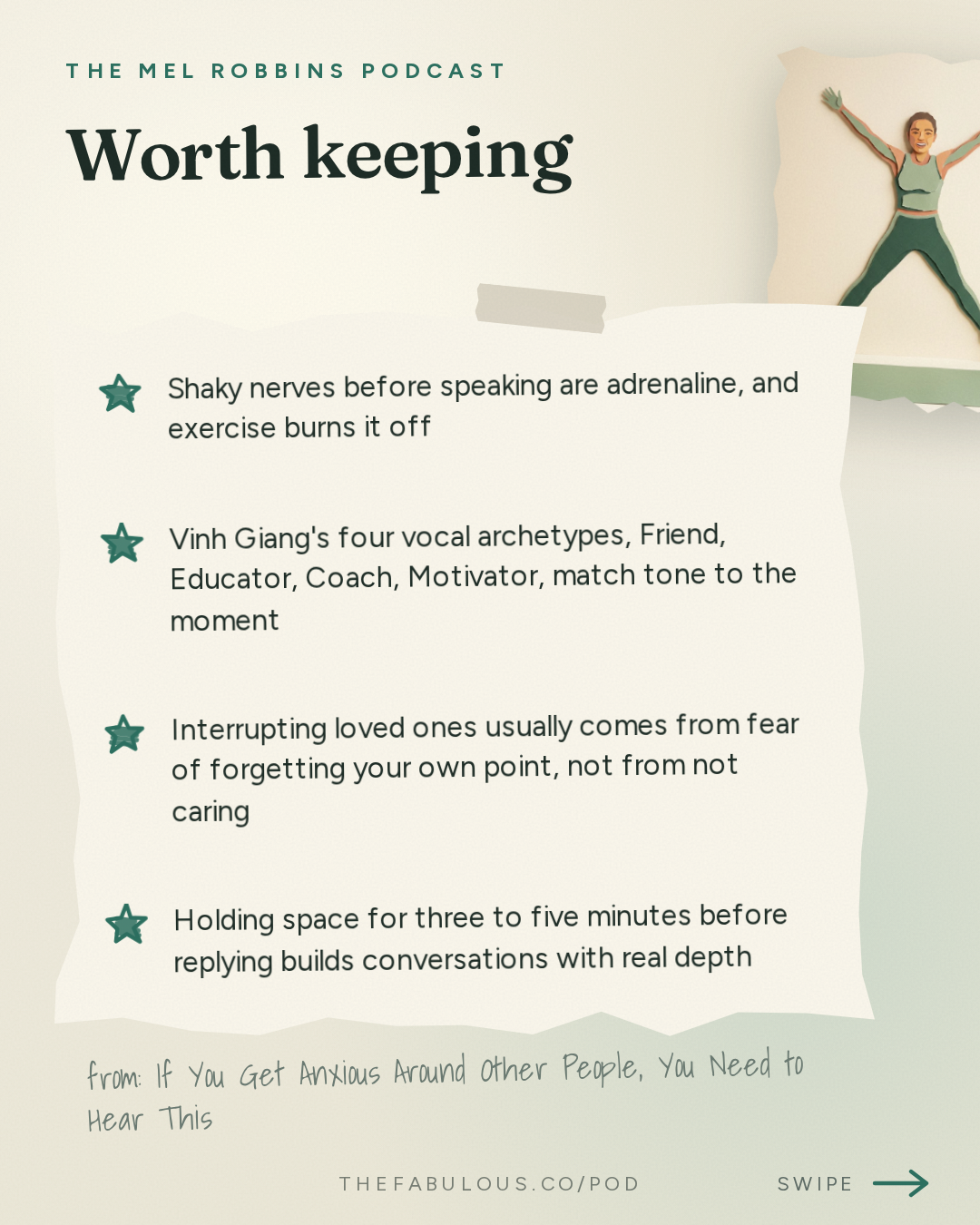
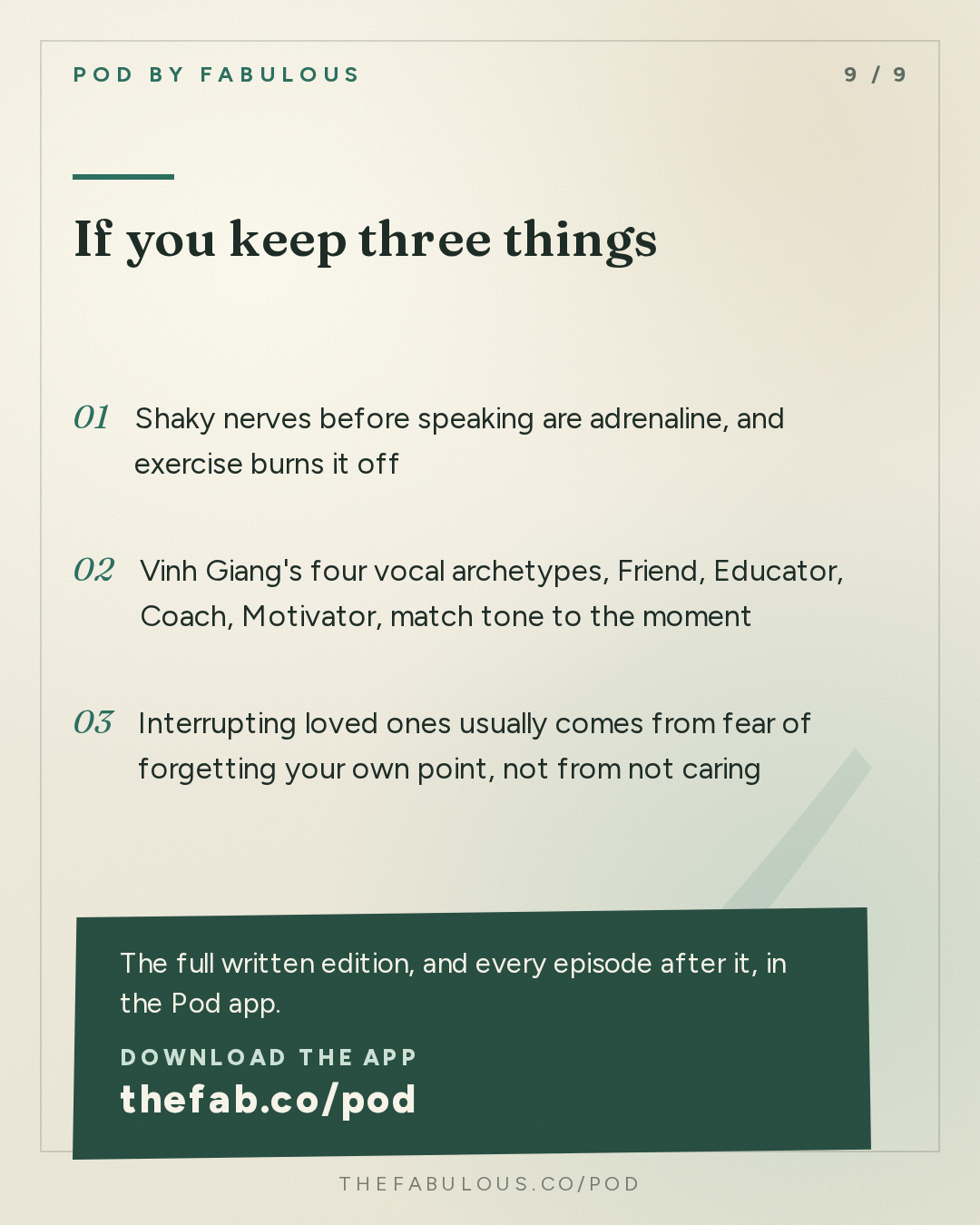
- Shaky nerves before speaking are adrenaline, and exercise burns it off
- Vinh Giang's four vocal archetypes, Friend, Educator, Coach, Motivator, match tone to the moment
- Interrupting loved ones usually comes from fear of forgetting your own point, not from not caring
- Holding space for three to five minutes before replying builds conversations with real depth
- Joining a group works best by asking about its existing topic instead of starting a new one
The episode in cards
By the numbers
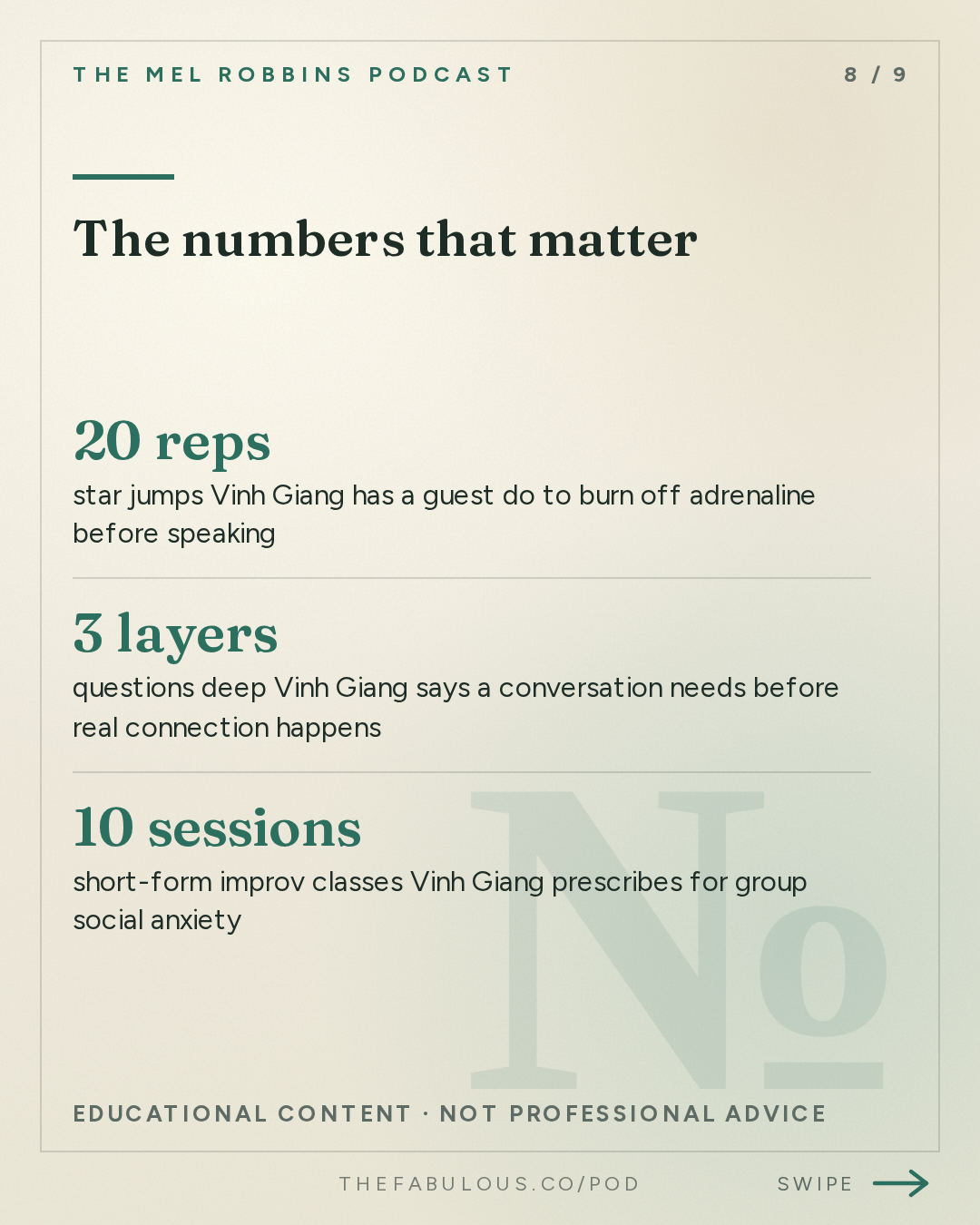
- 20 reps star jumps Vinh Giang has a guest do to burn off adrenaline before speaking
- 3 layers questions deep Vinh Giang says a conversation needs before real connection happens
- 10 sessions short-form improv classes Vinh Giang prescribes for group social anxiety
In their words
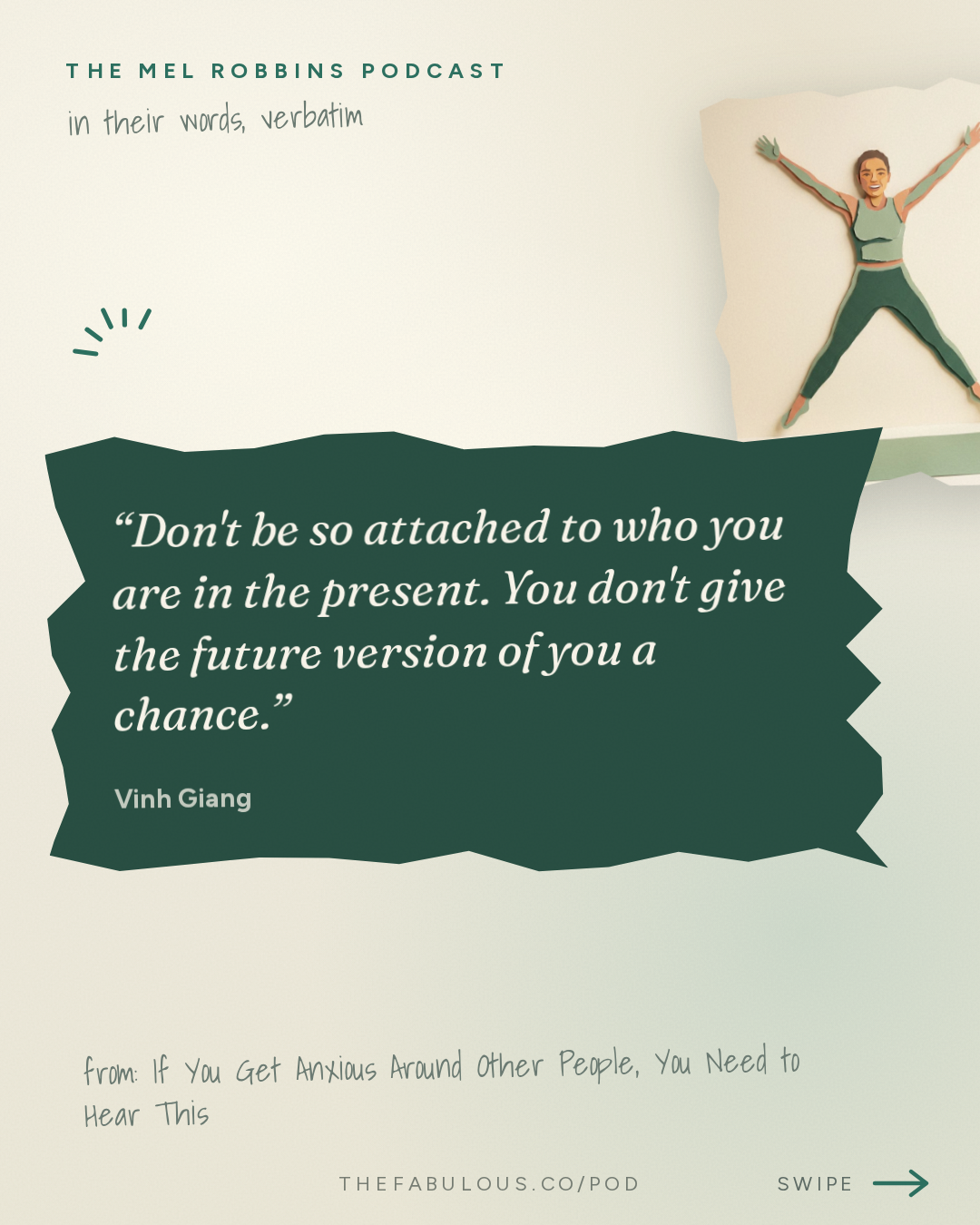
“Don't be so attached to who you are in the present. You don't give the future version of you a chance.”
“It is disrespectful to you- Mm-hmm ... to not insert yourself, to not say there's a better way to do”
“Most yappers or interrupters have no idea they're doing it.”
“The moment you went loud, you controlled it, I felt safe again.”
“Take your pen back. Start writing your story because you are the author of your own story.”
Protocols
-
Burn off adrenaline before you speak
Vinh Giang has people do 20 star jumps followed by 5 pushups right before a high-pressure conversation, because brisk exercise clears adrenaline and forces deeper breathing, which reduces shaking and mental fog; he adds that this should be done privately, backstage or in a car park, so it does not look strange to the people about to watch.
Before any situation that triggers nervous shakiness
-
Ask before you speak
Vinh Giang tells chronic interrupters to ask a follow-up question about whatever the other person just said and to hold off on sharing their own thought until that question is answered, and he recommends holding that space for three to five minutes before contributing.
In every close conversation where interrupting is a habit
-
Play Last Word, Last Letter to practice real listening
Vinh Giang has people respond to a sentence only after it finishes, starting their reply with a word that begins with the last letter of the speaker's last word, which forces the listener to wait for the whole sentence instead of planning a response halfway through.
As a practice drill with a partner
-
Enter a group by asking about its topic
Vinh Giang tells people who shrink in groups to join the conversation already happening by asking a question about that topic instead of waiting to introduce something new about themselves, which gets them inside the conversation before they have to contribute an opinion.
Whenever joining a group conversation feels intimidating
-
Take short-form improv classes
Vinh Giang prescribes 10 short-form improv classes for people who freeze in group settings, because improv repeatedly forces a person to generate a response on the spot without knowing what the other person will say, which builds comfort with social uncertainty.
10 sessions as a starting course
Questions this episode answers
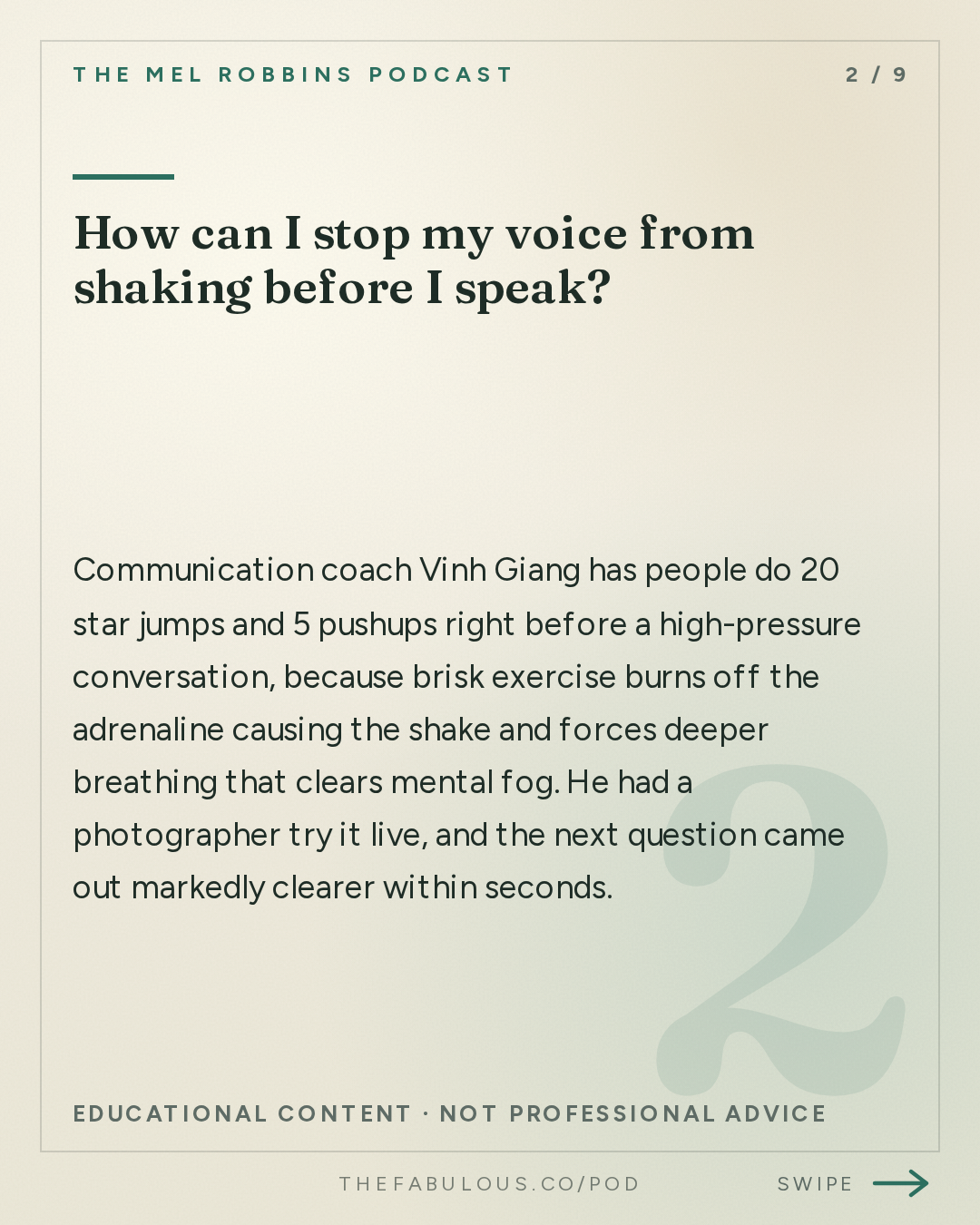
How can I stop my voice from shaking before I speak?
Communication coach Vinh Giang has people do 20 star jumps and 5 pushups right before a high-pressure conversation, because brisk exercise burns off the adrenaline causing the shake and forces deeper breathing that clears mental fog (08:16). He had a photographer try it live, and the next question came out markedly clearer within seconds (09:54).
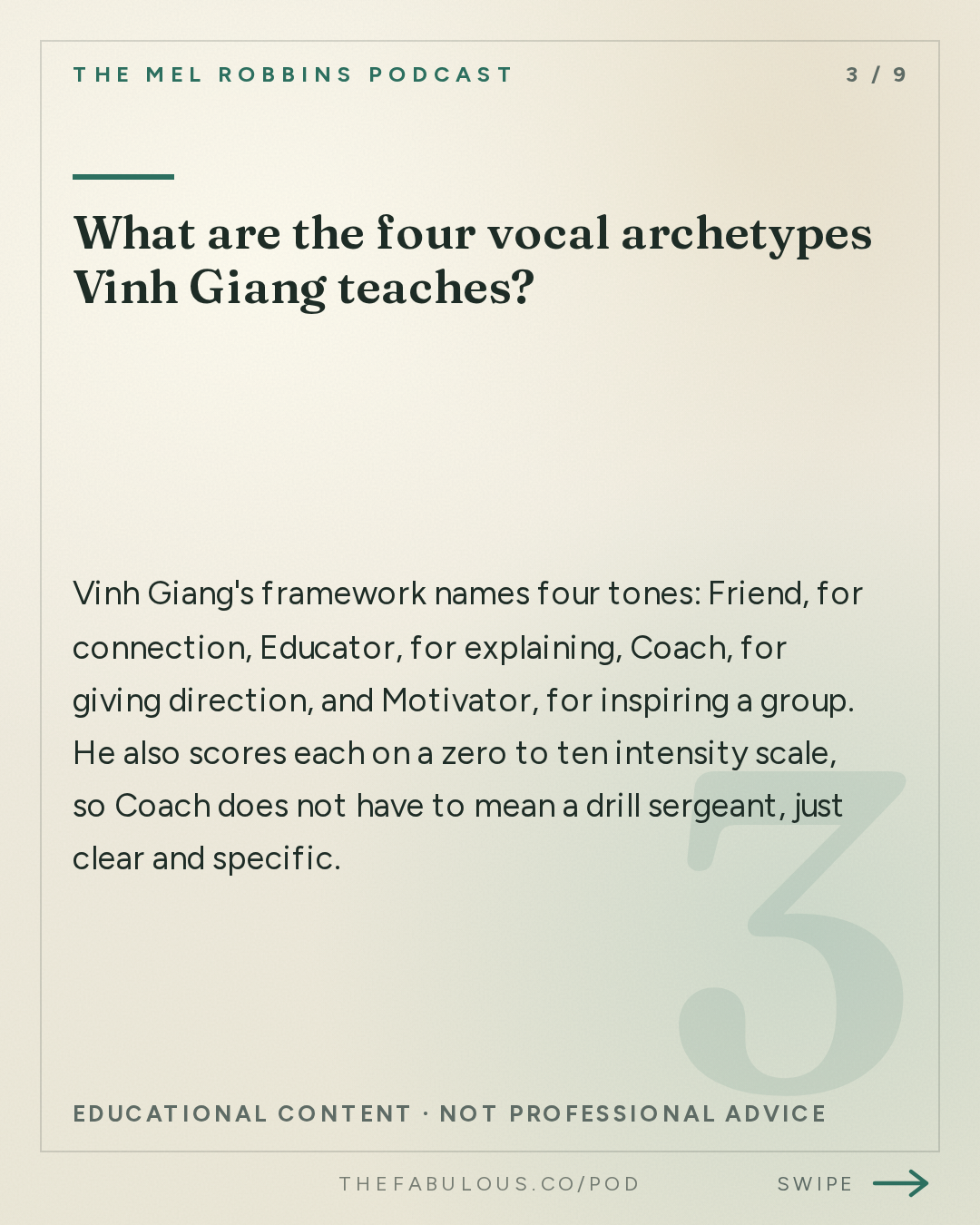
What are the four vocal archetypes Vinh Giang teaches?
Vinh Giang's framework names four tones: Friend, for connection, Educator, for explaining, Coach, for giving direction, and Motivator, for inspiring a group (13:05). He also scores each on a zero to ten intensity scale, so Coach does not have to mean a drill sergeant, just clear and specific (14:05).
How do I stop interrupting people I care about?
Vinh Giang's fix is to ask a follow-up question about whatever the other person just said and wait to answer that before sharing a personal thought, holding that space for three to five minutes (24:51, 26:43). He notes that most interrupters, like podcast team member Janaya, have no idea they are doing it until someone points it out (23:48).
How do I join a group conversation when I feel anxious?
Vinh Giang advises asking a question about the topic already being discussed instead of waiting to introduce something new about yourself, which gets a person inside the conversation before they have to offer an opinion (40:22). He ties the skill to improv, where not knowing what comes next is the whole point (41:46).
Can improv classes actually reduce social anxiety?
Vinh Giang's opinion is that short-form improv works because it repeatedly forces a person to respond on the spot without a script, which builds tolerance for social uncertainty, and he recommends 10 classes as a starting dose (41:46). This reflects his coaching opinion rather than a cited clinical study.
The full read, in cards
Go deeper
- Before We Forget How to Connect — Vinh Giang's bestseller laying out the communication frameworks used in this coaching session
Mentioned
Vinh Giang · Mel Robbins · Before We Forget How to Connect · David Goggins · Scott · Janaya · Jenny
More from this show and category
Vinh Giang's 9 Habits for Clearer Speaking
Communication expert Vinh Giang says insecurity in speech comes from rambling, filler words, and non-functional body language, not a lack of things to say. He teaches a 3-2-1 framework for structuring answers, a 3 to 5 second pause before tough questions, and control of posture, volume, and vocal melody so speakers sound, then feel, confident.
PMOS vs PCOS: New Diagnosis Criteria Explained
OBGYN Dr. Thais Aliabadi argues that PCOS (now renamed PMOS), endometriosis, and PMDD are routinely misdiagnosed as anxiety or stress. She traces each to a physical mechanism, insulin resistance, immune dysfunction, hormone-sensitive brain circuits, and gives exact diagnostic criteria and treatments, including a new blood test and a window-dosed SSRI protocol.
Tyrer-Cuzick Breast Cancer Risk Calculator Explained
OB-GYN Dr. Thais Aliabadi shows how a free two-minute risk calculator and annual pelvic ultrasounds can catch breast and ovarian cancer early. She shares her own breast cancer diagnosis, explains the Tyrer-Cuzick tool, genetic testing by age 25, fallopian tube removal to cut ovarian cancer risk, and decade-by-decade screening protocols for heart disease and dementia.
An 89-Year-Old's Don't-Wait Life Advice
Judy Robbins, Mel Robbins' 89-year-old mother-in-law, decided to backpack across Europe for a year starting at 90, inspired by a friend's sudden death at 62. The episode argues that waiting for comfort or permission is the real risk, since good health and time are not guaranteed, and that staying curious about others keeps a person interesting at any age.
