
Young Pueblo on How to Find Inner Peace Today
How To Love Your Life (Even When The World Feels Scary AF)
▶ Listen to the full episode More from The Liz Moody Podcast
The brief
Meditation teacher and author Diego Perez, known as Young Pueblo, argues that inner peace is a trained skill, not a lucky mood, built through slowing down, loving kindness practice, and treating change as the one constant worth befriending (47:23, 51:59).
During the French Revolution, a group of people fought for a genuinely beautiful idea: real republics, real rights. They won. Then the guillotine came out, and tens of thousands of people were killed in the years that followed. Diego Perez, the meditation teacher and bestselling author known by his pen name Young Pueblo, uses this as his go-to example of what happens when power meets an unexamined mind. "Power will expose the roughest parts of the ego," he says (08:32). "If you don't deal with that inner darkness... if you win, you're going to recreate the thing that you used to hate." It is a strange, slightly chilling story, but it sets up the whole episode's argument: the work that happens inside a person is not separate from the work that happens in the world. It is the thing that decides whether the second kind of work helps or harms.
Perez has spent more than 10,000 hours in meditation and sold over two million copies of his books, including Lighter and How to Love Better (00:00). On Liz Moody's podcast, he is asked a blunt version of a question a lot of people are quietly asking themselves: is it even possible to feel okay right now, given the news, the climate reports, the algorithms, the general sense that everything is on fire? His answer starts with something unglamorous. Before any of the inner work is possible, he says, a person needs clean water, food, a roof, and relative safety (00:42). Peace of mind is not purely a mental trick; it sits on top of a physical floor. For anyone who has that floor, though, he thinks the rest is trainable, not a matter of temperament or luck.
The first tool he offers is small and specific. When he reads about something terrible happening somewhere he has no direct power over, he practices metta bhavana, the Buddhist loving kindness meditation: directing a wish for safety and peace toward people he will never meet (05:28). He is careful not to oversell it. It might not change anything measurable. But Liz Moody pairs it with a line that does the real work of the segment: "Action is the antidote to anxiety" (06:13). The idea is that anxiety often comes from feeling powerless over something huge, and the fix is not forcing yourself to feel calm about the huge thing, it is finding the small thing inside your actual reach and doing it, whether that is a donation, a vote, a phone call to a representative, or, failing all of that, a few minutes of directed goodwill.
Getting out of automatic
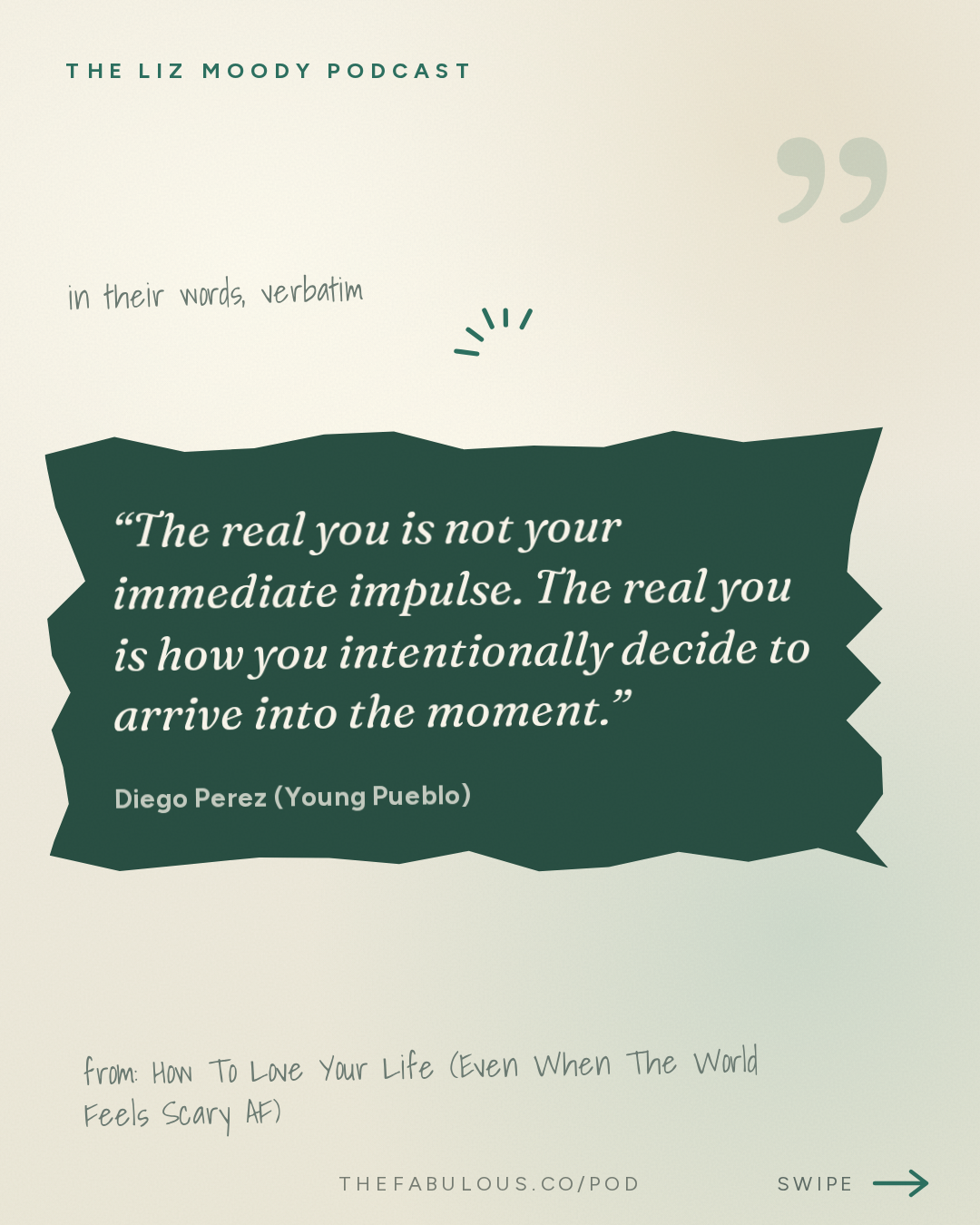
A recurring theme is the gap between a person's immediate impulse and who they actually want to be. "The real you is not your immediate impulse," Perez says. "The real you is how you intentionally decide to arrive into the moment" (10:11). He connects this directly to family conflict: a lot of people do deep self-work, then go home for a holiday and are twelve years old again within minutes. His practical answer is almost anticlimactic: slow down. Notice the old pattern rising before it runs the show. He says this is the one thing worth taking from the whole conversation if nothing else sticks (09:47).
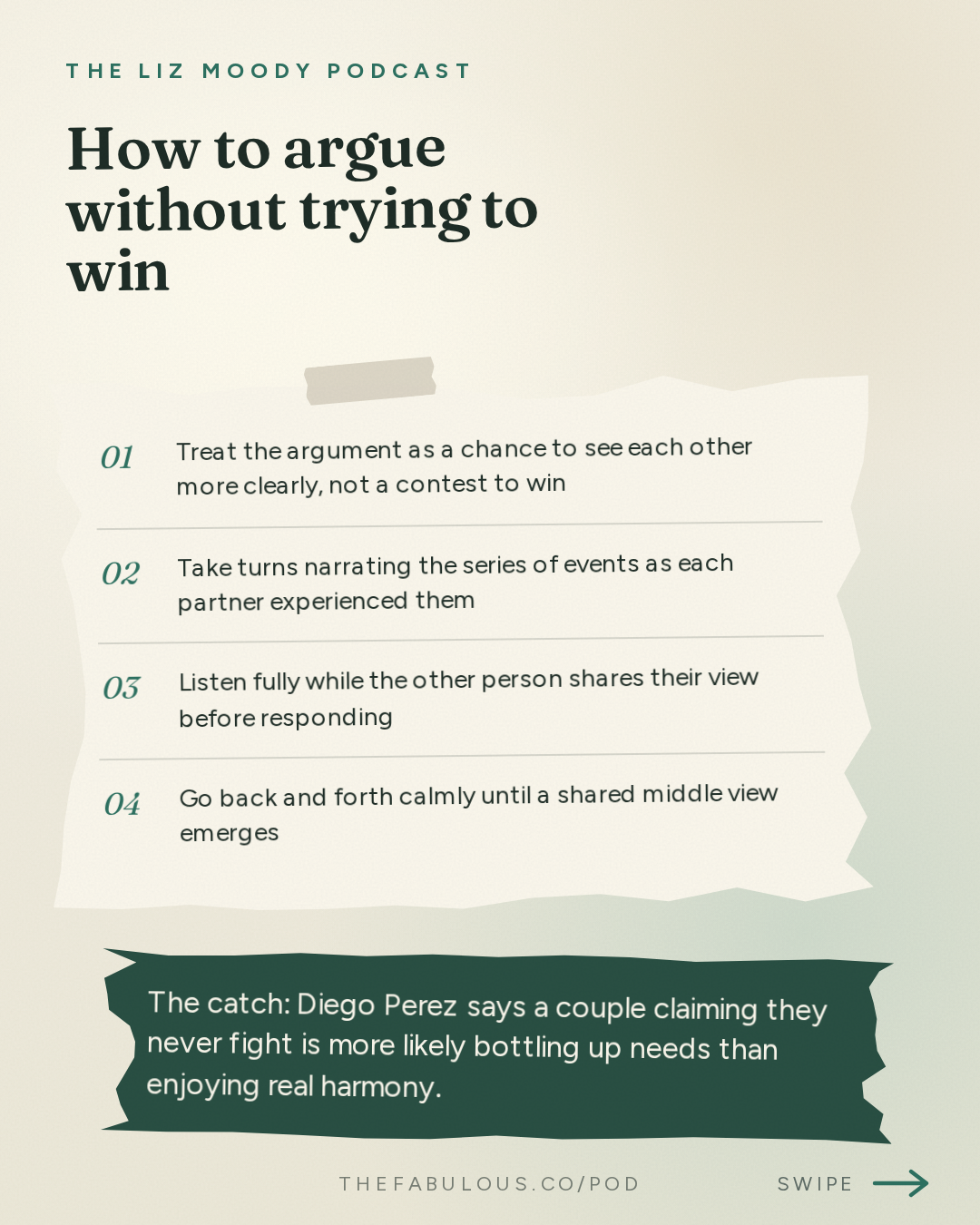
That same patience shows up in how he talks about long relationships. He describes himself and his wife as "two rivers that have intentionally decided to flow side by side" (17:10), each changing over the decades, choosing to keep changing together rather than freezing each other in place. On arguments specifically, he rejects the instinct to win. "Arguments are going to happen, so you have to create space for them, because that's an opportunity to create deeper connection," he says, describing a practice where each partner narrates their version of events while the other listens, back and forth, until a shared middle version emerges (17:56, 18:24). He is openly suspicious of couples who claim they never fight, calling it more likely a sign of bottled-up needs than of real harmony (18:47).
"Build boundaries, not walls, 'cause I think sometimes people are just, like, so intense about their boundaries and they think that their peace is gonna come from an external situation." — Diego Perez (Young Pueblo) [40:39]
That line matters because the boundary conversation can tip into avoidance. Perez's worry, shared from a friend's experience, is that some people shut a relationship down at the first sign of friction, which prevents the relationship from ever maturing into something deeper (39:21). A wall protects nothing but stagnation; a boundary, done well, is just a clearer version of showing up.
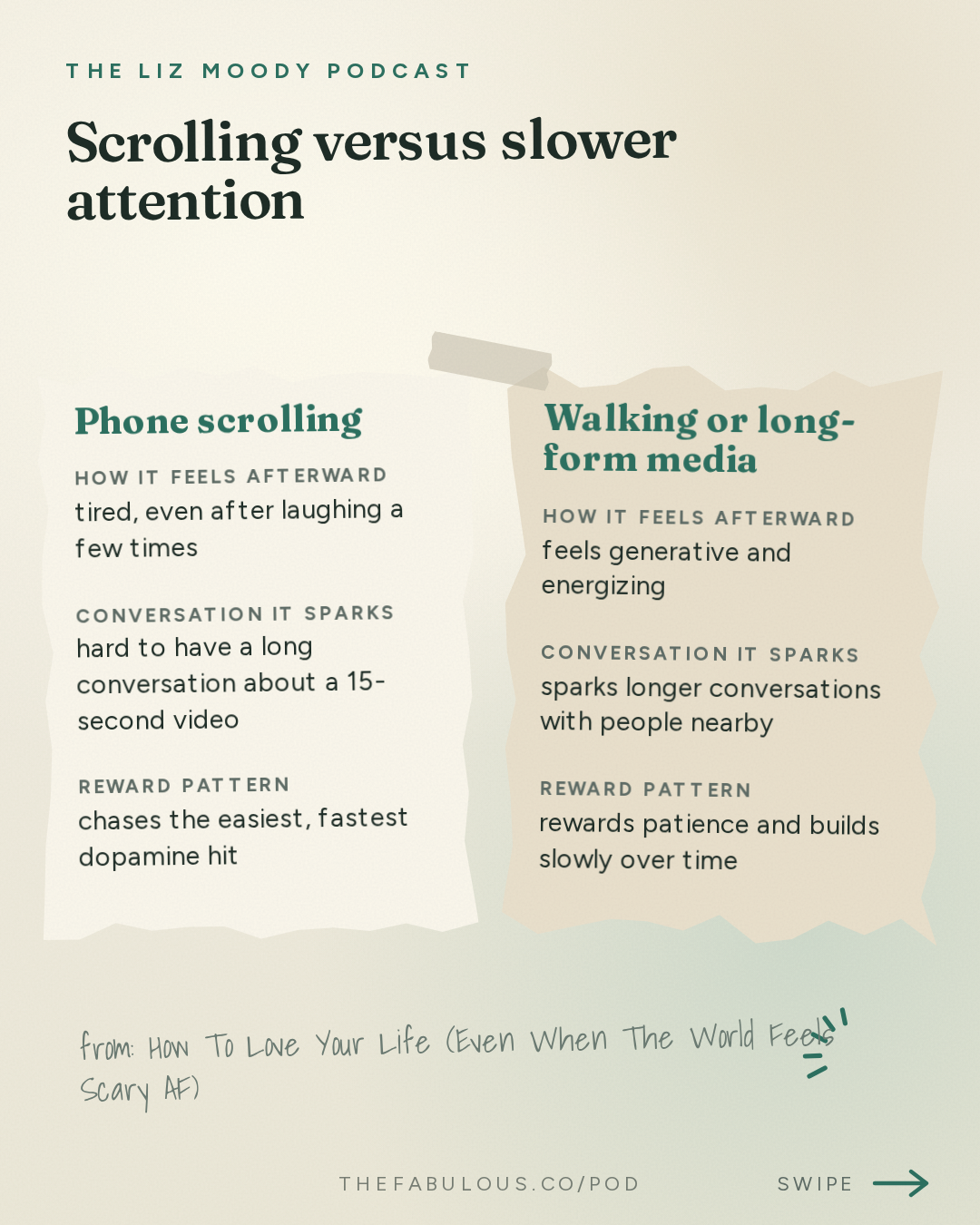
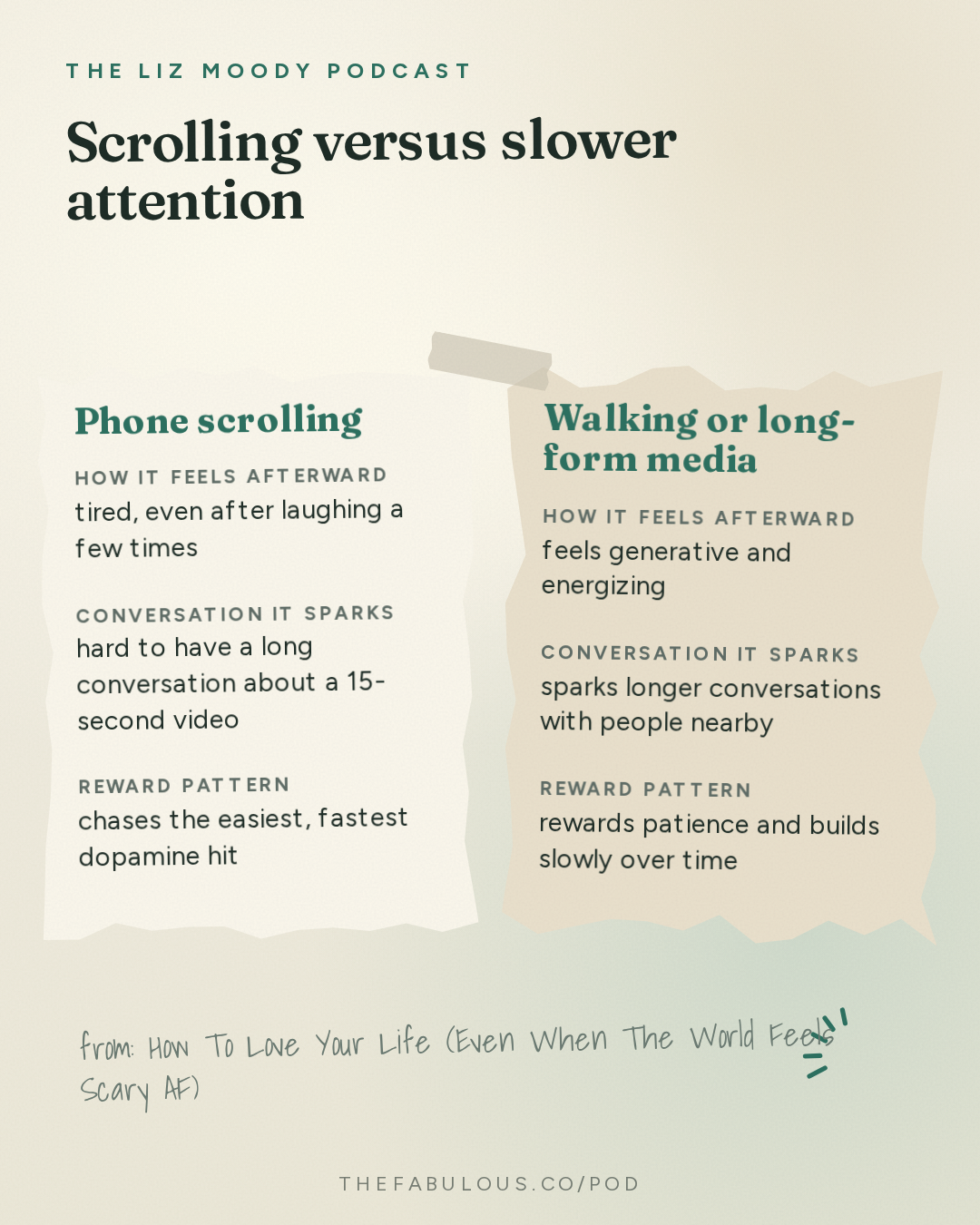
Phones get their own reckoning. He points out that a fifteen-second TikTok video is engineered for the easiest possible dopamine hit (24:23), and that forty minutes of scrolling tends to leave people more tired, not less, even after a few real laughs (24:38). His counter-practice is almost embarrassingly simple: walking. He calls it "a core element of what it means to be a human being," something that prevents both boredom and the physical toll of sitting all day (27:36). He also offers a method for a feeling most people never admit to: jealousy. Rather than scolding himself for feeling it, he notices it and deliberately tries to redirect it into what he calls sympathetic joy, actively rooting for the person he envies (28:55). It will not always land, but the attempt itself, he argues, is the practice.
Sixty days of silence and one law of the universe
The most concrete evidence for all of this comes from Perez's own meditation history. He began serious practice in 2012, started meditating two hours a day in 2015, and this year completed a sixty-day silent retreat, from January 1 to March 3, with no phone, no laptop, and no talking (46:40, 47:02). The first twenty days were spent entirely on breath awareness, nothing else (48:07). What he took from it is less mystical than it sounds: "Happiness takes mental training," he says. "If you really want to be a compassionate human being who's helping others, but simultaneously feeling good inside, you have to cultivate the mind" (47:23). Peace, in his telling, is closer to a trained muscle than a personality trait.
The lesson he keeps returning to is change itself. "The primary law of the universe at every single level of existence is change," he says, and fighting it is what produces most of the tension people feel (51:59, 15:18). He extends this to money, having grown up poor after his family emigrated from Ecuador, and having since spent time around people with a great deal of it. His verdict is unambiguous: "They can't fundamentally buy the mindset of being able to see the joy and appreciate the joy in life" (56:55). He names a friend in Costa Rica, a serious meditation teacher who gets by on close to nothing, as proof that the inner state and the bank balance are not the same instrument (56:12).
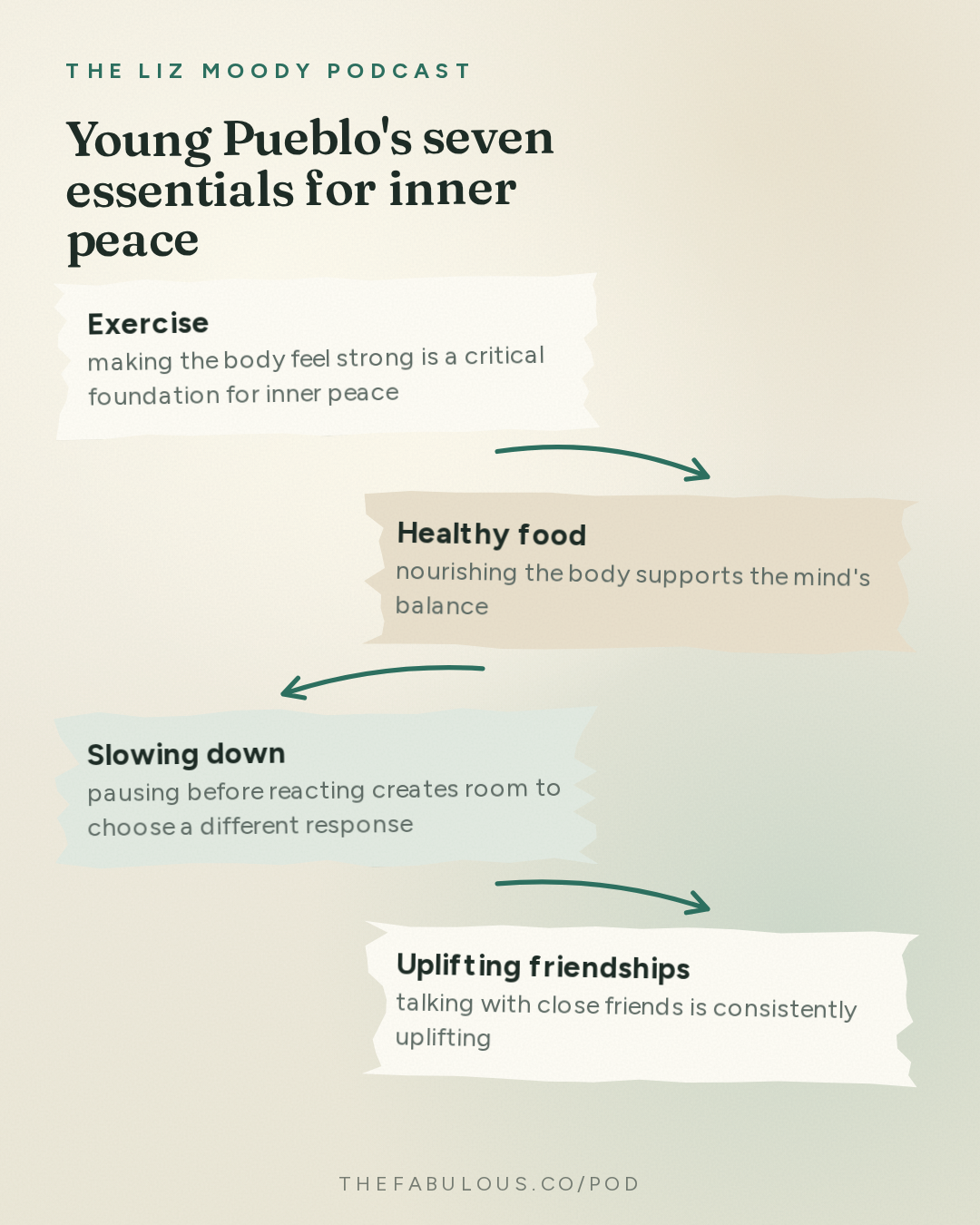
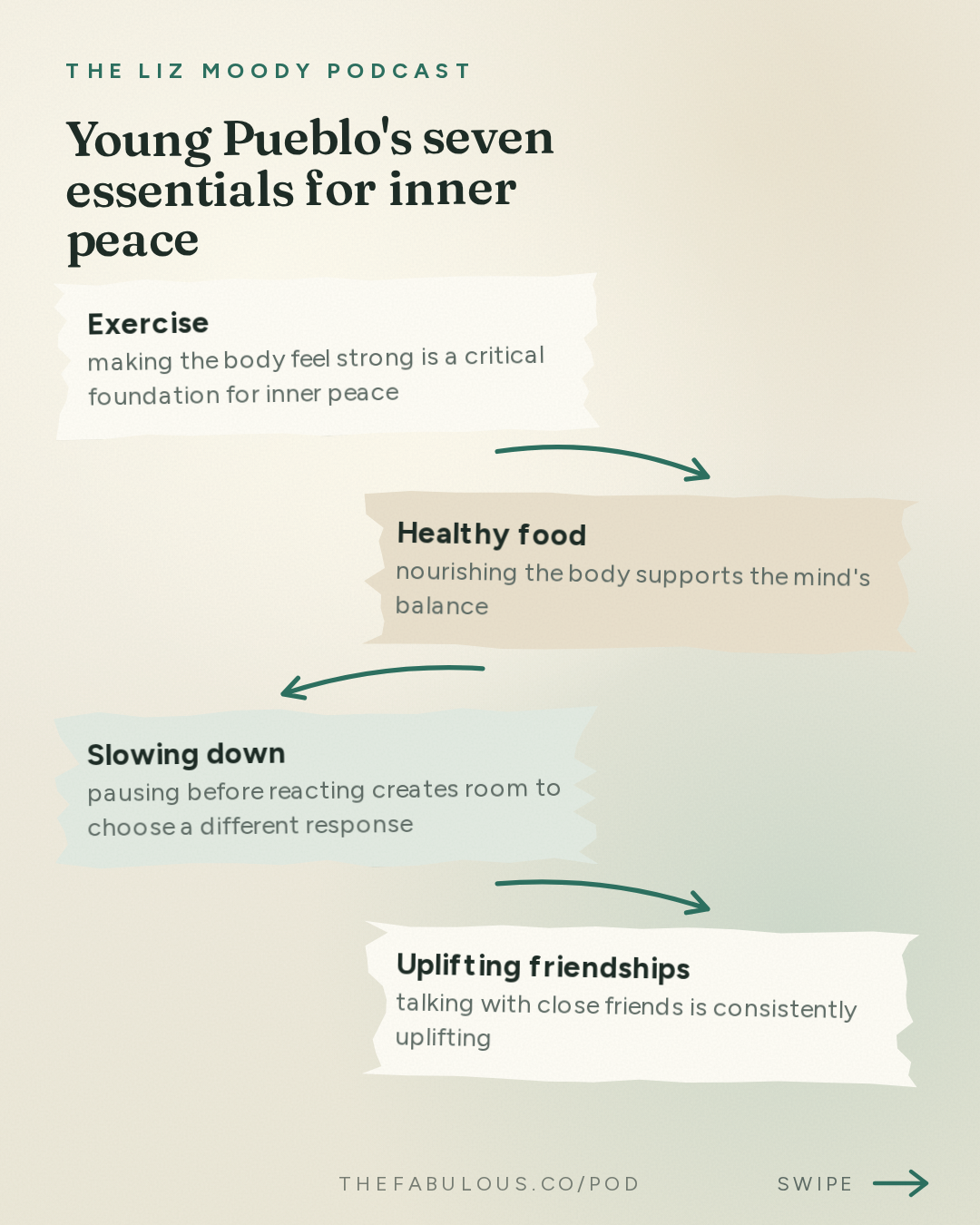
Near the end, he lists what he calls the seven things inner peace needs: exercise, healthy food, slowing down, uplifting friendships, gratitude, letting go of the past, and staying in the present moment (76:36). None of it is exotic. What makes the list worth hearing is the honesty wrapped around it, the admission that he still gets jealous, still feels anger and loneliness, still argues with his wife. The difference, he says, is that the emotions arrive lighter than they used to, and there's more room left over for noticing a good meal, a long walk, or a boring book read slowly, on purpose, for no other reason than the pleasure of taking one's time.
Ask this episode anything
Pod's AI answers from the episode itself, with the minute mark so you can hear it yourself.
Or start with one of these
Ask this episode
Pod's AI listens to the whole episode to answer, and points you to the minute it comes from.
The rest of this answer, and any question after it
Answers come from the episode itself, never from a summary of it.
ContinueKey takeaways
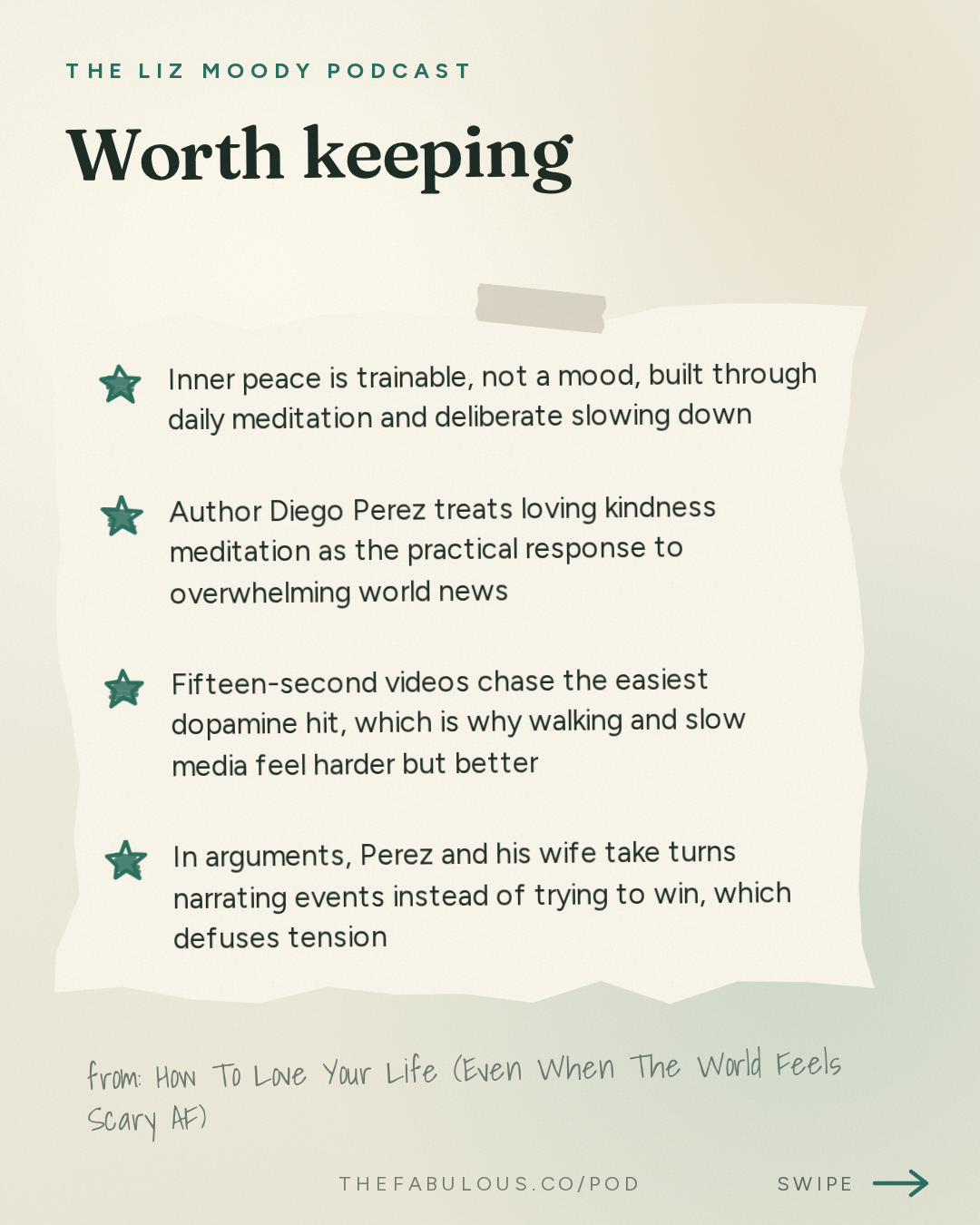
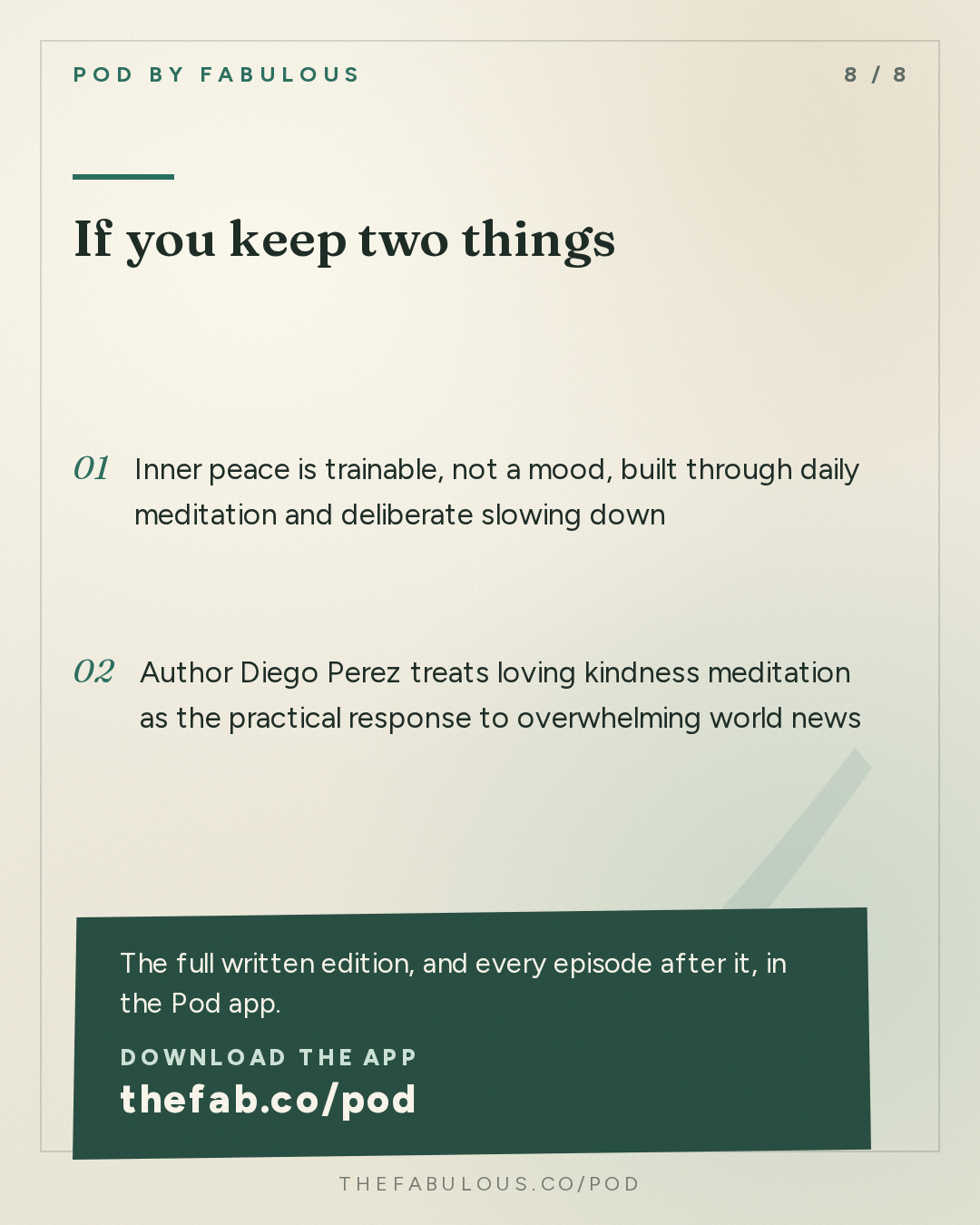
- Inner peace is trainable, not a mood, built through daily meditation and deliberate slowing down (47:23, 09:47)
- Author Diego Perez treats loving kindness meditation as the practical response to overwhelming world news (05:28)
- Fifteen-second videos chase the easiest dopamine hit, which is why walking and slow media feel harder but better (24:23, 27:36)
- In arguments, Perez and his wife take turns narrating events instead of trying to win, which defuses tension (18:24)
- Money does not buy a peaceful mindset, according to Perez's experience with both poverty and wealthy acquaintances (56:55)
The episode in cards
By the numbers
- 60 days days length of the silent meditation retreat Perez completed this year, from January 1 to March 3
- 40 minutes minutes phone scrolling session after which Perez says people feel tired despite laughing during it
In their words
“Action is the antidote to anxiety.”
“The real you is not your immediate impulse. The real you is how you intentionally decide to arrive into the moment.”
“Build boundaries, not walls, 'cause I think sometimes people are just, like, so intense about their boundaries and they think that their peace is gonna come from an external situation.”
“Happiness takes mental training. Like, if you really want to be a compassionate human being who's helping others, but simultaneously feeling good inside, feeling balance inside, then you have to”
“Living a good life is absolutely directly correlated to how well you can embrace change.”
Protocols
-
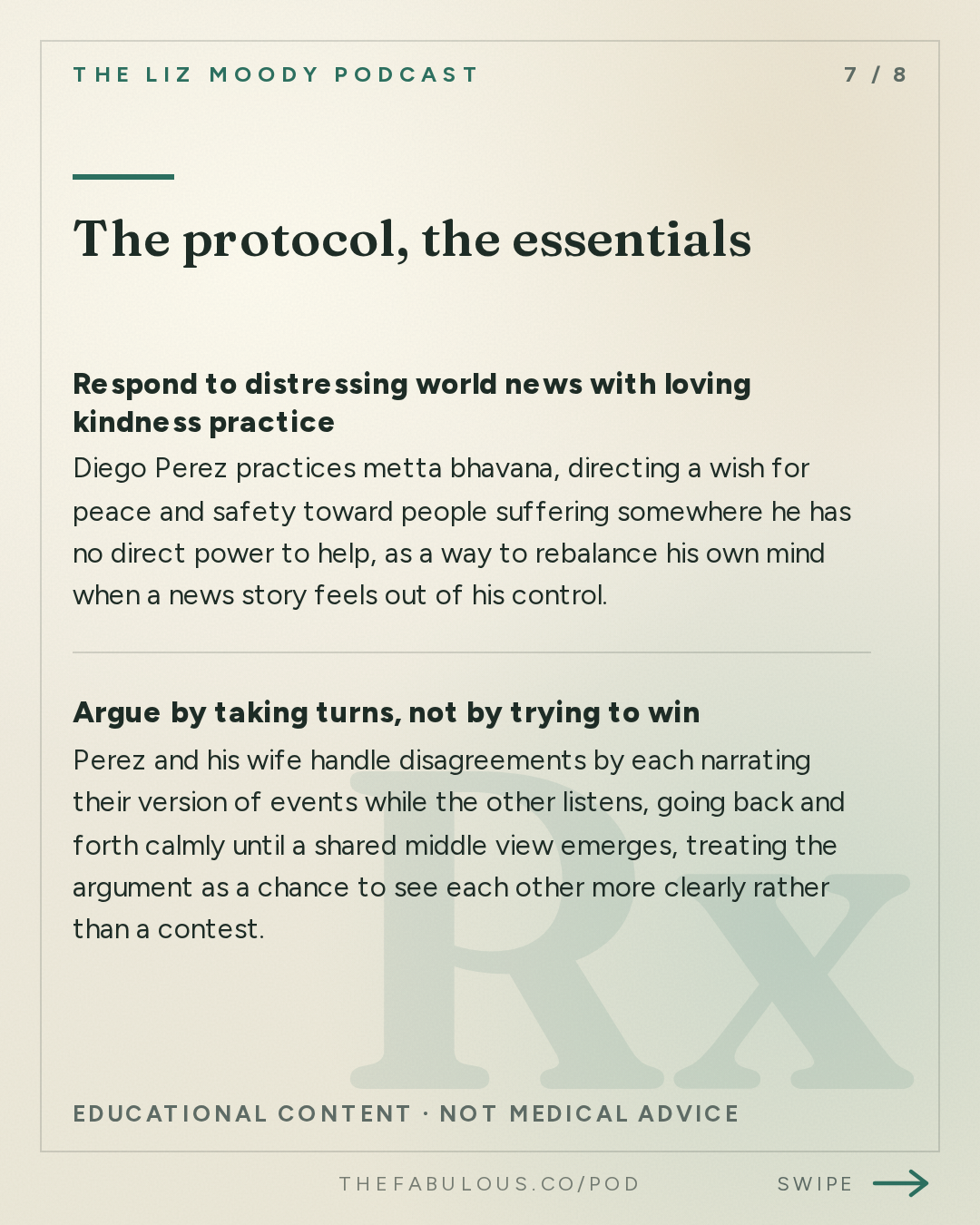
Respond to distressing world news with loving kindness practice
Diego Perez practices metta bhavana, directing a wish for peace and safety toward people suffering somewhere he has no direct power to help, as a way to rebalance his own mind when a news story feels out of his control.
As needed when reading distressing news
-
Argue by taking turns, not by trying to win
Perez and his wife handle disagreements by each narrating their version of events while the other listens, going back and forth calmly until a shared middle view emerges, treating the argument as a chance to see each other more clearly rather than a contest.
Whenever a disagreement arises in the relationship
-
Walk instead of scrolling to break phone addiction
Perez recommends walking, alone or with a friend, as the default alternative to phone scrolling, since it reconnects a person to what he calls a core human activity and tends to leave him feeling more energized than a scrolling session does.
Daily
-
Convert jealousy into sympathetic joy
Perez notices jealousy when it arises without judging himself for feeling it, then deliberately tries to redirect the feeling into sympathetic joy, actively wishing the other person well instead of resenting their success.
As needed when jealousy arises
Questions this episode answers
How does Young Pueblo suggest coping with scary news without feeling anxious?
Diego Perez, who goes by the pen name Young Pueblo, practices metta bhavana, a loving kindness meditation, directing goodwill toward people suffering somewhere he can't directly help, and pairs it with finding one small action within his actual control (05:28, 06:13). His framing is that action, not avoidance, is the antidote to anxiety.
What is Young Pueblo's daily meditation routine?
Perez practices Vipassana, a technique focused on observing bodily sensations as they arise, for two hours a day, typically one hour in the morning and one in the evening (51:36). He has practiced seriously since 2012 and completed a 60-day silent retreat this year, from January 1 to March 3 (46:40, 47:02).
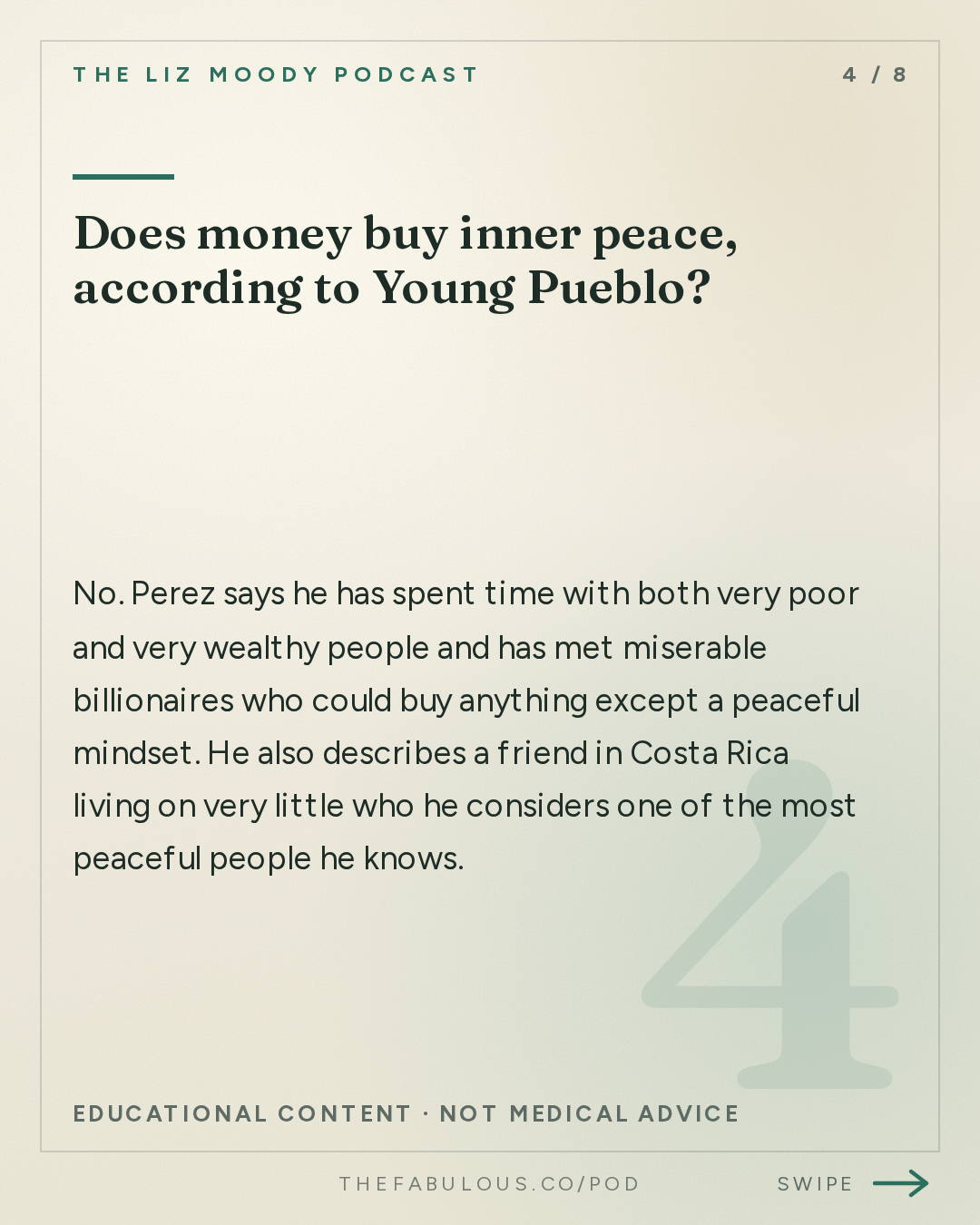
Does money buy inner peace, according to Young Pueblo?
No. Perez says he has spent time with both very poor and very wealthy people and has met miserable billionaires who could buy anything except a peaceful mindset (56:55). He also describes a friend in Costa Rica living on very little who he considers one of the most peaceful people he knows (56:12).
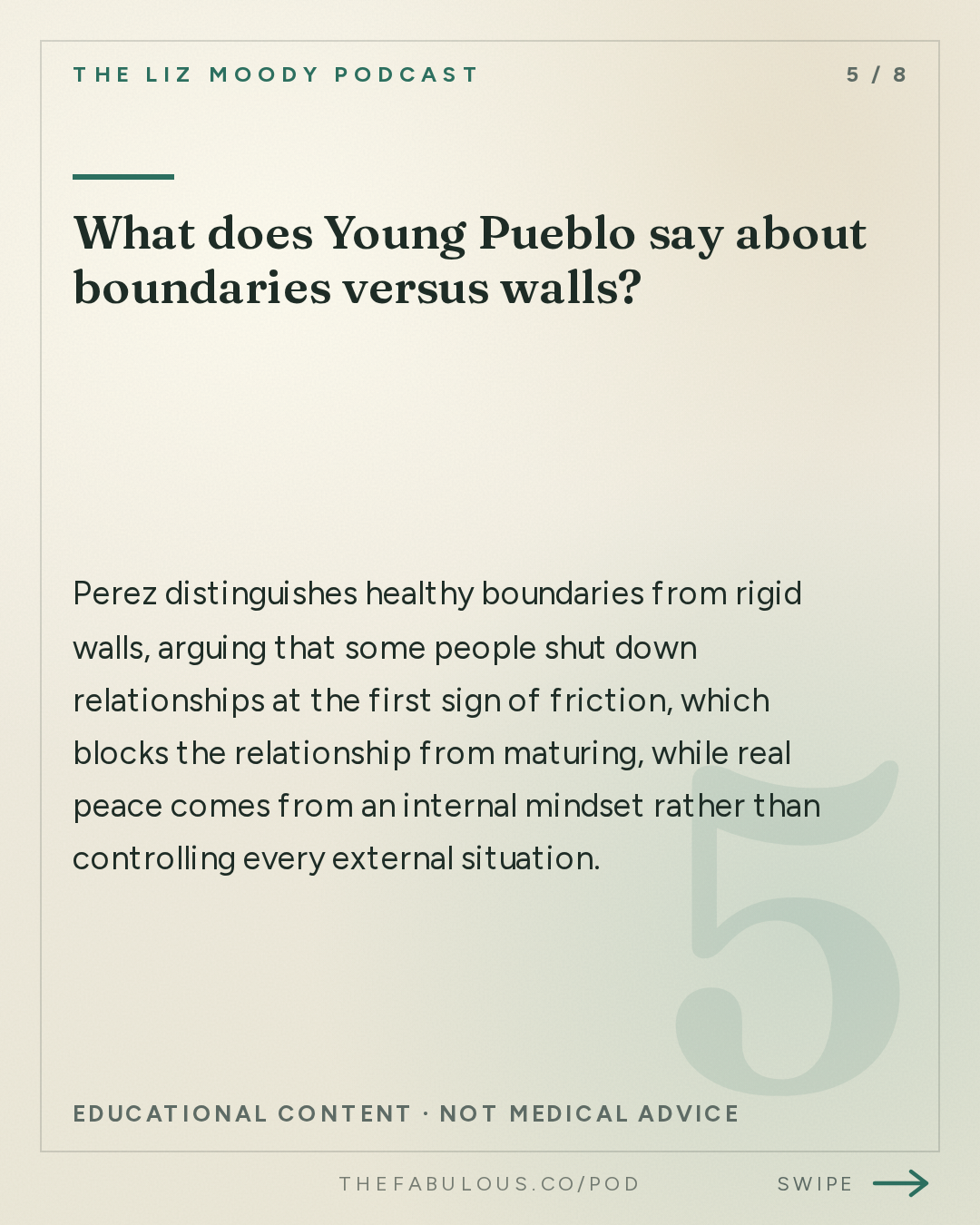
What does Young Pueblo say about boundaries versus walls?
Perez distinguishes healthy boundaries from rigid walls, arguing that some people shut down relationships at the first sign of friction, which blocks the relationship from maturing, while real peace comes from an internal mindset rather than controlling every external situation (40:39, 39:21).
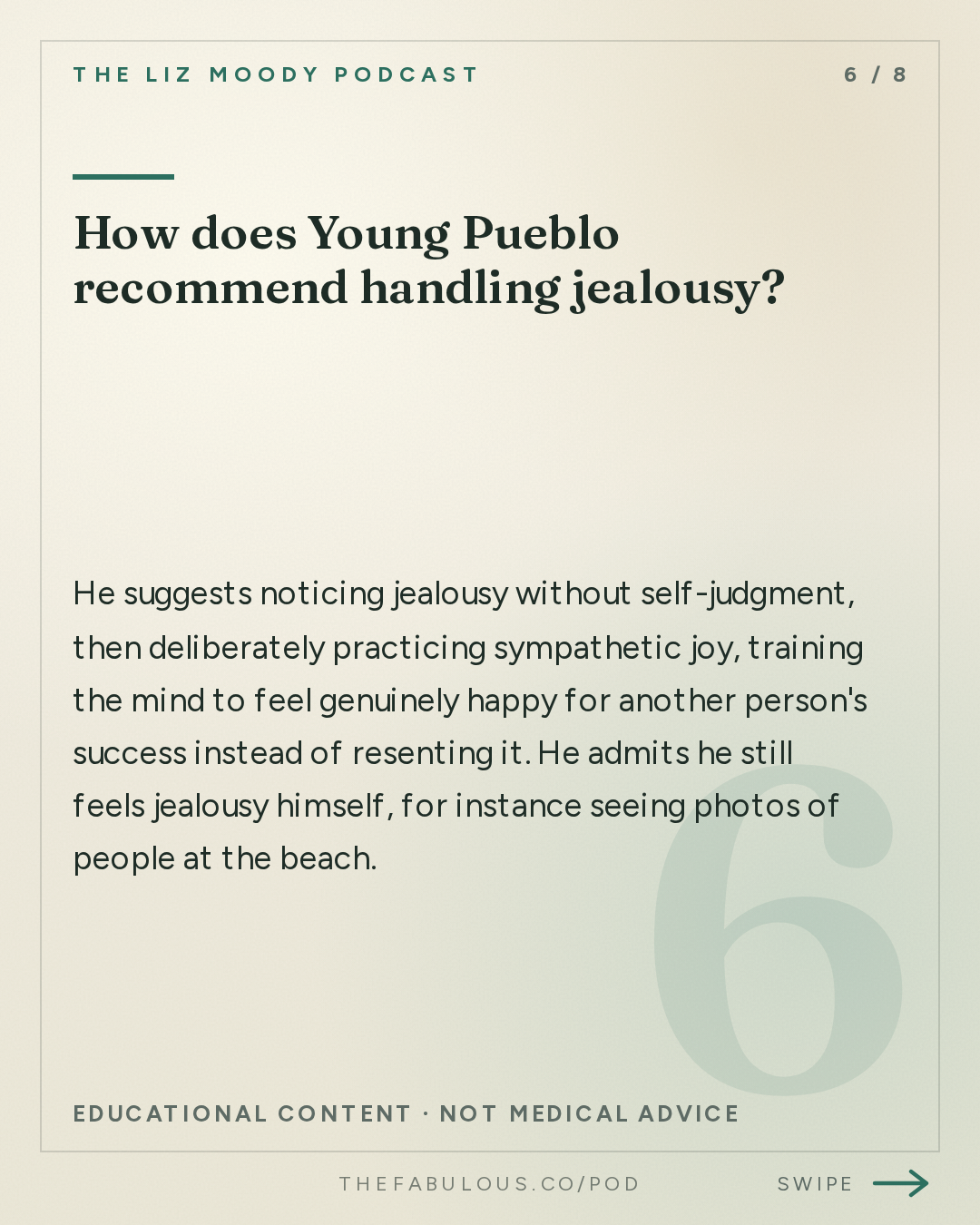
How does Young Pueblo recommend handling jealousy?
He suggests noticing jealousy without self-judgment, then deliberately practicing sympathetic joy, training the mind to feel genuinely happy for another person's success instead of resenting it (28:55). He admits he still feels jealousy himself, for instance seeing photos of people at the beach.
What are Young Pueblo's seven essentials for inner peace?
Perez lists exercise, healthy food, slowing down, uplifting friendships, living with gratitude, letting go of the past, and being in the present moment as the seven things inner peace needs, drawn from reflecting on what genuinely nourishes his own life (76:36).
The full read, in cards
Go deeper
- UN report on global warming's worst harms — cited as a recent finding that Earth has lost its chance to prevent some of the worst climate harms
- Electric shock uncertainty study — found people preferred a guaranteed electric shock over uncertainty about whether they'd be shocked
Mentioned
Diego Perez (Young Pueblo) · Lighter · How to Love Better · Journey: The Year That Changes Everything · Jack Kornfield · Wesleyan University · Vipassana · Metta Bhavana · Love Island
More from this show and category
The Science of Getting the Ick, Explained
The ick is often a disgust alarm misfiring rather than reliable intuition, shaped by attachment style, perfectionism, stress, and dating app abundance. Liz Moody's six-question audit and research from the Gottmans suggest love filters out minor annoyances, while moral icks, like rudeness to strangers, are the ones worth trusting.
Sun Exposure Science: Rowan Jacobsen Interview
Outdoor workers face lower melanoma death rates than indoor workers, a finding that upends decades of sun-avoidance advice. Science journalist Rowan Jacobsen argues that sunlight lowers blood pressure, calms the immune system, and treats depression, while vitamin D pills fail to match those benefits, so moderate daily exposure may do more good than harm for most skin types.
Ellen Vora: Heal Gut, Hormones, Anxiety
Psychiatrist Ellen Vora says gut, hormone, and anxiety struggles often trace back to suppressed truth, estrogen dominance, and mistaking fear for intuition. She offers concrete fixes: daily bowel habits and magnesium glycinate for hormone balance, and a simple tone-test (intuition is quiet, fear is loud) for telling real guidance from anxious noise.
Is the Male Loneliness Crisis Real?
Pew and Harvard surveys show men and women are equally lonely, debunking the male loneliness crisis narrative. Income is the stronger predictor: adults earning under $40,000 are far more likely to be lonely than those earning over $90,000. Host Liz Moody explains mankeeping, Stanford researcher Angelica Ferrara's term for the unpaid labor women do managing men's social lives.
