
Ellen Vora: Heal Gut, Hormones, Anxiety
The Missing Tool to Finally Heal Your Gut, Hormones, and Anxiety
▶ Listen to the full episode More from The Liz Moody Podcast
The brief
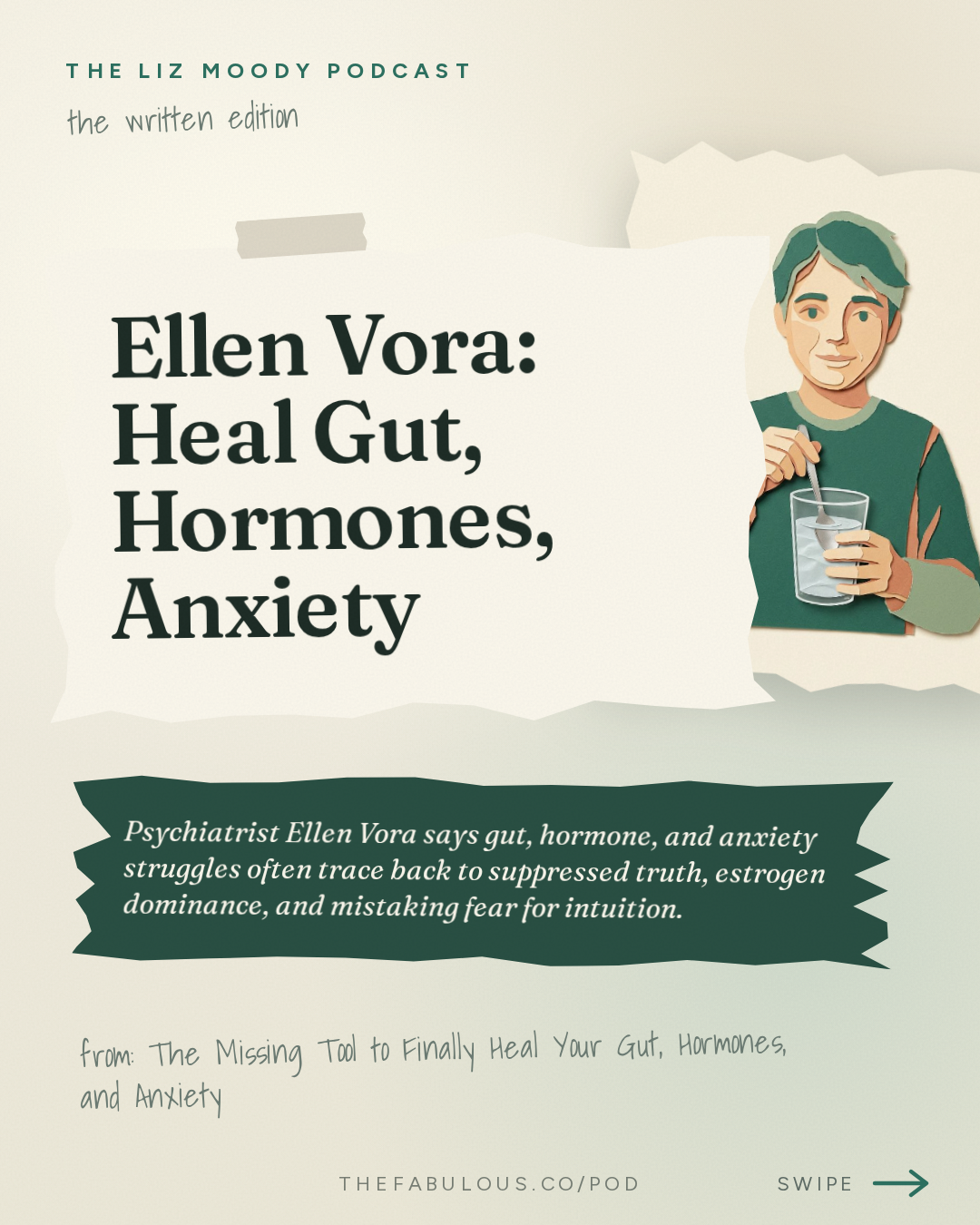
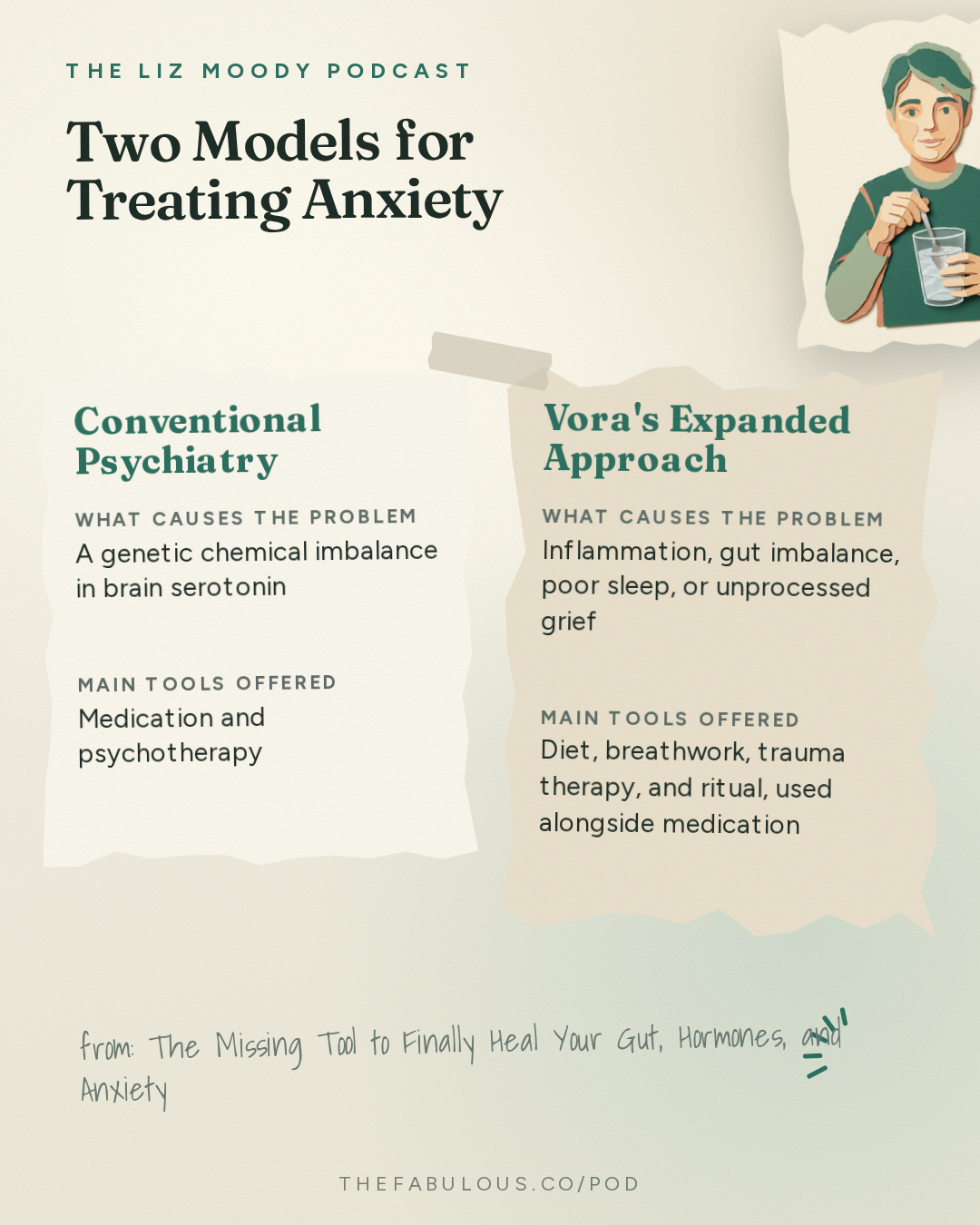
Psychiatrist Ellen Vora says gut, hormone, and anxiety struggles often trace back to suppressed truth, estrogen dominance, and mistaking fear for intuition. She offers concrete fixes: daily bowel habits and magnesium glycinate for hormone balance, and a simple tone-test (intuition is quiet, fear is loud) for telling real guidance from anxious noise.
The thyroid sits in the neck, right where yoga teachers locate the throat chakra, the body's seat of speaking one's truth. Psychiatrist Ellen Vora, who trained at Yale and Columbia, finds that detail too useful to dismiss (03:34). She treats autoimmune thyroid disease the conventional way, with immune-suppressing medication, and the functional-medicine way, hunting for heavy metals or a gluten-triggered immune reaction (02:46). But she also asks a stranger question: has this person spent years silencing their own voice to stay likable, until the body points an arrow at the organ built for expression (04:03)? She traces the pattern in her own family, where autoimmune disease runs through women she believes had real intuition but no safe way to use it (04:52). It fits a known pattern: autoimmune conditions track with high ACE scores, researchers' shorthand for adverse childhood experiences, meaning more early hardship raises the odds of the immune system turning on the body later (04:33).
"I am the witch who has a conventional medical background." — Ellen Vora [01:22]
That line is the thesis of her new book, Season of the Witch: A Psychiatrist's Case for Magic, and of this conversation with host Liz Moody. Vora is not arguing against medicine. She is arguing that medicine alone keeps leaving people stuck, and that the missing piece is a willingness to treat feeling, story, and intuition as data.
Liberation, Not Decline
Take perimenopause, the hormonal transition before menopause. The dominant conversation treats it as a cascade of symptoms to manage: hot flashes, insomnia, bone loss. Vora does not dispute the symptoms. She points out that from puberty to the last period, estrogen keeps women biologically wired to be likable, since in primate studies the most socially agreeable females are the most reproductively successful (11:02). When that hormone dips in perimenopause, she argues, so does the pressure to keep the peace at the expense of one's own needs (12:17). The body, she says, has no evolutionary mechanism for improving the menopausal transition itself, since by definition it arrives after reproduction is over, so it borrows the closest script it has, the postpartum period, which is why hot flashes and broken sleep echo what new mothers go through (13:14).
The same logic runs through her read of the luteal phase, the two weeks after ovulation when progesterone, not estrogen, runs the show. Culturally, this is the part labeled irritable, irrational, too much. Vora inverts the story.
"In the luteal phase, we're not irrational and distorted. We have a decreased tolerance for BS." — Ellen Vora [17:40]
She learned to track this directly after meeting a fertility-awareness teacher at age 34, who showed her the physical signs of each phase, from cervical mucus to breast tenderness (35:19). Before that, she says, she spent years concluding she was simply depressed each month, roughly every 28 days, with no sense that hormones were involved (36:07).
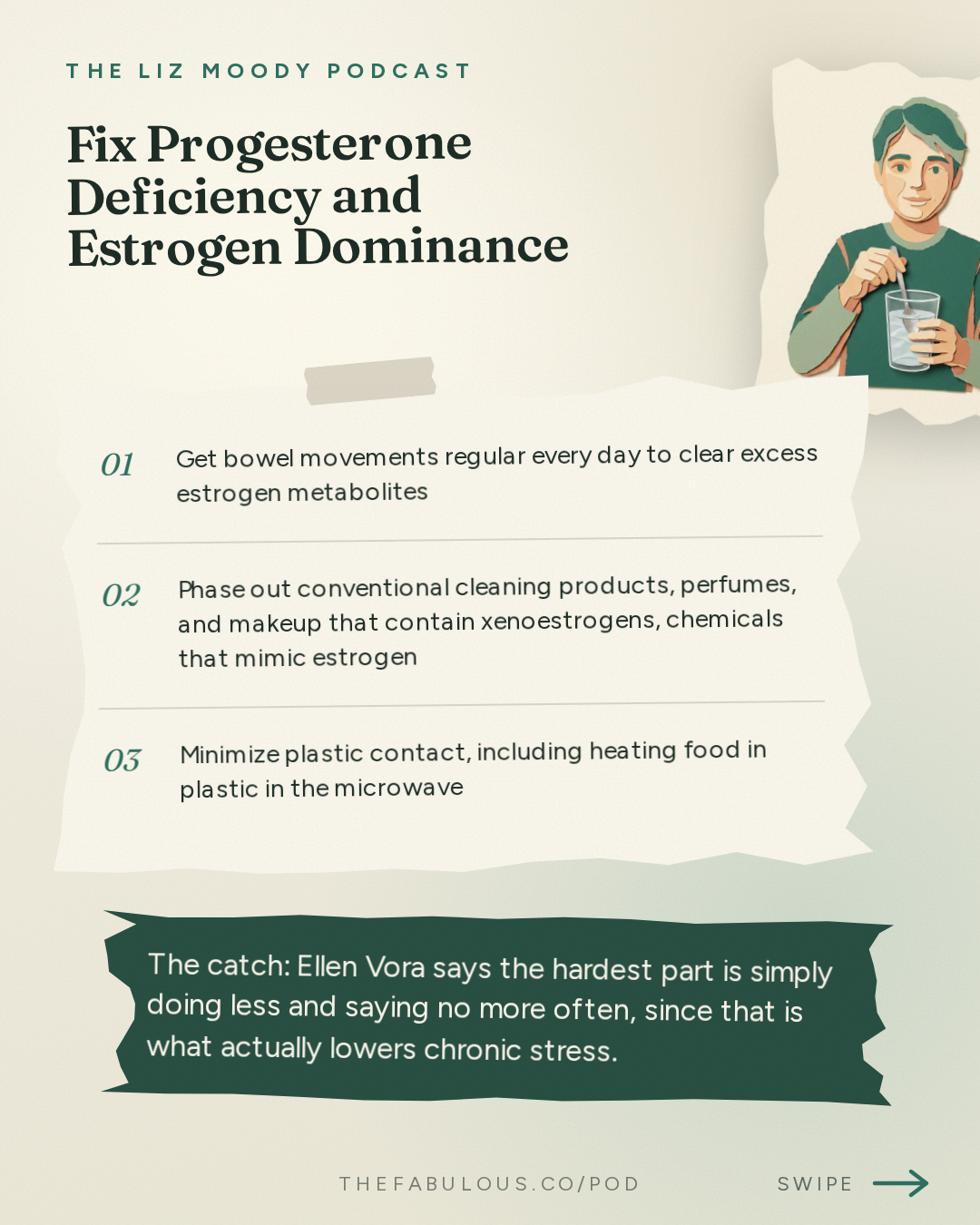
Vora connects the mood swing to a measurable imbalance she sees constantly in practice: too much estrogen relative to progesterone, often called estrogen dominance. Part of the cause is exposure to xenoestrogens, chemicals in pesticides and plastics that mimic estrogen in the body (18:55). Part of it is chronic stress. She describes a mechanism from her medical training called pregnenolone steal: progesterone and the stress hormone cortisol share a common building block, pregnenolone, and under chronic stress the body routes that precursor toward cortisol first, leaving progesterone chronically short (19:43). Her starting fix is unglamorous: regular bowel movements, since that is a primary route for clearing excess estrogen metabolites, plus cutting exposure to xenoestrogenic products like conventional cleaning sprays and makeup (20:34). For gut mechanics, she points to magnesium glycinate at bedtime and a Squatty Potty, a footstool that changes toilet posture, while cautioning that extra fiber is not right for everyone since it can aggravate an already inflamed gut (31:49).
Fear Is Loud, Intuition Is Quiet
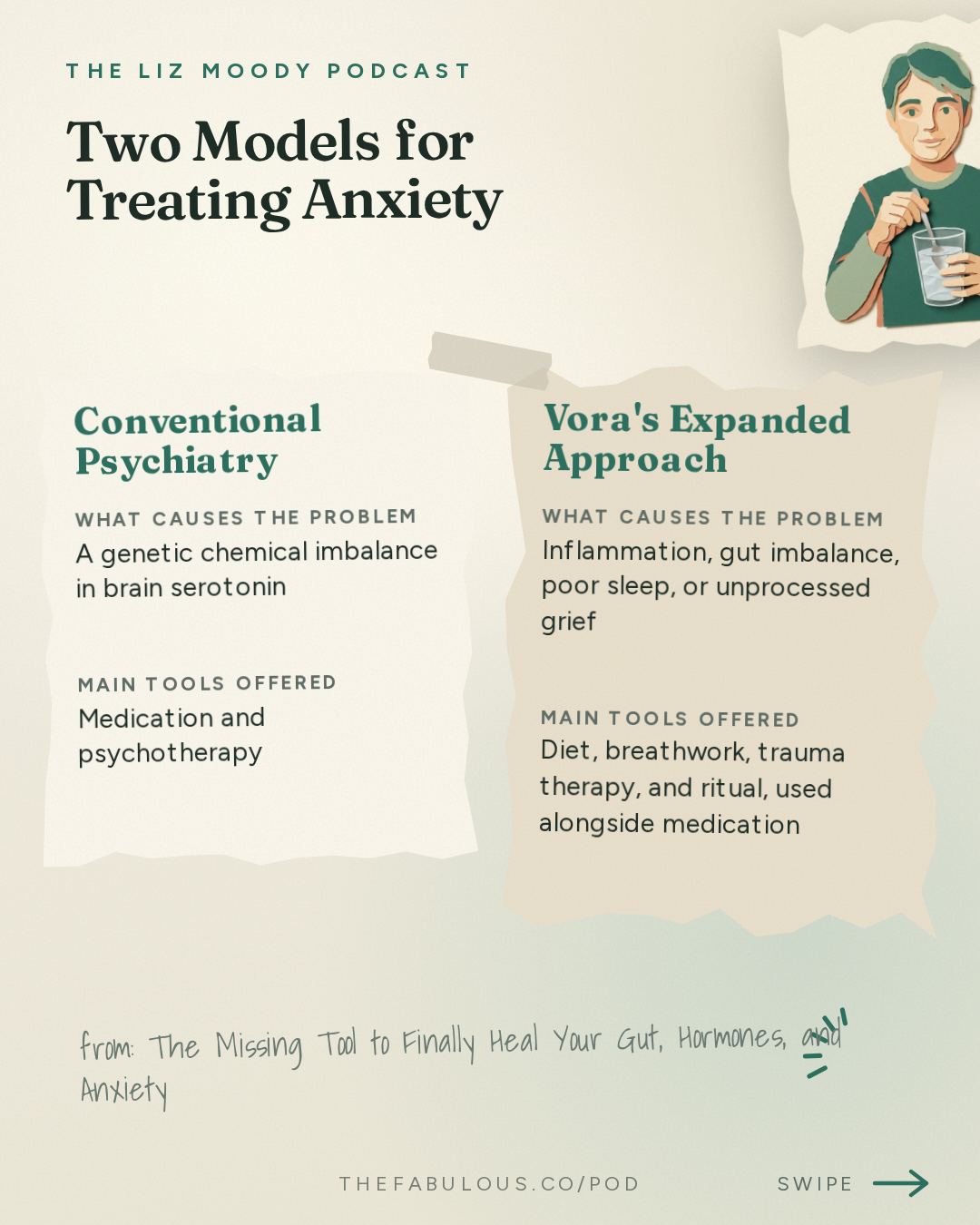
Vora has spent close to 15 years watching patients hit a wall with standard psychiatric care, medication and therapy that help some people reach what she calls the top of the mountain of feeling okay, but leave others stuck halfway with no further options offered (36:50). Her response is what she calls bushwhacking psychiatry: when the two well-worn paths stop working, check inflammation, micronutrients, gut health, sleep, and breathing, then check the psychospiritual layer, unprocessed grief, missing ritual, a story never told out loud (38:01).
She is wary, though, of a different kind of outsourcing: handing the job of knowing how one feels over to a device. She describes her husband, who used to answer "how did you sleep" with a quick read of his own body, and who now says he has to check the data after he started wearing an Oura Ring, a sleep and recovery tracker (41:19).
"He now introduced a device in between him and knowing the state of his body." — Ellen Vora [41:35]
Research, she notes, backs the risk: if a tracker reports a bad night, people often feel worse that day regardless of how they actually slept, a pattern called the nocebo effect, the evil twin of the placebo effect, where expecting a bad outcome helps produce one (42:25).
The same instinct, trusting an outside signal over an inner one, shows up in how people relate to fear and intuition, and Vora thinks most of us confuse the two. Her test, borrowed from a friend, is about tone rather than content.
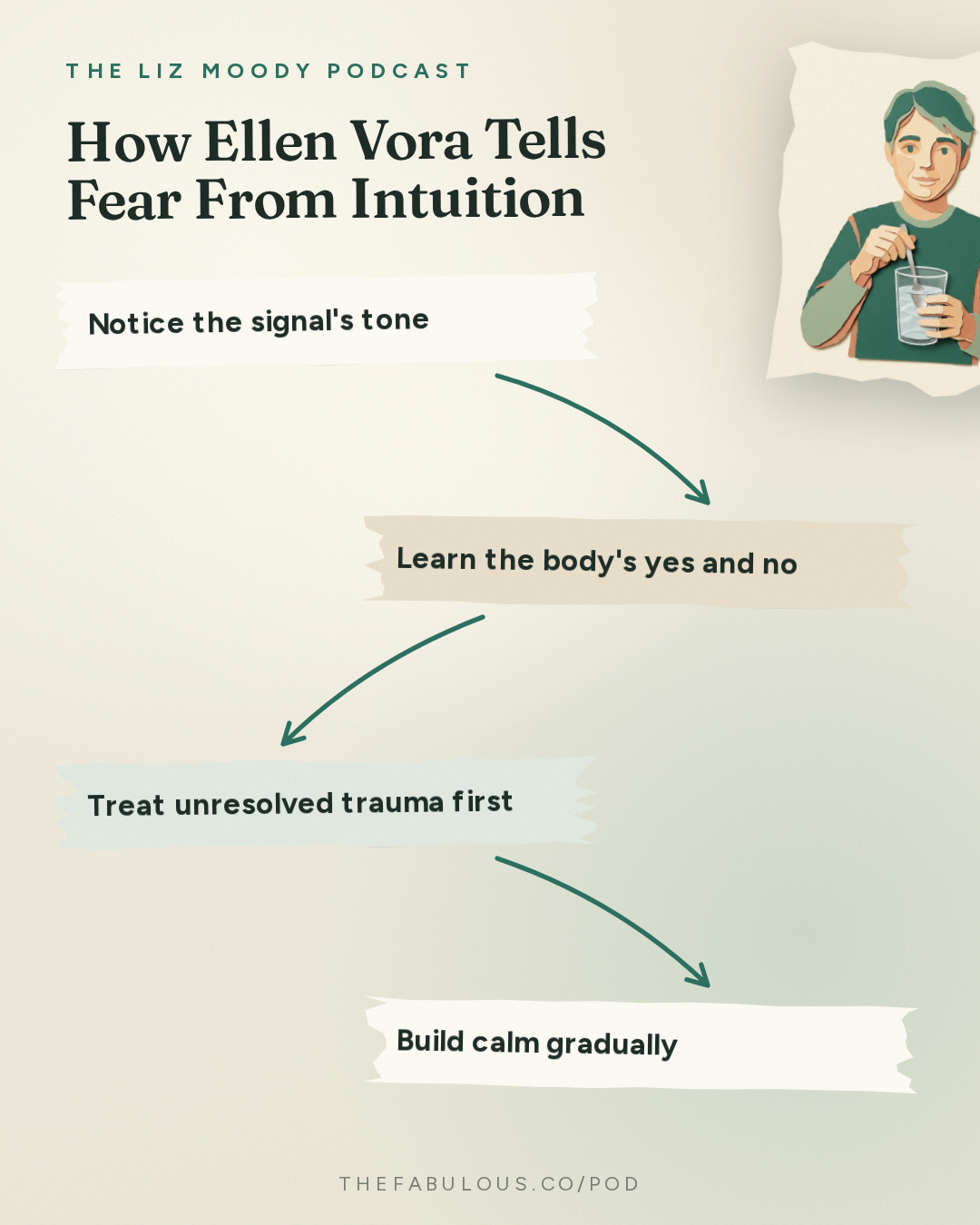
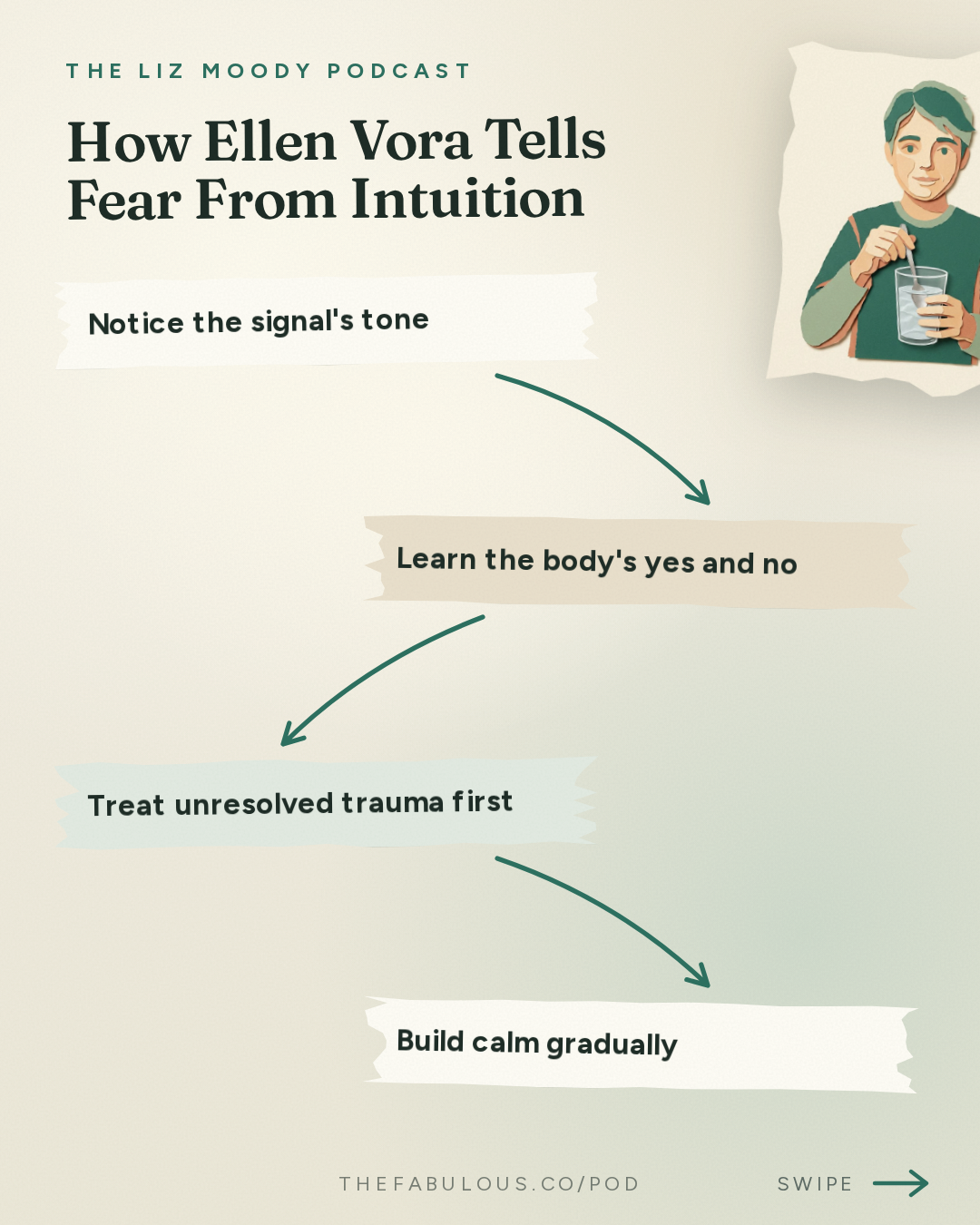
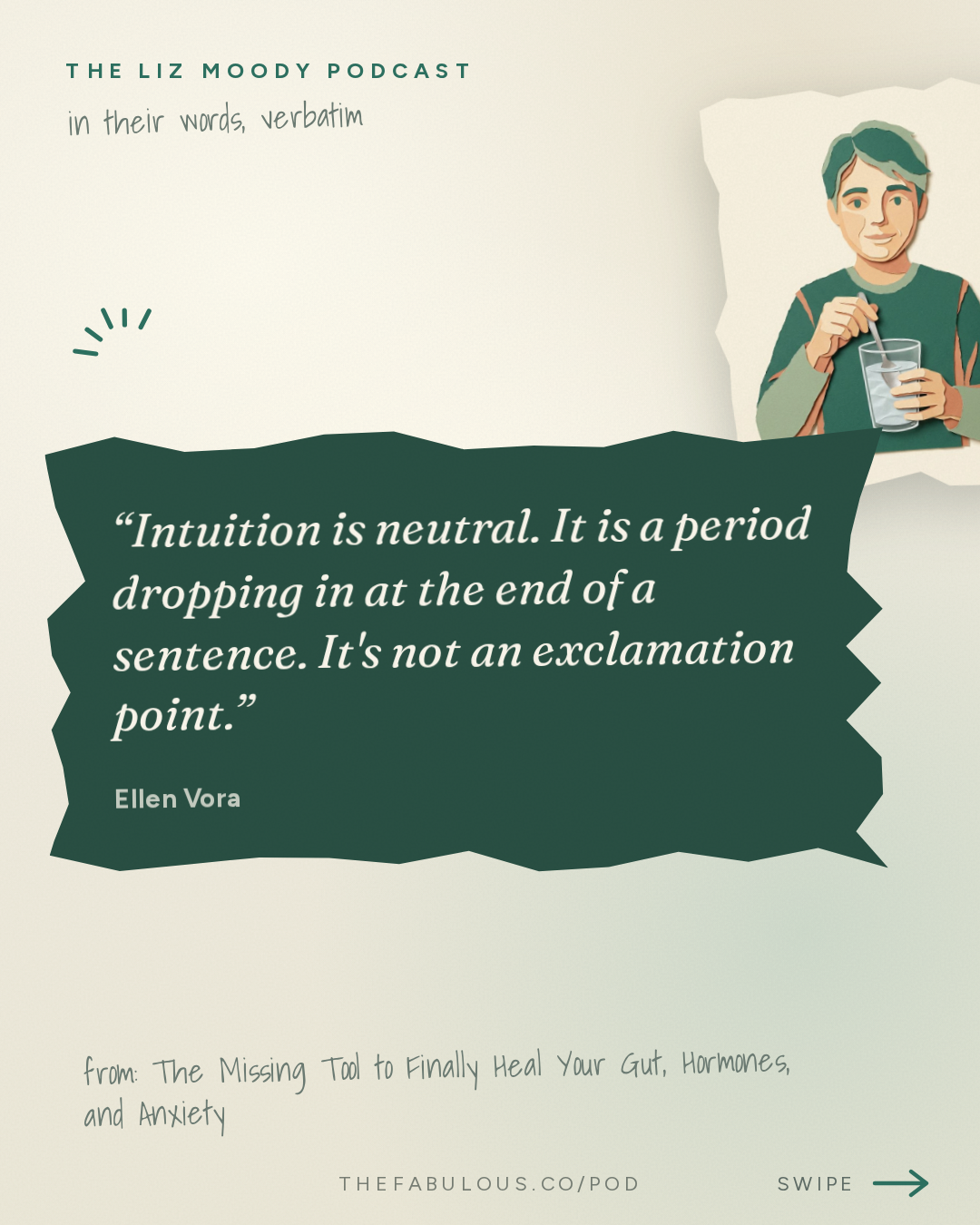
"Intuition is neutral. It is a period dropping in at the end of a sentence. It's not an exclamation point." — Ellen Vora [61:59]
Fear, by contrast, is loud, urgent, and often rooted in old trauma that keeps the nervous system's threat detector running hot. Her practical answer is sequential: treat unresolved trauma directly, through approaches like EMDR (eye movement desensitization and reprocessing) or somatic experiencing therapy, before trying to read any gut feeling as guidance, since a dysregulated nervous system will flag everything as danger (63:35). Only once there is a baseline of calm, she says, does it make sense to ask a question inward and listen for what comes back (64:42).
She extends the same framework to physical sensitivity. Citing research out of UCLA, she argues that irritable bowel syndrome may reflect a heightened, not broken, awareness of what the modern food system is doing to the body, calling people with sensitive guts canaries in the coal mine (60:51). She also leans on neuroscientist Iain McGilchrist's work on the brain's two hemispheres to explain why the loudest voice in the room is not always the most reliable one: the left hemisphere is fluent in language and certainty, while the right hemisphere holds more holistic, often wiser insight but struggles to put it into words (76:57).
"The left hemisphere is so convinced that it's right and is inclined to mansplain on behalf of the right hemisphere." — Ellen Vora [76:57]
Vora's closing argument, which gives her book its title, is that a witch is simply a woman who has reclaimed intuitive and embodied ways of knowing that power has long found inconvenient (79:57). The practical takeaway sits a few rungs below that larger claim: get the gut and hormones working well enough that the body's signals are trustworthy, build a baseline of calm so fear stops drowning out quieter knowledge, and treat both as legitimate data, alongside the usual blood panel, when something still does not feel right.
Ask this episode anything
Pod's AI answers from the episode itself, with the minute mark so you can hear it yourself.
Or start with one of these
Ask this episode
Pod's AI listens to the whole episode to answer, and points you to the minute it comes from.
The rest of this answer, and any question after it
Answers come from the episode itself, never from a summary of it.
ContinueKey takeaways
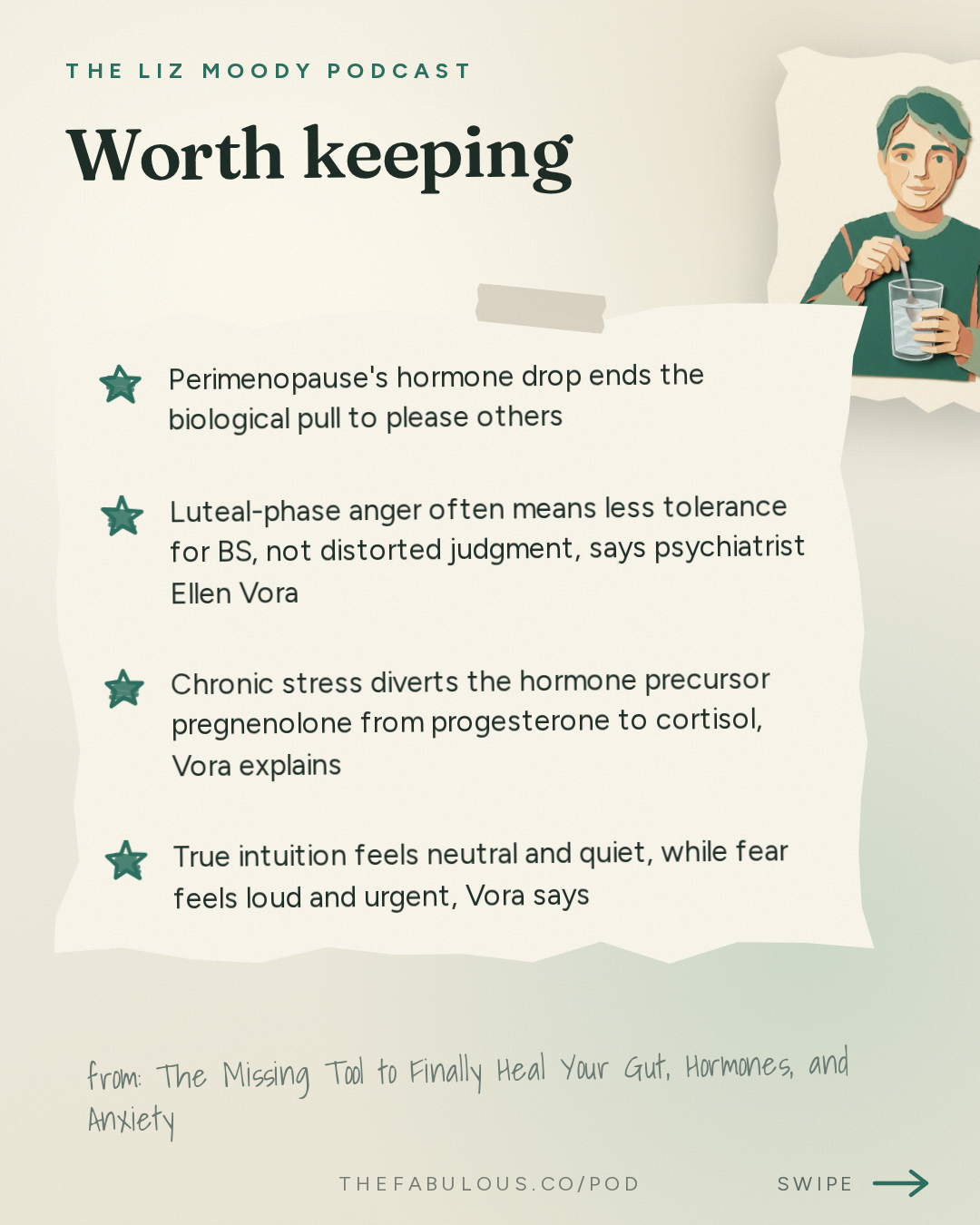
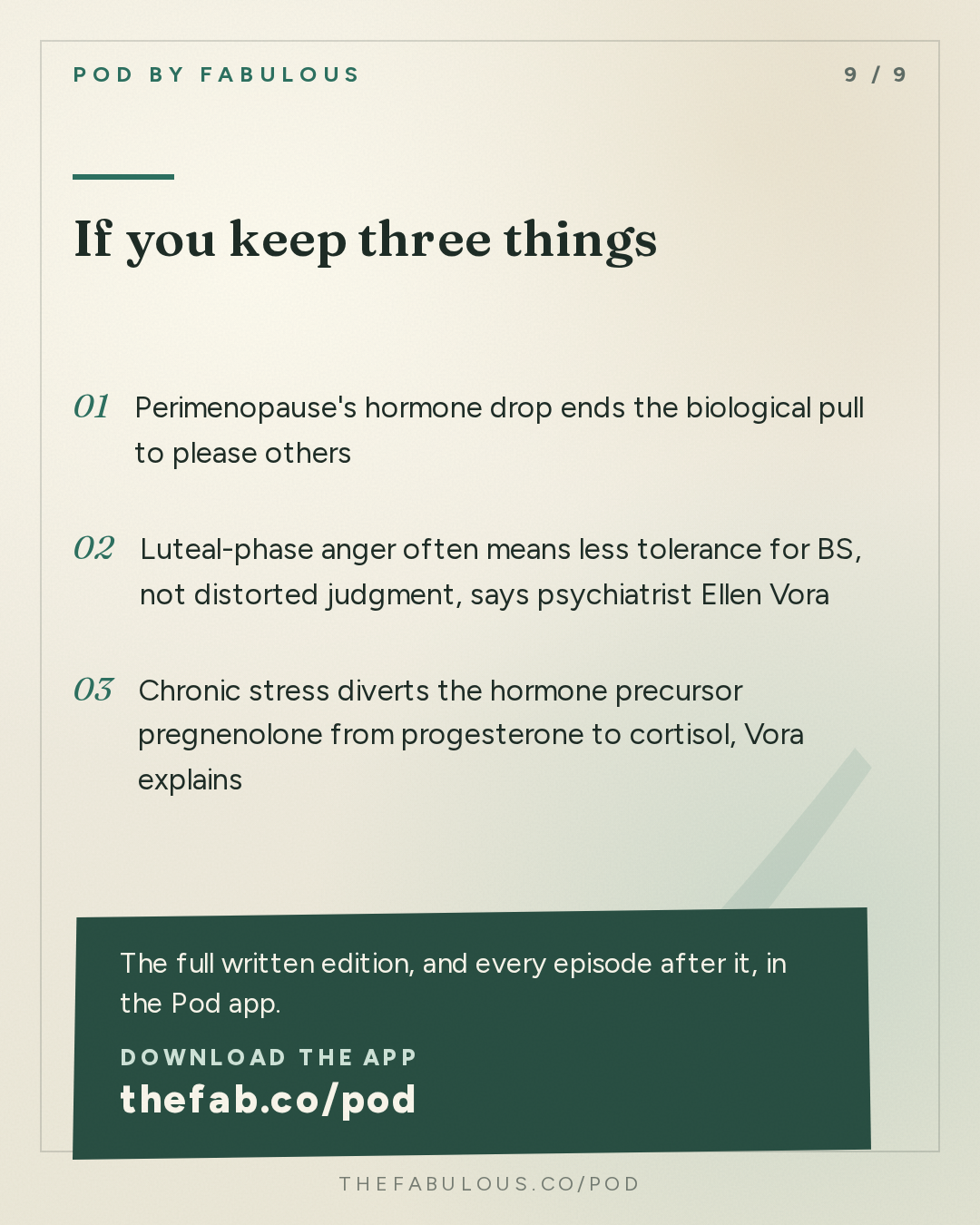
- Perimenopause's hormone drop ends the biological pull to please others
- Luteal-phase anger often means less tolerance for BS, not distorted judgment, says psychiatrist Ellen Vora
- Chronic stress diverts the hormone precursor pregnenolone from progesterone to cortisol, Vora explains
- True intuition feels neutral and quiet, while fear feels loud and urgent, Vora says
- Wearable sleep data can trigger a nocebo effect, making people feel worse than they actually feel, Vora warns
The episode in cards
By the numbers
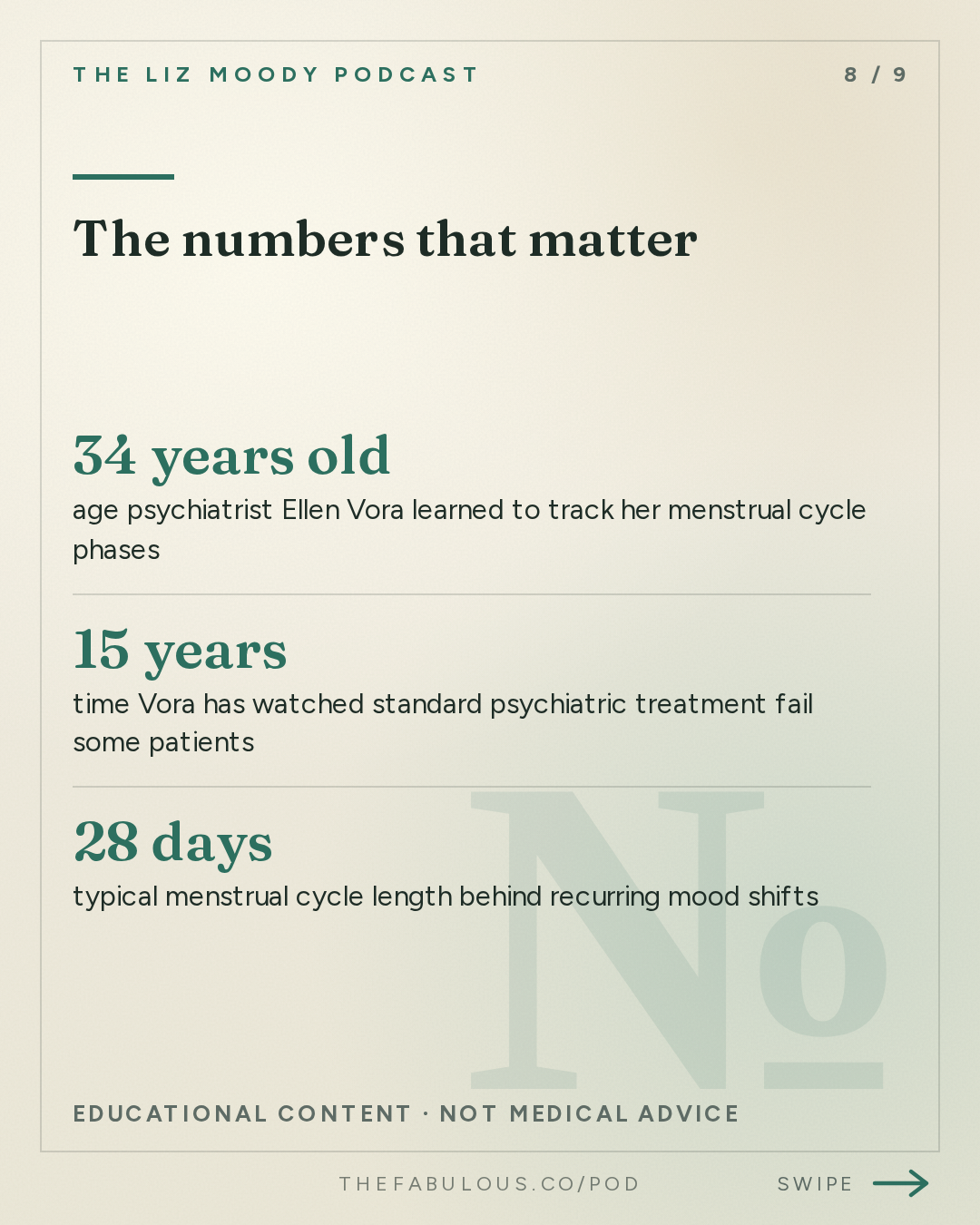
- 34 years old age psychiatrist Ellen Vora learned to track her menstrual cycle phases
- 15 years time Vora has watched standard psychiatric treatment fail some patients
- 28 days typical menstrual cycle length behind recurring mood shifts
In their words
“I am the witch who has a conventional medical background.”
“In the luteal phase, w- we're not irrational and distorted. We have a decreased tolerance for BS”
“Intuition is neutral. It is a period dropping in at the end of a sentence. It's not an exclamation point.”
“He now introduced a device in between him and knowing the state of his body.”
Protocols
-
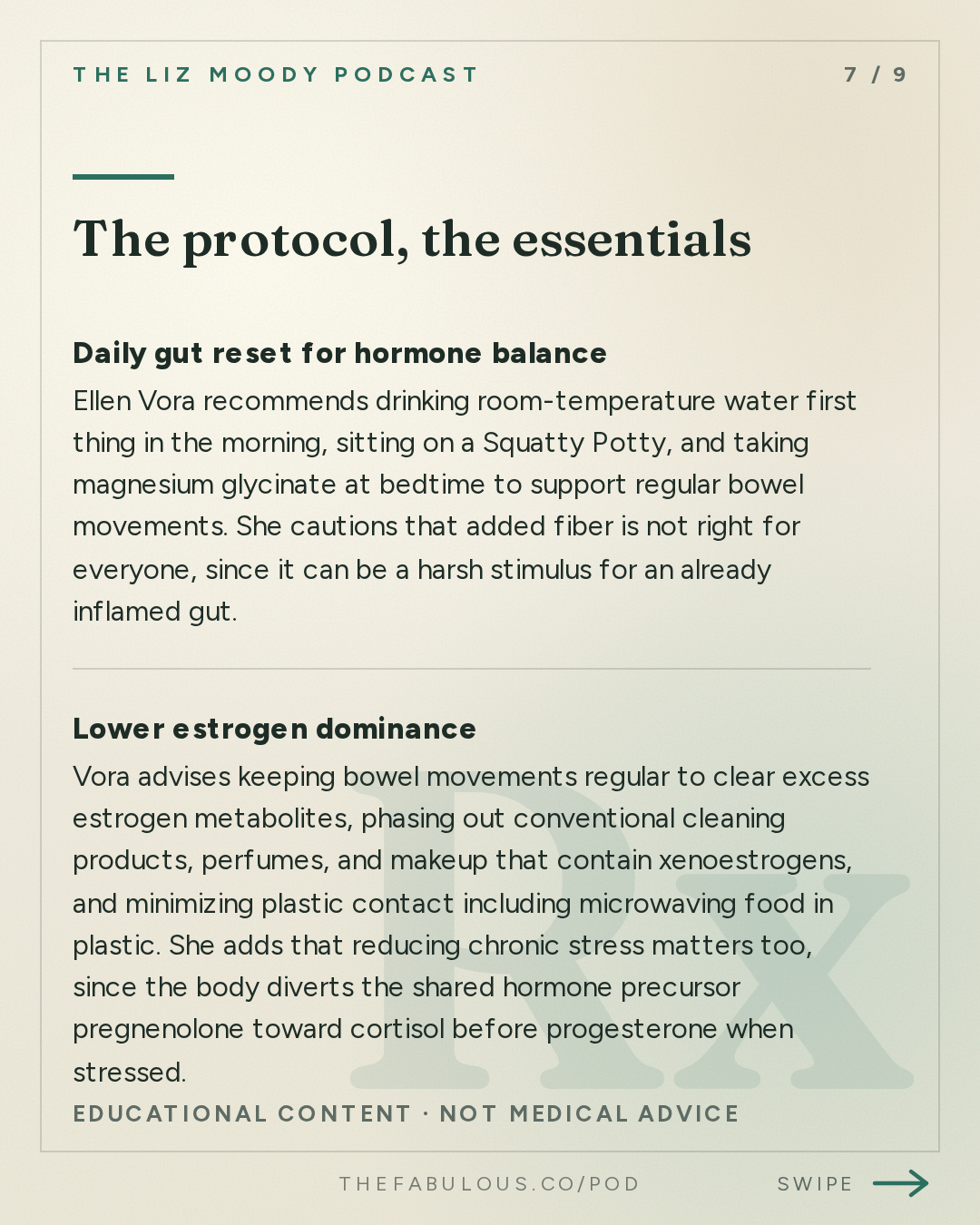
Daily gut reset for hormone balance
Ellen Vora recommends drinking room-temperature water first thing in the morning, sitting on a Squatty Potty, and taking magnesium glycinate at bedtime to support regular bowel movements. She cautions that added fiber is not right for everyone, since it can be a harsh stimulus for an already inflamed gut.
Daily
-
Lower estrogen dominance
Vora advises keeping bowel movements regular to clear excess estrogen metabolites, phasing out conventional cleaning products, perfumes, and makeup that contain xenoestrogens, and minimizing plastic contact including microwaving food in plastic. She adds that reducing chronic stress matters too, since the body diverts the shared hormone precursor pregnenolone toward cortisol before progesterone when stressed.
Ongoing
-
Track the menstrual cycle
Vora recommends learning fertility awareness methods to identify the follicular, ovulatory, and luteal phases through signs like cervical mucus texture and breast tenderness, so monthly mood shifts make sense instead of feeling random or shameful.
Ongoing, cycle by cycle
-
Reach calm before trusting a gut feeling
Vora suggests addressing unresolved trauma first, through EMDR (eye movement desensitization and reprocessing) or somatic experiencing therapy, before treating any strong internal signal as intuition. She advises adding nervous system tools like breathwork gradually, since piling on every practice at once can overwhelm the system instead of settling it.
As needed, ideally with a therapist
Questions this episode answers
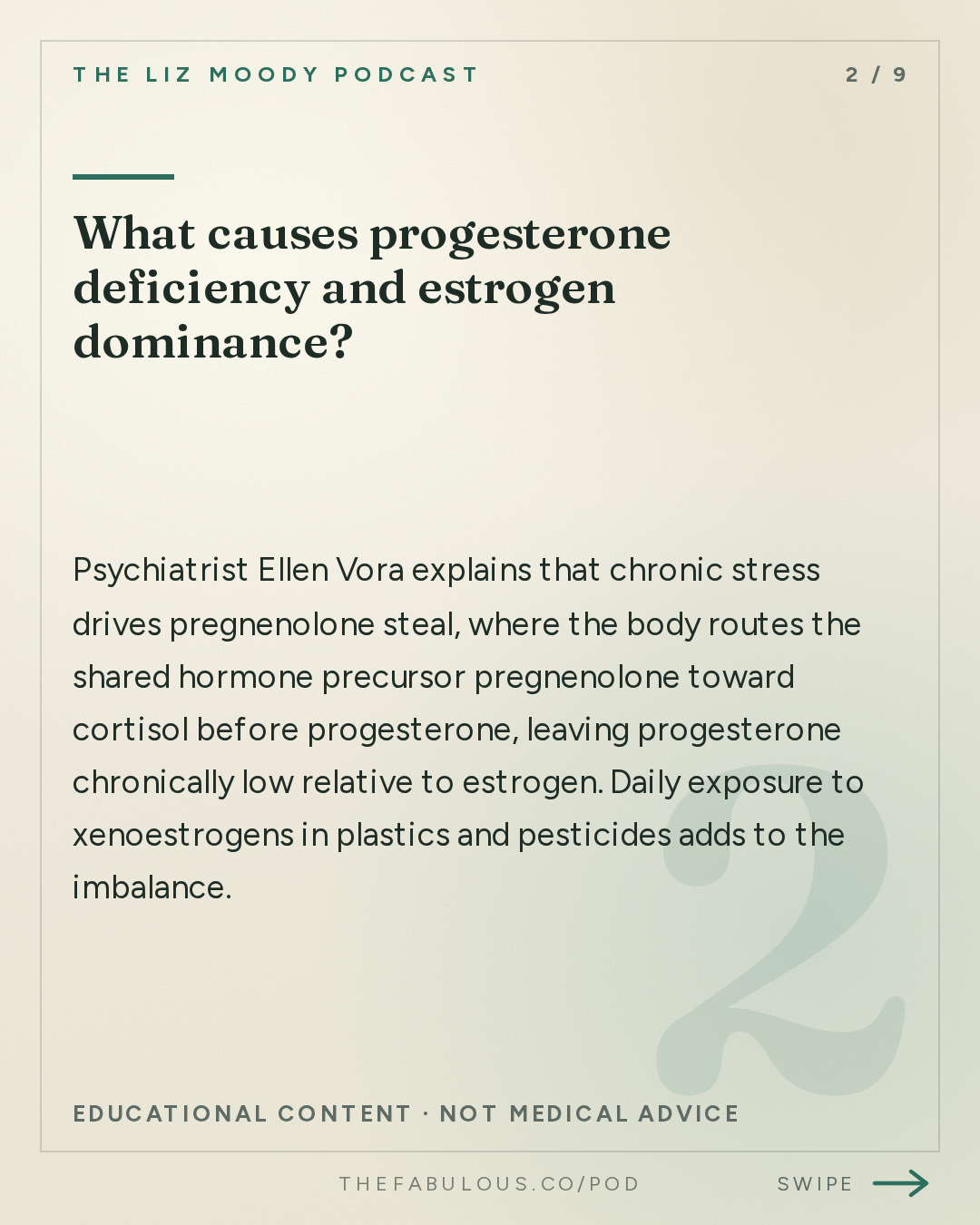
What causes progesterone deficiency and estrogen dominance?
Psychiatrist Ellen Vora explains that chronic stress drives pregnenolone steal, where the body routes the shared hormone precursor pregnenolone toward cortisol before progesterone, leaving progesterone chronically low relative to estrogen (19:43). Daily exposure to xenoestrogens in plastics and pesticides adds to the imbalance (18:55).
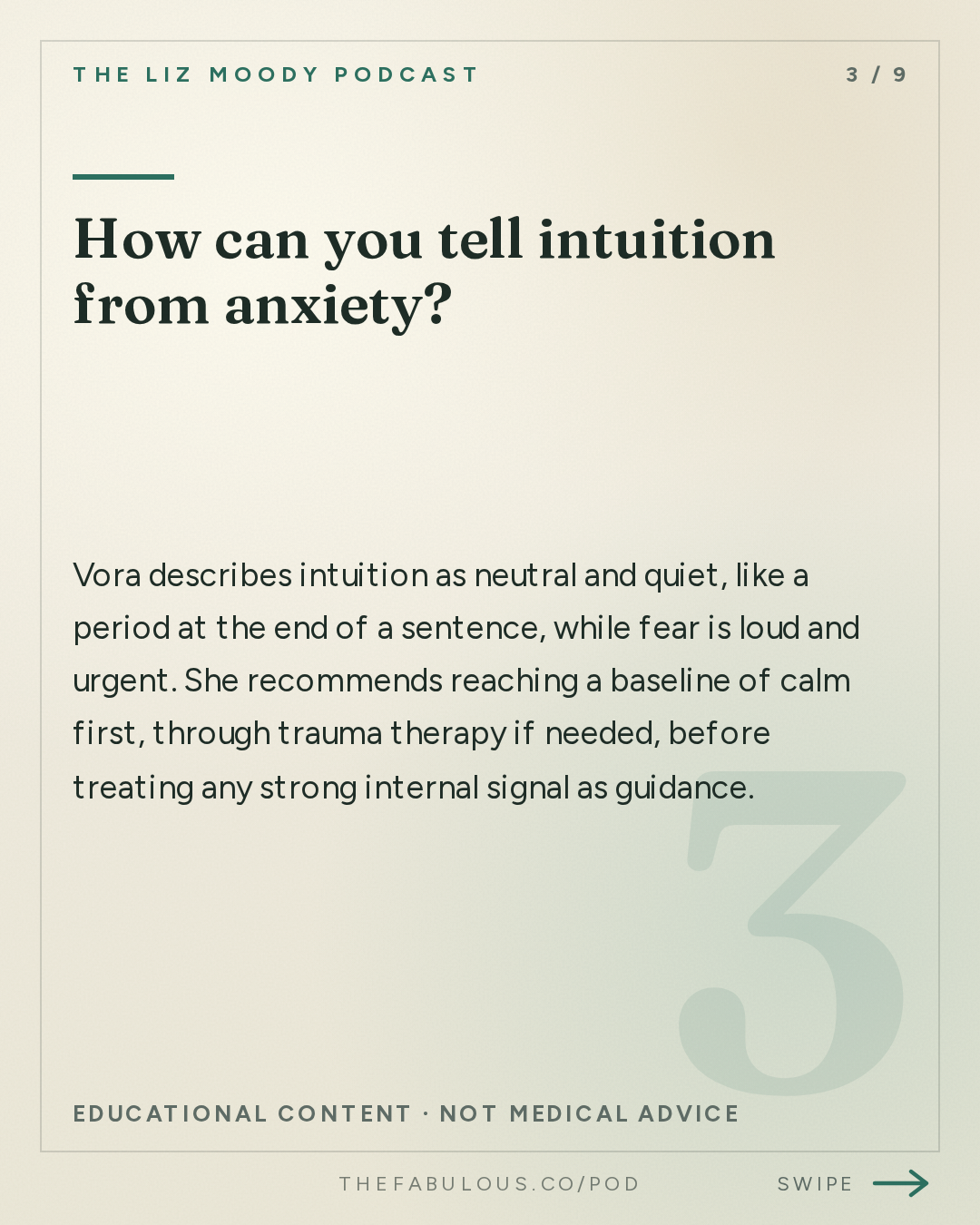
How can you tell intuition from anxiety?
Vora describes intuition as neutral and quiet, like a period at the end of a sentence, while fear is loud and urgent (61:59). She recommends reaching a baseline of calm first, through trauma therapy if needed, before treating any strong internal signal as guidance (63:35).
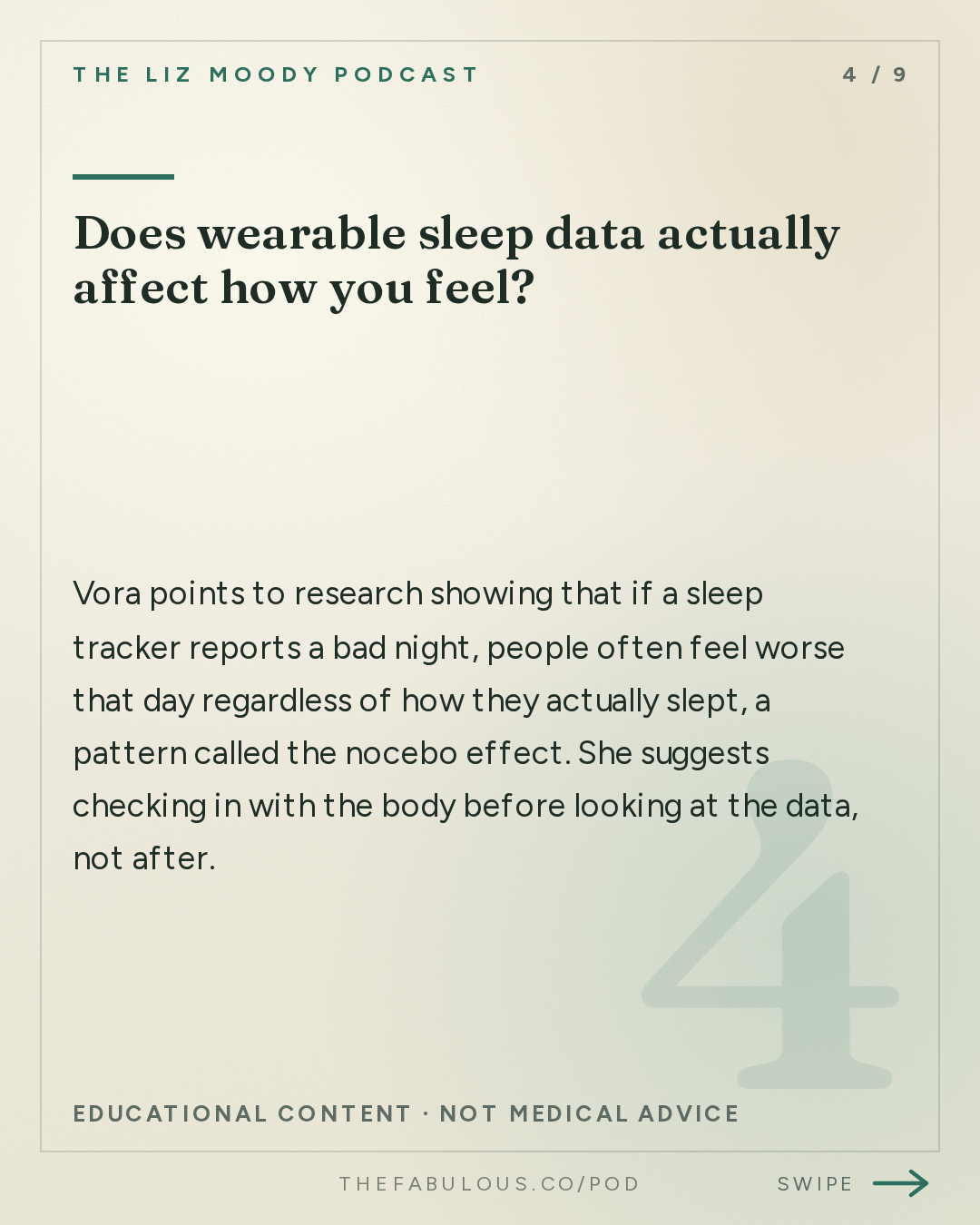
Does wearable sleep data actually affect how you feel?
Vora points to research showing that if a sleep tracker reports a bad night, people often feel worse that day regardless of how they actually slept, a pattern called the nocebo effect (42:25). She suggests checking in with the body before looking at the data, not after.
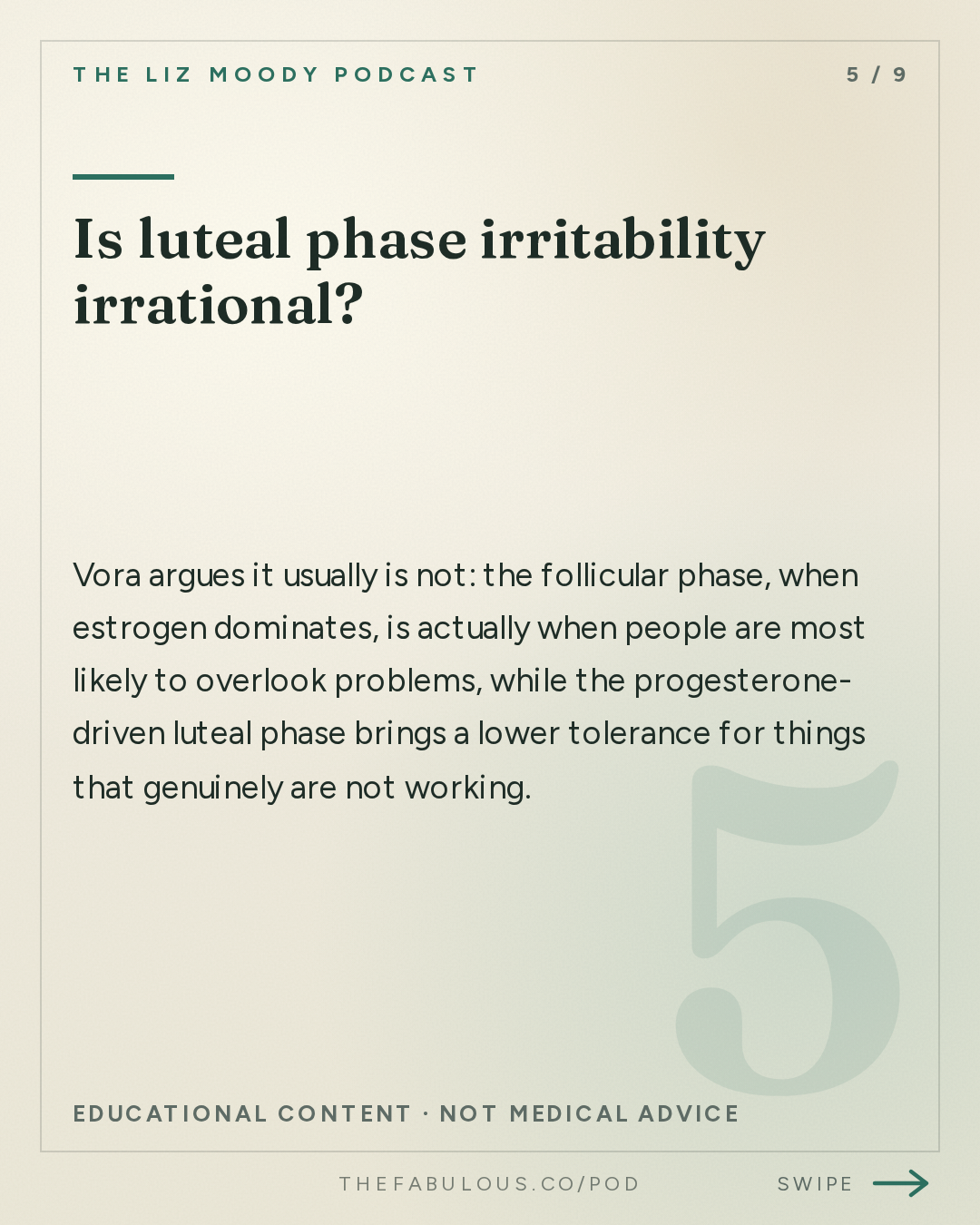
Is luteal phase irritability irrational?
Vora argues it usually is not: the follicular phase, when estrogen dominates, is actually when people are most likely to overlook problems, while the progesterone-driven luteal phase brings a lower tolerance for things that genuinely are not working (17:40).
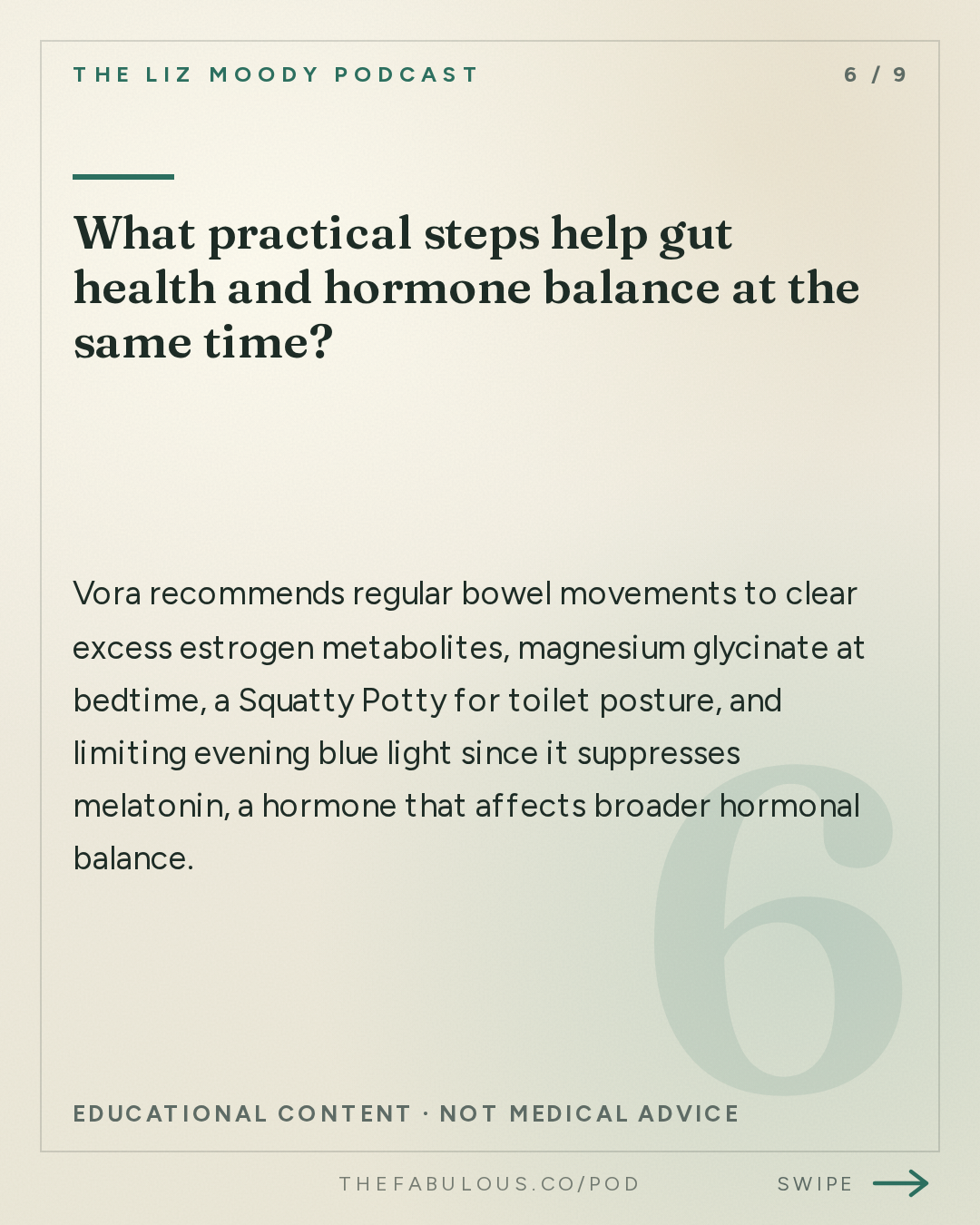
What practical steps help gut health and hormone balance at the same time?
Vora recommends regular bowel movements to clear excess estrogen metabolites, magnesium glycinate at bedtime, a Squatty Potty for toilet posture, and limiting evening blue light since it suppresses melatonin, a hormone that affects broader hormonal balance (31:49, 33:15).
The full read, in cards
Go deeper
- Season of the Witch: A Psychiatrist's Case for Magic — argues for reclaiming intuitive and embodied ways of knowing that culture has shamed
- On Our Best Behavior — author Elise Loehnen's idea that envy reveals a buried desire rather than a threat
- UCLA study on irritable bowel syndrome — links IBS to heightened proprioceptive awareness of what food is doing to the body
- Iain McGilchrist's work on brain hemispheres — shows the left hemisphere is more articulate but less reliable than the holistic right hemisphere
Mentioned
Ellen Vora · Liz Moody · Season of the Witch · ACE scores · EMDR · Squatty Potty · Oura Ring · Drew Ramsey · Iain McGilchrist · Laura Lynn Jackson
More from this show and category
Is the Male Loneliness Crisis Real?
Pew and Harvard surveys show men and women are equally lonely, debunking the male loneliness crisis narrative. Income is the stronger predictor: adults earning under $40,000 are far more likely to be lonely than those earning over $90,000. Host Liz Moody explains mankeeping, Stanford researcher Angelica Ferrara's term for the unpaid labor women do managing men's social lives.
Marisa Franco's Real Rules of Adult Friendship
Psychologist Marisa Franco grades viral friendship advice from S to F, debunking myths about bad texters and one-sided friends. She recommends assuming people like you, capping new-friend dinners at six to eight guests, and meeting work friends outside the office before a job ends to keep the friendship alive.
Dr. Florence Camatte: GLP-1s and Longevity
Endocrinologist Florence Camatte says most age-related disease traces to one inherited flaw: poor glucose control. That is why she calls GLP-1 drugs like Mounjaro the antibiotics of this century, and why she recommends five blood tests, testosterone for women starting in their 30s, and trazodone over cold plunges for real longevity gains.
Gen Z vs Millennial Iced Coffee Workplace Debate
The viral debate over bringing an iced latte to a job interview is really about generational tolerance for discomfort at work. Liz Moody traces how 2008-era scarcity built millennial hustle culture, why it burned women out, and why Gen Z's boundary setting grew from watching that burnout up close.
