
Gen Z vs Millennial Iced Coffee Workplace Debate
The Viral Iced Coffee Debate: How To Win at Work (Without Burning Out)
▶ Listen to the full episode More from The Liz Moody Podcast
The brief
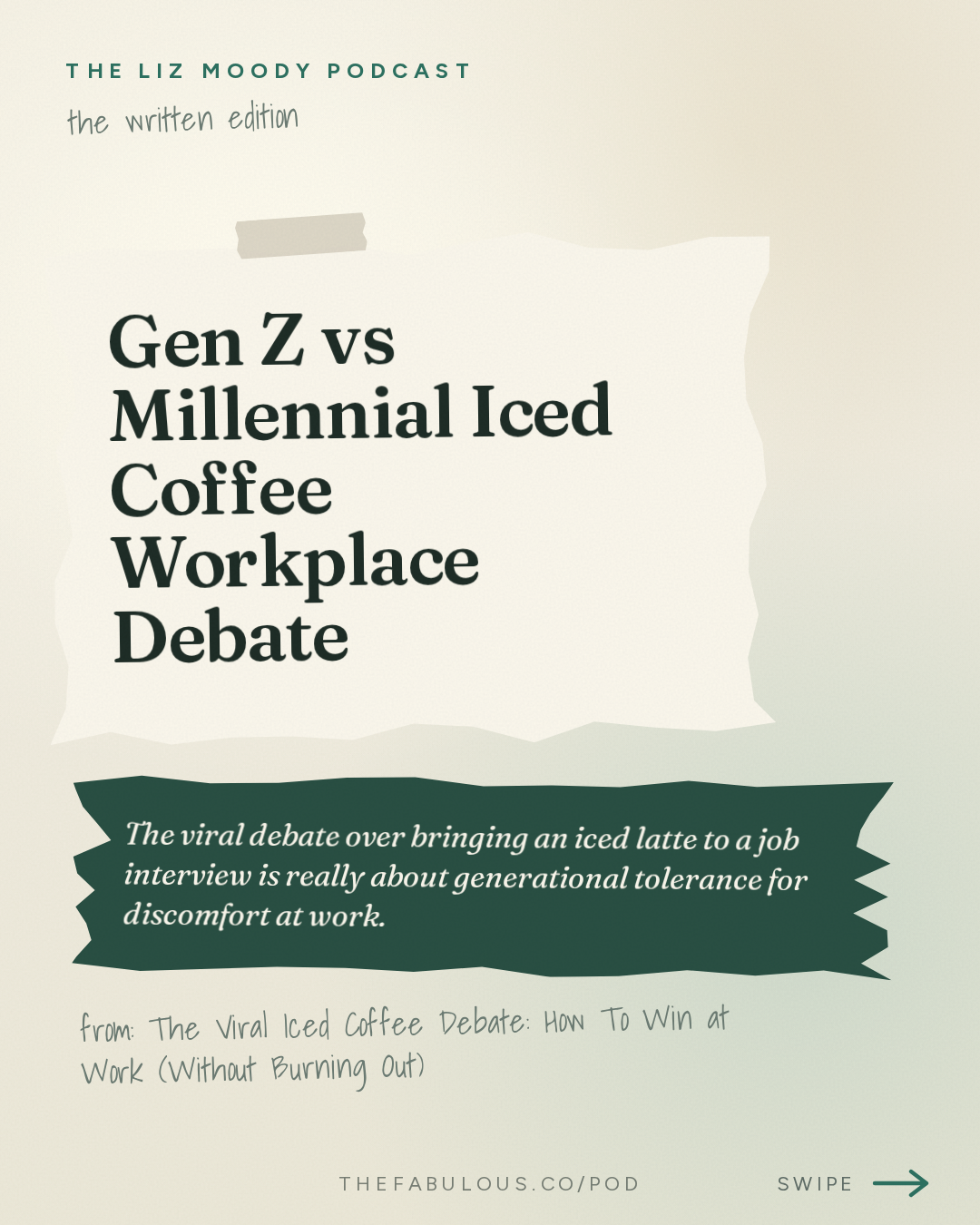
The viral debate over bringing an iced latte to a job interview is really about generational tolerance for discomfort at work. Liz Moody traces how 2008-era scarcity built millennial hustle culture, why it burned women out, and why Gen Z's boundary setting grew from watching that burnout up close.
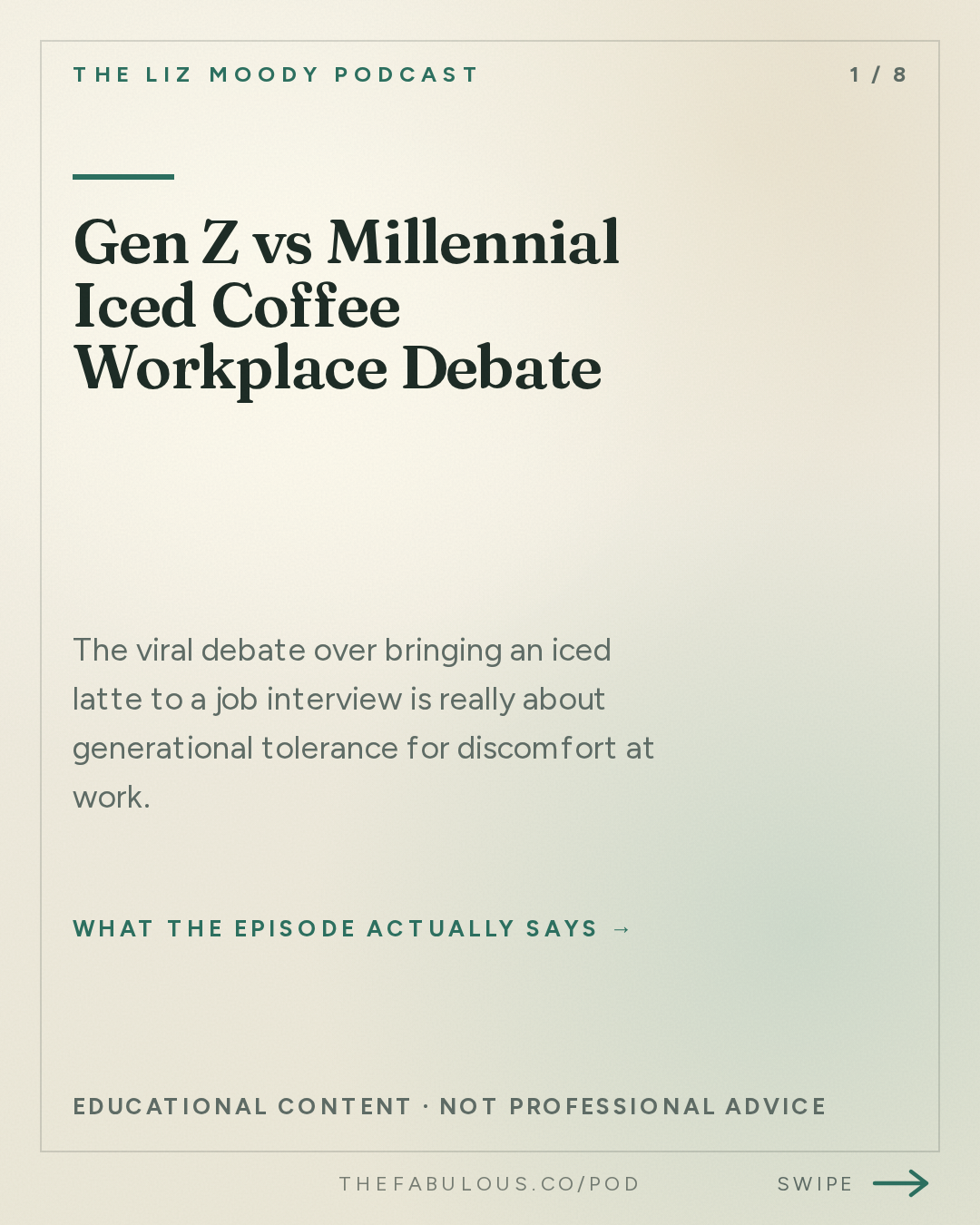
A hiring manager posts a TikTok complaining that Gen Z candidates keep showing up to interviews holding iced lattes (00:00). The clip detonates online, splitting comment sections cleanly along generational lines: millennials call it disrespectful, Gen Z says it is nobody's business. Liz Moody spends the rest of the episode arguing that the coffee cup is a decoy. The real fight underneath it is about who learned to tolerate discomfort, who refused to, and why both choices made sense given the economy each generation inherited.
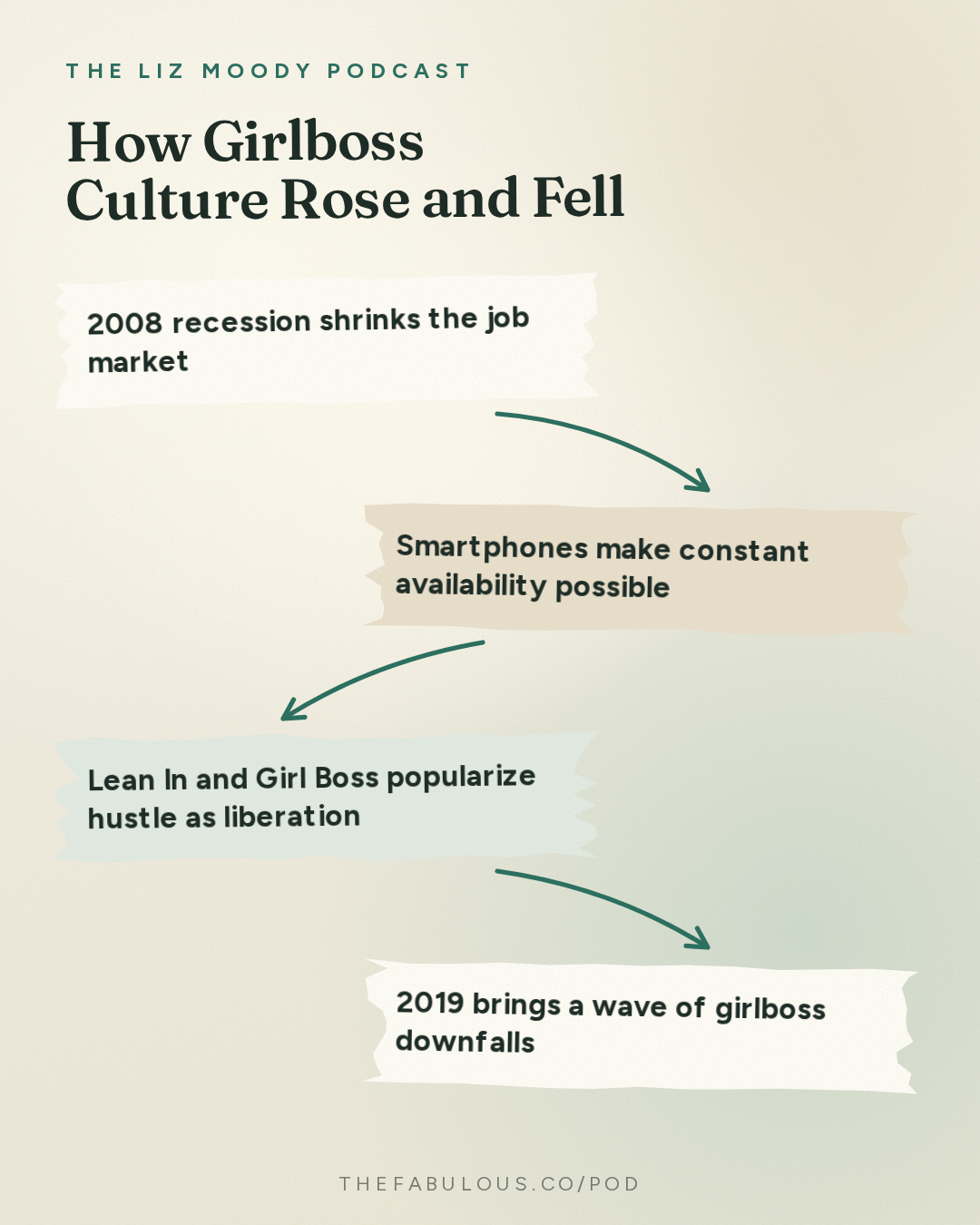
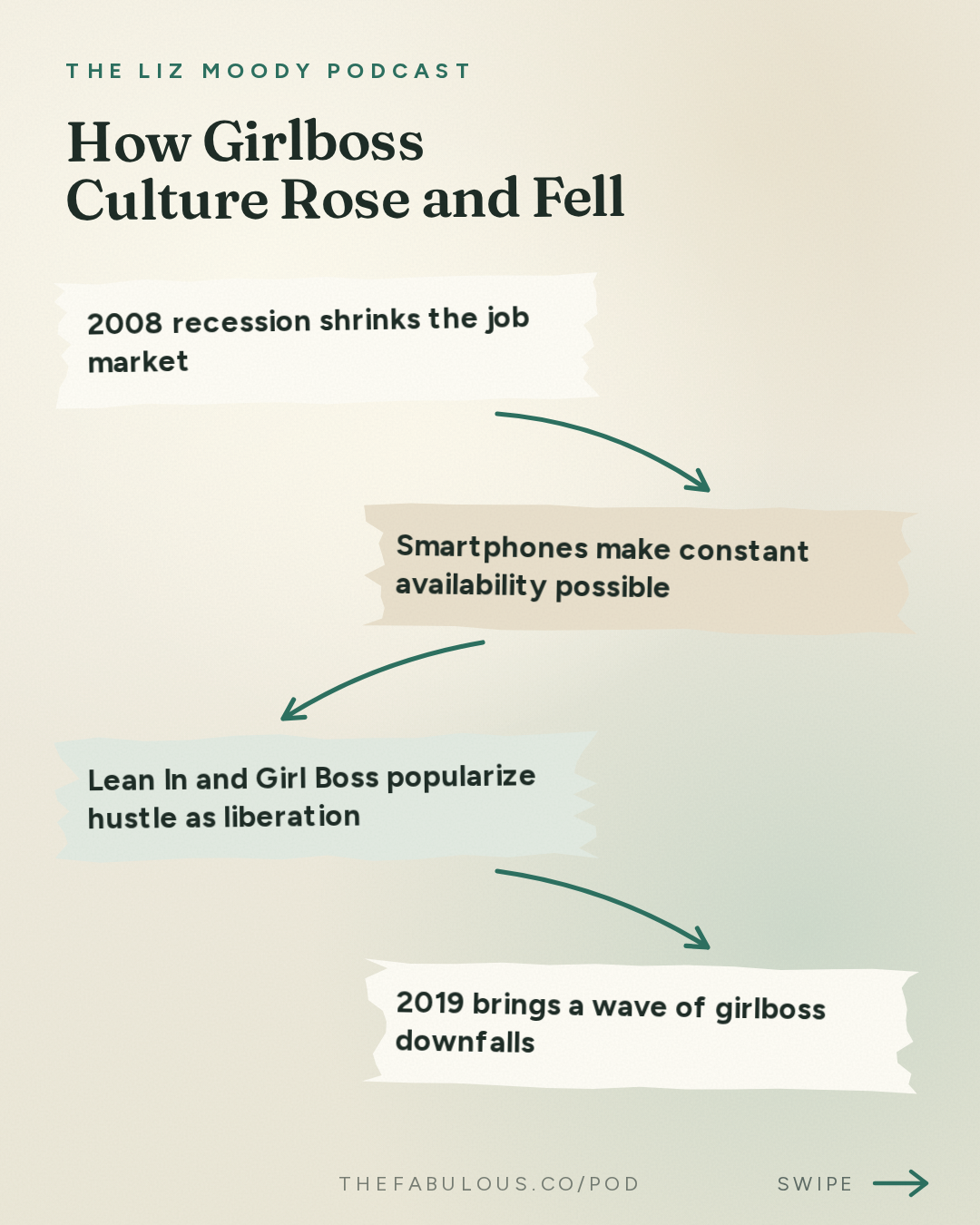
Start with the millennials, since they built the stage Gen Z walked onto. Moody, a millennial herself, places the generation's birth years at 1981 to 1996 (02:04) and notes that many graduated straight into the 2008 financial crisis (02:28). Her then husband had job offers lined up before graduation, she says, and by the time he finished that fall, the offers had evaporated. Work became scarce, so working hard became identity. That scarcity, she argues, also produced the girlboss: a cultural character who was confident, loud, assertive, and demanding (02:52), built for a labor market where there were not enough jobs to go around.
The girlboss had a bookshelf. Sheryl Sandberg's Lean In arrived in 2013, telling women to ask for raises and demand a seat at the table (03:40). A year later, Sophia Amoruso's Girl Boss told a scrappier version of the same story, a college dropout who built a fashion company by refusing to accept no (04:10). Both books agreed the system could be beaten through sheer individual effort. Moody cites research showing that Lean In style messaging actually made people more likely to believe women were both the cause of workplace inequality and the ones responsible for fixing it (04:10).
"Women did not cause workplace inequality, and it is not their responsibility to fix it." (Liz Moody, 04:10)
Then came the reckoning. By 2019, girlboss icons started falling in quick succession: the CEO of Away luggage stepped down after reports of a toxic workplace (06:01), Jen Gotch left ban.do amid similar accusations (06:30), and Audrey Gelman exited The Wing the same month over allegations of racism and poor treatment of employees (06:52). Moody is careful to say none of that behavior should be excused. But she also points out the asymmetry: male executives who scream at staff or run companies with little diversity rarely face the same public unraveling. Two pieces of research back this up. One study found that women who promoted themselves at work were seen as competent but less likable, and were less likely to be hired (08:25). Another found that women who showed anger at work were given lower status and lower pay, while men who showed identical anger faced no penalty at all (08:25).
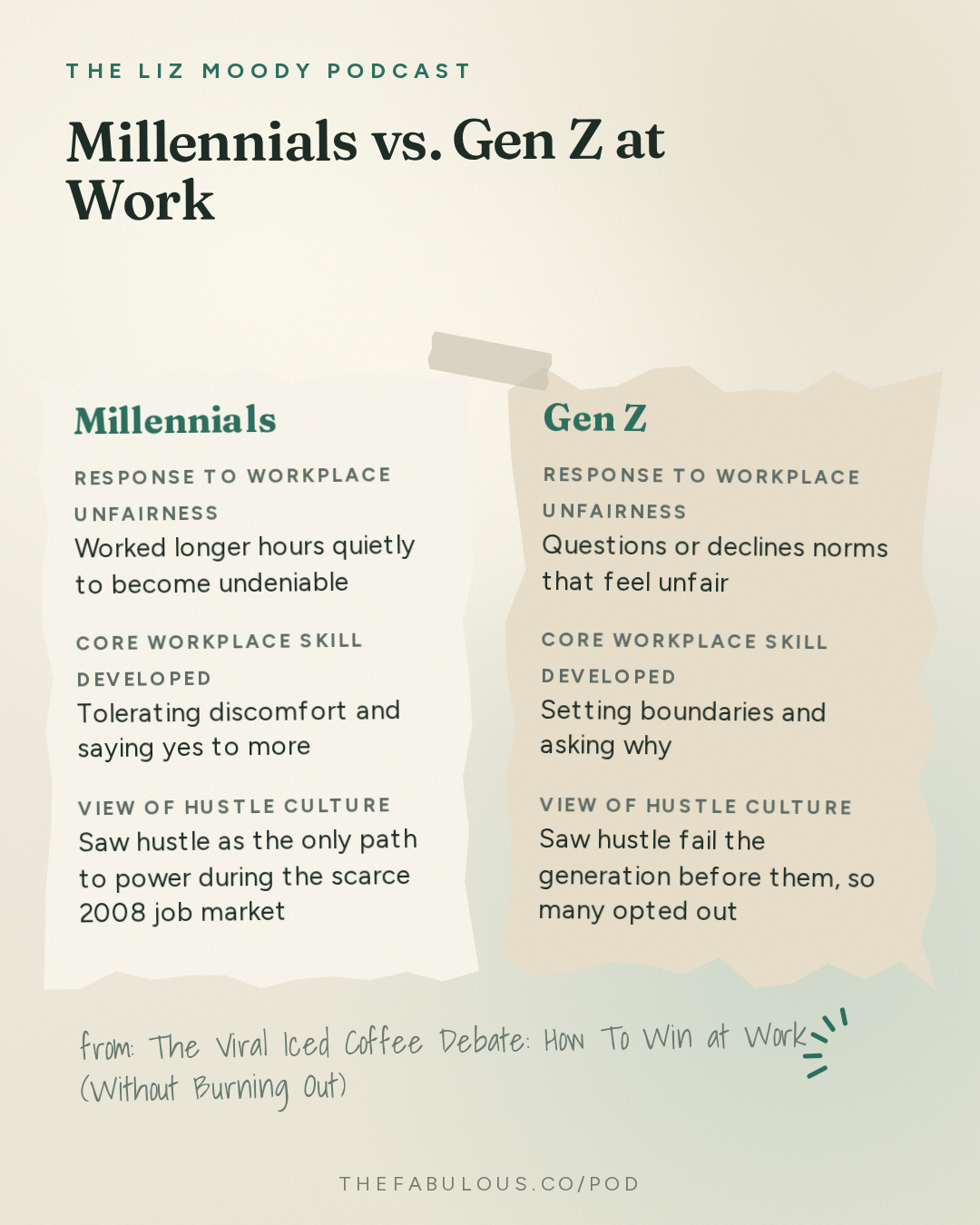
So millennial women adjusted. If loud ambition got punished, the strategy became quiet, relentless output, working until no one could deny your value. Then the pandemic made "undeniable" a job with no edges. One study of more than three million workers found the average workday grew by about 48 minutes after lockdowns began (09:36). At the same time, Wharton economist Corinne Lowe's study, titled Winning the Bread and Baking It Too, found that men's share of housework does not shift whether they earn 20 percent or 80 percent of household income (10:03). Millennial women were working longer days and still doing most of the unpaid labor at home.
What Gen Z Watched, and Decided
Gen Z, born roughly between 1997 and 2012 and now between 14 and 29 years old (10:27), entered the workforce in this exact stretch. Many started careers on Zoom, during tech layoffs that cut thousands of jobs at once and AI headlines promising to automate the rest. They also watched, in real time, millennial women lean in, perform, overwork, and still end up exhausted.
"They watch millennial workers put their heads down and say yes to taking on more at work and at home, and they see that these millennial women are burnt out. They are exhausted, and they are still not reaping any rewards." (Liz Moody, 12:12)
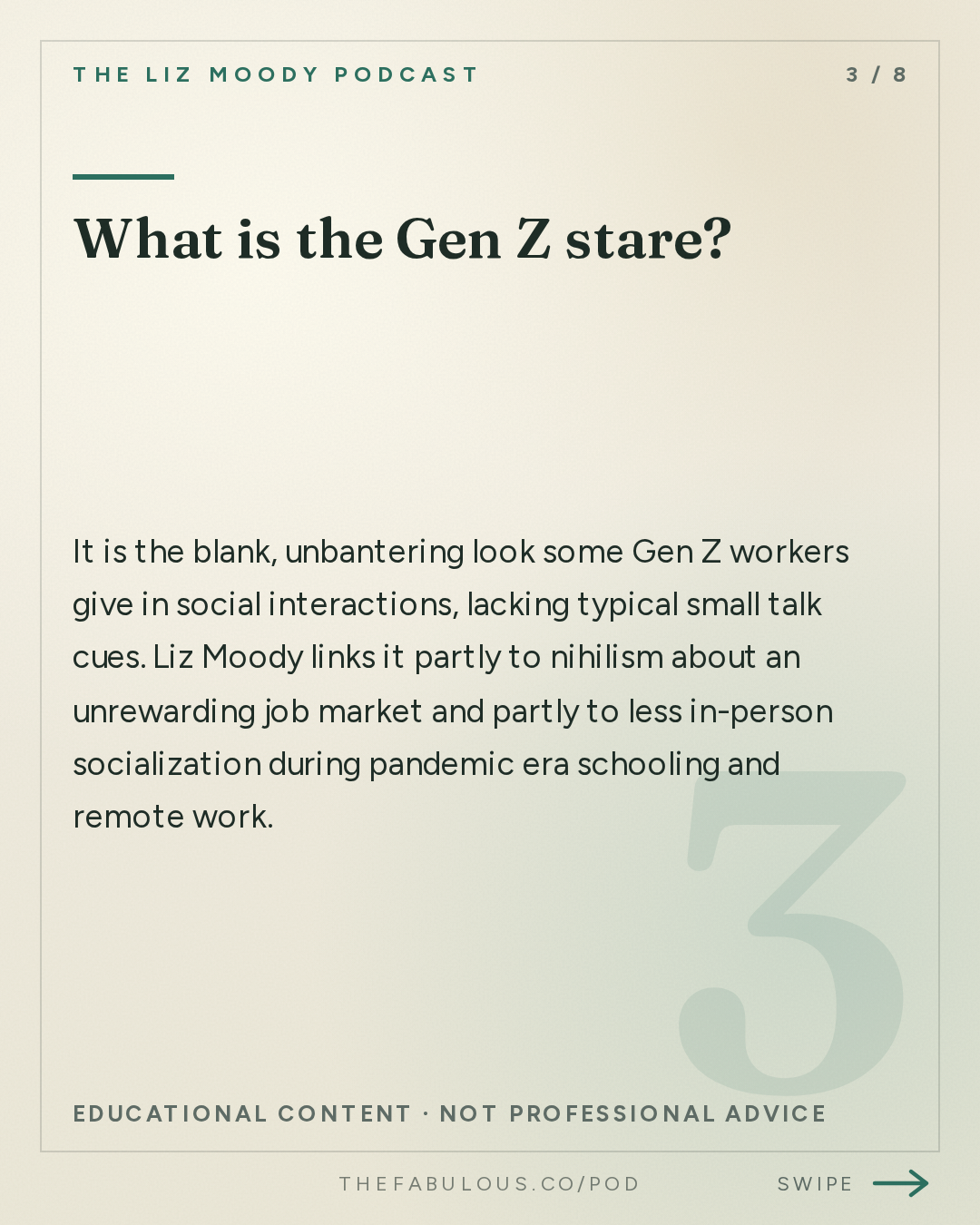
Moody calls the result a kind of nihilism: if performing for the system does not pay off, why perform at all. That shows up as the "Gen Z stare," the blank, unbantering look that older coworkers find disconcerting (12:59). She ties part of this to pandemic era isolation rather than pure attitude. A generation that did school and early jobs remotely simply got less practice at small talk and social friction (13:25).
Her bigger argument arrives once both generations are side by side. She cites a study showing that people who have lived through a hardship are, on average, less compassionate toward someone struggling through that same hardship, not more (19:16).
"People who have been through hardships were less compassionate towards somebody struggling through the same hard thing, not more." (Liz Moody, 19:16)
That finding explains a good part of the internet fight. Millennials who absorbed sixty-hour weeks are not automatically more sympathetic to a generation refusing to do the same, they can be less sympathetic. Moody argues society as a whole has gotten worse at tolerating discomfort, the plain fact that most jobs involve rules that do not quite make sense and people one does not fully respect (19:39). Her claim, offered as her own view rather than settled research, is that the people who do best over the next decade will be the ones who practice sitting with discomfort on purpose: putting the phone down, resisting instant gratification, staying in an awkward conversation instead of leaving it (20:42).
Half an Answer Each
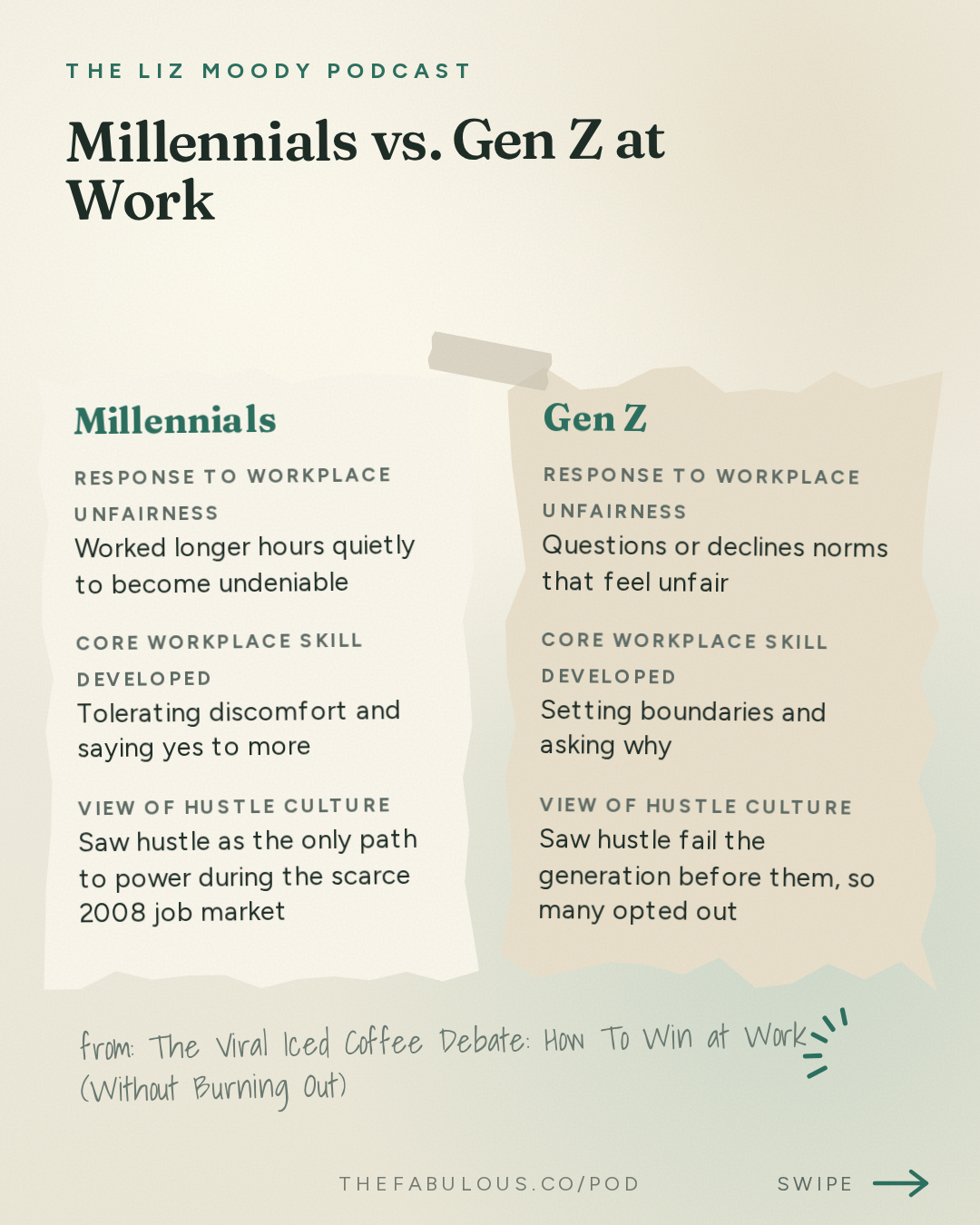
By the episode's final chapters, Moody drops the idea that one generation is simply right. Each side, she says, has half of the answers (24:22). Millennial women got very good at enduring discomfort, saying yes to the extra project, answering the late night email, not making a fuss. Gen Z got good at the opposite skill: saying no, asking why a rule exists before following it, refusing to perform loyalty to a system that can lay them off regardless.
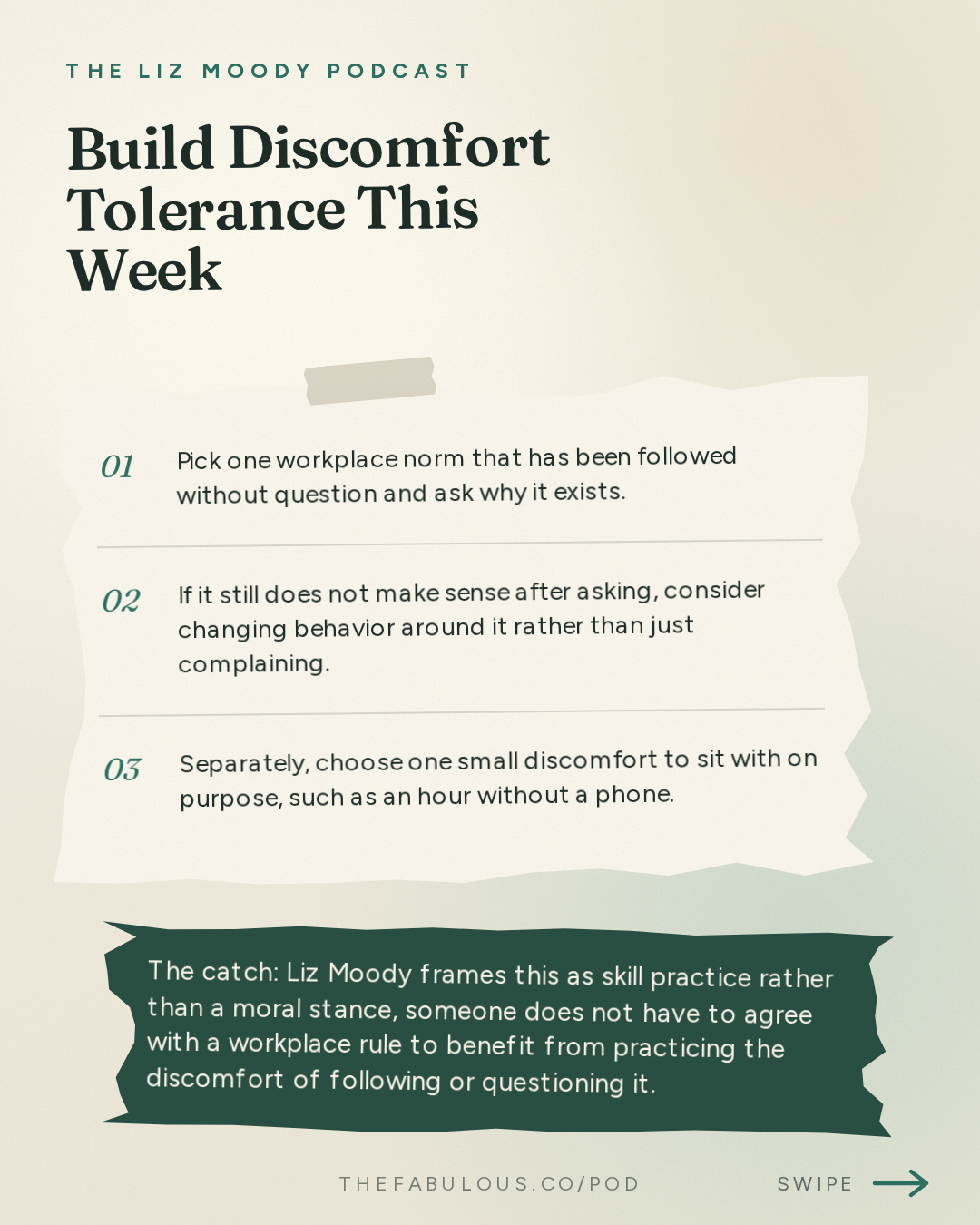
Pure discomfort tolerance without boundaries leads to burnout, waiting forever for a reward that never arrives. Pure boundary setting without any discomfort tolerance makes it hard to keep friends, get hired in a tight labor market, or get promoted, because workplaces are still built around enduring some friction. Moody's own suggestion blends the two. She proposes that habitual rule followers look for one chance a week to question a workplace norm instead of silently accepting it (25:18), and she challenges anyone who cannot imagine an interview without a latte to practice small discomfort on purpose, something as modest as an hour without a phone (26:07).
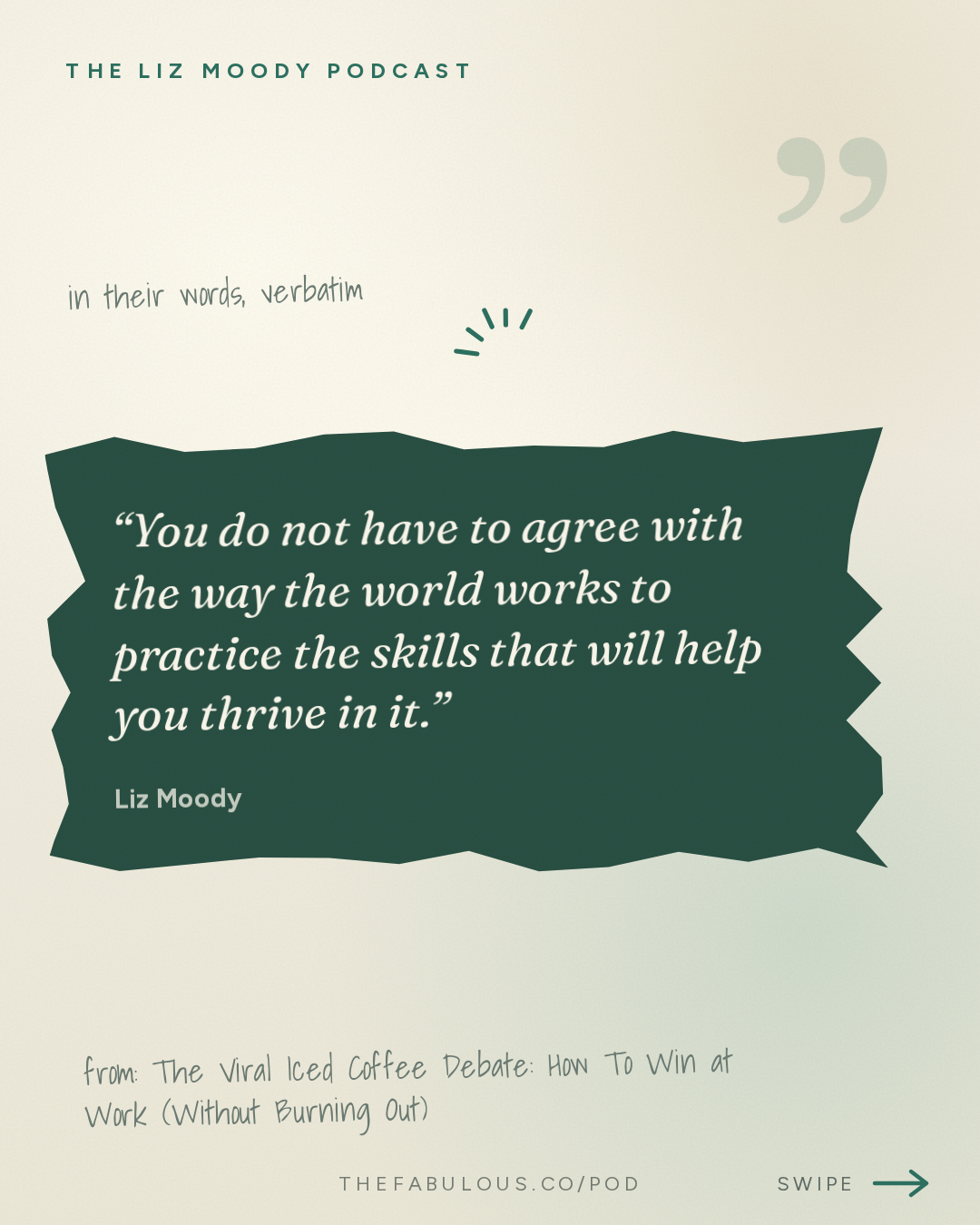
"You do not have to agree with the way the world works to practice the skills that will help you thrive in it." (Liz Moody, 26:07)
That line is the episode's real thesis, and it reframes the iced latte argument as a false choice. Bringing the coffee or leaving it home was never the point. The point is whether someone has practiced enough discomfort to choose deliberately, rather than out of blind habit or blind refusal. Millennials inherited a scarce job market and learned to endure almost anything to keep a seat at the table. Gen Z inherited the end of that same bargain and learned, correctly, that endurance alone was not getting anyone paid. The honest synthesis Moody lays out is not nostalgia for girlboss hustle, and it is not a case for total detachment either. It is building tolerance for small, chosen discomforts, so the larger, necessary ones, a hard conversation, an uncomfortable negotiation, a friendship that requires showing up imperfectly, stop feeling impossible.
Ask this episode anything
Pod's AI answers from the episode itself, with the minute mark so you can hear it yourself.
Or start with one of these
Ask this episode
Pod's AI listens to the whole episode to answer, and points you to the minute it comes from.
The rest of this answer, and any question after it
Answers come from the episode itself, never from a summary of it.
ContinueKey takeaways
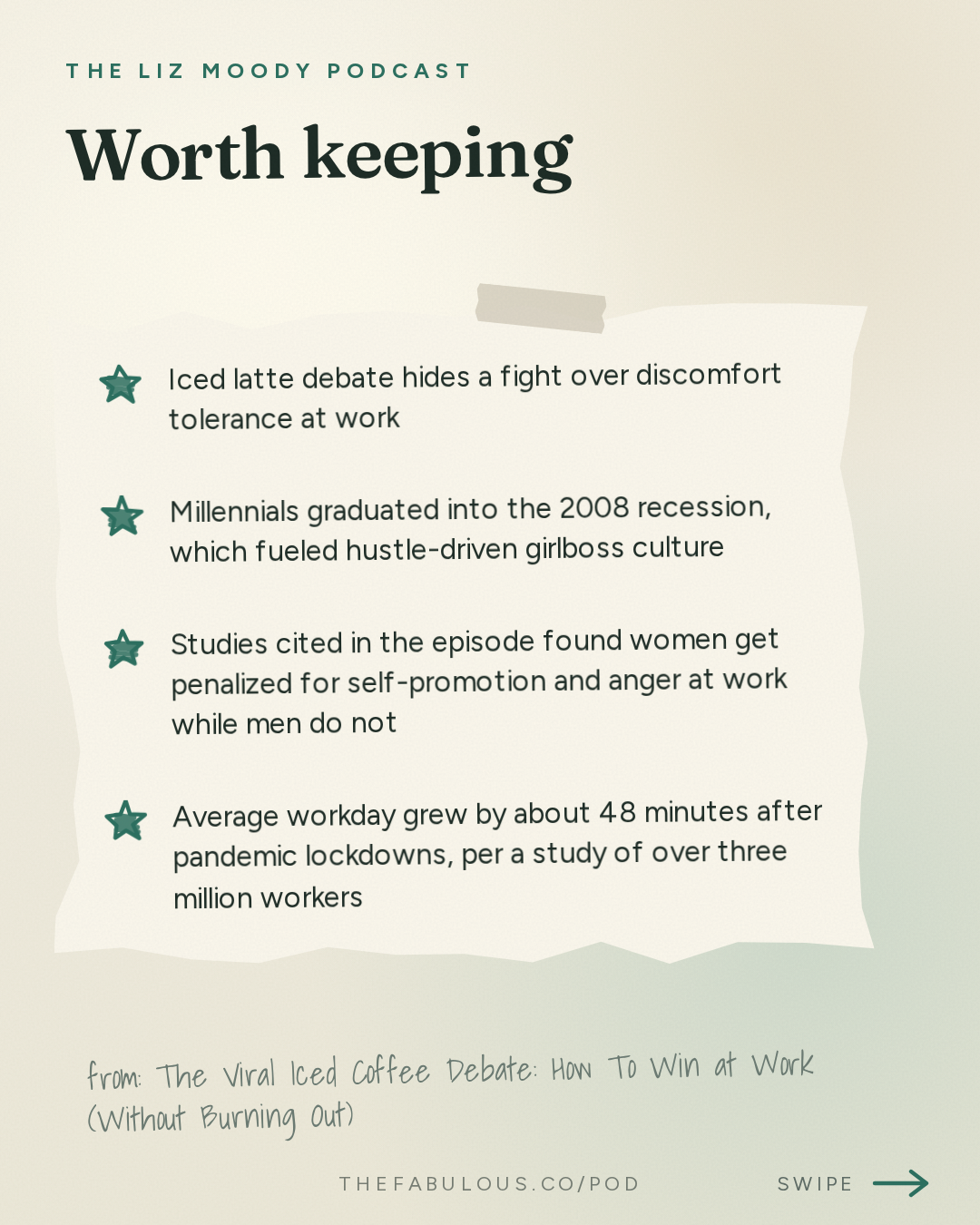
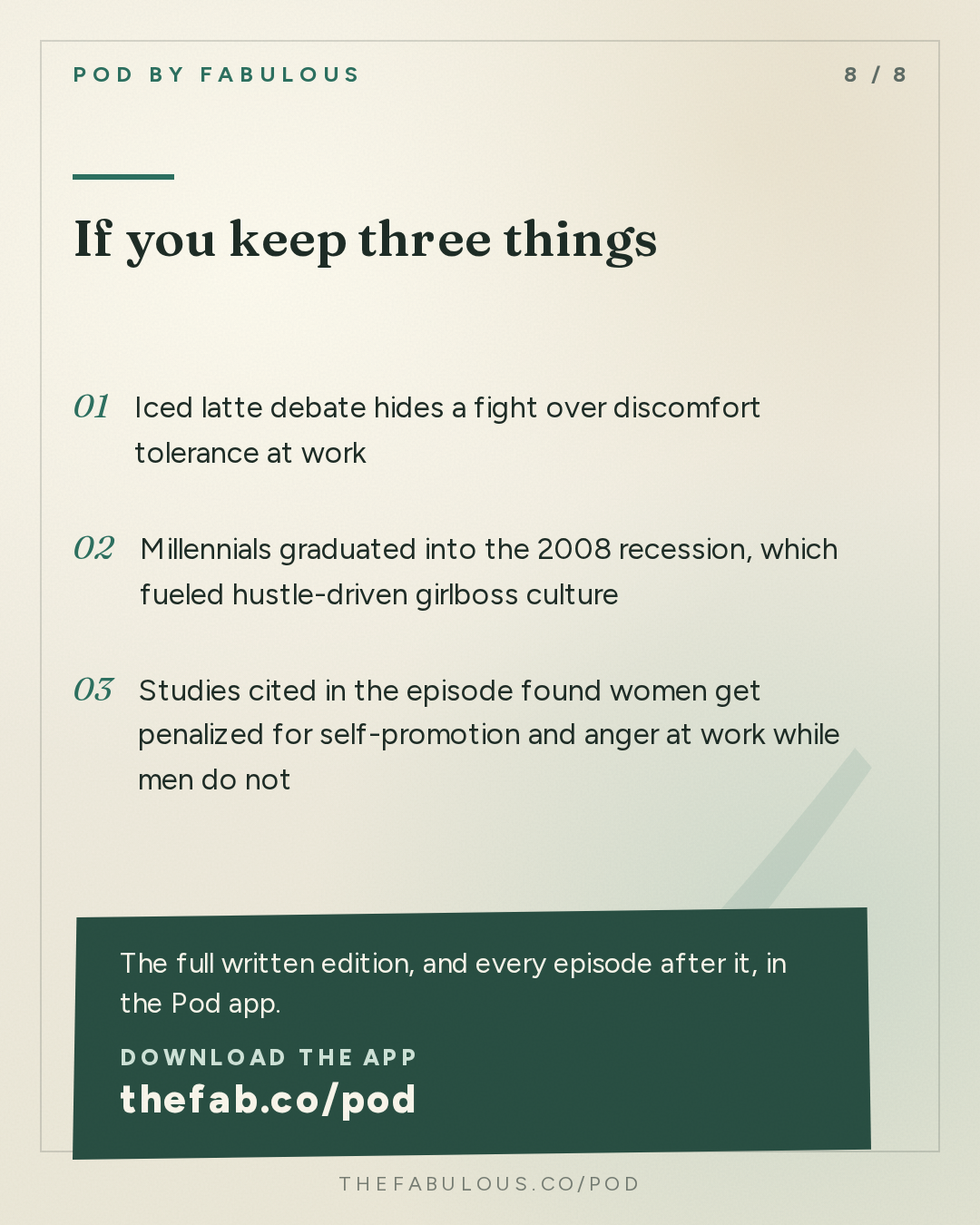
- Iced latte debate hides a fight over discomfort tolerance at work
- Millennials graduated into the 2008 recession, which fueled hustle-driven girlboss culture (02:28)
- Studies cited in the episode found women get penalized for self-promotion and anger at work while men do not (08:25)
- Average workday grew by about 48 minutes after pandemic lockdowns, per a study of over three million workers (09:36)
- Liz Moody argues millennials and Gen Z each hold half the answer: endurance plus boundaries (24:22)
The episode in cards
By the numbers
- 2008 year financial recession many millennials graduated into
- 48 minutes minutes increase in average workday length after pandemic lockdowns, based on a study of over 3 million workers
In their words
“Would you not hire somebody if they came into an interview with an iced latte?”
“Women did not cause workplace inequality, and it is not their responsibility to fix it.”
“People who have been through hardships were less compassionate towards somebody struggling through the same hard thing, not more.”
“You do not have to agree with the way the world works to practice the skills that will help you thrive in it.”
“Each side has half of the answers.”
Protocols
-
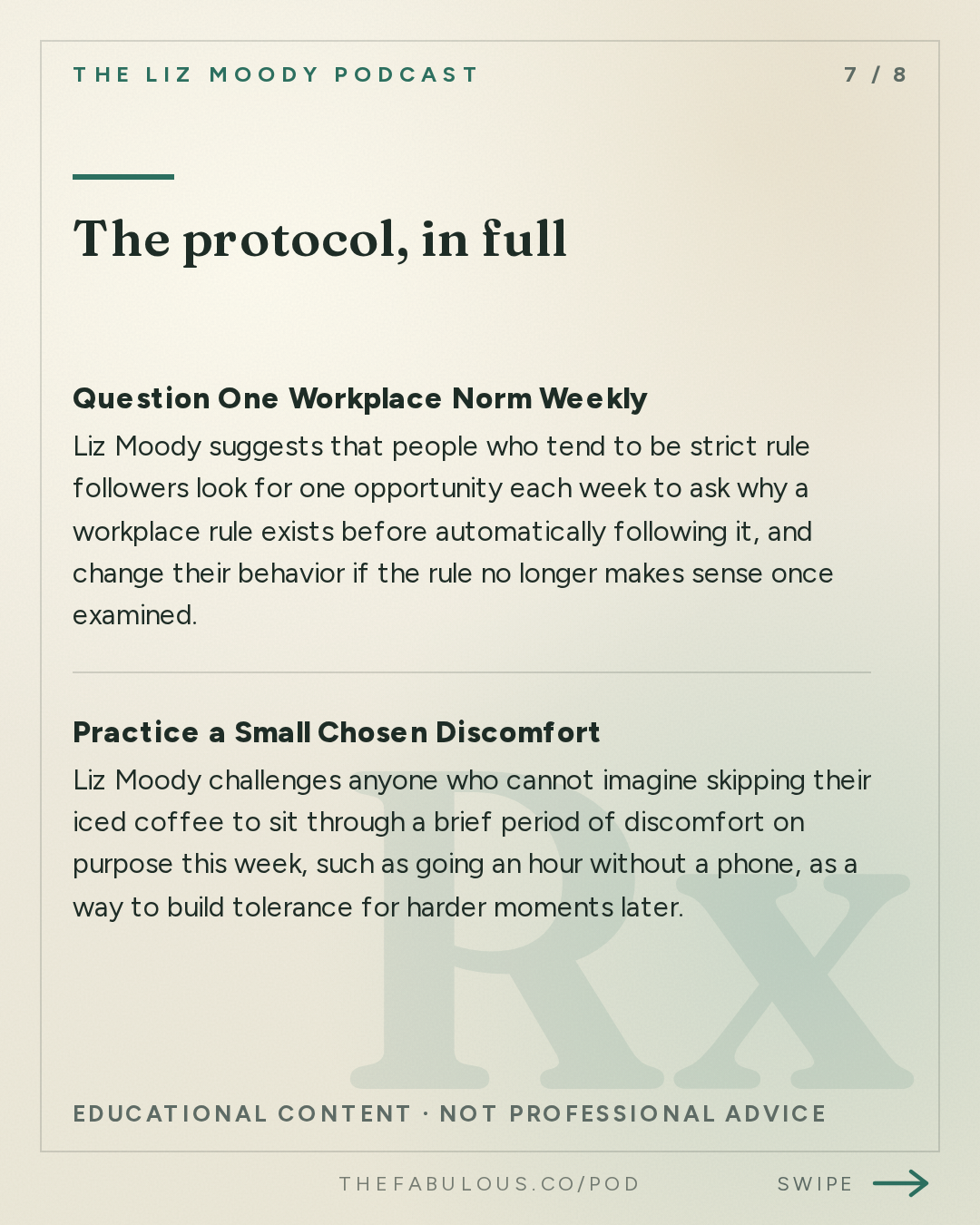
Question One Workplace Norm Weekly
Liz Moody suggests that people who tend to be strict rule followers look for one opportunity each week to ask why a workplace rule exists before automatically following it, and change their behavior if the rule no longer makes sense once examined.
once a week
-
Practice a Small Chosen Discomfort
Liz Moody challenges anyone who cannot imagine skipping their iced coffee to sit through a brief period of discomfort on purpose this week, such as going an hour without a phone, as a way to build tolerance for harder moments later.
once this week
Questions this episode answers
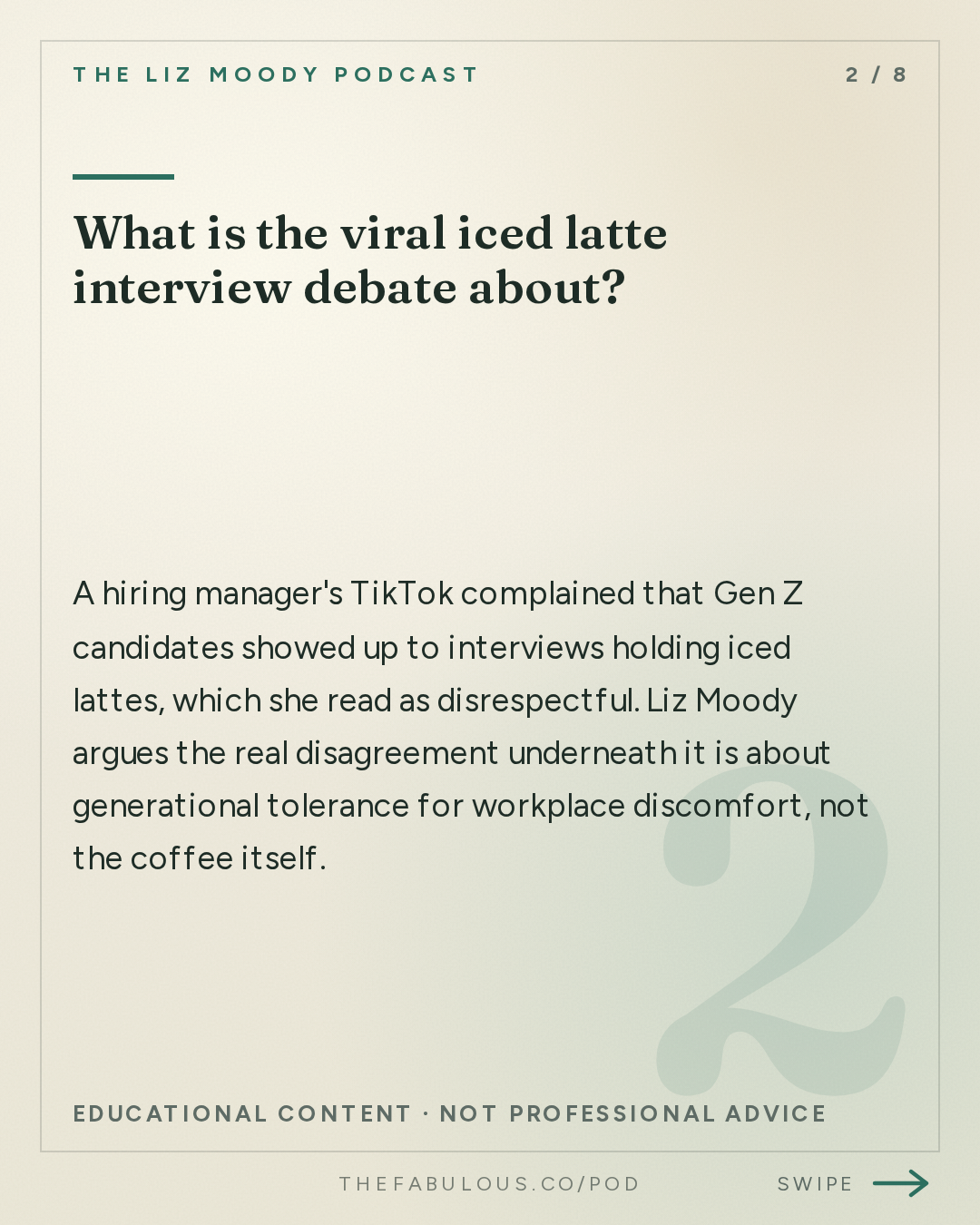
What is the viral iced latte interview debate about?
A hiring manager's TikTok complained that Gen Z candidates showed up to interviews holding iced lattes, which she read as disrespectful (00:00). Liz Moody argues the real disagreement underneath it is about generational tolerance for workplace discomfort, not the coffee itself (21:08).
What is the Gen Z stare?
It is the blank, unbantering look some Gen Z workers give in social interactions, lacking typical small talk cues (12:59). Liz Moody links it partly to nihilism about an unrewarding job market and partly to less in-person socialization during pandemic era schooling and remote work (13:25).
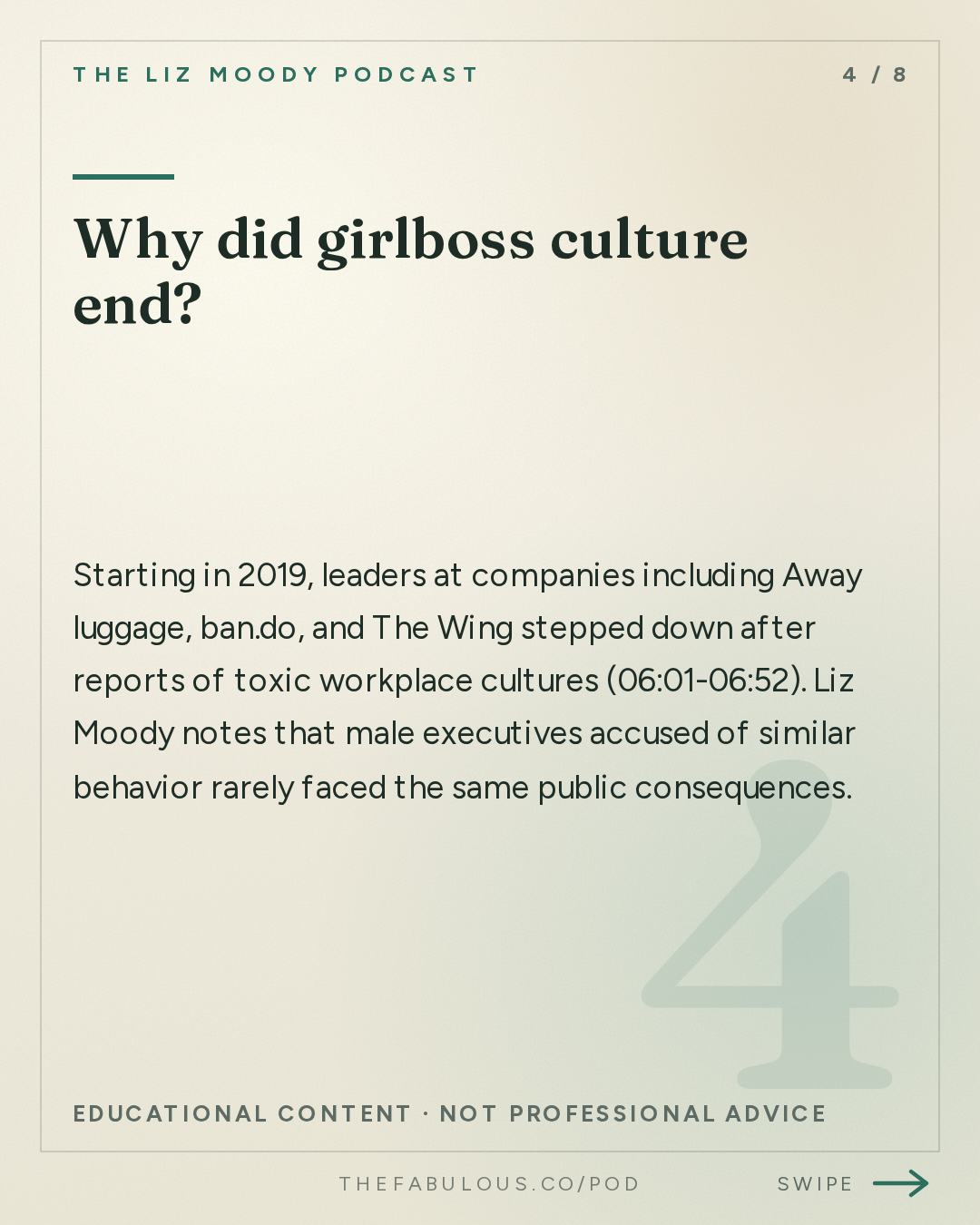
Why did girlboss culture end?
Starting in 2019, leaders at companies including Away luggage, ban.do, and The Wing stepped down after reports of toxic workplace cultures (06:01-06:52). Liz Moody notes that male executives accused of similar behavior rarely faced the same public consequences (07:19).
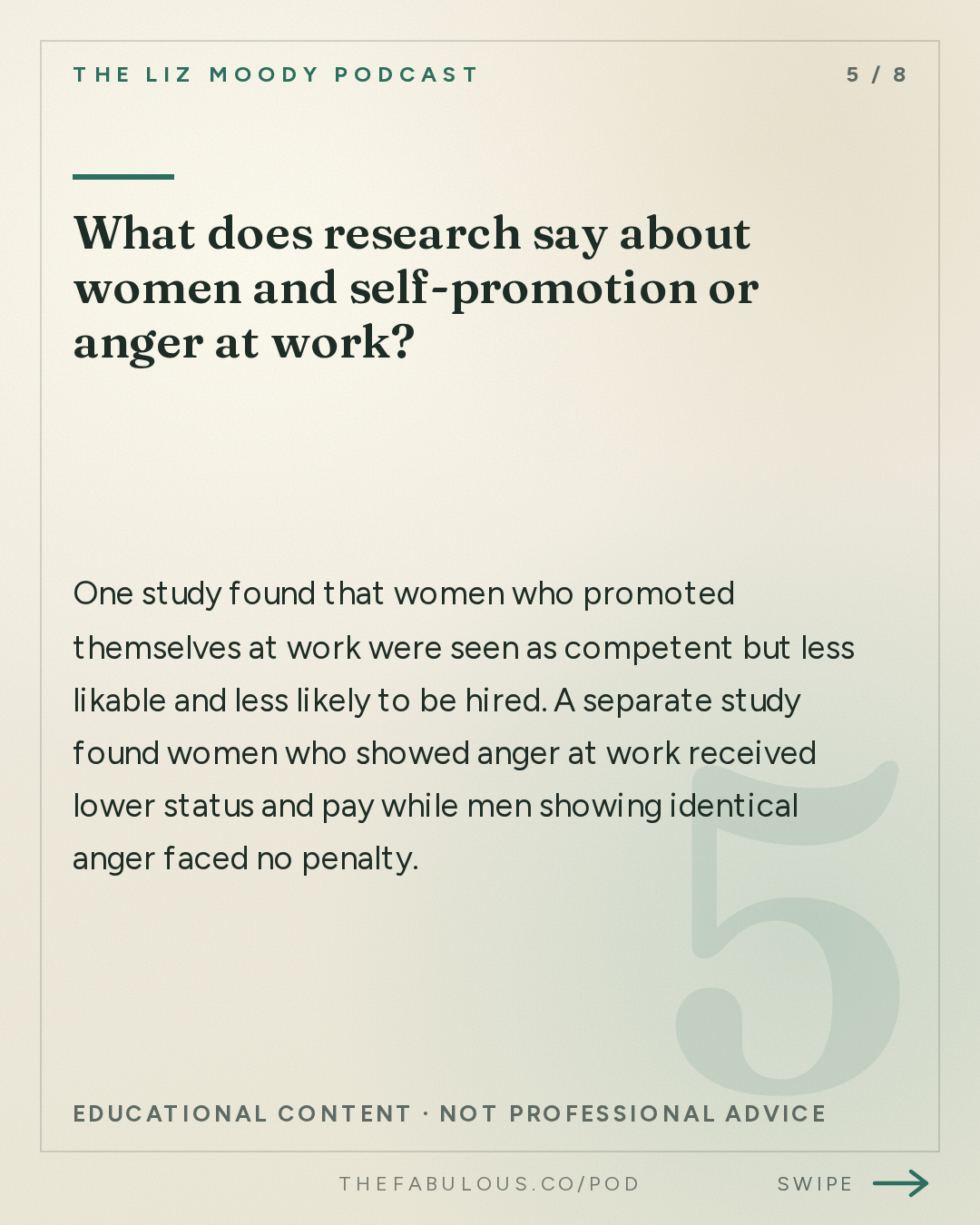
What does research say about women and self-promotion or anger at work?
One study found that women who promoted themselves at work were seen as competent but less likable and less likely to be hired (08:25). A separate study found women who showed anger at work received lower status and pay while men showing identical anger faced no penalty (08:25).
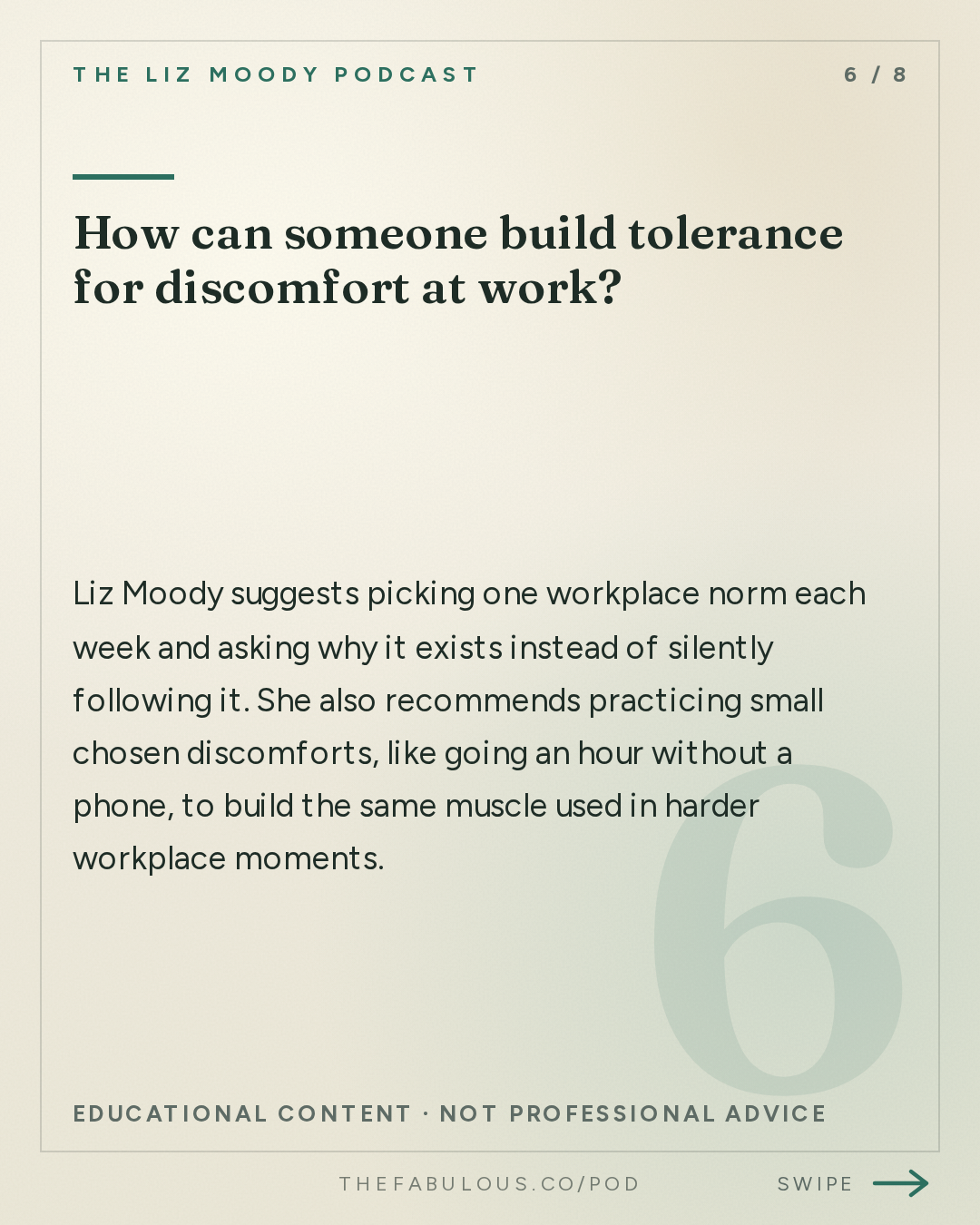
How can someone build tolerance for discomfort at work?
Liz Moody suggests picking one workplace norm each week and asking why it exists instead of silently following it (25:18). She also recommends practicing small chosen discomforts, like going an hour without a phone, to build the same muscle used in harder workplace moments (26:07).
The full read, in cards
Go deeper
- Lean In — Sheryl Sandberg's 2013 book urging women to negotiate and demand leadership roles
- Girl Boss — Sophia Amoruso's 2014 memoir framing entrepreneurial hustle as a way around a broken system
- Winning the Bread and Baking It Too — Wharton economist Corinne Lowe's study found men's housework share stays flat even when they earn less than their partners
- Study on self-promotion and hiring bias — found women who promoted themselves at work were seen as competent but less likable and less likely to be hired
- Study on post-lockdown workday length — tracked over three million workers and found the average workday grew by about 48 minutes after pandemic lockdowns
Mentioned
Sheryl Sandberg · Sophia Amoruso · Corinne Lowe · Wharton · Lean In · Girl Boss · The Wing
More from this show and category
When to Leave a Relationship: The Science
UC Davis relationship researcher Paul Eastwick says shared hobbies barely predict relationship success, and sentiment during conflict matters far more. He highlights the Gottman-inspired five-to-one ratio of positive to negative interactions, notes sexual satisfaction predicts more than frequency, and says celebrating a partner's good news matters more than comforting them in crisis.
Kelly McGonigal on the Real Science of Joy
Stanford health psychologist Kelly McGonigal says joy is a biological capacity to feel uplifted, not a reward for a perfect life. A meta-analysis of 93 studies and over 1 million people links joy to five to eight extra years of life, and she says cynicism, not busyness, is the biggest barrier to feeling it.
How to Make Real-Life Friends Like Sitcom Characters
Liz Moody argues that sitcom-level friendship is not about chemistry but about three conditions: proximity, living life together instead of just catching up, and shared in-jokes, all of which anyone can rebuild starting this fall (04:41, 07:44, 09:25).
How to Share the Mental Load With Your Partner
Mental load coach Zach Watson says men often confuse doing a chore with owning it, and that sharing the mental load makes men happier too. He recommends the Fair Play card system, weekly 'build meetings,' and naming emotions precisely to cut defensiveness and split invisible labor fairly.
