
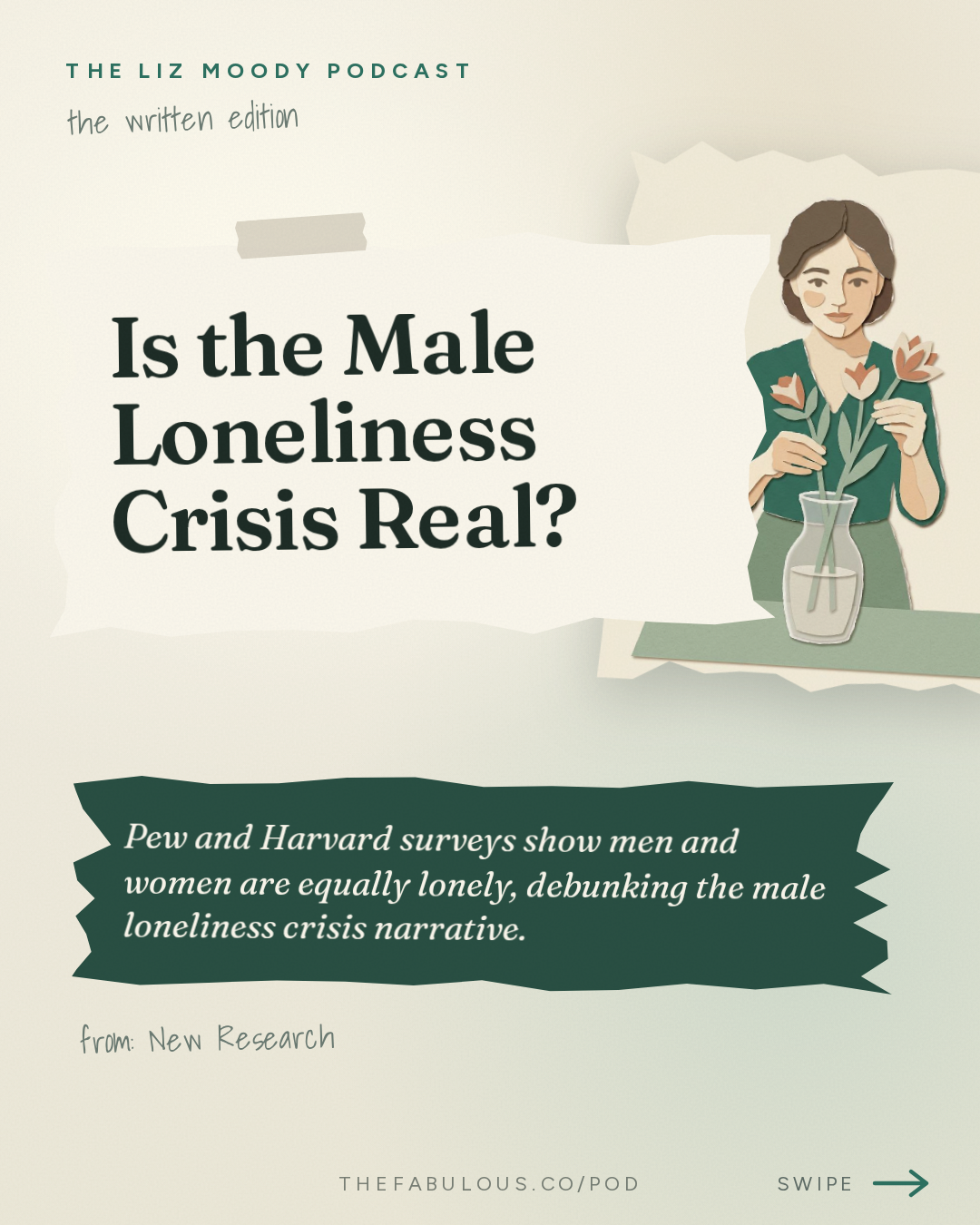
Is the Male Loneliness Crisis Real?
New Research: The Male Loneliness Crisis Is Fake & Mankeeping Is Burning You Out
▶ Listen to the full episode More from The Liz Moody Podcast
The brief
Pew and Harvard surveys show men and women are equally lonely, debunking the male loneliness crisis narrative. Income is the stronger predictor: adults earning under $40,000 are far more likely to be lonely than those earning over $90,000. Host Liz Moody explains mankeeping, Stanford researcher Angelica Ferrara's term for the unpaid labor women do managing men's social lives.
A well known male podcaster recently warned that if women do not lower their standards and rescue men from loneliness, the population itself is at risk of collapse (00:00). It is the kind of claim that spreads because it sounds urgent and a little dangerous. Host Liz Moody decided to check it against actual data. What she found reverses the story. Two major surveys, one from Pew Research Center and one from Harvard University, measured how lonely men and women say they are, and found no difference at all (03:07).
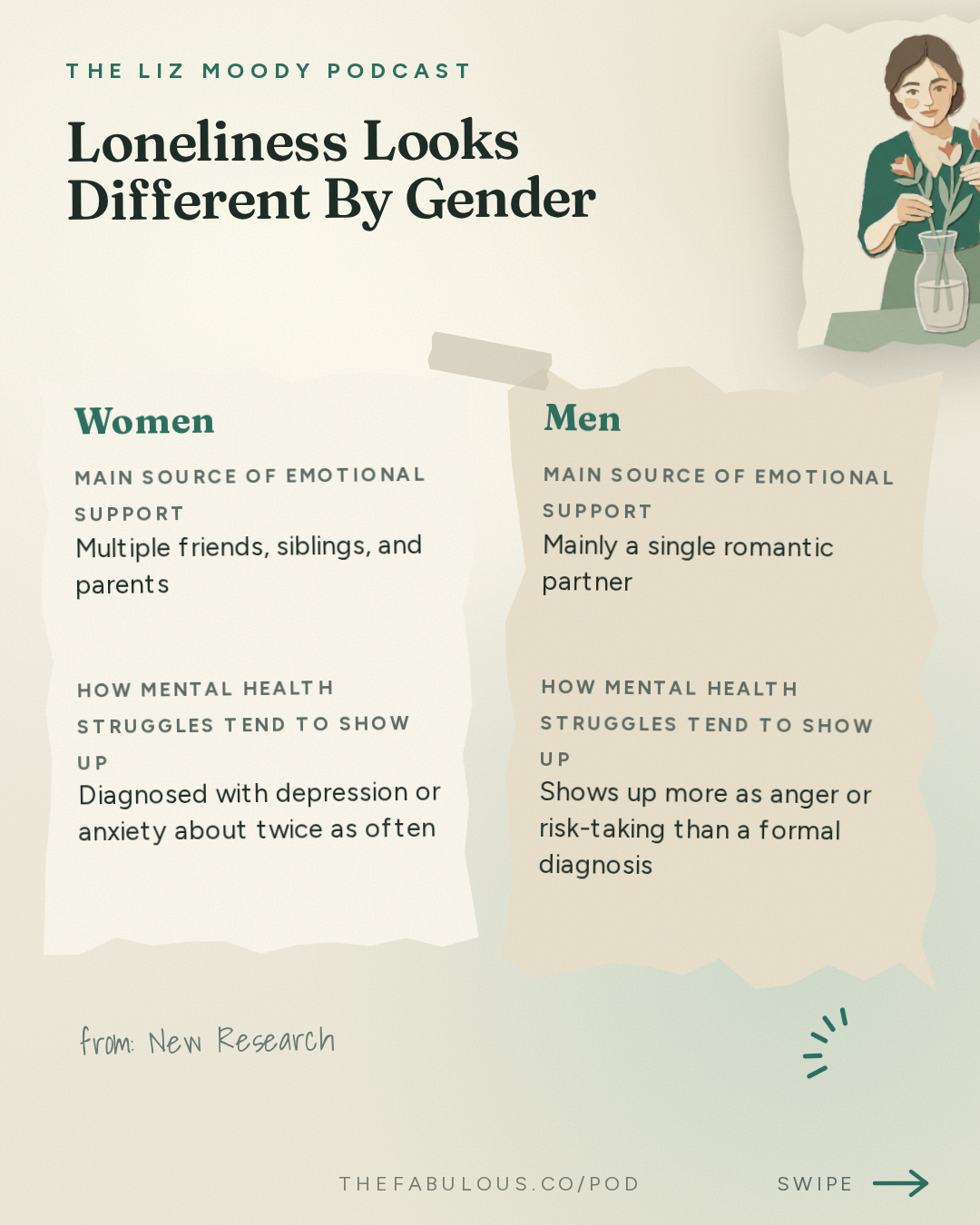
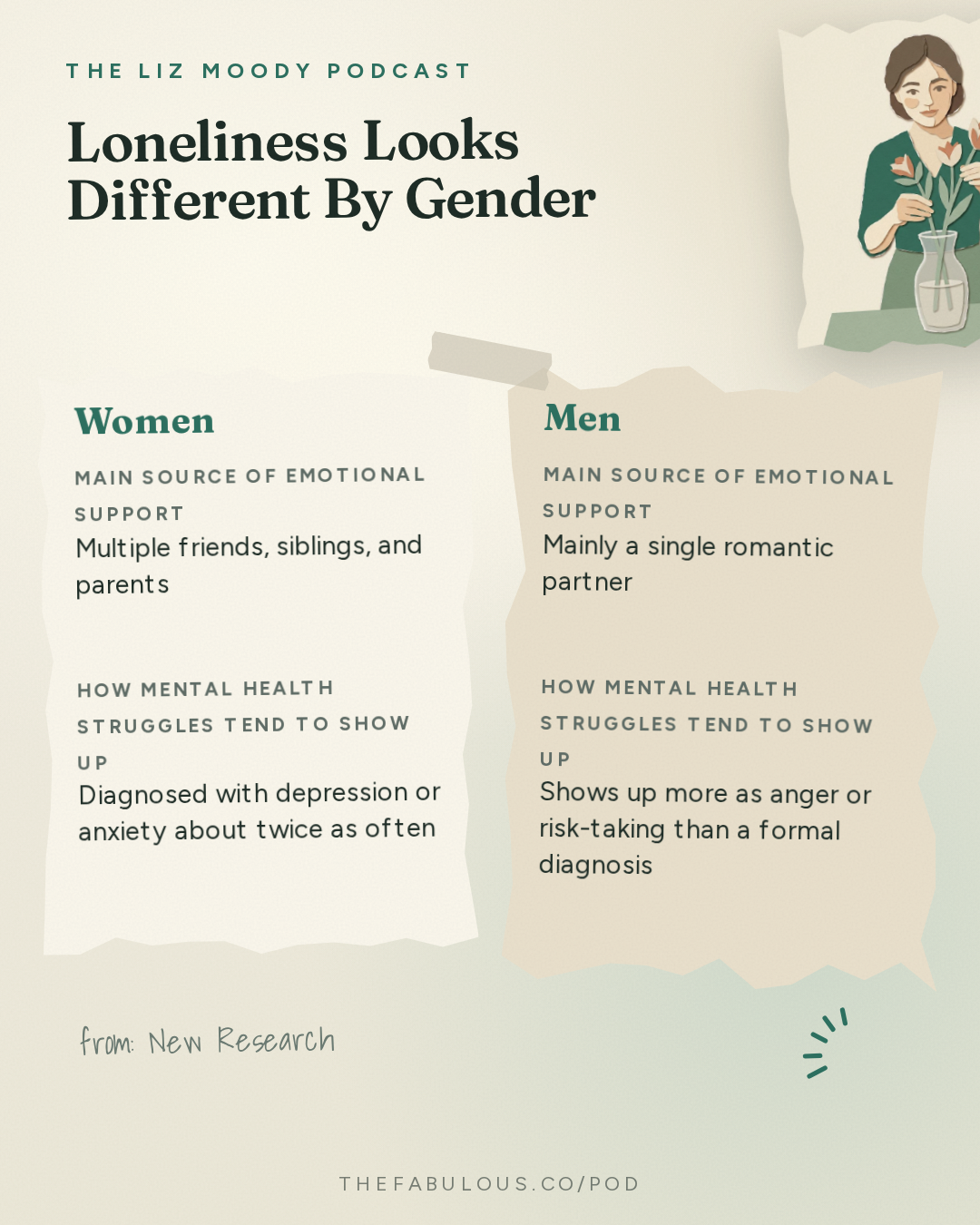
That finding alone should end the conversation, but it does not, because it leaves out something uncomfortable: men and women experience the consequences of loneliness very differently. Women are diagnosed with depression and anxiety roughly twice as often as men (01:46). Men's distress tends to show up less as sadness and more as anger or risk taking; 98% of mass shootings and 80% of homicides are committed by men (01:58). Moody's point is not that men are dangerous. It is that a woman's loneliness stays her own problem, while a man's becomes everyone's problem (02:22).
"There was zero difference between men and women on how lonely they are." — Liz Moody [03:12]
Zoom out, and loneliness genuinely is getting worse, just not along the lines the crisis narrative draws. Americans now spend nearly seven hours a day alone, 20% more than in 2010 (03:39), and in 2023 the US Surgeon General declared loneliness a public health epidemic. The shift is not only in degree, it is in who is affected. Loneliness used to cluster among older adults. Now it concentrates in Gen Z and Millennials (03:58).
The health stakes are real, not metaphorical. Moody repeats a comparison that has circulated in public health circles: being socially isolated carries a health risk similar to smoking up to 15 cigarettes a day, raising the odds of heart disease, stroke, anxiety, depression, cancer, and early onset dementia (04:22). The mechanism she describes is biological, not just emotional. Spending time with other people triggers the release of chemicals that reduce inflammation, the body's immune response that, when it stays switched on too long, damages tissue and raises disease risk, in both brain and body. Without regular contact, the body stays in a higher inflammatory state and the effects add up over years (05:01).
If this is not really a gender gap, why does everyone feel poorer in friendships lately? The simplest explanation, that going out got too expensive, does not hold up well. A Financial Times analysis found that free ways of socializing, meeting at someone's house, walking in a park, have not increased either, which they would if cost were the real barrier (05:27). People have also not stopped paying to go to the gym or out to eat, they have just started doing those things alone. Solo workout hours now make up 42% of all workout hours, 1.5 times higher than in 2003 (06:06).
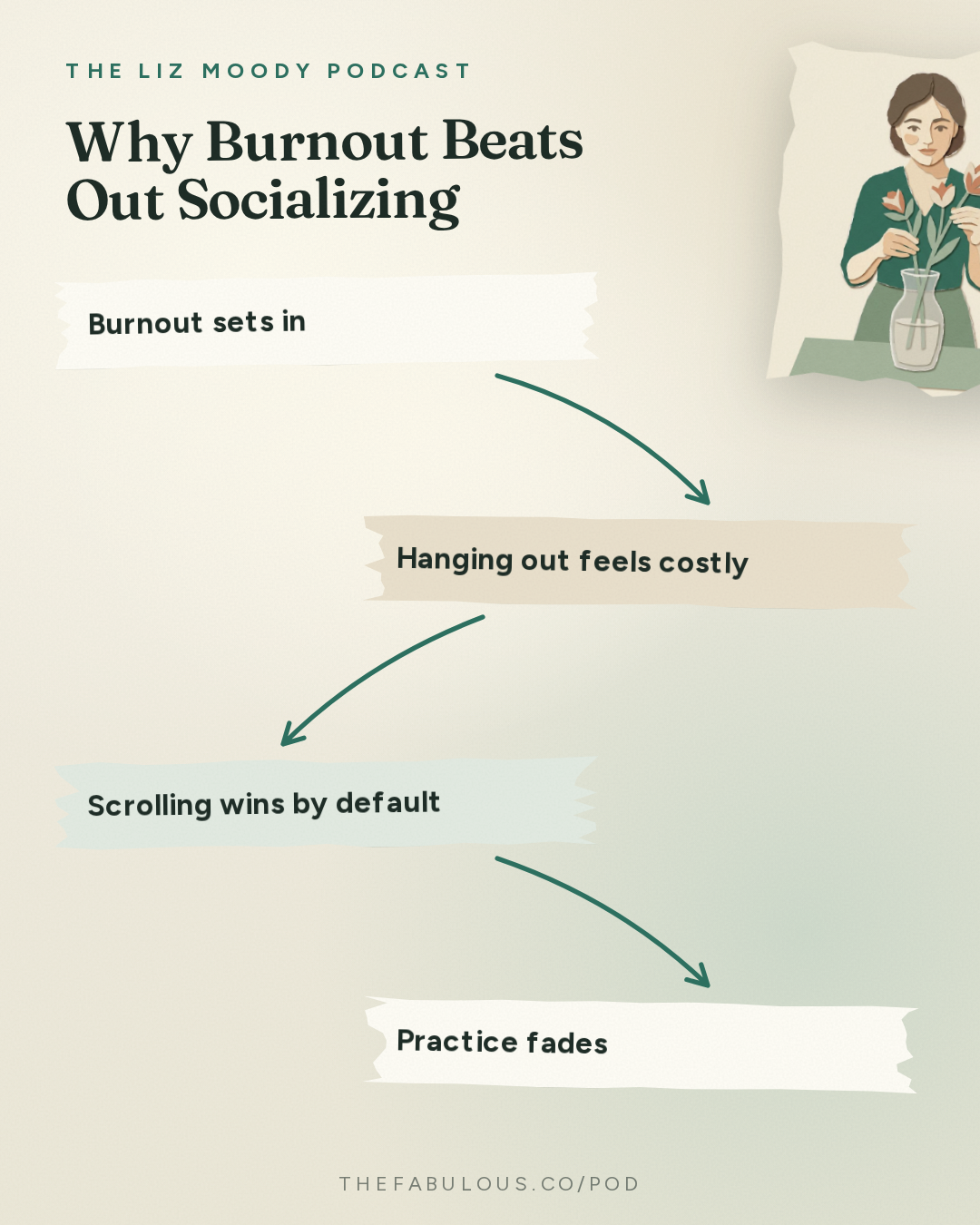
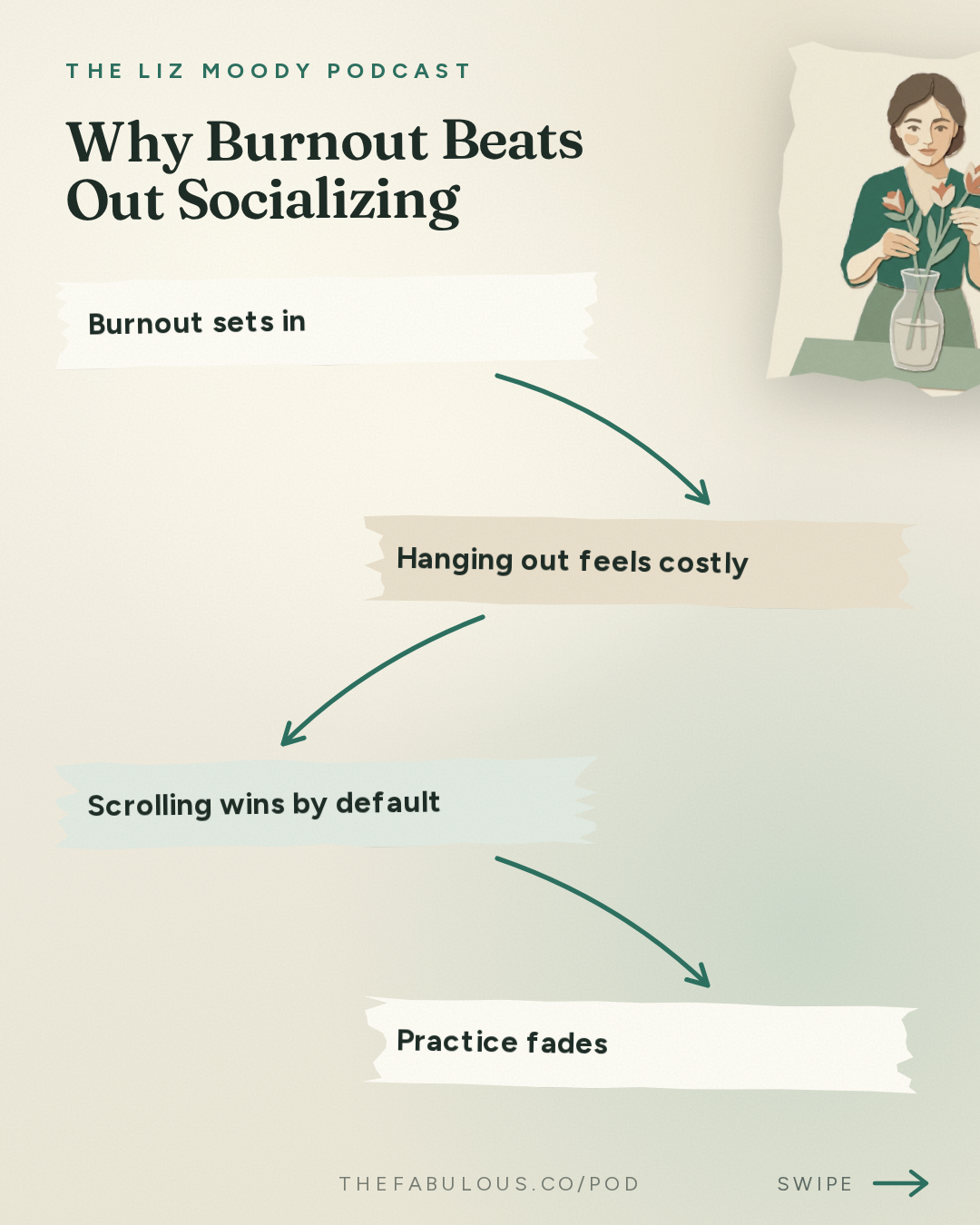
Moody's explanation is burnout. Hanging out with people is cognitively expensive. It requires making a plan, showing up after a long day, and generating conversation, all of which beats the frictionless alternative of scrolling at home (06:16). When the tank is already empty, the low effort option wins, which is unglamorous but makes sense. The trouble is that the choice reinforces itself. The less time spent with people, the more out of practice a person gets, and the harder socializing feels the next time, which pushes them back toward solitude again (07:30).
Underneath the burnout sits something more structural: money. Income, Moody argues, predicts loneliness far more reliably than gender does. Adults earning under $40,000 a year report being often lonely at a rate of 23%, compared with 7% among those earning $90,000 or more (07:58). Less income means less time to see people and less mental bandwidth left once rent and childcare are accounted for, the exact reserve that socializing requires (08:30).
The Labor Behind a Man's Social Life
Here is the detail the loneliness crisis narrative conveniently skips: men who live with a partner are the least lonely group in the entire dataset, while men who were once married but no longer live with a partner are the loneliest (08:59). That gap points to who has been doing the quiet work of keeping men connected. Stanford researcher Angelica Ferrara coined a term for it, mankeeping, the unpaid, unreturned work women do to sustain a male partner's social and emotional life (09:20).
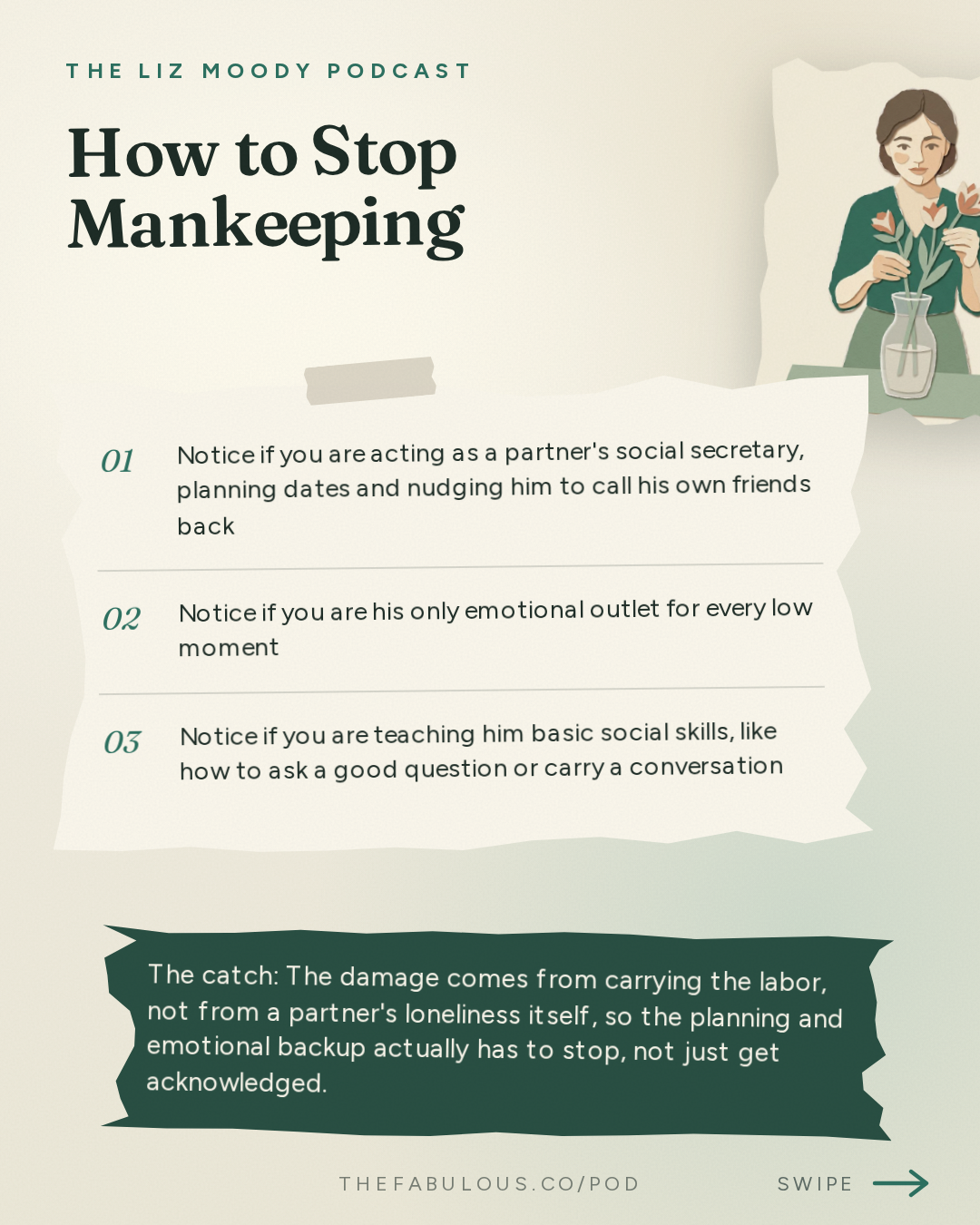
Mankeeping has three parts, as Moody lays them out. A woman acts as her partner's social secretary, planning double dates and nudging him to call his own friends back. She becomes his only emotional outlet, the person he goes to with every low moment. And she ends up teaching him basic relational skills, like how to ask a friend a real question or carry a meaningful conversation (09:53). None of this shows up on a balance sheet, but it costs something real. Women who do more mankeeping report lower relationship satisfaction and more burnout, depression, anxiety, and stress (10:19). Crucially, the research Moody cites found the harm does not come from a partner's loneliness itself, it comes from carrying the labor of managing that loneliness (10:42).
That arrangement has a history. Until 1974, banks in the United States could legally deny women access to credit, which made it much harder to live independently and pushed many women to compromise on a partner out of necessity (11:06). As that necessity has faded, women's standards have risen, not because women became pickier for no reason, but because circumstance no longer forces the trade. Moody treats this as good news, not a threat. Men no longer competing on income or provider status can compete instead on actually making someone's life better (12:27).
Friction Is the Point, Not the Problem
The fix Moody proposes is not a new dating strategy, it is a change in how people relate to the discomfort of socializing itself. She is working on a book about novelty and has found that the things that make socializing hard, the simple unpredictability of another person, are exactly what make it good for the brain.
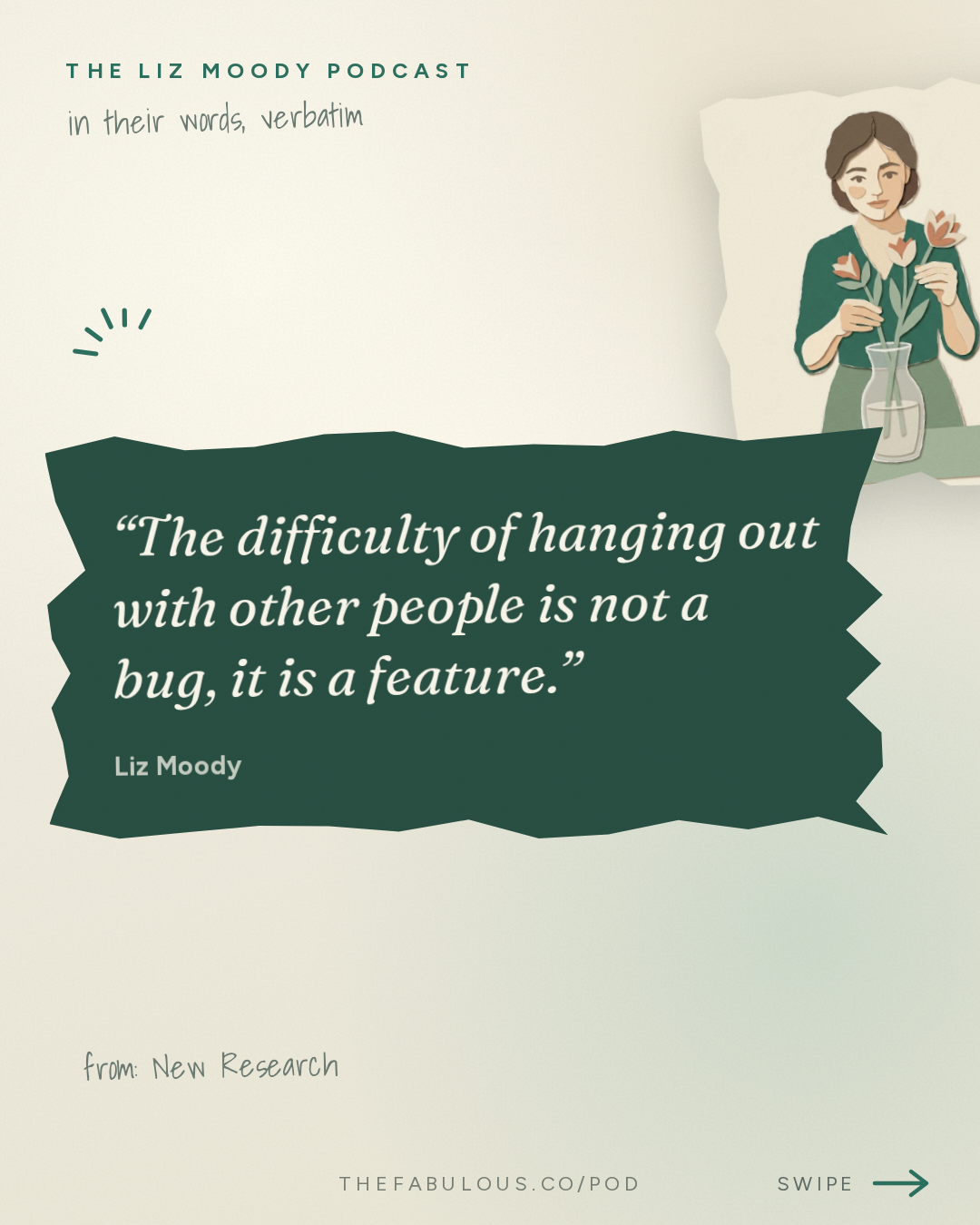
"The difficulty of hanging out with other people is not a bug, it is a feature." — Liz Moody [20:53]
The case rests on the same inflammation mechanism from earlier. Difficult social contact still triggers oxytocin and the chemical response that lowers anxiety, builds resilience, and protects cognition over time (20:15). Avoiding the friction does not just skip a bad feeling, it skips the benefit attached to it. Treating discomfort as useful, rather than as a signal to retreat, is what breaks the avoidance cycle described earlier.
None of this erases the structural piece. Moody's closing argument ties the two threads together. The people the data show are loneliest are not men as a category, they are the people with the least income (07:58). That means fair wages and a stronger social safety net are not just antipoverty measures, they are loneliness interventions, because they return the time and mental bandwidth that socializing requires (21:32). Individual habits, like choosing to show up instead of scroll, and policy, like paying people enough to have an evening free, are not competing explanations. They are two ends of the same problem.
Ask this episode anything
Pod's AI answers from the episode itself, with the minute mark so you can hear it yourself.
Or start with one of these
Ask this episode
Pod's AI listens to the whole episode to answer, and points you to the minute it comes from.
The rest of this answer, and any question after it
Answers come from the episode itself, never from a summary of it.
ContinueKey takeaways
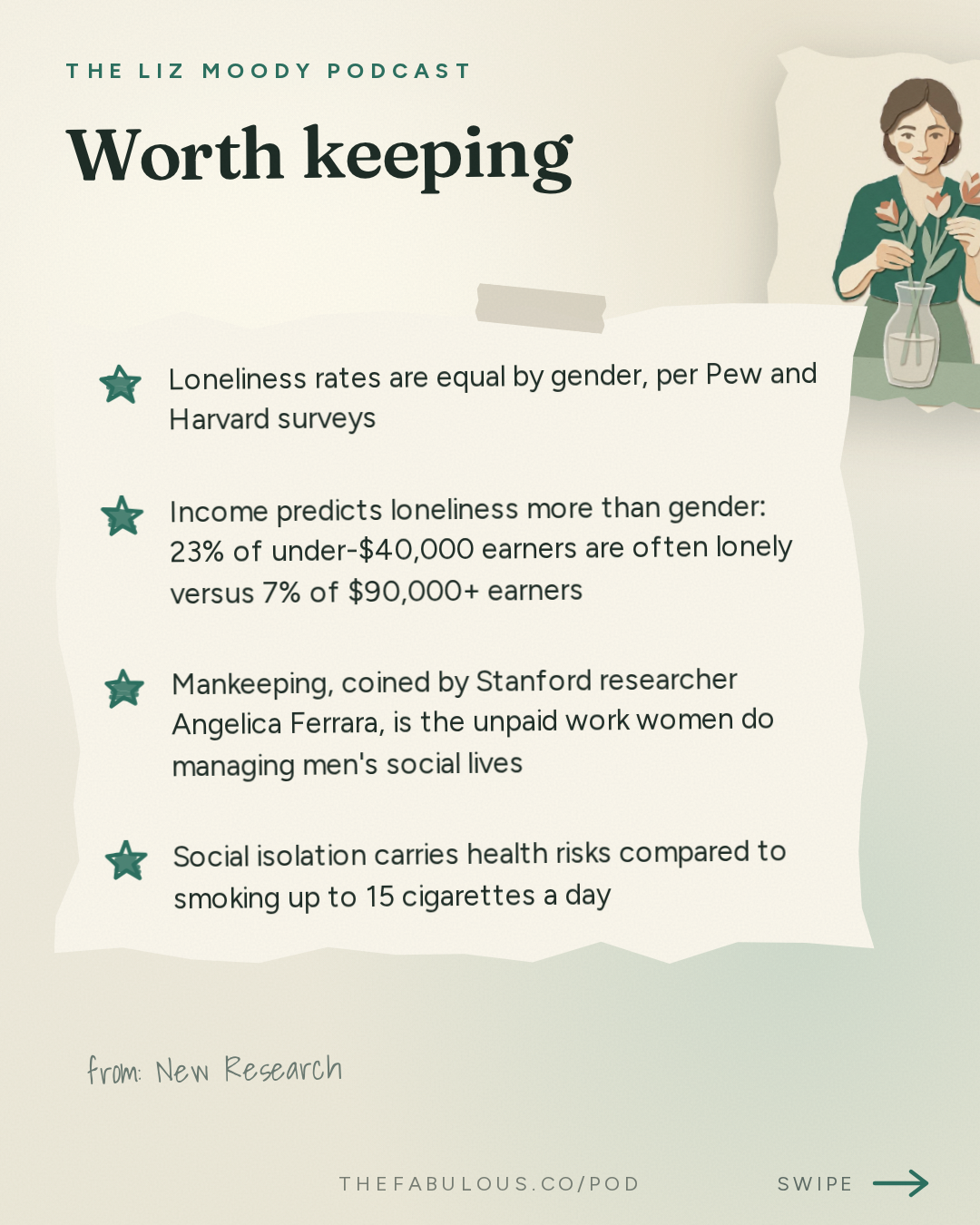
- Loneliness rates are equal by gender, per Pew and Harvard surveys
- Income predicts loneliness more than gender: 23% of under-$40,000 earners are often lonely versus 7% of $90,000+ earners
- Mankeeping, coined by Stanford researcher Angelica Ferrara, is the unpaid work women do managing men's social lives
- Social isolation carries health risks compared to smoking up to 15 cigarettes a day
- Men living with a partner are the least lonely group, while divorced or separated men are the loneliest
The episode in cards

By the numbers
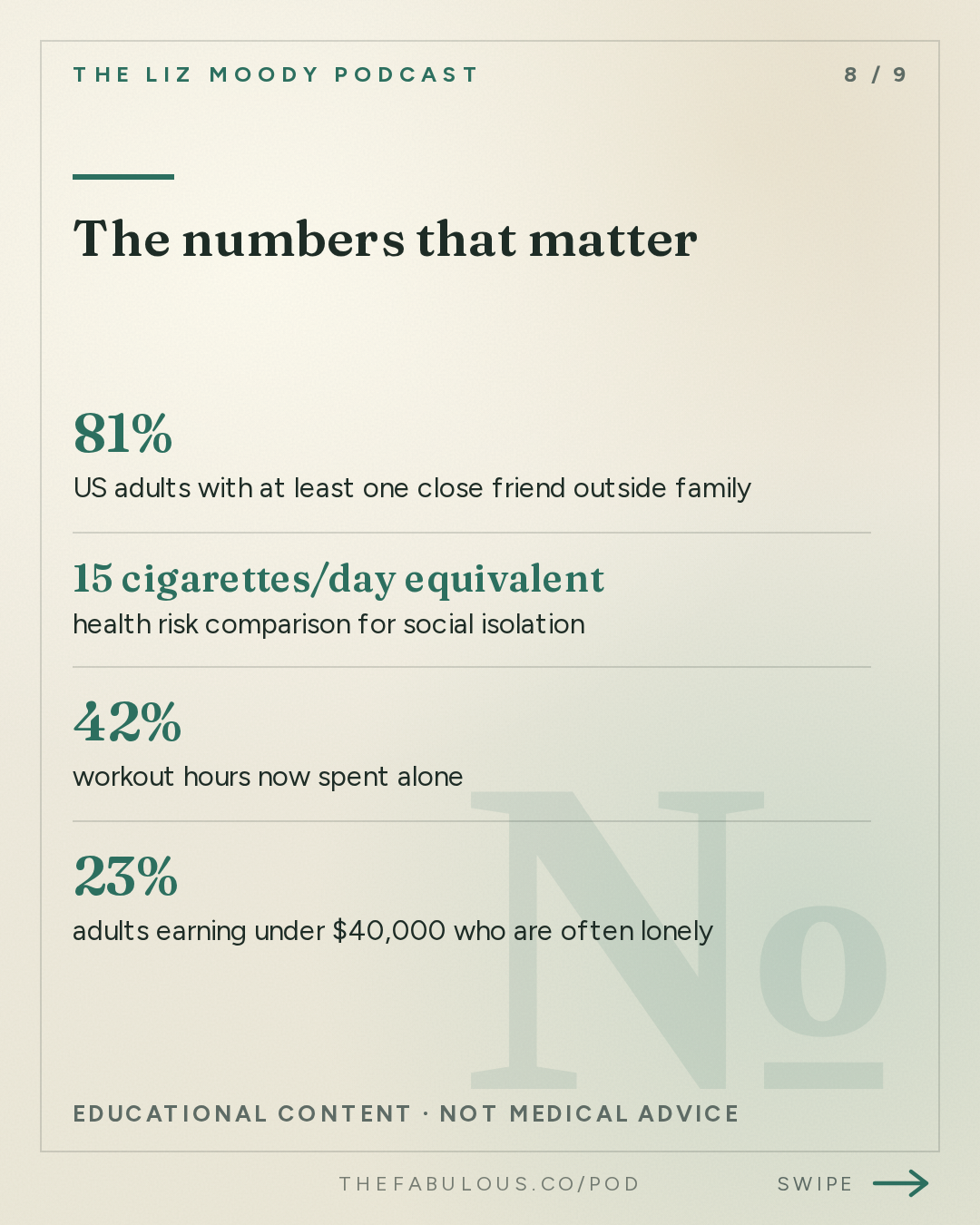
- 81% percent US adults with at least one close friend outside family
- 15 cigarettes/day equivalent health risk comparison for social isolation
- 42% percent workout hours now spent alone
- 23% percent adults earning under $40,000 who are often lonely
- 7% percent adults earning over $90,000 who are often lonely
In their words
“There was zero difference between men and women on how lonely they are.”
“Being socially isolated is equal to smoking up to 15 cigarettes a day.”
“Mankeeping. Mankeping is the extra unpaid, unreturned work that women do to supplement their male partner's social life”
“The difficulty of hanging out with other people is not a bug, it is a feature.”
Protocols
-
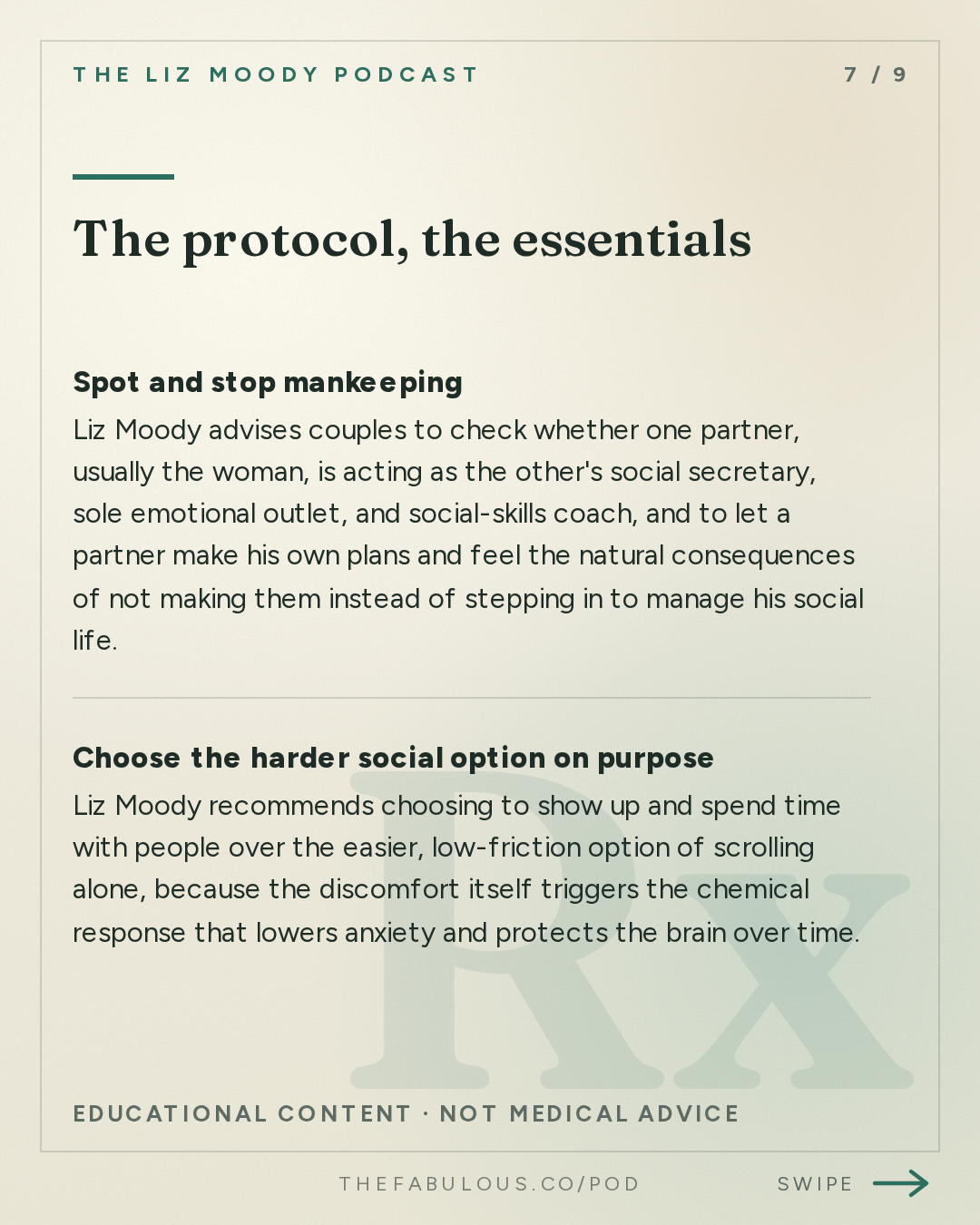
Spot and stop mankeeping
Liz Moody advises couples to check whether one partner, usually the woman, is acting as the other's social secretary, sole emotional outlet, and social-skills coach, and to let a partner make his own plans and feel the natural consequences of not making them instead of stepping in to manage his social life.
Ongoing, revisited whenever resentment or burnout shows up
-
Choose the harder social option on purpose
Liz Moody recommends choosing to show up and spend time with people over the easier, low-friction option of scrolling alone, because the discomfort itself triggers the chemical response that lowers anxiety and protects the brain over time.
Daily, whenever the urge to stay home wins
-
Lead with curiosity, not income, when dating
Liz Moody tells single men to ask follow-up questions and focus on making a partner's life better rather than trying to out-earn their way into being wanted.
Every date or interaction
Questions this episode answers
Is the male loneliness crisis real?
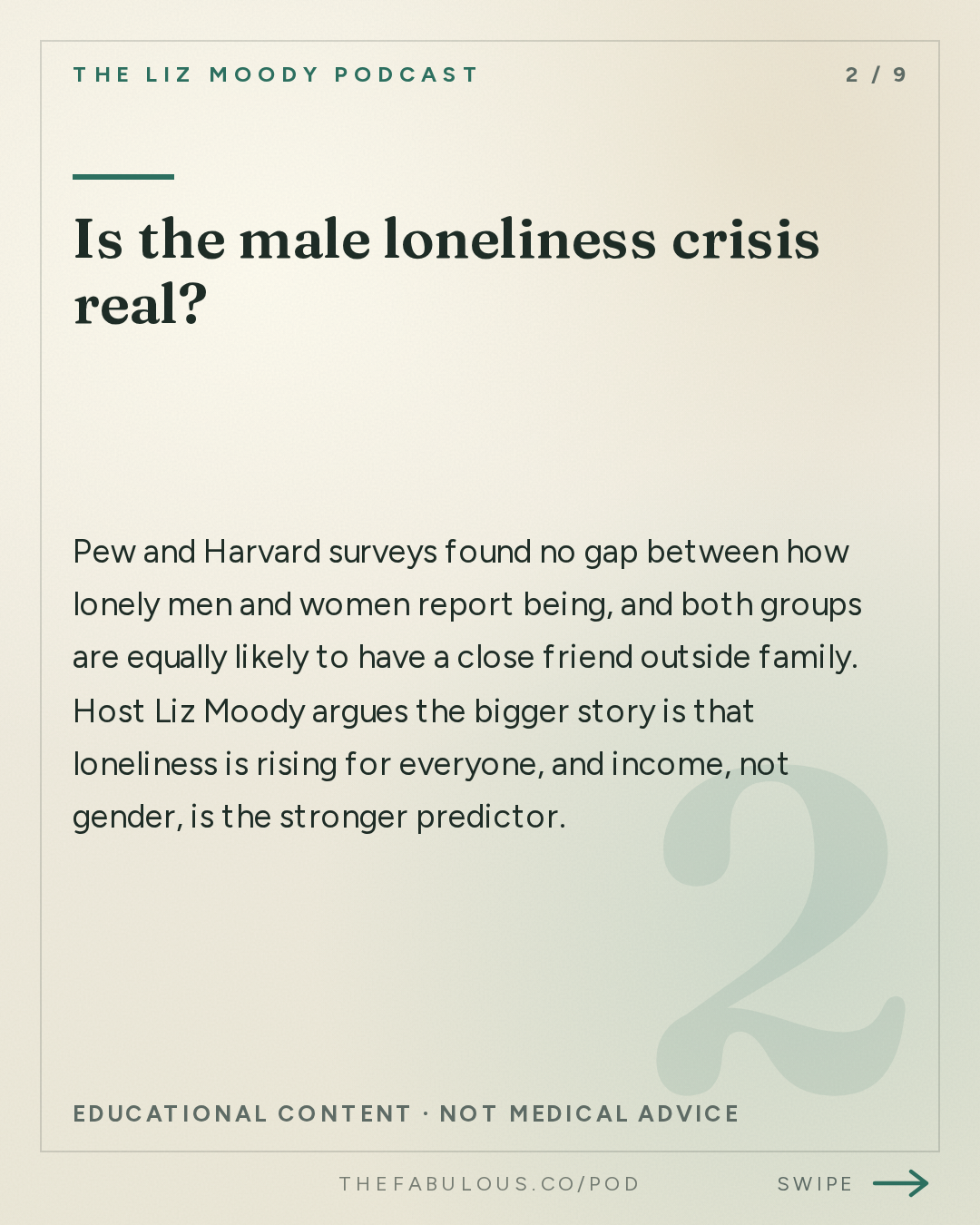
Pew and Harvard surveys found no gap between how lonely men and women report being (03:07), and both groups are equally likely to have a close friend outside family (03:15). Host Liz Moody argues the bigger story is that loneliness is rising for everyone, and income, not gender, is the stronger predictor (07:44).
What is mankeeping?
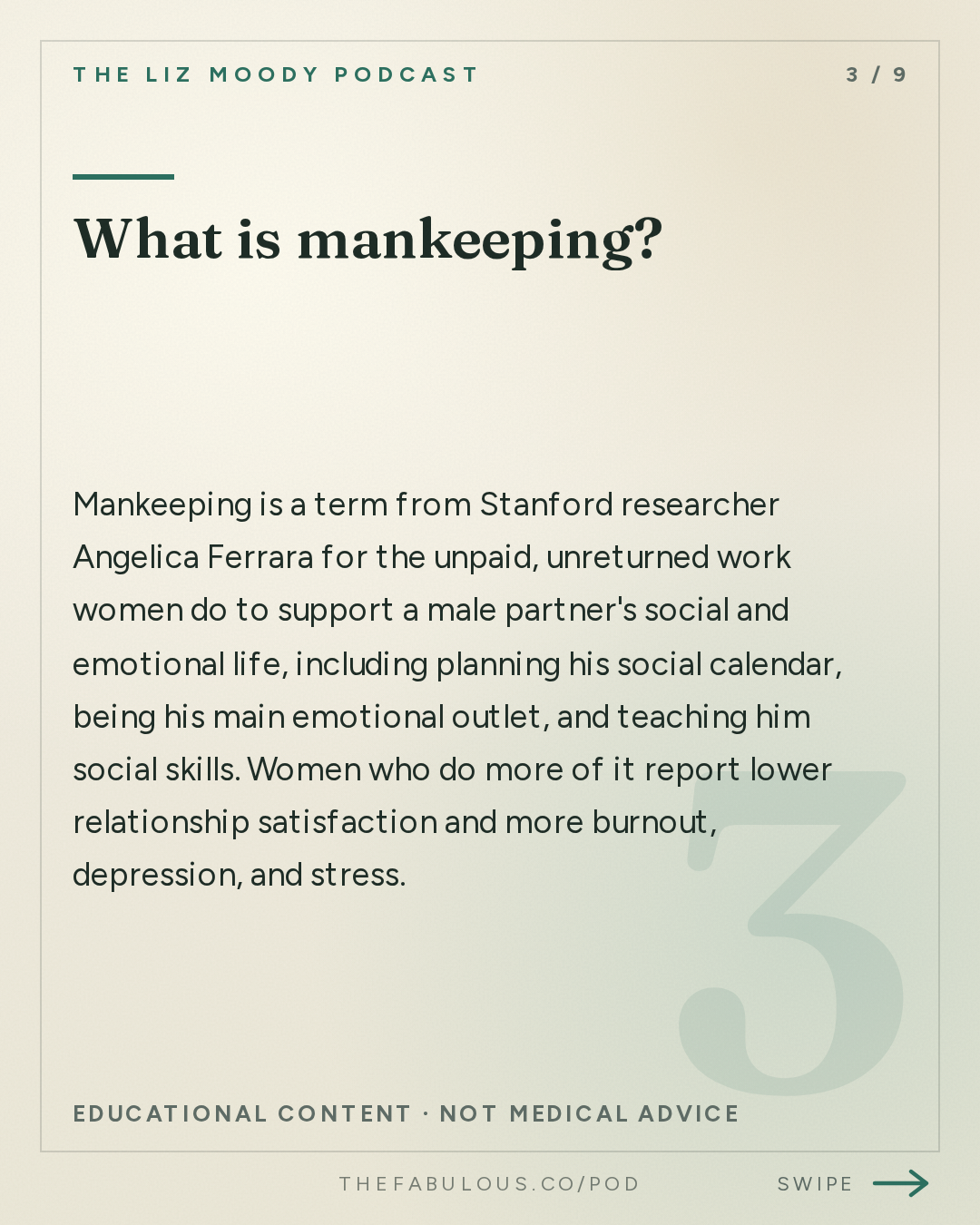
Mankeeping is a term from Stanford researcher Angelica Ferrara for the unpaid, unreturned work women do to support a male partner's social and emotional life, including planning his social calendar, being his main emotional outlet, and teaching him social skills (09:20). Women who do more of it report lower relationship satisfaction and more burnout, depression, and stress (10:19).
Does income affect loneliness more than gender?
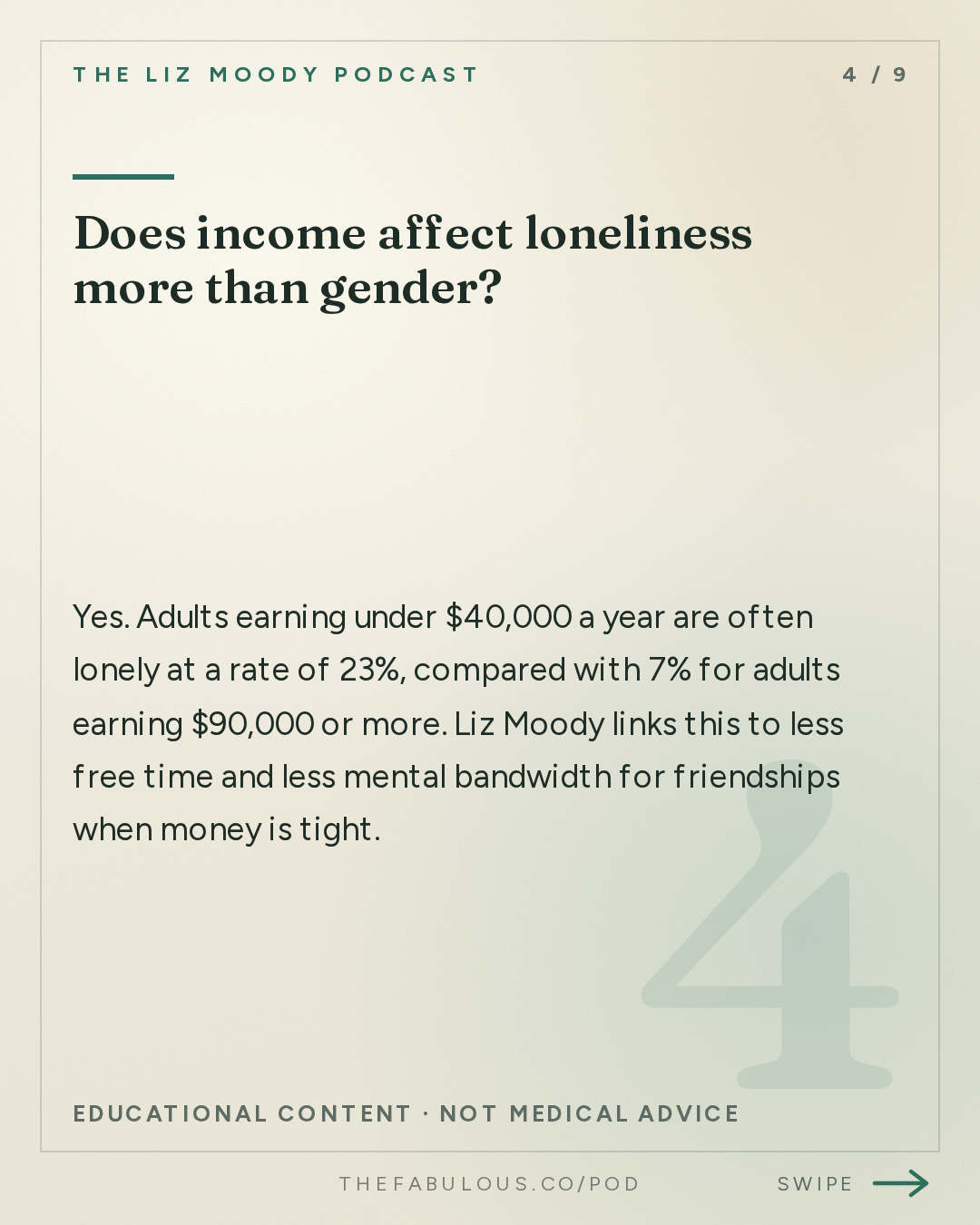
Yes. Adults earning under $40,000 a year are often lonely at a rate of 23%, compared with 7% for adults earning $90,000 or more (07:58). Liz Moody links this to less free time and less mental bandwidth for friendships when money is tight (08:30).
How does loneliness affect physical health?
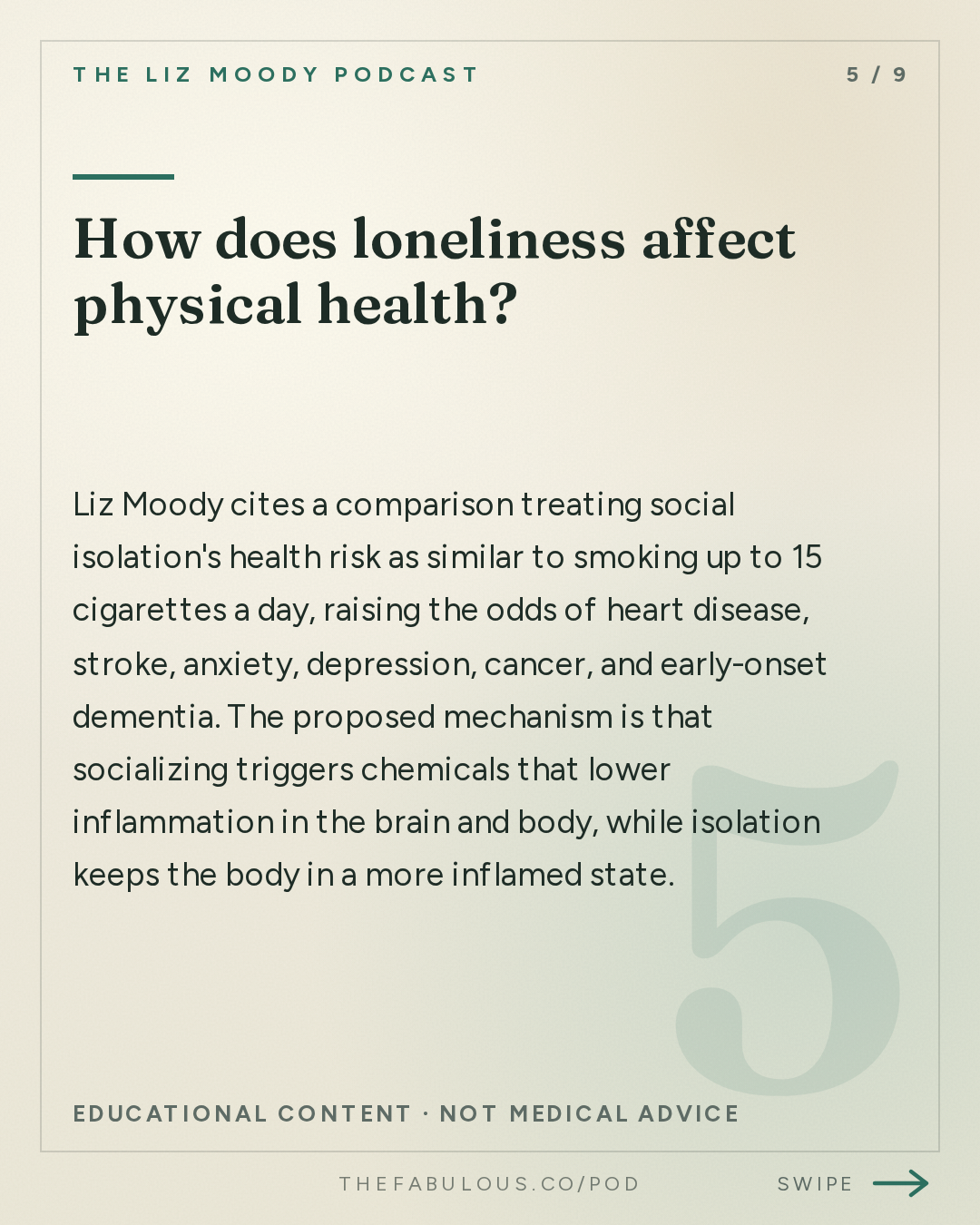
Liz Moody cites a comparison treating social isolation's health risk as similar to smoking up to 15 cigarettes a day, raising the odds of heart disease, stroke, anxiety, depression, cancer, and early-onset dementia (04:22). The proposed mechanism is that socializing triggers chemicals that lower inflammation in the brain and body, while isolation keeps the body in a more inflamed state (05:01).
Why do people socialize less even when they can afford it?
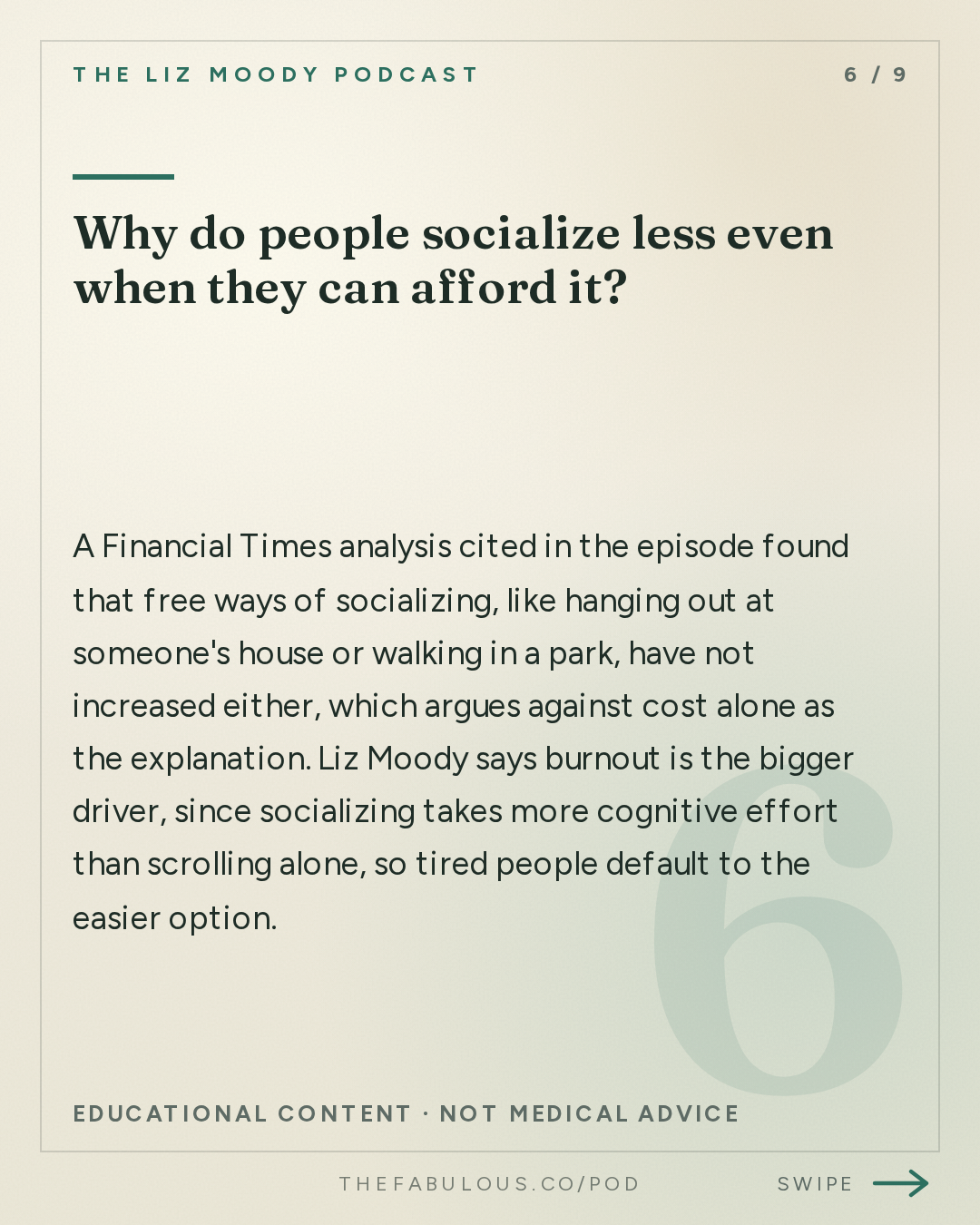
A Financial Times analysis cited in the episode found that free ways of socializing, like hanging out at someone's house or walking in a park, have not increased either, which argues against cost alone as the explanation (05:27). Liz Moody says burnout is the bigger driver, since socializing takes more cognitive effort than scrolling alone, so tired people default to the easier option (06:16).
Which men are loneliest?
Men who live with a partner are the least lonely group in the data, while men who were once married but no longer live with a partner are the loneliest (08:59). This pattern underlies mankeeping, since partnered men often outsource their social and emotional needs to the women in their lives (09:20).
The full read, in cards
Go deeper
- Pew Research Center loneliness survey — found no gender gap in self-reported loneliness and that 81% of US adults have a close friend outside family
- Harvard University loneliness survey — corroborated Pew's finding of no meaningful difference in loneliness between men and women
- US Surgeon General loneliness advisory — declared loneliness a public health epidemic in 2023 as time spent alone rose
- Stanford research on mankeeping — coined by researcher Angelica Ferrara to describe the unpaid social and emotional labor women do for male partners
- Financial Times article on loneliness and cost — argued the loneliness rise is not purely about money, since free ways of socializing have not increased either
Mentioned
Liz Moody · Pew Research Center · Harvard University · US Surgeon General · Dr. Ben Rein · Financial Times · Angelica Ferrara · Zach Watson
More from this show and category
Marisa Franco's Real Rules of Adult Friendship
Psychologist Marisa Franco grades viral friendship advice from S to F, debunking myths about bad texters and one-sided friends. She recommends assuming people like you, capping new-friend dinners at six to eight guests, and meeting work friends outside the office before a job ends to keep the friendship alive.
Dr. Florence Camatte: GLP-1s and Longevity
Endocrinologist Florence Camatte says most age-related disease traces to one inherited flaw: poor glucose control. That is why she calls GLP-1 drugs like Mounjaro the antibiotics of this century, and why she recommends five blood tests, testosterone for women starting in their 30s, and trazodone over cold plunges for real longevity gains.
Gen Z vs Millennial Iced Coffee Workplace Debate
The viral debate over bringing an iced latte to a job interview is really about generational tolerance for discomfort at work. Liz Moody traces how 2008-era scarcity built millennial hustle culture, why it burned women out, and why Gen Z's boundary setting grew from watching that burnout up close.
When to Leave a Relationship: The Science
UC Davis relationship researcher Paul Eastwick says shared hobbies barely predict relationship success, and sentiment during conflict matters far more. He highlights the Gottman-inspired five-to-one ratio of positive to negative interactions, notes sexual satisfaction predicts more than frequency, and says celebrating a partner's good news matters more than comforting them in crisis.
