
Marisa Franco's Real Rules of Adult Friendship
The New Rules of Friendship: Fake Friends, Annoying Boundaries, & Bad Texters
▶ Listen to the full episode More from The Liz Moody Podcast
The brief
Psychologist Marisa Franco grades viral friendship advice from S to F, debunking myths about bad texters and one-sided friends. She recommends assuming people like you, capping new-friend dinners at six to eight guests, and meeting work friends outside the office before a job ends to keep the friendship alive.
A professor is grading homework, but the homework is Instagram. Dr. Marisa Franco, a psychologist at the University of Maryland who wrote the bestseller Platonic, sits across from host Liz Moody and hands out letter grades, S down to F, for the friendship advice that circulates on TikTok, Reddit, and Instagram. One video says never keep a friend who isn't thrilled by your success. Another says a bad texter is a bad friend, full stop. A third insists friendship trios never work. Franco treats each clip the way a careful teacher treats a confident but sloppy essay: there's something right in here, but the reasoning needs work.
The through-line of the episode is a kind of paradox. Most people say they want more close friends, yet they act, constantly, in ways that make that harder. Franco's research keeps landing on the same mechanism: humans are wired to brace for rejection, and that bracing becomes self-fulfilling. She calls it the acceptance prophecy. Assume a person likes you, and you behave warmer, more open, more relaxed. Assume the opposite, and you come off guarded, which invites the very rejection you feared.
"When we assume rejection, we tend to reject people. We come off as cold. We come off as withdrawn." — Marisa Franco [09:25]
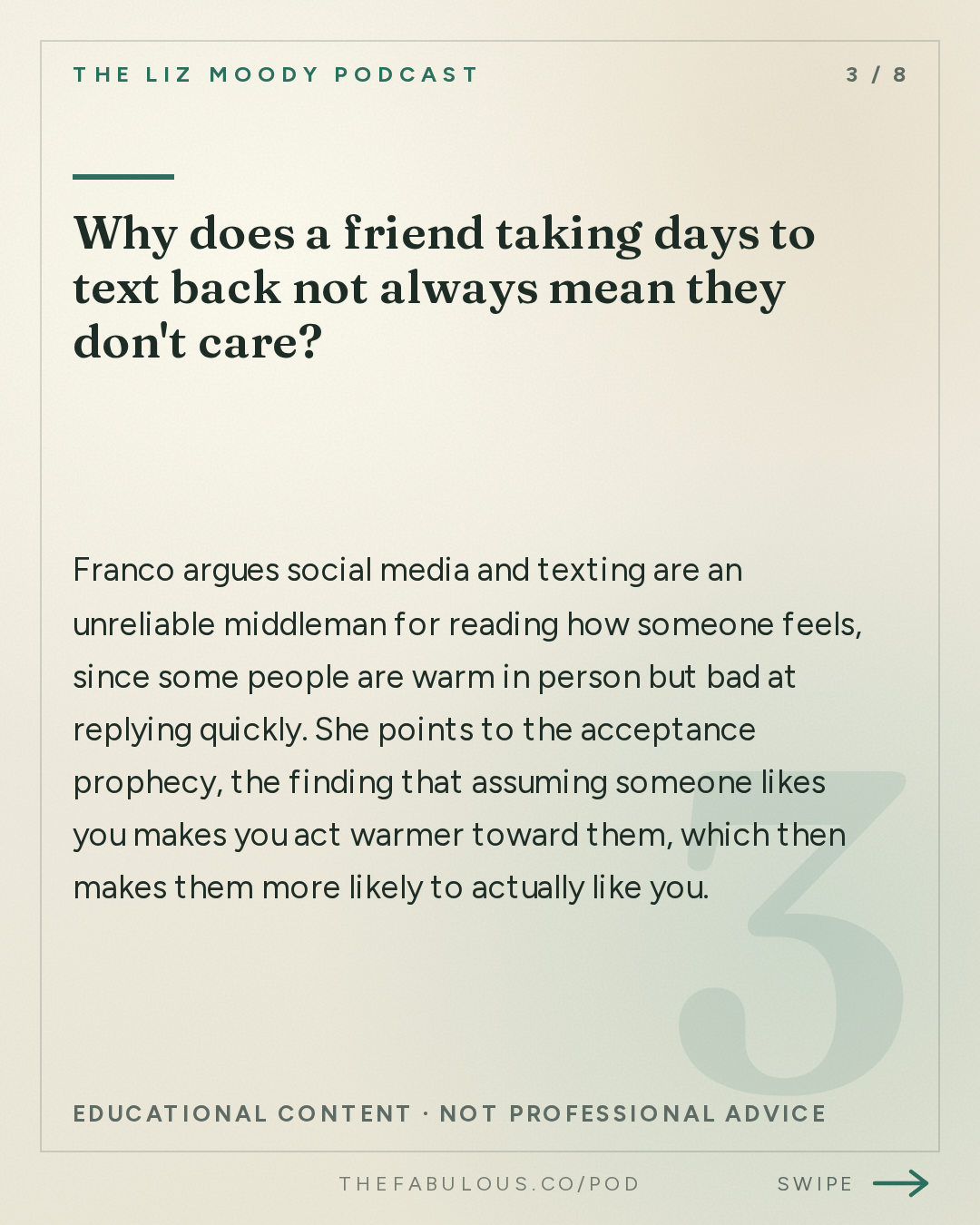
This single idea does a lot of work in the episode. Take the Reddit post that claims a friend who goes days or weeks without replying to a text "doesn't like you and doesn't care." Franco gives it a low grade, a C bordering on a D, not because slow replies never mean anything, but because the claim collapses a messy, ambiguous signal into a verdict. Some people are warm in person and terrible over text. Franco admits she's one of them: she takes longer to reply to the friends she likes most, because she's trying too hard to get the message right. The fix she offers isn't a boundary line, it's a sentence: tell the friend directly that slow texting isn't a measure of how much you care, and ask what a workable rhythm looks like for both of you.
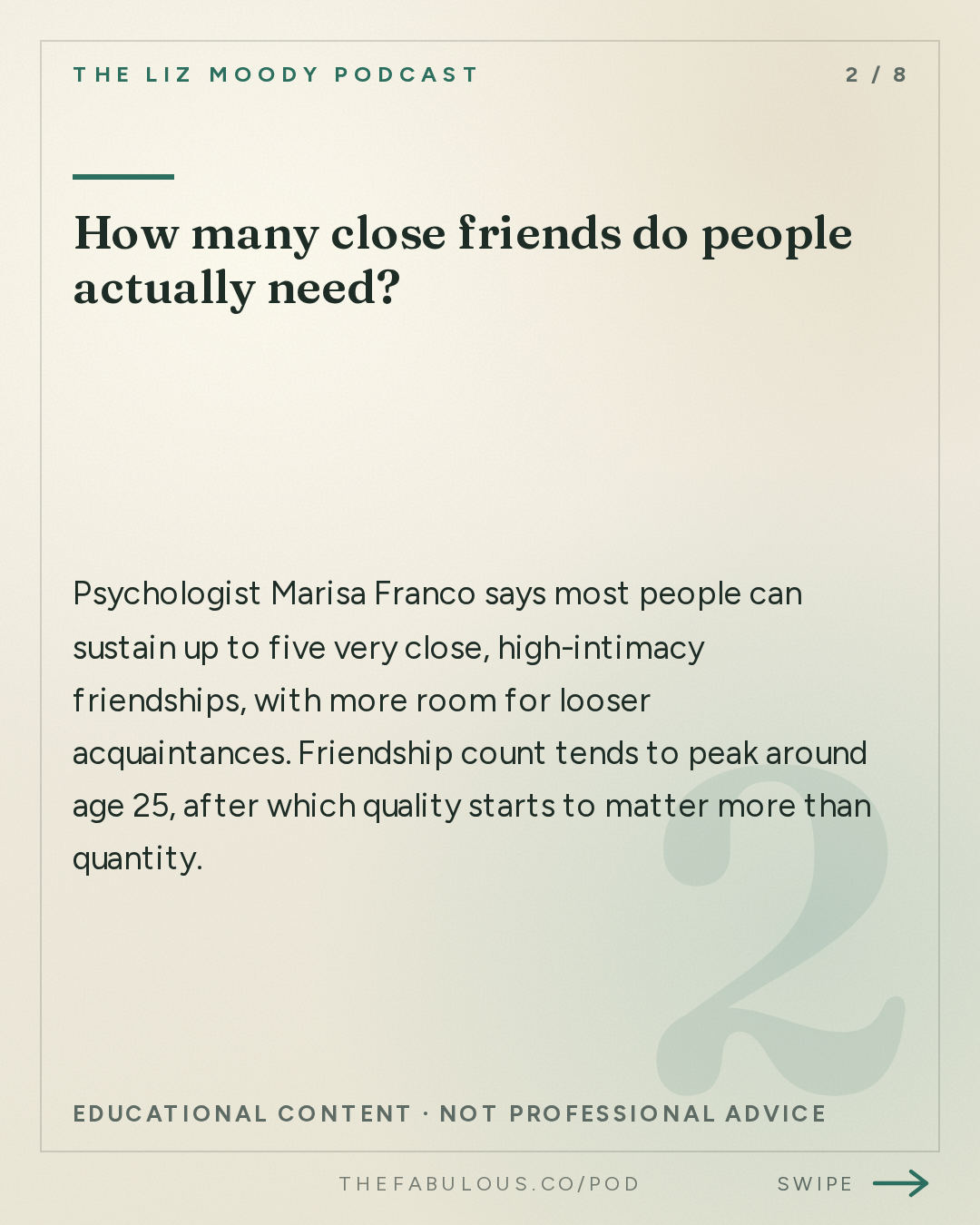
The same caution about generalizing shows up in how Franco talks about the shape of a friend circle over a lifetime. Research she cites finds that people can realistically sustain about five very close, high-intimacy friendships, with more room for looser ties and acquaintances around the edges (04:08). Total friendship count tends to peak around age twenty-five, when people are still expanding their sense of identity through new social worlds (04:30). After that, the goal quietly shifts from more to better. None of this argues for cutting anyone off at the first sign of mediocrity, though. Franco pushes back on a popular "no friends is better than bad friends" video, arguing that a merely okay friend, someone you play chess with but wouldn't call a soulmate, still does something real for well-being, and often becomes what she calls a bridge friend on the way to deeper ones.
The Myth of Organic Connection
If there's a single villain in this episode, it isn't bad friends. It's the idea that friendship should happen without effort. Franco traces this myth back to childhood, where kids see the same classmates every day and get vulnerable with them without planning any of it. Adulthood removes both ingredients: repeated contact and built-in vulnerability. So people wait for the old magic to happen again, and when it doesn't, they conclude something is wrong with them.
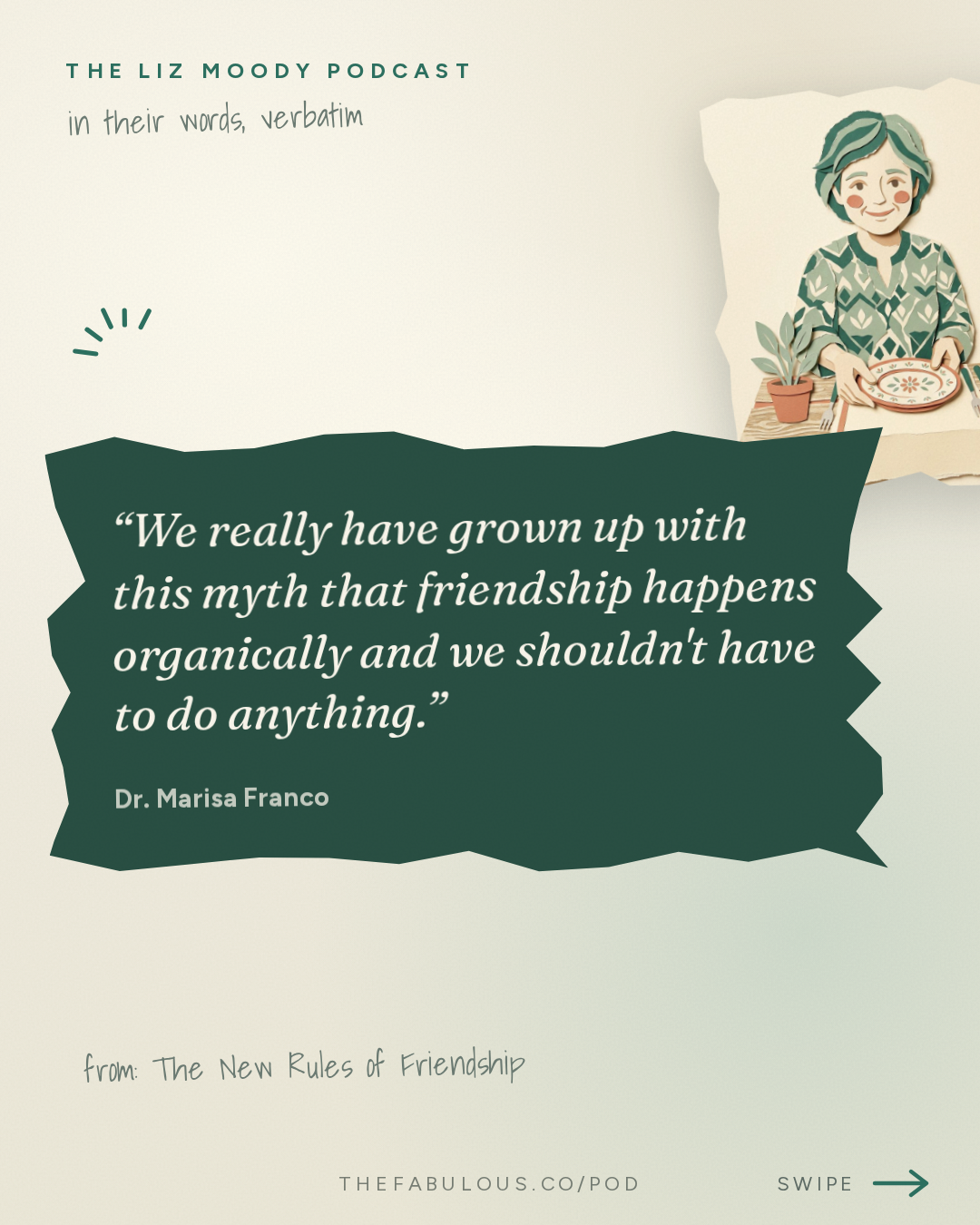
"We really have grown up with this myth that friendship happens organically and we shouldn't have to do anything." — Marisa Franco [23:04]
Underneath that myth sits something Franco calls the liking gap: after a conversation, strangers reliably underestimate how much the other person liked them (23:59). People read their own awkwardness as evidence of rejection, when the other person usually walked away thinking the exchange went fine. That same self-protective instinct, Franco argues, makes small gestures of care feel oversized. Sending a friend soup when they're sick, or texting after a hangout to say it meant something, can feel like "too much." Her reframe is simple: instead of asking how a gesture would look coming from you, ask how it would feel if a friend did it for you.
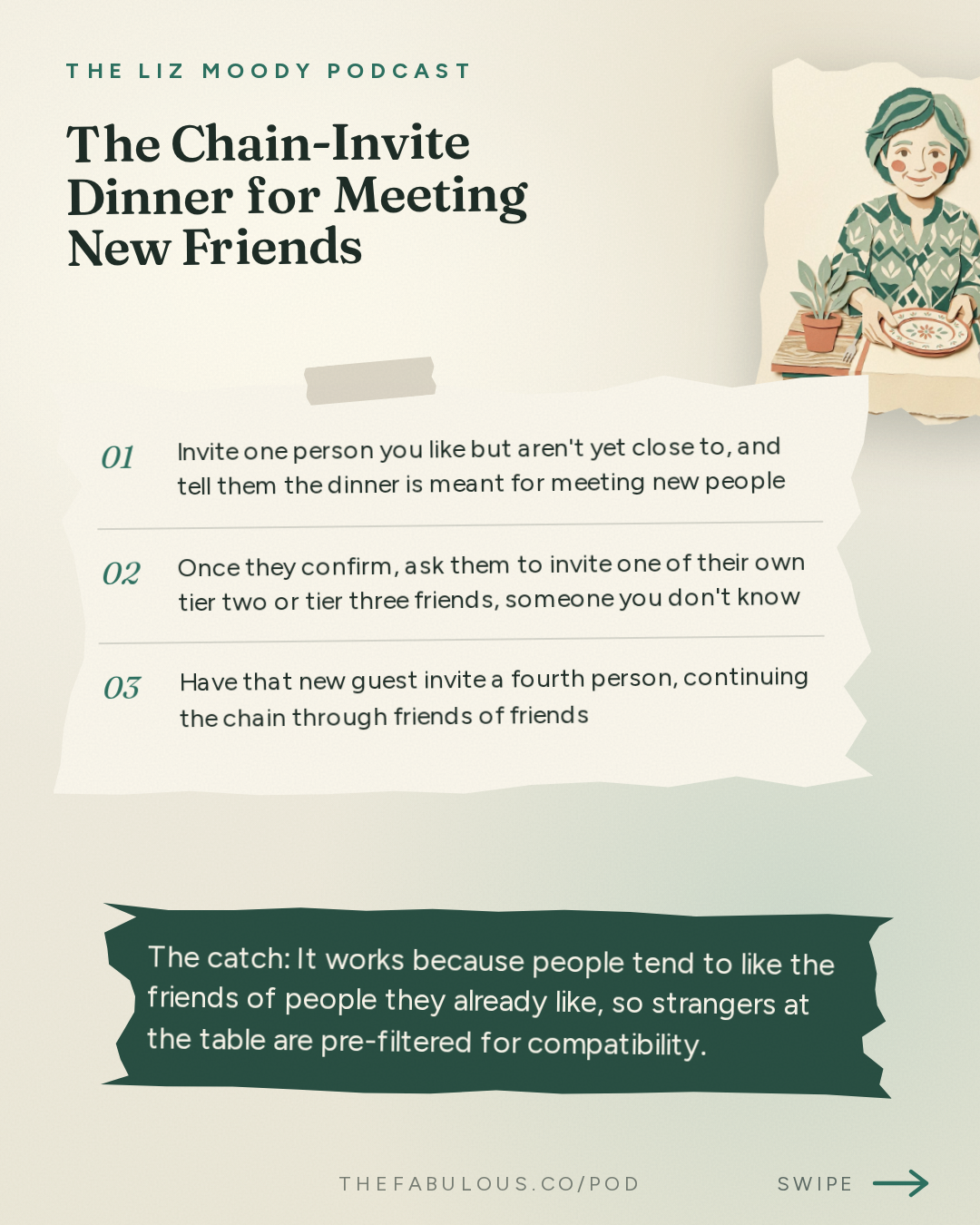
That logic produces the episode's most concrete piece of advice, which both host and guest rank at the top tier. Invite one person to dinner with the explicit goal of making new connections. Once they say yes, their job is to bring a friend of their own that you don't know, someone from their second or third social tier. That new guest then invites a fourth person, and so on, capped at six to eight total guests so the table can still hold one conversation (26:00, 26:45). The logic leans on another finding Franco cites: people tend to like the friends of people they already like, so a room built this way is pre-filtered for compatibility before anyone arrives (27:08).
Grading the Office and the Group Chat
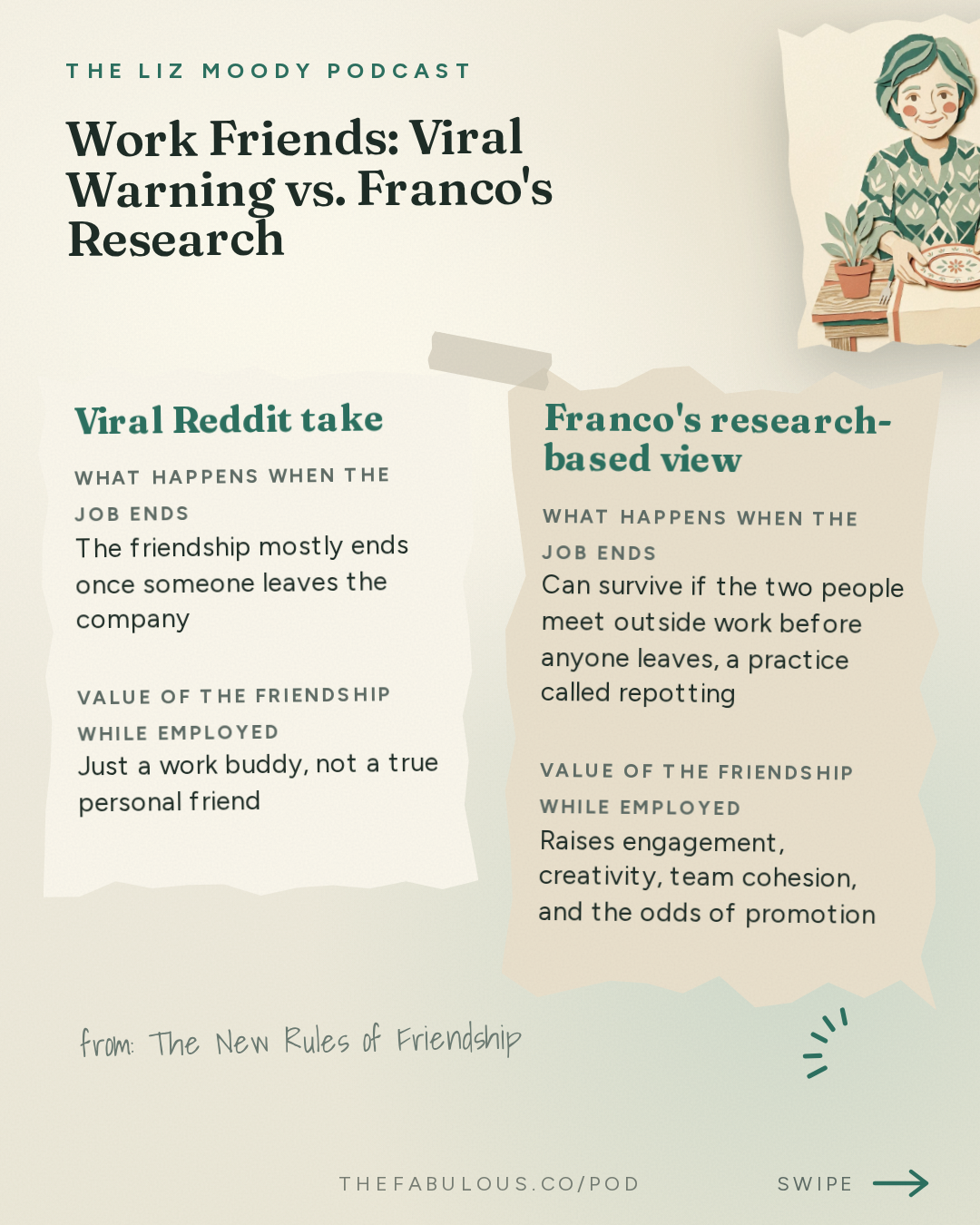
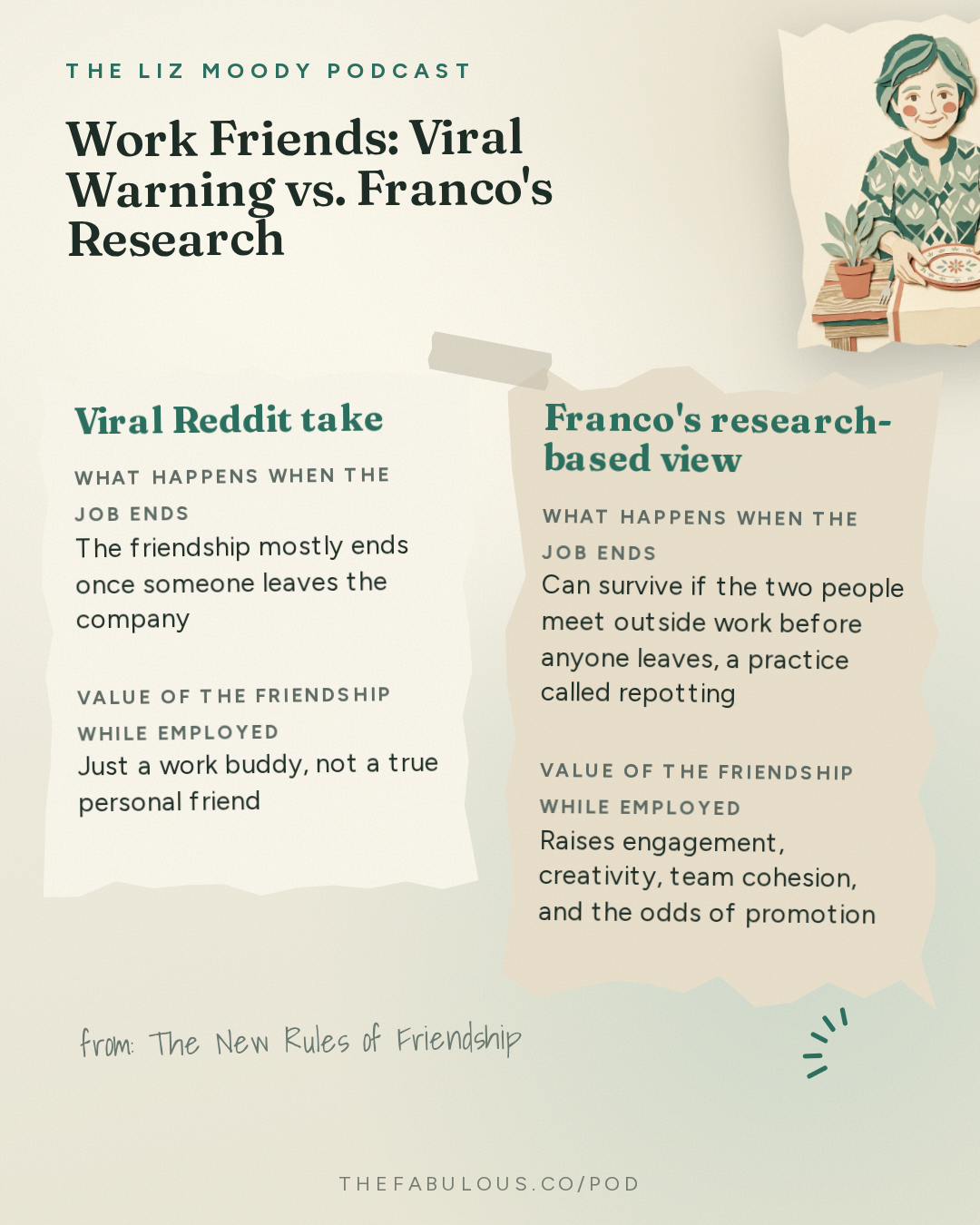
Work friendship gets its own reckoning. A Reddit post arguing that work friends are "not your personal friends" and mostly dissolve when someone changes jobs gets a D. Franco's counter leans on organizational research: workplace friendships raise engagement, creativity, team cohesion, and the odds of promotion (35:13). She also points out that most people spend eight hours a day at work, so loneliness there is loneliness, period (37:10). Lonely people, she notes, experience what researchers call micro wakes, brief, almost imperceptible moments of waking through the night to scan for threat, a holdover from a time when being cut off from the group was physically dangerous (38:05). A widely cited Harvard study on adult development, which Franco and Moody both reference, found that the single strongest predictor of a long, happy life isn't diet or exercise, it's the quality of a person's relationships (38:24).
Work friendships do tend to fade after a job ends, Franco concedes, but that's a fixable design flaw rather than a law of nature. She points to a practice called repotting, developed by Ryan Hubbard of the Kite String Project, which means deliberately varying the setting two people interact in before one of them leaves. Having dinner at someone's house, rather than only talking at a desk, surfaces new sides of a person and gives the friendship roots that don't depend on a shared employer (35:51).
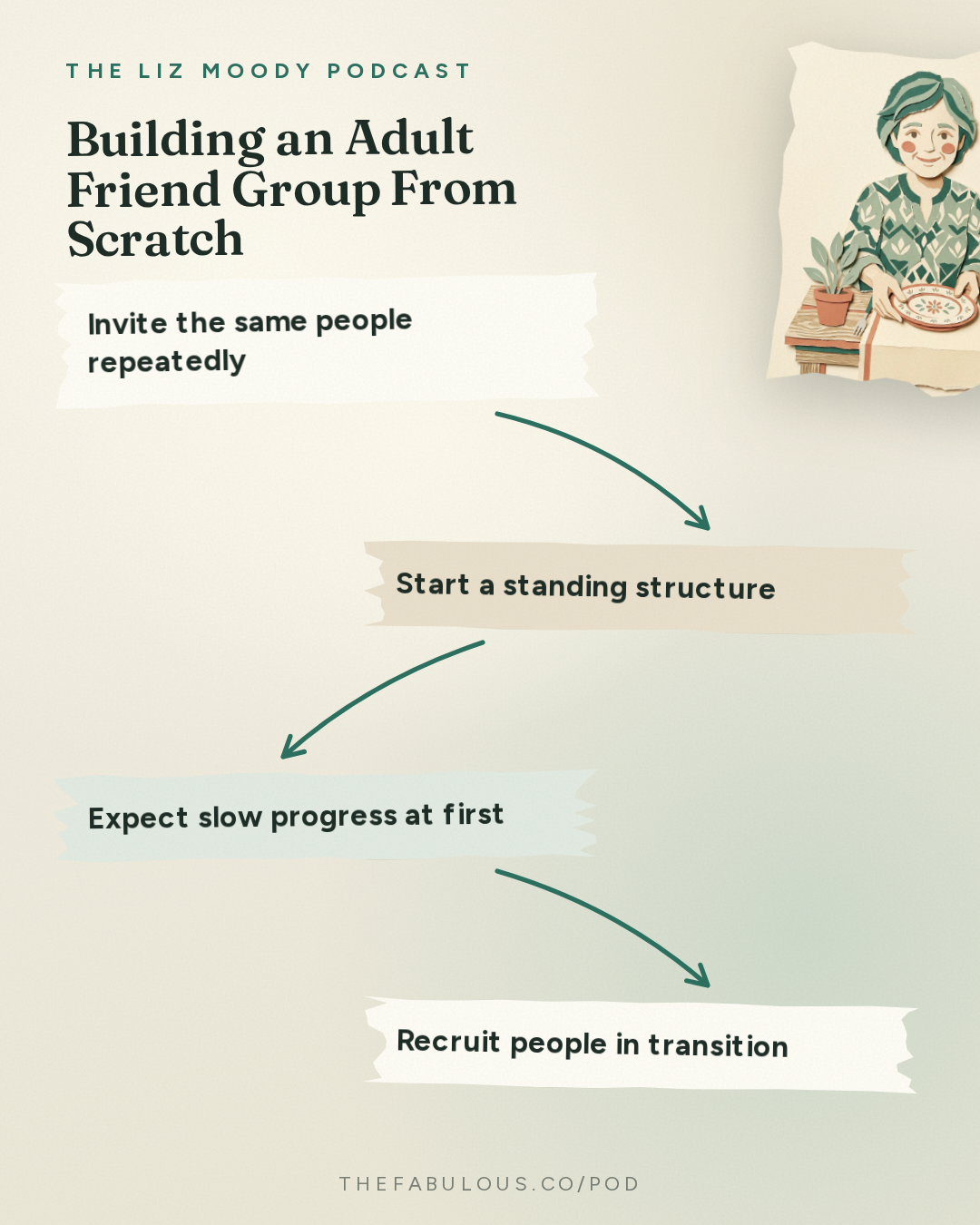
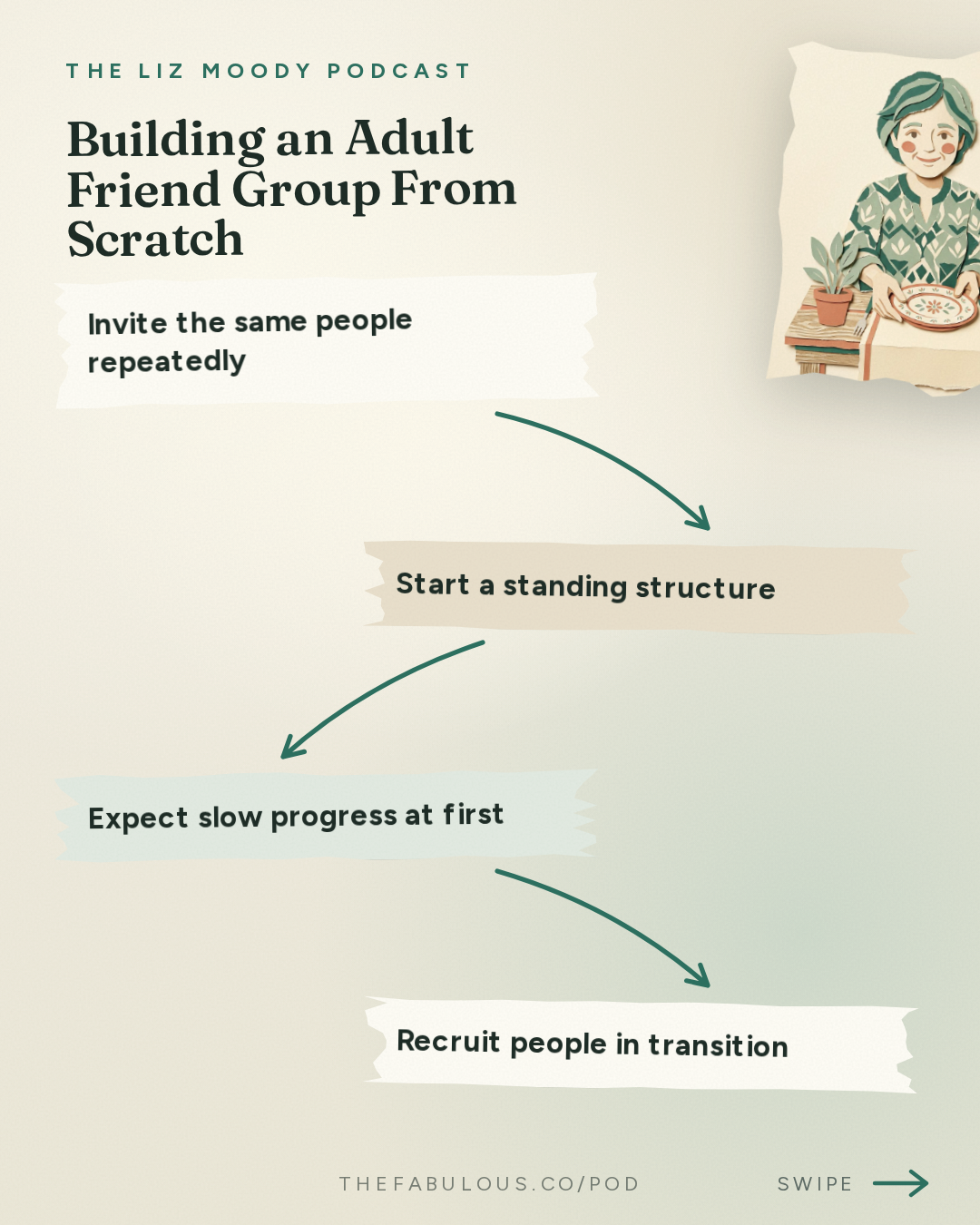
The last stretch of the conversation turns toward people who organize social life for everyone else. Franco calls them igniters, the person who starts a group lunch or a book club that others can simply opt into (41:57). Not every friend brings other friends along, but an igniter does, and Franco's advice for building an adult friend group is almost mechanical: invite the same small set of people to something repeatedly, start a standing structure like a recurring dinner or book club, and look for people in transition, those newer to a city or newly raising a kid, since they tend to be more open to joining in (42:52, 43:32, 44:04).
By the end, the episode's real target isn't bad friends or slow texters. It's the fear of looking like too much.
"We fear coming off as too much, but I think that we need to fear coming off as too little a lot more." — Marisa Franco [47:09]
Franco's newer book, Worth, pushes one layer further back: before any of these tactics work, a person needs enough self-regard to actually receive the care a friend offers. As she puts it near the close of the conversation, a sense of worth is the filter through which love gets in, and unworthiness is simply an inability to let it through (48:57). The viral advice graded throughout the episode mostly fails for the same reason: it treats connection as something that should arrive without risk. Franco's quieter argument is that the risk is the whole point, and that most people are far more wanted than their anxious math allows them to believe.
Ask this episode anything
Pod's AI answers from the episode itself, with the minute mark so you can hear it yourself.
Or start with one of these
Ask this episode
Pod's AI listens to the whole episode to answer, and points you to the minute it comes from.
The rest of this answer, and any question after it
Answers come from the episode itself, never from a summary of it.
ContinueKey takeaways
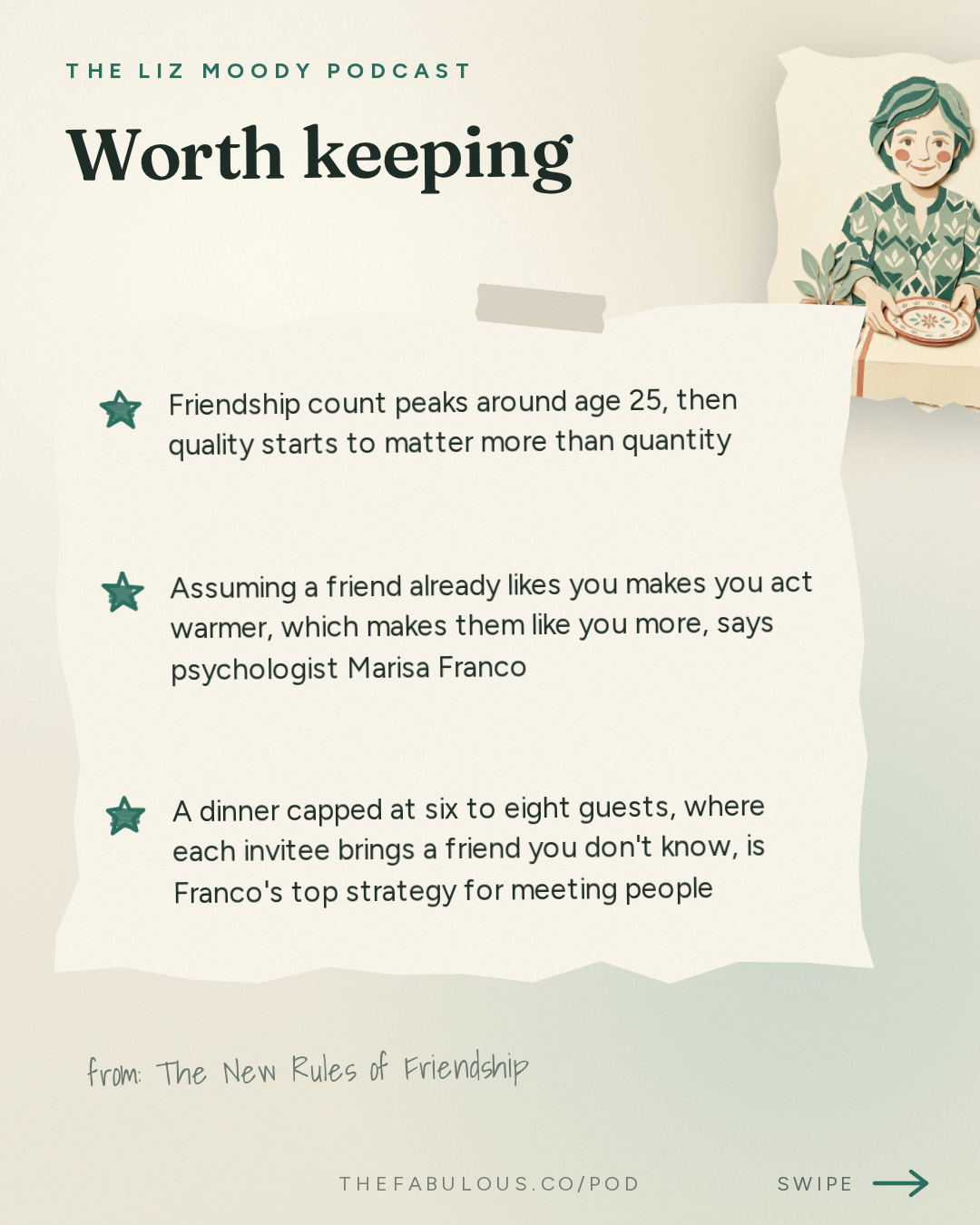
- Friendship count peaks around age 25, then quality starts to matter more than quantity
- Assuming a friend already likes you makes you act warmer, which makes them like you more, says psychologist Marisa Franco
- A dinner capped at six to eight guests, where each invitee brings a friend you don't know, is Franco's top strategy for meeting people
- Work friendships raise engagement and promotion odds, but surviving a job change requires meeting outside the office first, Franco says
- Self-worth is the filter that decides whether a person can actually accept the love their friends offer, according to Franco
The episode in cards
By the numbers
- 25 years old age at which people typically have the most friends before quality takes priority
In their words
“When we assume rejection, we tend to reject people. We come off as cold. We come off as withdrawn.”
“We really have grown up with this myth that friendship happens organically and we shouldn't have to do anything.”
“We fear coming off as too much, but I think that we need to fear coming off as too little a lot more.”
“Your sense of worth is the filter through which you receive love, and unworthiness is an inability to accept that love.”
Protocols
-
Assume people like you
Marisa Franco advises treating ambiguous social situations, like a friend who hasn't texted back, as evidence that the person likes you rather than evidence of rejection, because acting as if you are liked makes you warmer and more engaging, which makes people actually like you more.
whenever a social signal is unclear
-
Run a chain-invite dinner to meet new people
Franco suggests inviting one person you like but don't know well to a dinner meant for meeting new people, asking that guest to bring a friend you don't know, having that new guest invite a fourth person, and capping the full group at six to eight people total so everyone can actually talk.
as a recurring way to expand a social circle
-
Repot a work friendship before the job ends
Franco recommends meeting a valued work friend outside the office, such as having them over for dinner, before either person leaves the company, since a friendship tied only to the workplace tends to disappear once the workplace is gone.
before a known job change
-
Show up for diagnostic moments
Franco advises prioritizing high-emotion moments in a friend's life, such as a promotion or an illness, by reaching out directly, for example offering to celebrate a promotion or sending food during a sickness, because people use these charged moments to judge the overall health of the friendship.
whenever a friend hits a high-emotion event
Questions this episode answers
How many close friends do people actually need?
Psychologist Marisa Franco says most people can sustain up to five very close, high-intimacy friendships, with more room for looser acquaintances (04:08). Friendship count tends to peak around age 25, after which quality starts to matter more than quantity (04:30).
Why does a friend taking days to text back not always mean they don't care?
Franco argues social media and texting are an unreliable middleman for reading how someone feels, since some people are warm in person but bad at replying quickly. She points to the acceptance prophecy, the finding that assuming someone likes you makes you act warmer toward them, which then makes them more likely to actually like you (09:40).
What is the liking gap in friendship psychology?
The liking gap is a documented tendency for strangers to underestimate how much a new acquaintance liked them after a conversation (23:59). Franco uses it to explain why people hold back from reaching out to new friends, even though the other person usually enjoyed the interaction more than they assume.
Can work friends ever be real friends?
Yes. Franco cites workplace research showing that work friendships raise engagement, creativity, team cohesion, and the odds of promotion (35:13). She recommends a practice called repotting, meeting a work friend outside the office before either person changes jobs, to keep the friendship alive after the job ends (35:51).
What is the best way to meet new friends as an adult?
Franco recommends a chain-invite dinner: invite one person, have them bring a friend you don't know, have that person invite a fourth, and cap the group at six to eight total guests (26:45). The strategy works because people tend to like the friends of people they already like, making the new guests more likely to click.
Is it bad to always be the one who initiates plans with friends?
Franco agrees initiators generally end up with more friends, but she pushes back on the idea that people should accept permanently one-sided friendships. She suggests naming the pattern directly to a friend and giving it time, since some people are simply chronic non-initiators with everyone, not just with you (39:30).
The full read, in cards
Go deeper
- Platonic — Marisa Franco's book introducing concepts like the acceptance prophecy and assuming people like you
- Worth: The New Science of Self-Esteem and Secure Attachment — Franco's newer book arguing self-worth determines whether a person can accept the love friends offer
- Harvard Study of Adult Development — Found relationship quality is the strongest predictor of a long, happy life, cited by both host and guest
Mentioned
Dr. Marisa G. Franco · Platonic · Worth · University of Maryland · Rebecca Adams · Ryan Hubbard · Kite String Project · Bumble BFF
More from this show and category
Dr. Florence Camatte: GLP-1s and Longevity
Endocrinologist Florence Camatte says most age-related disease traces to one inherited flaw: poor glucose control. That is why she calls GLP-1 drugs like Mounjaro the antibiotics of this century, and why she recommends five blood tests, testosterone for women starting in their 30s, and trazodone over cold plunges for real longevity gains.
Gen Z vs Millennial Iced Coffee Workplace Debate
The viral debate over bringing an iced latte to a job interview is really about generational tolerance for discomfort at work. Liz Moody traces how 2008-era scarcity built millennial hustle culture, why it burned women out, and why Gen Z's boundary setting grew from watching that burnout up close.
When to Leave a Relationship: The Science
UC Davis relationship researcher Paul Eastwick says shared hobbies barely predict relationship success, and sentiment during conflict matters far more. He highlights the Gottman-inspired five-to-one ratio of positive to negative interactions, notes sexual satisfaction predicts more than frequency, and says celebrating a partner's good news matters more than comforting them in crisis.
Kelly McGonigal on the Real Science of Joy
Stanford health psychologist Kelly McGonigal says joy is a biological capacity to feel uplifted, not a reward for a perfect life. A meta-analysis of 93 studies and over 1 million people links joy to five to eight extra years of life, and she says cynicism, not busyness, is the biggest barrier to feeling it.
