
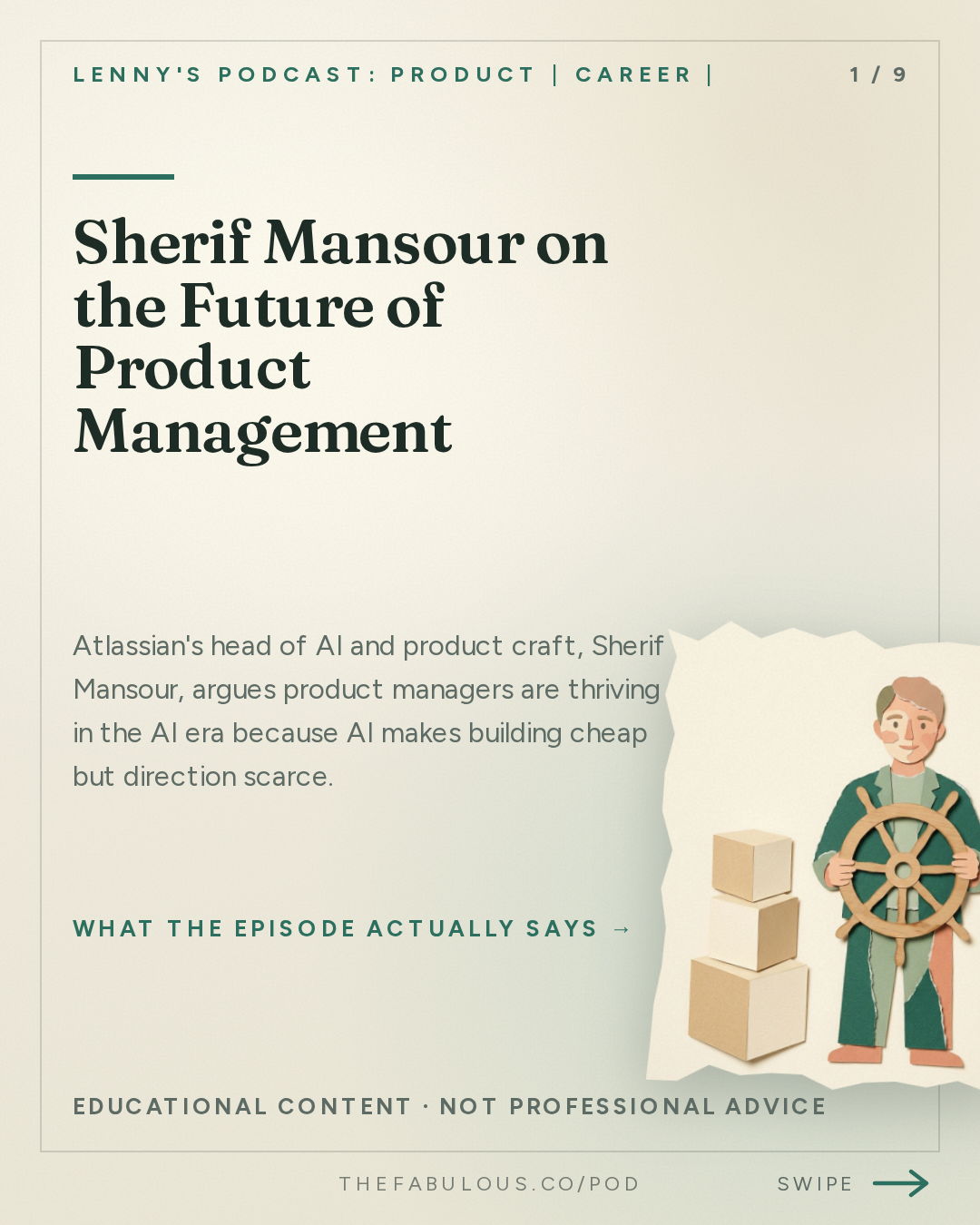
Sherif Mansour on the Future of Product Management
First principles: What it takes to be a great product manager in the AI era | Sherif Mansour
The brief
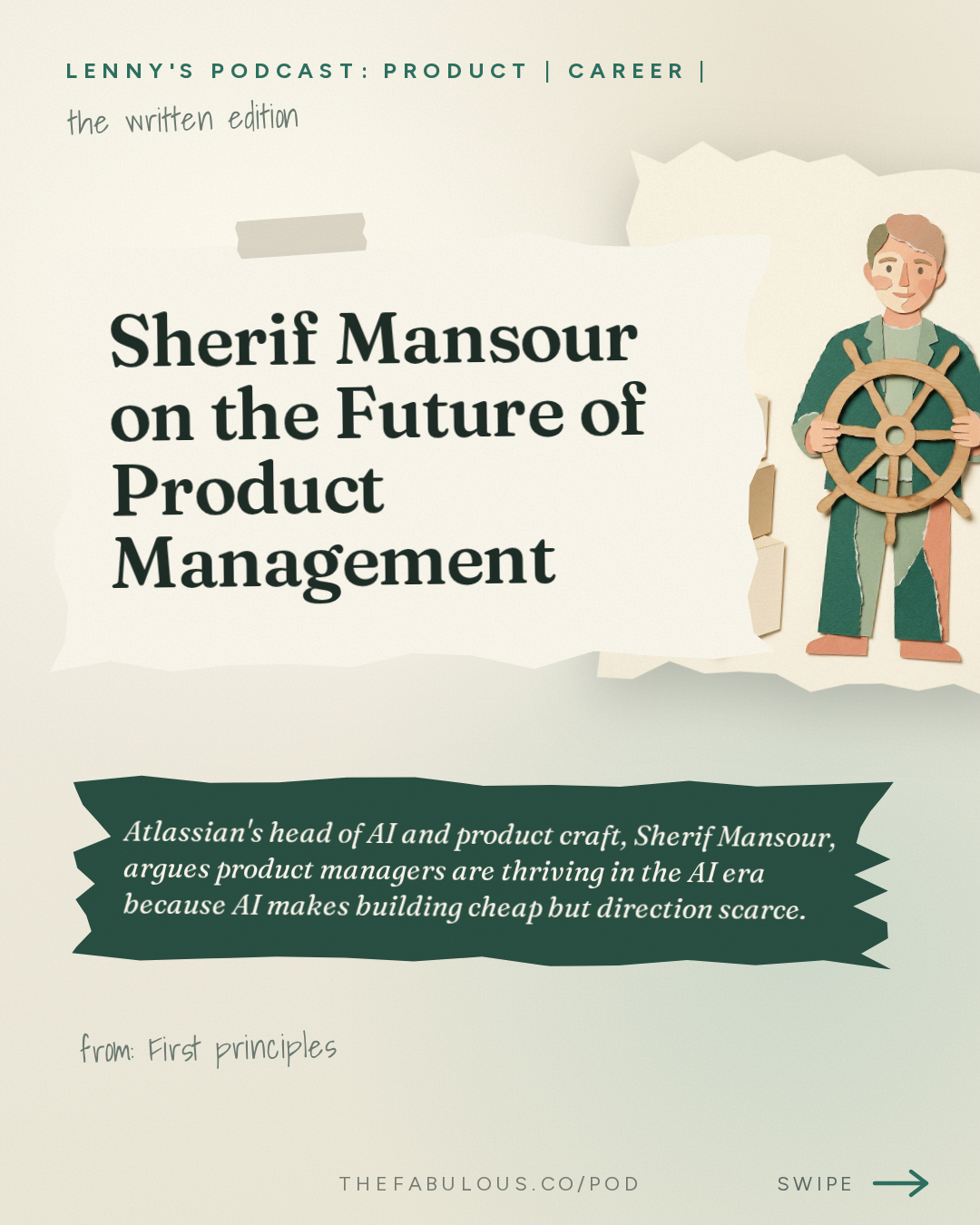
Atlassian's head of AI and product craft, Sherif Mansour, argues product managers are thriving in the AI era because AI makes building cheap but direction scarce. A PM's real job, he says, is filling context gaps and raising decision-making speed, not owning every decision or writing code (00:35, 25:00).
Last year, a team at Atlassian tried an experiment: stop being product managers and designers, and become something new called AI builders instead. For a few weeks it felt like magic. One PM told Sherif Mansour, Atlassian's head of AI and product craft, "We've moved faster than ever before" (00:18). A month later the same team had quietly drifted back to their old jobs. The problem wasn't speed. Everyone could already ship fast. The problem was that nobody knew which direction to ship in.
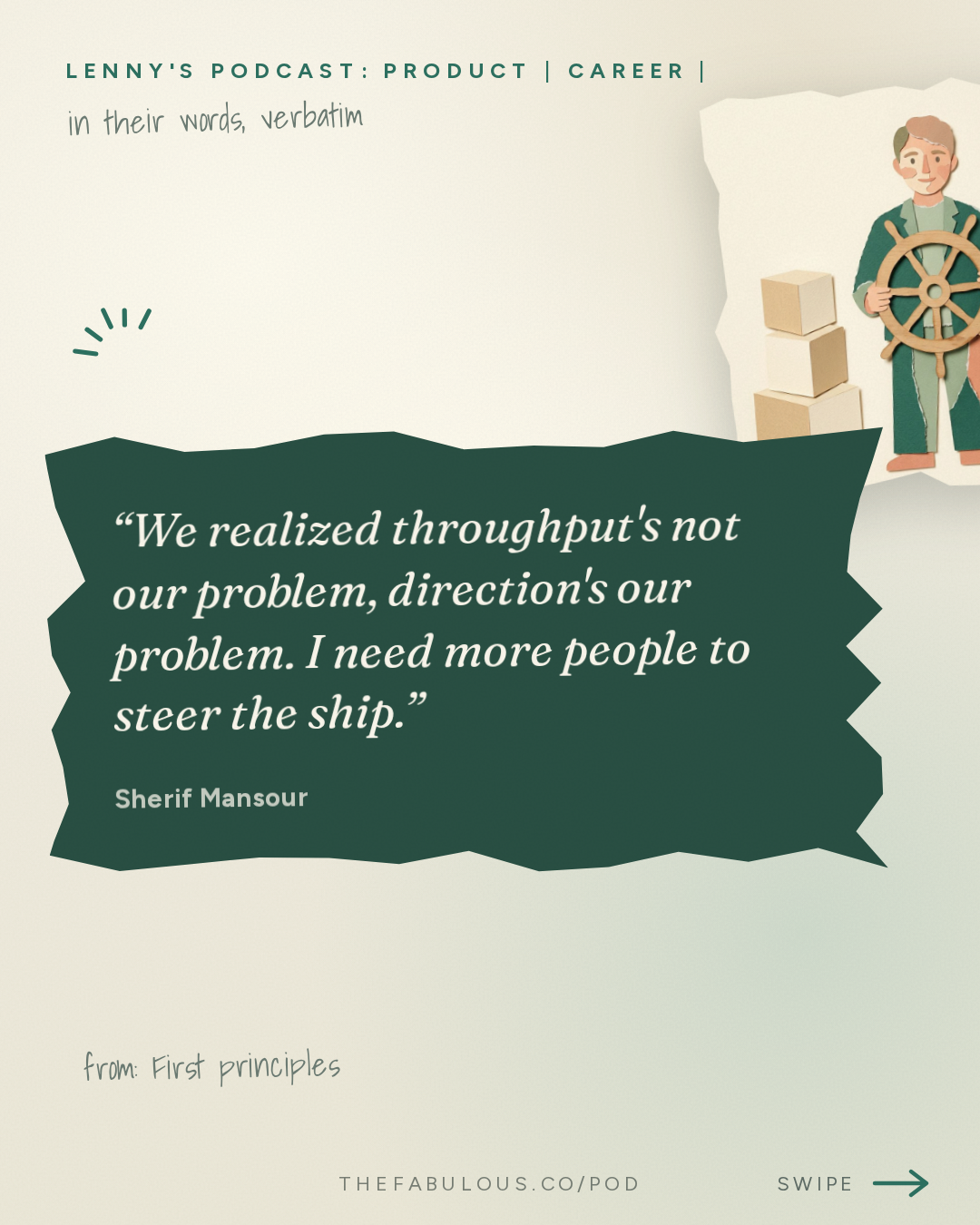
That small, undramatic reversal is the spine of Mansour's argument about what a product manager is actually for, and why the role is not disappearing in the AI era, it is growing. In a hiring market where open roles for engineers are slowing, design has gone flat, and there are only 108 open user research roles across the entire tech industry right now (23:14), PM postings are up. Mansour's explanation is almost mechanical: AI has made throughput, the raw output of software, cheap. What stays expensive is knowing where to point all that output. "Throughput's not our problem, direction's our problem. I need more people to steer the ship," he says, describing the team's realization after the AI-builder experiment ended (00:18).
This reframes what a PM is supposed to do all day. Mansour's central claim is almost a correction of the job description itself.
"They don't own decision-making. PMs own decision-making velocity. The largest, most important part of their job is they're literally filling context." — Sherif Mansour (00:35)
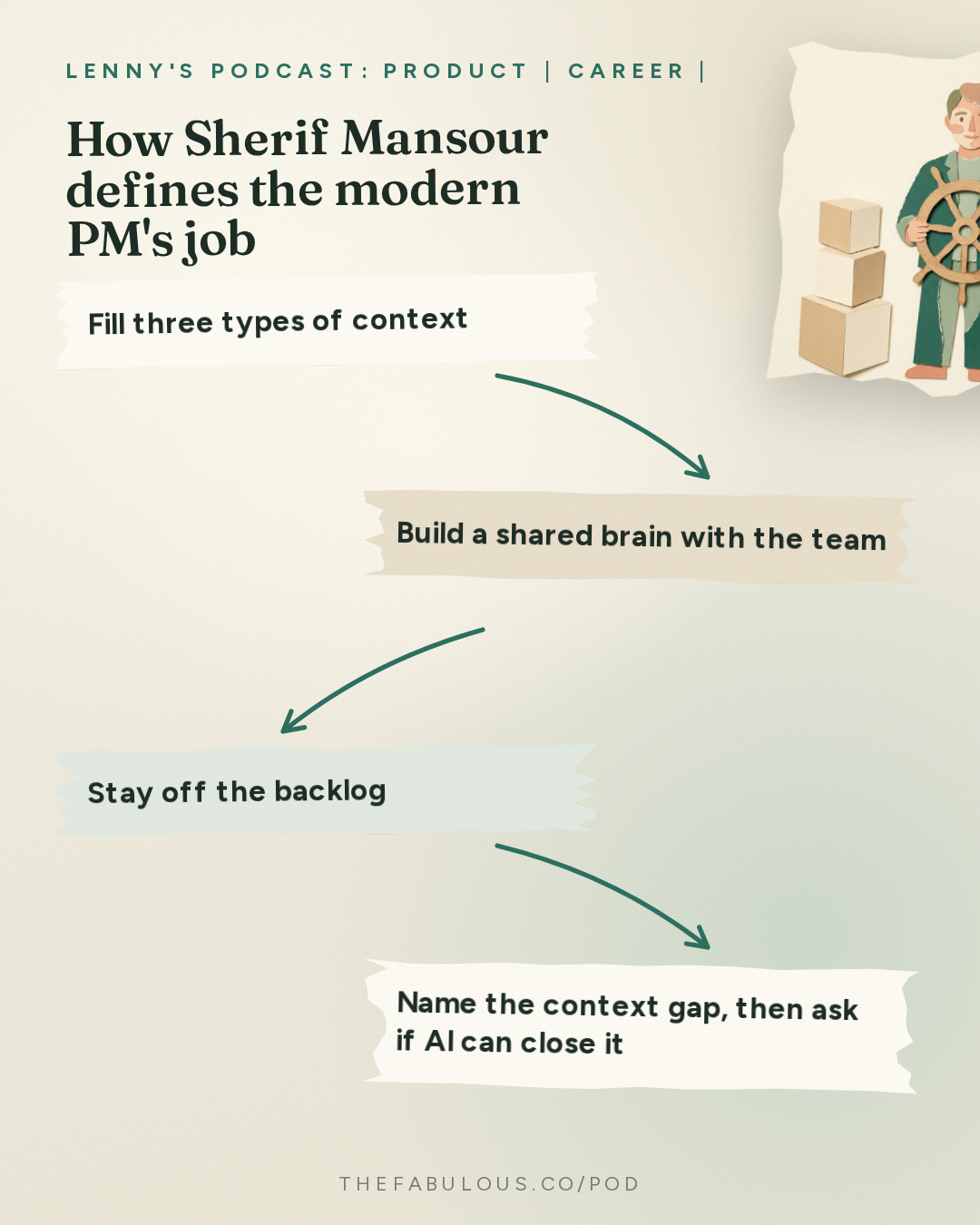
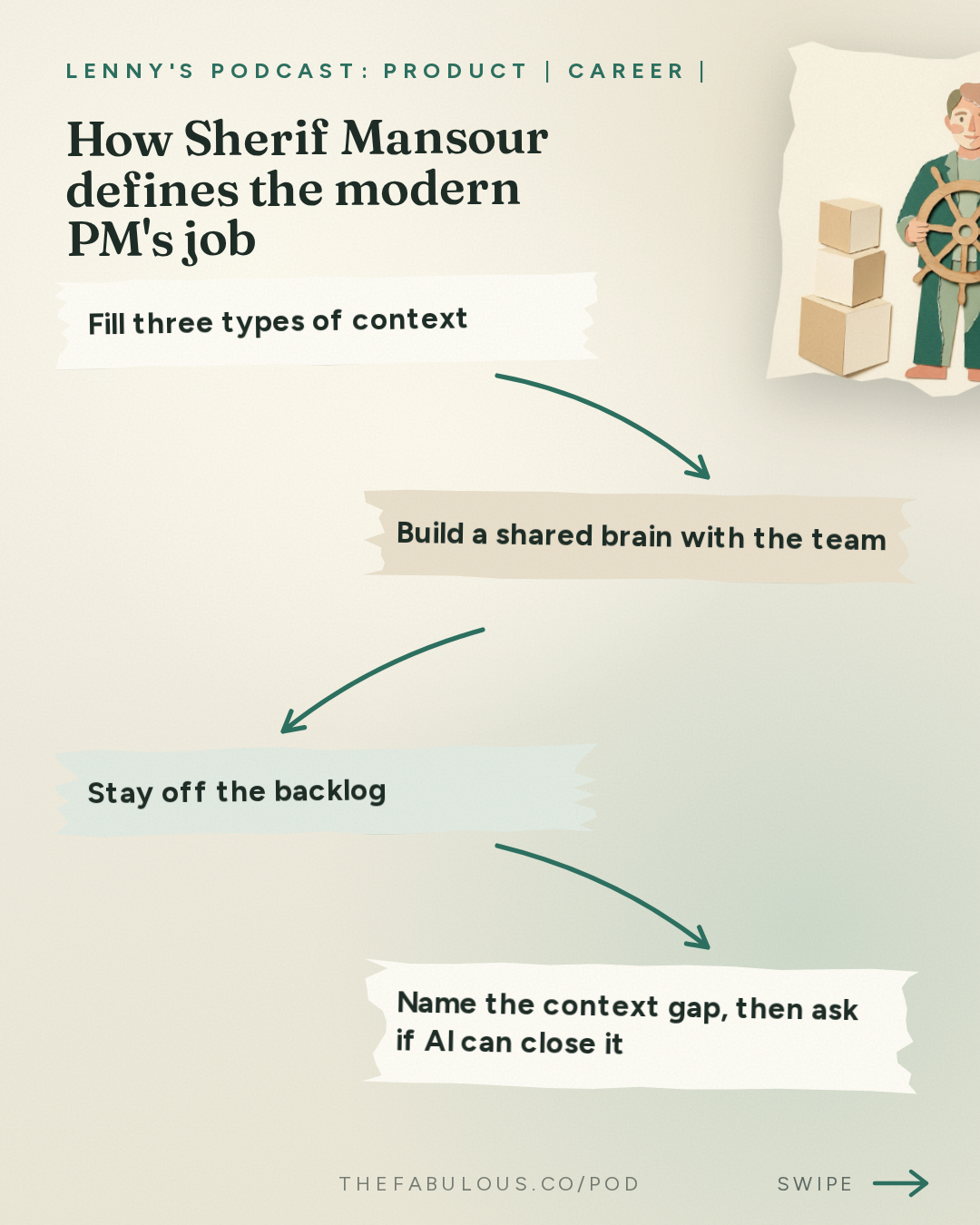
Context, in his usage, means three overlapping gaps: what customers actually need, what the market and product landscape look like, and what the business can afford. A PM's job is not to personally resolve each of those gaps and hand down verdicts. It is to make sure the whole team, especially engineers, has enough of that information to make good calls on their own. Mansour tells his PMs to avoid the Jira backlog, the running list of tasks engineers pull from, because ranking cards yourself just hides the reasoning behind a decision instead of sharing it (03:38). At scale, this matters more than it sounds. Mansour says the hardest thing he has done in 17 years at Atlassian (19:41) is simply keeping shared understanding alive as teams grow past 20 or 30 people, the point where trust and common context routinely start to break down (03:14).
Three kinds of PM, and why juniors still matter
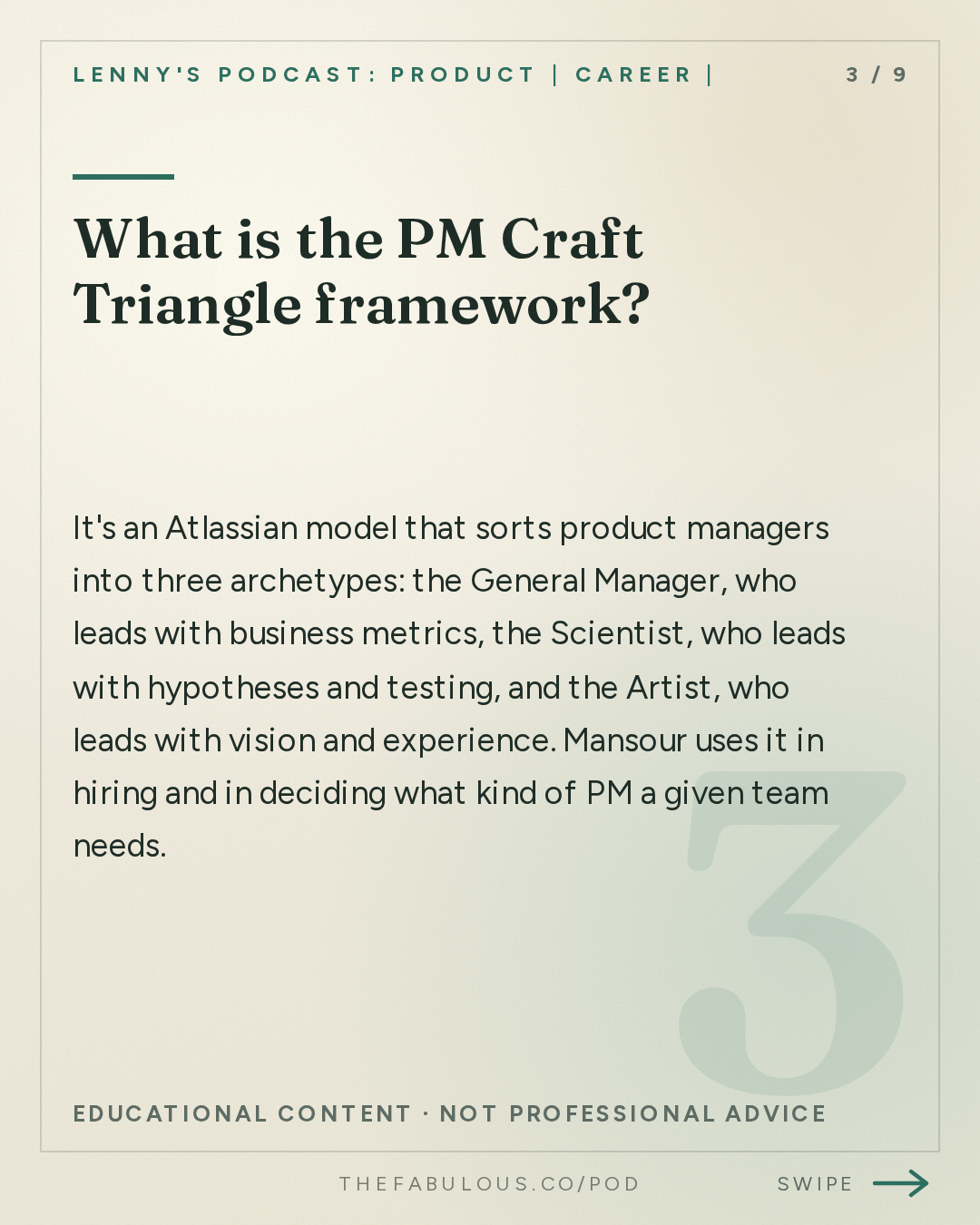
Atlassian uses an internal model, credited to a colleague named Joff Redfern, that sorts PMs into three archetypes: the General Manager, who thinks in market size and revenue, the Scientist, who runs on hypotheses and A/B tests, and the Artist, who leads with vision and experience and works backward into the problem (12:04). Mansour, by his own admission, is a weak General Manager and a strong Artist, and he treats that imbalance as useful rather than embarrassing: naming your weak spot in public, he says, gives everyone else permission to do the same and to build complementary teams instead of trying to be good at everything (15:20).
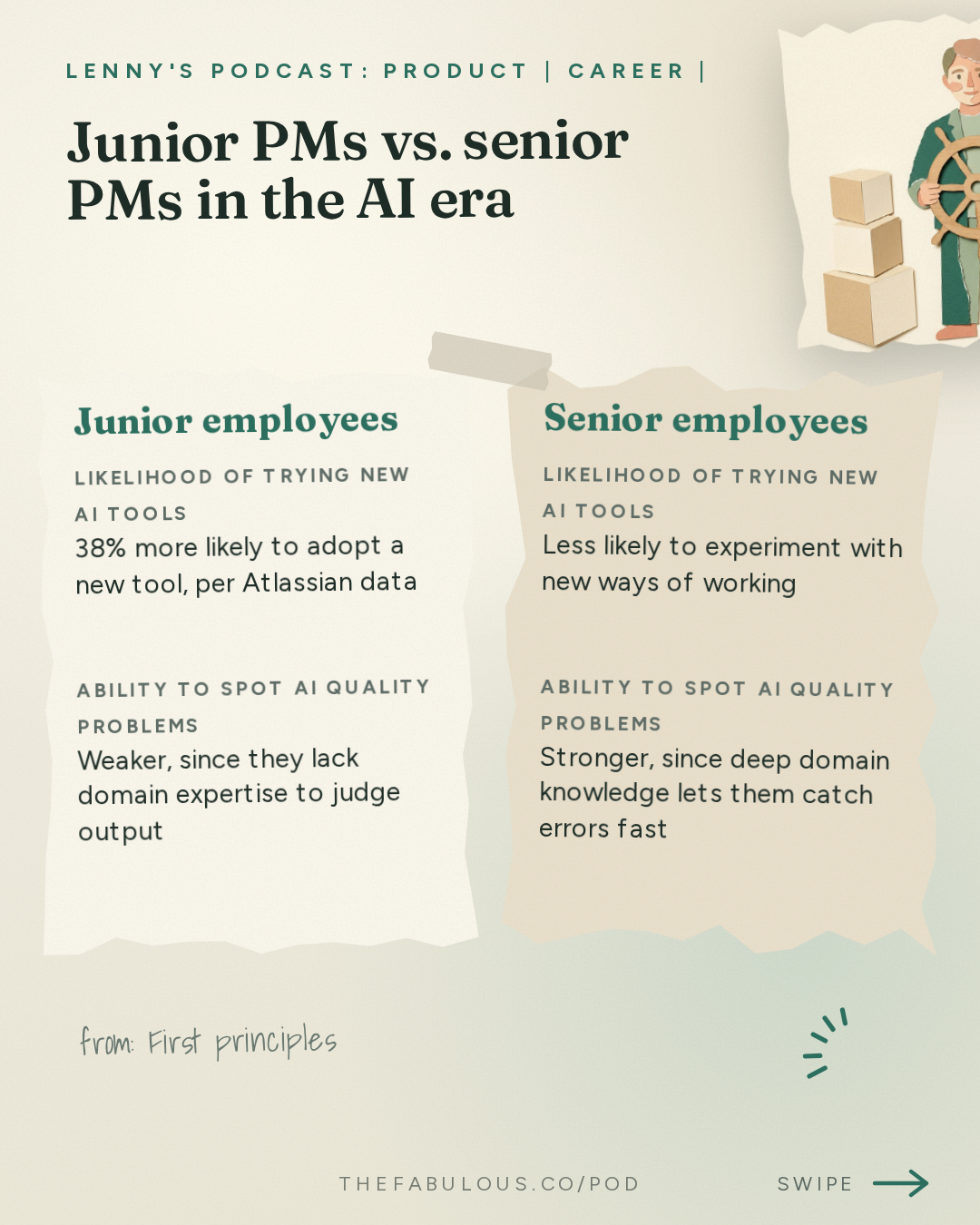
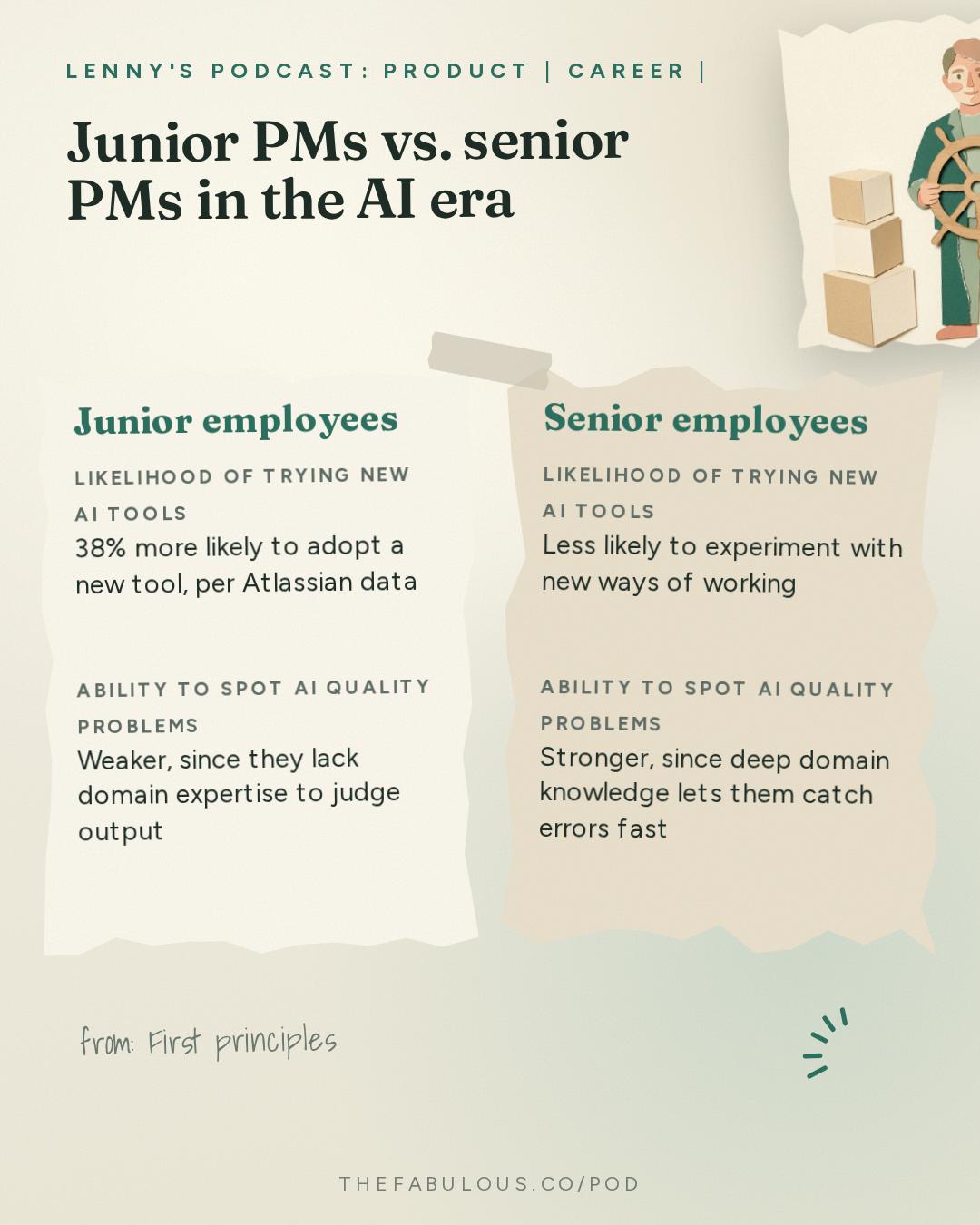
That framework also explains a counter-intuitive hiring bet Mansour is making. Conventional wisdom says AI lets experienced people do more with fewer juniors. Mansour disagrees, at least for established companies trying to change how they work. Junior employees are roughly 38 percent more likely than senior employees to try new AI tools, by Atlassian's internal data (37:43), partly because they have no old habits to unlearn. Mansour's own 12-year-old son, who taught himself to code by "vibe coding," meaning he describes what he wants in plain language and lets an AI write the program, skipping syntax entirely and judging tools the way adults judge restaurants, is his go-to example of this instinct (33:03). The catch is that juniors are worse at catching what Mansour calls AI slop, low-quality or wrong output, because they lack the domain knowledge to spot it; seniors are far better at that part (34:29). His conclusion is not that one group wins. It's that mixed teams, junior instinct paired with senior judgment, outperform either group alone.
There's a warning folded into all of this. AI does not make weak judgment strong. Mansour learned this first during an earlier hype cycle, when easy mockup tools like Balsamiq promised that anyone could design.
"AI is really good at amplifying your strengths, and equally it amplifies your weaknesses." — Sherif Mansour (27:59)
Access to a powerful tool is not the same as expertise in the domain the tool touches. A PM who hands a prototyping tool to someone without design taste will get more prototypes, not better ones.
Starting with the answer, and bolting AI onto what already works
Mansour also pushes back on two pieces of product-management catechism. The first is "always start with the problem, never the solution." He thinks that's often backward. When Atlassian built Rovo Chat, its AI assistant, and Rovo Agents, which run inside Jira and Confluence workflows, the team deliberately shipped an open-ended canvas rather than a narrow feature, because watching how customers used that canvas was the fastest way to learn what to build next (48:20). Today roughly 10 million agents run in loops inside Jira and Confluence every month (49:00), and Atlassian studies which of those loops deserve to become dedicated, polished features. Starting broad, in other words, can be how you discover what to make narrow.
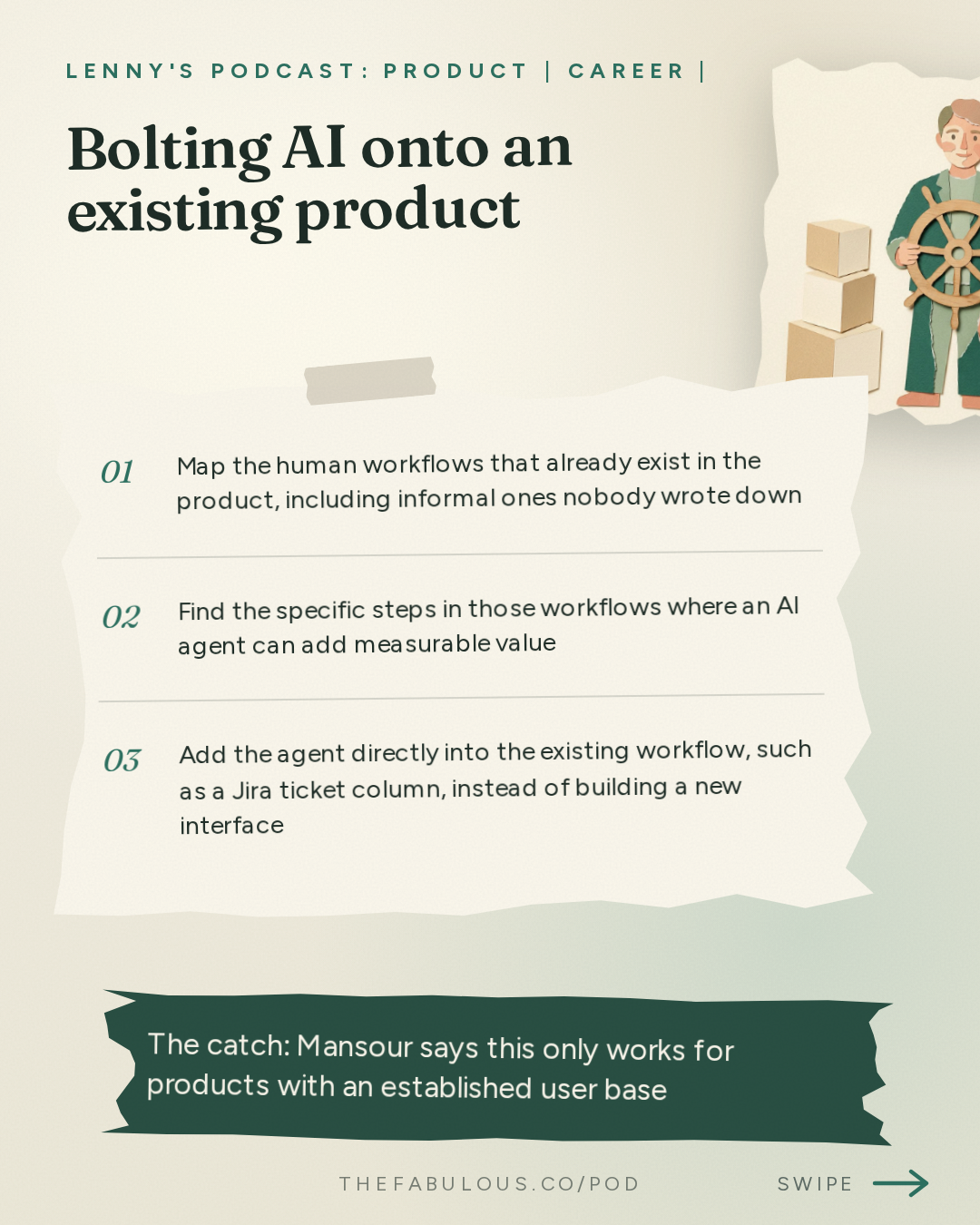
The second piece of folk wisdom Mansour challenges is the idea that bolting AI onto an existing product is lazy, and that real innovation means rebuilding from scratch. For a product with millions of existing users, he argues, the opposite is true: map the workflows people already use, find the specific steps where an AI agent can help, and add it there, rather than throwing away a working product to build something AI-native from zero (55:01). Jira's agent columns, where a ticket is handed to an agent instead of a person, are his proof that "bolting on" can be the right strategy, not a lazy one.
None of this removes human judgment from the picture, especially when a PM is working for a founder with a strong vision. Mansour compares it to two people watching the same movie at different points: the founder is on chapter ten, the team is on chapter one (64:41). His rule of thumb, drawn from experience, is that founders at companies he respects are right about direction something like 99 percent of the time, not because they are infallible but because they've spent far more time thinking about the problem (65:28). The job, then, is to catch up to their reasoning rather than simply comply with it, and to say so openly when agreement still doesn't come.
Underneath the frameworks and the job-market data is a simpler claim: the scarce resource in a company full of capable AI tools is still judgment, taste, and the discipline to share what you know with the people around you. Mansour's advice to new managers, that the most common mistake is pulling back too fast and assuming hands-off is always the generous move (62:55), is really the same idea wearing different clothes. Filling context, whether for an engineer, a junior PM, or a whole team learning new tools, is slower and less glamorous than shipping code. It is also, on his evidence, the part of the job that AI cannot do for anyone yet.
Ask this episode anything
Pod's AI answers from the episode itself, with the minute mark so you can hear it yourself.
Or start with one of these
Ask this episode
Pod's AI listens to the whole episode to answer, and points you to the minute it comes from.
The rest of this answer, and any question after it
Answers come from the episode itself, never from a summary of it.
ContinueKey takeaways
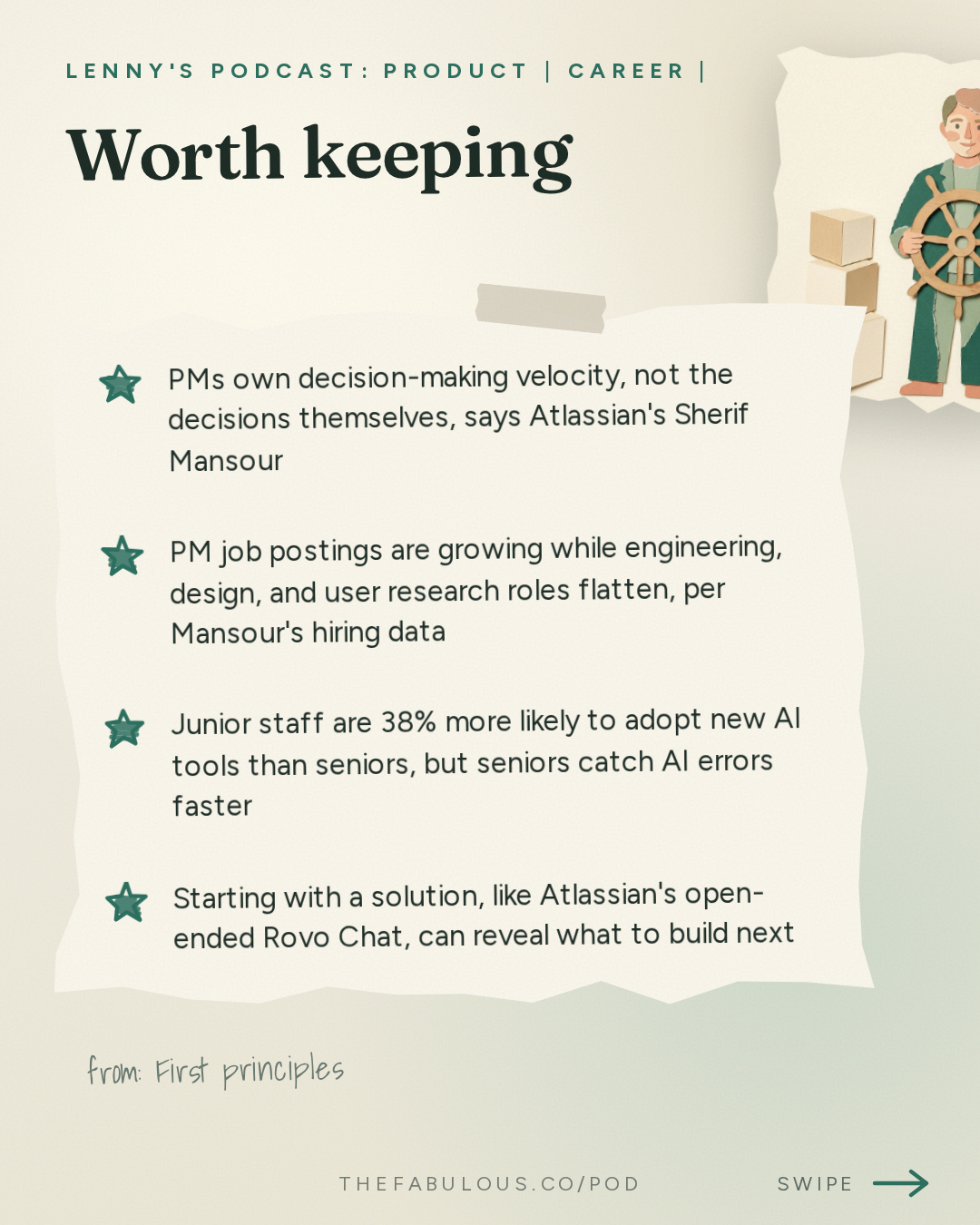
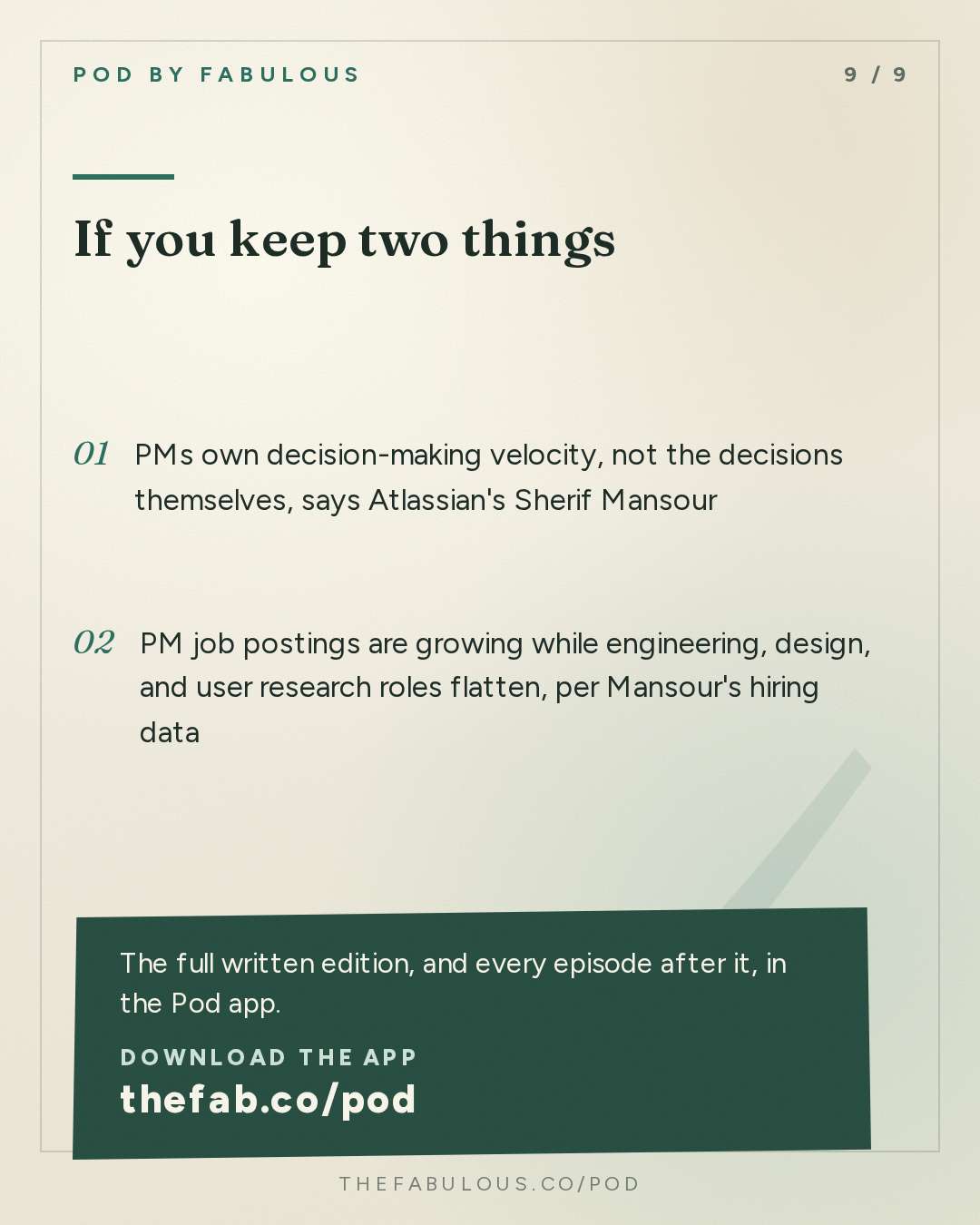
- PMs own decision-making velocity, not the decisions themselves, says Atlassian's Sherif Mansour
- PM job postings are growing while engineering, design, and user research roles flatten, per Mansour's hiring data
- Junior staff are 38% more likely to adopt new AI tools than seniors, but seniors catch AI errors faster
- Starting with a solution, like Atlassian's open-ended Rovo Chat, can reveal what to build next
- New PM managers most often fail by going hands-off too quickly, Mansour says
The episode in cards
By the numbers
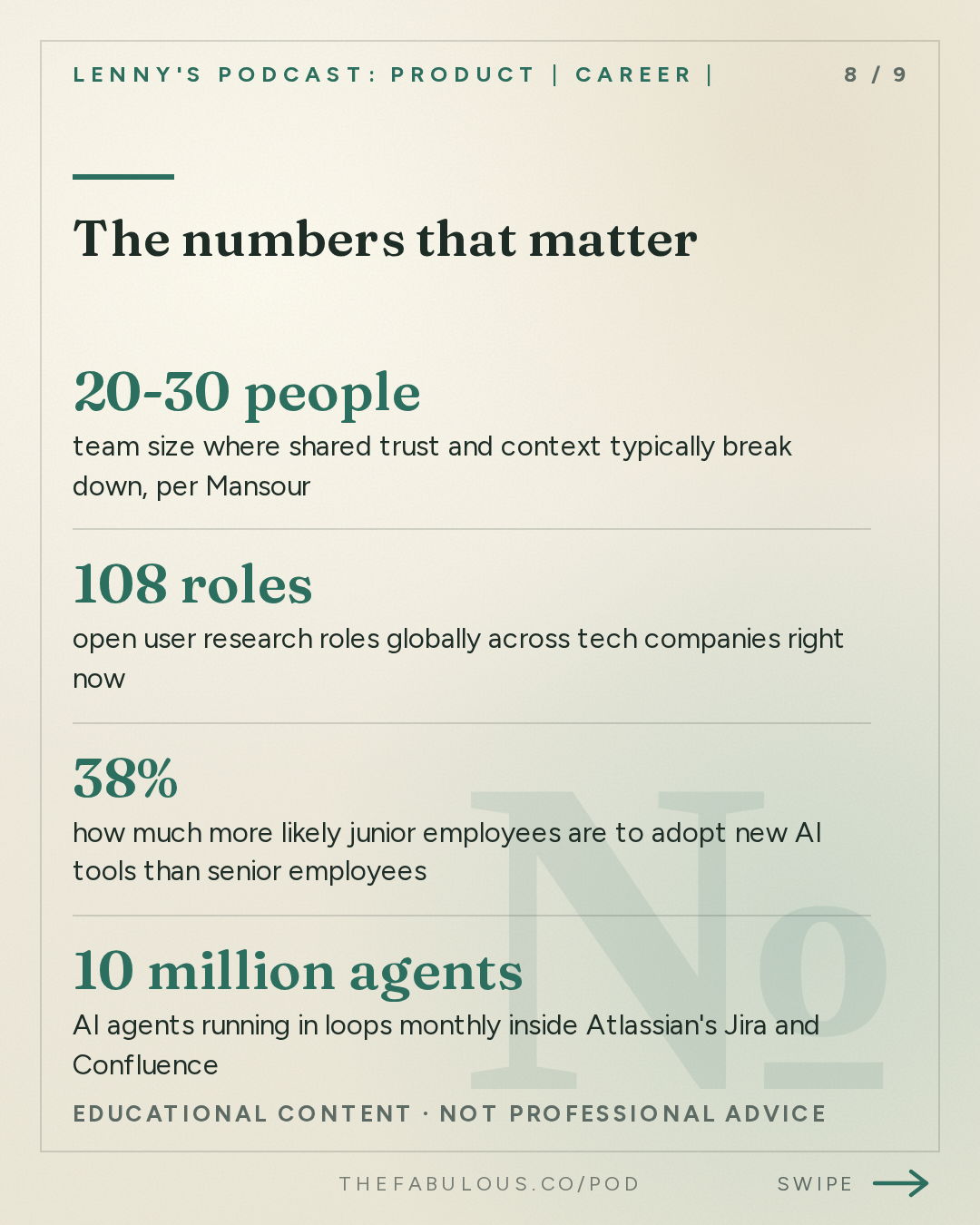
- 20-30 people team size where shared trust and context typically break down, per Mansour
- 108 roles open user research roles globally across tech companies right now
- 38% percent how much more likely junior employees are to adopt new AI tools than senior employees
- 10 million agents AI agents running in loops monthly inside Atlassian's Jira and Confluence
- 99% percent how often Mansour estimates strong founders are right about product direction
In their words
“We realized throughput's not our problem, direction's our problem. I need more people to steer the ship.”
“They don't own decision-making. PMs own decision-making velocity. The largest, most important part of their job is they're literally filling context.”
“AI is really good at amplifying your strengths, and equally it amplifies your weaknesses.”
“The best PMs I find can counter, like, argue against themselves and present you really good reasons why they shouldn't do the thing”
Protocols
-
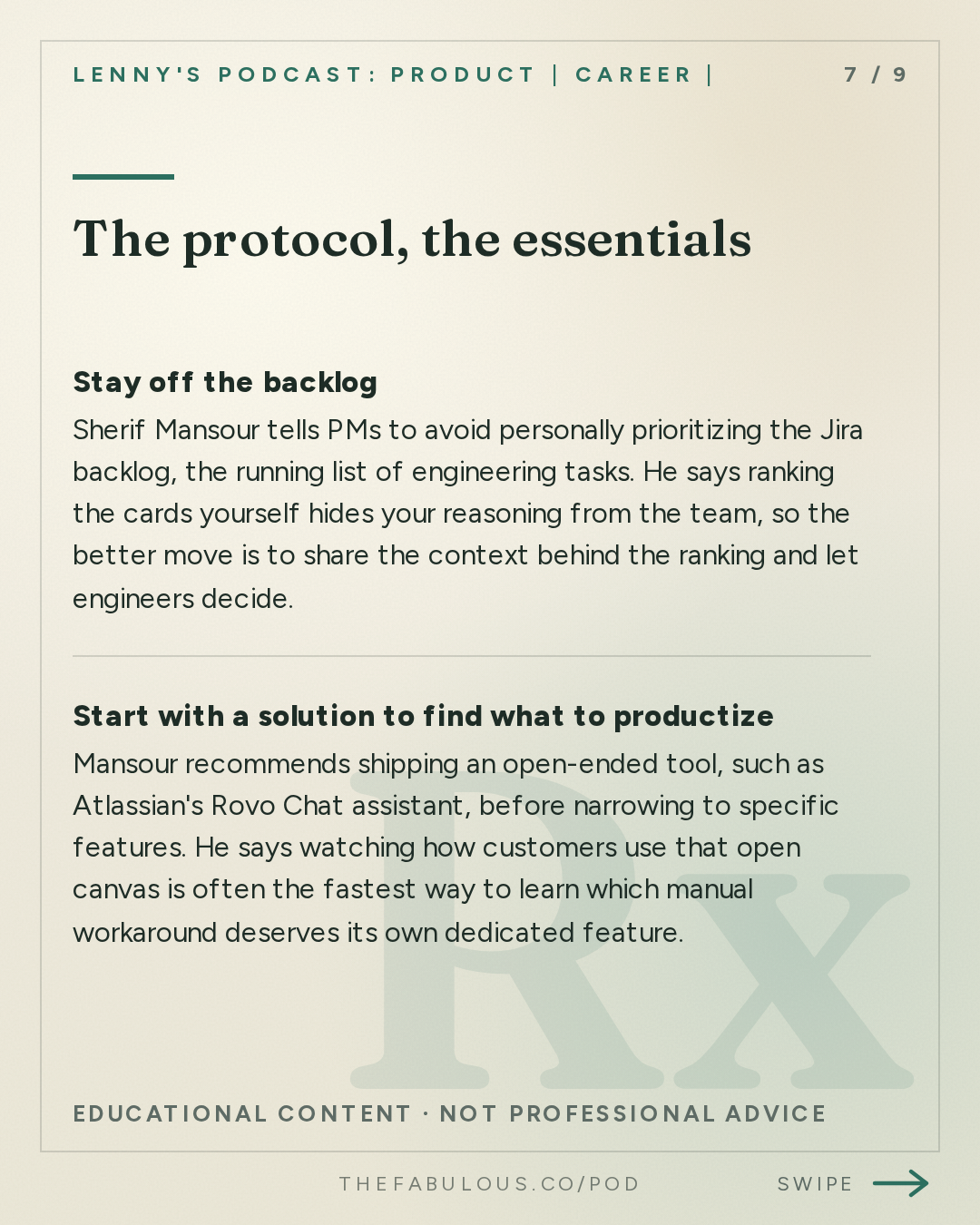
Stay off the backlog
Sherif Mansour tells PMs to avoid personally prioritizing the Jira backlog, the running list of engineering tasks. He says ranking the cards yourself hides your reasoning from the team, so the better move is to share the context behind the ranking and let engineers decide.
Ongoing practice
-
Start with a solution to find what to productize
Mansour recommends shipping an open-ended tool, such as Atlassian's Rovo Chat assistant, before narrowing to specific features. He says watching how customers use that open canvas is often the fastest way to learn which manual workaround deserves its own dedicated feature.
During early product discovery
-
Bolt AI onto existing workflows
Mansour advises teams with an established user base to add AI directly into the workflows customers already use, rather than rebuilding the product from scratch. He points to Atlassian adding AI agents straight into Jira workflow columns as the model to follow.
When transitioning an existing product to AI
Questions this episode answers
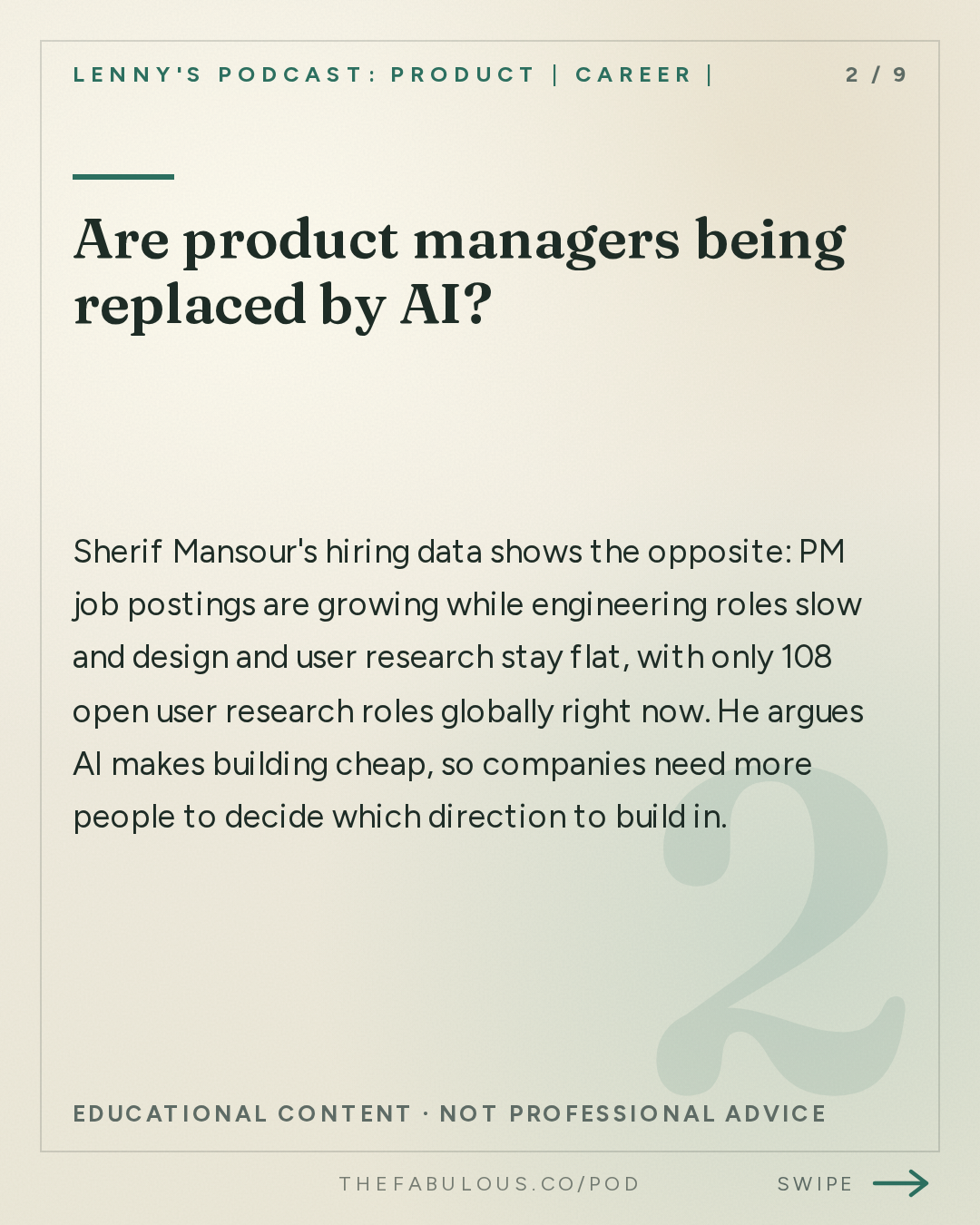
Are product managers being replaced by AI?
Sherif Mansour's hiring data shows the opposite: PM job postings are growing while engineering roles slow and design and user research stay flat, with only 108 open user research roles globally right now (22:42, 23:14). He argues AI makes building cheap, so companies need more people to decide which direction to build in (25:00).
What is the PM Craft Triangle framework?
It's an Atlassian model that sorts product managers into three archetypes: the General Manager, who leads with business metrics, the Scientist, who leads with hypotheses and testing, and the Artist, who leads with vision and experience (12:04). Mansour uses it in hiring and in deciding what kind of PM a given team needs.
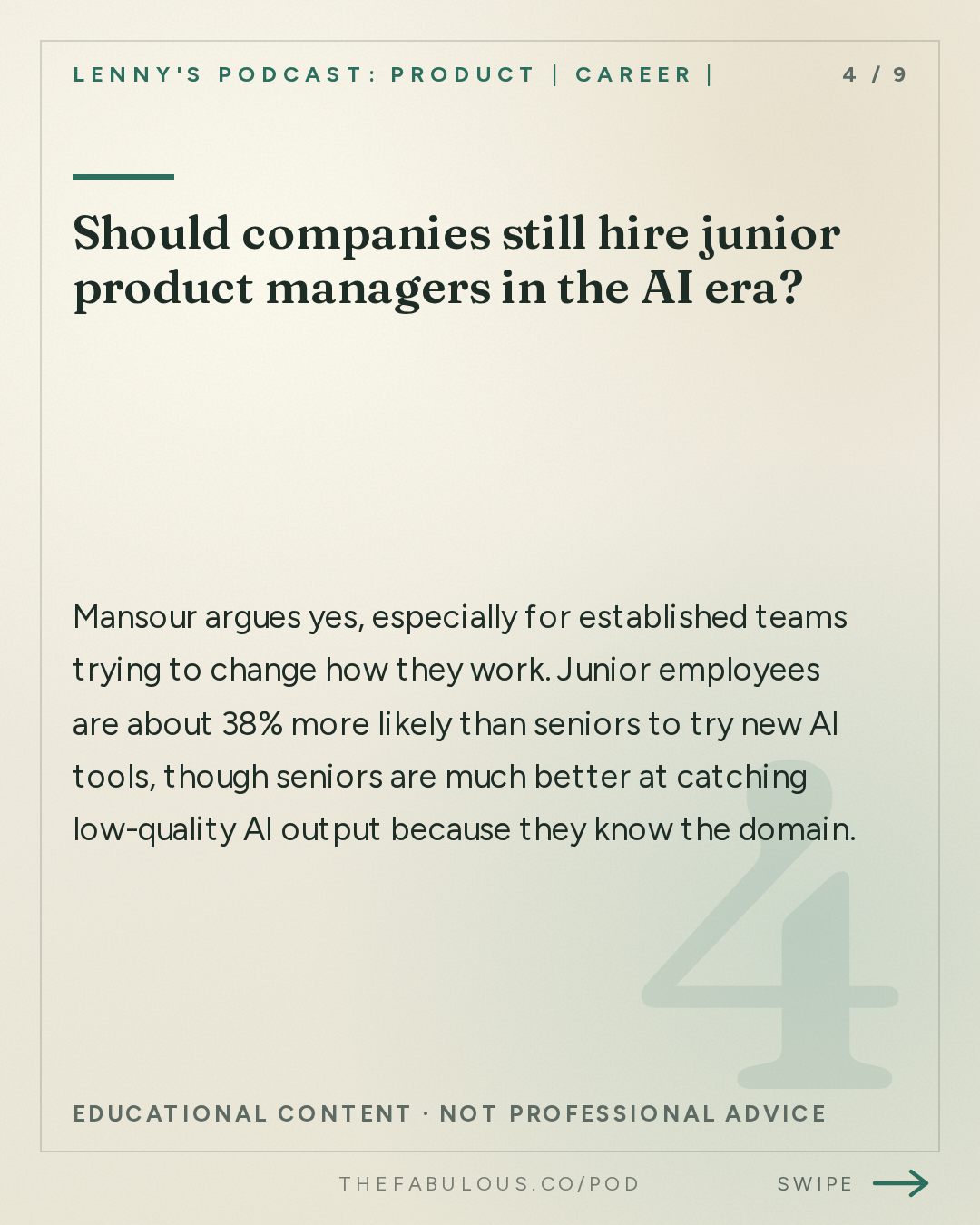
Should companies still hire junior product managers in the AI era?
Mansour argues yes, especially for established teams trying to change how they work. Junior employees are about 38% more likely than seniors to try new AI tools (37:43), though seniors are much better at catching low-quality AI output because they know the domain (34:29).
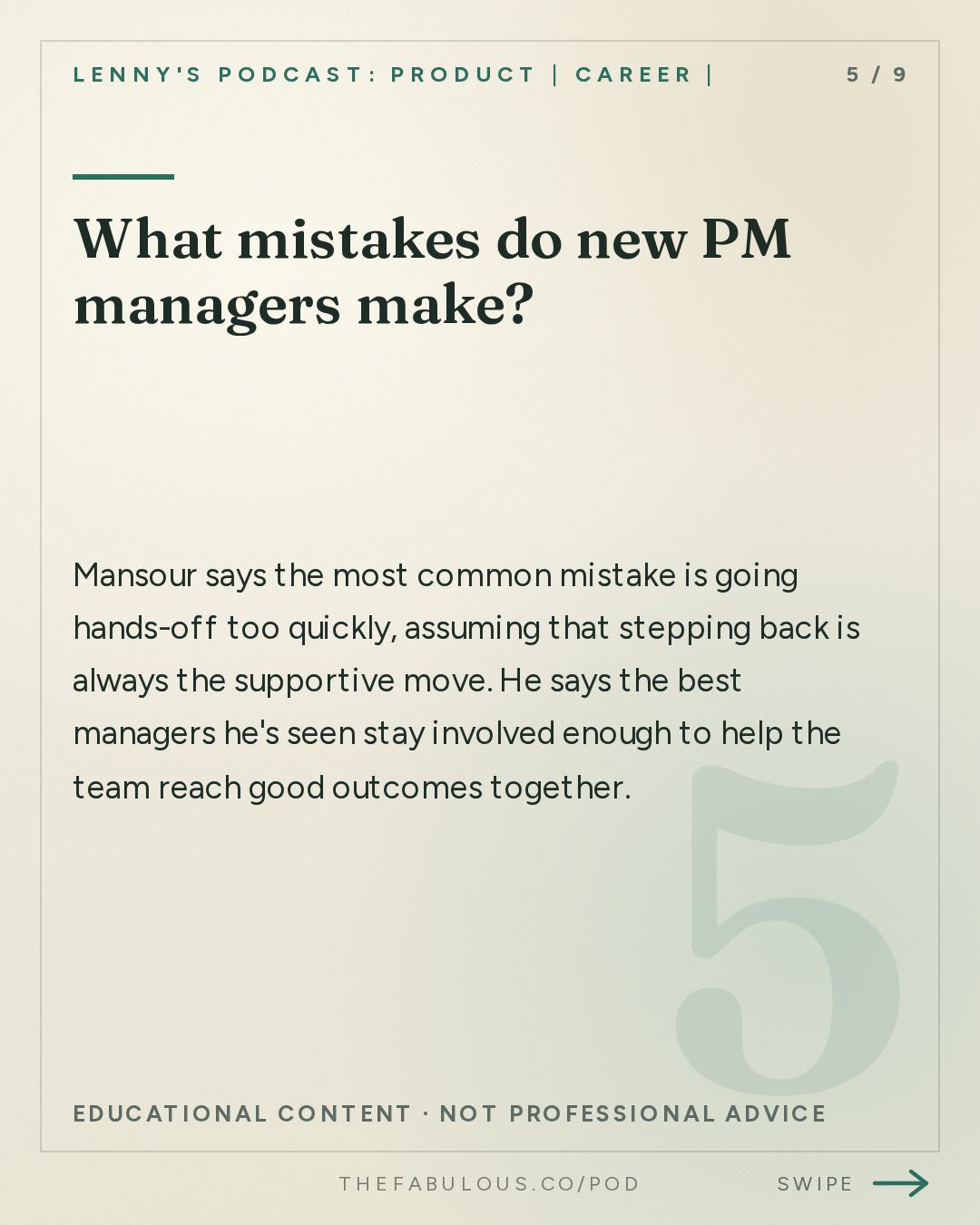
What mistakes do new PM managers make?
Mansour says the most common mistake is going hands-off too quickly, assuming that stepping back is always the supportive move. He says the best managers he's seen stay involved enough to help the team reach good outcomes together (62:55).
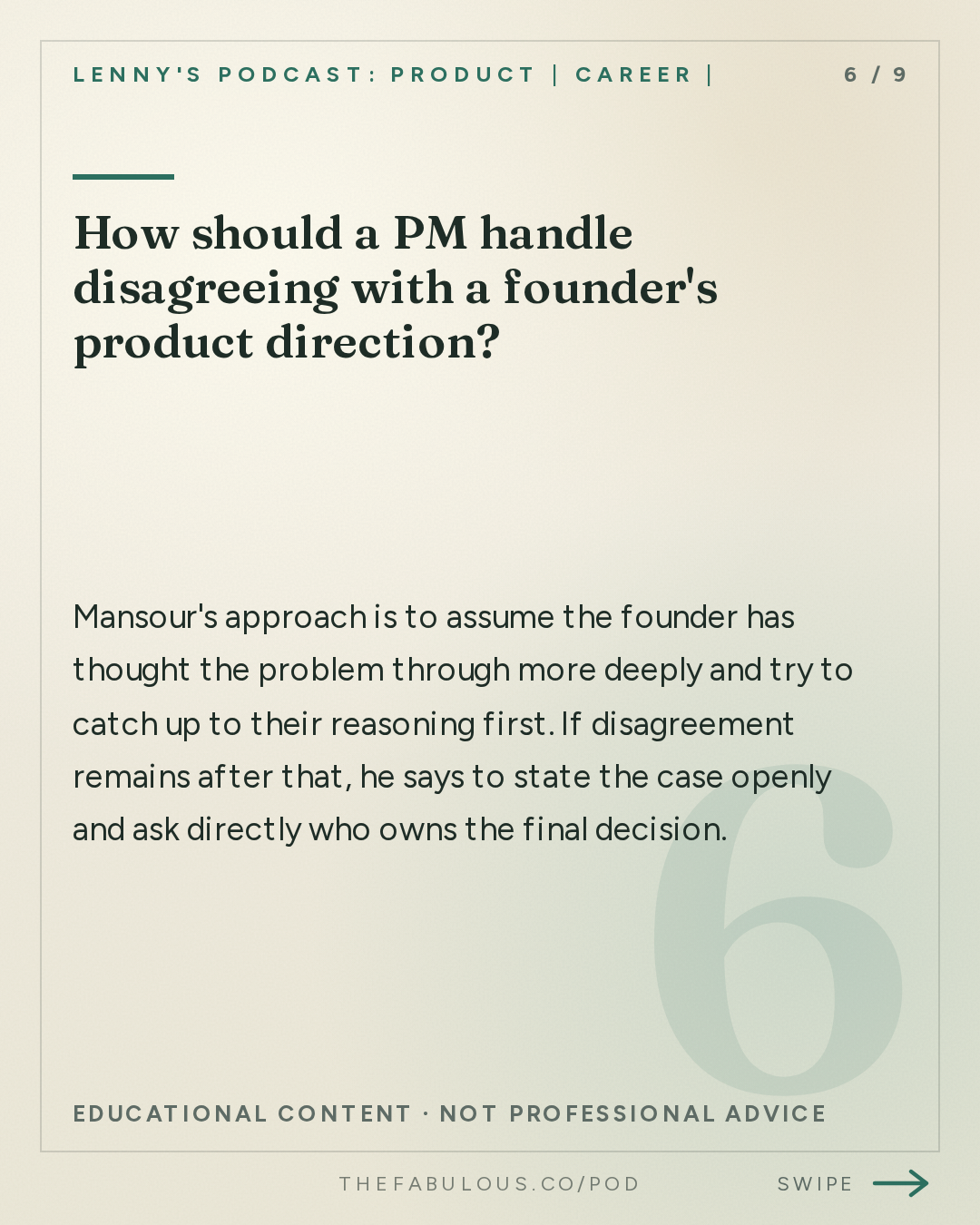
How should a PM handle disagreeing with a founder's product direction?
Mansour's approach is to assume the founder has thought the problem through more deeply and try to catch up to their reasoning first (64:41). If disagreement remains after that, he says to state the case openly and ask directly who owns the final decision (67:33).
The full read, in cards
Go deeper
- Lenny's state-of-the-tech job market report — shows PM job postings growing while engineering, design, and user research roles flatten or shrink
- Atlassian internal tool-adoption data — found juniors are 38 percent more likely than seniors to adopt new AI tools, though seniors catch quality problems faster
Mentioned
Sherif Mansour · Atlassian · Jira · Confluence · Balsamiq · Rovo Chat · Rovo Agents · Gemini · Jeff Bezos · Dharmesh Shah · Lenny Rachitsky · Project Hail Mary · The Prison Healer · Wingfeather Saga
More from this show and category

Inside Meta's Muse: Building an AI Agent
Mona Sarantakos, Meta's VP of product for Muse, says the AI agent took seven months to launch because the team prioritized trust and safety over speed. The team kept a stuffed-animal avatar named Jolly over objections, handwrote every system prompt, and built more than 100 evals before shipping.

Tulsee Doshi on Why AI PMs Matter Again
Google Gemini head of product Tulsee Doshi says a PM's job now is judging taste as AI makes building nearly free. She shares her 60/20/20 rule for building features ahead of a model's limits, explains how structured evals differ from gut-level vibes testing, and argues a model's personality is itself user experience.

Hector Serrano's Whisperflow Growth Playbook
Hector Serrano joined Whisperflow at 19 and built a creator-pay model: a cut of ad spend, not a flat fee. The approach helped fuel the company's 30X revenue growth and $2B valuation (01:45). Serrano argues young, hungry hires beat polished resumes, and creative work should stay human, not AI-made (65:44).

Rob Snyder's Pull Framework for Product-Market Fit
Startup advisor Rob Snyder says product-market fit shows up when one specific person inside a company has an urgent, unavoidable project that no current option solves (04:36). His PULL framework (Project, Unavoidable, List of options, Limitations) replaces guesswork with a testable hypothesis, verified by cold outreach and five real sales calls (07:33, 45:13).
