
Josh Woodward on Building an AI Labs Team
Why every company now needs to think and operate like a lab team | Josh Woodward (Google Labs, Gemini, AI Studio)
The brief
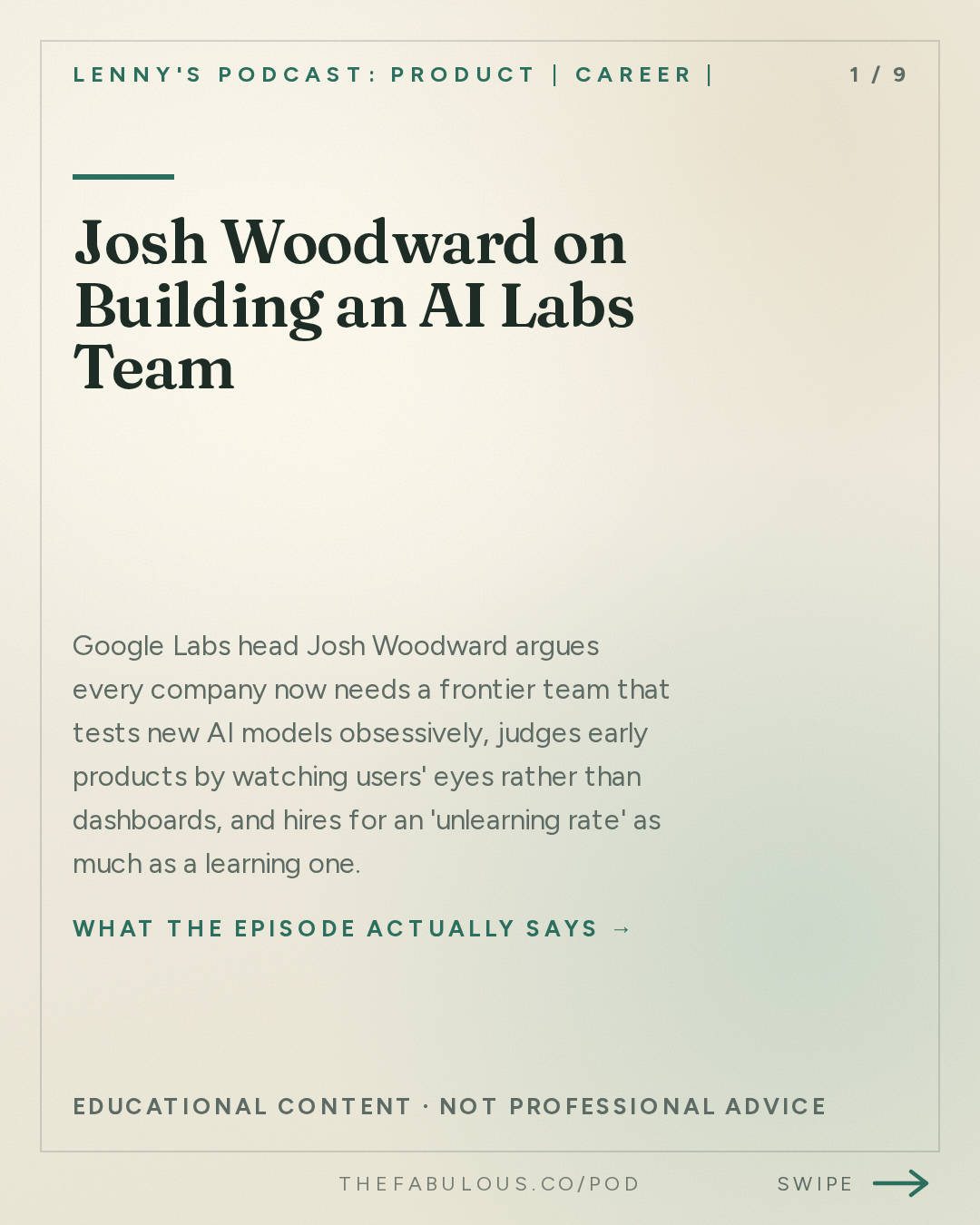
Google Labs head Josh Woodward argues every company now needs a frontier team that tests new AI models obsessively, judges early products by watching users' eyes rather than dashboards, and hires for an 'unlearning rate' as much as a learning one (32:13).
Watch someone's eyes, not their dashboard. That is the strange, almost anti-corporate advice at the center of how Google builds new AI products, and it comes from a man who has shipped more experimental software than almost anyone alive. Josh Woodward runs Google Labs, the Gemini app, and AI Studio, a portfolio that spans brand-new zero-to-one prototypes on one end and a product with more than a billion users on the other (19:39). He has been at Google for sixteen years (01:29), long enough to watch entire product categories rise and die, and his central claim is simple: the pace of change in AI has made every company, whether a five-person startup or a trillion-dollar search engine, need to think and operate like a lab.
That claim could easily curdle into consultant-speak. What saves it is specificity. Woodward does not say 'innovate faster.' He describes, in granular detail, what his team actually does when it has no idea what to build next, how it decides an idea is dying, and why the skills it hires for have quietly changed. The result is less a pep talk than a field manual, and it is worth taking apart piece by piece.
The Metric Is a Pupil
Start with where ideas come from, because Woodward's answer breaks a piece of standard corporate furniture: the design sprint. Years of watching Google Labs produce hits like NotebookLM, a tool that turns documents into AI-generated podcast conversations, and Flow, a video generation product, taught him that good ideas almost never arrive on a calendar invite.
"They very rarely, at least in my experience, have come from design sprints or times where you set aside on a calendar... You can't microwave good ideas." (06:17), Josh Woodward
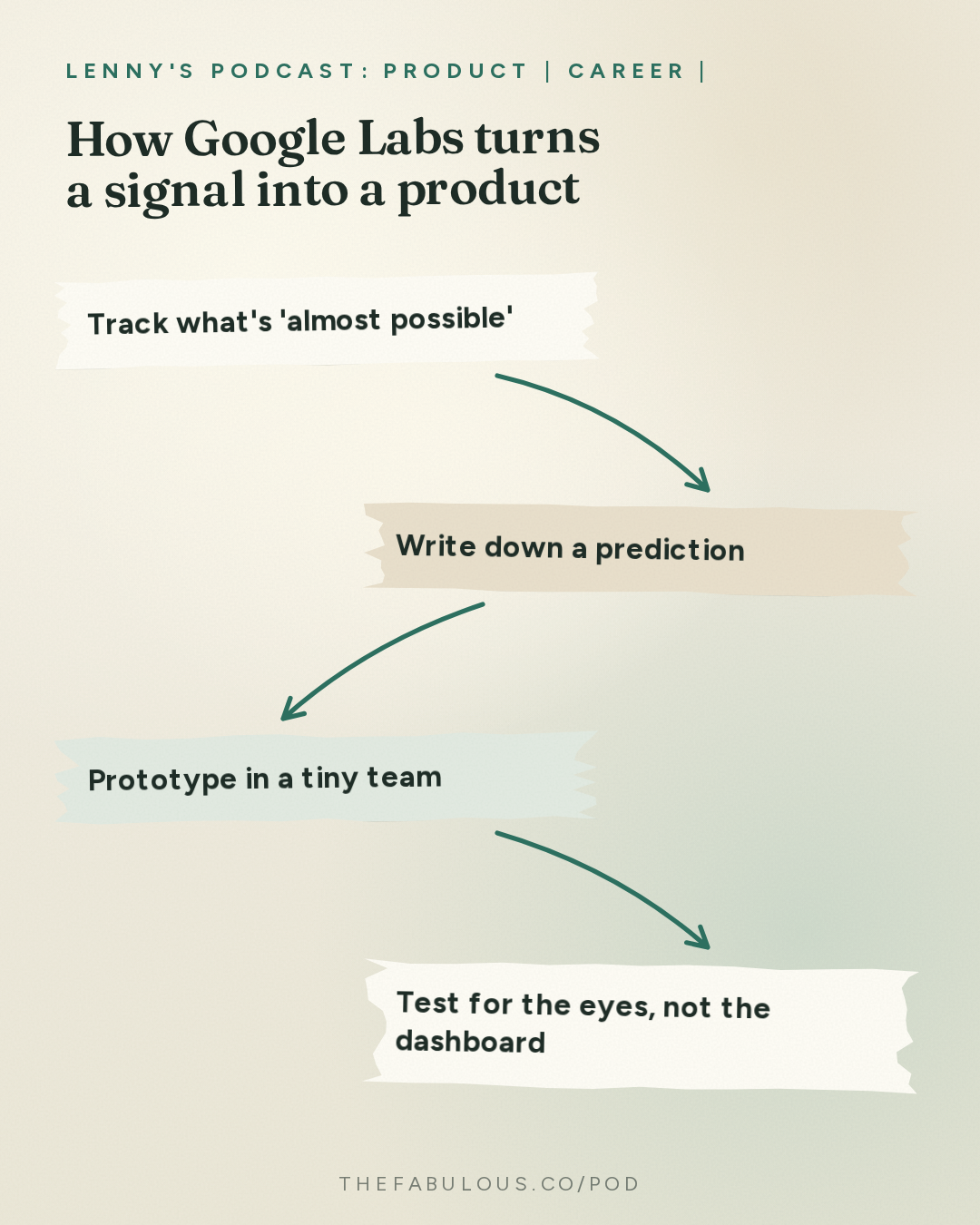
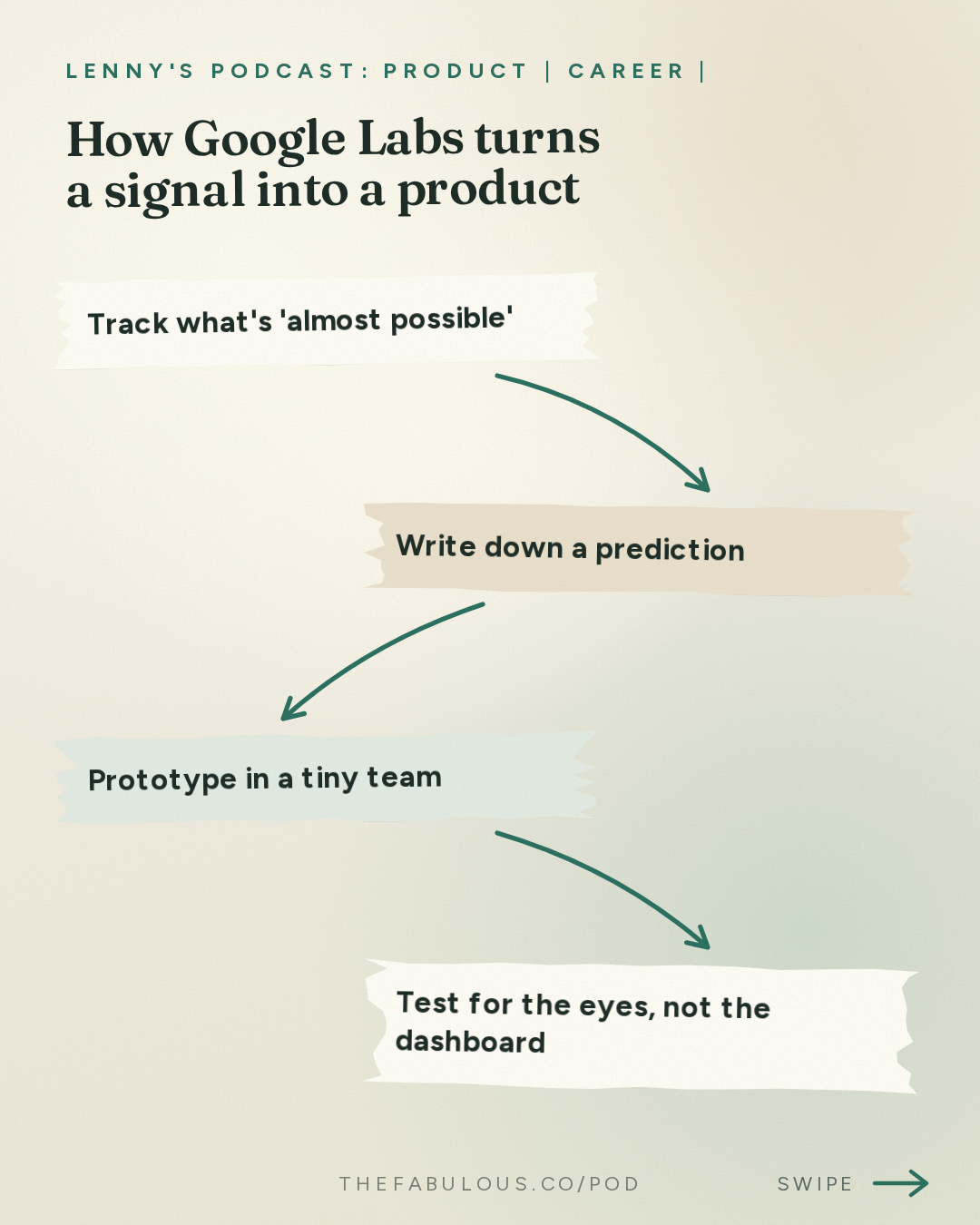
Instead, they show up when a couple of obsessed engineers can't stop tinkering over a weekend and drag a colleague over to watch a demo at 6:30 on a Tuesday, which is exactly how the first NotebookLM podcast got made (13:27). To give that obsession somewhere to point, Labs keeps a running document of what Woodward calls 'almost possible' technologies (08:17), a watchlist of capabilities that are just out of reach, so that when one crosses the line (faster model latency, a new modality, a longer context window) the team notices immediately, like watching ice turn to water. The document underneath that thinking contains 82 specific predictions about the future, each beginning with the phrase 'we believe the future is' (11:28). Woodward is candid that something like 9 out of 10 of those predictions will be wrong. The point of writing them down isn't accuracy, it's forcing the team to hold an opinion about where things are headed instead of waiting for permission.
Once an idea exists as a rough prototype, the harder problem starts: knowing whether it's working. Here Woodward rejects the standard toolkit almost entirely. Daily active users, retention curves, even the newest benchmark scores, none of it matters in the first weeks of an unproven idea. What matters is watching a person's face while they use the thing.
"When you're showing people early prototypes... you're looking at people's eyes, and that is the metric." (15:52), Josh Woodward
If someone's eyes widen and they lean toward the screen, that is product-market fit in its earliest, truest form. Dashboards, he says, don't even register counts that low. Labs teams will celebrate hitting 10,000 monthly active users (20:00), a number most mature products would consider a rounding error. The lesson scales down well: a founder pitching an idea before a single metric exists has nothing more reliable to go on than whether a stranger's attention visibly sharpens.
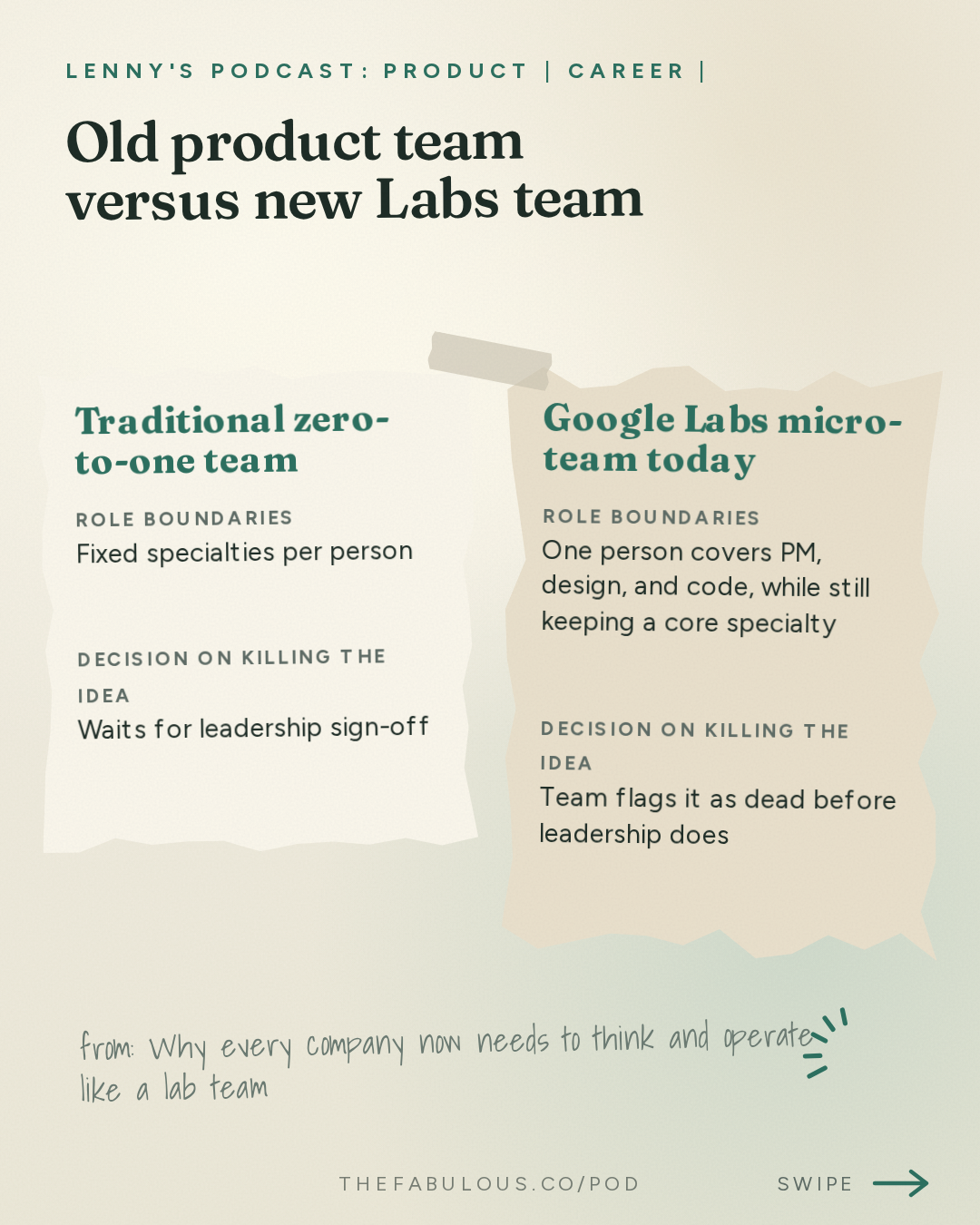
Killing an idea runs on the same intuition, but in reverse, and it surfaces a leadership blind spot. Conventional wisdom says the boss decides when to pull the plug. Woodward has found the opposite is almost always true inside Labs.
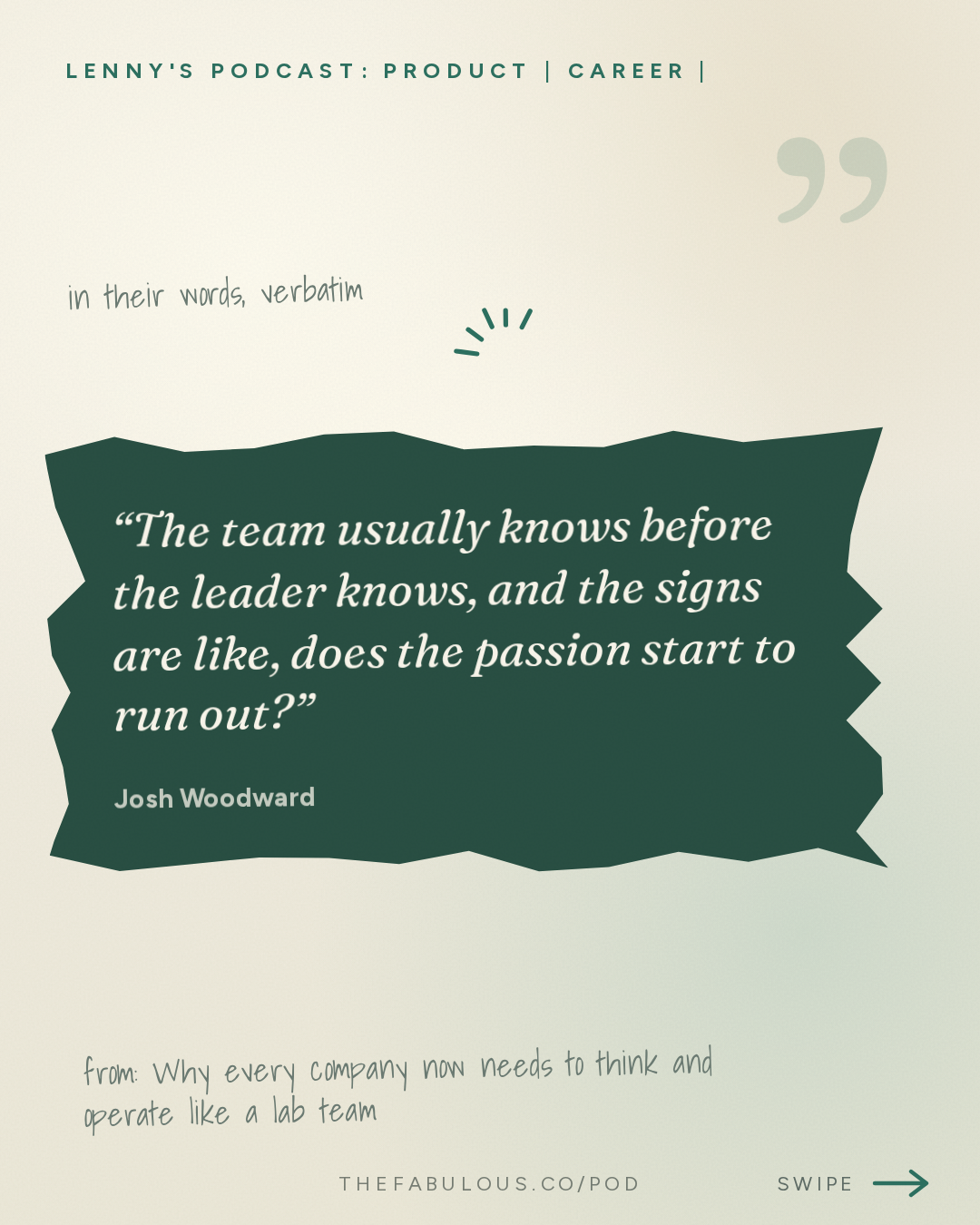
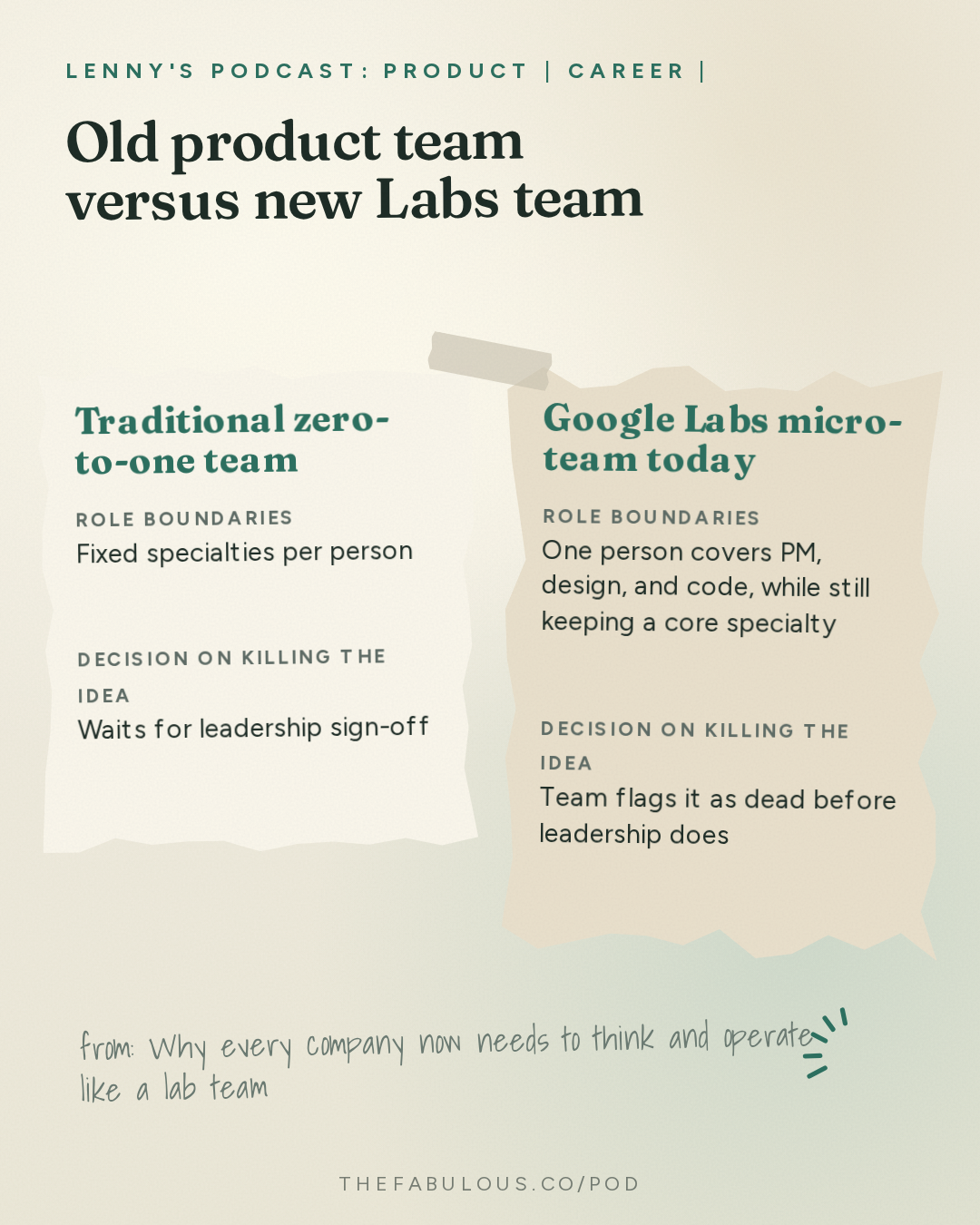
"The team usually knows before the leader knows, and the signs are like, does the passion start to run out?" (18:19), Josh Woodward
He describes a recent case where a product manager on his team pulled a feature the day before launch because early user tests showed the spark wasn't there, and Woodward's response was to publicly thank her rather than push back (19:01). The mechanism that makes this possible is a stated priority order the whole team repeats: users first, Google second, the specific product third (21:08). Because nobody's job security is tied to a particular feature surviving, admitting failure early costs less than hiding it.
Hiring for the Unlearning Rate
If ideas and metrics explain how Labs finds and judges products, the second half of the conversation explains who can actually execute inside that kind of uncertainty, and the answer has shifted the shape of Woodward's hiring. He has grown skeptical of 'learning rate,' the popular shorthand for growth mindset, and replaced it with something sharper.
"I'm actually looking a lot right now for people, what's their unlearning rate? How fast can they learn something and then walk away from it?" (32:13), Josh Woodward
In a field where the state of the art changes every few weeks, the skill that compounds isn't knowledge, it's the willingness to discard knowledge that just expired. Paired with that is a phrase Woodward picked up from a biography of tennis player Roger Federer: explosive endurance (32:43), the capacity to sprint at full intensity on a launch and then recover, rather than burning out after nine months. Labs formalizes this with named 'seasons,' explicit windows where a team is told it's in sprint mode for a model release, followed by deliberate slack time, like the month after Google's developer conference I/O, when teams are told simply to go hack and rediscover what's interesting (40:15). Treating recovery as part of the plan, rather than an accident, is itself the protocol.
The other structural shift Woodward has made concerns team size. The standard zero-to-one product team used to run five to seven people. Now, with coding and design assistance built into AI tools, Labs builds teams of two to three (34:55). He compares it to musicians who form different small groups for different songs, with the 'songs' being the products themselves. Crucially, Woodward pushes back on the idea that everyone on these small teams becomes an interchangeable generalist. Product managers, he's found, adapt fastest to blurred roles because their job already involves simulating a lawyer, a salesperson, or a designer in a meeting to keep a project moving (36:32). But he insists specialization still matters.
"I actually feel like... people still have their specialty. It's like their major or minor in college." (37:35), Josh Woodward
A product manager who starts vibe-coding prototypes is meant to use that skill in service of becoming a better product manager, not to abandon the discipline altogether.
None of this works, Woodward argues, without the right organizational container. His historical reading is blunt: most corporate labs become ineffective and fizzle out within three to four years, usually because they get nested inside an existing business unit that eventually starves them, or because the parent company can never commercialize what the lab invents (48:19). His prescription has three parts: give the lab independence, often reporting close to the CEO; decide explicitly whether the lab's job is to graduate ideas into existing products or to invent entirely new categories (48:53); and use the lab for more than technology, including piloting new internal processes like a 'builder' job ladder that blurs engineering and product roles before rolling it out company-wide (49:48). Labs even keeps a hiring reference document, nicknamed 'Labs in a Nutshell,' with seventeen or eighteen specific traits new hires are screened against (51:15), everything from compulsive builders to people energized by genuine uncertainty.
It would be easy to read all of this as culture theater, the kind of thing a large company invents to feel scrappy. But the mechanisms underneath it, the almost-possible list, the eyes-not-dashboards rule, the users-first ordering, the unlearning rate, are specific enough to transplant. The uncomfortable implication for most organizations isn't that they need a foosball table and a cool name. It's that they need to tolerate not knowing, reward people for killing their own ideas, and measure success in a dilated pupil before anyone trusts a spreadsheet.
Ask this episode anything
Pod's AI answers from the episode itself, with the minute mark so you can hear it yourself.
Or start with one of these
Ask this episode
Pod's AI listens to the whole episode to answer, and points you to the minute it comes from.
The rest of this answer, and any question after it
Answers come from the episode itself, never from a summary of it.
ContinueKey takeaways
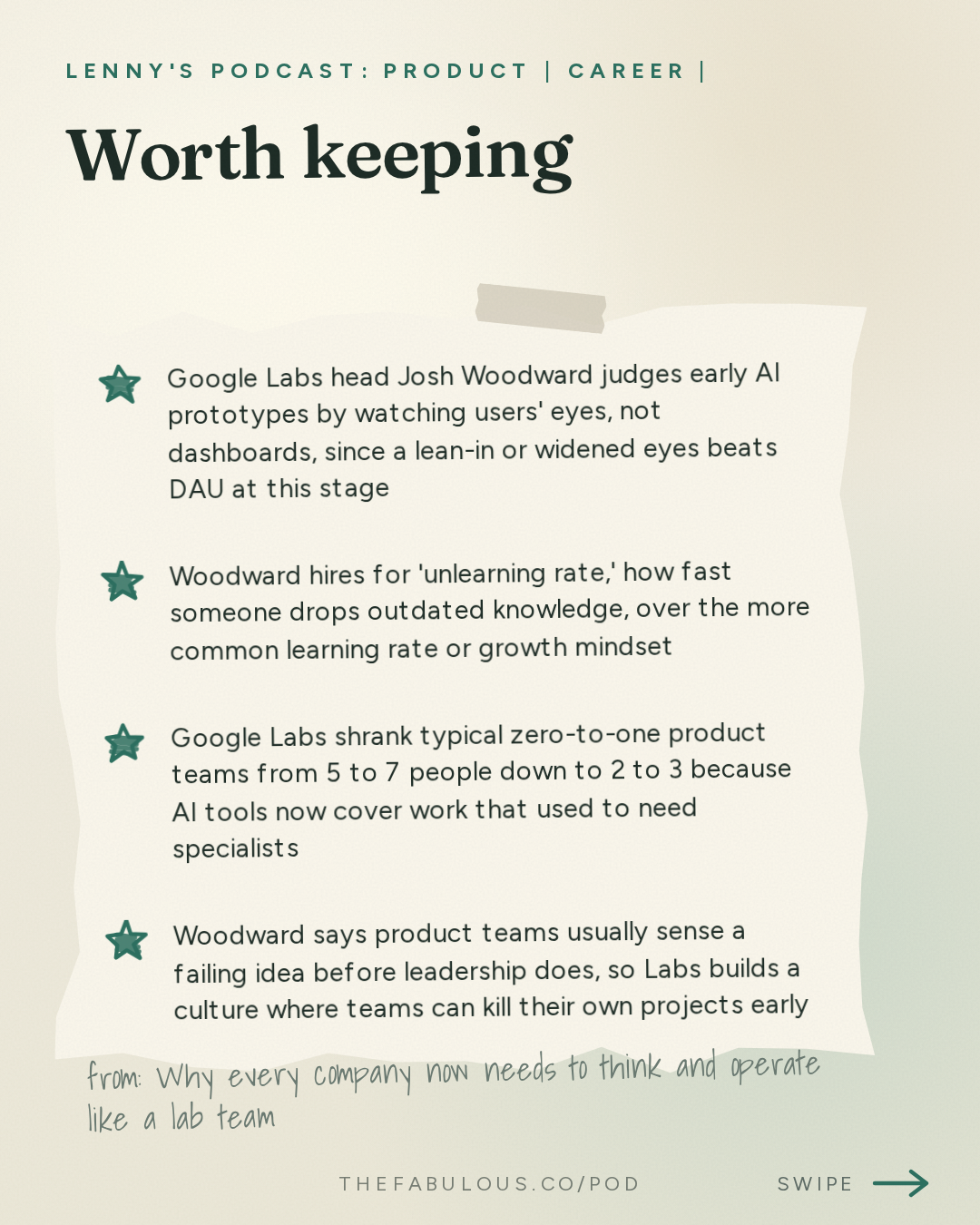
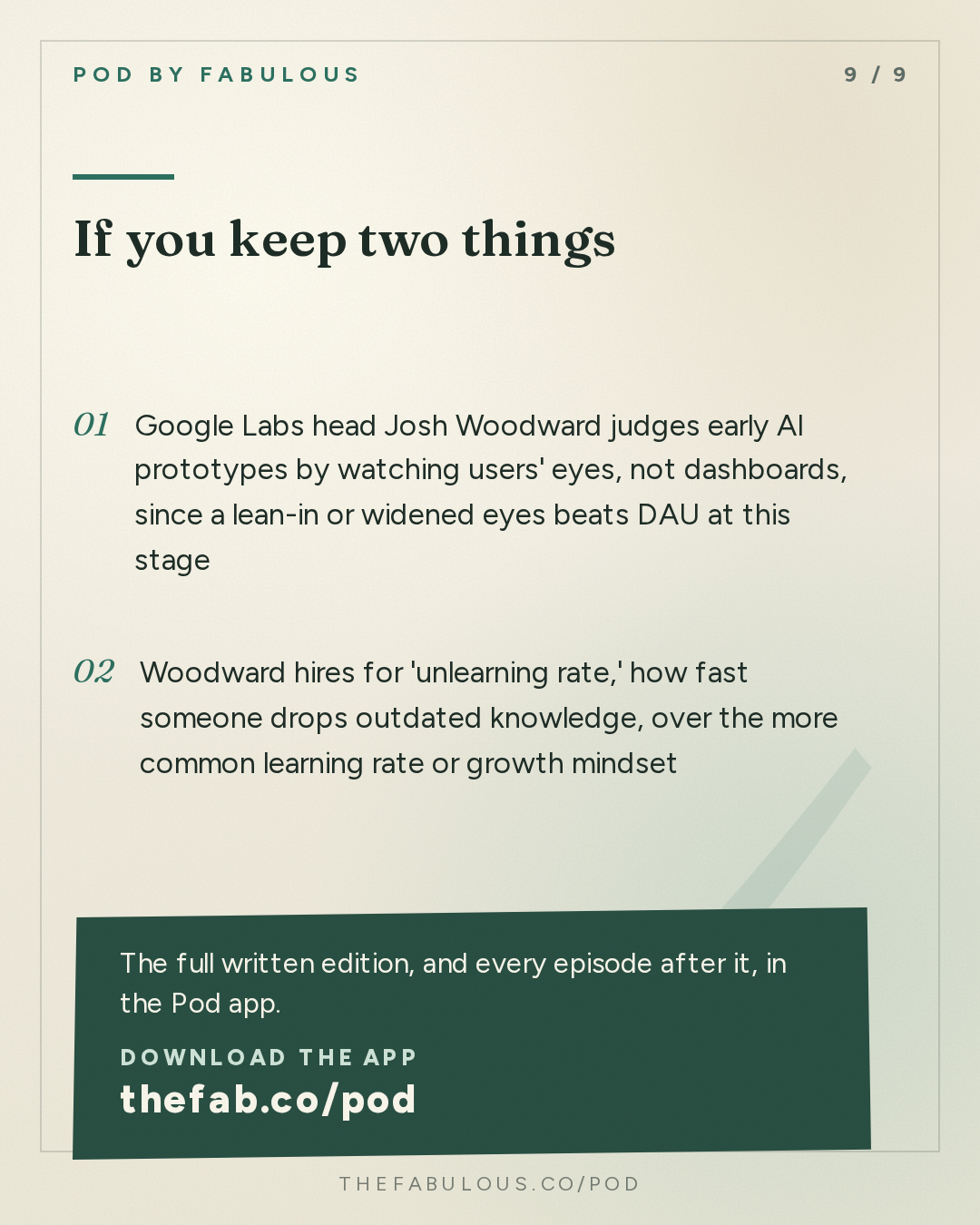
- Google Labs head Josh Woodward judges early AI prototypes by watching users' eyes, not dashboards, since a lean-in or widened eyes beats DAU at this stage (15:52)
- Woodward hires for 'unlearning rate,' how fast someone drops outdated knowledge, over the more common learning rate or growth mindset (32:13)
- Google Labs shrank typical zero-to-one product teams from 5 to 7 people down to 2 to 3 because AI tools now cover work that used to need specialists (34:55)
- Woodward says product teams usually sense a failing idea before leadership does, so Labs builds a culture where teams can kill their own projects early (18:19)
- Woodward argues corporate labs usually fail within 3 to 4 years unless they get organizational independence from existing business units (48:19)
The episode in cards
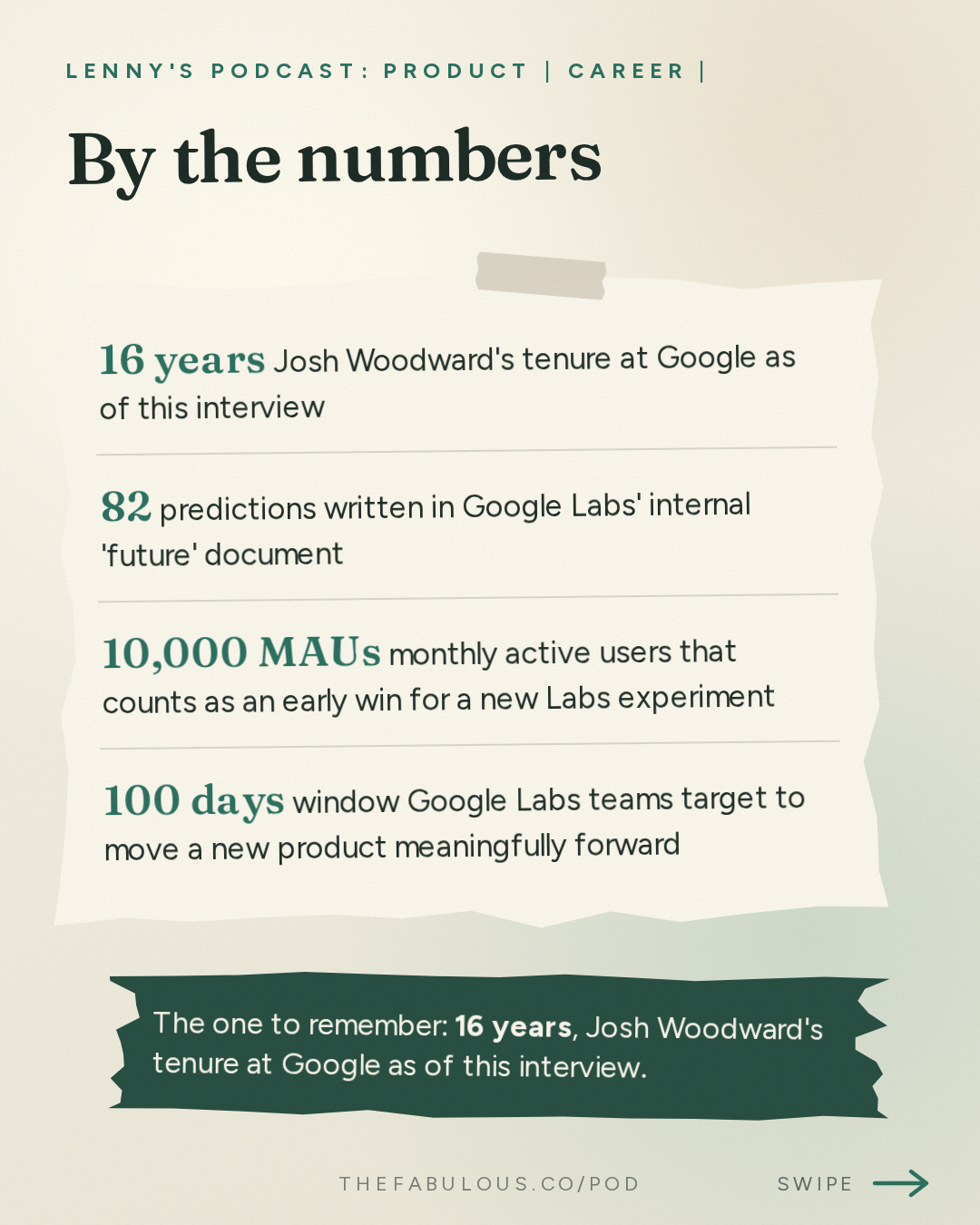
By the numbers
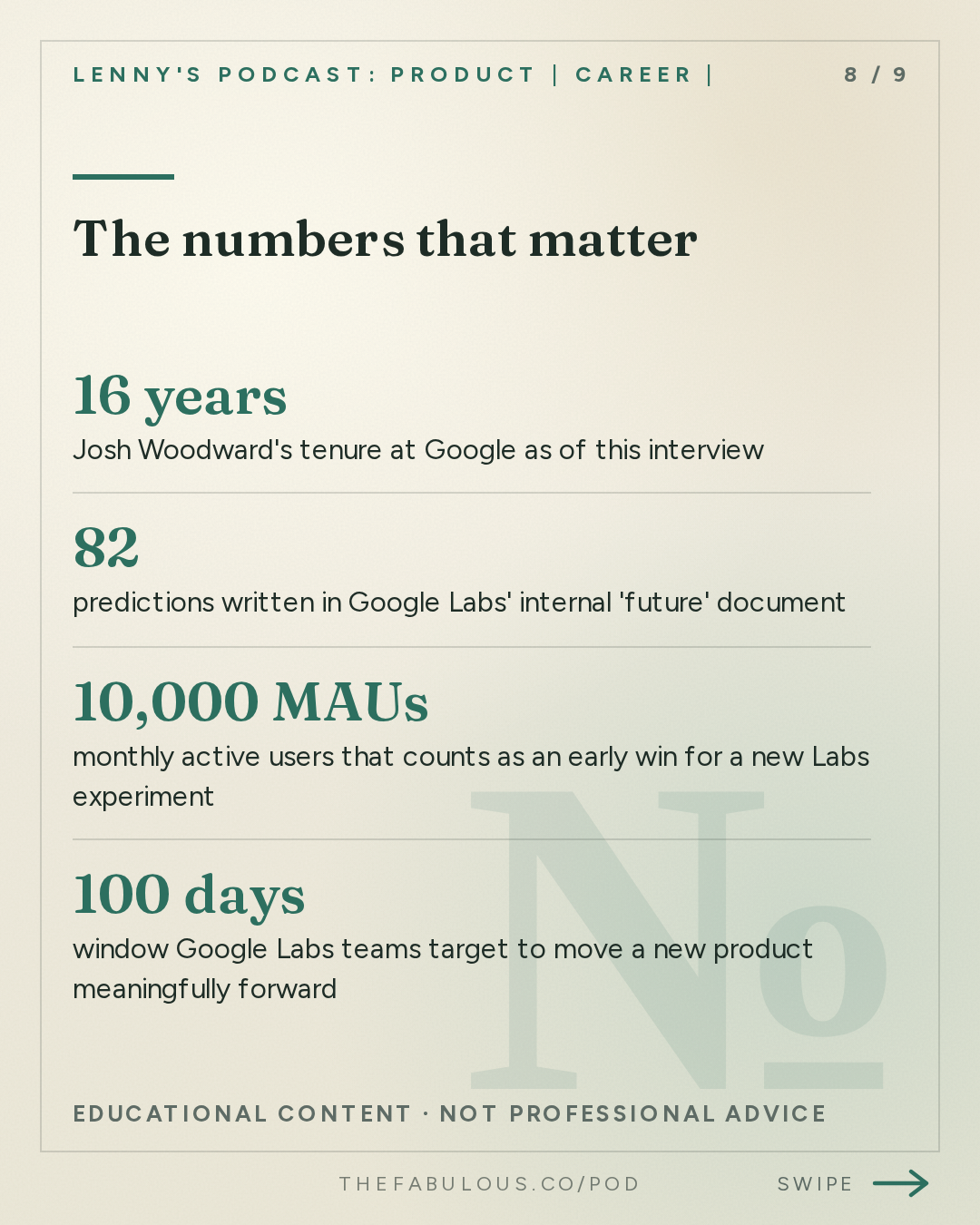
- 16 years years Josh Woodward's tenure at Google as of this interview
- 82 predictions written in Google Labs' internal 'future' document
- 10,000 MAUs monthly active users that counts as an early win for a new Labs experiment
- 100 days window Google Labs teams target to move a new product meaningfully forward
In their words
“When you're showing people early prototypes, what I'm always doing in those is you're looking at people's eyes, and, like, that is the metric.”
“The team usually knows before the leader knows, and the signs are like, does the passion start to run out?”
“I'm actually looking a lot right now for people, what's their unlearning rate? How fast can they learn something and then walk away from it?”
“I actually feel like what, at least what we're seeing, is that people still have their specialty. It's like their major or minor in college.”
Protocols
-
Judge early prototypes by eyes, not dashboards
Woodward tells his team to show an early AI prototype to real people outside the building and watch their faces while they use it; if their eyes widen or they lean toward the screen, that reaction counts as the real signal of product-market fit at this stage, more than any DAU or retention number, because dashboards cannot yet register user counts in the low thousands.
Every time a new prototype is shown to outside users
-
Let the team call an idea dead before leadership does
Woodward builds an environment where any team member can say an idea isn't working without waiting for a leader's sign-off; he cites a case where a product manager pulled a near-ready feature the day before launch after eye-tracking-style user tests showed no spark, and he thanked her publicly instead of pushing back, which he says reinforces that catching failure early is rewarded, not punished.
Ongoing, built into team culture
-
Give the lab organizational independence
Woodward recommends that a company's innovation lab report with enough distance from existing business units, often close to the CEO, and that leaders decide upfront whether the lab exists to graduate ideas into current products or to build entirely new categories, because labs nested under an existing unit tend to get starved and fail within three to four years.
One-time structural decision, revisited as the lab matures
Questions this episode answers
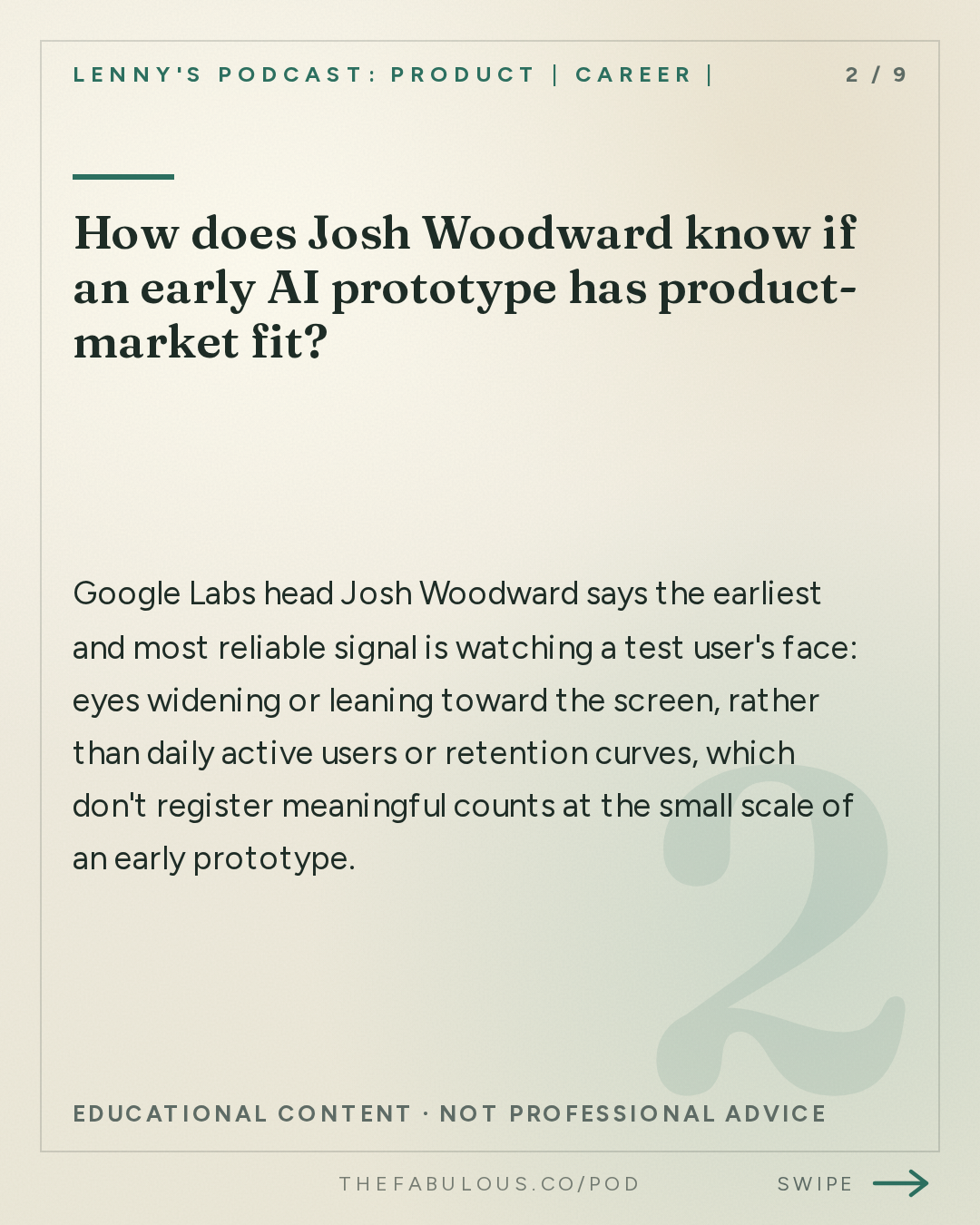
How does Josh Woodward know if an early AI prototype has product-market fit?
Google Labs head Josh Woodward says the earliest and most reliable signal is watching a test user's face: eyes widening or leaning toward the screen, rather than daily active users or retention curves, which don't register meaningful counts at the small scale of an early prototype (15:52).
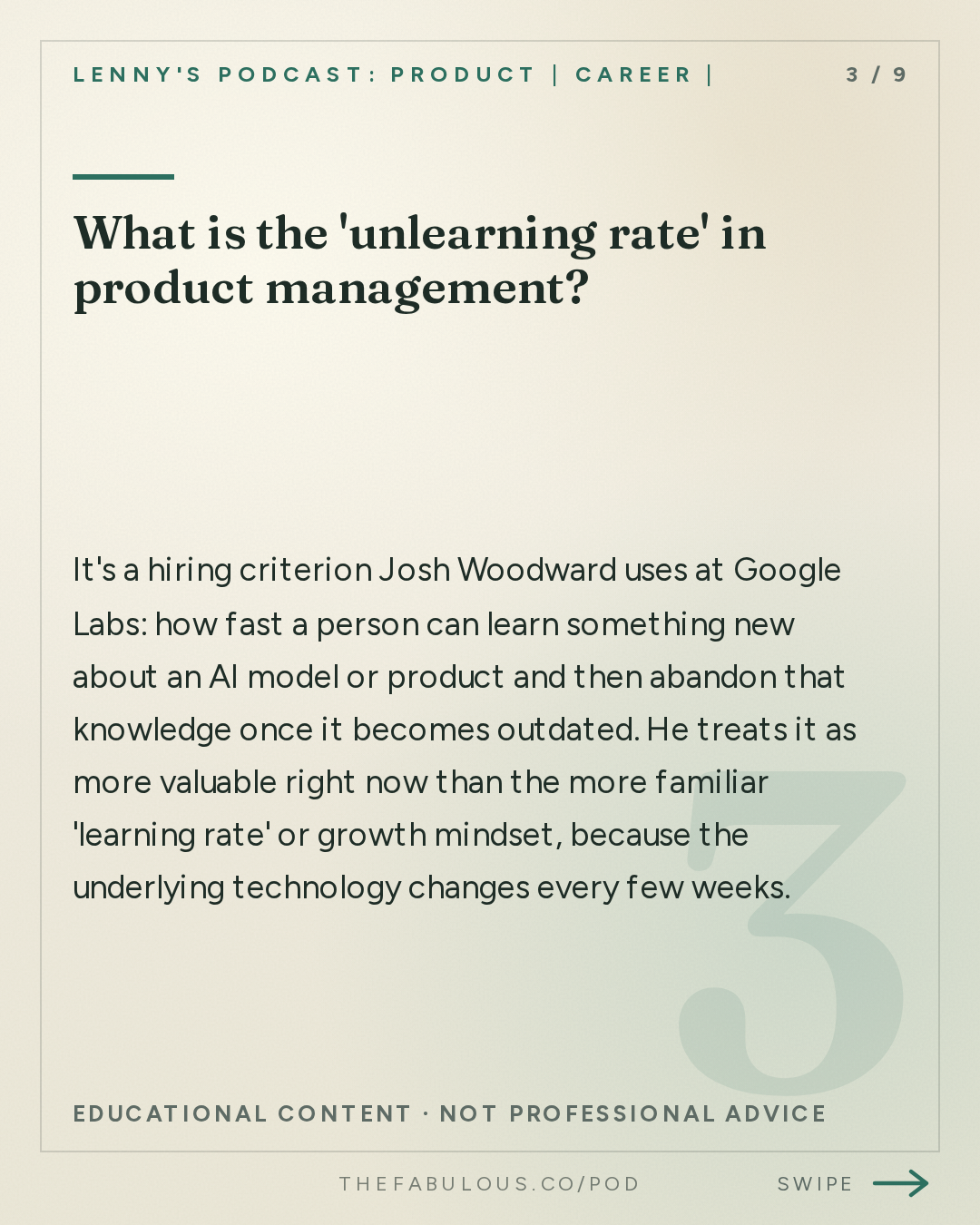
What is the 'unlearning rate' in product management?
It's a hiring criterion Josh Woodward uses at Google Labs: how fast a person can learn something new about an AI model or product and then abandon that knowledge once it becomes outdated. He treats it as more valuable right now than the more familiar 'learning rate' or growth mindset, because the underlying technology changes every few weeks (32:13).
Why did Google Labs shrink its product team sizes?
Josh Woodward says AI coding and design tools now let fewer people cover more ground, so the typical zero-to-one team dropped from 5 to 7 people down to 2 to 3. He compares these small teams to musicians who regroup differently for each new song, with the 'songs' being individual products (34:55).
Why do most corporate innovation labs fail?
Josh Woodward, who has read extensively on the history of corporate labs, says they typically become ineffective and fizzle out within three to four years, usually because they are nested under an existing business unit that eventually starves them of resources, or because the parent company never manages to commercialize what the lab invents (48:19).
Does Josh Woodward think everyone should become a generalist 'builder' because of AI?
No. He says roles are blurring and product managers in particular adapt fastest because their job already involves simulating other functions like sales or legal. But he argues people still need a core specialty, comparing it to a college major, and worries that if everyone becomes a generic builder, teams lose the expertise that specialization provides (37:35).
The full read, in cards
Mentioned
Josh Woodward · Google Labs · Gemini · NotebookLM · Google Flow · AI Studio · Roger Federer · Logan Kilpatrick
More from this show and category

OpenAI's Tibo Sottiaux on Dots and AI Agents
OpenAI's Head of ChatGPT Tibo Sottiaux says agents will soon take most actions on the internet, not humans. He describes Dots, OpenAI's persistent agent that remembers personal context, controls multiple devices, and learns from feedback, plus a plugin ecosystem with revenue sharing and 16 sign-in partners, as proof the industry is moving from manually built loops to self-learning systems (00:16, 11:58).

Molly Graham's Give Away Your Legos AI Advice
Molly Graham's decade-old advice to give away your career projects still works, but she now says some tasks, like judgment and vision, should never go to AI. Tech burnout jumped from 44% to 55% in a year, and she argues AI needs coaching like a lazy intern rather than blind trust, while good management matters more than ever.
Peter Sellis on Why Most PMs Are Bad
Peter Sellis, former product chief at Snapchat and Discord, says most PMs are mediocre because top talent exits to become founders or executives. He also explains why Snap's camera-first, messaging-based product structurally resists advertising, and why growth usually comes from deepening core users' daily habits rather than chasing new ones.

How SpaceXAI Built GroqBot in One Month
GroqBot, a knowledge-work AI agent from SpaceXAI, went from first line of code to internal launch in one month (05:07). A small isolated team, manual onboarding of 200-300 early users (11:41), and giving each bot its own cloud computer instead of sharing the user's device (31:58) drove its rapid, widely praised launch.
