
How Diet Affects Memory and the Hippocampus
How Food Choices Shape Memory, Cognition & Cravings | Dr. Scott Kanoski
The brief
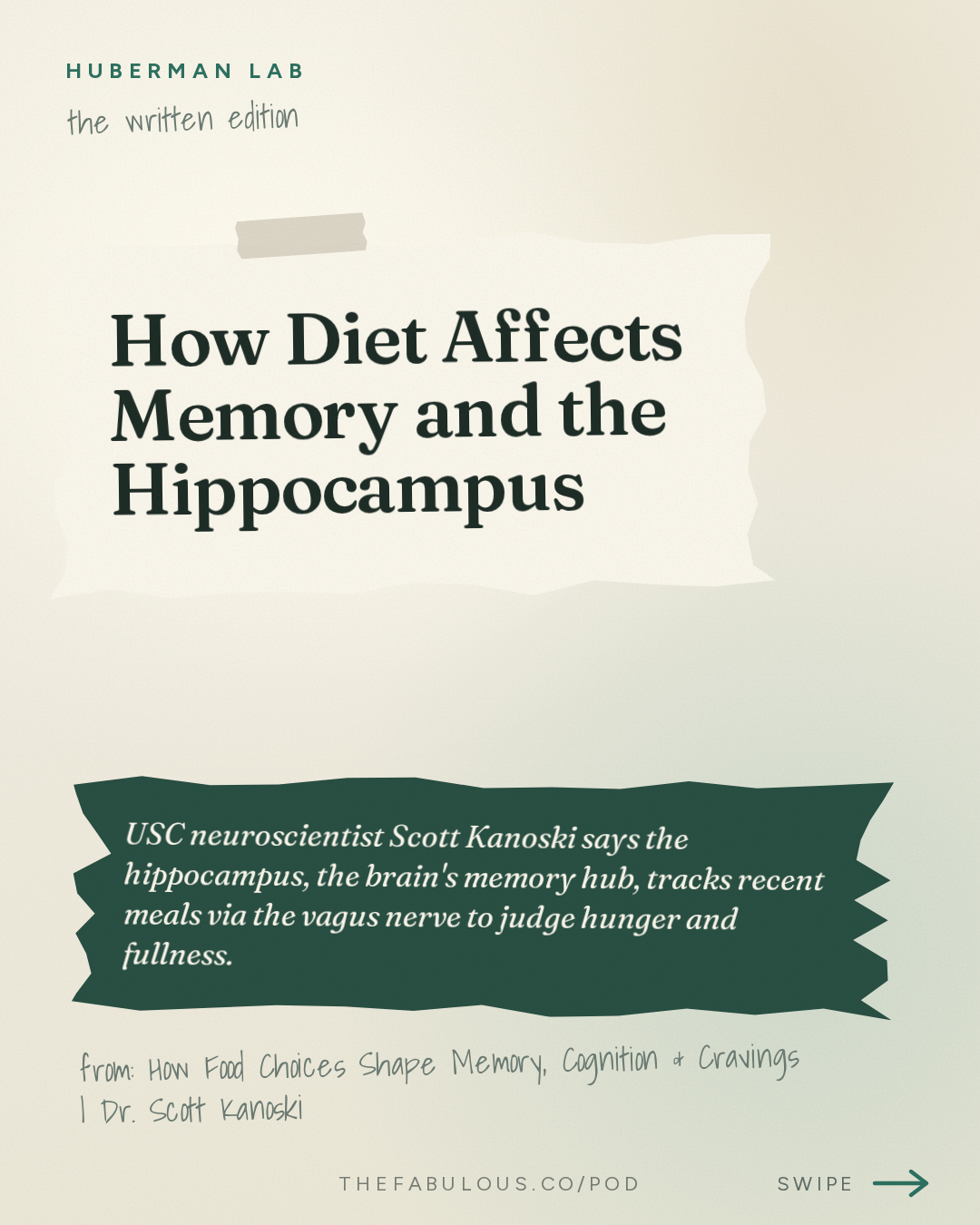
USC neuroscientist Scott Kanoski says the hippocampus, the brain's memory hub, tracks recent meals via the vagus nerve to judge hunger and fullness. Sugar, heat-processed foods, and artificial sweeteners early in life can impair that memory system and its gut bacteria, while exercise and simple recall of a recent meal can help restore or harness it.
Picture a man who cannot form new memories. He eats a full lunch. An experimenter leaves the room, returns minutes later, and offers him another lunch. He eats that one too. Offer a third, and he eats a third. He has no idea he has already eaten twice. Yet when asked to rate his hunger on a scale of 0 to 10, he says something like a seven (83:01). His stomach knows he is full. His brain does not know what that fullness means.
This is the kind of experiment USC (University of Southern California) neuroscientist Scott Kanoski uses to make a strange point to Andrew Huberman, host of the Huberman Lab podcast: hunger is not only a signal from the gut, it is a memory problem. The hippocampus, the brain structure most associated with memory, turns out to be doing double duty as a kind of accountant for meals, tracking what came in, when, and how much, so the body can decide whether it is really time to eat again (31:03).
The Body's Memory of Food
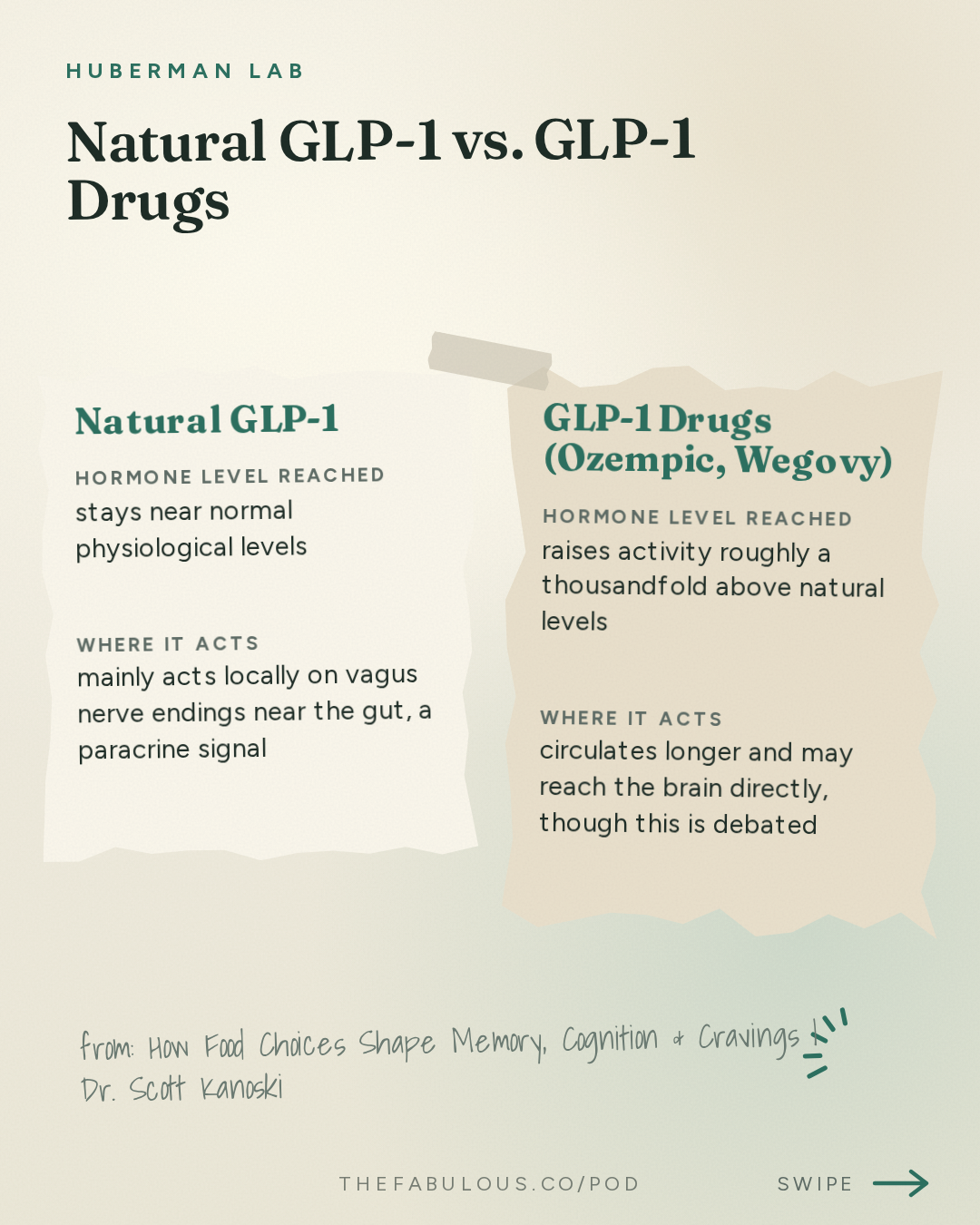
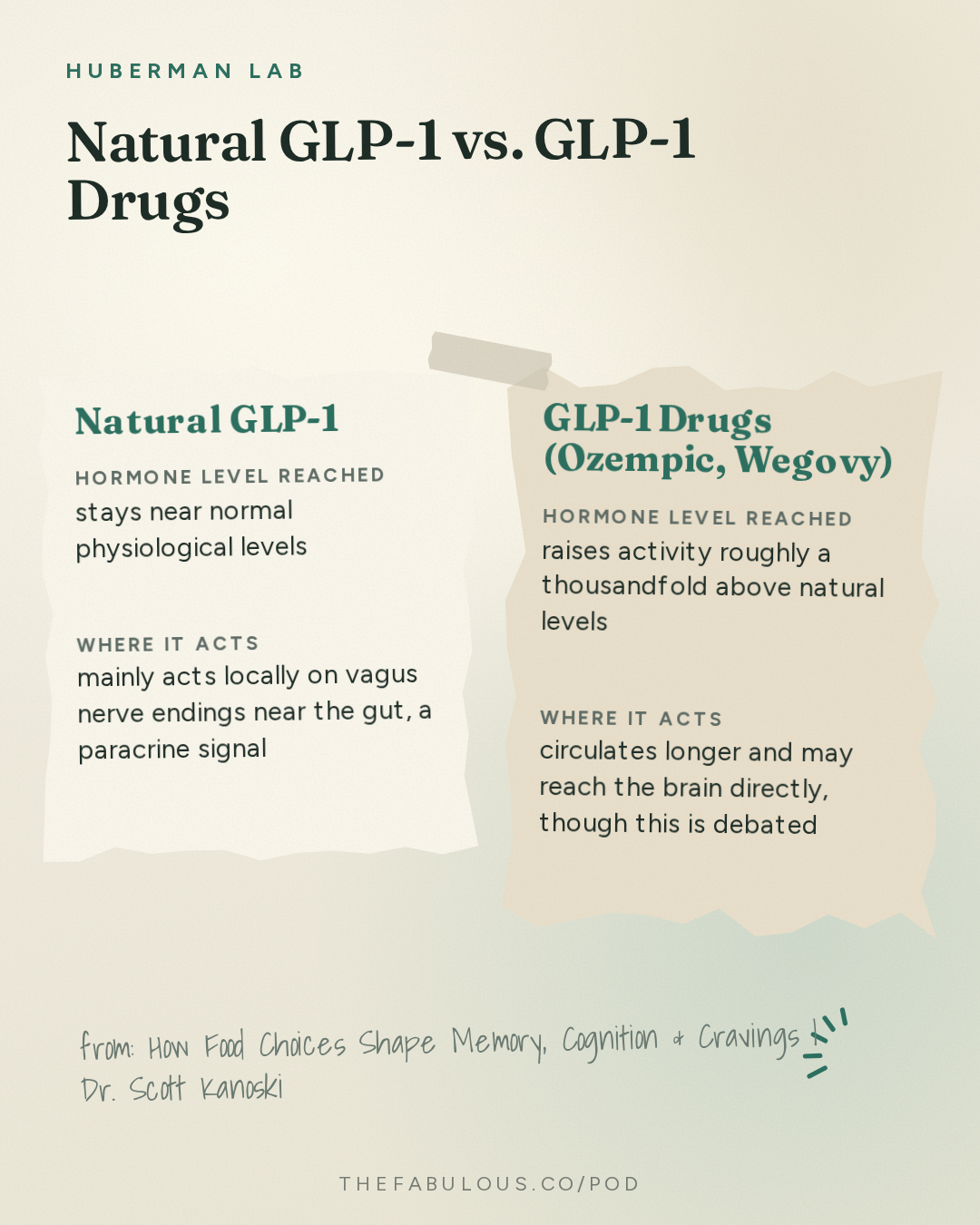
Start with GLP-1 (glucagon-like peptide-1), the hormone behind drugs like Ozempic and Wegovy. In its natural form, GLP-1 is released from cells in the intestine around mealtime and acts locally, right where the vagus nerve, the long nerve linking gut to brain, touches the gut wall (14:29). This is a paracrine signal: the hormone does not travel far, it taps the nearest receptor. If that vagus connection is cut, or its GLP-1 receptors are silenced, natural GLP-1 stops reducing food intake, and animals simply eat bigger meals (17:40).
The drugs are a different animal. Ozempic and its relatives raise GLP-1 activity roughly a thousandfold above natural levels (04:57), stay in circulation far longer, and, in at least some formulations, may reach the brain directly rather than working only through the gut-vagus route, though this is genuinely debated among researchers (09:22). That difference matters for side effects, and for durability: Kanoski notes that a majority of patients discontinue the drugs within two years (67:51), mostly from nausea, so whatever long-term brain benefits these drugs might have remain mostly theoretical.
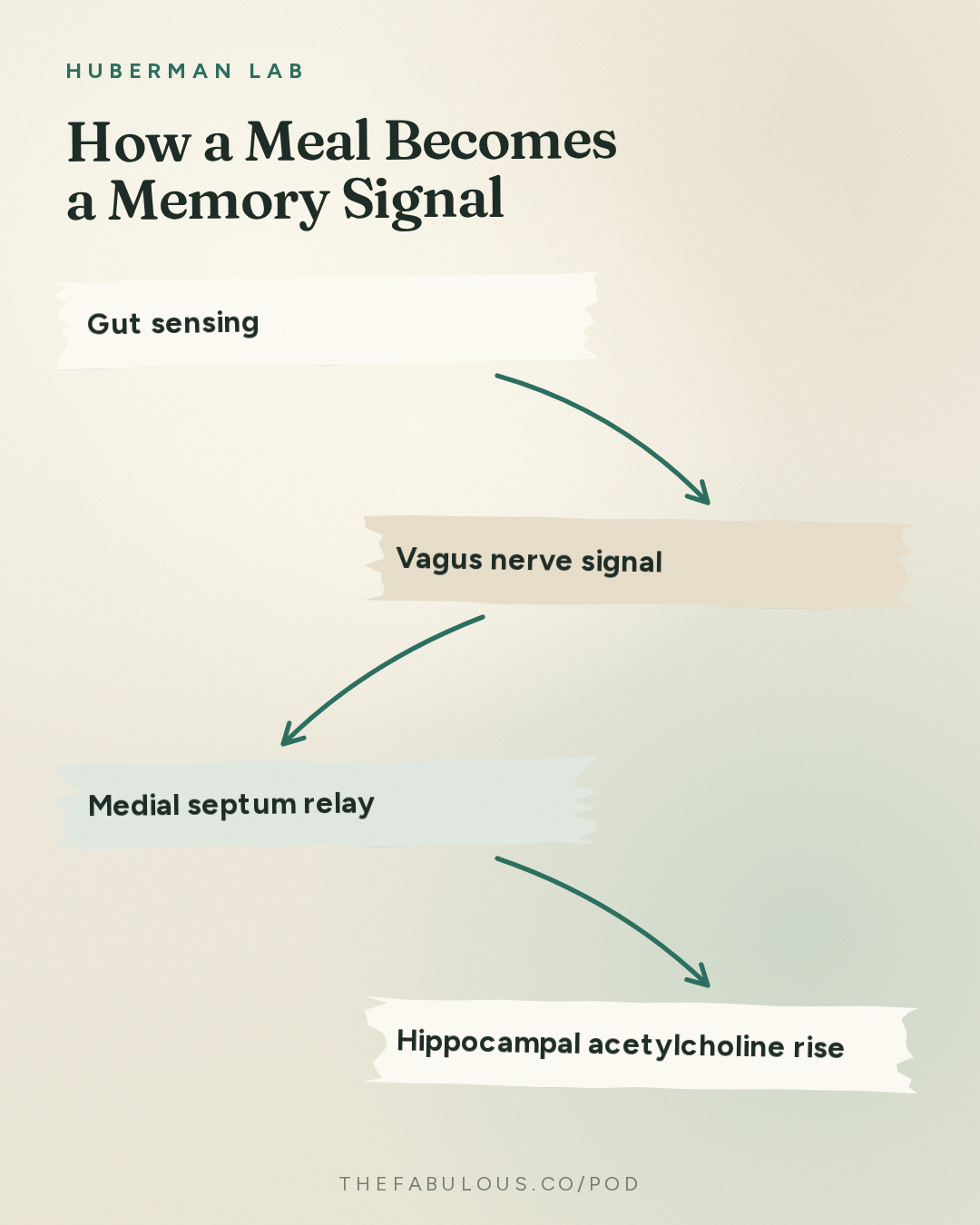
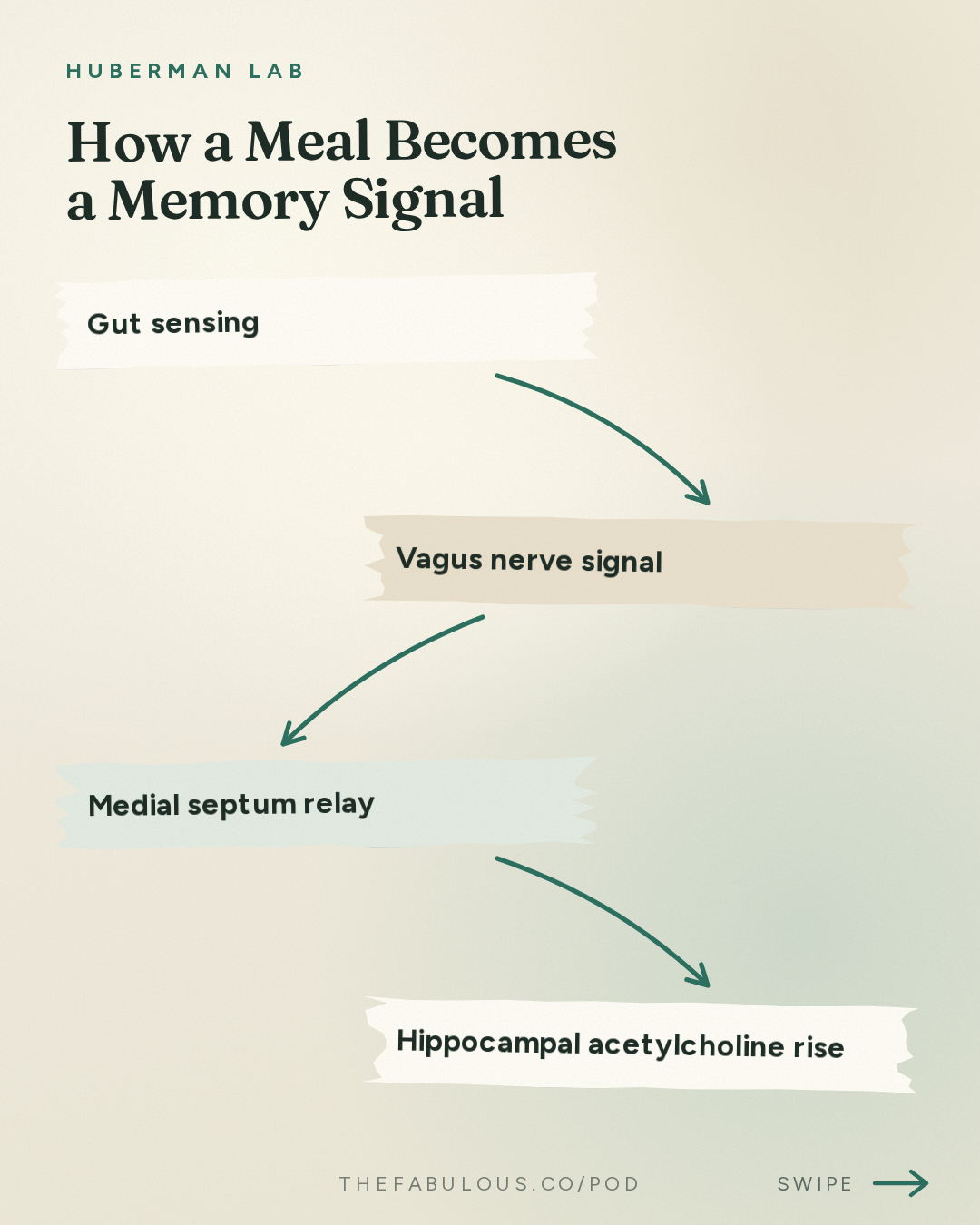
The vagus nerve threads through nearly everything else in the conversation. It does not send one clean signal. Stretch receptors in the stomach report distension, separate chemical sensors in the intestine report nutrients, and these signals move through different fibers at different speeds (75:52). Kanoski's lab has traced where this mixed signal lands: from the brainstem it reaches a structure called the medial septum, where neurons release acetylcholine, a brain chemical tied to learning, directly into the hippocampus (76:34). Using fiber photometry, a method for recording a single brain chemical in real time, his group watched acetylcholine rise while rats ate, dip when they paused, and end a meal higher than where it started (78:40). That rising floor, Kanoski thinks, is the brain tagging the meal as worth remembering.
"We think that these satiation systems are very much tuned into the memory systems in the brain." (Scott Kanoski, 31:26)
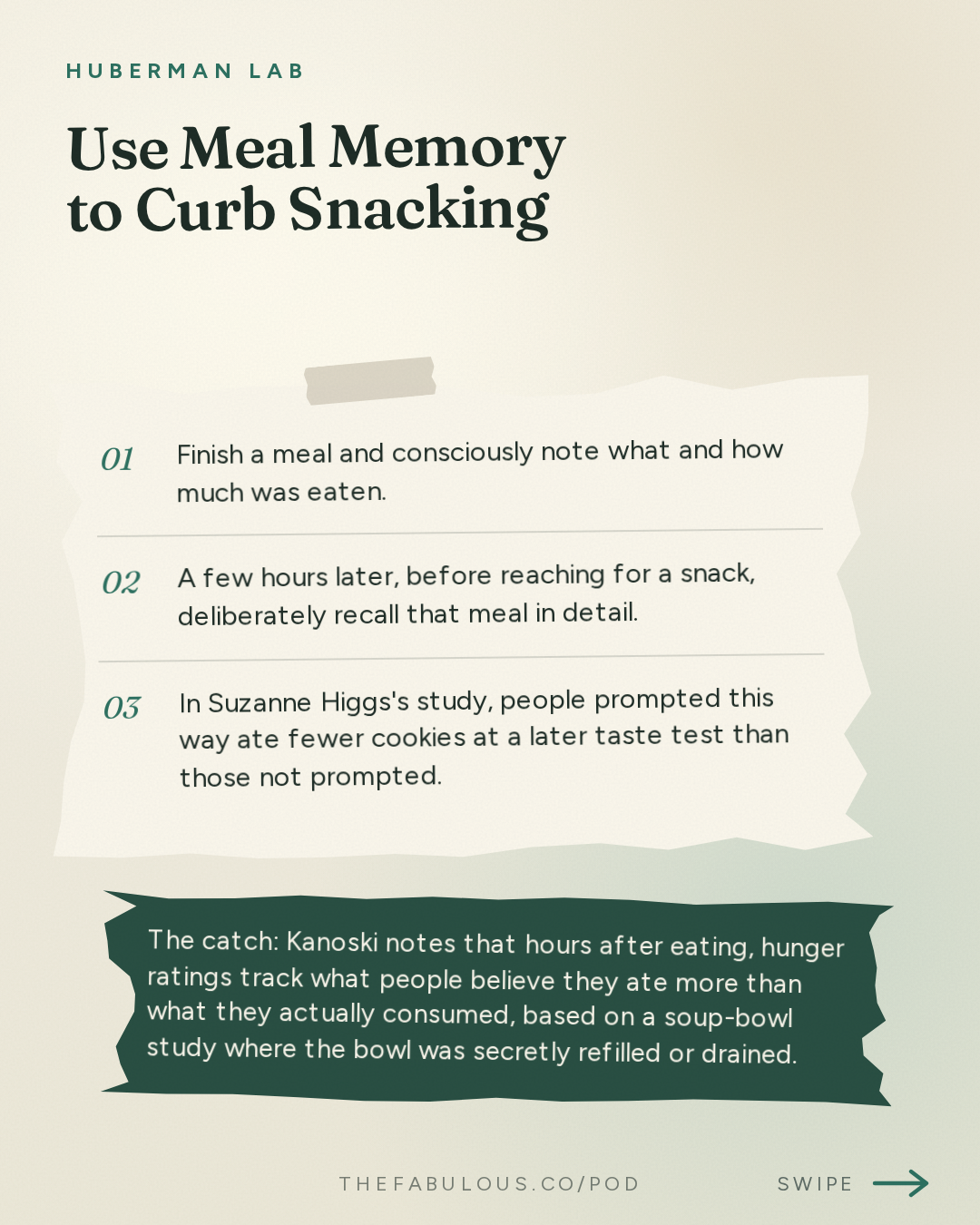
The effect shows up in people, too. In a study by psychologist Suzanne Higgs, people ate lunch, and hours later some were prompted to actively recall that meal before a cookie taste test. The group that recalled lunch ate fewer cookies.
"The memory of recent eating will contribute to eating less at the subsequent eating occasion." (Scott Kanoski, 27:56)
A companion study, from researcher Jeff Brunstrom, used a bowl of soup secretly refilled or drained by a hidden pump. Right after eating, people's hunger tracked what they had actually swallowed. Hours later, their hunger ratings flipped: they went by what they believed they had eaten, not what their stomach had actually processed (29:10). Memory outvotes the body once enough time passes.
What Changes the Signal
If meals are memories, then anything that damages the hippocampus should also distort appetite, and diet turns out to be a direct route to that damage. Kanoski's early work used young rats given free access to a sugar solution at roughly the sugar concentration of a soft drink, alongside otherwise healthy food. As adults, those rats showed memory deficits specific to hippocampal-dependent tasks, and the deficits persisted even after the sugar was removed from the diet (35:28). A broader Western diet, about 35 percent of calories from fat and 15 percent from simple sugar, produced similar hippocampal damage in as little as one week of exposure in some protocols (34:40). Other kinds of memory, the sort that do not depend on the hippocampus, were comparatively spared.
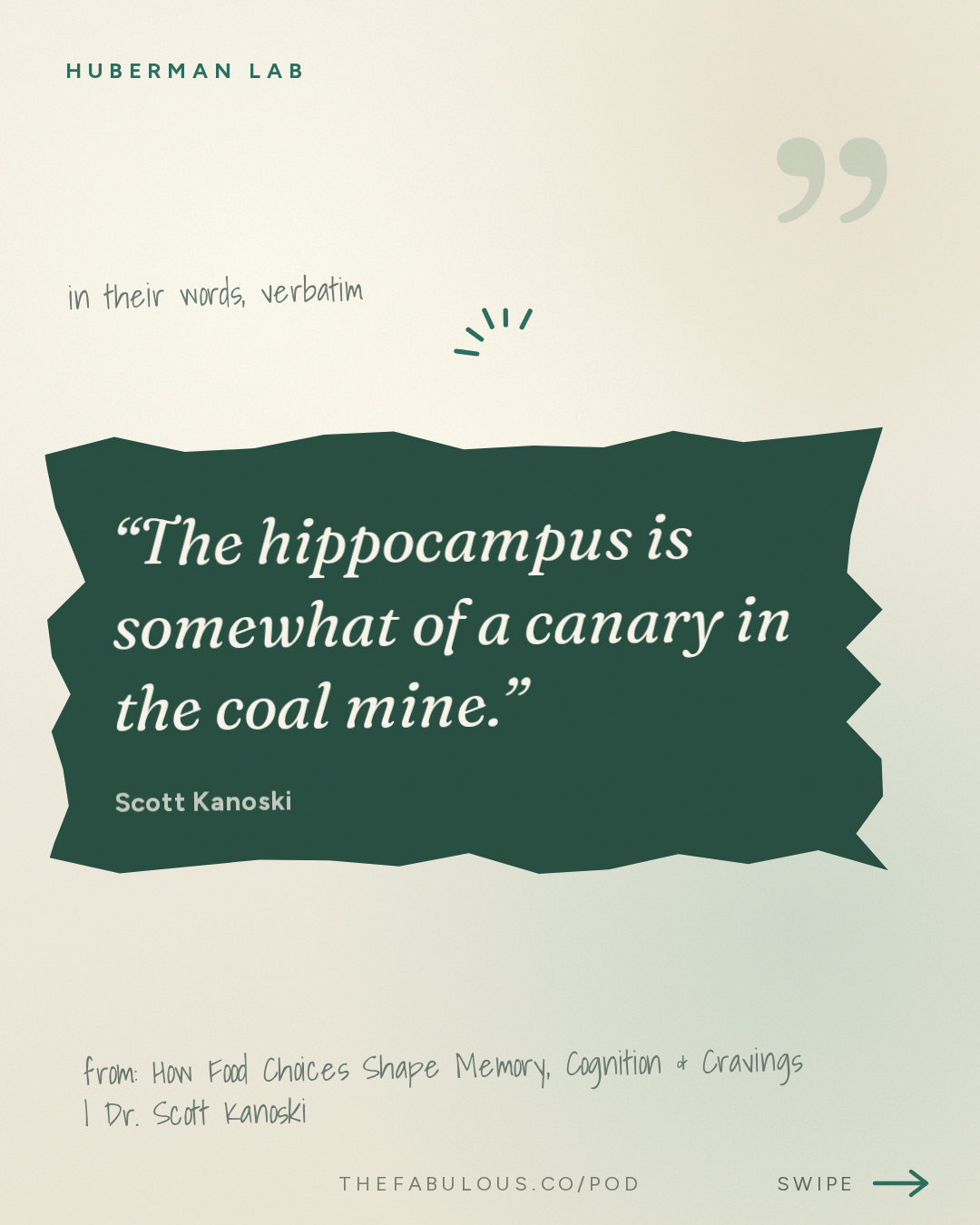
"The hippocampus is somewhat of a canary in the coal mine." (Scott Kanoski, 35:02)
A second, less obvious stressor is heat itself. Baking or roasting food triggers the Maillard reaction, the same chemistry that makes a seared steak or a roasted carrot taste better than its raw counterpart. One byproduct of that reaction is a class of compounds called advanced glycation end products, or AGEs, already linked to diabetes and aging. In unpublished work Kanoski describes as a preprint, a study shared before formal peer review, rats fed an AGE-enriched version of an otherwise healthy diet during adolescence showed adult memory deficits (39:56). The effect tracked a specific gut bacterium: a strain called Lactococcus nearly disappeared with heat treatment, and restoring it reversed the memory problem (90:41). A separate strain, Parabacteroides, rose in the sugar-fed rats and tracked with worse memory; artificially boosting it, even without any sugar exposure, produced similar deficits (89:53). Microbiome research is young enough that a PubMed search for it now returns roughly 250,000 results, up from about 7,000 a decade ago (93:05), and the field only had a baseline genetic catalog of gut bacteria after the Human Microbiome Project concluded around 2012 (92:43).
None of this is fixed in place. Kanoski's lab has shown that aerobic exercise can reverse hippocampal memory deficits caused by a prior Western diet in rats, an effect at least partly driven by changes in the brain itself rather than just improved metabolism (48:25). Disrupting the vagus nerve looks like a genuine risk factor on its own: a small study of patients in Taiwan who had surgical vagus nerve cuts for stomach ulcers decades ago showed a higher rate of later dementia (51:36), though Kanoski calls this a correlation worth following rather than a settled finding. Even the social side of eating runs through the hippocampus: oxytocin, usually described as a bonding hormone, reduces food intake when it acts in the brainstem, but Kanoski's lab found the opposite effect in the hippocampus, where oxytocin signaling is required for the well-documented tendency to eat more around familiar people (118:21).
Listening to Kanoski, the overall picture is less a diet plan than a correction to an old mental model. The hypothalamus still runs the basic switches for hunger and fullness. Layered on top is a slower, more interpretive system, routed through the vagus nerve and the hippocampus, that treats every meal as an event worth filing away. Ultra-processed food, which now supplies something like 60 percent of calories in the typical American diet (63:08), and a national obesity rate above 40 percent (101:23), look less like failures of willpower and more like a filing system under strain. Ozempic and its relatives can quiet the noise from that system. They have not, so far, addressed the question of what good information gets filed in its place.
Ask this episode anything
Pod's AI answers from the episode itself, with the minute mark so you can hear it yourself.
Or start with one of these
Ask this episode
Pod's AI listens to the whole episode to answer, and points you to the minute it comes from.
The rest of this answer, and any question after it
Answers come from the episode itself, never from a summary of it.
ContinueKey takeaways
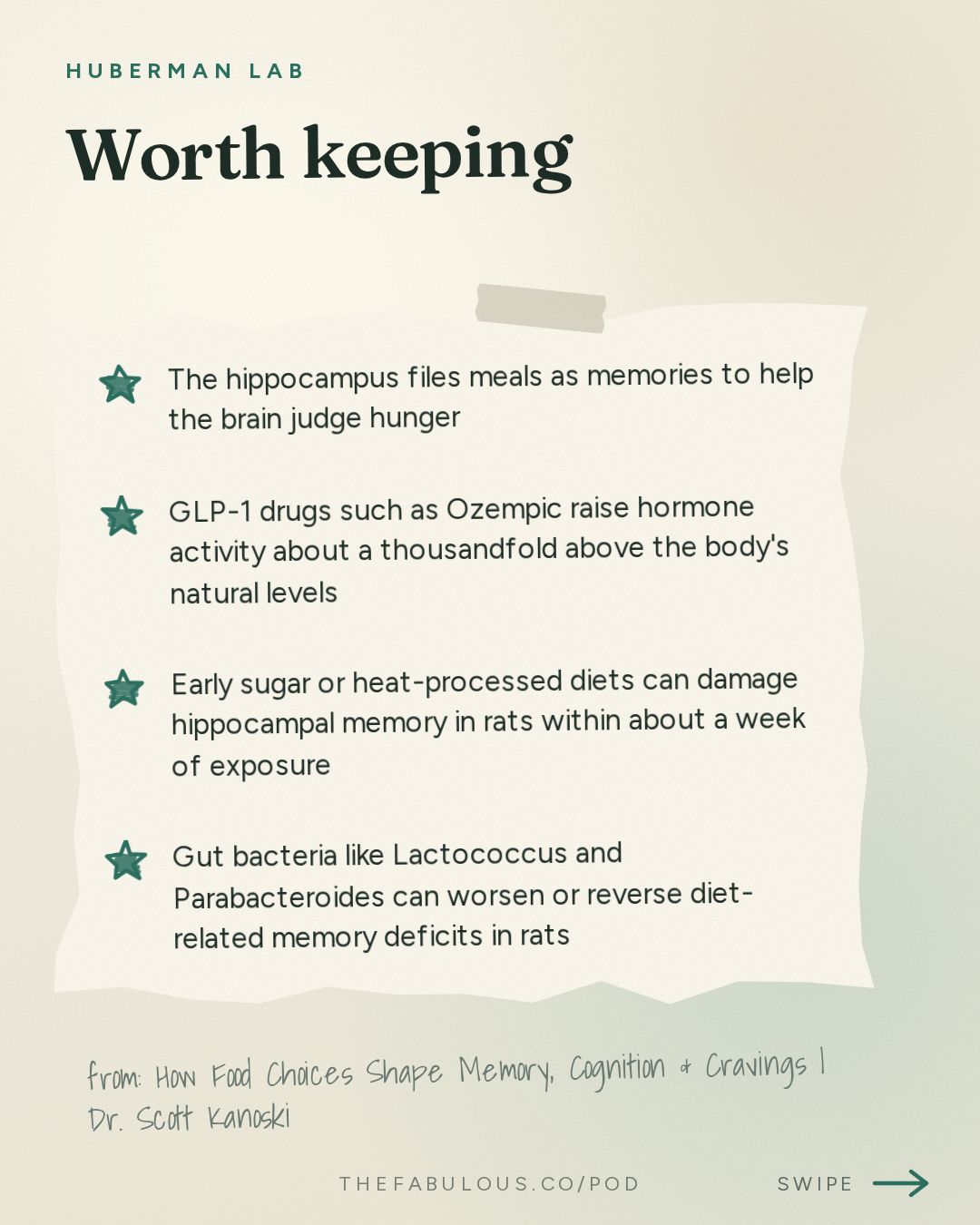
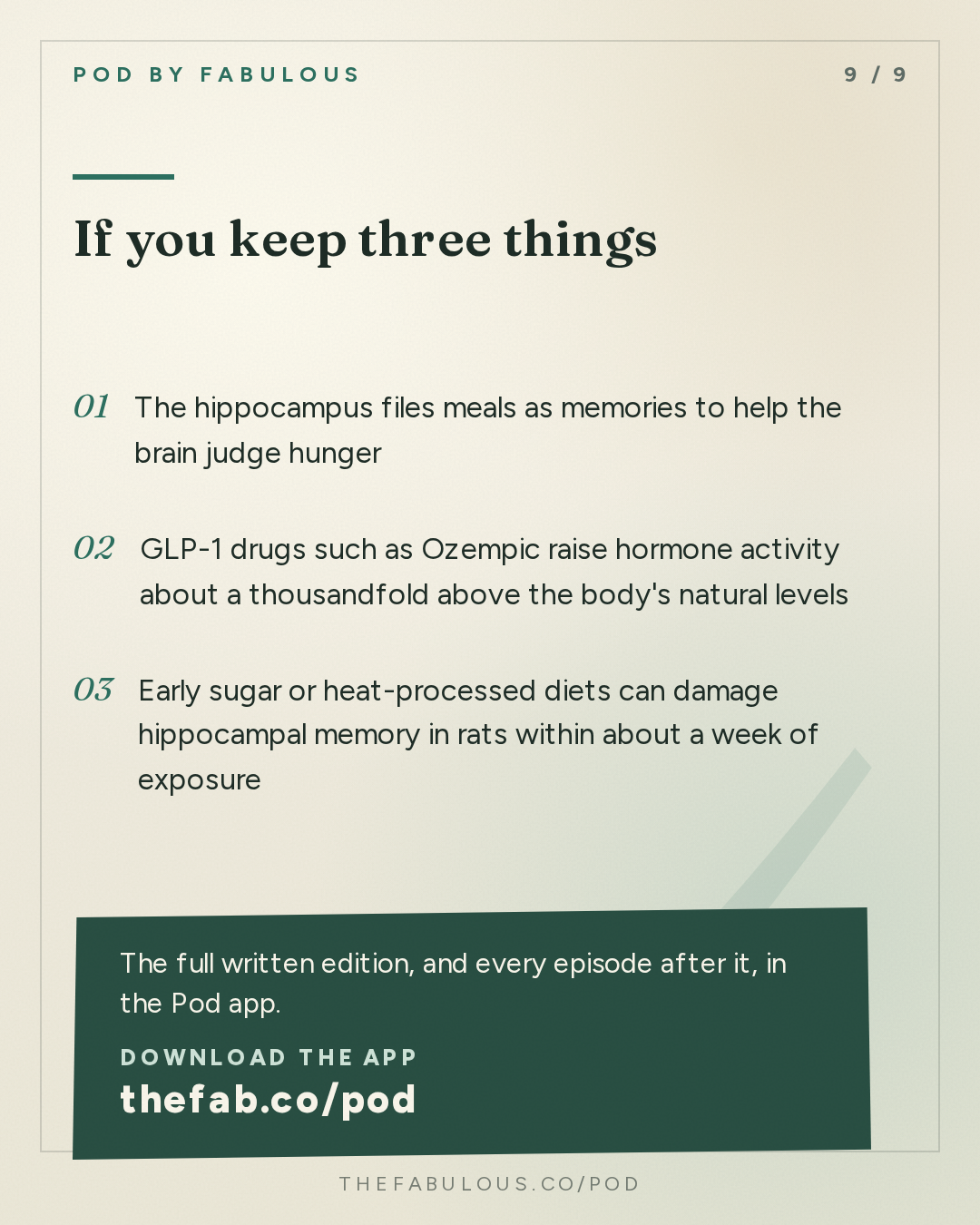
- The hippocampus files meals as memories to help the brain judge hunger
- GLP-1 drugs such as Ozempic raise hormone activity about a thousandfold above the body's natural levels
- Early sugar or heat-processed diets can damage hippocampal memory in rats within about a week of exposure
- Gut bacteria like Lactococcus and Parabacteroides can worsen or reverse diet-related memory deficits in rats
- Exercise can reverse memory deficits caused by a high-fat, high-sugar diet in rodent studies
The episode in cards
By the numbers
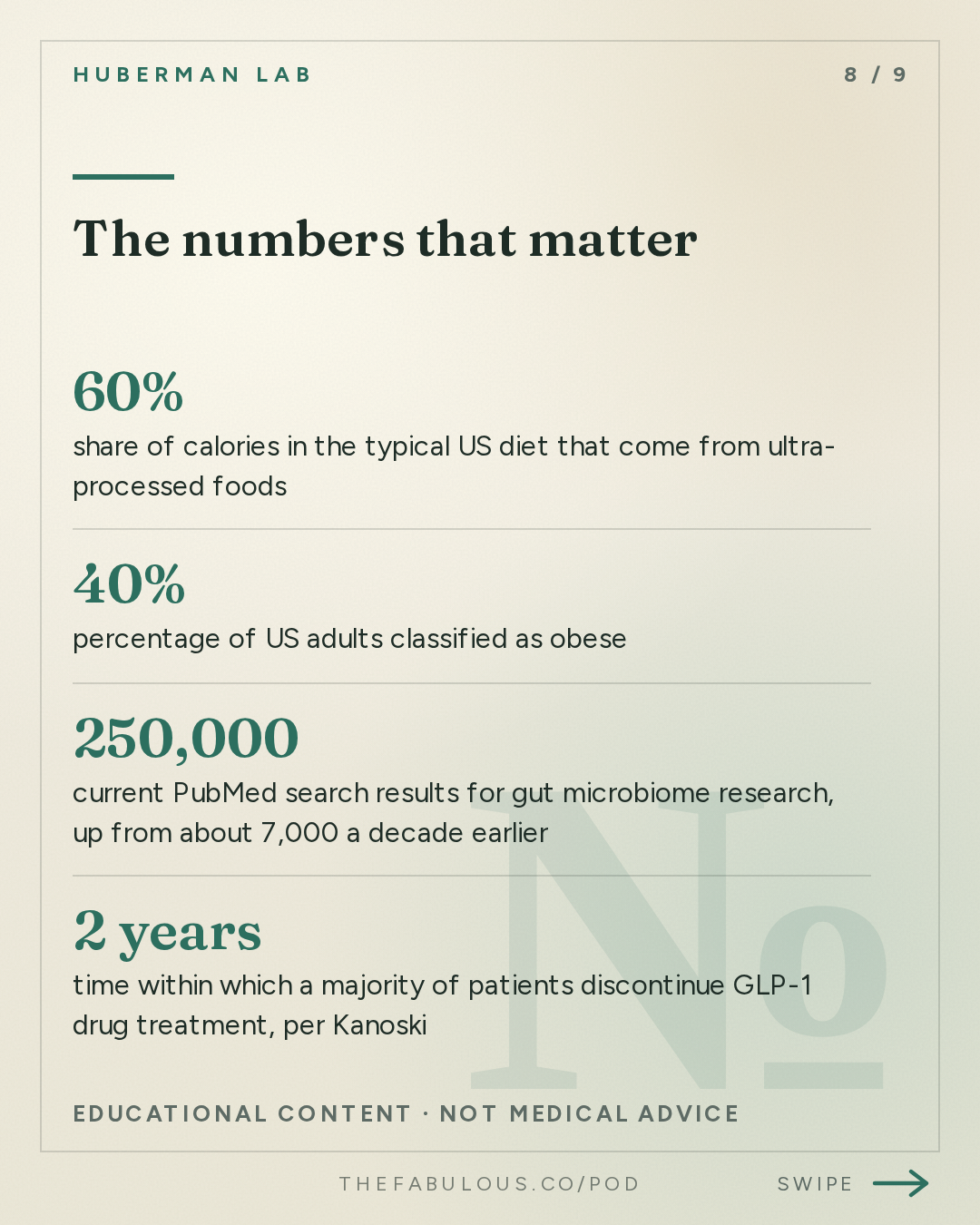
- 60% share of calories in the typical US diet that come from ultra-processed foods
- 40% percentage of US adults classified as obese
- 250,000 current PubMed search results for gut microbiome research, up from about 7,000 a decade earlier
- 2 years time within which a majority of patients discontinue GLP-1 drug treatment, per Kanoski
In their words
“The hippocampus is somewhat of a canary in the coal mine.”
“The memory of recent eating will contribute to eating less at the subsequent eating o- occasion”
“A majority, uh, will discontinue treatment within two years of starting”
“It's sort of easier- Yep ... to make something go wrong- Yeah ... than to take an already healthy baseline and, and-”
Protocols
-
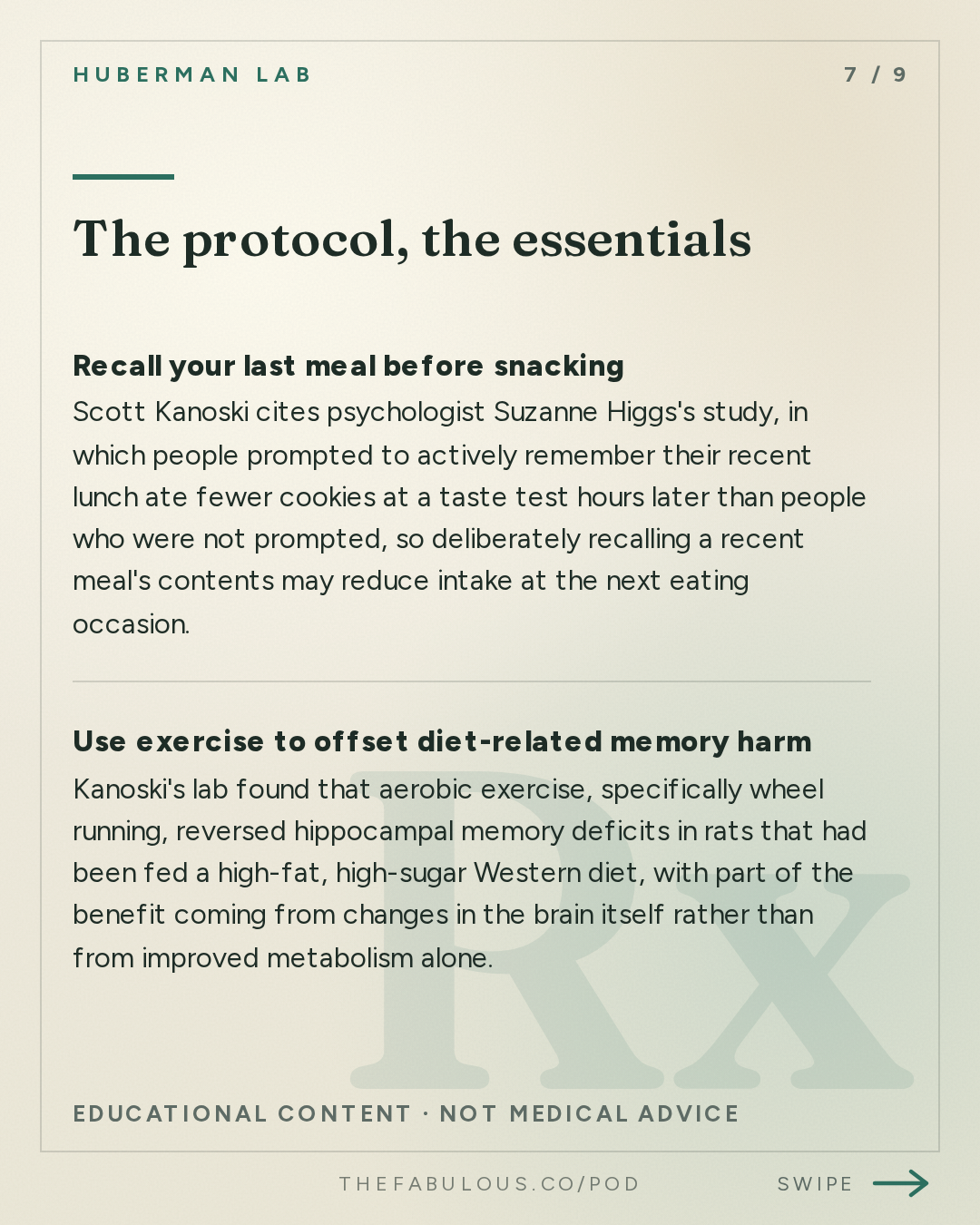
Recall your last meal before snacking
Scott Kanoski cites psychologist Suzanne Higgs's study, in which people prompted to actively remember their recent lunch ate fewer cookies at a taste test hours later than people who were not prompted, so deliberately recalling a recent meal's contents may reduce intake at the next eating occasion.
before deciding to eat again
-
Use exercise to offset diet-related memory harm
Kanoski's lab found that aerobic exercise, specifically wheel running, reversed hippocampal memory deficits in rats that had been fed a high-fat, high-sugar Western diet, with part of the benefit coming from changes in the brain itself rather than from improved metabolism alone.
regular aerobic exercise
-
Eat low-sugar fermented foods to support gut bacteria
Andrew Huberman says he follows Stanford microbiologist Justin Sonnenburg's research by regularly eating low-sugar fermented foods such as sauerkraut, kimchi, and kefir to support his gut microbiome.
daily
Questions this episode answers
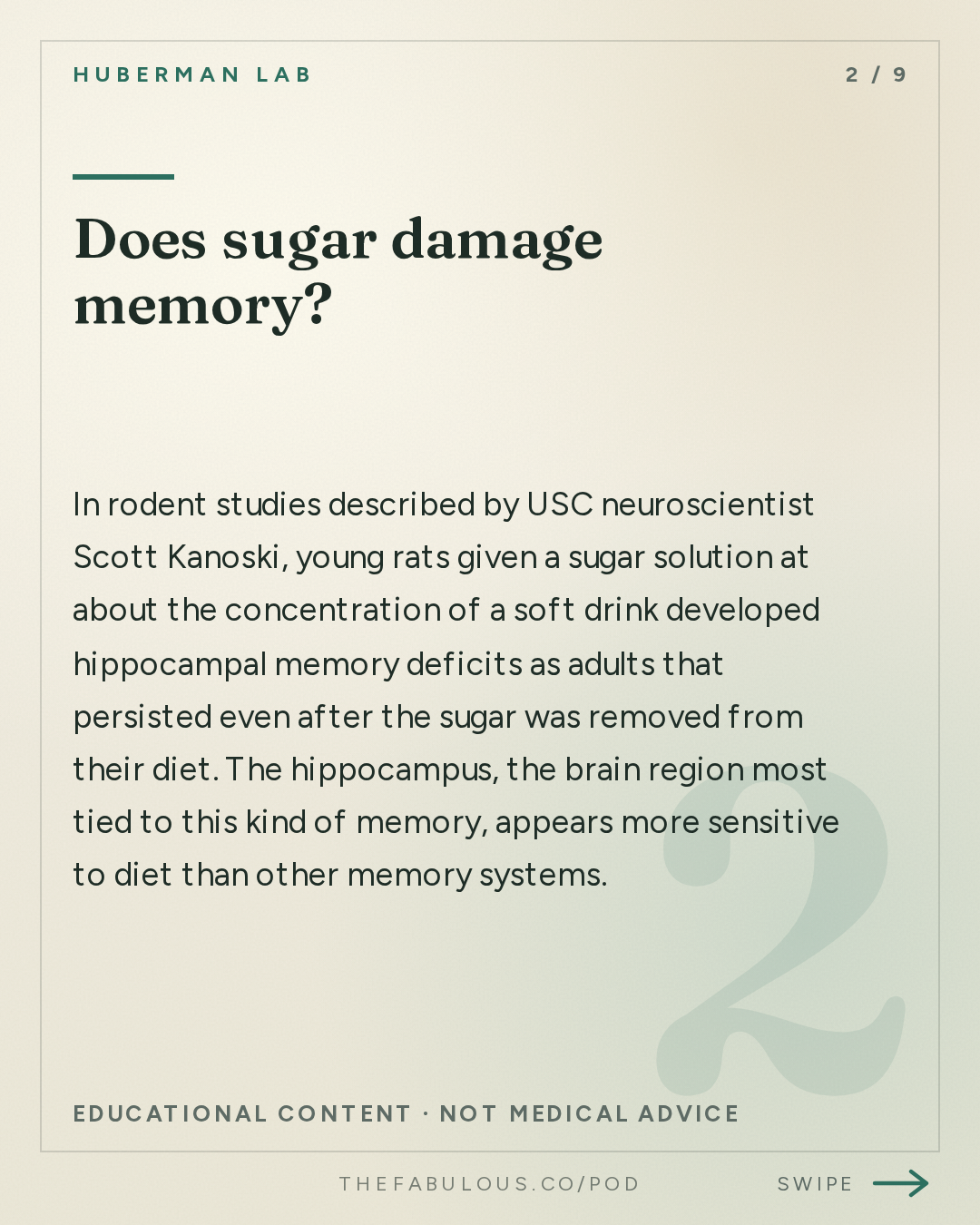
Does sugar damage memory?
In rodent studies described by USC neuroscientist Scott Kanoski, young rats given a sugar solution at about the concentration of a soft drink developed hippocampal memory deficits as adults that persisted even after the sugar was removed from their diet (35:28). The hippocampus, the brain region most tied to this kind of memory, appears more sensitive to diet than other memory systems (35:02).
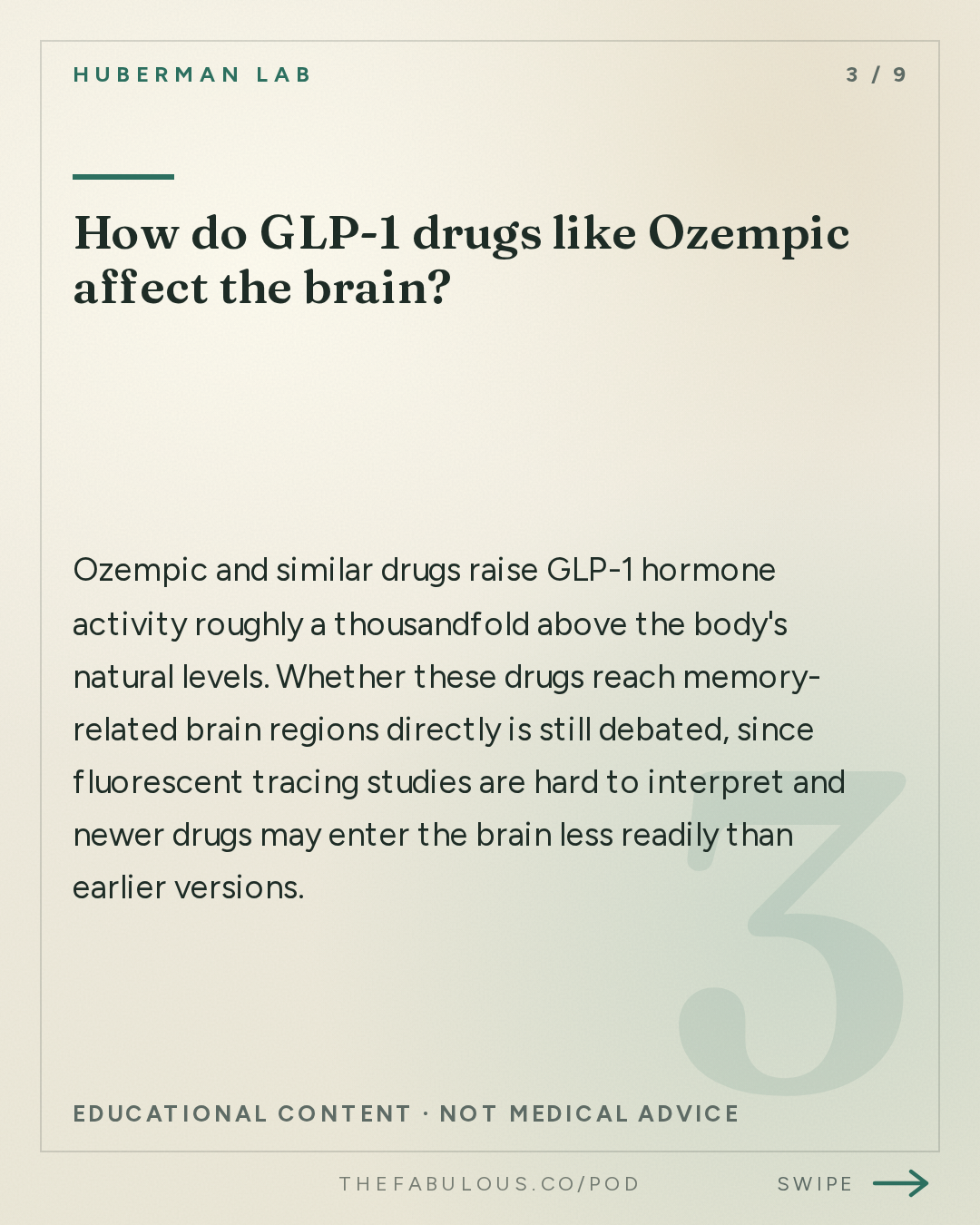
How do GLP-1 drugs like Ozempic affect the brain?
Ozempic and similar drugs raise GLP-1 hormone activity roughly a thousandfold above the body's natural levels (04:57). Whether these drugs reach memory-related brain regions directly is still debated, since fluorescent tracing studies are hard to interpret and newer drugs may enter the brain less readily than earlier versions (09:22).
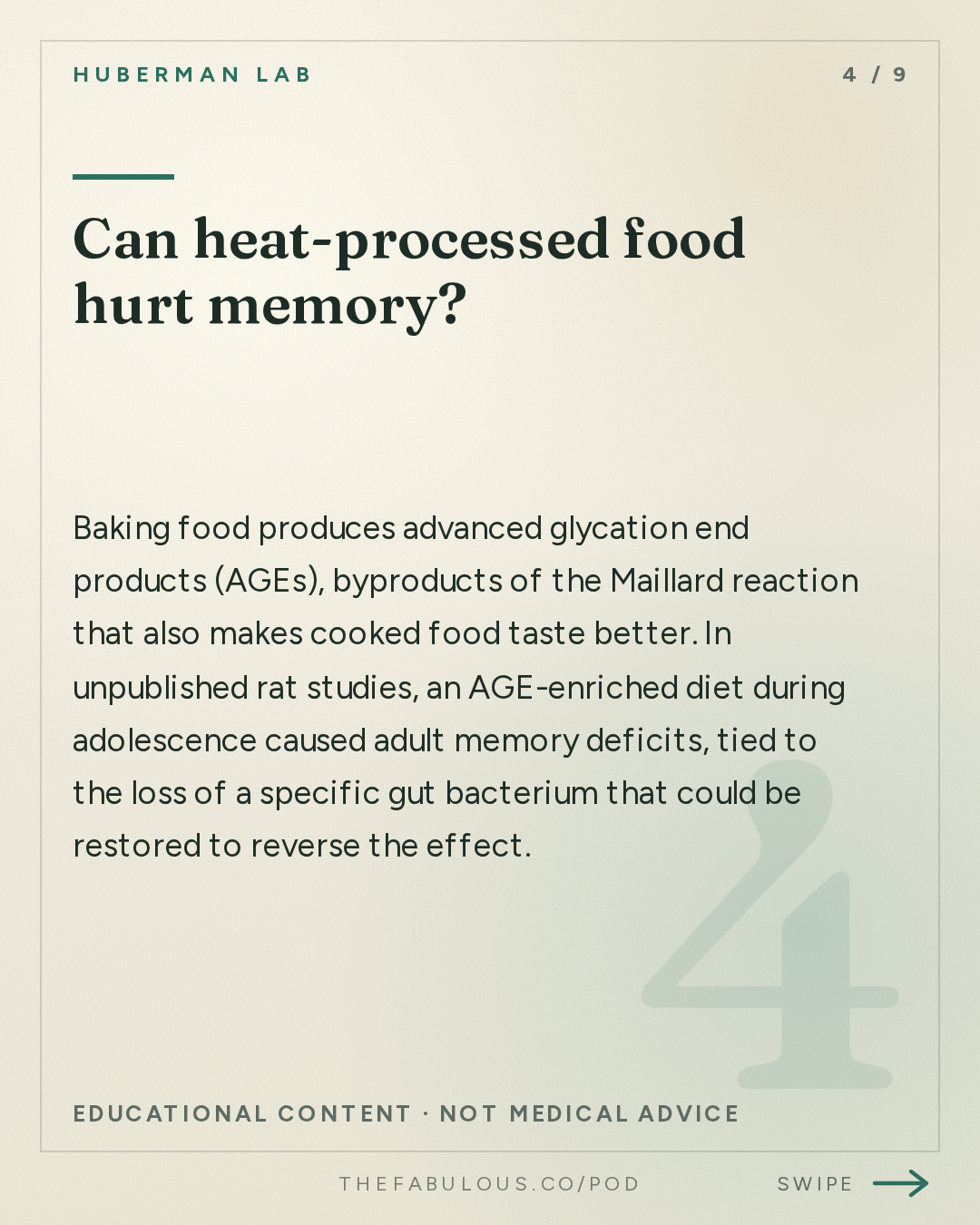
Can heat-processed food hurt memory?
Baking food produces advanced glycation end products (AGEs), byproducts of the Maillard reaction that also makes cooked food taste better. In unpublished rat studies, an AGE-enriched diet during adolescence caused adult memory deficits, tied to the loss of a specific gut bacterium that could be restored to reverse the effect (39:56).
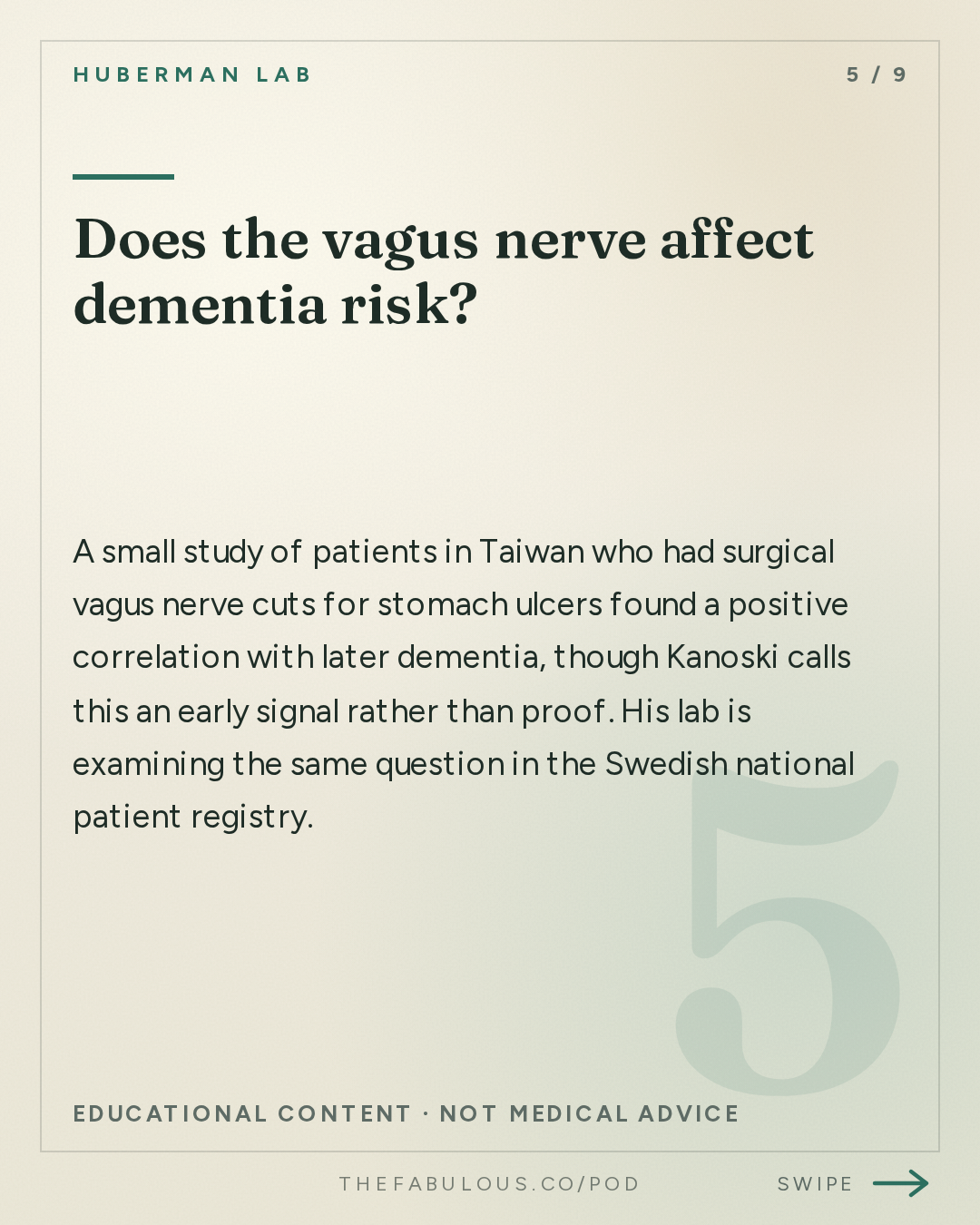
Does the vagus nerve affect dementia risk?
A small study of patients in Taiwan who had surgical vagus nerve cuts for stomach ulcers found a positive correlation with later dementia, though Kanoski calls this an early signal rather than proof (51:36). His lab is examining the same question in the Swedish national patient registry.
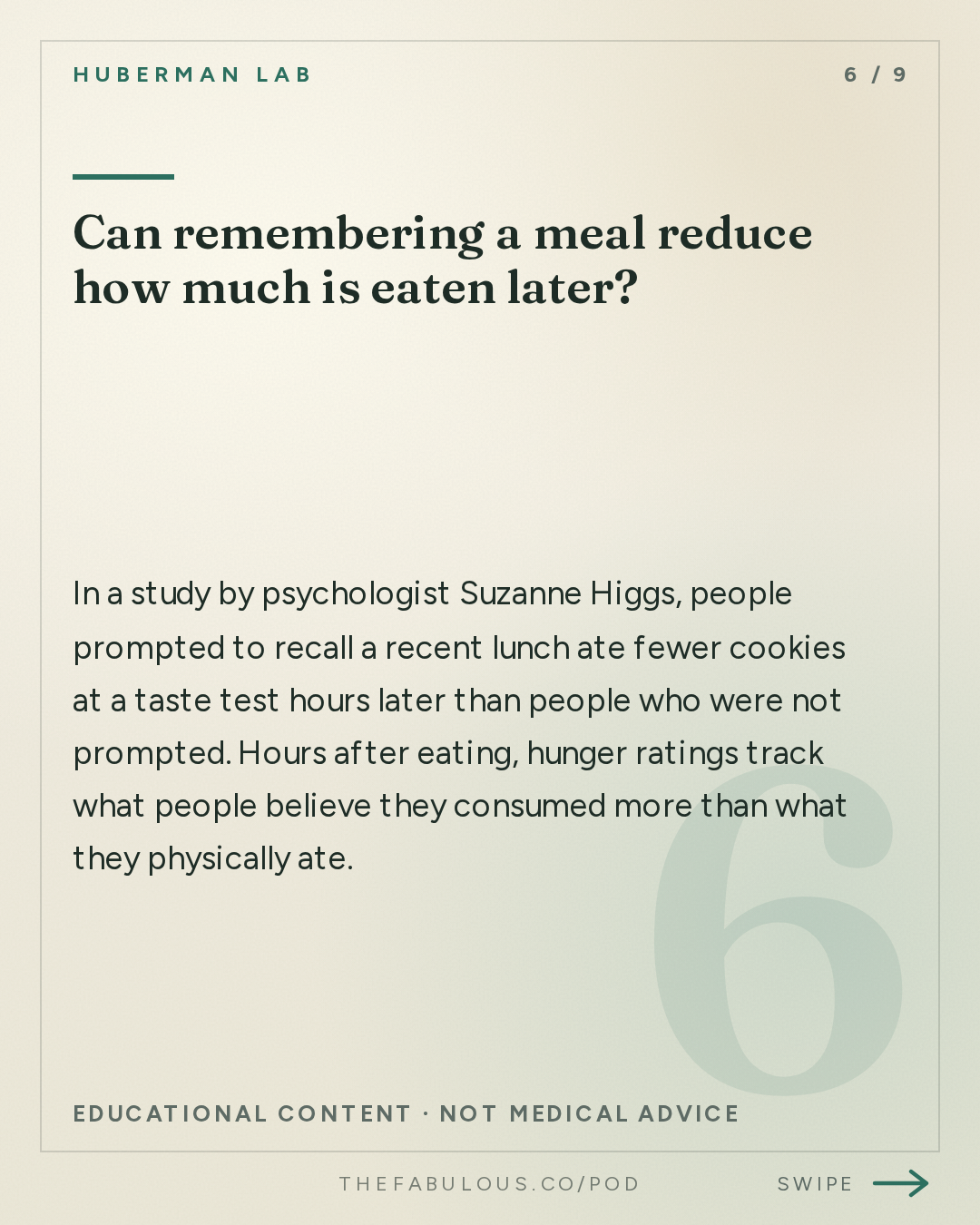
Can remembering a meal reduce how much is eaten later?
In a study by psychologist Suzanne Higgs, people prompted to recall a recent lunch ate fewer cookies at a taste test hours later than people who were not prompted (27:56). Hours after eating, hunger ratings track what people believe they consumed more than what they physically ate (29:10).
Does exercise reverse diet-related memory loss?
In rat studies from Kanoski's lab, aerobic exercise reversed hippocampal memory deficits caused by a prior high-fat, high-sugar diet, with part of the benefit coming from changes in the brain itself (48:25).
The full read, in cards
Go deeper
- Suzanne Higgs's meal-memory and snacking study — found that prompting people to recall a recent lunch reduced how many cookies they ate hours later
- Jeff Brunstrom's soup-bowl study — used a secretly refilled or drained soup bowl to show hunger ratings track believed intake, not actual volume, after a delay
- Taiwan vagotomy registry study — found a positive correlation between surgical vagus nerve cuts for stomach ulcers and later dementia risk
- Human Microbiome Project — catalogued the genetic makeup of human gut bacteria and concluded around 2012, opening the modern microbiome research field
- Dopamine Nation — Anna Lembke's book framing dopamine around craving and wanting rather than pleasure
Mentioned
Scott Kanoski · Andrew Huberman · Suzanne Higgs · Jeff Brunstrom · Michael Pollan · Anna Lembke · Justin Sonnenburg · University of Southern California · Ozempic · Wegovy · Human Microbiome Project · Dopamine Nation
More from this show and category

Elissa Epel's Guide to Stress and Resilience
Psychologist Elissa Epel says stress is simply when demands exceed our resources, and most modern stress comes from our own thoughts. She shows how a challenge mindset, radical acceptance, and small daily practices like 'dropping the rope' change inflammation, telomere length, and mitochondrial energy output measurably.
Beth Shapiro on De-Extinction and Gene Editing
Evolutionary biologist Beth Shapiro explains why species are human categories and why dinosaur DNA cannot survive 66 million years. She describes how Colossal Biosciences engineered a dire wolf with 20 gene edits to a gray wolf genome, revived black-footed ferret genetics through cloning, and weighed the ethics of editing human embryos.

Huberman's Science-Based Focus Tools
Stanford neuroscientist Andrew Huberman lays out a stacked protocol for training focus, from sleep and caffeine to meditation and supplements. He covers 90-minute ultradian work blocks, a 13-minute daily breath meditation, cold exposure for epinephrine, and specific doses for creatine, alpha-GPC, and L-tyrosine, recommending behavioral tools before any supplement or drug.

Andy Galpin's Strength and Hypertrophy Protocols
Strength and muscle size are not the same adaptation: size can grow without strength, and power fades fastest with age. Kinesiologist Andy Galpin lays out concrete numbers, a 3-to-5 strength template, and a 10-to-25 weekly set range for hypertrophy that adapts to real-life chaos (11:30, 32:15).
