
Testosterone, Age, and Metabolic Health Explained
Boosting Testosterone & Understanding Your Testosterone Levels (Aging, Muscle Growth & Nutrition)
▶ Listen to the full episode More from Perform with Dr. Andy Galpin
The brief
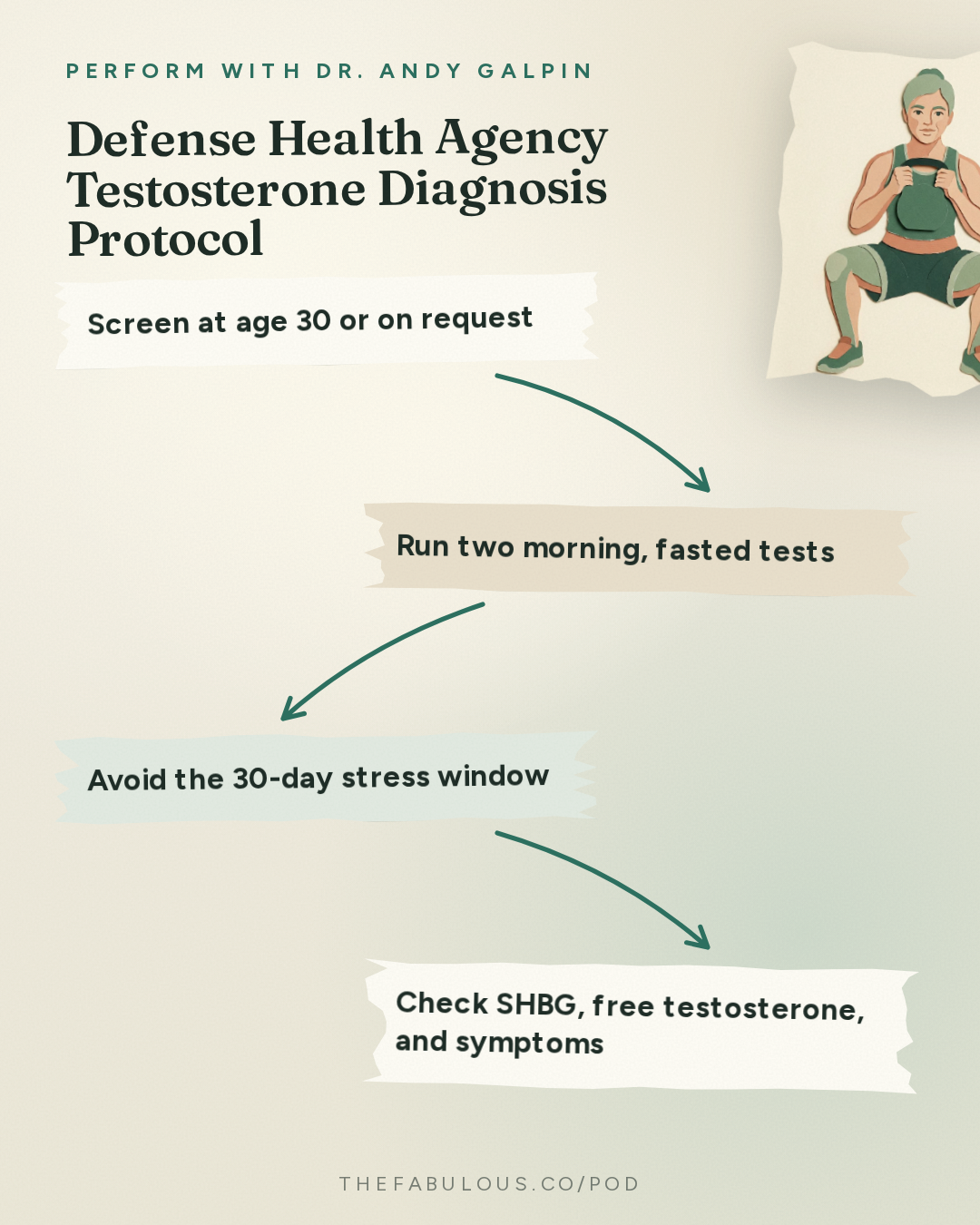
Testosterone does not fall because someone gets older; Dr. Andy Galpin says the data show obesity and metabolic dysfunction, not age itself, drive almost all of the decline. Men who hit five basic metabolic health markers have under a 1% chance of low testosterone (34:38), while obesity alone raises the risk roughly 7.5-fold (33:18).
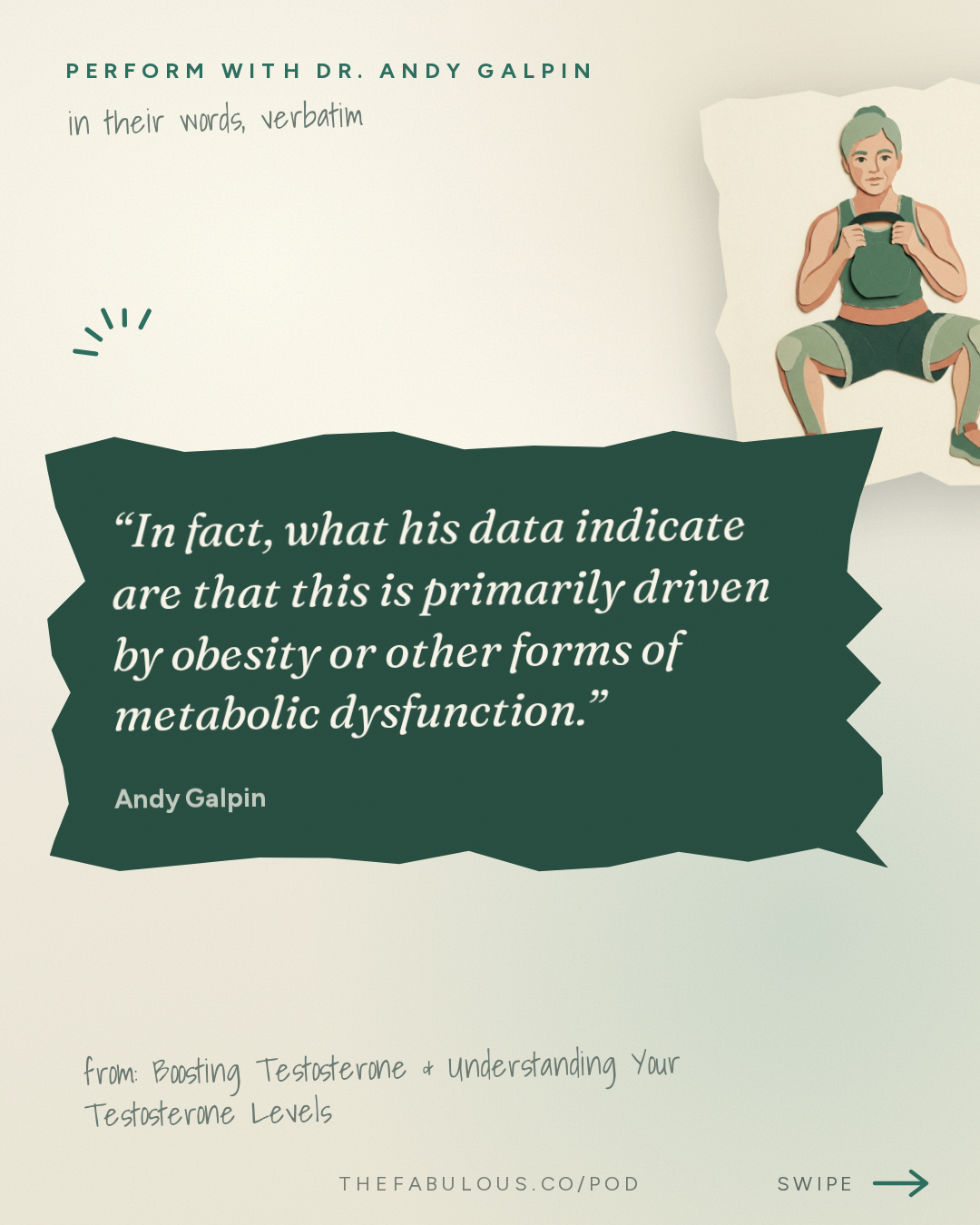
Ask a man over fifty why his testosterone feels low, and the answer usually arrives before the question finishes: age. Dr. Andy Galpin, a professor and scientist of human performance, spends this episode taking that answer apart piece by piece. Leaning on research from his colleague Dr. Ben House, Galpin argues that testosterone does not fall because the calendar turns. It falls because the body changes shape. "It's not the age that's doing it per se," he says. "In fact, what his data indicate are that this is primarily driven by obesity or other forms of metabolic dysfunction" (01:48).
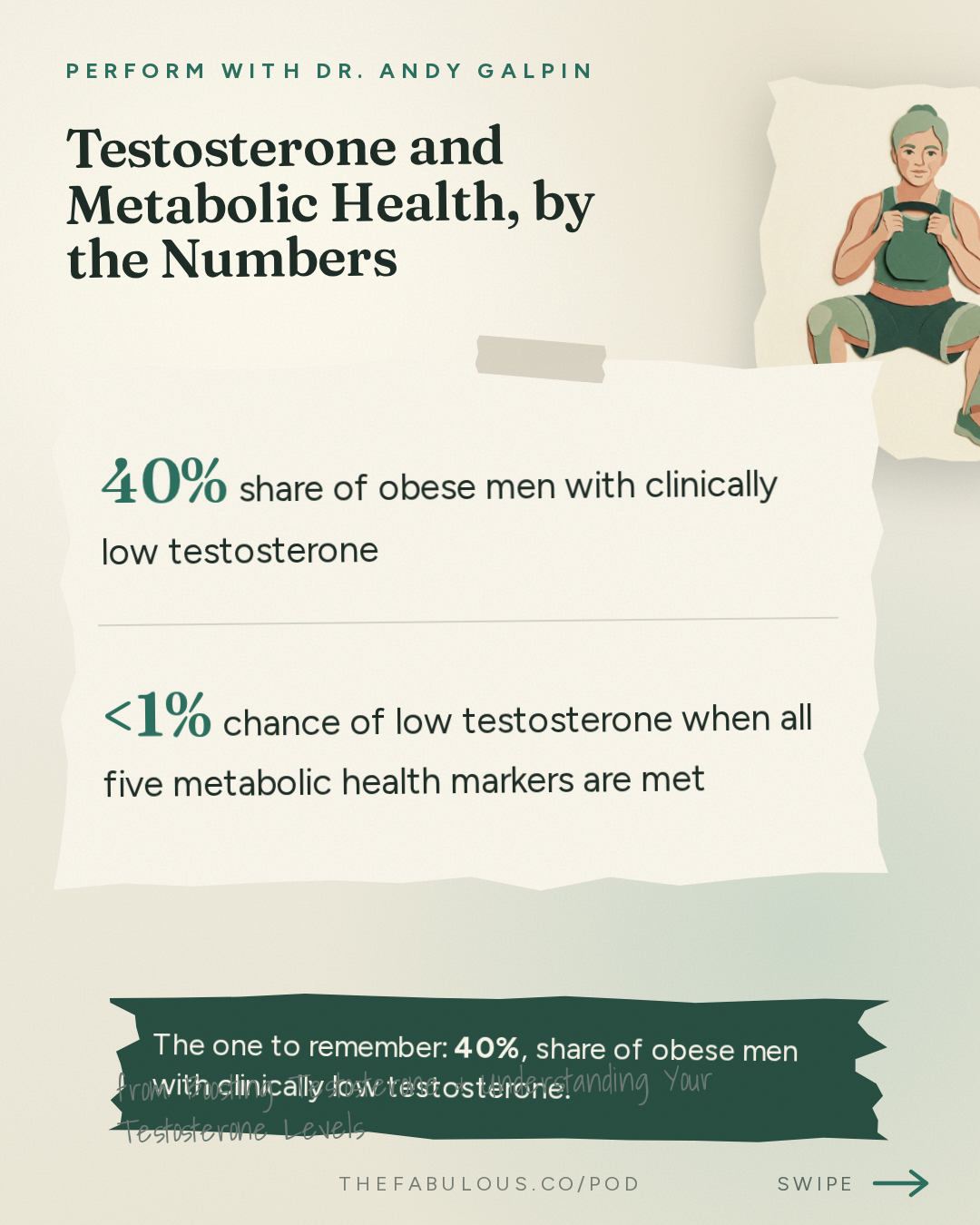
The numbers behind that claim are stark. Less than 10% of men who are not clinically obese will ever register a low testosterone reading, defined clinically as under 300 nanograms per deciliter (06:37, 07:48). Among men who are obese, that figure jumps to roughly 40% (07:48). Obesity alone appears to raise the risk of low testosterone by about 7.5 times compared with a normal-weight man (33:18). And the causal arrow, Galpin says, mostly points one direction: carrying excess fat lowers testosterone, rather than low testosterone causing the weight gain (08:12). A high waist-to-hip ratio on its own, a simple measure of belly fat relative to hip size, can double or triple someone's risk (31:41).
The Five-Number Scorecard
To make this concrete, Galpin walks through five standard markers of metabolic health that House used in his analysis: blood pressure under 120 over 80, fasting glucose under 100 milligrams per deciliter or HbA1c under 5.5%, triglycerides under 150 milligrams per deciliter, HDL cholesterol above 40 milligrams per deciliter, and a waist-to-hip ratio under 0.5 (30:53 to 31:41). Score five out of five and the chance of having low testosterone drops below 1%, meaning out of 100 men who check every box, only one would test low (34:38). Hit four out of five and the risk stays under 5%. Drop to three out of five and risk climbs to about 20%, still manageable for someone without perfect habits (39:45 to 40:09). Fall to zero out of five, though, and risk accelerates sharply, with a roughly 20-fold increase compared with the five-out-of-five group (39:01). The swing in absolute terms is large: the difference between a top scorer and a bottom scorer is around 200 nanograms per deciliter of testosterone, sometimes more (35:53). A 70-year-old who checks all five boxes can have testosterone 70 to 100 points higher than a 40-year-old with poor metabolic markers (34:59). Age, in other words, is a weak signal next to metabolic health.
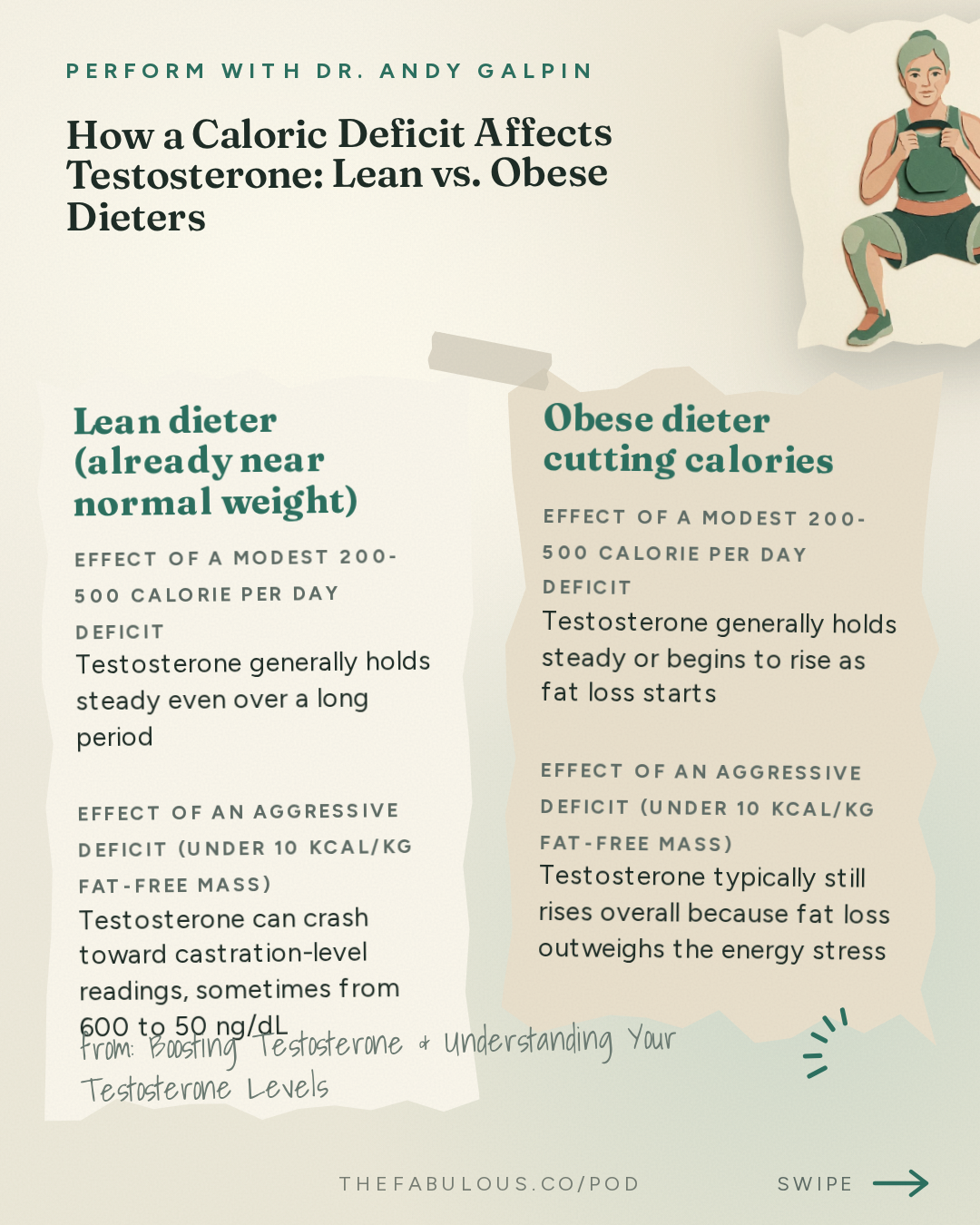
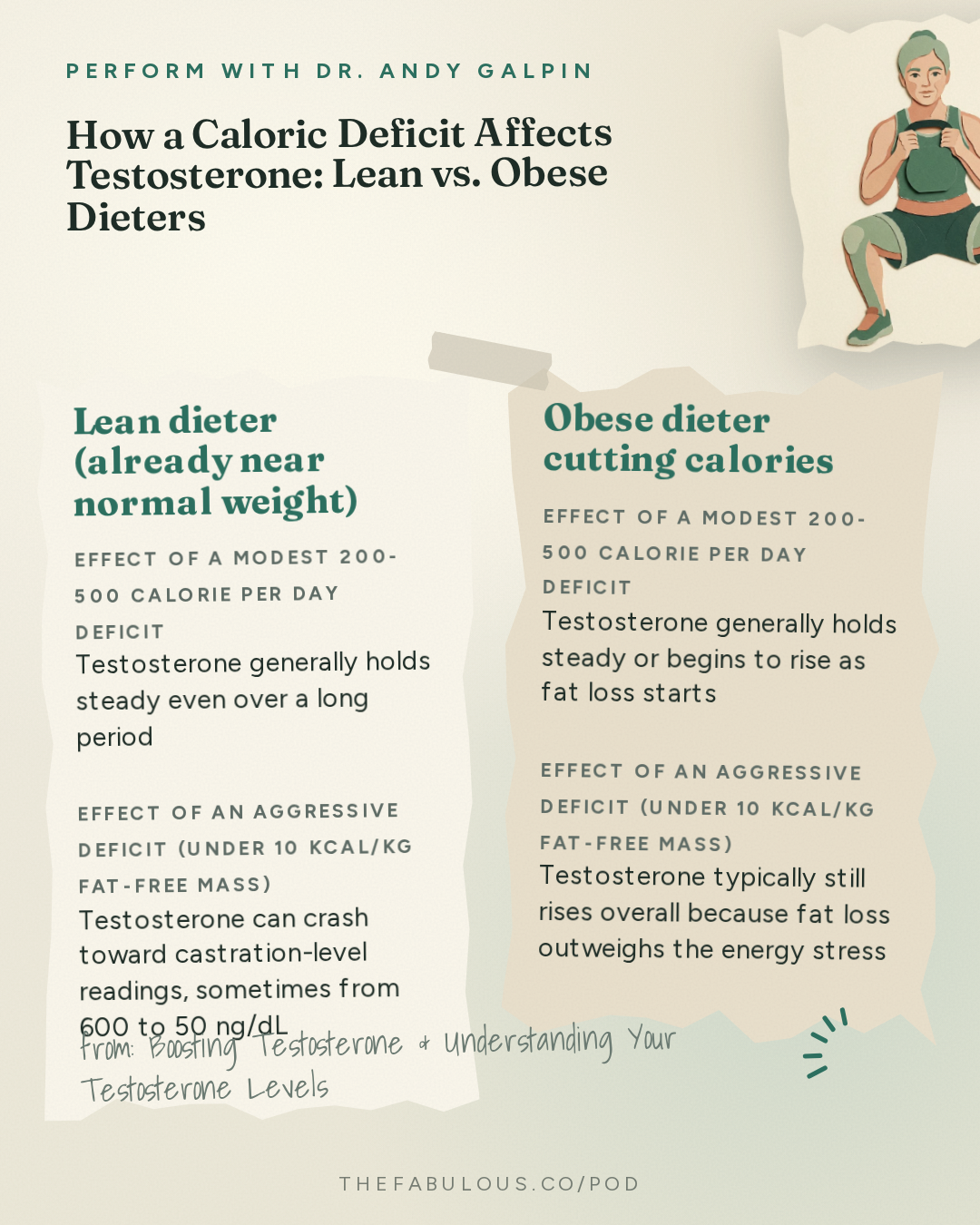
This reframing matters most for people trying to diet without wrecking their hormones. Galpin describes a rough floor, around 30 calories per kilogram of fat-free mass per day, below which women especially risk endocrine disruption; a 50-kilogram fat-free-mass person hitting that floor would land near 1,500 calories a day (15:54 to 16:22). Push much lower, as some military and bodybuilding-competitor case studies have done, and testosterone can crash to what Galpin calls castration-level numbers, sometimes dropping from 600 nanograms per deciliter to 50 within months of aggressive dieting (20:23 to 23:00). The encouraging part is that this usually reverses. In the handful of studies that tracked people through a refeed, testosterone climbed back to its starting point within weeks to months once calories returned to maintenance (23:32 to 24:01). Galpin's own read of moderate deficits, in the 200 to 500 calorie per day range, is that they rarely move testosterone much even in lean people (25:10).
A stranger wrinkle shows up in sex hormone binding globulin, a protein that binds testosterone and limits how much is freely available to cells. SHBG rises by about 5 points per decade of life, independent of health status (69:01). But it also falls as metabolic health declines. Since people tend to both age and lose metabolic health at the same time, the two trends can cancel out, leaving a 60-year-old with sluggish metabolic health and a SHBG reading that looks deceptively normal for his age (70:35 to 71:02). Galpin flags this as a reason lab reference ranges deserve more scrutiny by age, since what looks fine on paper may be masking real dysfunction.
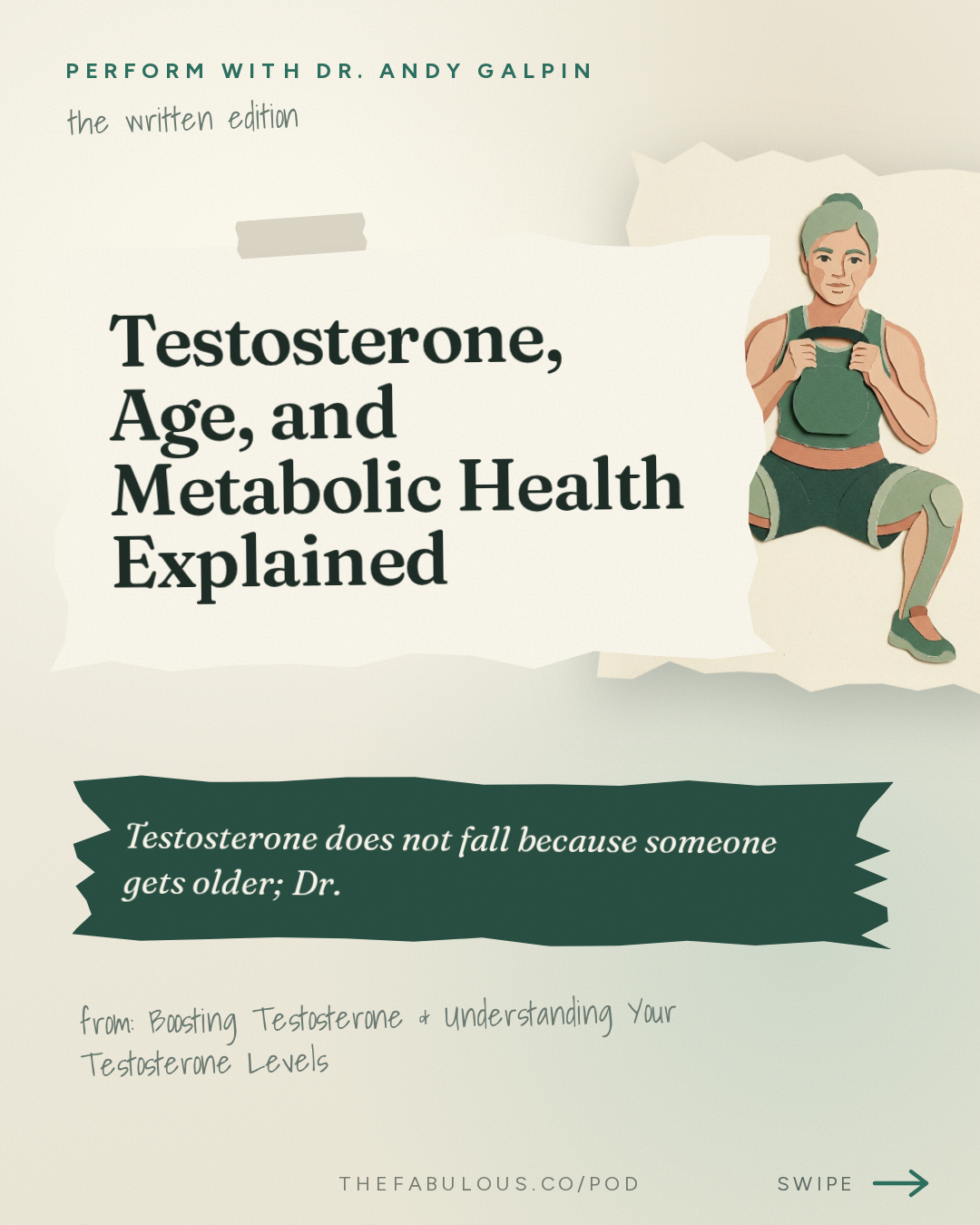
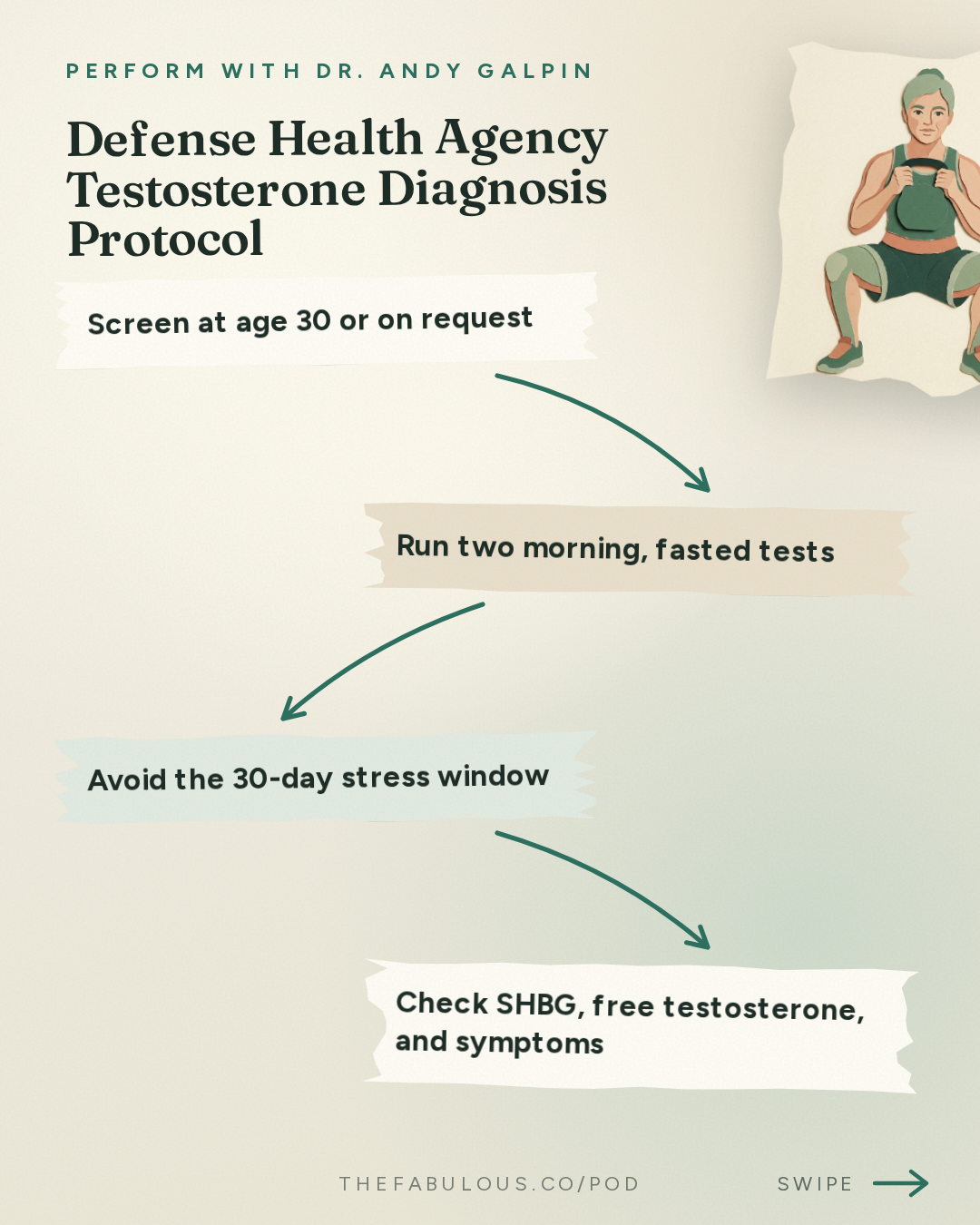
Timing also matters more than most people realize. Total testosterone peaks at night and then falls steadily through the day, swinging by 150 to 250 points from its highest point to its lowest (60:28). That is why new clinical guidance insists on testing at a consistent morning hour while fasted, since a test drawn at 7 a.m. versus 10 a.m. in the same person could differ by 100 points or more for no physiological reason at all (60:52 to 61:19). Those guidelines, developed in part by Dr. Gabrielle Lyon and colleagues for the Defense Health Agency, recommend screening men starting at age 30, but require at least two separate morning, fasted tests before diagnosing low testosterone, and explicitly rule out testing within 30 days of extreme training, sleep deprivation, or acute illness, since any of these can temporarily crush the numbers (48:20 to 48:55). Galpin is emphatic on this point: "You really, really, really should avoid taking hormone replacement therapy or testosterone replacement therapy... based upon a single blood draw" (47:00). The guidelines also call for monitoring hematocrit, the percentage of blood made up of red blood cells, once someone starts therapy, since testosterone thickens blood and can push hematocrit past roughly 52 to 54%, a range associated with elevated risk of clotting and heart problems (50:48 to 51:31).
What Actually Builds Muscle
None of this, Galpin stresses, tells someone how much muscle they will grow from a given workout. Inside the normal range, roughly 300 to 1,000 nanograms per deciliter, total testosterone does not predict who responds better to strength training (02:16 to 02:41). The acute testosterone spike that follows a hard lifting session, often just 25 to 50 nanograms per deciliter for a few minutes, is too small and too brief to matter against the 150 to 250 point swing already happening every day, and it does not correlate with long-term muscle growth measured months later (74:46 to 76:00). Even androgen receptors, the proteins inside muscle cells that testosterone must bind to trigger growth, do not explain why some people gain more muscle than others on identical programs, according to research from Dr. Mike Roberts' lab that Galpin cites (82:06 to 84:03).
What does change with age is something separate from testosterone: anabolic resistance, a dulling of the muscle-building response to the same dose of protein, worsened by obesity, insulin resistance, and inflammation (85:07 to 86:14). This is part of why federal dietary guidelines recently raised the protein target from the old 0.8 grams per kilogram of body weight, which only guards against deficiency, to a range of 1.2 to 1.6 grams per kilogram aimed at preserving muscle and body composition (87:55 to 89:39), a shift also discussed in new research from McMaster University protein researcher Dr. Stu Phillips (87:03). Galpin personally favors closer to 2.2 grams per kilogram, not because the physiology demands it, but because higher protein helps him and his clients feel full and stay consistent (91:00 to 92:10).
Still, protein is the smaller lever. "Strength training is doing 90 percent of the work, 95 percent of the work, where your protein intake is doing the last five percent," Galpin says (94:17). And contrary to what many assume, the basic rules of strength training do not need to change with age. Exercise selection, order, intensity, volume, and range of motion work the same way at 30 as they do at 80; what differs is recovery speed and individual history, not some age-specific formula (94:58 to 97:14).
Taken together, the episode's real argument is about where to put attention. Chasing a slightly higher testosterone number, through supplements or acute training tricks, buys almost nothing. Removing the things that actually suppress hormones, excess body fat, chronic under-eating, poor sleep, unmanaged stress, buys a great deal, often moving testosterone by 200 to 300 points with nothing more exotic than consistent habits (41:22 to 42:10). The science here is less about finding a hidden lever and more about noticing which ordinary ones were never pulled.
Ask this episode anything
Pod's AI answers from the episode itself, with the minute mark so you can hear it yourself.
Or start with one of these
Ask this episode
Pod's AI listens to the whole episode to answer, and points you to the minute it comes from.
The rest of this answer, and any question after it
Answers come from the episode itself, never from a summary of it.
ContinueKey takeaways
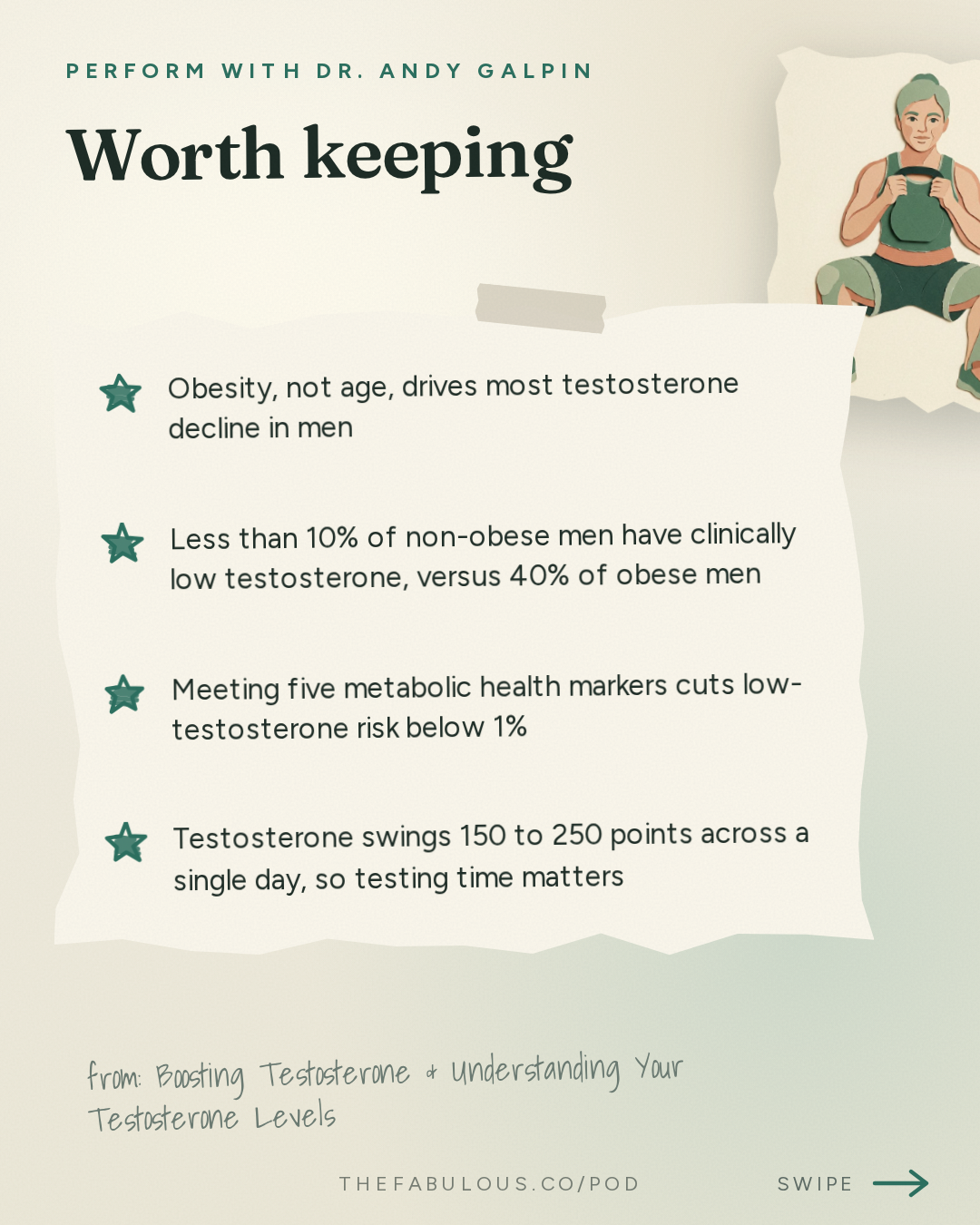
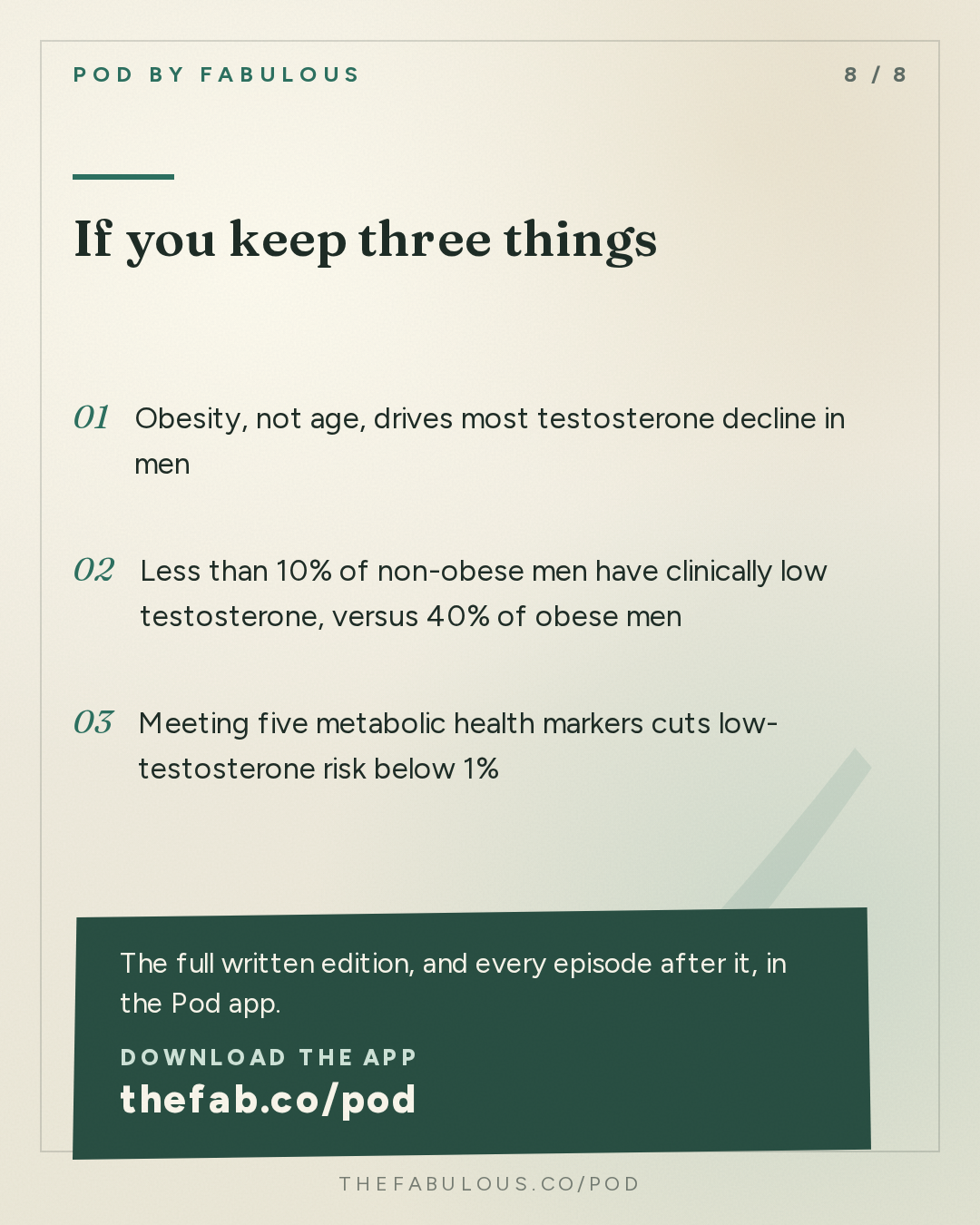
- Obesity, not age, drives most testosterone decline in men
- Less than 10% of non-obese men have clinically low testosterone, versus 40% of obese men (07:48)
- Meeting five metabolic health markers cuts low-testosterone risk below 1% (34:38)
- Testosterone swings 150 to 250 points across a single day, so testing time matters (60:28)
- Resistance training drives 90 to 95% of muscle growth, with protein contributing the rest (94:17)
The episode in cards
By the numbers
- 40% percent share of obese men with clinically low testosterone, versus under 10% of non-obese men
- <1% percent chance of low testosterone for men who meet all five metabolic health criteria
In their words
“In fact, what his data indicate are that this is primarily driven by obesity or other forms of metabolic dysfunction.”
“You really, really, really should avoid taking hormone replacement therapy or testosterone replacement therapy or any medication or even peptide relating to testosterone production based upon a single blood draw.”
“There's no fundamental difference between thirty-year-olds versus eighty-year-olds.”
Protocols
-
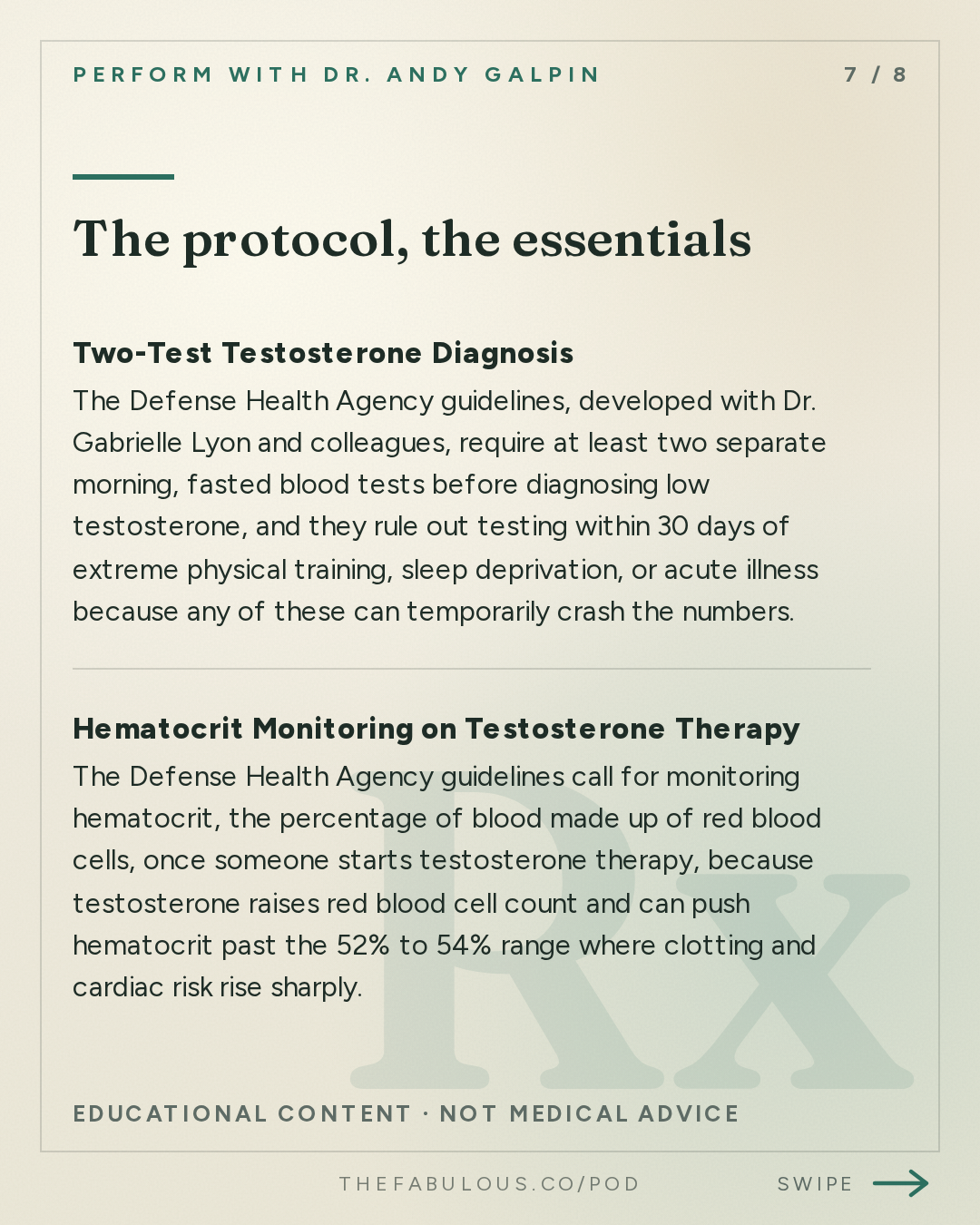
Two-Test Testosterone Diagnosis
The Defense Health Agency guidelines, developed with Dr. Gabrielle Lyon and colleagues, require at least two separate morning, fasted blood tests before diagnosing low testosterone, and they rule out testing within 30 days of extreme physical training, sleep deprivation, or acute illness because any of these can temporarily crash the numbers.
Before any testosterone diagnosis or treatment decision
-
Hematocrit Monitoring on Testosterone Therapy
The Defense Health Agency guidelines call for monitoring hematocrit, the percentage of blood made up of red blood cells, once someone starts testosterone therapy, because testosterone raises red blood cell count and can push hematocrit past the 52% to 54% range where clotting and cardiac risk rise sharply.
Ongoing while on therapy
-
Protein Intake for Anabolic Resistance
Dr. Andy Galpin recommends aging adults consume 1.2 to 1.6 grams of protein per kilogram of body weight to counter anabolic resistance, the dulled muscle-building response to protein that worsens with age, obesity, and inflammation, though he personally prefers closer to 2.2 grams per kilogram for satiety and consistency rather than for extra muscle gain.
Daily
Questions this episode answers
Does testosterone naturally decline with age?
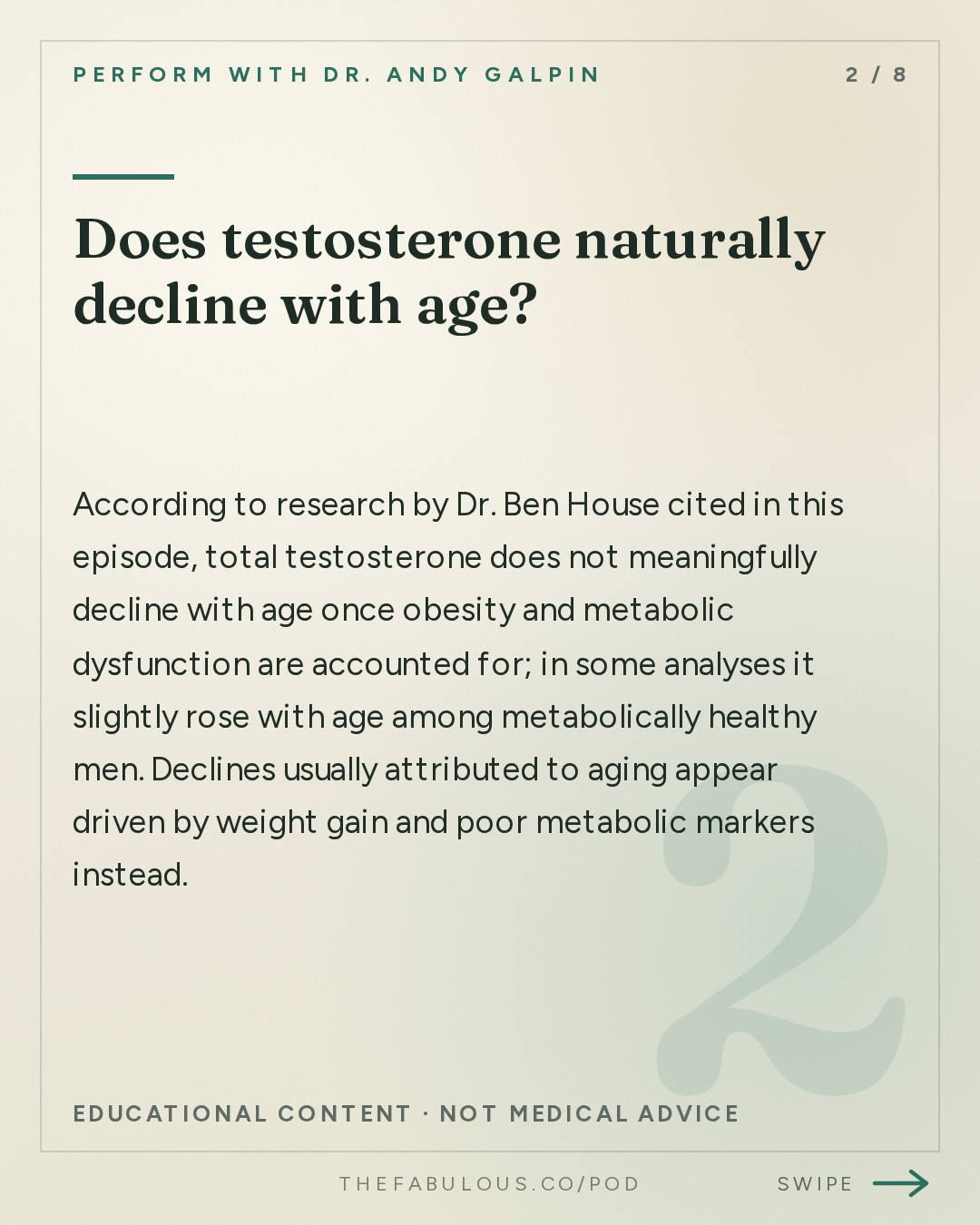
According to research by Dr. Ben House cited in this episode, total testosterone does not meaningfully decline with age once obesity and metabolic dysfunction are accounted for; in some analyses it slightly rose with age among metabolically healthy men (37:30). Declines usually attributed to aging appear driven by weight gain and poor metabolic markers instead (01:48).
What percentage of men actually have low testosterone?
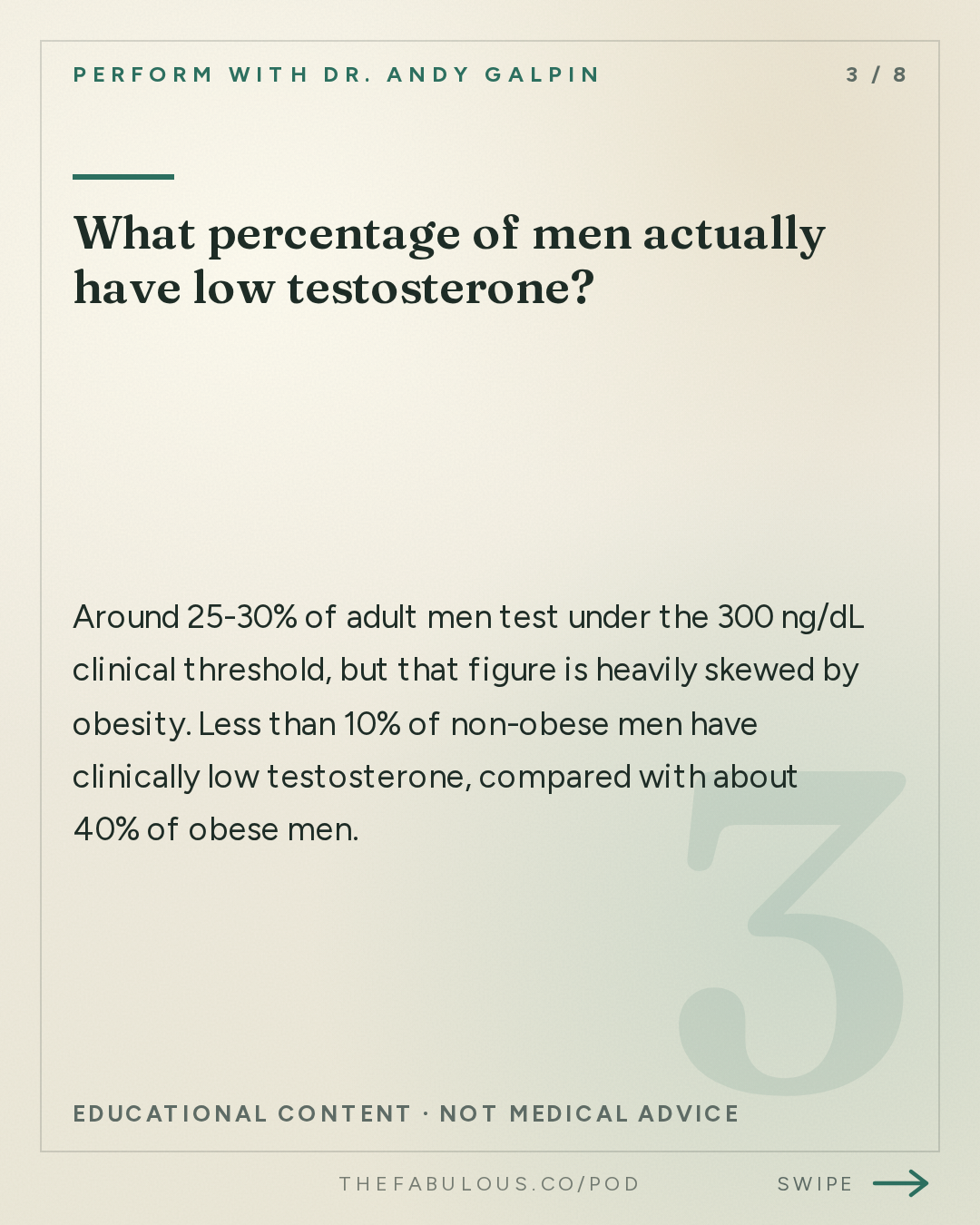
Around 25-30% of adult men test under the 300 ng/dL clinical threshold, but that figure is heavily skewed by obesity (06:59). Less than 10% of non-obese men have clinically low testosterone, compared with about 40% of obese men (07:48).
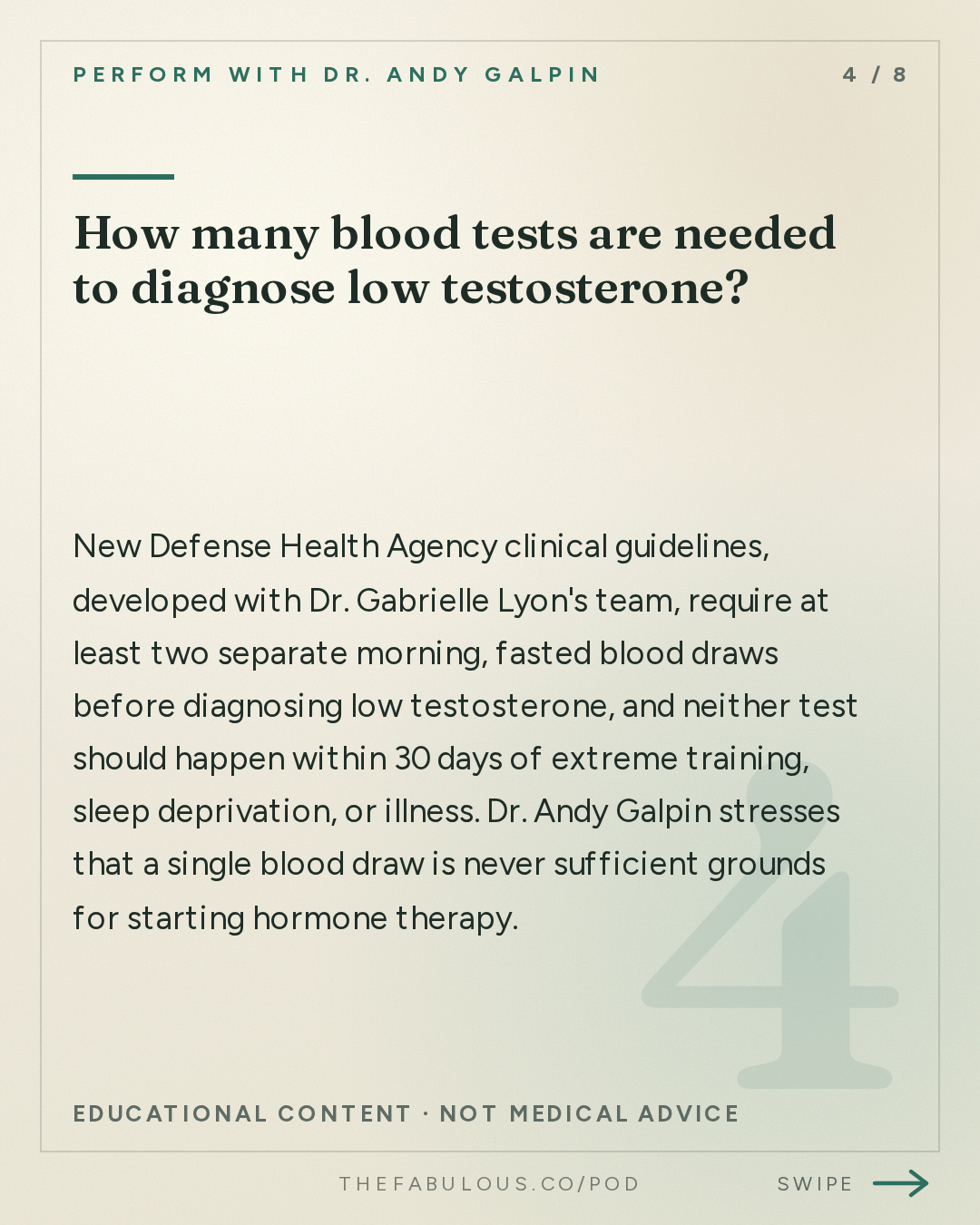
How many blood tests are needed to diagnose low testosterone?
New Defense Health Agency clinical guidelines, developed with Dr. Gabrielle Lyon's team, require at least two separate morning, fasted blood draws before diagnosing low testosterone, and neither test should happen within 30 days of extreme training, sleep deprivation, or illness (48:20, 48:42). Dr. Andy Galpin stresses that a single blood draw is never sufficient grounds for starting hormone therapy (47:00).
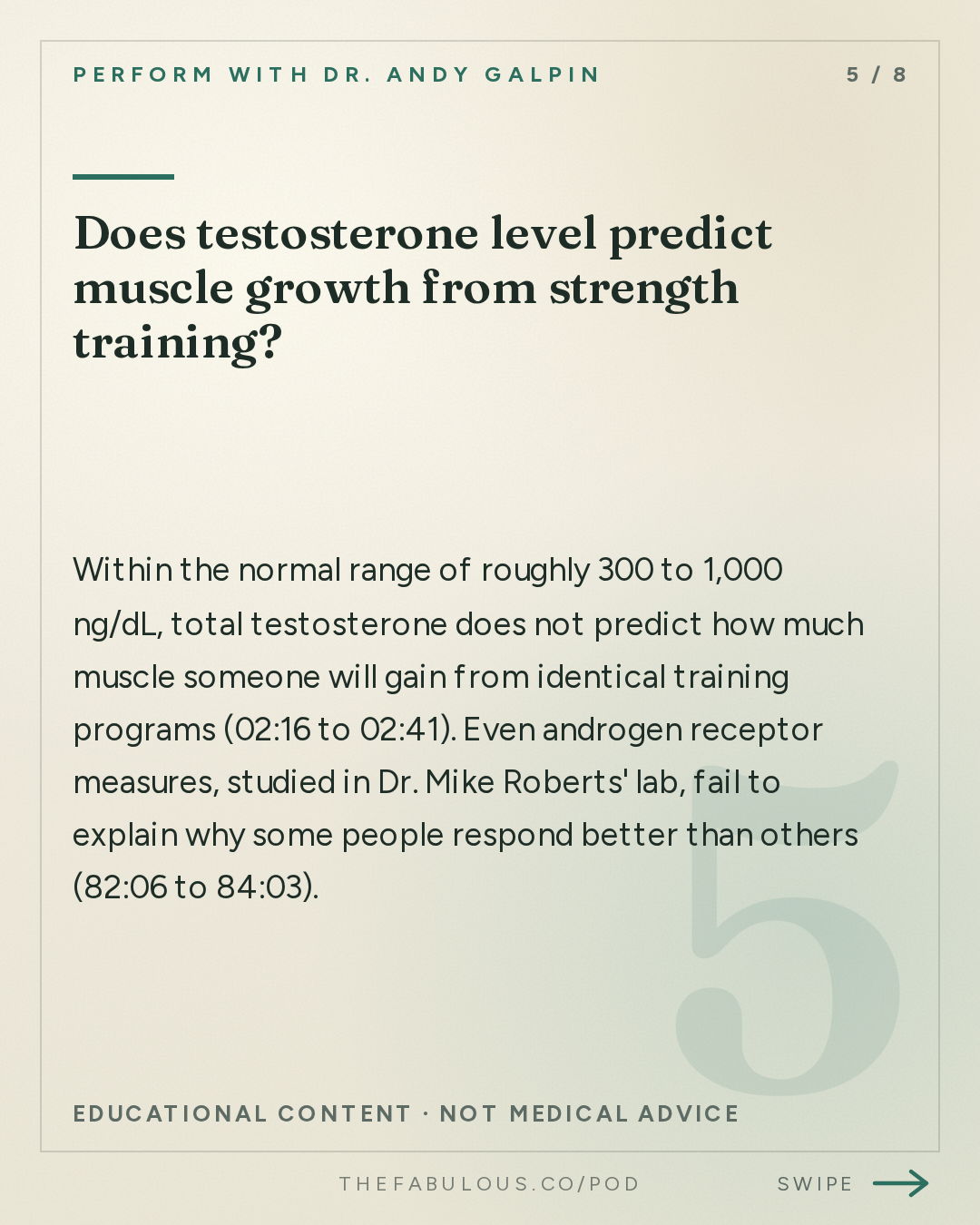
Does testosterone level predict muscle growth from strength training?
Within the normal range of roughly 300 to 1,000 ng/dL, total testosterone does not predict how much muscle someone will gain from identical training programs (02:16 to 02:41). Even androgen receptor measures, studied in Dr. Mike Roberts' lab, fail to explain why some people respond better than others (82:06 to 84:03).
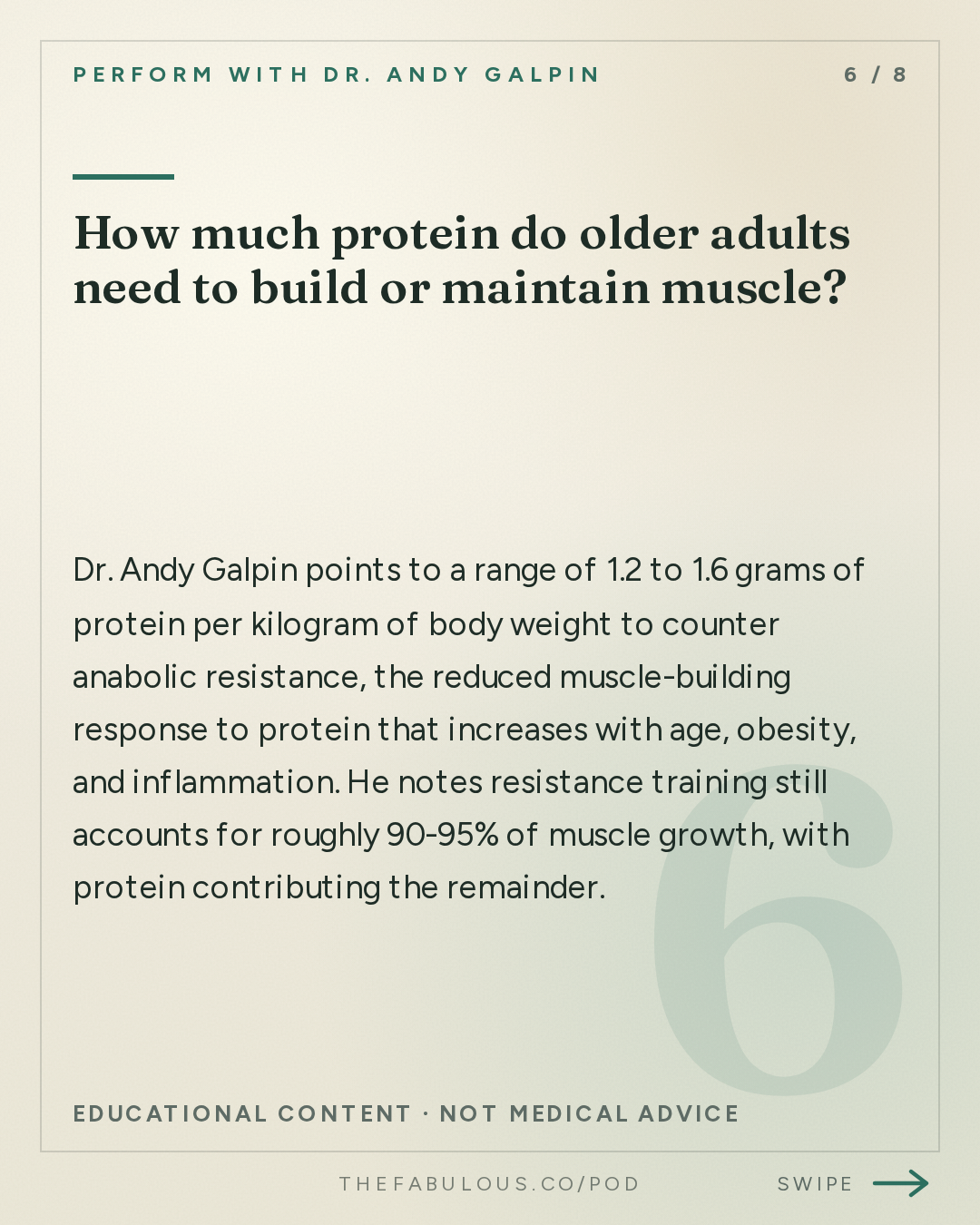
How much protein do older adults need to build or maintain muscle?
Dr. Andy Galpin points to a range of 1.2 to 1.6 grams of protein per kilogram of body weight to counter anabolic resistance, the reduced muscle-building response to protein that increases with age, obesity, and inflammation (85:07, 89:39). He notes resistance training still accounts for roughly 90-95% of muscle growth, with protein contributing the remainder (94:17).
The full read, in cards
Go deeper
- Dr. Ben House's meta-analysis on testosterone, age, and metabolic health (in peer review) — found testosterone decline is driven by obesity and metabolic dysfunction rather than age itself
- Defense Health Agency clinical practice guidelines for testosterone — new military clinical guidelines recommending earlier screening, two-test diagnosis, and hematocrit monitoring
- Federal dietary protein guideline revision — raised recommended protein intake from 0.8 g/kg to 1.2-1.6 g/kg based on body composition research
Mentioned
Dr. Ben House · Dr. Gabrielle Lyon · Dr. Mike Roberts · Dr. Stu Phillips · Defense Health Agency · Endocrine Society
More from this show and category

Testosterone Explained: Low T, TRT, and Muscle Myths
Low testosterone is usually a symptom, not the disease itself: obesity, poor sleep, extreme dieting, or a blocked vein cause most cases, not age alone (76:08, 95:06). Two PhDs argue for finding the cause before reaching for a syringe, and for treating any hormone therapy with real informed consent.

Dr. John Rusin's 6-Phase Dynamic Warmup Explained
Physical therapist and performance coach Dr. John Rusin lays out a diagnostic and warmup system for training around chronic pain without surgery or years off. His six-phase, 10 to 12 minute daily sequence (24:02) turns soft tissue work, stretching, and activation drills into deliberate, measurable steps rather than vague pre-workout ritual.
Dan Garner on Blood Work and Fitness Constraints
Dan Garner explains how blood work reveals the biological constraints, like low testosterone or vitamin D, that block fitness progress, and why lab noise often makes a rising or falling number meaningless. He also covers hypertrophy training splits, diet breaks, and why peptides like SS-31 sound impressive but lack real performance data.

Andy Galpin's Nutrition and Hydration Fundamentals
Andy Galpin argues nutrition science mostly agrees: eat whole foods, manage calories, hit protein and fiber targets, and hydrate by formula. The rest, like meal timing or keto versus low-fat, is personal preference layered on the same ten to fifteen fundamentals (03:50, 11:48, 32:37).
