
Whoop CEO Will Ahmed on Health Data and HRV
WHOOP CEO, Will Ahmed: 50B Hours of Health Data, a 4 Million Member Data Moat, & the FDA Fight
The brief
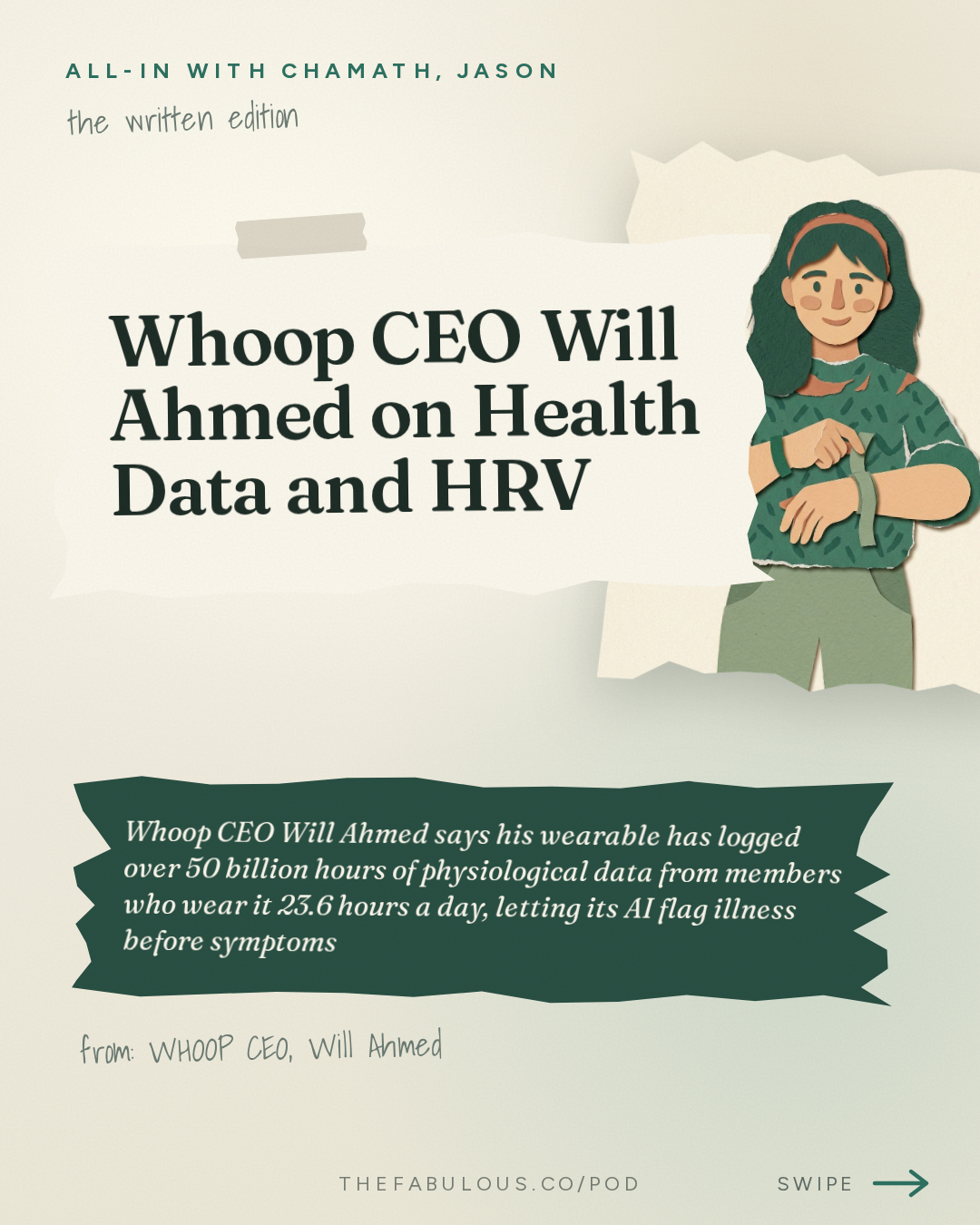
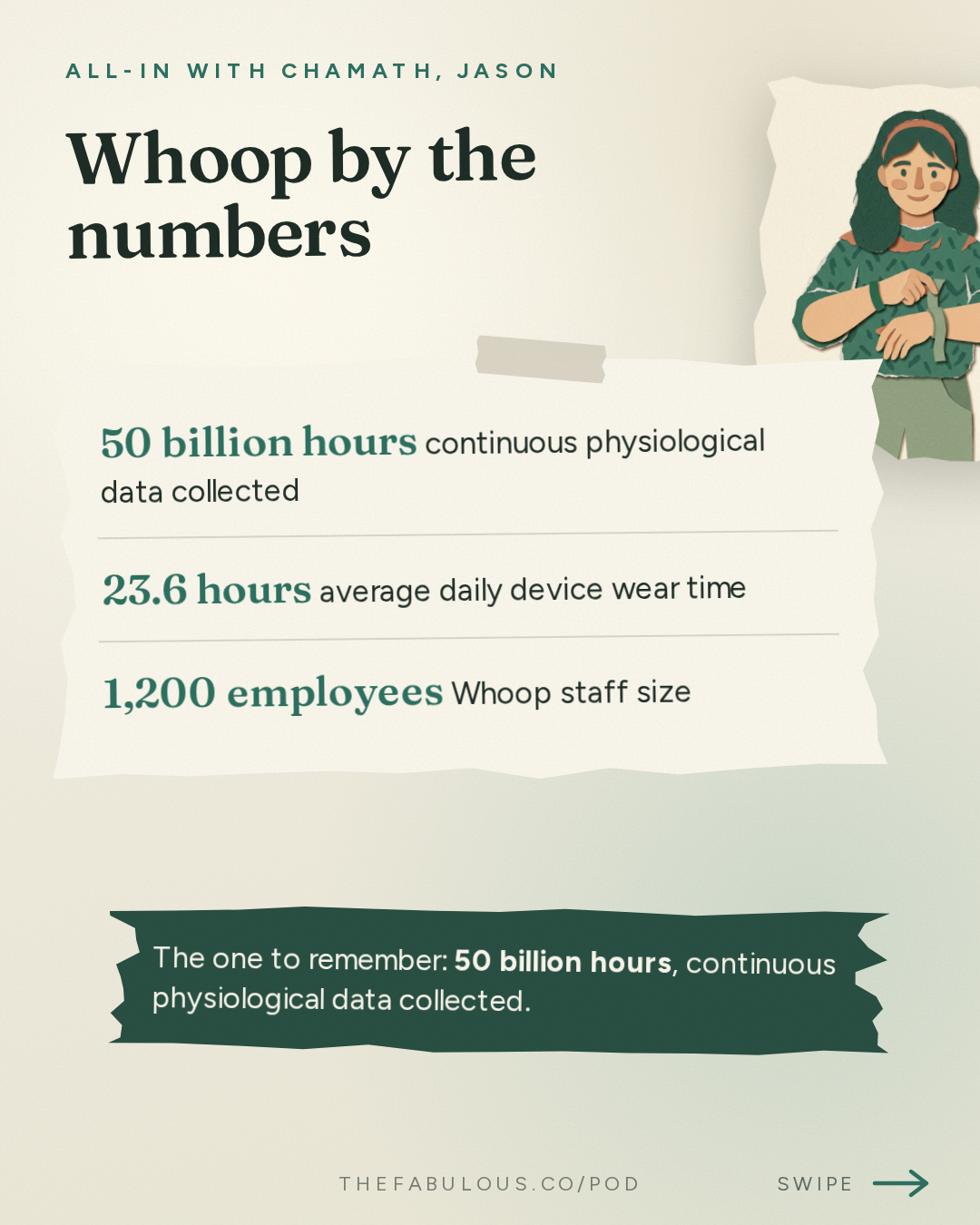
Whoop CEO Will Ahmed says his wearable has logged over 50 billion hours of physiological data from members who wear it 23.6 hours a day, letting its AI flag illness before symptoms, fueling a fight with the FDA over whether blood pressure tracking counts as wellness or medicine.
Twice in one week, a man's wrist told him something was wrong before his body did. His breathing rate crept up by two counts a minute. His skin ran two degrees hotter. Nothing hurt yet. By the following Sunday night he was in chest pain, driving himself to an Austin emergency room at one in the morning. Tests found lung inflammation pressing on his heart, not a heart attack, but a warning his device had already sounded two days earlier (10:17). The man was Jason Calacanis, co-host of the podcast All-In, and the device was Whoop, a screenless fitness band worn by the guest he was interviewing: founder and CEO Will Ahmed.
Ahmed started building Whoop in 2012 as a Harvard student fascinated by one obscure measurement: heart rate variability, or HRV, the tiny gaps in time between heartbeats. Back then nobody could track it around the clock. Fourteen years later, Whoop has collected more than 50 billion hours of continuous physiological data (00:00) from a membership Ahmed expects to hit 4 million by the end of the year (02:25). It took twelve years to sign the first million members, then eighteen months for the second, then six months for the third (02:14). Scale, in this business, came late and then all at once.
From a Five Hundred Dollar Gadget to a Dollar a Day
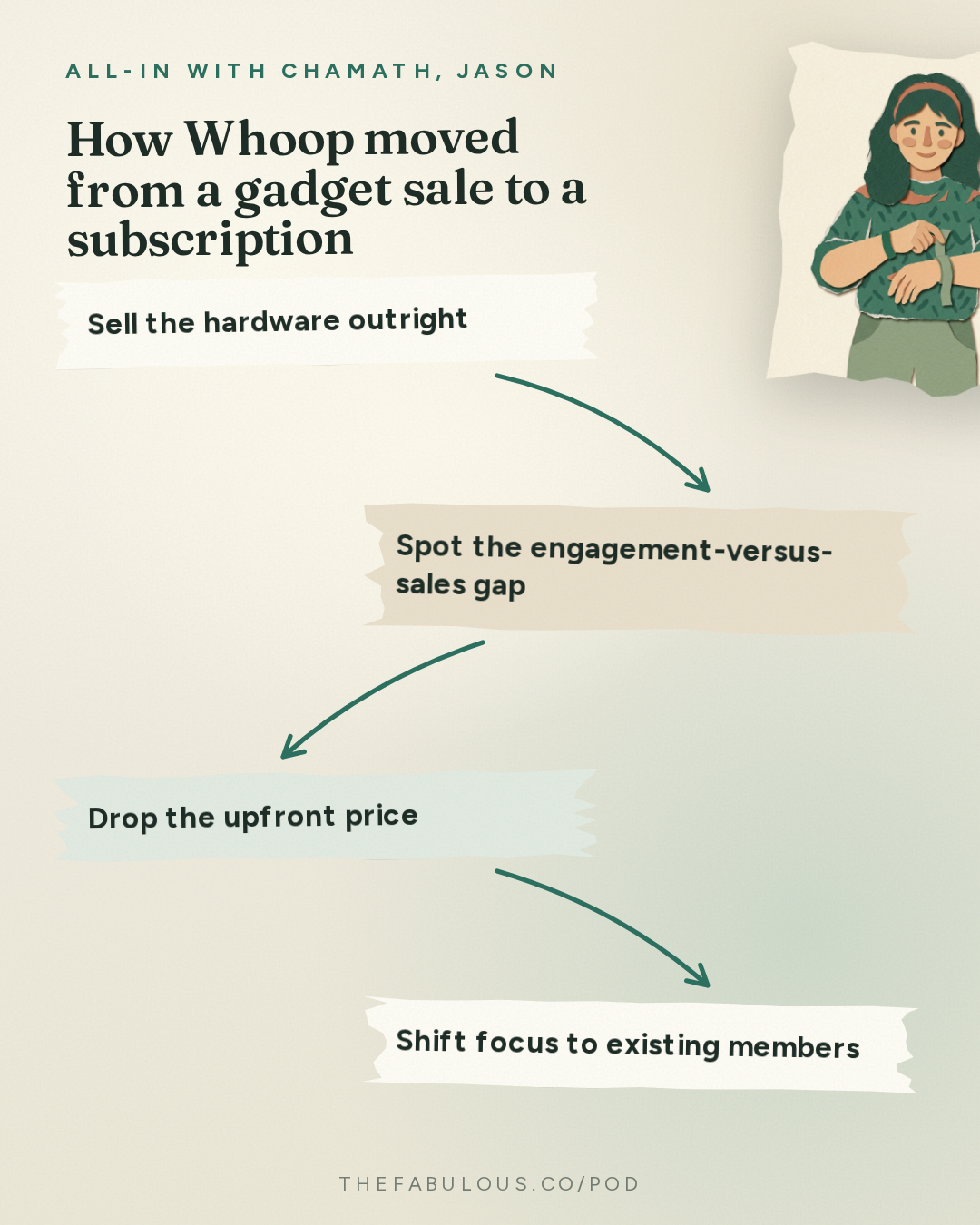
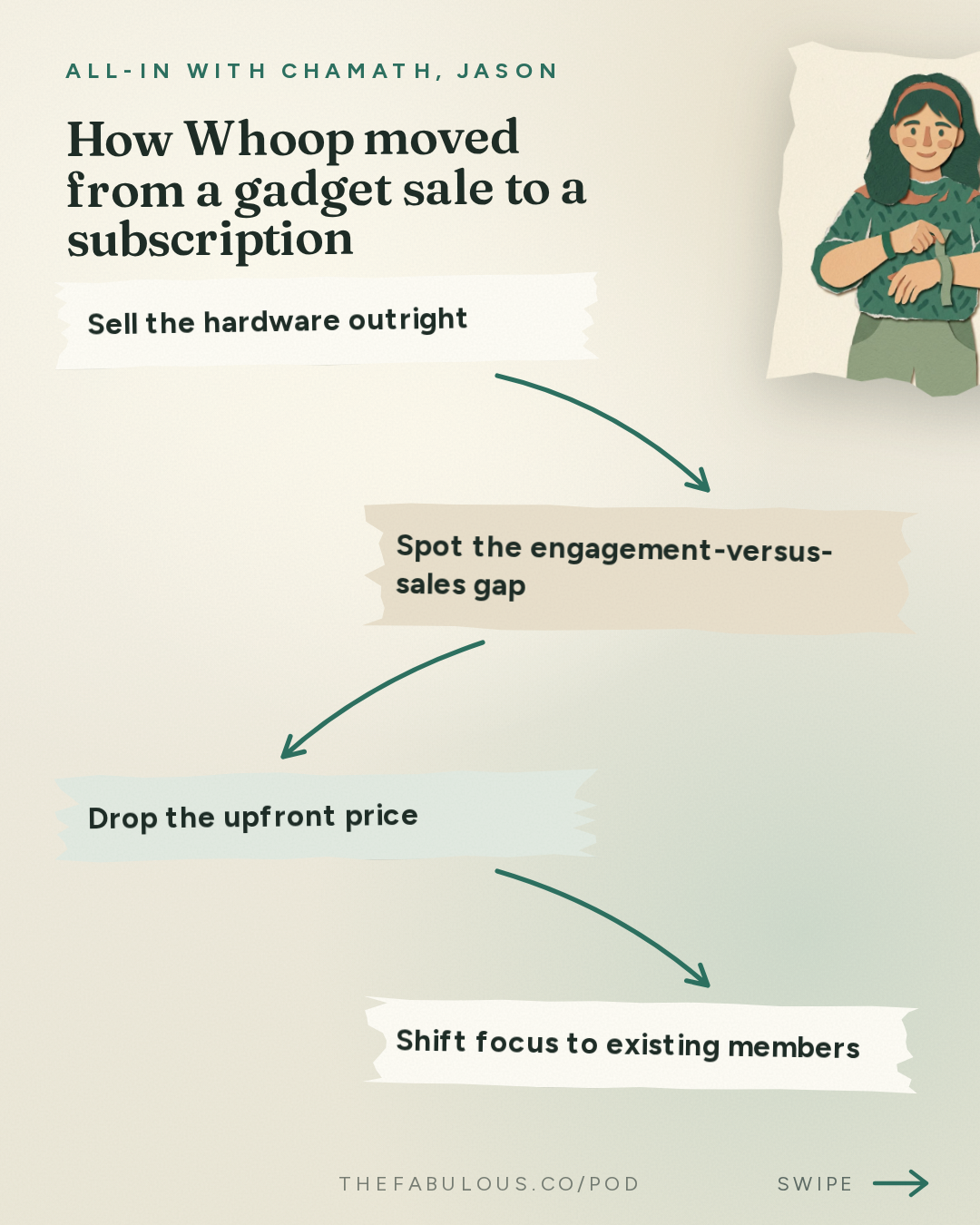
Whoop did not start as a subscription. In 2017 it sold the band outright for 500 dollars, a one time hardware purchase aimed at elite athletes. Ahmed's team noticed something odd: people who bought it wore it constantly, but not enough people were buying it (03:36). So the company tore up its own business model, dropped the upfront price, and moved to a membership of 15 to 30 dollars a month (02:37). The shift did more than change the price tag.
"When you're a subscription business, you become really obsessed with your existing members, arguably more so even than new members." — Will Ahmed [04:45]
That obsession reorders incentives. A hardware company needs a reason to sell someone a new gadget every year, whether or not the gadget is actually better. A subscription company needs the old gadget to keep getting smarter through software, because the same device has to earn its monthly fee for years. Whoop's answer has been to keep stacking features onto bands already on people's wrists: an ECG sensor cleared by the FDA, blood pressure estimates, a longevity score Whoop calls Healthspan, and an AI coach members can ask questions.
The three numbers most members check every morning are sleep, recovery, and strain (07:18), but the one Ahmed considers the deepest signal is HRV. Counterintuitively, more variability between heartbeats means a healthier, more adaptable body.
"The more variability in time between successive beats of the heart, the healthier your overall system is operating." — Will Ahmed [14:41]
HRV tends to fall with age: people in their twenties often sit between 80 and 100, a number that drifts to around 70 in the thirties, 50 in the forties, and down into the thirties or lower by the fifties and sixties (16:28). Holding that number flat over years, Ahmed argues, is itself a sign of good health, which is why Whoop treats HRV less as a snapshot than as a trend line worth defending (16:49).
The company's more startling claims involve catching illness before a person feels sick. Whoop flagged Calacanis's chest inflammation through a two breath jump in respiratory rate, normally one of the most boring, stable numbers the body produces (10:38). Ahmed described other cases: a member whose resting heart rate spiked to 120 or 130 beats per minute overnight turned out to have stage four Hodgkin lymphoma (13:39), and another whose steady HRV around 100 suddenly dropped to 50 turned out to have testicular cancer (16:49). None of these are diagnoses. They are anomalies that sent people to a doctor sooner than they otherwise would have gone. Ahmed's longer bet is that Whoop's data set, now including uploaded blood tests and medical records alongside the physiological stream, can eventually spot a hidden lab abnormality without a lab test at all.
"Through physiological signals, we might be able to predict that a biomarker is out of range without actually measuring the biomarker itself." — Will Ahmed [20:25]
Roughly half of Whoop's members fill out a daily journal logging alcohol, meditation, meal timing, and more than a hundred other habits (23:40), which the app then correlates against recovery scores. Calacanis, checking his own data live, found a warm bath added 7 percent to his recovery (26:44), while Ahmed noted alcohol cost him 9 percent. The company's blunter population level finding: eating within three hours of bedtime hurts sleep and recovery across virtually everyone, because the body is still digesting during the first hours it should be resting (28:05).
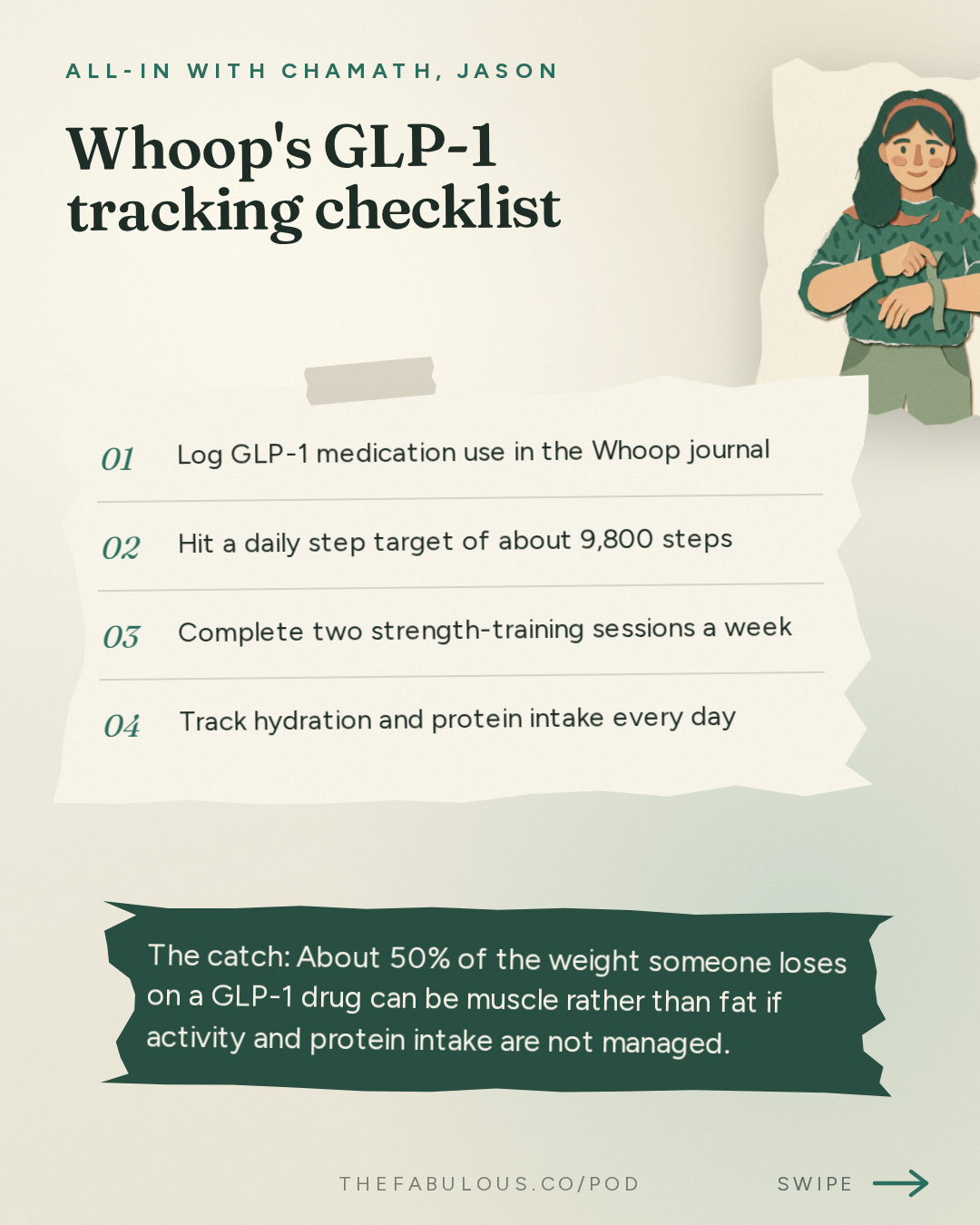
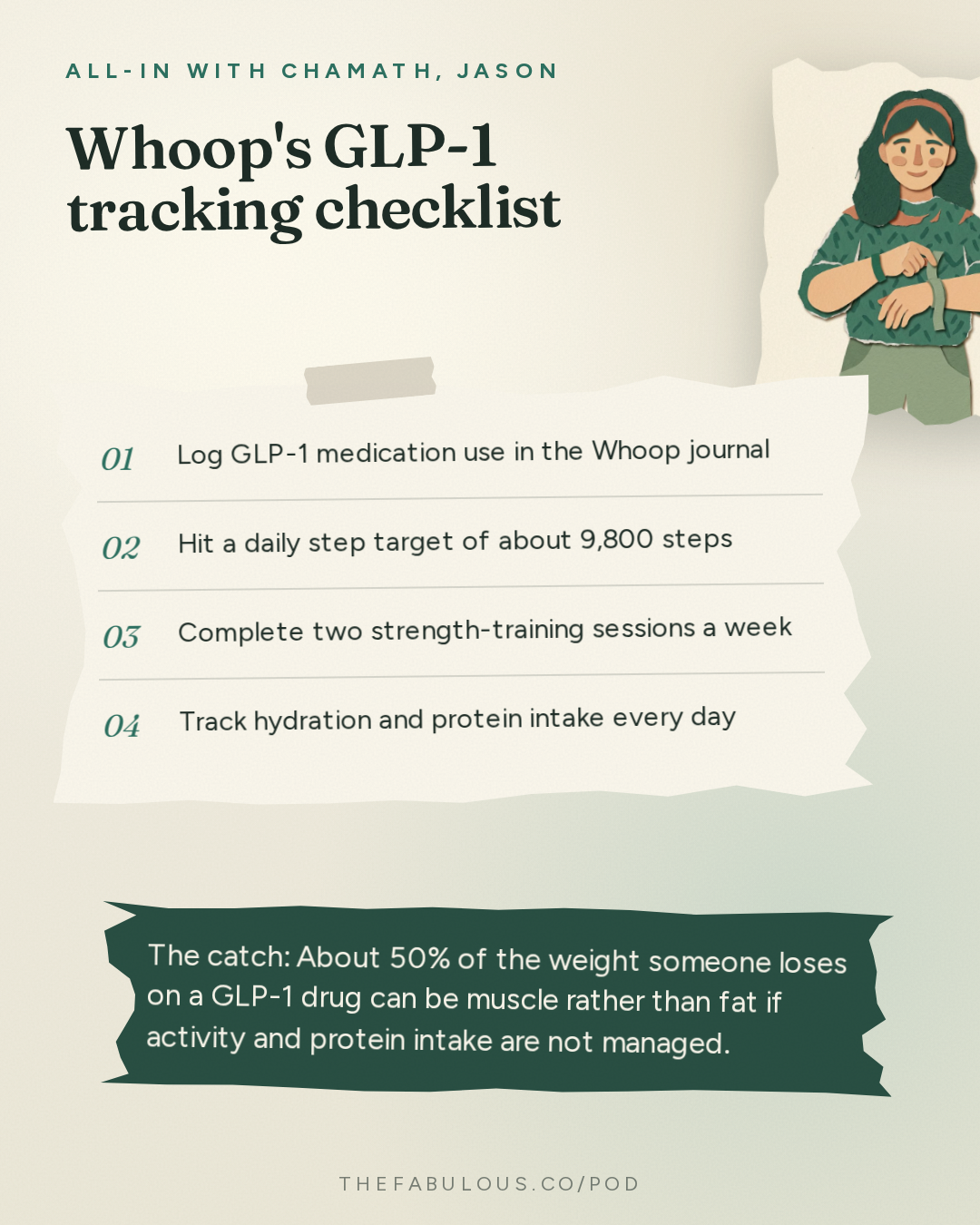
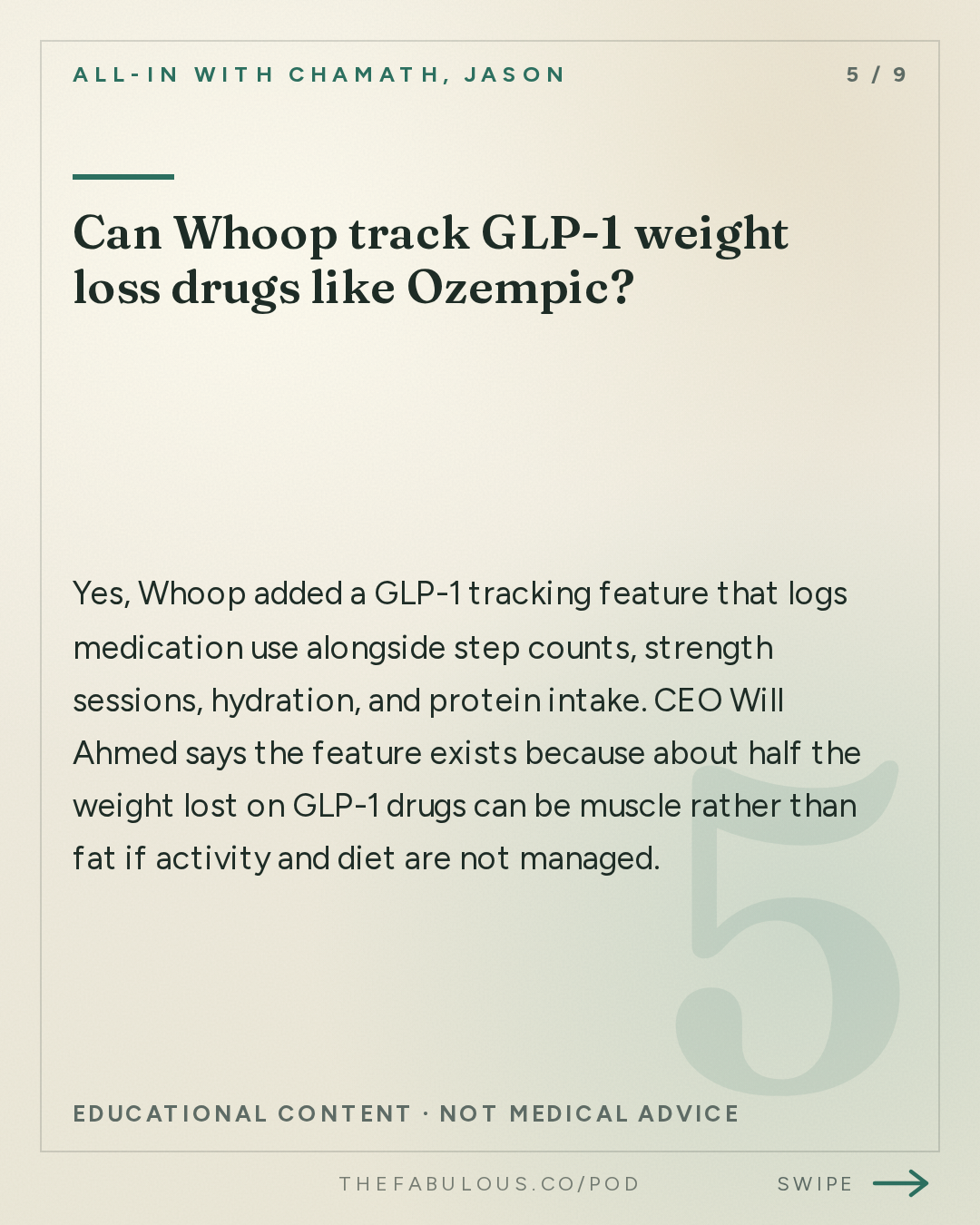
That same journal now tracks GLP-1 weight loss drugs, a feature Whoop added as the medications went mainstream. Ahmed's concern is specific: about half the weight lost on a GLP-1 can be muscle rather than fat if a person is not careful (33:15), which can leave someone thinner but frailer. Whoop's GLP-1 tracker nudges members toward a daily step target, two strength sessions a week, protein, and hydration, and Ahmed points to anecdotal reports that creatine supplementation helps preserve muscle for people on the drugs (33:35).
The FDA's Line Between Wellness and Medicine
Not every feature gets to ship quietly. Four years ago Whoop set out to measure blood pressure from the wrist, a genuinely hard signal processing problem with no accurate consumer solution on the market. The company recruited 70,000 members into an internal study, collecting daily cuff readings to train an algorithm against its existing physiological data (37:33). When Whoop launched the resulting Blood Pressure Insights feature as a wellness tool rather than a medical one, the FDA disagreed and sent a warning letter, arguing blood pressure monitoring had to be regulated as a medical device regardless of intent (39:46). Whoop kept the feature live through the dispute, and the FDA has since updated its guidance to allow wellness applications for blood pressure, a shift Ahmed credits partly to the case (40:06). The company separately holds FDA medical clearance for its ECG feature, which it treats as a genuinely different regulatory category (40:58).
Underneath the regulatory fight is a business model argument Ahmed is happy to make explicit, especially against bigger rivals who sell advertising.
"You are not the product, Jason. Like, you're... the membership is the product." — Will Ahmed [42:52]
Whoop does not sell member data, and its revenue comes entirely from subscriptions rather than ads, which Ahmed frames as the reason the company has earned the right to hold so much sensitive health information in the first place (42:30).
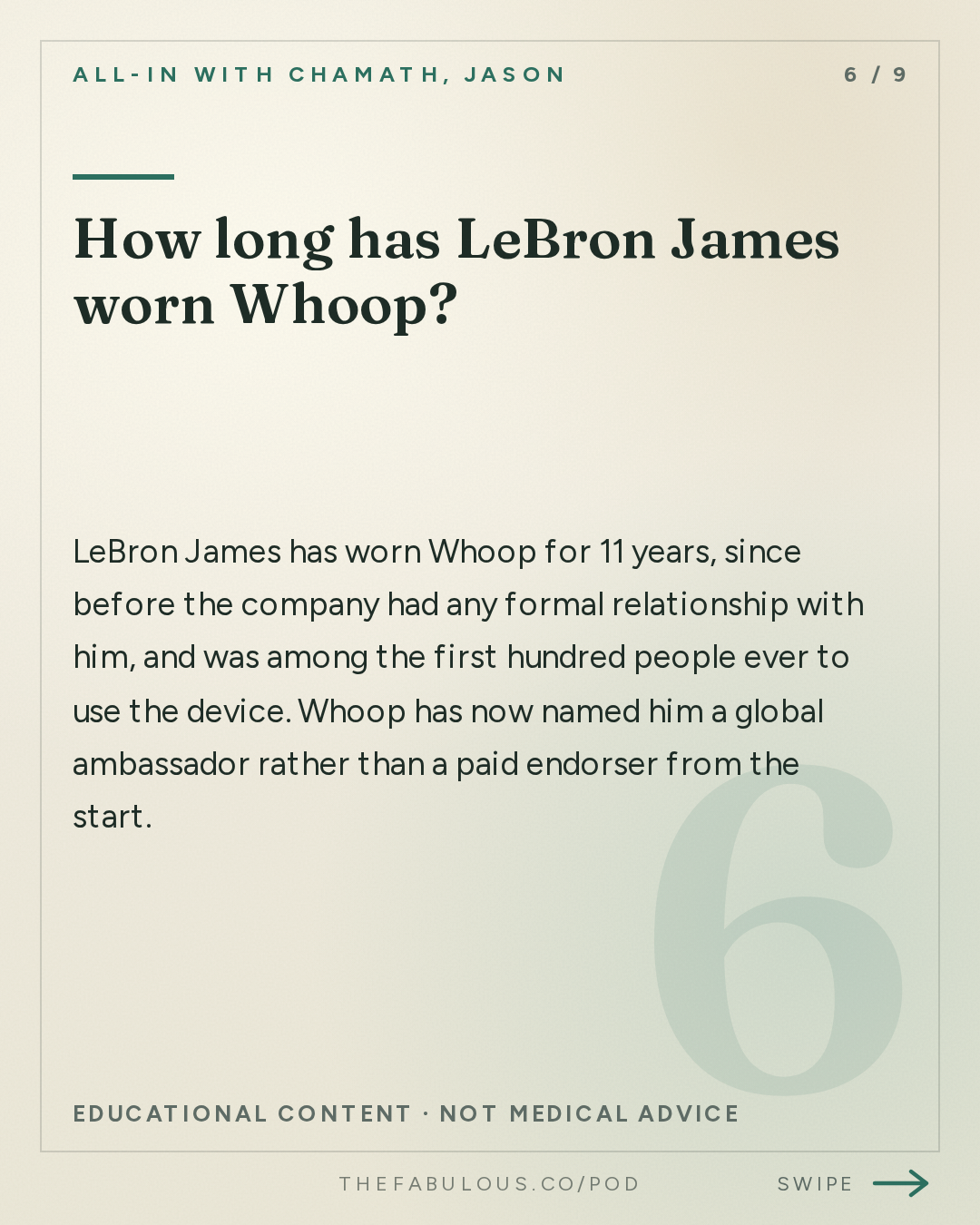
The episode closes on a smaller, stranger kind of proof. LeBron James, the basketball star now with the Philadelphia 76ers, has worn Whoop for 11 years, since before the company had a formal relationship with any athlete at all (47:41). He was one of the first hundred people ever to put one on. Whoop is now naming him a global ambassador, not because it paid him to try the product, but because an all time great kept wearing an unproven gadget from an unknown company for over a decade before anyone asked him to. That is the kind of data point no algorithm generates. It just accumulates, quietly, the same way the 50 billion hours did: one wrist, one night, at a time.
Ask this episode anything
Pod's AI answers from the episode itself, with the minute mark so you can hear it yourself.
Or start with one of these
Ask this episode
Pod's AI listens to the whole episode to answer, and points you to the minute it comes from.
The rest of this answer, and any question after it
Answers come from the episode itself, never from a summary of it.
ContinueKey takeaways
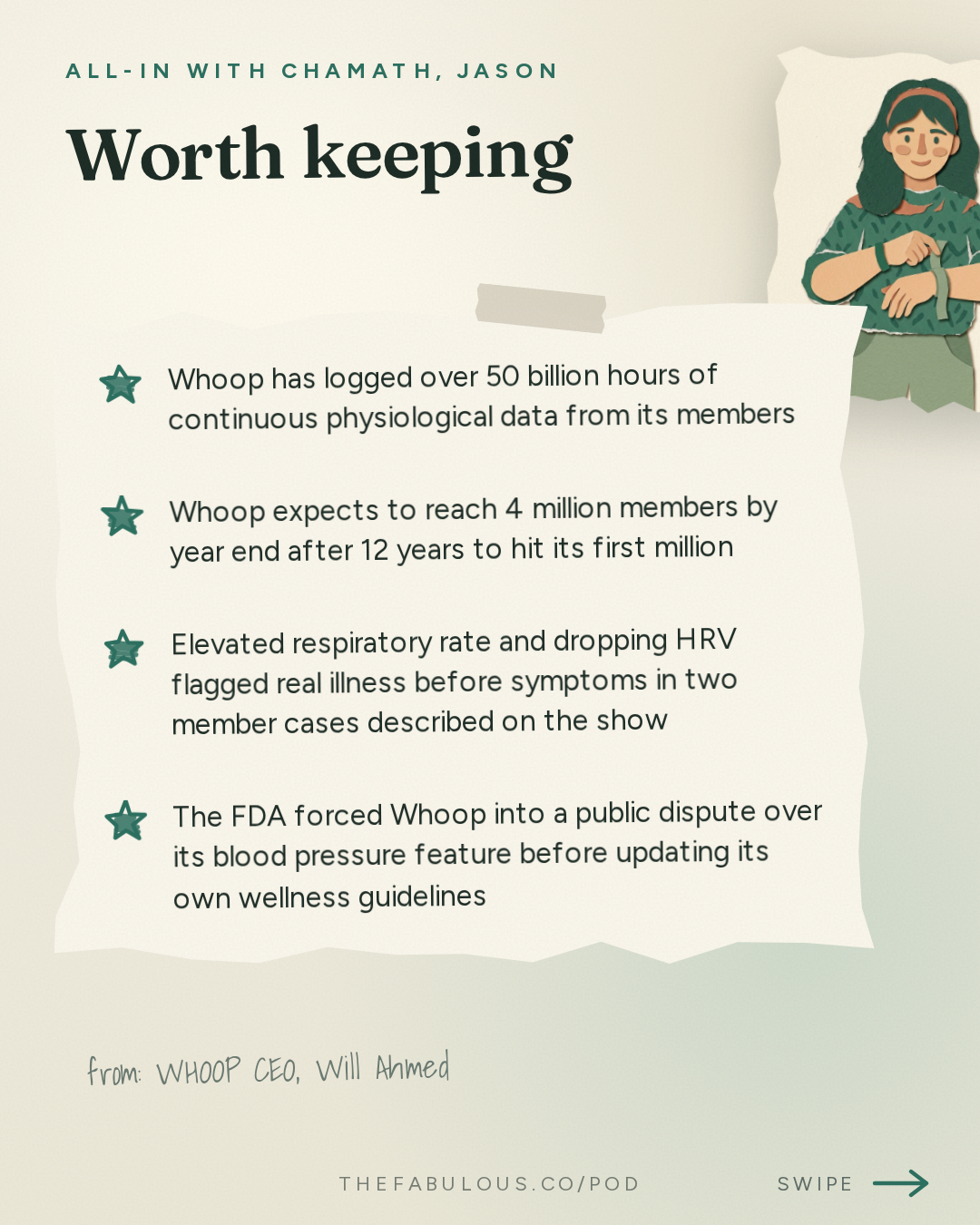
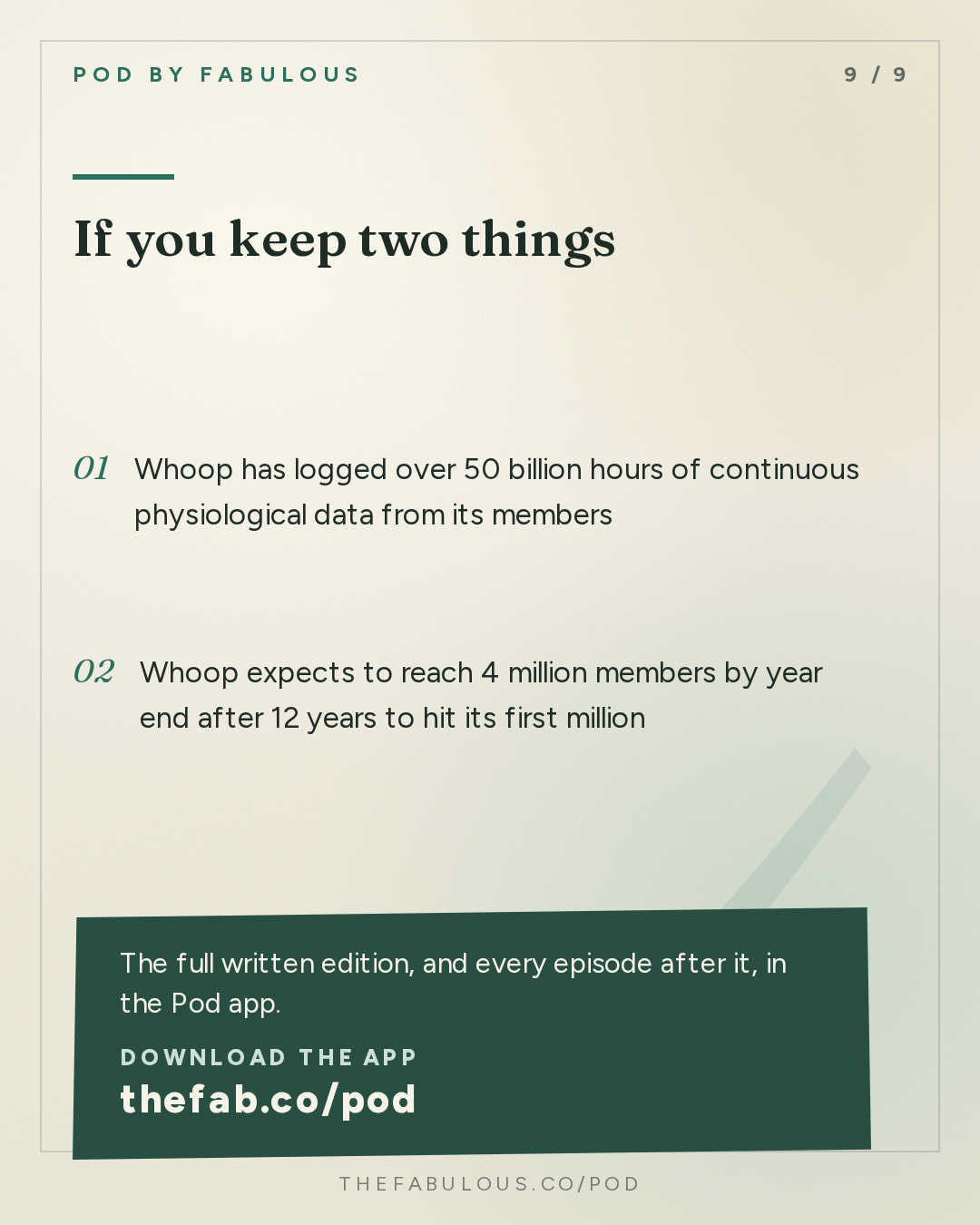
- Whoop has logged over 50 billion hours of continuous physiological data from its members (00:00)
- Whoop expects to reach 4 million members by year end after 12 years to hit its first million (02:25)
- Elevated respiratory rate and dropping HRV flagged real illness before symptoms in two member cases described on the show (13:39)
- The FDA forced Whoop into a public dispute over its blood pressure feature before updating its own wellness guidelines (39:46)
- About half the weight lost on GLP-1 drugs can be muscle, so Will Ahmed recommends creatine and strength training alongside the medication (33:15)
The episode in cards

By the numbers
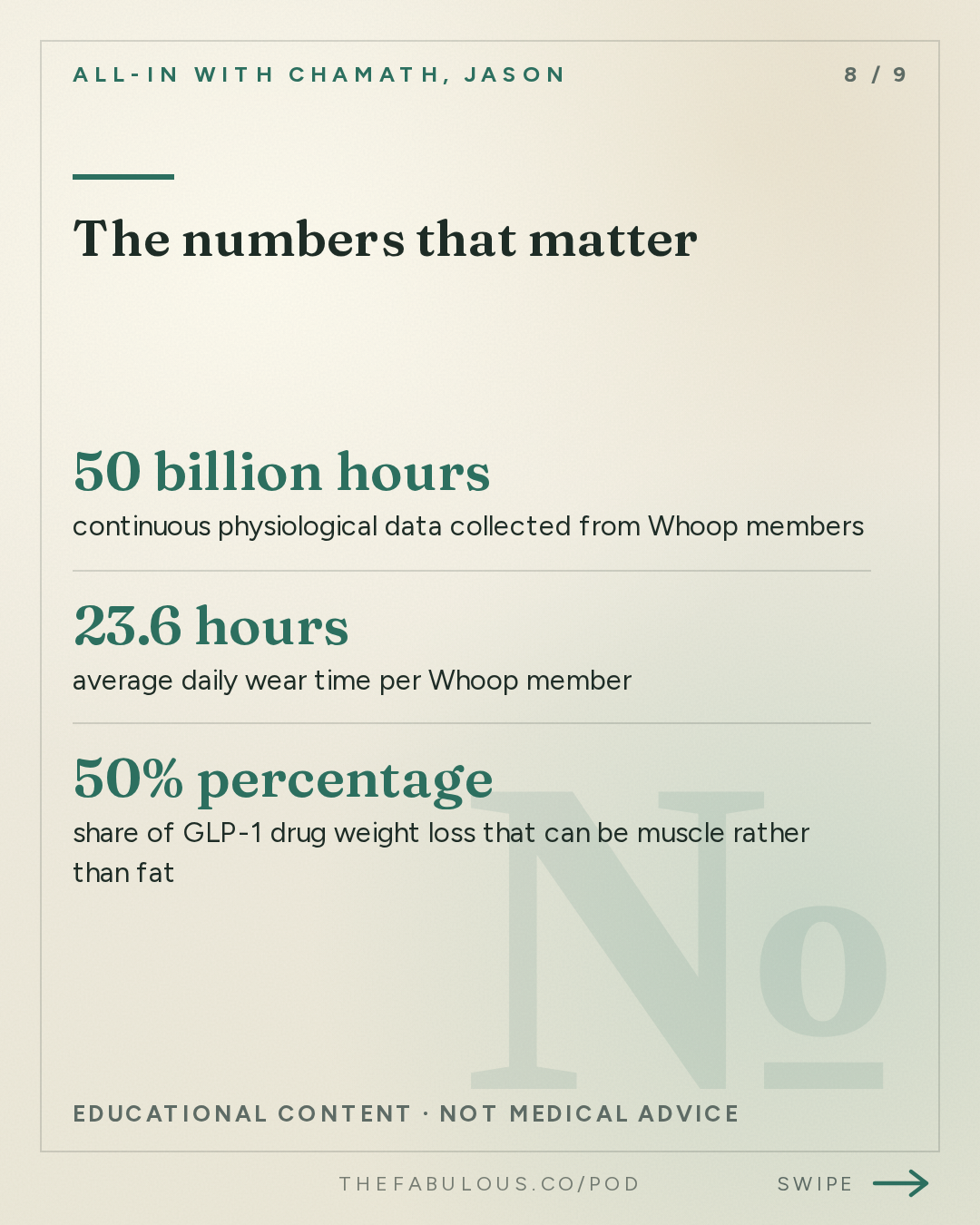
- 50 billion hours continuous physiological data collected from Whoop members
- 23.6 hours average daily wear time per Whoop member
- 50% percentage share of GLP-1 drug weight loss that can be muscle rather than fat
In their words
“Through physiological signals, we might be able to predict that a biomarker is out of range without actually measuring the biomarker itself.”
“The more variability in time between successive beats of the heart, the healthier your overall system is operating.”
“You are not the product, Jason. Like, you're-- the membership is the product.”
“When you're a subscription business, you become really obsessed with, uh, your existing members arguably more so even than new members”
Protocols
-
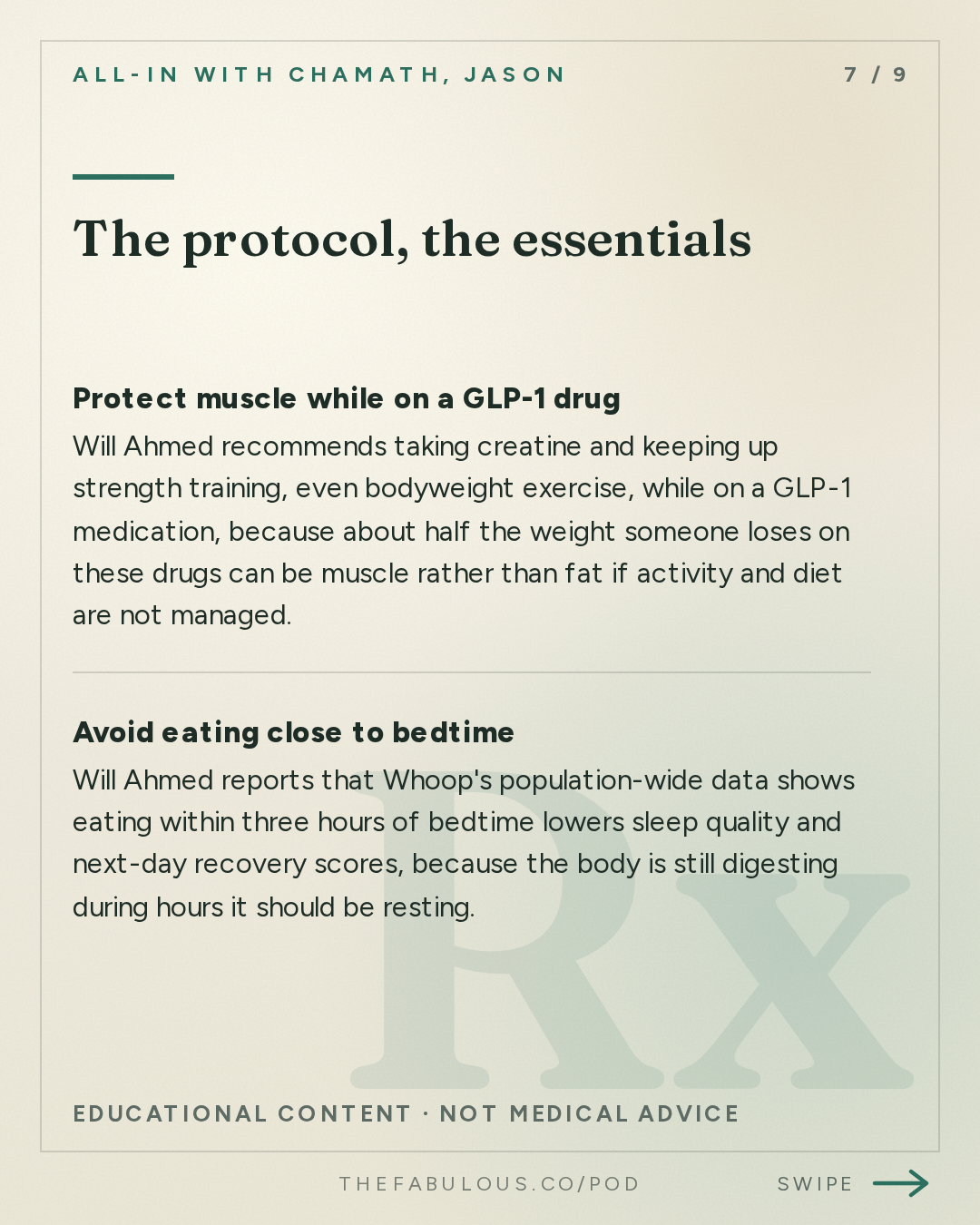
Protect muscle while on a GLP-1 drug
Will Ahmed recommends taking creatine and keeping up strength training, even bodyweight exercise, while on a GLP-1 medication, because about half the weight someone loses on these drugs can be muscle rather than fat if activity and diet are not managed.
Alongside each GLP-1 dose, with at least two strength sessions a week
-
Avoid eating close to bedtime
Will Ahmed reports that Whoop's population-wide data shows eating within three hours of bedtime lowers sleep quality and next-day recovery scores, because the body is still digesting during hours it should be resting.
Every night
-
Favor lifting over steady-state cardio for longevity
Will Ahmed advises that if someone has an hour to exercise, they should spend more of it lifting weights and less on an elliptical, because muscle mass is one of the most important markers of long-term health.
Per workout session
Questions this episode answers
How much data does Whoop have on its members?
Whoop has collected more than 50 billion hours of continuous physiological data from its members (00:00), which CEO Will Ahmed says makes it one of the largest health data sets in the world. The company wears members at an average of 23.6 hours a day, which drives the volume (19:28).
What is HRV and why does it matter for longevity?
HRV, or heart rate variability, measures the variation in time between heartbeats, and higher variability generally reflects a healthier, more balanced nervous system, according to Will Ahmed (14:41). HRV tends to decline with age, often from 80 to 100 in a person's twenties down to the thirties or lower by their fifties and sixties, so keeping it flat over time is considered a sign of good longevity (16:28).
Did the FDA approve Whoop's blood pressure feature?
Whoop launched its blood pressure feature as a wellness tool rather than a regulated medical device, which led the FDA to send a warning letter disputing that classification (39:46). The FDA has since updated its guidance to allow wellness applications for blood pressure monitoring, a change Ahmed says was shaped partly by Whoop's case, and the feature remains available to consumers (40:06).
Can Whoop track GLP-1 weight loss drugs like Ozempic?
Yes, Whoop added a GLP-1 tracking feature that logs medication use alongside step counts, strength sessions, hydration, and protein intake (32:08). CEO Will Ahmed says the feature exists because about half the weight lost on GLP-1 drugs can be muscle rather than fat if activity and diet are not managed (33:15).
How long has LeBron James worn Whoop?
LeBron James has worn Whoop for 11 years, since before the company had any formal relationship with him, and was among the first hundred people ever to use the device (47:41). Whoop has now named him a global ambassador rather than a paid endorser from the start.
The full read, in cards
Go deeper
- Whoop Stress, Sleep, and Blood Pressure Study — an internal Whoop study that enrolled 70,000 members to build a wrist-based blood pressure algorithm without a cuff
- Will Ahmed's HRV research at Harvard — early medical research on heart rate variability that led Ahmed to found Whoop around continuous HRV tracking
Mentioned
Will Ahmed · WHOOP · LeBron James · FDA · Andrew Huberman · Brian Johnson · GLP-1 · HRV · Omron
More from this show and category

Nikesh Arora on the AI Cybersecurity Threat
AI spending is concentrated and circular: 1% of companies generate 90% of AI revenue, mostly unprofitable VC-backed startups (02:25). A PHP coding flaw rated 9.2/10 exposed roughly 70% of the internet's websites (14:29). And France now spends more of its GDP through government than the Soviet Union did at its 1989 peak (52:50).

Dylan Field: Design Is the New Code
Figma CEO Dylan Field argues design, not code, now drives software's value as AI makes coding cheap and commoditized. He explains how Figma survived a blocked $20 billion Adobe acquisition, why AI lowers production's floor without raising creativity's ceiling, and why human willingness to say non-consensus things remains the real differentiator in an AI-saturated market.

CoreWeave Debt Crisis and the AI Bubble, Explained
CoreWeave's bond selloff this week signaled real doubt about AI infrastructure debt, even as demand for GPUs stays red hot. Anthropic posted $16.8 billion in Q3 revenue, Sacks called its warnings about small AI models a move against open-source rivals, and Chamath named electricity as AI's real bottleneck.

Billy Evans on Elizabeth Holmes: Trial, Prison, Hemantis
Billy Evans, Elizabeth Holmes's husband, says the Theranos founder was acquitted on every patient-fraud count tied to 12.5 million blood tests but convicted of defrauding three investors, a conspiracy charge that let the judge add outside victims like Rupert Murdoch and push her sentence to 11.25 years (00:27, 19:52, 21:31).
