
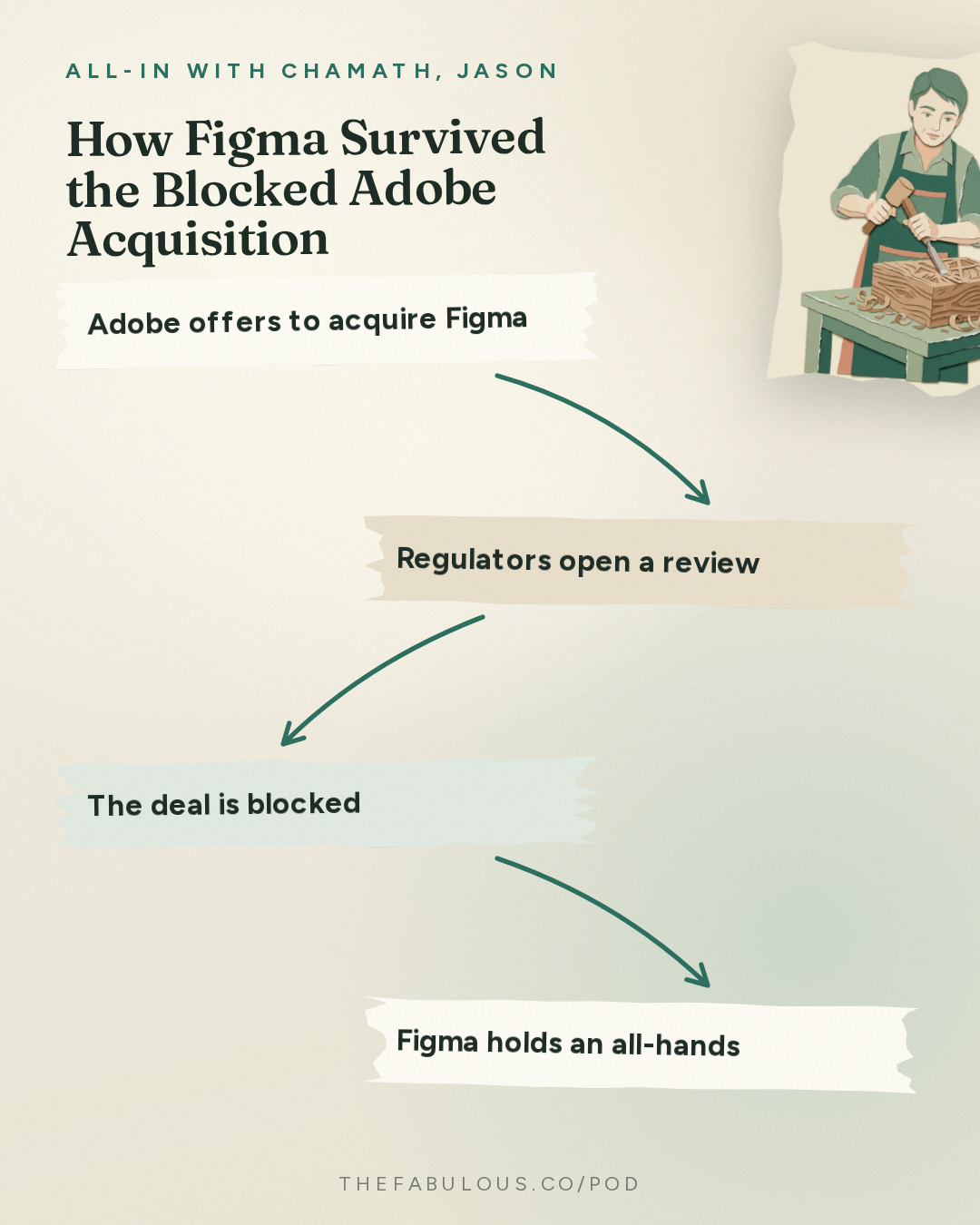
Dylan Field: Design Is the New Code
Dylan Field: Is AI Replacing Designers?, Design is the New Code & Democratizing Creativity
The brief
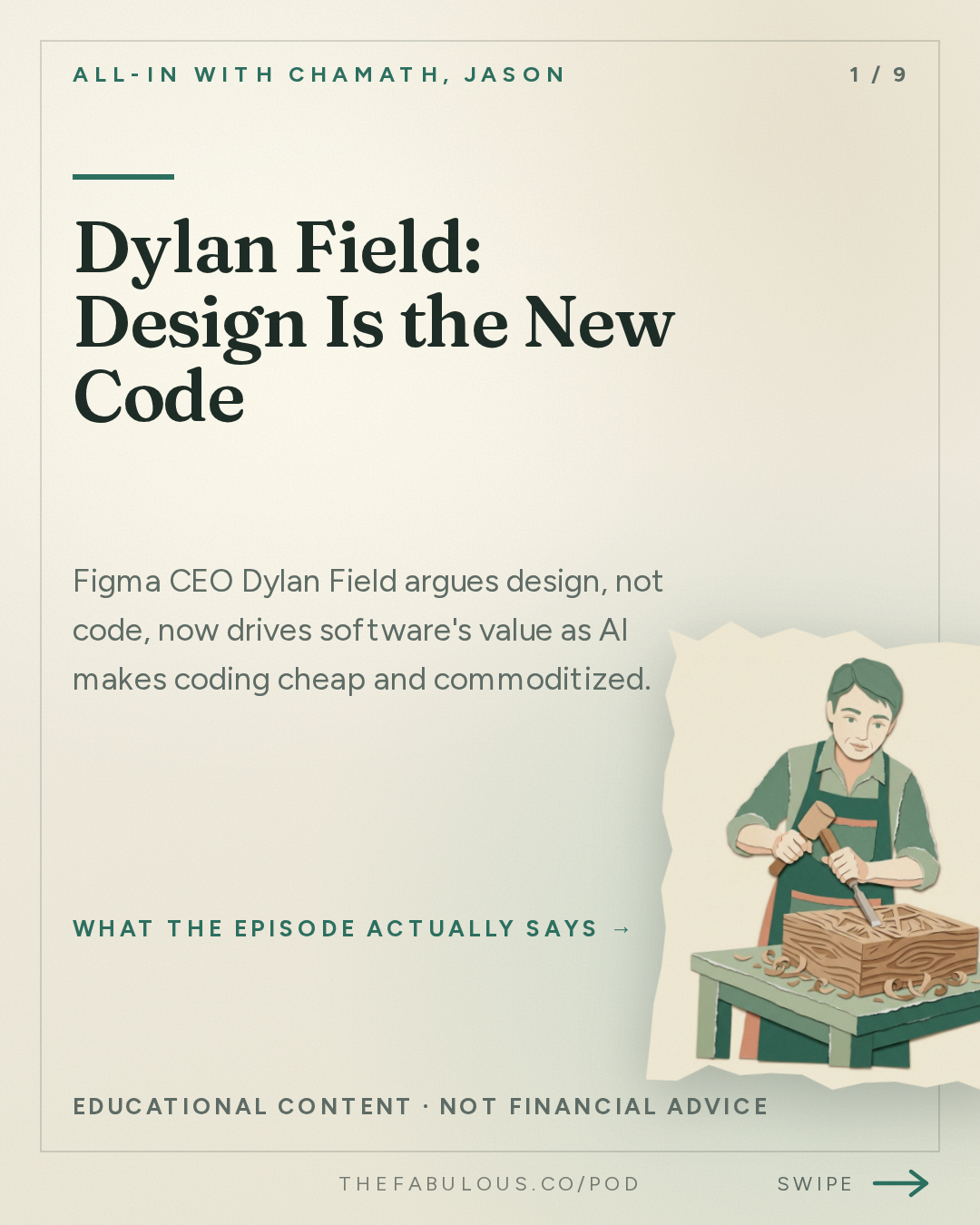
Figma CEO Dylan Field argues design, not code, now drives software's value as AI makes coding cheap and commoditized. He explains how Figma survived a blocked $20 billion Adobe acquisition, why AI lowers production's floor without raising creativity's ceiling, and why human willingness to say non-consensus things remains the real differentiator in an AI-saturated market.
The interview happens on a patio in Yountville, California, a few drinks into the evening, after Dylan Field has already spent the afternoon on another stage talking about the same subject he is about to talk about again. Field runs Figma, the design software company that twelve years ago started as a bet that browsers could handle real creative work. He is relaxed enough to joke about being "three drinks in," but the idea he keeps returning to is not loose at all. It is a clean, almost provocative claim: design is the new code.
What he means is specific. As AI coding tools from companies like OpenAI and Anthropic get better at writing software, the nature of programming is changing, and the value tied to differentiation rises toward the top (01:10). That does not mean engineers disappear, Field is careful to say Figma still needs them. But the layer where value concentrates moves upward, from the mechanics of building something to the feel of it: the brand, the boldness, the emotional reaction a product provokes (01:34). If anyone can generate a working app, the thing that separates a product people love from one they ignore is no longer whether it works. It is whether someone had a point of view.
Figma itself is Field's working definition of that idea. Founded in August 2012, it is not just a tool for professional designers, people use it for slides, whiteboarding, diagramming, almost anything visual (01:52). Field's own gloss on the word "design" is disarmingly simple: "creativity meets problem-solving" (03:03). That phrase matters later, because it is the hinge on which his whole argument about AI turns: creativity and problem-solving are not the same skill, and AI is reshaping only one of them.
A Company Learns to Wait
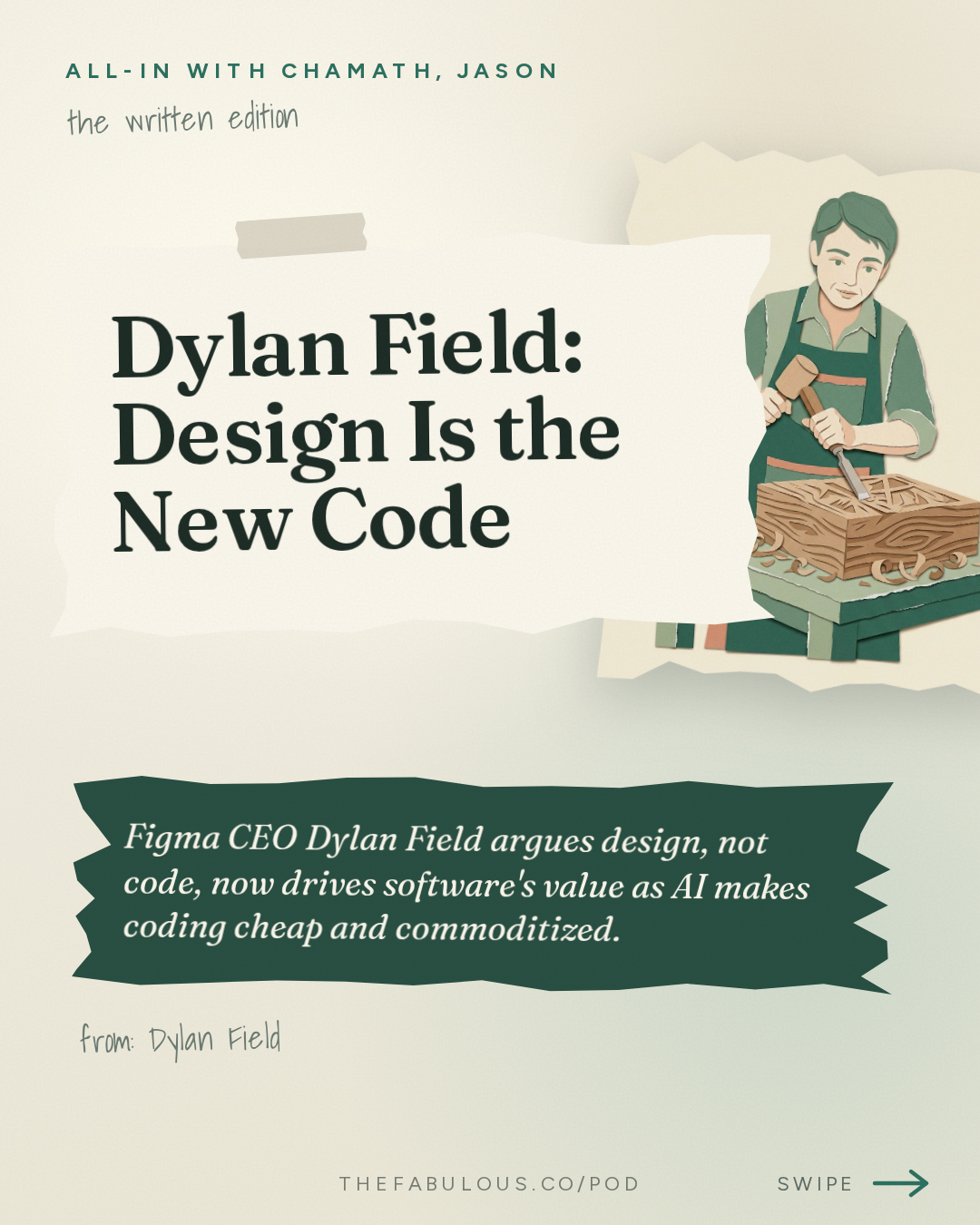
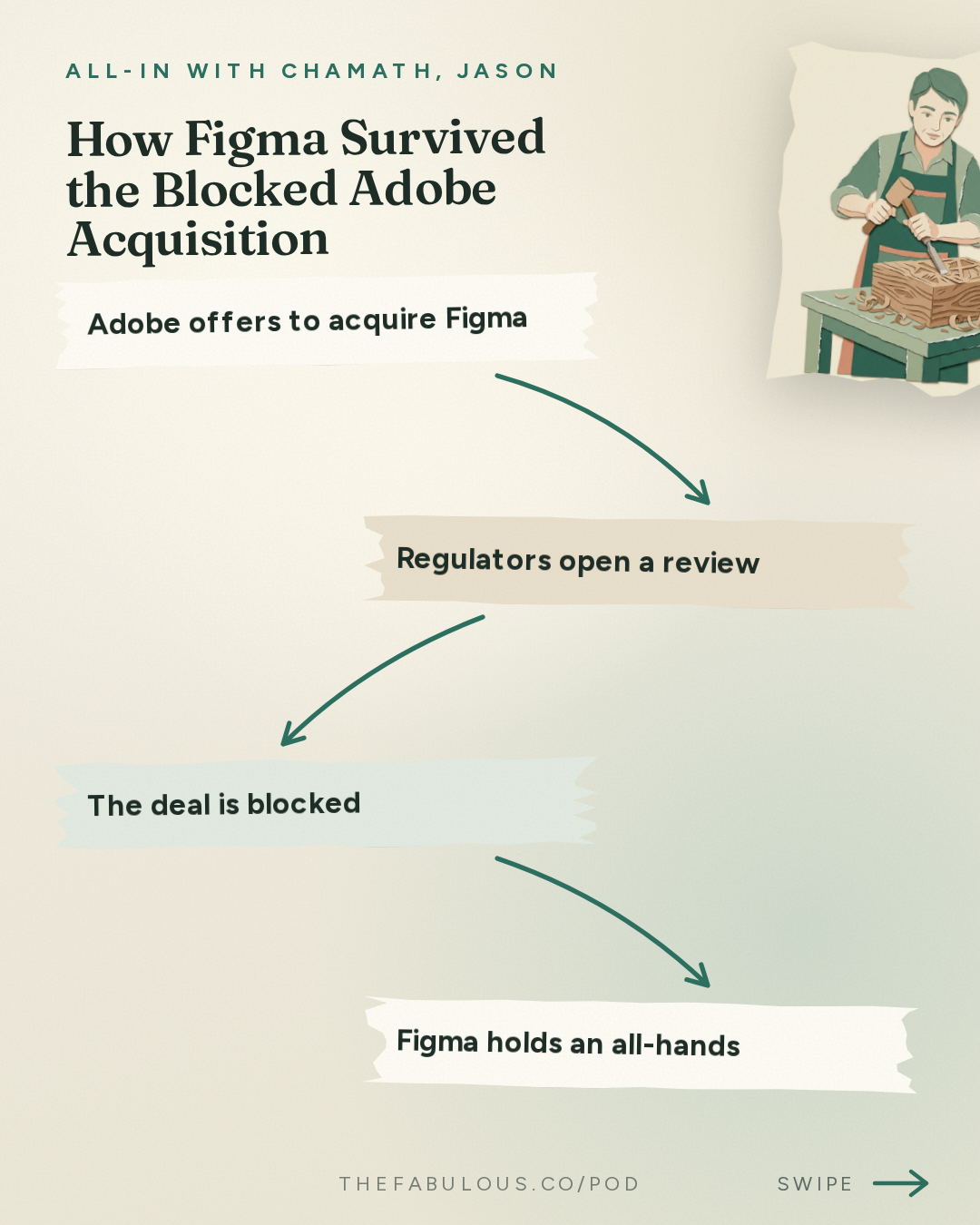
Before any of that, though, there is a story about waiting. A few years back, Adobe offered to buy Figma for $20 billion, a deal large enough to be one of the biggest acquisitions in software history (03:20). Figma said yes. Then, in Field's words, "various world governments decided that they didn't like it." Regulators in the United States, the European Union, and the UK's Competition and Markets Authority opened reviews. Antitrust law, the set of rules meant to stop mergers that reduce competition, is built for a narrower, slower-moving idea of markets than the one Field says he was actually operating in. His argument, half business logic and half grievance, is that regulators defined the market by looking backward at design software history instead of forward at a market that was really "AI," vast and still forming (09:05).
The review dragged on for sixteen months before the deal was blocked (08:24). Field does not hide how brutal that stretch was for a company of roughly 1,100 to 1,200 employees who had been told they were about to join Adobe.
"16 months of regulatory review for any company is punishing." — Dylan Field [08:24]
He reaches for an odd but pointed comparison: the robot vacuum maker Roomba, whose acquisition by Amazon regulators also blocked, supposedly to protect competition, after which Roomba went bankrupt and the market went largely to Chinese manufacturers (08:24, 08:45). His point is not subtle: idealism aimed at a specific company can hand the whole category to someone else entirely.
The all-hands meeting where Field told Figma's staff the deal was dead happened, almost comically, on the first day of the company's winter break (09:53). What struck him was not disappointment but relief, not relief at avoiding Adobe specifically, but relief at the ambiguity finally ending (10:17). He then made an offer: anyone who had joined expecting to work at Adobe, or who was simply tired, could leave with several months of pay and no hard feelings, with one condition, a six-month wait before they could reapply for a job at Figma (11:18). Few people took it. The company kept building, went public, and later posted 48 percent year-over-year growth, an acceleration that came, notably, right after Anthropic's Claude Design product launched and online commentary briefly declared Figma finished (14:07).
The Floor and the Ceiling
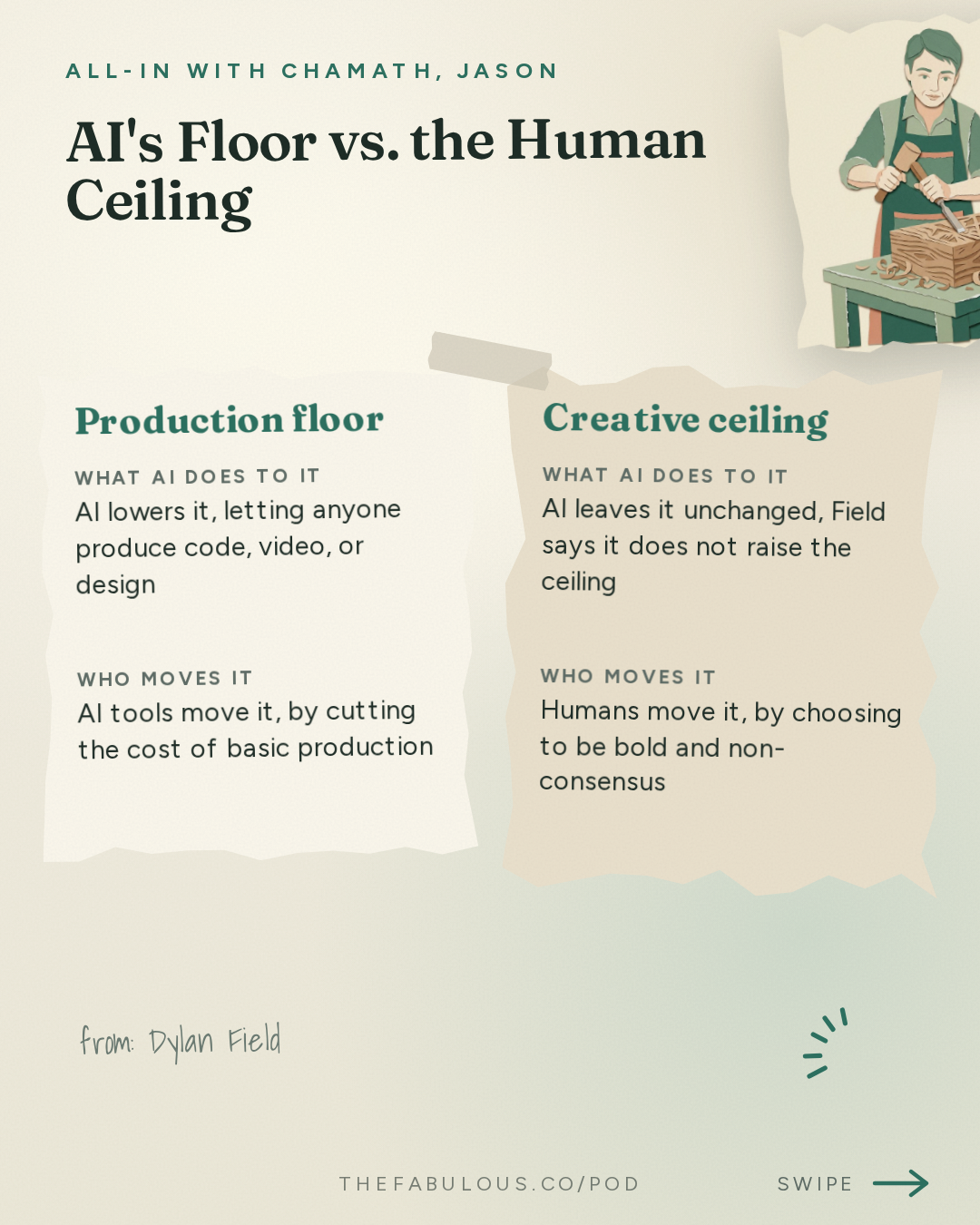
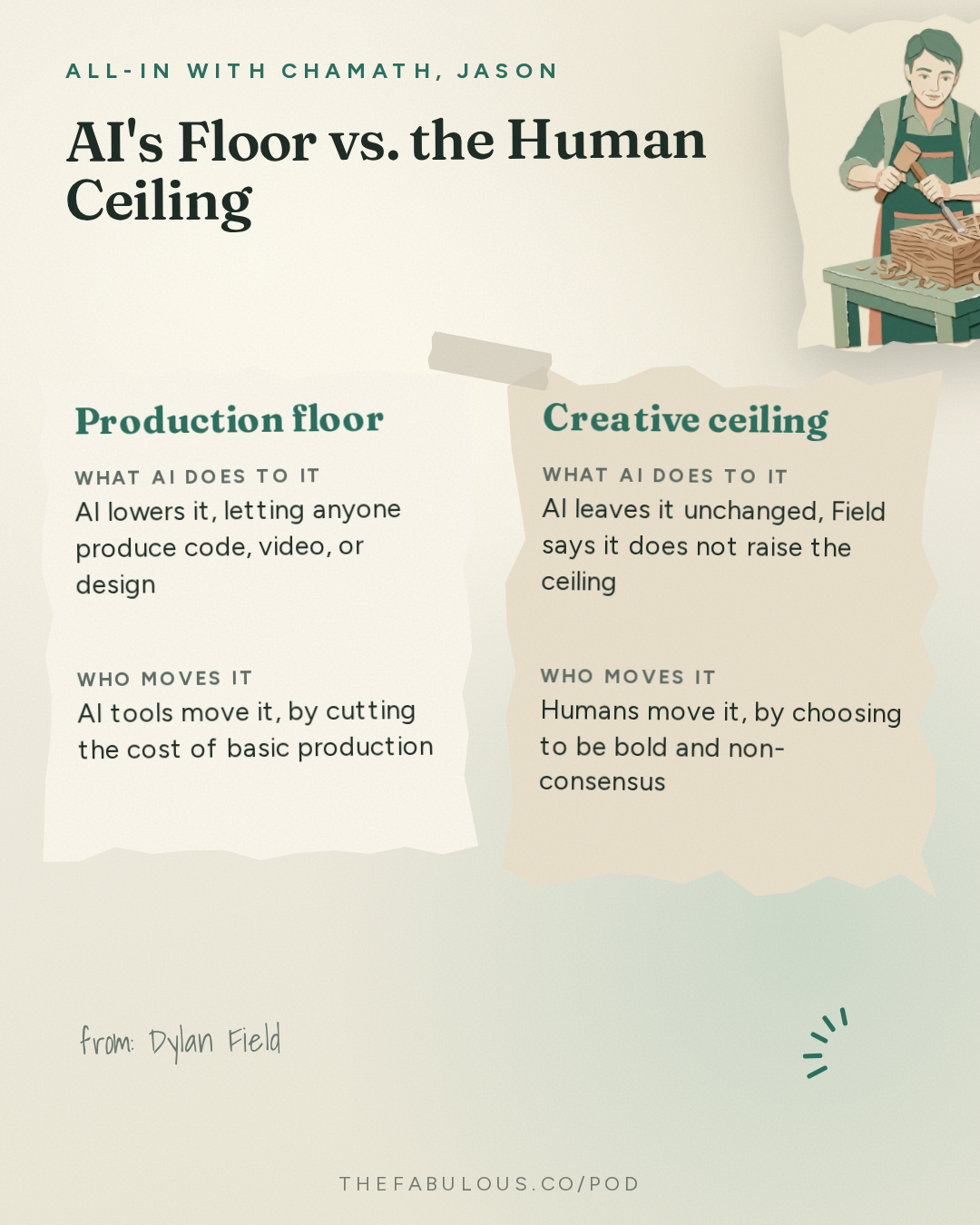
That episode sets up Field's larger argument about what AI is actually doing to creative work. A few years ago, at Figma's own user conference, he predicted that AI would raise the ceiling of what people could make. He now says he was wrong.
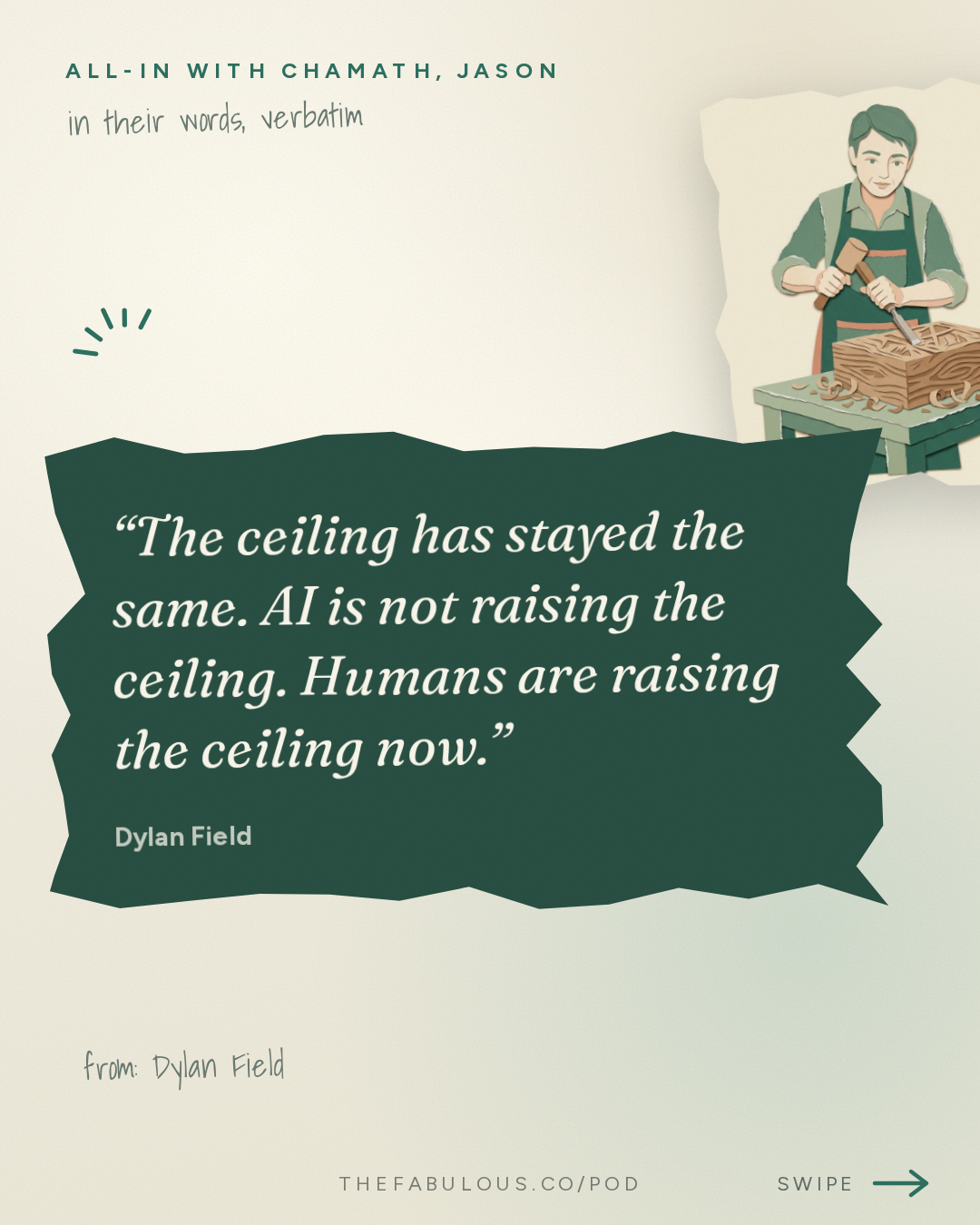
"The ceiling has stayed the same. AI is not raising the ceiling. Humans are raising the ceiling now." — Dylan Field [20:41]
AI, in his telling, is lowering the floor: it makes basic production of code, video, or design available to anyone, which is genuinely democratizing (20:02). But the floor is not the same as the top. The App Store keeps producing exponentially more software, yet how much people actually use apps has stayed roughly flat (21:32), which tells Field that abundance of production is not the same as abundance of value. The scarce thing, now that everyone can hit an average result, is a human willing to be bold, to have a point of view that is not the consensus one (22:28). He links this to a broader anxiety about AI-saturated communication: a flood of AI-written decks and messages where, as he jokes, "I don't even know if the person who made it read it" (24:40). Figma's response was a small, literal policy: any internal writing that used AI gets labeled "Written with AI" at the top, so colleagues know how much human attention actually went into it (25:14).
Underneath this is a claim about what makes human creativity different from a model's output at all. Field describes human reward and loss functions, the internal signals that make us repeat or avoid behavior, as fundamentally different from how current AI systems learn: a person splashed with water once will avoid repeating the mistake, where a model trained with reinforcement learning needs the correction many times over (29:48). He connects this to novelty-seeking, the idea that people are drawn to the genuinely new rather than the statistically likely, while a model's outputs are shaped by the distribution of its training data, by definition closer to the average of what has already been made (28:50). Design, in his view, asks for something harder than either alone: holding a user's needs, a brand, a business problem, and an aesthetic judgment all at once, a kind of combinatorial complexity he finds "fascinating" rather than threatening (30:42).
Near the end, Field frames all of this as a choice that predates AI and will outlast any particular model.
"As a human, in general, pre-AI, post-AI, you have a choice. Do you wanna consume or create?" — Dylan Field [36:33]
He is unsentimental about what easy AI use looks like: letting a model think for you, taking the path of least resistance. The harder path, using AI to learn things that would otherwise take too long to master, is the one he says is worth taking. The conversation closes on an unresolved note that feels true to the subject. Field describes OpenAI's recent release of solutions to more than 700 papers' worth of famous unsolved math problems, a single overnight event he calls, half in awe, "the greatest day of discovery in human history" (38:28). But he admits the feeling was mixed: exciting and, in some way he cannot quite name, sad, as if a bit of mystery had been spent. That tension, between a floor that keeps dropping and a ceiling that only a person can raise, is the real subject of the hour, long after the Adobe deal and the $20 billion number have been filed away as history.
Ask this episode anything
Pod's AI answers from the episode itself, with the minute mark so you can hear it yourself.
Or start with one of these
Ask this episode
Pod's AI listens to the whole episode to answer, and points you to the minute it comes from.
The rest of this answer, and any question after it
Answers come from the episode itself, never from a summary of it.
ContinueKey takeaways
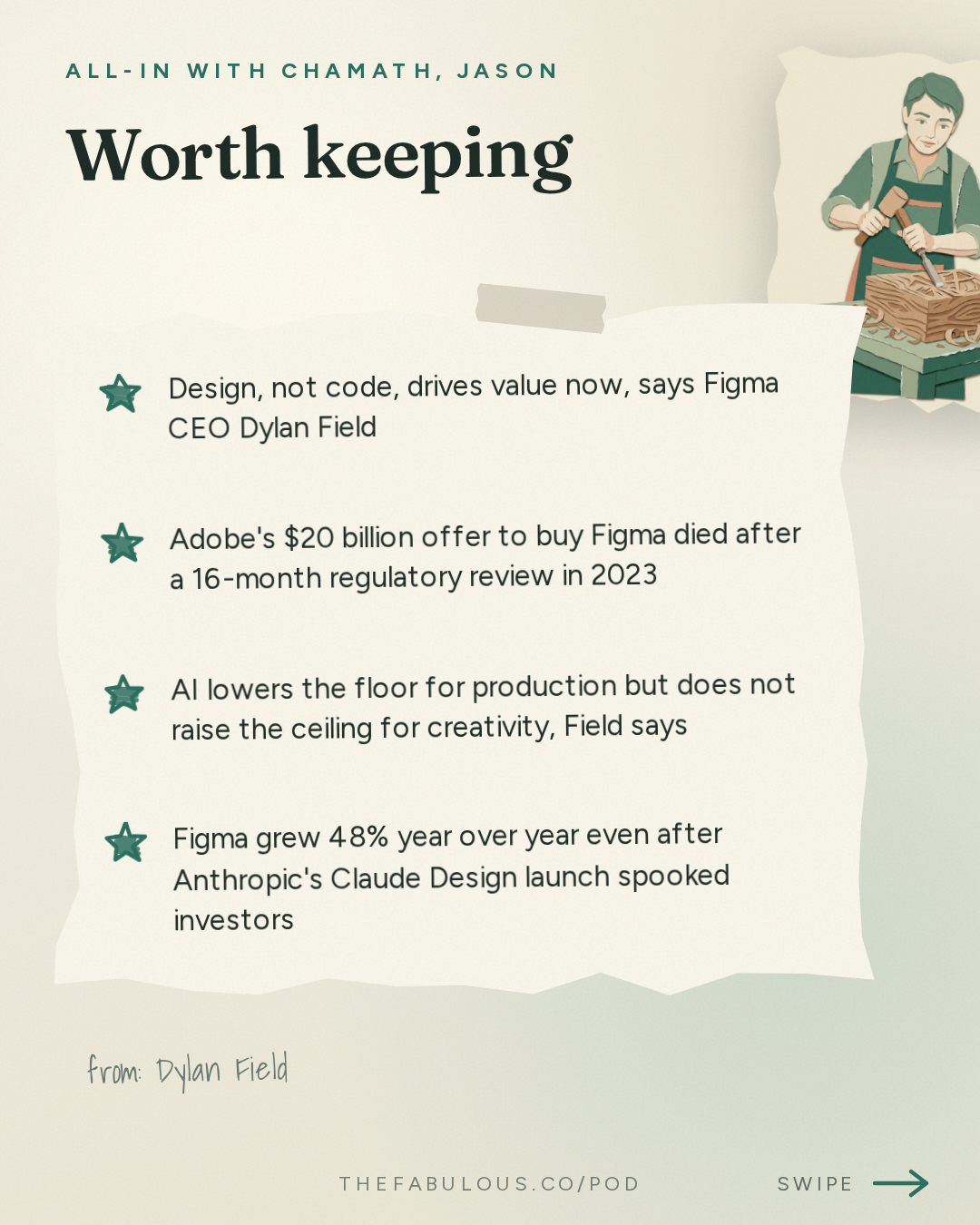
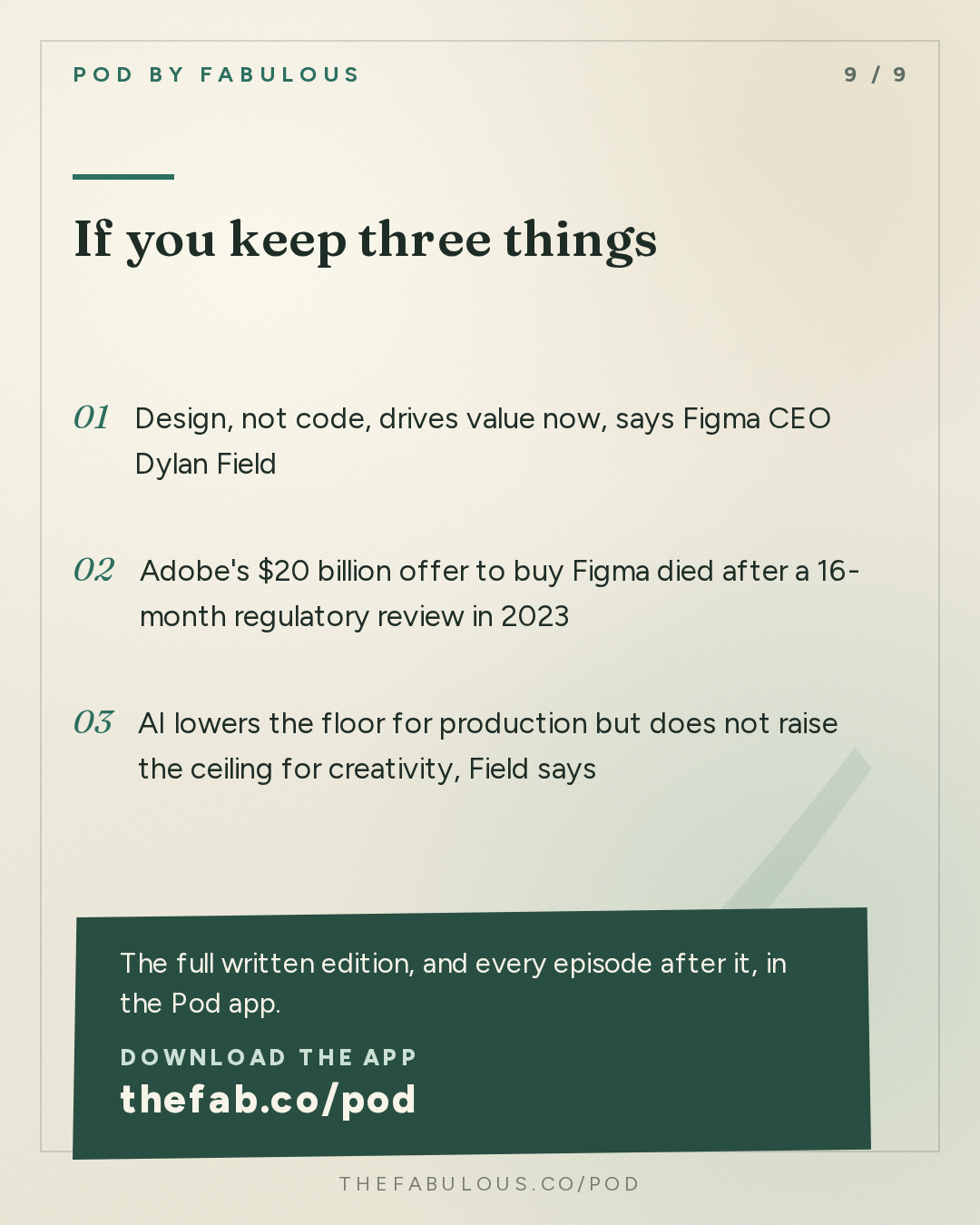
- Design, not code, drives value now, says Figma CEO Dylan Field
- Adobe's $20 billion offer to buy Figma died after a 16-month regulatory review in 2023
- AI lowers the floor for production but does not raise the ceiling for creativity, Field says
- Figma grew 48% year over year even after Anthropic's Claude Design launch spooked investors
- Figma requires AI-assisted writing to be labeled Written with AI to preserve internal trust
The episode in cards
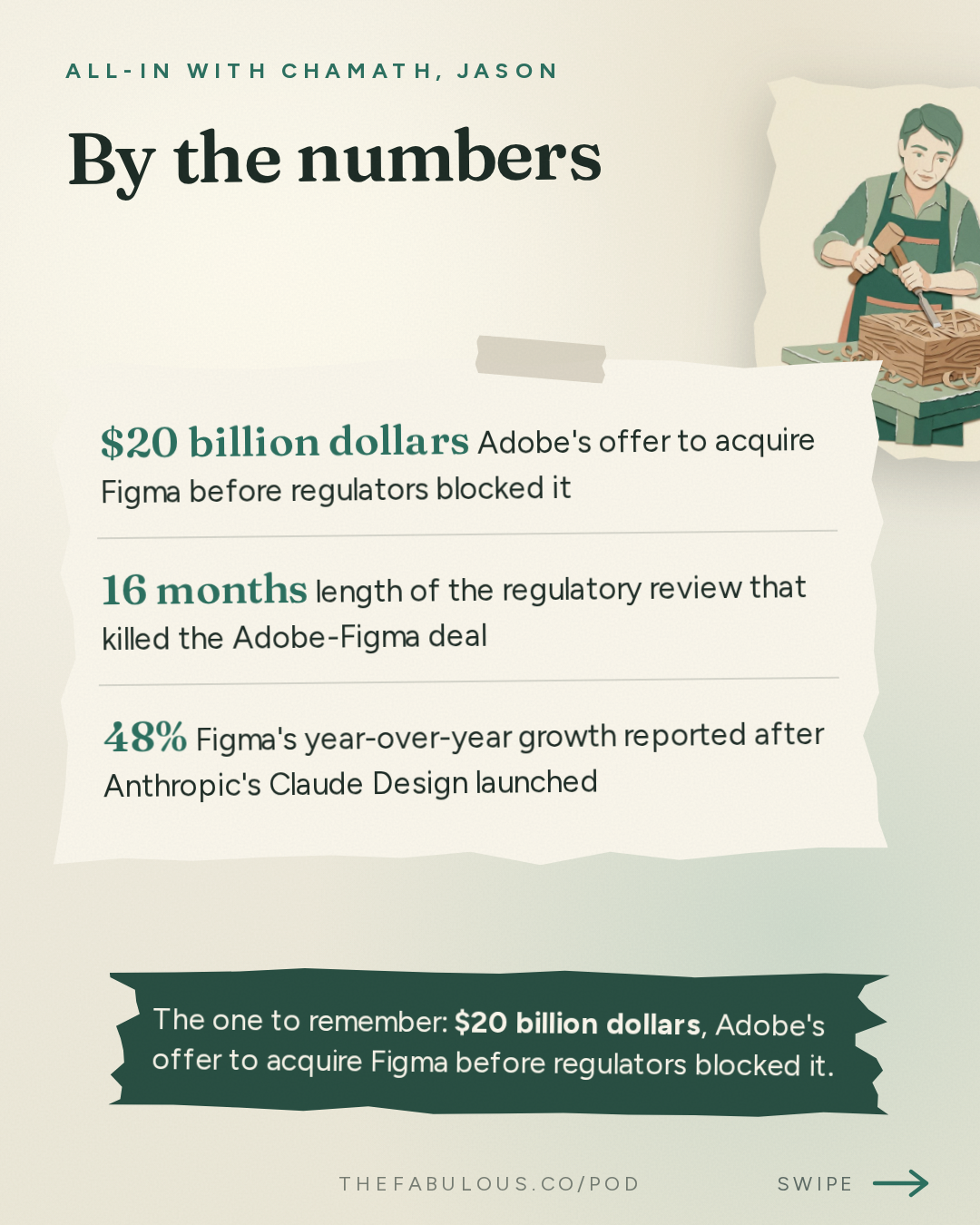
By the numbers
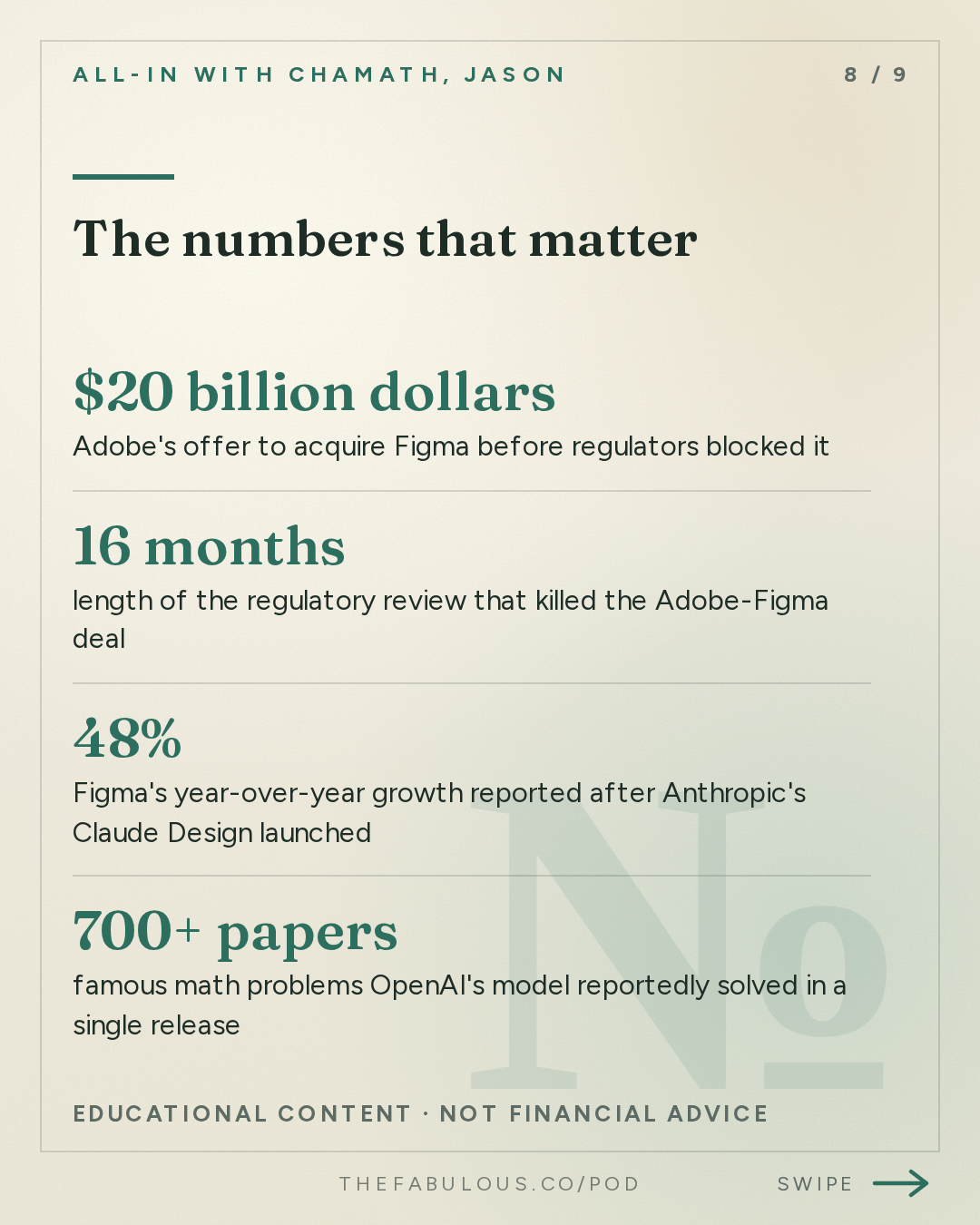
- $20 billion dollars Adobe's offer to acquire Figma before regulators blocked it
- 16 months length of the regulatory review that killed the Adobe-Figma deal
- 48% percent Figma's year-over-year growth reported after Anthropic's Claude Design launched
- 700+ papers famous math problems OpenAI's model reportedly solved in a single release
In their words
“16 months of regulatory review for any company is punishing.”
“The ceiling has stayed the same. AI is not raising the ceiling. Humans are raising the ceiling now.”
“As a human, in general, pre-AI, post-AI, you have a choice. Do you wanna consume or create?”
“I think it's easy to mistake model progress for product progress.”
Protocols
-
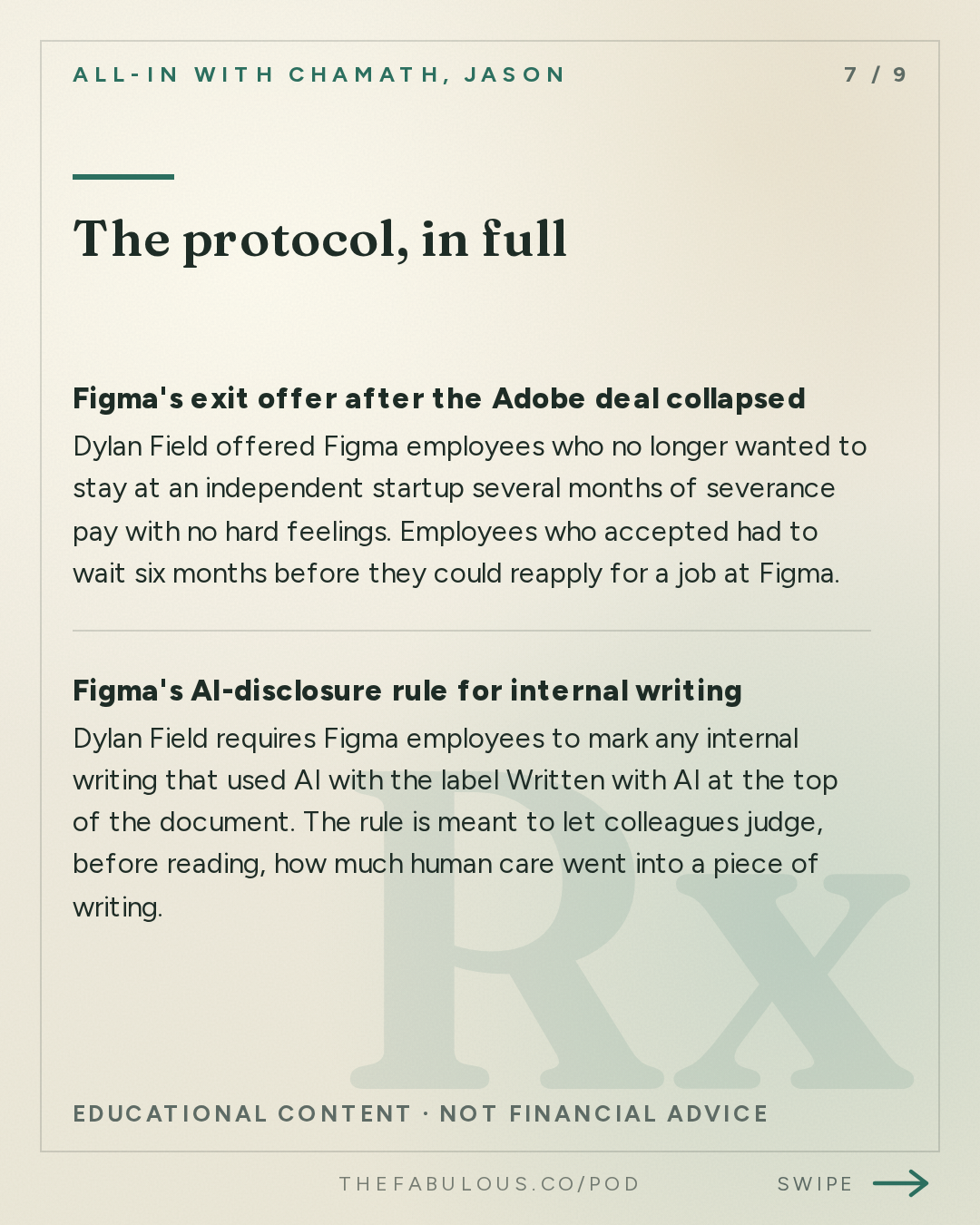
Figma's exit offer after the Adobe deal collapsed
Dylan Field offered Figma employees who no longer wanted to stay at an independent startup several months of severance pay with no hard feelings. Employees who accepted had to wait six months before they could reapply for a job at Figma.
One-time offer made at the December 2023 all-hands meeting
-
Figma's AI-disclosure rule for internal writing
Dylan Field requires Figma employees to mark any internal writing that used AI with the label Written with AI at the top of the document. The rule is meant to let colleagues judge, before reading, how much human care went into a piece of writing.
Ongoing policy for all internal documents
Questions this episode answers
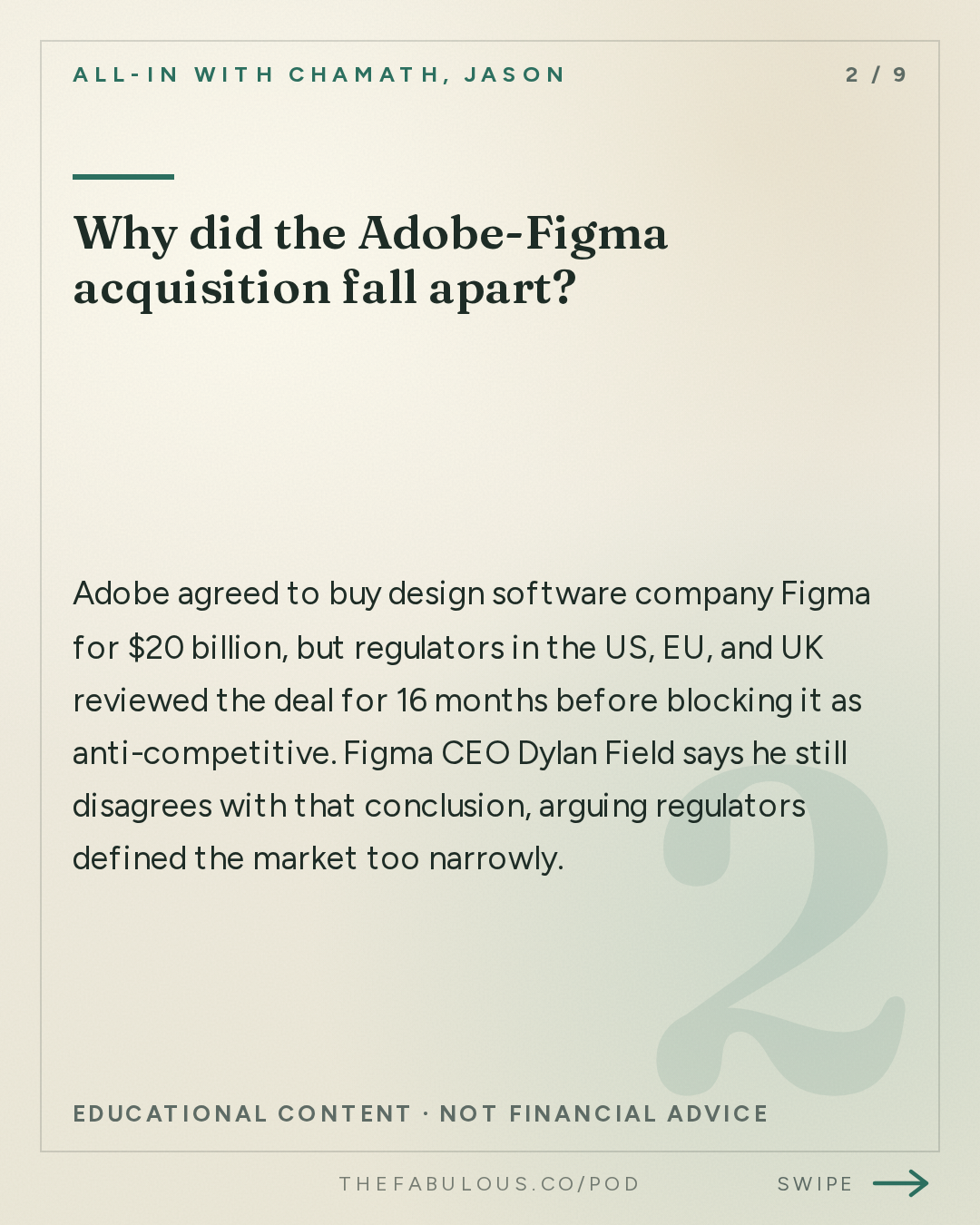
Why did the Adobe-Figma acquisition fall apart?
Adobe agreed to buy design software company Figma for $20 billion, but regulators in the US, EU, and UK reviewed the deal for 16 months before blocking it as anti-competitive (08:24). Figma CEO Dylan Field says he still disagrees with that conclusion, arguing regulators defined the market too narrowly (09:05).
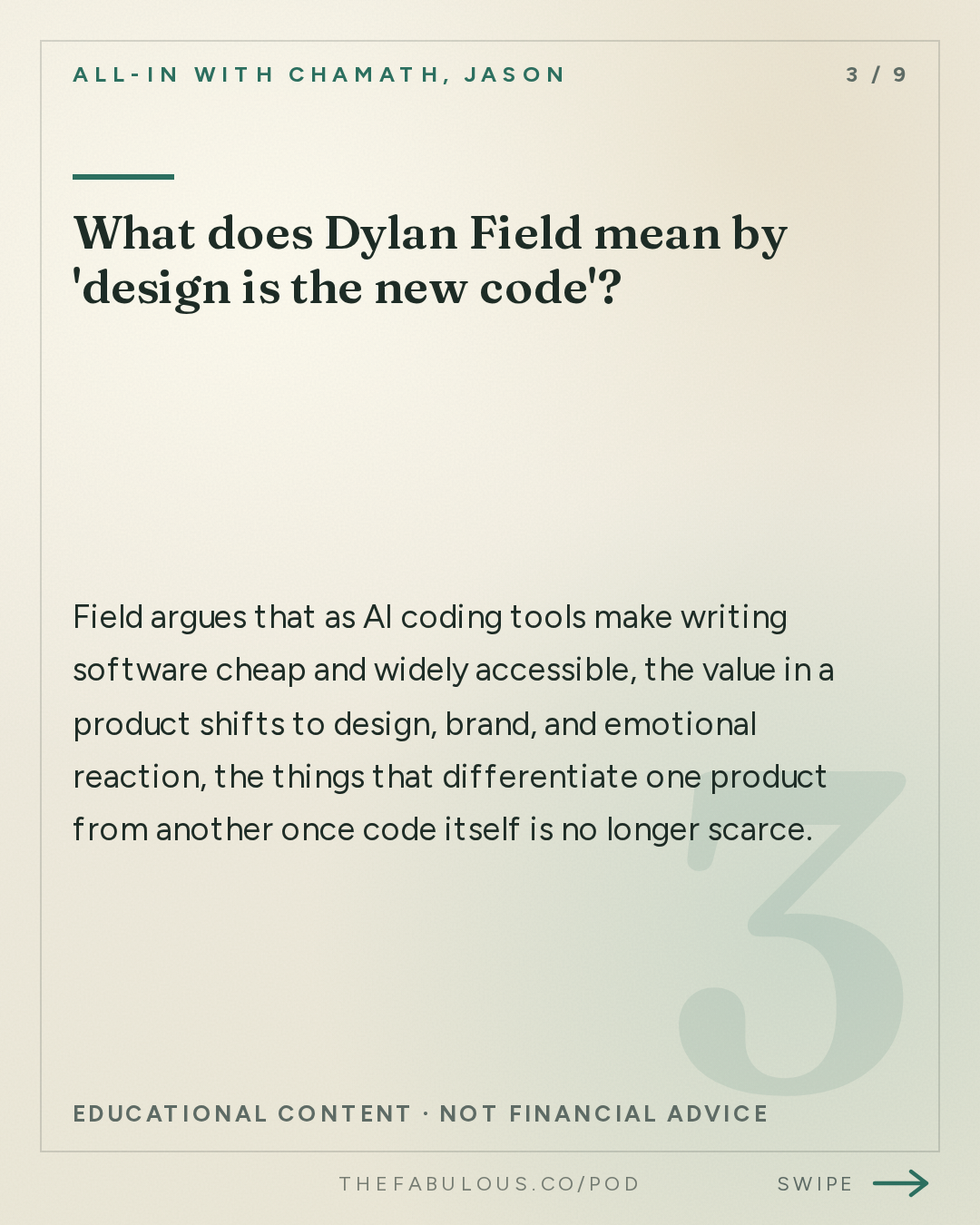
What does Dylan Field mean by 'design is the new code'?
Field argues that as AI coding tools make writing software cheap and widely accessible, the value in a product shifts to design, brand, and emotional reaction, the things that differentiate one product from another once code itself is no longer scarce (01:10, 01:34).
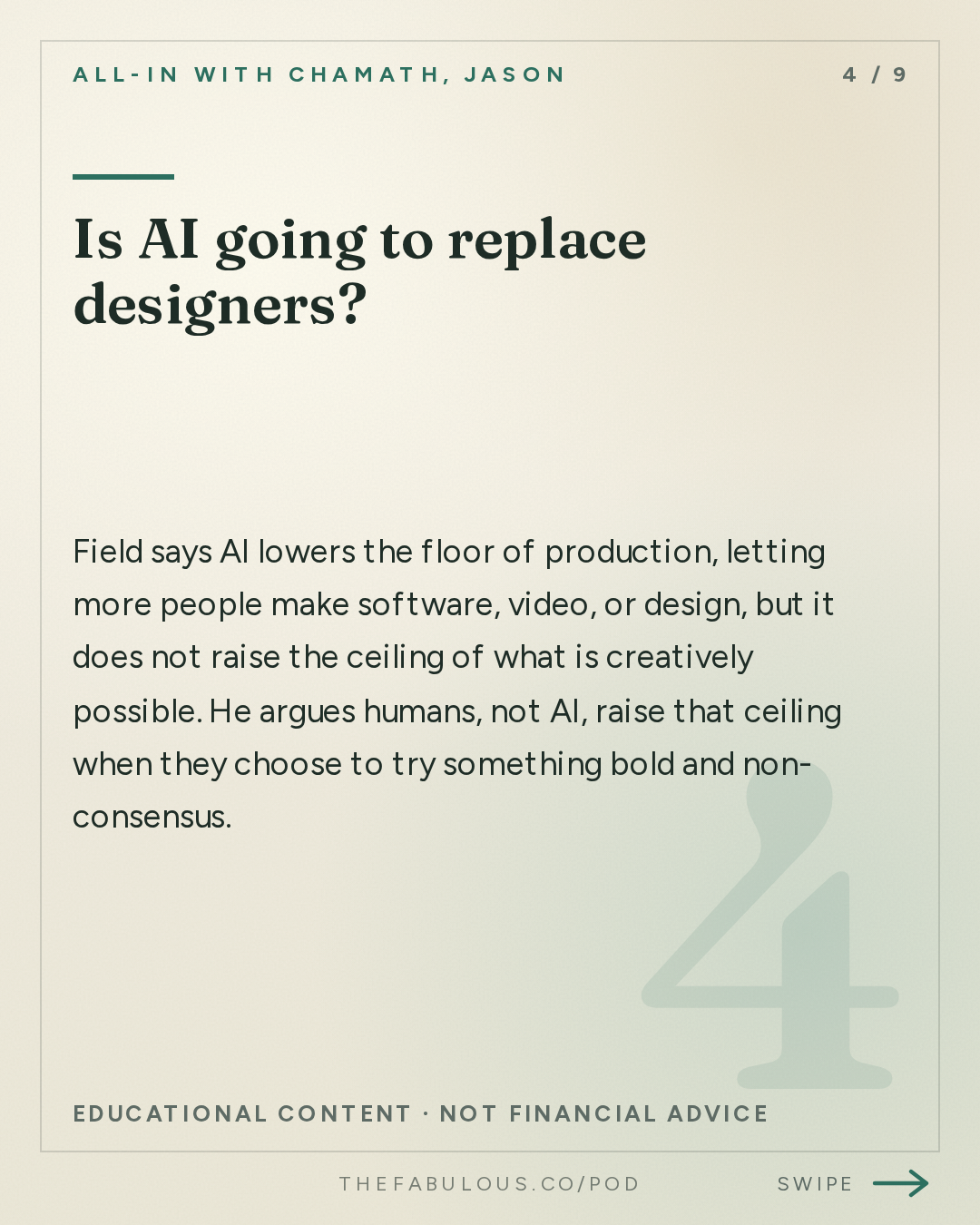
Is AI going to replace designers?
Field says AI lowers the floor of production, letting more people make software, video, or design, but it does not raise the ceiling of what is creatively possible (20:41). He argues humans, not AI, raise that ceiling when they choose to try something bold and non-consensus (22:28).
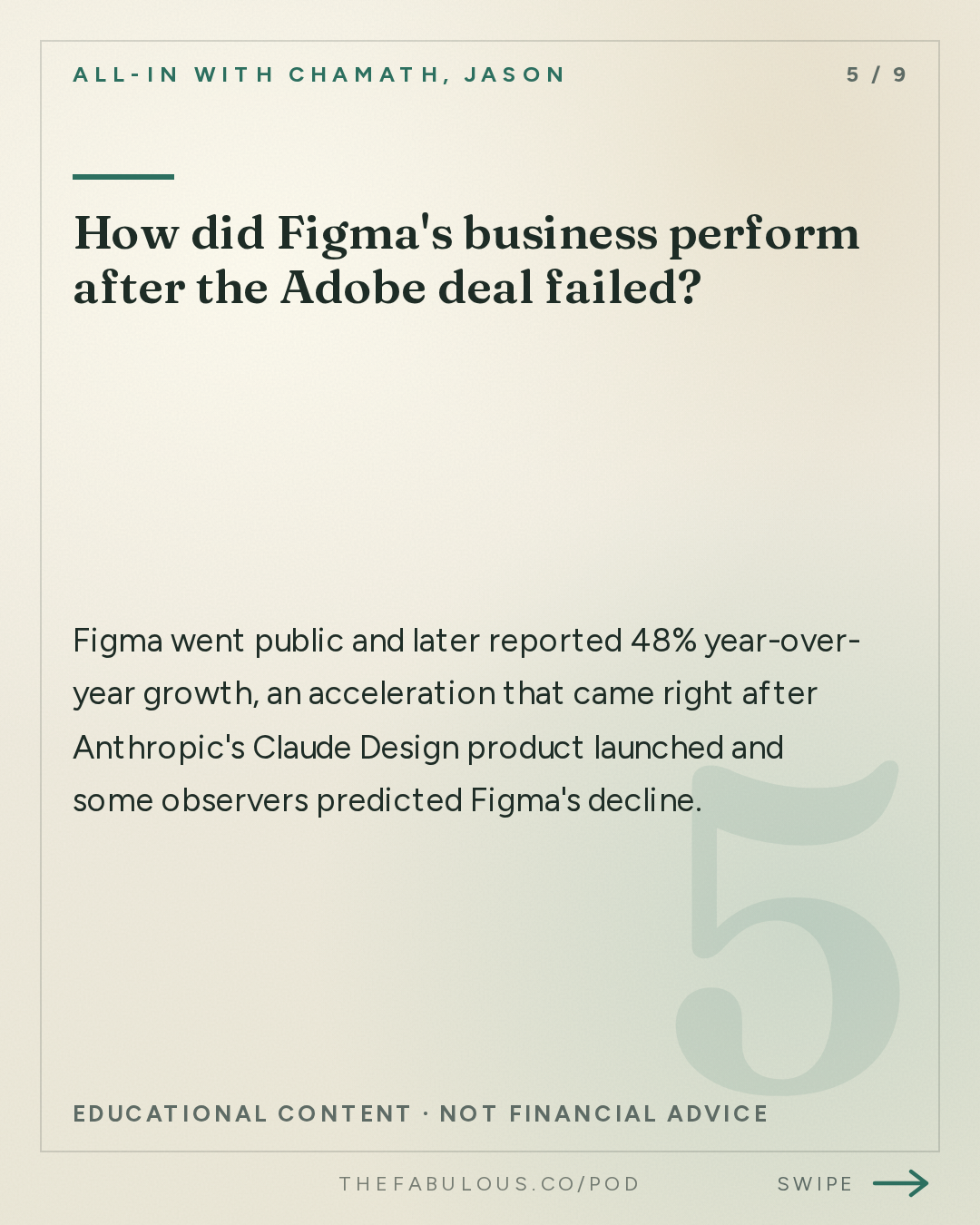
How did Figma's business perform after the Adobe deal failed?
Figma went public and later reported 48% year-over-year growth, an acceleration that came right after Anthropic's Claude Design product launched and some observers predicted Figma's decline (14:07).
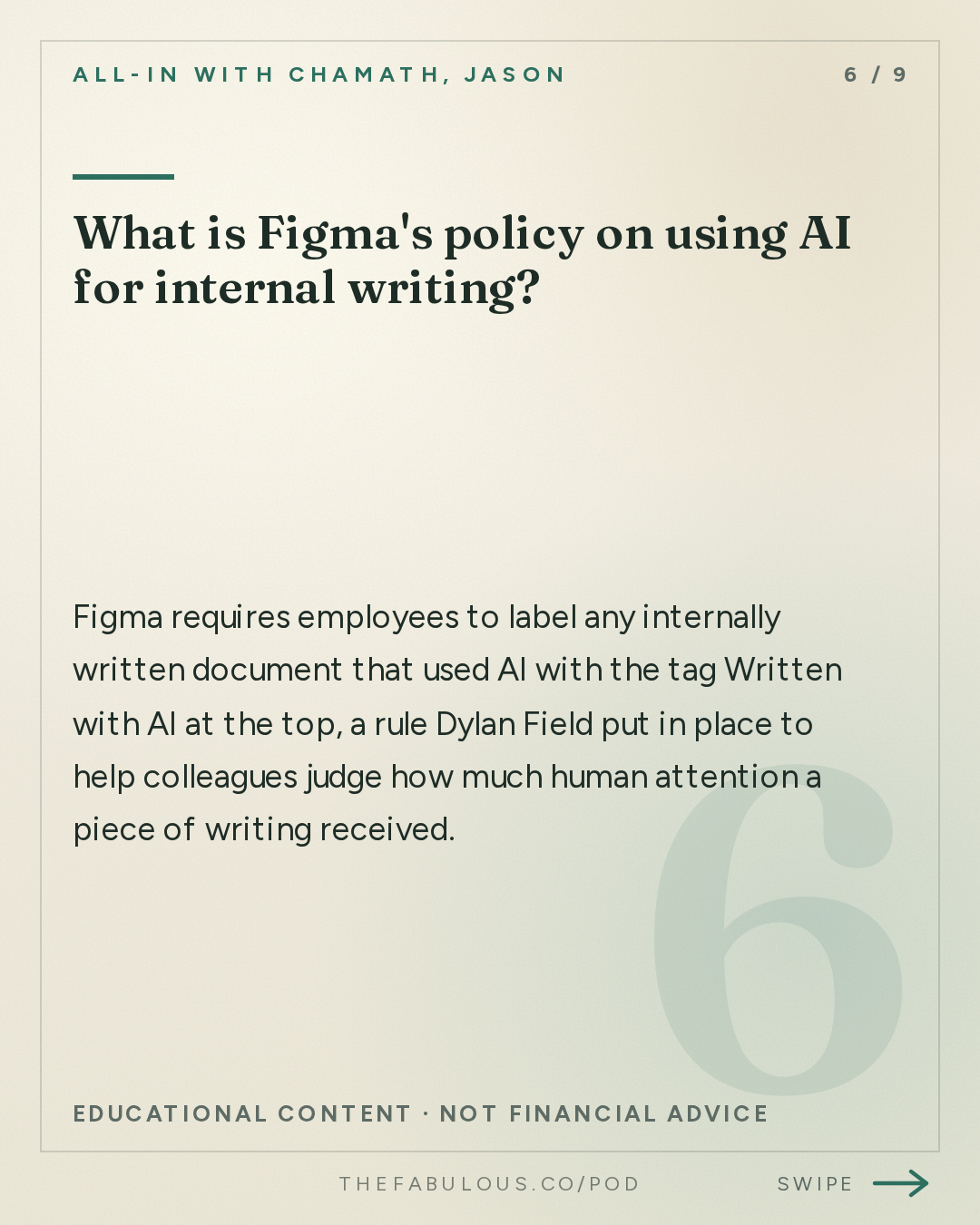
What is Figma's policy on using AI for internal writing?
Figma requires employees to label any internally written document that used AI with the tag Written with AI at the top, a rule Dylan Field put in place to help colleagues judge how much human attention a piece of writing received (25:14).
The full read, in cards
Go deeper
- OpenAI's 'math drop' — a single release reportedly solving more than 700 papers' worth of famous unsolved math problems
- Figma's quarterly earnings report — showed 48% year-over-year growth despite competitive pressure from Anthropic's Claude Design
Mentioned
Dylan Field · Figma · Adobe · Anthropic · OpenAI · Cursor · Photoshop · Claude Design · Roomba · Holly Herndon
More from this show and category

CoreWeave Debt Crisis and the AI Bubble, Explained
CoreWeave's bond selloff this week signaled real doubt about AI infrastructure debt, even as demand for GPUs stays red hot. Anthropic posted $16.8 billion in Q3 revenue, Sacks called its warnings about small AI models a move against open-source rivals, and Chamath named electricity as AI's real bottleneck.

Billy Evans on Elizabeth Holmes: Trial, Prison, Hemantis
Billy Evans, Elizabeth Holmes's husband, says the Theranos founder was acquitted on every patient-fraud count tied to 12.5 million blood tests but convicted of defrauding three investors, a conspiracy charge that let the judge add outside victims like Rupert Murdoch and push her sentence to 11.25 years (00:27, 19:52, 21:31).

Martin Shkreli: Quantum Computing Fraud, Pharma Deals
Martin Shkreli argues quantum computing is mostly a business mirage because today's machines run at only hundreds of hertz. He says photonic chips, which multiply matrices with light, could make Nvidia's GPUs obsolete within twenty years, and he describes turning a $2 million drug deal into a $6 billion pharmaceutical company.

Anthropic Lobbied the Pope on AI Consciousness
Anthropic lobbied religious leaders, including the Pope, on whether Claude is conscious, then coded that belief into the model's training itself. The same episode covers OpenAI's single-day release of 700 math papers, France's debt-fueled riots, and why headless AI agents are erasing the value of software intellectual property.
