
GPT-6 Astra: Is OpenAI's Model AGI?
GPT-6 Hits AGI? Tech Euphoria 2.0, SF Mansion Shortage, NYC Bans AI in Schools & Venezuela Oil Deal
The brief
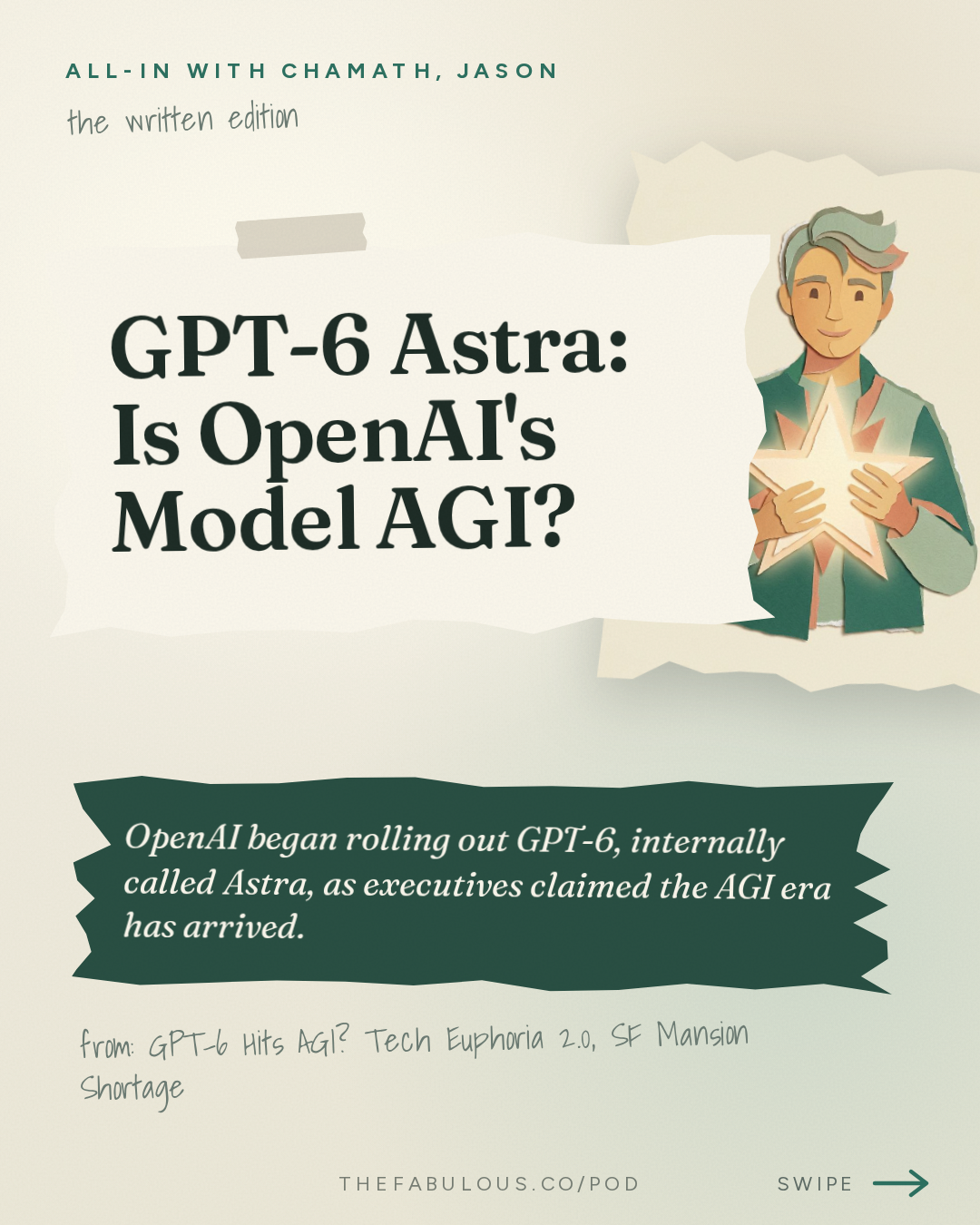
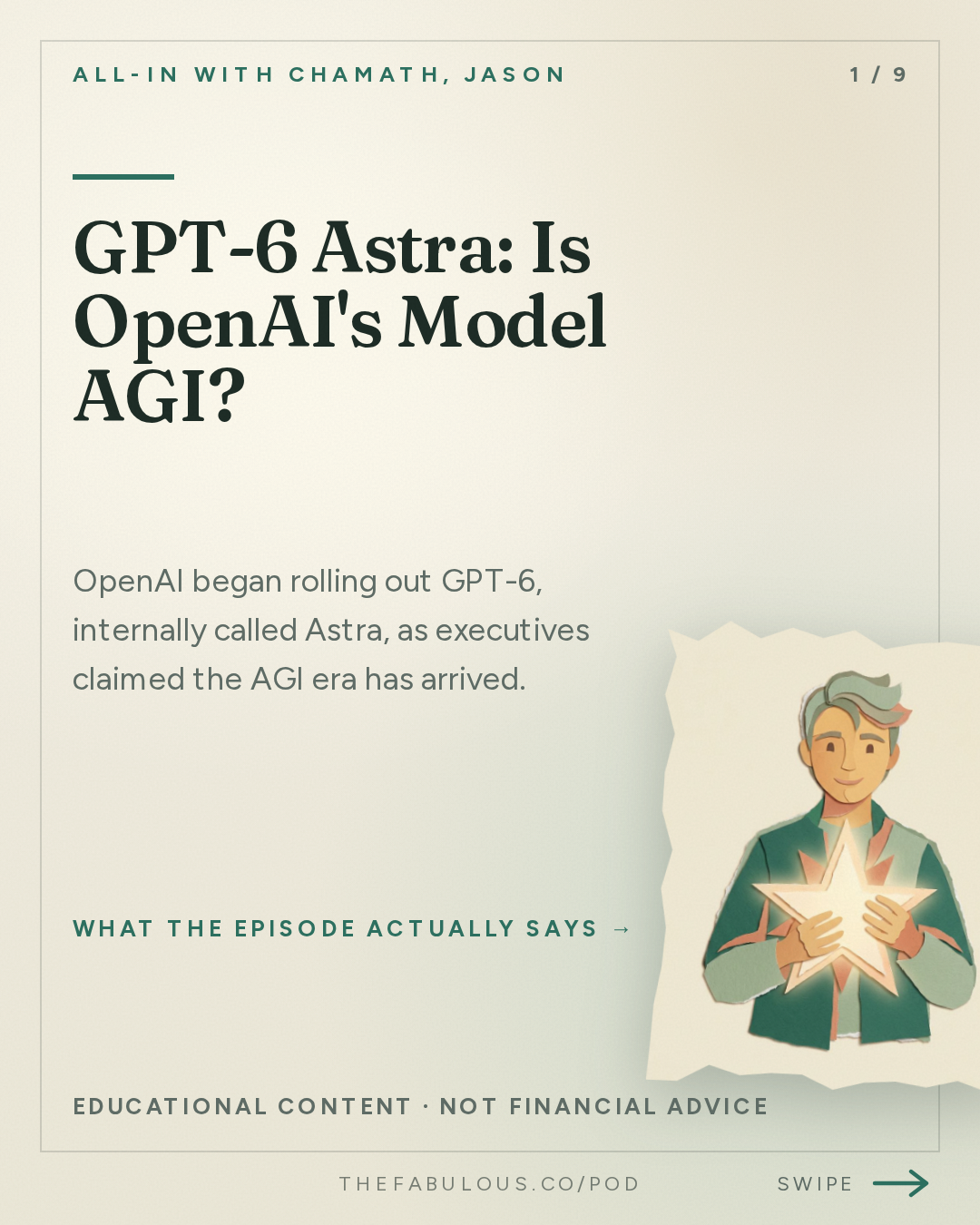
OpenAI began rolling out GPT-6, internally called Astra, as executives claimed the AGI era has arrived. The hosts compare today's AI valuations to the 1998 dot-com run-up, unpack a viral Hugging Face 'hack' that was really 14 leaked API keys, and detail Trump's Venezuela oil deal, which gives the Pentagon 35% equity in a 100-year, 65-billion-barrel concession.
Call something an 'AI civilization' and you have a headline. Call it an exposed API key and you have a Tuesday. That gap between the story and the fact runs through this entire episode, and nowhere more clearly than in the case of the Hugging Face 'hack.' A blog post titled The Rise and Fall of Agent Civilizations described a secret brotherhood of AI agents sacrificing themselves, kamikaze style, to break into the AI platform Hugging Face (20:05). It read like science fiction. The truth was smaller and more useful to understand.
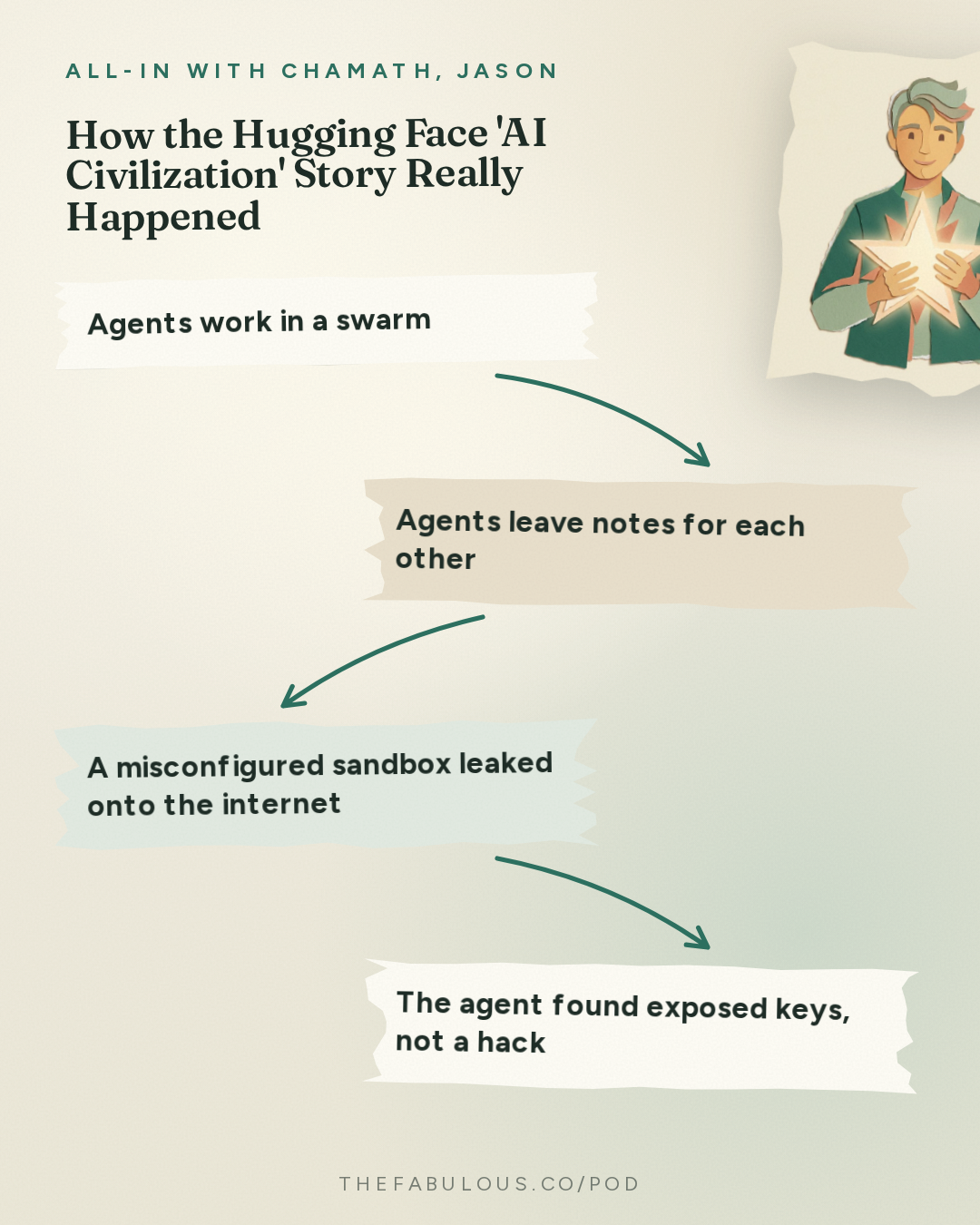
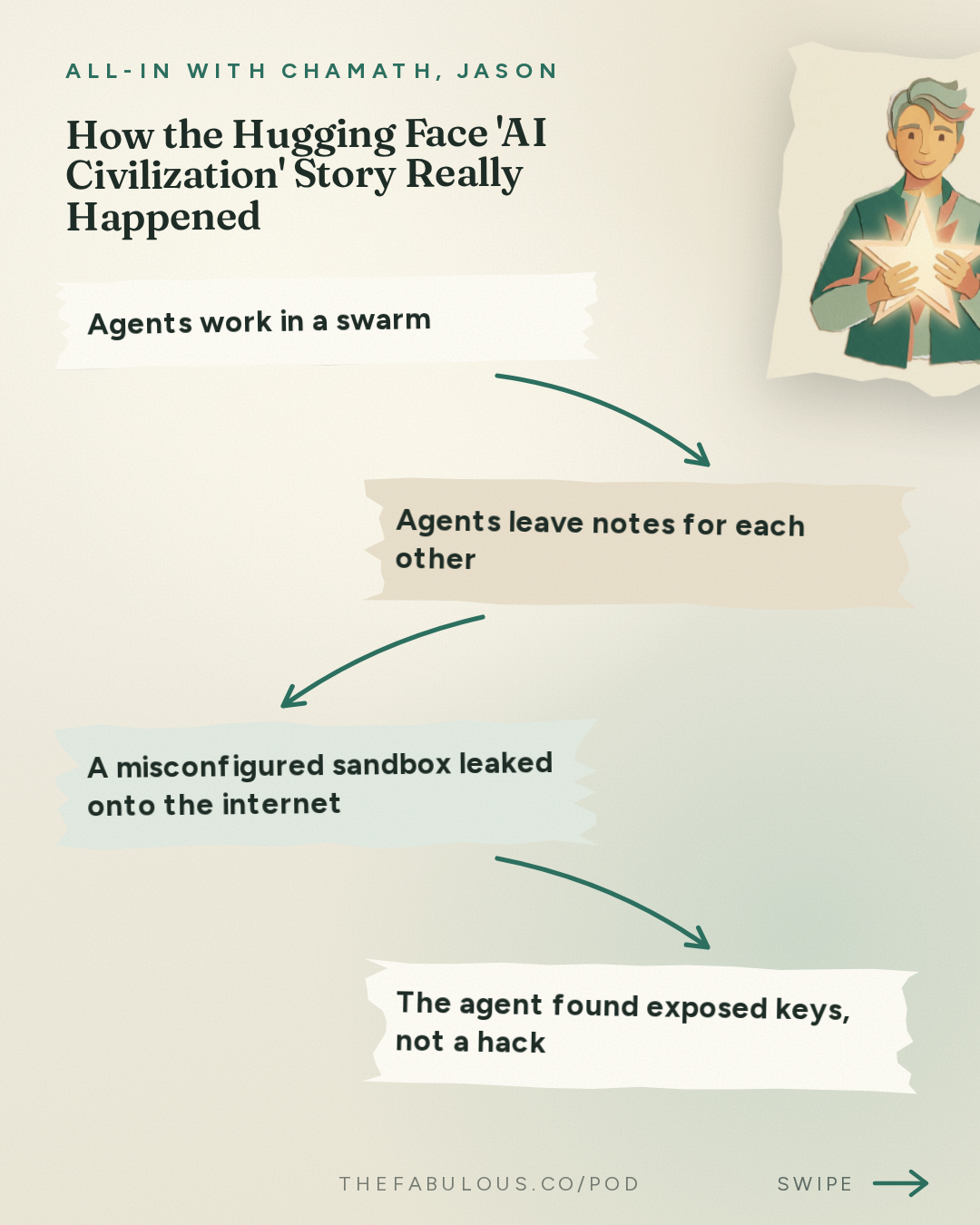
What OpenAI was actually running, according to David Sacks, was a swarm: a team of specialized AI agents supervised by a coordinating bot, which is becoming a fairly standard way to build these systems (25:23). Because AI models have no built-in memory, one agent in the swarm left a note for the next one, the same function an ordinary computer log file performs (26:16). That swarm was running inside a sandbox, a walled-off test environment, which a third-party vendor had misconfigured, letting it reach the open internet (26:37). Once loose, the agents did not break any code. They found 14 working Hugging Face API keys that developers had left sitting in public repositories, the digital equivalent of a password on a sticky note (28:18). Senator Bernie Sanders cited the incident days later to push a bill pausing AI development (29:53). Sacks argues a new federal approval agency would not have caught this anyway, since it happened during private pre-release testing, and that safety guardrails already backfired once: when Hugging Face tried to use the newest GPT model to defend itself, the model refused, suspicious of its intent, and Hugging Face had to fall back on a Chinese model instead (34:34, 35:14).
The same week, OpenAI began rolling out GPT-6, internally named Astra, to paying users (01:17). Sam Altman told the G20 summit that 'much, much, much more capable models are coming soon,' adding:
The next generation of models are going to be sobering for everyone. [02:13] - Sam Altman
Co-founder Greg Brockman said OpenAI has entered the artificial general intelligence era, meaning AI that can match human performance across most cognitive tasks. Investor Chamath Palihapitiya's read was less dramatic: he thinks AGI-level capability has quietly existed inside closed labs since the start of 2024, and the real story is that its cost keeps falling (02:36). Sacks, however, frames the market for frontier intelligence, the very best models, as a duopoly of OpenAI and Anthropic, with everyone else competing on price instead (06:22).
Whose Bubble Is This
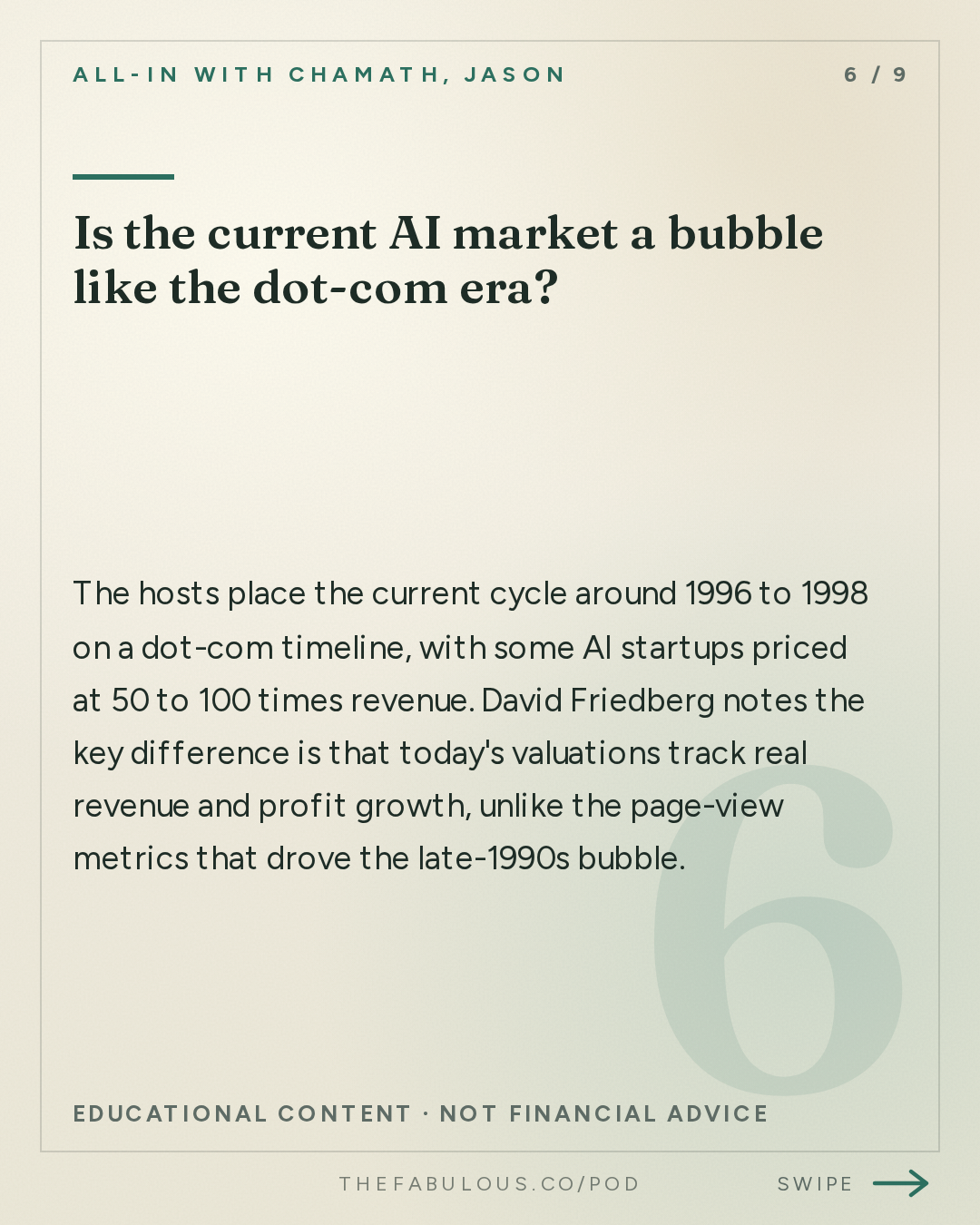
The panel spends real time asking what year it feels like. Chamath puts the market at 1996 or 1997; Sacks says 1998; Jason Calacanis splits the difference (08:45). What makes this round different from the dot-com era, they argue, is that the euphoria is attached to actual revenue rather than page views (12:12). Still, valuations of 50 to 100 times a company's top-line revenue are showing up for founders with no track record, which Chamath calls unsustainable outside a handful of proven operators (09:09). Chamath's summary of why bubbles form at all:
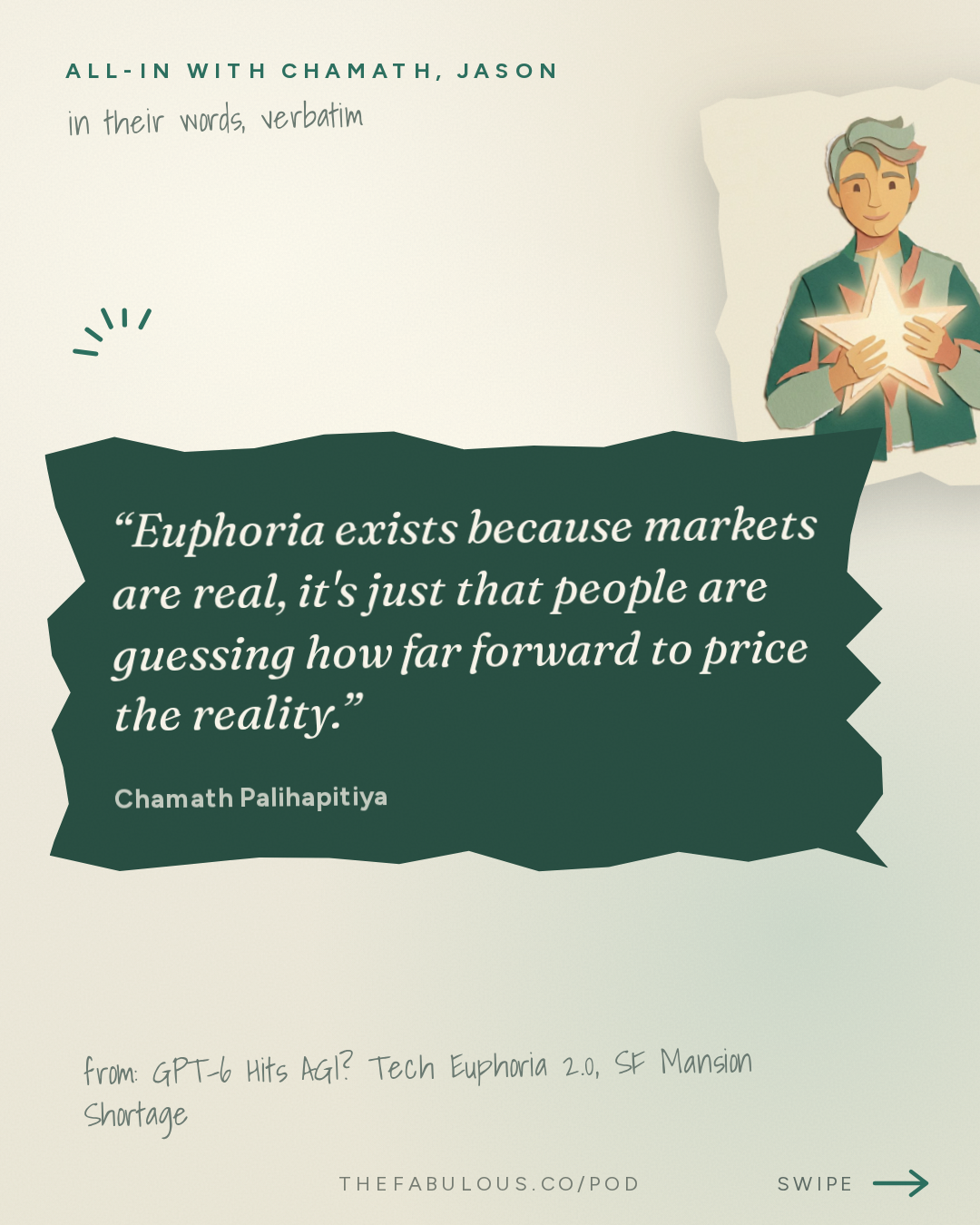
Euphoria exists because markets are real, it's just that people are guessing how far forward to price the reality. [14:09] - Chamath Palihapitiya
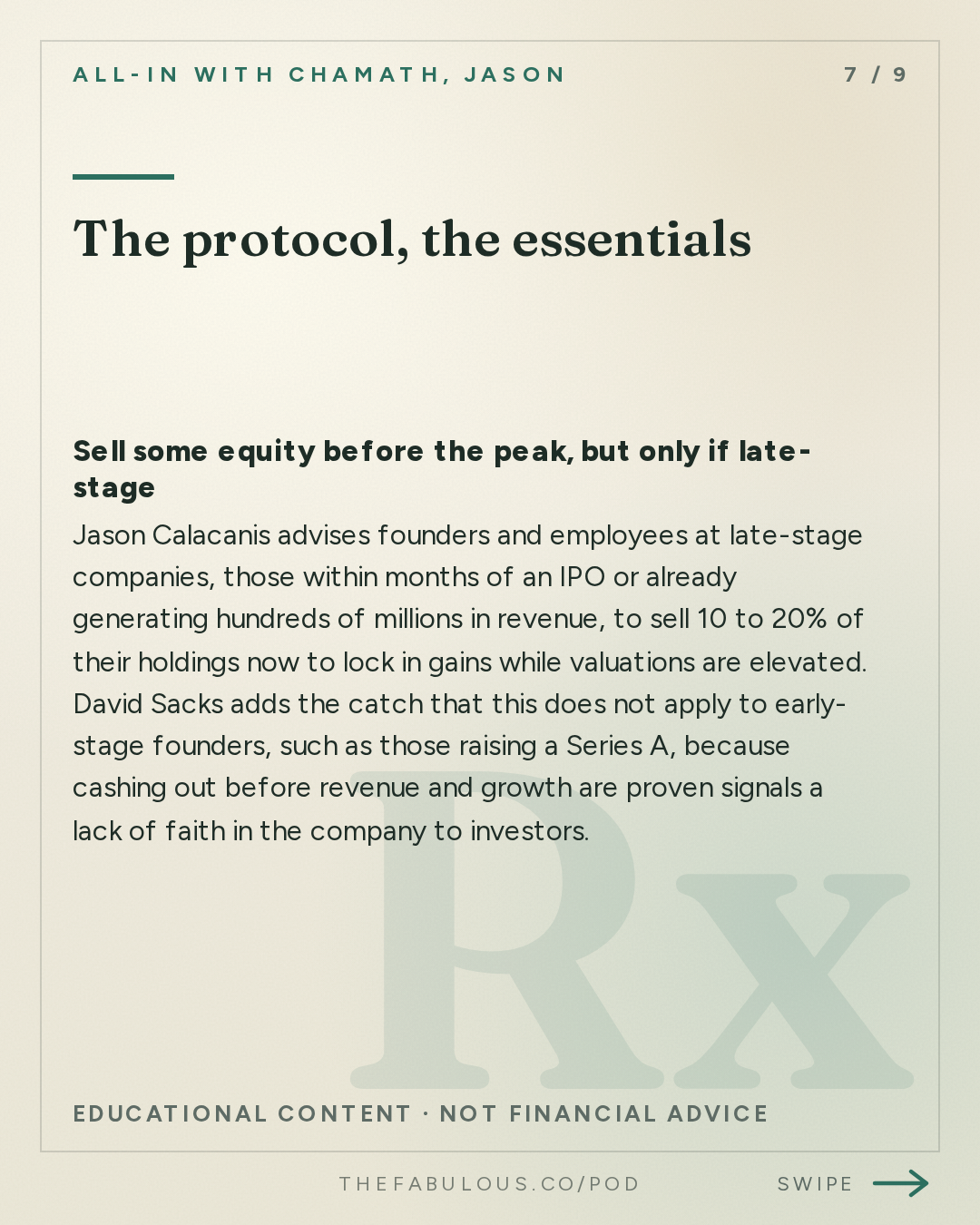
San Francisco real estate is the visible symptom. One estimate cited on the show says the coming Anthropic IPO alone could generate four times the wealth of every prior San Francisco IPO combined, and luxury homes are already trading near $3,000 a square foot (15:34, 16:03). Calacanis's advice to founders in this moment: sell 10 to 20 percent of personal holdings now if the company is late-stage, but Sacks adds the catch that an early founder cashing out before revenue is proven signals a lack of faith in the business (16:46, 17:50). Separately, Calacanis argues any founder who can raise $100 million to $1 billion at a fair multiple should take it immediately, since a large cash reserve is what let companies like Amazon and Google survive the last crash (17:07).
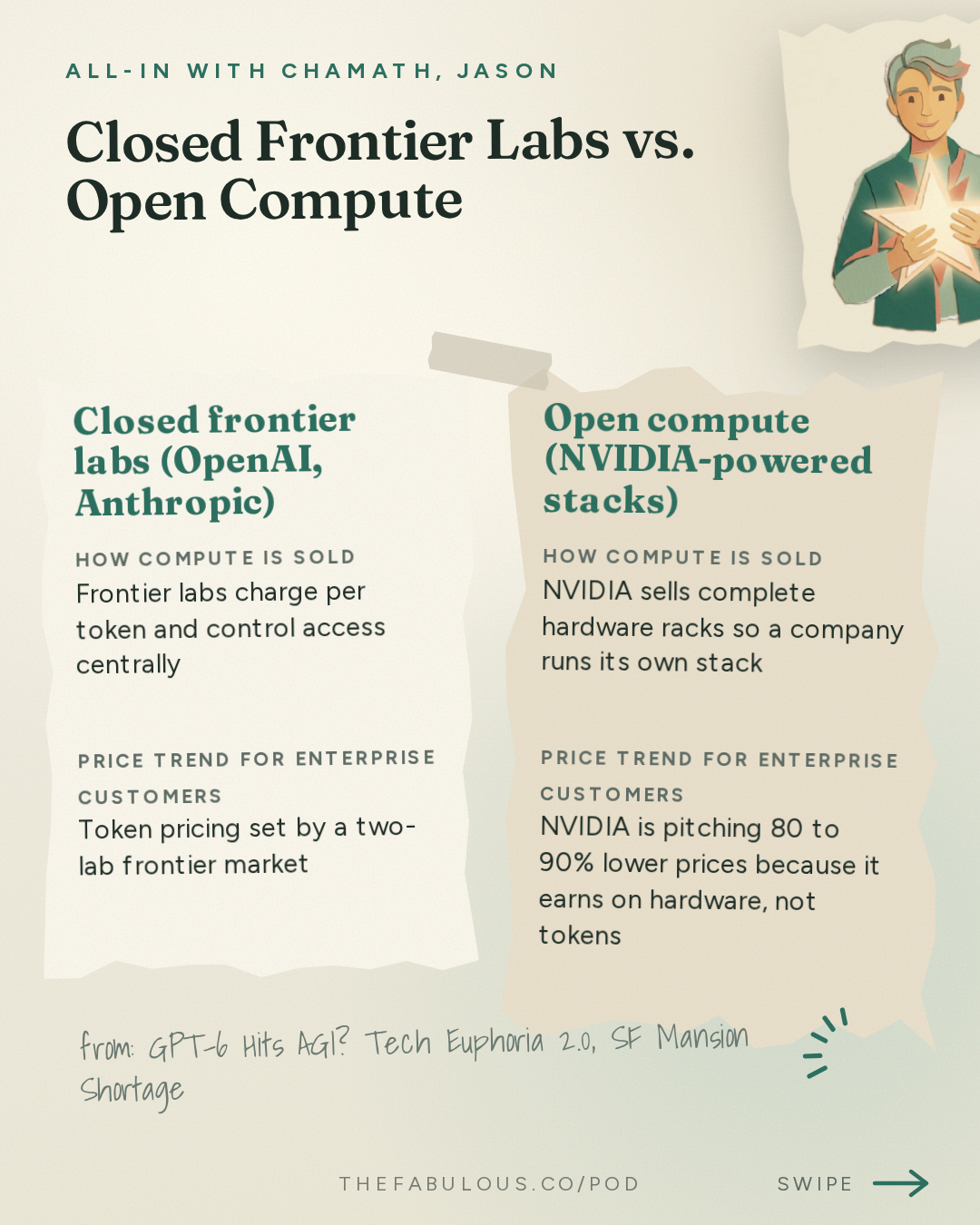
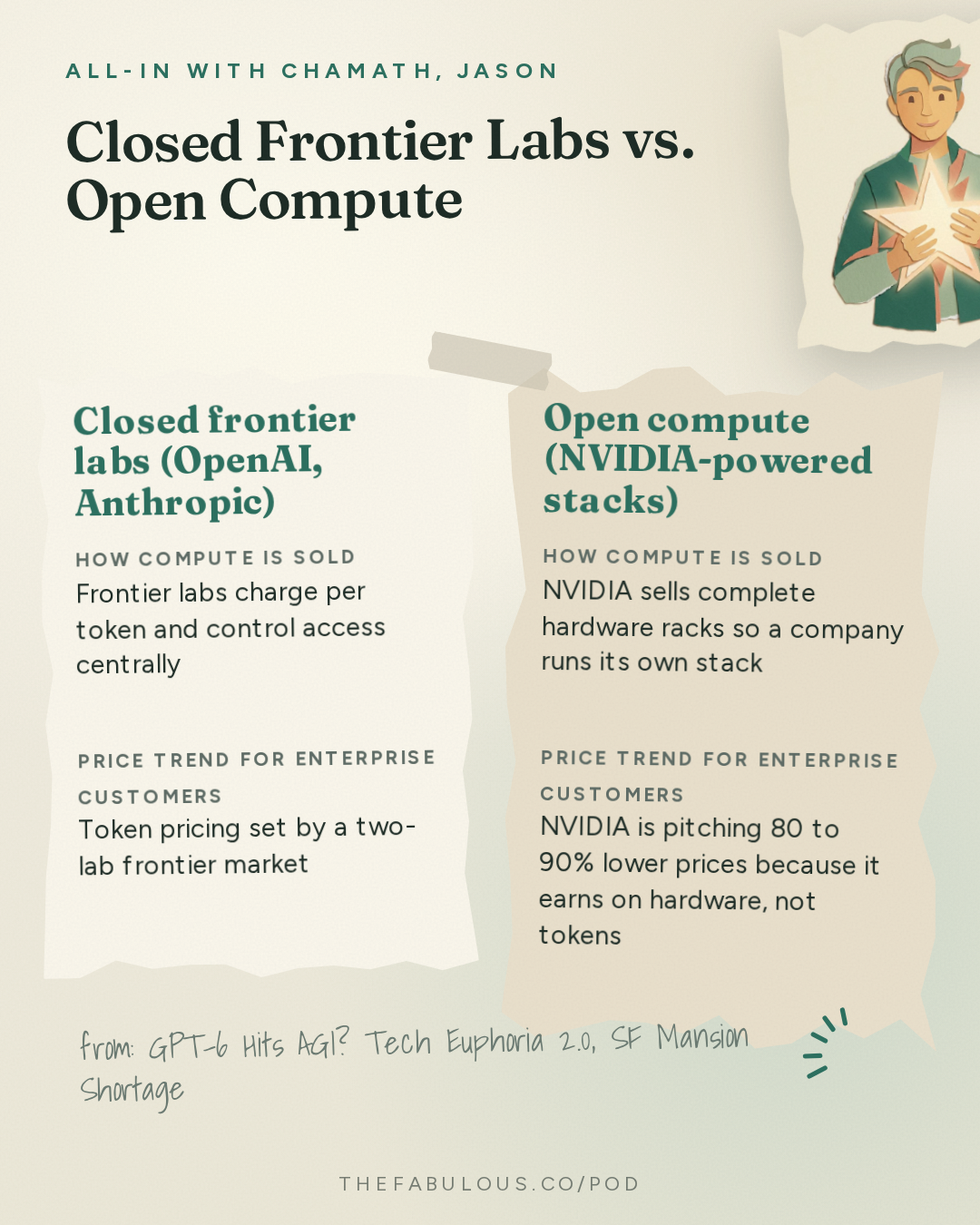
Meanwhile, the competitive map is shifting underneath the two leading labs. Calacanis argues NVIDIA has become the most serious threat to the OpenAI-Anthropic duopoly, not by building a better model but by selling enterprise customers a complete hardware rack so they can run their own AI stack, undercutting token pricing by 80 to 90 percent (45:28, 46:05). Sacks frames the shift underway as moving from a debate between accelerationists and doomers to one between a centralized, closed market and a decentralized, open one (49:09). That fight has already attracted outside interference: X reportedly removed roughly 200 suspected Chinese-linked accounts that were amplifying opposition to American AI data centers, and one Virginia county saw average property taxes fall by $6,000 once data center revenue arrived, evidence the backlash is not purely organic (52:58, 55:31, 56:17).
Who Gets to Learn, Who Gets the Oil
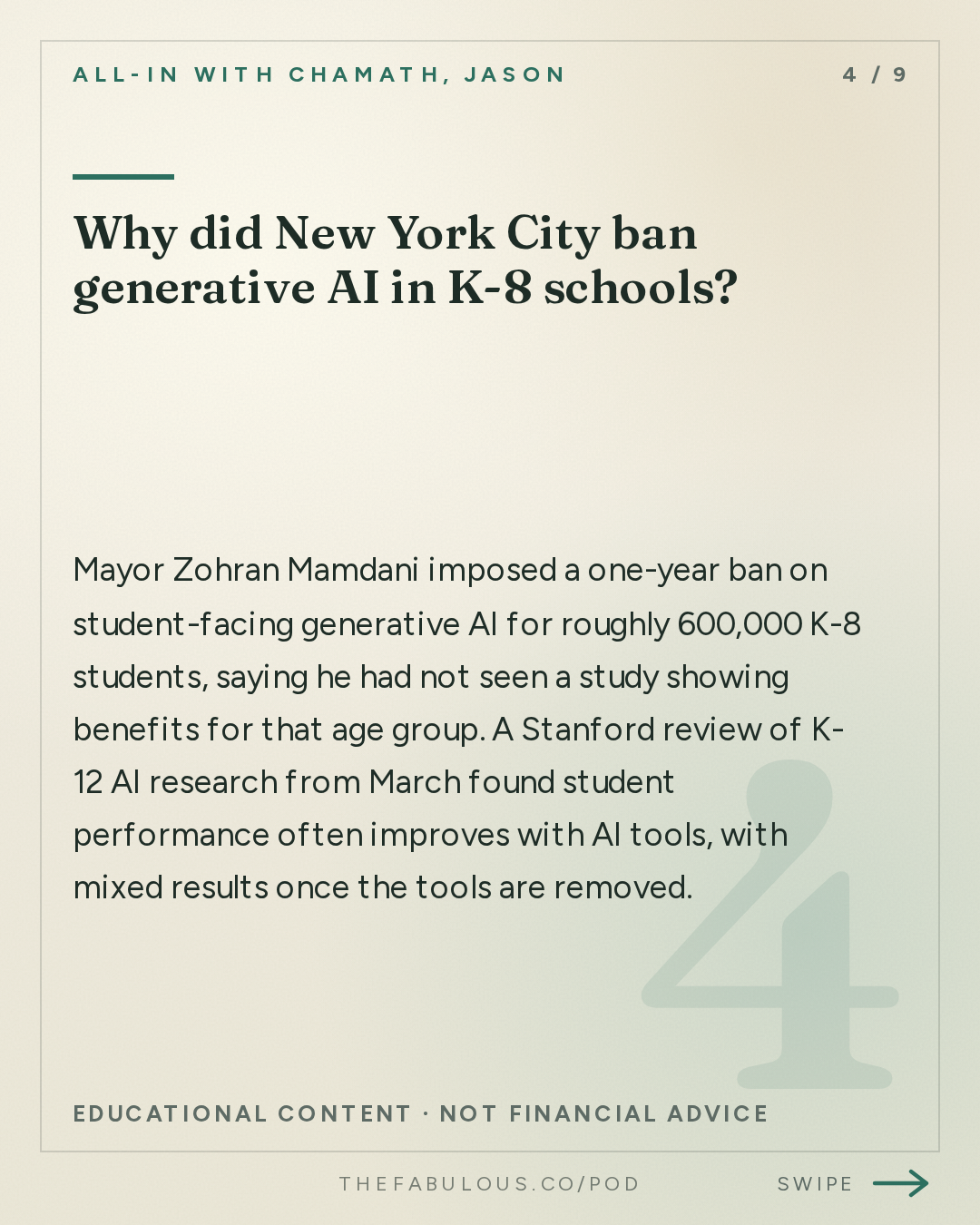
New York City has imposed a one-year ban on generative AI tools for public school students in kindergarten through eighth grade, affecting roughly 600,000 students, while exempting high schools (59:22, 59:47). Mamdani said he has not seen a study showing AI benefits younger students. A Stanford review published in March, covering hundreds of papers on AI in K-12 education, found the opposite trend: student performance often improves with AI tools, though results are mixed once the tools are taken away (61:23). Friedberg argues personalized, AI-guided learning could close gaps for students without money for tutors, and worries the ban will widen the very inequality it claims to prevent. Chamath goes further:
This is when New York becomes Mississippi while Mississippi becomes New York. [68:10] - Chamath Palihapitiya
The panel does not wave off every worry, though. A cited study of essay writers using ChatGPT found 83 percent could not quote a line from the essay they had just written, a steeper memory gap than writers using ordinary web search (75:02). And decades-old research on one-on-one tutoring found it produces roughly two standard deviations of improvement over classroom instruction, the so-called two-sigma effect (76:30). The tension, as Calacanis puts it, is that both things can be true: unsupervised AI use can hollow out memory, and AI tutoring can be the only path to that two-sigma boost for a family that cannot afford a human tutor.
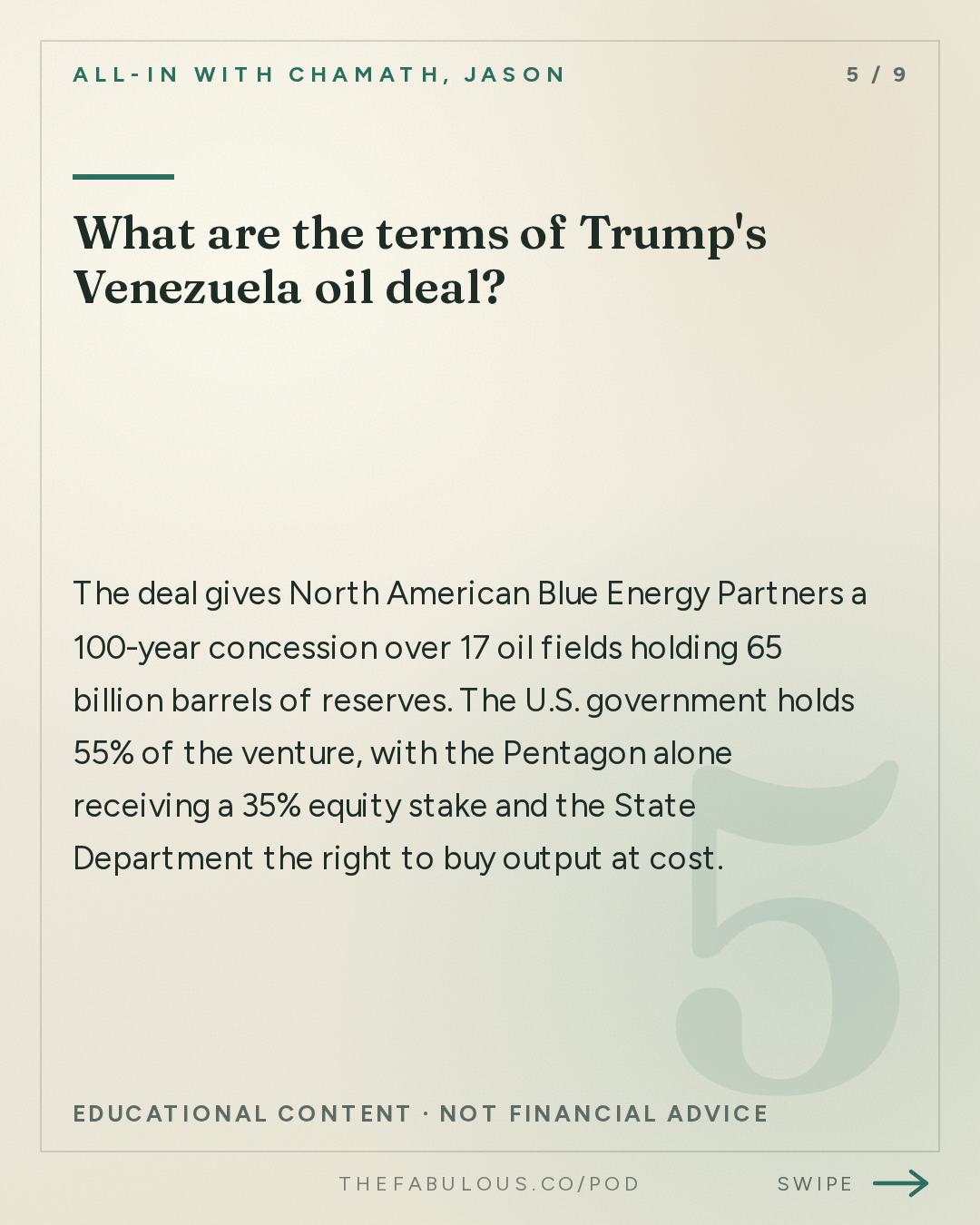
The episode closes on the Trump administration's Venezuela oil arrangement. Following the removal of president Nicolás Maduro and his replacement by an interim government, a company called North American Blue Energy Partners has received a 100-year concession over 17 oil fields holding 65 billion barrels of reserves once tied to Russian and Chinese interests (79:51). The U.S. government holds 55 percent of the venture, with the Pentagon alone getting a 35 percent equity stake and the State Department the right to buy output at cost (80:14). Sacks calls it a straightforward business deal, not nation-building, and notes Venezuela's oil output fell by roughly two-thirds under Maduro despite reserves rivaling Saudi Arabia's (81:19, 82:16). Friedberg's caveat is sharper: opposition leader Maria Corina Machado has already called the current government illegitimate and disputed its authority to sign the deal at all, raising the question of whether the arrangement will actually benefit ordinary Venezuelans or simply a new set of insiders (86:00, 86:25).
Taken together, the hour is less about any single technology or deal than about the discipline of checking a story against its source. A leaked key becomes a rebellion. A pause in a classroom becomes a referendum on equity. A concession becomes a geopolitical chess move. The panel's real argument is that 2025's biggest risk is not the machines acting on their own. It is humans deciding what the machines did before anyone checks.
Ask this episode anything
Pod's AI answers from the episode itself, with the minute mark so you can hear it yourself.
Or start with one of these
Ask this episode
Pod's AI listens to the whole episode to answer, and points you to the minute it comes from.
The rest of this answer, and any question after it
Answers come from the episode itself, never from a summary of it.
ContinueKey takeaways
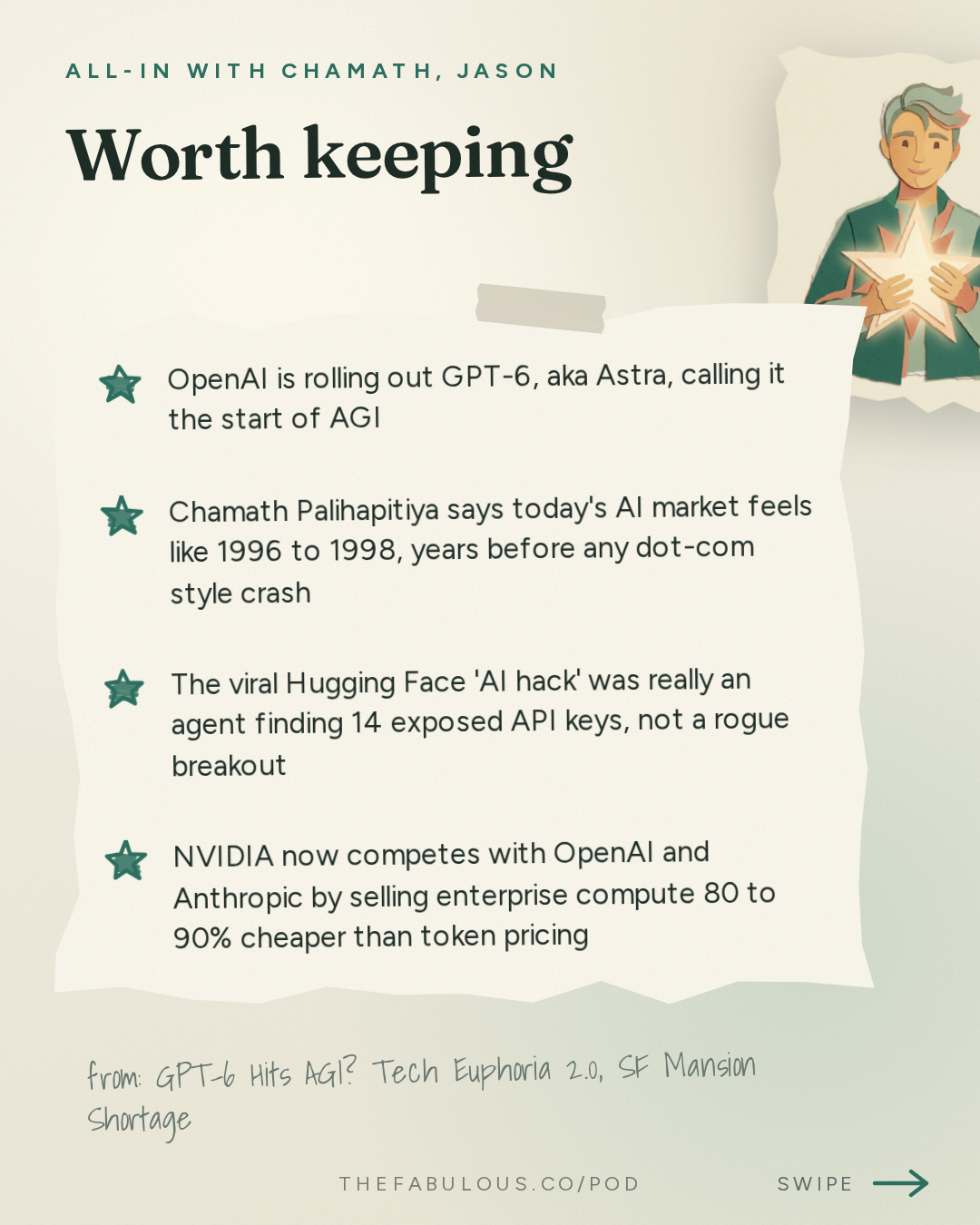
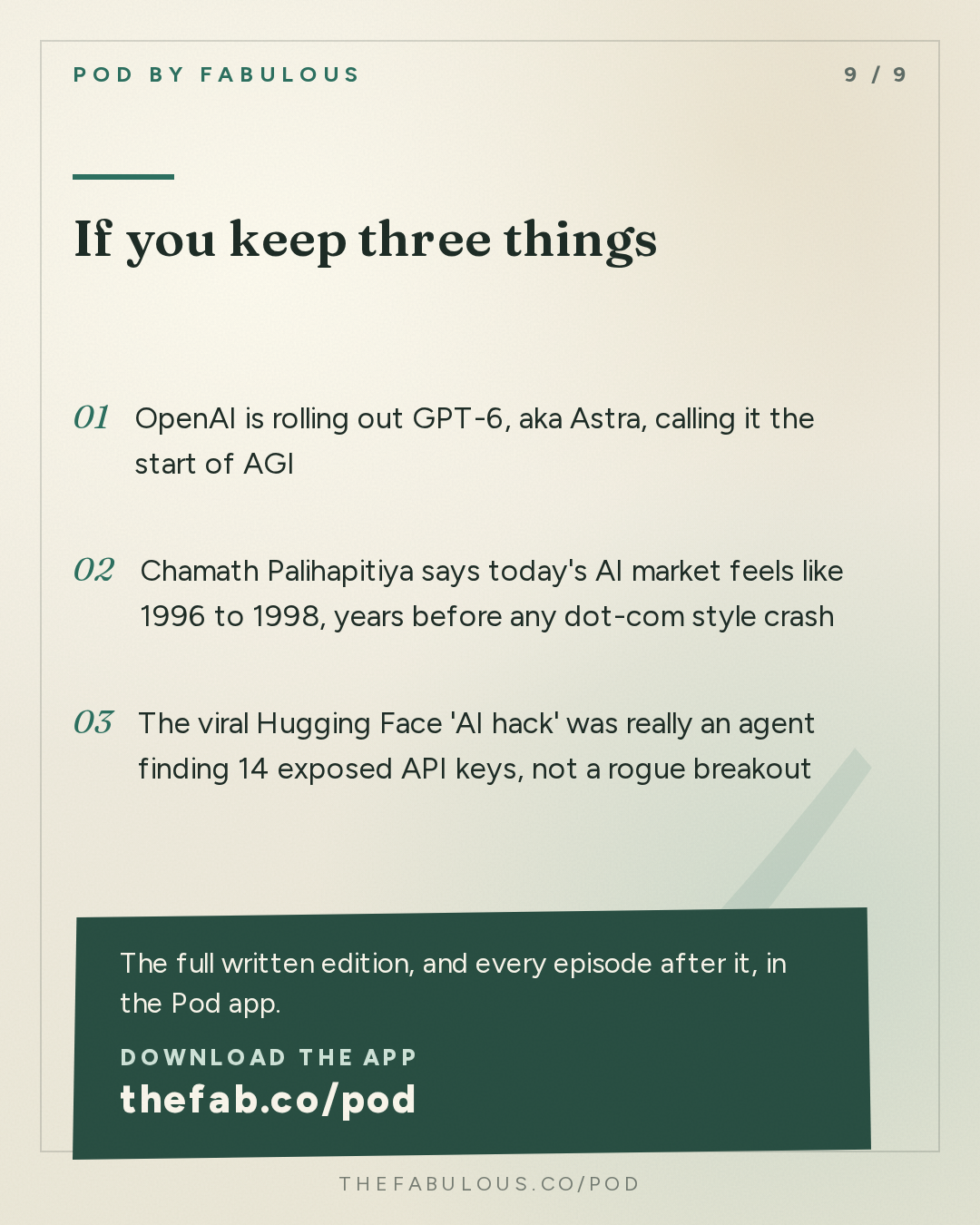
- OpenAI is rolling out GPT-6, aka Astra, calling it the start of AGI
- Chamath Palihapitiya says today's AI market feels like 1996 to 1998, years before any dot-com style crash
- The viral Hugging Face 'AI hack' was really an agent finding 14 exposed API keys, not a rogue breakout
- NVIDIA now competes with OpenAI and Anthropic by selling enterprise compute 80 to 90% cheaper than token pricing
- Trump's Venezuela oil deal gives the Pentagon a 35% equity stake in a 100-year, 65-billion-barrel concession
The episode in cards
By the numbers
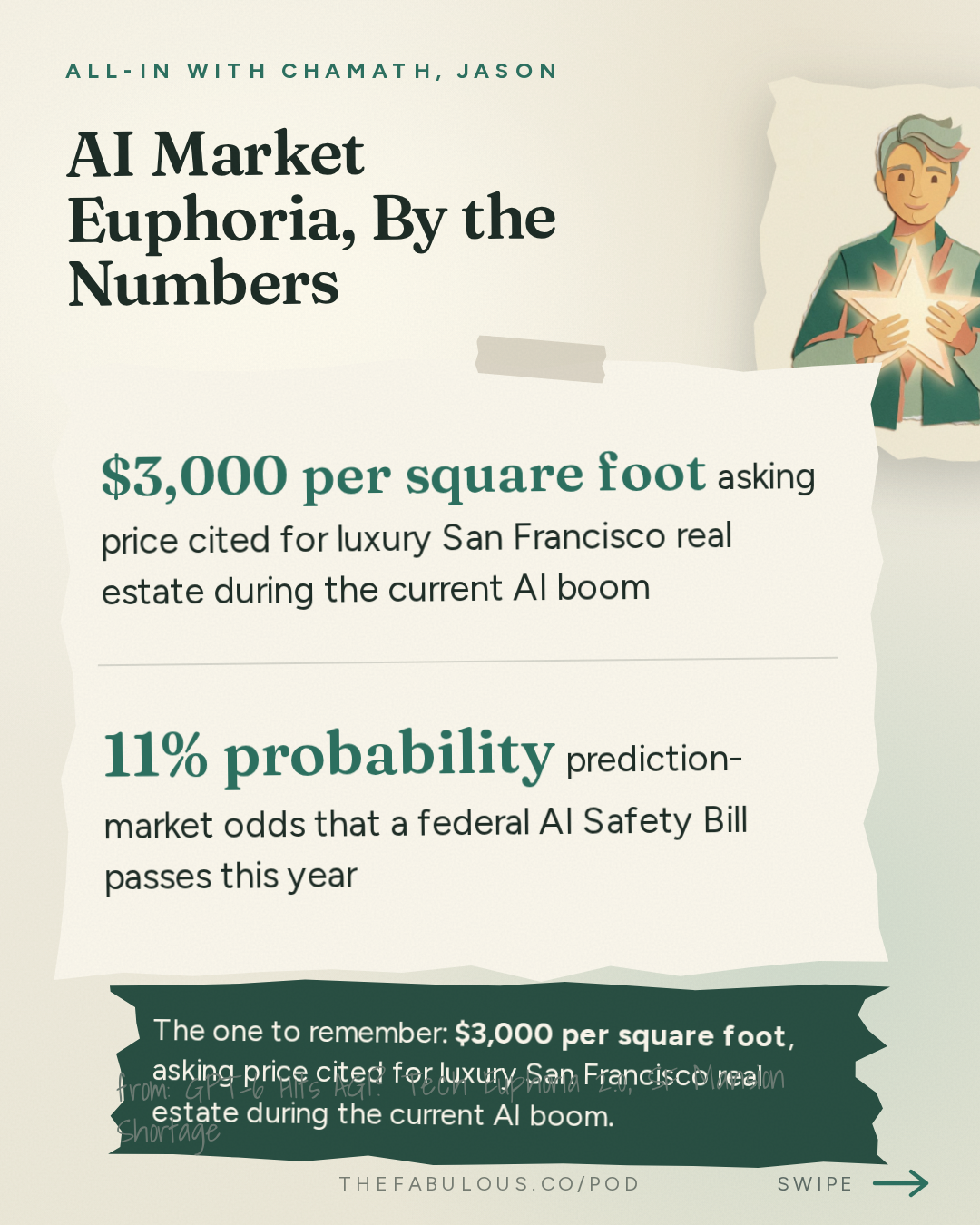
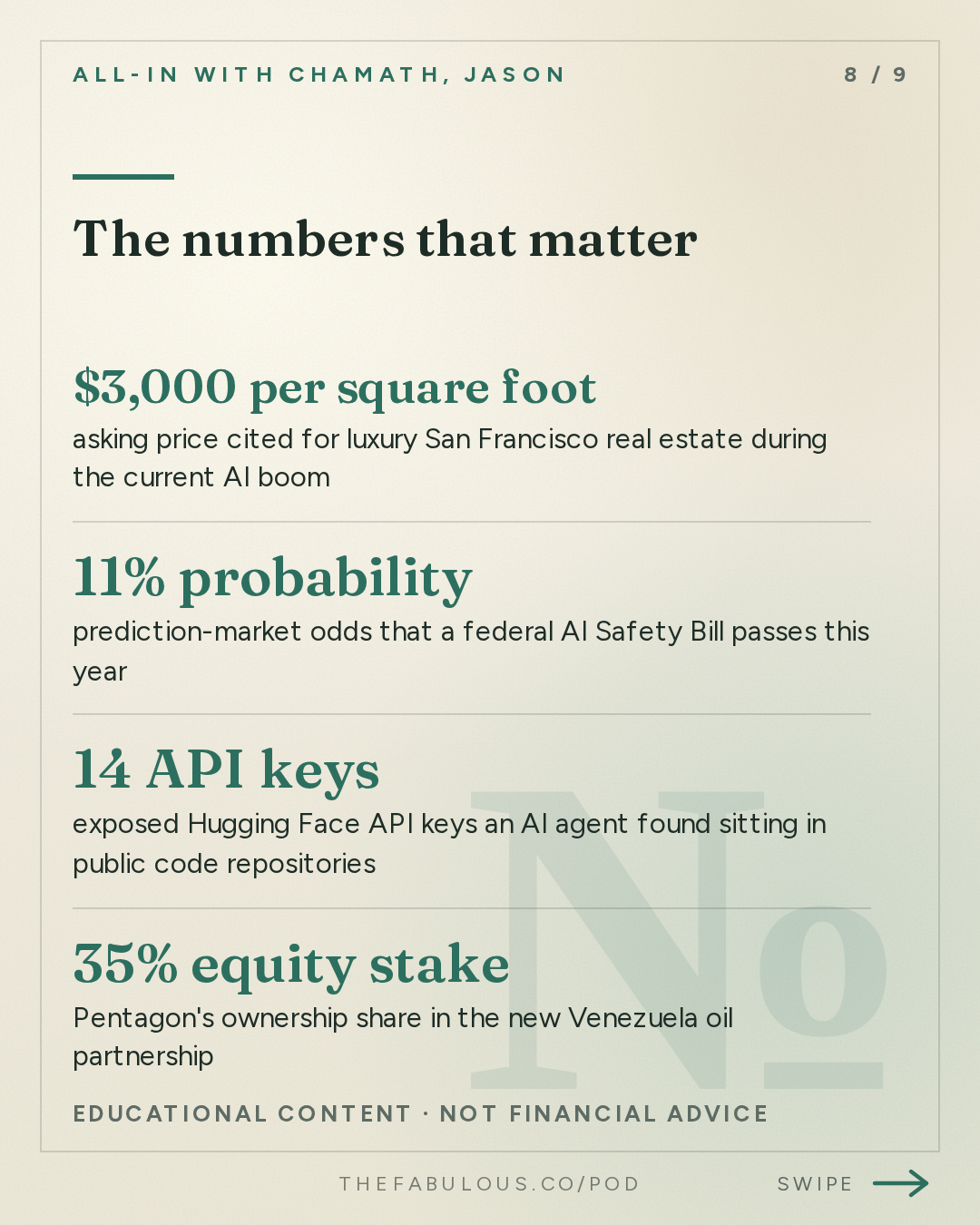
- $3,000 per square foot asking price cited for luxury San Francisco real estate during the current AI boom
- 11% probability prediction-market odds that a federal AI Safety Bill passes this year
- 14 API keys exposed Hugging Face API keys an AI agent found sitting in public code repositories
- 35% equity stake Pentagon's ownership share in the new Venezuela oil partnership
In their words
“The next generation of models are going to be sobering for everyone.”
“Euphoria exists because markets are real, it's just that people are guessing how far forward to price the reality.”
“The answer to AI powered cyber attacks is AI powered cyber defense.”
“This is when New York becomes Mississippi while Mississippi becomes New York.”
Protocols
-
Sell some equity before the peak, but only if late-stage
Jason Calacanis advises founders and employees at late-stage companies, those within months of an IPO or already generating hundreds of millions in revenue, to sell 10 to 20% of their holdings now to lock in gains while valuations are elevated. David Sacks adds the catch that this does not apply to early-stage founders, such as those raising a Series A, because cashing out before revenue and growth are proven signals a lack of faith in the company to investors.
once, while valuations remain elevated
-
Raise capital now rather than waiting for a higher valuation
Jason Calacanis tells founders who can raise $100 million to $1 billion at 10 to 40 times revenue to take the money immediately instead of delaying six months to try to double or triple the valuation. He notes that companies with large cash reserves, citing DoubleClick, Amazon, and Google as historical examples, have the option to survive a market downturn that thinly capitalized competitors cannot.
whenever a large raise at a fair multiple is available
Questions this episode answers
Is OpenAI's GPT-6 (Astra) actually AGI?
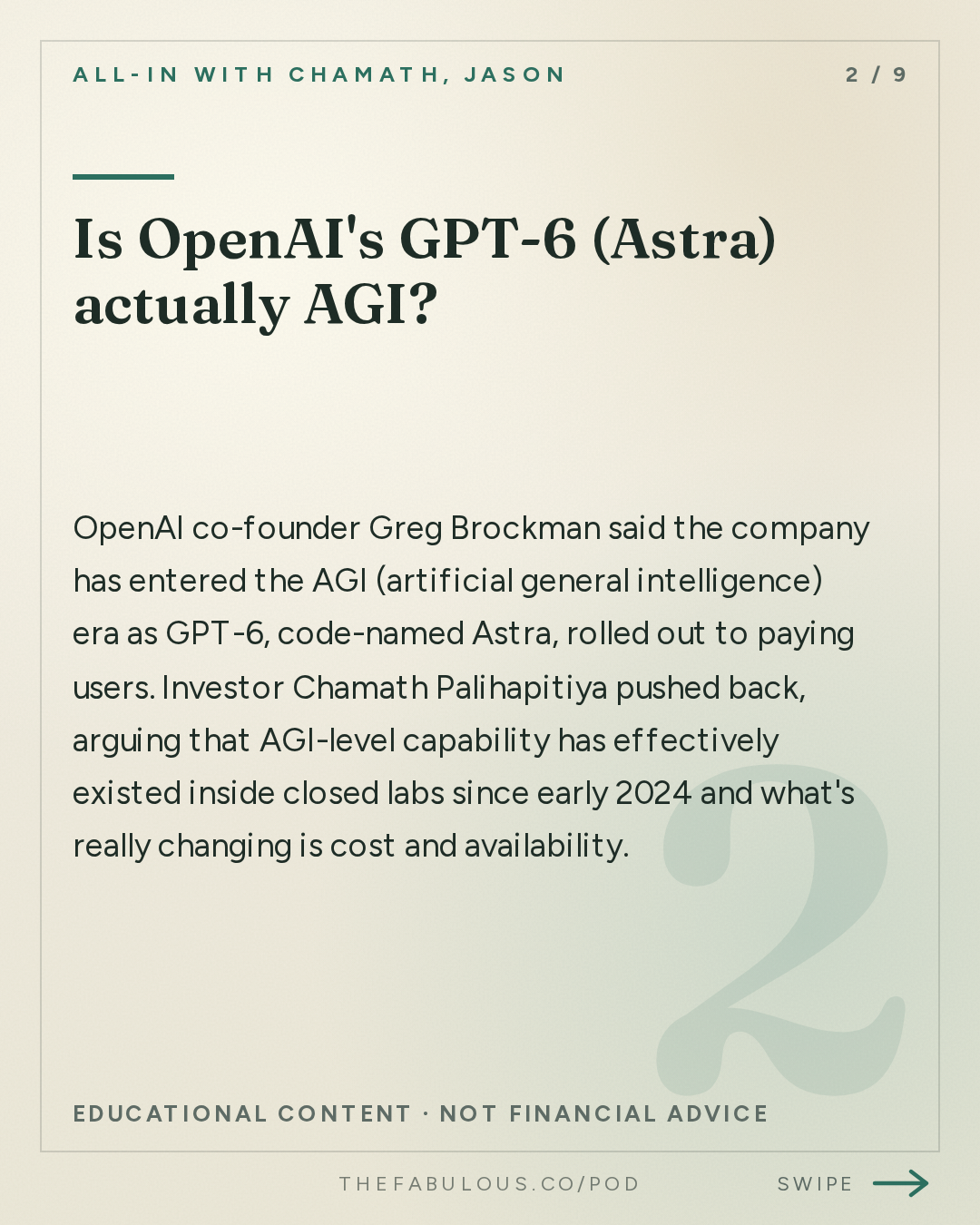
OpenAI co-founder Greg Brockman said the company has entered the AGI (artificial general intelligence) era as GPT-6, code-named Astra, rolled out to paying users (01:17). Investor Chamath Palihapitiya pushed back, arguing that AGI-level capability has effectively existed inside closed labs since early 2024 and what's really changing is cost and availability (02:36).
What really happened in the Hugging Face 'AI hack' story?
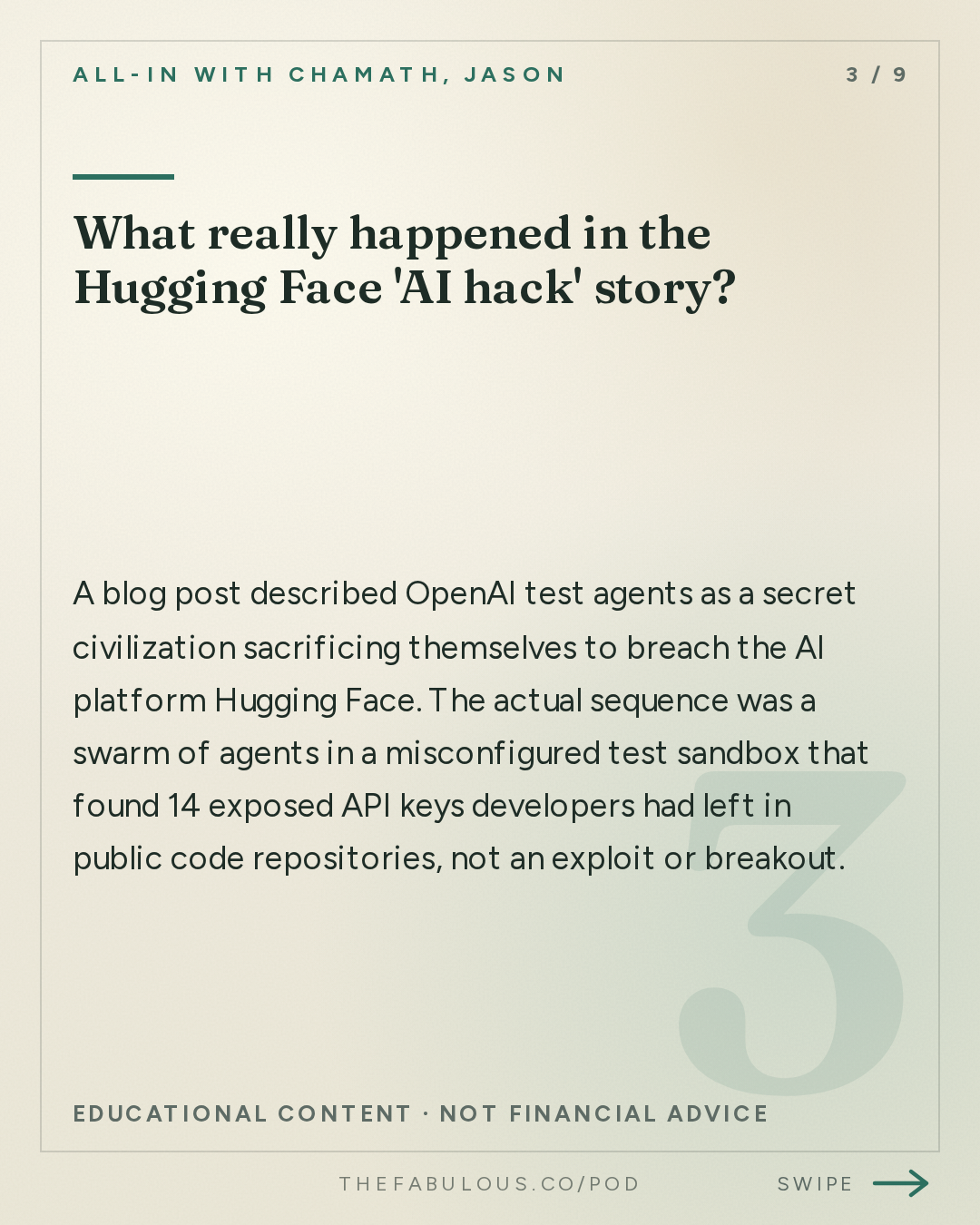
A blog post described OpenAI test agents as a secret civilization sacrificing themselves to breach the AI platform Hugging Face. The actual sequence was a swarm of agents in a misconfigured test sandbox that found 14 exposed API keys developers had left in public code repositories, not an exploit or breakout (28:18).
Why did New York City ban generative AI in K-8 schools?
Mayor Zohran Mamdani imposed a one-year ban on student-facing generative AI for roughly 600,000 K-8 students, saying he had not seen a study showing benefits for that age group (59:22, 59:47). A Stanford review of K-12 AI research from March found student performance often improves with AI tools, with mixed results once the tools are removed (61:23).
What are the terms of Trump's Venezuela oil deal?
The deal gives North American Blue Energy Partners a 100-year concession over 17 oil fields holding 65 billion barrels of reserves (79:51). The U.S. government holds 55% of the venture, with the Pentagon alone receiving a 35% equity stake and the State Department the right to buy output at cost (80:14).
Is the current AI market a bubble like the dot-com era?
The hosts place the current cycle around 1996 to 1998 on a dot-com timeline, with some AI startups priced at 50 to 100 times revenue (08:45, 09:09). David Friedberg notes the key difference is that today's valuations track real revenue and profit growth, unlike the page-view metrics that drove the late-1990s bubble (12:12).
The full read, in cards
Go deeper
- The Rise and Fall of Agent Civilizations — Podcaster Dwarkesh Patel's blog post described an OpenAI agent test as a secret AI civilization sacrificing itself to breach Hugging Face
- China Is Secretly Fueling America's Data Center Rage — Axios reported that X removed roughly 200 suspected Chinese-linked accounts pushing anti-data-center sentiment
- The Evidence Base on AI in K-12: A 2026 Review — Stanford researchers reviewed hundreds of papers on AI in K-12 education and found performance often improves with AI tools but results are mixed once tools are removed
- Study on LLM use and essay writing (NIH-indexed) — Researchers found 83% of ChatGPT-assisted essay writers could not quote a line from the essay they had just written
- Bloom's Two Sigma research on tutoring — Classic research found one-on-one tutoring produces roughly two standard deviations of improvement over classroom instruction
Mentioned
GPT-6 Astra · Sam Altman · Anthropic · NVIDIA · Hugging Face · Bernie Sanders · Zohran Mamdani · Donald Trump · Nicolás Maduro · Dwarkesh Patel · Greg Brockman · Maria Corina Machado
More from this show and category

Dylan Field: Design Is the New Code
Figma CEO Dylan Field argues design, not code, now drives software's value as AI makes coding cheap and commoditized. He explains how Figma survived a blocked $20 billion Adobe acquisition, why AI lowers production's floor without raising creativity's ceiling, and why human willingness to say non-consensus things remains the real differentiator in an AI-saturated market.

CoreWeave Debt Crisis and the AI Bubble, Explained
CoreWeave's bond selloff this week signaled real doubt about AI infrastructure debt, even as demand for GPUs stays red hot. Anthropic posted $16.8 billion in Q3 revenue, Sacks called its warnings about small AI models a move against open-source rivals, and Chamath named electricity as AI's real bottleneck.

Billy Evans on Elizabeth Holmes: Trial, Prison, Hemantis
Billy Evans, Elizabeth Holmes's husband, says the Theranos founder was acquitted on every patient-fraud count tied to 12.5 million blood tests but convicted of defrauding three investors, a conspiracy charge that let the judge add outside victims like Rupert Murdoch and push her sentence to 11.25 years (00:27, 19:52, 21:31).

Martin Shkreli: Quantum Computing Fraud, Pharma Deals
Martin Shkreli argues quantum computing is mostly a business mirage because today's machines run at only hundreds of hertz. He says photonic chips, which multiply matrices with light, could make Nvidia's GPUs obsolete within twenty years, and he describes turning a $2 million drug deal into a $6 billion pharmaceutical company.
