Reading JournalStudy & Learning · ~4 min
About this template · Updated September 2026
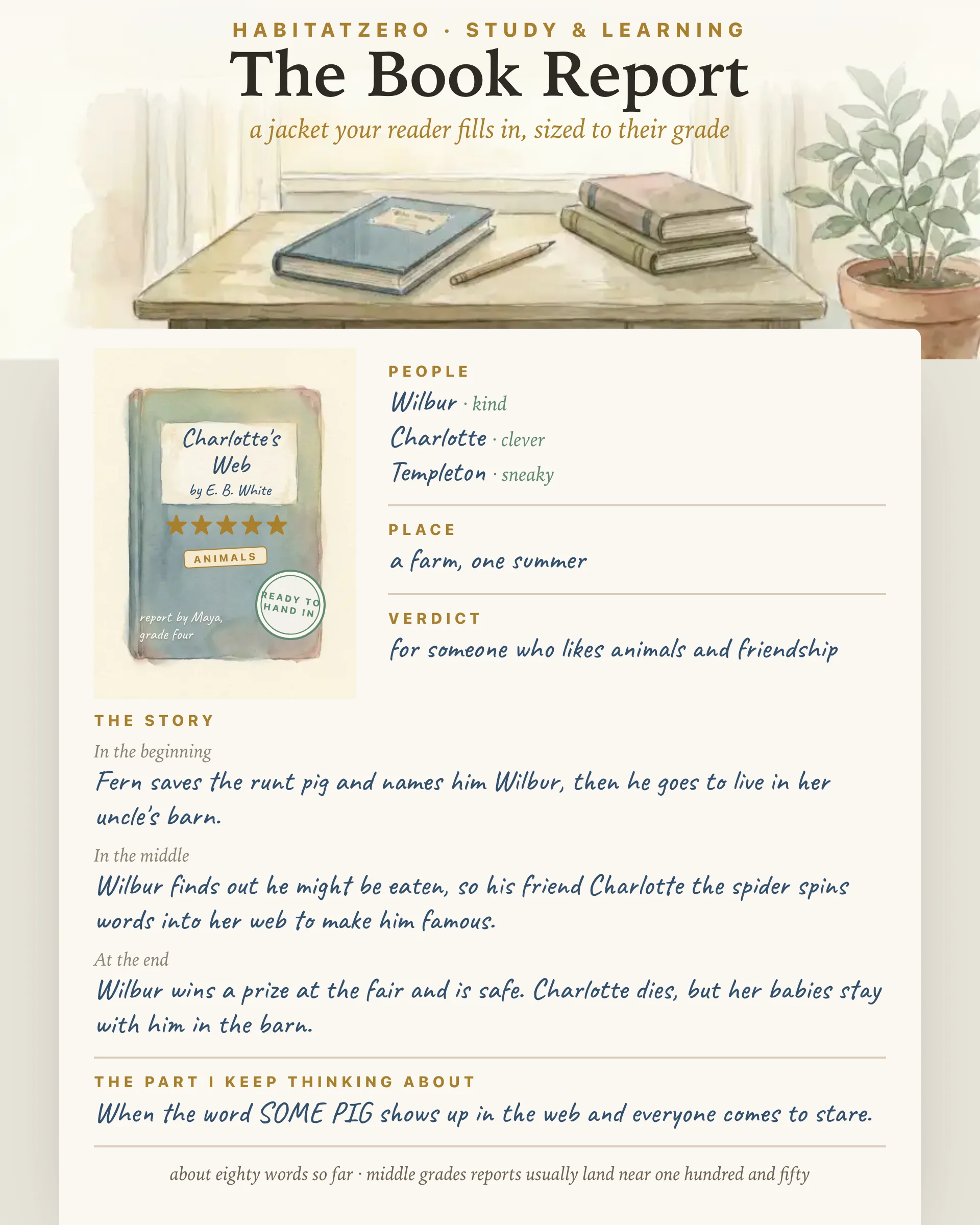
The book was finished on Sunday, the report is due Thursday, and on Wednesday night a child sits in front of a sheet headed Summary and writes nothing. It is not that they have nothing to say. Ask them at dinner what happened to the pig and you get ten minutes. The blank is the problem, not the reader.
This page replaces the blank with a book jacket. The child fills the cover, then the flaps, one small question at a time, and the jacket tells them when it is done.
A book report is really a handful of separate questions wearing one heading: who was in it, where it happened, what went wrong and how it ended, which part you loved, and whether someone else should read it. Put those on one page as one big box and the child has to invent the structure before they can start. Split them into panels and the structure is already there.
So the cover takes the title and author, in the reader's own handwriting on a painted book. A genre stamp goes on below, chosen by tap, and the stars are on the cover itself. Then the inside flaps open: People, where each character gets a name and one word that fits them; Place, chosen from chips or written in; The story, told in beats; Favorite part; and Verdict, which asks who the book should be handed to next.
Before anything is written, you choose who is writing: little readers, middle grades or older readers. The jacket then sets itself.
Little readers get two story beats, it starts when and at the end, room for three characters, and no question about when the story is set. Middle grades get a beginning, a middle and an end, four characters, and a when to go with the where. Older readers keep all of that and gain a Big idea panel, which asks what the book is really about and for one moment that proves it, plus a line in the verdict for the one thing they would change. The prompts shift their wording too, so a seventh grader is asked what goes wrong and what the character does about it, not simply what happens.
You can change the band at any time. Nothing already written is lost; panels the new band does not ask for simply fold away.
Two things. First, it counts. A thin word ruler under the band chooser fills as the story, the favorite part and the older panels are written, and it says in plain words where the report stands: about eighty words so far, middle grades reports usually land near one hundred and fifty. Those marks are rough, and a teacher's instructions always outrank them, but they answer the question every child asks, which is is this enough.
Second, it checks itself. The status line names which panels are still open, and when every panel the band asks for has something in it, a round seal stamps the cover: ready to hand in. There is no grade attached and nothing is judged. It is simply the moment the child can stop.
Writing about a book is not busywork. A meta-analysis of writing-to-read studies found that asking students to write about what they read improves their comprehension of it. Writing to learn more broadly shows a small but consistent positive effect on achievement, and the effect is stronger when the prompts ask students to reflect on the material rather than simply reproduce it.
Be honest with yourself about the summary, though. A large review of study techniques rated summarization as low utility on its own, mainly because students need to be taught how to summarize before it helps. That is why this jacket does not lead with one. The beats, the trait words, the favorite part and the verdict are all forms of retrieval and judgment, which is where the value sits. A report that is three sharp beats and an honest verdict is a better report than a page of retold plot.
Fill the jacket the day the book ends, while the ending still stings. Sit beside a younger reader and type while they talk if the keyboard is the obstacle; the words are still theirs. For a whole class, set the band once and let each reader take it from there, then print: the filled jacket comes out on one sheet with the chips and controls hidden.
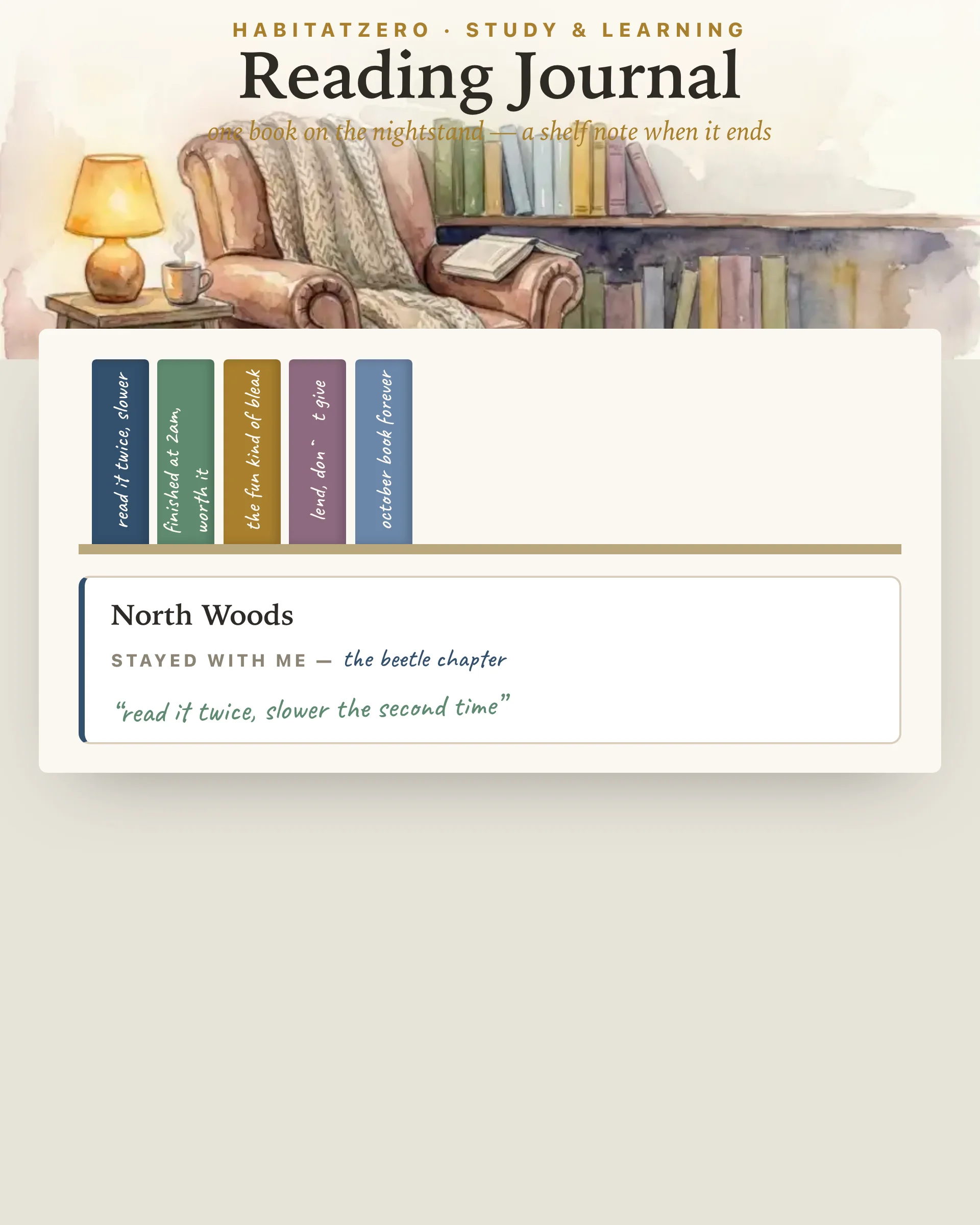
If the same reader keeps a printable reading log for their nightly minutes, the report is where one of those books gets its full say. Older readers who have outgrown the panels will find the reading journal closer to what they need, one honest shelf note per book. And if the report is one of five things due this week, put it on the homework planner so Wednesday night stops being a surprise.
The seal is not the point. The point is a child who finishes a book and can say, in their own words, what it was and whether it was worth it.
The classic six: the title and author, the main characters, the setting, what happens, the reader's favorite part, and a verdict. This jacket carries all six as panels, and for older readers adds a seventh for the big idea behind the story and a moment that shows it. The grade band decides which panels appear and how the questions are worded.
Shorter than most parents expect. A few sentences is a full report for a first or second grader, one or two paragraphs suits third to fifth grade, and a page or so fits middle school. The word ruler on this page uses fifty, one hundred and fifty, and two hundred and fifty words as rough marks for those three bands, but your teacher's instructions win over any ruler.
One that asks a few concrete questions instead of one big blank. Kids freeze in front of a page headed Summary, and they answer easily when asked who is in it, where it happens, what goes wrong and how it ends. Tap-to-add chips for traits, places and genres keep typing to a minimum, so the effort goes into the two or three sentences that matter.
Both. The preview shows a finished middle grades report on a well-known novel so you can see how the panels read when full, and personalizing it gives you the same jacket empty, with your reader's band, book and words on it.
You can read the filled example right here. To type your reader's own report, keep it and reopen it later, personalize the jacket in HabitatZero, which is free. The finished jacket also prints cleanly with the panels and the cover on one sheet.
By the team behind Fabulous, the science-based self-care app used by over 30 million people.