
Stacey Abrams' 10 Steps to Authoritarianism, Explained
Stacey Abrams on Midterms: What's Going to Happen?
▶ Listen to the full episode More from We Can Do Hard Things
The brief
Stacey Abrams argues the United States is now a "competitive authoritarian" country: elections still happen, but power is hoarded and unaccountable (07:58). She lays out ten warning steps toward autocracy and ten matching steps back to freedom, then applies both to the midterms six weeks out, urging two hours a week of targeted local action (62:33).
Ask this episode anything
Pod's AI answers from the episode itself, with the minute mark so you can hear it yourself.
Or start with one of these
Ask this episode
Pod's AI listens to the whole episode to answer, and points you to the minute it comes from.
The rest of this answer, and any question after it
Answers come from the episode itself, never from a summary of it.
Continue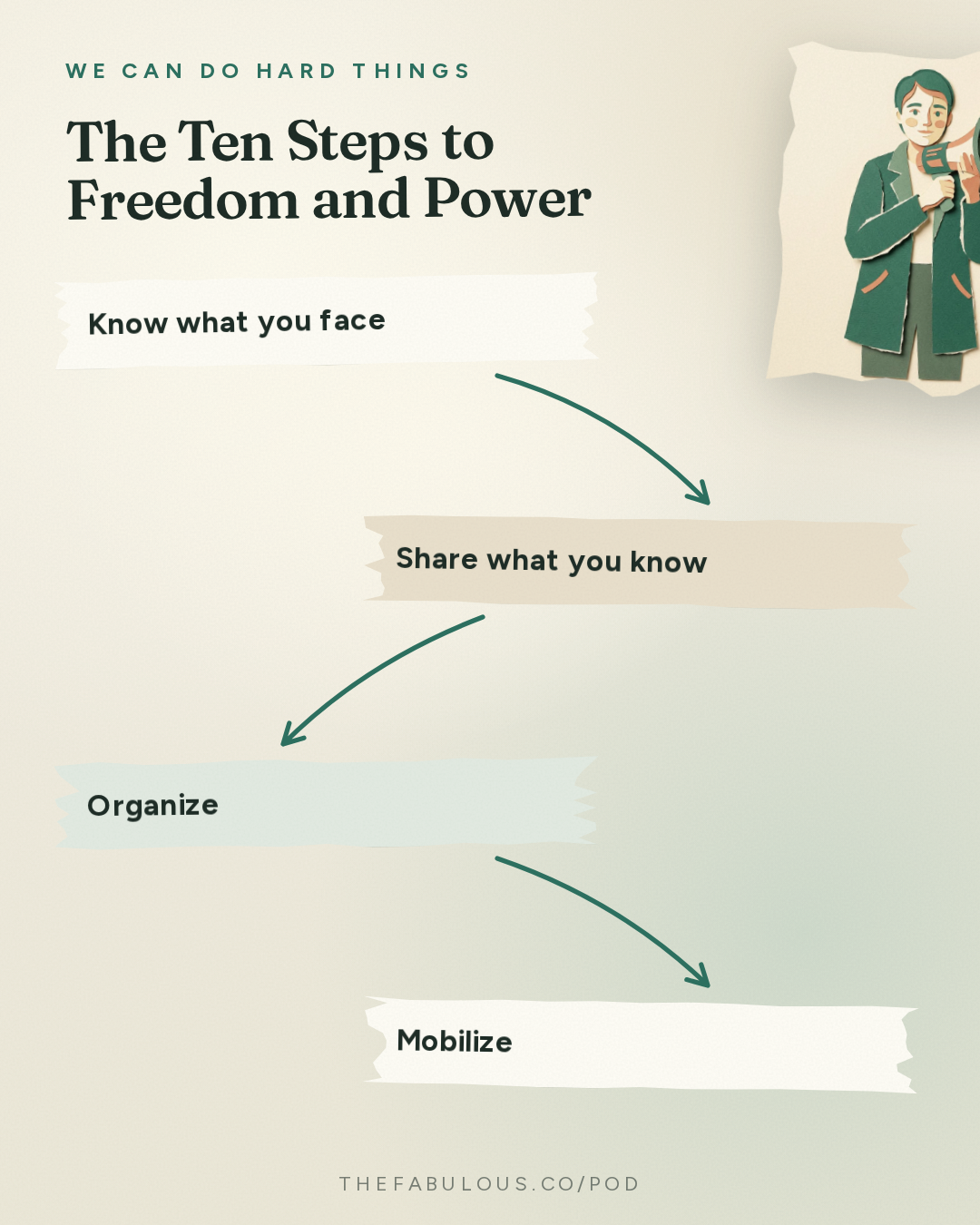
Key takeaways
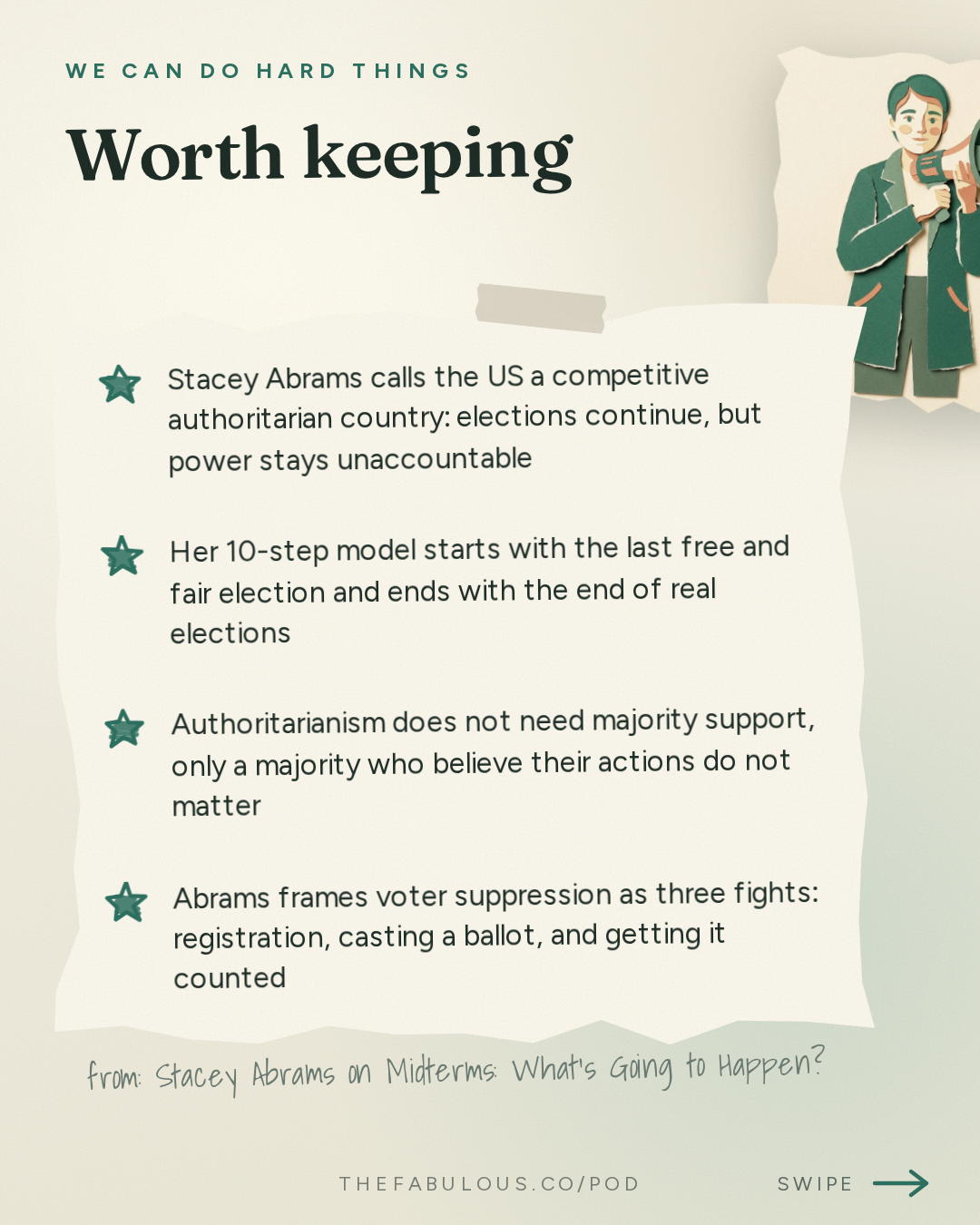
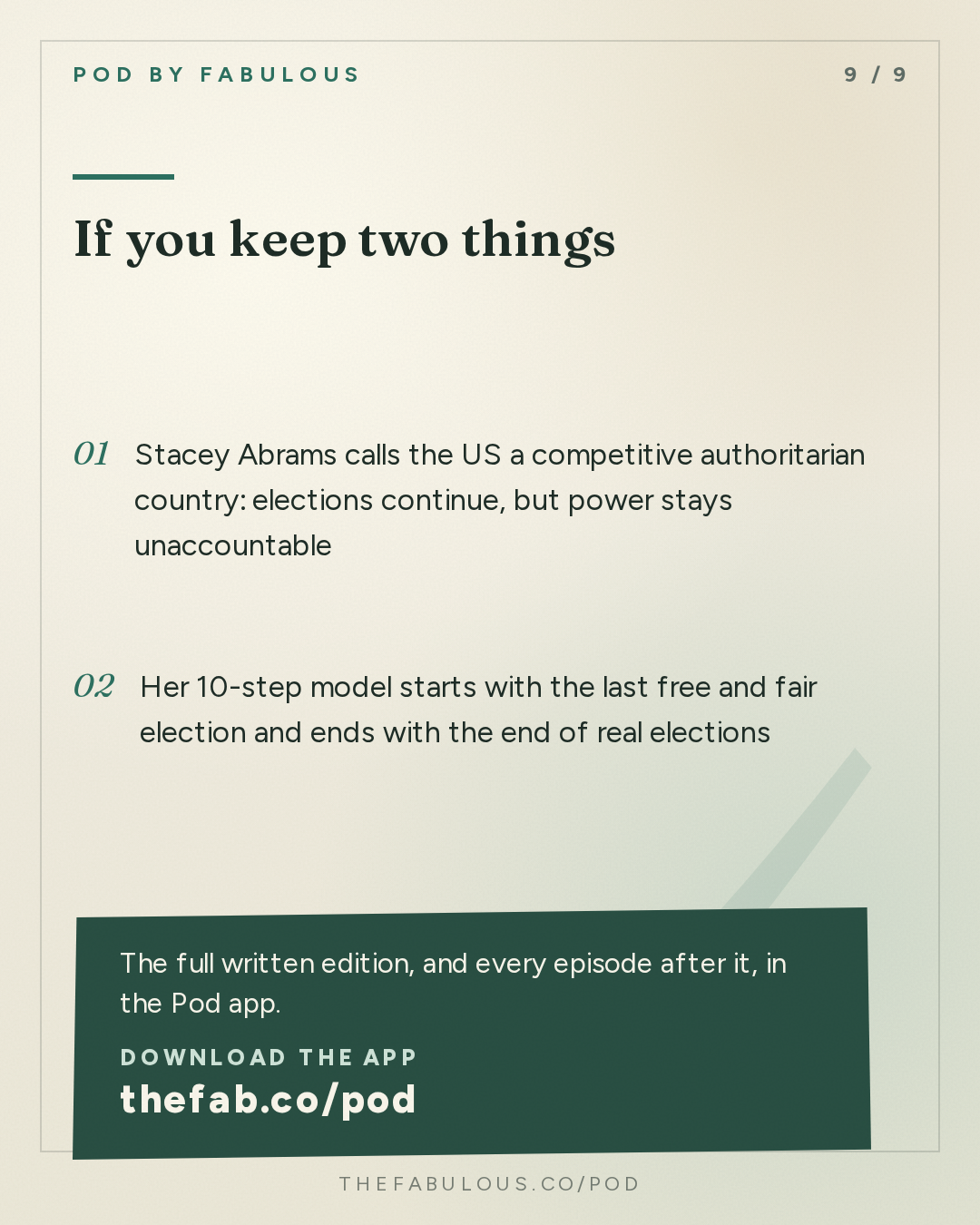
- Stacey Abrams calls the US a competitive authoritarian country: elections continue, but power stays unaccountable (07:58)
- Her 10-step model starts with the last free and fair election and ends with the end of real elections (11:48)
- Authoritarianism does not need majority support, only a majority who believe their actions do not matter (26:12)
- Abrams frames voter suppression as three fights: registration, casting a ballot, and getting it counted (34:37)
- She urges two hours a week of targeted local action, including door knocking, over the six weeks before midterms (62:33)
The episode in cards
There is a scene in the conversation where Stacey Abrams reaches for a strange comparison: margarine. "I can't believe it's not butter, I can't believe it's not democracy," she says, describing a country that looks and tastes like the real thing but isn't (11:08). The joke lands because it is precise. Abrams, who served eleven years in the Georgia House of Representatives, seven of them as minority leader (05:48), has spent her career studying how power moves in places that still hold elections but have quietly stopped being democracies. Her term for the current American condition is competitive authoritarianism: a state that keeps the outward machinery of democratic government, courts, elections, a legislature, while using that machinery to serve an unaccountable few (07:58).
The definition she gives is worth sitting with because it is not about ideology. An authoritarian country, in her framing, is one where a small group takes power that belongs to citizens and hoards it so tightly that no one can hold them to account (08:19). Democracy, by contrast, is simply shared power used for the benefit of people who need it, checked by elections and open government (09:10). Corruption, she notes, always follows authoritarianism, because a government that answers to no one has no reason to behave.
What makes the conversation useful rather than merely alarming is that Abrams treats authoritarianism as a process with recognizable stages, not a mood. She calls it the Ten Steps to Autocracy and Authoritarianism, a framework she built for a group of college students who asked her, bluntly, whether democracy would still exist by the time they graduated (22:18). It begins, she says, with the last free and fair election, because authoritarians are usually voted into power rather than seizing it by force.
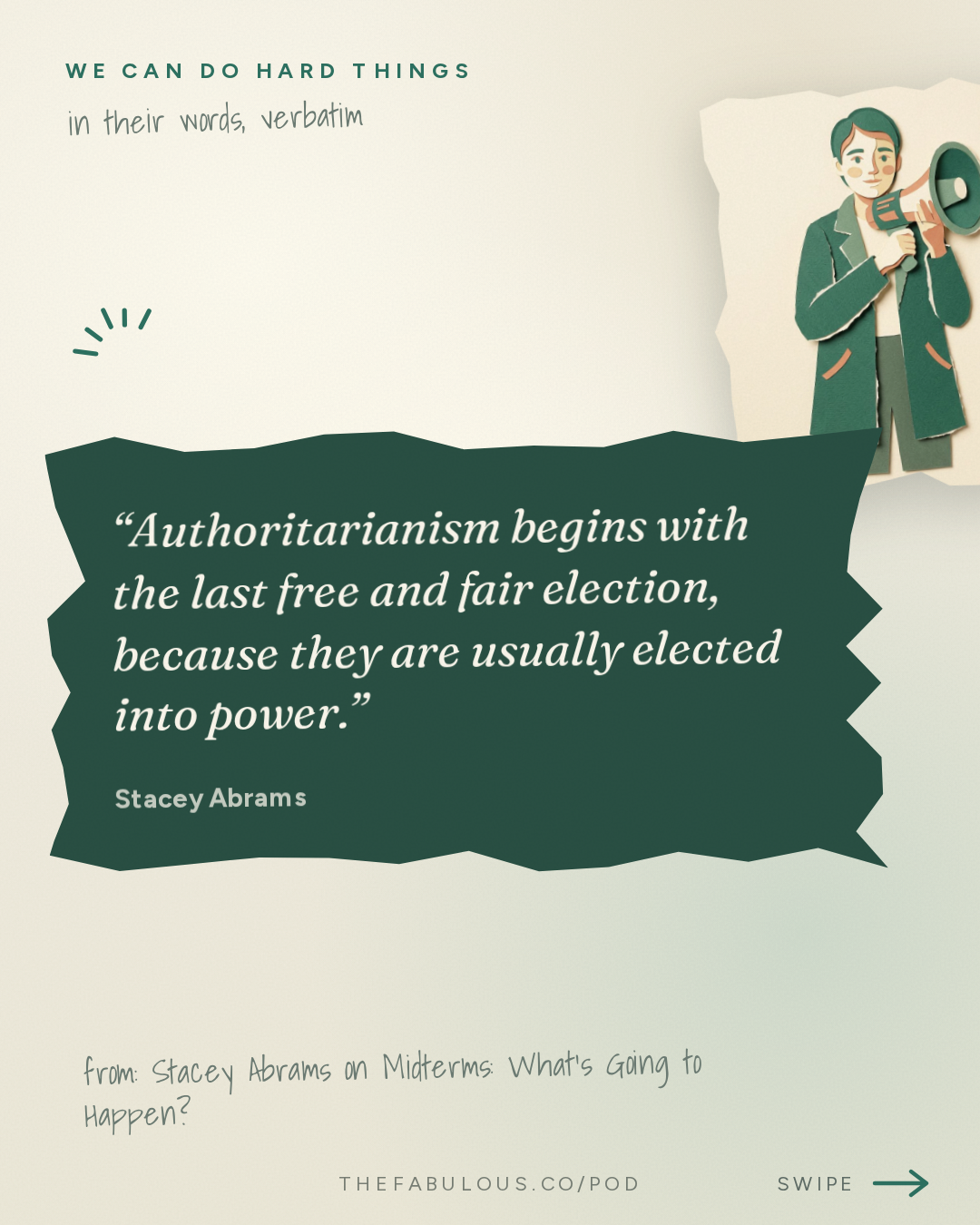
"Authoritarianism begins with the last free and fair election, because they are usually elected into power." — Stacey Abrams (11:48)
From there the stages compound. Executive authority expands past what anyone expected a president could do (14:34). Competing powers, courts and legislatures, go weak or complicit; Abrams points to the Supreme Court's growing use of the "shadow docket," a term for unsigned emergency rulings issued without public hearings, as evidence the judiciary has stopped checking the executive (12:36). Government itself becomes the target, starved so citizens stop trusting it. Loyalists replace professionals in agencies. Truth itself comes under attack, which she says has to happen before propaganda can feel normal (16:18).
"If you attack the truth, then the propaganda seems normal." — Stacey Abrams (16:45)
Then come scapegoating, attacks on universities and philanthropies that might resist, and the normalization of state violence, before the tenth step: the end of meaningful elections. Abrams is careful here about a distinction that matters. Authoritarians do not dislike elections. They dislike fair outcomes. They want the ritual of voting without the risk of losing (18:35).
The Steps Back
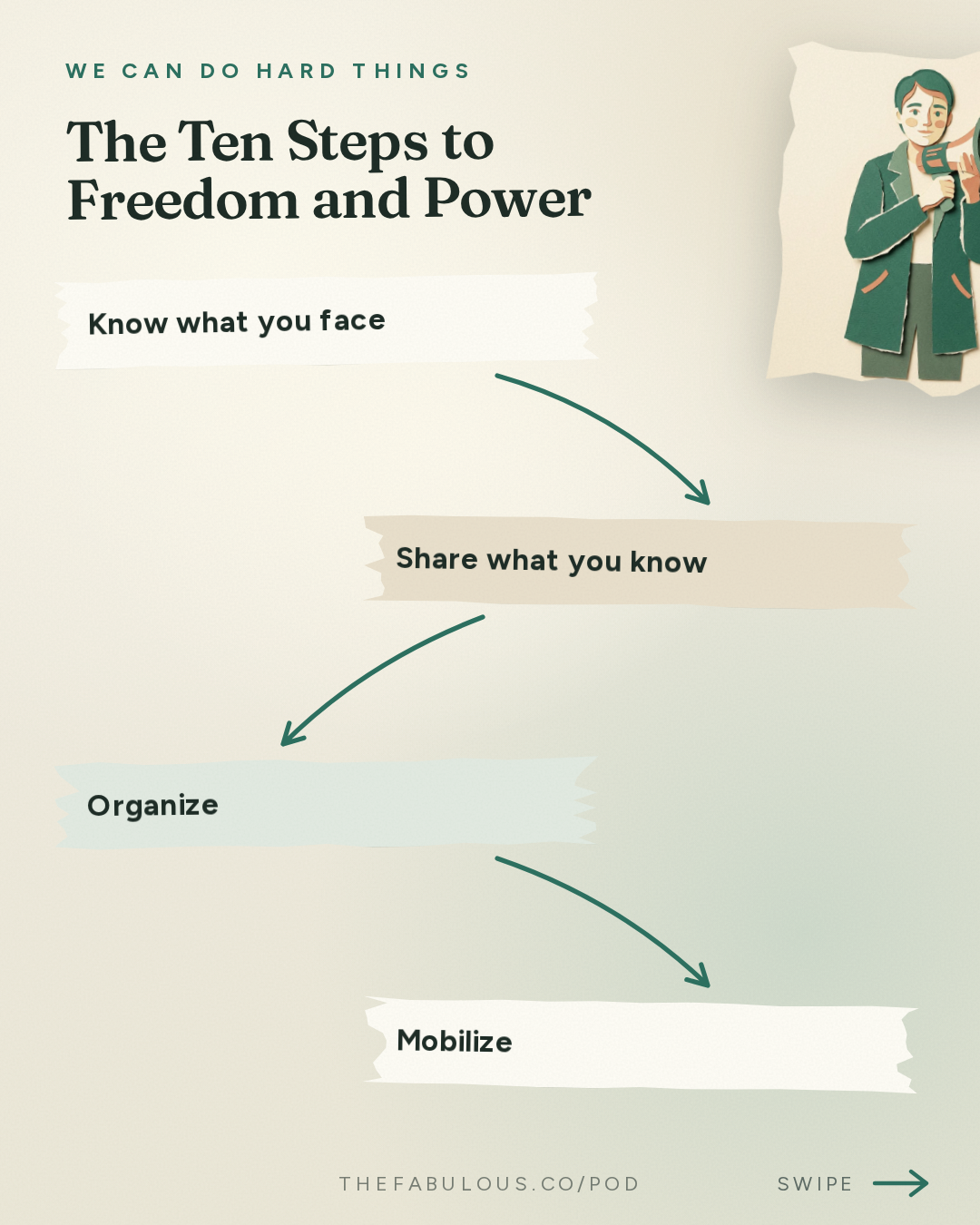
The reason this episode is worth keeping rather than filing under doom is that Abrams pairs her diagnosis with a treatment: the Ten Steps to Freedom and Power, a mirror sequence that starts with simply admitting what is happening, then sharing that knowledge, organizing, mobilizing, litigating, being disruptive, refusing to let language be stolen, staying visibly engaged, electing new people, and finally demanding the democracy citizens are owed (22:39). None of this requires everyone to do everything. "Everything Everywhere All at Once, fantastic title for a movie, terrible mission statement," she says of the impulse to try to fix all of it at once (25:11). Her advice is to pick one or two things and actually do them.
Underneath both frameworks sits a claim that reframes the whole conversation: authoritarianism does not need majority support. It only needs the majority to believe nothing they do matters (26:12). That is why Abrams rejects the language of optimism and pessimism alike. Optimism assumes good outcomes that aren't guaranteed; pessimism ignores how much can still be won. What she offers instead is determination, which she defines as control over one's own actions rather than a prediction about outcomes.
"I do determination. I can only control what I do, and I cannot do everything." — Stacey Abrams (27:01)
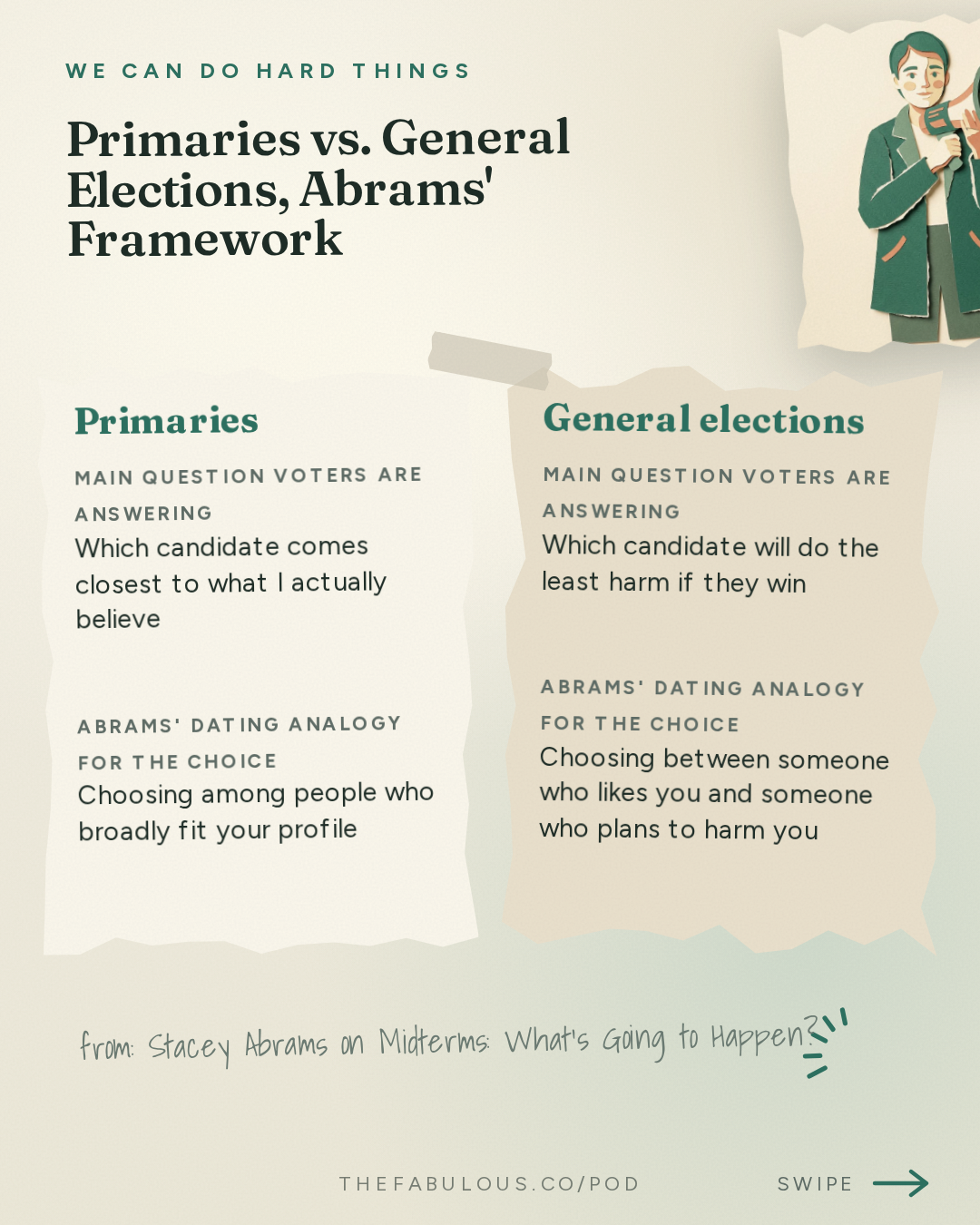
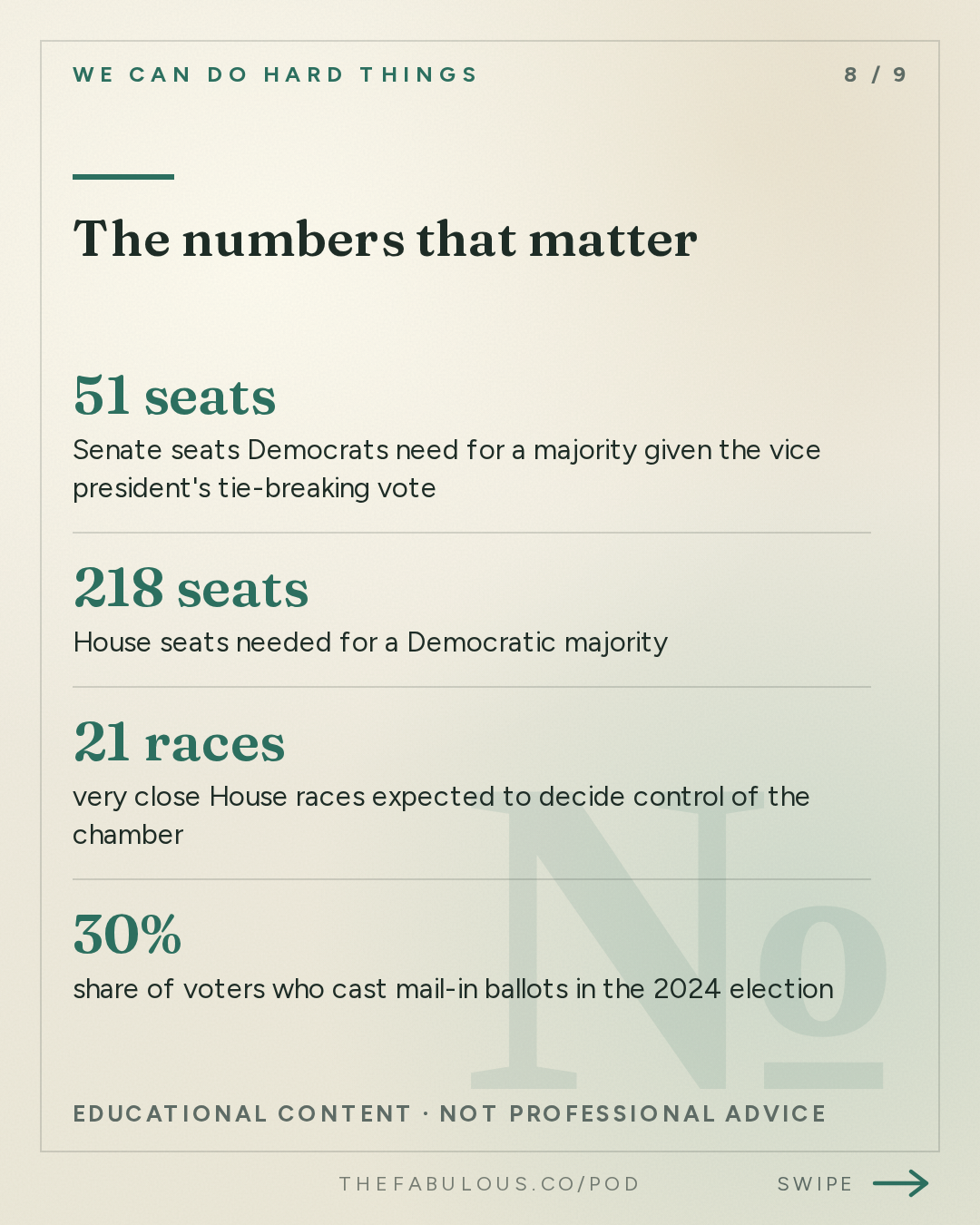
Applied to the midterms, six weeks away at the time of the interview, the arithmetic is concrete. Democrats need 51 Senate seats to overcome a tie-breaking vice-presidential vote (02:18), and 218 House seats for a majority, with roughly 21 very close House races expected to decide it (03:36, 03:57). But Abrams insists the midterms matter less as an endpoint than as a rehearsal. "The midterms are a referendum on two things," she says: whether citizens still feel ownership of the country, and how much ground can be tested before the 2028 presidential election and the 2030 census, which will decide how political power and money are redistributed for a decade (29:56, 33:29). She frames voter suppression itself as operating in three stages: whether a person can register and stay on the rolls, whether they can cast a ballot, and whether that ballot gets counted (34:37). On mail-in voting specifically, she notes the Supreme Court had, as of the interview, not ended the practice but only deferred the underlying legal fight (35:21); a note added after recording confirms the Court then blocked an executive order that would have restricted mail ballots, and that 30 percent of voters used mail ballots in 2024 (37:45).
What Happens the Day After
The most practical stretch of the conversation is about what to do after the votes are counted, because Abrams treats election night as an opening, not a finish line. She wants newly elected members of Congress seated on schedule, without procedural delay, and she wants constituents showing up to statehouse budget hearings before session even starts, because by January "you've already missed the party" (42:22, 43:08). Her theory of how elected officials actually behave is blunt: "Politicians are like teenagers. They respond to money, peer pressure, and attention" (43:27). Attention, she says, is the one resource ordinary people have in surplus, and it should be spent watching officials the way one would watch a spouse who has already been caught lying once.
"Your partisanship is private, their leadership is public, and they need to be afraid." — Stacey Abrams (43:59)
She extends the same discipline to intra-left arguments about electability and purity, which she calls a straw man rather than a genuine strategy, since "the electable person is the person who wins," full stop, decided only by the vote itself (60:31). Her test for coalition-building is not whether someone shares her values but whether they share her vision, a distinction she says lets her work with people she disagrees with on specific issues, like abortion, without needing to erase the disagreement or pretend it away (52:30, 57:26).
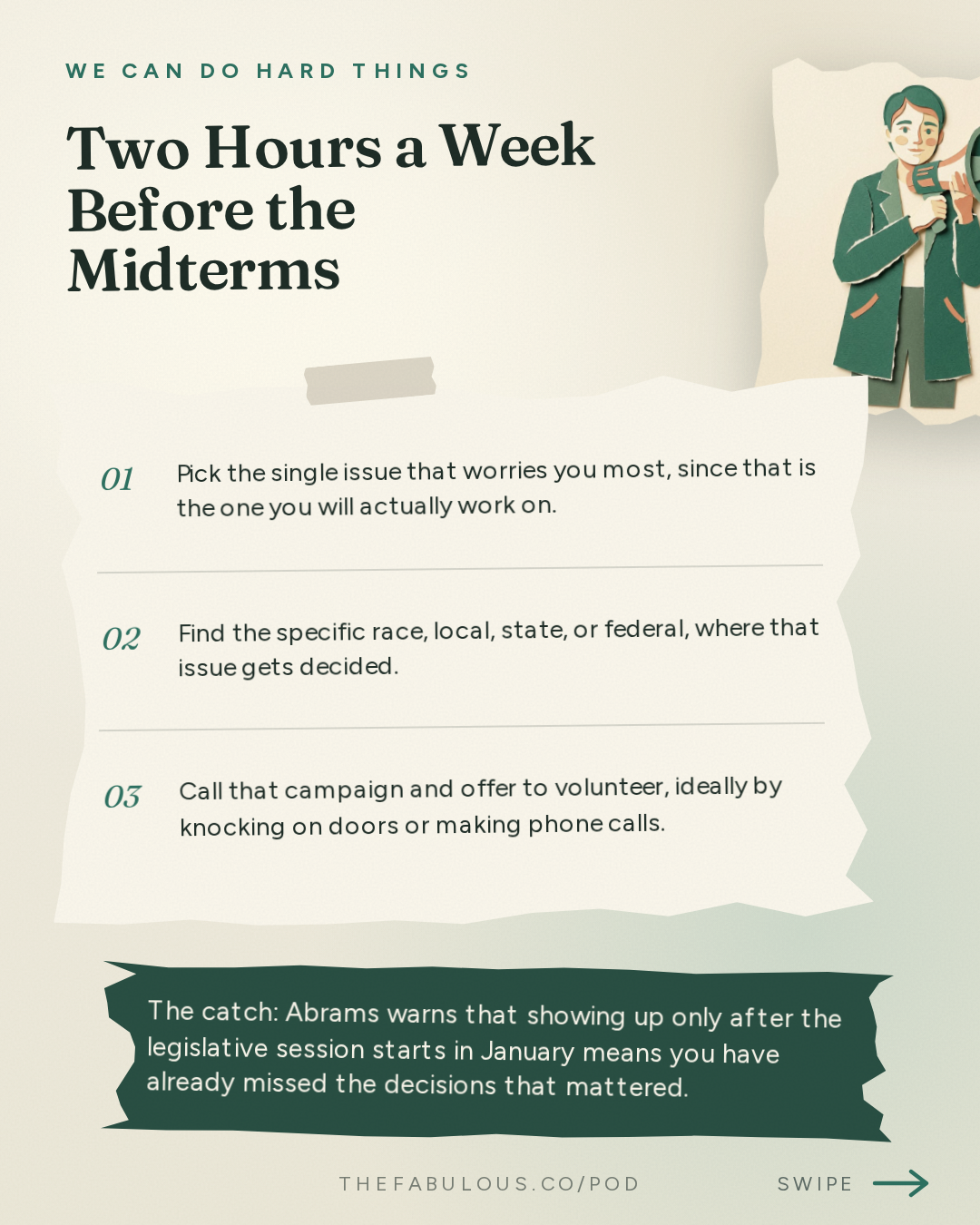
By the end, the conversation narrows to something almost domestic: two hours a week, for six weeks, from someone exhausted and scared and driving a kid to soccer practice. Abrams tells her to pick the issue that frightens her most, find the specific race, local, state, or federal, where that issue is actually decided, and then knock on a door, because presence builds trust in a way a postcard cannot (62:33, 64:27). It is a small unit of action set against a very large frame, but that is the point of the whole architecture she has built: autocracy wins by convincing people the small actions don't matter. Her answer is to stop asking whether there is hope and start asking, each day, whether hope got done.
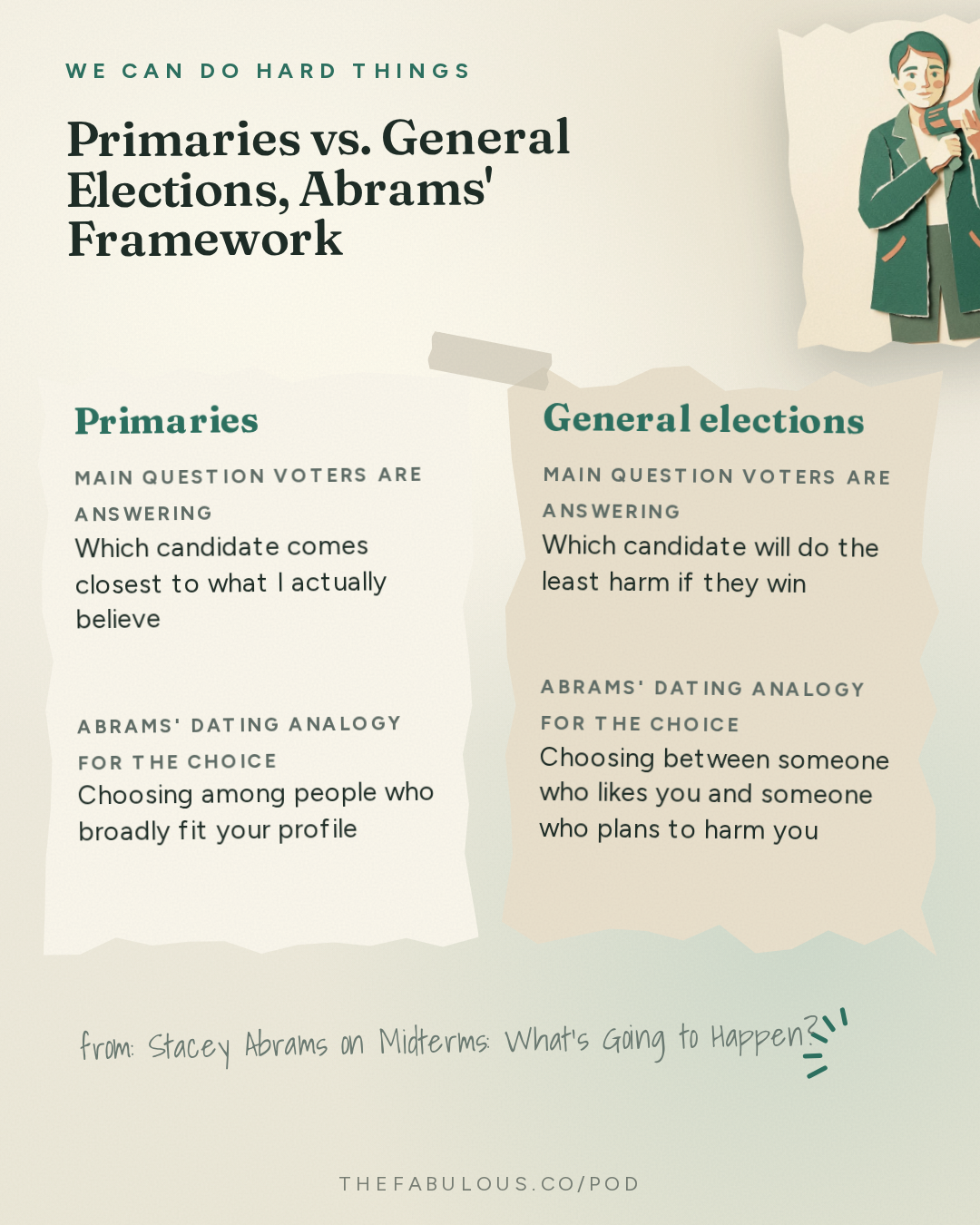
By the numbers
- 51 seats Senate seats Democrats need for a majority given the vice president's tie-breaking vote
- 218 seats House seats needed for a Democratic majority
- 21 races very close House races expected to decide control of the chamber
- 30% percent share of voters who cast mail-in ballots in the 2024 election
- 2 hours weekly time Abrams suggests committing to democracy work before midterms
In their words
“Authoritarianism begins with the last free and fair election, because they are usually elected into power.”
“When you attack the truth, then the propaganda seems normal”
“I do determination. I can only control what I do, and I cannot do everything.”
“Your partisanship is private, their leadership is public, and they need to be afraid.”
“Whether you think you're into politics or not, politics is into you, and it is a stalker.”
Protocols
-
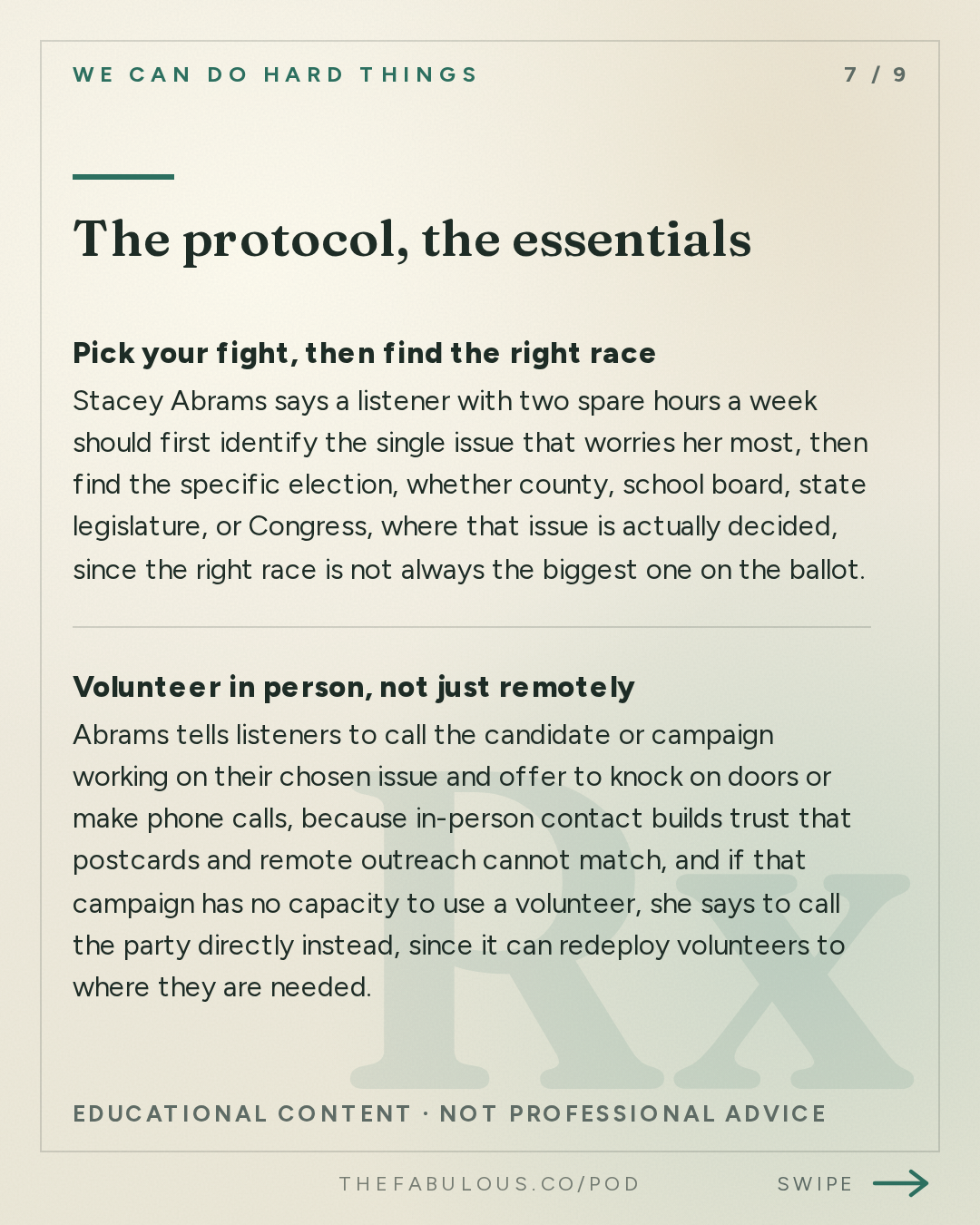
Pick your fight, then find the right race
Stacey Abrams says a listener with two spare hours a week should first identify the single issue that worries her most, then find the specific election, whether county, school board, state legislature, or Congress, where that issue is actually decided, since the right race is not always the biggest one on the ballot.
weekly, for the six weeks before the election
-
Volunteer in person, not just remotely
Abrams tells listeners to call the candidate or campaign working on their chosen issue and offer to knock on doors or make phone calls, because in-person contact builds trust that postcards and remote outreach cannot match, and if that campaign has no capacity to use a volunteer, she says to call the party directly instead, since it can redeploy volunteers to where they are needed.
at least one hour a week over six weeks
-
Hold winners accountable starting the day after the vote
Abrams says voters should call their newly elected representative within days of the results and demand they take their seat without procedural delay, then show up to state and local budget hearings before the legislative session begins, because politicians respond to money, peer pressure, and attention, and attention is the resource most voters actually have.
ongoing, beginning immediately after election day
Questions this episode answers
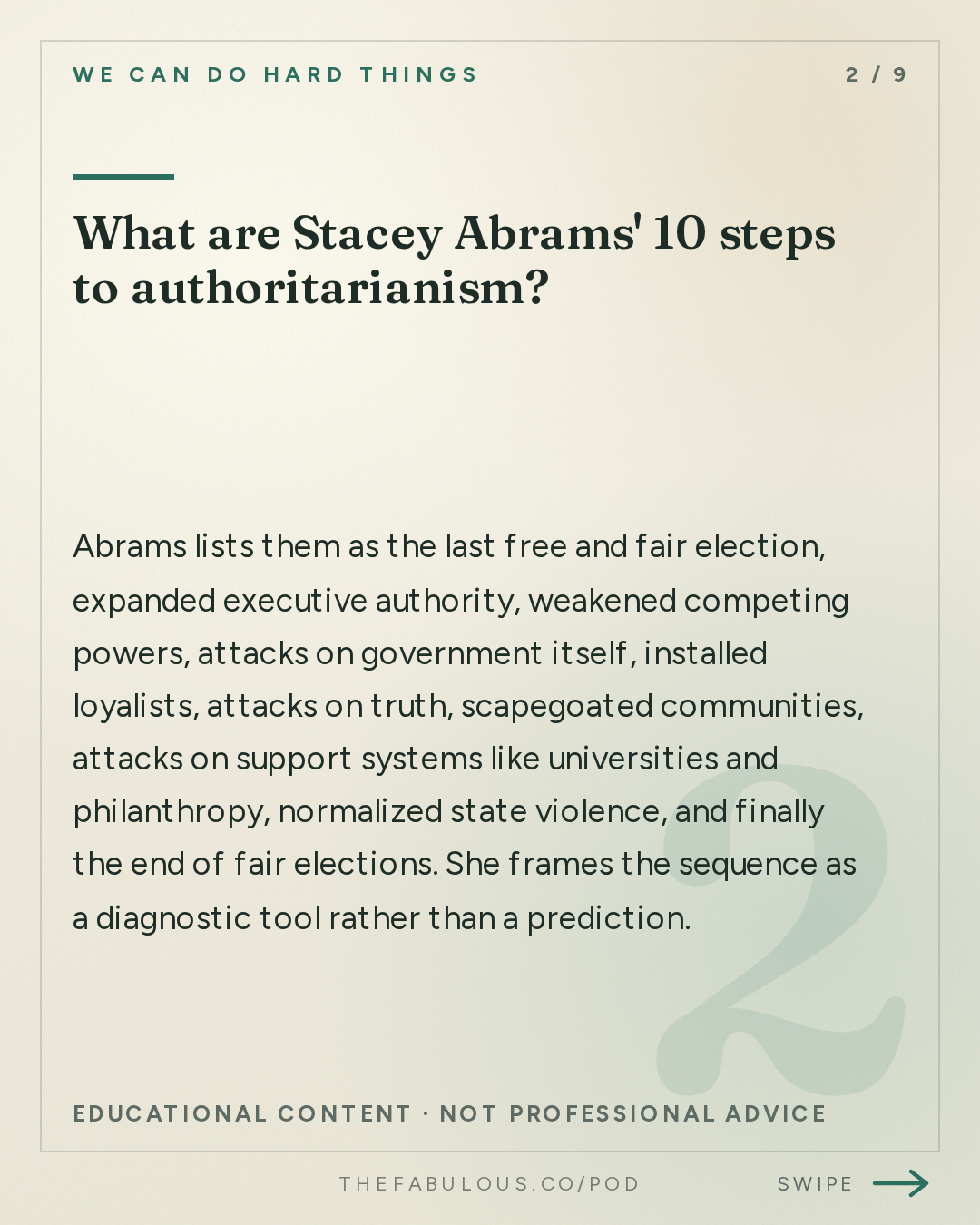
What are Stacey Abrams' 10 steps to authoritarianism?
Abrams lists them as the last free and fair election, expanded executive authority, weakened competing powers, attacks on government itself, installed loyalists, attacks on truth, scapegoated communities, attacks on support systems like universities and philanthropy, normalized state violence, and finally the end of fair elections (14:16). She frames the sequence as a diagnostic tool rather than a prediction.
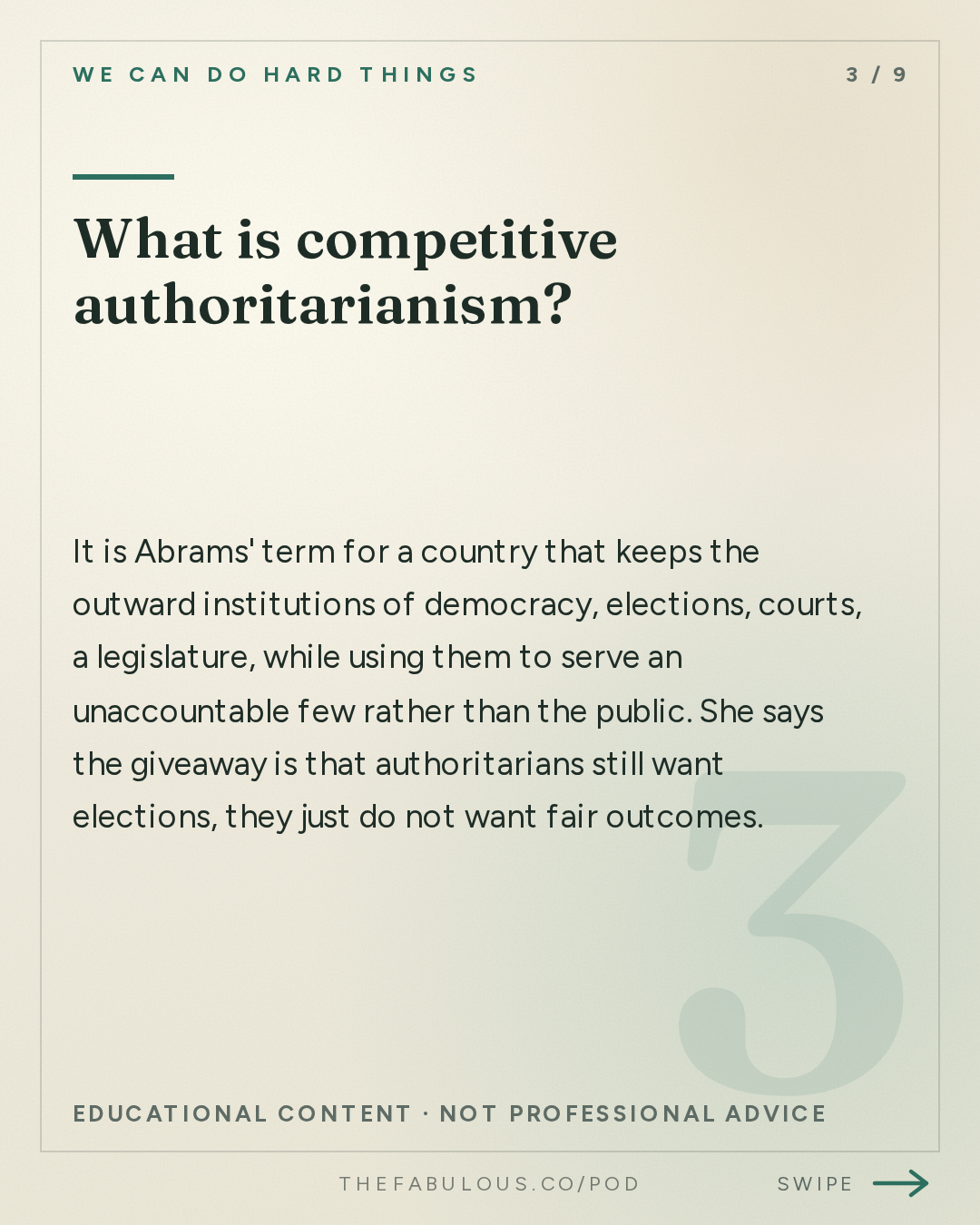
What is competitive authoritarianism?
It is Abrams' term for a country that keeps the outward institutions of democracy, elections, courts, a legislature, while using them to serve an unaccountable few rather than the public (07:58). She says the giveaway is that authoritarians still want elections, they just do not want fair outcomes (18:35).
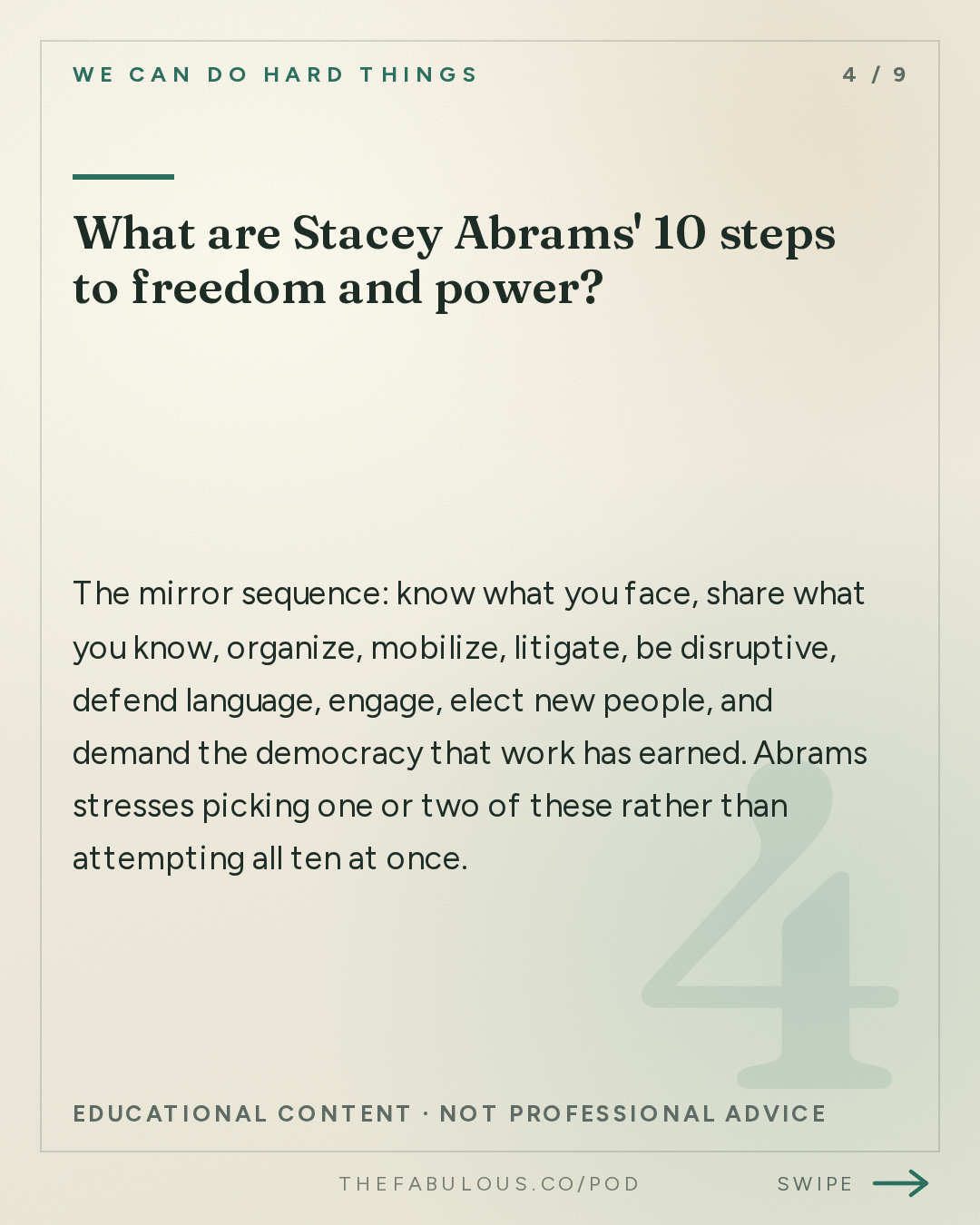
What are Stacey Abrams' 10 steps to freedom and power?
The mirror sequence: know what you face, share what you know, organize, mobilize, litigate, be disruptive, defend language, engage, elect new people, and demand the democracy that work has earned (22:39). Abrams stresses picking one or two of these rather than attempting all ten at once (25:11).
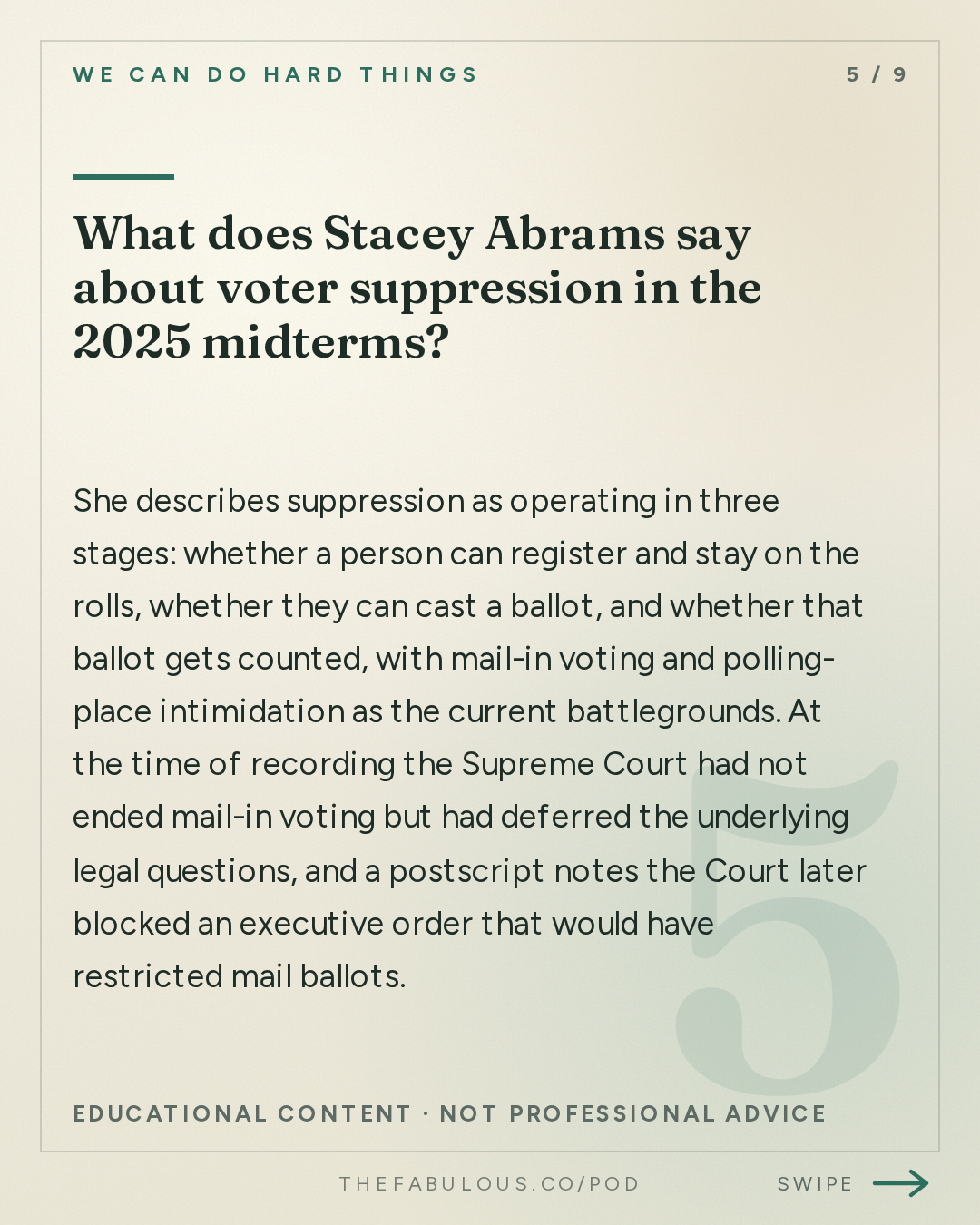
What does Stacey Abrams say about voter suppression in the 2025 midterms?
She describes suppression as operating in three stages: whether a person can register and stay on the rolls, whether they can cast a ballot, and whether that ballot gets counted, with mail-in voting and polling-place intimidation as the current battlegrounds (34:37). At the time of recording the Supreme Court had not ended mail-in voting but had deferred the underlying legal questions (35:21), and a postscript notes the Court later blocked an executive order that would have restricted mail ballots (37:45).
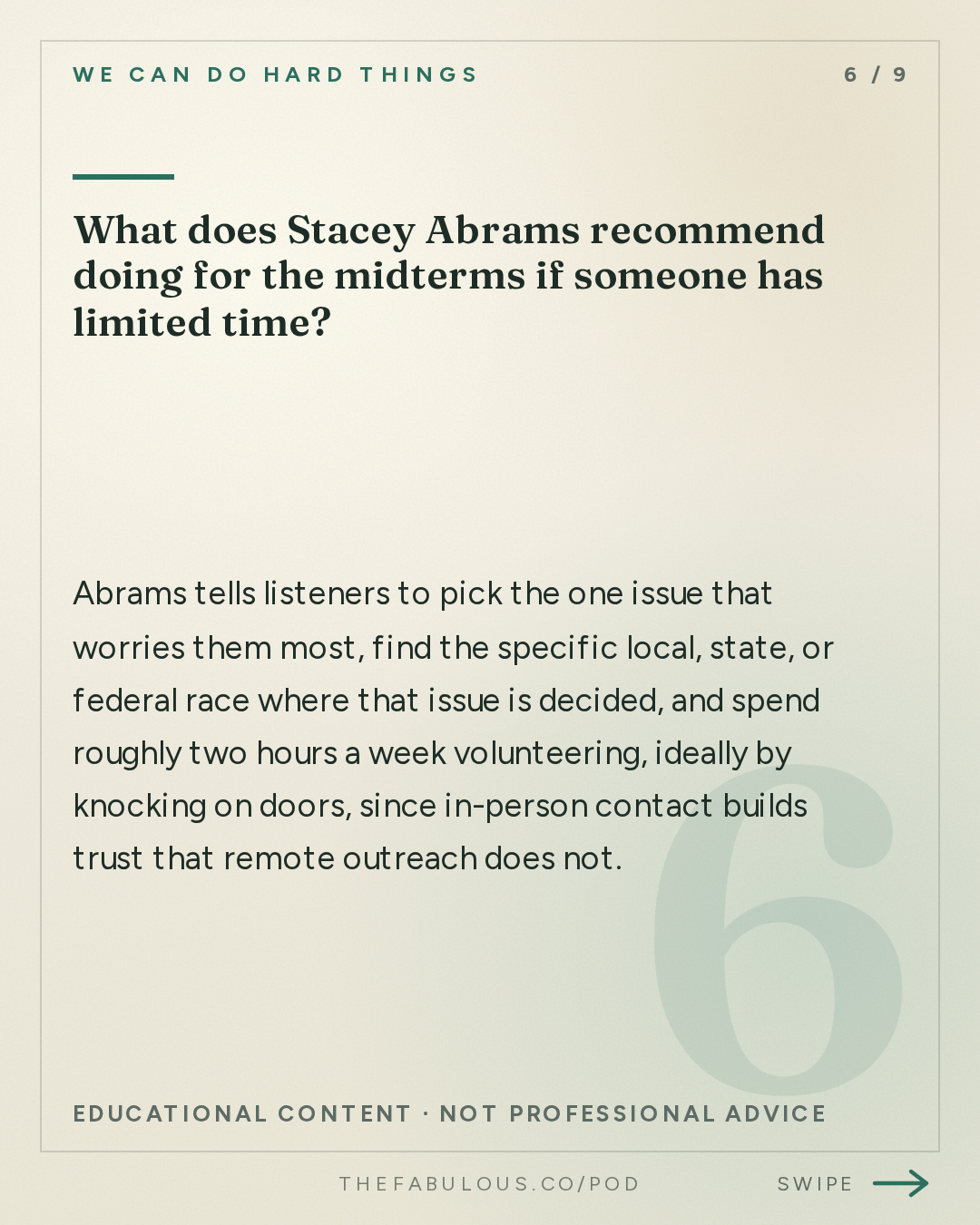
What does Stacey Abrams recommend doing for the midterms if someone has limited time?
Abrams tells listeners to pick the one issue that worries them most, find the specific local, state, or federal race where that issue is decided, and spend roughly two hours a week volunteering, ideally by knocking on doors, since in-person contact builds trust that remote outreach does not (62:33, 64:27).
The full read, in cards
Go deeper
- Ten Steps Campaign — Abrams' framework and public resource site laying out the ten steps to autocracy and the ten steps to freedom and power, including an election-day help center
- Assembly Required — Abrams' own podcast, referenced as a place she unpacks similar civic and policy questions
Mentioned
Stacey Abrams · Fair Fight · Ten Steps Campaign · US Supreme Court · Jimmy Kimmel · Georgia
More from this show and category

Cher's Life Advice on Love, Money, and Leaving
Cher tells the hosts of We Can Do Hard Things how she survived a controlling marriage to Sonny Bono and chose to leave instead of ending her life. She describes losing all ownership of Cher Enterprises, advice from Lucille Ball, and the bumper car philosophy that carried her through decades of setbacks.

How to Share the Mental Load With Your Partner
Mental load coach Zach Watson says men often confuse doing a chore with owning it, and that sharing the mental load makes men happier too. He recommends the Fair Play card system, weekly 'build meetings,' and naming emotions precisely to cut defensiveness and split invisible labor fairly.

Mel Robbins' Let Them Theory for Difficult People
Mel Robbins' Me, We, Them framework redirects relationship stress toward the one variable anyone can control: their own reaction. She names three habits that wreck relationships (expecting others to change, letting their behavior dictate your mood, assuming they 'should' know what you need) and offers a script from therapist Terry Real for saying the hard thing without blame.
James Sexton's Guide to the Six Stages of Divorce
Divorce attorney James Sexton maps the six stages of divorce and gives scripts for telling a spouse and a 48-hour safety plan. He explains why an avoided conversation gets more expensive with time, why grief means the love was real, and how to actually help someone else going through it.
