
Cher's Life Advice on Love, Money, and Leaving
(BEST OF) CHER: Life Advice We’ll Never Forget
▶ Listen to the full episode More from We Can Do Hard Things
The brief
Cher tells the hosts of We Can Do Hard Things how she survived a controlling marriage to Sonny Bono and chose to leave instead of ending her life. She describes losing all ownership of Cher Enterprises, advice from Lucille Ball, and the bumper car philosophy that carried her through decades of setbacks.
Ask this episode anything
Pod's AI answers from the episode itself, with the minute mark so you can hear it yourself.
Or start with one of these
Ask this episode
Pod's AI listens to the whole episode to answer, and points you to the minute it comes from.
The rest of this answer, and any question after it
Answers come from the episode itself, never from a summary of it.
Continue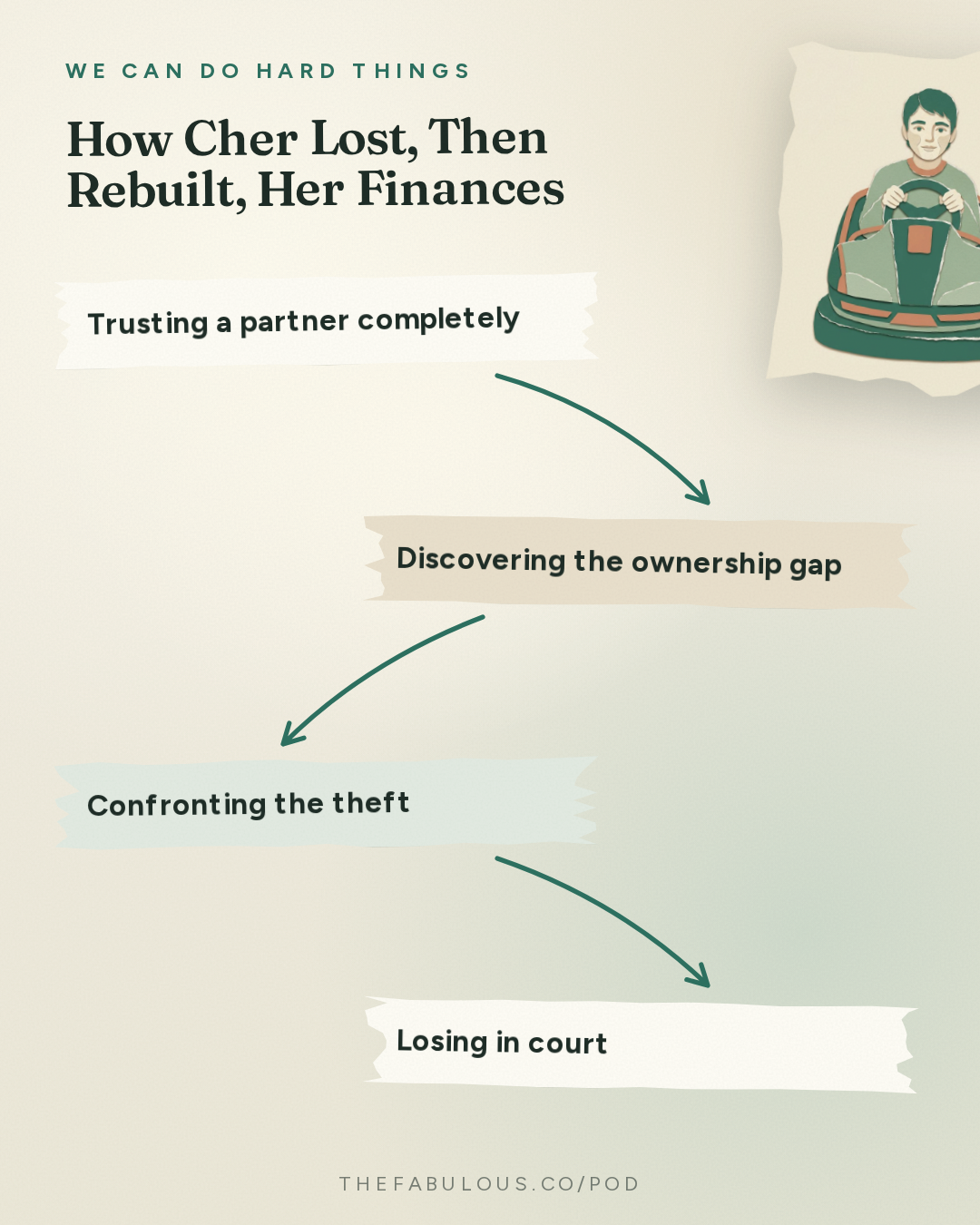
Key takeaways
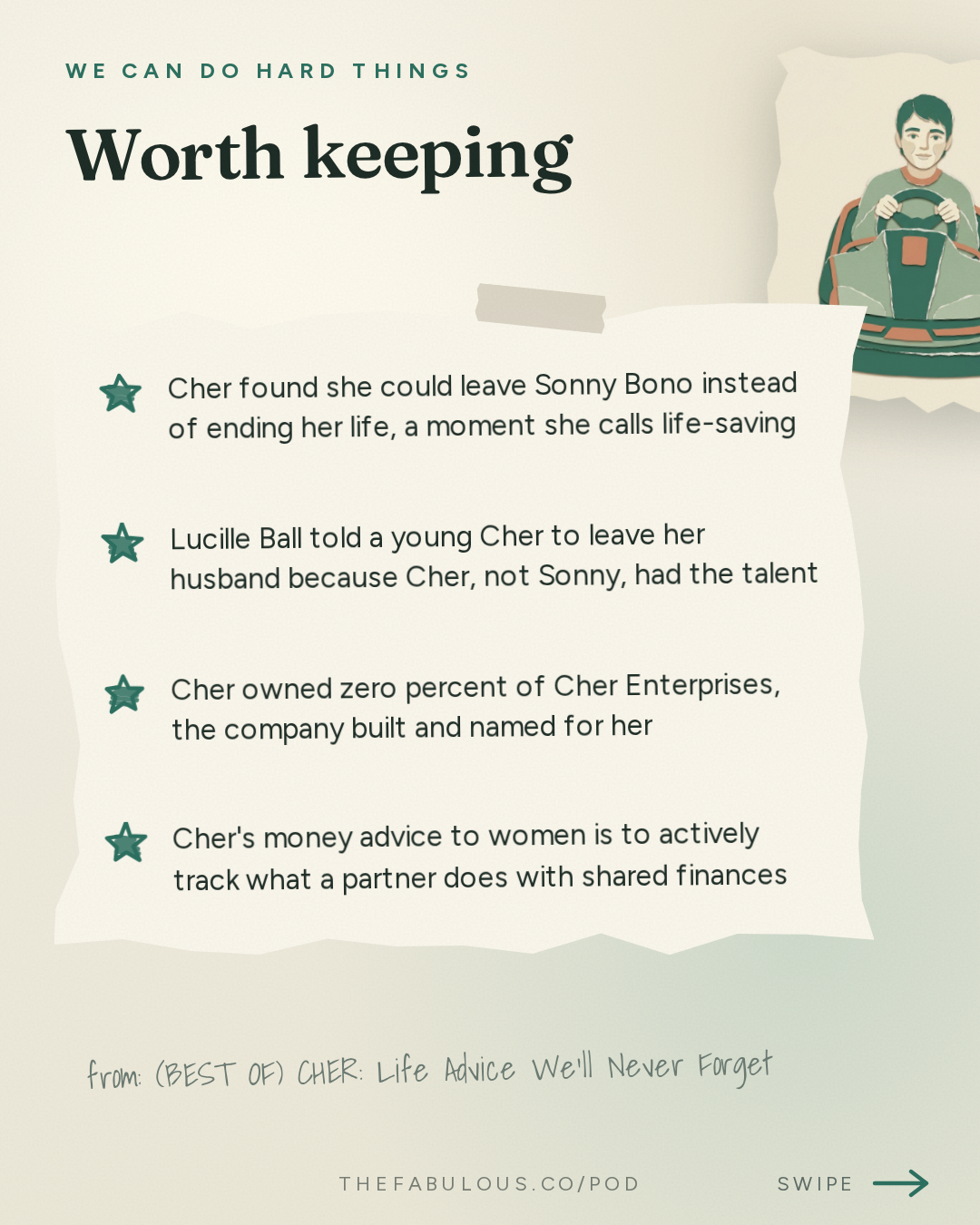
- Cher found she could leave Sonny Bono instead of ending her life, a moment she calls life-saving
- Lucille Ball told a young Cher to leave her husband because Cher, not Sonny, had the talent
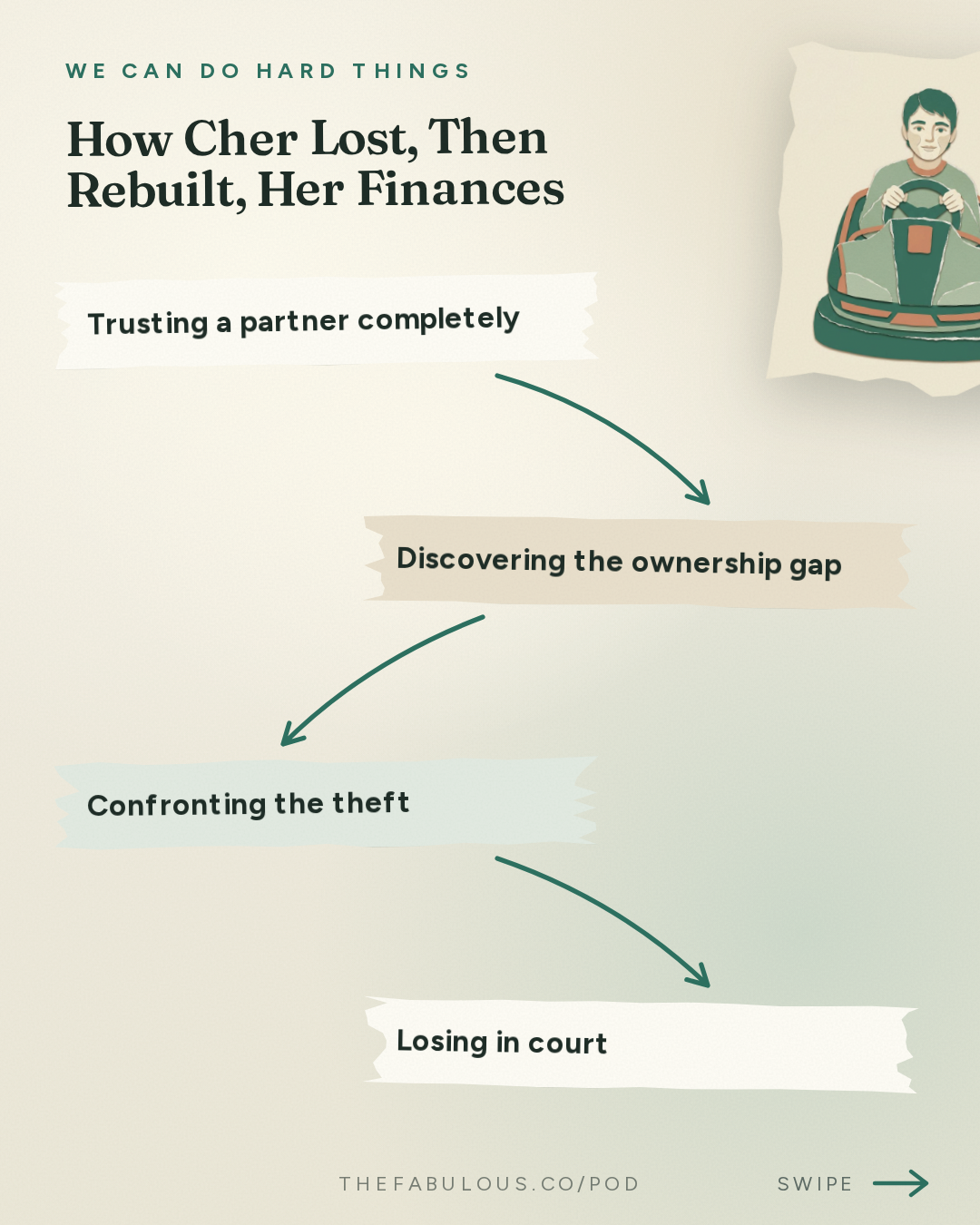
- Cher owned zero percent of Cher Enterprises, the company built and named for her
- Cher's money advice to women is to actively track what a partner does with shared finances
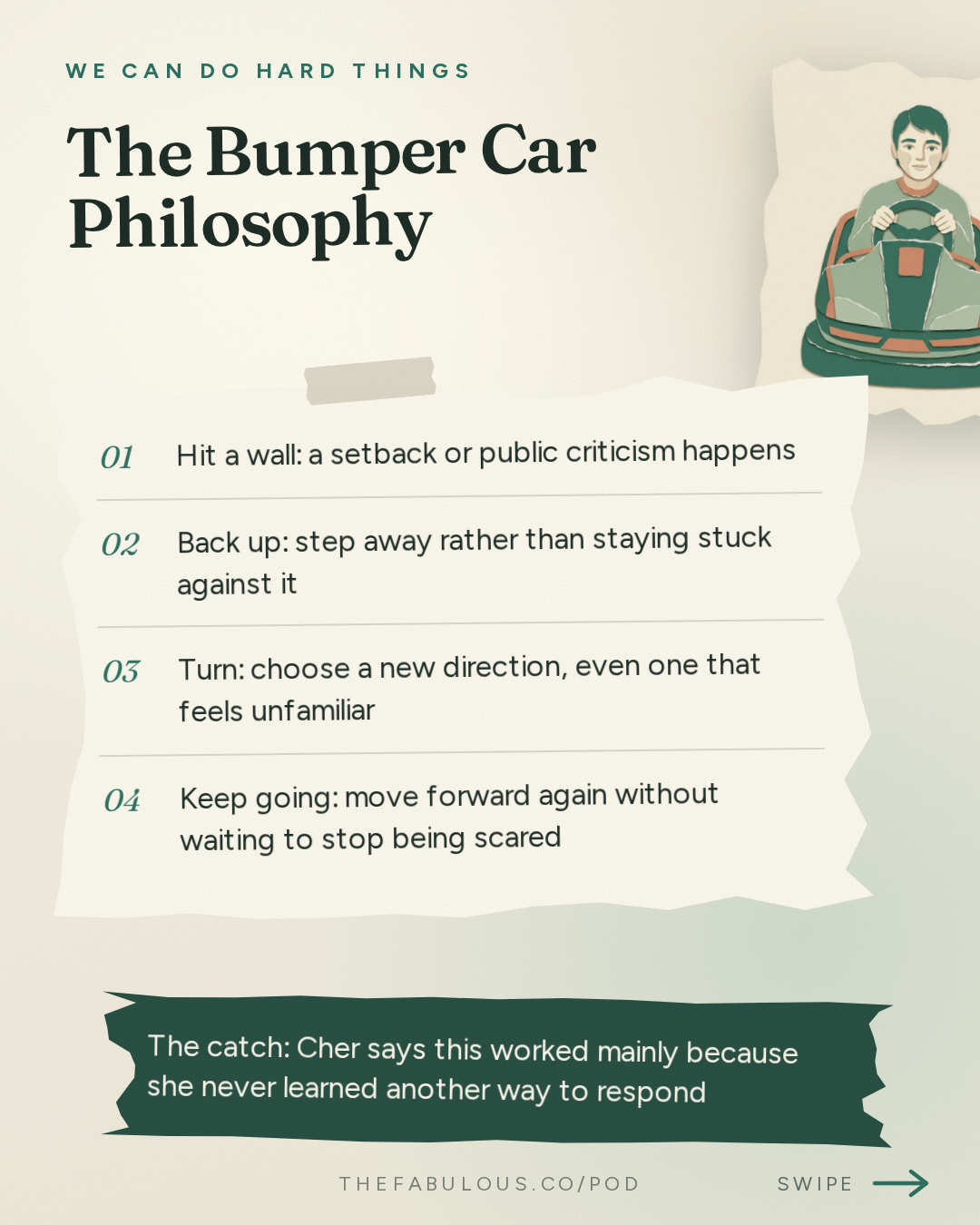
- Cher compares life to a bumper car: hit a wall, back up, turn, and keep going
The episode in cards

On a hotel balcony, somewhere on a tour stop she can no longer place, Cher had one thought and then, right behind it, a second one that changed everything. She had stopped eating. She had stopped sleeping. She was thinking about jumping. And then a different idea arrived, almost by accident: she did not have to jump. She could leave him.
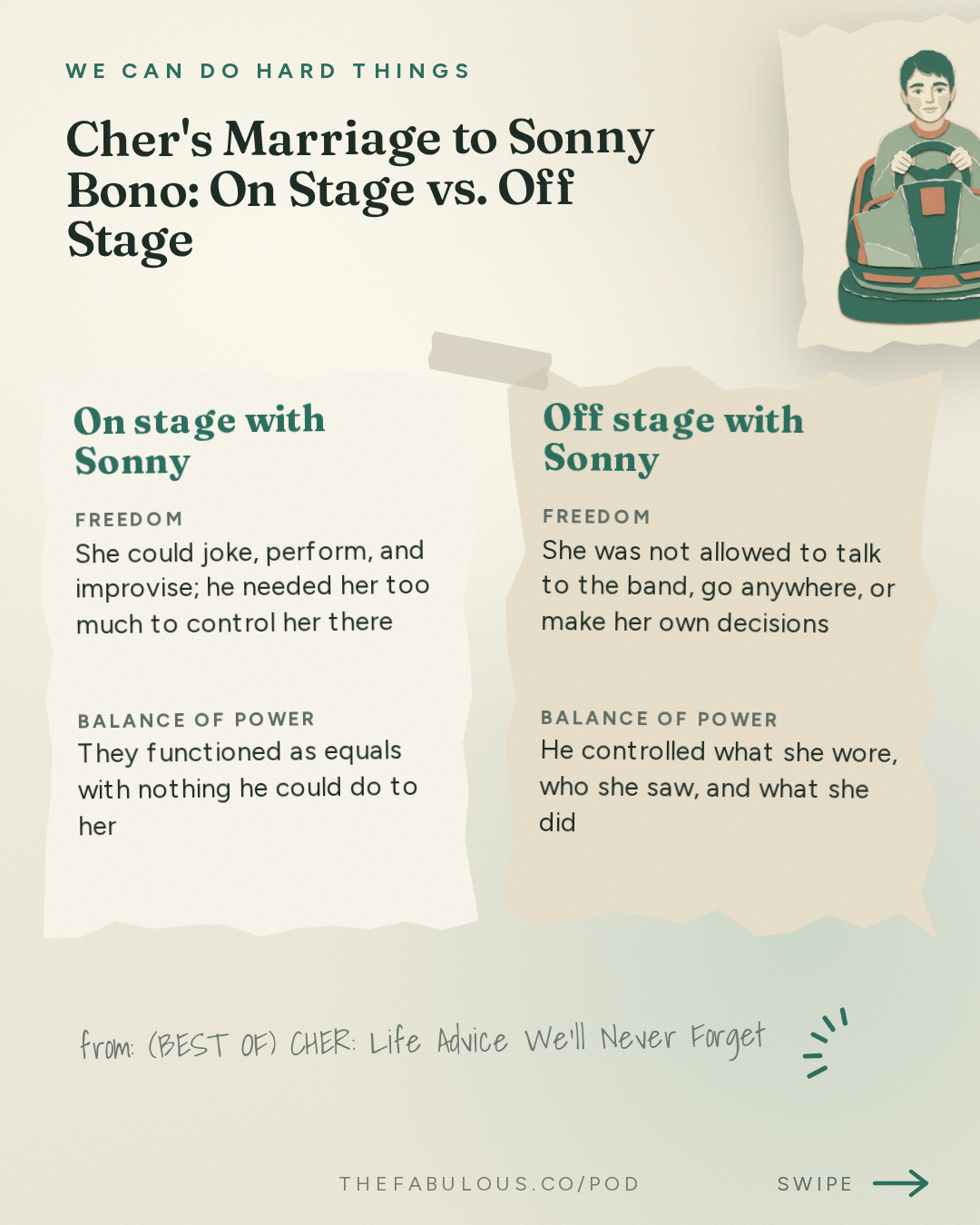
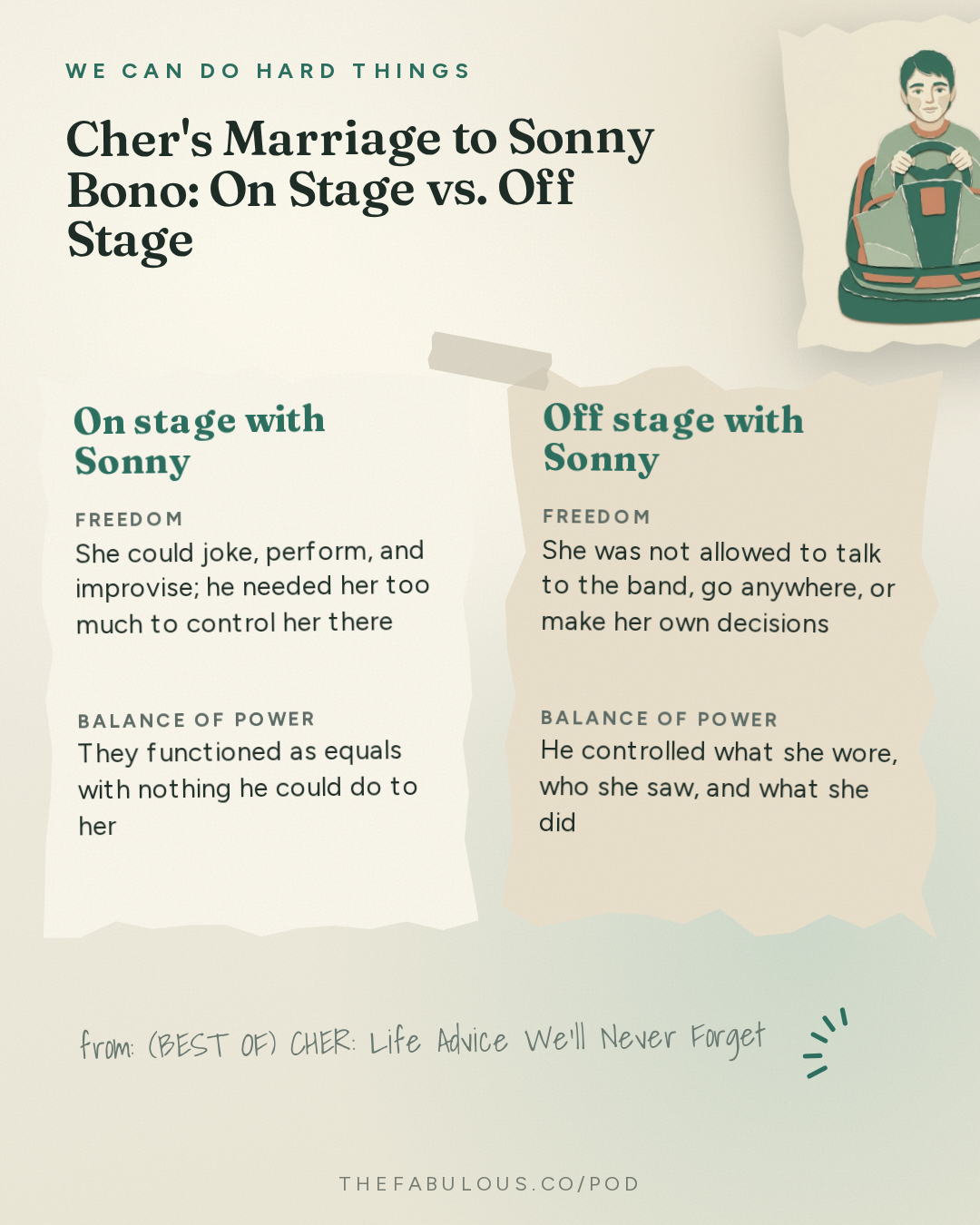
That moment, which Cher recounts in her new memoir and describes again on We Can Do Hard Things, is the hinge of this conversation. Cher was 16 when she entered the relationship that would become Sonny and Cher (07:32). She calls it plainly: "I didn't have much self to lose" (07:32). What follows is not a story about fame corrupting a person. It is a story about a marriage with two entirely different addresses: one on stage, where she and Sonny Bono were equals and, by her account, having genuine fun, and one off stage, where she was not allowed to talk to the band, go anywhere, or make a single decision for herself (11:20).
"And then I thought, 'I could leave him.'" (Cher, [12:02])
That split, between a performing self with room to breathe and a private self with none, is the part of the book Cher says was hardest to write. Memoir, she tells the hosts, means "telling things you don't really wanna tell" in your own voice, not the encyclopedia version a ghostwriter once handed her (04:36). She rewrote it three times. The difficulty was not craft. It was honesty.
The advice that eventually got her out came from another woman who had been there first. Cher asked Lucille Ball, the comedian and television producer she had known since childhood, what to do. Ball's answer was immediate: "Fuck him. You're the one with the talent" (15:56). Cher later passed a version of that same permission to Tina Turner, who came to her for advice on how to leave Ike Turner. When Turner asked how she'd done it, Cher's answer was almost anticlimactic: "I just walked out one night" (16:20). She left with a car, her clothes, and a $2 million debt (16:47).
The Ledger of a Marriage
The debt was not incidental. It was the point. Cher tells the hosts that trusting Sonny Bono with money was the mistake that cost her the most. She never wrote a check of her own until right before she left him (14:11). When she finally asked him directly, years later, when exactly he'd decided it was fine to take her money, his answer was not really an answer: "I always knew you'd leave me" (29:02). She calls it what it was: "It's abusive" (29:31).
The clearest number in the whole conversation is also the starkest. The company built around her name, Cher Enterprises, was owned 95 percent by Sonny Bono, 5 percent by their lawyer, and 0 percent by Cher (29:58). She could only legally work for that company. When she finally broke the contract through divorce, a judge ordered her to pay Sonny $2 million anyway, telling her, in her retelling, that "in America, we don't welsh on contracts" (30:56). Her private response, which she shares now without much editing, was to wonder aloud what the country does about husbands who steal from their wives. Glennon's response, delivered with dry sarcasm: in America, apparently, that is allowed too (31:07).
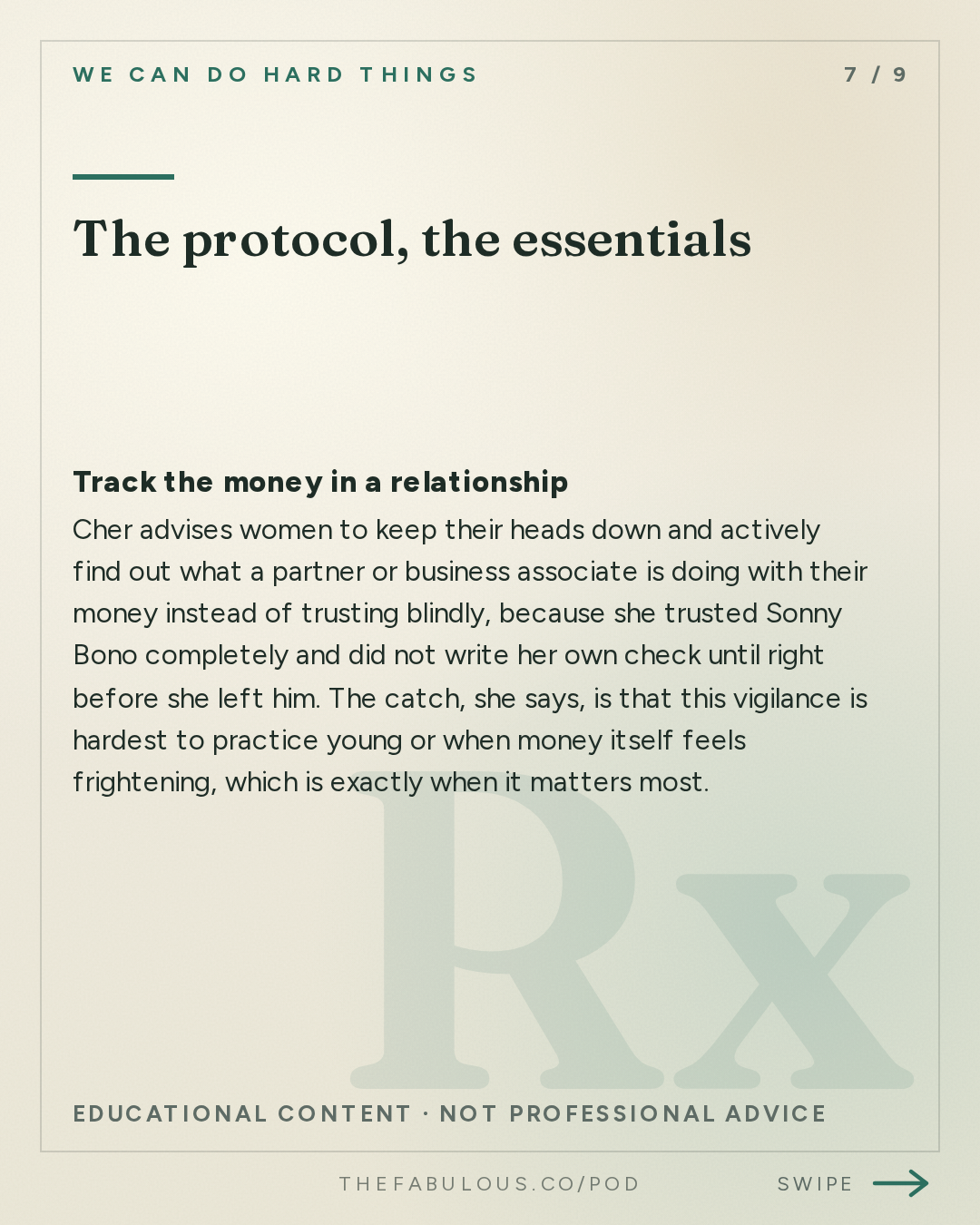
Out of that experience comes the one piece of financial advice Cher offers women listening now. Not a formula. A posture. Keep your head down, she says, and find out what people are doing with your money, because it scares people to learn about money when they are poor, and because "some people are not always good" (28:13). It is advice earned the hard way, at a cost that took her years and a lost court case to fully understand.
She rebuilt anyway. When her career later gave her the thing she'd always wanted, financial independence, she delivered the line to her mother that has since ended up on needlepoint pillows. Her mother suggested she marry a rich man. Cher's reply: "Mom, I am a rich man" (27:24).
A Bumper Car, Not a Straight Line
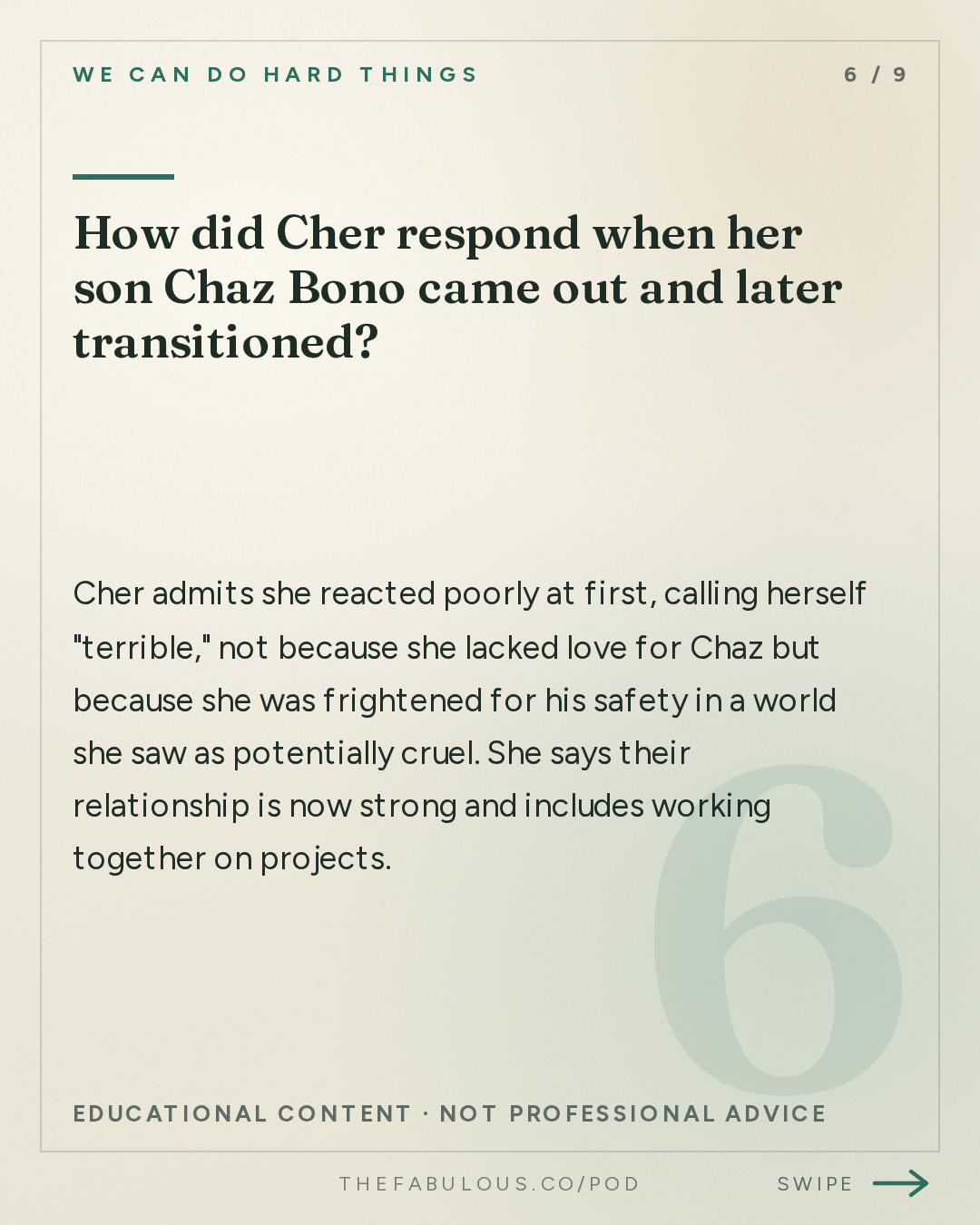
Money and marriage are not the only place Cher's honesty runs deep in this conversation. Asked about her son Chaz Bono's coming out and later transition, she does not reach for a tidy redemption story. "I was terrible," she says, twice (32:11). She was not unloving. She was frightened for what Chaz would face in a world that can be cruel to trans people, and she admits she was not, at first, the parent she wanted to be (33:48). What she offers instead of a clean lesson is a more useful one: that getting it wrong early does not disqualify a parent from getting it right later. "I wasn't the person that I should have been. I wasn't the person that I wanted to be," she says of that period, before describing the strong relationship she and Chaz share now (34:07).
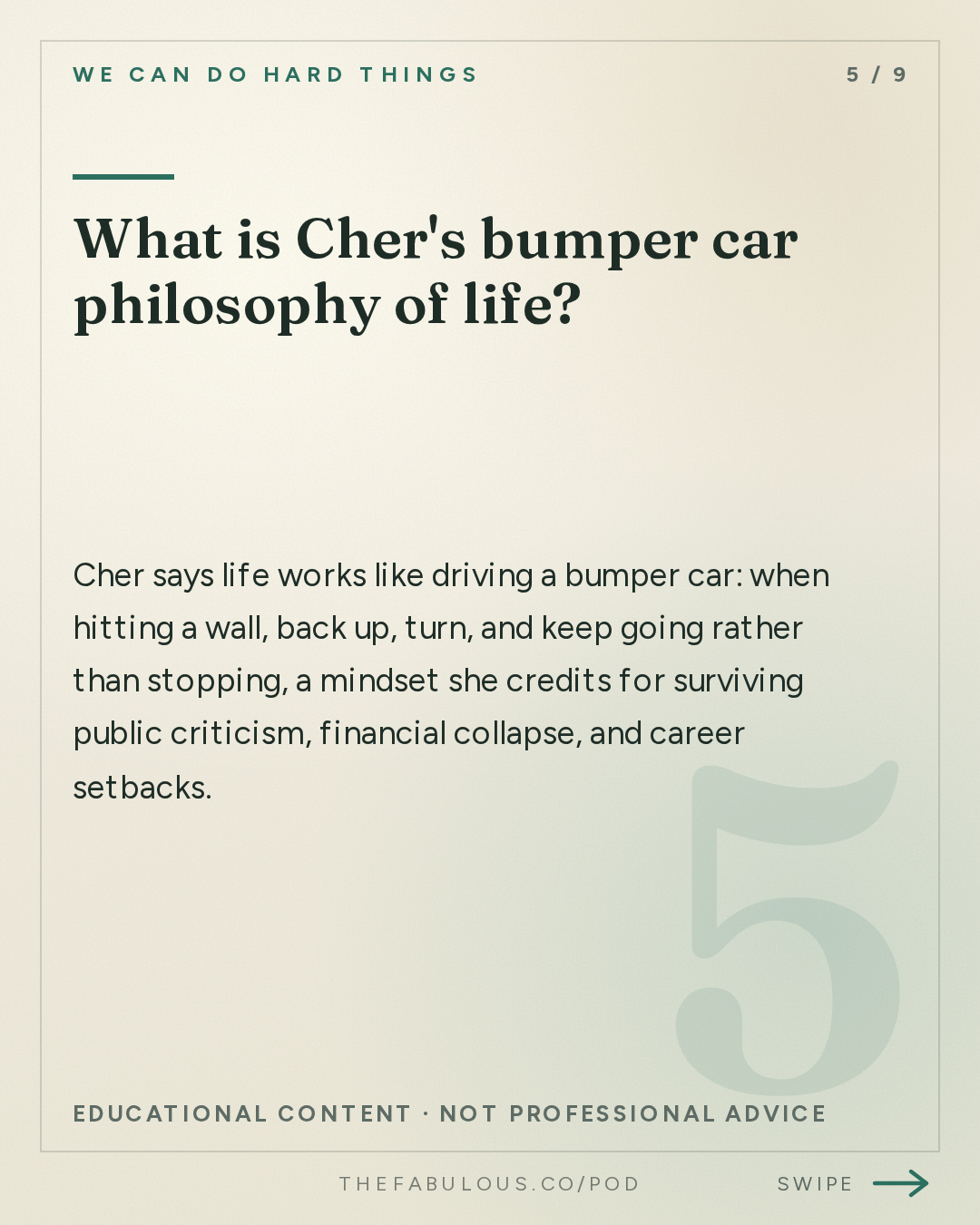
The same instinct, to keep moving rather than to stay stuck, shows up in the metaphor Cher returns to when asked how she survived decades of public criticism, from tabloid mockery of her Las Vegas years to reaction over her Met Gala dress. "I'm like a bumper car, and if I hit a wall, I'm gonna back up and I'm gonna go in another direction, and that's all that was left for me," she says (40:01). It is not a philosophy she claims to have chosen. It is the only strategy she says she knew.
That same lack of another option, more than any master plan, is how she describes her accidental path into acting. After a divorce and a financial collapse, she went to New York, mostly because she didn't know what else to do, and stumbled into an audition with director Robert Altman that happened only because her mother misdialed a phone number (42:13). She told Altman she is dyslexic, a learning difference that affects reading, and that she could read a script or act it but not both at once (43:29). He cast her anyway. She went on to work with Meryl Streep and to build a film career she describes, still, as something of a fluke (40:26).
By the end of the conversation, Cher draws a distinction between her two art forms that doubles as a description of her own temperament. Singing, she says, is external: standing on stage and letting a voice come out, big or soft, whatever the moment needs. Acting is internal, a matter of getting small before anything is allowed to come out at all (45:59). It is a fitting way to end a conversation that spent an hour moving between the two: a woman who performed enormity for fifty years while quietly working out, often alone, how to become someone smaller could survive.
Asked, finally, to name the source of her endurance, Cher declines the word courage. "I never thought of it as courage. It was just not giving up," she says (47:44). It is a small redefinition, but it changes the shape of the advice. Courage, in her telling, is not a rare trait some people have and others lack. It is only the plain, repeatable act of moving forward while still scared.
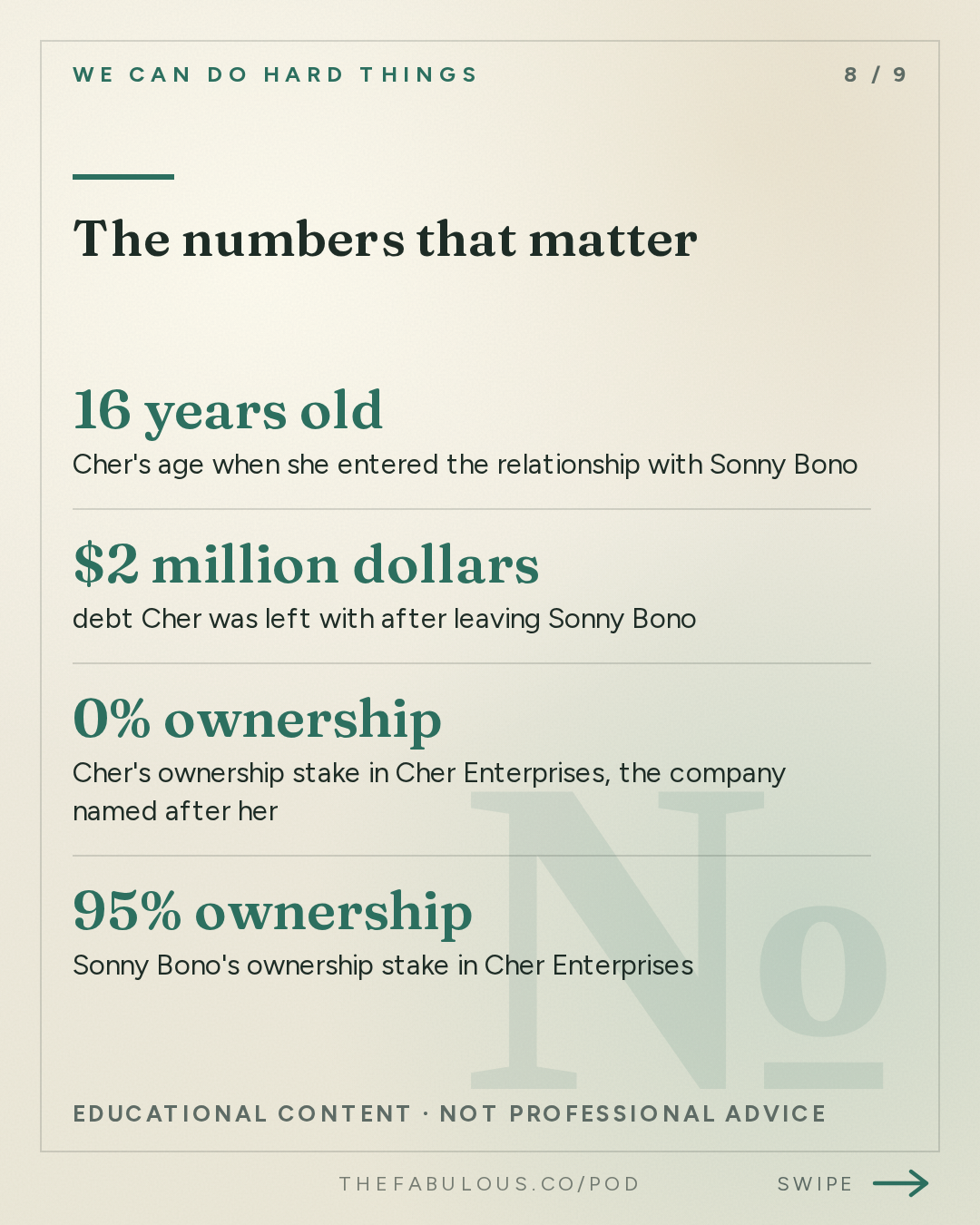
By the numbers
- 16 years old Cher's age when she entered the relationship with Sonny Bono
- $2 million dollars debt Cher was left with after leaving Sonny Bono
- 0% ownership Cher's ownership stake in Cher Enterprises, the company named after her
- 95% ownership Sonny Bono's ownership stake in Cher Enterprises
- 20 years how long it had been since Cher was last truly angry, by her own estimate
In their words
“And then I thought, 'I could leave him.'”
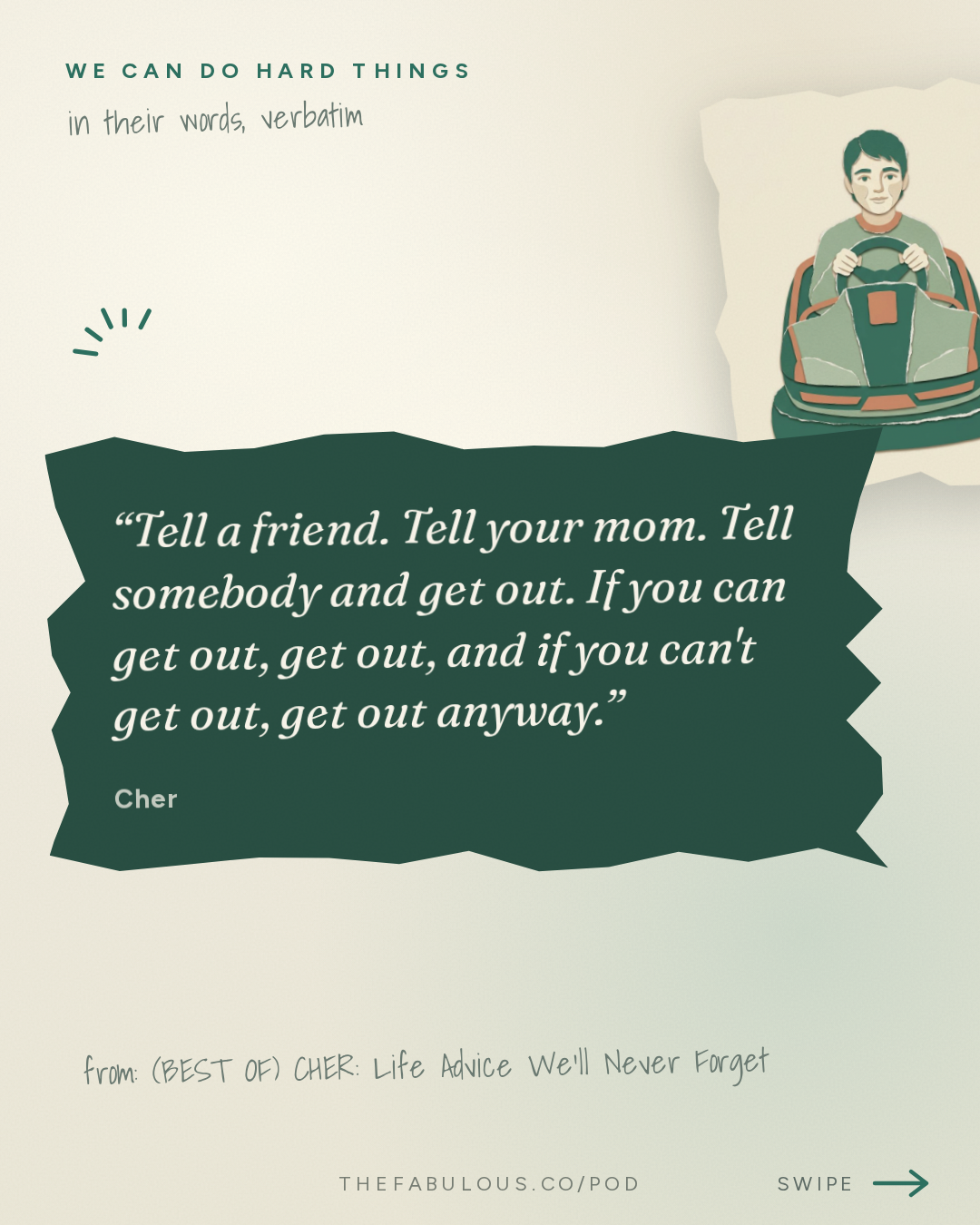
“Tell a friend. Tell your mom. Tell somebody and get out. If you can get out, get out, and if you can't get out, get out anyway.”
“Mom, I am a rich man.”
“I'm like a bumper car, and if I hit a wall, I'm gonna back up and I'm gonna go in another direction, and that's all that was left for me.”
“I never thought of it as courage. It was just not giving up.”
Protocols
-
Track the money in a relationship
Cher advises women to keep their heads down and actively find out what a partner or business associate is doing with their money instead of trusting blindly, because she trusted Sonny Bono completely and did not write her own check until right before she left him. The catch, she says, is that this vigilance is hardest to practice young or when money itself feels frightening, which is exactly when it matters most.
Ongoing, especially early in a relationship or career
-
Treat setbacks like a bumper car
Cher describes handling every professional and personal collapse the same way: hit a wall, back up, turn in a new direction, and keep going, rather than stopping. The catch is that this only works while still moving forward scared, since Cher says she never experienced her own resilience as courage, only as refusing to give up.
Whenever a setback or public criticism occurs
Questions this episode answers
What advice did Lucille Ball give Cher about leaving Sonny Bono?
Lucille Ball, the comedian and TV producer, told Cher to leave her husband because Cher, not Sonny Bono, had the talent (15:56). Cher later passed a version of the same advice to Tina Turner, who asked how Cher had gotten out of her own marriage (16:20).
How much of Cher Enterprises did Cher actually own?
Cher owned zero percent of Cher Enterprises, the company named after her; Sonny Bono held 95 percent and their lawyer held the remaining 5 percent, meaning Cher could only legally work for a company she did not own (29:58).
How did Cher decide to leave Sonny Bono?
Standing on a balcony after a period of not eating or sleeping, Cher initially thought about jumping, then had a second thought that she could leave him instead, a realization she now describes as life-saving (12:02).
What is Cher's bumper car philosophy of life?
Cher says life works like driving a bumper car: when hitting a wall, back up, turn, and keep going rather than stopping, a mindset she credits for surviving public criticism, financial collapse, and career setbacks (40:01).
How did Cher respond when her son Chaz Bono came out and later transitioned?
Cher admits she reacted poorly at first, calling herself "terrible," not because she lacked love for Chaz but because she was frightened for his safety in a world she saw as potentially cruel (33:48). She says their relationship is now strong and includes working together on projects.
What does Cher say women should know about money?
Cher advises women to actively find out what people are doing with their money rather than trusting a partner completely, since she trusted Sonny Bono fully and it cost her financially and legally for years (28:13).
The full read, in cards
Go deeper
- Cher's memoir (Part One) — her own written account of her early life, her marriage to Sonny Bono, and her career, which she says took three drafts to get into her own voice
Mentioned
Cher · Sonny Bono · Chaz Bono · Lucille Ball · Tina Turner · Alexander Edwards · Meryl Streep · Robert Altman · Cher Enterprises
More from this show and category

Stacey Abrams' 10 Steps to Authoritarianism, Explained
Stacey Abrams argues the United States is now a "competitive authoritarian" country: elections still happen, but power is hoarded and unaccountable (07:58). She lays out ten warning steps toward autocracy and ten matching steps back to freedom, then applies both to the midterms six weeks out, urging two hours a week of targeted local action (62:33).

How to Share the Mental Load With Your Partner
Mental load coach Zach Watson says men often confuse doing a chore with owning it, and that sharing the mental load makes men happier too. He recommends the Fair Play card system, weekly 'build meetings,' and naming emotions precisely to cut defensiveness and split invisible labor fairly.

Mel Robbins' Let Them Theory for Difficult People
Mel Robbins' Me, We, Them framework redirects relationship stress toward the one variable anyone can control: their own reaction. She names three habits that wreck relationships (expecting others to change, letting their behavior dictate your mood, assuming they 'should' know what you need) and offers a script from therapist Terry Real for saying the hard thing without blame.
James Sexton's Guide to the Six Stages of Divorce
Divorce attorney James Sexton maps the six stages of divorce and gives scripts for telling a spouse and a 48-hour safety plan. He explains why an avoided conversation gets more expensive with time, why grief means the love was real, and how to actually help someone else going through it.
