
Allison Russell on Healing Childhood Trauma
(BEST OF) How to Heal with Allison Russell
▶ Listen to the full episode More from We Can Do Hard Things
The brief
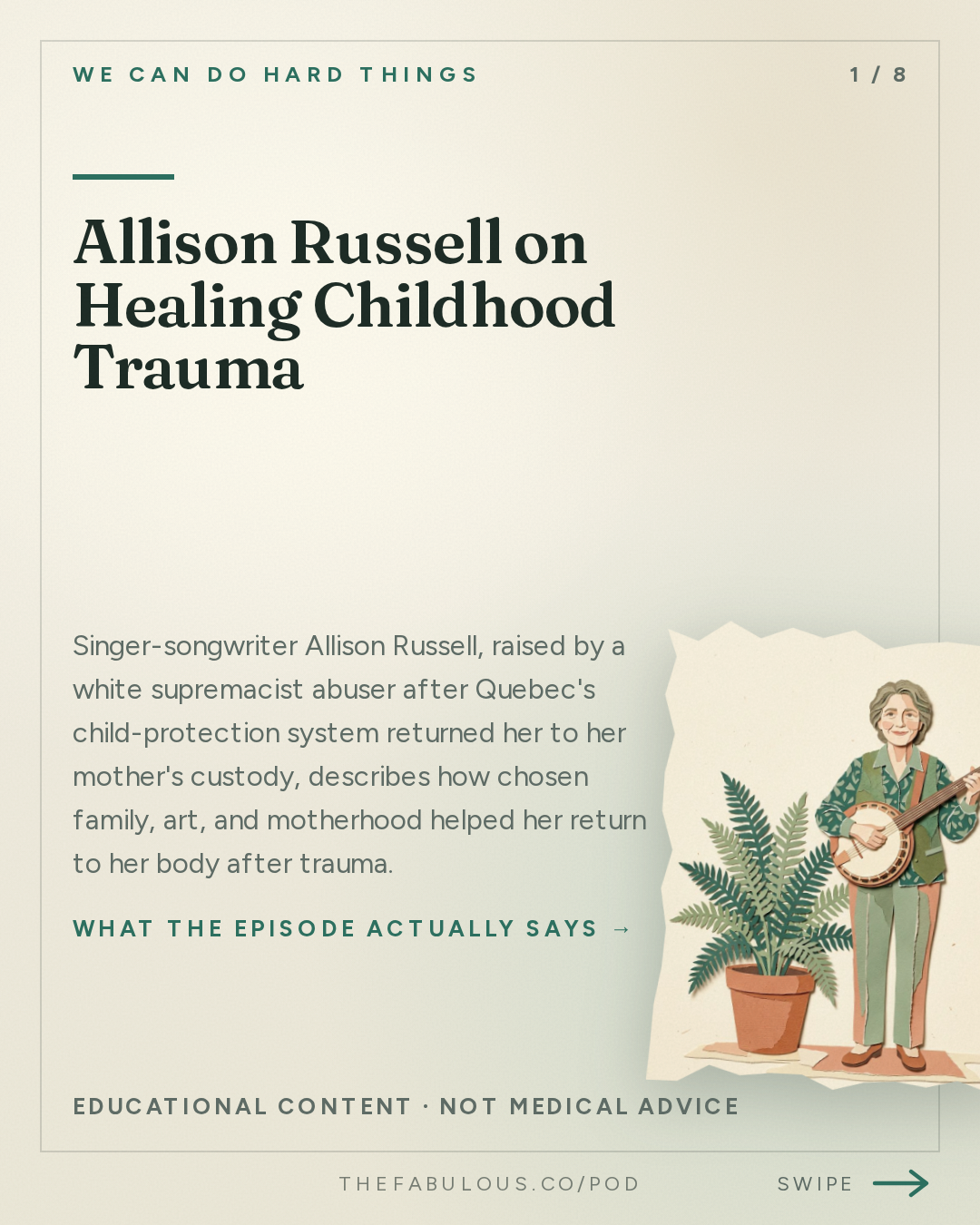
Singer-songwriter Allison Russell, raised by a white supremacist abuser after Quebec's child-protection system returned her to her mother's custody, describes how chosen family, art, and motherhood helped her return to her body after trauma. She frames scars as proof of survival, reframes PTSD as a bodily response rather than an inner demon, and ties her healing to activism against gun violence and minority rule in Tennessee (41:53, 55:35).
Backstage at Red Rocks, past midnight, there were four hundred boxes of In-N-Out burgers, a pack of overtired children running wild, and musicians laughing like family (03:10). In the middle of it sat Allison Russell, a singer-songwriter whose songs had already convinced her listeners that she was exactly who she seemed: someone who tells the truth so completely it makes the room safer. The scene matters because it is the opposite of her childhood. Russell spent her early years in a house ruled by fear. The space she built as an adult, full of other people's children eating cheeseburgers at midnight, is the evidence of what she calls re-embodiment: the long process of coming back to a body that once felt like unsafe territory.
Russell was born in Montreal in 1979 to a white Scottish Canadian teenager and a father who had returned to Grenada before she arrived (13:55). Quebec's child protection services removed her from her mother's care before she turned two, after her mother, undiagnosed with what would later be identified as paranoid schizophrenia, struggled without support (14:16). To get the child back, her mother married a man born in 1936 in a sundown town in Indiana, an American expat who had been shaped by the ideological and physical abuse of his own upbringing (15:58). He adopted Russell and became, in her words, her primary caregiver and her primary abuser for over a decade. "I believe it's ideological abuse to raise children with violent indoctrination into white supremacy," she says, naming a kind of harm that leaves no visible mark but reorganizes a child's sense of self (15:58). She ran away at fifteen.
What she found instead was a city built, in her telling, for survival: all-night cafes, a Bohemian alternative high school, and a cemetery that felt safer than home.
"I felt safer sleeping in the cemetery than I did in the home of the people that called themselves my family at that time." — Allison Russell [17:08]
She found her first love there too, a girl she calls Persephone to protect her privacy, and with her learned what consent and equality felt like for the first time (18:18). She also found chosen family: an apartment of teenage girlfriends they nicknamed "the Womb," the first people besides Persephone she ever told the truth to (56:34). The pattern repeats throughout her adult life. Brandi Carlile and Catherine Carlile, the musician couple who brought Russell into their touring orbit, built a backstage culture where children run loose and parents do not have to explain why mommy's songs are sad. Russell's daughter Ida, now nine, once told Brandi and Catherine's daughter Eva that her mom "just sings sad songs about her sad past," a line that made the adults laugh because it proved something: sadness is not the water these children swim in (06:27). Breaking a cycle, Russell argues, is not just refusing to repeat harm. It is letting the next generation feel safe enough to tease you about your own pain (10:01).
The Argument Against Inner Demons
The episode's sharpest idea arrives through grief for Sinéad O'Connor, the Irish singer who tore up a photo of the Pope on live television in 1992 to protest child abuse within the Catholic Church, and who died in 2023. Russell was twelve when O'Connor made that stand, and she credits O'Connor, along with Tracy Chapman and Tori Amos, with showing her survival was possible before she had the words for her own situation (29:15). What angered her after O'Connor's death was the repeated description of the singer as someone who "battled her own demons." Russell's objection is precise: O'Connor was not fighting something inside herself. She was naming something outside herself, the real and ongoing harm of a Church and a Canadian government responsible for thousands of unmarked graves of Indigenous children at residential schools (26:38). Post-traumatic stress disorder, Russell says, is "a bodily, physical reaction to something that the world has done to a person," not evidence of a haunted interior (31:30). Calling it a demon borrows the language that has excused abusers for centuries, the same language once used to burn women as witches for being inconveniently right.
"She was right about everything. We should just try to honor the next inconvenient prophet in real time." — Glennon Doyle [30:32]
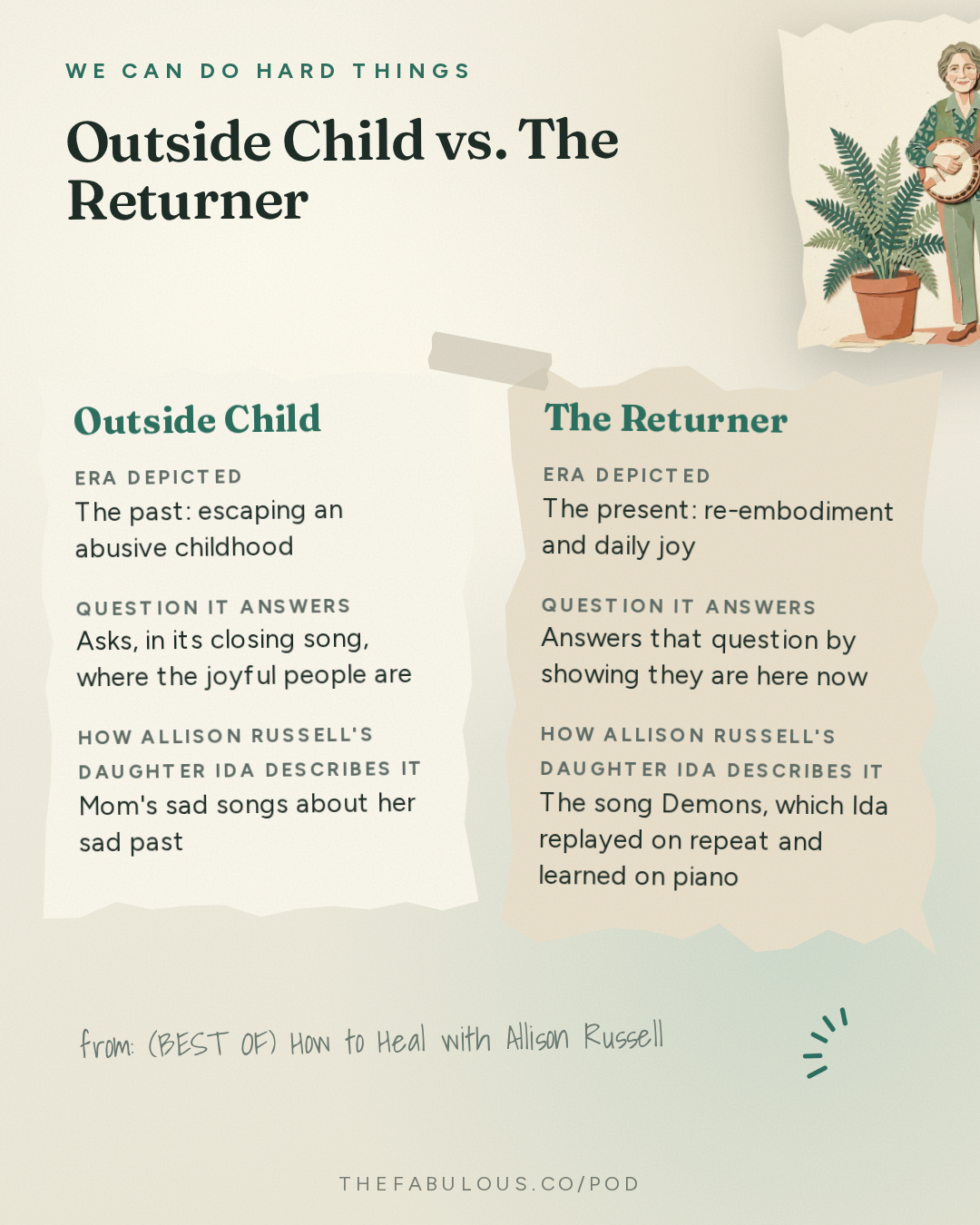
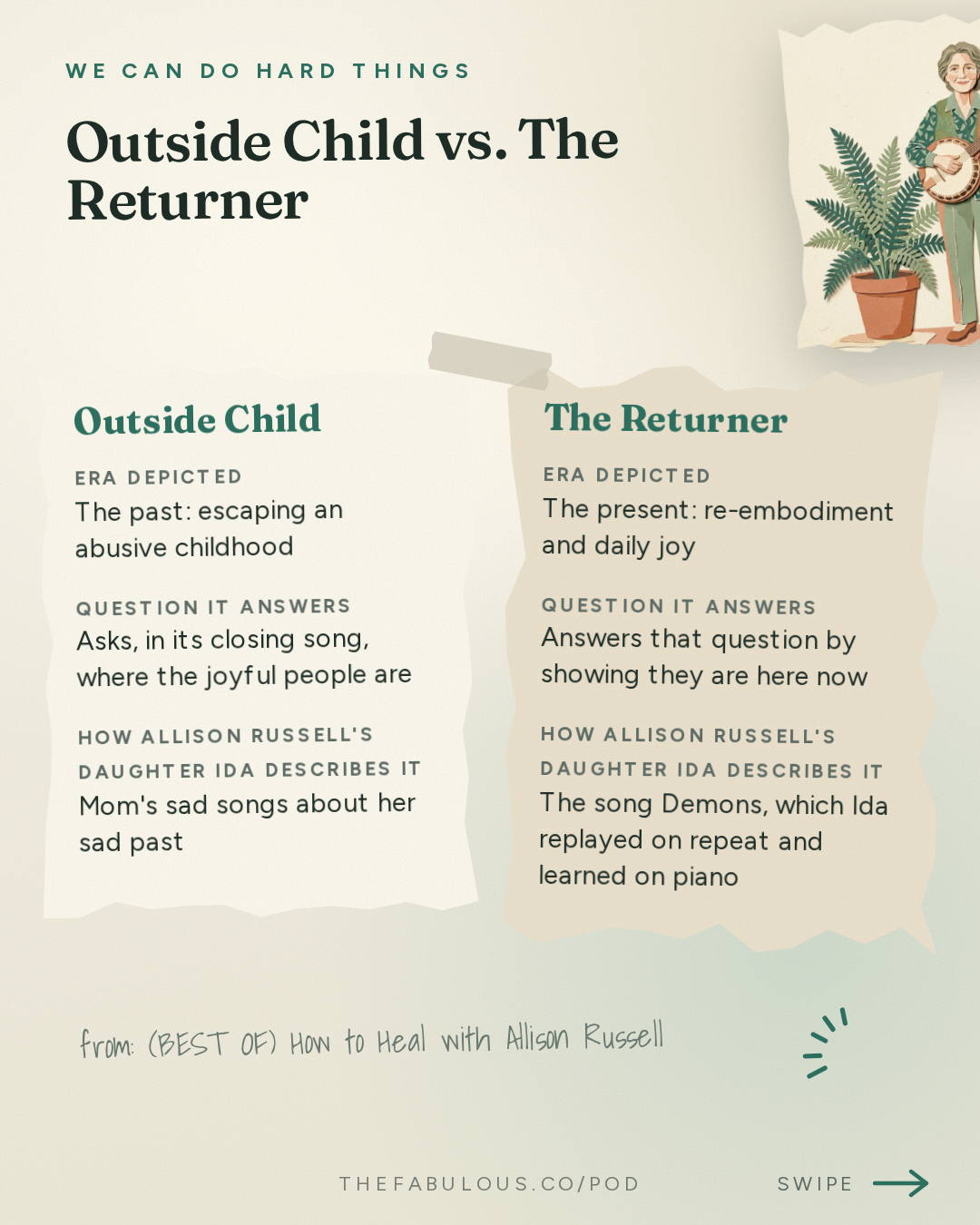
That reframing is not abstract for Russell. It is the architecture of her two most recent albums. "Outside Child," released in 2021, is volume one: the past, the escape. "The Returner," recorded in six days in Los Angeles with fifteen women, one gender-expansive collaborator, and three chosen brothers, is volume two: the present, re-embodiment (36:44). Russell describes the second album's ethos directly.
"It's stealing joy from the teeth of turmoil. It's loving on your people who love you back." — Allison Russell [40:10]
Where "Outside Child" closes by asking, in a song title, where all the joyful people have gone, "The Returner" answers the question (38:19).
What Brought Her Back Into Her Body
Russell locates the start of her re-embodiment in an unlikely place: an upright piano in her grandmother's Montreal apartment, where she sat under the curved Victorian legs as a toddler and watched her mother's feet work the pedals while playing Joni Mitchell's "For Free" (32:48). The clarinet solo at the song's end electrified her before she knew what a clarinet was. Decades later, Brandi Carlile invited Russell to play clarinet onstage with Mitchell herself at a gathering called the Joni Jam at The Gorge Amphitheatre, where Mitchell introduced her as the most beautiful clarinet player she had ever heard (34:33). Even in a relationship as troubled as the one with her mother, Russell says, music let her feel love when little else did.
The other turning point was motherhood, which arrived as what Russell calls a birth control pill baby: she had been on the pill for seven years without missing a dose, and still got pregnant with her daughter Ida, landing in the roughly one in one-hundred-thousand failure rate (54:19). Pregnancy, she says, flooded her system with oxytocin and stopped a lifelong habit of self-punishment, including disordered eating that she connects directly to childhood sexual abuse, calling eating disorders "part two" of that trauma (55:13).
"It was like my mitochondria woke up and said, 'Hey. Hey, you're part of this unbroken line of badass bitches who just make life on Earth.'" — Allison Russell [55:35]
Russell now lives in Tennessee, where she frames her activism as a continuation of the same argument she makes about O'Connor: do not mistake the people naming harm for the source of it. She points out that only 32 percent of registered voters put the state's current Republican supermajority in office (41:53), and that for nearly three years, gun violence has been the leading cause of death for American children and teenagers (44:55), a statistic made devastatingly local by the 2023 shooting at Nashville's Covenant School, which killed six people (45:21). She campaigned for Tennessee state representative Gloria Johnson, who survived an expulsion attempt by the legislature's Republican majority that successfully removed two younger Black colleagues, Justin Jones and Justin Pearson, before both were reelected by landslides (42:46).
The episode ends where it began, with the image that gives the hour its shape. Russell asks who decided that an unmarked page is more beautiful than one with writing on it, and then answers her own question by living otherwise: raising a daughter who feels safe enough to mock her, writing an album that insists on joy, and treating her own history, scars included, as something worth keeping legible rather than erasing (58:51).
Ask this episode anything
Pod's AI answers from the episode itself, with the minute mark so you can hear it yourself.
Or start with one of these
Ask this episode
Pod's AI listens to the whole episode to answer, and points you to the minute it comes from.
The rest of this answer, and any question after it
Answers come from the episode itself, never from a summary of it.
ContinueKey takeaways
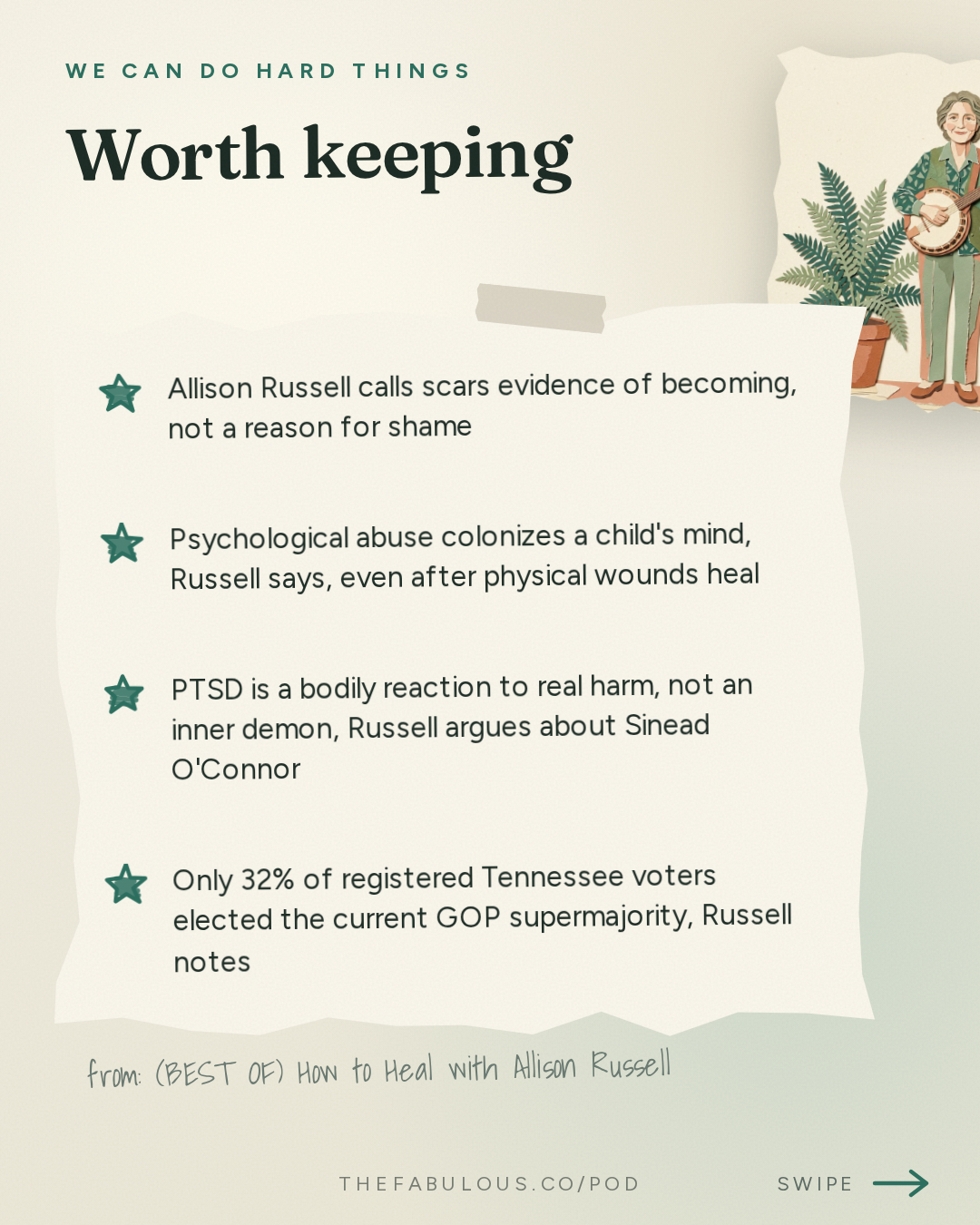
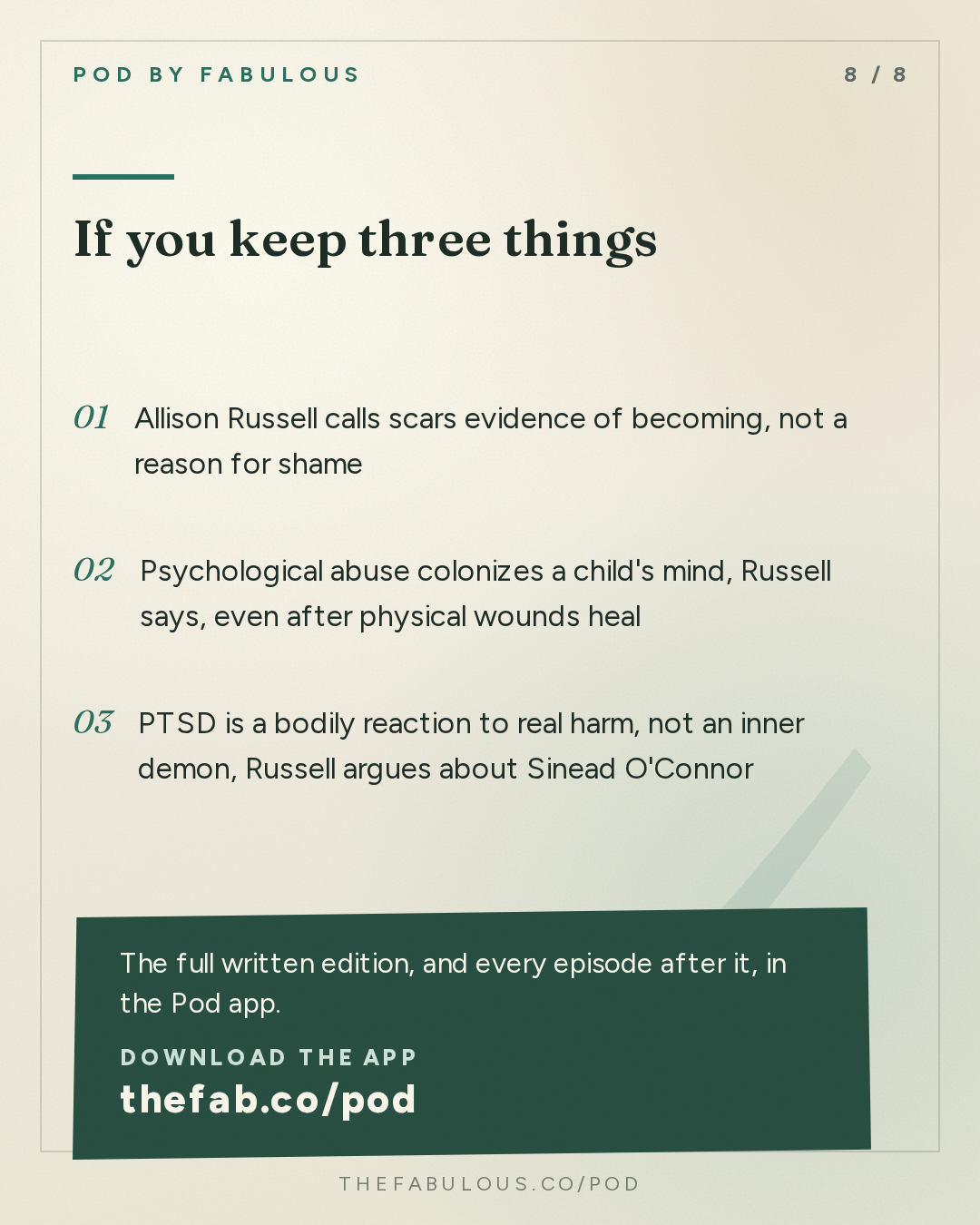
- Allison Russell calls scars evidence of becoming, not a reason for shame
- Psychological abuse colonizes a child's mind, Russell says, even after physical wounds heal
- PTSD is a bodily reaction to real harm, not an inner demon, Russell argues about Sinead O'Connor
- Only 32% of registered Tennessee voters elected the current GOP supermajority, Russell notes
- A flood of oxytocin during pregnancy helped Russell break a lifelong pattern of self-punishment
The episode in cards

By the numbers
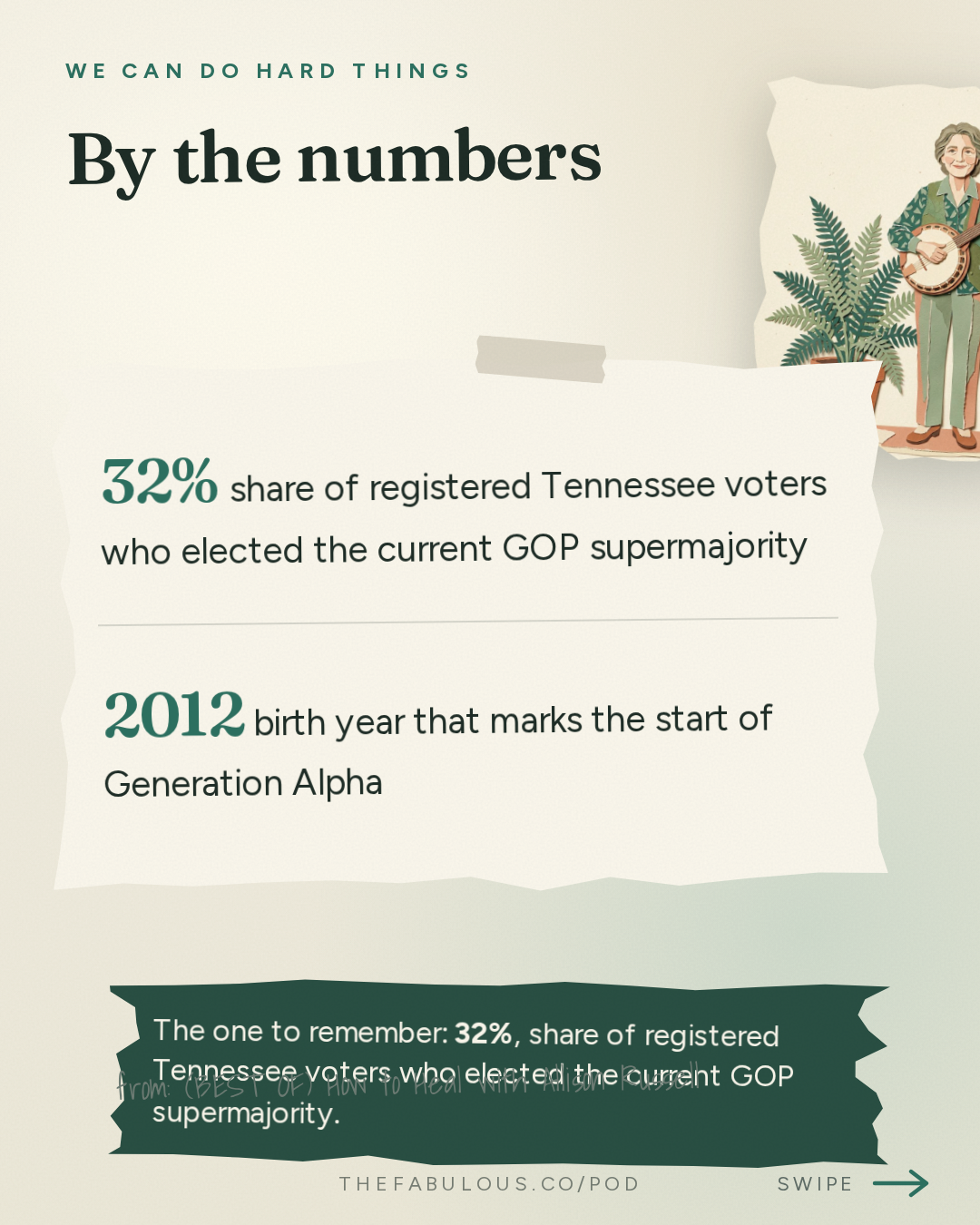
- 32% share of registered Tennessee voters who elected the current GOP supermajority
- 2012 birth year that marks the start of Generation Alpha
In their words
“Whoever said an unmarked page was more beautiful?”
“I felt safer sleeping in the cemetery than I did in the home of the people that- Mm ... called themselves my family at that time”
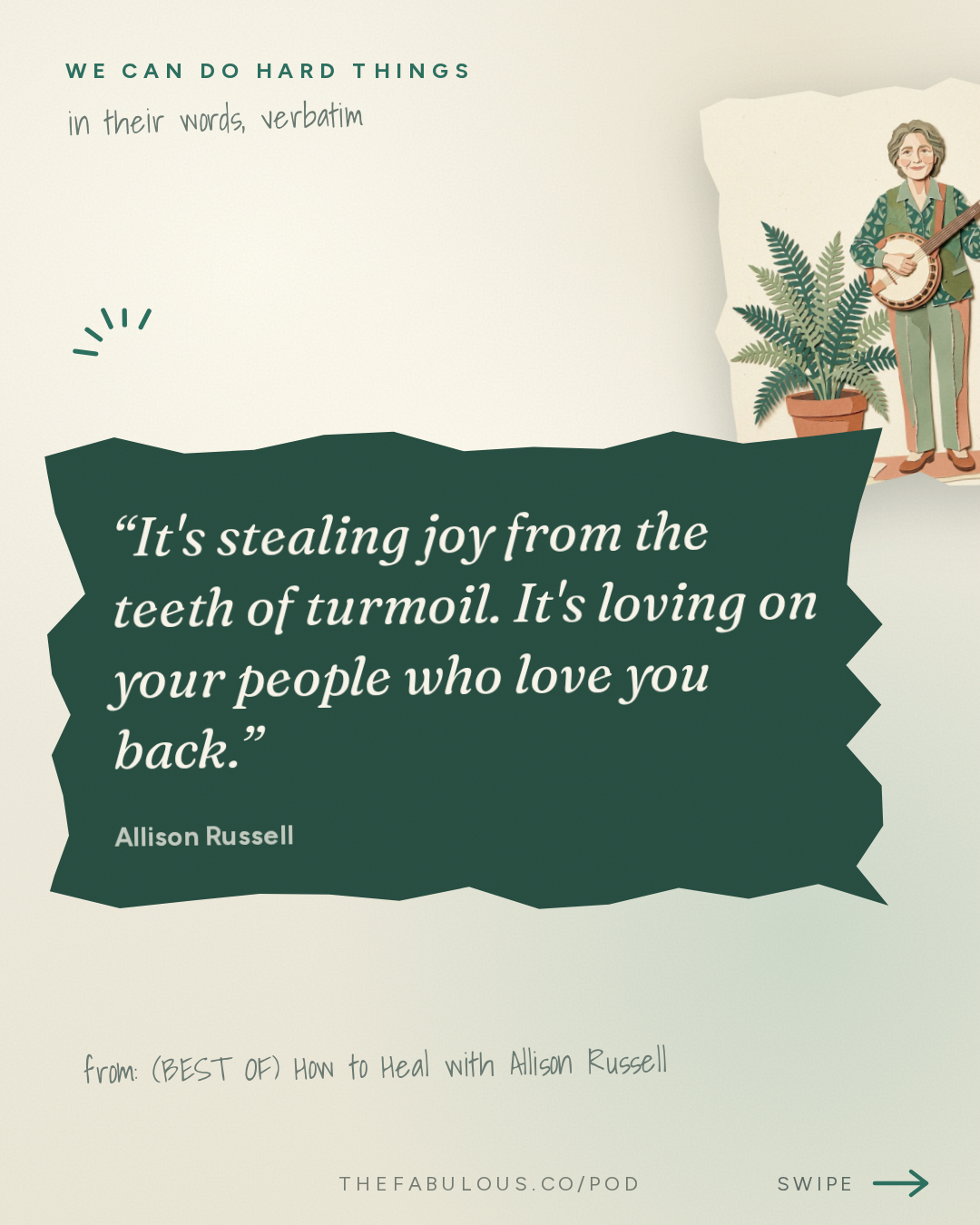
“It's stealing joy from the teeth of turmoil. It's loving on your people who love you back.”
“It was like my mitochondria woke up and said, "Hey. Hey, you're part of this unbroken line of badass bitches who just make life on Earth."”
Protocols
-
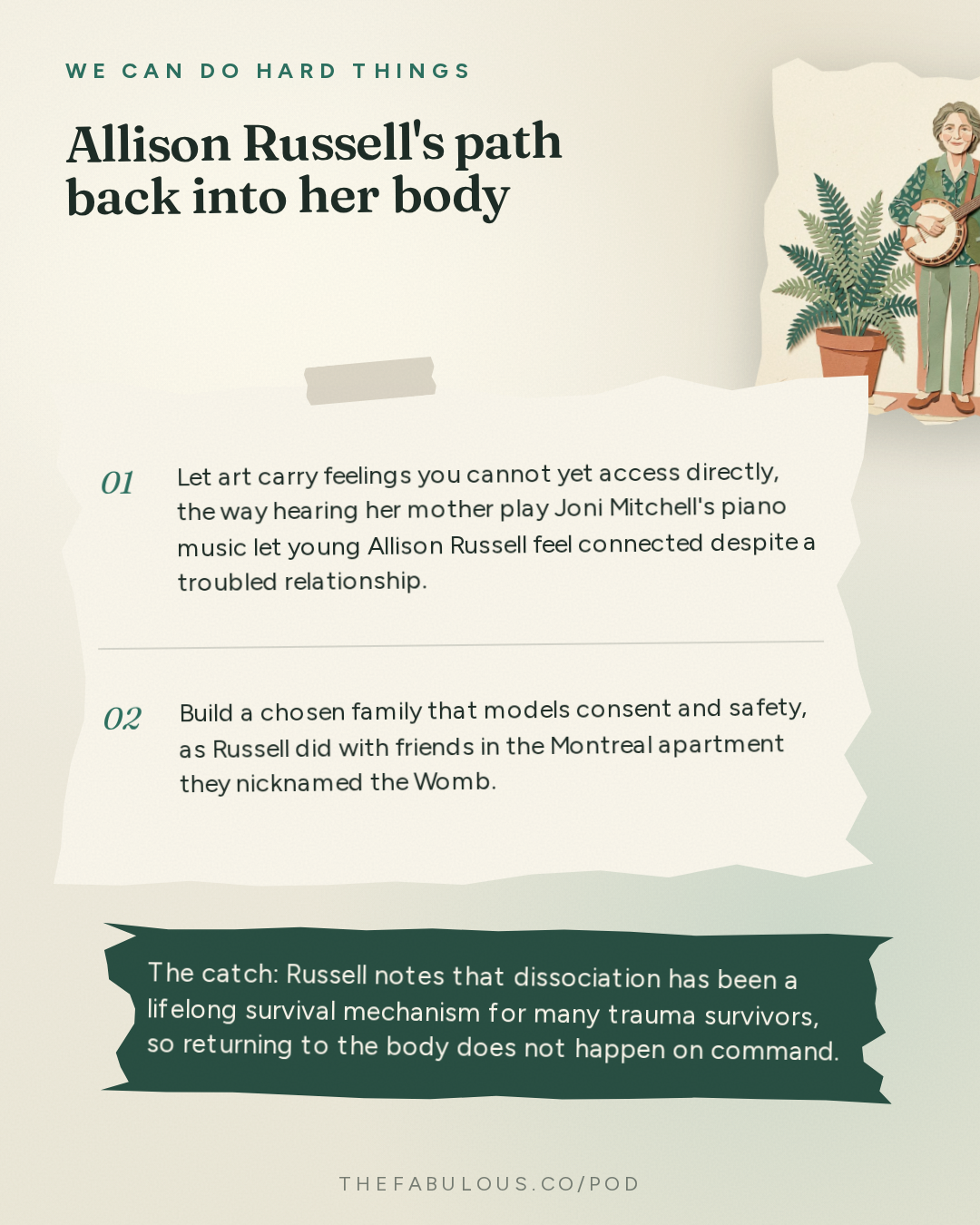
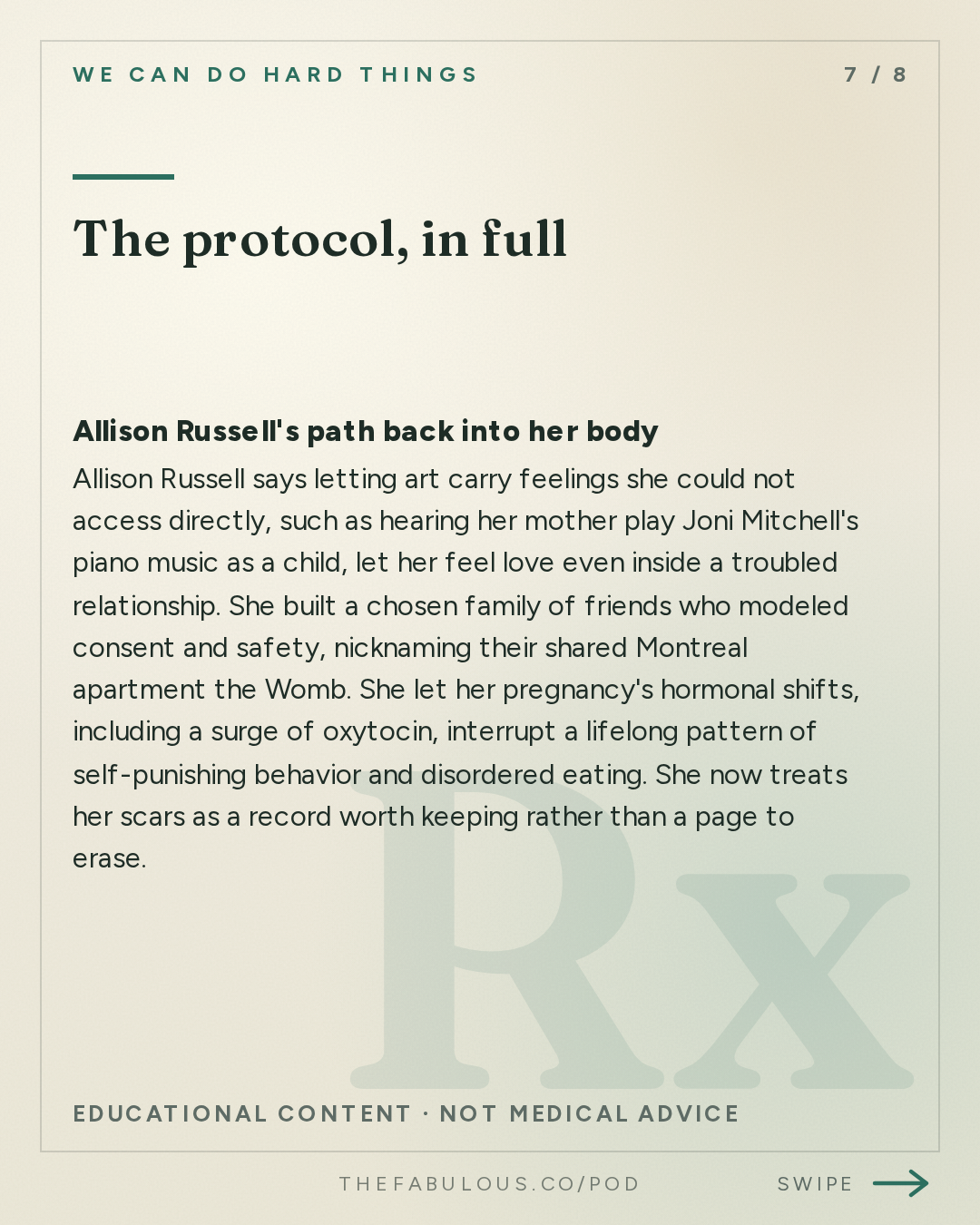
Allison Russell's path back into her body
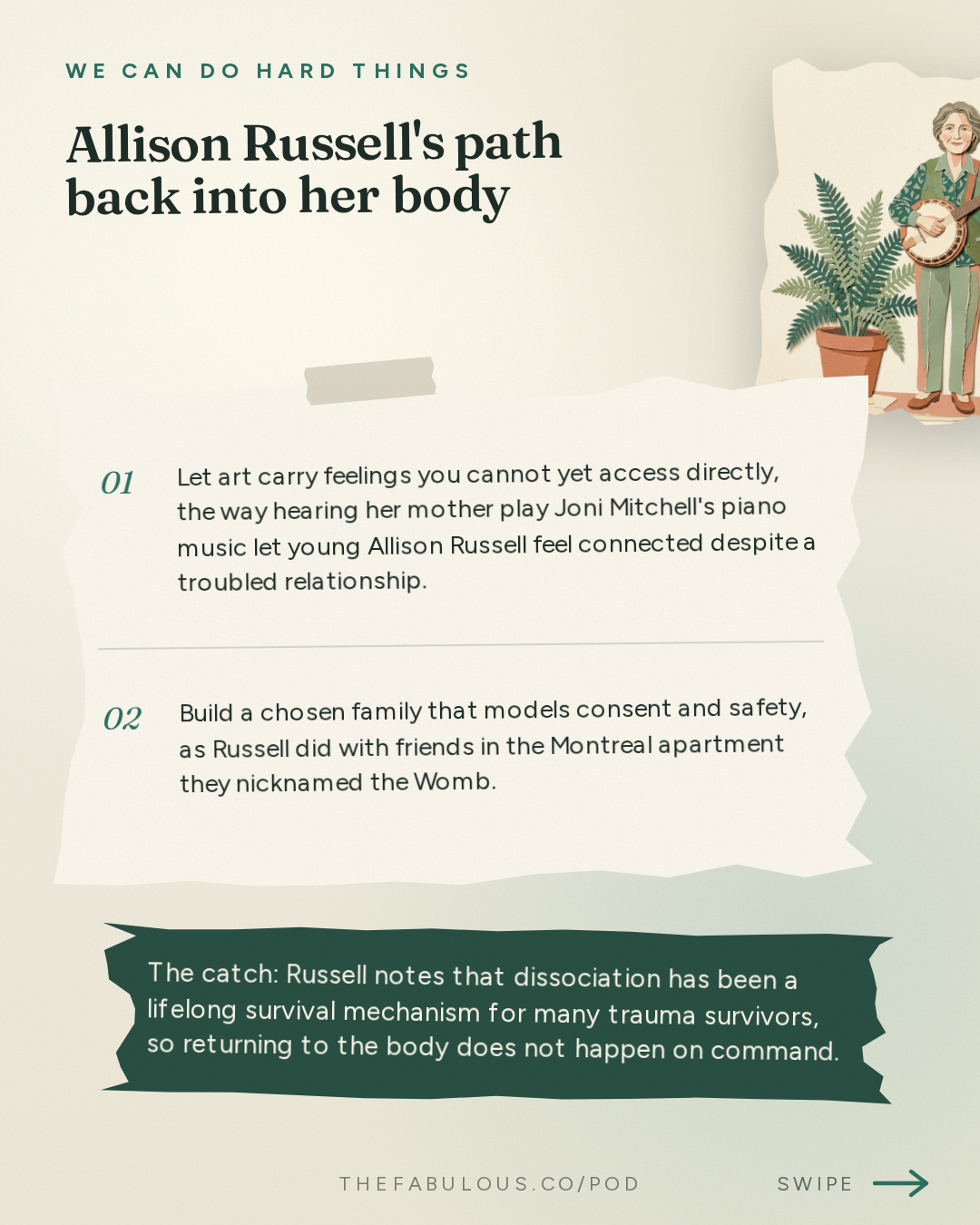
Allison Russell says letting art carry feelings she could not access directly, such as hearing her mother play Joni Mitchell's piano music as a child, let her feel love even inside a troubled relationship. She built a chosen family of friends who modeled consent and safety, nicknaming their shared Montreal apartment the Womb. She let her pregnancy's hormonal shifts, including a surge of oxytocin, interrupt a lifelong pattern of self-punishing behavior and disordered eating. She now treats her scars as a record worth keeping rather than a page to erase.
ongoing, not a fixed schedule
Questions this episode answers
How did Allison Russell survive childhood trauma?
Allison Russell was removed from her mother's care as a toddler in Quebec, then returned to a home headed by an adoptive father born in 1936 who had been shaped by white supremacist ideology, and she describes him as her primary abuser for over a decade (15:58). She ran away at fifteen and found safety in chosen family, an alternative high school, and sometimes a Montreal cemetery (17:08).
What does Allison Russell's album The Returner mean?
Russell describes The Returner, recorded in six days with fifteen collaborators, as volume two of a two-album story, following Outside Child (36:44). Where the first album is about the past and escape, she says The Returner is about the present and re-embodiment, or returning fully into one's body after trauma (40:10).
What is the Joni Mitchell clarinet story about Allison Russell?
Russell says she first heard a clarinet as a toddler, watching her mother play Joni Mitchell's song 'For Free' on piano (32:48). Years later, Brandi Carlile invited her to play clarinet onstage with Mitchell at a gathering called the Joni Jam, where Mitchell introduced her as the most beautiful clarinet player she had ever heard (34:33).
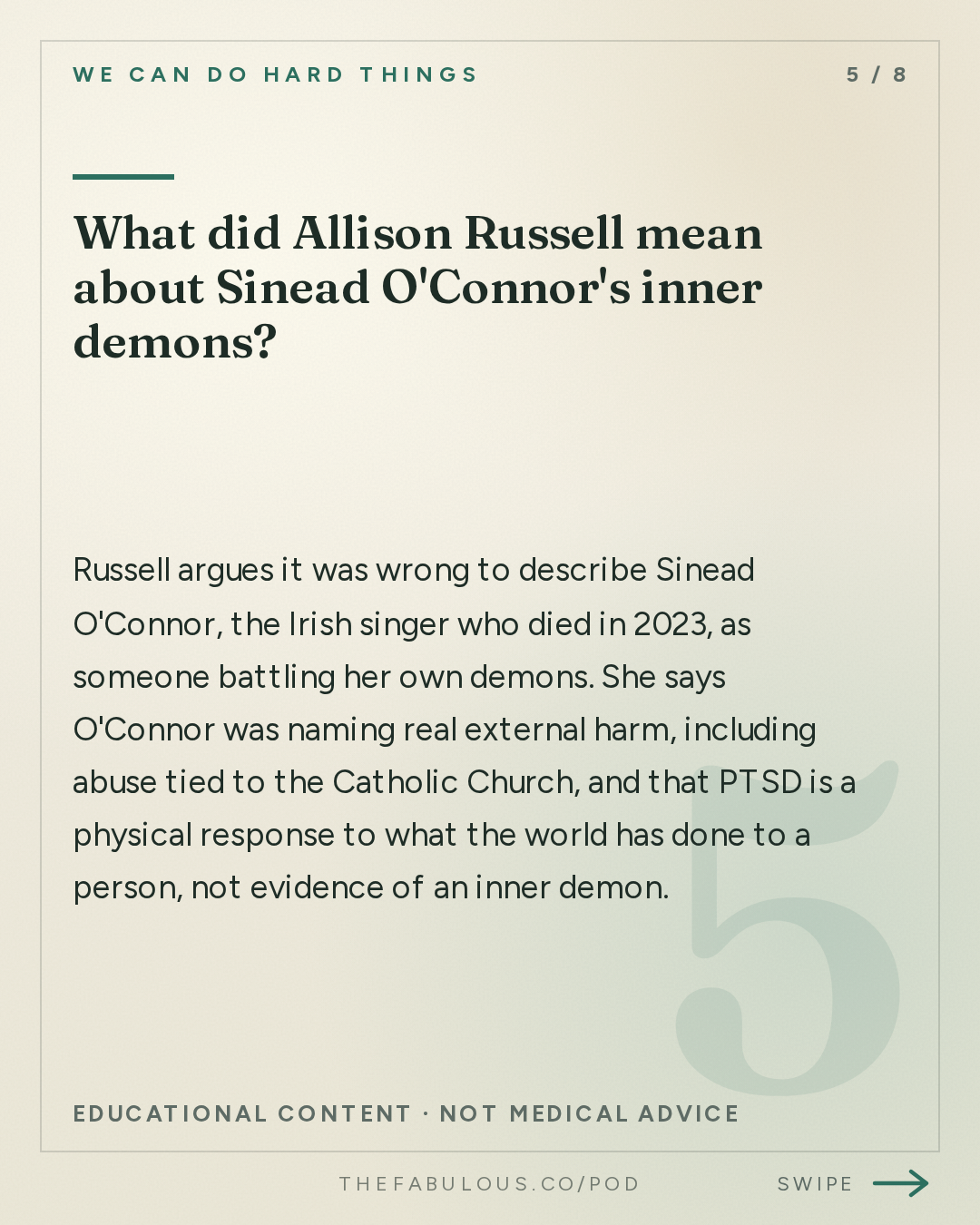
What did Allison Russell mean about Sinead O'Connor's inner demons?
Russell argues it was wrong to describe Sinead O'Connor, the Irish singer who died in 2023, as someone battling her own demons. She says O'Connor was naming real external harm, including abuse tied to the Catholic Church, and that PTSD is a physical response to what the world has done to a person, not evidence of an inner demon (31:30).
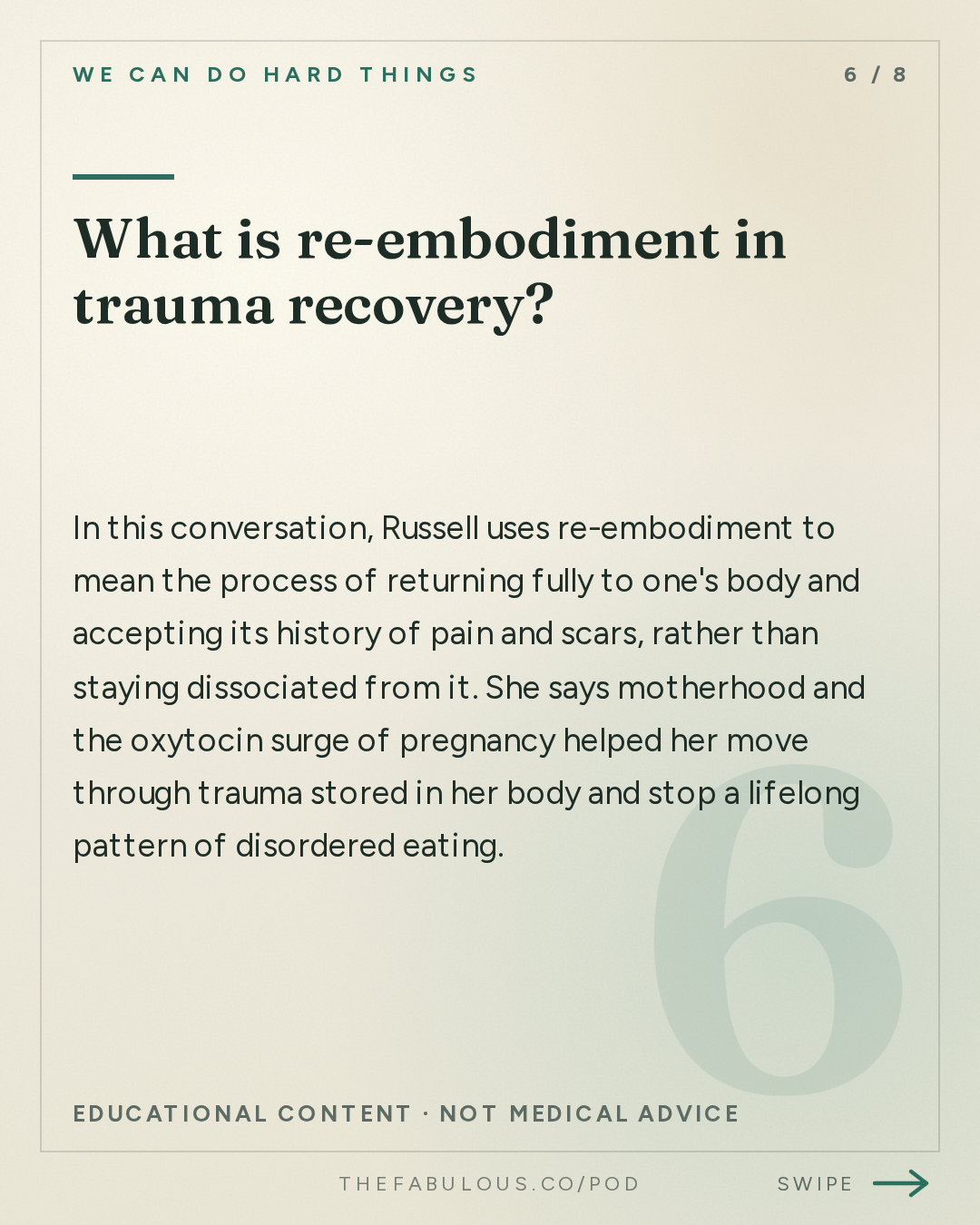
What is re-embodiment in trauma recovery?
In this conversation, Russell uses re-embodiment to mean the process of returning fully to one's body and accepting its history of pain and scars, rather than staying dissociated from it (58:51). She says motherhood and the oxytocin surge of pregnancy helped her move through trauma stored in her body and stop a lifelong pattern of disordered eating (55:13).
Why is Allison Russell active in Tennessee politics?
Russell points out that only 32 percent of registered voters elected the current Republican supermajority in Tennessee's legislature (41:53), and that gun violence has been the leading cause of death for American children and teenagers for nearly three years (44:55). She campaigned for state representative Gloria Johnson following the 2023 shooting at Nashville's Covenant School, which killed six people (45:21).
The full read, in cards
Go deeper
- The Returner — Allison Russell's album, recorded in six days, framed as volume two of a two-part arc about re-embodiment
- Outside Child — Allison Russell's prior album, framed as volume one, about surviving the past
Mentioned
Allison Russell · Glennon Doyle · Abby Wambach · Brandi Carlile · Joni Mitchell · Sinéad O'Connor · Gloria Johnson · Justin Jones · Justin Pearson · Montreal
More from this show and category

Dr. Rachel Rubin on Perimenopause Relief
Perimenopause can start around age 35 and run for a decade before periods stop, yet fewer than 6% of doctors are trained to treat it. Urologist Dr. Rachel Rubin explains why standard hormone tests mislead, debunks the 2002 Women's Health Initiative scare, and lays out a four-part hormone therapy toolbox, including cheap vaginal estrogen that cuts UTI hospitalizations by over half.

Carson Tueller on Ableism and the Social Model
Carson Tueller, paralyzed at 23 after a trampoline accident, argues that most of disability's suffering comes from ableism, not the body itself. He reframes his injury as a "rebirth," separates the social model of disability from the medical model, and explains why inspiration porn and scripted sex both keep people from their true, undamaged self.

Breast Density and Mammogram Blind Spots Explained
Breast surgeon Lucy de la Cruz explains how dense breast tissue hides cancer from mammograms and what surgical choices patients are rarely offered. Georgetown University Hospital's de la Cruz covers density categories, lumpectomy versus mastectomy recurrence odds, direct-to-implant reconstruction, and nerve grafts that restore nipple sensation within one to two years.

Why Date Nights Don't Work for Long-Term Couples
Date nights often fail because couples already know each other too well; novelty, not dinner reservations, revives connection. A study of 53 couples found exciting activities beat pleasant ones for marital satisfaction (10:16). The hosts suggest parallel play over face-to-face talk (24:26) and a date bowl to end decision fatigue (47:07).
