
Why Is the Number Eight Lucky in Asia?
Lucky #888 — My Tour of Designing Luck in China, Japan, and Korea
The brief
Tim Ferriss explains why the number eight, which sounds like the Mandarin word for prosperity, became East Asia's luckiest digit. He traces how that belief shaped skyscraper floor counts, casino design, license plate auctions, and Toyota's name, while four, linked to the word for death, disappears from elevators across China, Japan, and Korea.
In 2003, an airline paid more than a quarter million dollars for a phone number. Not a clever one, not a rhyme, just a string of eights: 88888888. Sichuan Airlines wanted it for a customer hotline, and the price was 2.33 million yuan, about $280,000 at the time (04:49). Nobody had answered a single call yet. The number itself was the product. That transaction is the hinge of this solo episode of The Tim Ferriss Show, in which Ferriss spends thirty minutes chasing a single idea across three languages and three countries: luck, it turns out, is not something you stumble into. In large parts of East Asia, it is something you specify, price, and build.
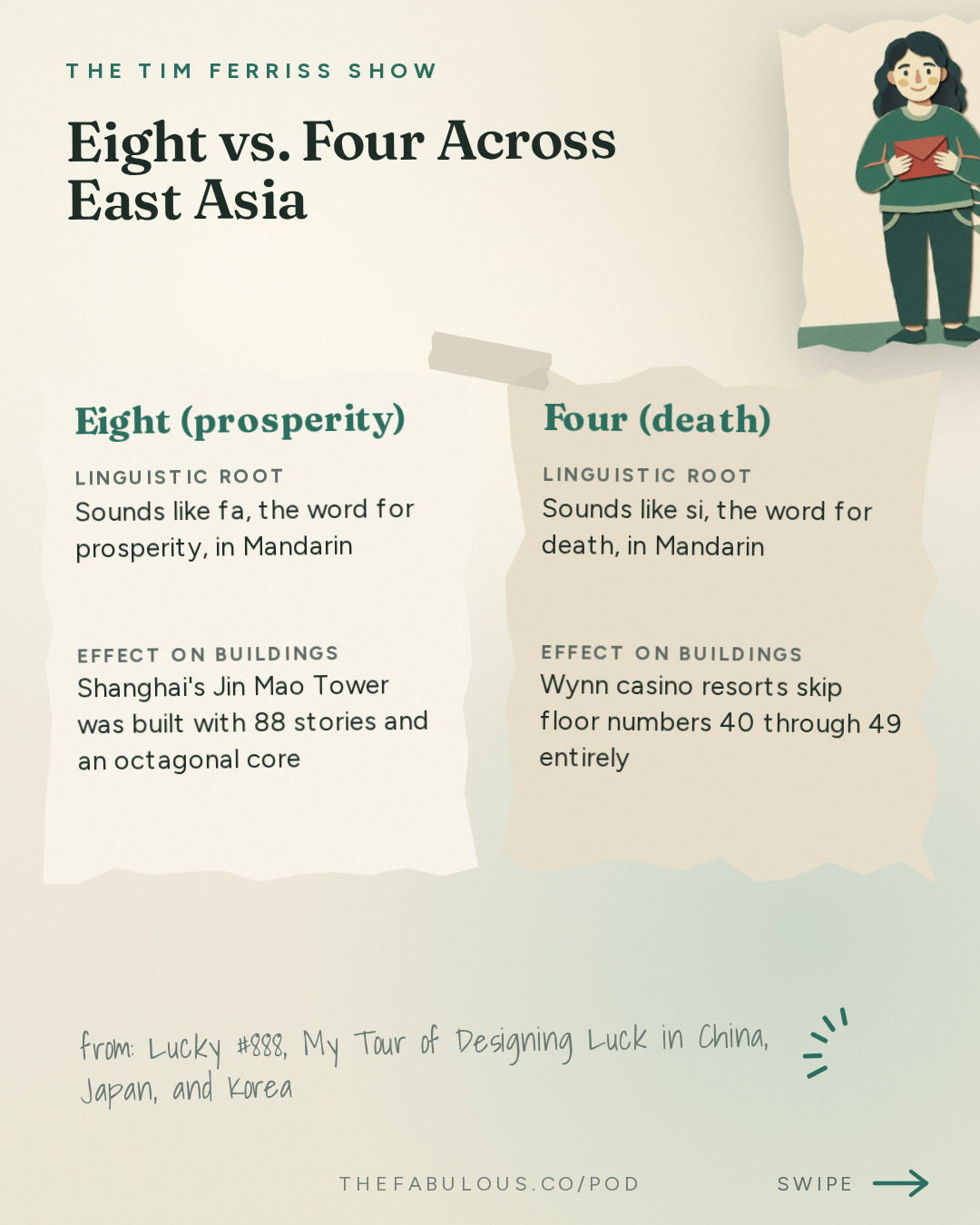
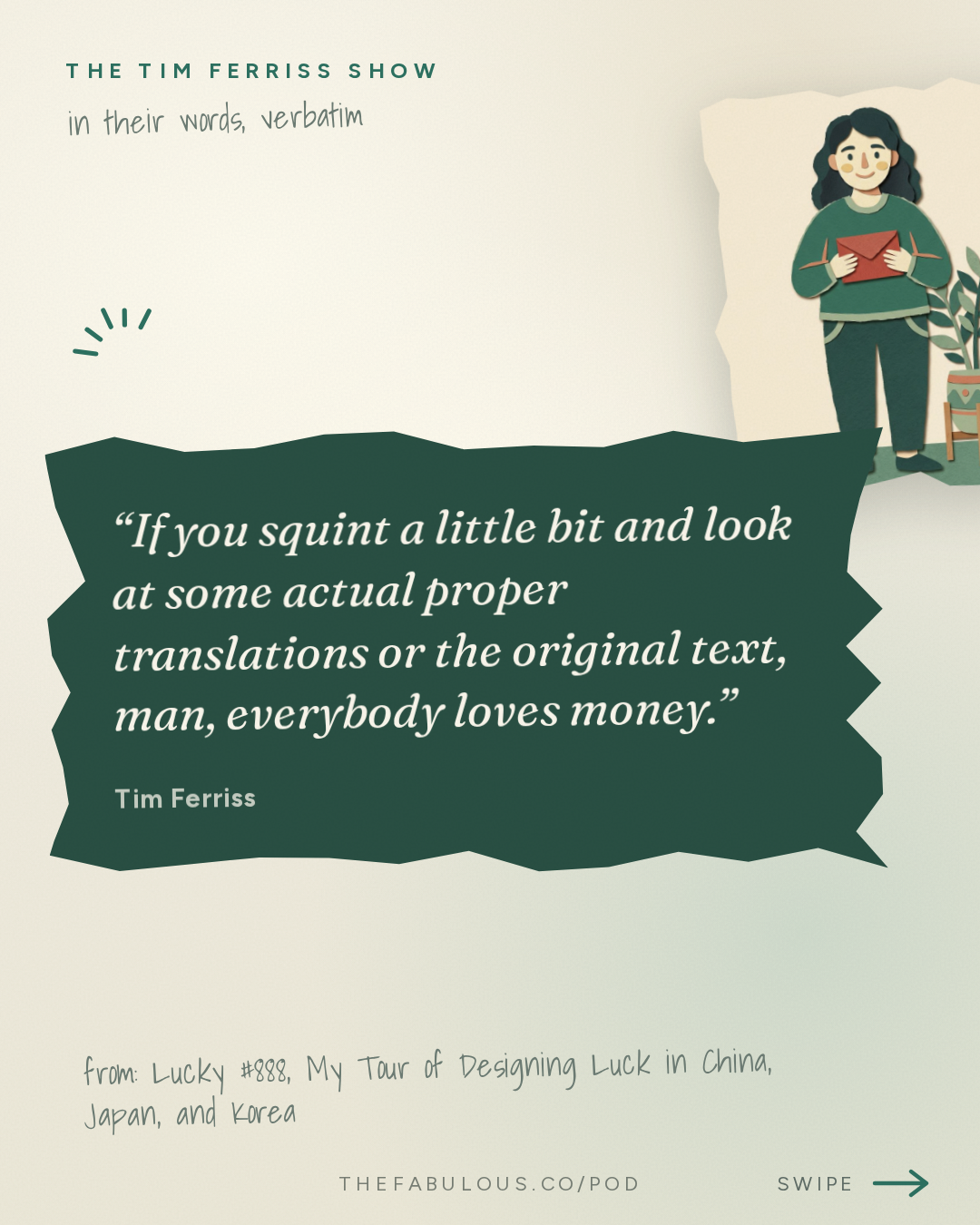
The root of it is a pun. In Mandarin, the number eight is pronounced ba. The word for prosperity, as in the New Year greeting gong xi fa cai, roughly "congratulations, may you prosper," uses a sound, fa, that echoes it closely enough to matter (01:49). Ferriss is careful about the mechanics: fa means to emerge or depart, cai means wealth, and the pairing fa cai, to come into riches, rhymes with ba just enough that eight absorbed its meaning. The association is old, but Ferriss notes it was "supercharged" in the 1980s, especially in Hong Kong, before spreading outward (03:39). He is also quick to puncture a certain Western fantasy about Eastern asceticism: "If you squint a little bit and look at some actual proper translations or the original text, man, everybody loves money" (04:04).
Once a sound becomes a value, prices follow. A Hong Kong government auction sold the license plate "88" for 11.4 million Hong Kong dollars, about $1.5 million, in February 2025 (06:12). Beijing scheduled the 2008 Olympics opening ceremony for 8:00 PM on August 8th, and 15,646 couples registered to marry in the city that same day (06:37). These are consumer choices, people paying extra for a symbol. The more interesting turn, as Ferriss puts it, is "when you stop buying lucky numbers and start building them" (07:04).
Building Luck Into Concrete and Steel
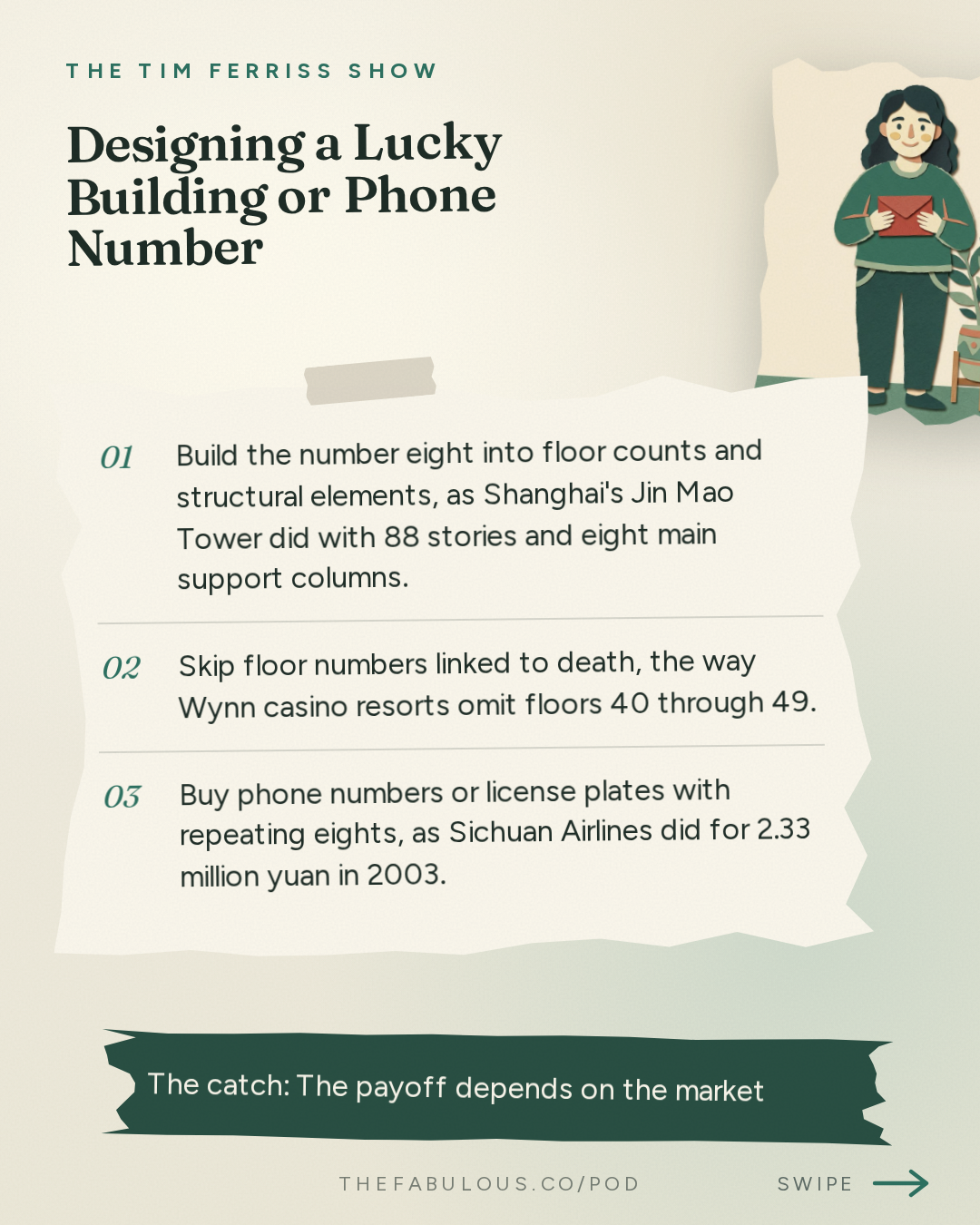
Shanghai's Jin Mao Tower has 88 stories because the client wanted that number, according to architect Adrian Smith, and the building doesn't stop there: it has an octagonal core and eight main structural columns, so the number does symbolic and load-bearing work at once (07:04). The effect shows up at a smaller scale too. Economists studying Chengdu apartment sales between 2004 and 2006 found that units on floors ending in eight resold at roughly a 7 percent premium. In the new-construction market, where prices were fixed and uniform, the lucky floors didn't cost more, they just sold about a week faster (07:37).
Four is the mirror image of eight, and the reason is grim. In Mandarin, four is si, and to die is also si, a near match broken only by tone (08:13). Ferriss, a long-ago student of the language, remembers a college Chinese class that started with 32 students and lost half of them within two weeks, partly because the tonal gymnastics are exhausting to produce (08:36). The dread of four shows up wherever eight shows up, just inverted: many East Asian buildings, like American buildings skipping a 13th floor, skip floor four entirely.
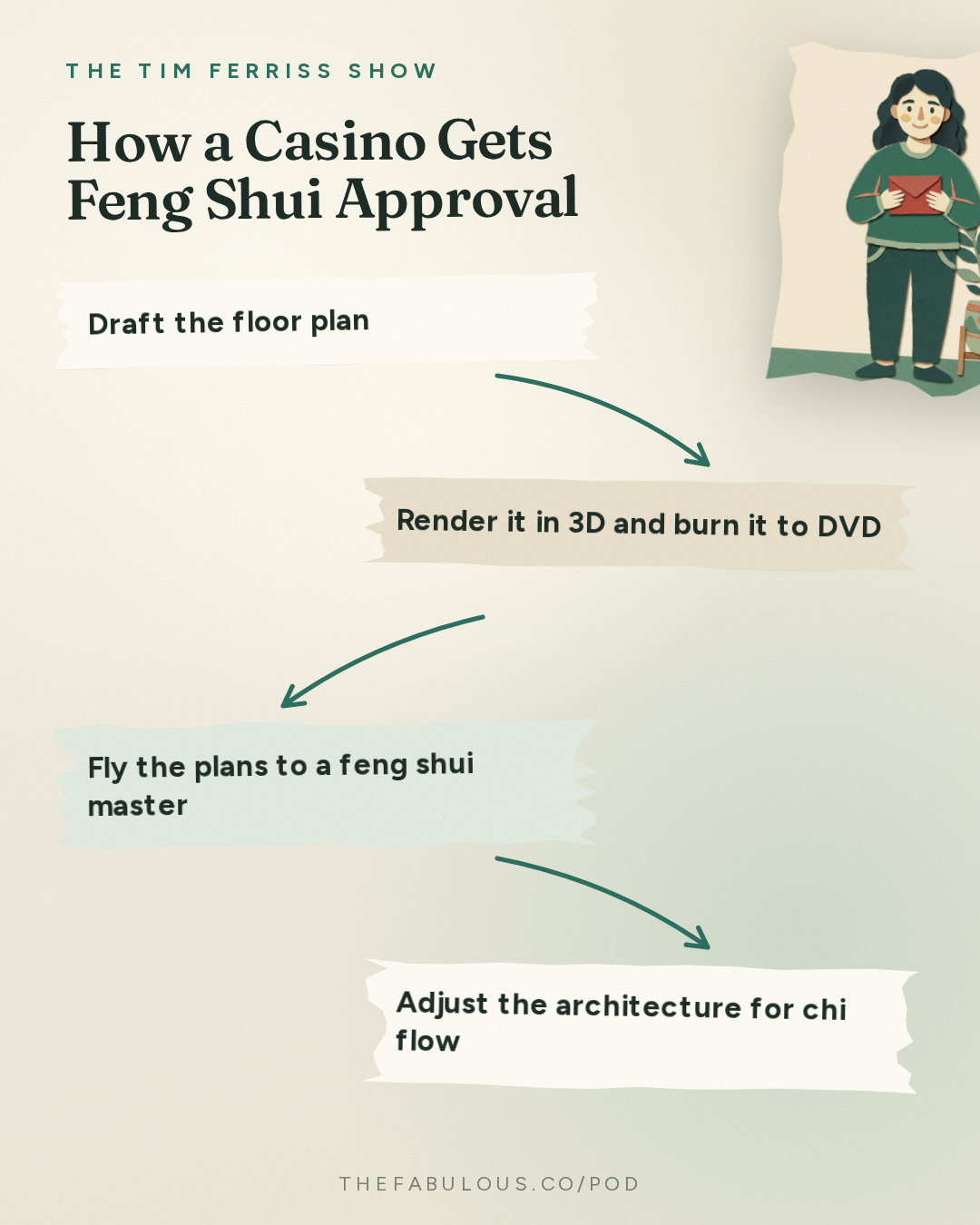
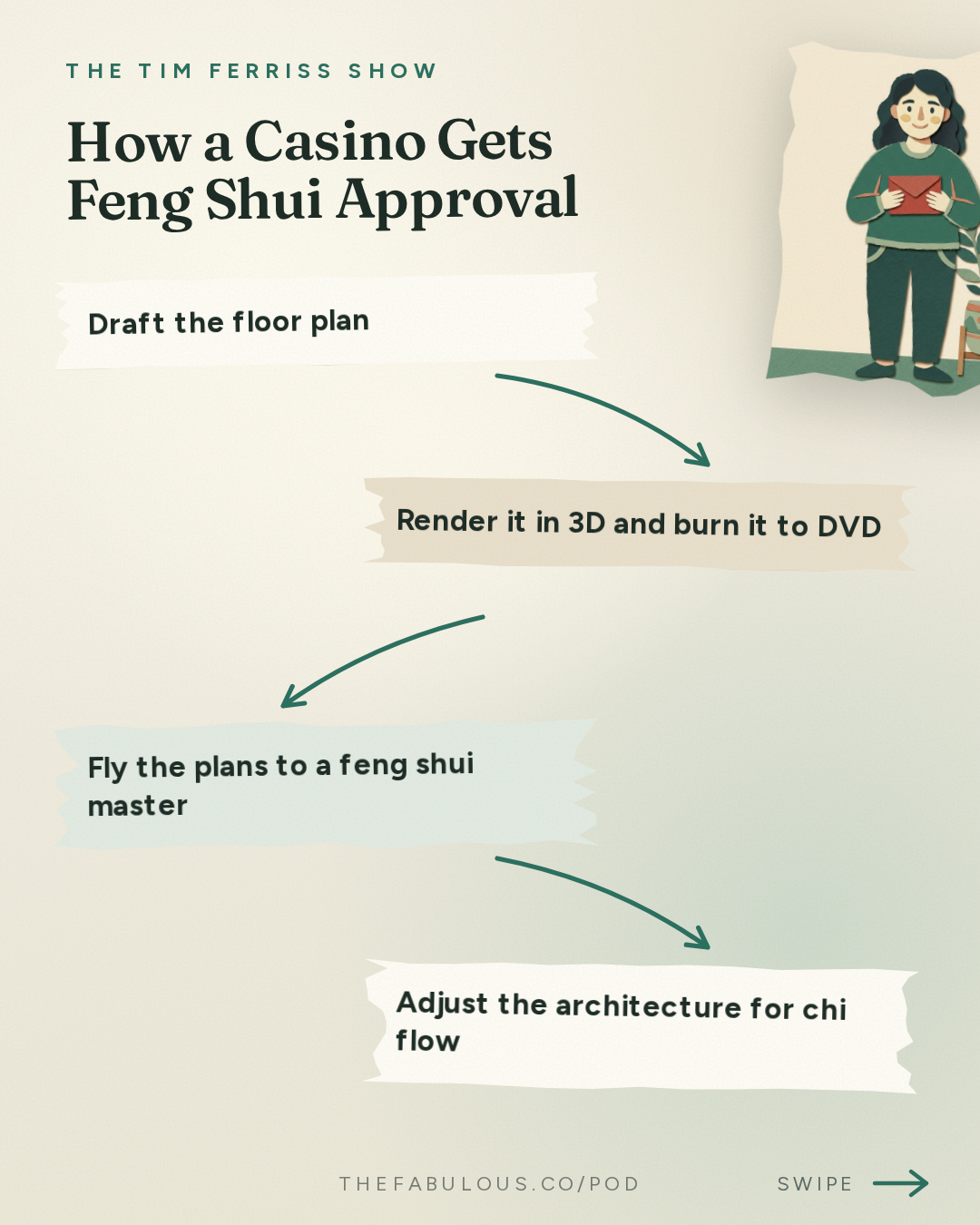
Nowhere is the stakes-raising more visible than in casino design. In 2004, Time reported that Sands Macao replaced the classic 777 jackpot symbol on its slot machines with 888 (09:45). Feng shui, which translates literally as "wind, water" (10:30), became a formal part of the design process. Las Vegas Sands executive William Weidner described, in a 2005 interview, designers rendering their floor plans in 3D, burning them to DVDs, and flying them to a feng shui master in Kowloon, Hong Kong, for review (10:08). At Sands Macao, a sharp corner was rounded off because a consultant believed the edge would deflect good chi, or energy, arriving from the northeast (11:28). The corner of a casino became, in Ferriss's phrase, "a business decision about where good fortune might go, get trapped, move" (11:56).
For the highest of high rollers, the customization gets personal. Architect Paul Haritakis described designing a private gaming room at The Venetian in 2012 where a feng shui expert used the gambler's own birthday and zodiac sign to shape the layout (12:21). Reporting from 2016 described Caesars VIP villas with numbers beginning in eight and Wynn properties that skip floors 40 through 49 altogether, avoiding the unlucky four twice over in a single range (13:09). The paradox, as Ferriss frames it, is that the player wants the room lucky for the player, and the house wants it lucky for the house. Veteran casino architect Paul Steelman, who has designed resorts across Asia, resolved the tension simply in 2015:
"The buildings have to be designed for good feng shui for both the player and the casino owner." — Paul Steelman, quoted by Tim Ferriss [13:29]
Even the U.S. government got a taste of the market. In 2015, the Bureau of Engraving and Printing sold uncut sheets of eight $2 bills with serial numbers starting in 8888, face value $16, retail price $58.88, limited to 16,888 sheets (13:48).
The Pun Doesn't Always Travel
Japan inherited Chinese characters, called kanji, but Chinese grammar doesn't fit Japanese, which conjugates verbs in ways Chinese doesn't. Over centuries, this mismatch produced two phonetic syllabaries, and today basic literacy in Japan requires learning about 1,945 core characters, the joyo kanji (16:30). Eight, in Japanese, is hachi, and its written form is visually suggestive: two strokes that spread apart toward the bottom, like a fan opening. There's a word for that widening shape, suehirogari, prosperity that grows toward the future (17:19). That visual logic, more than any pun, is why Toyoda, the founding family's name, became Toyota, the company name: written in the katakana syllabary, Toyota takes eight strokes, a number tied to wealth, while Toyoda takes more (18:36). Japan's Shikoku pilgrimage, a historic circuit tied to the Buddhist monk Kukai, visits 88 temples (19:25), another quiet accumulation of the number.
Korea complicates the story in a useful way. Korean has a numeral set borrowed from Chinese, and in it eight is pal, which doesn't rhyme with any word for wealth (22:05). The prosperity pun simply doesn't survive the trip. But eight still matters, because Korean fortune telling, saju palja, builds a birth chart from four pairs of characters, four pillars of year, month, day, and hour, each written with two characters, for eight characters total (22:31). Palja, "eight characters," became the everyday Korean word for fate itself. And four's dark twin crossed over too: in the same numeral set, four and the word for death can both be read sa, which is why some Korean elevators replace the fourth-floor button with the letter F (23:16).
The episode's closing turns, fittingly, to a myth about 666. In the West, Revelation 13:18 ties the number to the beast. Heavy metal culture is often credited with borrowing it through the horn-hand hand sign, but Ferriss debunks that directly: the gesture is the mano cornuta, an old Mediterranean ward against the evil eye, not three stacked sixes (24:43). Black Sabbath singer Ronnie James Dio picked it up from his superstitious Italian grandmother and started using it onstage after joining the band in 1979 (25:42). Meanwhile, in Chinese, 666 can mean the opposite of evil: it echoes smooth sailing, and shows up in good-luck money packets at Chinese New Year (26:39). Luck, the whole episode insists, is not a universal constant. It's a local sound, pointed at a local fear, and if you control the sound, you can build the fear right out of the blueprint.
Ask this episode anything
Pod's AI answers from the episode itself, with the minute mark so you can hear it yourself.
Or start with one of these
Ask this episode
Pod's AI listens to the whole episode to answer, and points you to the minute it comes from.
The rest of this answer, and any question after it
Answers come from the episode itself, never from a summary of it.
ContinueKey takeaways
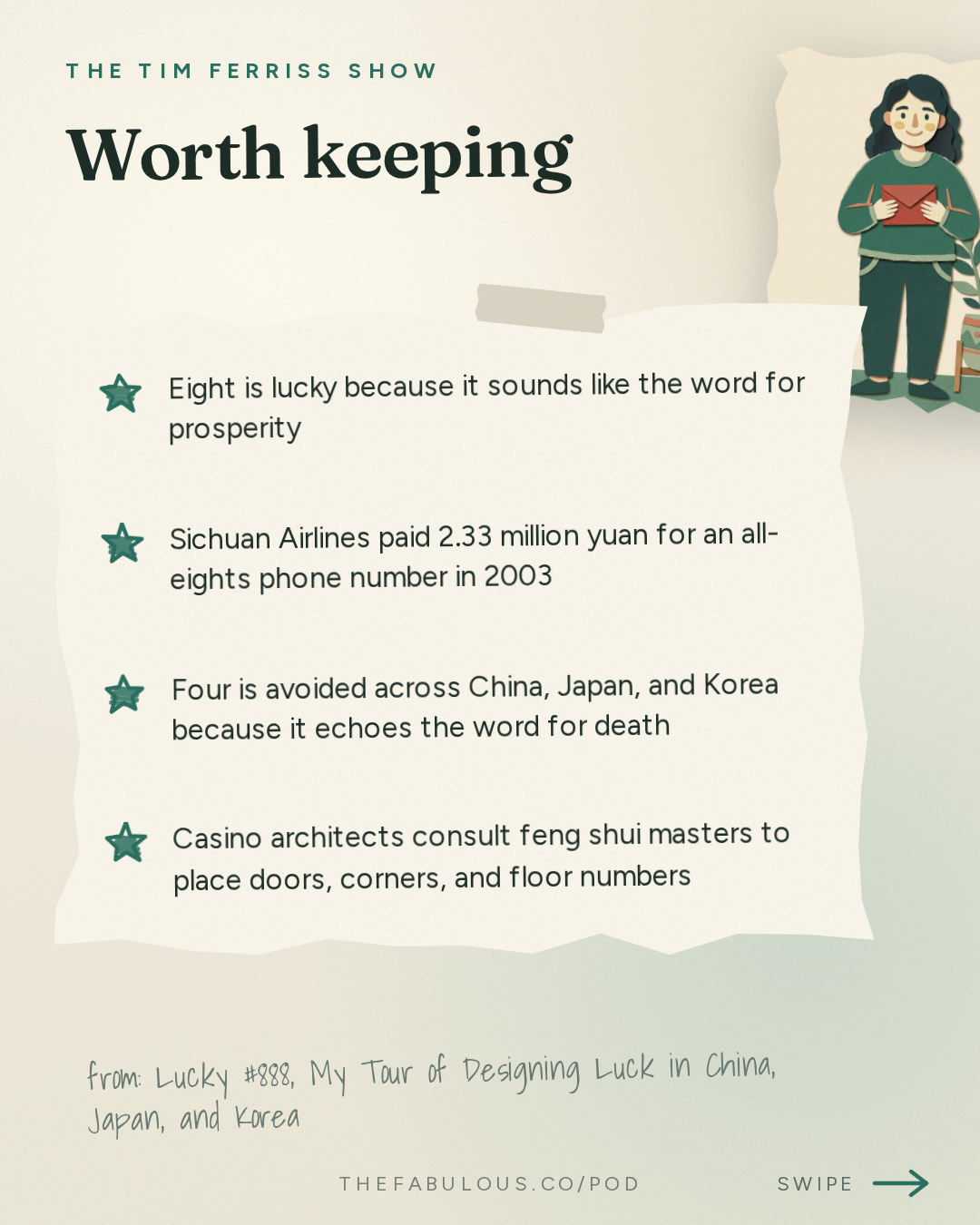
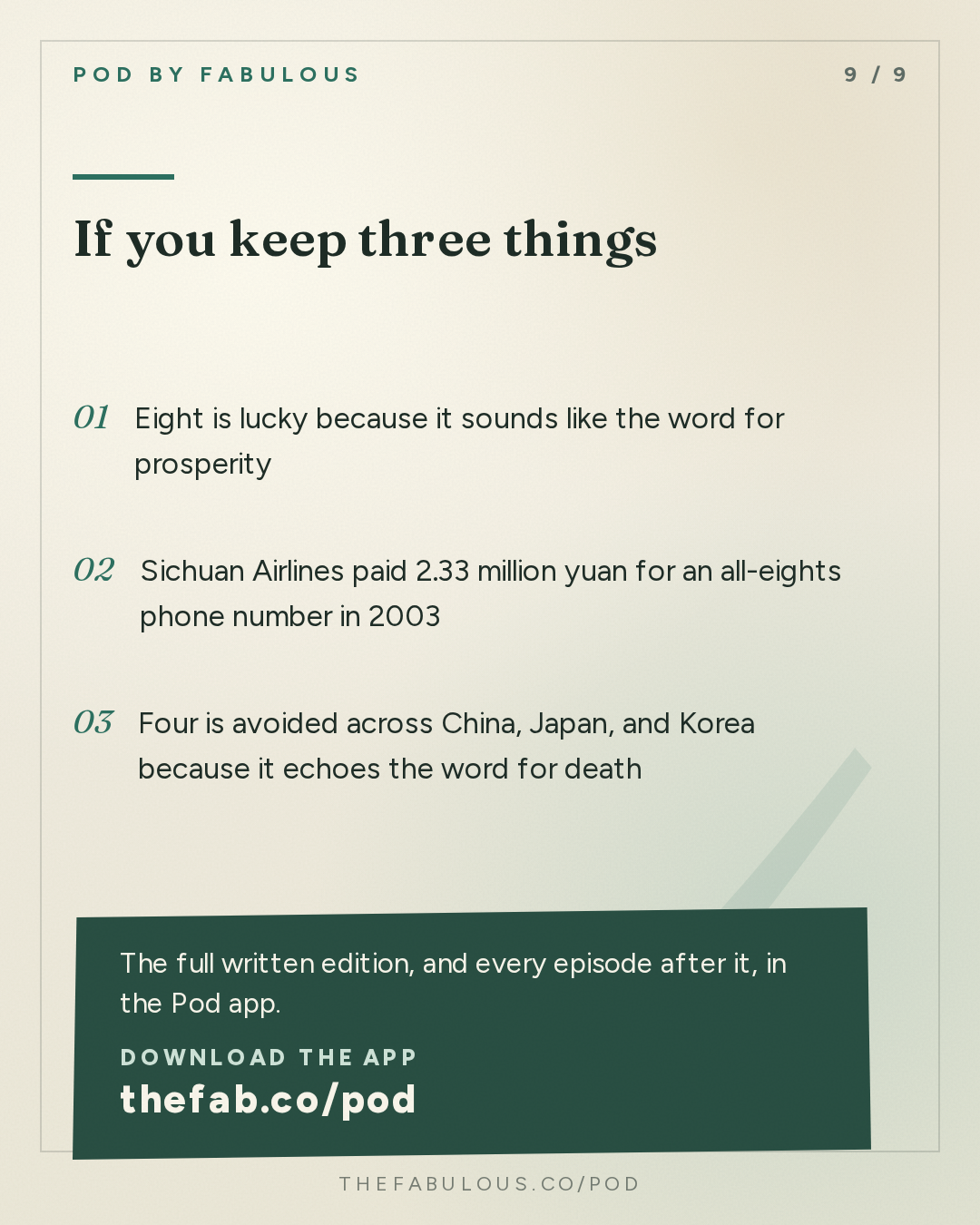
- Eight is lucky because it sounds like the word for prosperity
- Sichuan Airlines paid 2.33 million yuan for an all-eights phone number in 2003
- Four is avoided across China, Japan, and Korea because it echoes the word for death
- Casino architects consult feng shui masters to place doors, corners, and floor numbers
- Toyota changed its name from Toyoda because Toyota takes eight strokes to write in katakana
The episode in cards
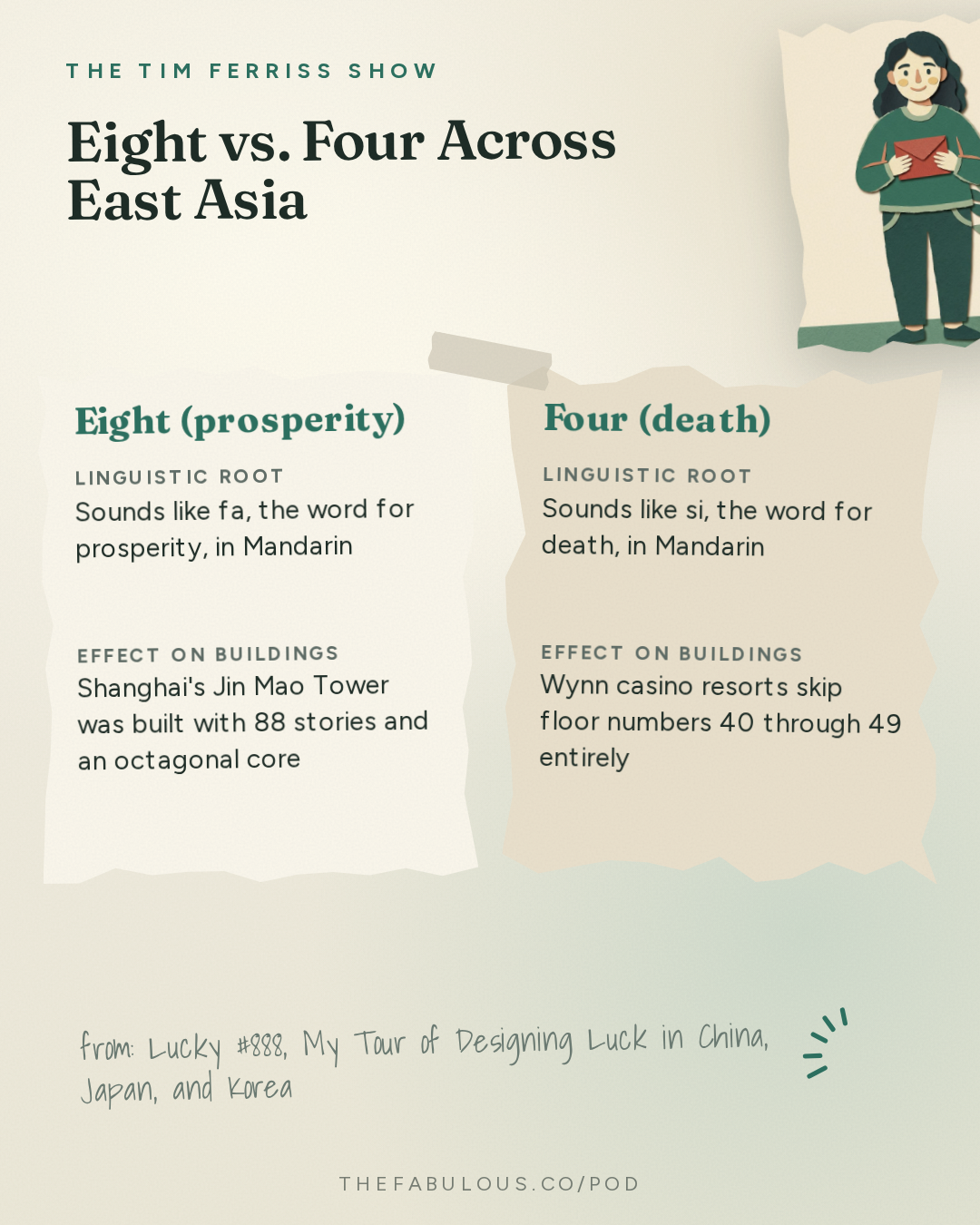
By the numbers
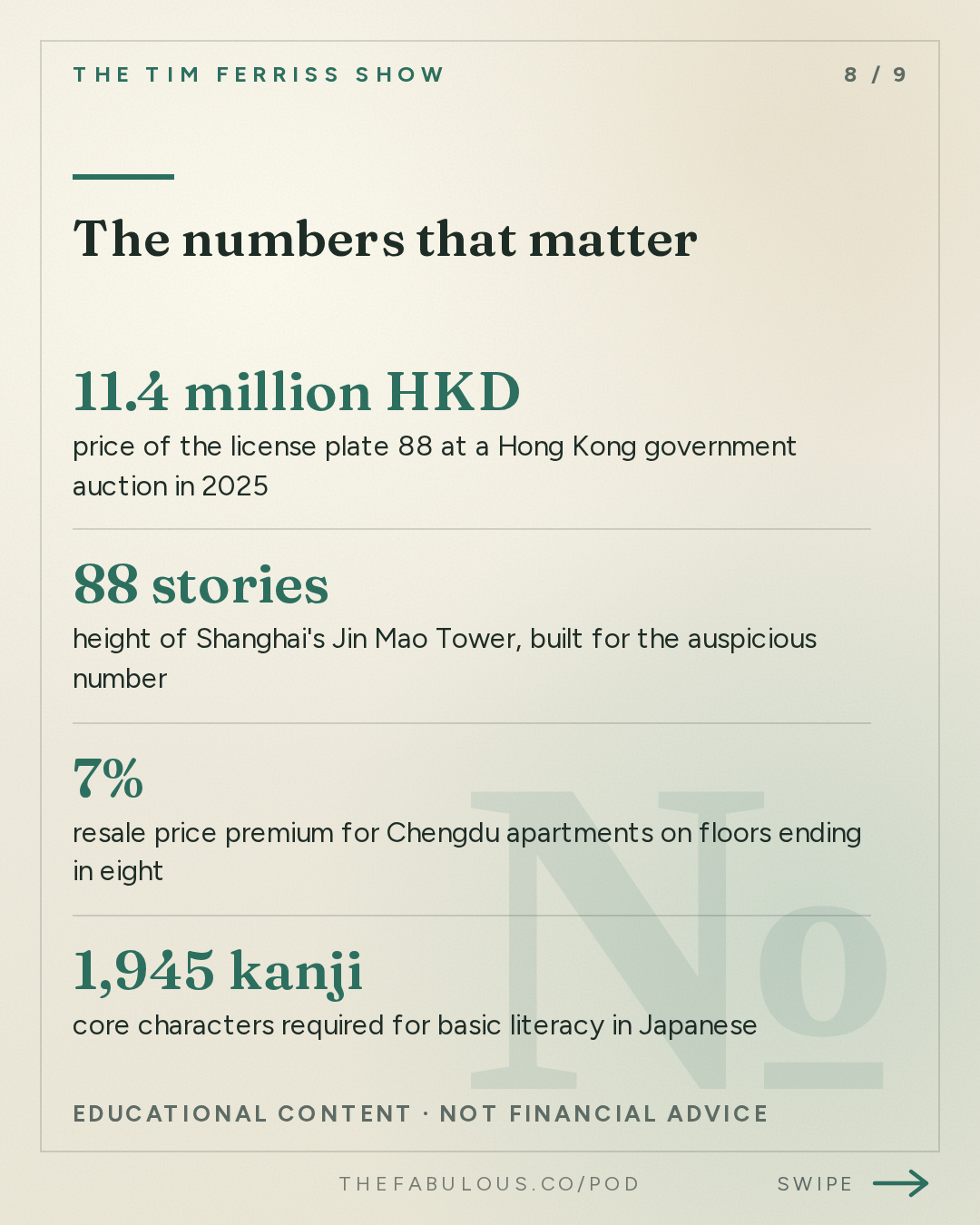
- 11.4 million HKD price of the license plate 88 at a Hong Kong government auction in 2025
- 88 stories height of Shanghai's Jin Mao Tower, built for the auspicious number
- 7% percent resale price premium for Chengdu apartments on floors ending in eight
- 1,945 kanji core characters required for basic literacy in Japanese
- 8 strokes number of strokes to write Toyota in katakana, versus more for Toyoda
In their words
“Underneath all of it is one question: how do you design luck? Can you build it into a skyscraper, a brand name, a license plate?”
“If you squint a little bit and look at some actual proper translations or the original text, man, everybody loves money.”
“The buildings have to be designed for good feng shui for both the player and the casino owner.”
“In Korea, eight isn't just the sound of getting rich. It's built right into the word for destiny”
Protocols
-
Skip floor numbers linked to death
Wynn casino properties omit floor numbers 40 through 49 because four sounds like the word for death in Chinese, Japanese, and Korean, and the gap avoids the association twice over in that range.
permanent, building-wide
-
Get a feng shui review before finalizing casino construction
Las Vegas Sands designers render casino floor plans in 3D, burn them to DVDs, and send them to a feng shui master in Kowloon, Hong Kong, for an energy review, as executive William Weidner described in a 2005 interview; a corner at Sands Macao was later rounded off because a consultant believed a sharp edge would deflect good chi.
once per project
-
Relabel the fourth floor to avoid the unlucky number
Some Korean buildings replace the number four on elevator panels with the letter F because four and the word for death can both be pronounced sa in the Chinese-derived Korean numeral set.
permanent, building-wide
Questions this episode answers
Why is the number eight considered lucky in Chinese culture?
Eight (ba) sounds almost identical to fa, the word for prosperity, in Mandarin, which is why New Year phrases like gong xi fa cai link the two (01:49). The association grew especially strong in Hong Kong in the 1980s before spreading across East Asia (03:39).
Why do buildings in Asia skip the number four?
Four is pronounced si in Mandarin, which also sounds like the word for death, so many buildings across China, Japan, and Korea omit floor four much like Western buildings skip floor 13 (08:13). Wynn casino properties go further and skip floors 40 through 49 entirely (13:09).
Why did Toyota change its name from Toyoda?
Written in katakana, the Japanese phonetic script, Toyota takes eight strokes, a number associated with wealth and good fortune, while Toyoda takes more (18:36). The founding family kept Toyoda as a surname but branded the company Toyota.
How much do lucky phone numbers and license plates sell for in China?
Sichuan Airlines paid 2.33 million yuan, about $280,000 at the time, for a customer hotline made entirely of eights in 2003 (04:49). In February 2025, a Hong Kong government auction sold the license plate 88 for 11.4 million Hong Kong dollars, about $1.5 million (06:12).
Does the heavy metal hand sign represent 666?
No. The gesture, called the mano cornuta or horn hand, is an old Mediterranean symbol for warding off the evil eye, not a reference to three overlapping sixes (24:43). Black Sabbath singer Ronnie James Dio popularized it in 1979 after learning it from his superstitious Italian grandmother (25:42).
The full read, in cards
Go deeper
- Chengdu apartment floor-price study (2004-2006) — found a 7% resale premium for apartments on floors ending in eight
- Time magazine report on Sands Macao — documented the casino replacing the 777 slot symbol with 888 in 2004
- 2016 reporting on Caesars and Wynn casino design — described Caesars VIP villas numbered with eights and Wynn's skipped floors 40 to 49
- Book of Revelation, chapter 13, verse 18 — source of the Western association between 666 and the number of the beast
Mentioned
Sichuan Airlines · Jin Mao Tower · Adrian Smith · Sands Macao · William Weidner · Paul Haritakis · Paul Steelman · Toyota · Shikoku pilgrimage · Ronnie James Dio · Black Sabbath · Ozzy Osbourne · Craig Mod
More from this show and category
4-Hour Workweek Meets AI: Tim Ferriss Q&A
Tim Ferriss says AI multiplies whatever work you feed it, so without defining and eliminating tasks first, it manufactures busywork instead of leisure (04:16). The episode also covers rebuilding self-trust through small daily actions, Oryx software for near vision, a critique of John Sarno's psychosomatic back pain theory, and why the slow-carb diet and 16-hour fasting still work after 40.
How to Simplify Your Life: 5 Expert Tips
Five longtime guests explain how to cut overwhelm: release the identity you've outgrown, question what you only value because you own it, write down every open task before sorting it, and decline requests without an excuse. Oliver Burkeman adds that real simplicity is an attitude, not a new system.
Kevin Ryan on Spotting 10-Year Trends
Kevin Ryan, the New York investor behind DoubleClick, MongoDB, and Business Insider, says he only bets on trends built to last ten years, not passing hype. His firm AlleyCorp co-founds companies with its own $500,000 stakes, starts narrow, and now leans into deep tech like nuclear energy and psychedelic medicine, including a compound called methylone for PTSD.
How Australia Legalized Psychedelic Therapy
Australia became the first country to let doctors prescribe MDMA and psilocybin for PTSD and depression, after a five-year campaign led by two entrepreneurs with no medical background. Tania de Jong and her husband built an advisory panel, trained 750 clinicians, and drove 13,000 public submissions, pushing the regulator to reclassify both drugs in February 2023.
