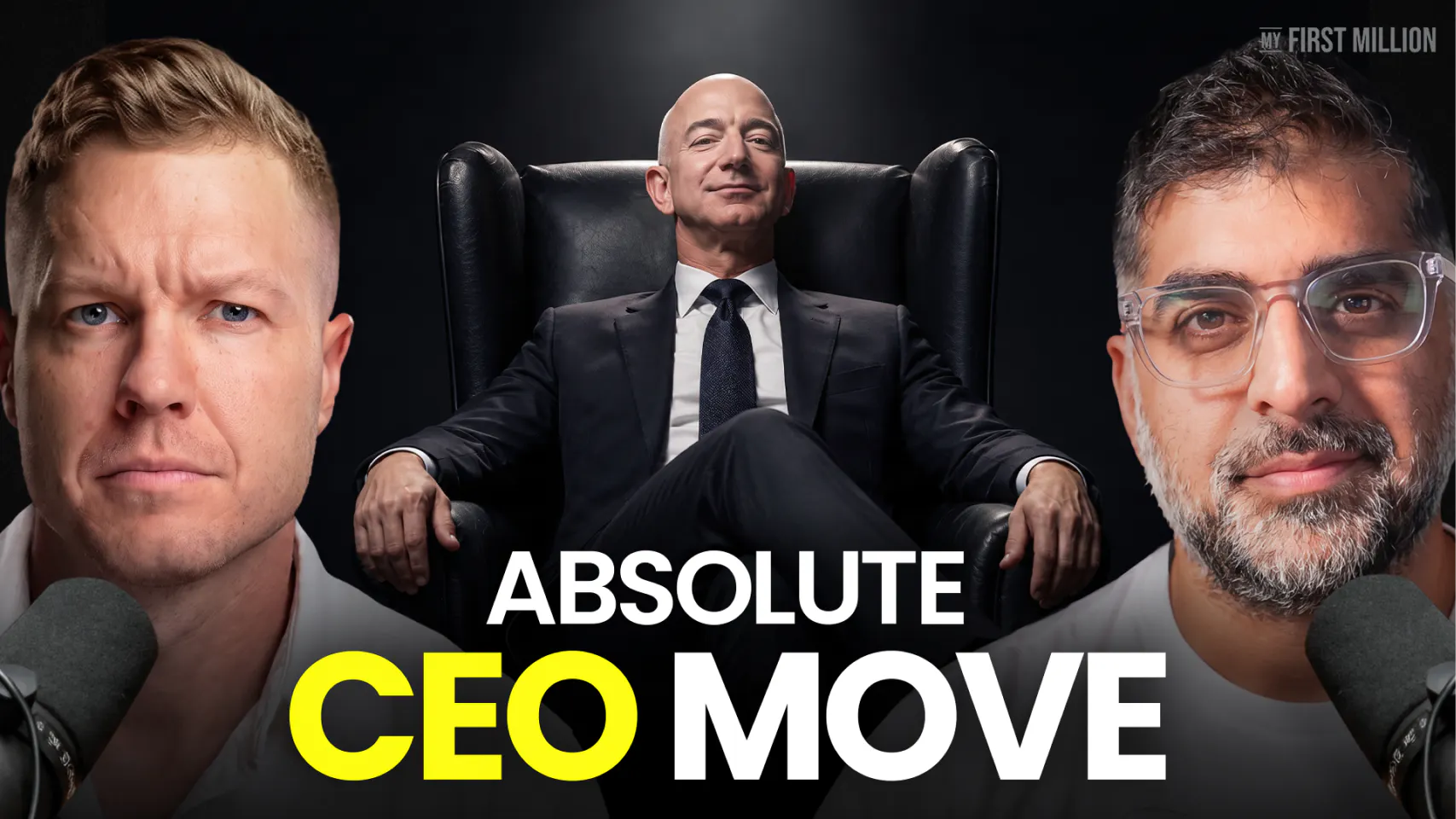
CEO Management Tactics: Bezos, Thiel, MrBeast
7 things MrBeast, Bezos & Thiel do that you don’t
The brief
Sam Parr and Shaan Puri collect seven blunt management tactics from Bezos, Thiel, Welch, and MrBeast, from instant stock grants to one-word email replies. Writer Kevin Kelly's counterpoint: chasing greatness demands an extremity most people will not accept, so being great in small daily moments may matter more than achieving it.
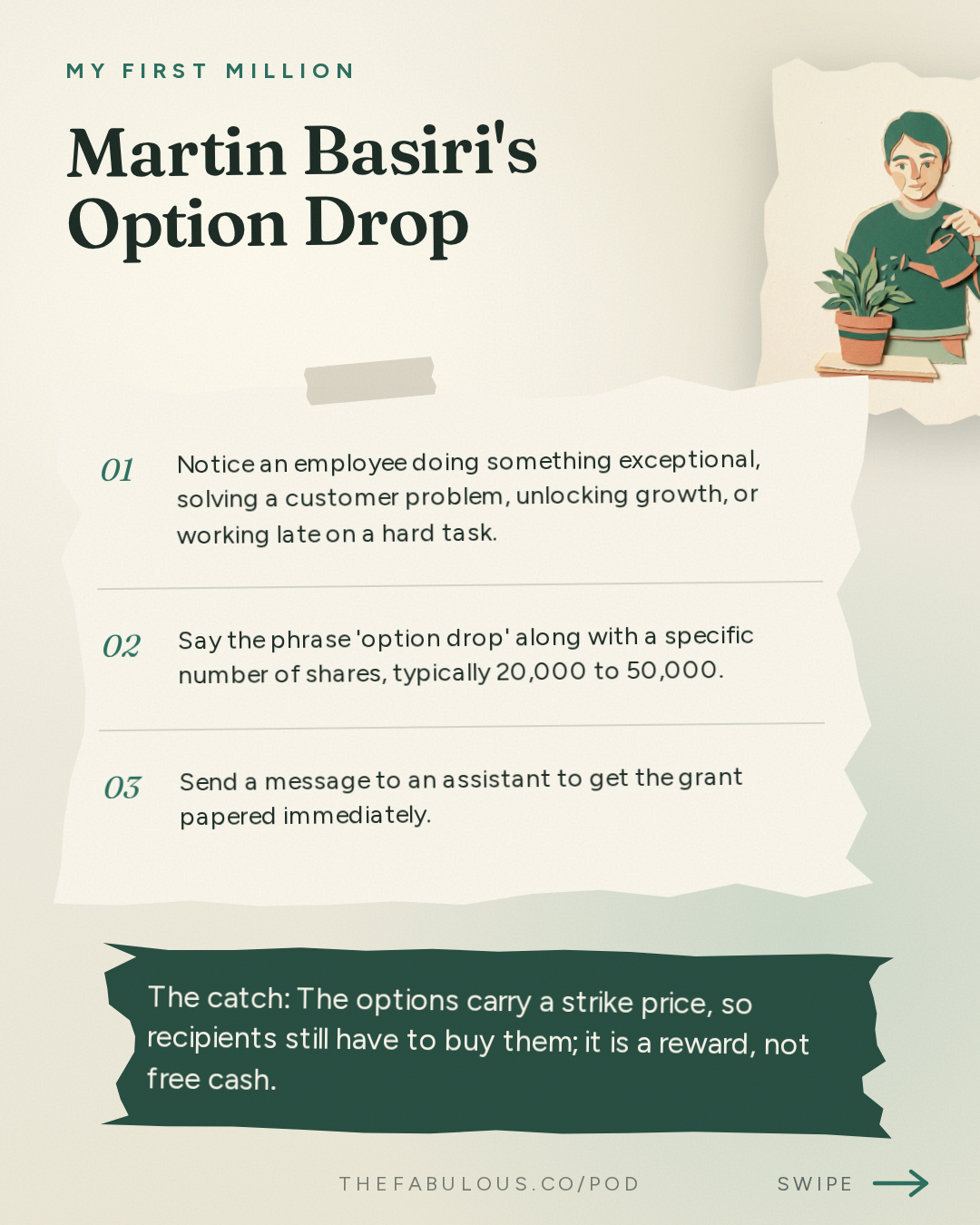
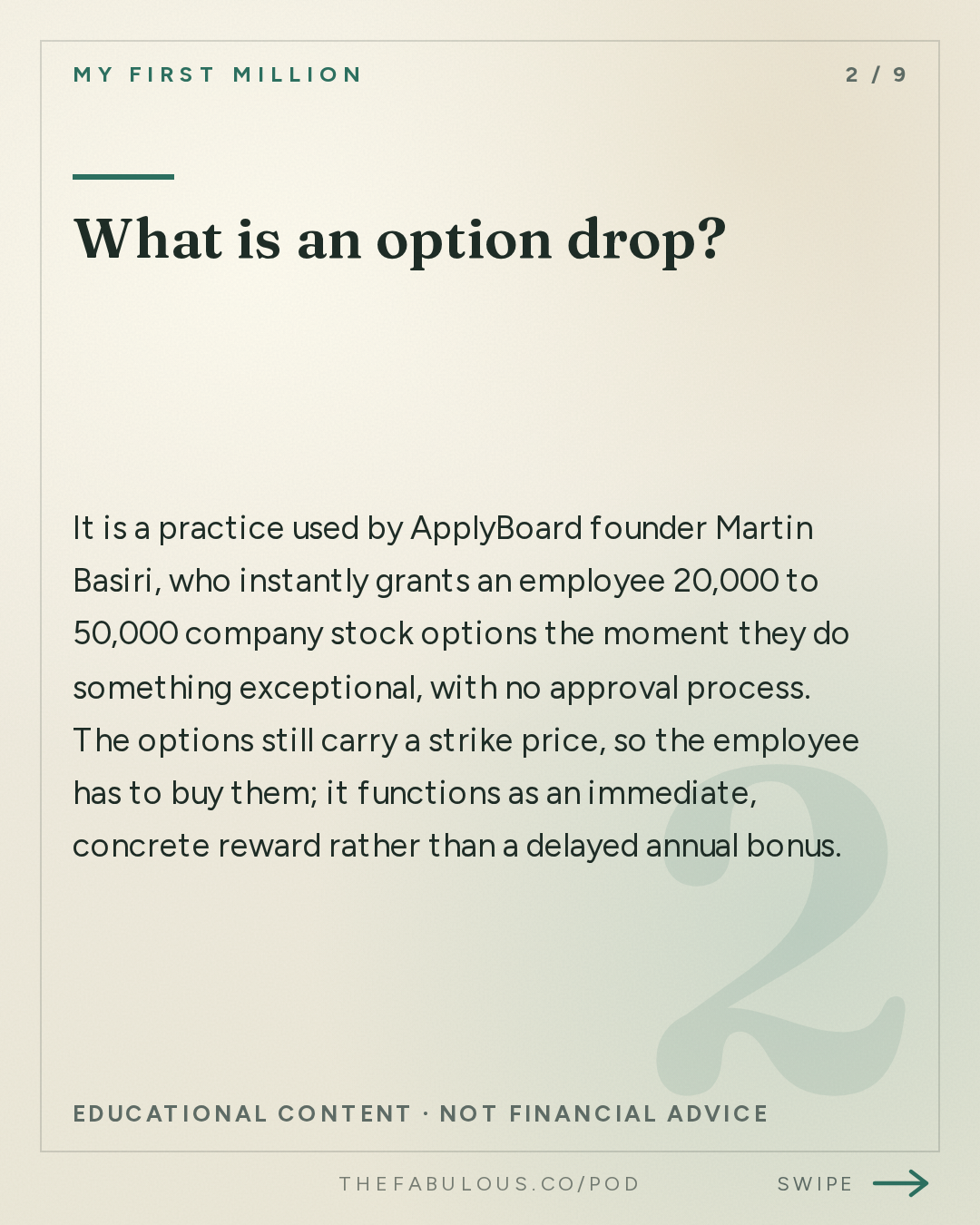
Martin Basiri runs a company where the reward for good work can arrive before the meeting even ends. Basiri, founder of the international-student platform ApplyBoard and now the CEO of a company called Passage, told Shaan Puri over breakfast that when someone on his team solves a problem on the spot, he simply says, "Option drop, 50,000 options," and grants them stock in the company right there (07:51). If it is 10 p.m. and a dozen people are still in the office, he might say it to the whole room at once (08:10). No committee, no quarterly review. Just an instant, concrete signal that the behavior he wants just happened.
That story opens an episode of My First Million built around a simple premise: the people running the biggest companies in the world do things that would get a normal manager reported to HR, and those things often work. Basiri's options still have a strike price, so employees have to buy them, not a free check (09:10). But the psychology behind it is ordinary and well established. Immediate, specific, tangible rewards shape behavior faster than a values poster on the wall (08:29). What is unusual is a CEO willing to hand out equity like a bonus round.
The Machine and the Squeak
The other tactics follow the same shape: strip out delay, force clarity, make the cost of ambiguity visible. At OpenAI, employees can email an internal address, friction@openai.com, to flag anything slowing them down, a policy, a broken process, a pointless approval step (11:47). A staffer is assigned to triage the inbox and clear the blockage. Puri calls it "a janitorial crew for a bureaucracy" (12:13), which is a tidy way of saying that big companies generate their own sludge and someone has to be paid to mop it up.
Siemens' CEO takes the opposite approach to meetings. He answers emails with one word, "okay" or "no," and holds no recurring one-on-ones with his direct reports. If something needs more discussion, the person has to come find him in person, right then (15:02). His explanation is blunt: "I don't entertain people, and they don't need to entertain me" (15:53). Puri's read is that most recurring meetings are a kind of theater, a chance to perform progress for a boss who does not fully trust the team to just do the work, and for the team to perform confidence they do not always have (16:05). Cutting the show does not cut the work. It just removes the audience.
Jeff Bezos ran a version of the same idea at Amazon. Customers could email him directly, and when a complaint looked like a real problem, he would forward it to the relevant team with nothing attached but a single question mark (17:15). Teams initially pushed back with data, noting a 98 percent success rate on whatever metric was in question (18:15). Bezos's answer, as Puri tells it, was that the metric could be correct and still incomplete. A single unhappy customer is not proof the system is broken, but it can be a signal that the system is not capturing something real.
"Amazon is a machine, the machine might be broken, and this anecdote is a little bit of a signal." — Shaan Puri, quoting Jeff Bezos [18:15]
Peter Thiel, running PayPal in its early years alongside people who would go on to build Tesla, LinkedIn, and YouTube, enforced something he called single-tasking: every person on the team owned exactly one problem, whether it was fraud coming out of Ukraine or the virality of the PayPal button on eBay (20:21). If someone tried to bring up anything outside their one problem, Thiel would reportedly just walk out of the room, no explanation needed (21:16). Puri credits Thiel with a phrase he says he still does not fully understand but keeps repeating anyway: "focus is convex." The claim, unpacked a little, is that going from 80 percent focus on a task to 90 percent does not add 10 percent of output. It roughly doubles it (22:14), the same way the difference between the 80th-percentile swimmer and Michael Phelps is not really about swimming a little faster but about capturing a wildly disproportionate share of attention and reward at the very top of the curve (22:54).
Jack Welch's version of ruthlessness at General Electric was more literal. Every division had to be number one or number two in its market within a year, or it got fixed, sold, or shut (24:08). And every year, without exception, Welch fired the bottom 10 percent of performers across the company (24:33). Puri is careful to note this is contested. NVIDIA's CEO Jensen Huang, by contrast, has said he does not fire people; he raises the intensity until people either rise to it or leave on their own (26:05). Two very successful leaders, opposite instincts. The lesson is not that one method is correct. It is that the range of things that can work at the top is wider than most people assume.
MrBeast's approach to training key hires might be the most extreme of the set. New hires in central roles shadow him everywhere, in one case even serving as his literal alarm clock, from the moment he wakes up to the moment he goes to sleep, for six months straight (29:11). By the end, the idea goes, that person can act as a working copy of MrBeast's judgment, freeing him to be effectively in two places at once. Puri recalls a room full of multi-billionaire CEOs reacting to this story with something between admiration and alarm: "I think that's awesome and illegal" (29:45).
What Greatness Actually Costs
The second half of the episode turns the lens around. Puri retells a conversation the writer and Wired co-founder Kevin Kelly had on David Perell's podcast, where Kelly was asked what he gave up to live the life he built. Kelly's answer was direct.
"To have this life I have, I had to give up on greatness." — Shaan Puri, quoting Kevin Kelly [32:22]
Kelly defines greatness narrowly: being remembered by people outside your own family for more than one generation (33:12). By that standard, he says, he almost certainly will not qualify, and he is at peace with that trade. Puri connects this to a broader pattern: the people who reach the very top of extreme fields, sports, invention, business empires, tend not to be balanced, well-rested people. As one of the hosts puts it, "There ain't normal people on the top of Mount Everest" (34:46). Even the winners of ordinary success rarely get remembered. Puri points out that almost nobody today could name the eightieth-richest American of the 1930s (36:21), which suggests that money alone, even a lot of it, rarely buys the kind of memory Kelly is talking about.
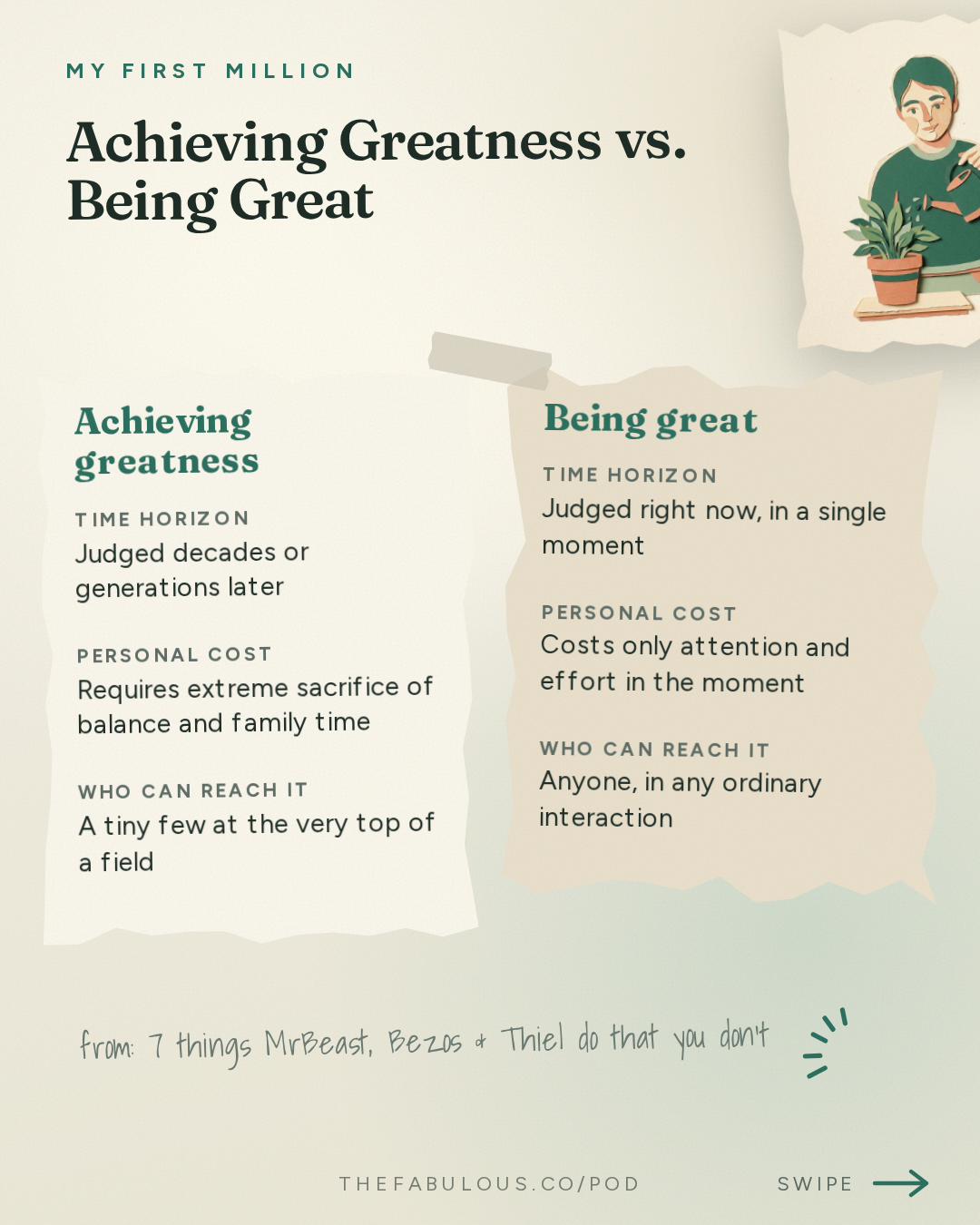
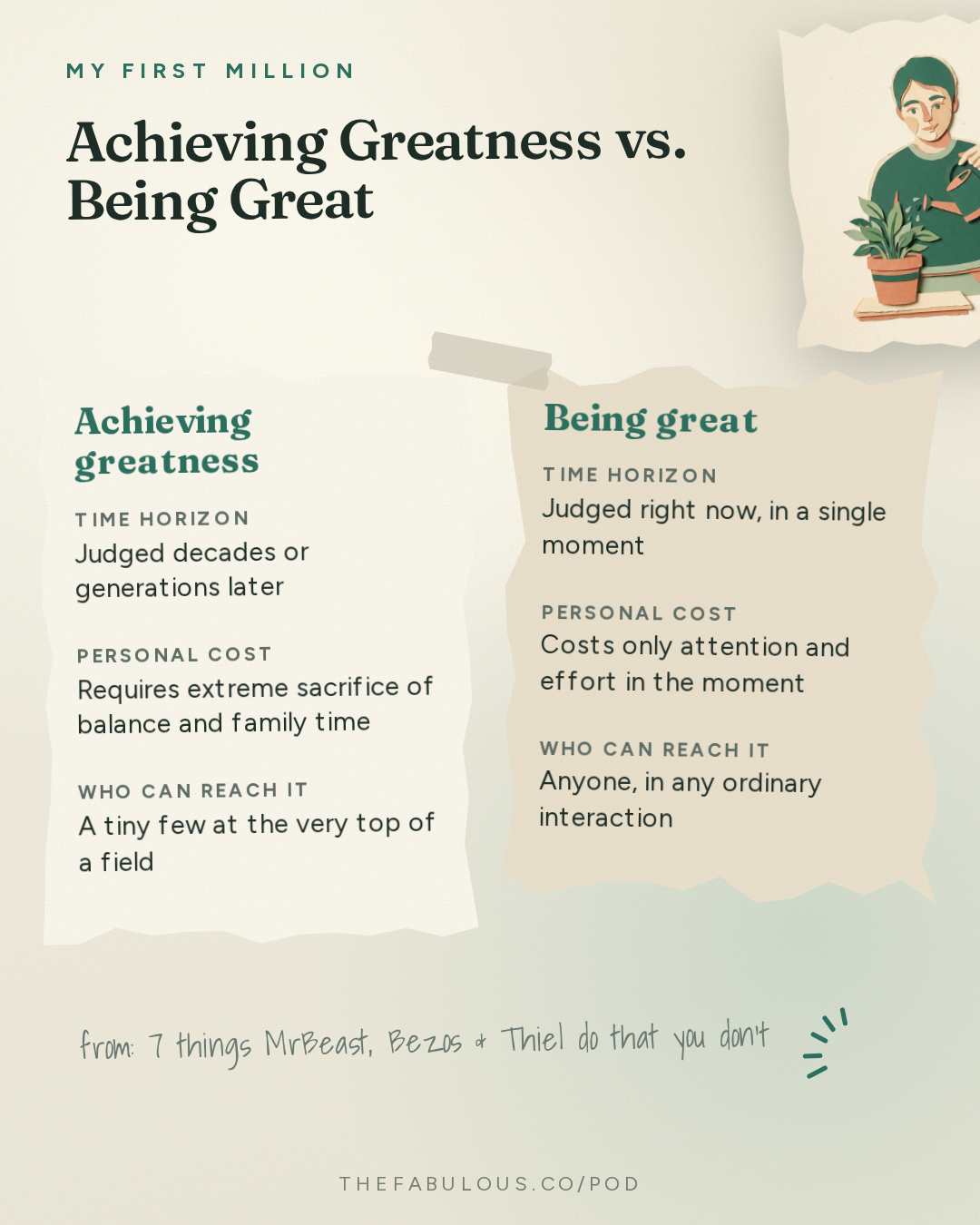
Out of that realization comes a distinction the hosts land on as the real takeaway of the episode: achieving greatness is not the same as being great. Building something the world remembers for generations is a long, narrow, and often costly path. Being great, on the other hand, is available constantly, in how someone handles a hard conversation, finishes the last three reps of a set, or responds to a four-year-old at the park who wants to talk about a caterpillar (39:34). "There's a big difference between achieving something great and being great," Puri says (38:24), and he argues the second version is both more attainable and, day to day, more satisfying.
The episode closes on a smaller, quieter observation that complicates all the hardcore stories that came before it: ambition tends to dip for a lot of parents somewhere between their kids turning three and turning thirteen, the window when children are out of diapers, old enough to have opinions, and still willing to spend time with their parents (40:35). The hosts note this is not universal, but common enough that a tweet about it went viral, and that for most people the ambition does eventually come back. It is a useful corrective to the rest of the episode. Bezos, Thiel, and Welch built systems designed to extract more focus and output from other people. But the hosts, both CEOs themselves, end by admitting that they are not living that way, and mostly do not want to. The stories are worth collecting not because they are a blueprint, but because each one quietly asks the same question the elephant chained to a small stake never gets to ask: what exactly is stopping me from doing that, and is it actually as fixed as it looks (02:27)?
Ask this episode anything
Pod's AI answers from the episode itself, with the minute mark so you can hear it yourself.
Or start with one of these
Ask this episode
Pod's AI listens to the whole episode to answer, and points you to the minute it comes from.
The rest of this answer, and any question after it
Answers come from the episode itself, never from a summary of it.
ContinueKey takeaways
- ApplyBoard founder Martin Basiri grants 20,000 to 50,000 stock options on the spot for great work, no committee or review needed
- OpenAI runs an internal email inbox, friction@openai.com, staffed to remove bureaucratic blockers as they get reported
- Jeff Bezos forwarded customer complaints with just a question mark, signaling teams to check if a system was broken
- Peter Thiel argued focus is convex: going from 80% to 90% focus on one task can roughly double the output
- Writer Kevin Kelly says he gave up on being remembered for generations in exchange for a calmer, more balanced life
The episode in cards
By the numbers
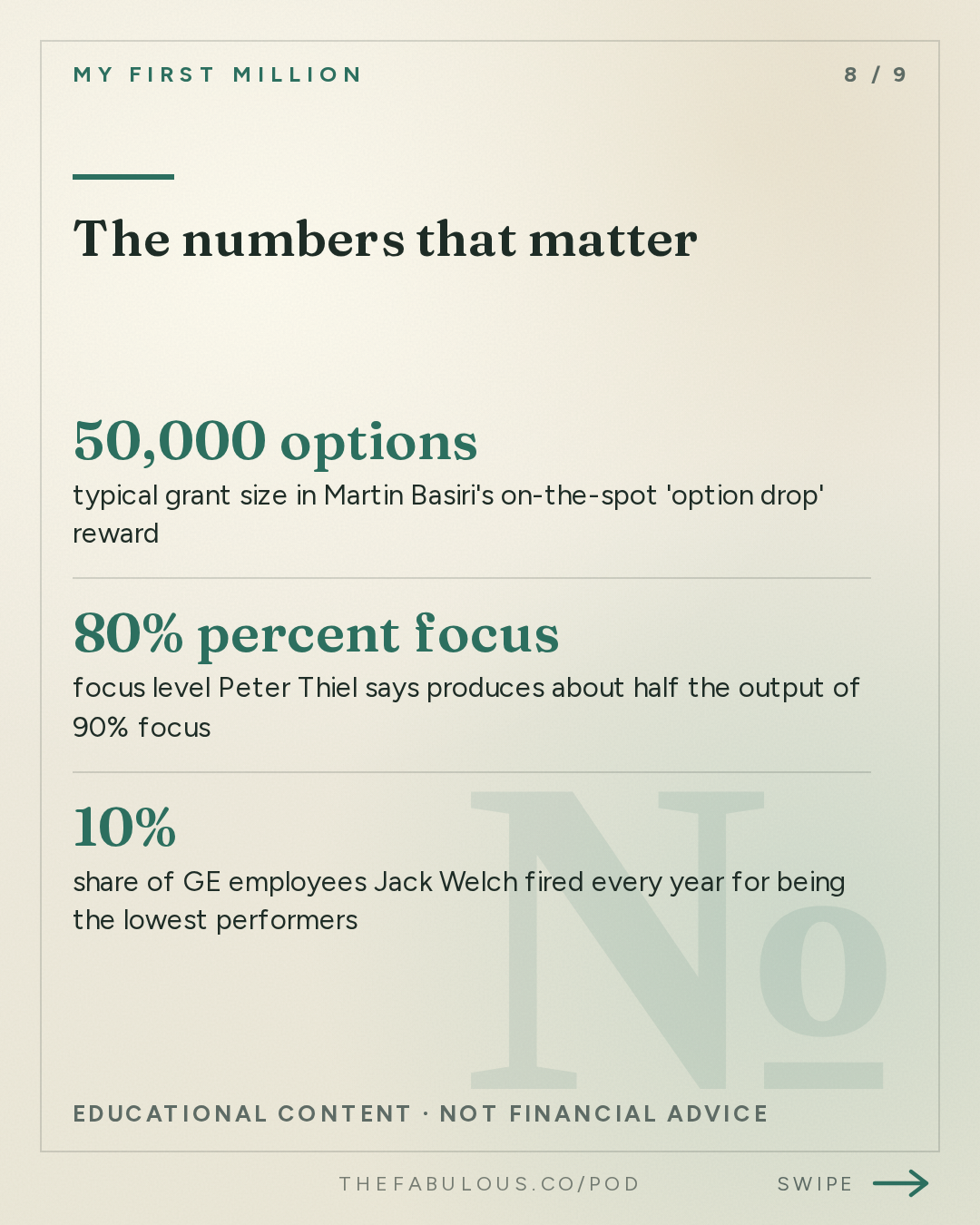
- 50,000 options typical grant size in Martin Basiri's on-the-spot 'option drop' reward
- 80% percent focus focus level Peter Thiel says produces about half the output of 90% focus
- 10% percent share of GE employees Jack Welch fired every year for being the lowest performers
In their words
“At any time in my company, if anybody does something awesome, I just say, 'Option drop, 50,000 options.'”
“I don't entertain people, and they don't need to entertain me.”
“Amazon is a machine, the machine might be broken, and this anecdote is a little bit of a signal.”
“To have this life I have, I had to give up on greatness.”
“There's a big difference between achieving something great and being great.”
Protocols
-
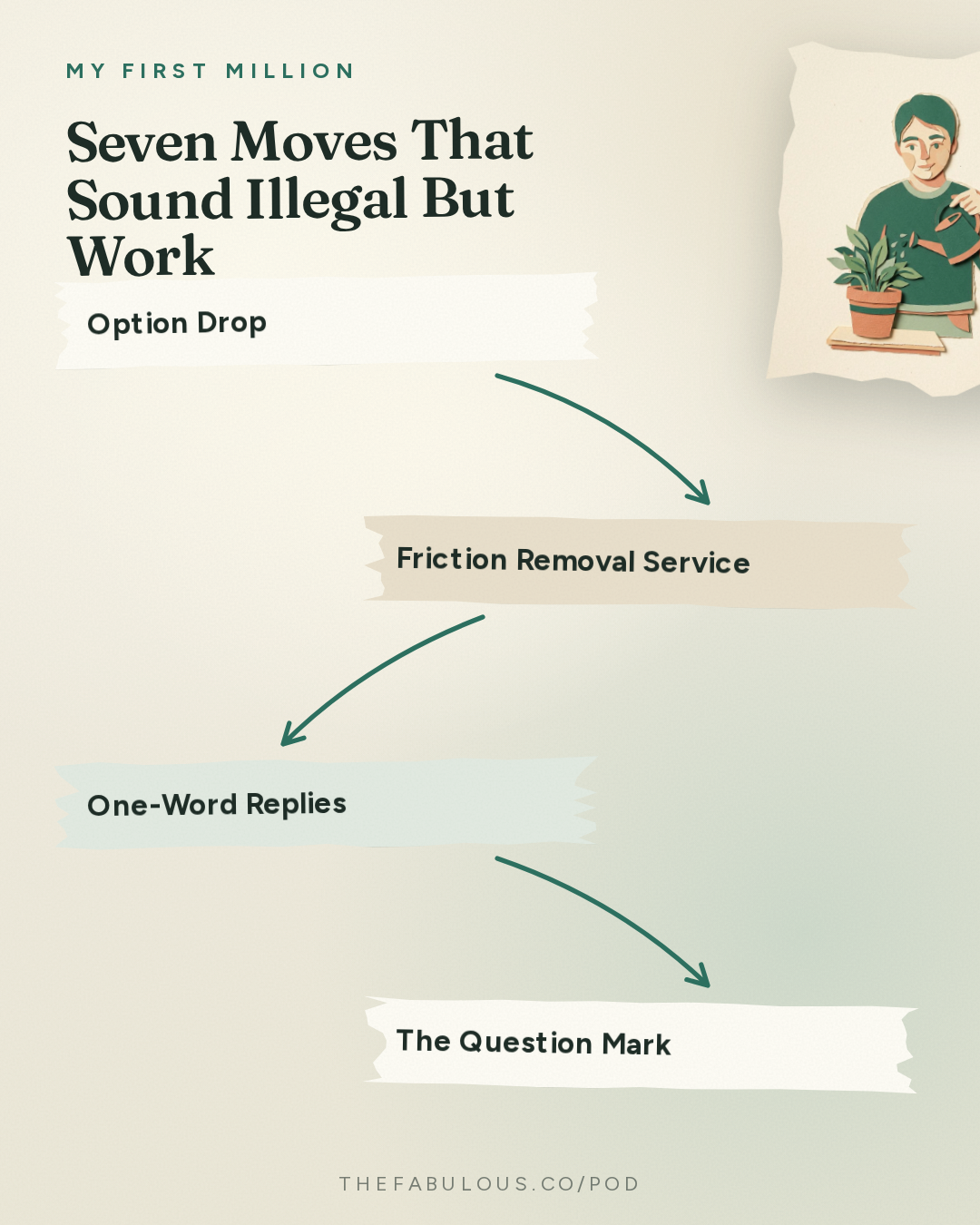
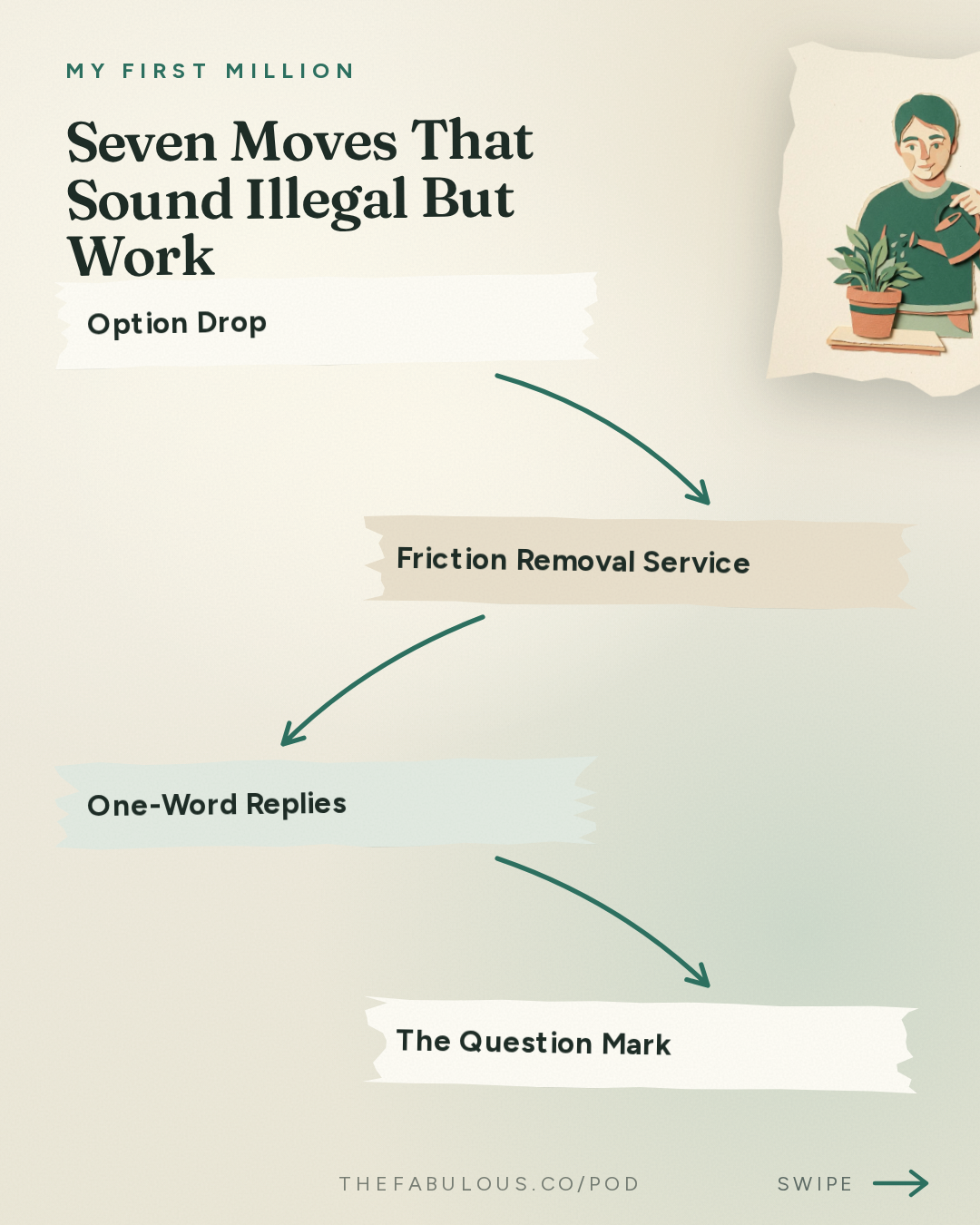
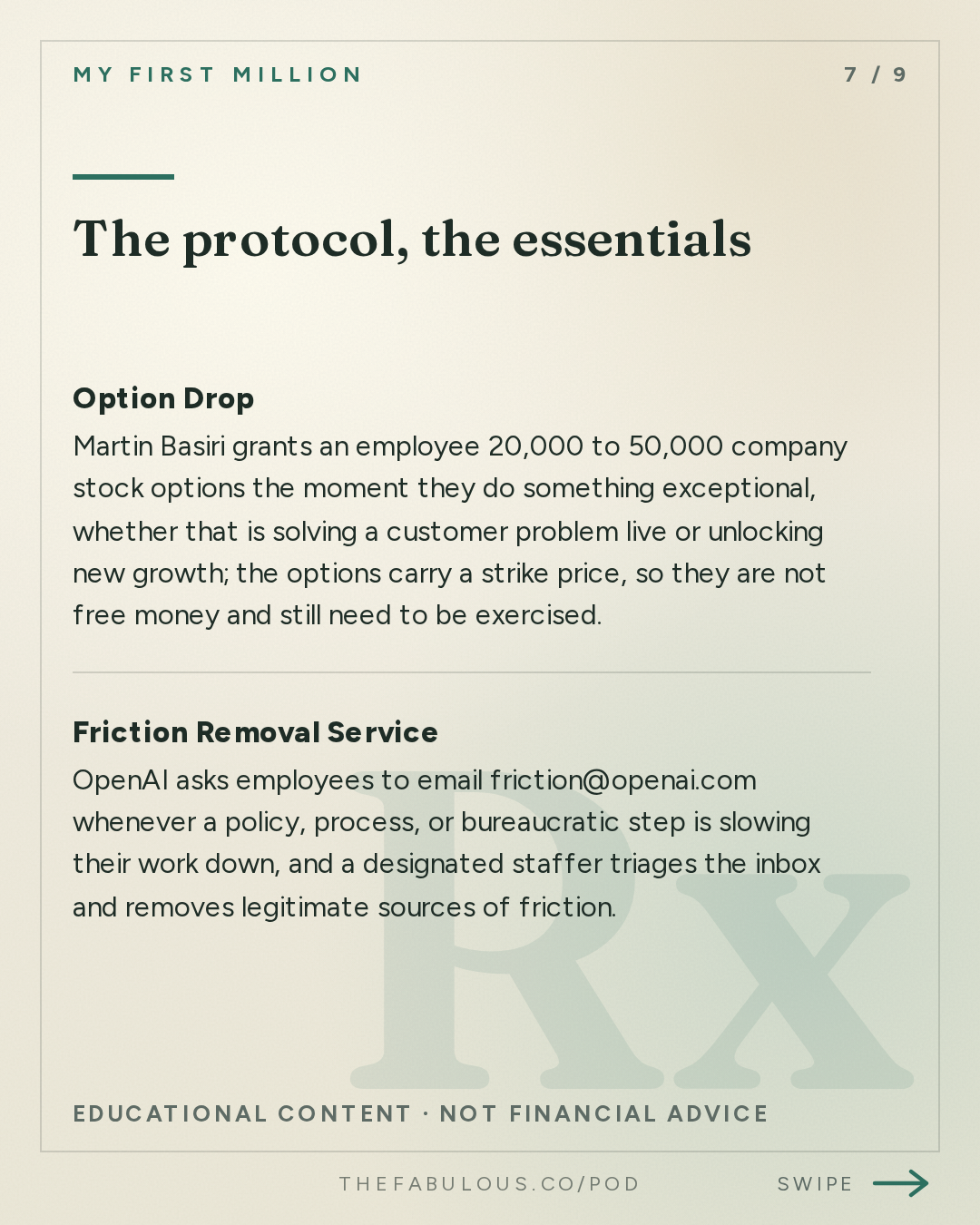
Option Drop
Martin Basiri grants an employee 20,000 to 50,000 company stock options the moment they do something exceptional, whether that is solving a customer problem live or unlocking new growth; the options carry a strike price, so they are not free money and still need to be exercised.
Given in the moment, with company-wide drops roughly once every 50 days
-
Friction Removal Service
OpenAI asks employees to email friction@openai.com whenever a policy, process, or bureaucratic step is slowing their work down, and a designated staffer triages the inbox and removes legitimate sources of friction.
Ongoing, as issues arise
-
One-Word Email Replies
The Siemens CEO answers most emails with only 'okay' or 'no' and holds no recurring one-on-one meetings, requiring anyone who needs more discussion to come speak with him in person immediately.
Applied to every incoming email, with in-person conversation on demand
-
Single-Tasking Rule
Peter Thiel assigned every PayPal employee exactly one problem to own at a time, and if someone raised anything outside that problem, he would walk out of the room without discussion.
Continuous, enforced per conversation
-
Cloning Through Shadowing
MrBeast has new hires for key roles follow him everywhere, from waking him up in the morning to signing off at night, so they absorb his decision-making closely enough to act as a stand-in for him.
For six months per new key hire
Questions this episode answers
What is an option drop?
It is a practice used by ApplyBoard founder Martin Basiri, who instantly grants an employee 20,000 to 50,000 company stock options the moment they do something exceptional, with no approval process (07:51). The options still carry a strike price, so the employee has to buy them; it functions as an immediate, concrete reward rather than a delayed annual bonus (09:10).
What does Jeff Bezos's question mark email mean?
According to the episode, Bezos forwarded customer complaint emails to relevant teams with nothing but a single question mark attached, a shorthand for 'is this true, why is it happening, and what are we doing about it' (17:15). His argument was that a customer anecdote can reveal a metric is incomplete even when the overall data looks fine, such as a 98 percent success rate (18:38).
What does Peter Thiel mean by 'focus is convex'?
At PayPal, Peter Thiel assigned each employee exactly one problem to own and reportedly walked out of rooms if anyone raised something outside that scope (20:21). The phrase, as explained on the podcast, means that going from 80 percent focus on a task to 90 percent focus does not add 10 percent more output but can roughly double it (22:14).
Did Jack Welch really fire the bottom 10 percent every year?
The episode describes this as one of Jack Welch's two operating rules at General Electric: every division had to rank first or second in its market or be fixed, sold, or closed, and every year the bottom 10 percent of performers were let go (24:08, 24:33). The hosts note this approach is contested, contrasting it with NVIDIA CEO Jensen Huang's stated preference to raise intensity rather than fire people (26:05).
What is MrBeast's cloning strategy for training employees?
MrBeast has new hires in key roles shadow him everywhere for six months, including one hire who served as his literal alarm clock, so they absorb enough of his decision-making to act as a working stand-in for him (29:11). The hosts note that a room of multi-billionaire CEOs reacted to hearing this as both impressive and questionable (29:45).
What is the difference between achieving greatness and being great, according to Kevin Kelly?
Writer Kevin Kelly, co-founder of Wired and author of A Thousand True Fans, defines greatness narrowly as being remembered by people outside your family for more than one generation, and says he gave up on that path to have a calmer life (32:22, 33:12). The hosts extend this into a distinction between chasing that kind of legacy and simply being great in the present moment, such as handling a hard conversation well or being patient with a child (38:24, 39:02).
The full read, in cards
Go deeper
- A Thousand True Fans — Kevin Kelly's essay on building a sustainable career around a small, devoted audience rather than mass scale
- One Bit Communication (blog post) — Marc Andreessen's essay arguing that minimal signals, like the app Yo's single button, count as a real form of communication
Mentioned
Martin Basiri · ApplyBoard · OpenAI · Siemens · Jeff Bezos · Peter Thiel · PayPal · Jack Welch · General Electric · MrBeast · Beast Industries · Kevin Kelly · A Thousand True Fans · Marc Andreessen · Keith Rabois · David Perell
More from this show and category

Low-Frequency Investing: The 2.9-Decision Portfolio
A retail investor who made only 2.9 decisions a year beat the S&P 500 in 11 of 11 years, averaging 21.8% annual returns versus 13.5%. The hosts run his brokerage history through the AI assistant Claude, then widen out to Jack Dorsey's 140-reason pre-mortem, Mark Zuckerberg's talent-density bet, Elon Musk's 24-hour rebuilding rule, and a four-step method called DARE for panic and fear.
The 6 Traits of Natural Money Makers
Sam Parr and Shaan Puri map the "natural money maker": unemotional, maximizing, and comfortable with complexity. They share entrepreneur Sayed Balkhi's "second derivative" rule (spend only investment returns, never income) and a 3% liquid-net-worth spending cap, plus six other wealth-building personality types like the Tank, the Trickster, and the Sniffer.
Shaan Puri's 3 Embarrassing Moments That Changed Him
Shaan Puri, host of My First Million, shares three embarrassing stories, including a 110 narcissism test score and a failed 250-page restaurant business plan. He explains how each moment taught him to stop chasing external validation, favor action over endless planning, and reinvent his identity by deciding who to become before he felt ready.
Jeff Harmon's Marketing Playbook Explained
Jeff Harmon built OraBrush, Poo-Pourri, Squatty Potty, and Angel Studios by spotting marketing glitches: cheap or ignored channels nobody else was using. He turned a 19-minute skippable ad into an $11 million crowdfund for The Chosen and grew Angel Studios into a $500 million business run by a 3 million-member guild that votes on every film.
