
Mel Robbins' Relationship Advice for Young Adults
The Best Relationship Advice I’d Give My 27-Year-Old Daughter
▶ Listen to the full episode More from The Mel Robbins Podcast
The brief
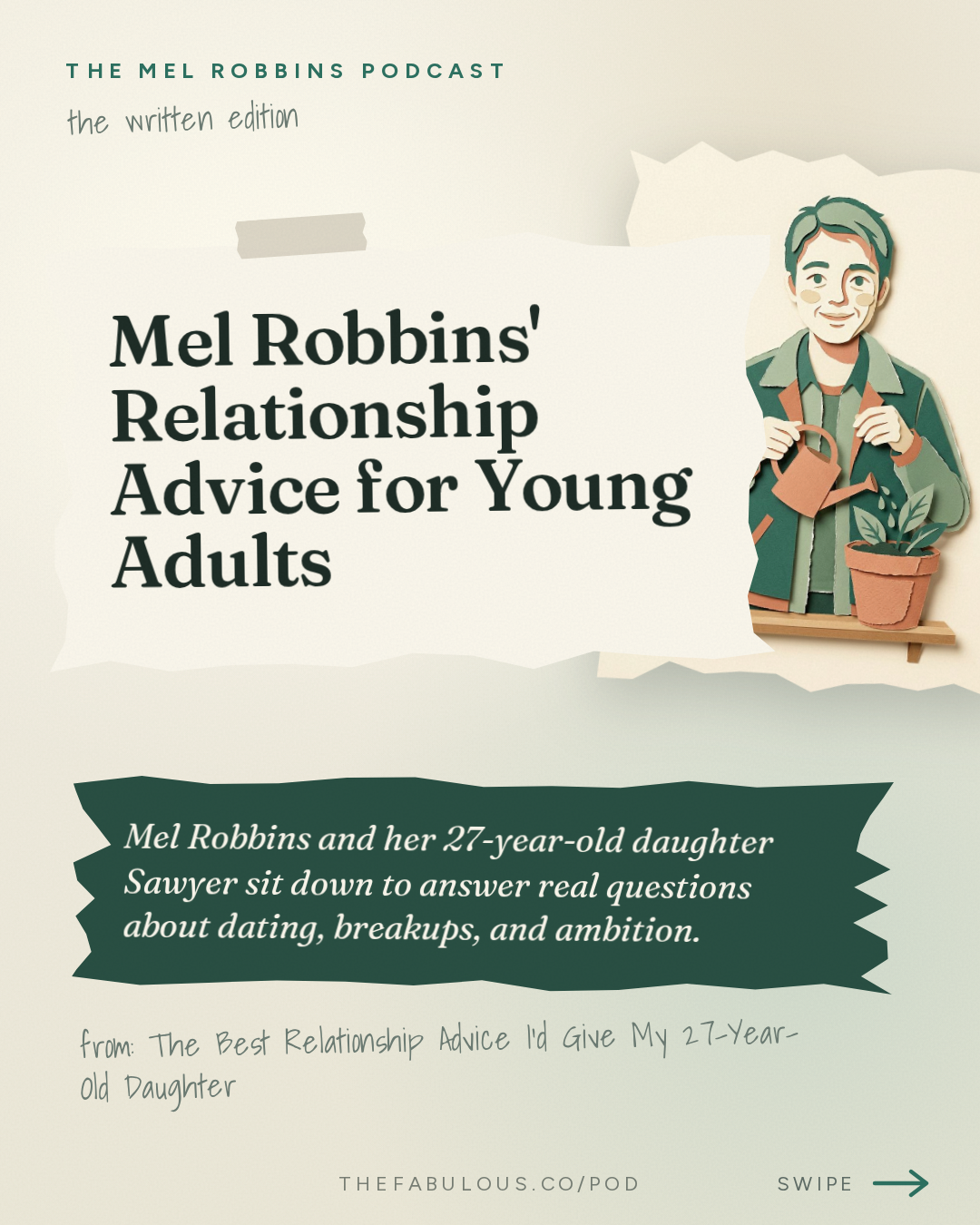
Mel Robbins and her 27-year-old daughter Sawyer sit down to answer real questions about dating, breakups, and ambition. Drawing on Gottman research, NYU psychologist Jonathan Haidt's findings on young men and dopamine, and therapist Terry Real's rule that partners can be right or connected but never both, Robbins argues most relationship trouble starts with an unhealed self, not a wrong partner.
Mel Robbins's cat, Mr. Noodle, is in kidney failure, and he spends most of this episode asleep on her lap while her 27-year-old daughter, Sawyer Robbins, reads from a clipboard of anonymous questions about love (02:52, 60:15). The questions came from Sawyer's friends, her sister, and Robbins's own audience, and together they trace the whole arc of a modern love life: how to know if someone is right, how to survive a breakup, whether to change your last name. Robbins, who has been married to her husband for 30 years (02:52), answers almost every one of them the same way. She keeps circling back to an unfashionable idea: the biggest threat to a relationship is rarely the other person. It is whichever partner has not yet done the work on themselves.
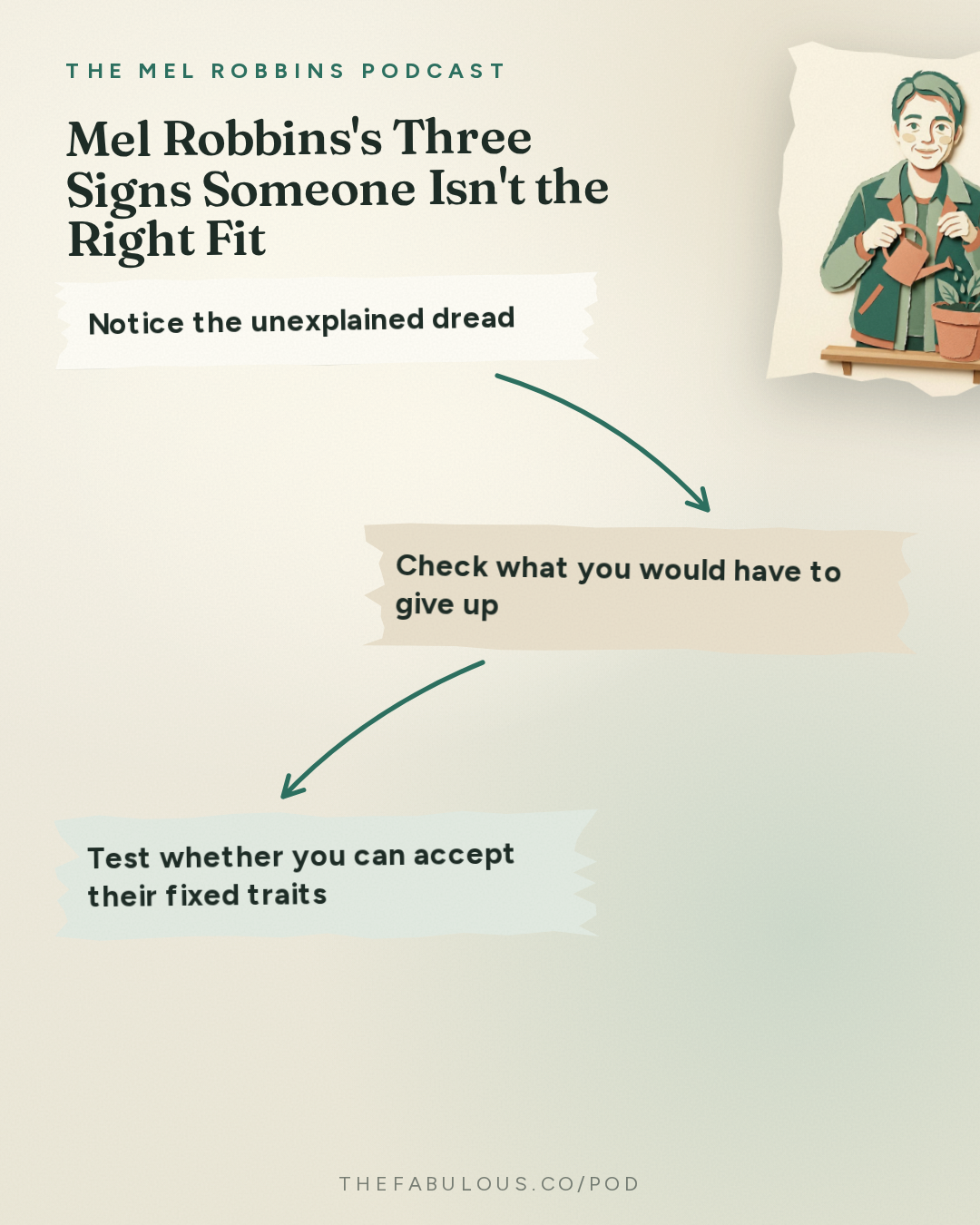
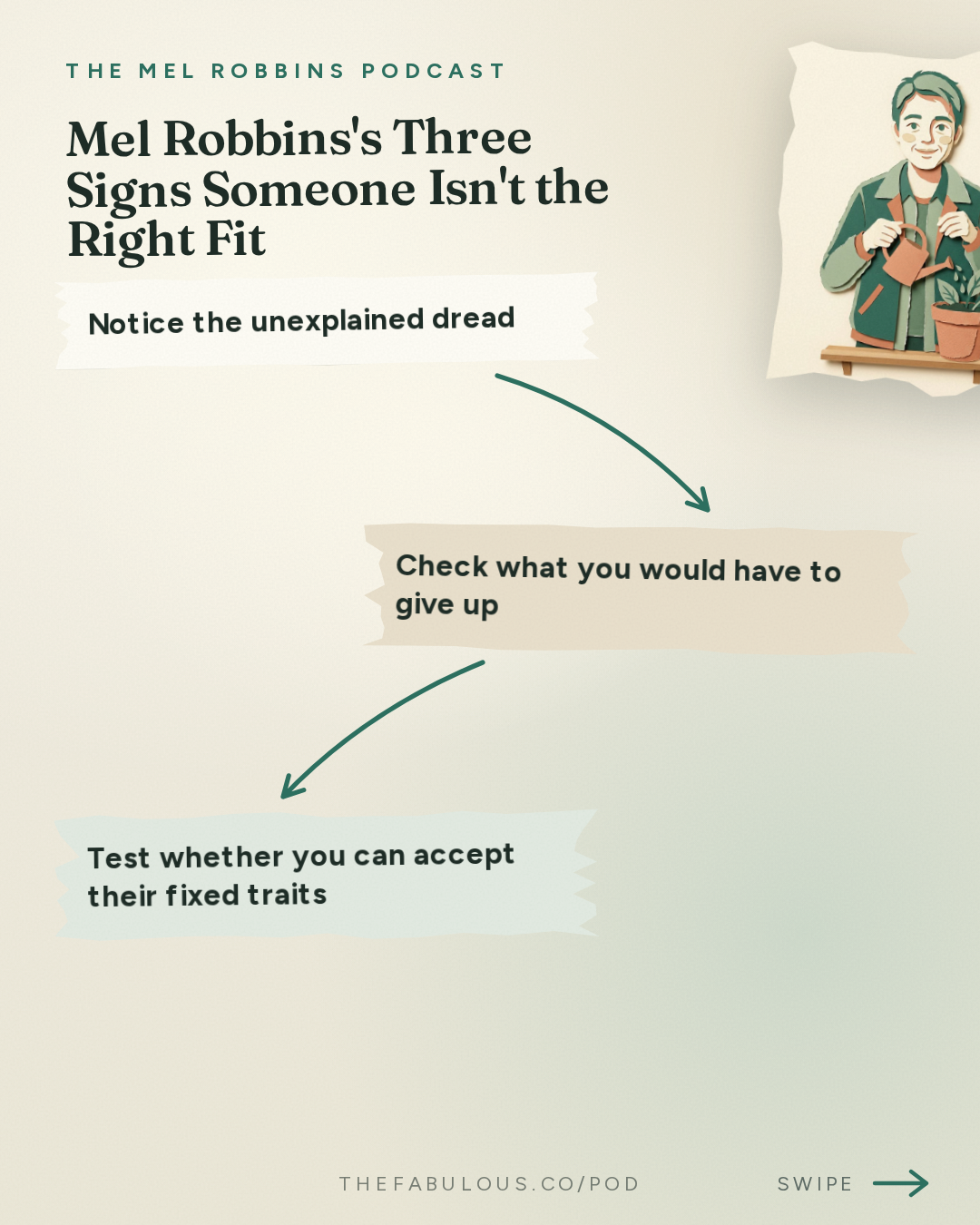
She illustrates this with her own history. Before she met her husband, Robbins dated two men she calls "amazing," people she probably could have built a life with. Instead she felt what she describes as "a deep, just awful dread" she could not explain (05:06). Looking back, she says the dread had nothing to do with them. She had undiagnosed ADHD and dyslexia, unprocessed trauma from childhood, and was, in her words, "a walking anxiety attack" who was "on edge or drunk most of the time" (05:36).
"It's very hard to be in a healthy relationship when you're not healthy." — Mel Robbins [06:14]
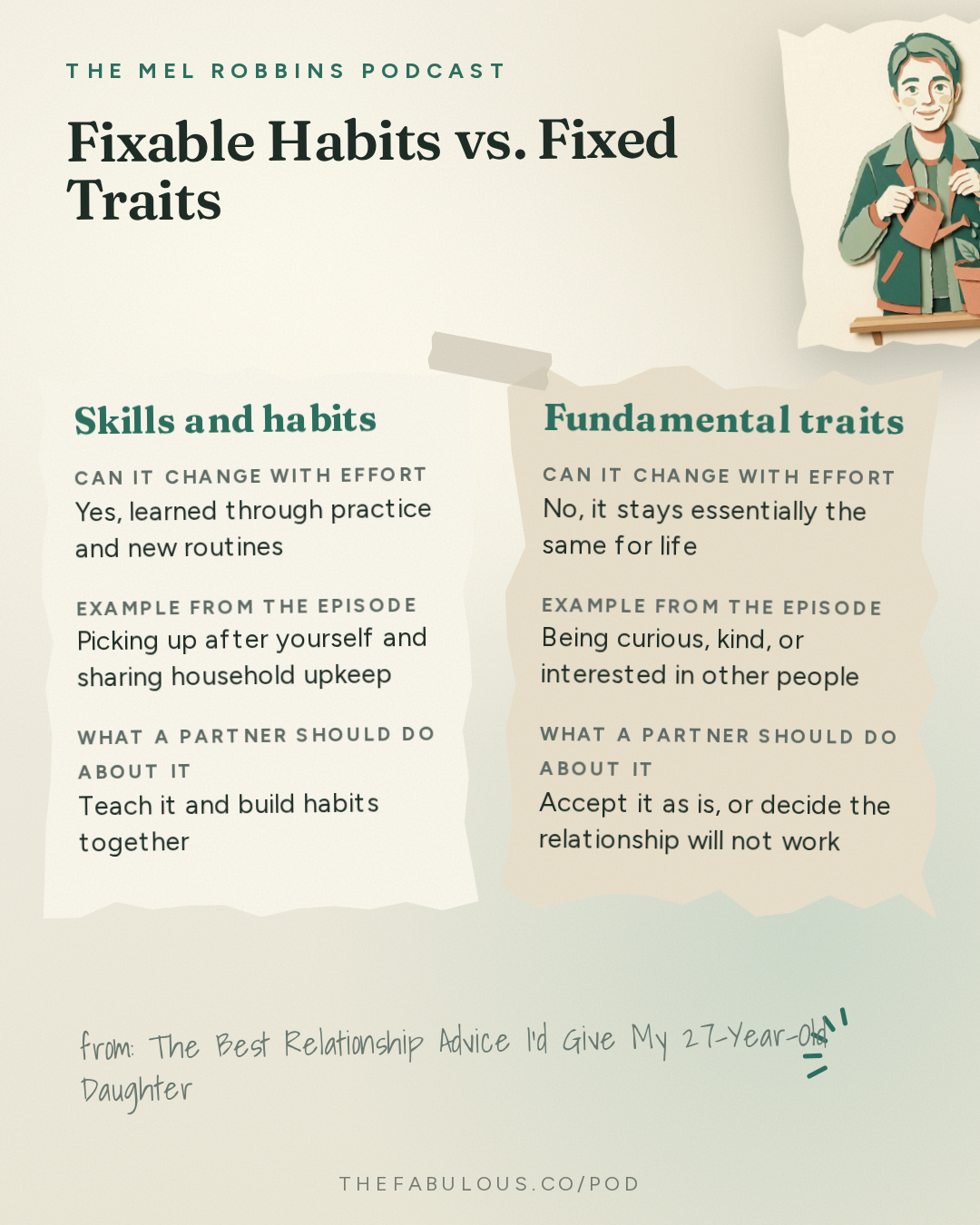
This is the engine of the whole episode. Robbins explains that new relationships flood the body with neurochemicals that feel so good they mask whatever is actually broken (06:14). Once the relationship settles from, as she puts it, "liftoff to cruising," the chemical high fades and the old problems resurface, except now they get blamed on the partner instead of the self (06:38). From here she leans on research from the Gottmans, a husband-and-wife team she calls the most cited relationship researchers alive, who have studied couples for five decades. Their finding, as she summarizes it: a relationship will not survive if one person has to give up a core dream or go against a core value to stay in it (09:08). And a specific number sticks: 69 percent of the things couples fight about are rooted in personality traits that never change (10:45). Treating those fixed traits as a renovation project, she says, is "an act of violence against somebody else and an act of violence against yourself" (10:45).
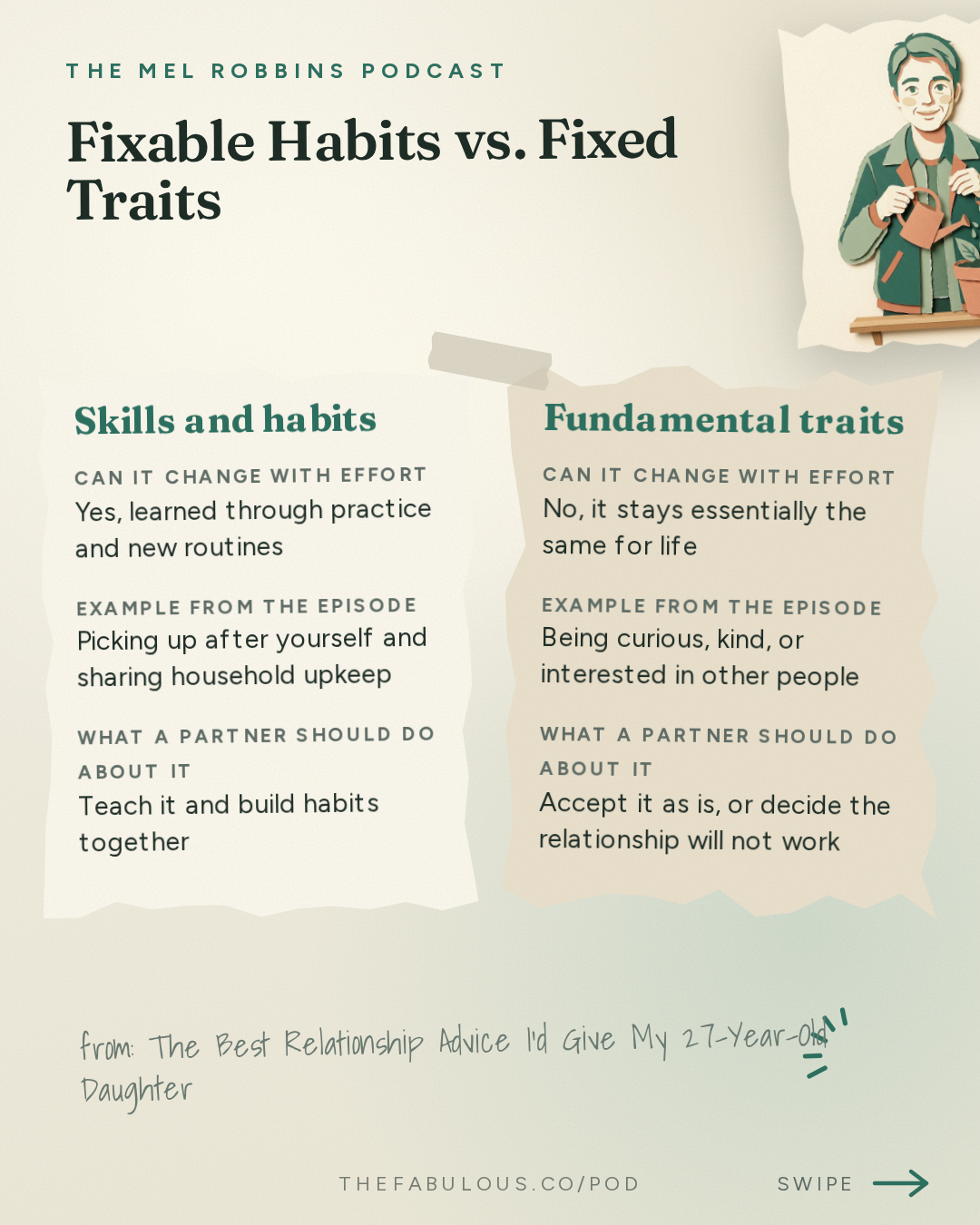
That raises an obvious question, one Sawyer pushes on directly: how do you tell a trait you must accept from a bad habit someone could actually fix? Robbins draws a clean line. Skills and habits, like doing the dishes or keeping a calendar, can be learned, and she is blunt that managing a household is "not a freaking gender role" but a basic adult relationship skill (13:48). Traits like curiosity, kindness, and generosity are different. They are, in her words, "hard things to teach" (15:08). Her shorthand for what a workable partner feels like, regardless of looks or income, is simple: "an exhale, a smile, and a hug" (16:08).
Why a Single Era Is Not a Waiting Room
One of the sharper ideas in the episode is what Robbins calls being an "overlapper," someone who moves from one relationship straight into the next without a gap, like a trapeze artist who never lets go of one bar before grabbing the next (18:07). She admits she was that person from age 13 until she met her husband, and she calls it one of her biggest regrets, saying it delayed her own healing by at least 15 years (19:24). Her argument is not moralistic. It is mechanical: a relationship can quiet anxiety without resolving it, which means the underlying pattern, often rooted in childhood, keeps repeating with new faces attached.
"You cannot outrun your past. You cannot outdate your bad habits in relationships, and you cannot marry yourself into healing." — Mel Robbins [22:45]
The fix she proposes is concrete: a stretch of being single long enough to look at the last two or three relationships and find the common thread, ideally with a licensed mental health counselor, rather than a new partner (23:09). Without that pause, she says, the same pattern just gets dressed up differently.
The episode then turns to a question that comes from Sawyer's sister: what happens when one partner's ambition dominates the relationship? Robbins's answer is less about fairness and more about math. Whoever earns more, she says plainly, tends to drive the big decisions, which is part of why she has pushed both her daughters to build their own income (30:30). She also widens the definition of ambition, arguing it has little to do with money and everything to do with "the drive that you have to create and experience things," whether that shows up in a career, in parenting, or in training for a race (29:37). As an example of what supporting someone else's ambition can cost, she describes moving to Boston so her husband could finish a seven-year MBA at Babson while working full time, a choice she says she wanted to make even though she also wanted to kill him for it (32:01).
That same husband, it turns out, was laid off from seven jobs over nine years (35:08), which sets up the episode's most research-heavy stretch. Robbins says the instinct to pressure a struggling partner backfires, because someone job-hunting already feels terrible and does not need more weight added. Her advice is to lend belief rather than scrutiny, and to give the person something physical and controllable to focus on, like marathon training (38:36). But she adds a specific warning sign: withdrawal, oversleeping, and heavy phone use. Here she brings in NYU psychologist Jonathan Haidt, author of "The Anxious Generation," whose research also shaped recent legal settlements over social media and teens. Haidt told Robbins on a previous episode that researchers have focused on how social media harms girls through comparison and isolation, but have underestimated the damage to boys and men (39:29). His mechanism: constant short-form video, porn, gambling apps, and social media deliver what Robbins calls "cheap dopamine," which disrupts the brain's reward system and drains motivation that has nothing to do with laziness (40:29). The proposed reset is specific too: roughly two weeks off the phone can allow the brain's reward circuitry to recalibrate, according to the research Haidt shared (41:31).
Right or Connected, Never Both
The back half of the conversation moves through smaller but sharper scenarios. Asked how to push a cautious partner toward growth without making them feel attacked, Robbins borrows a frame that Oprah Winfrey credits to Pastor T.D. Jakes: some people are "10-gallon" people who crave risk, novelty, and intense conversation, and some are "pint-sized" people who want much less of all three (45:36). Neither is better, she says, but a 10-gallon person who dismisses a pint-sized partner's small risk as insufficient will simply teach that partner to stop trying (47:04).
On a listener's stalemate over keeping her last name against a traditional partner's wishes, Robbins's advice is to stop arguing the decision and ask what the decision represents to each person. She uses her own story: she kept her maiden name, Melanie Schnaberger, until an airline mix-up separated her from her husband and child because they shared a surname and she did not, which is when she realized she wanted to be visibly "a unit" (48:29).
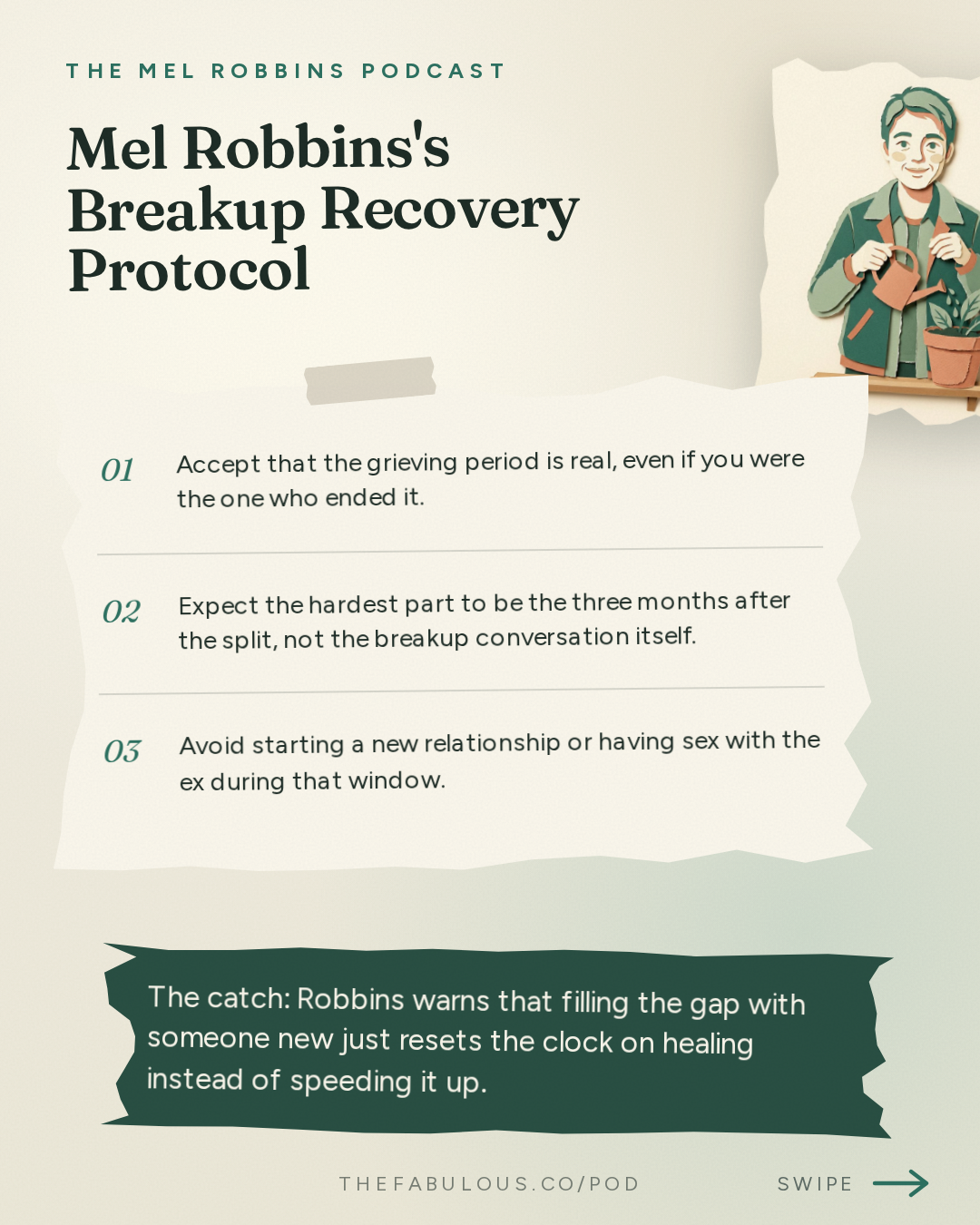
For a listener who feels unchosen and undesirable in dating, her advice is physical rather than romantic: build a habit or a body that makes the person feel chosen by themselves first, because, as she puts it, "physicality shifts spirituality, physicality shifts your mentality, physicality shifts your emotions, and that is something you can control" (51:45). For someone freshly broken up, her single piece of advice is about time, not technique.
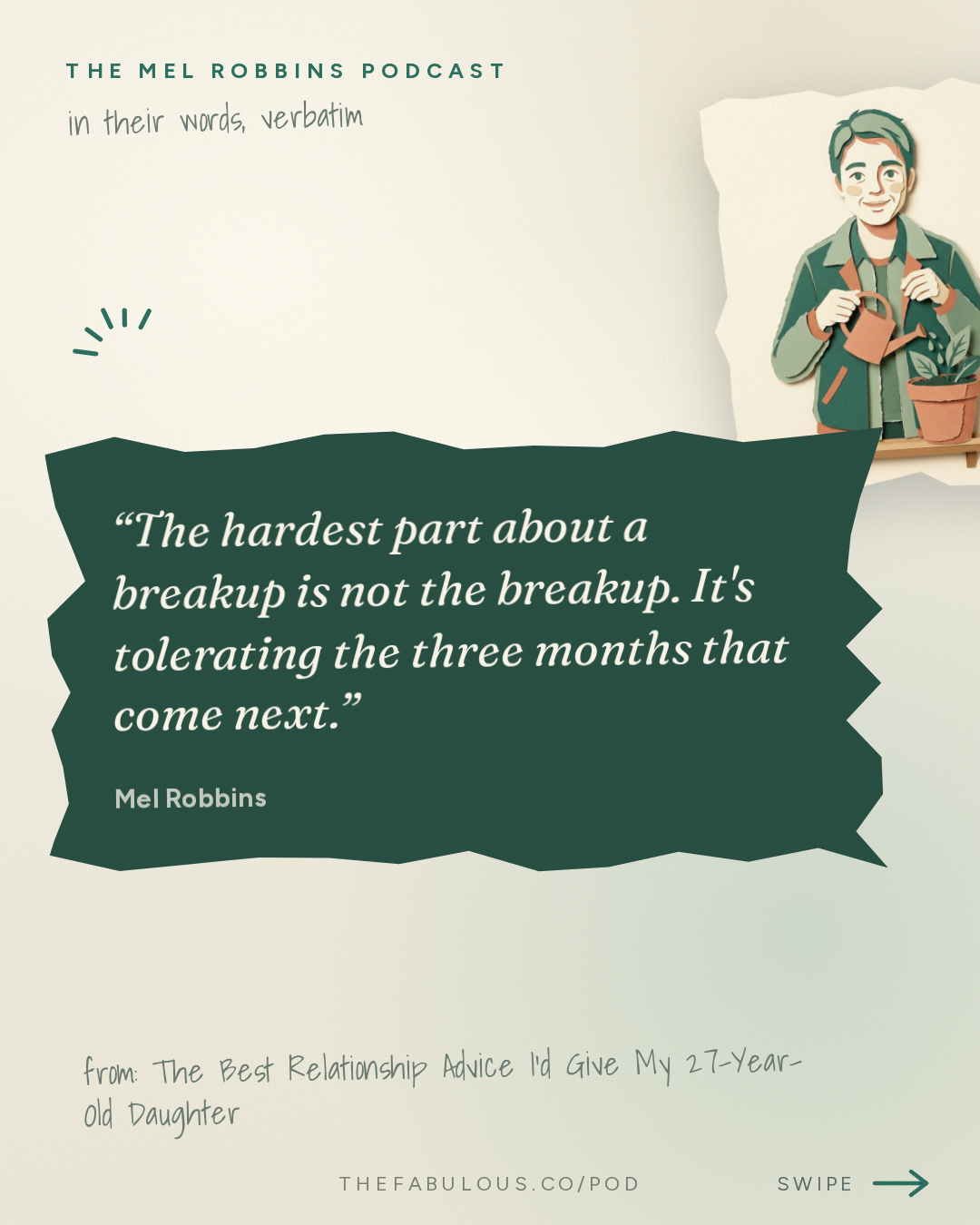
"The hardest part about a breakup is not the breakup. It's tolerating the three months that come next." — Mel Robbins [55:06]
She tells listeners to expect roughly three months of the body and mind unlearning daily life with an ex, and to resist filling that window with a rebound or a relapse into contact with the ex, since either one resets the clock (55:06).
By the end, Sawyer names the thread running under all of it: communication. Robbins attributes the sharpest version of that idea to couples therapist Terry Real, who told her on an earlier episode that partners can be right or they can be connected, but never both at the same time (56:19). Every argument about an unwashed dish, a surname, or a stalled job search is really a chance to go one layer deeper and find out why it matters to the other person, rather than win the point on the surface. None of the traits or habits disappear once you do that, Robbins admits. What changes is whether two people are still facing each other while they argue about them.
Ask this episode anything
Pod's AI answers from the episode itself, with the minute mark so you can hear it yourself.
Or start with one of these
Ask this episode
Pod's AI listens to the whole episode to answer, and points you to the minute it comes from.
The rest of this answer, and any question after it
Answers come from the episode itself, never from a summary of it.
ContinueKey takeaways
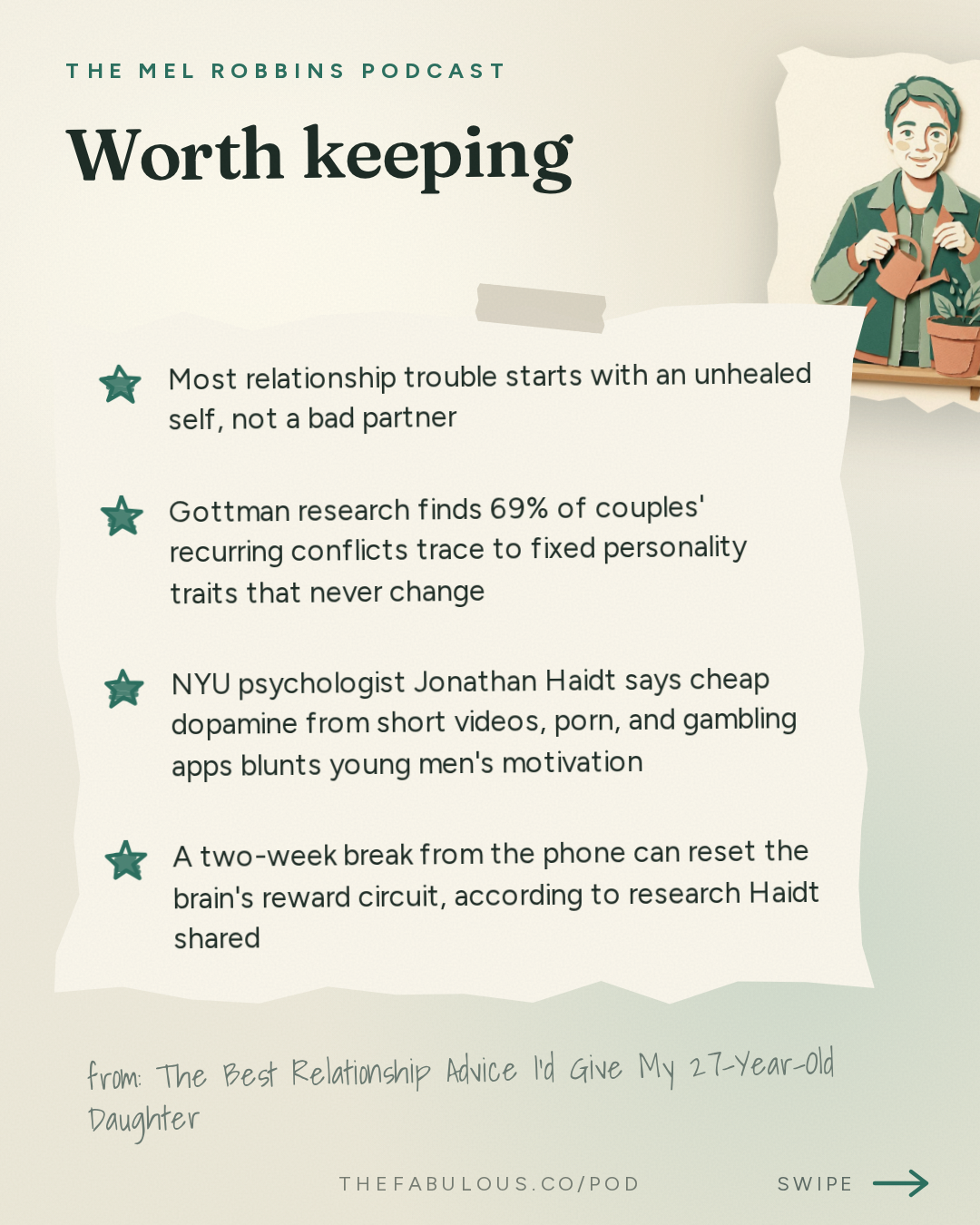
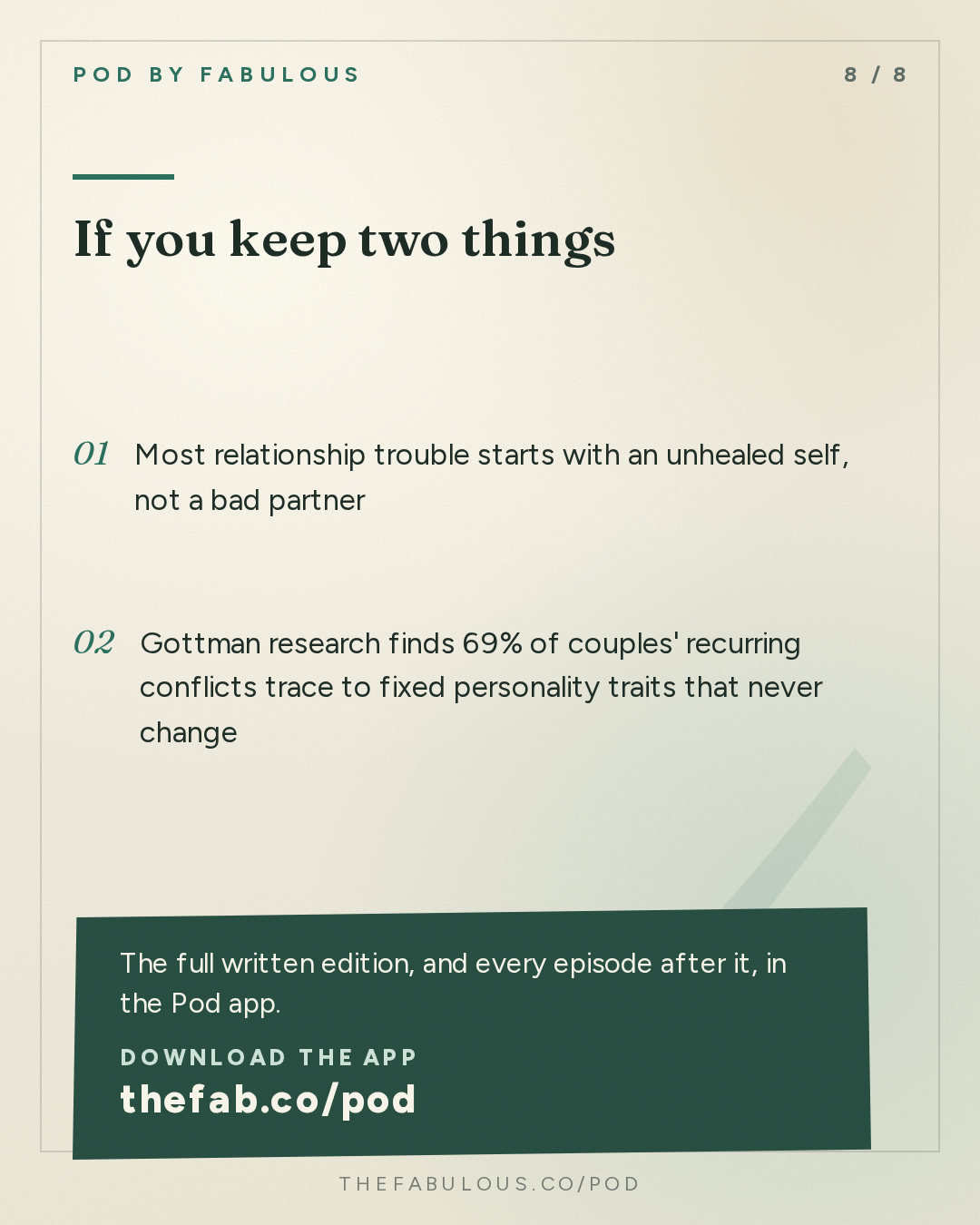
- Most relationship trouble starts with an unhealed self, not a bad partner
- Gottman research finds 69% of couples' recurring conflicts trace to fixed personality traits that never change
- NYU psychologist Jonathan Haidt says cheap dopamine from short videos, porn, and gambling apps blunts young men's motivation
- A two-week break from the phone can reset the brain's reward circuit, according to research Haidt shared
- Couples therapist Terry Real says partners can be right or connected, but never both at once
The episode in cards

By the numbers
- 69% percent share of couples' recurring conflicts rooted in fixed personality traits, per Gottman research
- 2 weeks time off the phone needed to reset the brain's dopamine reward circuit, per Jonathan Haidt's research
In their words
“It's very hard to be in a healthy relationship when you're not healthy.”
“You cannot outrun your past. You cannot outdate your bad habits in relationships, and you cannot marry yourself into healing.”
“The hardest part about a breakup is not the breakup. It's tolerating the three months that come next.”
“Physicality shifts spirituality. Physicality shifts your mentality. Physicality shifts your emotions, and that is something you can control.”
Protocols
-
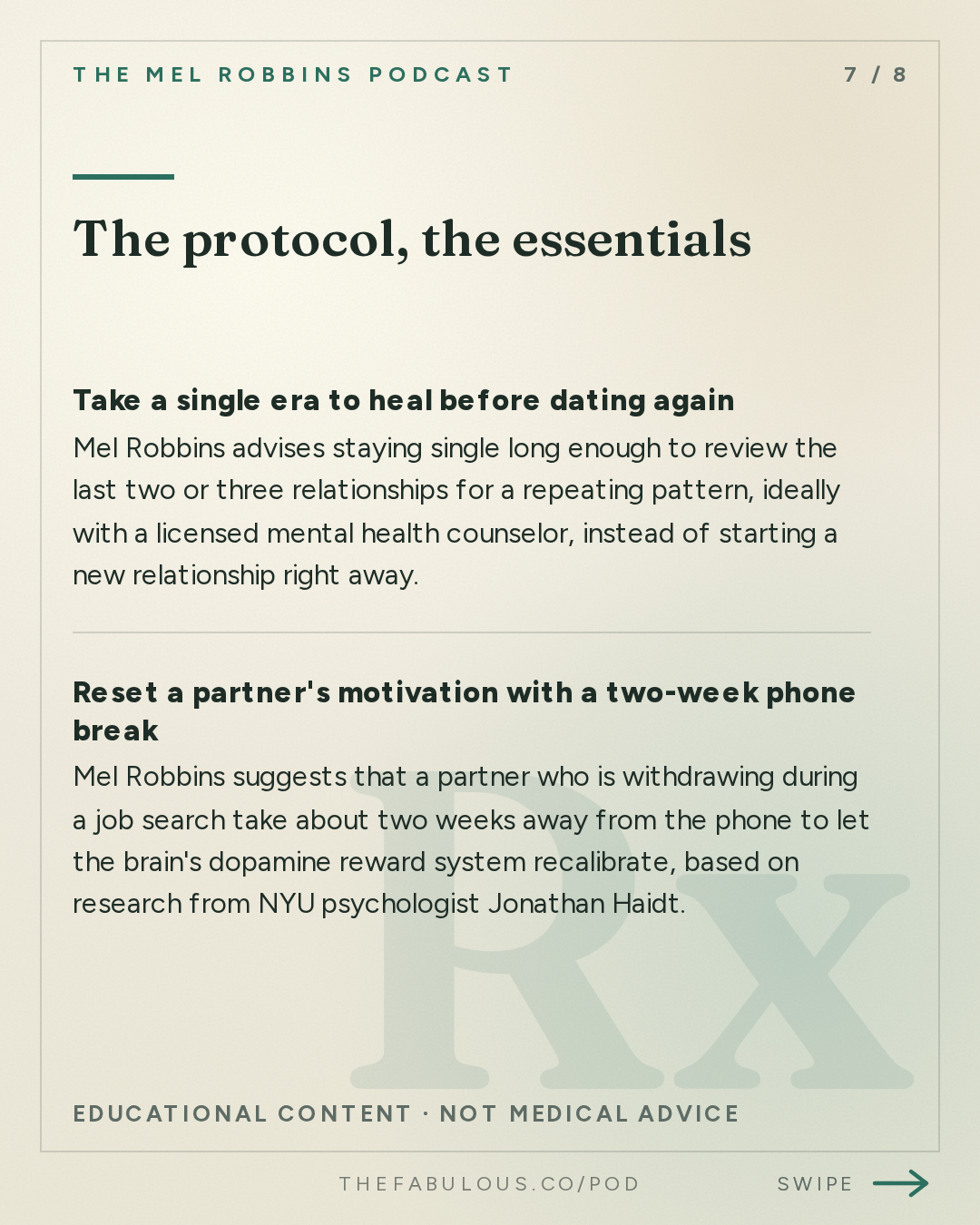
Take a single era to heal before dating again
Mel Robbins advises staying single long enough to review the last two or three relationships for a repeating pattern, ideally with a licensed mental health counselor, instead of starting a new relationship right away.
once, before re-entering dating
-
Reset a partner's motivation with a two-week phone break
Mel Robbins suggests that a partner who is withdrawing during a job search take about two weeks away from the phone to let the brain's dopamine reward system recalibrate, based on research from NYU psychologist Jonathan Haidt.
a two-week period, as needed
-
Give a struggling job seeker belief, not pressure
Mel Robbins recommends telling a partner who is job hunting that the timing will work out and that a hard stretch does not reflect their worth, rather than adding criticism on top of the pressure they already put on themselves.
ongoing, during the job search
-
Wait out the three months after a breakup without a rebound
Mel Robbins advises giving the mind and body about three months to unlearn a relationship after a breakup, and avoiding a new relationship or sex with the ex during that window because it resets the healing process.
three months, one time per breakup
Questions this episode answers
What are Mel Robbins's three signs someone is not the right fit?
Mel Robbins names an unexplained sense of dread even with a kind partner, having to give up a core dream or value to stay together, and being unable to accept a fixed personality trait. She ties the third sign to Gottman research finding that 69% of couples' recurring conflicts come from traits that never change (10:45).
How does cheap dopamine affect men's motivation, according to Jonathan Haidt?
NYU psychologist Jonathan Haidt, author of 'The Anxious Generation,' found that heavy use of short-form video, porn, gambling apps, and social media disrupts the brain's reward center, which can lower motivation in ways that look like laziness but are not (39:29). Mel Robbins adds that roughly a two-week break from the phone can let that reward system reset (41:31).
How long does it take to recover from a breakup?
Mel Robbins tells listeners to expect about three months for the body and mind to unlearn daily life with an ex, calling that stretch harder than the breakup conversation itself (55:06). She advises against rebound relationships or contact with the ex during that period because it resets the process.
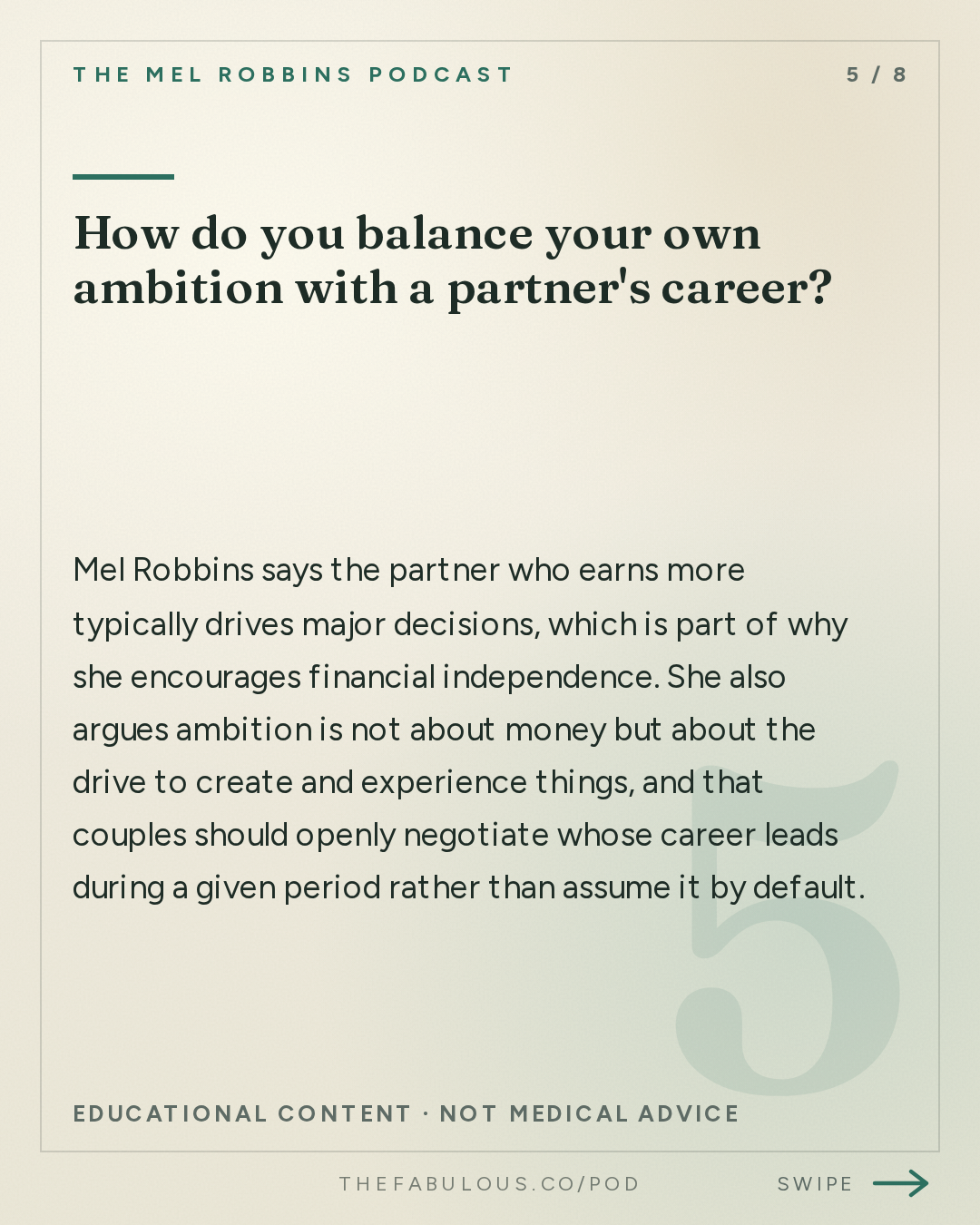
How do you balance your own ambition with a partner's career?
Mel Robbins says the partner who earns more typically drives major decisions, which is part of why she encourages financial independence (30:30). She also argues ambition is not about money but about the drive to create and experience things, and that couples should openly negotiate whose career leads during a given period rather than assume it by default (29:37).
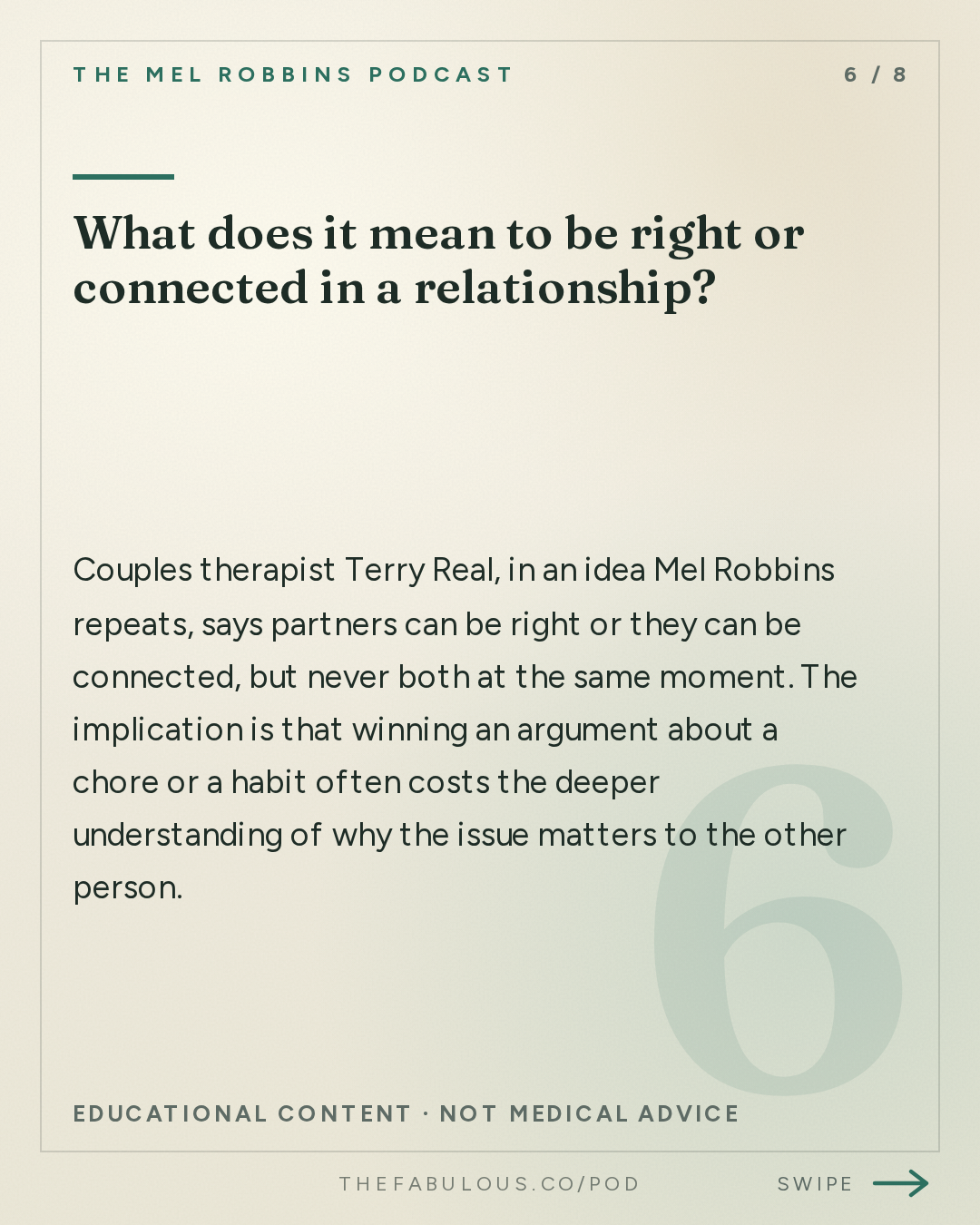
What does it mean to be right or connected in a relationship?
Couples therapist Terry Real, in an idea Mel Robbins repeats, says partners can be right or they can be connected, but never both at the same moment (56:19). The implication is that winning an argument about a chore or a habit often costs the deeper understanding of why the issue matters to the other person.
The full read, in cards
Go deeper
- Gottman relationship research — Decades of couples research finding that 69% of recurring conflicts stem from fixed personality traits and that relationships fail when a partner must abandon core dreams or values
- The Anxious Generation — Jonathan Haidt's book and related research arguing cheap dopamine from short-form content, porn, and gambling apps damages young men's motivation
- The Let Them Theory — Mel Robbins and Sawyer Robbins's book, referenced for research on why unresolved patterns repeat across relationships
Mentioned
Mel Robbins · Sawyer Robbins · The Gottmans · Jonathan Haidt · The Anxious Generation · Terry Real · T.D. Jakes · James Sexton · Oprah Winfrey · Christopher Robbins
More from this show and category
How to Let Go of What No Longer Serves You
Mel Robbins uses a biological metaphor, trees pushing off leaves each fall, to argue that healthy relationships, jobs, and habits need a two-way flow of energy. When something only drains and never gives back, she says it is time to let it go, and she offers two daily tools: a 24-hour no-complaining challenge and a rule against trying to control other people.
5 Skin Habits From a Mayo Clinic Dermatologist
Mayo Clinic dermatologist Saranya Wyles argues skin is a check engine light for the whole body, not a beauty scorecard, and shares five pillars (sleep, diet, movement, stress, topicals) that measurably change how skin ages, from barrier recovery after sleep to facial volume loss on GLP-1 drugs.
The One Skill That Makes People Like You More
Mel Robbins says empathy means understanding, not mind-reading, and everyone gets nine daily chances to practice it (07:19). She outlines four habits: asking instead of guessing, sending small gestures called pebbling, offering concrete help without being asked, and waving first, drawing on research from Harvard, Stanford, and the University of Toronto.
Ina Garten's Advice for Career Reinvention
Ina Garten left a federal budget job at 30 to buy a 400-square-foot Hamptons food store that grossed just $87 on its first day, and calls her approach working scared. On Mel Robbins's podcast, the Barefoot Contessa founder explains why jumping in before you feel ready, reframing boring tasks, and running small experiments beat waiting for a perfect plan.
