
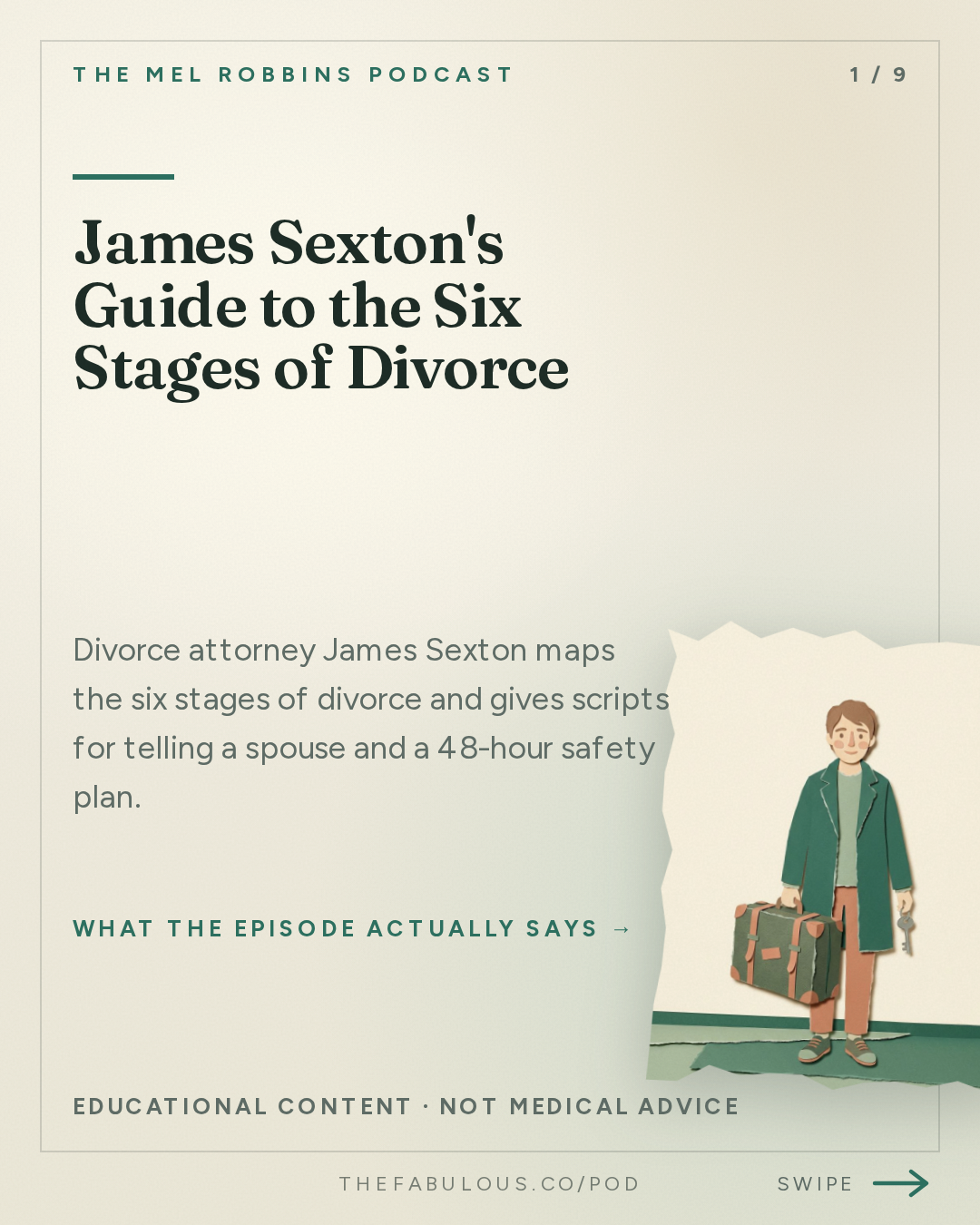
James Sexton's Guide to the Six Stages of Divorce
The Ultimate Guide to Divorce (For You & The People You Love)
▶ Listen to the full episode More from The Mel Robbins Podcast
The brief
Divorce attorney James Sexton maps the six stages of divorce and gives scripts for telling a spouse and a 48-hour safety plan. He explains why an avoided conversation gets more expensive with time, why grief means the love was real, and how to actually help someone else going through it.
Ask this episode anything
Pod's AI answers from the episode itself, with the minute mark so you can hear it yourself.
Or start with one of these
Ask this episode
Pod's AI listens to the whole episode to answer, and points you to the minute it comes from.
The rest of this answer, and any question after it
Answers come from the episode itself, never from a summary of it.
Continue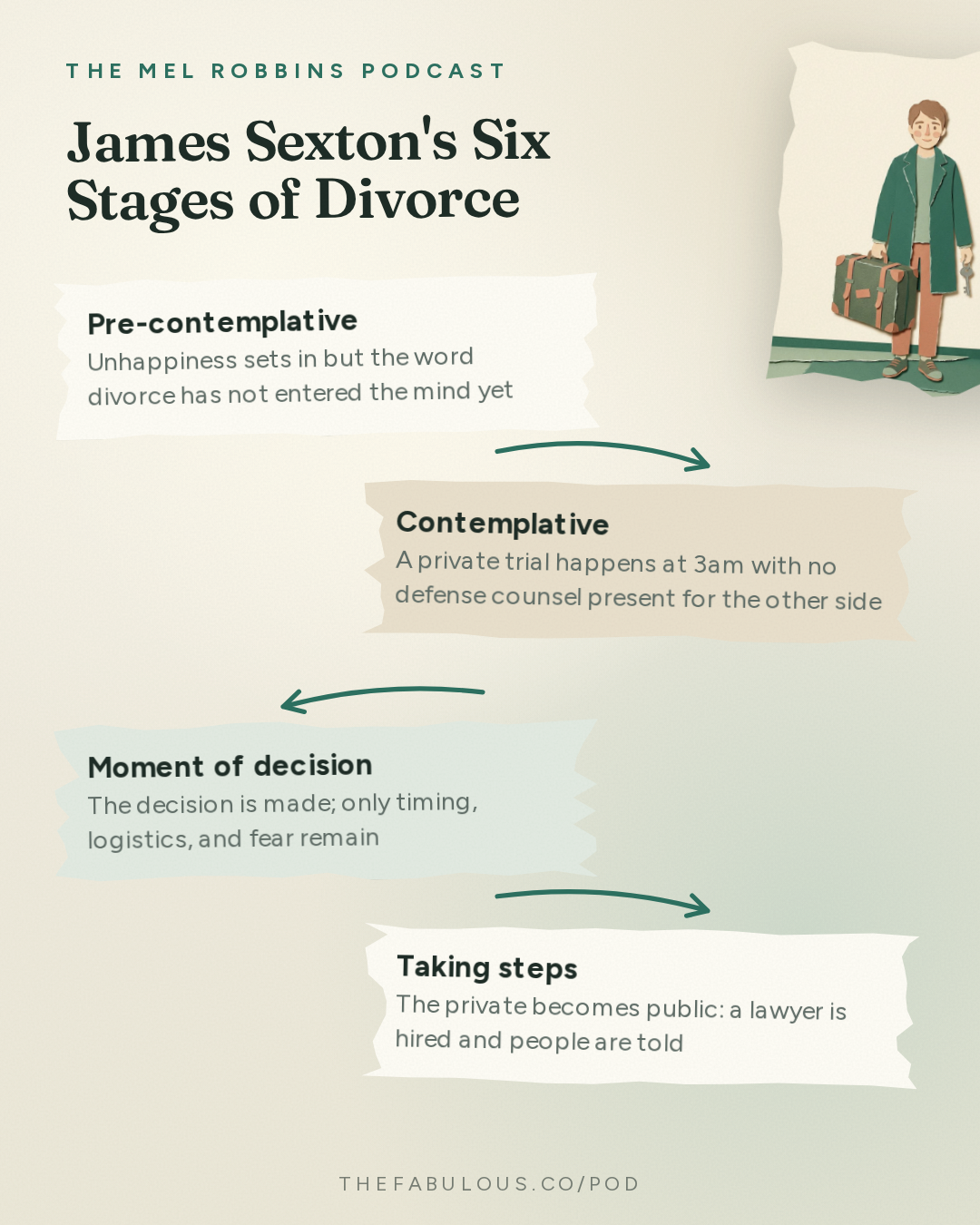
Key takeaways
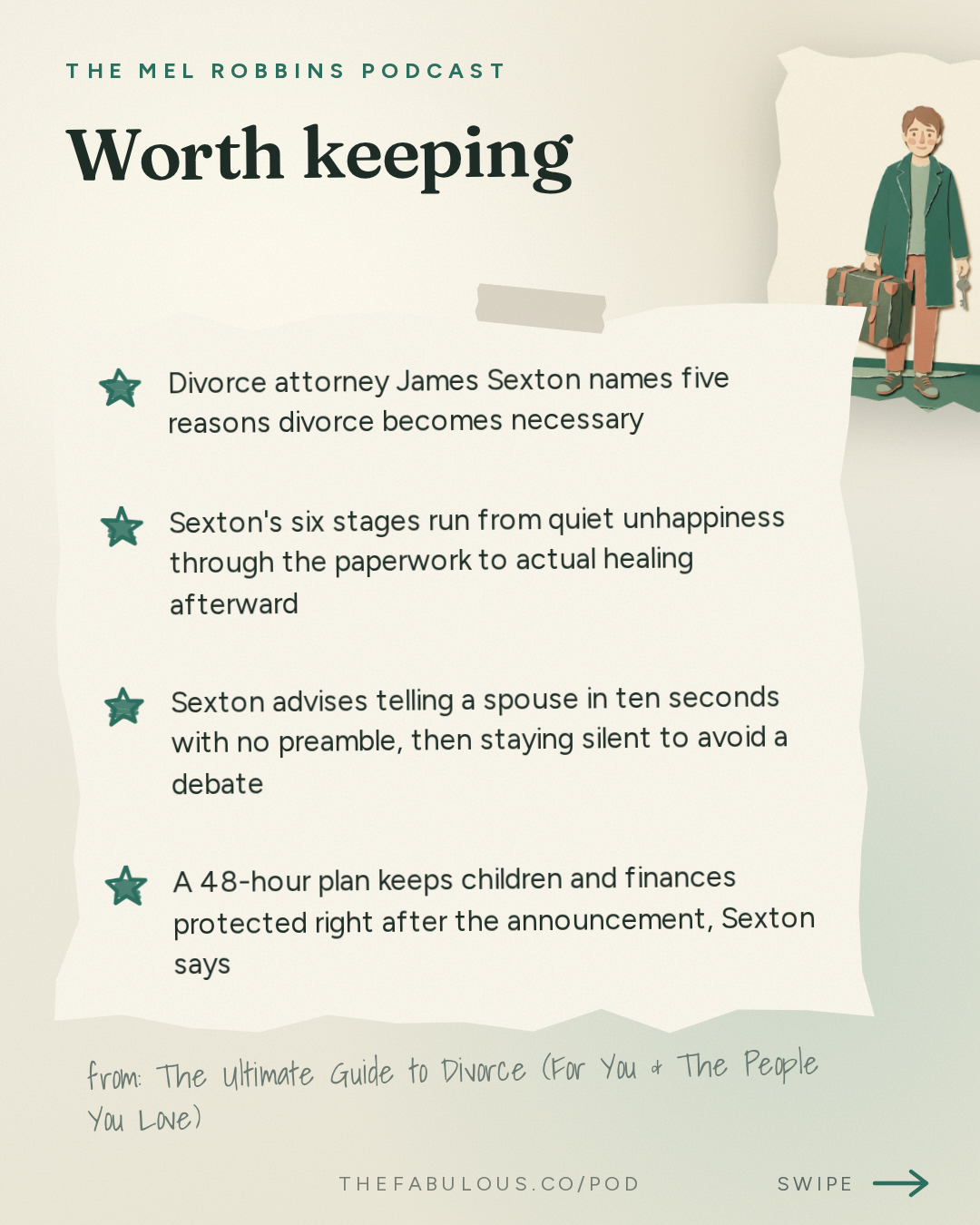
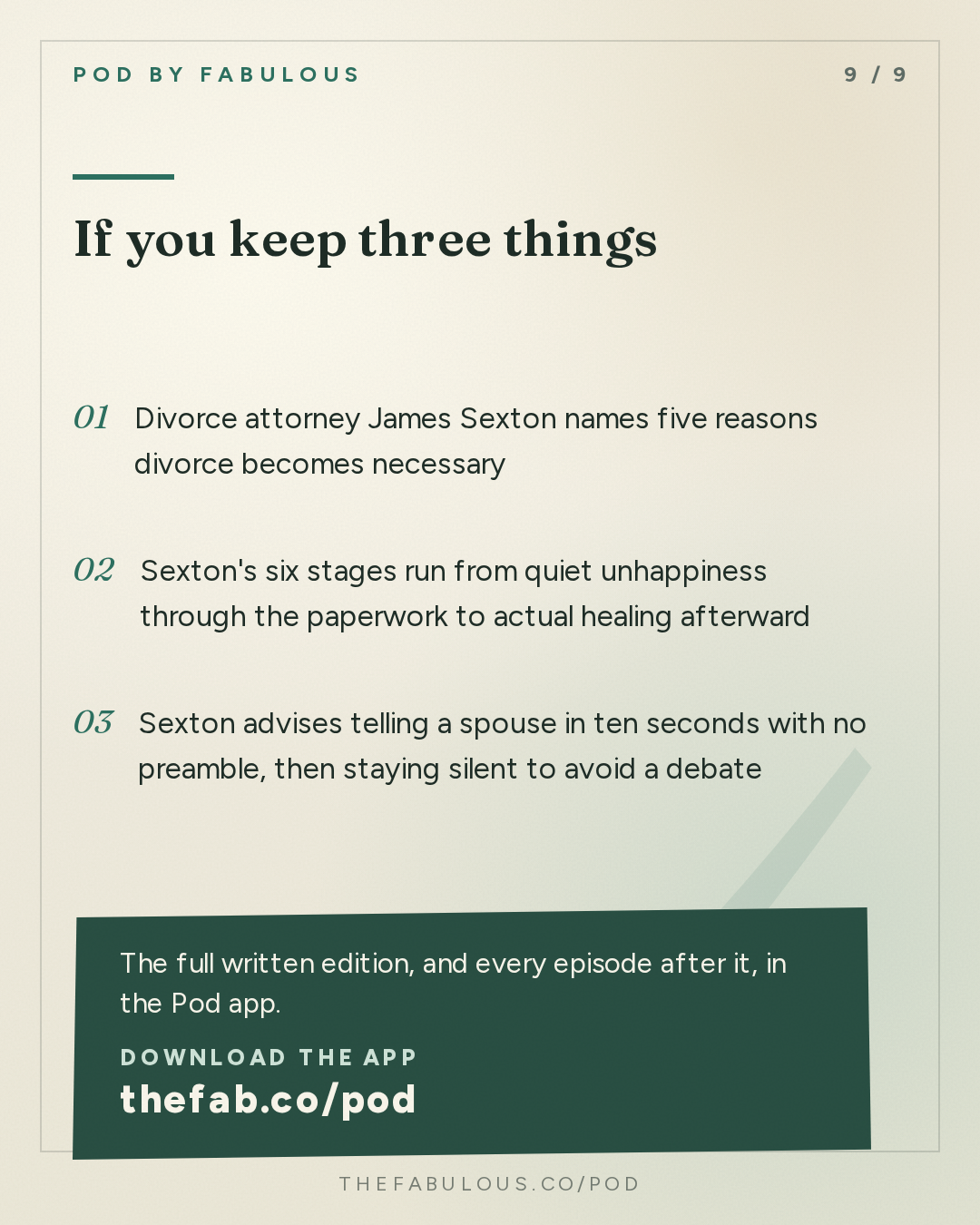
- Divorce attorney James Sexton names five reasons divorce becomes necessary
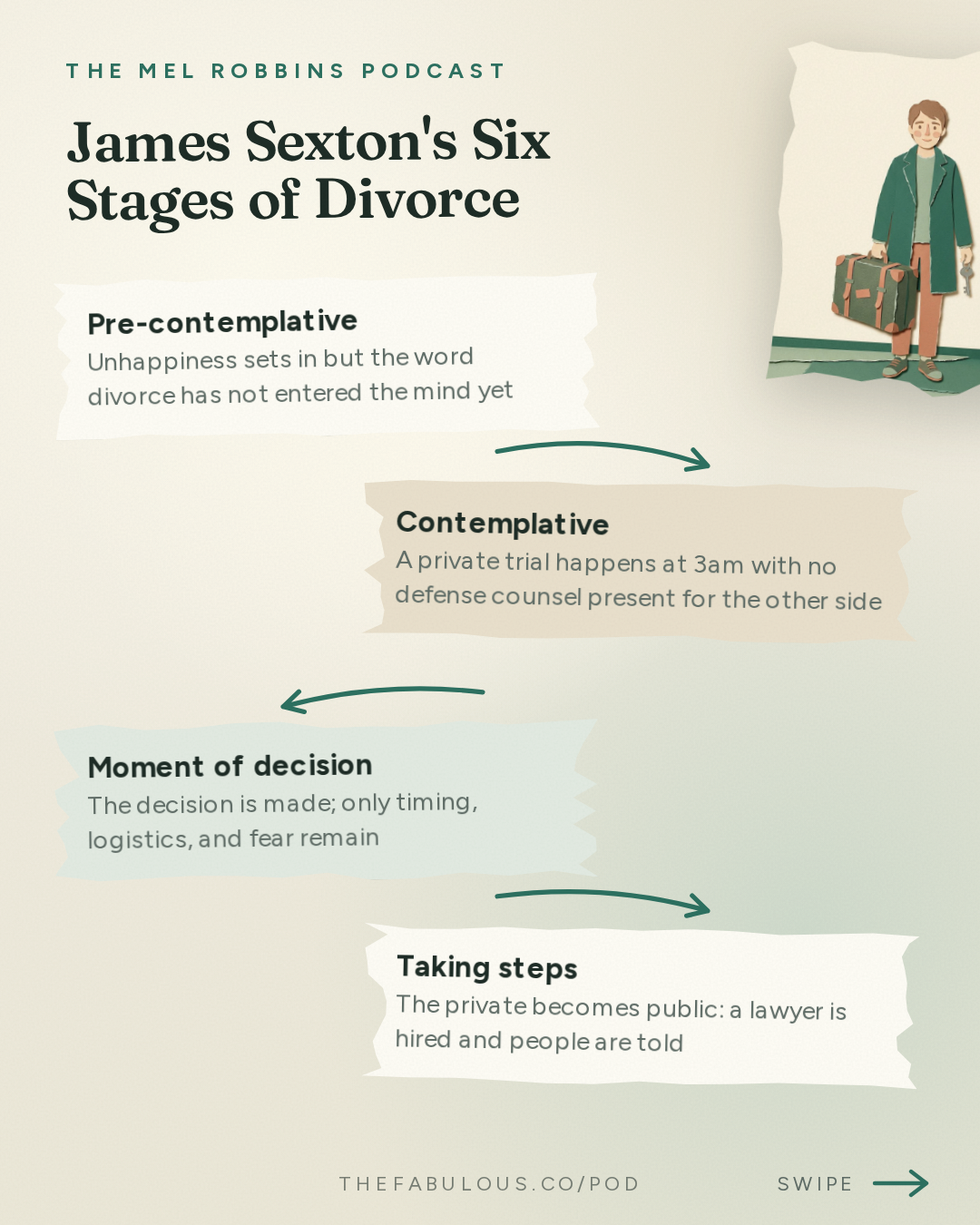
- Sexton's six stages run from quiet unhappiness through the paperwork to actual healing afterward
- Sexton advises telling a spouse in ten seconds with no preamble, then staying silent to avoid a debate
- A 48-hour plan keeps children and finances protected right after the announcement, Sexton says
- Sexton says grief after divorce proves love mattered, not that it failed
The episode in cards
There is a particular kind of trial that happens at three in the morning, with no judge, no jury, and no defense counsel for the other side. The defendant is asleep beside you. The evidence is a decade of small grievances. The verdict, when it comes, arrives quietly, in the dark, long before anyone says the word out loud. This is how divorce attorney James Sexton describes the moment a marriage starts to end, not as an event but as a private courtroom that opens in someone's head (13:52).
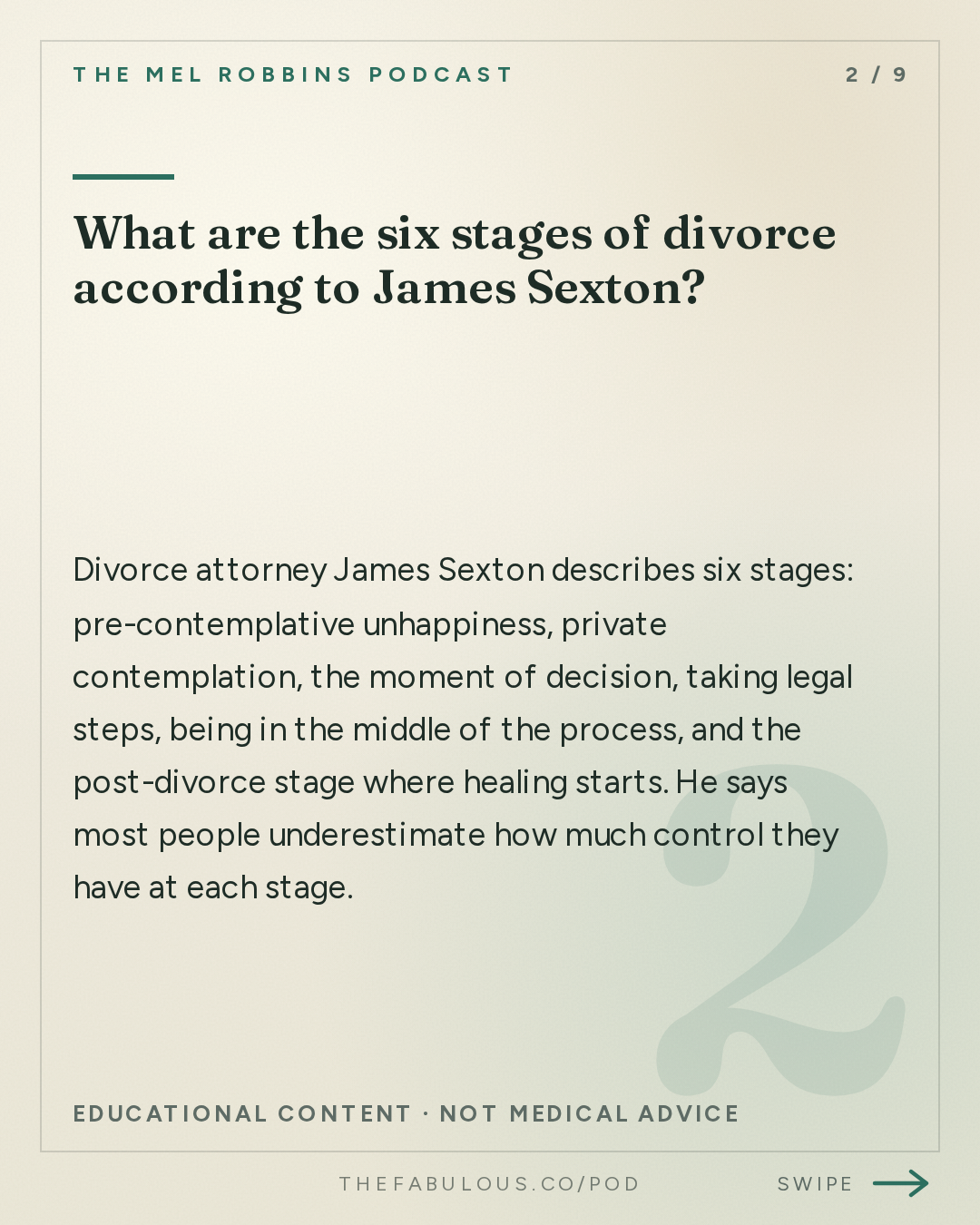
Sexton has spent more than twenty years representing people at the end of marriages, and his working theory is that divorce is not weather. It does not simply happen to a person. It is a process with stages, levers, and choices, and the person going through it has more control than they think (05:08). He organizes the whole arc into six stages: pre-contemplative unhappiness, private contemplation, the moment of decision, taking practical steps, being in the middle of the legal process, and finally getting out the other side (00:30). Each stage, he argues, has its own traps and its own tools, and most people never learn any of this until they are already sitting across from a lawyer with the marriage in pieces on the table.
The first stage is the hardest to notice because it does not look like anything. There is no fight, no affair, no single wound. There is only flatness, a marriage that has quietly become, as Sexton puts it, "roommates running a daycare center" (17:43). The tell, he says, is a certain sound partners start making at each other: a flat "what," an irritated "all right, yeah." That sound is smoke before there is fire. His advice for this stage is almost absurdly modest: sit down for ten uncomfortable minutes and ask what is actually going on, because the conversation being avoided is, in his words, the cheapest it will ever be.
"The conversation you're avoiding is the cheapest today it will ever be." — James Sexton [22:16]
Cheap in dollars, since legal fees only rise from here, but cheap emotionally too. Silence in the pre-contemplative stage costs ten minutes. Silence a year later can cost a marriage. Sexton's broader point, echoed throughout the conversation with podcast host Mel Robbins, is that damage in a marriage's ending is optional even when pain is not.
"The pain isn't optional... But the damage is optional, and there's a lot you can do." — James Sexton [07:21]
The Sentence, the Ten Seconds, and the Forty-Eight Hours
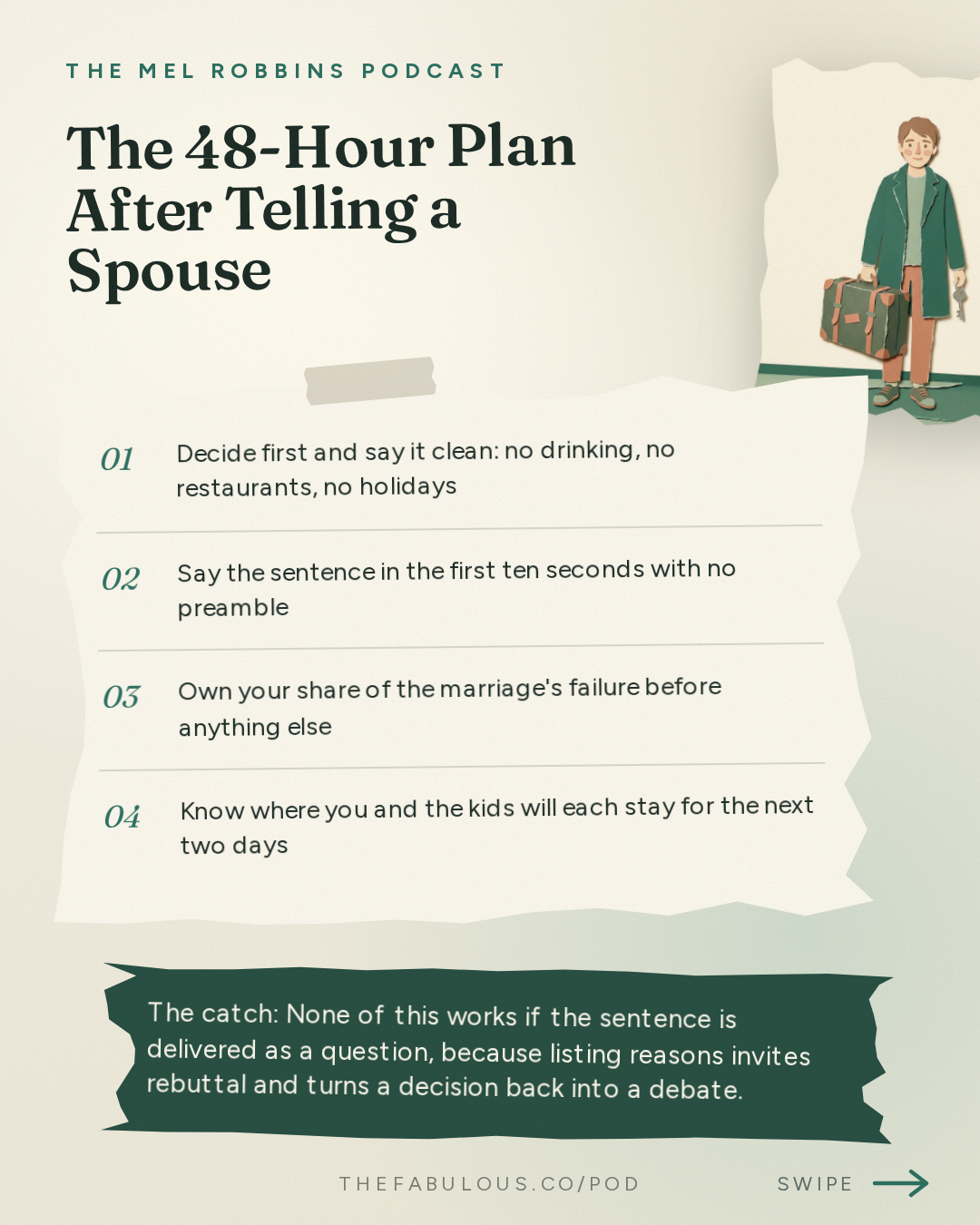
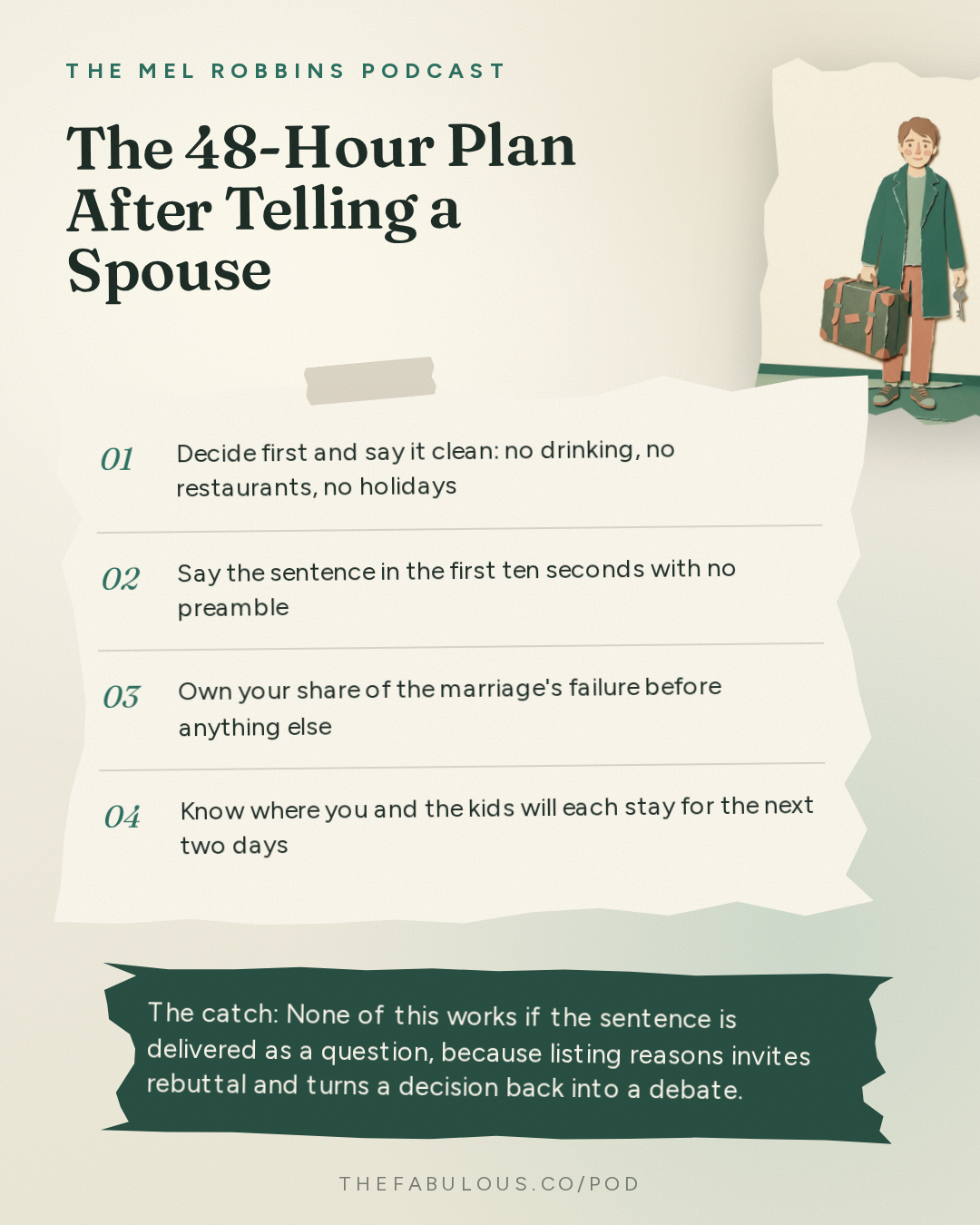
Once someone reaches the third stage, the moment of decision, Sexton's advice turns almost tactical. He is emphatic that a person should never ask a spouse for a divorce. They should tell them. And the telling should take about ten seconds, with no preamble, because reasons invite rebuttal and turn a decision into a debate that should have happened months earlier (36:19).
"I have given this a lot of thought, and our marriage needs to end." — James Sexton [36:19]
He recommends owning a share of the failure first, apologizing once, and then stopping. No list of grievances, no negotiation, because the decision has already been made. What follows the sentence matters just as much. Sexton describes a 48-hour plan: know where each person will sleep, keep children away from the immediate blast radius with a grandparent or trusted adult, and have copies of financial documents ready beforehand, since access to shared accounts can change fast once the news lands (38:11). None of this is about cruelty. It is about limiting the damage of a moment that a person's children will remember for the rest of their lives, whether it is fair or not (38:42).
Sexton is just as specific about what happens once lawyers are hired. A common assumption, he says, is that hiring an aggressive litigator guarantees a courtroom war. He argues the opposite is often true: two experienced litigators can predict a judge's ruling well enough to settle quickly, because neither side wants to gamble on a trial whose outcome both can already see. He recalls an eight-billion-dollar marital estate that settled in a month over four phone calls, because his counterpart in that case, attorney John Tytler, was skilled enough that both sides knew exactly where the case would land (54:24, 54:41). The costly fights, in his experience, tend to come from people who cannot resist small, symbolic battles. He mentions clients who have spent ten thousand dollars in legal fees arguing over an eleven-thousand-dollar account, a fight where the winner nets a thousand dollars and the loser is out twenty-one thousand (58:36).
Underneath the tactics is a reframe Sexton keeps returning to: a divorce is not a referendum on who was right. It is the architecture of a life that two people will still share, as co-parents, for decades.
"A divorce ends a marriage. It doesn't end a family, and you're restructuring a company that you're gonna co-own for the rest of your life." — James Sexton [51:37]
That reframe matters because the legal system, he says, produces outcomes and schedules, not vindication or closure. A judge divides property and sets a parenting calendar, then goes to lunch (62:42). People who go looking for an apology or a moral verdict from that process come away disappointed every time.
What Comes After the Papers
The sixth stage, getting out, is where Sexton's advice turns from strategy to something closer to grief counseling. He makes a distinction that reframes the entire ordeal: grief after a divorce is not proof that the love failed. It is proof that it was real.
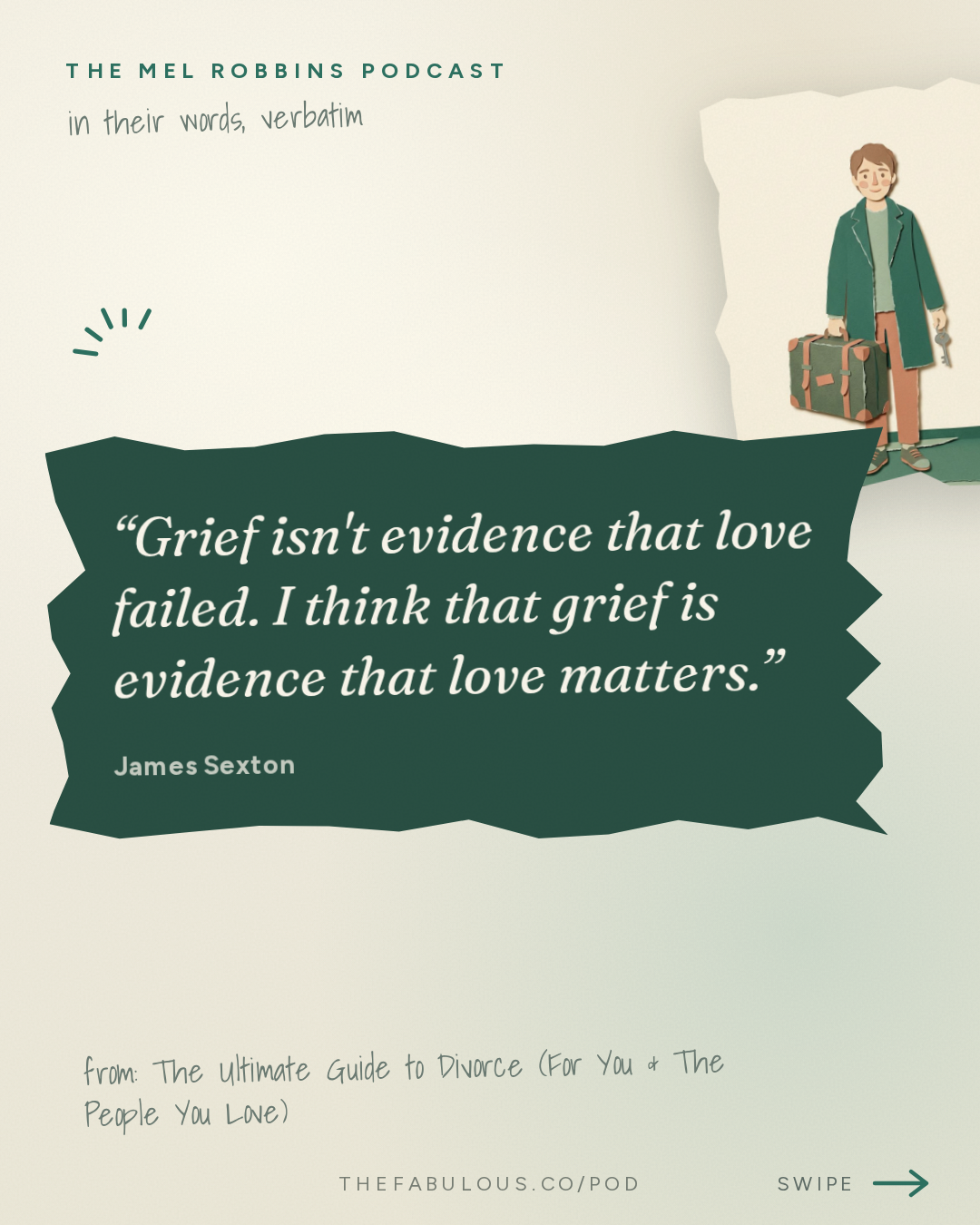
"I think that grief is evidence that love matters." — James Sexton [64:16]
His practical suggestion is to schedule that grief rather than let it run loose. Pick a set time, he says, maybe Sunday at one in the afternoon, put on sad music, and let it out on purpose, because unscheduled grief will otherwise eat an entire day (69:43). He is also blunt about sequencing: get a therapist before downloading a dating app, since jumping into a new relationship often substitutes for the repair work a person still needs to do on themselves (70:03).
For everyone standing on the outside of someone else's divorce, watching a friend or a parent go through it, Sexton's advice is to stop guessing. Rather than offering vague comfort like "let me know if you need anything," he suggests naming a specific day, a specific hour, and a menu of options, dinner, a walk, silence, a shoulder to cry on, because a concrete offer is far easier for a grieving person to accept than an open-ended one (77:17).
What is striking about Sexton's framework, across all six stages, is how little of it is about the law. Most of it is about timing, honesty, and the willingness to look directly at what is actually happening in a marriage rather than what is convenient to believe. He calls that convenient blindness a specific kind of avoidance: not simply failing to see, but refusing to look because some part of a person already knows what they would find (39:50). The conversation he keeps circling back to, the ten uncomfortable minutes at the kitchen table, is cheap now and only gets more expensive. Whether a marriage survives it or not, that conversation, Sexton suggests, is the only honest place to begin.
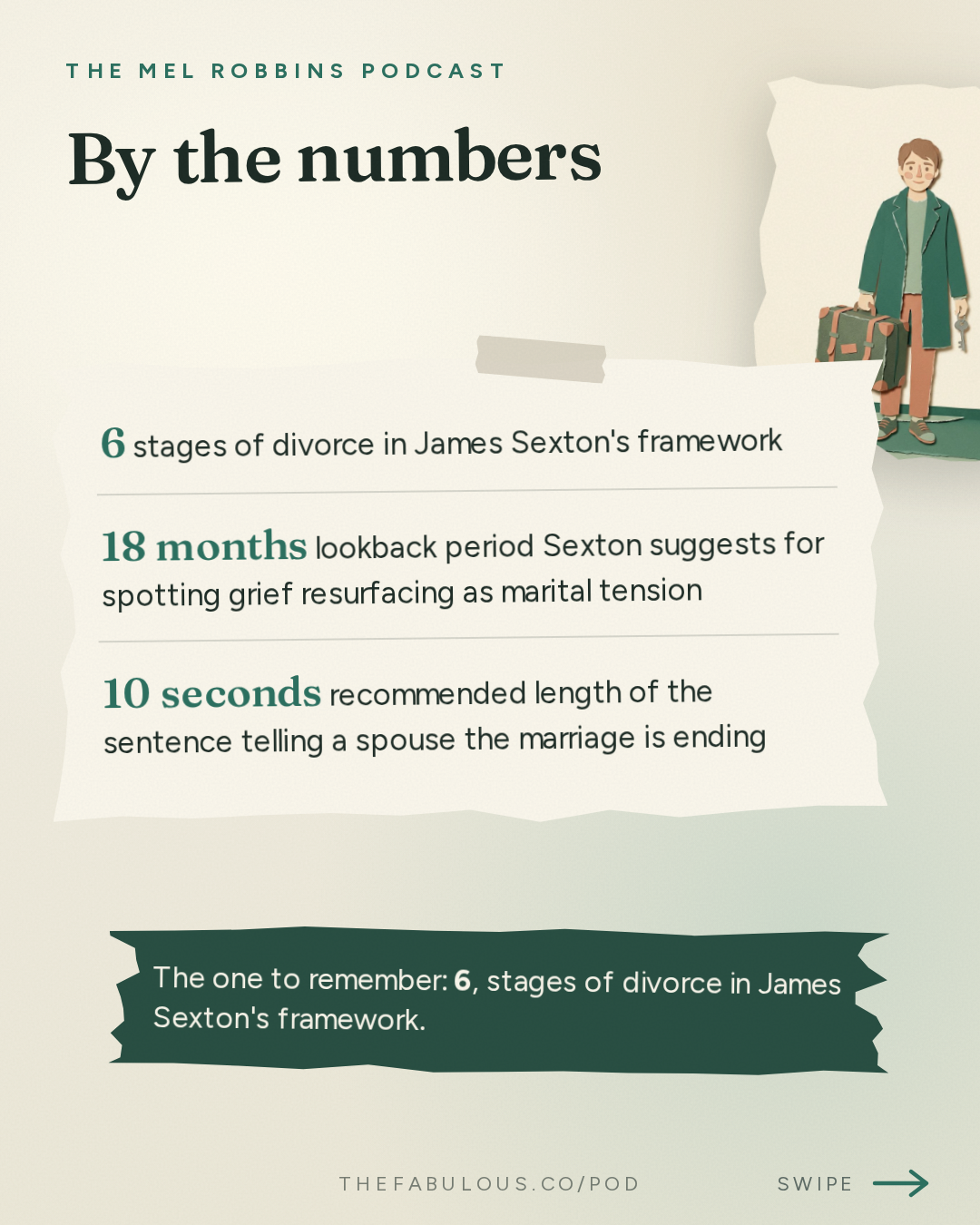
By the numbers
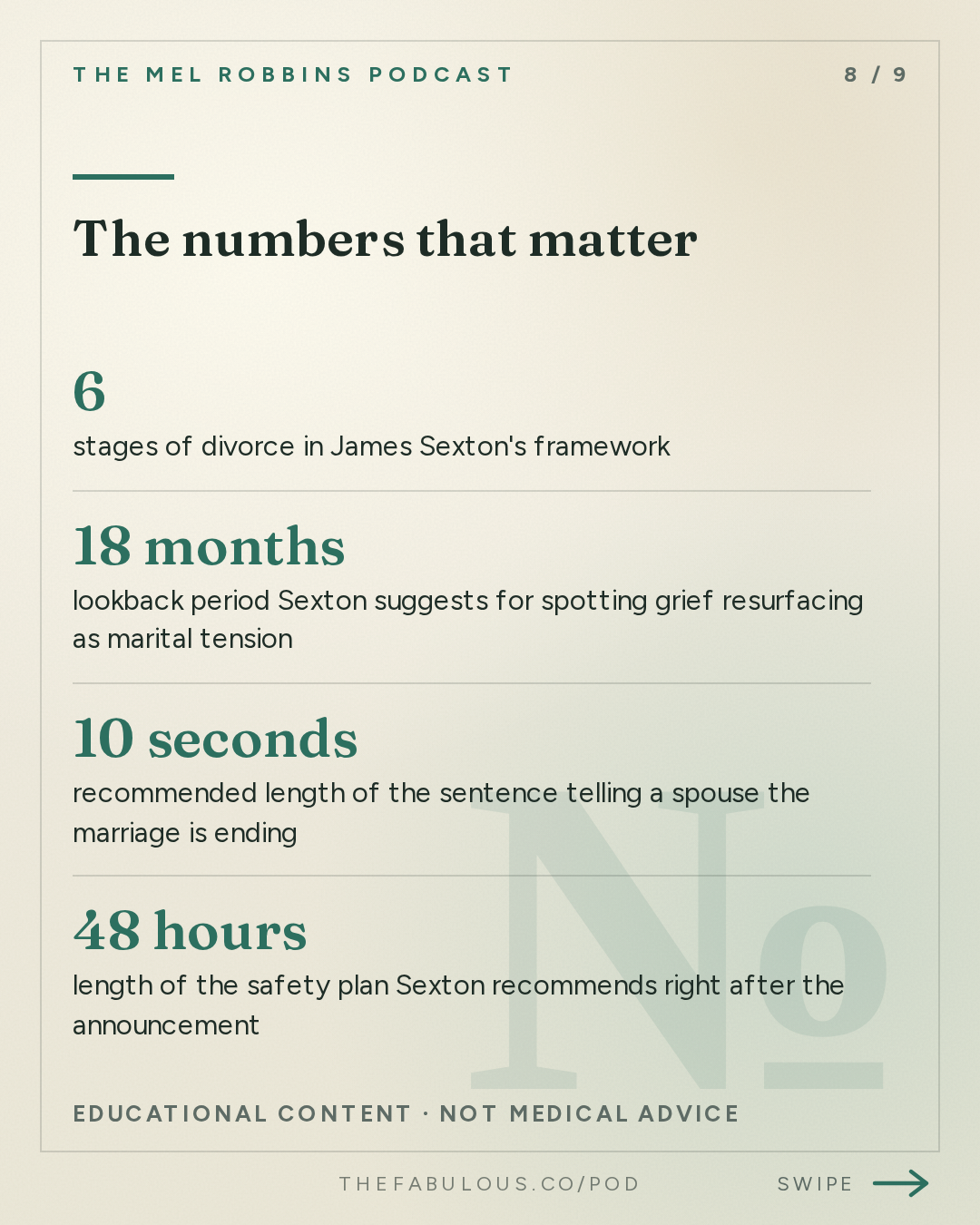
- 6 stages of divorce in James Sexton's framework
- 18 months lookback period Sexton suggests for spotting grief resurfacing as marital tension
- 10 seconds recommended length of the sentence telling a spouse the marriage is ending
- 48 hours length of the safety plan Sexton recommends right after the announcement
- $10,000 legal fees Sexton has seen spent arguing over an $11,000 bank account
In their words
“Is my marriage broken, or is my marriage unattended? Because they're not the same.”
“I have given this a lot of thought, and our marriage needs to end.”
“Grief isn't evidence that love failed. I think that grief is evidence that love matters.”
Protocols
-
Have the cheap conversation before it gets expensive
James Sexton advises spouses to sit down for an honest ten-minute talk about what is really happening in the marriage, because that conversation is the cheapest it will ever be and only gets more expensive the longer it is avoided.
As soon as unhappiness sets in, before contempt takes hold
-
Tell a spouse in ten seconds, then stop talking
James Sexton tells people who have decided to divorce to say one clear sentence, such as I have given this a lot of thought and our marriage needs to end, to own their share of the blame first, to apologize once, and then to stop talking so the moment does not turn into a debate.
Once, at the moment the decision is final
-
Build a 48-hour plan before the conversation
James Sexton recommends arranging separate places to stay, keeping children with grandparents or another safe adult, and making copies of financial documents in advance, so neither person is stranded without shelter or money right after the announcement.
Prepare beforehand, execute in the two days after telling a spouse
-
Get a therapist before a dating app
James Sexton advises getting a therapist before downloading a dating app after a divorce, because jumping straight into a new relationship skips the grieving and repair the old one still requires.
Before dating again
-
Schedule grief instead of letting it run the whole day
James Sexton suggests picking a set weekly time, for example Sunday at one in the afternoon, to sit with sad music and let the sadness out on purpose, because unscheduled grief will otherwise consume an entire day.
Weekly
Questions this episode answers
What are the six stages of divorce according to James Sexton?
Divorce attorney James Sexton describes six stages: pre-contemplative unhappiness, private contemplation, the moment of decision, taking legal steps, being in the middle of the process, and the post-divorce stage where healing starts (00:30). He says most people underestimate how much control they have at each stage (13:16).
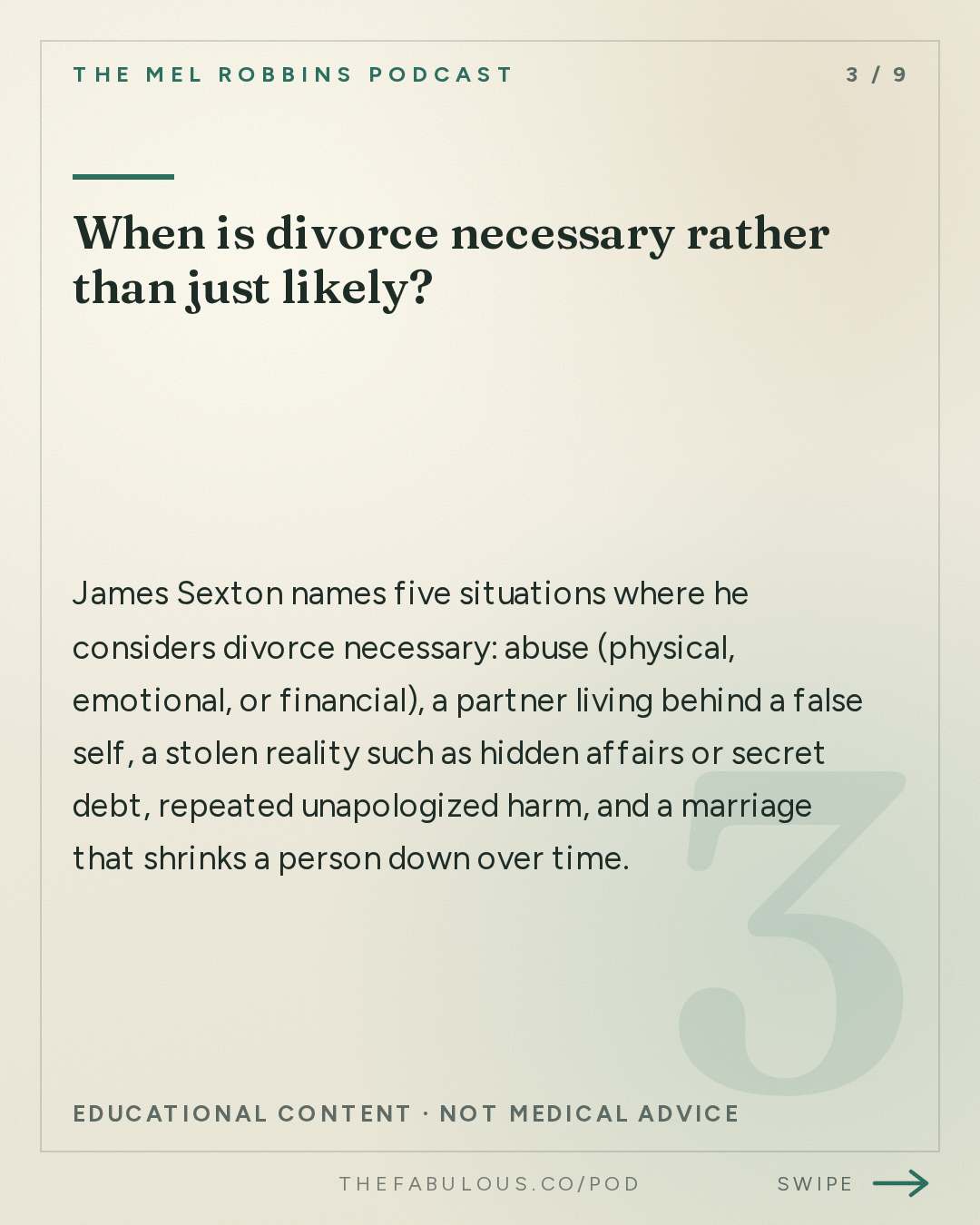
When is divorce necessary rather than just likely?
James Sexton names five situations where he considers divorce necessary: abuse (physical, emotional, or financial), a partner living behind a false self, a stolen reality such as hidden affairs or secret debt, repeated unapologized harm, and a marriage that shrinks a person down over time (08:43).
How should someone tell their spouse they want a divorce?
Sexton recommends saying the decision in the first ten seconds with no preamble, for example I have given this a lot of thought and our marriage needs to end, then stopping, because listing reasons invites a debate instead of accepting a decision (36:19).
What is the 48-hour plan after telling a spouse?
It is a short-term safety plan covering where each partner will stay, keeping children away from the immediate fallout, and having copies of financial documents ready in case account access changes, according to Sexton (38:11).
Why does James Sexton say to hire an aggressive divorce lawyer?
He argues that hiring a skilled litigator actually lowers the odds of ending up in court, because two experienced lawyers can predict a judge's likely ruling and settle quickly, as in an eight billion dollar estate he settled in a month with four phone calls (54:24, 54:41).
How can someone support a friend going through a divorce?
Sexton suggests offering a specific menu of options, a set day and time paired with a list of activities, rather than a vague let me know if you need anything, because concrete offers are easier for a grieving person to accept (77:17).
The full read, in cards
Go deeper
- How to Stay in Love — James Sexton's earlier book states that sometimes divorce is the kindest or even the loving choice for both people
- No Country for Old Men — Cormac McCarthy line, cited by Sexton, about people fixating on what they lost instead of noticing what else is still going out the door
Mentioned
James Sexton · Mel Robbins · How to Stay in Love · Fordham Law School · Cormac McCarthy · No Country for Old Men · Brazilian jujitsu
More from this show and category
Mel Robbins' Let Them Theory for Difficult People
Mel Robbins' Me, We, Them framework redirects relationship stress toward the one variable anyone can control: their own reaction. She names three habits that wreck relationships (expecting others to change, letting their behavior dictate your mood, assuming they 'should' know what you need) and offers a script from therapist Terry Real for saying the hard thing without blame.

How to Share the Mental Load With Your Partner
Mental load coach Zach Watson says men often confuse doing a chore with owning it, and that sharing the mental load makes men happier too. He recommends the Fair Play card system, weekly 'build meetings,' and naming emotions precisely to cut defensiveness and split invisible labor fairly.

Cher's Life Advice on Love, Money, and Leaving
Cher tells the hosts of We Can Do Hard Things how she survived a controlling marriage to Sonny Bono and chose to leave instead of ending her life. She describes losing all ownership of Cher Enterprises, advice from Lucille Ball, and the bumper car philosophy that carried her through decades of setbacks.

Stacey Abrams' 10 Steps to Authoritarianism, Explained
Stacey Abrams argues the United States is now a "competitive authoritarian" country: elections still happen, but power is hoarded and unaccountable (07:58). She lays out ten warning steps toward autocracy and ten matching steps back to freedom, then applies both to the midterms six weeks out, urging two hours a week of targeted local action (62:33).
