
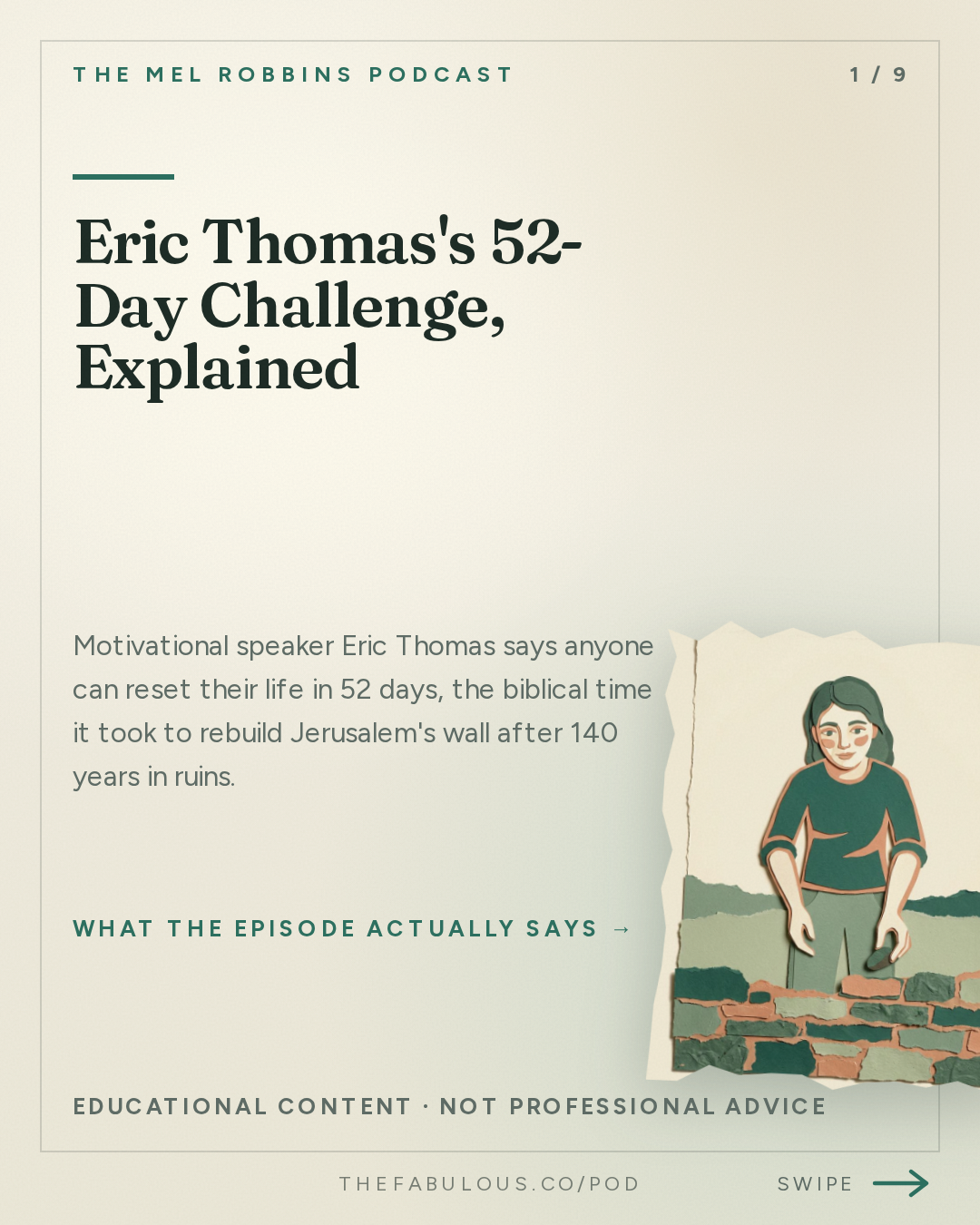
Eric Thomas's 52-Day Challenge, Explained
Get Back on Track: Do THIS Before 2026 Ends to Take Control with Eric Thomas
▶ Listen to the full episode More from The Mel Robbins Podcast
The brief
Motivational speaker Eric Thomas says anyone can reset their life in 52 days, the biblical time it took to rebuild Jerusalem's wall after 140 years in ruins. He used the method himself to lose weight, and coaches listeners to pick one embarrassing area of life, post a photo of their goal self, and start with 15 minutes a day.
At sixteen or seventeen, working the night shift at a McDonald's in Detroit, Eric Thomas was riding in a car his friend had taken from someone who hadn't paid him. The police pulled them over, and Thomas, who had nothing to do with the car, spent two and a half days alone in a jail cell anyway. He has called homelessness the best thing that ever happened to him (18:55). Sitting there, he ran through the people he usually blamed for his life, his mother, his absent father, the school counselor who had kicked him out, and noticed something plain: none of them knew each other. His mother had never met the officer. The officer had never met the counselor. The only person who showed up in every scene of his unraveling life was Eric Thomas. "You are the greatest common denominator," he told himself (21:07).
That jail cell insight is the spine of everything Thomas does now. He is ET the Hip Hop Preacher, a pastor, a New York Times bestselling author, and a man who went from homelessness to a PhD in education from Michigan State University. On the Mel Robbins Podcast, he lays out a method he calls the 52-day challenge: pick one part of life that embarrasses you, and give it 52 days of deliberate attention. "We got 52 days to make the rest of our lives the best of our lives," he says (04:26). The number isn't arbitrary. Thomas borrowed it from the Book of Nehemiah, in which the wall around Jerusalem, torn down for 140 years, gets rebuilt in exactly 52 days (06:11). Mel Robbins points out that 52 days fits seven times into a calendar year, since a year holds 52 weeks (13:48), which means anyone listening is always sitting inside one of seven possible resets, no matter the date.
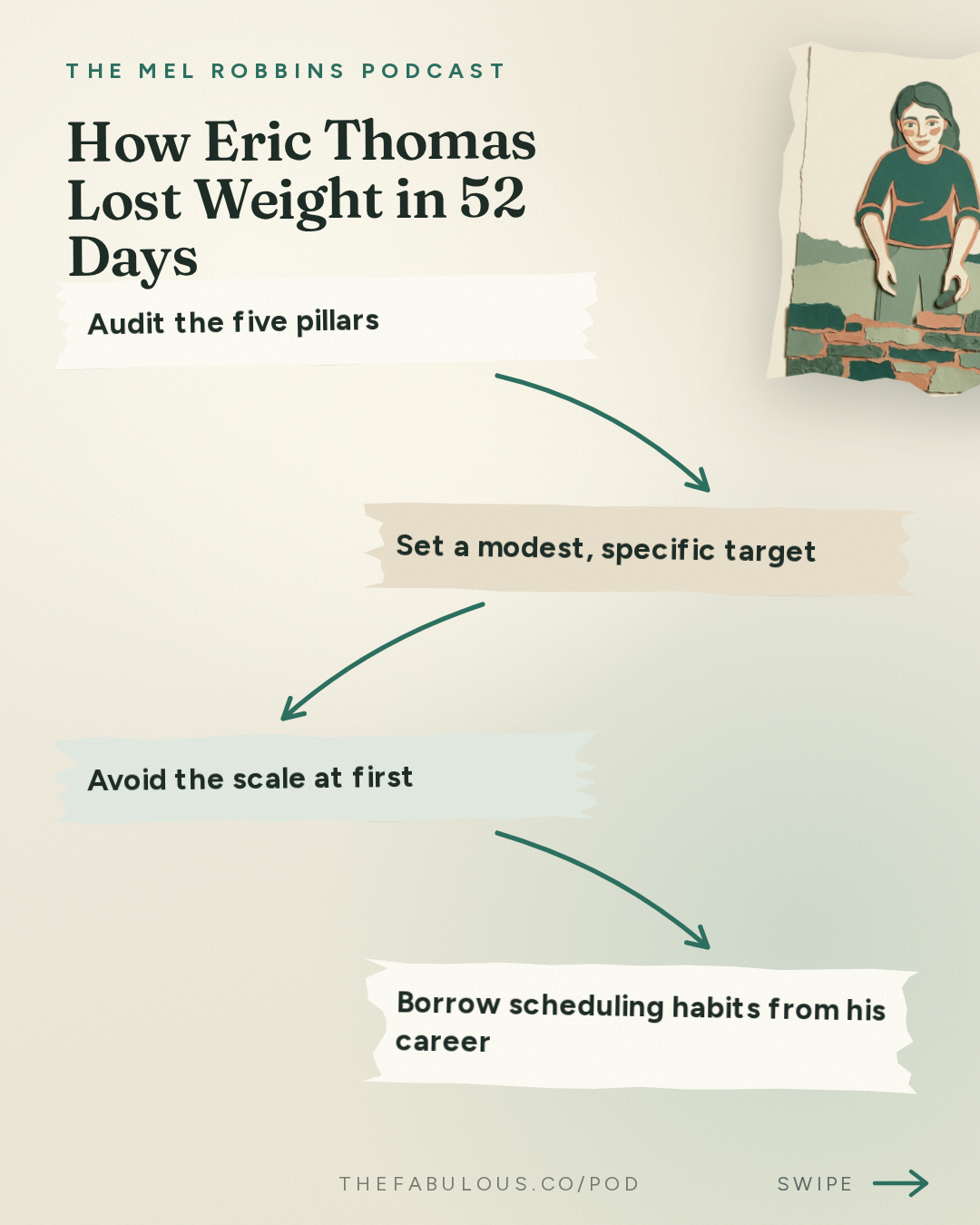
Thomas didn't just teach this framework. He ran it on himself first. He describes auditing five pillars of his own life and finding four of them strong and one embarrassing (08:53). He had crept up to 242 pounds, with pre-diabetes, pre-hypertension, and mild sleep apnea, despite being, by his own description, the number one motivational speaker in the world and a New York Times bestselling author (45:07, 45:27). The detail that makes this more than a pep talk is what he did with the scale. He refused to weigh himself for the first ten to fourteen days of his own 52-day attempt, because he suspected an early number would discourage him into quitting. When he finally stepped on, he had lost only 3 pounds (11:19). It was a small enough number to have derailed him if he had seen it on day three instead of day fourteen. The lesson he draws is specific: early results are often too small to sustain motivation, so the habit has to run on schedule and identity, not on daily proof.
Borrowing From Your Strongest Self
The mechanism Thomas describes for actually closing the gap is less about willpower and more about transfer. He noticed that in the parts of his life where he was winning, his career as a speaker, he never negotiated with himself. He knew exactly when he was meeting his wife, Dee Dee, for how long, and what counted as success. In health, he had no such structure. "Borrow from the areas that you are in control," he says (15:38), meaning the discipline itself can move from one pillar to another even when the subject matter changes completely. He put workouts on his calendar the way he put meetings on his calendar, made them non-negotiable, and told friends in advance so someone other than himself would notice if he skipped a day. He says the visible change, buttoning a suit from his twenty-first wedding anniversary that hadn't fit in years, didn't show up until around day 48 (17:37), which matches his broader claim that the mindset shift arrives on schedule even when physical results take longer (48:10).
The Audience Versus the Opportunity
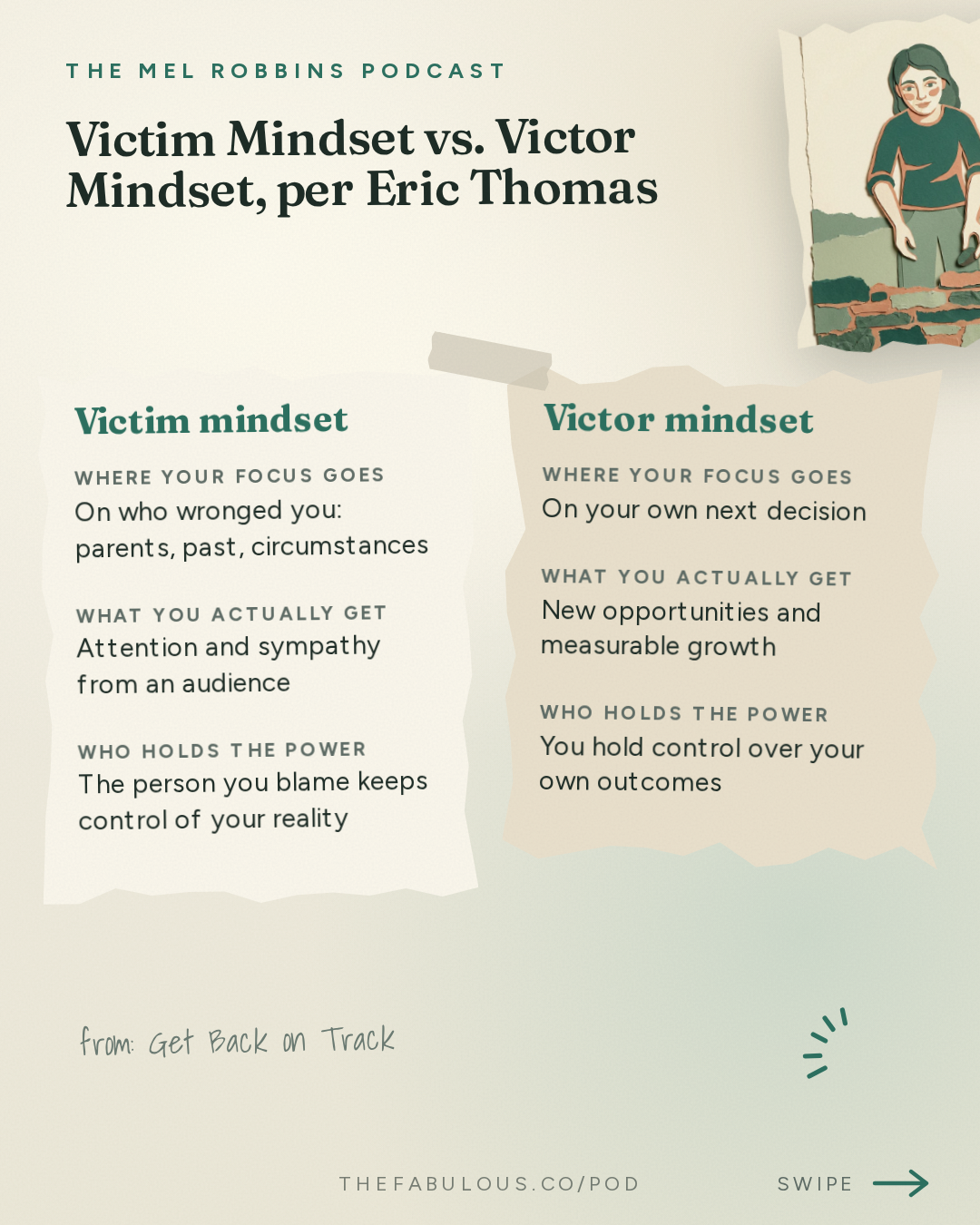
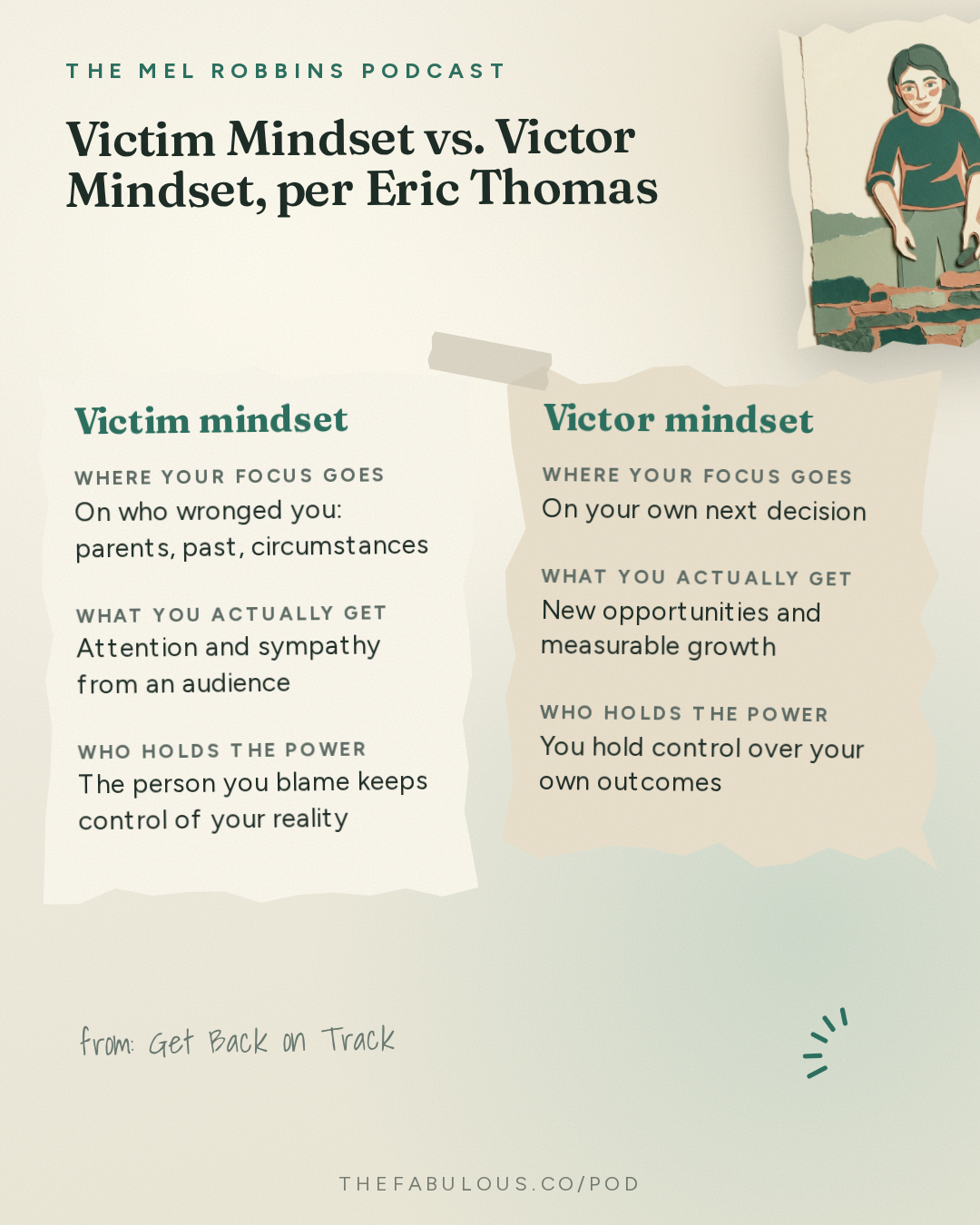
Thomas is just as specific about what keeps people stuck as he is about what moves them forward. He traces his own years of stagnation to a habit he's uncomfortable naming: he wanted an audience, not a solution. After a conversation with his mother about how he had painted her to others for years, he admitted that he hadn't wanted to change, he had wanted people to agree that she had wronged him (30:24). "I didn't want opportunities, I wanted attention," he says (30:24). The distinction matters because it reframes blame as a transaction. Telling the story of how someone hurt you buys sympathy, but it doesn't buy change, and Thomas argues it actively costs you control. "If they were intentionally and deliberately trying to destroy me, I'm not going to give them fuel," he says, describing how staying focused on who wronged him only handed those people more power over his life (26:59). He's careful not to deny real harm. His biological father's absence, his mother's early pregnancy, these were real. His point is narrower: proving someone else was wrong doesn't make your life right.
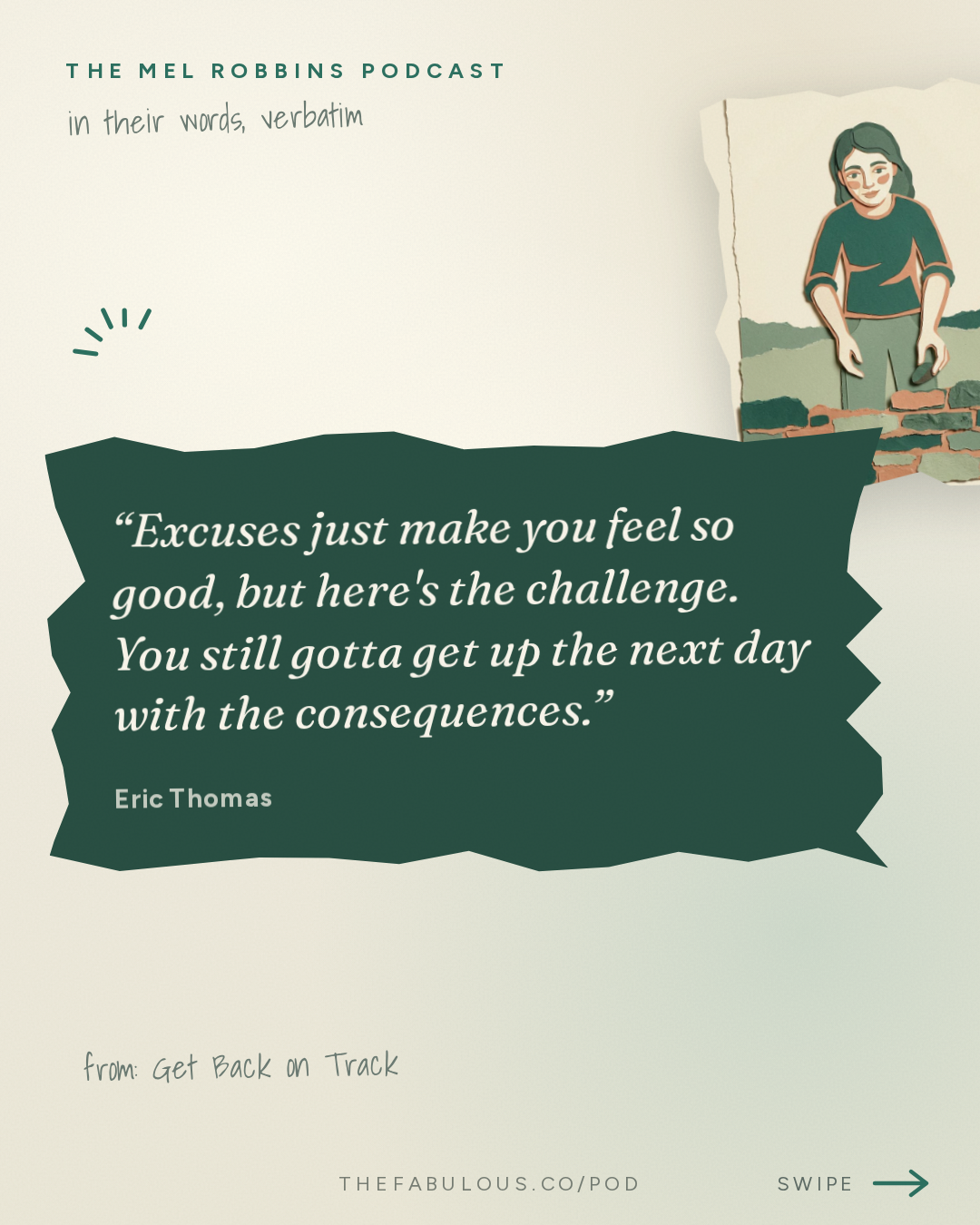
"Excuses just make you feel so good, but here's the challenge. You still gotta get up the next day with the consequences." — Eric Thomas [37:17]
That line captures the trade Thomas keeps circling back to. An excuse is comfortable in the moment it's spoken and useless the next morning, when the weight, the debt, or the relationship is still there. He applies the same logic to the idea of being "dealt a bad hand." He says he spent years cataloguing what was missing from his hand, no father, no money, no direction, until he started looking instead at what he did have: a gift for speaking, a willingness to work, people around him who had already found a way out. "You can win with any hand of cards if you choose to play it correctly," he says (39:25), and he's careful to credit the people who helped him play it, particularly his now-wife Dee Dee, who told him she was going to college and wouldn't wait for him if he didn't come (34:56).
The most unusual piece of the framework is how deliberately Thomas uses embarrassment rather than crisis as the trigger for change. Pop psychology often insists that people need to hit rock bottom before they change. Thomas argues for something smaller and more available: an honest look in the mirror. He describes turning his own camera on himself, refusing side angles that hid his stomach, and naming the feeling directly. "This is embarrassing," he told himself, not because 242 pounds was a moral failure, but because it didn't match who he already knew himself to be (45:27). He calls transparency, saying the embarrassing thing out loud, the actual secret to success, because people who hide from the truth of their own numbers, their scale, their credit score, their calendar, never get the chance to change them (56:18).
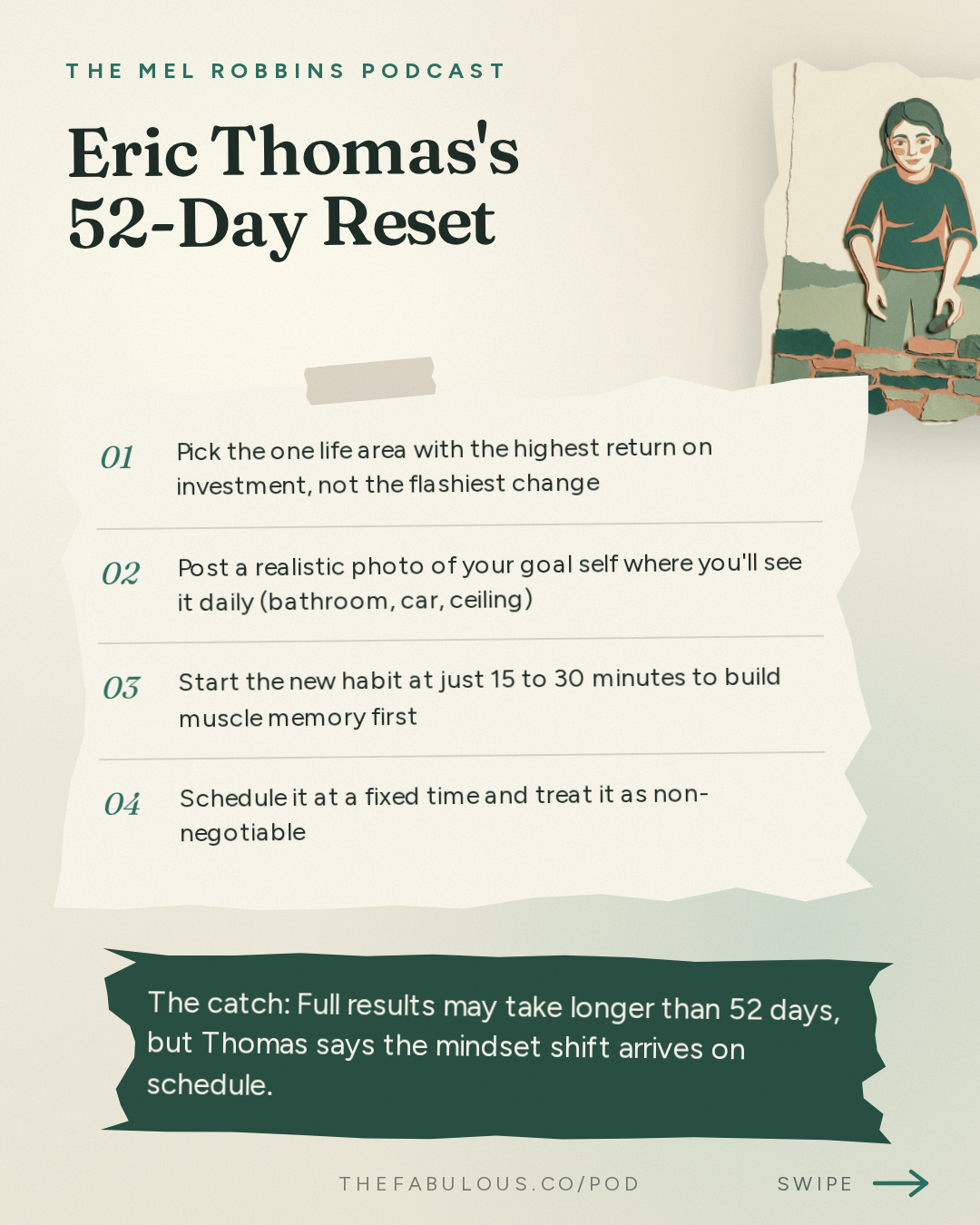
The protocol he offers at the end is almost disappointingly small, which seems to be the point. Choose the one pillar with the highest return on investment, not the flashiest. Put a realistic photo of your goal self somewhere you'll see it daily, your bathroom mirror, your car, even your ceiling (44:19). Start with 15 to 30 minutes, not a complete life overhaul, so the body and the calendar can absorb the new habit before intensity increases (47:32). Schedule it at a fixed time, treat it as non-negotiable, and tell a friend who will check whether you actually did it, because, as Thomas admits, he will meet a friend at 5:30 in the morning sooner than he will meet himself (52:22). None of this requires 140 years, or even a crisis. It requires 52 days and the willingness to say, out loud, what currently embarrasses you. "The day you see your worst self is the day your new self was peeking in," Thomas says (57:48). The work, as he describes it, is simply tagging that self in.
Ask this episode anything
Pod's AI answers from the episode itself, with the minute mark so you can hear it yourself.
Or start with one of these
Ask this episode
Pod's AI listens to the whole episode to answer, and points you to the minute it comes from.
The rest of this answer, and any question after it
Answers come from the episode itself, never from a summary of it.
ContinueKey takeaways
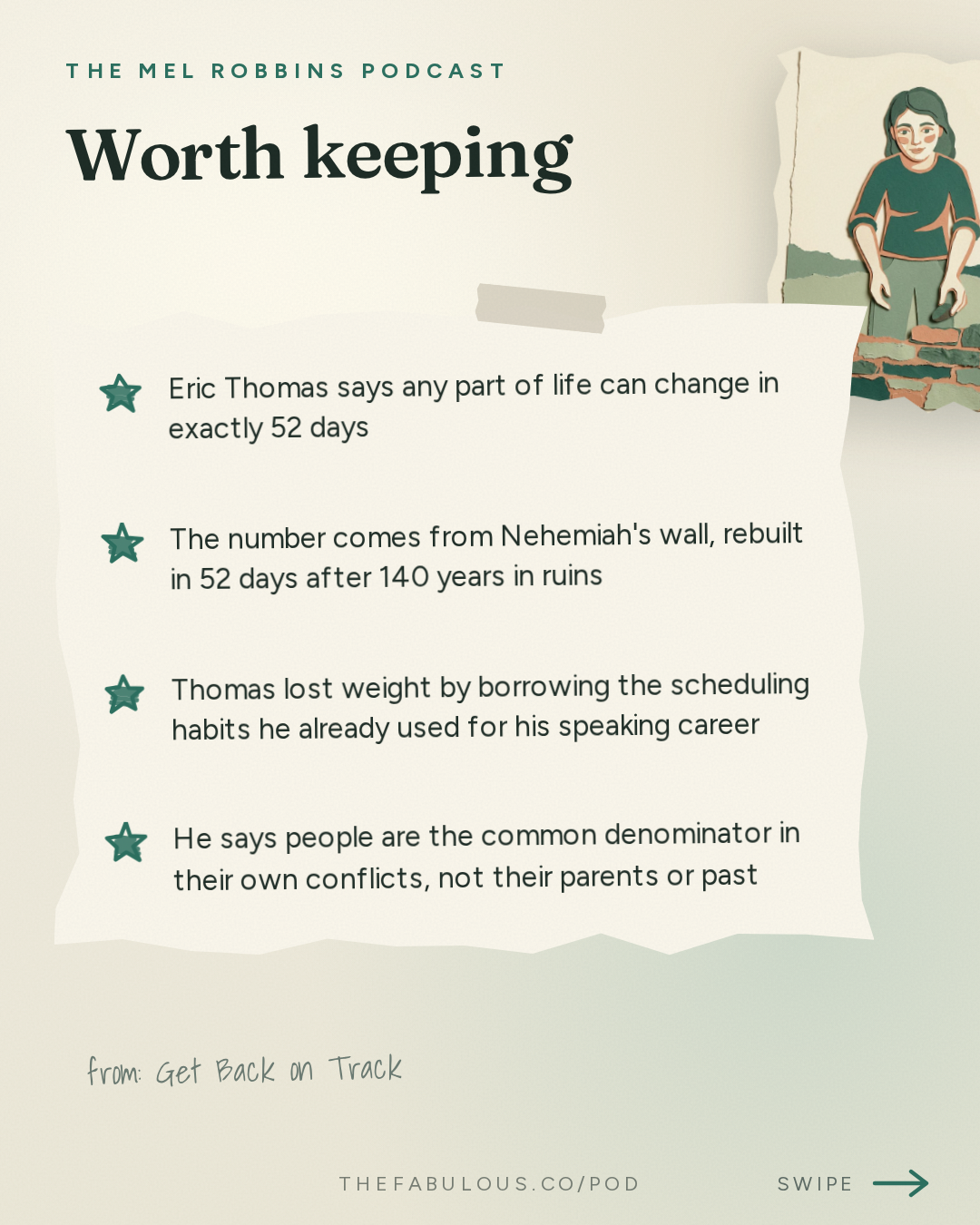
- Eric Thomas says any part of life can change in exactly 52 days
- The number comes from Nehemiah's wall, rebuilt in 52 days after 140 years in ruins
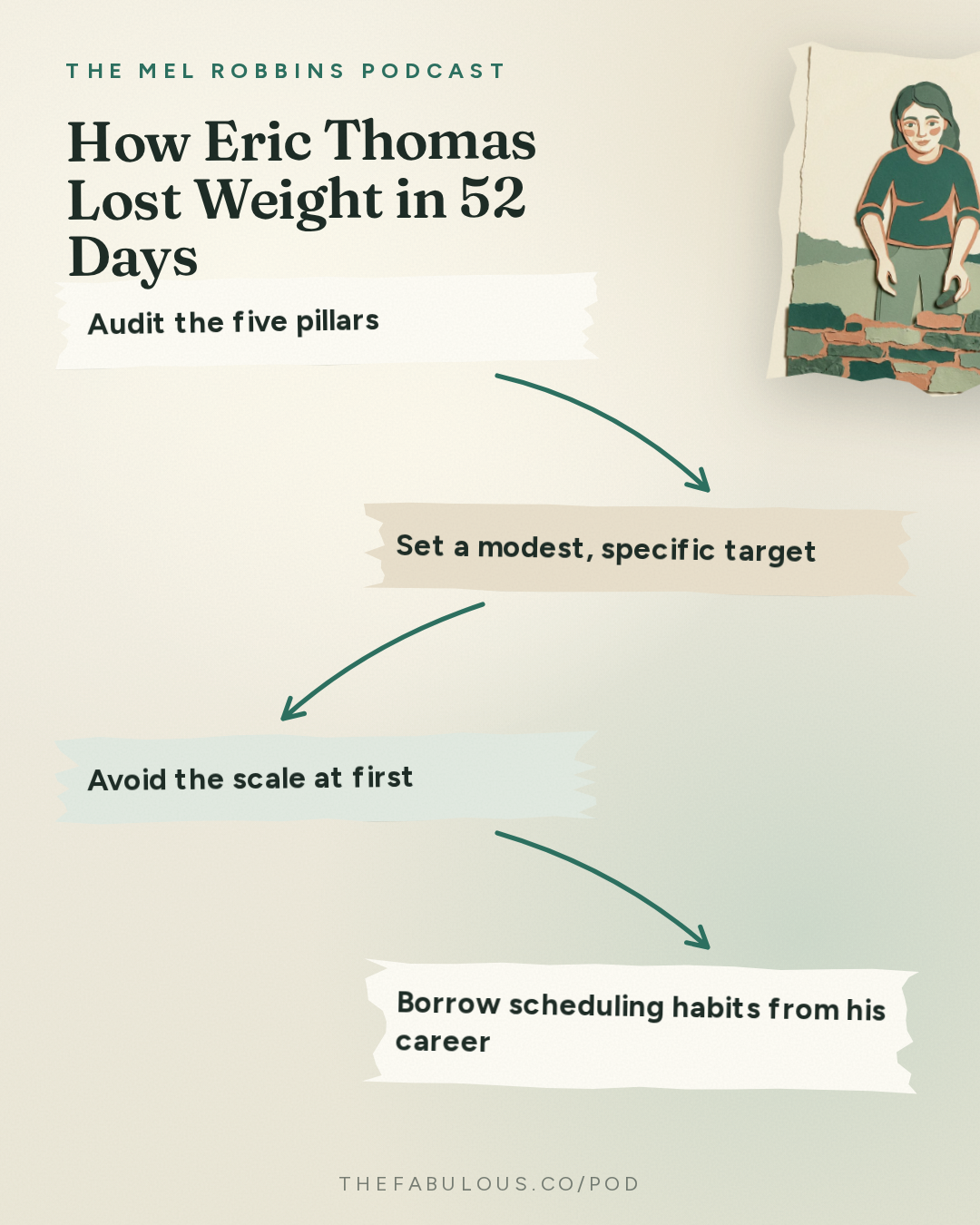
- Thomas lost weight by borrowing the scheduling habits he already used for his speaking career
- He says people are the common denominator in their own conflicts, not their parents or past
- His protocol: post a photo of your goal self, then start with just 15 minutes of a new habit a day
The episode in cards

By the numbers
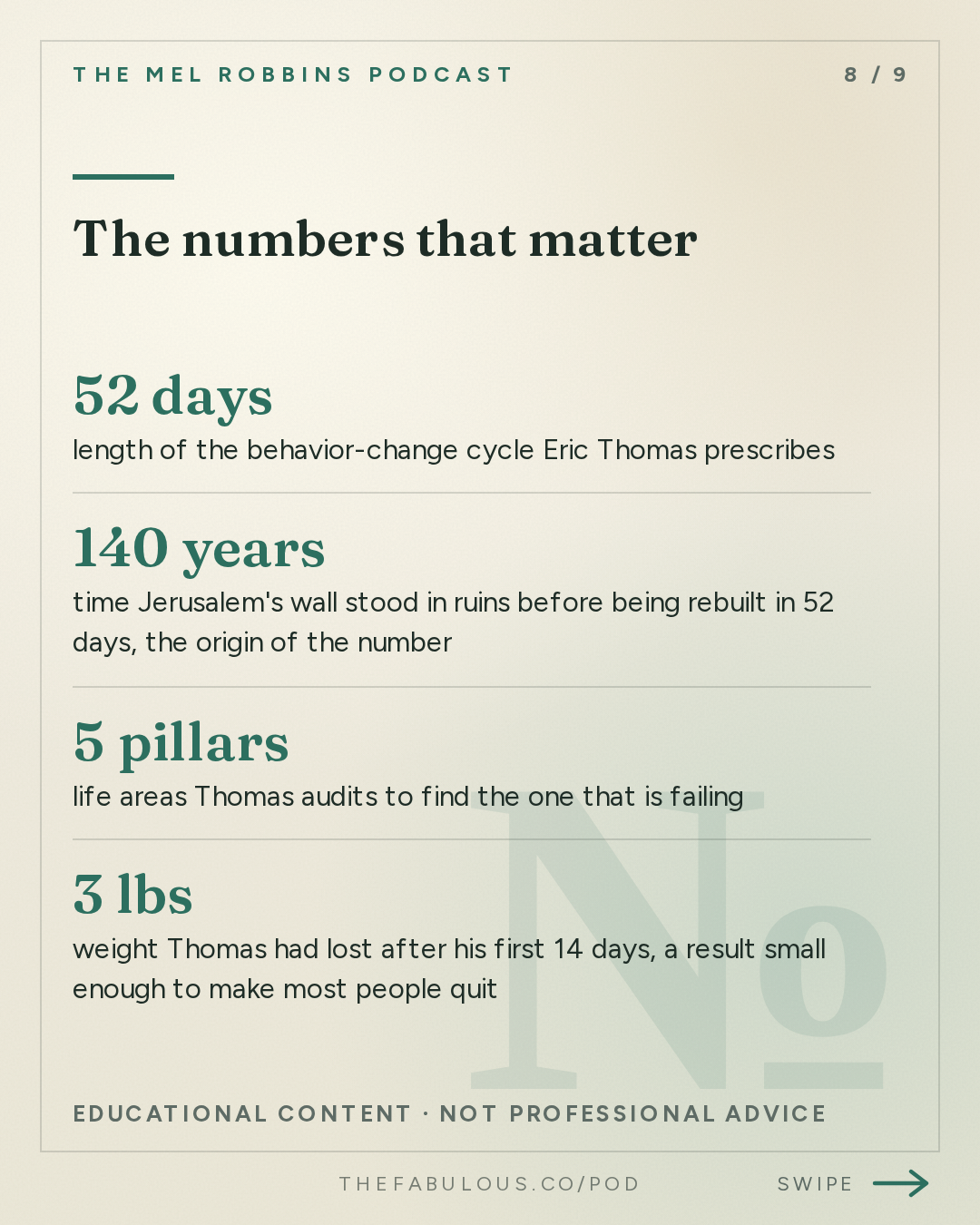
- 52 days length of the behavior-change cycle Eric Thomas prescribes
- 140 years time Jerusalem's wall stood in ruins before being rebuilt in 52 days, the origin of the number
- 5 pillars life areas Thomas audits to find the one that is failing
- 3 lbs weight Thomas had lost after his first 14 days, a result small enough to make most people quit
- 15 minutes starting daily dose Thomas recommends for a new habit before building up intensity
In their words
“We got 52 days to make the rest of our lives the best of our lives.”
“You are the greatest common denominator.”
“Excuses just make you feel so good, but here's the challenge. You still gotta get up the next day with the consequences.”
“The day you see your worst self is the day your new self was peeking in.”
Protocols
-
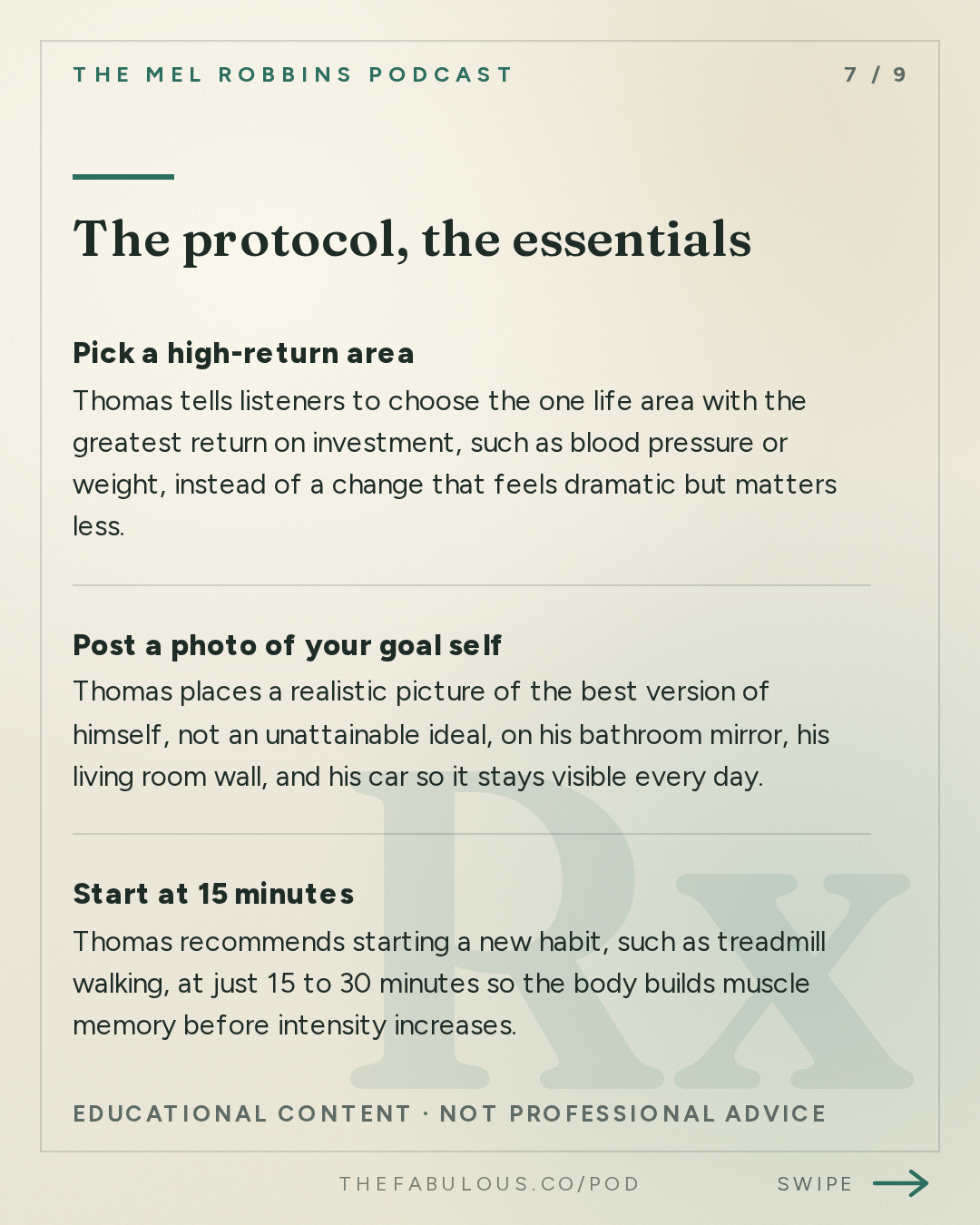
Pick a high-return area
Thomas tells listeners to choose the one life area with the greatest return on investment, such as blood pressure or weight, instead of a change that feels dramatic but matters less.
Chosen once at the start of the 52 days
-
Post a photo of your goal self
Thomas places a realistic picture of the best version of himself, not an unattainable ideal, on his bathroom mirror, his living room wall, and his car so it stays visible every day.
Displayed continuously through the 52 days
-
Start at 15 minutes
Thomas recommends starting a new habit, such as treadmill walking, at just 15 to 30 minutes so the body builds muscle memory before intensity increases.
Daily for the first week, then increasing
-
Schedule it and tell someone
Thomas schedules the new habit at a fixed time each day and tells a friend in advance, then sends proof such as a photo once it is done, because accountability to another person worked better for him than accountability to himself alone.
Daily
-
Don't check results too early
Thomas warns against weighing in or checking progress in the first week or two, since his own early loss was only 3 pounds in 14 days, a number small enough to trigger quitting if seen too soon.
Avoided for the first 10 to 14 days
Questions this episode answers
What is Eric Thomas's 52-day challenge?
It is a behavior-change method from motivational speaker Eric Thomas, who holds a PhD in education from Michigan State University: pick one area of life and commit to daily action for 52 days. Thomas says the mindset shift arrives on schedule even when full results take longer (48:10).
Why 52 days specifically?
Thomas borrowed the number from the Book of Nehemiah, in which the wall around Jerusalem, torn down for 140 years, was rebuilt in 52 days (06:11). He also notes that 52 days fits seven times into a calendar year, since a year has 52 weeks (13:48).
How did Eric Thomas lose weight using this method?
Thomas started at 242 pounds with pre-diabetes and pre-hypertension, and he avoided the scale for the first 14 days because he had lost only 3 pounds, a result small enough to make him quit (11:19). He borrowed the scheduling discipline he already used for his speaking career and fit back into his 21st-anniversary suit by day 52 (12:00).
What does Eric Thomas mean by 'you are the common denominator'?
It is his term for taking full ownership of conflict instead of blaming parents, teachers, or circumstances, a realization he had sitting alone in a Detroit jail cell as a teenager (20:42). He argues that blaming others hands them control over your life, while focusing on your own decisions returns the control to you (26:59).
How do you start the 52-day challenge?
Thomas recommends picking the life area with the greatest return on investment, posting a picture of a realistic goal self somewhere visible, and starting with just 15 to 30 minutes of the new habit before increasing intensity (47:32). He also says to schedule it at a fixed time and tell a friend, so accountability comes from someone else, not willpower alone (52:22).
The full read, in cards
Go deeper
- Book of Nehemiah — Biblical account of Jerusalem's wall being rebuilt in 52 days after standing in ruins for 140 years, the origin of Thomas's 52-day framework
- Greatness Is Upon You — Eric Thomas's own book, whose author photo he used as the visual target for his weight-loss goal
Mentioned
Dr. Eric Thomas · Mel Robbins · Nehemiah · Michigan State University · Greatness Is Upon You · Dee Dee · Michael B. Jordan · Detroit
More from this show and category
Mel Robbins and Daughter on Parenting Mistakes
Mel Robbins and her daughter Sawyer Robbins grade Mel's parenting and unpack the Gottman Institute's "volcano and turtle" conflict pattern. They trace Mel's traumatic birth, clashing "practical solver" versus "deep listener" parenting roles, and a notepad trick that slows a flooded nervous system during fights.
Ed Mylett on Identity, Worry, and Reinvention
Ed Mylett, 55-year-old entrepreneur and podcast host, says identity works like a thermostat that quietly resets your life to a fixed setting no matter how good things get (28:27). He shows how writing down worries strips their power, why love outlasts fear as motivation, and why past failures qualify you to help others (42:25).
Mel Robbins' Relationship Advice for Young Adults
Mel Robbins tells her 27-year-old daughter that good relationships depend on timing and self-work, not just chemistry. Drawing on Gottman research, Jonathan Haidt, and Terry Real, she explains how to spot a wrong fit, why a single era matters, how to balance two ambitious partners, and why breakup recovery takes three months of restraint.
Mel Robbins' Relationship Advice for Young Adults
Mel Robbins and her 27-year-old daughter Sawyer sit down to answer real questions about dating, breakups, and ambition. Drawing on Gottman research, NYU psychologist Jonathan Haidt's findings on young men and dopamine, and therapist Terry Real's rule that partners can be right or connected but never both, Robbins argues most relationship trouble starts with an unhealed self, not a wrong partner.
